
openread
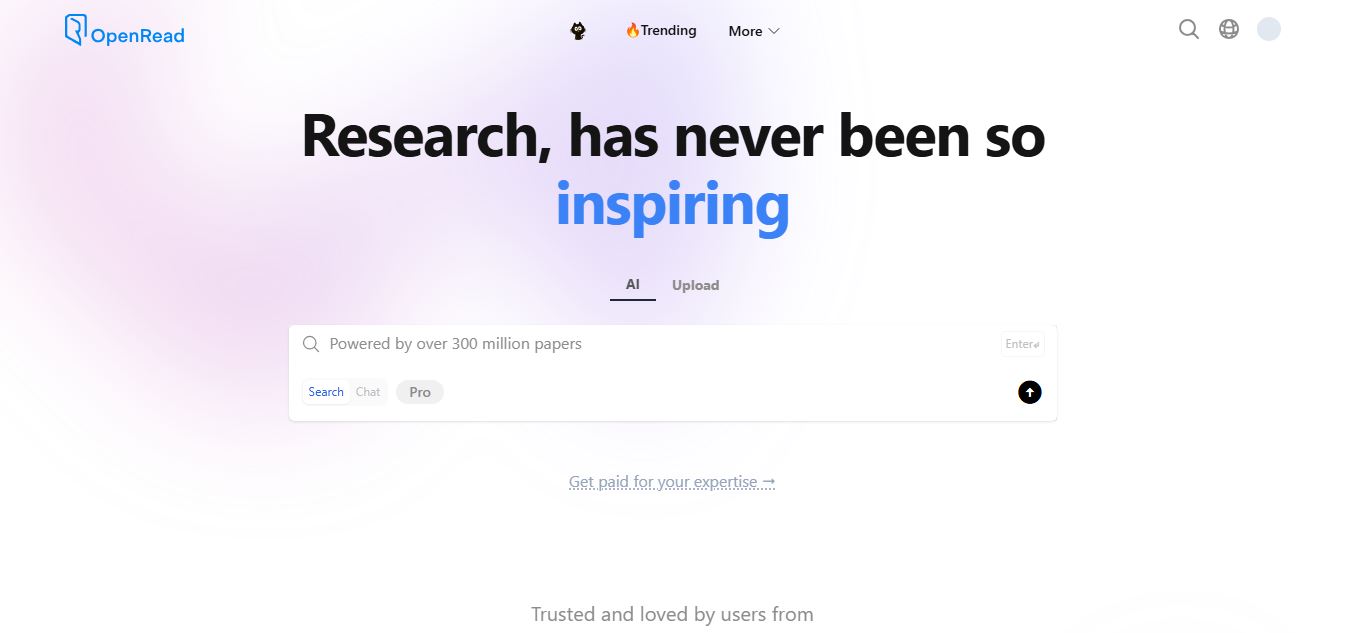
OpenRead AI is an academic research platform that helps students and researchers discover, summarize, analyze, compare, and understand research papers faster.
What Is OpenRead AI?
OpenRead AI is an AI-powered academic research platform designed to make reading and analyzing research papers easier. It combines paper discovery, AI-powered summaries, question answering, document analysis, note-taking, paper comparison, and research assistance in one workspace. Its AI assistant, Oat, can help users ask questions and explore academic content, while tools such as Paper Espresso can summarize research papers. Users can also upload PDFs and interact with their documents using AI. OpenRead is aimed at students, researchers, academics, educators, and professionals who regularly work with scientific and academic literature. The platform is designed to reduce the time required to understand complex research material and organize findings.
OpenRead AI is an academic research platform founded in 2022 and headquartered in San Francisco, according to its LinkedIn profile. The platform has been described as providing access to more than 300 million research papers across over 1,000 disciplines, with research data refreshed frequently. Its main AI tools include Paper Espresso, Paper Q&A, Oat, Related Paper Graph, paper comparison, translation, and PDF analysis. OpenRead also offers 3 main subscription levels: Free, Basic at $5 per month, and Premium at $20 per month.
- Founder: OpenRead was founded by a team focused on using AI to improve academic research and paper reading. Public company information lists OpenRead as founded in 2022.
- Launch: OpenRead was introduced as an AI-powered research platform designed to help users discover, read, summarize, and analyze academic papers.
- Use Cases: Academic research, literature reviews, paper summarization, research discovery, PDF analysis, paper comparison, note-taking, translation, and research question answering.
- Technology: Natural-language processing, large language models, AI-powered document analysis, semantic search, paper retrieval, PDF parsing, and the platform's Oat AI research assistant.
- Target Users: Students, researchers, professors, academics, educators, PhD scholars, universities, and professionals working with research literature.
- Acquisition: No major acquisition of OpenRead AI has been publicly reported.
OpenRead AI Key Features
Key features are:
- Find the right research easily: Discover academic papers across different fields without relying only on basic keyword searches.
- Quick paper summaries: Get clear, AI-powered summaries that help you understand complex research in less time.
- Ask questions about papers: Instead of reading everything, just ask questions and get answers based on the paper’s content.
- Your AI research assistant: Oat helps you explore topics, break down ideas, and work through research more efficiently.
- Analyze PDFs directly: Upload research papers and interact with them—highlight, explore, and extract insights with AI.
- Explore related work: Visual graphs show how papers connect and help you discover more relevant studies.
- Compare multiple papers: Easily spot differences, key findings, and insights across different research works.
- Take and organize notes: Keep all your research notes in one place while reading and analyzing papers.
- Translate research content: Understand papers in different languages with built-in AI translation.
- Stay updated on trends: Discover trending topics and emerging research areas across disciplines.
- Covers multiple fields: Whether it’s science, tech, or humanities, you can explore research from a wide range of domains.
- Smarter search experience: AI-powered search helps you find relevant papers even when exact keywords don’t match.
- Upload your own documents: Bring your own PDFs and use AI tools to analyze and interact with them.
- All-in-one research workspace: Combines discovery, reading, note-taking, and analysis in one place.
- Advanced AI models available: Higher-tier plans give access to more powerful models for deeper research and reasoning.

OpenRead AI Pricing
OpenRead currently offers a free plan, a basic plan priced at $5 per month, and a premium plan priced at $20 per month. There are also pay-as-you-go Oat Credits and organization-focused plans.
| Plan | Price | Main Details |
|---|---|---|
| Free | $0/month | Limited AI usage, including 5 uses per feature per month and unlimited PDF uploads with size limits |
| Basic | $5/month | Higher usage limits, unlimited PDF uploads and additional research tools |
| Premium | $20/month | Unlimited core research features and access to higher-tier AI models |
| Oat Credits | From $10 | Pay-as-you-go access to Oat and advanced AI models |
| University / Enterprise | $200/seat/year | Premium features with organizational controls, SSO and administration capabilities |
The Free plan is suitable for users who want to test OpenRead, while Basic is aimed at regular students and researchers. Premium is designed for users who need frequent or unlimited access to research tools.
Who Is Using OpenRead AI?
A wide range of users use OpenRead AI:
- University students.
- College students.
- PhD researchers.
- Academic researchers.
- Professors.
- Teachers and educators.
- Research assistants.
- Scientists.
- Medical researchers.
- Data researchers.
- Academic writers.
- Literature-review researchers.
- University departments.
- Research organizations.
- Professionals who regularly read research papers.
What Are the Best OpenRead AI Alternatives?
The best OpenRead AI alternatives include:
- NotebookLM
- Elicit
- Consensus
- SciSpace
- Semantic Scholar
- ResearchRabbit
- Connected Papers
- ChatPDF
Pros and Cons
Pros
- AI-powered academic research.
- Paper summarization.
- AI-powered paper Q&A.
- Oat research assistant.
- PDF analysis.
- Paper comparison.
- Related paper discovery.
- Research note-taking.
- AI translation.
- Large research database.
- Supports multiple research disciplines.
- Free plan available.
- Affordable Basic plan.
- Premium AI models available.
- Useful for literature reviews.
- Helps reduce research time.
Cons
- AI-generated answers can sometimes be inaccurate.
- Users should verify important academic information.
- Some advanced features require a paid plan.
- Free usage limits can restrict heavy users.
- Full-text availability can depend on external sources and paper access.
- Beginners may need time to understand all available features.
- AI summaries may miss important context.
- Research citations should be independently checked before academic submission.
Why Choose OpenRead AI?
- Choose OpenRead if you regularly read academic papers.
- Use it to summarize long research papers.
- Choose it for literature-review workflows.
- Use Paper Q&A to ask questions about research documents.
- Choose Oat when you need an AI research assistant.
- Use PDF analysis to understand uploaded papers.
- Choose it to compare multiple research papers.
- Related Paper Graph to discover connected research.
- Choose it when you want research discovery and paper analysis in one place.
- Use it to organize research notes.
- Choose it for finding emerging research topics.
- Use the free plan to test the platform before upgrading.
- Choose Premium if you need frequent access to advanced AI research features.
OpenRead AI vs. Competitors
The main difference between OpenRead AI, NotebookLM, Elicit, Consensus, SciSpace, Semantic Scholar, ResearchRabbit, and Connected Papers is that OpenRead combines academic paper discovery with AI-powered summarization, Q&A, PDF analysis, paper comparison, notes, and an AI research assistant. NotebookLM focuses on user-provided sources, Elicit specializes in literature reviews, Consensus emphasizes research-backed answers, while ResearchRabbit and Connected Papers focus strongly on discovering relationships between papers.
| Tool | Best For | Paper Search | AI Q&A | Summarization | Literature Review | Paper Connections |
| OpenRead AI | All-in-one research | Excellent | Excellent | Excellent | Excellent | Excellent |
| NotebookLM | Document research | Good | Excellent | Excellent | Good | Good |
| Elicit | Literature reviews | Excellent | Excellent | Excellent | Excellent | Good |
| Consensus | Evidence-based research | Excellent | Excellent | Excellent | Excellent | Good |
| SciSpace | Paper reading | Excellent | Excellent | Excellent | Excellent | Good |
| Semantic Scholar | Academic search | Excellent | Good | Good | Good | Excellent |
| ResearchRabbit | Literature discovery | Excellent | Limited | Good | Excellent | Excellent |
| Connected Papers | Paper relationships | Excellent | Limited | Good | Excellent | Excellent |
How Do We Rate OpenRead AI?
| Category | Rating |
| Features | 4.7/5 |
| Ease of Use | 4.5/5 |
| Paper Search | 4.8/5 |
| AI Summarization | 4.7/5 |
| Paper Q&A | 4.7/5 |
| PDF Analysis | 4.7/5 |
| Research Discovery | 4.8/5 |
| Note-Taking | 4.5/5 |
| Pricing | 4.6/5 |
| Overall | 4.7/5 |
OpenRead AI Review
OpenRead AI is a useful platform for students, researchers, and academics who spend a significant amount of time reading research papers. Instead of using separate tools for finding papers, summarizing PDFs, asking questions, taking notes, and comparing research, OpenRead attempts to bring these activities into one workspace. One of the platform's strongest features is Paper Espresso. Long academic papers can take a significant amount of time to read, especially when researchers need to review many papers for a literature review. AI-powered summaries can provide a faster overview and help users identify which papers deserve deeper reading.
Paper Q&A is another useful feature. Instead of manually searching through a PDF, users can ask questions about the document and receive AI-generated answers. This can be particularly useful when a paper contains complex methodologies, results, equations, or long discussions. Oat adds another layer of AI assistance. It functions as a research assistant that can help users explore research topics and interact with academic information. This makes OpenRead more than a basic PDF summarizer. The platform's paper discovery capabilities are also important. Research often requires finding papers related to a particular topic rather than just one specific document. Related Paper Graph can help users explore connections between papers and discover additional literature.
Paper comparison can also be useful for literature reviews. Researchers can compare multiple studies and look for differences in methodologies, findings, or conclusions. However, AI-generated comparisons should be treated as an initial research aid rather than a replacement for reading the original studies. PDF analysis is another major benefit. Users can upload their documents and interact with them through AI. This is particularly useful when working with papers that are not easily searchable or when researchers want to ask questions about specific sections.
The platform also offers translation capabilities, which can help researchers working with papers written in different languages. This can make international research literature more accessible. One of the biggest advantages of OpenRead is its pricing. The free plan provides a way to test the platform, while the basic plan is listed at $5 per month and premium at $20 per month. This makes the platform relatively accessible compared with some specialized research software. However, users should remember that AI is not always perfectly accurate. A generated summary can miss important context, and an AI answer can occasionally misunderstand a research finding. Academic users should therefore verify important claims against the original paper.
Another limitation is that OpenRead cannot replace the academic research process itself. Finding papers is only one part of research. Researchers still need to evaluate study quality, methodology, sample sizes, limitations, citations, and potential bias. Overall, OpenRead AI is a strong research assistant for people who want to speed up paper discovery and analysis. Its combination of AI summarization, Q&A, PDF analysis, paper comparison, related-paper discovery, and research notes makes it particularly useful for literature-review workflows.
Conclusion
OpenRead AI is an AI-powered research platform designed to make academic research faster and more organized. It combines paper discovery, AI summarization, paper Q&A, PDF analysis, paper comparison, related-paper graphs, notes, translation, and the Oat research assistant in one workspace. Its affordable Free and Basic plans make it accessible to students, while Premium provides advanced capabilities for heavier research workflows. However, AI-generated information should always be verified against original academic sources. Overall, OpenRead is a useful tool for students, researchers, educators, and professionals who regularly work with academic literature.
FAQ
What is OpenRead AI?
OpenRead AI is an AI-powered academic research platform that helps users discover, summarize, analyze, compare, and understand research papers.
What is OpenRead Academy?
OpenRead Academy is the research-focused platform associated with OpenRead AI, offering tools for academic paper discovery, analysis, summarization, and AI-assisted research.
What is Oat in OpenRead?
Oat is OpenRead's AI research assistant. It helps users ask questions, explore information, and interact with research conten
What is Paper Espresso?
Paper Espresso is an OpenRead feature designed to provide AI-powered summaries of academic papers.
Can OpenRead summarize research papers?
Yes. OpenRead provides AI-powered paper summarization through Paper Espresso.
Can OpenRead analyze PDFs?
Yes. Users can upload PDF documents and use OpenRead's AI tools to analyze and interact with them.
Can I ask questions about a research paper?
Yes. Paper Q&A allows users to ask questions about research papers and documents
Is OpenRead AI free?
Yes. OpenRead offers a Free plan with limited usage of its research features.
How much does OpenRead AI cost?
The current listed plans include Free at $0, Basic at $5 per month, and Premium at $20 per month.
What does the OpenRead Basic plan include?
The Basic plan provides higher usage limits for research tools and unlimited PDF uploads, with pricing listed at $5 per month.
What does OpenRead Premium include?
Premium provides unlimited use of core research tools and access to higher-tier AI models, with pricing listed at $20 per month.
Is OpenRead good for students?
Yes. Students can use it for paper summaries, research discovery, PDF analysis, literature reviews, and research notes.
Is OpenRead good for PhD students?
Yes. Its paper discovery, Q&A, comparison, summarization, and related-paper tools can be useful for PhD-level research.
Can OpenRead help with literature reviews?
Yes. Paper discovery, summarization, paper comparison, and related-paper exploration can support literature-review workflows
Can OpenRead compare research papers?
Yes. OpenRead provides a paper-comparison feature designed to help users analyze multiple research papers.
Can OpenRead find related research papers?
Yes. Related Paper Graph helps users explore relationships between academic papers and discover additional research.
Does OpenRead support PDF uploads?
Yes. Users can upload PDFs for analysis, with unlimited PDF uploads available on the current listed plans, subject to applicable file limits.
Can OpenRead translate research papers?Yes. OpenRead provides AI-assisted translation features for research content.
Yes. OpenRead provides AI-assisted translation features for research content.
Is OpenRead better than NotebookLM?
It depends on the use case. NotebookLM is particularly strong for asking questions about user-provided sources, while OpenRead focuses more broadly on academic paper discovery, research analysis, paper graphs, and research workflows.
Is OpenRead better than Elicit?
Elicit is particularly strong for literature reviews and research workflows, while OpenRead combines literature discovery with PDF analysis, Q&A, summaries, notes, and related-paper exploration
Is OpenRead accurate?
OpenRead can provide useful AI-generated research assistance, but AI responses and summaries can contain errors. Important academic claims should always be checked against the original paper.
Who should use OpenRead AI?
Students, researchers, professors, educators, PhD scholars, research assistants, and professionals who regularly analyze academic papers can benefit from OpenRead.
What are the best OpenRead AI alternatives?
The best alternatives include NotebookLM, Elicit, Consensus, SciSpace, Semantic Scholar, ResearchRabbit, Connected Papers, and ChatPDF.
What are the main benefits of OpenRead?
The main benefits include AI paper summarization, paper Q&A, PDF analysis, research discovery, paper comparison, related-paper graphs, research notes, translation, and AI-assisted literature reviews.
User Reviews
No reviews yet for openread.
Featured Tools
Featured AI tools from TechShark
Melody Genie
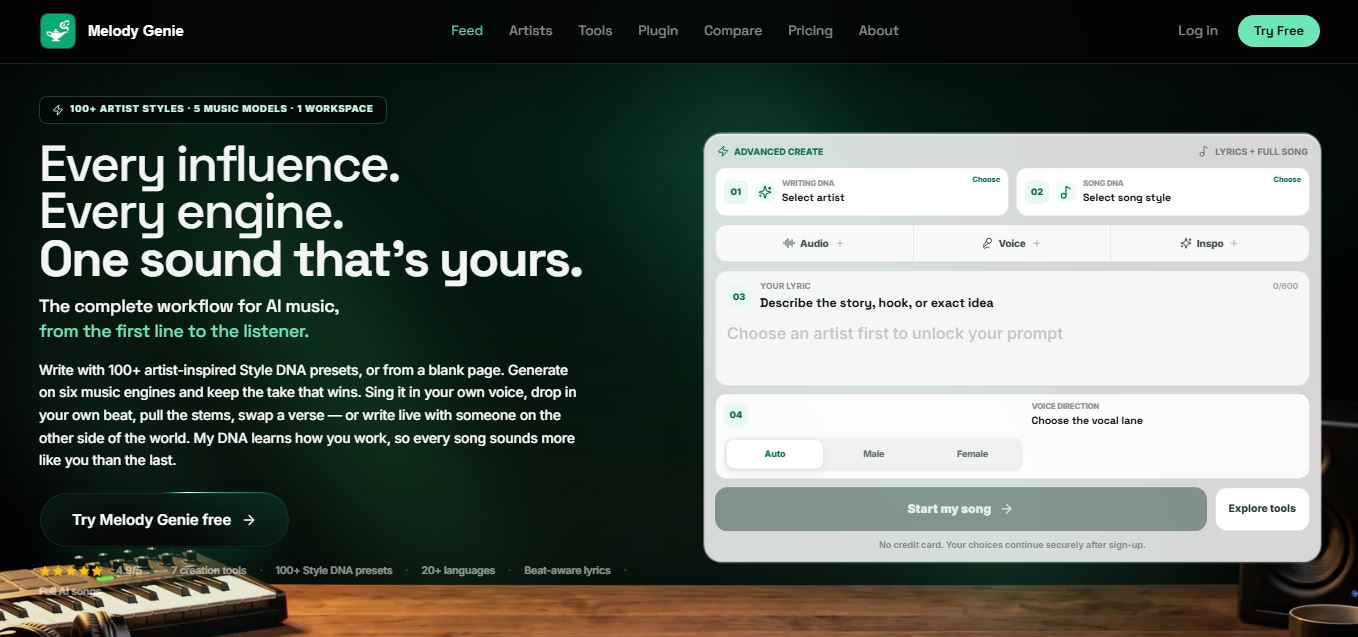
MelodyGenie is an AI-powered music generator that creates original songs from simple text prompts. Users can choose styles, moods, and genres, then instantly generate melodies and full tracks, making it easy for creators, marketers, and hobbyists to produce custom music without musical expertise.
Freemium
Kimi AI
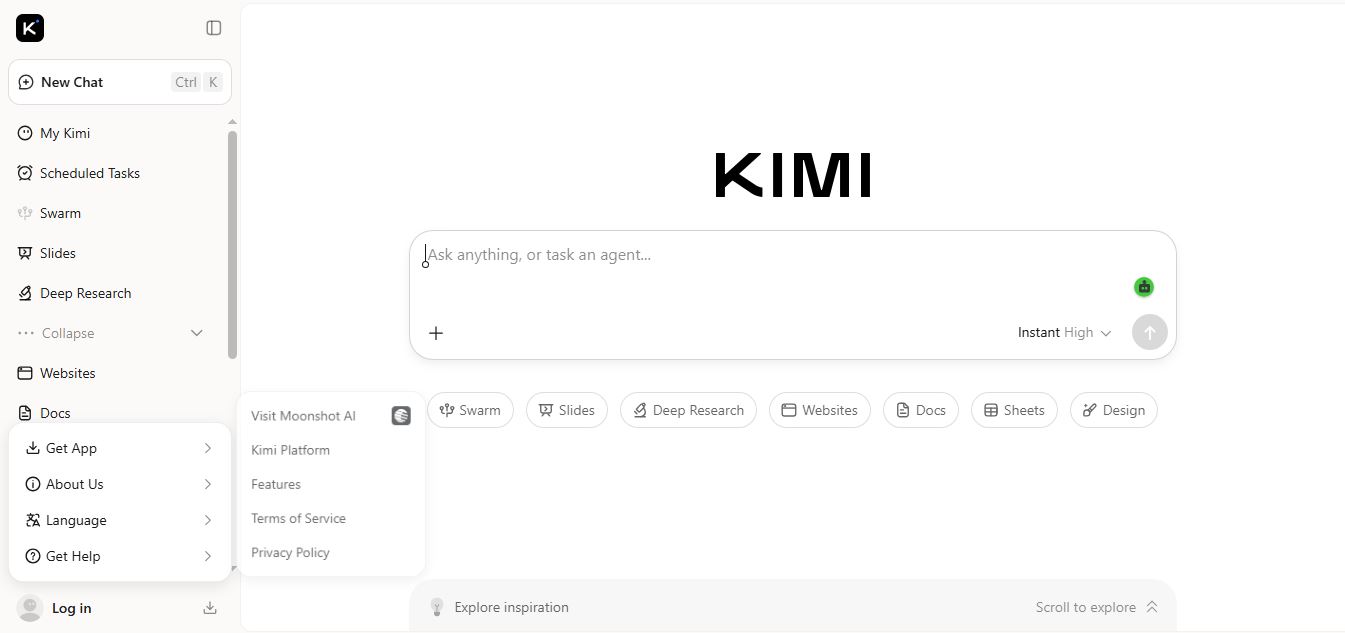
Kimi AI is an advanced AI assistant developed by Moonshot AI that helps you chat, research, write, code, and automate tasks in one place. It supports web search, file analysis, and multimodal inputs, and can even run autonomous “agent” workflows to complete complex tasks end-to-end.
Freemium
Fashion Diffusion AI
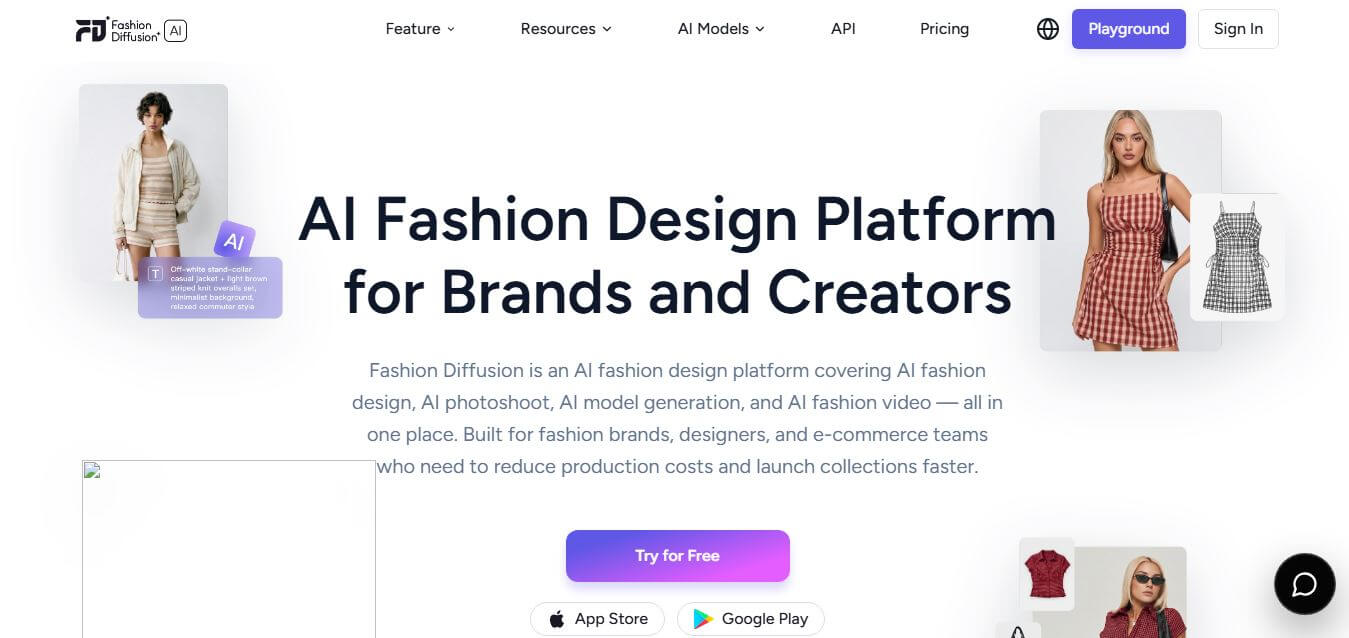
Fashion Diffusion is an AI-powered fashion design platform that helps brands and designers create clothing designs, virtual try-ons, AI models, product photos, and marketing visuals faster and cost-effectively.
Paid
Veo 4
Veo 4 AI is an AI video creation platform that generates dramatic videos from text, images, audio, and video prompts using realistic motion and synchronized sound.
Paid
Alternatives
Alternatives to openread
The best OpenRead AI alternatives include NotebookLM, Elicit, Consensus, SciSpace, Semantic Scholar, ResearchRabbit, Connected Papers, and ChatPDF. NotebookLM is excellent for interacting with uploaded sources, while Elicit is particularly useful for literature reviews. Consensus focuses on evidence-based research questions, and SciSpace helps users read and understand academic papers. Semantic Scholar provides powerful academic search, while ResearchRabbit and Connected Papers help discover relationships between papers. OpenRead stands out by combining paper discovery, AI summaries, PDF analysis, Q&A, comparison, notes, and research assistance in one platform.
 4.9
4.9Manifold
Research
Manifold helps life sciences organizations turn complex clinical, genomic, and real-world data into governed, self-service insights. Its specialist agents support natural-language queries, cohort building, bioinformatics, statistical analysis, data partnerships, and evidence generation. Teams can keep sensitive data within their cloud while controlling access, auditing activity, and scaling research workflows securely.
 5.0
5.0Rayyan
Research
Rayyan is an AI-powered systematic review and literature review platform that helps researchers organize references, remove duplicates, screen studies, extract data, assess risk of bias, and generate PRISMA reports. Its AI features assist with relevance ranking, article screening, and structured data extraction while keeping researchers in control.
 4.9
4.9EvidenceHunt
Research
EvidenceHunt is an AI-powered medical research platform that helps clinicians, researchers, and life science teams find and analyze scientific evidence. It searches medical literature, guidelines, and internal documents, then generates citation-grounded answers, evidence tables, systematic reviews, and traceable insights for faster, evidence-based research.
 4.9
4.9Elicit
Research
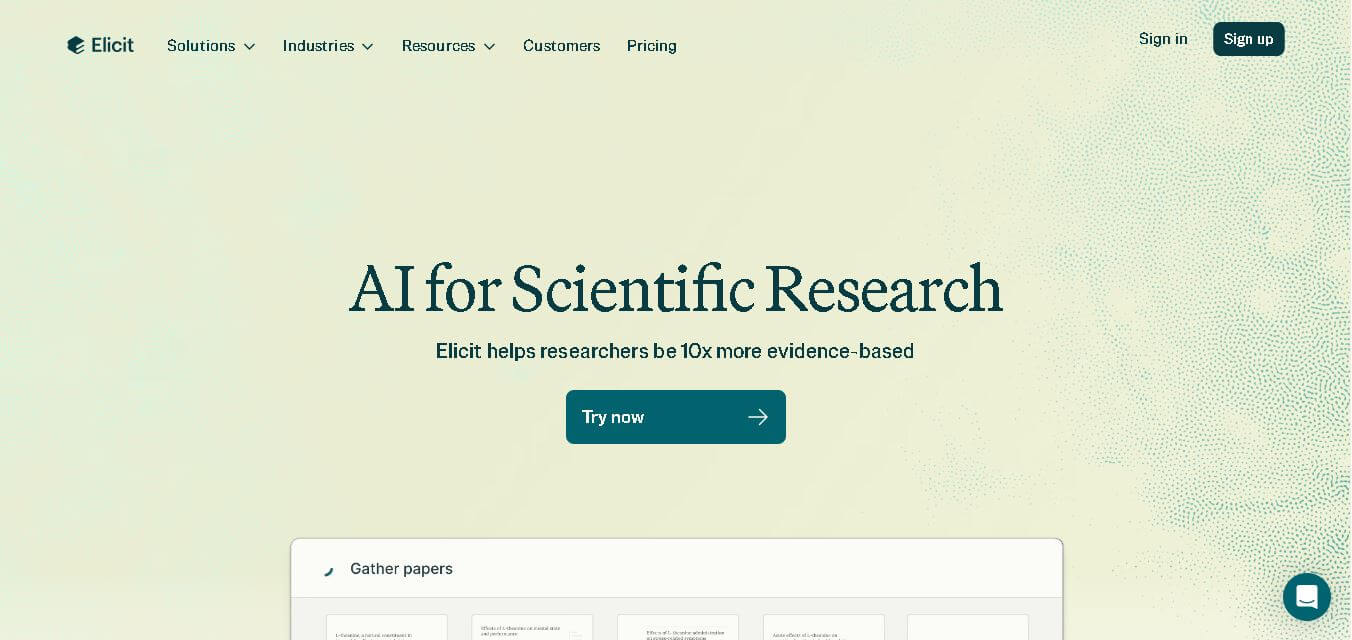
Elicit is an AI-powered research assistant that helps users find, summarize, and analyze academic papers at scale. It searches millions of studies, extracts key data, and generates evidence-backed reports, enabling researchers to conduct literature reviews, compare findings, and make informed decisions faster.
 4.8
4.8Scholarcy
Research
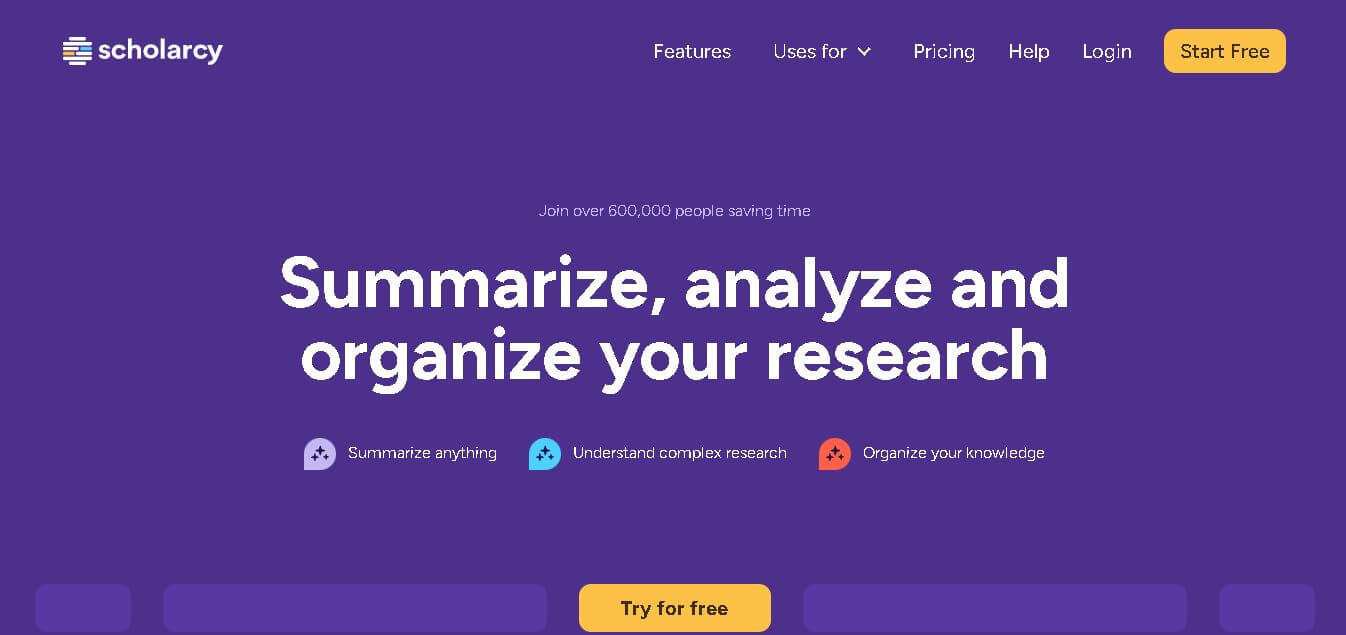
Scholarcy is an AI-powered research assistant that helps students and researchers summarize, analyze, and organize academic papers. It turns complex documents into structured flashcards with key findings, concepts, and references, enabling faster reading, better understanding, and efficient literature review workflows.
 4.9
4.9Resoomer
Research
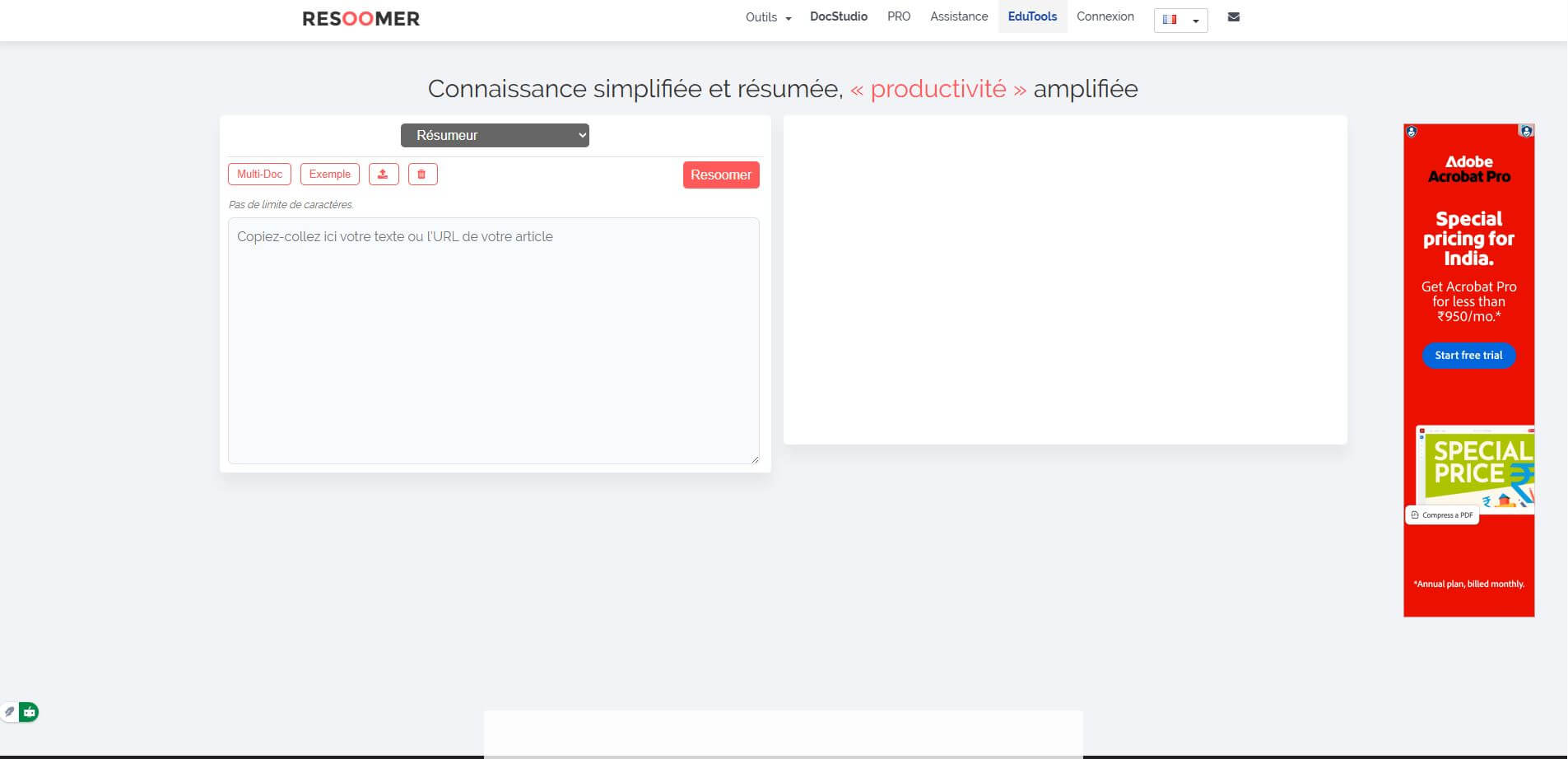
Resoomer is an AI-powered text summarization tool that helps users quickly turn long articles, research papers, and documents into concise summaries. It identifies key ideas, supports multiple formats like PDFs and URLs, and includes tools for paraphrasing, translating, and analyzing content for faster understanding.
 4.9
4.9Consensus
Academic
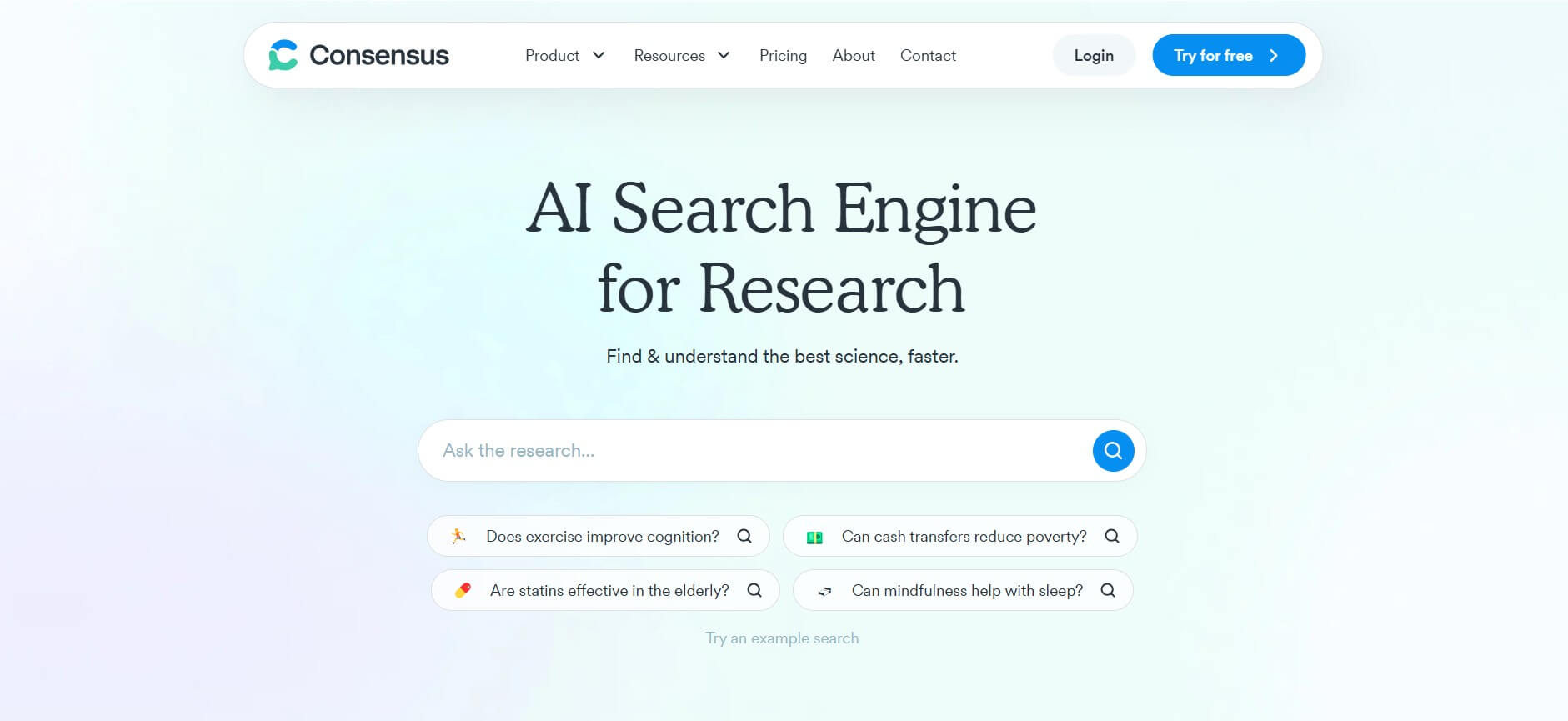
Consensus is an AI-powered academic search engine that helps users find, understand, and summarize scientific research from over 200 million peer-reviewed papers. It delivers clear, cited answers backed by real studies, making it easier to explore evidence, compare findings, and conduct research faster and more reliably.
 5.0
5.0Perplexity AI
AI Chatbot Tools
Perplexity is an AI-powered answer engine that searches the web in real time and delivers clear, cited responses instead of just links. It combines conversational AI with live data, helping users research topics, compare information, and get reliable insights quickly with verifiable sources.
OneSearch.bio
Research
OneSearch.bio is an AI-powered bio link and search aggregation platform designed for creators, brands, and digital marketers to consolidate links, social profiles, monetization tools, and searchable content into a single custom hub.