
Elicit
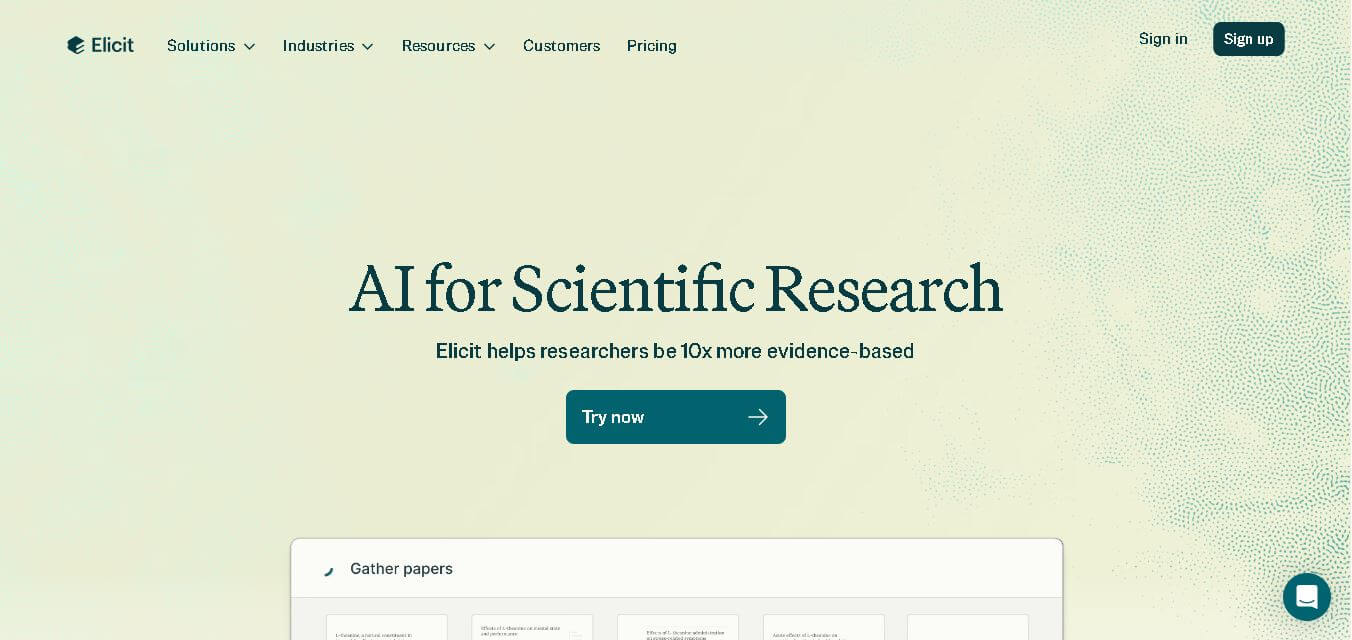
Elicit is an AI-powered research assistant that helps users find, summarize, and analyze academic papers at scale. It searches millions of studies, extracts key data, and generates evidence-backed reports, enabling researchers to conduct literature reviews, compare findings, and make informed decisions faster.
What is Elicit?
Elicit is an AI-powered research assistant that helps users find, analyze, and summarize academic papers quickly. It searches a large database of research studies and uses AI to extract key insights, compare findings, and answer research questions with evidence-backed summaries. Users can upload PDFs, generate literature reviews, and organize data into structured tables for easier analysis. Designed for students, researchers, and professionals, it streamlines the research process by reducing manual reading and helping users focus on the most relevant information.
Originally incubated within the non-profit research organization Ought and founded by machine learning researchers Andreas Stuhlmüller and Jungwon Byun, Elicit was spun out as an independent public-benefit corporation. Backed by leading Silicon Valley investors and AI pioneers, Elicit provides access to over 200 million academic papers. By functioning as a research partner, it automates systematic reviews, extracts custom columns from uploaded PDFs, and compiles evidence tables with grounded citations.
- Founders / Leadership: Andreas Stuhlmüller (CEO) and Jungwon Byun (COO)
- Launch Year: 2021 (Spun out from Ought into an independent entity; expanded systematic review tables, PDF analysis, and enterprise collaboration through 2024–2026)
Use Cases:
- Automating literature reviews by searching research questions and synthesizing top papers into structured summary tables
- Extracting specific data points—such as sample size, dose regimen, methodology, and outcome metrics—from uploaded PDFs
- Screening scientific literature to determine consensus, effect directions, and evidentiary strength on complex scientific hypotheses
- Discovering adjacent research papers using citation graph expansion and semantic concept matching
Technology:
- Semantic search algorithms mapping natural language research inquiries directly against title, abstract, and full-text scientific databases
- Retrieval-Augmented Generation (RAG) framework anchoring extracted claims to verbatim quotes in source documents
- Document parsing pipeline capable of processing and extracting structured tabular data from multi-column scientific PDFs
Target Users:
- PhD candidates, university professors, and postgraduate researchers preparing systematic reviews and dissertations
- Medical practitioners and clinical researchers evaluating drug trial results and health policy studies
- R&D teams and market analysts benchmarking emerging scientific discoveries and technical patents
- Content creators using writing tools to summarize scientific studies, extract factual data, and draft evidence-based articles
Corporate Entity: Operates as Elicit, PBC (Oakland, CA, USA & Global)

Key features of Elicit
Elicit's key features are
- Systematic Literature Review Tables: Converts search inquiries into structured comparative tables detailing paper title, authors, abstracts, methodologies, and main findings.
- Custom Data Column Extraction: Add custom columns to ask targeted questions across all papers simultaneously (e.g., "What were the limitations?" or "How many participants were in the control group?").
- Full-Text PDF Upload & Analysis: Upload private or proprietary PDF libraries and run multi-paper data extraction and comparative synthesis across them.
- Verbatim Source Snippets: Every extracted data cell links directly to a verifiable excerpt from the underlying paper, allowing users to cross-check accuracy instantly.
- High-Coverage Research Corpus: Searches over 200 million papers spanning life sciences, physics, social sciences, computer science, and humanities.
- Exportable Formats: Export structured research matrices and evidence tables into CSV, BIB, and RIS formats for reference managers like Zotero and Mendeley.
- Synthesized Top Paper Summaries: Generates a four-sentence high-level research summary across the top results to provide an instant overview of prevailing academic findings.
- Shared Research Notebooks: Collaborate on evidence tables, share custom extraction columns, and build institutional knowledge bases with team members.
Elicit Pricing
Elicit operates on a freemium SaaS model featuring a free tier for casual paper exploration alongside tiered subscription plans for systematic reviewers and enterprise research teams.
Basic Plan (Free):
- $0 / Free forever
- Includes search across 200M+ research papers, one-time allotment of 5,000 credits for custom column extraction, and basic summary tables
Plus Plan:
- $12.00 / month (or $10.00 / month billed annually at $120.00/year; academic discounts available from ~$11/month)
- Includes monthly credit refresh (approx. 12,000 credits), PDF uploads, higher extraction speed, export to CSV/BIB/RIS, and custom extraction columns
Pro Plan:
- $49.00 / user / month (or $39.00 / month billed annually)
- Designed for intensive systematic reviews; includes high monthly credit allowances (100,000+ credits), priority processing queues, multi-paper synthesis, and advanced table controls
Enterprise Tier:
- Custom quote pricing for academic institutions, hospitals, and biotech enterprises requiring centralized billing, single sign-on (SSO), data residency, and dedicated support
Disclaimer: Prices are listed in USD and exclude regional taxes. Academic verification discounts are available for verified students and university faculty. Visit elicit.com/pricing for active plans.
Who is using Elicit?
Elicit is designed for academics, clinicians, and research teams, including
- PhD Candidates & Thesis Authors: Conducting rapid scoping reviews, identifying research gaps, and building background chapters
- Biomedical & Clinical Researchers: Extracting patient sample sizes, dosing parameters, and therapeutic outcomes from clinical trial reports
- Economics & Social Science Scholars: Comparing econometric models, dataset sources, and empirical findings across diverse literatures
- Corporate R&D & Biotech Analysts: Tracking competitor science, patent disclosures, and technological feasibility studies
- Content Creators: Using writing tools to summarize scientific studies, extract factual data, and draft evidence-based articles
- Science Communicators & Journalists: Fact-checking scientific claims directly against source data before publication
Best Elicit Alternatives
Some of the strongest Elicit alternatives include
Pros and Cons of Elicit
Pros
- Every claim is grounded in verbatim quotes from source papers, minimizing hallucination risks
- Custom column extraction allows researchers to query specific methodology and data points across dozens of papers at once
- Large corpus spanning over 200 million papers across multiple scientific domains
- Supports uploading private full-text PDFs for deep extraction and synthesis
- Direct export of structured evidence tables to CSV and RIS formats streamlines literature review writing
Cons
- Free basic plan operates on a limited starting pool of credits that must be replenished via paid plans
- Paywalled papers not accessible via open repositories (like Unpaywall) may require manual PDF uploading
- Complex non-standard tables or scanned image-based PDFs can occasionally present extraction errors
- Advanced systematic review features and high credit volumes require the $49/month Pro tier
Why Choose Elicit?
Elicit is the premier choice for researchers and analysts who need to automate literature reviews and extract structured empirical data from scientific papers without relying on ungrounded AI chat answers.
- Synthesizes research across 200M+ papers into structured, customizable evidence tables
- Extracts specific parameters (sample sizes, methods, outcomes) across multiple PDFs simultaneously
- Anchors every extracted data point to verifiable in-text quotes
- Exports evidence matrices directly into CSV, BIB, and RIS formats for reference managers
- Built by AI and cognitive science researchers specifically for academic rigor
Elicit vs. Competitors
The main difference between Elicit, Consensus, Scholarcy, and SciSpace is that Elicit specializes in structured multi-paper data extraction and customizable systematic review tables, whereas Consensus focuses on query-based consensus meters and direct claim synthesis, Scholarcy breaks individual PDFs into modular flashcard summaries, and SciSpace offers interactive chat directly within the paper reader. Elicit stands out for its systematic evidence tables, custom column prompts, and grounded scientific extraction.
| Feature / Tool | Elicit (elicit.com) | Consensus | Scholarcy | SciSpace |
|---|---|---|---|---|
| Core Focus | Systematic Review Tables & Data Extraction | Academic Search & Consensus Meter | Document Flashcards & Literature Matrices | Interactive Paper Reading & Chat |
| Multi-Paper Table Extraction | Yes (Custom Extracted Columns) | Synthesized Summary View | Literature Matrix Export | Comparative Column Extraction |
| Paper Corpus Coverage | 200M+ Academic Papers | 200M+ Peer-Reviewed Studies | User-Uploaded Documents | 280M+ Scientific Papers |
| Grounding Verification | Verbatim Source Quote Previews | Direct Paper Study Citations | Structural Paper Extraction | Inline Footnote Citations |
| Starting Paid Price | $10–$12/mo (Plus) / $49/mo (Pro) | Free tier / Premium ~$9–$12/mo | $9.99/mo (or $90/year) | Free tier / Premium ~$12/mo |
| Best For | Systematic Reviews & Data Parameter Extraction | Evidence Synthesis & Claim Validation | Literature Reviews & Flashcards | Conversational Reading & Explanations |
How do we rate Elicit?
| Parameter | Rating (out of 5) |
|---|---|
| Data Extraction Accuracy & Grounding | 4.9 |
| Systematic Review & Table Features | 5.0 |
| Paper Corpus & Search Relevancy | 4.9 |
| Export Formats (CSV, BIB, RIS) | 4.8 |
| Value for Money | 4.7 |
| Overall Score | 4.86 |
Elicit Review
Elicit has become a standard tool in modern computational research workflows by focusing on accuracy and grounding. While generative chat models can invent citations or summarize abstracts inaccurately, Elicit anchors its extraction directly in the paper's text. Its ability to create custom columns across dozens of uploaded or searched papers—extracting details like study duration, demographic split, or statistical effect size—drastically cuts down the manual work of systematic reviews. For researchers, students, and life-science analysts conducting serious literature reviews, Elicit delivers dependable and reproducible academic research assistance.
Conclusion
Elicit is an industry-leading academic research and literature review platform that streamlines scientific discovery. By combining semantic search across 200M+ research papers, customizable multi-paper evidence tables, verbatim quote grounding, and flexible export formats, it provides an essential tool for evidence synthesis. While users seeking casual conversational summaries might explore lightweight tools, Elicit’s structured tables, custom extraction workflows, and scientific focus make it an indispensable platform for academic research.
FAQ
What is Elicit and how does it work?
Elicit is an AI research assistant that helps users find, analyze, and summarize academic papers at scale. It works by letting you ask a research question in plain language, then automatically searching across 100M+ academic papers, extracting key insights, and generating structured research reports with citations. Instead of manually reading dozens of papers, Elicit synthesizes findings into tables, summaries, and reports in minutes.
What problems does Elicit solve?
Elicit solves the problem of slow, manual literature reviews and information overload. Traditional research requires hours of searching, reading, and extracting data, but Elicit automates these steps—helping users quickly identify relevant studies, compare results, and generate insights. This significantly reduces research time and improves decision-making based on evidence.
What features does Elicit offer?
Elicit offers features like semantic search across millions of papers, automated research reports, data extraction into comparison tables, systematic literature review workflows, and citation-backed answers. It also includes a research agent that gathers data from multiple sources and generates structured outputs like reports, tables, and summaries, making it a full research workflow platform rather than just a summarize
How is Elicit different from other AI tools like ChatGPT or Scholarcy?
Elicit stands out because it is built specifically for scientific research and evidence-based workflows, not general content generation. Unlike ChatGPT, it focuses on real academic sources and provides citation-backed outputs, and unlike tools like Scholarcy, it goes beyond summarization by enabling large-scale paper comparison, structured data extraction, and systematic reviews.
Can Elicit perform systematic literature reviews?
Yes, Elicit is designed to support systematic literature reviews and meta-analyses. It can automatically screen thousands of papers, extract relevant data, and organize findings into structured outputs. This allows researchers to complete complex reviews significantly faster while maintaining transparency through source citations.
Is Elicit free to use?
Yes, Elicit offers a free plan that includes unlimited paper search, summaries, and chat with research papers. However, advanced features like the Research Agent, automated reports, and large-scale data extraction have usage limits on the free tier, with higher limits available in paid plans.
How much does Elicit cost?
Elicit uses a subscription-based pricing model with multiple tiers. The free plan covers basic usage, while paid plans start around $11/month (Plus) and go up to $39/month (Pro) and $89/month (Scale), with enterprise pricing available for large teams. Higher tiers unlock more research agent usage, deeper analysis, and collaboration features.
Who should use Elicit?
Elicit is ideal for researchers, students, analysts, consultants, and knowledge workers who need to analyze large volumes of academic or evidence-based content. It is especially useful for literature reviews, market research, policy analysis, and scientific research where accuracy and citations matter.
User Reviews
No reviews yet for Elicit.
Featured Tools
Featured AI tools from TechShark
Melody Genie
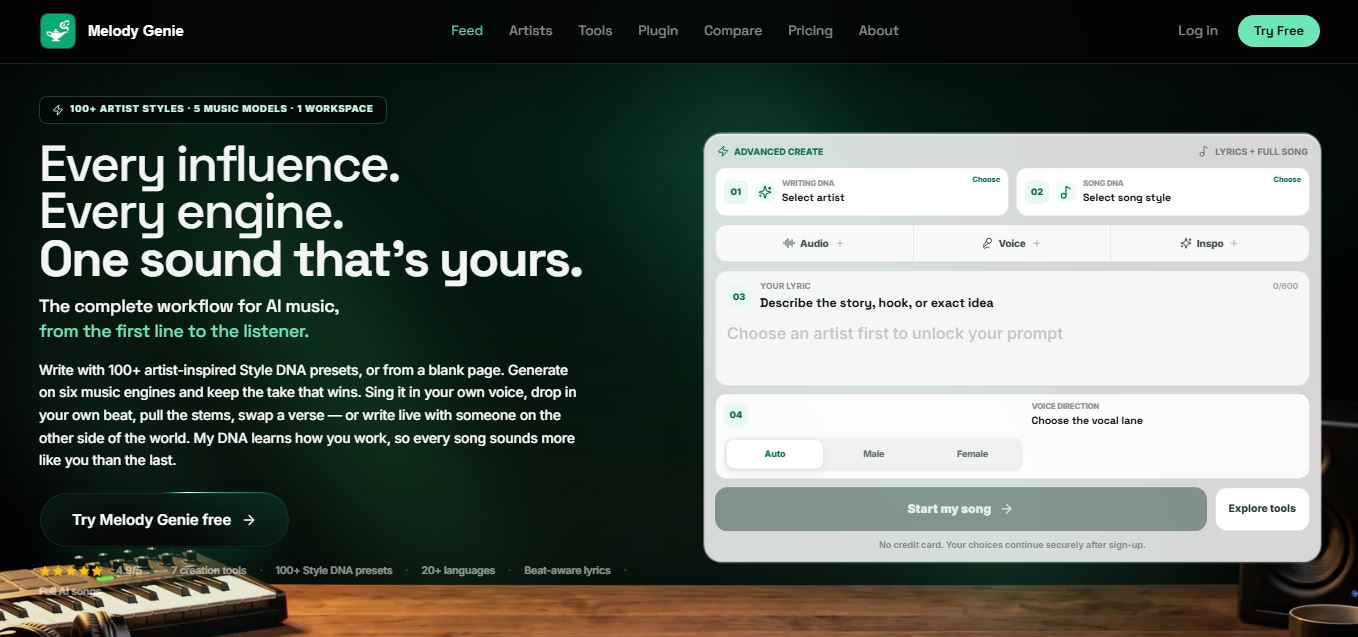
MelodyGenie is an AI-powered music generator that creates original songs from simple text prompts. Users can choose styles, moods, and genres, then instantly generate melodies and full tracks, making it easy for creators, marketers, and hobbyists to produce custom music without musical expertise.
Freemium
Kimi AI
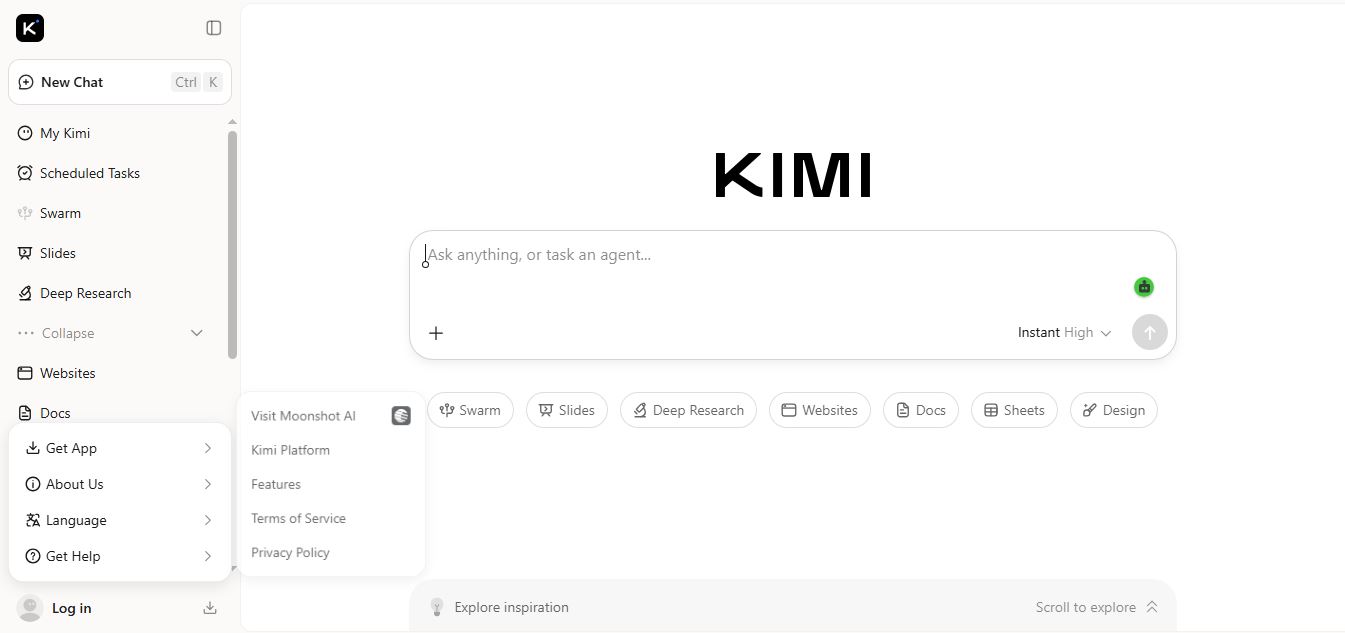
Kimi AI is an advanced AI assistant developed by Moonshot AI that helps you chat, research, write, code, and automate tasks in one place. It supports web search, file analysis, and multimodal inputs, and can even run autonomous “agent” workflows to complete complex tasks end-to-end.
Freemium
Fashion Diffusion AI
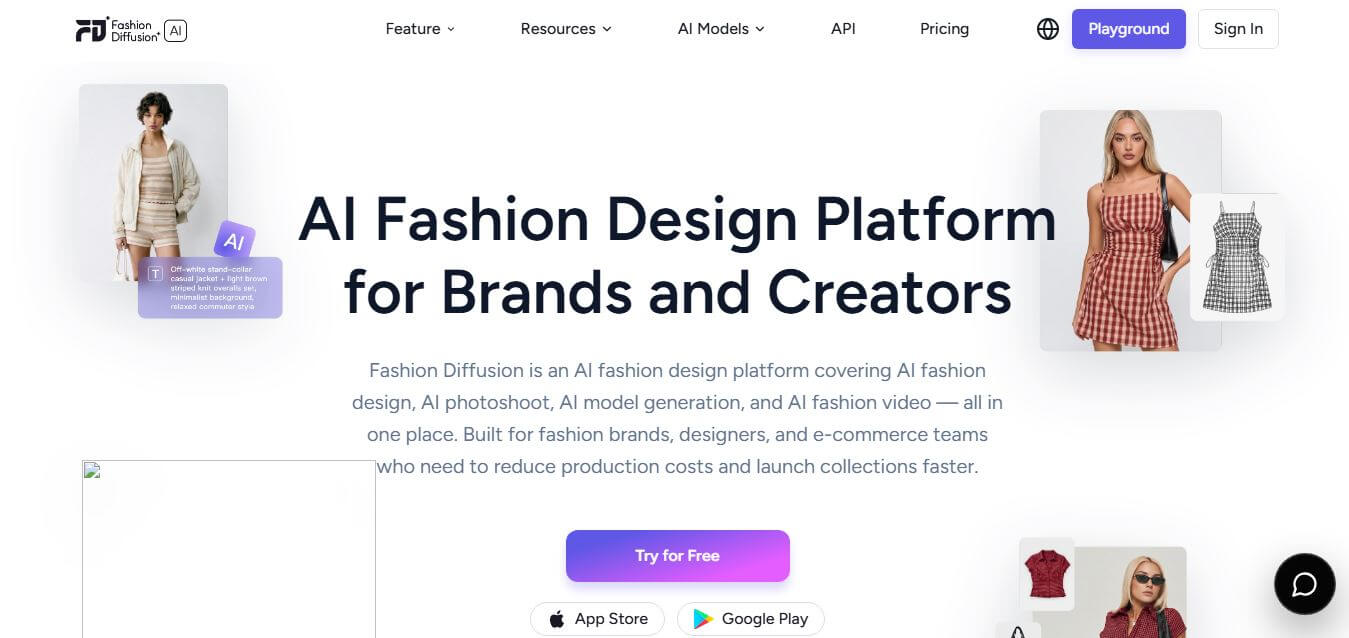
Fashion Diffusion is an AI-powered fashion design platform that helps brands and designers create clothing designs, virtual try-ons, AI models, product photos, and marketing visuals faster and cost-effectively.
Paid
Veo 4
Veo 4 AI is an AI video creation platform that generates dramatic videos from text, images, audio, and video prompts using realistic motion and synchronized sound.
Paid
Alternatives
Alternatives to Elicit
The best Elicit alternatives include Consensus, Scholarcy, SciSpace (Typeset), Genspark, Resoomer, and Connected Papers. These platforms provide AI-powered scientific literature search, document summarization, and research synthesis. While Elicit specializes in structured systematic review tables, custom multi-paper data column extraction, and grounded evidence matrices across 200M+ research articles, alternatives like Consensus focus on direct claim agreement via consensus meters, and Scholarcy converts individual PDFs into structured Summary Flashcards. Choosing the right tool depends on whether you require deep tabular parameter extraction across dozens of studies, conversational paper reading, or high-level consensus synthesis.
 4.9
4.9Yomu AI
Academic
Yomu AI is an academic writing and research workspace for students and researchers. It helps draft essays, research papers, and theses, improve writing, find and format citations, chat with PDFs and web sources, manage references, check originality, and refine academic content in one integrated workspace.
 4.9
4.9Mindgrasp
Academic
Mindgrasp is an AI-powered study assistant that helps students turn lectures, PDFs, videos, and notes into summaries, flashcards, quizzes, and study guides. It creates a complete learning system from uploaded content, enabling faster understanding, active recall, and better exam preparation with an always-available AI tutor.
 4.9
4.9RemNote
Academic
RemNote is an AI-powered study and note-taking platform that helps students turn notes, PDFs, and lectures into flashcards, quizzes, and summaries. It uses spaced repetition and an AI tutor to improve understanding, retention, and exam performance, combining learning, practice, and knowledge management in one system.
 4.9
4.9Consensus
Academic
Consensus is an AI-powered academic search engine that helps users find, understand, and summarize scientific research from over 200 million peer-reviewed papers. It delivers clear, cited answers backed by real studies, making it easier to explore evidence, compare findings, and conduct research faster and more reliably.
 4.9
4.9MathGPT
Academic
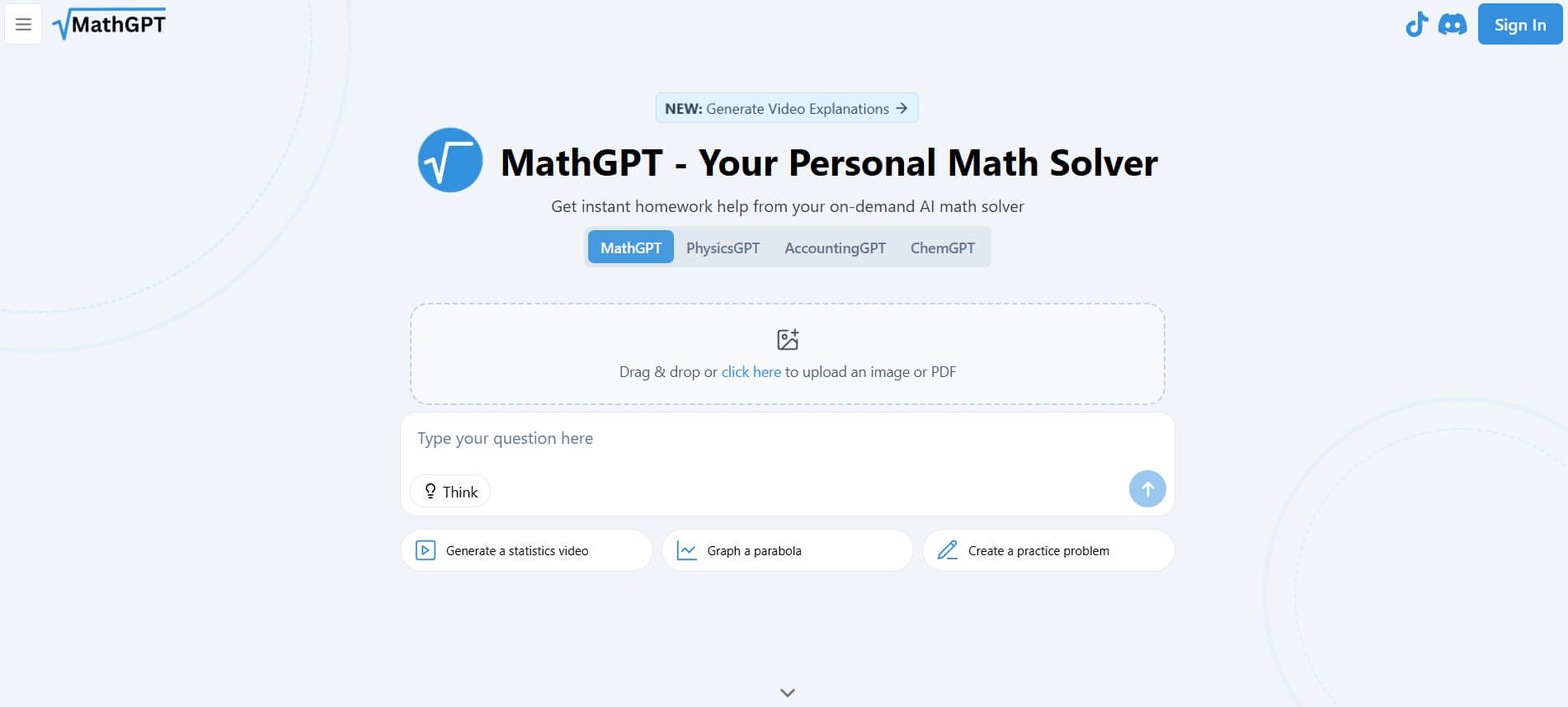
MathGPT is an AI-powered math solver and homework assistant that transforms text, photo, and PDF math problems into step-by-step explanations, interactive graphing visualizations, and animated video walk-throughs across algebra, geometry, calculus, and STEM subjects.
 4.6
4.6Flint
Education
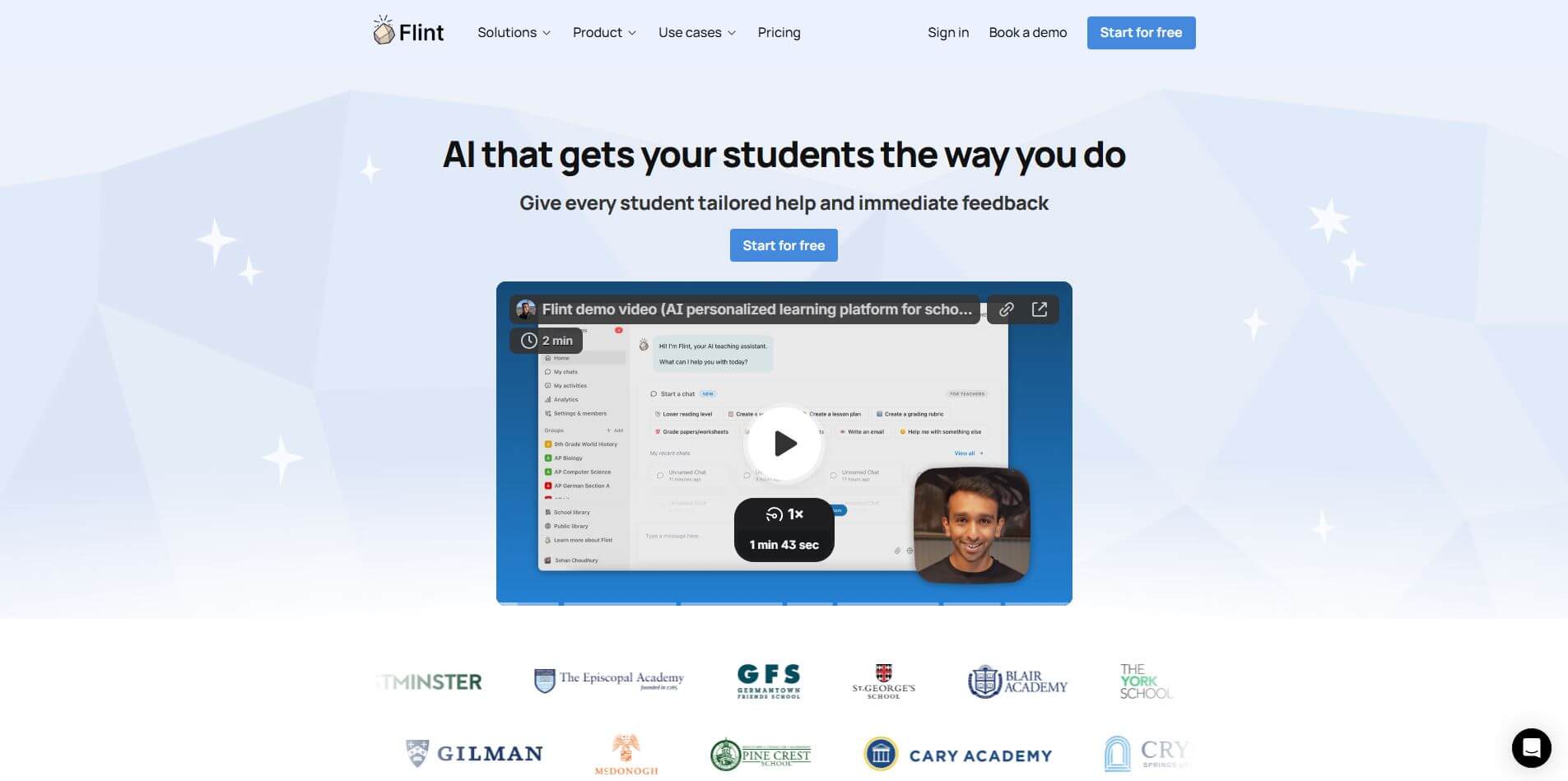
Flint K-12 is an AI-powered teaching and tutoring platform that helps educators create custom materials and provides students with real-time feedback, interactive learning, and safe, responsible AI support.
 4.5
4.5Raena AI
Academic
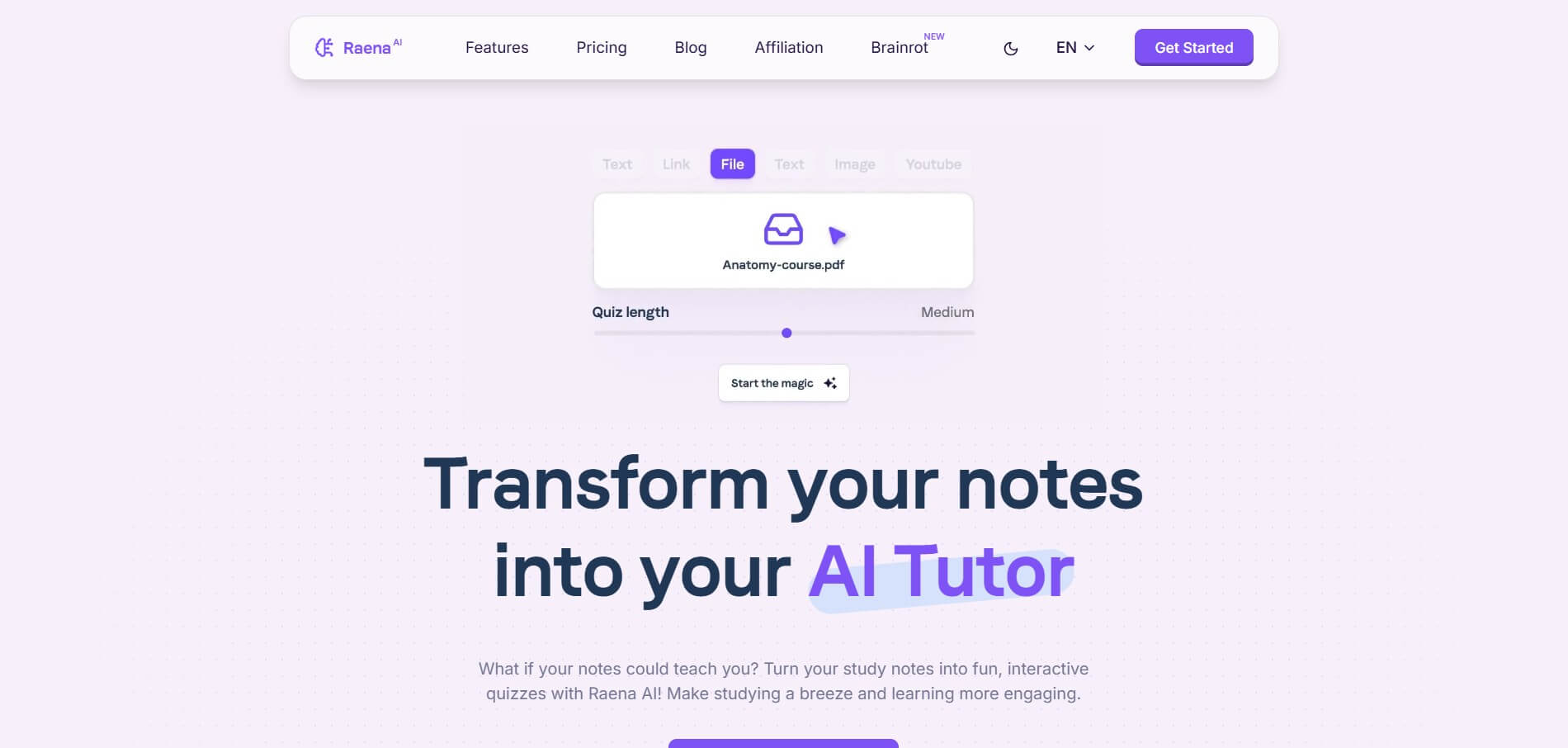
Raena AI is an AI-powered tool that turns notes, PDFs, and videos into quizzes, summaries, and flashcards for smarter, interactive learning experience
 4.5
4.5Converse
Academic
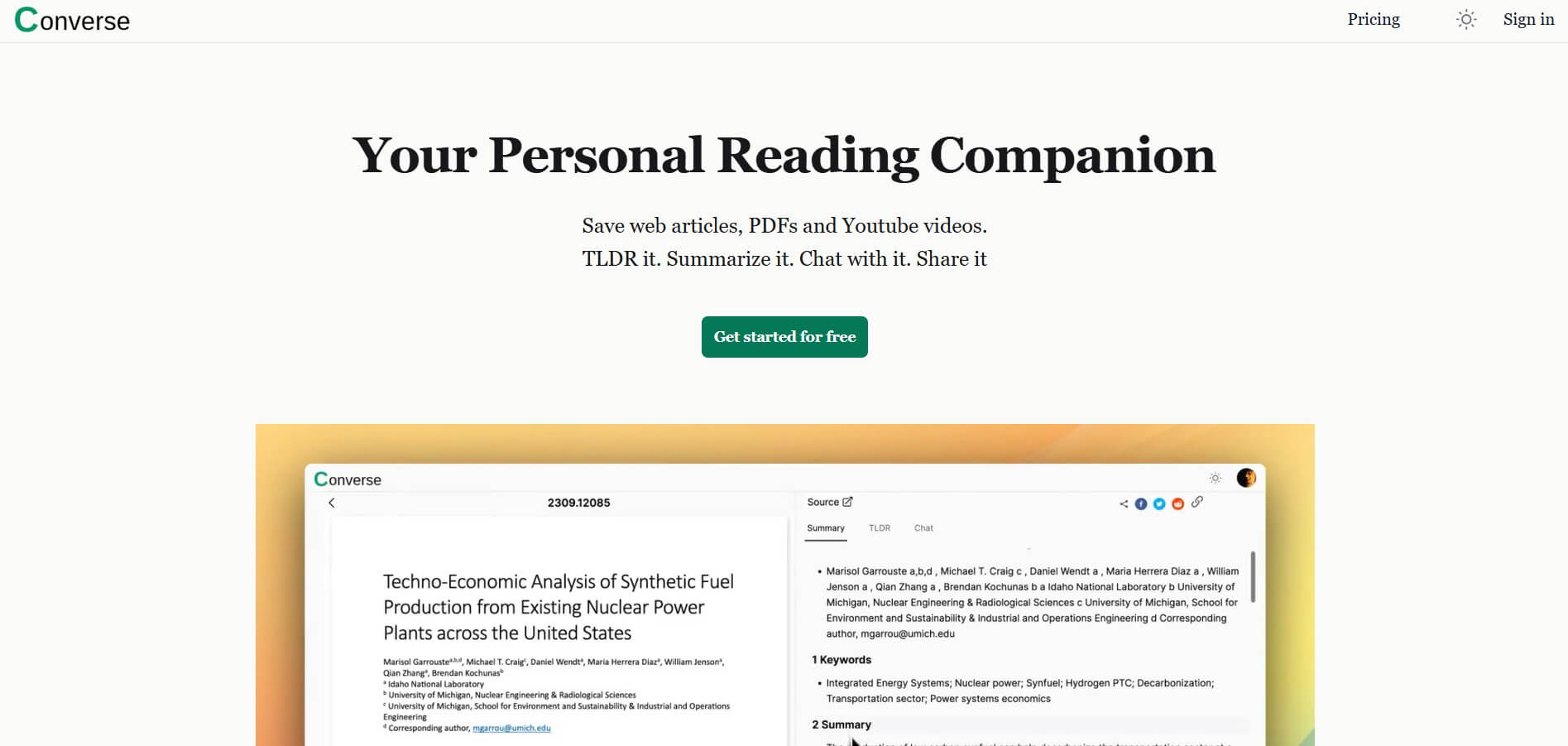
AI‑powered reading companion.
 4.4
4.4Praktika
Academic
Praktika.ai is an AI-powered language tutor app that uses lifelike avatars and real conversations to help learners practice English with confidence.