Jira
Jira by Atlassian is a project management and issue-tracking tool that helps teams plan, track, and deliver work in one place. It lets you break projects into tasks, assign owners, monitor progress through boards or timelines, automate workflows, and generate reports—making it easier for teams to stay aligned and ship faster.
What is Jira?
Atlassian Jira is a powerful project management and issue-tracking platform that helps teams plan, organize, and deliver work efficiently from a single place. It allows teams to break large projects into tasks, assign ownership, track progress through boards or timelines, and manage dependencies across teams, all while maintaining full visibility. With features like customizable workflows, automation, real-time reporting, and thousands of integrations, Jira adapts to different use cases—from software development to marketing and operations. Designed for both small teams and large enterprises, it acts as a central source of truth where collaboration, tracking, and execution happen seamlessly.
Created by Atlassian co-founders Mike Cannon-Brookes and Scott Farquhar, Jira serves as the operational backbone for over 300,000 organizations worldwide. Modern Jira unifies classic sprint backlogs, interactive Scrum/Kanban boards, and enterprise portfolio dependency roadmaps with Atlassian Rovo AI—delivering specialized AI teammates, automated issue synthesis, and deep code context connections across GitHub, GitLab, and Bitbucket. Jira offers a free forever plan for up to 10 users alongside scalable tiers starting at $7.91 per user per month.
- Developer / Company: Atlassian (Sydney, Australia / San Francisco, CA)
- Core Architecture: Cloud & Data Center Enterprise Work Management Platform
- Key Milestones: Unified Work Management integration, native Rovo AI agents, and cross-project plans
Use Cases:
- Planning agile sprint cadences, grooming backlogs, and running interactive Scrum and Kanban delivery boards
- Managing cross-team program dependencies, capacity constraints, and multi-quarter initiatives via Jira Plans
- Triaging software bugs, customer-reported issues, and infrastructure incidents with deep Git commit and pull request traceability
- Deploying Atlassian Rovo AI agents to summarize complex issue threads, draft test plans, and breakdown epics into user stories
- Automating multi-step engineering workflows and release approvals using no-code automation triggers and webhooks
Technology:
- Atlassian Teamwork Graph mapping relational links between issues, team members, PRs, deployments, and goals
- Atlassian Rovo AI intelligence layer featuring specialized agents, enterprise semantic search, and chat context
- Comprehensive Jira Query Language (JQL) engine powering real-time filtering, reporting widgets, and custom audit rules
Target Users:
- Software engineers, engineering leads, and technical architects tracking commits, releases, and feature progress
- Scrum masters, agile coaches, and technical project managers orchestrating sprints and delivery cadences
- Product managers breaking down strategic PRDs into actionable epics, stories, and sprint deliverables
- Enterprise program managers coordinating complex cross-functional dependencies across distributed divisions
Acquisition: Proprietary flagship platform developed and operated by Atlassian Corporation

Key features of Jira
Jira's key platform features are
- Agile Boards (Scrum & Kanban): Highly configurable boards supporting estimation story points, swimlanes, WIP limits, quick filters, and custom drag-and-drop workflow statuses.
- Atlassian Rovo AI Teammates: Built-in generative and reasoning AI agents that synthesize long conversation threads, generate acceptance criteria, auto-draft user stories, and uncover knowledge across your organization.
- Jira Plans (Advanced Roadmaps): Model scenarios, visualize multi-team dependencies, manage engineering capacity, and map strategic progress above the epic level in real time.
- Jira Query Language (JQL): The industry-standard querying language for slicing, filtering, and reporting across millions of issues and work items.
- Native No-Code Automation: Build smart multi-project automations with visual triggers, conditions, and actions without writing custom scripts.
- Developer Toolchain Integration: Bi-directional sync with GitHub, GitLab, Bitbucket, and CI/CD pipelines showing live commits, branches, reviews, and deploy environments on the ticket.
- Forms & Work Management: Dynamic drag-and-drop form builders allowing business and operations teams to capture standardized inputs directly into project boards.
- Enterprise Security & Compliance: Granular project permissions, audit logs, multi-region data residency, SAML SSO via Atlassian Guard, and 99.95% uptime SLAs.
Jira Pricing
Jira operates on a tiered seat-based pricing structure with progressive volume discounts, featuring a permanent free plan for small teams.
Free Plan:
- $0 / month (Free forever up to 10 users): Unlimited goals, projects, backlog, Scrum & Kanban boards, 2 GB storage, timeline views, and 150 automation steps/month
Standard Plan:
- Starts at $7.91 / user/month (progressive volume bands for larger seat counts)
- Up to 50,000 users, customizable user roles and permissions, 250 GB storage, audit logs, data residency, and Rovo AI monthly allowance (25 credits/user/month)
Premium Plan:
- Starts at $14.54 / user/month: Advanced cross-team planning with Jira Plans (Advanced Roadmaps), dependency visualization, capacity planning, unlimited storage, sandbox testing environments, 99.9% uptime SLA, and expanded Rovo AI allowances (70 credits/user/month)
Enterprise Tier:
- Custom Annual Pricing: Multi-site management (up to 150 sites), centralized user licensing, Atlassian Analytics with data lake export, 99.95% financially backed uptime SLA, and 150 Rovo AI credits/user/month
Disclaimer: Jira Cloud pricing scales progressively as team seat counts increase. Jira Service Management and Jira Product Discovery are billed as companion products. For exact volume quotes, please visit atlassian.com/software/jira/pricing.
Who is using Jira?
Jira is used by millions of engineering and business professionals, including
- Enterprise Software Engineering Organizations: Coordinating global multi-team delivery cycles, tracking code repositories, and maintaining compliance auditability
- Fast-Growing Tech Startups: Running fast two-week sprints and maintaining technical product backlogs alongside GitHub pull requests
- Agile Product Management Teams: Mapping user personas, roadmaps, and epic breakdowns with Jira Product Discovery and Confluence
- Cross-Functional IT & Ops Squads: Managing service requests and change enablement workflows alongside Jira Service Management
Best Jira Alternatives
Some of the strongest Jira alternatives include
- Linear
- GitHub Issues & Projects
- ClickUp
- Monday.com (Dev)
- Asana
- Shortcut (formerly Clubhouse)
Pros and Cons of Jira
Pros
- Unmatched workflow configurability, custom field architectures, and permission granularity
- Massive ecosystem of thousands of Atlassian Marketplace integrations, plugins, and webhooks
- Deep Git toolchain integration displaying commits, branches, reviews, and deploy status right on tickets
- Jira Plans provides powerful cross-team dependency mapping and capacity modeling for large organizations
- Generous free-forever tier for up to 10 users with full Scrum and Kanban capabilities
Cons
- High administrative overhead; misconfigured workflows can lead to visual clutter and process paralysis
- Perceived as slower and more complex compared to lightweight, keyboard-first issue trackers like Linear
- Advanced cross-project portfolio planning (Plans) is locked behind the Premium and Enterprise pricing tiers
Why Choose Jira?
While lightweight issue trackers cater well to small boutique agencies, Jira is engineered to handle complexity at scale without breaking down.
- Adapts to virtually any organizational process, security structure, and compliance framework
- Links business goals down to the exact Git commit, pull request, and deployment build
- Provides native Rovo AI agents that synthesize complex backlogs and eliminate administrative chore
- Offers an established, enterprise-proven foundation trusted by the world's most demanding engineering teams
Jira vs. Competitors
The main difference between Jira, Linear, GitHub Issues, and ClickUp lies in organizational scale and workflow flexibility. While Linear prioritizes speed, minimalism, and strict opinionated conventions, and GitHub Issues serves code-adjacent developer tasks, Jira delivers an enterprise-grade platform capable of orchestrating complex multi-team dependencies, custom audit governance, and cross-departmental business workflows.
| Feature / Tool | Jira (atlassian.com) | Linear | GitHub Issues | ClickUp |
|---|---|---|---|---|
| Core Focus | Enterprise Agile & Project Tracking | Speed-First Developer Issue Tracker | Code-Native Repository Tracking | All-in-One Workplace Productivity |
| Workflow Customization | Unlimited custom workflows & schemes | Opinionated, streamlined states | Custom status labels & projects | Custom statuses & automations |
| Cross-Project Planning | Jira Plans (Scenario & Capacity) | Initiatives & Roadmaps | Cross-repo project tables | Dashboards & Gantt charts |
| AI Teammates & Context | Atlassian Rovo AI Agents | Linear AI (Summaries & triage) | Copilot Workspace / Issues | ClickUp Brain |
| Starting Price | Free (10 users) / From $7.91/user/mo | Free (250 issues) / From $8/user/mo | Free / Included with GitHub | Free / From $7/user/mo |
| Best For | Scaling software teams & enterprise orgs | Modern high-velocity tech startups | Open-source & developer-only repos | Teams consolidating docs, tasks & chat |
How do we rate Jira?
| Parameter | Rating (out of 5) |
|---|---|
| Agile Workflow Flexibility & Configuration | 5.0 |
| Toolchain & Git Integration Depth | 5.0 |
| Cross-Project Roadmapping & Jira Plans | 4.9 |
| Atlassian Rovo AI Intelligence | 4.8 |
| Value for Money | 4.7 |
| Overall Score | 4.88 |
Jira Review
Jira remains the standard that all software delivery and agile tracking platforms measure themselves against. While lightweight challengers have emerged to satisfy minimal developer setups, Jira's depth, configurability, and enterprise governance make it indispensable for organizations navigating cross-team dependencies and regulatory compliance. With the addition of Atlassian Rovo AI agents, improved work management templates, and the continued power of Jira Plans, Jira provides the robust foundation necessary to steer complex engineering from idea to production.
Conclusion
Jira is a powerful and flexible project management platform designed to help teams plan, track, and deliver work at scale. It acts as a central source of truth where projects are broken down into tasks, assigned to team members, and tracked through customizable workflows, boards, and timelines. Its biggest strength lies in visibility and coordination—teams can monitor progress in real time, manage dependencies, automate repetitive work, and generate reports without relying on scattered tools or manual updates. With support for Agile methodologies like Scrum and Kanban, plus thousands of integrations and AI-powered automation, it adapts to software, marketing, product, and operations teams alike. While it may require setup to match specific workflows, the scalability and control it offers are unmatched.
FAQ
What is Jira?
Jira is a project management and issue-tracking tool used by teams to plan, track, and manage work. It’s widely used in software development for handling bugs, tasks, and agile workflows like Scrum and Kanban.
How does Jira work?
Jira organizes work into “issues” (tasks, bugs, stories) that move through workflows like To Do → In Progress → Done. Teams can assign tasks, set priorities, track progress, and collaborate in real time.
What can you do with Jira?
You can manage projects, track bugs, plan sprints, create roadmaps, automate workflows, generate reports, and collaborate across teams—all in one place.
Is Jira only for developers?
No, while it’s popular with engineering teams, Jira is also used by marketing, HR, operations, and product teams to manage workflows and projects.
What are Scrum and Kanban boards in Jira?
Scrum boards help teams manage work in sprints with deadlines, while Kanban boards focus on continuous workflow without fixed timelines. Jira supports both methods.
Does Jira support automation?
Yes, Jira includes built-in automation to handle repetitive tasks—like assigning issues, updating statuses, sending notifications, and more—without manual effort.
Can Jira integrate with other tools?
Yes, Jira integrates with hundreds of tools like GitHub, Slack, Confluence, and CI/CD platforms, making it easy to connect your workflow across systems.
Is Jira free to use?
Yes, Jira offers a free plan for small teams (up to a certain number of users). Paid plans unlock advanced features, automation limits, and enterprise capabilities.
Who should use Jira?
Jira is ideal for software teams, startups, enterprises, and any organization that needs structured project tracking, collaboration, and workflow management.
User Reviews
No reviews yet for Jira.
Featured Tools
Featured AI tools from TechShark

Melody Genie
MelodyGenie is an AI-powered music generator that creates original songs from simple text prompts. Users can choose styles, moods, and genres, then instantly generate melodies and full tracks, making it easy for creators, marketers, and hobbyists to produce custom music without musical expertise.
Freemium
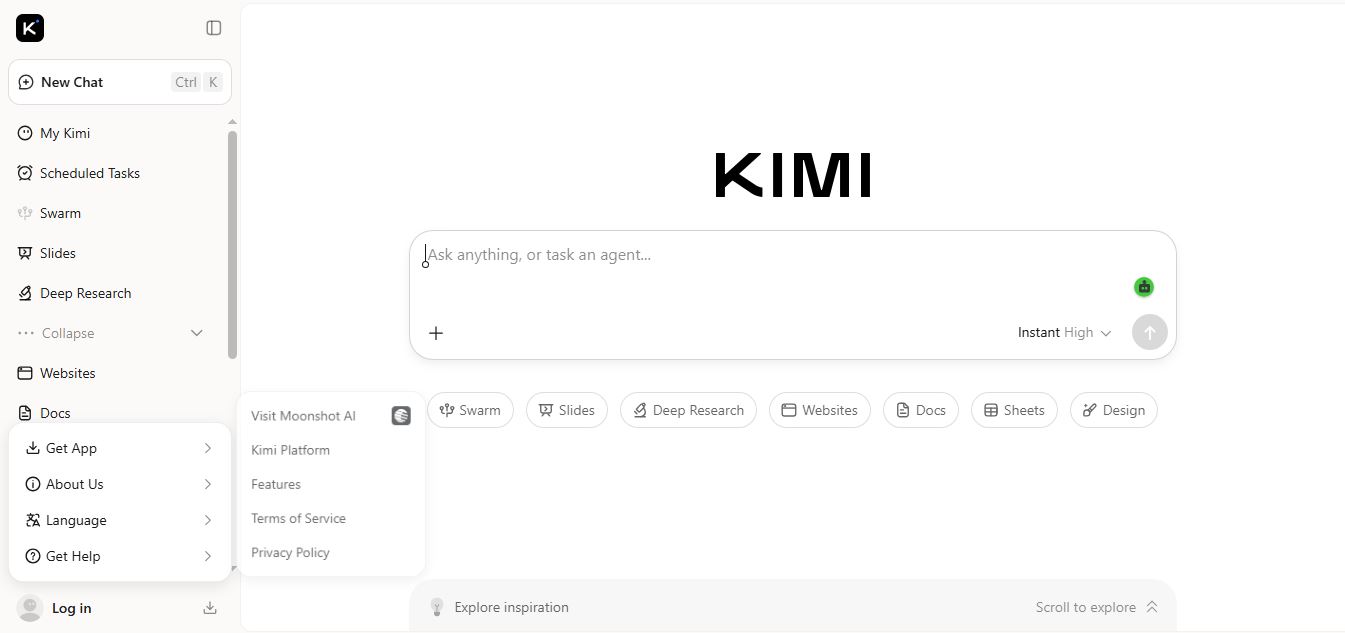
Kimi AI
Kimi AI is an advanced AI assistant developed by Moonshot AI that helps you chat, research, write, code, and automate tasks in one place. It supports web search, file analysis, and multimodal inputs, and can even run autonomous “agent” workflows to complete complex tasks end-to-end.
Freemium

Fashion Diffusion AI
Fashion Diffusion is an AI-powered fashion design platform that helps brands and designers create clothing designs, virtual try-ons, AI models, product photos, and marketing visuals faster and cost-effectively.
Paid
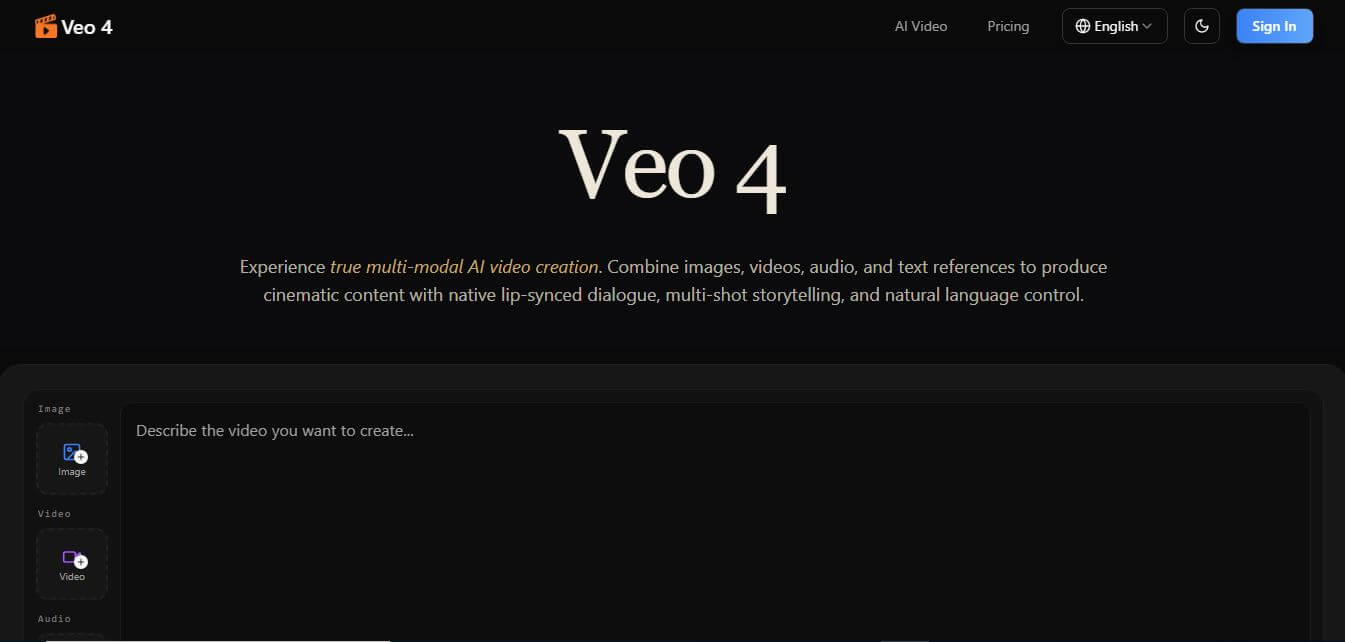
Veo 4
Veo 4 AI is an AI video creation platform that generates dramatic videos from text, images, audio, and video prompts using realistic motion and synchronized sound.
Paid
Alternatives
Alternatives to Jira
The best Jira alternatives include Linear, GitHub Issues & Projects, ClickUp, Monday.com (Dev), Asana, and Shortcut. These platforms provide agile issue tracking, sprint planning, and project management workspaces. While Jira specializes in deeply customizable enterprise workflows, cross-project dependency modeling with Jira Plans, Atlassian Rovo AI agents, and a massive marketplace ecosystem, alternatives like Linear prioritize minimal, keyboard-first speed for tech startups, and GitHub Issues integrates directly into git repository tabs.
 4.9
4.9Mixpanel
Project Management
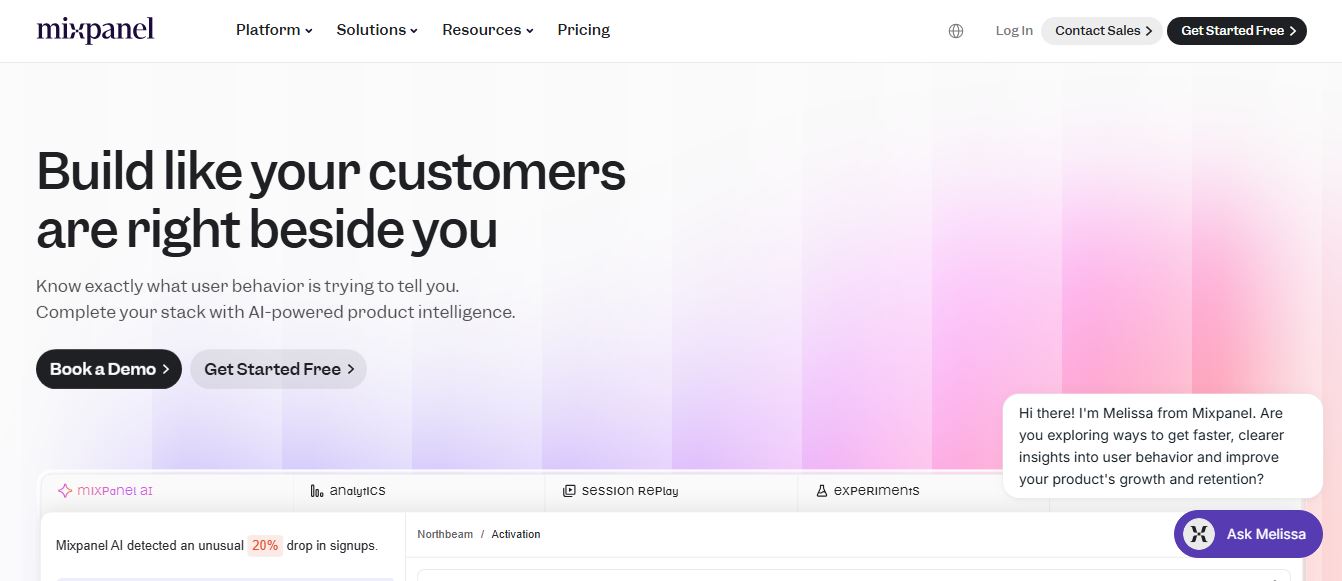
Mixpanel is a product analytics platform that helps businesses track user behavior, analyze engagement, and measure key metrics across apps and websites. It provides real-time insights, funnels, and cohort analysis, enabling teams to understand user journeys and improve retention, conversion, and overall product performance.
 4.9
4.9Amplitude
Project Management
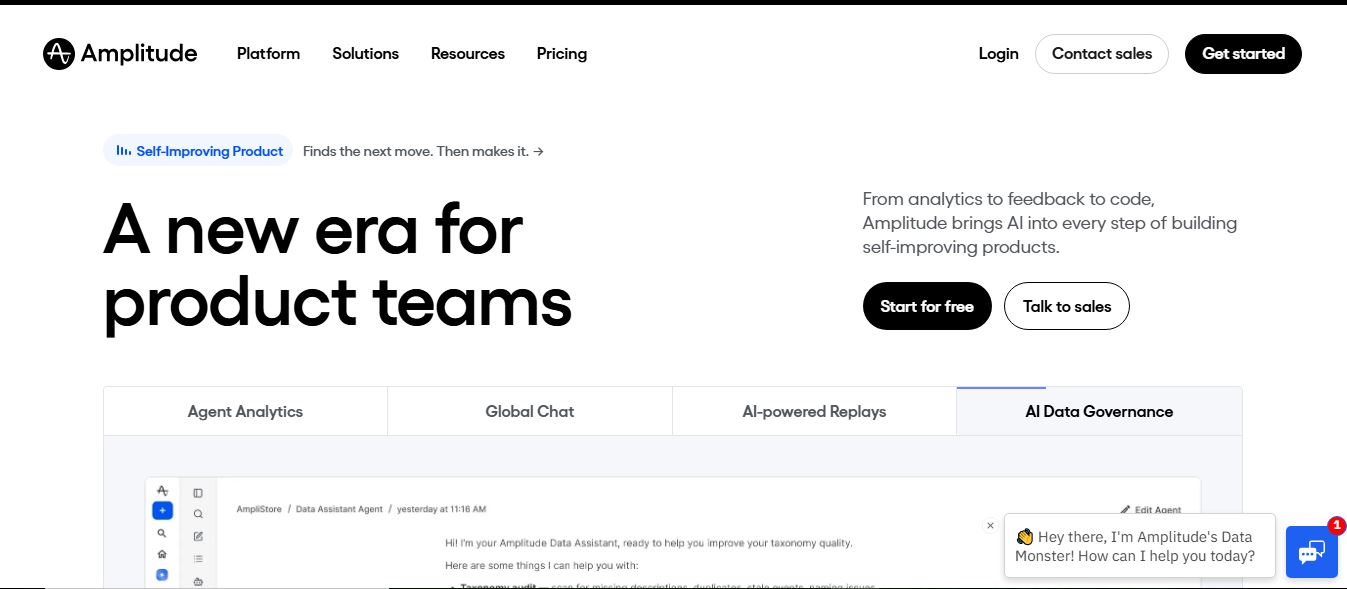
Amplitude is a digital analytics platform that helps businesses track user behavior, measure product performance, and understand customer journeys. It provides insights into how users interact with apps and websites, enabling teams to optimize experiences, improve retention, and drive growth through data-driven decisions.
 4.8
4.8Productboard
Project Management
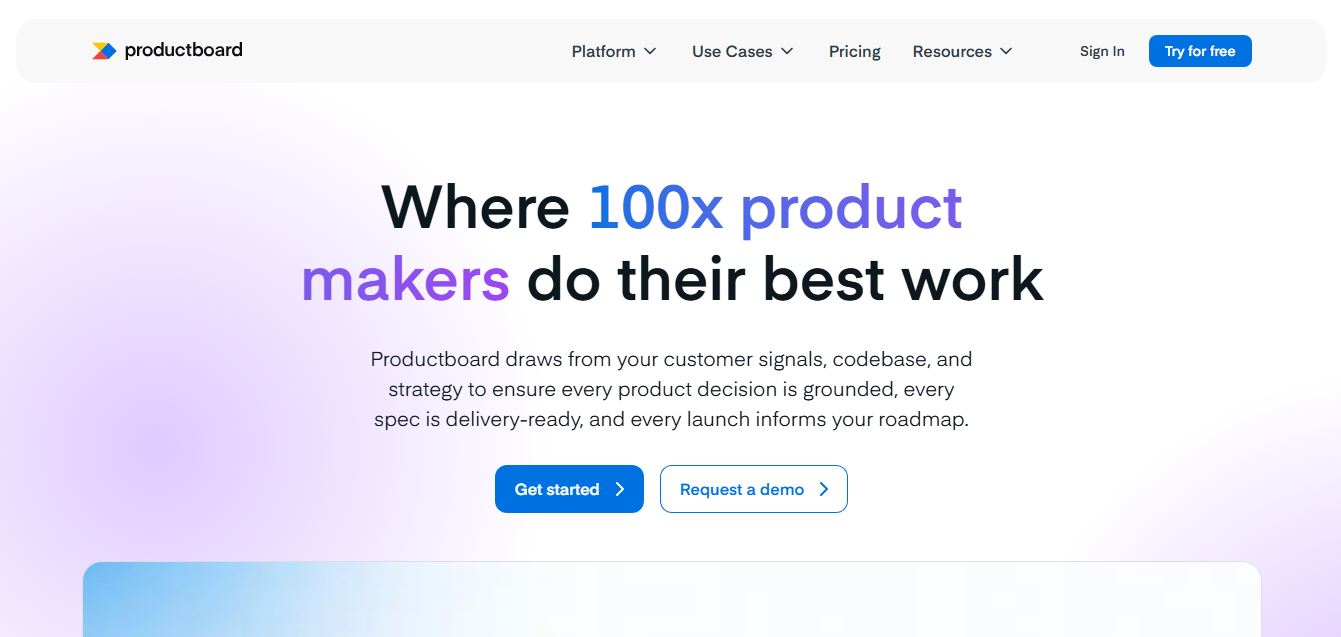
Productboard is a product management platform that helps teams collect user feedback, prioritize features, and plan roadmaps. It centralizes customer insights and aligns teams around what to build next, enabling companies to create products that better meet user needs.
Wrike
Project Management
Wrike is a work management and collaboration platform that helps teams plan projects, assign tasks, track progress, and meet deadlines in one place. It offers dashboards, automation, and reporting tools, making it easier for teams to stay organized, collaborate efficiently, and manage complex workflows at scale.
 4.9
4.9Kroolo
Project Management
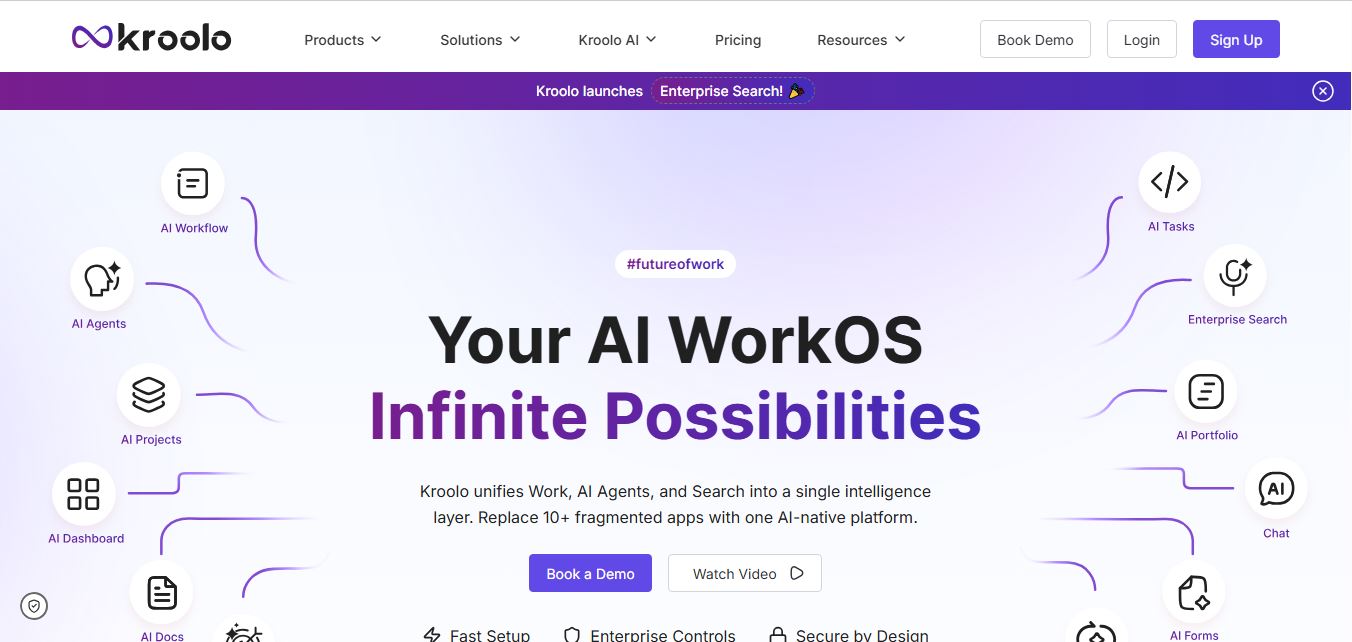
Kroolo is an AI-powered productivity and project management platform that helps teams plan tasks, track progress, and collaborate in one place. It combines project tracking, document management, and AI assistance to streamline workflows, automate routine work, and improve team efficiency across projects.
 4.7
4.7Morgen
Project Management
Morgen is a time management desktop and mobile app that unifies multiple calendars, aggregates tasks from third-party tools, and uses AI-driven time-blocking to create structured daily schedules.
 4.9
4.9Todoist
Project Management
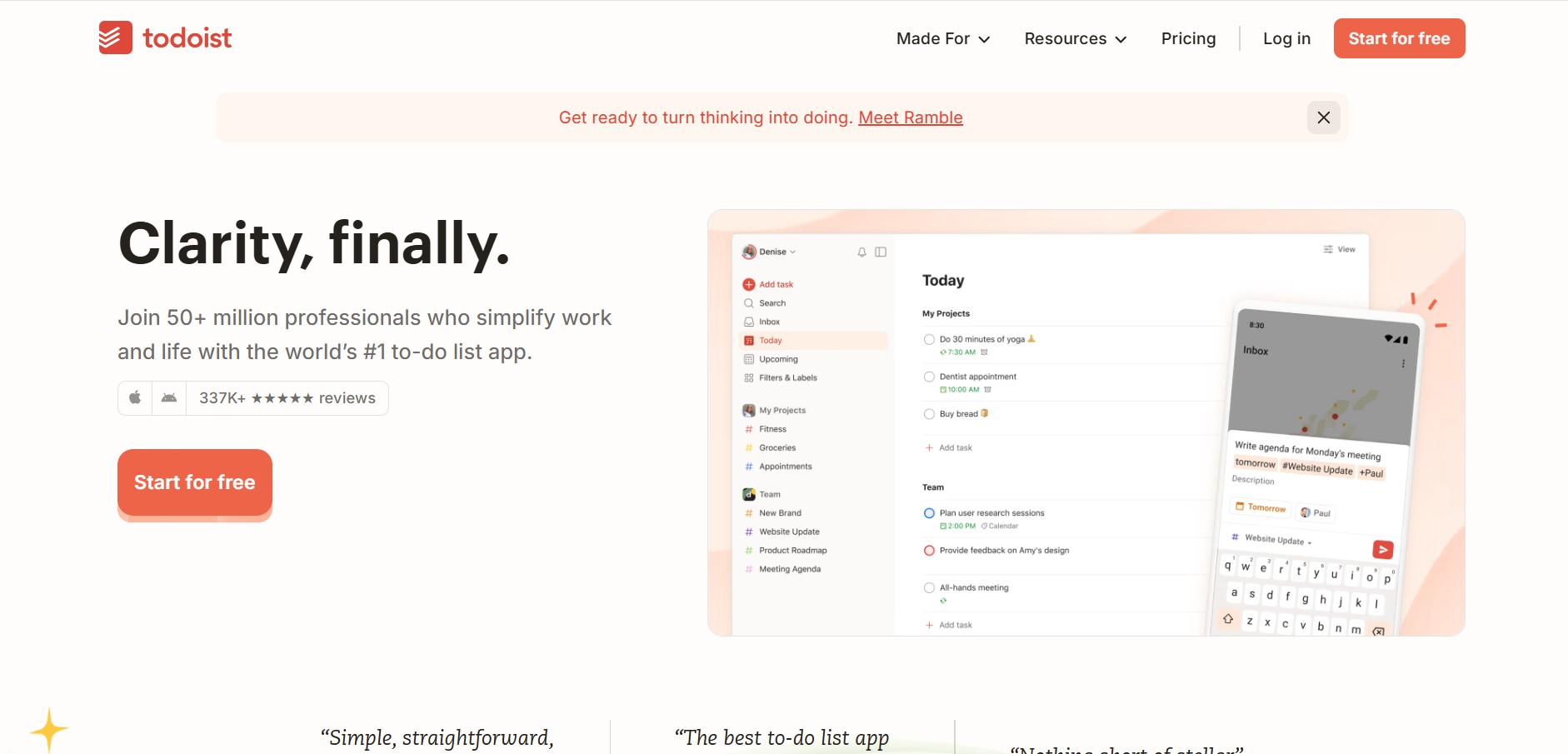
Todoist is a widely popular task management and to-do list application developed by Doist, featuring natural language task creation, sub-tasks, productivity tracking, and multi-platform syncing.
 4.8
4.8Basecamp
Project Management
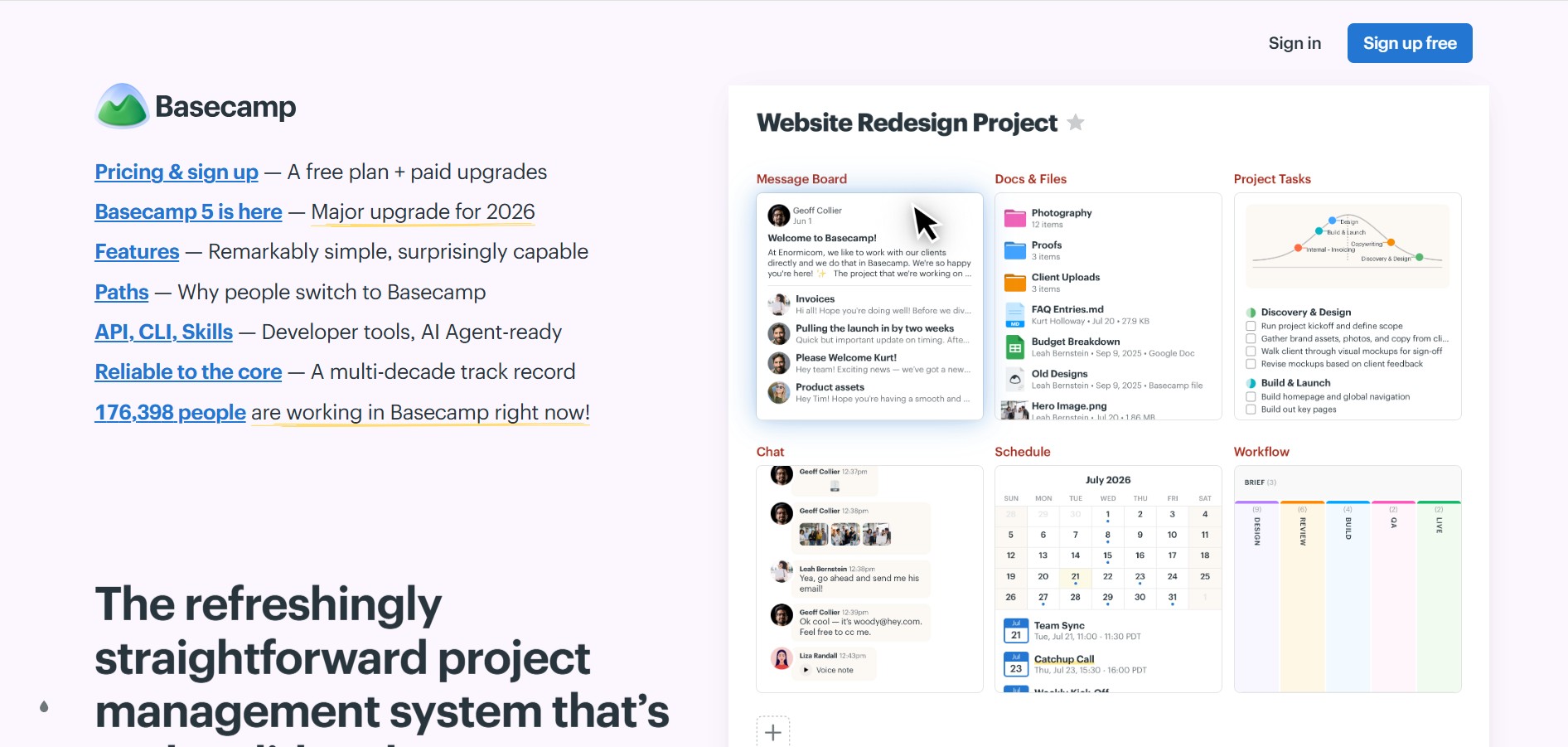
Basecamp is an all-in-one project management and team communication software created by 37signals to organize tasks, discussions, files, and schedules in one centralized platform.
 4.9
4.9Linear
Project Management
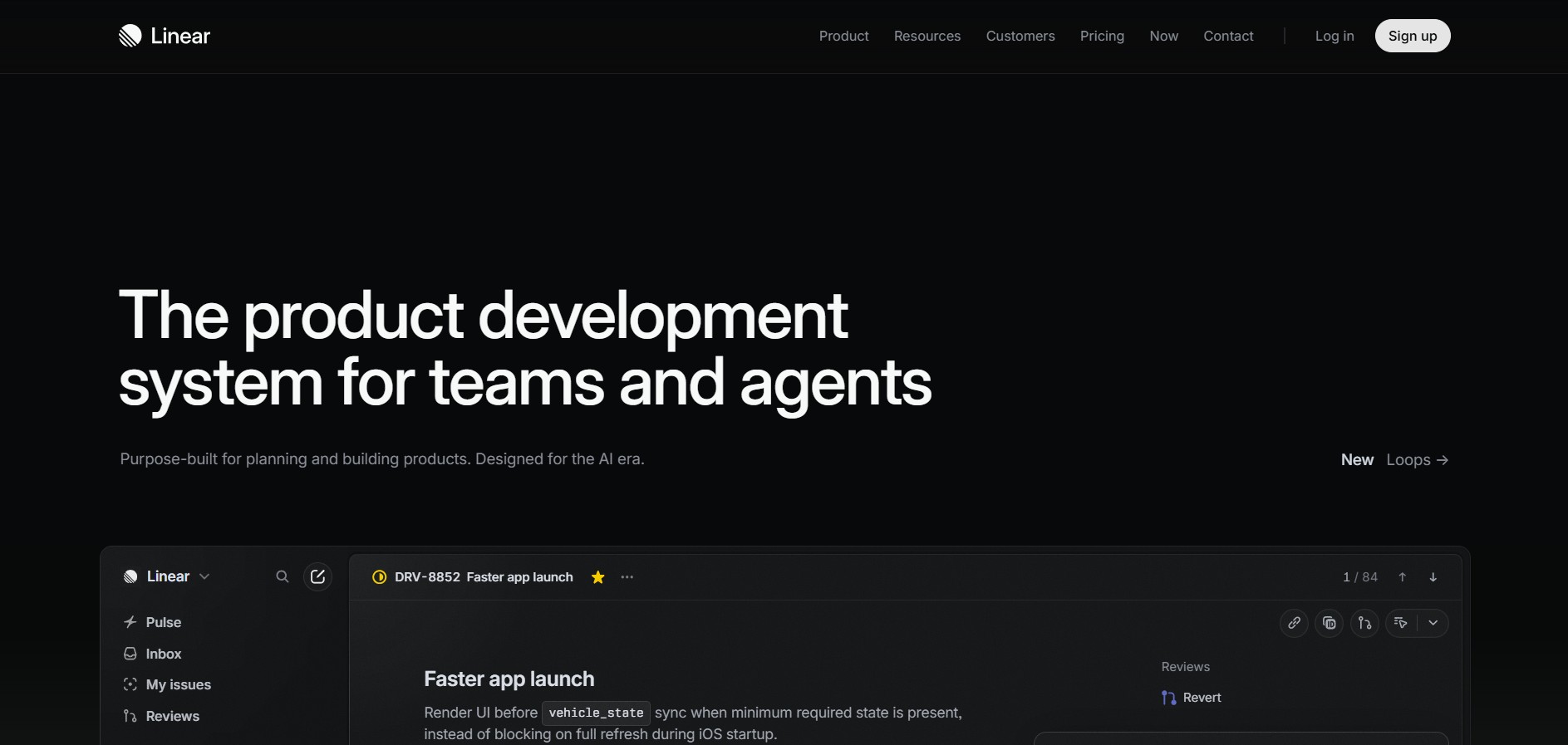
Linear is a high-performance project management and issue tracking software built specifically for software engineering and product development teams.