
Codeflying
CodeFlying is an app builder that lets users create full-stack web and mobile applications by describing ideas, generating frontend, backend, database, and deployment setup quickly.
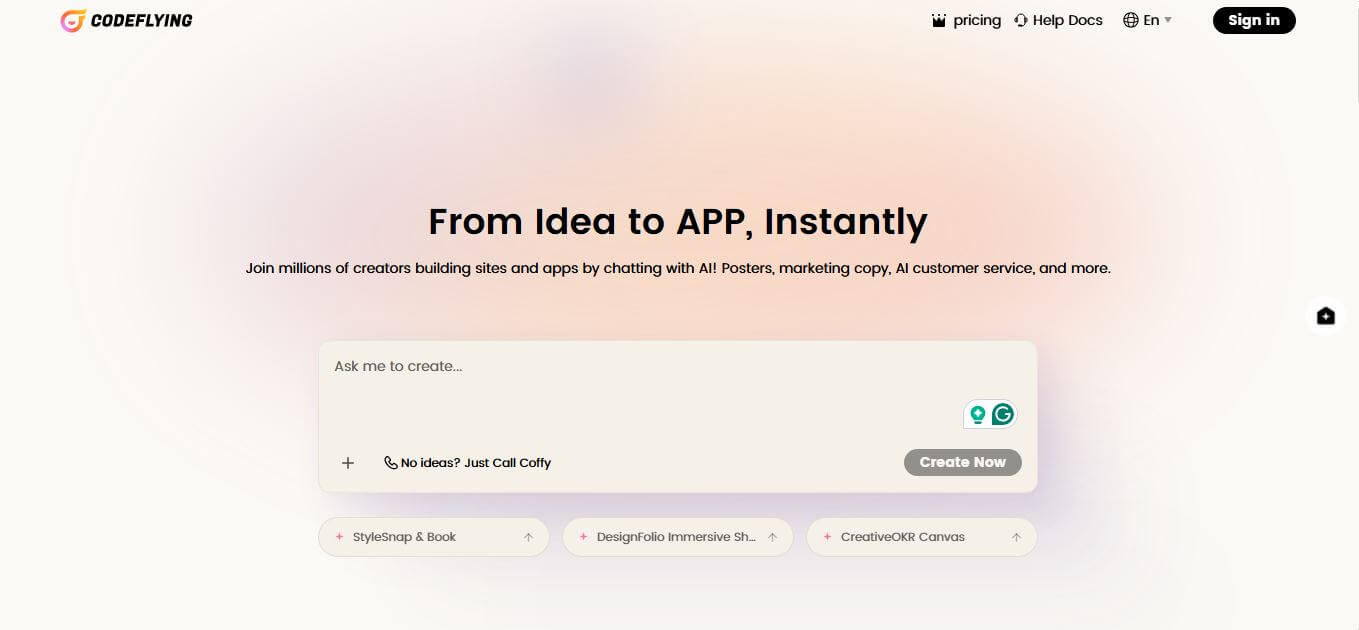
What is Codeflying AI?
CodeFlying is an AI-powered low-code/no-code platform that lets users craft full-stack apps by just describing their thoughts in natural language. Instead of manually writing the frontend, backend, database, API, and deployment code, you simply explain your needs, and CodeFlying’s AI handles much of the development process. It’s mainly built for creators, entrepreneurs, startups, businesses, and marketers, and also for people who don't really have a deep programming background. With CodeFlying you can generate web and mobile applications; it can bring an administrative backend and support integrations, and then you can keep improving what you made by using conversational instructions.
CodeFlying is a growing app-building platform that allows users to create full-stack applications through simple prompts. The platform has reportedly served over 500,000+ creators worldwide and helped generate more than 1,000,000 apps, along with 16+ billion lines of code automatically. In terms of traffic, it has reached around 110K+ monthly visits in global AI rankings, showing steady growth. These numbers highlight its rising adoption among creators, freelancers, and small businesses exploring faster app development solutions.
- Founder: KuaFuAI, also known as Beijing KuaFu Technology, developed CodeFlying. Public company information identifies KuaFuAI as the organization behind CodeFlying, although the official CodeFlying pages reviewed do not clearly identify a specific individual founder.
- Launch: Third-party AI directories place CodeFlying's release around 2025. The platform continues to develop its AI application-generation capabilities and regional offerings in 2026.
- Use Cases: CodeFlying can create websites, mobile applications, business tools, dashboards, internal systems, prototypes, mini apps, AI-powered applications, and startup MVPs.
- Technology: CodeFlying uses a multi-agent AI architecture in which different AI agents can handle tasks such as requirements analysis, interface design, code generation, testing, optimization, and deployment.
- Target Users: The platform primarily targets non-technical creators, entrepreneurs, startup founders, marketers, small businesses, agencies, freelancers, and developers who want to accelerate application development.
- Acquisition: CodeFlying appears to acquire users through direct online access, AI app-building demonstrations, example applications, registration, and creator-focused positioning. Its global site promotes joining hundreds of thousands of creators and provides ready-made application examples that users can try.

CodeFlying Key Features
CodeFlying key features are
- AI App Generation: Describe an application idea in natural language, and CodeFlying can transform the request into a working application.
- Full-Stack Application Creation: CodeFlying is designed to generate more than a frontend interface, with support for backend logic, databases, APIs, authentication, and other application components.
- Multi-Agent Development: Its multi-agent framework coordinates specialized AI agents for tasks such as requirement analysis, UI design, coding, testing, and optimization.
- Natural Language Development: Users can communicate with the platform using ordinary language rather than needing to understand programming frameworks or development environments.
- Built-In Backend and Admin Panel: CodeFlying can automatically provide backend infrastructure and management functionality, reducing the amount of operational development required.
- Multi-Platform Support: The platform supports application creation across websites, mobile applications, mini apps, and other deployment formats.
- Real-Time Iteration: Users can continue describing changes to refine an application rather than rebuilding the entire project manually.
- AI Features: CodeFlying supports adding AI-related capabilities such as text generation, image generation, image recognition, and voice functions according to third-party product reviews.
- Integrations: The platform has been reported to support a broad integration ecosystem, including MCP services and external services.
- Source Code Ownership: Paid capabilities have been reported to include source-code export, giving users greater control over applications created with the platform.
CodeFlying Pricing
CodeFlying's pricing information can vary by region and product version, so users should consult the official platform before purchasing.
A third-party review published in 2026 reports the following pricing structure:
- Free Plan: $0 per month. This plan is intended for users who want to experiment with CodeFlying's AI development workflow.
- Standard Plan: Reported at $25 per month.
- Advanced Plan: Reported at $40 per month.
- Premium Plan: Reported at $200 per month.
Disclaimer: For the latest and most accurate pricing information, please visit the official CodeFlying website.
Who Is Using CodeFlying?
Creators who want to turn ideas into working applications without learning a complete programming stack.
- Small businesses that need custom internal tools, dashboards, websites, or customer-facing applications.
- Marketers who want to experiment with interactive digital products and landing experiences.
- Freelancers and agencies that want to accelerate initial application development for clients.
- Developers who want to reduce repetitive development work and generate application foundations faster.
- Students and beginners who want to experiment with software creation through natural-language instructions.
What Are the Best Code Flying Alternatives?
Some Code Flying alternatives are
CodeFlying Pros and Cons
Pros
- AI can generate applications from natural-language descriptions.
- Designed to reduce the technical barrier to application development.
- Supports full-stack application generation.
- Multi-agent architecture can divide complex development tasks among specialized AI agents.
- Supports multiple application formats.
- Includes backend and administrative functionality in its application-generation workflow.
- Useful for prototypes, MVPs, internal tools, and business applications.
Cons
- AI-generated applications may still require testing and refinement.
- Complex requirements can produce inconsistent results if prompts are unclear.
- Advanced customization may require technical knowledge.
- Pricing and feature limits can vary between versions and regions.
- Some advanced capabilities may be restricted to paid plans.
- Users should review generated applications carefully before using them in production.
Why Choose CodeFlying?
CodeFlying is worth considering if your main goal is to move from an idea to a functional application quickly.
- No-Code Development: You can explain what you want without starting from a blank code editor.
- Faster MVP Creation: Startup founders can use AI to create an initial product and test an idea before investing heavily in development.
- Full-Stack Workflow: CodeFlying aims to handle frontend, backend, databases, APIs, and deployment rather than focusing only on visual mockups.
- Beginner Friendly: The conversational interface can make application development more approachable for people with limited programming experience.
- Multi-Agent Automation: Specialized AI agents can work on different development tasks, helping automate a larger portion of the software-development process.
- Continuous Iteration: Users can refine an application by describing additional requirements instead of manually rebuilding individual components.
- Operational Support: Built-in backend and administrative features can make generated applications more useful as working products rather than simple prototypes.
CodeFlying vs Competitors
| Feature | CodeFlying | Lovable | Bolt | Replit |
|---|---|---|---|---|
| Natural-language app generation | Yes | Yes | Yes | Yes |
| Full-stack development | Yes | Yes | Yes | Yes |
| Multi-agent development | Yes | AI-assisted | AI-assisted | AI-assisted |
| Mobile app focus | Strong | More web focused | More web focused | Broad |
| Built-in backend | Yes | Yes | Depends on project | Yes |
| Admin functionality | Available | Project dependent | Project dependent | Project dependent |
| Beginner friendly | High | High | High | Medium |
| Code access | Available on supported plans | Yes | Yes | Yes |
| Best for | Non-technical creators and rapid app creation | Web apps | Rapid web development | Developers and teams |
How Do We Rate CodeFlying?
| Category | Rating out of 5 |
| Ease of Use | 4.7 |
| AI App Generation | 4.6 |
| Full-Stack Capabilities | 4.5 |
| Features | 4.5 |
| Multi-Platform Support | 4.6 |
| Beginner Friendliness | 4.8 |
| Customization | 4.1 |
| Pricing Transparency | 3.8 |
| Overall Rating | 4.5 |
CodeFlying Review
CodeFlying is an interesting AI application builder for people who have ideas but do not want to spend weeks learning programming before creating their first product.
Its biggest advantage is the attempt to automate the entire application lifecycle. Rather than simply generating a landing page, CodeFlying aims to handle requirements, interface design, code generation, backend functionality, testing, and deployment through coordinated AI agents.
The built-in backend and administrative capabilities are particularly useful for businesses because a functional application needs more than attractive screens. Users often need authentication, data management, APIs, dashboards, and operational controls as well.
The main limitation is that AI-generated software is not automatically perfect. Users with complicated requirements may need to provide detailed prompts and perform several rounds of testing and refinement. People building security-sensitive or highly customized production applications should also review the generated architecture and code carefully.
Overall, CodeFlying is best suited to rapid prototypes, MVPs, business tools, experiments, and applications where speed and accessibility are more important than manually controlling every line of code.
Conclusion
CodeFlying makes app development feel much more approachable, especially for people who don’t come from a technical background. Instead of spending weeks coding, you can turn an idea into a working app in a much shorter time. It’s not perfect for highly complex or large-scale projects, but for quick prototypes, MVPs, and simple applications, it works really well. Overall, CodeFlying is a practical choice for founders, creators, and small teams who want to build and launch apps faster without getting stuck in technical complexity.
People are also reading:
FAQ
What is CodeFlying?
CodeFlying is an AI-powered application builder that allows users to create websites, mobile applications, mini apps, and other software by describing their requirements in natural language.
Is CodeFlying free?
CodeFlying has been reported to offer a free plan, while third-party sources report paid plans starting around $25 per month. Pricing and available features can change, so users should verify the current plans before subscribing.
Do I need coding skills to use CodeFlying?
No. CodeFlying is designed around natural-language instructions, allowing users to describe what they want instead of manually writing every part of the application.
What can I build with CodeFlying?
You can use CodeFlying to create websites, mobile applications, mini apps, business tools, dashboards, MVPs, internal applications, and other AI-powered software projects.
Who is CodeFlying best for?
CodeFlying is particularly suitable for non-technical founders, creators, startups, small businesses, marketers, freelancers, agencies, and beginners who want to create applications quickly.
User Reviews
No reviews yet for Codeflying.
Featured Tools
Featured AI tools from TechShark
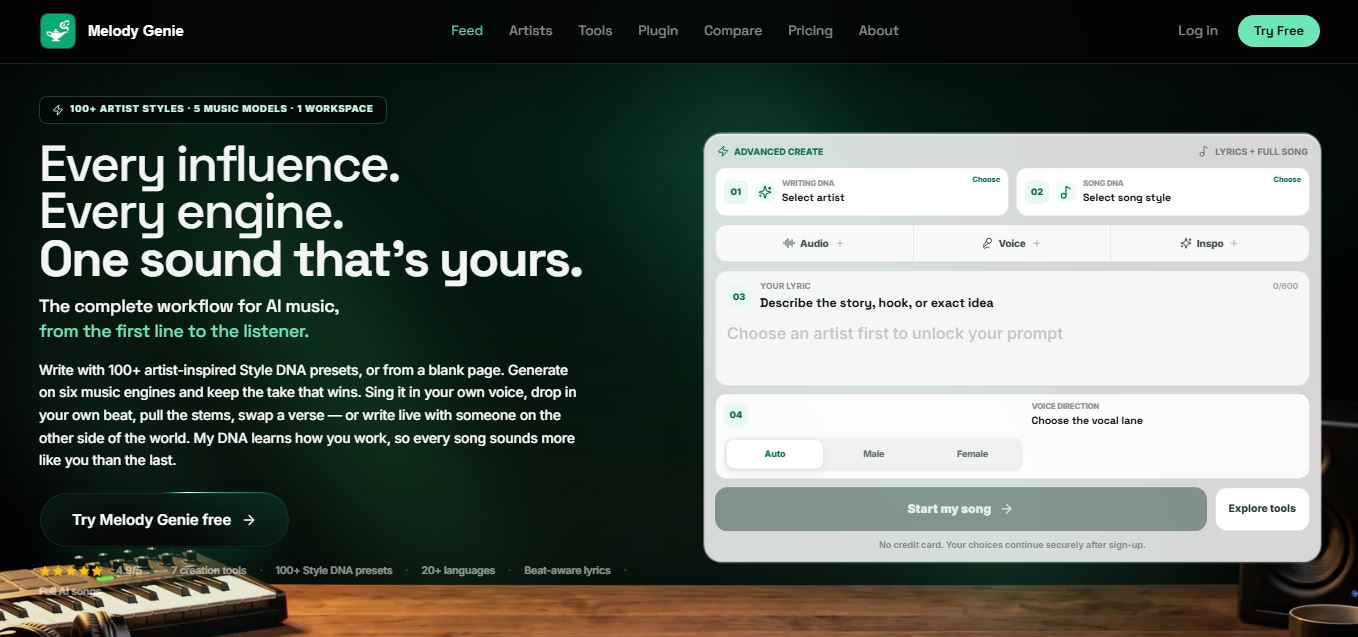
Melody Genie
MelodyGenie is an AI-powered music generator that creates original songs from simple text prompts. Users can choose styles, moods, and genres, then instantly generate melodies and full tracks, making it easy for creators, marketers, and hobbyists to produce custom music without musical expertise.
Freemium
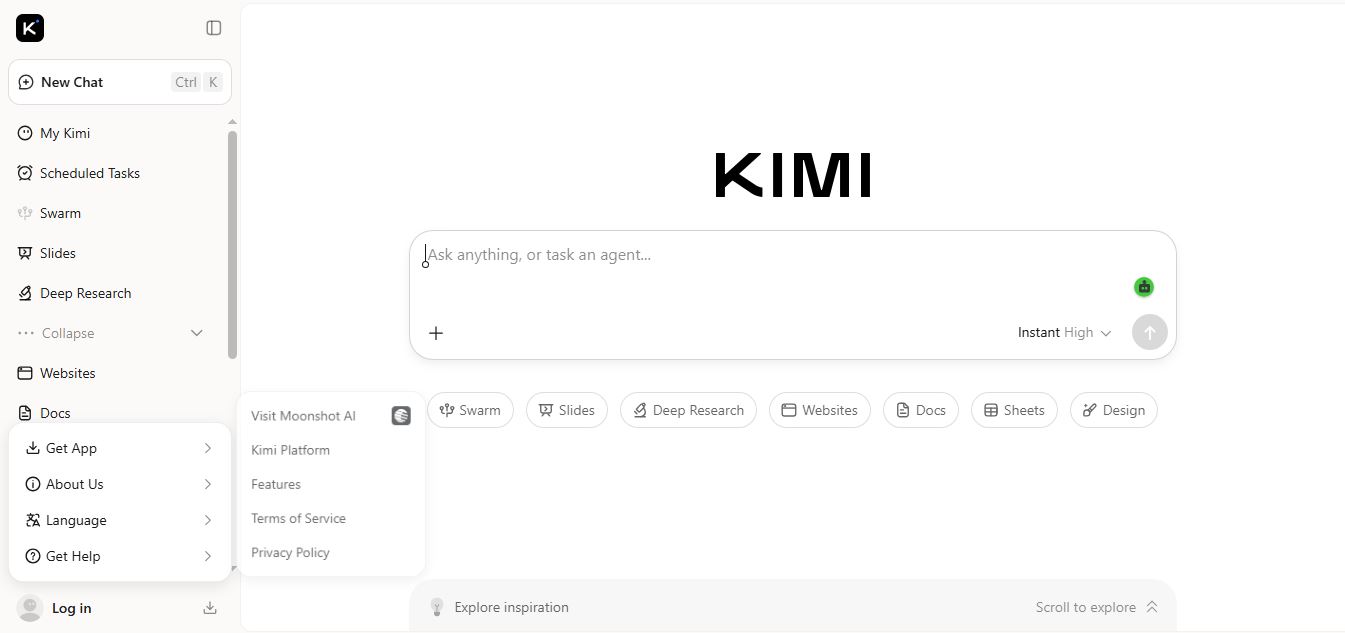
Kimi AI
Kimi AI is an advanced AI assistant developed by Moonshot AI that helps you chat, research, write, code, and automate tasks in one place. It supports web search, file analysis, and multimodal inputs, and can even run autonomous “agent” workflows to complete complex tasks end-to-end.
Freemium
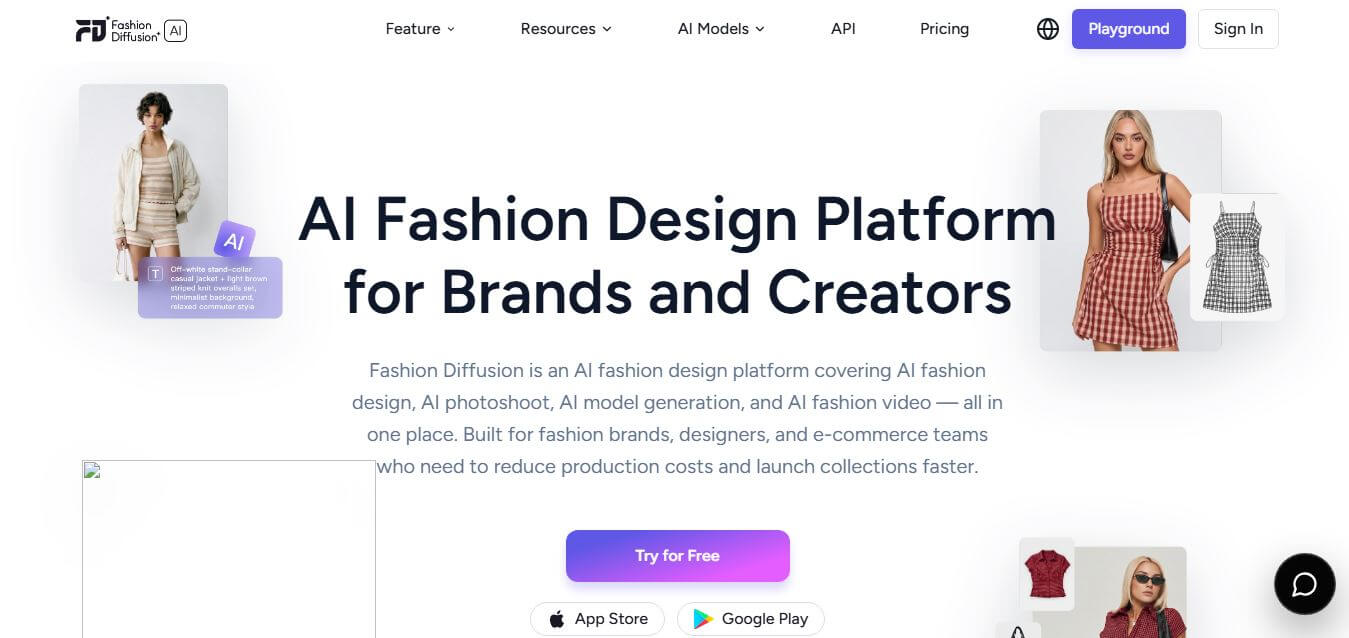
Fashion Diffusion AI
Fashion Diffusion is an AI-powered fashion design platform that helps brands and designers create clothing designs, virtual try-ons, AI models, product photos, and marketing visuals faster and cost-effectively.
Paid
Veo 4
Veo 4 AI is an AI video creation platform that generates dramatic videos from text, images, audio, and video prompts using realistic motion and synchronized sound.
Paid
Alternatives
Alternatives to Codeflying
Alternatives to CodeFlying include Bubble, Adalo, Glide, FlutterFlow, and Softr. These platforms help users build web and mobile apps without heavy coding, offering features like drag-and-drop interfaces, database integration, and quick deployment, making them suitable for startups, creators, and businesses looking to launch applications faster.
 4.9
4.9GPT Engineer
Low-code/No-code
GPT Engineer is an open-source AI coding framework that helps developers generate and improve software from natural-language instructions. It works through a command-line workflow, allowing users to provide project requirements, generate code, execute development steps, and request changes. It also supports customizable prompts, vision-capable models, alternative model providers, Docker, and benchmarking workflows.
Klarent
Low-code/No-code
Klarent (by Fore AI) is an autonomous, AI-powered, no-code QA test automation platform designed to create, execute, and self-heal end-to-end tests for web, native iOS, Android, and cross-platform applications.
 4.8
4.8Glif
Low-code/No-code
Glif is a conversational creative AI tool for generating images, videos, audio, text, advertisements, product visuals, social media content, and more. It selects suitable AI models and tools based on your request, allowing creators and marketers to develop complete creative projects without manually managing multiple AI platforms or complicated production workflows.
 4.8
4.8Visily AI
Low-code/No-code
Visily helps teams transform ideas into editable UI designs, wireframes, mockups, diagrams, and prototypes using AI, templates, screenshots, and text prompts. Its collaborative canvas makes it easier for non-designers and product teams to visualize concepts, gather feedback, refine interfaces, and prepare designs for developer or Figma handoff without requiring advanced design skills.
 4.9
4.9Anakin AI
Low-code/No-code
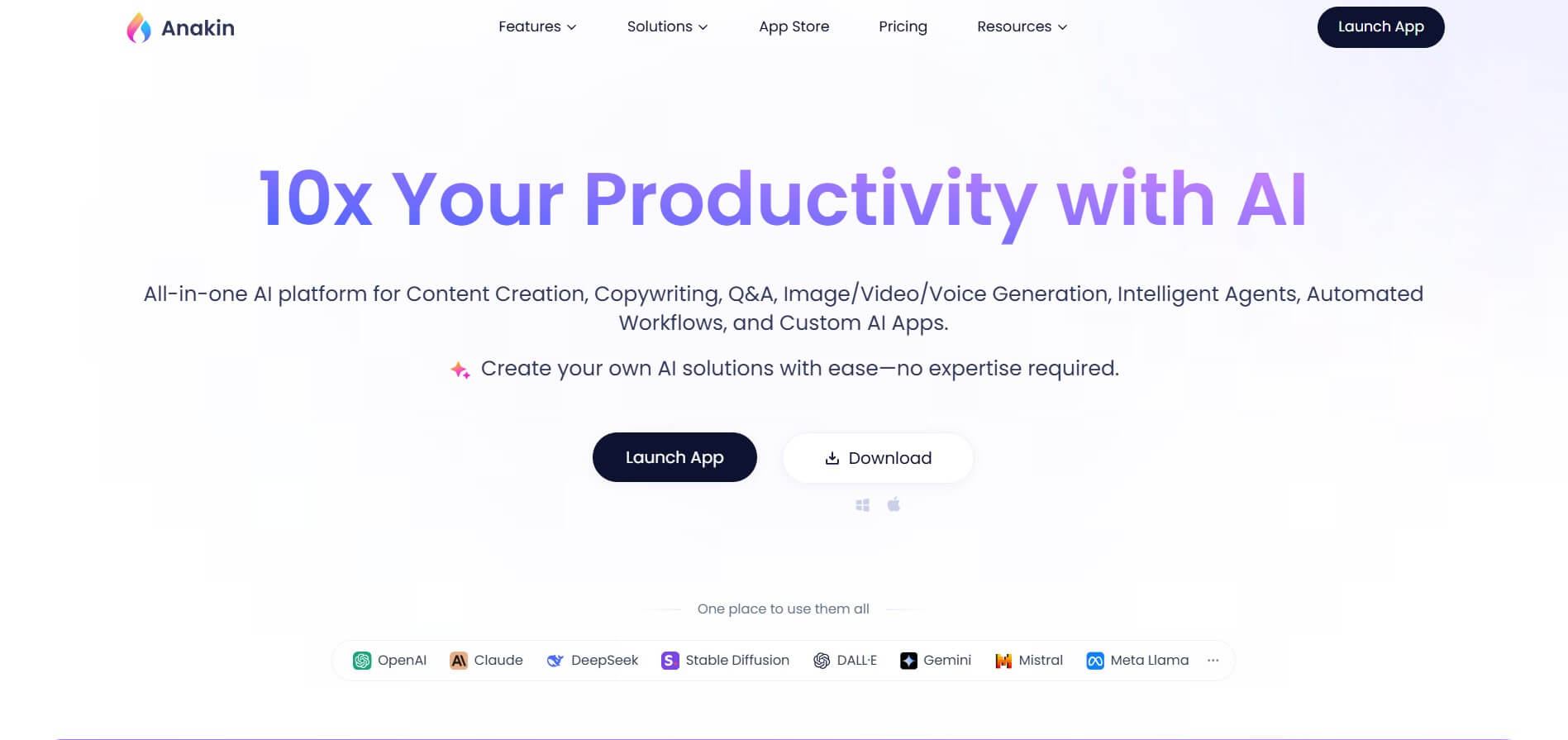
Anakin AI is an all-in-one no-code AI platform and app builder that unifies 1,000+ pre-built AI applications, drag-and-drop workflow automation, batch processing, and multi-model access (OpenAI, Claude, DeepSeek, Gemini, and Grok) under a single interface.
 4.8
4.8Figma Sites
Low-code/No-code
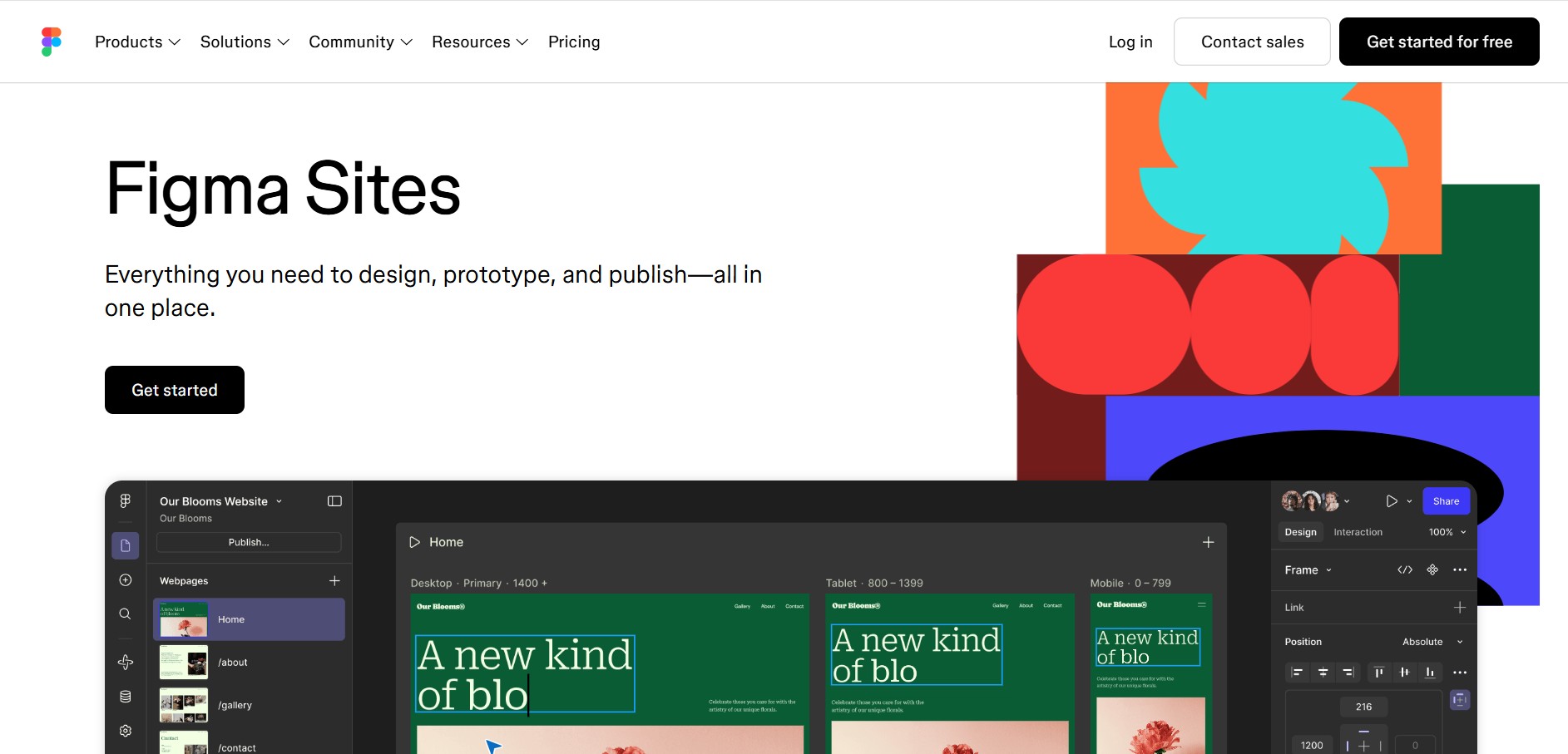
Figma Sites helps designers create, customize, and publish responsive websites directly from the Figma ecosystem. You can reuse existing designs, apply responsive layouts, add interactions, manage website content through CMS, and customize experiences with code or AI. It is especially useful for portfolios, landing pages, business websites, events, and creative projects.
 4.7
4.7Base44 Builder
Low-code/No-code
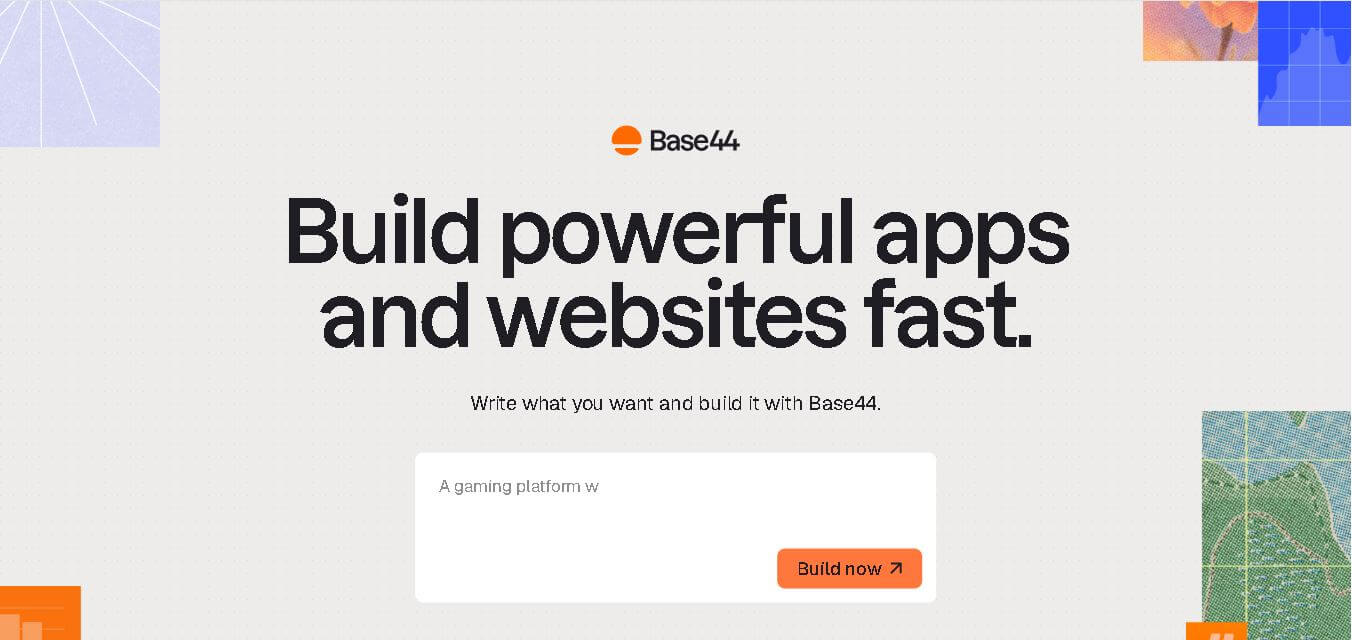
Base44 is a no-code application builder that helps individuals and teams transform ideas into functional apps, websites, and AI agents through simple text prompts. It combines design, hosting, authentication, databases, integrations, and deployment into one workspace, allowing users to build, test, refine, and launch digital products without complex technical setup.
 4.8
4.8WeWeb
Low-code/No-code
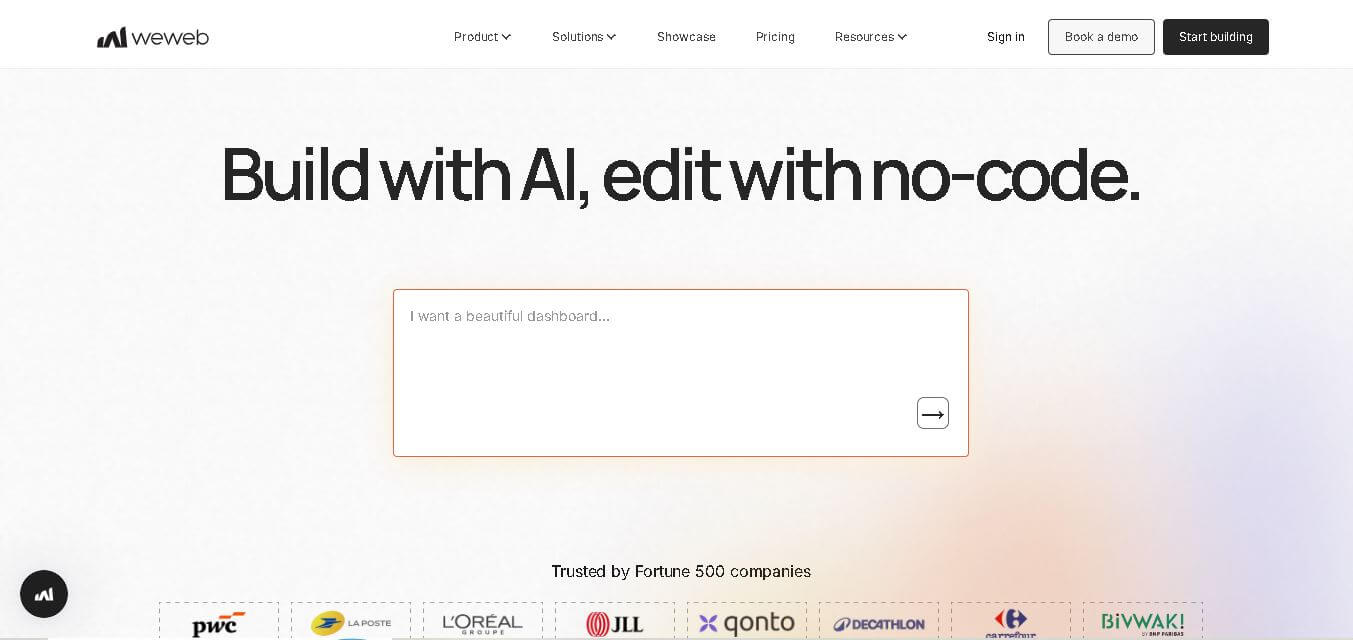
WeWeb is a visual web application builder that enables users to create responsive, production-ready applications without extensive coding. It combines drag-and-drop development, AI-assisted workflows, API integrations, and code export, making it suitable for startups, enterprises, agencies, and developers building custom business applications with complete frontend flexibility.
 4.8
4.8Dust
Low-code/No-code
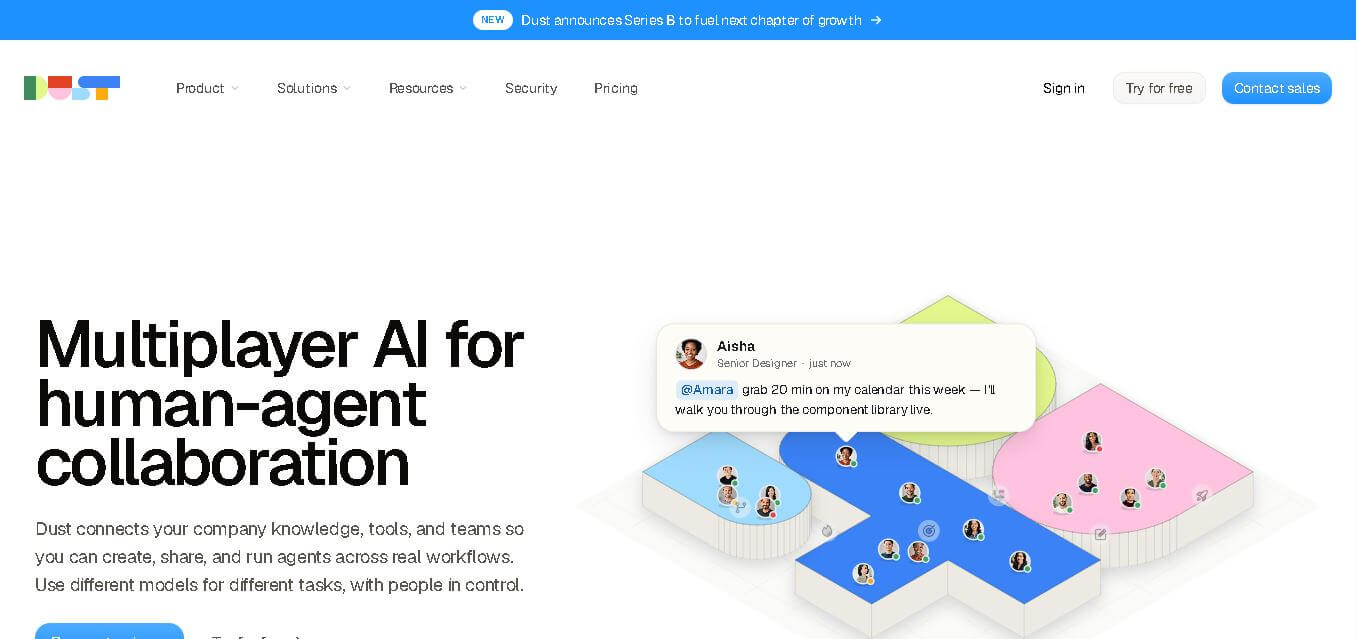
Dust helps teams build and run AI agents that work with company knowledge, connected business tools, and people. It supports collaborative workflows across departments, lets teams choose from 20+ AI models, and provides features for agents, skills, Pods, automations, governance, and usage monitoring.