Klarent
Klarent (by Fore AI) is an autonomous, AI-powered, no-code QA test automation platform designed to create, execute, and self-heal end-to-end tests for web, native iOS, Android, and cross-platform applications.
What is Klarent?
Klarent is an agentic, AI-driven software testing platform that automates quality assurance without requiring manual test scripting. Built for modern enterprise software teams, Klarent uses coordinated AI agents to translate natural language prompts, PRDs, Jira tickets, or Figma designs into automated test suites across web and mobile applications.
Klarent enables software teams to build, schedule, and execute self-healing automated end-to-end test flows across web, iOS, and Android platforms using plain English.
- Platform Role: Autonomous No-Code QA Test Automation Platform
- Core Capabilities: Plain-English Test Generation, Self-Healing Tests, Multi-Agent QA System, Multi-Platform Execution (Web, iOS, Android), CI/CD Integration
- Deployment: Cloud Web Application & Enterprise On-Premises/VPC Deployment
Use Cases:
- Automating end-to-end regression testing for web and mobile apps without writing code
- Setting up automated smoke tests triggered by CI/CD deployment pipelines to catch production bugs early
- Executing parallel cross-browser and cross-device testing across desktop viewports, iOS, and Android devices
- Eliminating test suite maintenance through self-healing locators that automatically adjust when UI elements change
Technology:
- Multi-Agent Architecture: Coordinated agents (Explorer, Planner, Coder, Verifier, Runner, and Notifier) that automatically map apps, write scripts, verify logic, and run tests
- Self-Healing Engine: Detects UI modifications during test execution, generates visual diffs, and auto-repairs locators without breaking pipeline builds
- Cross-Platform Execution Engine: Native support for Web, React Native, Flutter, native iOS, and Android testing
Target Users:
- QA Engineers and Testing Leads seeking to eliminate manual script maintenance
- Software Developers and DevOps engineers setting up automated testing pipelines in GitHub, GitLab, or Jenkins
- Product Managers and QA Teams looking for codeless test automation driven by PRDs or Jira tickets
Acquisition: Web application
What are the key features of Klarent?
Klarent's key platform features are
- Plain-English Test Creation: Describe user flows in natural language, or import requirements from PRDs, Jira, or Figma to auto-generate tests.
- Self-Healing Tests: Automatically detects failure points caused by front-end changes, proposes step-by-step diffs, and repairs scripts automatically.
- Multi-Agent System: Employs dedicated AI agents to map screens, design test cases, write code, verify logic, execute runs, and dispatch alerts.
- Cross-Platform & Mobile Support: Validates web applications as well as native iOS, Android, Flutter, and React Native mobile apps.
- CI/CD & Developer Tool Integrations: Connects directly with GitHub, GitLab, Jenkins, Azure DevOps, Slack, Teams, Jira, and Linear.
- Enterprise Security: ISO 27001 certified and SOC 2 compliant with support for role-based access control (RBAC) and on-premises deployment.
How much does Klarent cost?
Klarent operates on a tiered SaaS commercial model with options for self-serve teams and fully managed enterprise plans.
Pricing Overview:
- Self-Serve Paid Plans: Tiered subscriptions based on execution volume, parallel worker threads, and team size.
- Managed Enterprise Plan: Custom pricing offering full human-on-the-loop support, dedicated cloud or on-prem deployment, custom SLAs, and enterprise RBAC.
Disclaimer: Exact pricing structures and credit usage limits vary. Visit klarent.ai for enterprise quotes and current subscription tiers.
Who should use Klarent?
Klarent is tailored for development and QA teams, including
- Enterprise Development Teams: Wanting fast automated regression test suites embedded into CI/CD workflows.
- QA Automation Engineers: Looking to end constant manual locator maintenance via self-healing automation.
- Mobile App Developers: Needing simultaneous cross-platform automated testing across real iOS and Android devices.
What are the best alternatives to Klarent?
Some of the top alternatives to Klarent include
- TestMu AI
- Virtuoso QA
- Mabl
- Rainforest QA
- Reflect AI
What are the pros and cons of Klarent?
What are the pros of Klarent?
- No-code test script creation allows technical and non-technical members to write end-to-end tests
- Self-healing locators reduce ongoing maintenance overhead from frequent UI updates
- Supports web, native iOS, Android, React Native, and Flutter testing within a unified system
- Enterprise-grade compliance including ISO 27001 and SOC 2 security certifications
What are the cons of Klarent?
- Requires paid subscription plans for production execution workloads
- Extremely complex or legacy custom native canvas elements may require specialized configuration
Why should you choose Klarent?
Klarent modernizes quality assurance by replacing fragile manual scripts with an autonomous multi-agent system. By combining plain-English test definitions with self-healing capabilities and deep CI/CD integrations, it keeps test suites passing even when user interfaces undergo frequent updates.
- Generate robust tests from simple text prompts, Jira stories, or Figma files
- Automate testing across web, mobile apps, and APIs in parallel
- Prevent broken test suites via AI-driven self-healing engine repairs
How do we rate Klarent?
| Parameter | Rating (out of 5) |
|---|---|
| Autonomous Test Generation | 4.9 |
| Self-Healing Performance | 4.8 |
| Cross-Platform & Mobile Coverage | 4.8 |
| CI/CD Integrations & Speed | 4.9 |
| Enterprise Security & Compliance | 4.9 |
| Overall Score | 4.86 |
What is our review and verdict on Klarent?
Klarent stands out as an enterprise-grade AI test automation platform. Its multi-agent approach to planning, writing, executing, and self-healing tests makes it a powerful asset for engineering teams aiming to ship releases faster without sacrificing product quality.
Conclusion
Whether you need to automate smoke tests on every pull request or maintain end-to-end regression suites across web, iOS, and Android, Klarent offers a self-healing, codeless QA automation solution built for modern software delivery.
FAQ
What is Klarent?
Klarent is an AI-powered autonomous QA and software testing platform for web and mobile applications. It uses AI agents to discover test scenarios, generate tests from plain-language instructions, execute them, and automatically repair tests when application interfaces change.
How does Klarent create automated tests?
Users can describe a testing requirement in normal English, such as asking Klarent to test a login, checkout, or booking workflow. Klarent's AI converts the instruction into executable test steps and can also generate tests from website URLs, PRDs, Jira tickets, Figma links, documentation, or existing tests.
Can Klarent test both web and mobile applications?
Yes. Klarent supports end-to-end testing for websites as well as native iOS and Android applications. It can run mobile tests on real devices and supports use cases including Android, iOS, Flutter, React Native, and broader mobile application testing.
What is self-healing testing in Klarent?
Klarent's self-healing capability is designed to keep automated tests working when an application's UI changes. When a locator or flow breaks because of a UI update, Klarent detects the issue, proposes the required change, and provides a diff for review before the fix is applied.
Can Klarent run tests automatically in CI/CD pipelines?
Yes. Klarent can integrate testing into CI/CD workflows through platforms and tools such as GitHub, GitLab, Jenkins, Azure DevOps, and other development integrations. Teams can trigger tests on code changes or deployments and receive pass/fail results and notifications through tools such as Slack, Microsoft Teams, or email.
Does Klarent require coding or QA automation experience?
No coding experience is required for its core no-code testing workflow. Users can create and manage automated tests using plain-language instructions, while Klarent generates the executable test steps automatically; developers can also access generated code and provide coding hints when needed.
How is Klarent priced?
Klarent uses an annual licensing model that scales according to usage, including the number of tests and test runs maintained by a team. The company does not publish a standard fixed price on its FAQ page and instead directs organizations to contact its team for a plan based on their testing requirements.
User Reviews
No reviews yet for Klarent.
Featured Tools
Featured AI tools from TechShark
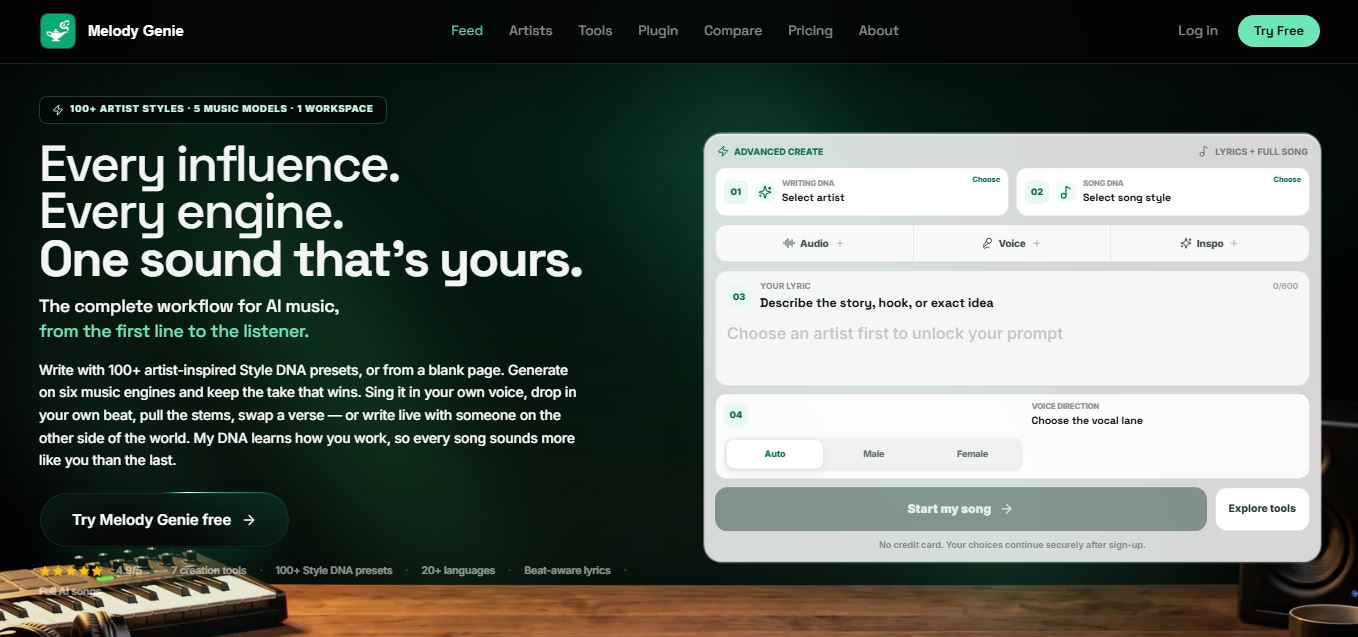
Melody Genie
MelodyGenie is an AI-powered music generator that creates original songs from simple text prompts. Users can choose styles, moods, and genres, then instantly generate melodies and full tracks, making it easy for creators, marketers, and hobbyists to produce custom music without musical expertise.
Freemium
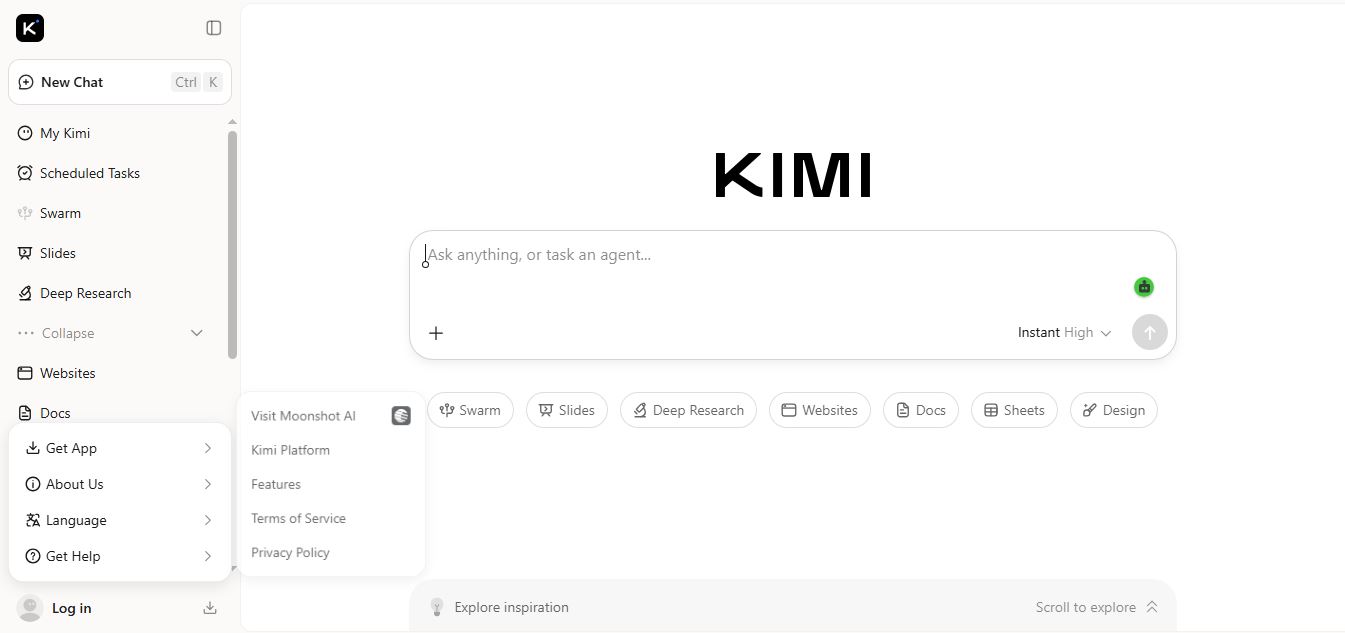
Kimi AI
Kimi AI is an advanced AI assistant developed by Moonshot AI that helps you chat, research, write, code, and automate tasks in one place. It supports web search, file analysis, and multimodal inputs, and can even run autonomous “agent” workflows to complete complex tasks end-to-end.
Freemium
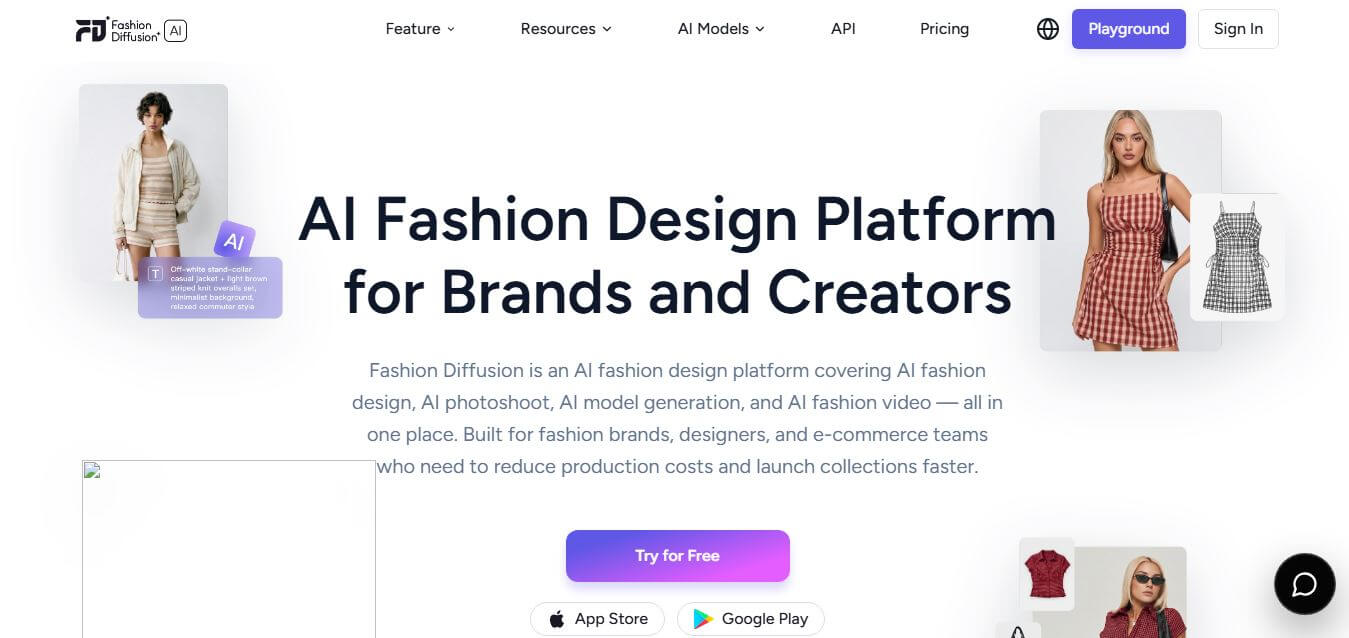
Fashion Diffusion AI
Fashion Diffusion is an AI-powered fashion design platform that helps brands and designers create clothing designs, virtual try-ons, AI models, product photos, and marketing visuals faster and cost-effectively.
Paid
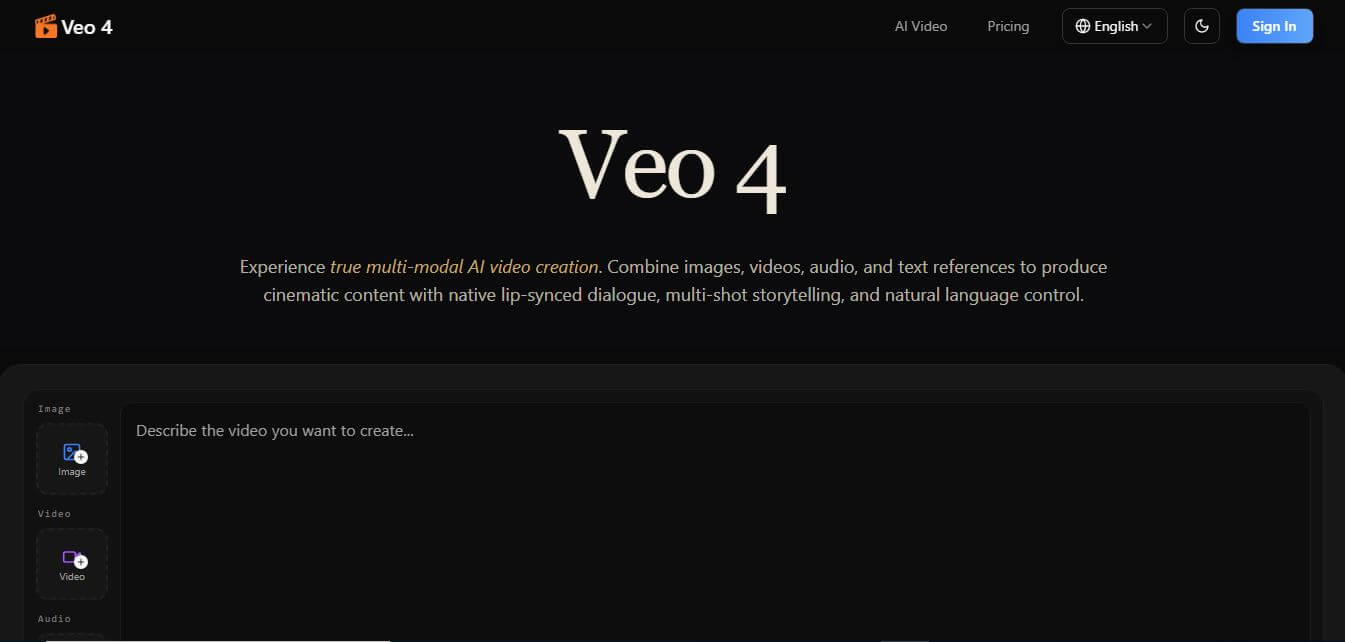
Veo 4
Veo 4 AI is an AI video creation platform that generates dramatic videos from text, images, audio, and video prompts using realistic motion and synchronized sound.
Paid
Alternatives
Alternatives to Klarent
Top alternatives to Klarent include TestMu AI, Virtuoso QA, Mabl, and Rainforest QA. While standard frameworks require heavy maintenance, Klarent uses a multi-agent system and self-healing locators to eliminate manual test suite rewrites.
 4.9
4.9GPT Engineer
Low-code/No-code
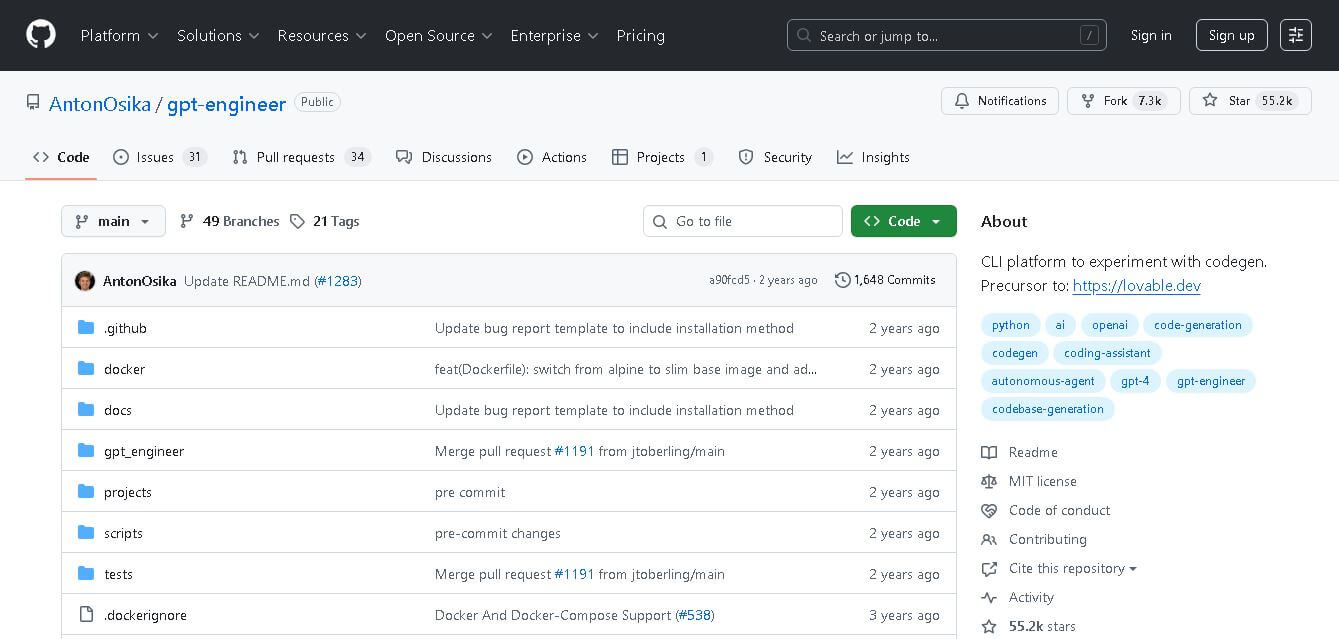
GPT Engineer is an open-source AI coding framework that helps developers generate and improve software from natural-language instructions. It works through a command-line workflow, allowing users to provide project requirements, generate code, execute development steps, and request changes. It also supports customizable prompts, vision-capable models, alternative model providers, Docker, and benchmarking workflows.
 4.8
4.8Glif
Low-code/No-code
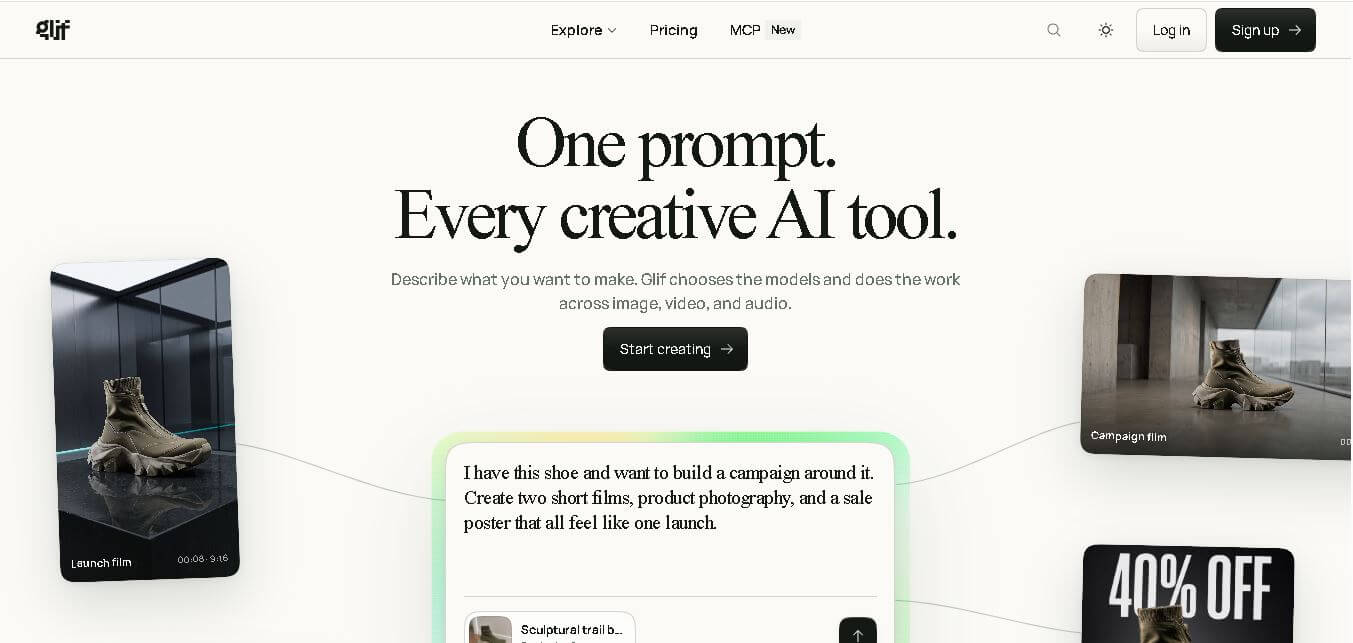
Glif is a conversational creative AI tool for generating images, videos, audio, text, advertisements, product visuals, social media content, and more. It selects suitable AI models and tools based on your request, allowing creators and marketers to develop complete creative projects without manually managing multiple AI platforms or complicated production workflows.
 4.8
4.8Visily AI
Low-code/No-code
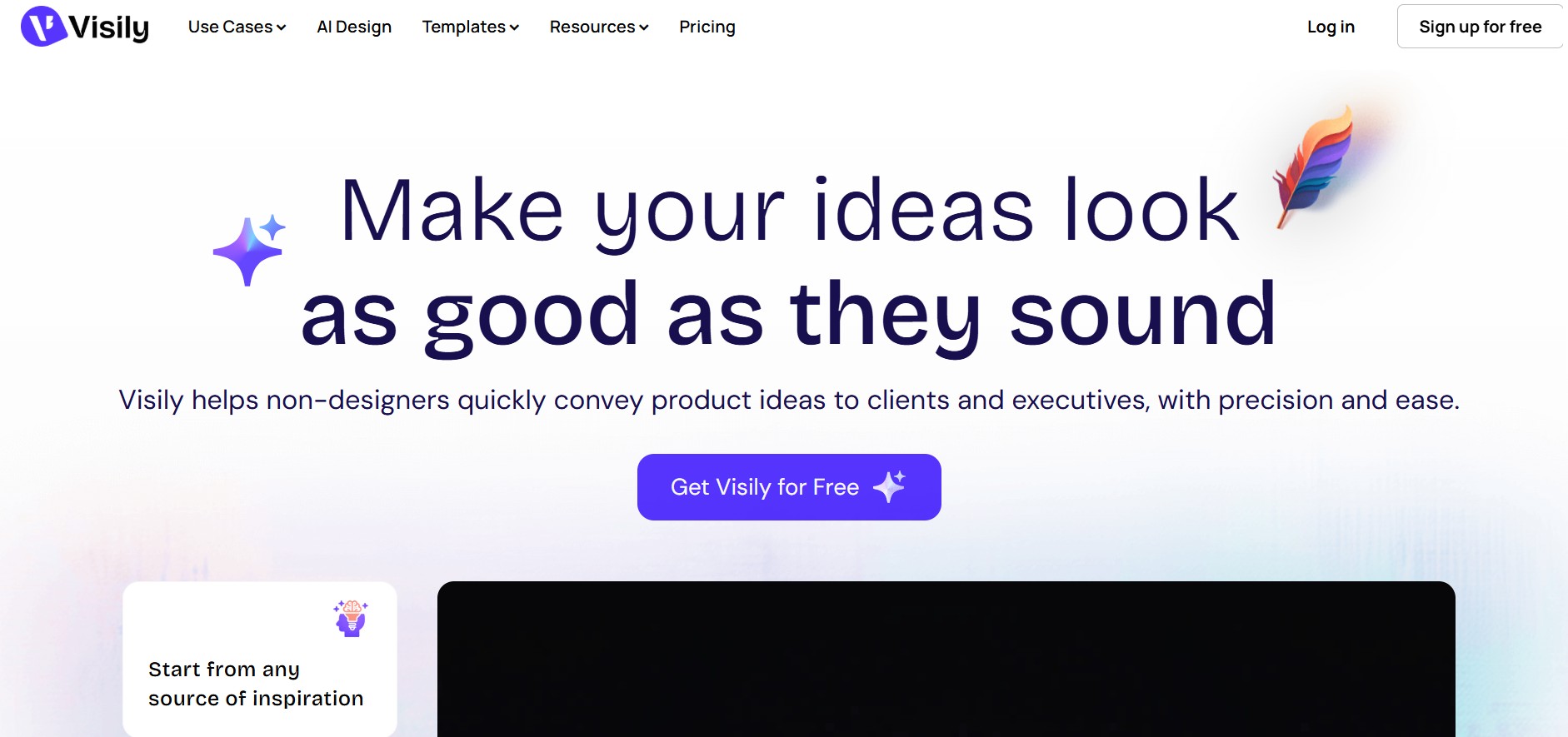
Visily helps teams transform ideas into editable UI designs, wireframes, mockups, diagrams, and prototypes using AI, templates, screenshots, and text prompts. Its collaborative canvas makes it easier for non-designers and product teams to visualize concepts, gather feedback, refine interfaces, and prepare designs for developer or Figma handoff without requiring advanced design skills.
 4.9
4.9Anakin AI
Low-code/No-code
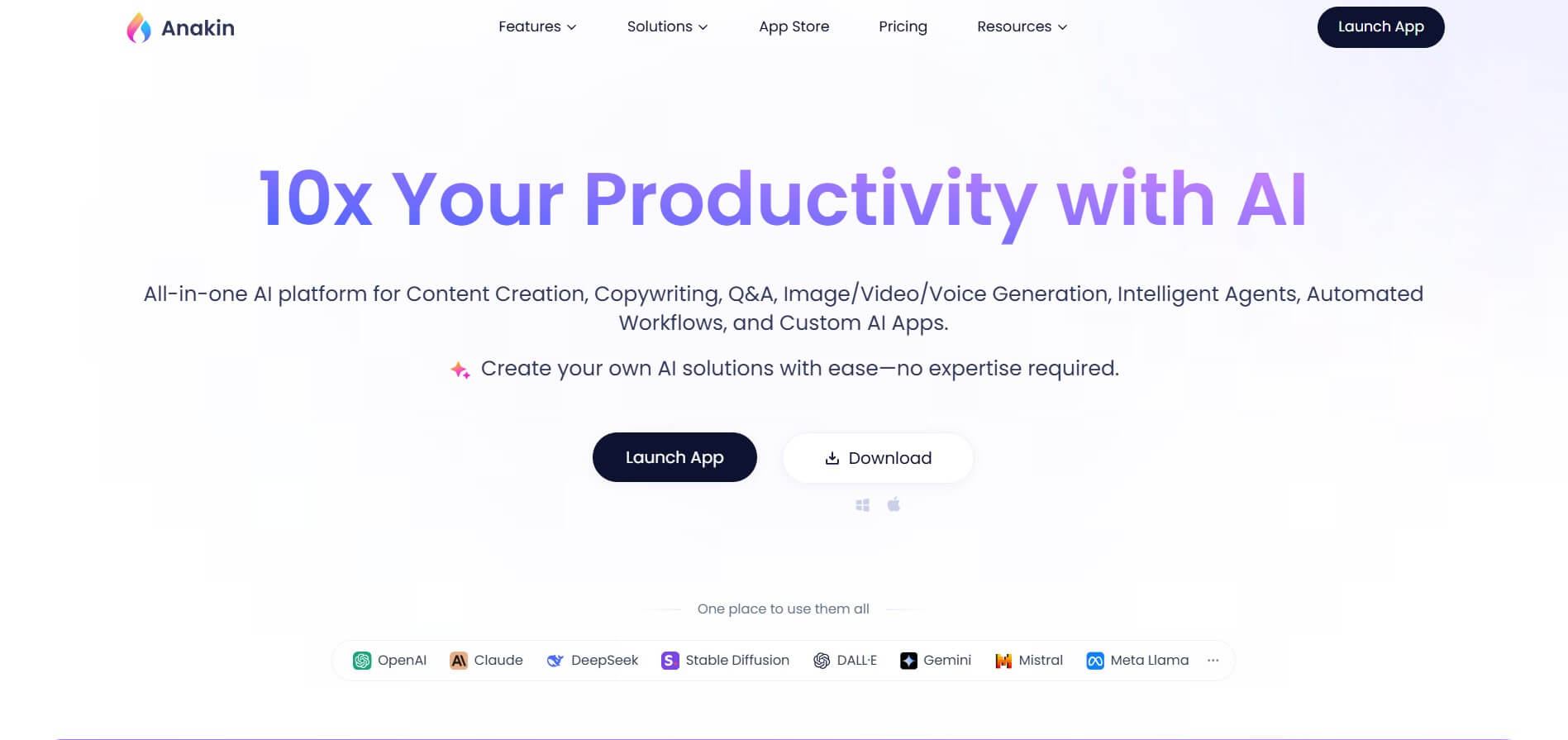
Anakin AI is an all-in-one no-code AI platform and app builder that unifies 1,000+ pre-built AI applications, drag-and-drop workflow automation, batch processing, and multi-model access (OpenAI, Claude, DeepSeek, Gemini, and Grok) under a single interface.
 4.8
4.8Figma Sites
Low-code/No-code
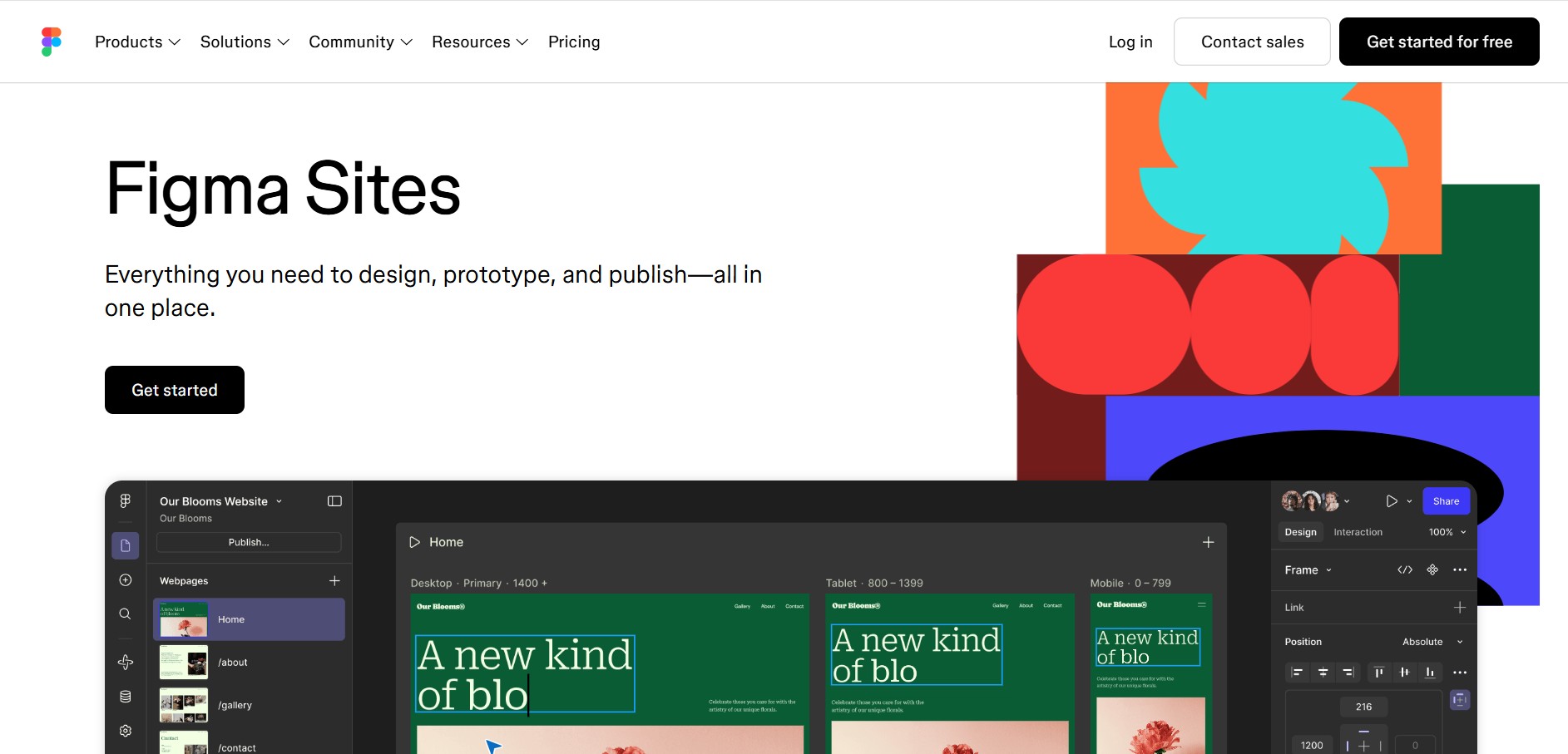
Figma Sites helps designers create, customize, and publish responsive websites directly from the Figma ecosystem. You can reuse existing designs, apply responsive layouts, add interactions, manage website content through CMS, and customize experiences with code or AI. It is especially useful for portfolios, landing pages, business websites, events, and creative projects.
 4.7
4.7Base44 Builder
Low-code/No-code
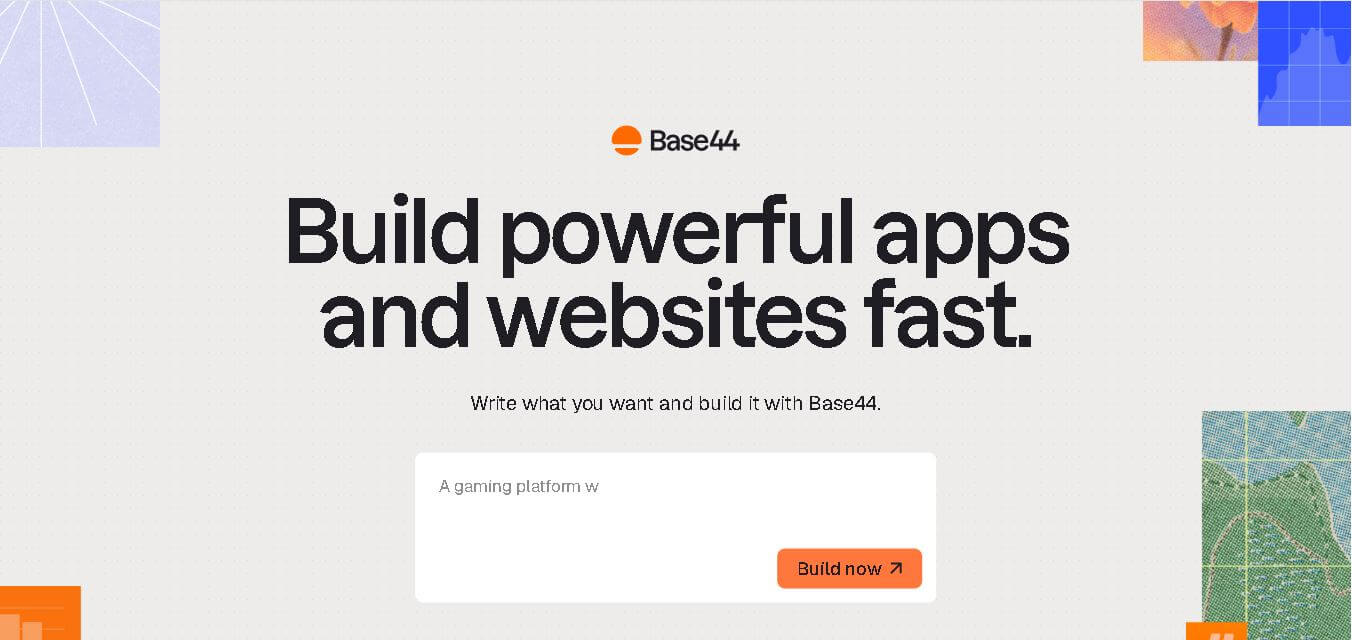
Base44 is a no-code application builder that helps individuals and teams transform ideas into functional apps, websites, and AI agents through simple text prompts. It combines design, hosting, authentication, databases, integrations, and deployment into one workspace, allowing users to build, test, refine, and launch digital products without complex technical setup.
 4.8
4.8WeWeb
Low-code/No-code
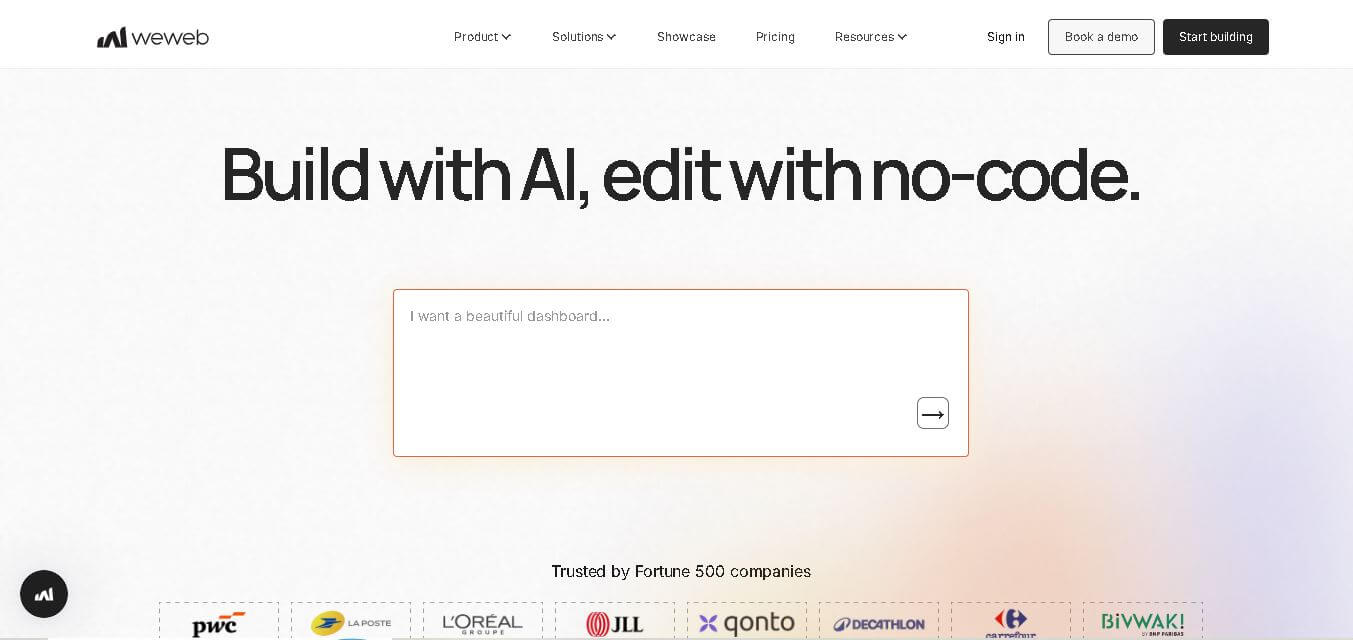
WeWeb is a visual web application builder that enables users to create responsive, production-ready applications without extensive coding. It combines drag-and-drop development, AI-assisted workflows, API integrations, and code export, making it suitable for startups, enterprises, agencies, and developers building custom business applications with complete frontend flexibility.
 4.8
4.8Dust
Low-code/No-code
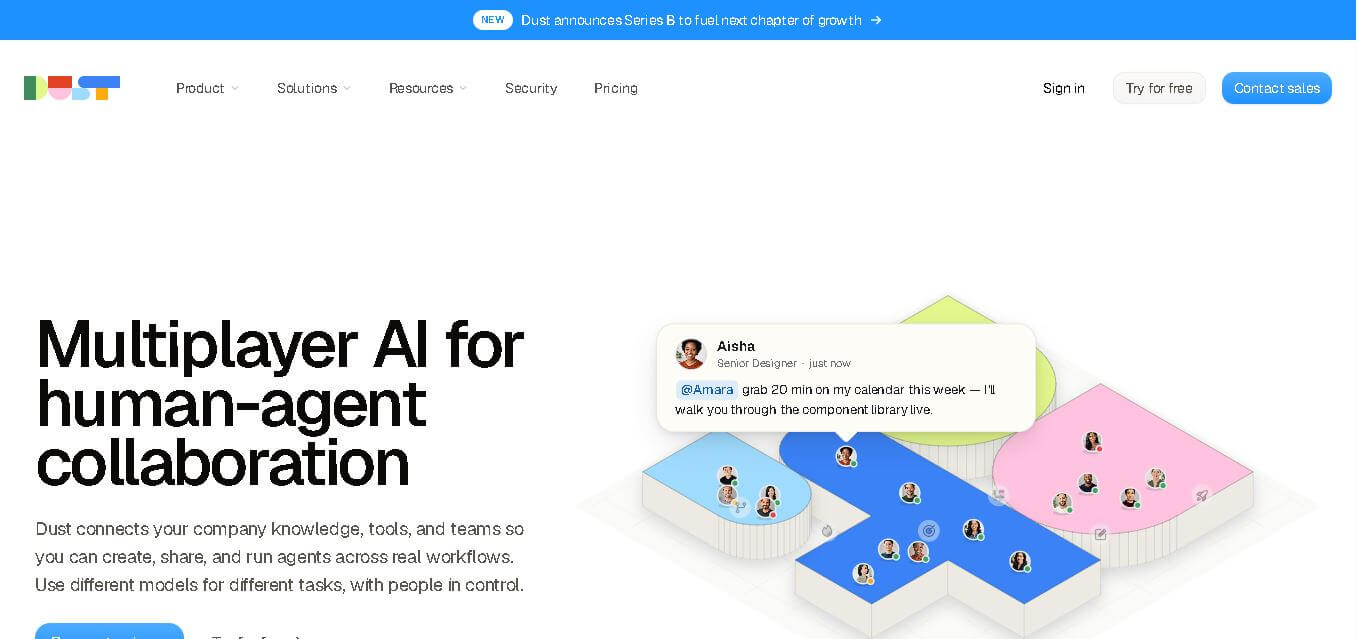
Dust helps teams build and run AI agents that work with company knowledge, connected business tools, and people. It supports collaborative workflows across departments, lets teams choose from 20+ AI models, and provides features for agents, skills, Pods, automations, governance, and usage monitoring.
 4.9
4.9Dorik
Website Builders
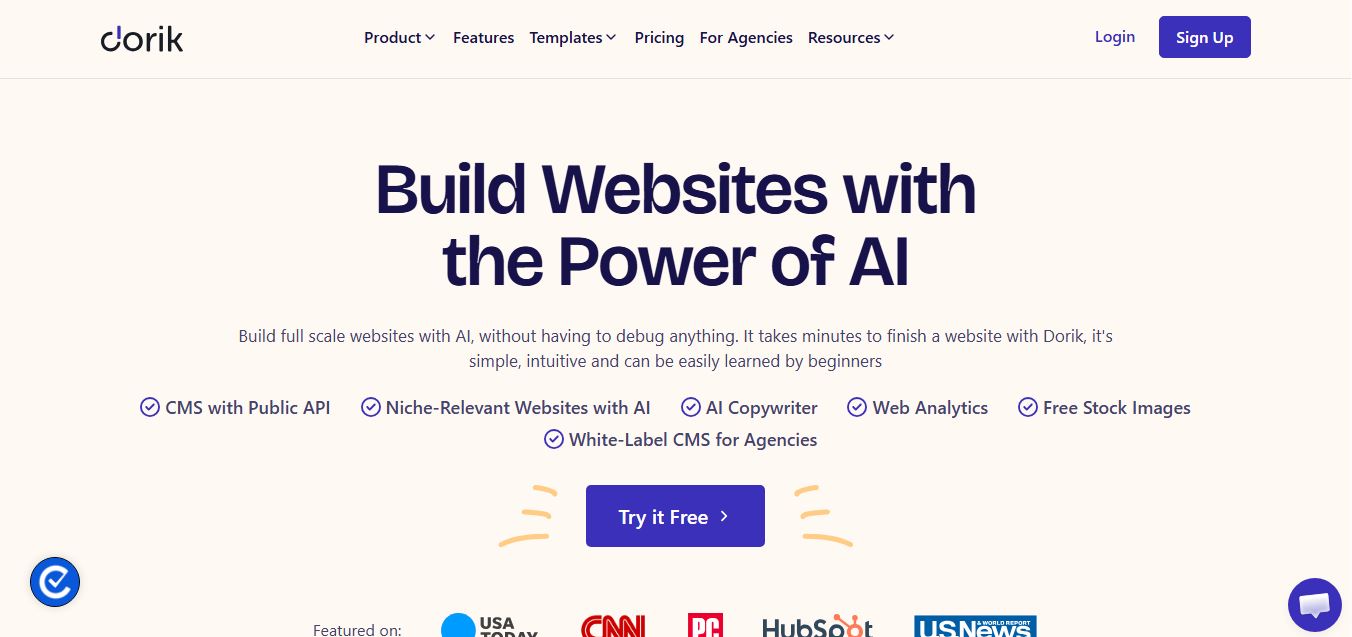
Dorik is an AI-powered website builder and no-code CMS platform that enables creators, businesses, and agencies to generate responsive websites, landing pages, blogs, and client-billed white-label portals with native Airtable integration.