
WeWeb
WeWeb is a visual web application builder that enables users to create responsive, production-ready applications without extensive coding. It combines drag-and-drop development, AI-assisted workflows, API integrations, and code export, making it suitable for startups, enterprises, agencies, and developers building custom business applications with complete frontend flexibility.
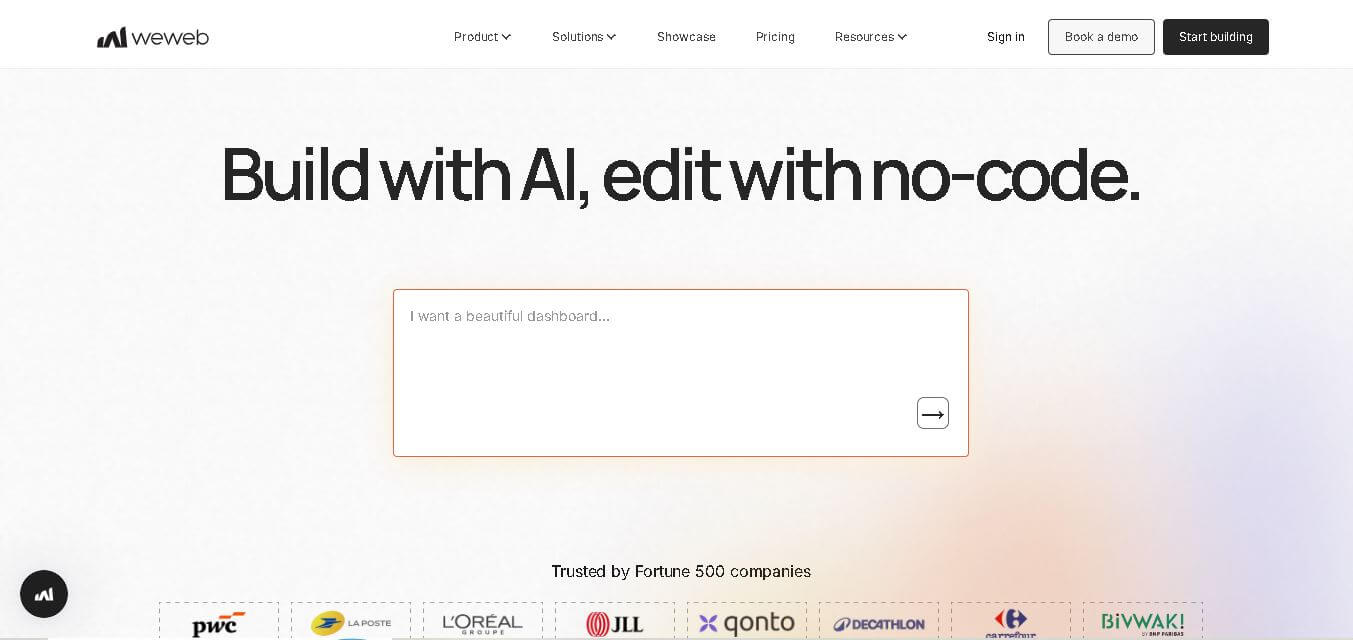
What is WeWeb?
WeWeb is a visual frontend development platform designed to simplify the creation of modern web applications while maintaining professional-level customization. It allows users to design responsive interfaces, connect APIs and databases, automate workflows, and export Vue.js code for self-hosting. By blending visual development with AI assistance, WeWeb helps businesses and creators launch scalable SaaS products, internal tools, customer portals, and enterprise applications faster without sacrificing flexibility.
Founded in 2019, WeWeb has evolved into a leading visual development platform trusted by Fortune 500 companies including PwC, L'Oréal, Carrefour, and Decathlon. The platform offers 60+ pre-built UI components, supports unlimited end users on paid plans, enables Vue.js code export, and integrates with numerous APIs and backend services. Since launching its web application-focused version in 2022, WeWeb has attracted thousands of users while continuously expanding AI-powered development capabilities.
- Launch Year: 2019
- Core Focus: Low-Code Visual Front-End Development, Decoupled Architecture, and Vue.js Code Export
Use Cases:
- Building custom front-ends for B2B SaaS platforms powered by Supabase or Xano
- Developing secure client portals, dashboards, and operational web applications
- Creating responsive Progressive Web Apps (PWAs) and interactive web interfaces
- Rapidly prototyping production-ready applications with custom JS and REST API bindings
Technology:
- Client-side Single Page Application (SPA) generation compiled to Vue.js
- Native REST, GraphQL, Supabase, Xano, and SQL data connectors with real-time state management
- Integrated AI assist and Model Context Protocol (MCP) support for layout generation and formula binding
Target Users:
- Full-stack and front-end developers accelerating UI production schedules
- Agencies and freelancers delivering scalable, white-label client web applications
- Product managers and non-technical founders building MVPs with long-term architecture in mind
Ecosystem: Cloud-based visual editor with direct Figma frame import, self-hosting code export rights, GitHub integration, custom Web Component deployment, and global CDN hosting.

Key features of WeWeb
WeWeb's key features are
- Decoupled Backend Architecture: Seamlessly bind UI components to Supabase, Xano, Airtable, REST APIs, GraphQL, or WeWeb Tables without platform constraints.
- Clean Vue.js Code Export: Export your web app's entire front-end codebase at any time to self-host on Cloudflare Pages, AWS, Netlify, or private servers.
- Visual Workflow Engine: Construct complex client-side logic, custom state variables, conditional branches, and custom JavaScript scripts with visual formulas.
- Figma Import & Custom Components: Import design assets directly from Figma or upload custom JavaScript/Vue components that behave like native UI elements.
- AI-Assisted Copilot: Leverage built-in AI tools to build components, write complex logic expressions, and debug API mappings automatically.
- No End-User Fees: Scale your active app user base infinitely without facing per-user pricing penalties or arbitrary platform performance throttles.
WeWeb Pricing
WeWeb utilizes a dual-tier pricing model comprising Workspace (Seat) plans for builders and optional Site (Hosting) plans for running apps on WeWeb Cloud infrastructure.
Workspace Seat Plans (Development & Export):
- Free Plan ($0/mo): 1 seat, visual builder access, component prototyping, and WeWeb subdomain testing. No code export or custom domain publishing.
- Essential Plan (From ~$20 - $35/mo): 1 seat, full code export, self-hosting rights, GitHub synchronization, and custom domains (when paired with self-hosting or site plans).
- Business / Pro Plan (From ~$42 - $99/mo): Team collaboration features, multiple builder seats, higher AI token allocations, version history, and daily app backups.
- Partner Plan (From ~$67/mo per seat): Designed for web agencies managing client workspaces, featuring project transfers and multi-workspace access.
Site Plans (WeWeb Cloud Hosting):
- Starter / Launch Plans ($19 - $49/mo): Custom SSL, custom domain mapping, WeWeb CDN hosting, and capacity for production traffic.
- Grow & Enterprise Plans: High-bandwidth caps, staging environments, dedicated SLA support, and single sign-on (SSO) governance.
Disclaimer: For the latest and most accurate pricing information, please visit the official WeWeb AI website.
Is WeWeb Worth It?
WeWeb is exceptionally worth it for developers, agencies, and SaaS founders who want the rapid delivery speed of a visual builder without tying their business to a proprietary, locked-in ecosystem. Exporting readable Vue.js code ensures your project remains fully under your ownership as it scales.
Real-World Use Cases
- SaaS Product Front-Ends: Startups build responsive, multi-tenant SaaS interfaces on top of Supabase auth and Xano business logic.
- Enterprise Admin Dashboards: Operations teams build secure internal web applications connected to SQL databases and REST APIs.
- Client Portals: Agencies develop branded customer portals with custom role-based permissions and interactive data tables.
- Progressive Web Applications: Creators build lightweight offline-capable web applications accessible across mobile and desktop browsers.
Who is using WeWeb?
WeWeb is built for software builders and teams, including
- Full-Stack Developers: Coders offloading tedious front-end styling while keeping strict control over backend architecture
- Web Agencies & Freelancers: Service providers delivering high-performance, exportable web applications to clients
- Non-Technical Founders: Entrepreneurs building scalable SaaS MVPs that can transition into custom codebases
- Product Teams: Organizations needing fast internal application prototyping and production deployment
Best WeWeb Alternatives
Some of the top WeWeb alternatives include
- Bubble
- Webflow
- Toddle
- Retool
- FlutterFlow
Pros and Cons of WeWeb
Pros
- Zero platform lock-in thanks to complete Vue.js source code export capabilities
- Connects natively to any backend (Supabase, Xano, Airtable, REST/GraphQL APIs)
- No fees per active end-user, keeping operational costs predictable at scale
- Advanced visual workflow engine supporting custom JavaScript functions
- Figma frame import dramatically speeds up initial visual layout creation
Cons
- Steeper learning curve than simple drag-and-drop website builders for complete beginners
- Separate workspace seat and site hosting pricing tiers can require careful budget planning
- As a Client-Side Rendered (CSR) Single Page Application platform, complex SEO setups require extra consideration
Why Choose WeWeb?
WeWeb prioritizes engineering best practices, unlike monolithic visual app builders that confine users to rigid hosting environments and metered usage units. By enforcing a clean separation between the visual front-end layer and the backend database, developers enjoy maximum architectural flexibility and complete ownership over their code.
- Prevents vendor lock-in with clean, standards-compliant Vue.js code export
- Facilitates professional development workflows with GitHub sync and staging environments
- Offers complete control over UI components, REST payload mapping, and custom CSS styling
- Allows seamless integration with leading low-code backends like Xano and Supabase
How WeWeb Works
- 1. Connect Your Data Source: Authenticate your preferred backend database (Supabase, Xano, Airtable, or REST API) in the Data tab.
- 2. Build Your Layout Visually: Drag-and-drop UI elements, import frames directly from Figma, or use AI prompts to generate interface layouts.
- 3. Bind Data & Workflows: Map database collections to UI elements and create event triggers, state variables, and visual logic workflows.
- 4. Publish or Export Code: Deploy directly to WeWeb Cloud CDN with a custom domain or download the compiled Vue.js source code to self-host anywhere.
WeWeb vs. Competitors
While platforms like Bubble bundle hosting and backend data into a single proprietary stack, WeWeb gives creators freedom over their database and code hosting choices.
| Feature | WeWeb | Bubble | Retool |
|---|---|---|---|
| Primary Focus | Decoupled Front-End Web Apps | All-in-One Full-Stack No-Code | Internal Admin Tools & Dashboards |
| Code Export | Yes (Clean Vue.js SPA) | No (Proprietary Lock-in) | Limited (Enterprise Self-Host) |
| Backend Flexibility | Any API / Supabase / Xano | Built-in Proprietary Database | SQL / Custom Internal APIs |
| End-User Metering | No Per-User Limits | Workload Units (WU) Metered | Per-User License Fees |
How do we rate WeWeb?
| Parameter | Rating (out of 5) |
|---|---|
| Ease of Use | 4.4 |
| Backend Flexibility & Integrations | 5.0 |
| Code Quality & Export Rights | 4.9 |
| UI Customization & Design Freedom | 4.8 |
| Value for Money | 4.7 |
| Overall Score | 4.8 |
WeWeb Review
WeWeb stands out as one of the most sophisticated visual front-end builders on the market today. By focusing exclusively on rendering world-class user interfaces while enabling developers to connect to best-of-breed backend services like Supabase or Xano, WeWeb provides the ultimate balance between no-code speed and traditional software architectural integrity.
Conclusion
WeWeb offers a practical solution for building modern web applications without relying entirely on traditional coding. Its combination of visual development, AI assistance, flexible integrations, responsive design, and code export makes it suitable for startups, growing businesses, agencies, and enterprises alike. Whether you need an MVP or a production-ready business application, WeWeb delivers the flexibility, scalability, and ownership required to support long-term digital product development.
FAQ
What is WeWeb mainly used for?
WeWeb primarily helps users build custom web applications, including SaaS products, customer portals, internal business tools, marketplaces, dashboards, CRMs, and workflow management systems. It helps users create responsive applications visually while connecting external databases and APIs, reducing development time without limiting customization or deployment flexibility.
Is WeWeb suitable for beginners?
Yes. Beginners can create applications using the visual drag-and-drop editor and AI-assisted features without learning advanced programming. As users become more experienced, they can extend projects with JavaScript, APIs, and custom Vue.js components, making WeWeb suitable for both newcomers and professional developers.
Can I export my project from WeWeb?
Yes. WeWeb allows users on paid plans to export production-ready Vue.js code. This means you can self-host your application on platforms like AWS, Azure, Google Cloud, Cloudflare, Netlify, or your own infrastructure, avoiding vendor lock-in while maintaining complete ownership of your frontend.
Does WeWeb support API and backend integrations?
Absolutely. WeWeb integrates with REST APIs, databases, authentication providers, and popular backend services such as Supabase, Xano, Airtable, and many others. This flexibility enables businesses to connect existing systems while building powerful frontend experiences without rebuilding their backend infrastructure.
Who should use WeWeb?
WeWeb is ideal for startups, entrepreneurs, agencies, enterprises, product teams, and developers who need to build scalable web applications quickly. Whether you're launching an MVP, developing an enterprise portal, or creating an internal dashboard, the platform provides tools that support projects from early development to production deployment.
Is WeWeb good for enterprise applications?
Yes. WeWeb is designed to support enterprise-grade applications with responsive design, authentication, role-based access, API connectivity, and scalable deployment. Its adoption by several large organizations demonstrates its ability to handle professional business requirements while giving teams full control over application development and hosting.
User Reviews
No reviews yet for WeWeb.
Featured Tools
Featured AI tools from TechShark
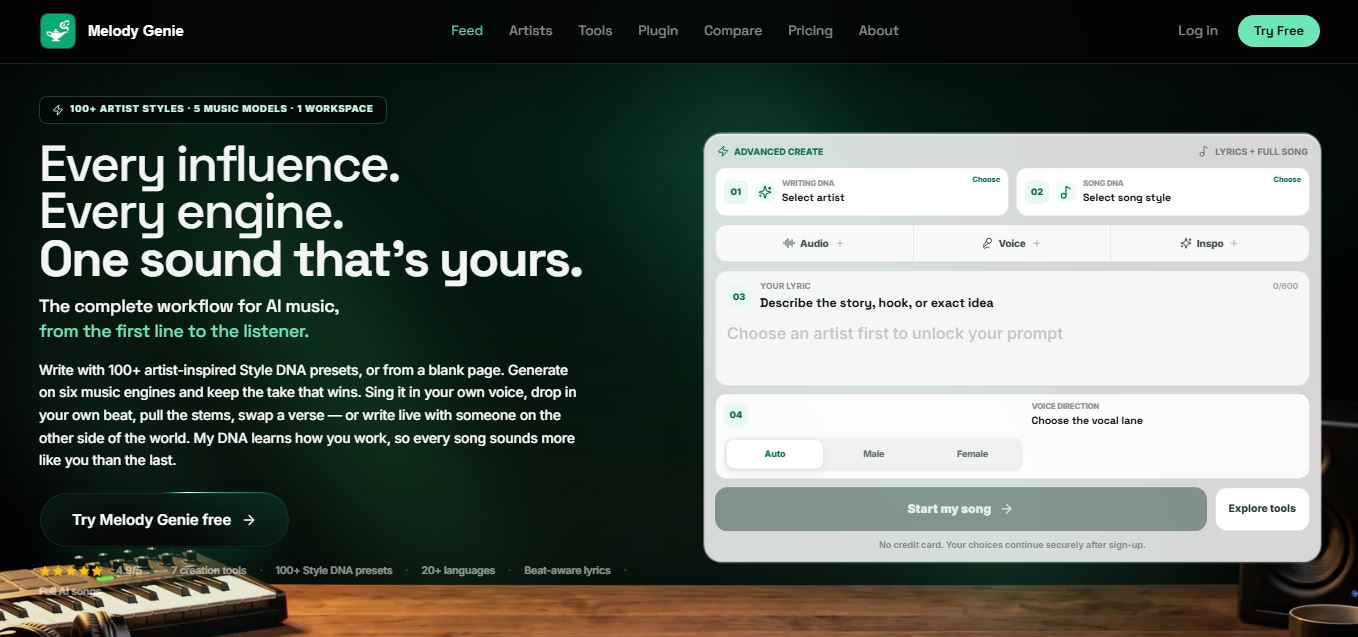
Melody Genie
MelodyGenie is an AI-powered music generator that creates original songs from simple text prompts. Users can choose styles, moods, and genres, then instantly generate melodies and full tracks, making it easy for creators, marketers, and hobbyists to produce custom music without musical expertise.
Freemium
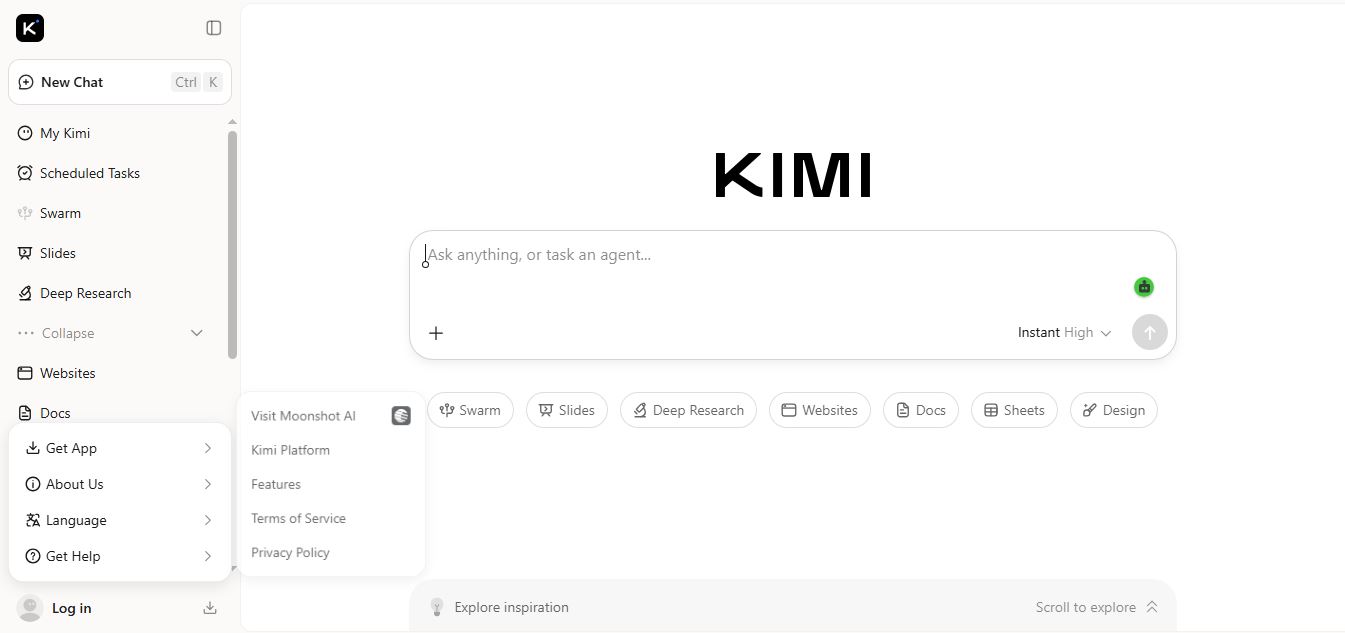
Kimi AI
Kimi AI is an advanced AI assistant developed by Moonshot AI that helps you chat, research, write, code, and automate tasks in one place. It supports web search, file analysis, and multimodal inputs, and can even run autonomous “agent” workflows to complete complex tasks end-to-end.
Freemium
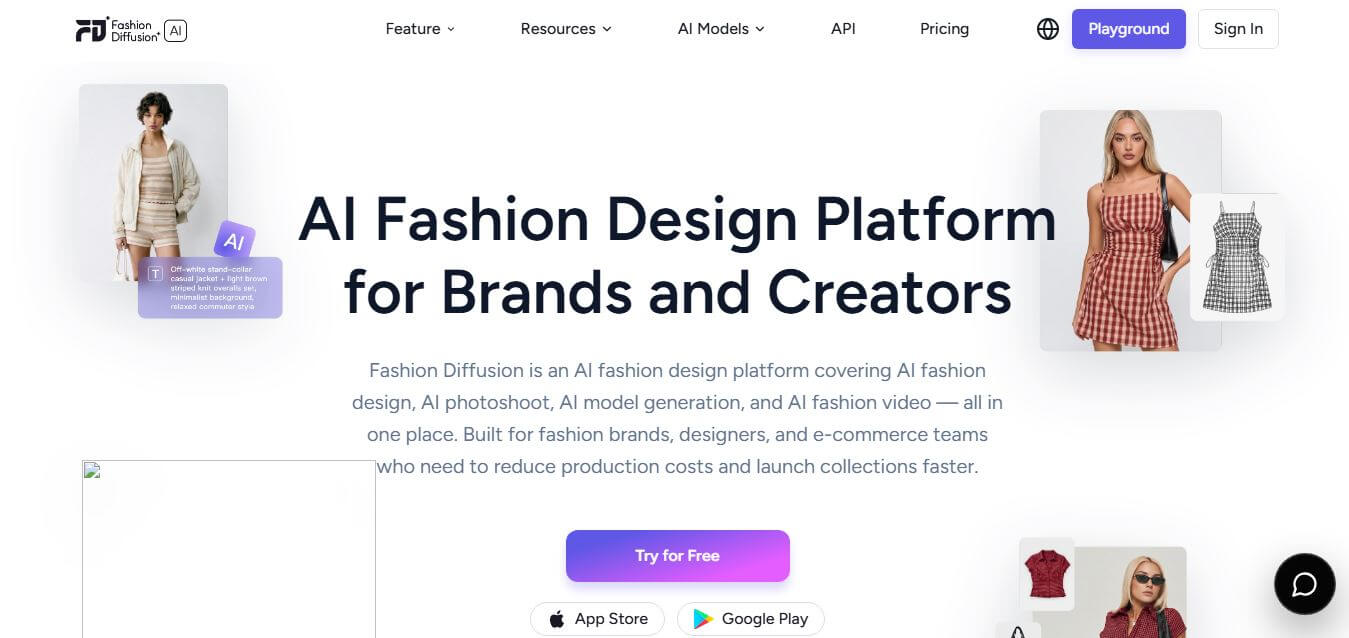
Fashion Diffusion AI
Fashion Diffusion is an AI-powered fashion design platform that helps brands and designers create clothing designs, virtual try-ons, AI models, product photos, and marketing visuals faster and cost-effectively.
Paid
Veo 4
Veo 4 AI is an AI video creation platform that generates dramatic videos from text, images, audio, and video prompts using realistic motion and synchronized sound.
Paid
Alternatives
Alternatives to WeWeb
The top alternatives to WeWeb include Bubble, Webflow, Retool, Toddle, and FlutterFlow. Bubble offers an integrated full-stack visual development environment, while Toddle and WeWeb excel at clean front-end builds and component export.
 4.9
4.9GPT Engineer
Low-code/No-code
GPT Engineer is an open-source AI coding framework that helps developers generate and improve software from natural-language instructions. It works through a command-line workflow, allowing users to provide project requirements, generate code, execute development steps, and request changes. It also supports customizable prompts, vision-capable models, alternative model providers, Docker, and benchmarking workflows.
Klarent
Low-code/No-code
Klarent (by Fore AI) is an autonomous, AI-powered, no-code QA test automation platform designed to create, execute, and self-heal end-to-end tests for web, native iOS, Android, and cross-platform applications.
 4.8
4.8Glif
Low-code/No-code
Glif is a conversational creative AI tool for generating images, videos, audio, text, advertisements, product visuals, social media content, and more. It selects suitable AI models and tools based on your request, allowing creators and marketers to develop complete creative projects without manually managing multiple AI platforms or complicated production workflows.
 4.8
4.8Visily AI
Low-code/No-code
Visily helps teams transform ideas into editable UI designs, wireframes, mockups, diagrams, and prototypes using AI, templates, screenshots, and text prompts. Its collaborative canvas makes it easier for non-designers and product teams to visualize concepts, gather feedback, refine interfaces, and prepare designs for developer or Figma handoff without requiring advanced design skills.
 4.9
4.9Anakin AI
Low-code/No-code
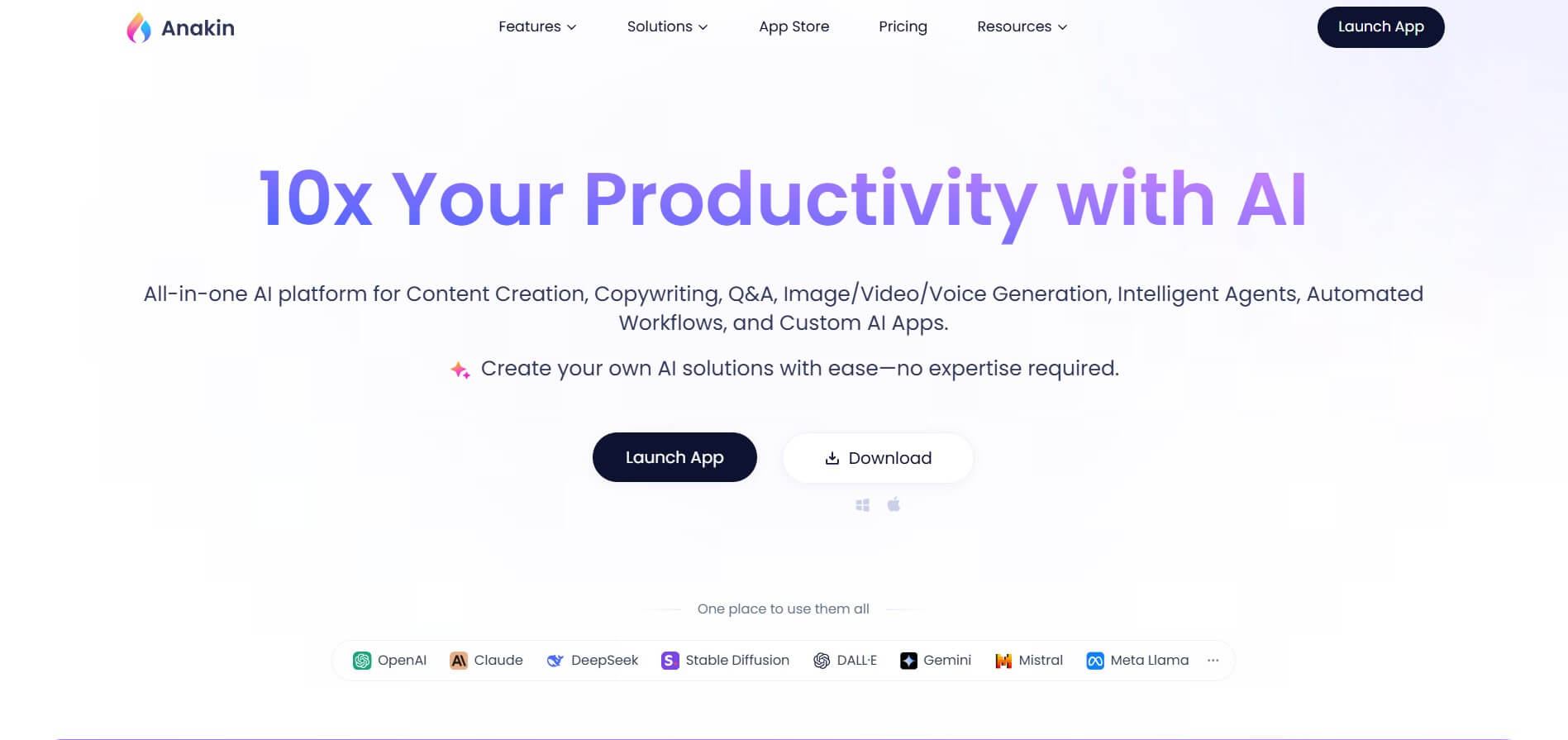
Anakin AI is an all-in-one no-code AI platform and app builder that unifies 1,000+ pre-built AI applications, drag-and-drop workflow automation, batch processing, and multi-model access (OpenAI, Claude, DeepSeek, Gemini, and Grok) under a single interface.
 4.8
4.8Figma Sites
Low-code/No-code
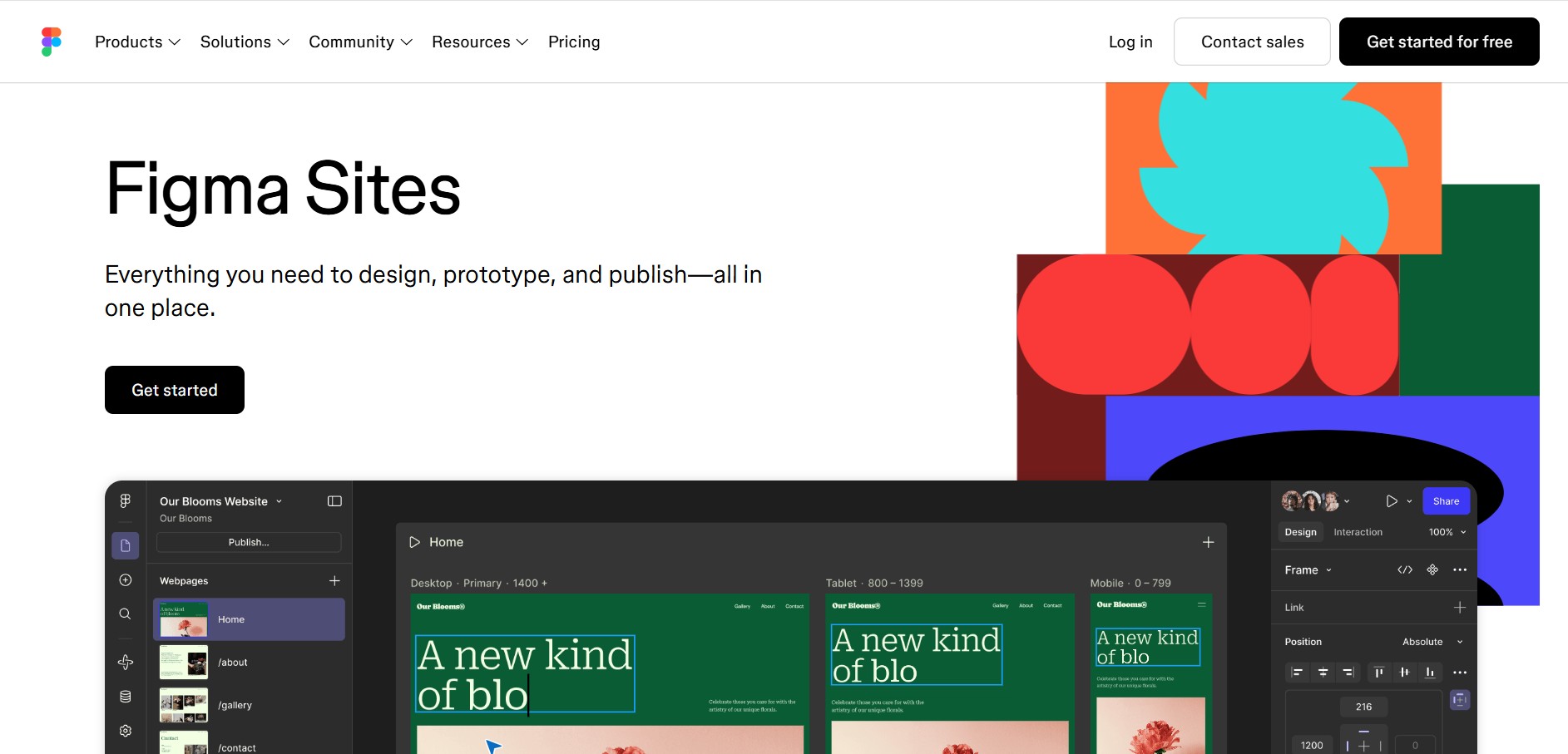
Figma Sites helps designers create, customize, and publish responsive websites directly from the Figma ecosystem. You can reuse existing designs, apply responsive layouts, add interactions, manage website content through CMS, and customize experiences with code or AI. It is especially useful for portfolios, landing pages, business websites, events, and creative projects.
 4.7
4.7Base44 Builder
Low-code/No-code
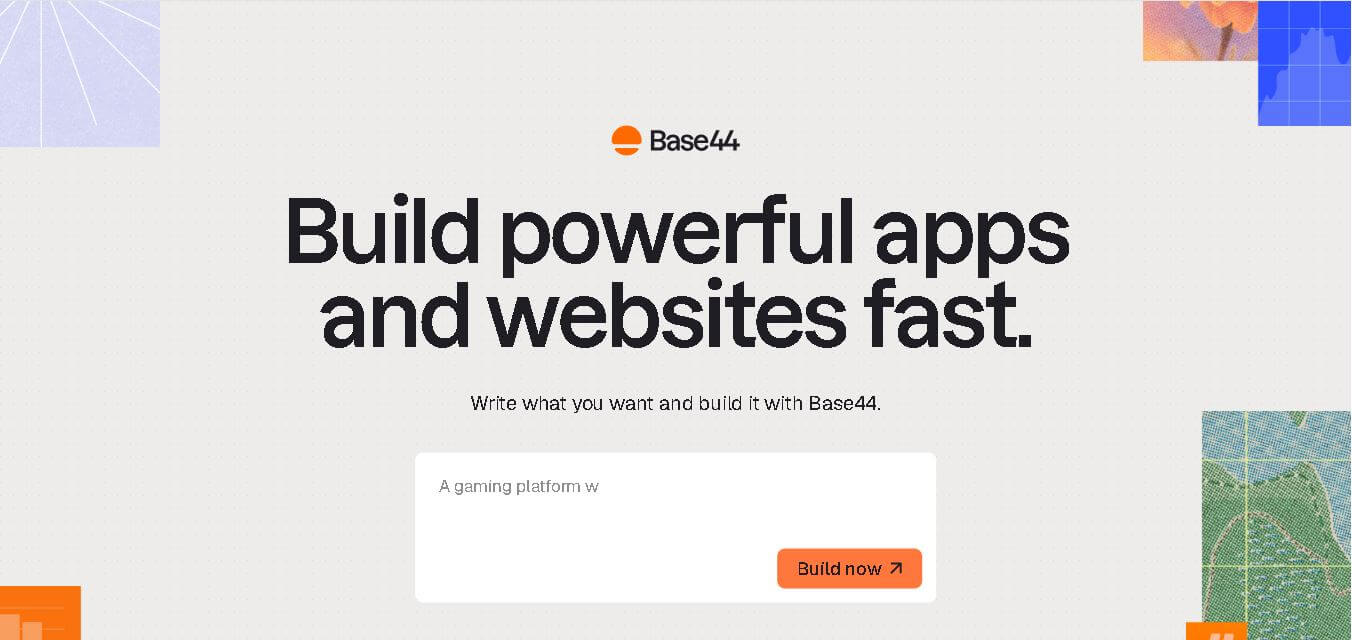
Base44 is a no-code application builder that helps individuals and teams transform ideas into functional apps, websites, and AI agents through simple text prompts. It combines design, hosting, authentication, databases, integrations, and deployment into one workspace, allowing users to build, test, refine, and launch digital products without complex technical setup.
 4.8
4.8Dust
Low-code/No-code
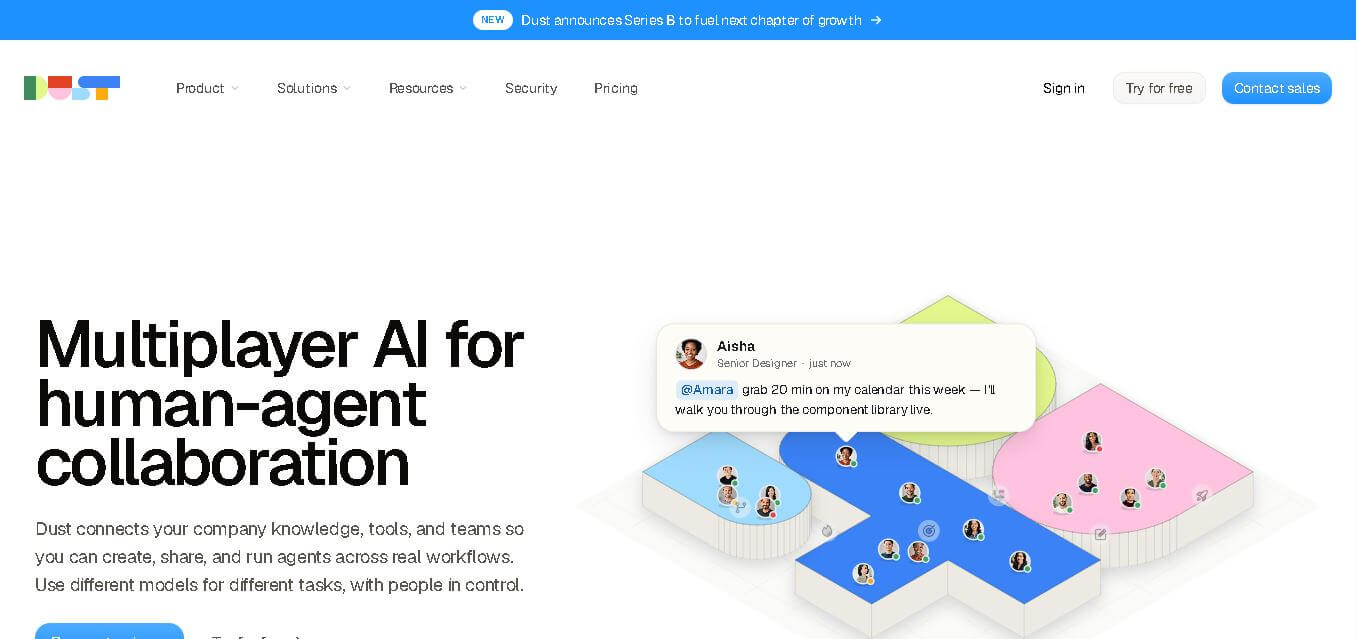
Dust helps teams build and run AI agents that work with company knowledge, connected business tools, and people. It supports collaborative workflows across departments, lets teams choose from 20+ AI models, and provides features for agents, skills, Pods, automations, governance, and usage monitoring.
 4.9
4.9Dorik
Website Builders
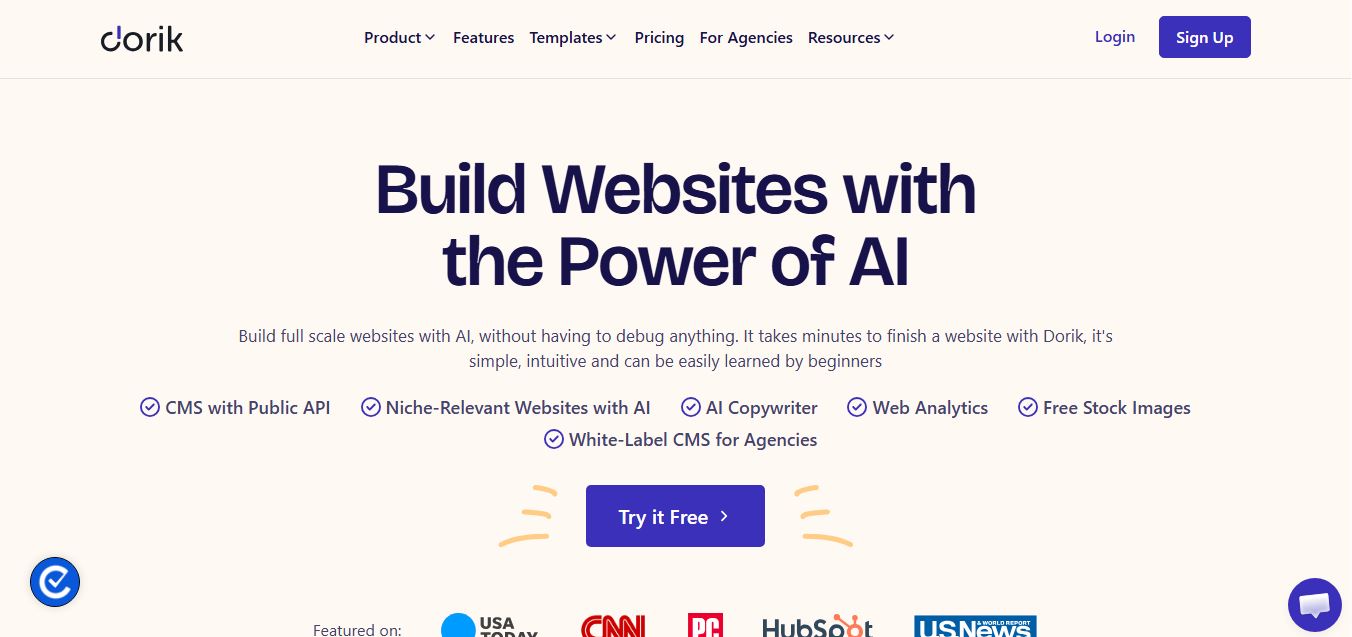
Dorik is an AI-powered website builder and no-code CMS platform that enables creators, businesses, and agencies to generate responsive websites, landing pages, blogs, and client-billed white-label portals with native Airtable integration.