
F5-TTS
F5-TTS is an open-source text-to-speech tool that generates natural-sounding speech from written text using flow matching. It supports reference-guided voice generation, a Gradio web interface, command-line inference, and model fine-tuning. Developers and creators can explore speech synthesis while checking hardware requirements and model licensing before commercial deployment.
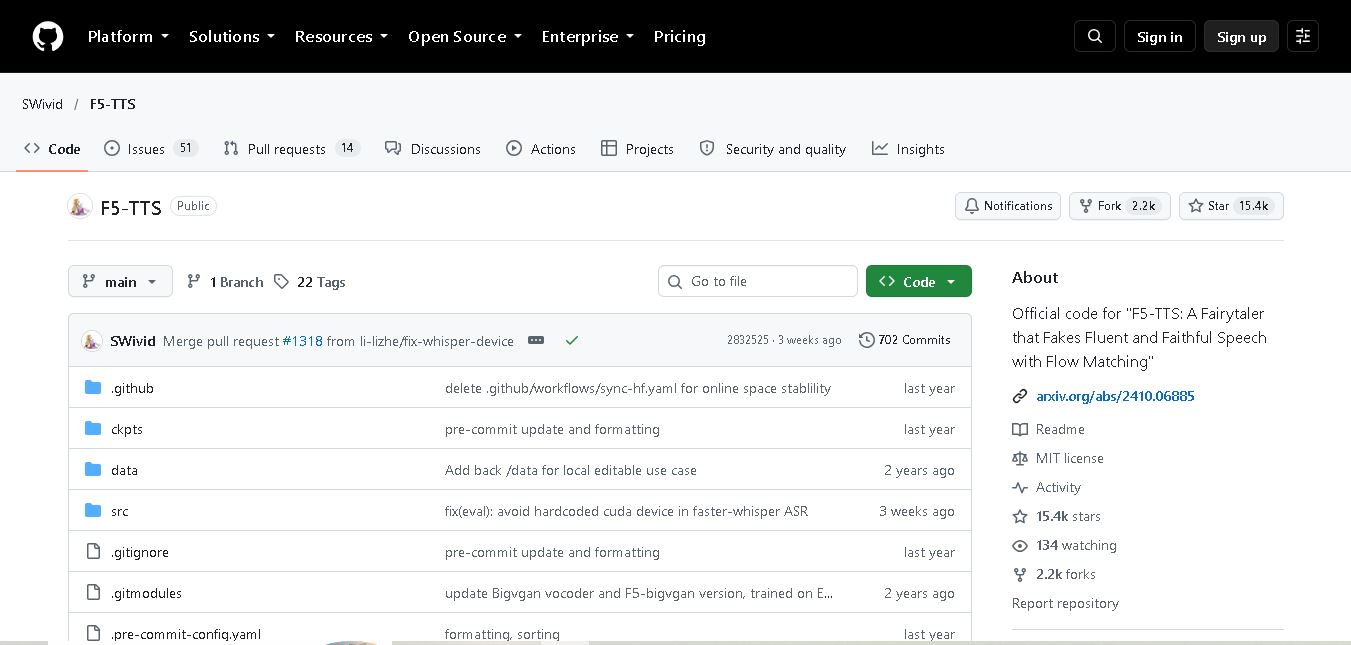
What is F5-TTS?
F5-TTS is an open-source text-to-speech system that converts written text into natural-sounding speech using flow matching and a Diffusion Transformer architecture. Developed by researchers and contributors behind the F5-TTS project, it supports voice generation from reference audio, allowing users to guide the generated speech with a sample voice. The project provides inference tools, a web interface, command-line workflows, and options for training or fine-tuning models.
F5-TTS was introduced in a research paper published on arXiv in 2024 and uses flow matching for speech synthesis. Its architecture combines a Diffusion Transformer with ConvNeXt V2, while Sway Sampling helps improve inference performance. The repository includes F5-TTS and E2-TTS models, a Gradio interface, command-line inference, and fine-tuning options. It requires Python 3.10 or newer according to the current installation guidance. The code uses an MIT license, but pretrained models have separate noncommercial licensing restrictions.
- Authors / Researchers: Yushen Chen, Zhikang Niu, Ziyang Ma, Keqi Deng, Chunhui Wang, Jian Zhao, Kai Yu, Xie Chen
- Repository Host: GitHub (SWivid/F5-TTS)
- License: Open-Source (MIT / Permissive Code & Weights)
Use Cases:
- Performing zero-shot voice cloning from reference audio clips under 15 seconds
- Generating multi-speaker podcasts, conversational dialogues, and multi-narrator audiobooks
- Controlling speech pacing, speed ratios (e.g., 0.7x to 1.3x), and emotional delivery via text prompts
- Building custom local or web-based TTS interfaces using the integrated Gradio app and CLI tools
Technology:
- Diffusion Transformer (DiT) combined with ConvNeXt V2 feature extraction layers
- Non-autoregressive Flow Matching generation pipeline with Vocos or BigVGAN neural vocoders
- Sway Sampling strategy designed for high-speed, low-NFE (Number of Function Evaluations) inference
Target Users:
- AI developers and speech researchers deploying fast, self-hosted text-to-speech pipelines
- Audiobook producers and game developers creating dynamic multi-character voice tracks
- Content creators using writing tools to draft video scripts, narrations, and audio transcripts
Corporate / Community Entity: Open-Source AI Project (SWivid / GitHub Community)

Key features of F5-TTS
F5-TTS's key features are
- Zero-Shot Voice Cloning: Clone any target voice effortlessly using a brief 5 to 15-second reference audio file without dedicated model fine-tuning.
- Flow Matching & DiT Architecture: Combines Diffusion Transformers with Flow Matching for seamless, highly natural speech cadence and pitch accuracy.
- Sway Sampling Inference: Employs an optimized sampling approach that drastically reduces inference steps while enhancing audio fluency and quality.
- Multi-Speaker & Podcast Generation: Supports multi-voice scripts, custom speaker tags, and conversational voice chats powered by integrated LLMs like Qwen2.5.
- Speed Control & Emotion Modeling: Dynamically adjust speech rates (from 0.7x to 1.3x speed) and maintain expressive emotional tone across generated audio.
- Developer Tooling (CLI, Gradio & Docker): Shipped with a Python package (pip install f5-tts), a local Gradio web application, PyTorch CLI, and pre-built Docker containers.
F5-TTS Pricing
F5-TTS is 100% free and open-source software available directly on GitHub for research, personal, and commercial development.
Open-Source Repository:
- $0 / Free forever
- Includes full access to model weights, training scripts, inference CLI, Gradio GUI, and evaluation suites
Self-Hosting / Infrastructure Costs:
- 100% Free code base
- Requires local GPU execution (e.g., NVIDIA GPUs with CUDA, AMD GPUs via ROCm, Intel XPUs, or Apple Silicon MPS)
Disclaimer: While the code and model checkpoints are free, hosting production APIs or fine-tuning models at scale will depend on local or cloud GPU compute costs.
Who is using F5-TTS?
F5-TTS is designed for AI researchers, voice developers, and audio engineers, including
- AI Speech Researchers: Benchmarking non-autoregressive flow matching against traditional TTS architectures
- Game Developers & Indie Studios: Generating dynamic NPC voice lines and multi-character dialogue scenes
- Podcast & Video Producers: Synthesizing multi-narrator audio tracks and localized voiceovers
- Content Creators: Using writing tools to draft narration scripts, video essays, and promotional audio clips
Best F5-TTS Alternatives
Some of the top F5-TTS alternatives include
- Kokoro-TTS
- ChatTTS
- XTTS v2 (Coqui)
- OpenVoice (MyShell)
- Bark (Suno)
- ElevenLabs
Pros and Cons of F5-TTS
Pros
- Exceptional voice cloning fidelity using very short reference audio samples (<15s)
- Flow matching DiT architecture removes complex grapheme-to-phoneme and duration predictor dependencies
- Fully open-source code and model weights with robust community support and containerization
- Supports multi-speaker generation, podcast dialogue modes, speed control, and emotion transfer
Cons
- Requires dedicated GPU hardware (Nvidia CUDA, Apple Silicon, or ROCm) for optimal real-time performance
- Reference audio longer than 30 seconds can lead to generation truncation if not properly chunked
- Capitalization and punctuation require careful formatting to avoid letter-by-letter spelling or unnatural pauses
Why Choose F5-TTS?
F5-TTS stands out as one of the most advanced open-source text-to-speech frameworks for users who want complete control over voice cloning and audio generation without relying on proprietary SaaS APIs.
- Eliminates proprietary cloud subscription fees with open-source model weights and code
- Delivers human-like voice cloning with minimal reference audio input
- Provides flexible deployment through Python packages, Docker containers, and Gradio web GUIs
- Offers rich feature support for multi-speaker dialogues, emotion modeling, and speed adjustment
F5-TTS vs. Competitors
The main difference between F5-TTS, Kokoro-TTS, ChatTTS, and ElevenLabs is that F5-TTS leverages a non-autoregressive Flow Matching Diffusion Transformer architecture for zero-shot voice cloning, whereas Kokoro-TTS focuses on an ultra-compact 82M model footprint, ChatTTS specializes in conversational dialogue fillers, and ElevenLabs is a closed-source commercial cloud platform. F5-TTS offers superior voice cloning fidelity and non-autoregressive synthesis speed for open-source developers.
| Feature / Tool | F5-TTS (github.com/SWivid/F5-TTS) | Kokoro-TTS | ChatTTS | ElevenLabs |
|---|---|---|---|---|
| Core Focus | Flow-Matching Zero-Shot TTS & Voice Cloning | Ultra-Lightweight Open TTS Engine | Conversational Speech AI | Commercial Cloud Voice AI & Dubbing |
| Model Architecture | Flow Matching DiT (ConvNeXt V2) | StyleTTS 2 / iSTFTNet (82M) | Autoregressive Transformer (~700M) | Proprietary Cloud Neural Engine |
| Zero-Shot Voice Cloning | Yes (High-Fidelity from <15s audio) | Preset Voices Focus | Limited / Speaker Prompts | Yes (High-Fidelity Cloud Cloning) |
| Open-Source License | Yes (Open Code & Checkpoints) | Yes (Apache 2.0) | Yes (Open Source) | No (Proprietary SaaS) |
| Starting Price Range | Free / Open-Source Self-Hosting | Free open-source | Free open-source | Free tier / $5–$330+ per month |
| Best For | Self-hosted zero-shot voice cloning & podcasts | Fast, low-latency CPU/GPU speech synthesis | Conversational speech with natural pauses | Turnkey enterprise voice cloning and video dubbing |
How do we rate F5-TTS?
| Parameter | Rating (out of 5) |
|---|---|
| Voice Cloning Accuracy & Naturalness | 4.9 |
| Model Architecture & Innovation | 4.9 |
| Inference Speed & Sway Sampling | 4.8 |
| Developer Ecosystem & Tooling | 4.8 |
| Value for Money | 5.0 |
| Overall Score | 4.88 |
F5-TTS Review
F5-TTS represents a major milestone in open-source AI voice synthesis. By leveraging Flow Matching and Diffusion Transformers, the SWivid repository brings state-of-the-art zero-shot voice cloning directly to developers and researchers. It achieves natural human prosody, emotional delivery, and multi-speaker dialogue flow without relying on heavy autoregressive pipelines or proprietary APIs. With clean CLI integration, Gradio web interfaces, and Docker support, F5-TTS is one of the most powerful text-to-speech repositories available in 2026.
Conclusion
F5-TTS is a useful option for developers, researchers, and content creators who want greater control over AI speech generation. Its reference-guided synthesis, web interface, and fine-tuning capabilities support a range of audio projects. However, users should consider technical setup, hardware compatibility, output quality, and the distinction between code and pretrained-model licenses. If you need flexible speech-generation workflows and are comfortable managing these requirements, F5-TTS is worth exploring for your next project.
FAQ
How does F5-TTS work?
F5-TTS converts written text into spoken audio using a reference voice sample to guide generation. You provide the audio and its transcript, then enter the text you want spoken. The model generates speech conditioned on that reference, making it useful for narration, prototyping, and voice-related research workflows for content creators.
Can F5-TTS clone a person's voice?
Yes, F5-TTS supports reference-audio-based voice generation, often described as zero-shot voice cloning. You supply a suitable voice sample and its matching transcript to guide the output. Use only recordings you own or have permission to use, and avoid impersonating people or misleading listeners about generated speech and follow applicable laws.
Is F5-TTS suitable for beginners?
F5-TTS provides a Gradio web interface and command-line inference, so you can choose a visual workflow or run generation through terminal commands. The repository also documents installation through pip, local development setup, and Docker. Some technical setup is required, including compatible Python, PyTorch, audio dependencies, and hardware for first-time users.
Is F5-TTS free to use commercially?
F5-TTS is open source, and its repository code is released under the MIT License. However, pretrained model weights have a CC-BY-NC license, which restricts commercial use. Before deploying it in a paid product, review the current licenses for both code and model weights carefully before any commercial deployment decision.
What can you create with F5-TTS?
F5-TTS can support narration, audiobook experiments, video voiceovers, prototype voice interfaces, and speech-generation research. It may also help developers test reference-guided speech workflows. Output quality varies with the reference recording, text, language, and configuration, so review generated audio before publishing or using it with an audience, and check usage rights.
What are the system requirements for F5-TTS?
F5-TTS requires a compatible Python environment, PyTorch and torchaudio versions matched to your device, and audio dependencies such as FFmpeg. A supported GPU can improve speed, but setup varies by operating system and hardware. Follow the repository's current installation instructions rather than copying commands from older tutorials for reliable results.
User Reviews
No reviews yet for F5-TTS.
Featured Tools
Featured AI tools from TechShark
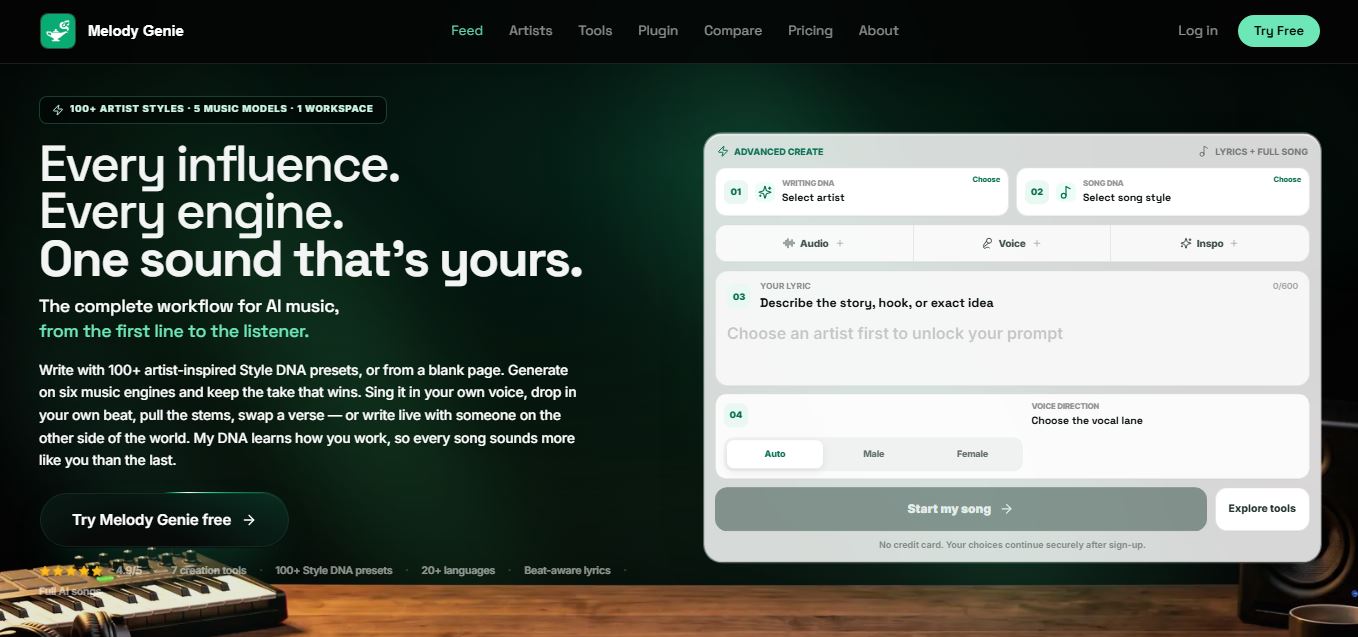
Melody Genie
MelodyGenie is an AI-powered music generator that creates original songs from simple text prompts. Users can choose styles, moods, and genres, then instantly generate melodies and full tracks, making it easy for creators, marketers, and hobbyists to produce custom music without musical expertise.
Freemium
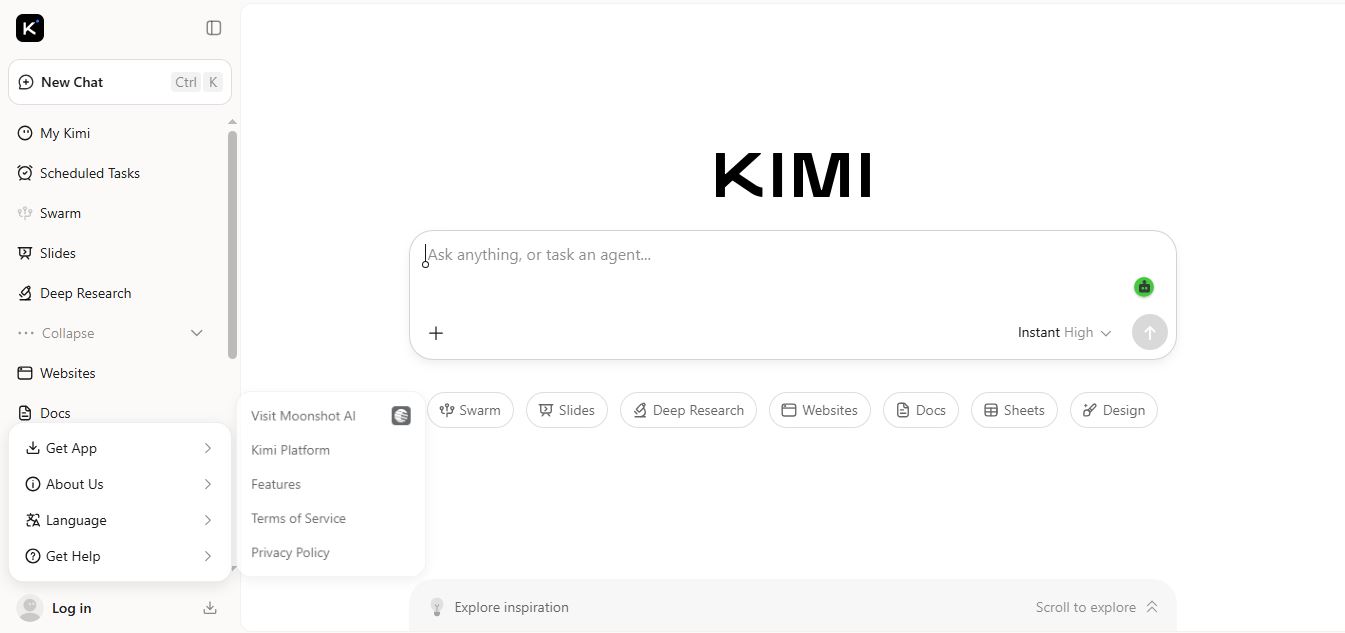
Kimi AI
Kimi AI is an advanced AI assistant developed by Moonshot AI that helps you chat, research, write, code, and automate tasks in one place. It supports web search, file analysis, and multimodal inputs, and can even run autonomous “agent” workflows to complete complex tasks end-to-end.
Freemium
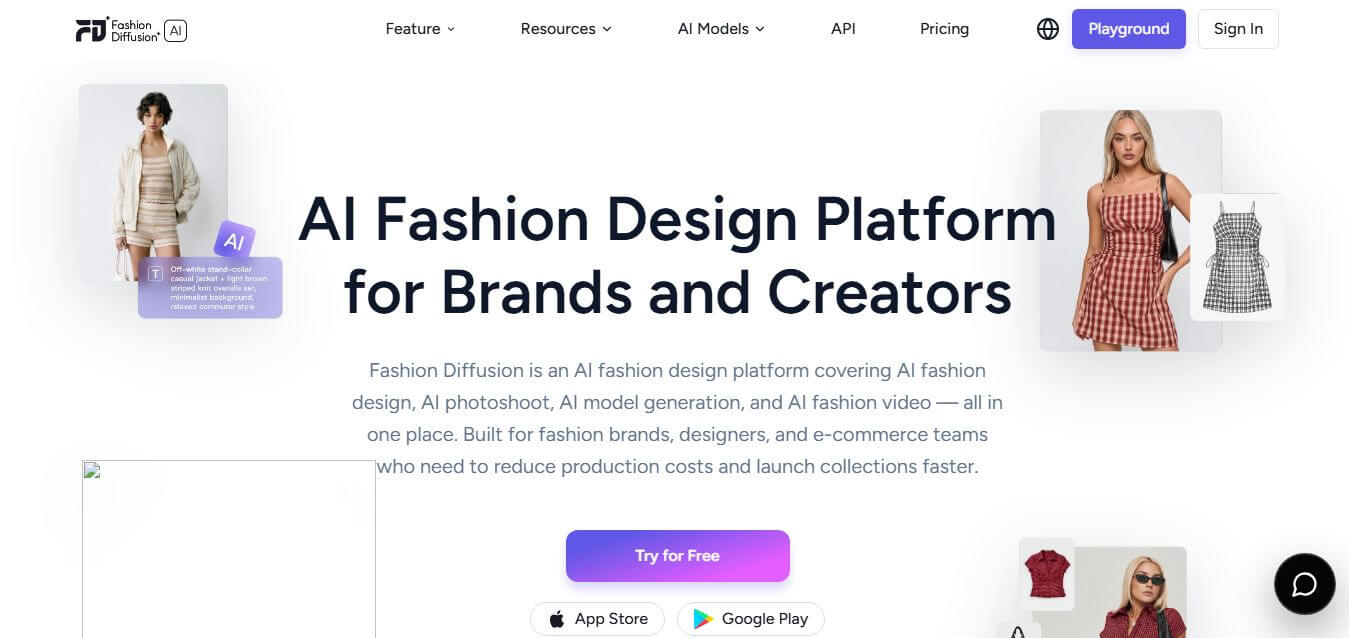
Fashion Diffusion AI
Fashion Diffusion is an AI-powered fashion design platform that helps brands and designers create clothing designs, virtual try-ons, AI models, product photos, and marketing visuals faster and cost-effectively.
Paid
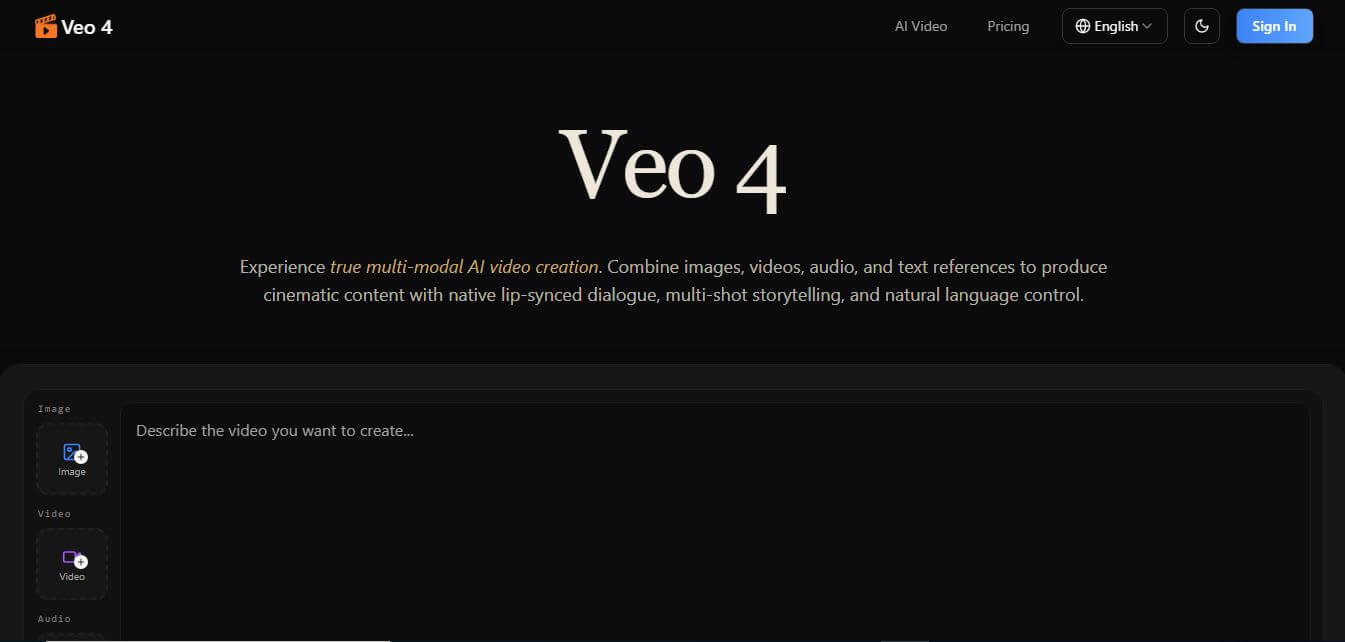
Veo 4
Veo 4 AI is an AI video creation platform that generates dramatic videos from text, images, audio, and video prompts using realistic motion and synchronized sound.
Paid
Alternatives
Alternatives to F5-TTS
The best F5-TTS alternatives include Kokoro-TTS, ChatTTS, XTTS v2, OpenVoice, Bark, and ElevenLabs. These solutions offer text-to-speech generation and voice cloning across open-source implementations and commercial cloud platforms. While F5-TTS specializes in a Flow Matching Diffusion Transformer architecture for rapid zero-shot voice cloning, alternatives like Kokoro-TTS focus on an ultra-lightweight 82M footprint, ChatTTS targets conversational speech fillers, and ElevenLabs provides turn-key proprietary voice APIs.
 4.9
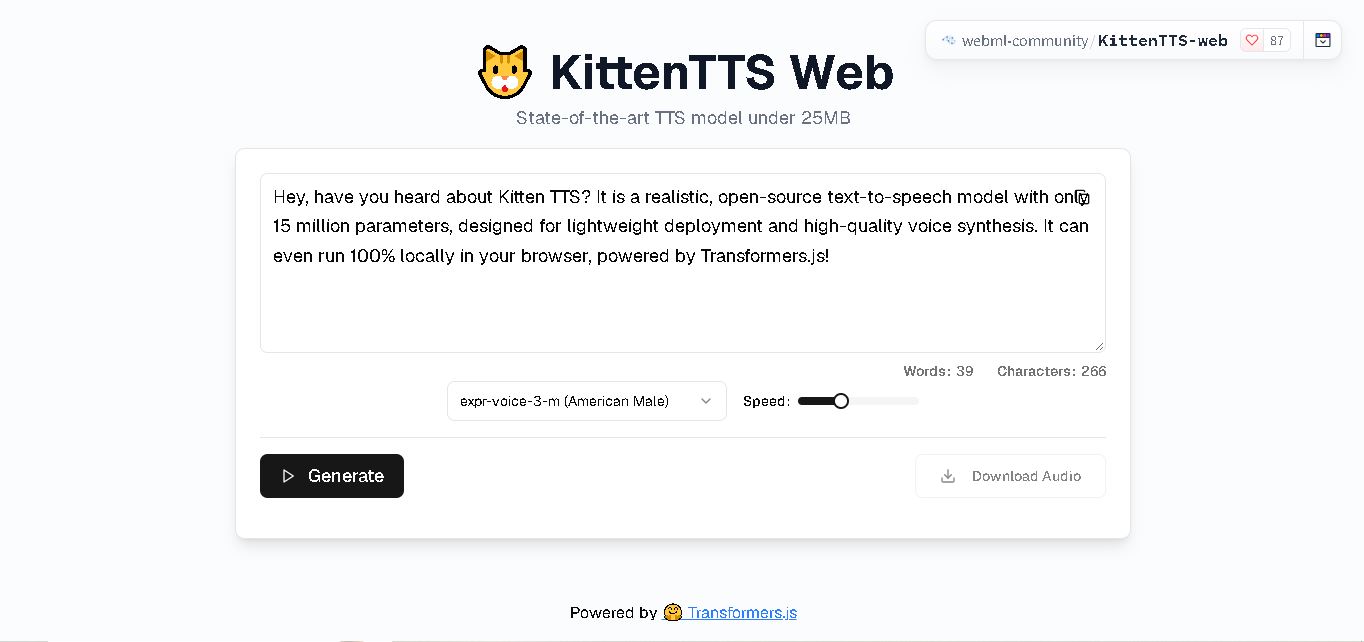
KittenTTS Web
Text-to-Speech
KittenTTS Web is a lightweight text-to-speech demo hosted on Hugging Face Spaces. It helps users explore how written text can be transformed into spoken audio using neural voice synthesis. The project is particularly relevant to developers, content creators, and accessibility-focused users interested in experimenting with compact speech generation technology directly through a web browser.
 4.9
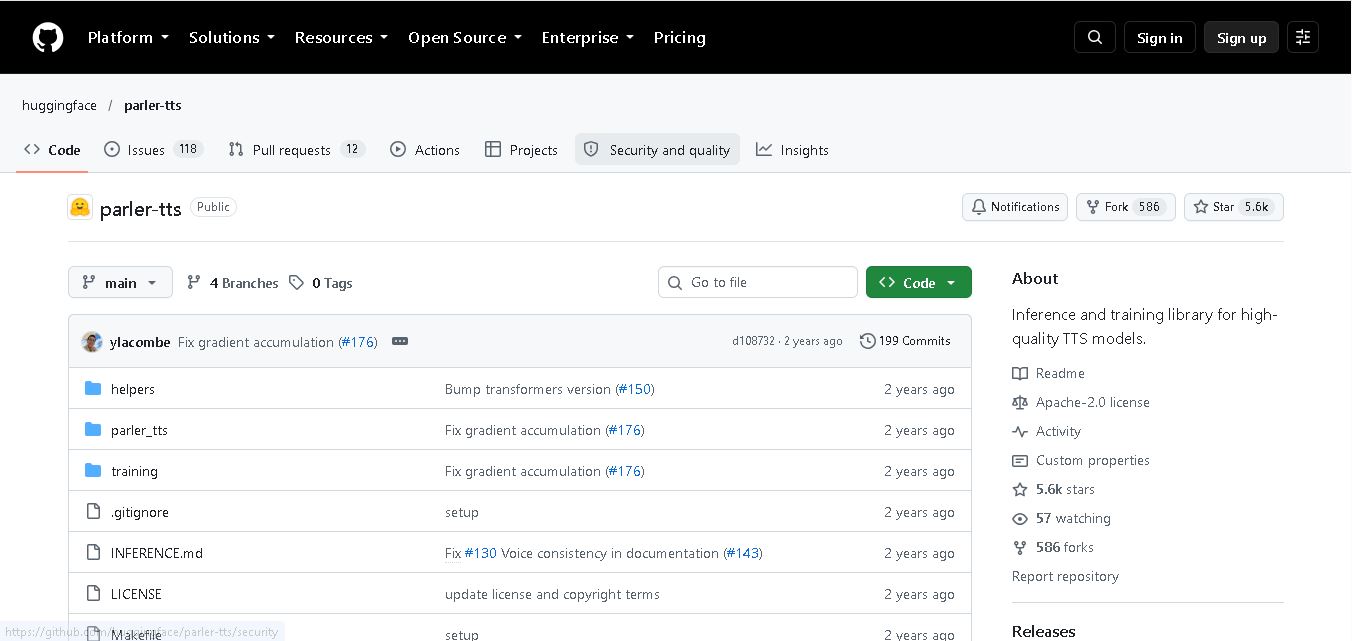
Parler-TTS
Text-to-Speech
Parler-TTS is an open-source text-to-speech tool that transforms written content into natural-sounding audio. It lets developers describe voice characteristics using natural language, including pitch, speaking speed, and recording quality. With publicly available model weights, training resources, and customizable checkpoints, it supports experimentation, research, and tailored speech-generation applications across projects.
 4.9
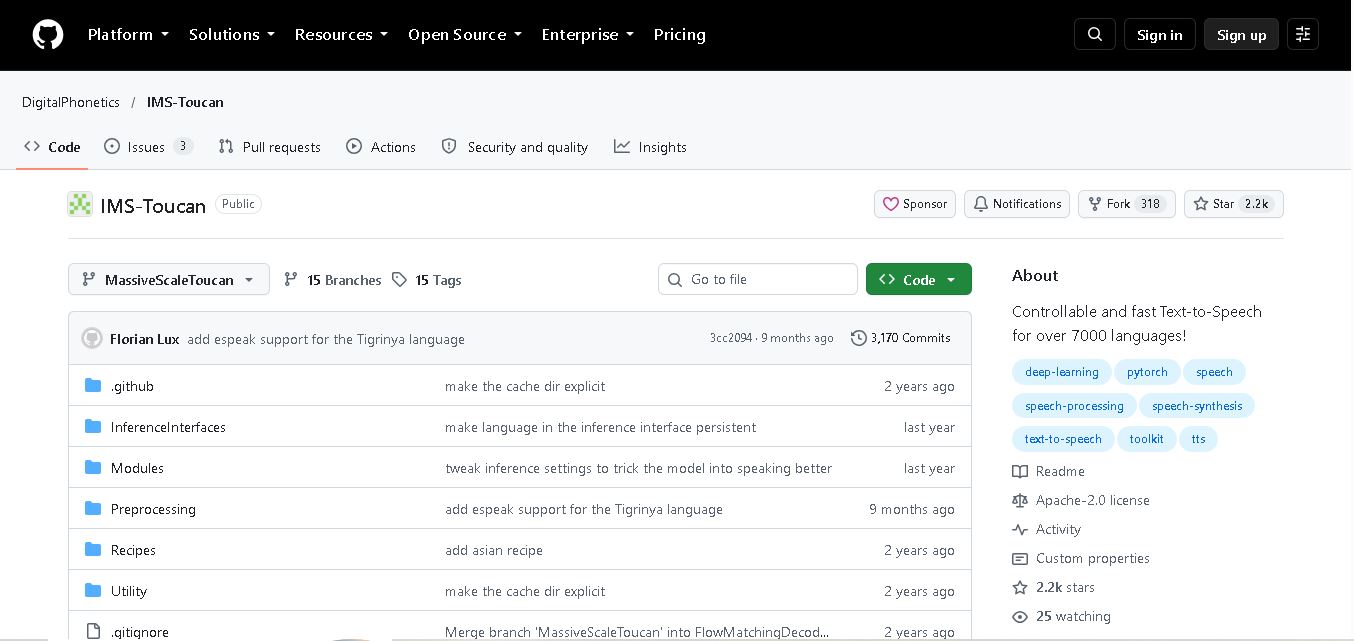
IMS Toucan
Text-to-Speech
IMS Toucan is an open-source text-to-speech toolkit from the University of Stuttgart designed for multilingual speech generation. It converts text into audio and provides tools for inference, voice and prosody control, and model training. Supporting more than 7,000 languages, it serves developers and researchers exploring technology across linguistic contexts.
 4.8
Verbatik
Text-to-Speech
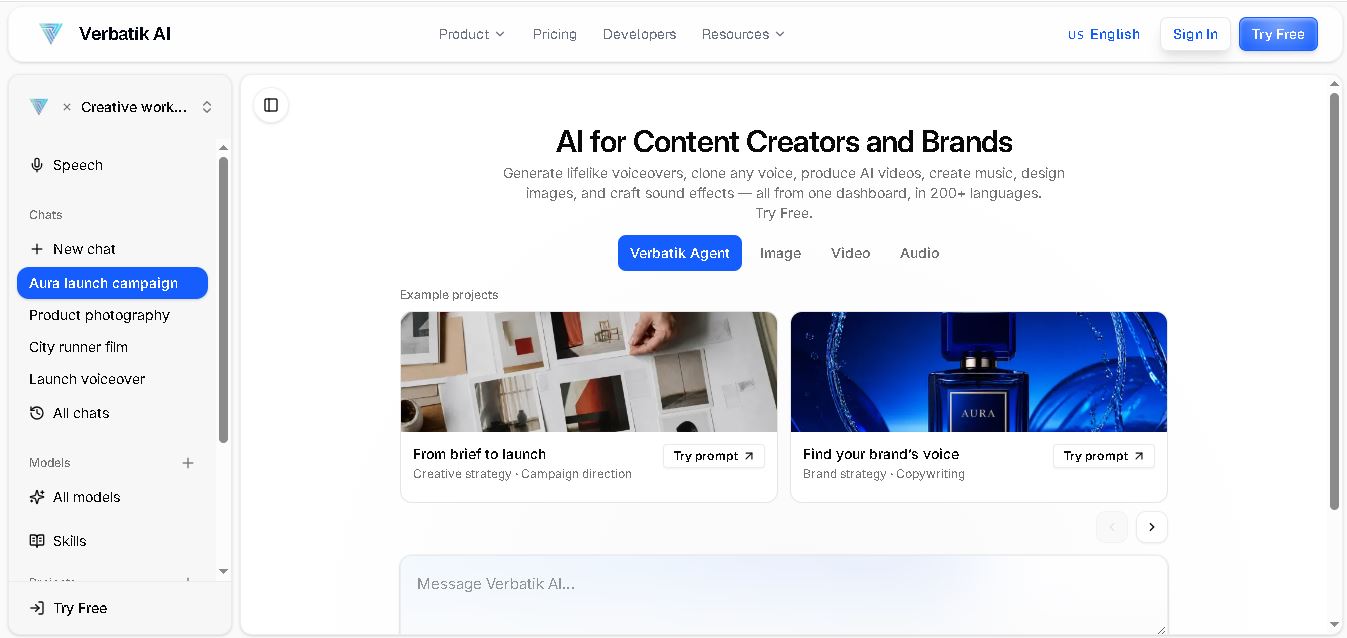
Verbatik AI helps users create realistic voiceovers, clone voices, generate music, and produce multimedia content using artificial intelligence. With multilingual speech, customizable voice settings, and developer APIs, it supports content creators, marketers, educators, and businesses. The platform simplifies audio production, video creation, and content localization from one workspace.
 4.8
Narration Box
Text-to-Speech
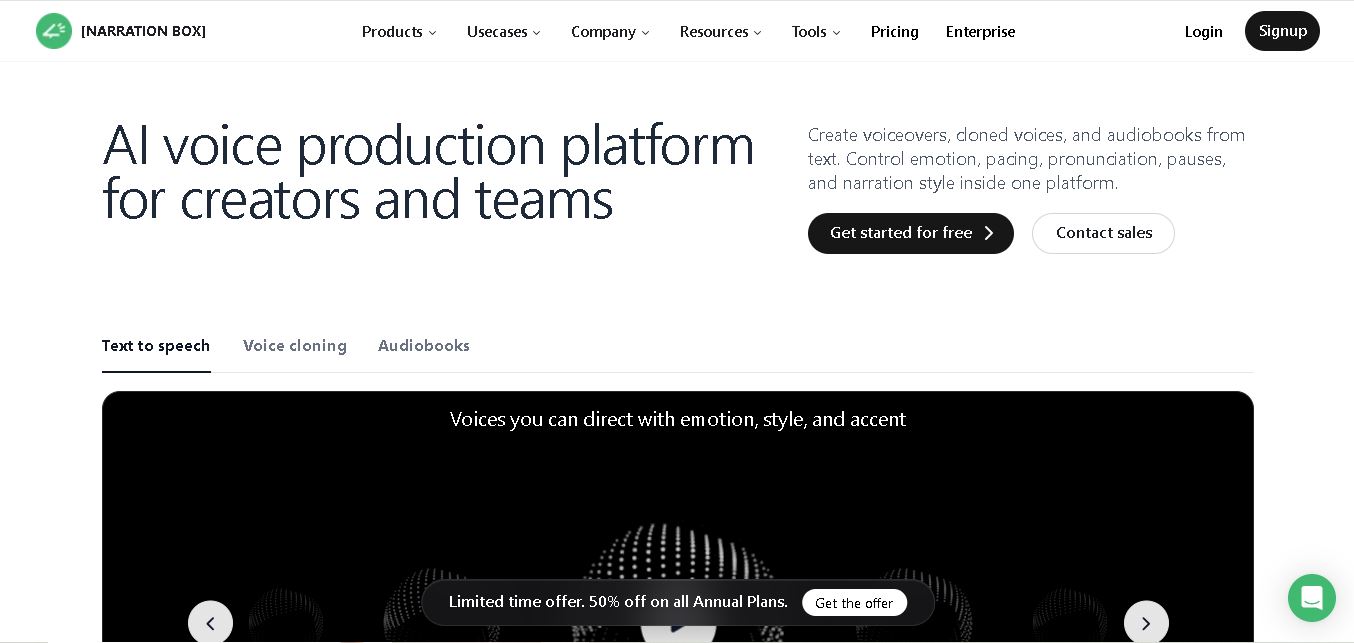
Narration Box is an AI voice generator for creating realistic voiceovers, audiobooks, podcasts, and educational audio from text. It offers over 1,500 AI narrators, 80+ languages and accents, voice cloning, and customizable emotional delivery. Its editing tools help creators produce consistent, multilingual audio content for personal and professional projects.
 4.7
AudioBot
Text-to-Speech
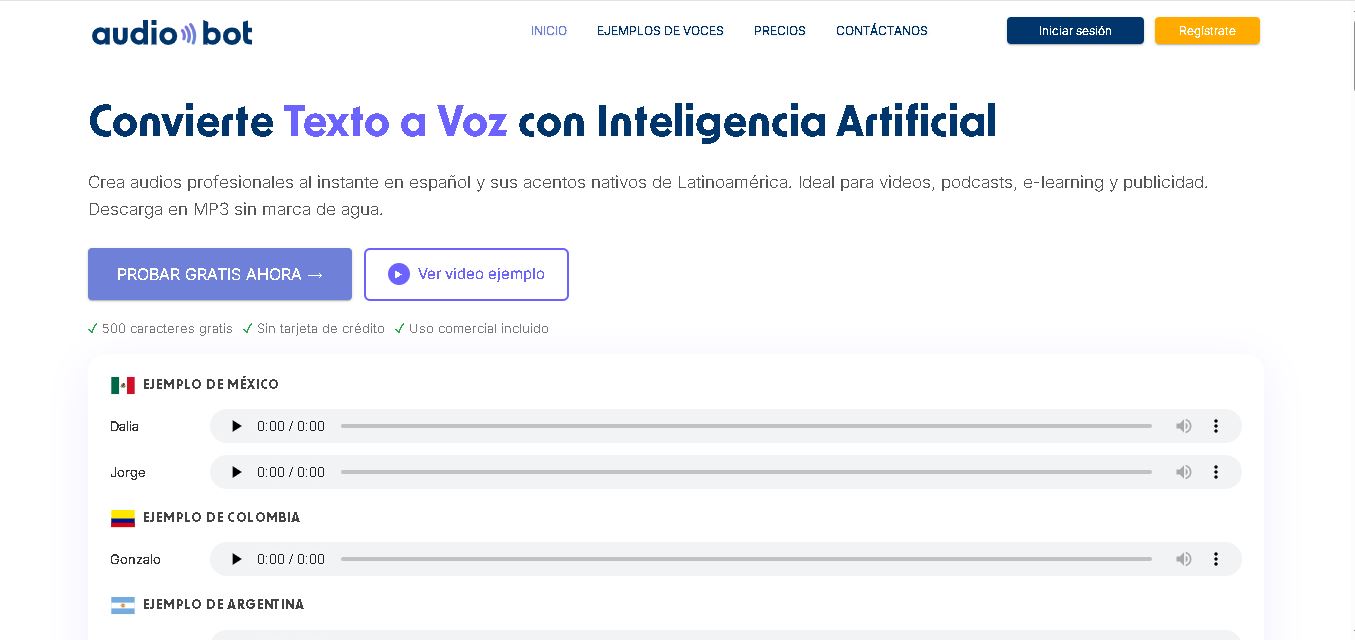
AudioBot converts written text into natural-sounding speech using AI-generated voices. It supports multiple languages and regional accents, making it useful for video voiceovers, presentations, educational materials, and audio content. Users can generate and download audio files, helping simplify narration workflows without requiring traditional recording equipment or voice talent.
 4.7
Audie AI
Text-to-Speech
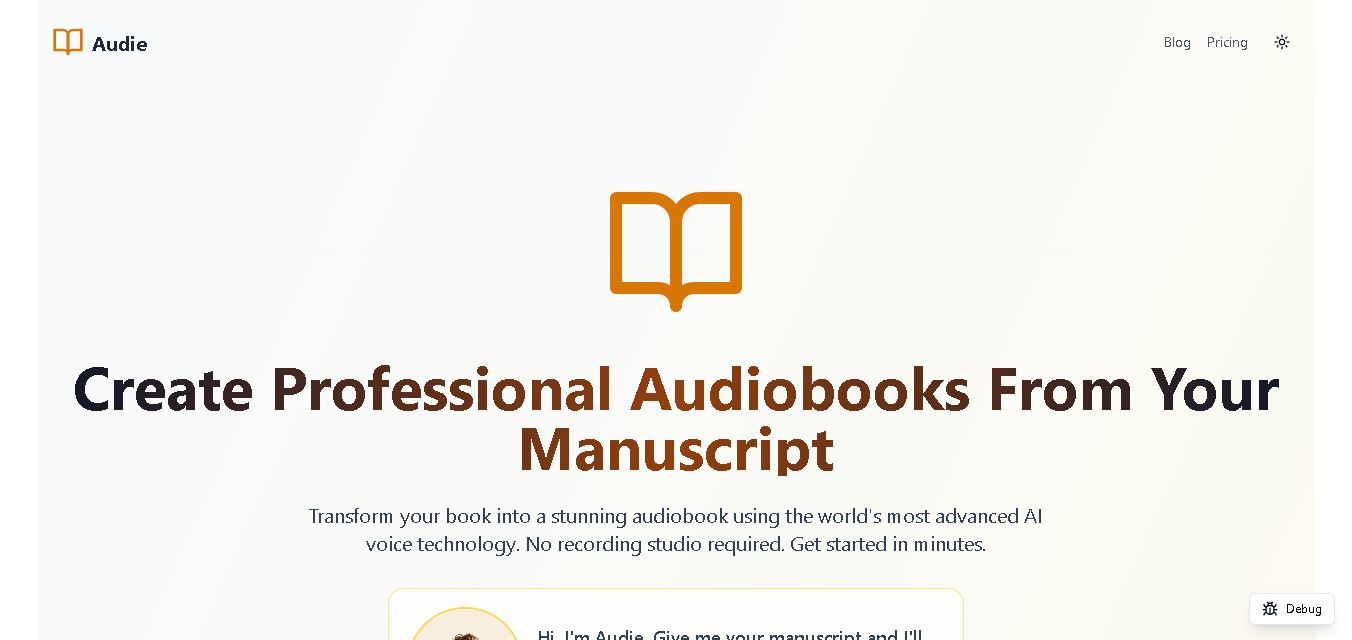
Audie AI is an audiobook creation tool that converts written manuscripts into narrated audio using AI-generated voices. It helps authors and publishers simplify production, explore different narration styles, and reduce reliance on traditional recording studios. With voice selection, advertised voice cloning, and downloadable audio, it supports more accessible audiobook creation for independent creators.
 4.6
Speechelo
Text-to-Speech
Speechelo is a text-to-speech tool designed to help creators turn written scripts into voiceovers. It offers different voices, languages, tones, and audio adjustments for creating narration. Video creators, educators, marketers, and content teams can use it to produce audio for tutorials, presentations, promotional videos, and other digital content projects.
 4.7
Leelo AI
Text-to-Speech
Leelo AI helps you turn written content into natural-sounding speech without recording your own voice. You can choose from 800+ voices across 142 languages and accents, adjust available voice settings, generate audio, store files in the cloud, export recordings, and use generated speech commercially for different content and communication needs.