Kokoro-TTS-Zero
Kokoro TTS Zero is a Hugging Face Spaces application that converts written text into spoken audio using the Kokoro text-to-speech model. It helps users explore AI-generated narration through a browser-based interface. Content creators, students, and developers can test speech synthesis for accessibility, educational materials, and audio content creation workflows.
What is Kokoro-TTS-Zero?
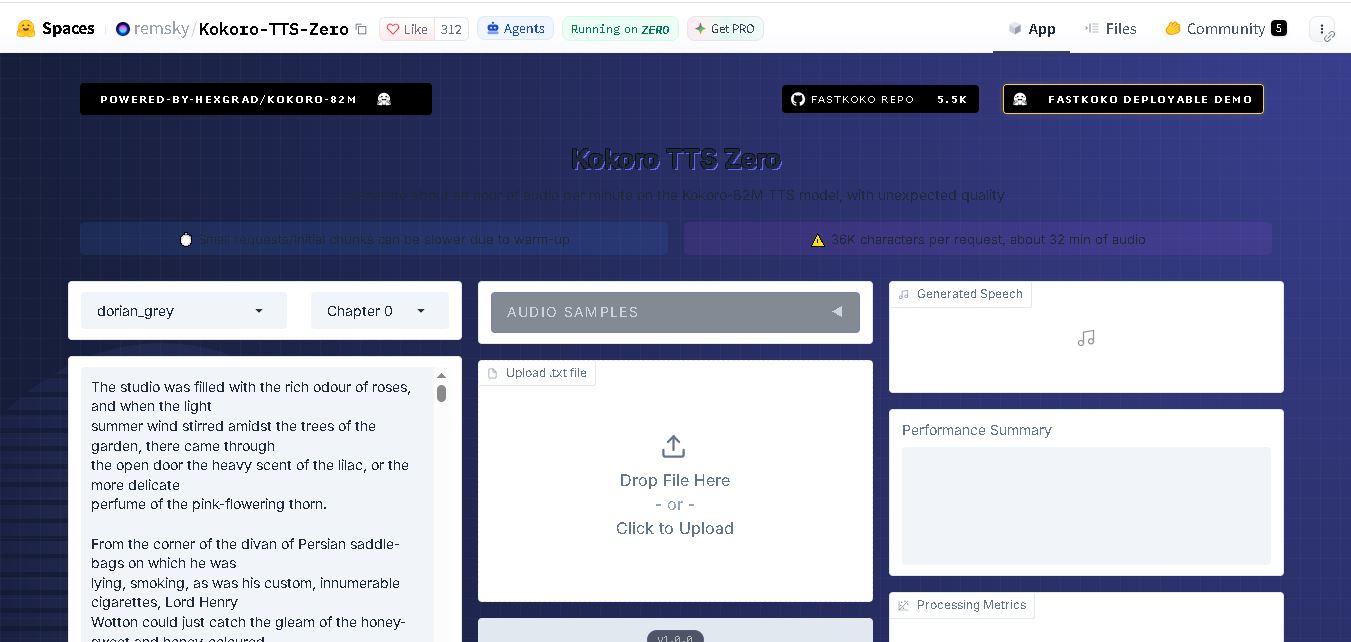
Kokoro TTS Zero is a browser-based text-to-speech demonstration hosted on Hugging Face Spaces that lets users convert written text into spoken audio using the Kokoro text-to-speech model. It provides an accessible way to explore AI-generated speech without building a complete application from scratch. Users can experiment with voice options and audio generation for content creation, narration, and accessibility. Its practical capabilities depend on the current Space configuration and available computing resources.
Kokoro TTS Zero is built around Kokoro, an open-weight text-to-speech model with 82 million parameters. The Hugging Face Space provides a browser-based interface for testing speech generation and exploring its implementation. The underlying model can support applications such as narration, accessibility, and audio content production. Users should distinguish the model's capabilities from the hosted demo's specific features, which may change with updates. Performance depends on input length, voice selection, and available hardware. No fixed generation speed or guaranteed uptime is established.
- Author / Developer: remsky (Hugging Face Space maintainer) & hexgrad (Kokoro Model Creator)
- Framework & Hosting: Hugging Face Spaces (ZeroGPU / Gradio)
Use Cases:
- Generating fast, natural voiceovers for e-learning materials, short video scripts, and podcasts
- Testing and evaluating Kokoro's multi-voice capabilities before deploying local FastAPI/Docker instances
- Creating accessible audio versions of articles, documentation, and digital stories
- Auditioning custom speaker tags and voice aliases for multi-narrator audio generation
Technology:
- 82M parameter Kokoro TTS architecture built on StyleTTS 2 and iSTFTNet vocoder frameworks
- Misaki G2P (Grapheme-to-Phoneme) processing engine with IPA phoneme mapping
- Hugging Face ZeroGPU dynamic hardware allocation for zero-cost GPU inference
Target Users:
- AI developers and researchers prototyping lightweight local text-to-speech workflows
- Indie hackers and app creators seeking open-weight, Apache-licensed alternatives to ElevenLabs
- Content creators using writing tools to draft video scripts, narrations, and audio transcripts
Corporate / Community Entity: Open-Source Hugging Face Community Space (remsky / hexgrad)

Key features of Kokoro-TTS-Zero
Kokoro-TTS-Zero's key features are
- Ultra-Efficient 82M Model Architecture: Delivers natural intonation and audio fidelity matching far larger models while operating within an extremely small memory footprint.
- ZeroGPU Infrastructure Acceleration: Powered by Hugging Face's shared GPU cluster, enabling instant processing without needing local GPU setup.
- Diverse Voice Library (American & British Styles): Access popular built-in voice profiles including
af_heart,af_bella,am_adam,am_michael,bf_emma, andbm_george. - Multi-Language & Phoneme Capabilities: Supports American English, British English, French, Japanese, and Chinese through integrated G2P (Misaki) pipelines.
- Real-Time Speech Speed & Pitch Adjustments: Fine-tune speaking pace and output parameters for customized character delivery.
- Open-Weight & Permissive Licensing: Built around the Apache 2.0 licensed model weights, making downstream integration completely royalty-free.
Kokoro-TTS-Zero Pricing
Kokoro-TTS-Zero is entirely free to access via Hugging Face Spaces, supported by community hosting and open-source licensing.
Free Hugging Face Space:
- $0 / Free forever
- Unlimited interactive web generation via Hugging Face ZeroGPU queue
Self-Hosted / API Deployment (Kokoro Model):
- 100% Free / Apache 2.0 License
- Can be self-hosted locally on CPU or low-cost cloud GPUs (e.g., RTX 3060 at ~$0.03–$0.07/hour, costing under $0.06 per hour of generated audio)
Disclaimer: Public Hugging Face Spaces operate on shared ZeroGPU queues and may experience temporary queue waits during high traffic. For dedicated production endpoints, users can duplicate the Space or deploy via Kokoro-FastAPI containers.
Who is using Kokoro-TTS-Zero?
Kokoro-TTS-Zero is designed for developers, audio enthusiasts, and creators, including
- Open-Source AI Developers: Testing speed, prosody, and phoneme behavior before deploying self-hosted TTS pipelines
- Audiobook & Podcast Creators: Auditioning natural voices and multi-speaker dialogue scripts
- Indie App Builders: Prototype testing voice capabilities for local desktop apps, edge devices, or game NPCs
- Content Creators: Using writing tools to draft narration scripts, social video voiceovers, and promotional audio clips
Best Kokoro-TTS-Zero Alternatives
Some of the strongest Kokoro-TTS-Zero alternatives include
- ElevenLabs
- ChatTTS
- Bark (Suno)
- XTTS v2 (Coqui)
- Piper TTS
- OpenVoice (MyShell)
Pros and Cons of Kokoro-TTS-Zero
Pros
- Remarkable audio quality and expressiveness relative to its tiny 82M parameter footprint
- Runs seamlessly on free ZeroGPU hardware without requiring local installation or GPU resources
- Includes high-quality American and British voice presets with natural speech cadence
- Permissive Apache 2.0 open-weight model allowing free commercial self-hosting
Cons
- Shared Hugging Face Space queues can occasionally experience high latency during peak usage
- Lacks advanced voice cloning features out-of-the-box compared to zero-shot models like XTTS or ElevenLabs
- Edge-case pronunciation on highly complex technical terms may require explicit phoneme input adjustments
Why Choose Kokoro-TTS-Zero?
Kokoro-TTS-Zero is the ideal interactive sandbox for anyone seeking state-of-the-art open-source text-to-speech without the overhead of heavy VRAM requirements or paid subscriptions.
- Delivers production-ready speech synthesis with an ultra-lightweight 82M parameter engine
- Instant browser execution backed by Hugging Face ZeroGPU infrastructure
- Zero licensing costs or subscription fees thanks to Apache 2.0 open-weight distribution
- Serves as the ideal testbed before deploying local Docker or FastAPI TTS server instances
Kokoro-TTS-Zero vs. Competitors
The main difference between Kokoro-TTS-Zero, ElevenLabs, ChatTTS, and Bark is that Kokoro achieves near-commercial prosody and natural tone with only 82 million parameters and minimal hardware requirements, whereas ElevenLabs is a proprietary closed-source cloud platform, Bark and ChatTTS require significantly higher compute and VRAM footprint, and Piper TTS targets lighter offline CPU devices with simpler acoustic modeling. Kokoro stands out for delivering the best quality-to-size ratio in open-source text-to-speech.
| Feature / Tool | Kokoro-TTS-Zero (HF Space) | ElevenLabs | ChatTTS | Bark (Suno) |
|---|---|---|---|---|
| Core Focus | Lightweight Open-Source TTS Demo | Enterprise Commercial Voice AI | Conversational Dialogue TTS | Generative Audio & Sound FX |
| Model Size / VRAM | 82M Parameters (< 2 GB VRAM) | Proprietary Cloud API | ~700M Parameters (4+ GB VRAM) | Large Transformer (8+ GB VRAM) |
| Hosting / Access | Free HF Space / Self-Hostable | SaaS API / Cloud Platform | Open Weights / HF Spaces | Open Source / Local Execution |
| Open License | Yes (Apache 2.0) | No (Proprietary) | Yes (Open Source) | Yes (MIT) |
| Starting Price Range | Free / Zero-Cost Self-Hosting | Free tier / $5–$330+ per month | Free open-source | Free open-source |
| Best For | Fast, low-latency, resource-light TTS | Ultra-realistic enterprise narration | Conversational dialogue with laughter | Expressive audio with background sounds |
How do we rate Kokoro-TTS-Zero?
| Parameter | Rating (out of 5) |
|---|---|
| Voice Naturalness & Prosody Quality | 4.8 |
| Model Efficiency & Inference Speed | 5.0 |
| ZeroGPU Accessibility & Ease of Use | 4.7 |
| Open-Source Licensing & Developer Utility | 5.0 |
| Value for Money | 5.0 |
| Overall Score | 4.90 |
Kokoro-TTS-Zero Review
Kokoro-TTS-Zero on Hugging Face demonstrates one of the most impressive technical achievements in open-source audio synthesis. By delivering highly natural, non-robotic voice generation in an 82-million parameter model, Kokoro challenges the industry assumption that high-quality speech requires multi-billion parameter architectures or expensive subscription APIs. Host remsky's ZeroGPU space provides an instant testbed for developers and creators to evaluate voice quality, speed, and prosody in real time. For teams building voice applications or creators seeking quality narration without recurring fees, Kokoro-TTS-Zero is an exceptional open-source landmark.
Conclusion
Kokoro TTS Zero offers a convenient starting point for anyone interested in exploring AI-powered text-to-speech technology. Its browser-based interface makes speech generation accessible without requiring a complete local setup. Whether you are experimenting with narration, accessibility, or content production, test the available voices and review the generated audio before publishing. For long-term or commercial projects, evaluate the model's licensing, performance, and deployment requirements to determine whether Kokoro fits your workflow.
FAQ
How does Kokoro TTS Zero work?
Kokoro TTS Zero allows you to enter written text and generate spoken audio through a browser-based interface. The application processes your input using its configured text-to-speech model and produces speech you can listen to. Results depend on pronunciation, text formatting, selected voice, and the resources available to the hosted Hugging Face Space during generation.
Is Kokoro TTS Zero free to use?
You can explore Kokoro TTS Zero through its publicly accessible Hugging Face Space, subject to the application's availability and hosting limits. Public access does not guarantee unlimited usage, uninterrupted service, or specific processing speeds. If you plan frequent or commercial use, review the model's license, deployment requirements, and applicable terms before relying on it.
Can Kokoro TTS Zero create natural-sounding voices?
Kokoro is designed to synthesize speech from text, producing audio rather than simply displaying written content. The perceived naturalness depends on the selected voice, punctuation, sentence structure, and pronunciation of unfamiliar words. For professional narration, listen to generated samples first and check whether the output meets your requirements for clarity, tone, and consistency.
Who should use Kokoro TTS Zero?
Kokoro TTS Zero may suit content creators, students, developers, writers, and accessibility-focused users who want to experiment with speech synthesis. You can explore its potential for reading text aloud, prototyping voice features, or creating narration drafts. Before using generated audio in a commercial project, verify licensing conditions and review the output quality.
Does Kokoro TTS Zero support multiple languages?
Language support depends on the specific model configuration and voice options available in the hosted application. Although the broader Kokoro ecosystem includes multilingual capabilities, you should not assume every language is supported by this particular Space. Check its current interface and documentation, then test representative sentences to evaluate pronunciation, fluency, and language-specific accuracy.
Can Kokoro TTS Zero be used for YouTube videos and podcasts?
You can explore Kokoro TTS Zero for generating narration drafts for YouTube videos, podcasts, presentations, and educational content. Before publishing audio, review pronunciation, pacing, and overall sound quality. Also, verify the applicable model license and usage conditions, particularly when your content is monetized or intended for commercial distribution.
User Reviews
No reviews yet for Kokoro-TTS-Zero.
Featured Tools
Featured AI tools from TechShark
Melody Genie
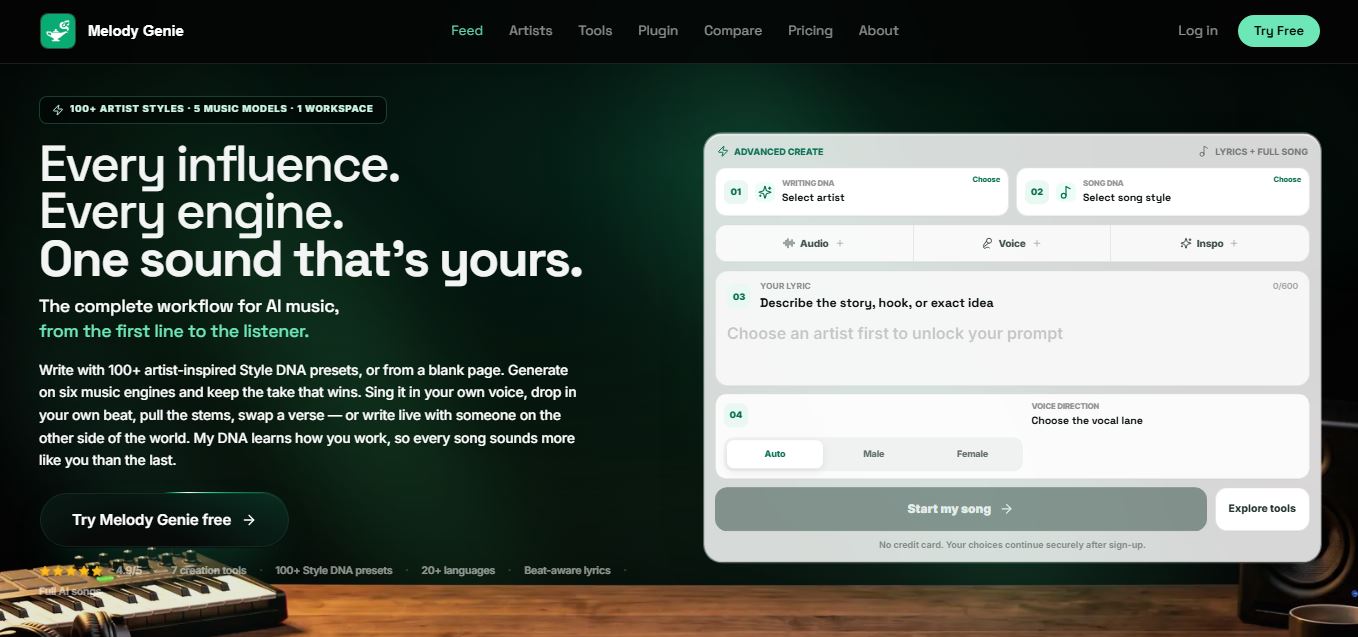
MelodyGenie is an AI-powered music generator that creates original songs from simple text prompts. Users can choose styles, moods, and genres, then instantly generate melodies and full tracks, making it easy for creators, marketers, and hobbyists to produce custom music without musical expertise.
Freemium
Kimi AI
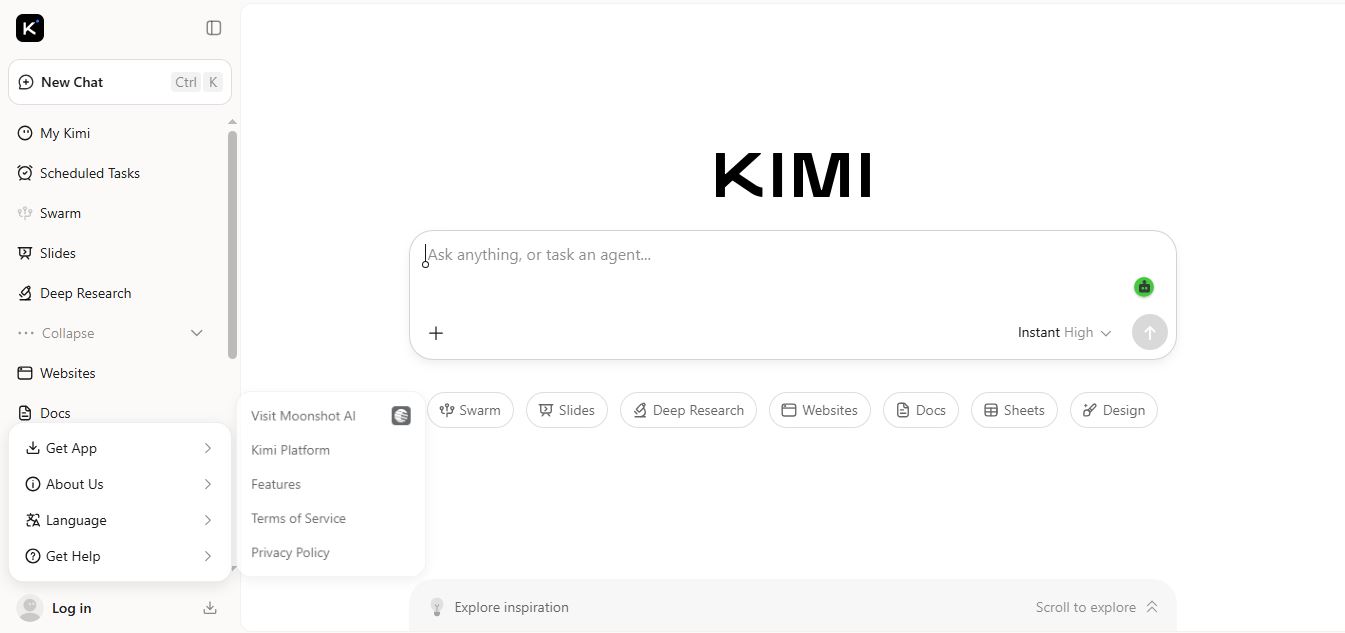
Kimi AI is an advanced AI assistant developed by Moonshot AI that helps you chat, research, write, code, and automate tasks in one place. It supports web search, file analysis, and multimodal inputs, and can even run autonomous “agent” workflows to complete complex tasks end-to-end.
Freemium

Fashion Diffusion AI
Fashion Diffusion is an AI-powered fashion design platform that helps brands and designers create clothing designs, virtual try-ons, AI models, product photos, and marketing visuals faster and cost-effectively.
Paid
Veo 4
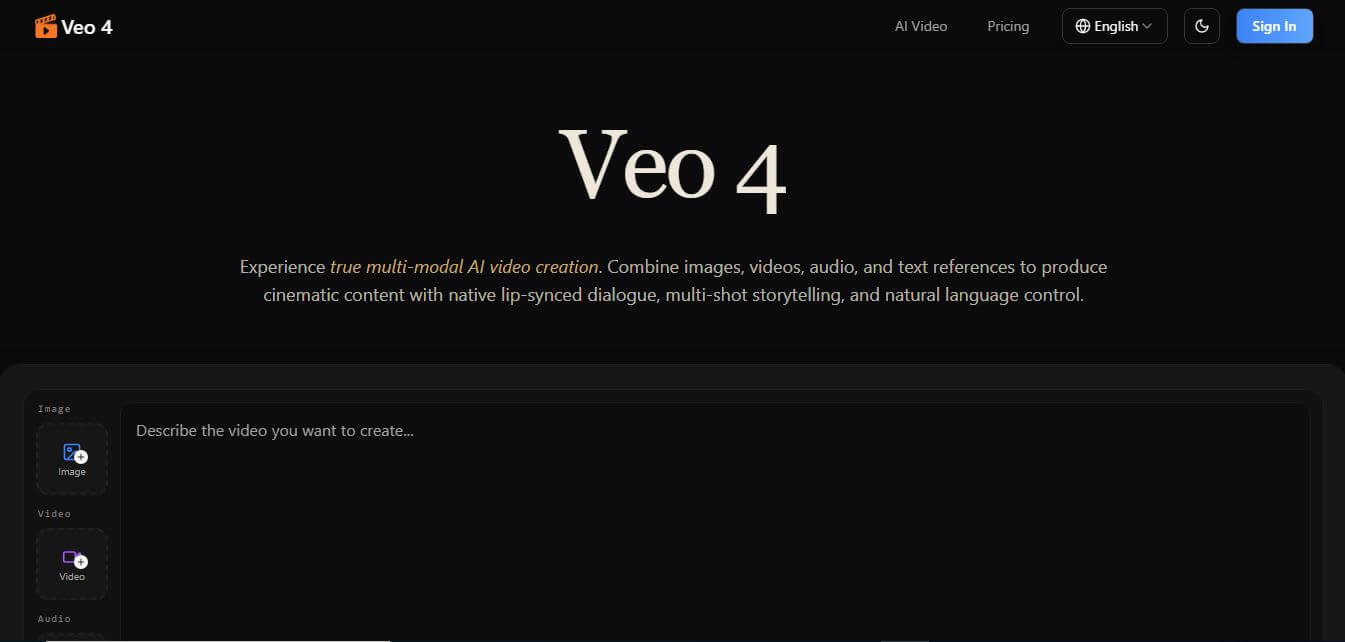
Veo 4 AI is an AI video creation platform that generates dramatic videos from text, images, audio, and video prompts using realistic motion and synchronized sound.
Paid
Alternatives
Alternatives to Kokoro-TTS-Zero
The best Kokoro-TTS-Zero alternatives include ElevenLabs, ChatTTS, Bark, XTTS v2, Piper TTS, and OpenVoice. These tools provide text-to-speech synthesis, voice cloning, and audio generation across cloud APIs and self-hosted environments. While Kokoro-TTS-Zero specializes in an ultra-lightweight 82M parameter model running on zero-cost ZeroGPU infrastructure, alternatives like ElevenLabs offer commercial-grade voice cloning, ChatTTS focuses on conversational dialogue, and Piper TTS targets offline CPU deployments.
 4.9
KittenTTS Web
Text-to-Speech
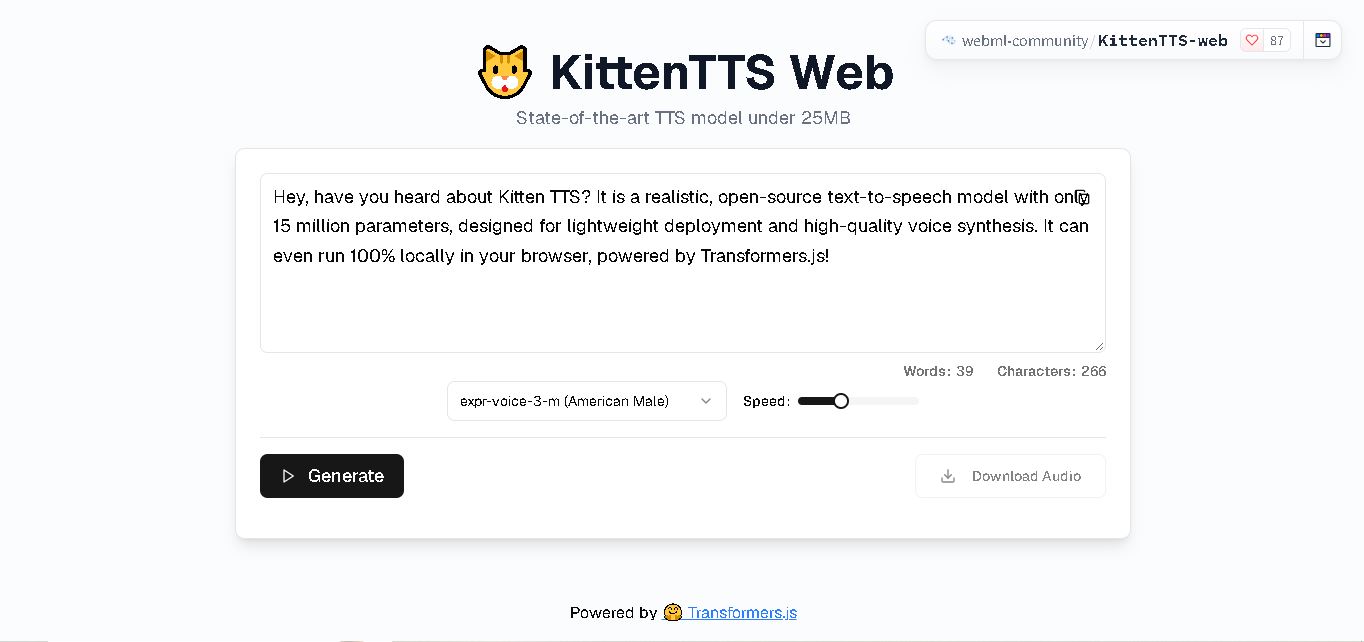
KittenTTS Web is a lightweight text-to-speech demo hosted on Hugging Face Spaces. It helps users explore how written text can be transformed into spoken audio using neural voice synthesis. The project is particularly relevant to developers, content creators, and accessibility-focused users interested in experimenting with compact speech generation technology directly through a web browser.
 4.9
Parler-TTS
Text-to-Speech
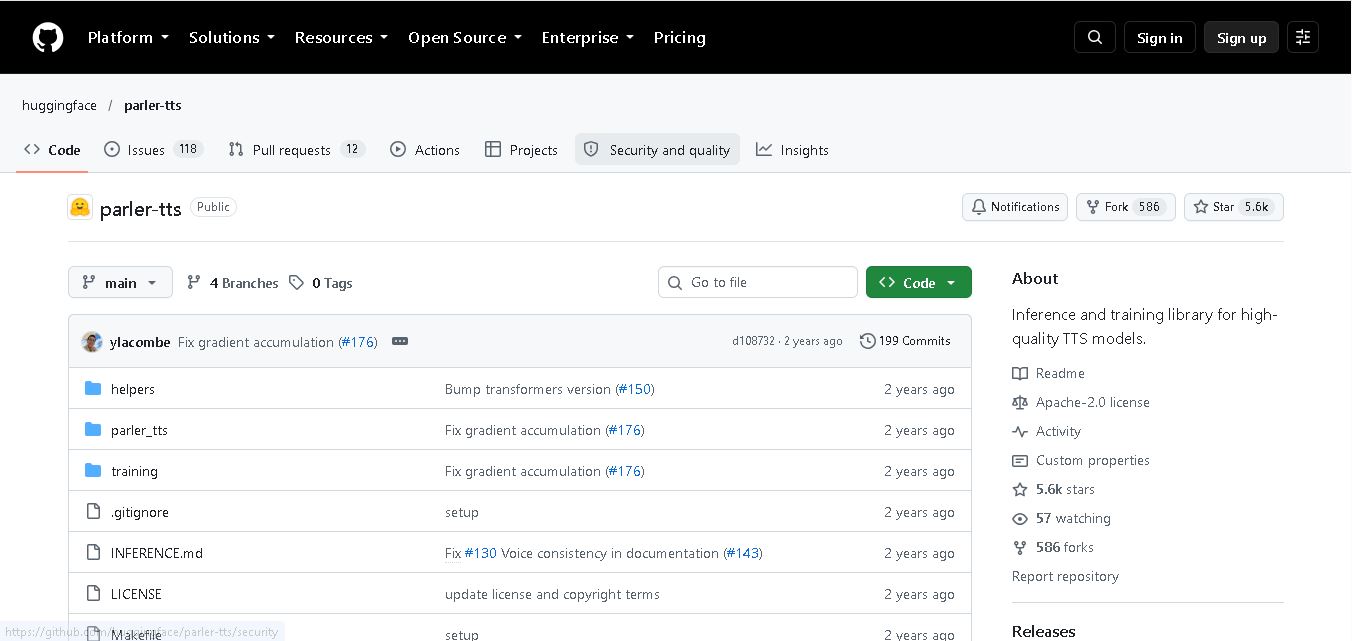
Parler-TTS is an open-source text-to-speech tool that transforms written content into natural-sounding audio. It lets developers describe voice characteristics using natural language, including pitch, speaking speed, and recording quality. With publicly available model weights, training resources, and customizable checkpoints, it supports experimentation, research, and tailored speech-generation applications across projects.
 4.9
IMS Toucan
Text-to-Speech
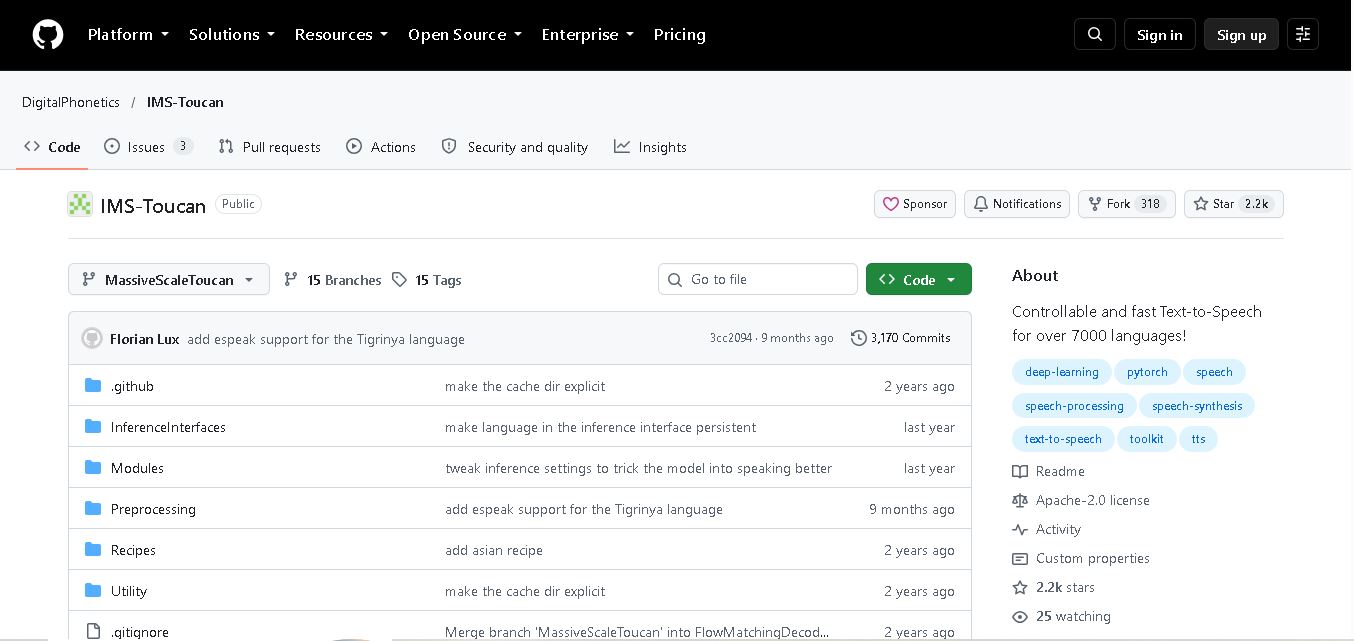
IMS Toucan is an open-source text-to-speech toolkit from the University of Stuttgart designed for multilingual speech generation. It converts text into audio and provides tools for inference, voice and prosody control, and model training. Supporting more than 7,000 languages, it serves developers and researchers exploring technology across linguistic contexts.
 4.8
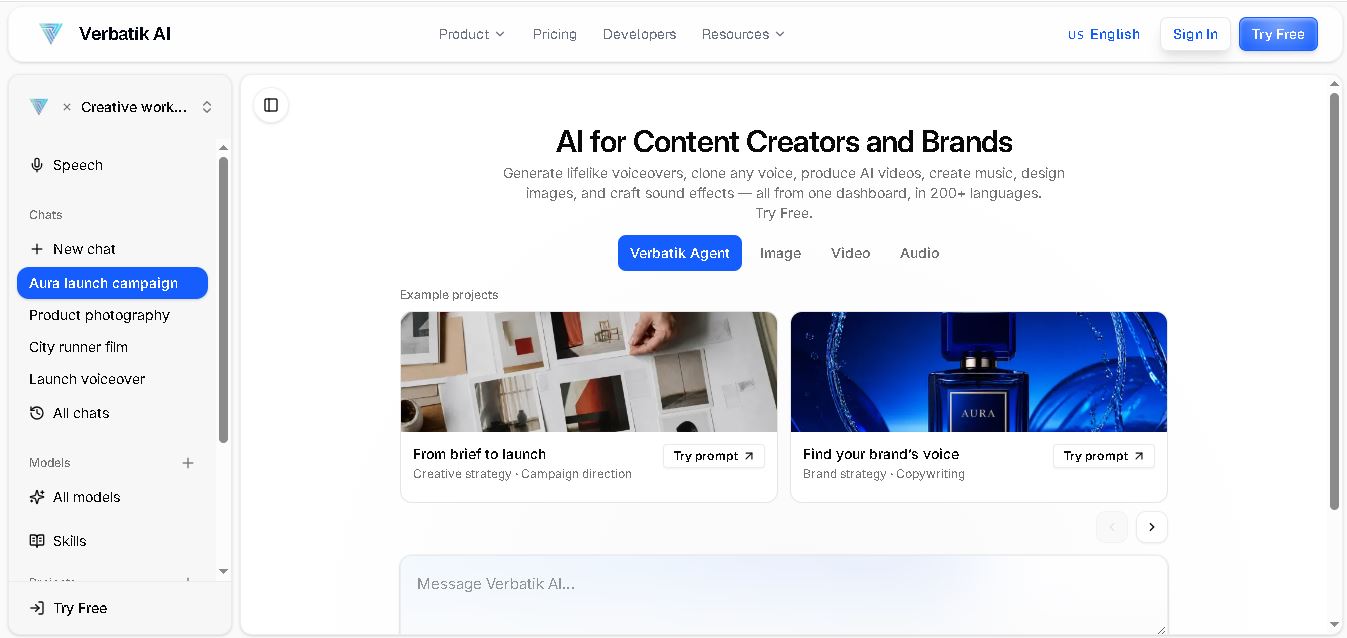
Verbatik
Text-to-Speech
Verbatik AI helps users create realistic voiceovers, clone voices, generate music, and produce multimedia content using artificial intelligence. With multilingual speech, customizable voice settings, and developer APIs, it supports content creators, marketers, educators, and businesses. The platform simplifies audio production, video creation, and content localization from one workspace.
 4.8
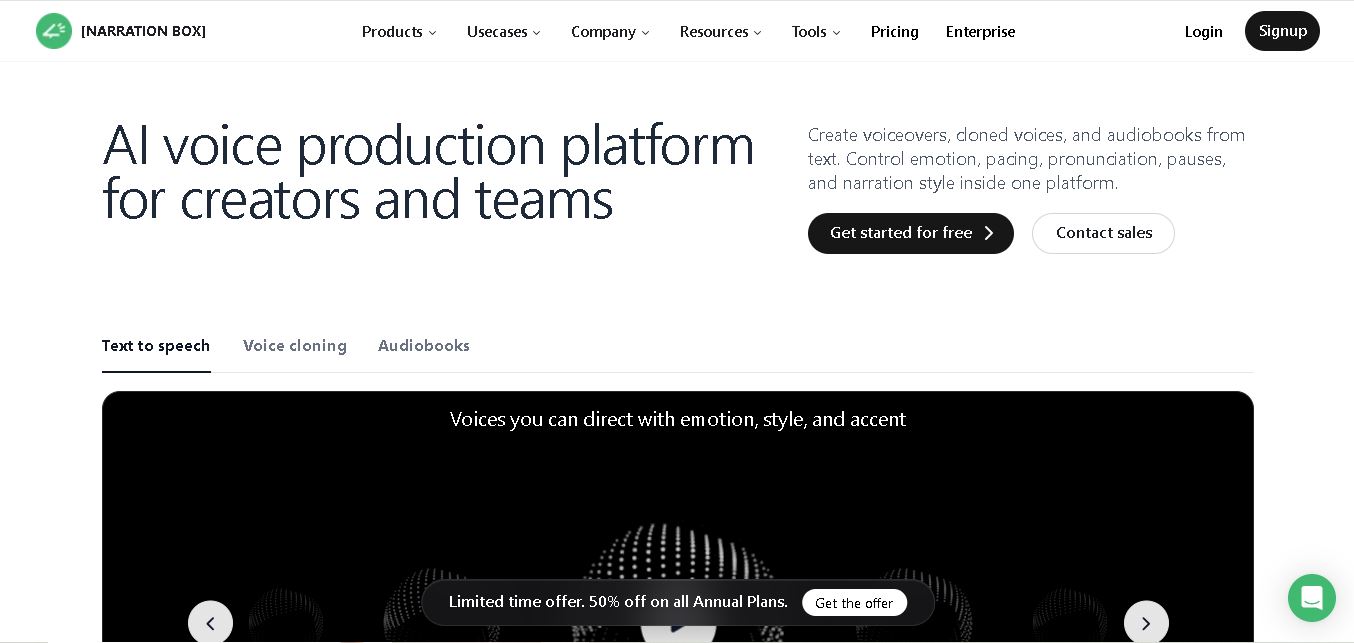
Narration Box
Text-to-Speech
Narration Box is an AI voice generator for creating realistic voiceovers, audiobooks, podcasts, and educational audio from text. It offers over 1,500 AI narrators, 80+ languages and accents, voice cloning, and customizable emotional delivery. Its editing tools help creators produce consistent, multilingual audio content for personal and professional projects.
 4.7
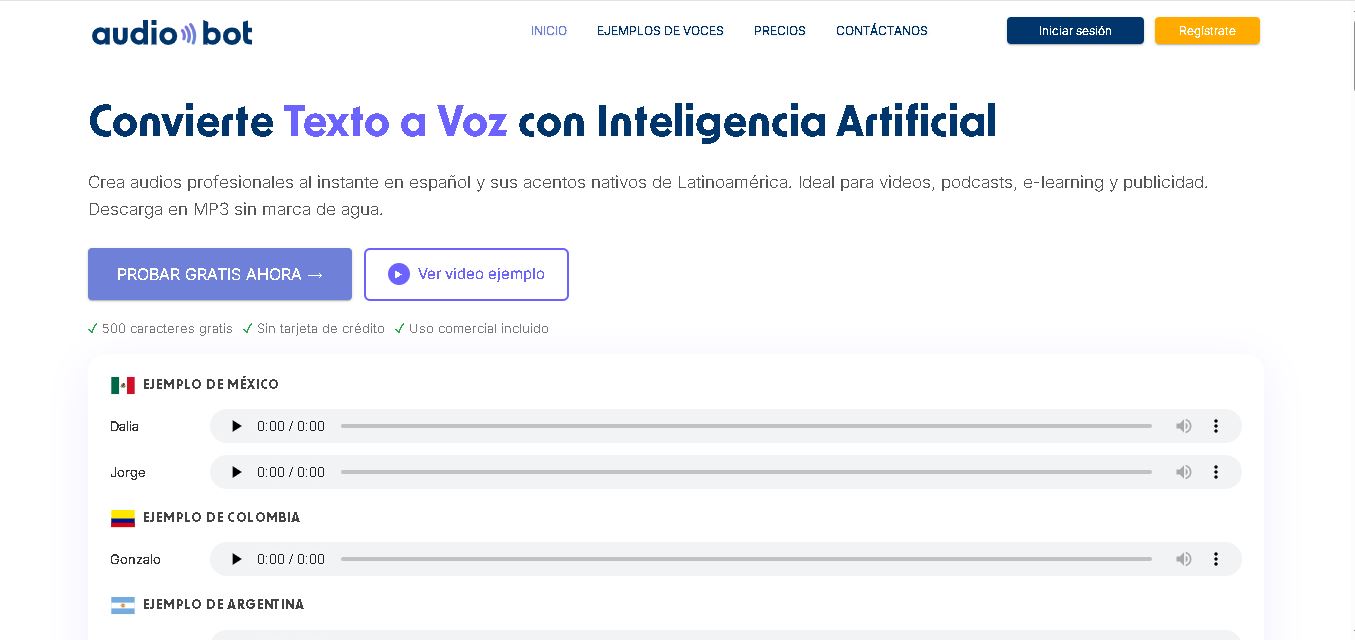
AudioBot
Text-to-Speech
AudioBot converts written text into natural-sounding speech using AI-generated voices. It supports multiple languages and regional accents, making it useful for video voiceovers, presentations, educational materials, and audio content. Users can generate and download audio files, helping simplify narration workflows without requiring traditional recording equipment or voice talent.
 4.7
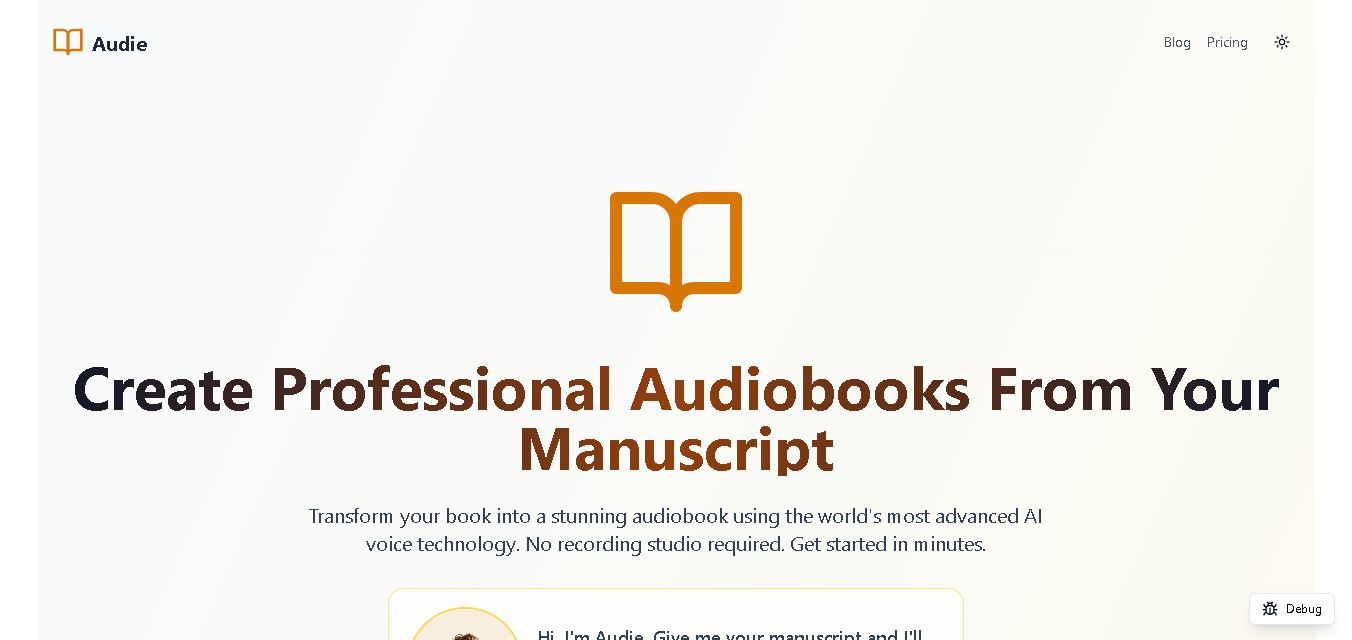
Audie AI
Text-to-Speech
Audie AI is an audiobook creation tool that converts written manuscripts into narrated audio using AI-generated voices. It helps authors and publishers simplify production, explore different narration styles, and reduce reliance on traditional recording studios. With voice selection, advertised voice cloning, and downloadable audio, it supports more accessible audiobook creation for independent creators.
 4.6
Speechelo
Text-to-Speech
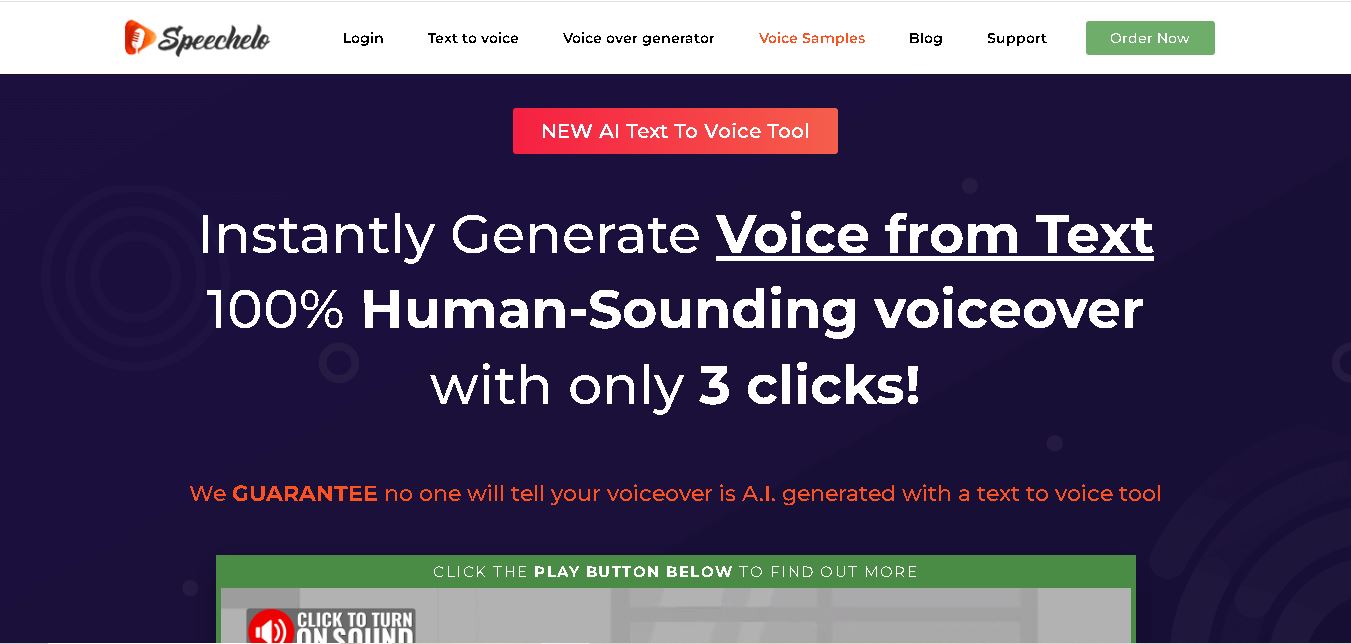
Speechelo is a text-to-speech tool designed to help creators turn written scripts into voiceovers. It offers different voices, languages, tones, and audio adjustments for creating narration. Video creators, educators, marketers, and content teams can use it to produce audio for tutorials, presentations, promotional videos, and other digital content projects.
 4.7
Leelo AI
Text-to-Speech
Leelo AI helps you turn written content into natural-sounding speech without recording your own voice. You can choose from 800+ voices across 142 languages and accents, adjust available voice settings, generate audio, store files in the cloud, export recordings, and use generated speech commercially for different content and communication needs.