10 Best AI Visibility Tools for 2027: Track Your Brand Across ChatGPT, Gemini & AI Search
Discover the 10 best AI visibility tools in 2027. Compare platforms for tracking brand mentions, AI search rankings, citations, competitors, and ChatGPT visibility.
Explore moreThe best AI visibility tools in 2026 include Semrush AI Visibility Toolkit, Profound, Peec AI, Otterly.AI, Ahrefs Brand Radar, Scrunch AI, AthenaHQ, Rankscale, Writesonic, and HubSpot AEO. These platforms help businesses monitor brand mentions, track citations, compare competitors, and understand how they appear in AI-generated answers across platforms such as ChatGPT, Gemini, Perplexity, and Google AI Overviews. Semrush is useful for combining SEO and AI visibility data, Profound for enterprise-level analysis, Peec AI for prompt tracking, and Otterly.AI for more affordable monitoring. The right choice depends on your budget, target AI platforms, and reporting requirements.
Search is changing. People are no longer relying only on Google to discover products, compare services, and find answers. They're also asking ChatGPT, Google AI Overviews, Gemini, Perplexity, and other AI-powered platforms for recommendations. For businesses, this creates a new challenge: Is your brand appearing when potential customers ask AI tools questions related to your products or services?
A website can rank well in traditional search results and still receive little visibility in AI-generated answers. AI platforms may mention competitors, cite other websites, or recommend products that your target audience is considering. This is where AI visibility tools become useful. They help businesses monitor brand mentions, track competitor recommendations, identify cited sources, and understand how their brands appear across AI search experiences.
Whether you're an SEO professional, marketing agency, SaaS company, or ecommerce brand, these tools can help you measure and improve your presence in AI-powered search. In this guide, we'll explore the 10 best AI visibility tools in 2026, compare their features, and explain which platforms are worth considering for different marketing needs.
Key Facts and Statistics About AI Visibility
AI visibility is a relatively new measurement area, so it's important to separate forecasts about changing search behavior from actual measurements of brand visibility.
- 25%: Gartner predicted that traditional search engine volume would decline by 25% by 2026 as users increasingly turn to AI chatbots and virtual agents. This is a forecast published in February 2024, not a confirmed measurement of the final 2026 outcome.
- 289 million+: Semrush reported access to a database of more than 289 million LLM prompts in its AI visibility research and toolkit coverage.
- 500 million+: Ahrefs says Brand Radar tracks AI visibility using a database of more than 500 million prompts modeled on real search keywords.
- 10+ AI platforms: The AI visibility market includes tracking across multiple answer engines and AI search experiences, including ChatGPT, Gemini, Perplexity, Claude, Copilot, and Google AI Overviews. Actual coverage varies by provider and subscription plan.
- $29 per month: Otterly.AI has advertised an entry plan at this price, making it one of the lower-cost options in the category. Verify current plan limits and pricing before subscribing.
These figures show why AI search monitoring is attracting attention. They do not mean that every AI answer is measurable in the same way or that a higher visibility score automatically produces more sales.
What Are AI Visibility Tools?
AI visibility tools are software platforms that monitor how often and in what context a brand appears in answers generated by AI search engines and assistants.
For example, imagine someone asks ChatGPT:
“What are the best AI SEO tools for a B2B SaaS company?”
An AI visibility platform can help you investigate:
- Does your brand appear in the answer?
- Which competitors are recommended?
- Does the AI mention your product accurately?
- Which websites or pages are cited?
- How frequently does your brand appear across tracked questions?
- Is your visibility improving or declining over time?
These tools are also commonly called AI search monitoring tools, GEO tools, AEO tools, LLM visibility trackers, or AI search analytics platforms. The terminology differs, but the central goal is the same: understand how your business is represented in AI-generated search experiences and identify opportunities to improve that presence.
10 Best AI Visibility Tools for 2027
The tools below cover different needs. Some are dedicated AI visibility trackers, some combine AI search monitoring with traditional SEO, and others help teams turn visibility data into content improvements. The ranking is an editorial comparison by use case, not a claim that every platform has been independently tested.
1. Semrush AI Visibility Toolkit
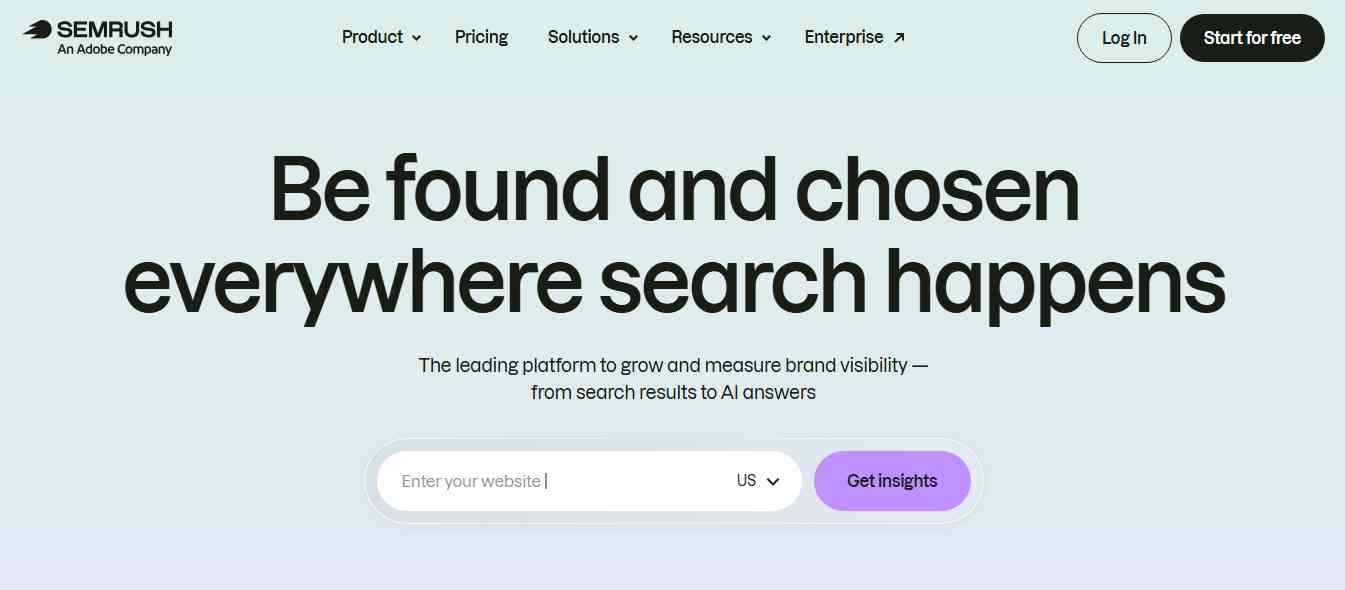
Semrush is already a familiar platform for SEO professionals, but its AI Visibility Toolkit adds another layer to traditional search monitoring. The toolkit helps businesses understand how their brands appear in AI-generated answers and compare their visibility with competitors. Instead of focusing only on Google rankings, it provides insights into brand mentions, AI search prompts, citations, and visibility trends.
One of its biggest advantages is that it connects AI search research with a broader SEO workflow. You can use Semrush to research keywords, understand competitors, optimize content, and monitor how your brand appears across AI-powered search experiences. For example, if you run a SaaS company, you can track prompts such as "best CRM software for startups" or "top project management tools for remote teams" and see whether AI platforms mention your brand.
Key Features
- AI brand visibility tracking.
- AI prompt research and monitoring.
- Competitor visibility comparison.
- Brand mention and sentiment analysis.
- Citation and source analysis.
- Visibility trend reporting.
- Integration with Semrush SEO and content workflows.
- Recommendations for improving AI search presence.
Pros
- Combines AI visibility with traditional SEO research.
- Useful for tracking competitors and brand mentions.
- Offers prompt research and visibility reporting.
- Suitable for SEO agencies and in-house marketing teams.
- Connects AI search insights with broader marketing workflows.
Cons
- Can be more expensive than standalone monitoring tools.
- The number of tracked prompts depends on the subscription.
- Advanced platform coverage may require higher-tier plans.
- May offer more features than freelancers or small businesses need.
Pricing: The AI Visibility Toolkit has been listed from $99 per month per domain. Semrush One, which combines SEO and AI visibility capabilities, starts at a higher price. Check the official pricing page for current plans and eligibility.
Best For: SEO professionals, agencies, and businesses that want to monitor AI visibility alongside traditional SEO performance.
Review
Semrush is a practical option for teams that don't want to manage traditional SEO and AI search monitoring in completely separate platforms. Its combination of prompt research, competitor analysis, and brand visibility reporting makes it useful for developing a broader organic search strategy. It is particularly valuable if your team already uses Semrush for keyword research, content optimization, and competitor analysis.
2. Profound
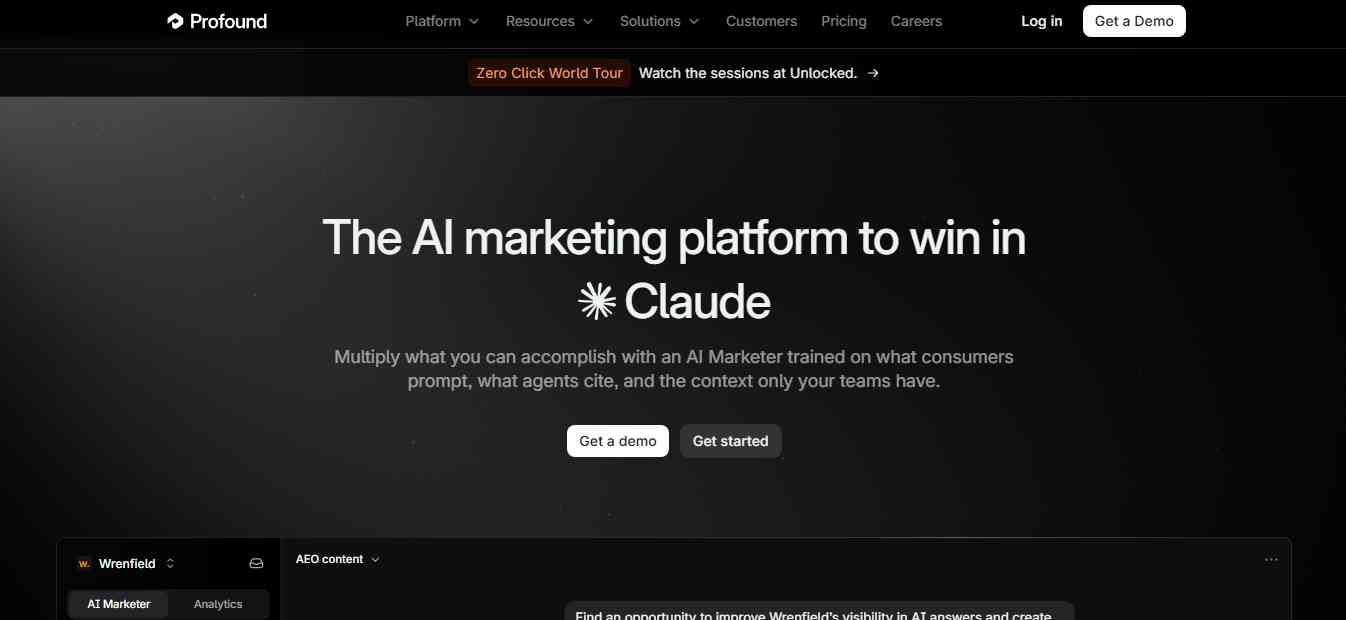
Profound is an AI visibility and answer engine optimization platform designed for brands that want a deeper understanding of how AI systems represent their products and businesses. It helps marketing teams monitor brand mentions, analyze AI-generated answers, identify competitor visibility, and understand which sources influence AI recommendations.
Profound is particularly relevant for larger organizations managing multiple products, markets, and content teams. Rather than simply showing whether a brand appears in an AI response, it helps teams investigate the prompts, sources, and patterns behind those answers. For example, an enterprise software company can use Profound to understand how ChatGPT and other AI platforms compare its product with competitors when users search for enterprise software recommendations.
Key Features
- AI search visibility monitoring.
- Brand mentions and competitor analysis.
- Prompt discovery and tracking.
- Citation and source analysis.
- AI answer sentiment and positioning insights.
- Enterprise reporting and analytics.
- AI agents and content workflows.
- Support for multiple AI answer engines, depending on the plan.
Pros
- Designed for enterprise-level AI search programs.
- Offers detailed brand and competitor insights.
- Helps identify sources influencing AI recommendations.
- Supports advanced reporting and analysis.
- Useful for teams managing multiple brands and markets.
Cons
- May be more complex than smaller teams need.
- Enterprise pricing can be difficult for startups to justify.
- Some capabilities require higher-tier plans.
- Requires a clear measurement strategy to get meaningful insights.
Pricing: Profound offers different subscription and enterprise options. Pricing and feature availability vary by plan; contact the company or check its current pricing page.
Best For: Enterprise marketing teams, large SaaS companies, and brands investing in AI search visibility at scale.
Review
Profound is worth considering when AI visibility becomes an important part of a company's wider marketing and brand strategy. Its focus on prompt research, citations, and enterprise reporting provides more context than a basic mention tracker. For smaller businesses that only want to check whether ChatGPT mentions their brand, a simpler and more affordable tool may be enough.
3. Peec AI
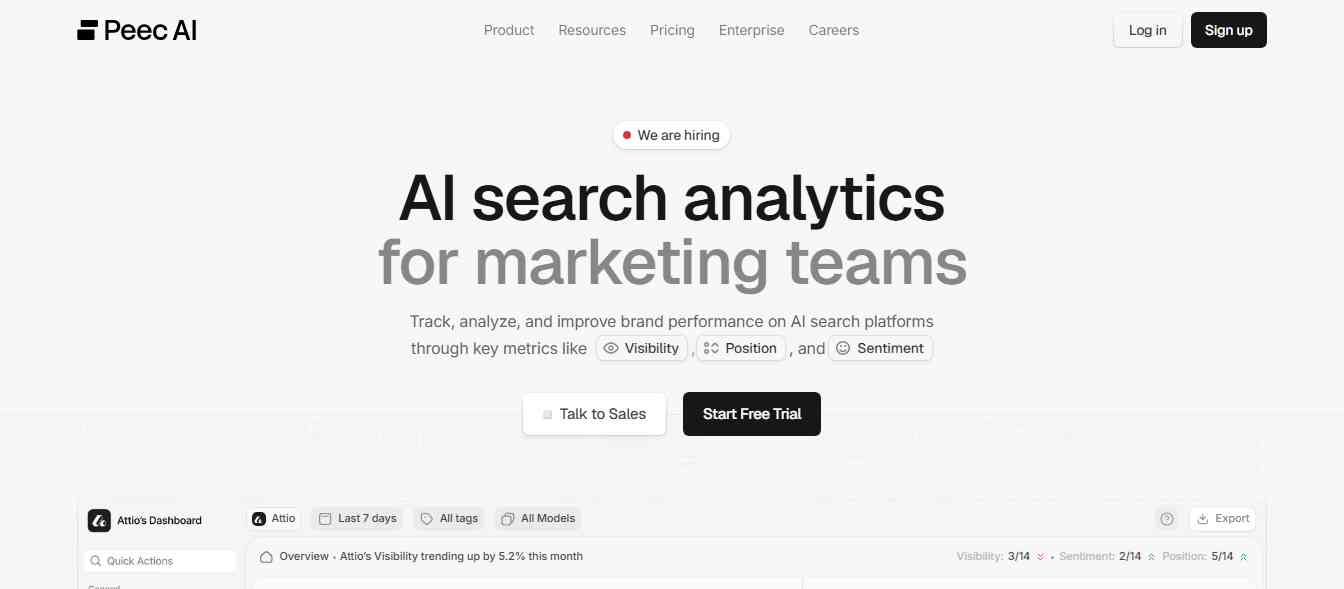
Peec AI is a dedicated AI search analytics platform that helps businesses understand how their brands appear in AI-generated answers. Its main focus is monitoring prompts, tracking brand mentions, comparing competitors, and identifying the sources cited by AI platforms.
The platform is particularly useful for marketing teams that want to understand what happens when potential customers ask AI assistants questions about products or services. For example, a marketing agency can track prompts such as "best SEO agencies for fintech companies" or "top AI content optimization platforms" and monitor which brands appear in the answers. Peec AI also provides reporting features that help teams understand how their visibility changes over time.
answers.
Peec AI also provides reporting features that help teams understand how their visibility changes over time.
Key Features
- AI brand visibility tracking.
- Prompt-level monitoring.
- Competitor benchmarking.
- Citation and source analysis.
- Brand mention tracking.
- Visibility trends and reporting.
- Multiple AI model integrations.
- Team collaboration and project management features.
Pros
- Focuses specifically on AI search analytics.
- Helps compare brand visibility against competitors.
- Useful for agencies managing multiple projects.
- Provides prompt-level insights.
- Offers a clean reporting experience.
Cons
- Entry plans have limits on tracked prompts and AI models.
- Additional model coverage may increase costs.
- Primarily focused on monitoring and analysis rather than content production.
- Advanced reporting may require higher-tier plans.
Pricing: Public pricing has included plans starting around €85 per month for 50 prompts, with higher tiers for additional prompts and features. Confirm current pricing and regional billing options.
Best For: SEO agencies, SaaS marketing teams, and businesses that need regular AI visibility monitoring across multiple prompts.
Review
Peec AI is a useful choice when you want to understand how your brand performs across specific buyer questions rather than relying on occasional manual searches. Its prompt-level tracking and competitor comparisons can help identify where your brand is missing from AI recommendations. It is particularly relevant for agencies and marketing teams that need repeatable reporting.
4. Otterly.AI
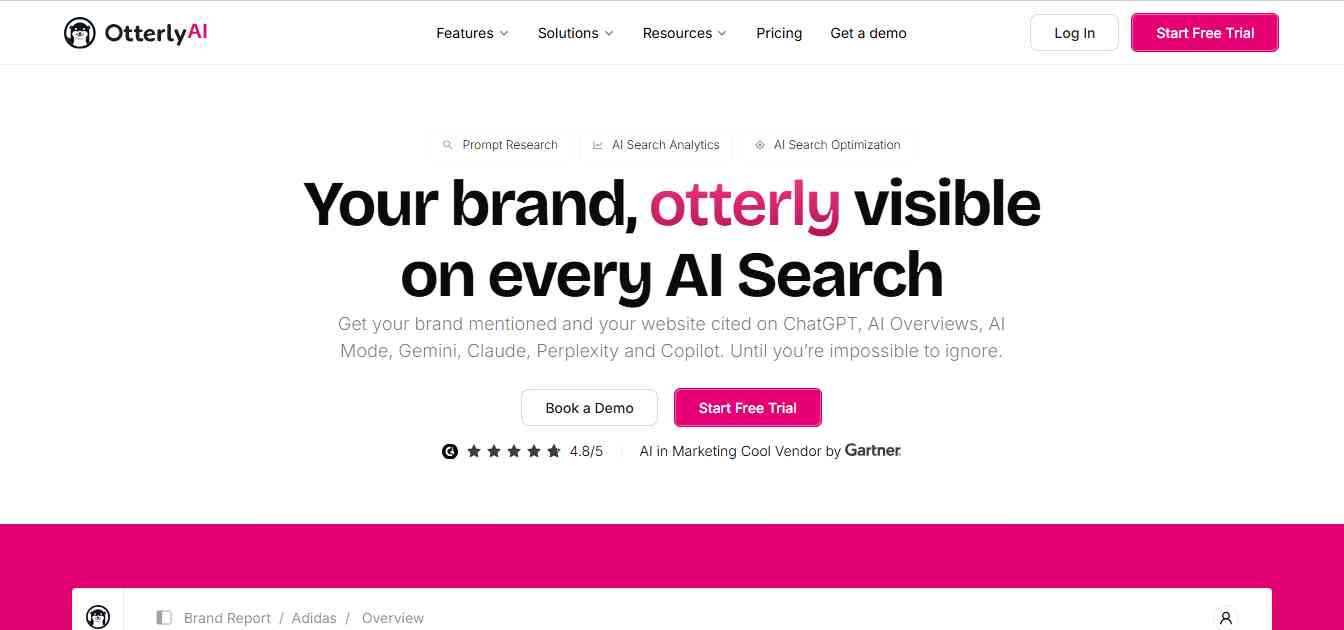
Otterly.AI is an AI search monitoring platform designed to help businesses track their brand mentions and citations across AI-powered search experiences. It is particularly useful for freelancers, small businesses, and marketing teams that want to start monitoring AI visibility without investing in a large enterprise platform.
The tool helps users monitor selected search prompts and understand whether their brand appears in AI-generated answers. It also provides insights into competitor mentions and the sources referenced by AI platforms. For example, a small software company could track questions such as "best email marketing software for small businesses" and see whether AI platforms recommend its product. Otterly.AI also offers GEO auditing and recommendations to help businesses identify areas where their content may need improvement.
Key Features
- AI search visibility monitoring.
- Brand mention tracking.
- Competitor monitoring.
- Citation and source analysis.
- Prompt tracking.
- GEO website auditing.
- Visibility reporting.
- Optimization recommendations.
Pros
- Relatively affordable entry point.
- Simple monitoring workflow.
- Useful for freelancers and smaller businesses.
- Helps track citations and competitor mentions.
- Provides GEO-related audit features.
Cons
- Entry plans have limited prompt capacity.
- Some AI platforms may require add-ons or higher plans.
- Less suitable for complex enterprise reporting.
- Advanced optimization workflows may be limited compared with larger platforms.
Pricing: Otterly.AI has advertised plans starting at $29 per month. Prompt limits and AI platform coverage vary by subscription. Check the official pricing page before purchasing.
Best For: Freelancers, small businesses, and SEO consultants who want an affordable way to monitor AI search visibility.
Review
Otterly.AI is a practical starting point for businesses that want to understand whether AI platforms mention their brands. Its straightforward monitoring features make it easier to get started without building a complicated reporting process. It may not offer the depth of enterprise platforms, but it can be useful for smaller teams that need consistent visibility checks.
5. Ahrefs Brand Radar
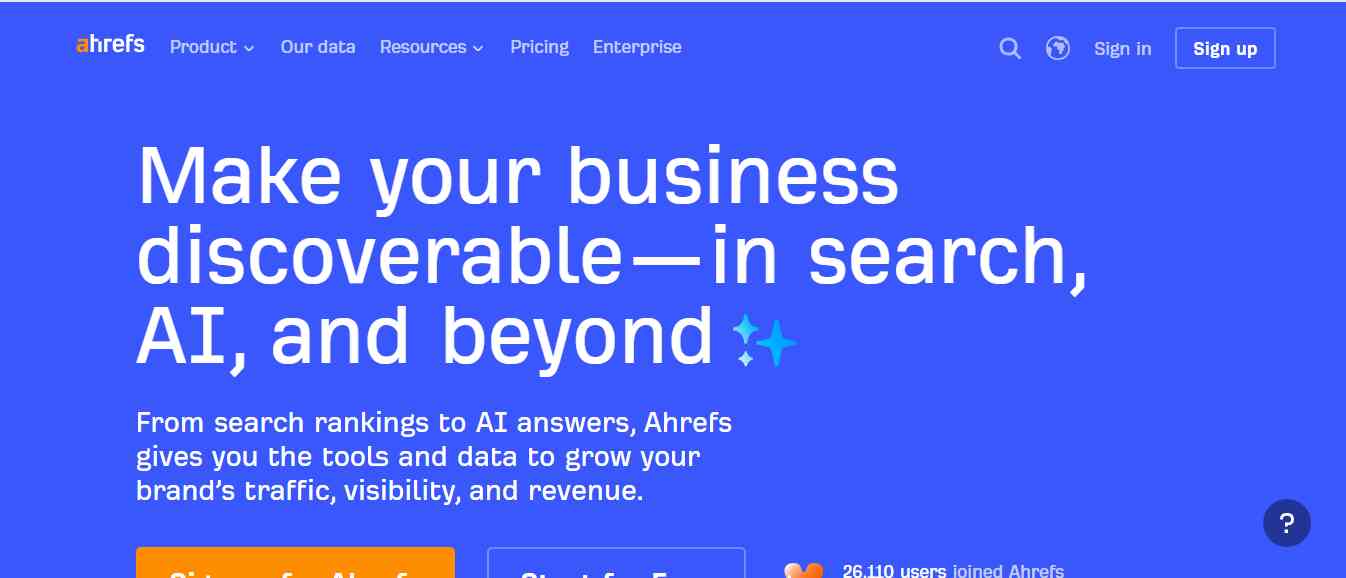
Ahrefs Brand Radar helps businesses understand how brands appear across AI search and other online discovery channels. Unlike tools that focus mainly on monitoring a fixed list of prompts, Brand Radar also provides large-scale brand discovery and competitive research. Ahrefs says its AI visibility database covers more than 500 million prompts modeled on real search keywords.
This makes it useful for investigating how different brands appear across a broad set of questions and identifying the websites and content sources that influence AI answers. For example, an SEO professional can research how often a competitor appears in AI responses, identify pages cited by AI systems, and discover opportunities to improve their own brand presence. Brand Radar also connects AI visibility research with other discovery channels, including traditional search and selected social platforms.
Key Features
- Large-scale AI brand visibility research.
- Competitor mention tracking.
- AI citation and source discovery.
- Brand and product research.
- Market visibility benchmarking.
- Research across multiple AI platforms.
- Integration with Ahrefs' wider SEO research ecosystem.
Pros
- Useful for large-scale brand research.
- Helps identify competitor visibility.
- Provides insights into cited pages and domains.
- Suitable for SEO and digital PR research.
- Connects AI visibility with broader brand discovery.
Cons
- Pricing can increase significantly depending on the selected coverage.
- Some features require an existing Ahrefs subscription.
- Research data and prompt tracking are not identical to daily fixed-prompt monitoring.
- May be more than smaller businesses need.
Pricing: Ahrefs Brand Radar offers different pricing options, including custom prompt packages and broader AI visibility indexes. Costs depend on the selected coverage and existing Ahrefs plan. Check the official pricing page for current details.
Best For: SEO professionals, digital PR teams, and businesses that want to research brand visibility and competitor presence across AI search.
Review
Ahrefs Brand Radar is particularly useful when your goal is broader market research rather than simply tracking a small set of prompts. Its large prompt database helps uncover brand visibility patterns and identify sources that appear in AI answers. It is a strong option for teams already using Ahrefs for SEO and competitive research.
6. Scrunch AI
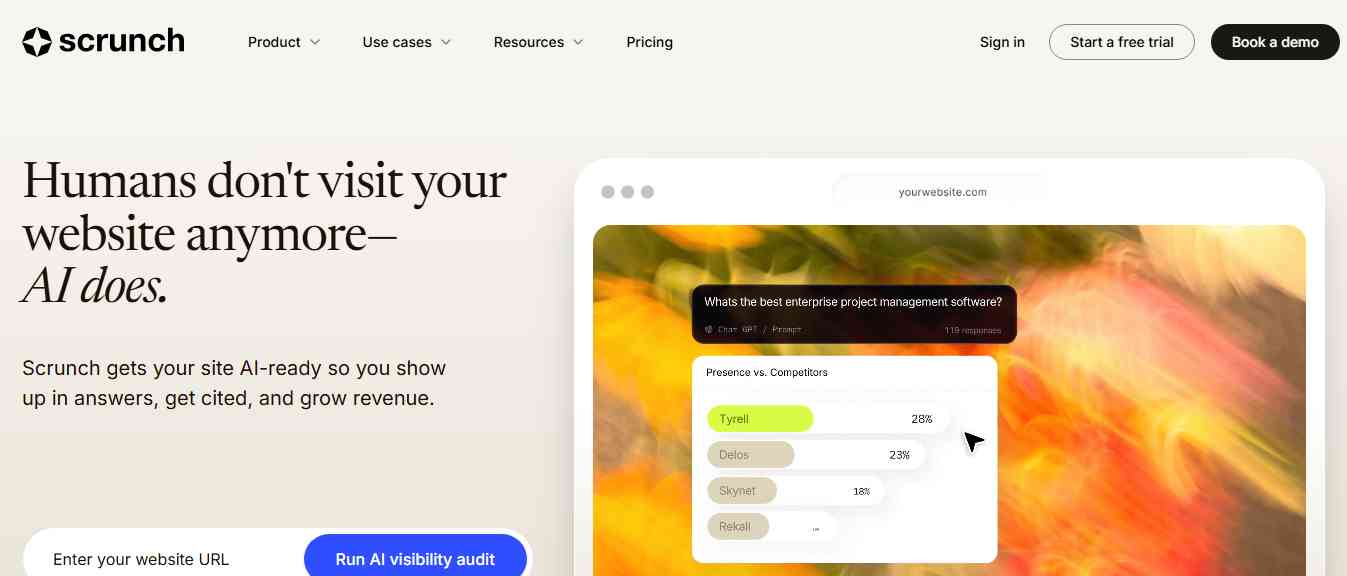
Scrunch AI is an AI search visibility platform designed to help businesses understand how AI agents and answer engines interact with their websites and represent their brands. It goes beyond basic brand mention tracking by combining AI visibility monitoring with insights into how websites are presented to AI systems. The platform helps marketing teams understand which pages and information AI platforms use when answering questions about their industry or products. Scrunch is particularly relevant for companies that want to understand both their brand presence in AI-generated answers and how their website content can be made more accessible to AI systems.
Key Features
- AI brand visibility monitoring.
- Competitor and prompt tracking.
- Citation and source analysis.
- AI agent traffic and website insights.
- AI website experience optimization.
- Persona-based tracking.
- Content and website improvement workflows.
- Reporting for marketing teams.
Pros
- Combines AI visibility monitoring with website-focused insights.
- Useful for enterprise and mid-market teams.
- Helps investigate how AI systems interact with website content.
- Supports competitive analysis.
- Goes beyond simple brand mention reporting.
Cons
- More expensive than lightweight monitoring tools.
- Some capabilities may be unnecessary for smaller websites.
- Requires a clear strategy to turn insights into improvements.
- Feature availability depends on the subscription.
Pricing: Scrunch has advertised its Core plan from approximately $250 per month, with higher agency and enterprise options. Check the official website for current pricing and platform coverage.
Best For: Enterprise brands, agencies, and businesses that want to monitor AI visibility while improving how AI agents interact with their websites.
Review
Scrunch is worth considering if your AI search strategy includes more than monitoring brand mentions. Its focus on website and AI-agent experiences provides an additional layer of insight for businesses that want to improve how their content is accessed and represented. It is particularly relevant for organizations with the resources to act on detailed monitoring and optimization data.
7. AthenaHQ
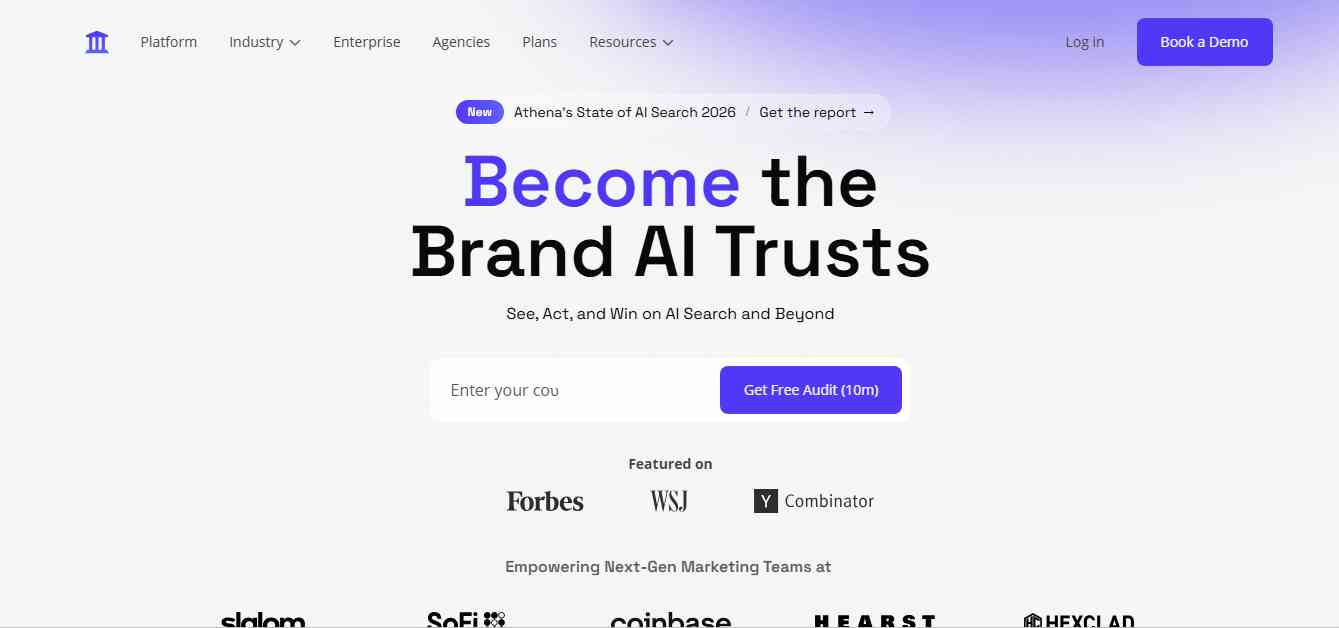
AthenaHQ is an AI visibility and optimization platform designed to help businesses understand how AI systems discover, mention, and recommend their brands. It provides visibility tracking, competitor analysis, and citation insights across supported AI platforms. The platform also focuses on helping marketing teams move from monitoring to action through recommendations and AI-assisted workflows.
For example, an e-commerce company could use AthenaHQ to monitor prompts related to its product categories, identify competitors that appear more frequently, and explore opportunities to improve its content and brand representation. AthenaHQ is especially relevant for businesses that want to connect AI visibility with wider marketing and revenue goals.
Key Features
- AI brand visibility monitoring.
- Prompt tracking and analysis.
- Competitor benchmarking.
- Citation and source analysis.
- AI visibility reporting.
- Content optimization recommendations.
- AI-assisted workflows.
- Integrations with selected marketing and analytics platforms.
Pros
- Combines monitoring with optimization recommendations.
- Useful for marketing and ecommerce teams.
- Helps identify competitor visibility gaps.
- Supports multiple AI answer engines.
- Provides a free entry option with limited credits.
Cons
- Advanced plans can be expensive.
- Credit-based usage requires careful monitoring.
- Some integrations and features depend on subscription level.
- May be more complex than basic AI mention trackers.
Pricing: AthenaHQ offers an Essential free option with limited credits. Its Starter plan has been listed at $295 per month, with enterprise pricing available separately. Check the official website for current plan details.
Best For: Marketing teams, agencies, and ecommerce businesses that want to connect AI visibility monitoring with optimization opportunities.
Review
AthenaHQ is useful for teams that want more than a dashboard showing brand mentions. Its focus on recommendations and AI-assisted workflows can help turn visibility data into content and marketing tasks. Businesses should review the available credits and platform limits carefully before choosing a paid plan.
8. Rankscale
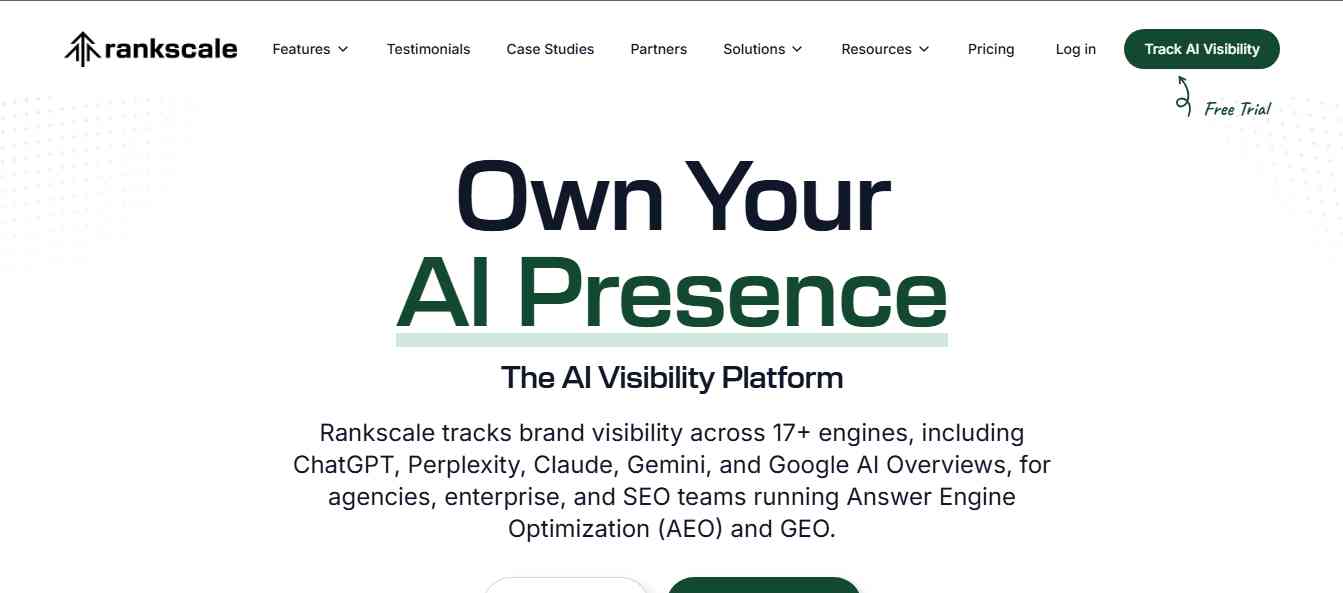
Rankscale is an AI visibility tracking platform designed to help businesses monitor how their brands appear across AI search engines and answer platforms. It focuses on prompt monitoring, brand mentions, competitor analysis, and visibility reporting. This makes it useful for businesses that want to understand whether their content and brand are appearing in AI-generated answers.
For example, an SEO agency can use Rankscale to monitor the same set of buyer-intent prompts across different AI platforms and compare its clients' visibility with competitors. Rankscale is worth considering for teams that want a dedicated AI search monitoring tool without committing to a large enterprise platform.
Key Features
- AI visibility tracking.
- Prompt monitoring.
- Brand mention analysis.
- Competitor benchmarking.
- AI answer and citation insights.
- Visibility reporting.
- Multiple AI platform coverage.
- Historical performance tracking.
Pros
- Dedicated AI search monitoring platform.
- Useful for tracking multiple prompts.
- Supports competitor comparisons.
- Relevant for agencies and SEO professionals.
- Offers different subscription options.
Cons
- Advanced reporting may require higher plans.
- The number of tracked prompts depends on subscription limits.
- AI platform coverage should be checked for each plan.
- Does not replace a complete traditional SEO suite.
Pricing: Rankscale has advertised entry options from approximately $17 per month when billed annually, with higher plans for more extensive tracking. Confirm current prices and feature limits.
Best For: SEO consultants, agencies, and businesses that want to track brand visibility across multiple AI search platforms.
Review
Rankscale is a useful option for businesses that want dedicated AI visibility monitoring without purchasing a larger SEO platform. Its prompt tracking and competitor analysis can help teams understand where their brands appear and where they are missing from AI-generated recommendations. Before subscribing, compare its prompt limits and supported platforms with your reporting requirements.
9. Writesonic
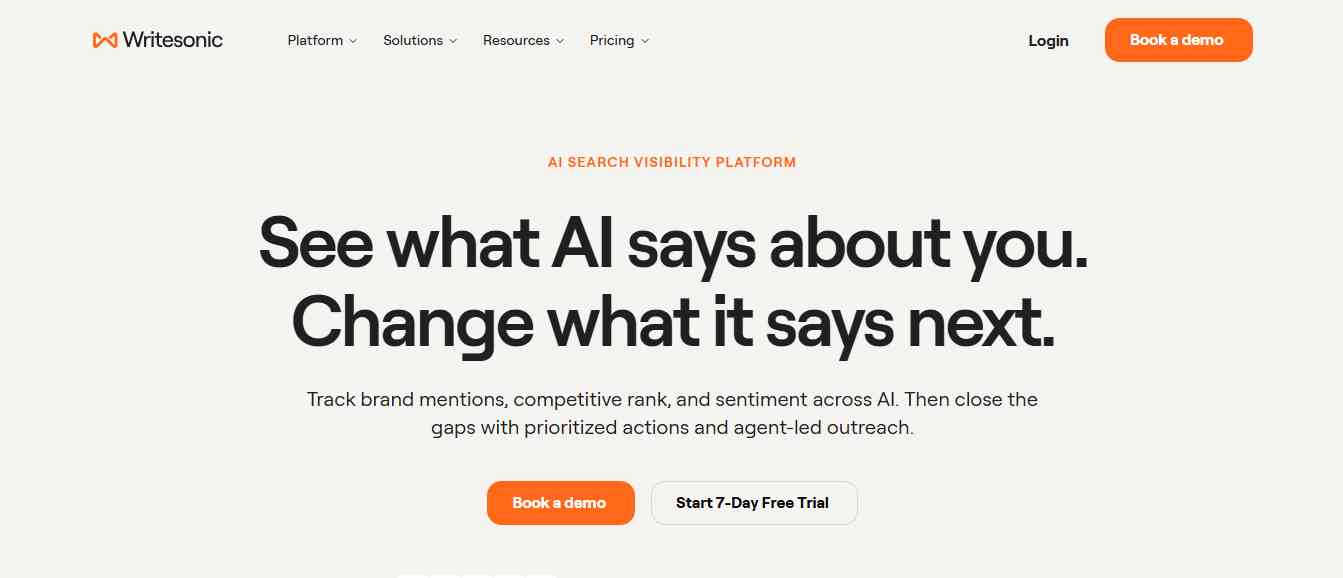
Writesonic combines AI visibility monitoring with content creation and optimization workflows. The platform helps businesses understand how their brands appear in AI-generated answers while also supporting the creation and improvement of content intended to perform well in search.
This combination is useful for marketing teams that want to identify visibility gaps and work on content improvements without moving between several different tools. For example, if a SaaS brand discovers that competitors are frequently mentioned for a particular buyer-intent prompt, its team can use Writesonic's content workflows to develop or improve relevant pages.
Key Features
- AI brand visibility monitoring.
- AI search prompt tracking.
- Competitor visibility analysis.
- Citation and source monitoring.
- Content generation and optimization.
- GEO and AEO content workflows.
- Content audits and recommendations.
- Action Center for optimization tasks.
Pros
- Combines AI visibility with content workflows.
- Useful for SEO and content marketing teams.
- Helps identify content opportunities.
- Supports AI-assisted content creation.
- Can reduce the gap between analysis and execution.
Cons
- Some features may overlap with existing content tools.
- Advanced visibility tracking can require higher plans.
- AI-generated content needs editorial review.
- Businesses focused only on monitoring may not need its full feature set.
Pricing: Writesonic offers different plans for AI visibility and content features. Published prices and included prompt limits vary by plan, so check its current pricing page.
Best For: Content marketers, SEO teams, and agencies that want to combine AI search monitoring with content optimization.
Review
Writesonic is a useful choice for teams that want to do something with their AI visibility data rather than simply monitor it. Its combination of tracking, audits, and content workflows can help identify topics and pages that need attention. It is especially relevant for marketing teams that already rely on AI-assisted content production.
10. HubSpot AEO
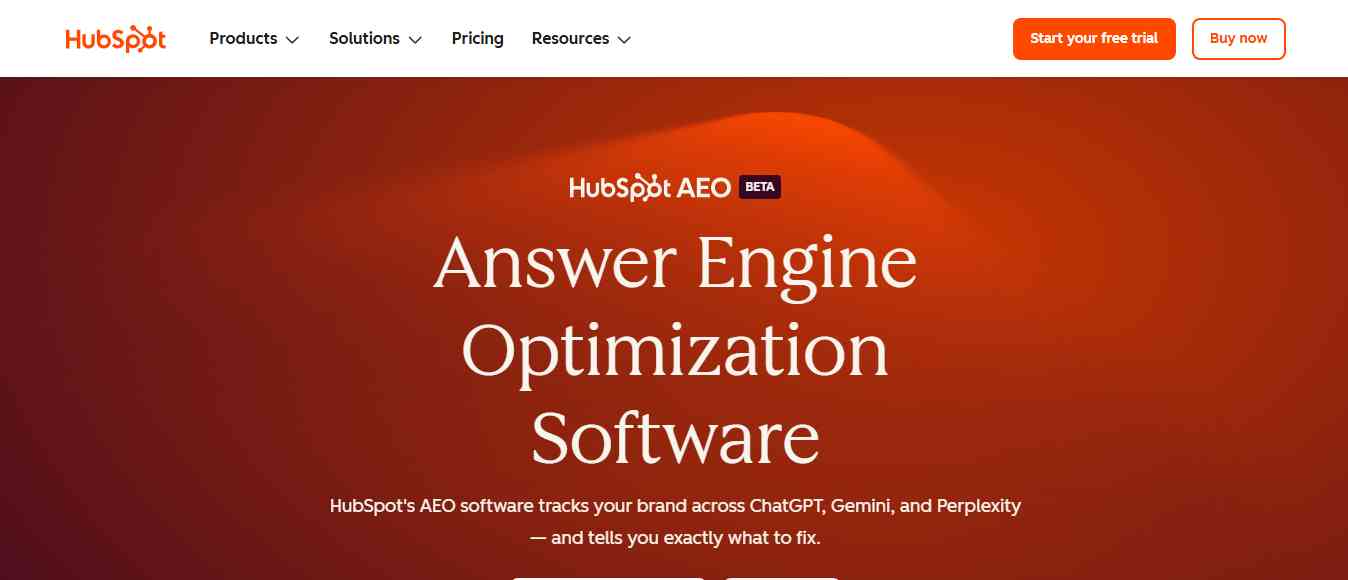
HubSpot AEO is designed to help businesses understand how their brands appear in AI-generated answers and identify opportunities to improve their visibility. It brings AI search monitoring into the wider HubSpot marketing ecosystem. This can be useful for companies that already use HubSpot to manage marketing activities, customer relationships, and content.
The platform helps users track brand visibility, compare competitors, analyze citations, and discover prompts related to their products or services. For example, a B2B company can monitor how AI platforms describe its services when users ask for software recommendations and identify which competitors are appearing more frequently.
Key Features
- AI brand visibility monitoring.
- Prompt suggestions and tracking.
- Competitor visibility analysis.
- Citation and source insights.
- Brand visibility reporting.
- AI search recommendations.
- Integration with HubSpot's marketing ecosystem.
Pros
- Useful for businesses already using HubSpot.
- Connects AI visibility with marketing workflows.
- Helps monitor brand mentions and competitors.
- Provides prompt suggestions.
- Offers a familiar environment for HubSpot users.
Cons
- May be less useful for teams that do not use HubSpot.
- AI platform coverage depends on the product offering.
- Advanced requirements may need additional tools.
- Features and pricing can vary by subscription and availability.
Pricing: HubSpot has introduced AEO features with different access and pricing arrangements. Check the official HubSpot product page for current availability and costs.
Best For: B2B marketing teams and businesses already using HubSpot that want to add AI visibility monitoring to their marketing workflow.
Review
HubSpot AEO is worth exploring if your business already uses HubSpot for marketing and customer management. Its main advantage is the potential to connect AI search insights with an existing marketing workflow. However, teams that need deep prompt-level research across a wider range of AI platforms should compare its coverage with dedicated tools such as Peec AI, Profound, or Semrush.
Comparison of the 10 Best AI Visibility Tools
| Tool | Best For | Main Capabilities |
|---|---|---|
| Semrush AI Visibility Toolkit | SEO and AI search together | Prompt research, brand tracking, competitor analysis |
| Profound | Enterprise AI search intelligence | Prompt insights, citations, enterprise reporting |
| Peec AI | Prompt-level monitoring | Brand mentions, competitor tracking, citations |
| Otterly.AI | Affordable monitoring | AI mentions, citations, GEO audits |
| Ahrefs Brand Radar | Brand and competitor research | Large-scale prompt discovery, cited sources |
| Scrunch AI | AI visibility and website optimization | AI monitoring, agent insights, website optimization |
| AthenaHQ | Monitoring and optimization | Visibility tracking, recommendations, AI workflows |
| Rankscale | Multi-platform tracking | Prompt monitoring, competitor benchmarking |
| Writesonic | Content and AI visibility | Brand tracking, content audits, optimization |
| HubSpot AEO | HubSpot marketing teams | AI visibility, prompts, competitor insights |
Which AI Visibility Tool Should You Choose?
There is no single tool that works best for every business. The right choice depends on your budget, reporting needs, and how you plan to use AI visibility data.
| Your Requirement | Recommended Tool |
|---|---|
| Combine traditional SEO and AI visibility | Semrush |
| Enterprise-level AI search intelligence | Profound |
| Monitor specific buyer-intent prompts | Peec AI |
| Affordable AI visibility tracking | Otterly.AI |
| Research brand mentions at scale | Ahrefs Brand Radar |
| Monitor AI visibility and website experiences | Scrunch AI |
| Turn visibility insights into optimization tasks | AthenaHQ |
| Track visibility across multiple AI platforms | Rankscale |
| Combine AI visibility with content creation | Writesonic |
| Connect AI visibility with HubSpot marketing | HubSpot AEO |
How to Choose the Best AI Visibility Tool
Before investing in an AI visibility platform, consider what you actually want to measure. A tool with many dashboards is not necessarily the right tool for your business.
1. Check Which AI Platforms It Tracks
Start by identifying where your potential customers are searching.
Look for coverage across platforms such as:
- ChatGPT
- Google AI Overviews
- Google AI Mode
- Gemini
- Perplexity
- Claude
- Microsoft Copilot
- Other relevant AI search experiences
Not every platform is included in every subscription. Some vendors charge extra for additional AI models, so compare actual plan coverage rather than relying on the product homepage.
2. Look for Prompt-Level Tracking
Traditional SEO tools monitor keywords and rankings. AI visibility platforms often monitor prompts, which are the questions users ask AI assistants.
For example, a fintech SaaS company might track:
- Best video editing software.
- Top seo platforms.
- Best alternatives to a particular marketing product.
- Video editing software comparison.
- Loan management software for financial institutions.
These prompts provide a clearer picture of whether your brand appears for the questions that matter to potential buyers.
3. Compare Competitor Visibility
A useful AI visibility platform should help you understand how your brand performs compared with competitors.
Look for metrics such as:
- Brand mention frequency.
- Share of voice.
- Competitor mentions.
- Position in AI-generated recommendations.
- Brand sentiment.
- Citation frequency.
These metrics help identify where competitors are gaining visibility and which topics deserve attention.
4. Check Citation and Source Analysis
Brand mentions are only one part of AI visibility. You should also understand which websites and pages AI systems cite when generating answers. For example, if an AI platform frequently cites industry publications, comparison articles, directories, and review websites, these sources can provide useful insights for your content and digital PR strategy.
Citation analysis can help you identify:
- Pages that AI systems frequently reference.
- Third-party websites mentioning competitors.
- Missing information on your website.
- Content formats appearing in AI answers.
- Potential digital PR and partnership opportunities.
5. Consider Reporting and Integrations
If you manage multiple brands or clients, reporting becomes important.
Look for tools that provide:
- Multiple projects and domains.
- Client-specific dashboards.
- CSV or PDF exports.
- Historical reporting.
- Team access.
- API access where required.
- Analytics and search console integrations.
Choose a platform that makes reporting easier rather than creating another manual reporting process.
6. Compare Pricing and Prompt Limits
A low starting price does not always mean the tool is affordable for your actual needs.
Before purchasing, check:
- Number of prompts included.
- Number of AI platforms supported.
- Tracking frequency.
- Number of competitors allowed.
- Number of projects or domains.
- Additional model fees.
- Historical data availability.
A freelancer tracking one website may need only a small plan. An agency managing 20 clients will have very different requirements.
Benefits of Using AI Visibility Tools
AI visibility platforms can help businesses understand and improve how they appear in AI-generated answers.
- Understand Your Brand's AI Search Presence: You can monitor whether AI platforms mention your business when users ask relevant questions about your products, services, and industry.
- Discover Competitor Opportunities: These tools help identify competitors that appear more frequently in AI recommendations, allowing you to investigate their content, mentions, and cited sources.
- Identify Content Gaps: Prompt tracking can reveal questions where your brand is missing. These insights can guide new comparison pages, product pages, guides, and FAQs.
- Find Websites That Influence AI Answers: Citation analysis helps identify publications, directories, forums, and other websites that AI platforms reference. This can inform your digital PR and content distribution strategy.
- Monitor Brand Accuracy and Sentiment: AI-generated answers may describe your products incorrectly or use outdated information. Monitoring brand descriptions can help identify issues that need attention.
- Measure GEO and AEO Progress: Tracking visibility over time can help you understand whether content improvements, brand mentions, and technical changes are associated with better AI search presence.
How to Improve Your AI Visibility Using These Tools
Buying an AI visibility tool is only the first step. The real value comes from using its insights to improve your website and brand presence.
Here is a practical workflow:
Step 1: Identify buyer-intent prompts.
Start with questions your potential customers ask before making a purchase. Focus on comparisons, alternatives, pricing, use cases, and industry-specific requirements rather than generic informational queries.
Step 2: Track your brand and competitors.
Add your brand, important competitors, and relevant prompts to your selected AI visibility platform. Monitor where your brand appears and where competitors receive recommendations.
Step 3: Analyze cited sources.
Review the URLs and domains referenced in AI-generated answers. Identify whether those sources include product reviews, comparison articles, industry publications, directories, or your own website.
Step 4: Improve existing content.
Before creating new articles, update pages that already have relevant information but are outdated, incomplete, or poorly structured. Add useful comparisons, original data, clear product explanations, and relevant FAQs.
Step 5: Build third-party brand mentions.
AI visibility is not only about publishing content on your own website. Industry publications, expert reviews, relevant directories, podcasts, and genuine customer discussions can also influence how your brand is represented online.
Step 6: Make your website easy to understand.
Ensure important content is crawlable, accessible, well-organized, and supported by clear internal links. Use descriptive headings and explain your products, services, audience, and differentiators consistently.
Step 7: Measure changes over time.
Continue tracking the same prompts and compare results across reporting periods. Look at brand mentions, citations, competitor visibility, and referral traffic rather than relying on one visibility score.
Common Mistakes to Avoid When Using AI Visibility Tools
- Tracking too many irrelevant prompts: Focus on questions that reflect your customers' real research and buying journeys.
- Looking only at brand mentions: A mention does not necessarily mean a positive recommendation or a useful citation.
- Ignoring competitors: Your competitors' visibility can reveal content opportunities and websites worth researching.
- Assuming every AI answer is consistent: Responses can change depending on the prompt, model, location, personalization, and time of the query.
- Publishing content only for AI systems: Content should answer real customer questions and provide genuine value, not simply repeat keywords or add unnecessary FAQs.
- Treating visibility scores as revenue: A higher score does not automatically mean more leads or sales. Connect AI visibility reporting with website analytics, conversion data, and customer feedback.
- Ignoring traditional SEO: Technical SEO, useful content, strong brand reputation, and a crawlable website remain important. AI search optimization should complement, not replace, a broader search strategy.
Useful Resources for AI Visibility, GEO and AEO
AI visibility tools provide measurement, but improving your presence in AI search also requires a strong understanding of search, content, and technical optimization.
Here are some useful resources:
| Resource | What You Can Learn |
|---|---|
| Google Search Central – https://developers.google.com/search/ | Search crawling, indexing, and content guidance |
| Google Search Console – https://search.google.com/search-console/ | Organic search performance and indexing information |
| OpenAI Search Documentation – https://platform.openai.com/docs/ | OpenAI platform documentation and technical guidance |
| Bing Webmaster Tools – https://www.bing.com/webmasters/ | Website indexing and search performance |
| Semrush Blog – https://www.semrush.com/blog/ | SEO, GEO, and AI visibility strategies |
| Ahrefs Blog – https://ahrefs.com/blog/ | SEO research, competitor analysis, and content strategy |
| Search Engine Land – https://searchengineland.com/ | Search marketing industry updates |
| Schema.org – https://schema.org/ | Structured data vocabulary and markup |
| Google PageSpeed Insights – https://pagespeed.web.dev/ | Website performance and Core Web Vitals |
| W3C – https://www.w3.org/ | Web accessibility standards |
Conclusion
AI search is creating another way for customers to discover businesses, compare products, and make purchasing decisions. For brands, the challenge is no longer limited to ranking on Google. It also includes understanding how AI platforms describe, recommend, and cite their businesses. AI visibility tools help make this activity easier to measure. Semrush is useful for combining SEO and AI visibility, Profound offers enterprise-level insights, Peec AI provides prompt-level tracking, and Otterly.AI offers an accessible starting point. Ahrefs Brand Radar is useful for broader brand research, while Scrunch, AthenaHQ, Rankscale, Writesonic, and HubSpot AEO address different monitoring and optimization requirements.
However, choosing a tool is only part of the process. The real opportunity comes from understanding what customers ask AI platforms, identifying where competitors appear, improving existing content, and building a stronger presence across relevant third-party websites. Start with a focused set of buyer-intent prompts, measure your visibility consistently, and use the findings to improve your content and brand authority. That is a more sustainable approach to GEO, AEO, and long-term AI search visibility.
People are also reading:
- Best AI Fitness Tools
- AI Facts for Kids
- AI Sales Tools
- Best AI Music Tools
- Best AI Database Tools
- Best AI Shopify Store Builder
- Best AI Presentation Tools
- Best AI Cybersecurity Tools
- AI Video Editing Tools
Frequently Asked Questions (FAQs)
1. What are the best AI visibility tools in 2026?
Some of the best AI visibility tools in 2026 include Semrush AI Visibility Toolkit, Profound, Peec AI, Otterly.AI, Ahrefs Brand Radar, Scrunch AI, AthenaHQ, Rankscale, Writesonic, and HubSpot AEO. They help businesses monitor brand mentions, citations, competitors, and visibility across AI-powered search platforms.
2. What does an AI visibility tool do?
An AI visibility tool monitors how a brand appears in AI-generated answers. It can track brand mentions, citations, competitor recommendations, sentiment, and performance across prompts submitted to AI platforms such as ChatGPT, Gemini, Perplexity, and Google AI Overviews.
3. How is AI visibility different from traditional SEO?
Traditional SEO focuses on a website's visibility in search engine results, including rankings, impressions, clicks, and organic traffic. AI visibility focuses on whether a brand is mentioned, recommended, or cited in AI-generated answers. Both are important parts of a modern search strategy.
4. What is the best AI visibility tool for SEO agencies?
Semrush, Peec AI, Profound, Otterly.AI, and Rankscale are worth considering for SEO agencies. The best option depends on the number of clients, tracked prompts, AI platforms, reporting requirements, and budget.
5. Can I track my brand's visibility in ChatGPT?
Yes. Platforms such as Semrush, Profound, Peec AI, Otterly.AI, Ahrefs Brand Radar, and other AI visibility tools can help monitor brand mentions in ChatGPT responses. Coverage and tracking limits depend on the selected platform and subscription.
6. What is the difference between GEO and AEO?
GEO stands for Generative Engine Optimization and focuses on improving how content and brands appear in generative AI search experiences. AEO stands for Answer Engine Optimization and focuses on making information useful and accessible to answer engines. The terms overlap, and both aim to improve visibility in AI-generated responses.
7. Are AI visibility tools free?
Some platforms offer free trials, limited free plans, or free visibility checks. AthenaHQ offers a limited free entry option, while several other tools provide trials or paid plans. Full prompt tracking and advanced reporting generally require a subscription.
8. How do AI visibility tools measure brand visibility?
They typically submit selected prompts to supported AI platforms and analyze the responses. Depending on the tool, they may record brand mentions, competitor mentions, citation URLs, sentiment, positioning, and visibility trends.
9. Do AI visibility tools help improve Google rankings?
AI visibility tools do not directly improve Google rankings. They provide insights into how brands appear in AI search experiences. The findings can inform content, SEO, digital PR, and website improvements, but ranking improvements are not guaranteed.
10. Which AI visibility tool is best for small businesses?
Otterly.AI is worth considering for smaller budgets because it has offered a relatively affordable entry plan. Rankscale and Semrush may also suit small businesses depending on their reporting and SEO requirements.
11. Can AI visibility tools track competitors?
Yes. Most dedicated AI visibility platforms offer competitor monitoring. They can help you identify which competing brands appear in AI-generated recommendations, how they are described, and which sources are cited.
12. How often should I monitor AI visibility?
Weekly or daily monitoring can be useful for businesses with active AI search campaigns. However, the right frequency depends on your budget, prompt volume, and how quickly you need to identify changes. Use consistent prompts and compare trends over time rather than reacting to individual answers.