10 Best AI Cybersecurity Tools in 2026 (Compared & Reviewed)
Compare the top 10 AI cybersecurity tools for 2026—features, pricing, pros/cons, and best-fit use cases—to help you choose.
Explore moreAI cybersecurity tools use machine learning to detect, prevent, and respond to cyber threats in real time. Top tools like Darktrace, CrowdStrike Falcon, and SentinelOne help businesses automate security, reduce risks, and improve threat detection. They are essential for modern organizations facing advanced cyberattacks and growing security challenges.
Cyberattacks are getting faster, more automated, and harder for human security teams to investigate manually. In 2026, attackers are increasingly using AI to accelerate reconnaissance, malware development, social engineering, credential abuse, and intrusion operations. Check Point Research's 2026 report describes a shift toward AI being used directly within live attack operations, increasing the pressure on defenders to automate detection and response.
That is why the best AI cybersecurity tools are no longer limited to simple anomaly detection. Modern platforms combine machine learning, behavioral analytics, generative AI, threat intelligence, automated investigation, and response orchestration. The practical benefit is straightforward: security teams can process more telemetry, identify suspicious behavior sooner, investigate incidents faster, and reduce repetitive analyst work. However, not every AI security product solves the same problem. Some specialize in endpoint protection, others in network detection, SIEM, SOC automation, identity protection, or securing AI applications themselves.
This guide compares 10 leading platforms to help CISOs, IT managers, SaaS founders, and security teams understand where each product fits.
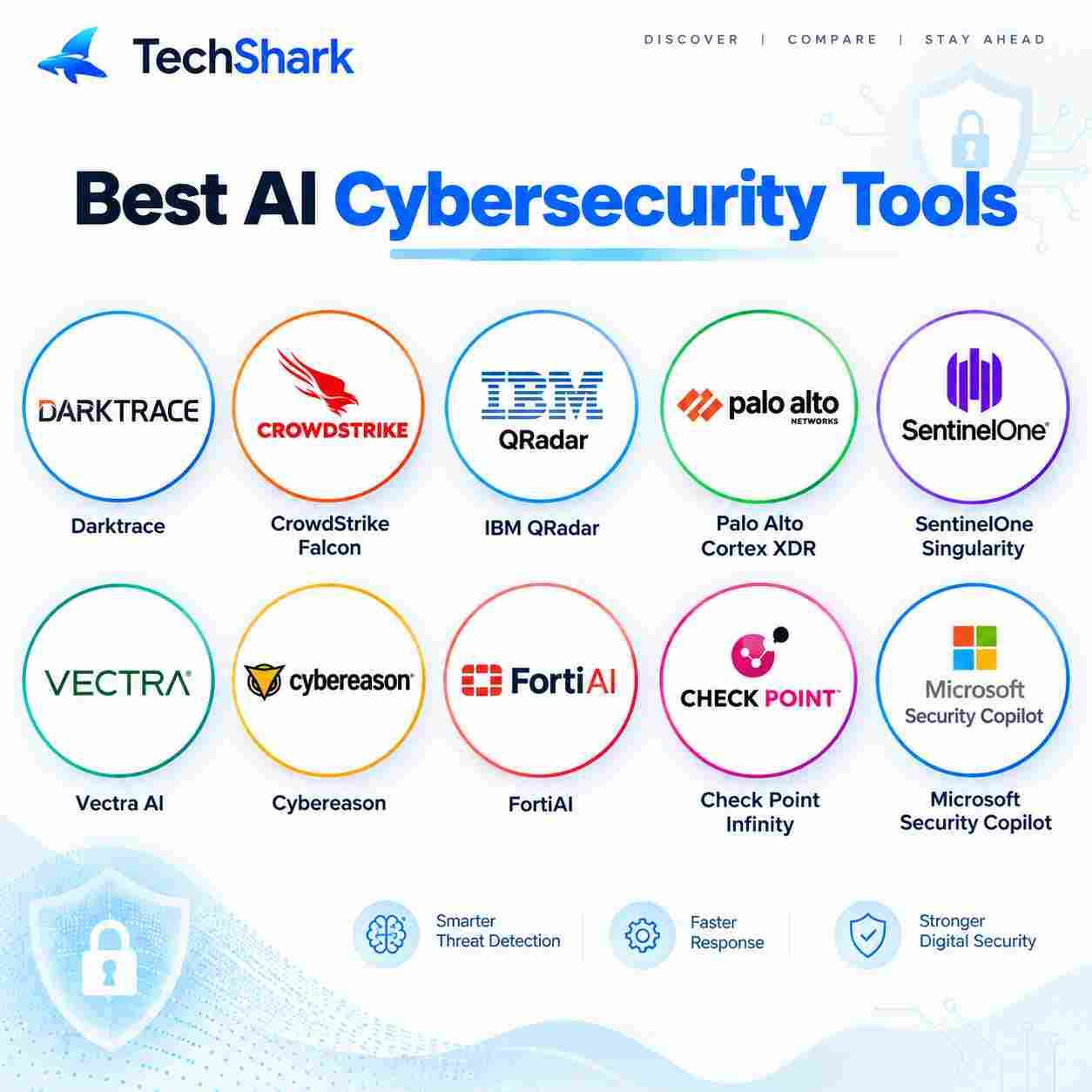
Quick Comparison Table - Best Cybersecurity Tools in 2026
| Tool | Best For | Key Features | Pricing | Editorial Rating* |
|---|---|---|---|---|
| Darktrace | Behavioral detection & autonomous response | Adaptive AI, NDR, AI analyst, autonomous response | Custom quote | 4.8/5 |
| CrowdStrike Falcon | Enterprise EDR/XDR & AI SOC | Charlotte AI, EDR/XDR, threat hunting, agentic automation | Custom quote | 4.9/5 |
| IBM QRadar | SIEM & security analytics | UBA, NDR, correlation, Sigma, AI investigation | Custom/usage-based | 4.6/5 |
| Palo Alto Cortex XDR | XDR & behavioral analytics | ML analytics, XDR, incident grouping, AI investigation | Custom quote | 4.8/5 |
| SentinelOne Singularity | Autonomous endpoint security | AI EDR, autonomous response, Purple AI | Custom quote | 4.8/5 |
| Vectra AI | Network, identity & cloud detection | AI detections, NDR, identity analytics, cloud visibility | Custom quote | 4.7/5 |
| Cybereason | XDR & attack-operation analysis | ML, EDR/XDR, MalOp, automated response | Custom quote | 4.6/5 |
| FortiAI | Security Fabric automation | AI threat detection, SOC automation, AI security, DLP | Custom quote | 4.7/5 |
| Check Point Infinity | Unified enterprise security | ThreatCloud AI, XDR, AI Copilot, threat prevention | Custom quote | 4.7/5 |
| Microsoft Security Copilot | AI-assisted security operations | GenAI investigation, security workflows, Microsoft ecosystem | SCU-based | 4.8/5 |
What is Cybersecurity?
Cybersecurity is the practice of protecting systems, networks, applications, and data from digital attacks, unauthorized access, damage, or theft. As businesses and individuals rely more on digital infrastructure, cybersecurity has become essential for maintaining privacy, trust, and operational continuity.
At its core, cybersecurity focuses on defending against threats such as malware, ransomware, phishing, data breaches, and insider attacks. These threats can target anything from personal devices to large enterprise systems, often aiming to steal sensitive information or disrupt operations.
Key Components of Cybersecurity
- Network Security: Protects internal networks from unauthorized access, attacks, and misuse through firewalls, intrusion detection systems, and secure configurations.
- Application Security: Ensures software and apps are secure from vulnerabilities by using secure coding practices, testing, and regular updates.
- Endpoint Security: Protects devices like laptops, mobiles, and servers from threats using antivirus, EDR (Endpoint Detection & Response), and monitoring tools.
- Cloud Security: Focuses on securing cloud environments, data storage, and workloads through encryption, identity management, and compliance controls.
- Data Security: Protects sensitive data using encryption, access controls, and backup strategies to prevent leaks or loss.
- Identity & Access Management (IAM): Ensures only authorized users can access systems through authentication methods like passwords, biometrics, and multi-factor authentication (MFA).
What is AI in Cybersecurity?
AI in cybersecurity refers to the use of artificial intelligence—especially machine learning and data analytics—to detect, prevent, and respond to cyber threats automatically and in real time. Instead of relying only on predefined rules, AI systems learn normal behavior across networks, users, and devices. When something unusual happens—like suspicious logins or abnormal data transfers—AI flags it as a potential threat and can even take action instantly.
Key Uses of AI in Cybersecurity
- Threat Detection: Finds malware, ransomware, and zero-day attacks
- Behavior Analysis: Detects insider threats or unusual activity
- Fraud Prevention: Stops suspicious transactions in real time
- Automated Response: Blocks threats without human intervention
- Threat Intelligence: Predicts future attack patterns
AI in cybersecurity makes security systems smarter and faster by learning from data, detecting threats early, and automating responses—helping organizations stay ahead of increasingly complex cyberattacks.
Top 10 Cybersecurity Tools in 2026
1. Darktrace
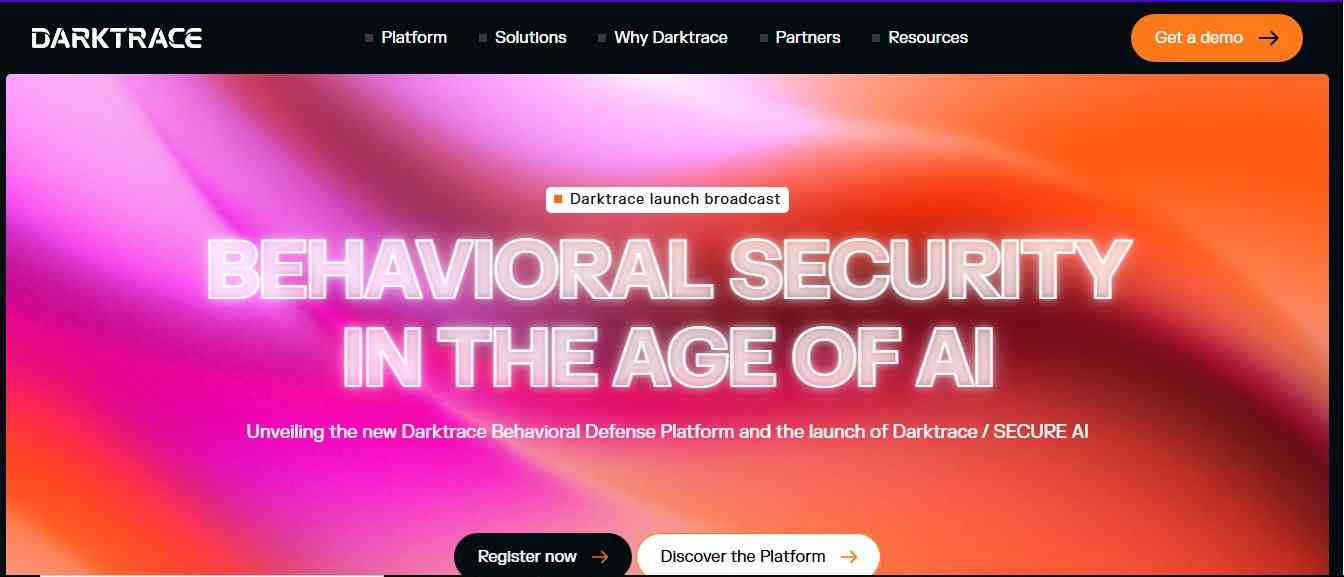
Darktrace is an AI-powered cybersecurity platform that uses self-learning technology to detect and respond to threats in real time. Unlike traditional tools, it identifies unknown and evolving attacks without relying on predefined rules or signatures. Darktrace continuously learns from your network behavior, allowing it to spot anomalies such as insider threats, ransomware, or data breaches instantly. Its autonomous response capability can neutralize threats before they spread, making it ideal for enterprises seeking proactive, automated, and scalable security solutions across cloud, network, and endpoint environments.
Best for: Behavioral threat detection and autonomous response
Key features
- Adaptive AI and behavioral profiling
- Network, cloud, email, identity, and endpoint security
- Real-Time AI Analyst
- Autonomous threat response
- Cross-domain incident investigation
- Detection of novel and anomalous behavior
- AI security capabilities for enterprise AI environments
Pros
- Strong behavioral detection model
- Useful for unknown and emerging threats
- Broad visibility across security domains
- Autonomous response can reduce analyst workload
Cons
- Enterprise-oriented pricing
- Can require careful tuning and governance
- May be more platform than smaller organizations need
Pricing
Darktrace generally uses custom enterprise pricing rather than publishing a simple per-user public price.
Best use case
Organizations with complex hybrid environments, limited SOC capacity, or a strong requirement for behavioral threat detection.
Real-world use case
A company could use Darktrace to establish behavioral baselines for employees, cloud workloads, and network devices. If a compromised account suddenly begins accessing unusual systems or transferring data in an abnormal pattern, the platform can investigate the behavior and apply configured containment actions.
2. CrowdStrike Falcon
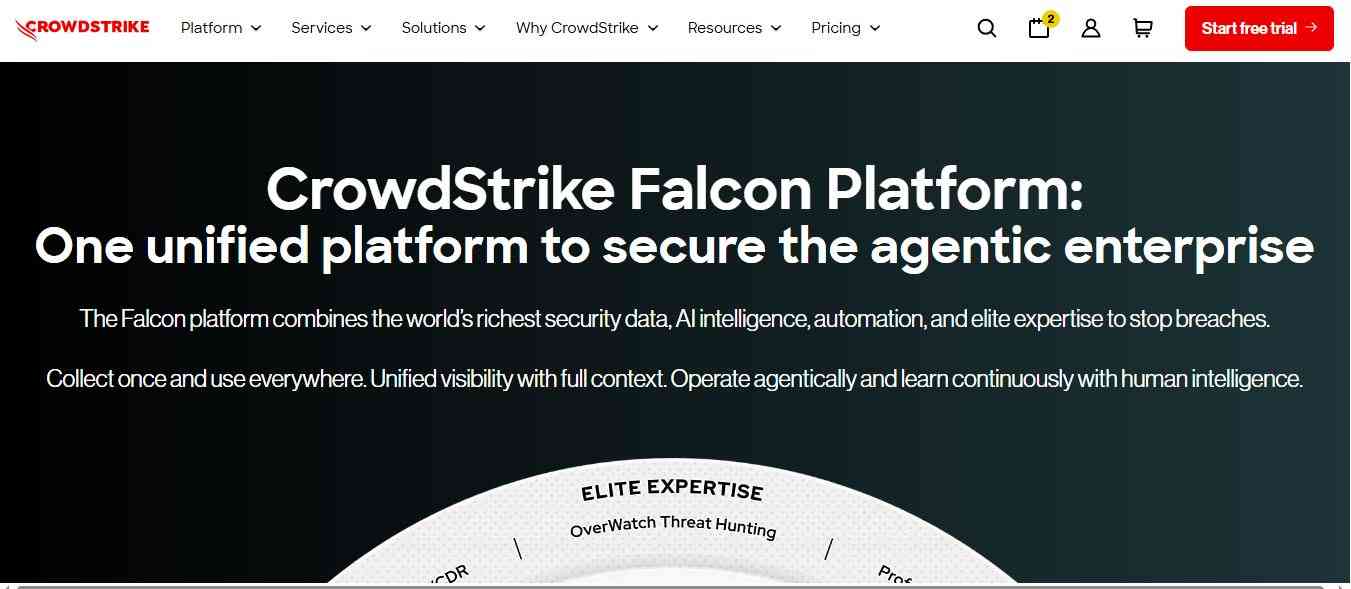
CrowdStrike Falcon is a cloud-native AI cybersecurity platform designed to protect endpoints, identities, and workloads. It uses advanced machine learning and threat intelligence to detect, prevent, and respond to cyber threats in real time. With its lightweight agent and centralized dashboard, Falcon delivers fast deployment and scalable protection. It excels in endpoint detection and response (EDR), ransomware prevention, and proactive threat hunting, making it a top choice for enterprises and growing businesses seeking strong, automated security.
Best for: Enterprise EDR/XDR and AI-powered SOC automation
Key features
- Endpoint detection and response
- XDR telemetry
- Threat hunting
- Cloud and identity protection
- Charlotte AI
- Agentic investigation and response
- No-code security agent development
- SOAR capabilities
Pros
- Extensive enterprise security ecosystem
- Strong endpoint telemetry
- Advanced AI-assisted SOC workflows
- Broad integrations and security data
- Strong automation potential
Cons
- Pricing can become complex as modules are added
- Best value generally comes from broader platform adoption
- Requires security expertise to configure effectively
Pricing
CrowdStrike uses custom pricing based on modules, endpoints, capabilities, and contract structure.
Best use case
Mid-market and enterprise organizations seeking an EDR/XDR platform that can evolve into an AI-assisted SOC.
Real-world use case
A security analyst investigating suspicious PowerShell activity could use Falcon telemetry and Charlotte AI to summarize the incident, identify related hosts and accounts, investigate indicators, and automate portions of the response workflow.
3. IBM QRadar
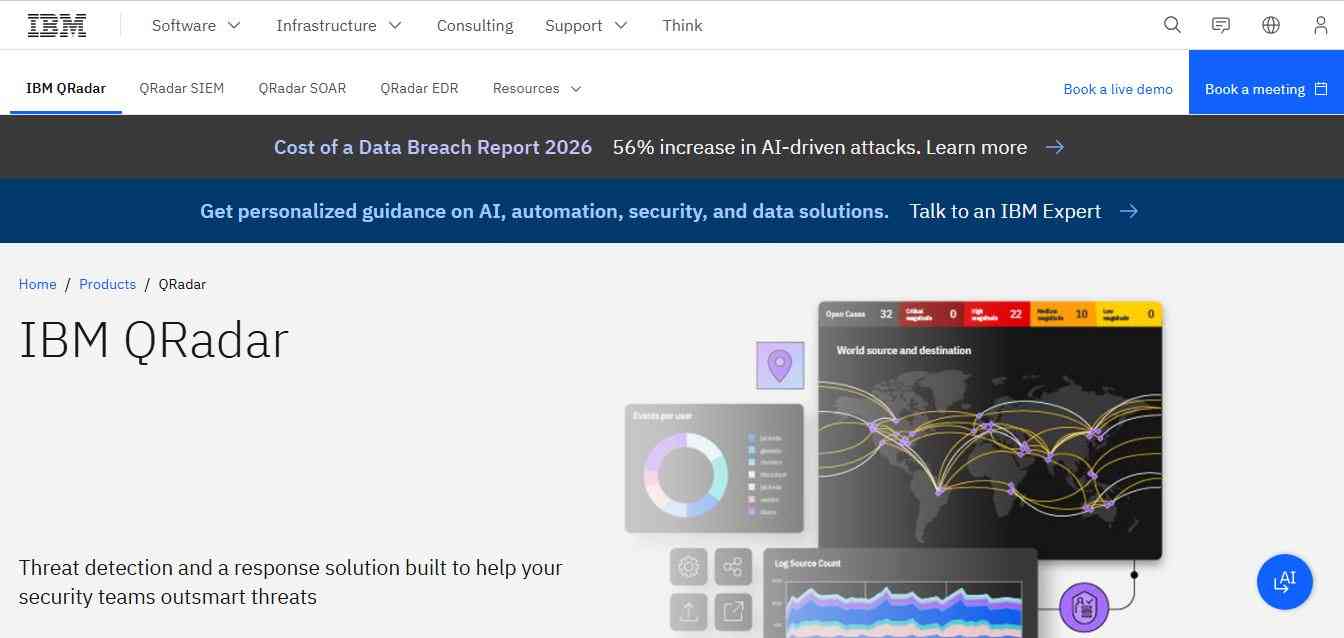
IBM QRadar is a powerful AI-driven SIEM (Security Information and Event Management) platform designed to detect, investigate, and respond to cyber threats across an organization’s infrastructure. It analyzes logs, network traffic, and user behavior in real time using advanced analytics and machine learning. QRadar helps security teams identify anomalies, prioritize alerts, and maintain compliance with regulatory standards. With its strong integration capabilities and deep visibility, it is widely used by enterprises, especially in finance and regulated industries, for centralized security monitoring and threat management.
Best for: SIEM, security analytics, compliance, and centralized visibility
Key features
- SIEM
- User behavior analytics
- Network detection and response
- Automated correlation
- Sigma rules
- AI-assisted investigations
- Compliance reporting
- 700+ integrations and extensions
Pros
- Strong centralized visibility
- Useful for compliance-heavy environments
- Broad integration ecosystem
- Mature SIEM capabilities
Cons
- SIEM deployments can be operationally complex
- Requires skilled configuration
- Costs depend heavily on architecture and data volume
Pricing
Pricing is generally custom or usage-based, depending on the deployment and consumption model.
Best use case
Large organizations, regulated industries, and security teams that need centralized security analytics and compliance visibility.
Real-world use case
A financial services company could aggregate authentication events, firewall logs, endpoint alerts, cloud telemetry, and application activity into QRadar, allowing analysts to correlate seemingly unrelated events into a single investigation.
4. Palo Alto Cortex XDR
Palo Alto Networks offers Cortex XDR, an advanced AI-powered detection and response platform that unifies data from endpoints, networks, and cloud environments. It uses behavioral analytics and machine learning to identify sophisticated threats and reduce alert noise. Cortex XDR automates investigation and response workflows, helping security teams act faster with greater accuracy. Its cross-data visibility and strong integration capabilities make it ideal for enterprises seeking a unified, scalable, and intelligent cybersecurity solution.
Best for: XDR, behavioral analytics, and incident investigation
Key features
- XDR
- Endpoint protection
- Behavioral analytics
- Machine-learning profiles
- Incident correlation
- AI-assisted investigation
- Automated case grouping
- Guided remediation
Pros
- Strong cross-domain analytics
- Good fit for Palo Alto security ecosystems
- Useful incident investigation capabilities
- Strong cloud and endpoint coverage
Cons
- Full platform value may require multiple Palo Alto products
- Enterprise licensing can be difficult to compare publicly
- Requires thoughtful deployment and tuning
Pricing
Generally custom quote-based.
Best use case
Enterprises already using Palo Alto Networks infrastructure or companies seeking a consolidated XDR architecture.
Real-world use case
If an employee account begins accessing unusual cloud resources while an endpoint shows suspicious process behavior, Cortex XDR can correlate these signals into a broader incident rather than treating them as independent alerts
5. SentinelOne Singularity
SentinelOne Singularity is an AI-powered cybersecurity platform that delivers autonomous endpoint protection, detection, and response. It uses advanced machine learning to identify and stop threats such as ransomware, malware, and zero-day attacks in real time without human intervention. The platform offers complete visibility across endpoints, cloud workloads, and IoT devices through a unified console. With automated remediation and rollback capabilities, SentinelOne Singularity reduces response time and operational burden, making it ideal for organizations seeking scalable, intelligent, and hands-free security operations.
Best for: Autonomous endpoint detection and response
Key features
- AI-powered EDR
- Autonomous endpoint response
- Threat investigation
- Purple AI
- XDR capabilities
- Behavioral detection
Pros
- Strong autonomous response model
- Endpoint-focused architecture
- AI-assisted investigations
- Reduces repetitive SOC work
Cons
- Pricing requires vendor consultation
- Broader use cases may require additional modules
- Automation should be governed carefully
Pricing
Custom quote based on deployment and modules.
Best use case
Organizations that want to automate endpoint investigation and response while retaining analyst oversight.
Real-world use case
A security team receiving an endpoint alert could allow Purple AI to investigate related processes, accounts, and activity automatically, producing an evidence-backed incident narrative before an analyst begins manual investigation.
6. Vectra AI
Vectra AI is an AI-driven cybersecurity platform focused on network detection and response (NDR). It uses advanced behavioral analytics and machine learning to identify hidden threats, including insider attacks and lateral movement, in real time. Vectra continuously monitors network traffic across cloud, data center, and hybrid environments, providing deep visibility into attacker behavior. Its AI prioritizes real threats, reducing alert fatigue for security teams. This makes it a strong choice for organizations needing proactive threat detection and faster incident response across complex infrastructures.
Best for: Network, identity, and cloud threat detection
Key features
- AI-driven NDR
- Identity threat detection
- Cloud detection
- Behavioral analytics
- Lateral movement detection
- Credential compromise detection
- Multi-cloud visibility
- Threat hunting
Pros
- Strong NDR capabilities
- Excellent focus on attacker behavior
- Covers identity and cloud alongside network activity
- Useful for hybrid environments
Cons
- More specialized than an all-in-one security platform
- Organizations may need complementary endpoint controls
- Enterprise pricing is quote-based
Pricing
Custom quote.
Best use case
Enterprises are concerned about lateral movement, compromised credentials, and attacks crossing networks, identities, and cloud environments.
Real-world use case
If an attacker compromises a privileged identity and begins moving laterally between cloud and internal resources, Vectra can analyze behavioral signals across these domains instead of treating each event independently.
7. Cybereason
Cybereason is an AI-powered cybersecurity platform focused on endpoint detection, response, and proactive threat hunting. It uses advanced machine learning to identify sophisticated attacks such as ransomware, fileless malware, and zero-day exploits in real time. The platform provides deep visibility into attack chains through its “MalOp” (malicious operation) concept, helping security teams understand and respond faster. With automated investigation and response capabilities, Cybereason reduces manual effort and improves efficiency, making it ideal for SOC teams and enterprises seeking intelligent, end-to-end threat defense.
Best for: Attack-operation analysis and AI-driven XDR
Key features
- AI-powered EDR/XDR
- Multi-layer machine learning
- MalOp attack visualization
- Threat hunting
- MDR
- Endpoint controls
- Incident response
- Vulnerability management
Pros
- Strong attack-story visualization
- AI-driven threat detection
- Good endpoint and XDR coverage
- Multiple deployment options
Cons
- Platform breadth can require planning
- Enterprise features may increase cost
- Less suitable if the immediate need is only basic endpoint security
Pricing
Cybereason generally provides custom pricing according to plan and deployment.
Best use case
Security teams that want to understand an entire attack operation rather than investigate dozens of disconnected alerts.
Real-world use case
During a ransomware investigation, the platform can correlate endpoint activity, malicious processes, affected users and other indicators into a single malicious operation, helping analysts understand root cause and scope.
8. FortiAI
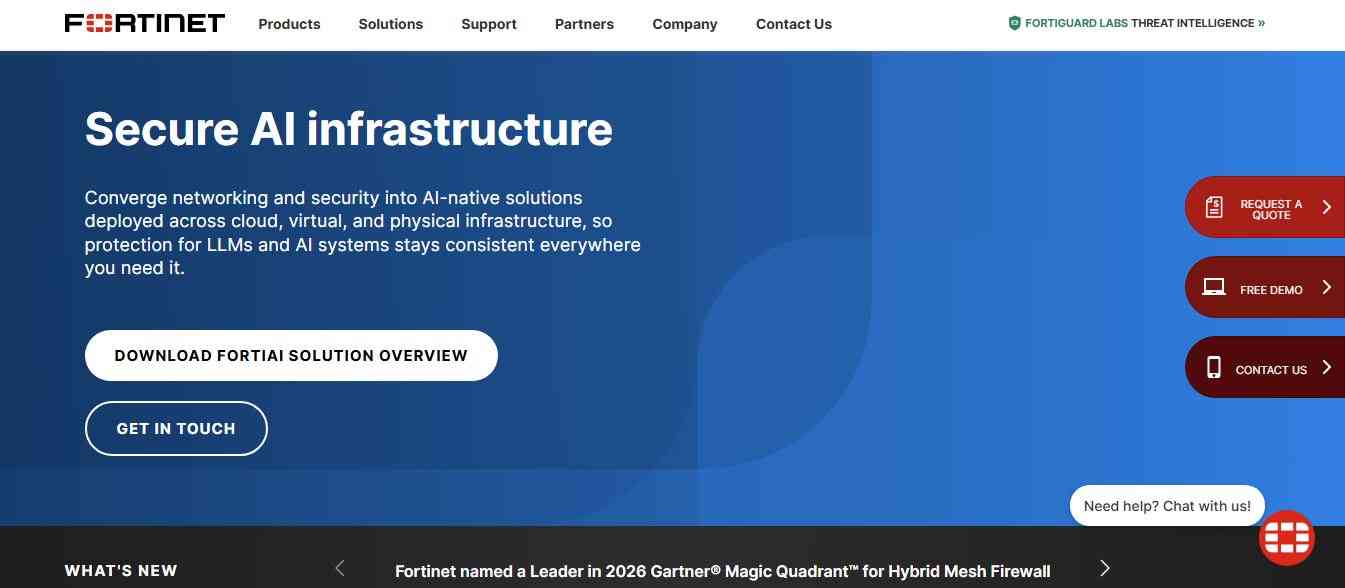
Fortinet’s FortiAI is an AI-powered virtual security analyst designed to enhance Security Operations Center (SOC) efficiency. It uses natural language processing and machine learning to analyze threats, investigate alerts, and provide actionable insights in real time. FortiAI helps reduce alert fatigue by prioritizing critical incidents and automating routine analysis tasks. Integrated within the Fortinet ecosystem, it enables faster decision-making and improved threat response, making it ideal for enterprises looking to strengthen their cybersecurity operations with intelligent automation.
Best for: AI-powered security operations and Fortinet environments
Key features
- AI-powered threat detection
- FortiAI-Assist
- AI security for LLMs and applications
- DLP and AI governance
- FortiSOC
- FortiSIEM
- FortiSOAR
- Threat hunting
- Automated response
- Network AIOps
Pros
- Broad Security Fabric integration
- Strong network-security heritage
- AI governance and AI workload protection
- Security and network operations automation
Cons
- Best fit is often within a Fortinet ecosystem
- Product portfolio can be complex
- Pricing varies substantially by deployment
Pricing
Generally custom quote-based.
Best use case
Organizations already invested in Fortinet or businesses wanting a unified approach to network, security operations, and AI security.
Real-world use case
A SOC can use FortiAI-assisted workflows to investigate alerts, correlate security events, recommend remediation, and automate predefined actions through FortiSOC and FortiSOAR. Fortinet describes capabilities including endpoint isolation, indicator blocking, policy updates, and ticketing.
9. Check Point Infinity
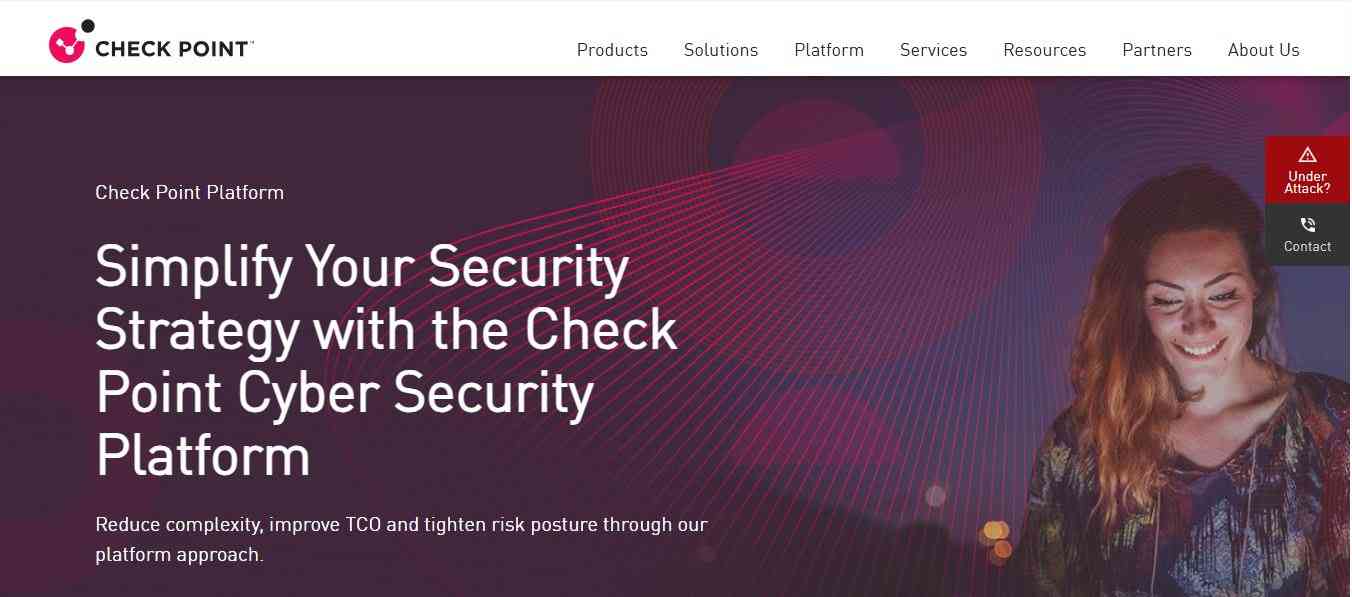
Check Point Software Technologies’s Check Point Infinity is a unified, AI-powered security architecture designed to protect networks, cloud environments, endpoints, and mobile devices. It uses advanced threat prevention and real-time intelligence to block cyberattacks before they spread. The platform integrates multiple security layers into a single system, offering centralized visibility and management. With automated response capabilities and strong threat intelligence, Check Point Infinity is ideal for enterprises seeking comprehensive, scalable, and proactive cybersecurity protection across their entire digital infrastructure.
Best for: Unified threat prevention across network, cloud, and workforce
Key features
- ThreatCloud AI
- AI Copilot
- XDR/XPR
- Network threat prevention
- Cloud security
- Email and workspace security
- Automated workflows
- GenAI security
Pros
- Broad security coverage
- Strong threat-prevention orientation
- AI embedded across multiple security layers
- Useful for security consolidation
Cons
- Large platforms can be complex
- Full capabilities may require multiple modules
- Enterprise pricing is not publicly standardized
Pricing
Custom pricing based on products, users, infrastructure, and licensing.
Best use case
Large organizations are looking to consolidate network, cloud, endpoint, email, and security operations capabilities.
Real-world use case
A global enterprise could use Check Point's platform to correlate security events across gateways, endpoints, cloud environments, and email while applying AI-driven threat intelligence and automated security operations.
10. Microsoft Security Copilot
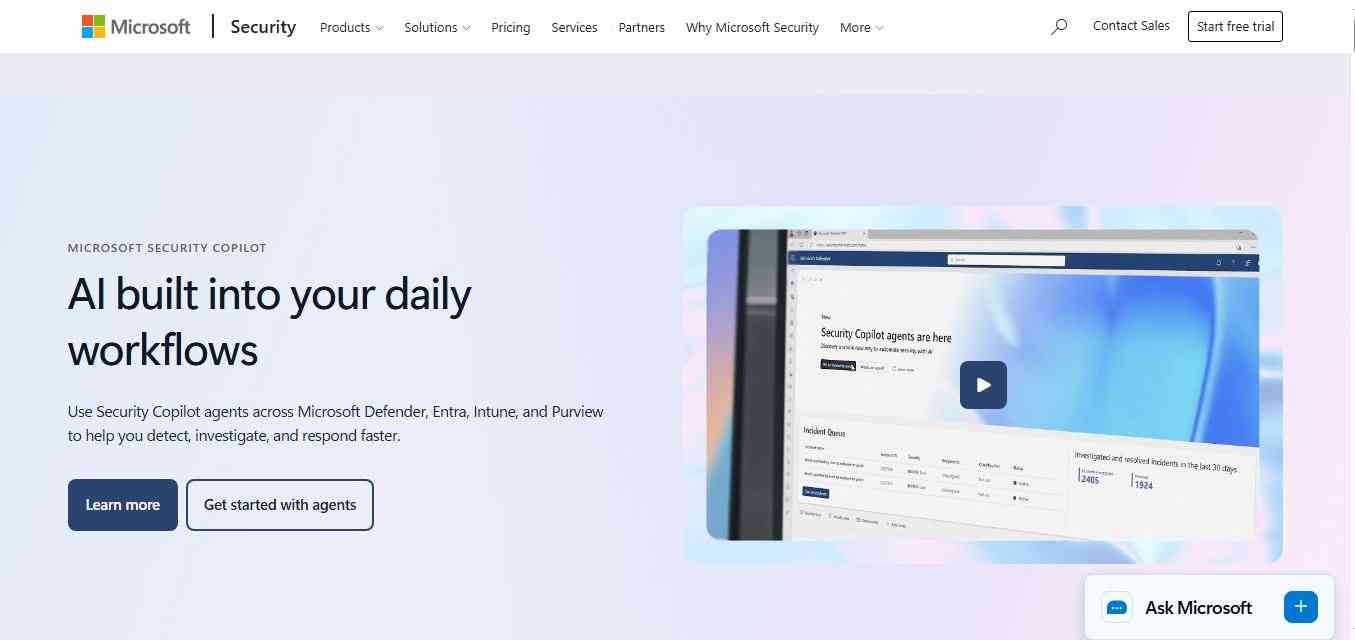
Microsoft’s Microsoft Security Copilot is a generative AI-powered assistant designed to help security teams detect, investigate, and respond to threats faster. It combines large language models with Microsoft’s threat intelligence to deliver real-time insights through natural language queries. Security Copilot can summarize incidents, analyze attack patterns, and recommend actions instantly. Integrated with tools like Microsoft Defender and Sentinel, it improves productivity and decision-making, making it ideal for enterprises seeking faster, AI-driven security operations and reduced response times.
Best for: AI-assisted SOC operations in Microsoft environments
Key features
- Generative AI security assistant
- Incident investigation
- Threat intelligence analysis
- Natural-language security queries
- Microsoft security ecosystem integration
- Security workflow assistance
- SCU-based consumption model
- AI agents and automation
Pros
- Strong Microsoft ecosystem integration
- Natural-language investigation
- Useful for analysts with different experience levels
- Consumption-based AI model
Cons
- Requires Microsoft ecosystem prerequisites
- AI compute consumption needs monitoring
- It complements underlying security controls rather than replacing them
Pricing
Security Copilot uses Security Compute Units (SCUs) rather than a simple flat per-user price. Microsoft states that Azure and Entra ID are prerequisites.
Best use case
Companies already using Microsoft Defender, Sentinel, Entra, Microsoft 365, and Azure that want AI-assisted security operations.
Real-world use case
An analyst could ask Security Copilot to summarize a suspicious identity incident, explain relevant indicators, correlate Microsoft security telemetry, and recommend investigation steps without manually querying multiple systems.
Key Facts & Statistics: AI in Cybersecurity
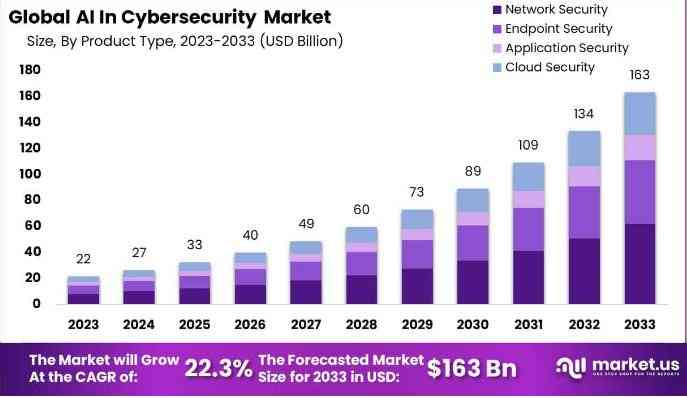
AI is rapidly becoming the backbone of modern cybersecurity, driven by the explosion of cyber threats and increasing digital adoption. The global AI cybersecurity market is already worth $39–44 billion in 2026 and is projected to exceed $180–213 billion by 2033–2034, growing at a CAGR of 21–24%. At the same time, cyber risks are intensifying—nearly 90% of organizations faced cyberattacks in the last year, while 83% are increasing cybersecurity spending to keep up. AI is now seen as critical, with 94% of security leaders calling it the biggest driver of change, yet attackers are also leveraging AI, complicating defense.
- $44.24B – AI cybersecurity market size in 2026
The market has already reached a massive scale, showing how quickly organizations are adopting AI-driven security solutions to handle complex and evolving cyber threats. - $213.17B – Expected market size by 2034
This projected growth highlights long-term demand, driven by rising cyberattacks, stricter regulations, and increasing digital transformation across industries. - 24.7% CAGR – Projected growth rate (2026–2033)
A strong compound annual growth rate indicates rapid expansion, making AI cybersecurity one of the fastest-growing segments in the tech industry. - 94% of security leaders say AI is the biggest cybersecurity driver
Almost all security decision-makers believe AI is reshaping how threats are detected, analyzed, and prevented in modern security systems. - 83% of companies are increasing cybersecurity budgets
Organizations are actively investing more in security tools, especially AI-based platforms, to stay ahead of increasingly sophisticated attacks. - ~90% of organizations experienced cyberattacks in the past year
Cyber threats are nearly universal, showing that no organization—regardless of size—is immune to attacks. - 13% of organizations reported AI-related security breaches
While AI strengthens security, it also introduces new risks, such as AI model manipulation and adversarial attacks. - $4.88M – Average cost of a data breach globally
Data breaches are extremely expensive, covering costs like recovery, legal penalties, downtime, and reputational damage. - >66,000 vulnerabilities recorded by 2026
The number of software vulnerabilities is rapidly increasing, partly due to faster development cycles and AI-generated code. - 86% enterprises use AI, but only 34% trust it fully
While AI adoption is high, trust remains a challenge due to concerns around accuracy, transparency, and control.
How to Choose the Right AI Cybersecurity Tool?
Picking the "best" tool depends less on feature checklists and more on your operational reality. Weigh these four factors:
By company size
- Startups/SMBs (under 200 employees): Prioritize bundled platforms with predictable per-endpoint pricing (SentinelOne, Microsoft Defender/Copilot if already on M365) over custom-quoted enterprise platforms.
- Mid-market: Look at Vectra AI or CrowdStrike Falcon for a balance of automation and manageable procurement complexity.
- Enterprise: Darktrace, Cortex XDR, and QRadar make sense when you have dedicated security engineering resources to tune and integrate them.
By industry
- Fintech/finance: IBM QRadar or Cortex XDR for compliance-grade audit trails and regulatory reporting.
- SaaS companies: Vectra AI or CrowdStrike for identity and cloud-native threat coverage.
- Healthcare/regulated industries: Darktrace or QRadar for behavioral anomaly detection plus strong compliance documentation.
By budget
- Under $50K/year: SentinelOne entry tiers, Microsoft Security Copilot (if already on E5), or Cybereason via LevelBlue MDR.
- $50K–$150K/year: Darktrace (median deal), CrowdStrike Enterprise tiers, Vectra AI.
- $150K+: Full-platform consolidation plays like Cortex XDR or enterprise QRadar deployments.
By integration needs
If your stack is already Microsoft-heavy, Security Copilot wins on ease of deployment. If you're firewall-centric with Palo Alto or Fortinet hardware, Cortex XDR or FortiAI extends what you already own. For a vendor-agnostic layer that spans a hybrid environment, Vectra AI or Darktrace are better fits than platform-locked tools.
Key Benefits of AI in Cybersecurity
- Faster threat detection: AI models process telemetry at a scale and speed no human team can match, cutting mean time to detect from days to minutes.
- Predictive analytics: Behavioral baselining (like Darktrace's and Vectra's approach) flags deviations before a known exploit even needs to fire.
- Reduced manual workload: Agentic tools like Charlotte AI and Purple AI absorb Tier-1 triage, freeing analysts for higher-value investigation.
- Improved compliance: Automated documentation, risk scoring, and audit trails (QRadar SOAR, Cortex XDR) make regulatory reporting far less manual.
- Fewer false positives: AI-driven prioritization, such as Vectra's Attack Signal Intelligence, helps analysts avoid drowning in noise.
Challenges and Limitations of AI Cybersecurity Tools
No tool on this list is a silver bullet. Common pain points worth budgeting for:
- False positives still happen. Even the best behavioral models need tuning — expect a 60–90 day calibration period after deployment.
- Cost complexity. Module-based and credit-based pricing (Darktrace, Charlotte AI) makes total cost of ownership hard to predict without a detailed usage forecast.
- Implementation complexity. SIEM platforms like QRadar often cost as much to implement as to license in year one.
- Vendor lock-in. Platform-native AI (FortiAI, Cortex XDR, Security Copilot) delivers the best experience only if you're already committed to that ecosystem.
- Human oversight is still required. Industry survey data shows security teams trust AI far more for anomaly detection than for fully automated incident response — human review remains the norm, not the exception.
Which AI Cybersecurity Tool Is Right for You?
Use this simplified decision framework:
| If your priority is... | Consider |
|---|---|
| Behavioral anomaly detection | Darktrace |
| Enterprise EDR/XDR | CrowdStrike Falcon |
| SIEM and compliance | IBM QRadar |
| XDR and behavioral analytics | Cortex XDR |
| Autonomous endpoint response | SentinelOne |
| Network + identity + cloud detection | Vectra AI |
| Attack-operation analysis | Cybereason |
| Fortinet ecosystem automation | FortiAI |
| Unified threat prevention | Check Point Infinity |
| Microsoft-centric AI SOC | Security Copilot |
Conclusion
There's no single "best" AI cybersecurity tool in 2026—there's a best tool for your infrastructure, budget, and risk profile. Teams already living in the Microsoft ecosystem get the fastest time-to-value from Security Copilot. Endpoint-first organizations should look hard at CrowdStrike Falcon or SentinelOne. Anyone dealing with hybrid cloud and identity sprawl will get more mileage from Vectra AI or Darktrace than from a bolted-on endpoint agent. And enterprises consolidating a sprawling toolset should evaluate Cortex XDR or QRadar as platform plays rather than point solutions.
The throughline across every tool on this list: AI cybersecurity isn't about replacing your security team—it's about giving them the leverage to keep up with attackers who are already using AI themselves. Start with your actual telemetry sources and integration constraints, request live demos from your top two or three candidates, and negotiate—nearly every vendor here quotes custom enterprise pricing with real room to move.
People are also reading:
- AI Deepfake Tools
- Best AI Content Detectors
- Best AI Background Remover Tools
- Best AI Fitness Tools
- Best AI Music Tools
- Best AI Compliance Tools
- Best AI Presentation Tools
Frequently Asked Questions (FAQs)
1. What is AI cybersecurity?
AI cybersecurity refers to security tools that use machine learning and generative AI to detect threats, prioritize alerts, and automate response — going beyond static, signature-based rules to catch novel and behavioral attack patterns.
2. Are AI security tools expensive?
It varies widely. Entry-level endpoint tools like SentinelOne start under $100/endpoint/year, while enterprise platforms like Darktrace or QRadar can run into six figures annually depending on modules and deployment size.
3. Which tool is best for startups?
SentinelOne's Core/Control tiers or Microsoft Security Copilot (if you're already on Microsoft 365) offer the most predictable pricing and fastest setup for small teams without dedicated security engineers.
4. Can AI fully replace human security analysts?
No. AI tools automate triage and repetitive investigation, but incident response, judgment calls, and strategic decisions still require human oversight — especially for high-stakes actions like isolating production systems.
5. What's the difference between AI threat detection and AI fraud prevention tools?
Threat detection tools (Darktrace, Vectra, CrowdStrike) focus on network, endpoint, and identity intrusions. Fraud prevention tools are typically specialized for transaction-level anomaly detection in fintech and e-commerce — a distinct category worth its own evaluation if that's your primary use case.
6. Do these tools work for OT/industrial environments?
Some do. Darktrace explicitly supports OT coverage as a dedicated module; most endpoint-first tools (CrowdStrike, SentinelOne) are weaker in air-gapped or legacy industrial environments.
7. How long does implementation typically take?
Endpoint-first tools (SentinelOne, CrowdStrike) can deploy in days. Full SIEM platforms (QRadar) and behavioral network tools (Darktrace) often take 4–12 weeks to properly baseline and tune.