10 Best AI Music Tools for Creators, Producers & Beginners
Explore top AI music tools to compose, edit, and produce music effortlessly. Compare pricing, features, and pick the best tool for your workflow.
Explore moreIf you want to create complete songs with vocals from a text prompt, look at Melody Genie, Suno, Udio, and ElevenLabs Music. For creator-focused background music, SOUNDRAW, Beatoven.ai, and Mubert are strong options. For cinematic and orchestral composition, AIVA is particularly relevant. For production-oriented text-to-audio and sound design, consider Stable Audio. Loudly is designed around a broader creator workflow that includes generation, editing, stems, remixing, and mastering.
AI music tools have transformed the way creators, musicians, video producers, podcasters, marketers, and developers create music. Instead of starting with a blank DAW or searching through thousands of stock tracks, you can now describe a song, mood, genre, instrument, or scene and generate original music in seconds. But not every AI music generator is designed for the same job. Some tools specialize in complete songs with AI vocals and lyrics, while others are better for royalty-free background music, cinematic scores, instrumental tracks, sound design, music APIs, or professional production workflows.
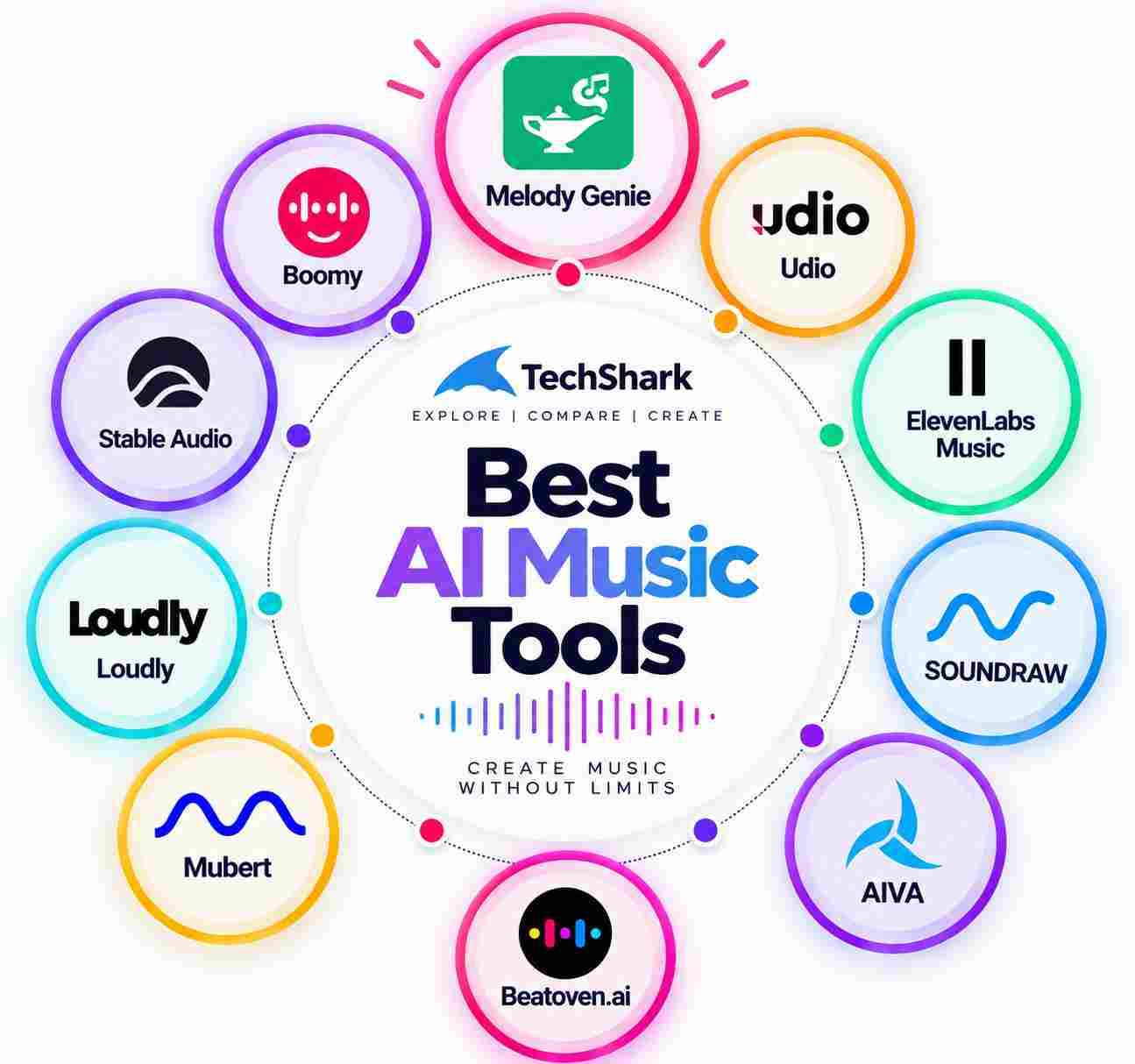
In this guide, we compare 10 of the best AI music tools in 2026, including Melody Genie, Suno, Udio, ElevenLabs Music, SOUNDRAW, AIVA, Beatoven.ai, Mubert, Loudly, Stable Audio, and Boomy.
The 10 Best AI Music Tools at a Glance
| AI music tool | Best for | Vocals | Background music | Editing/control | API | Commercial-use considerations |
|---|---|---|---|---|---|---|
| Melody Genie (Recommanded) | Best for creators who want full control over both songwriting and sound | Yes | Yes | High | — | Check current plan terms |
| Suno | Complete AI songs | Yes | Yes | High | — | Check current plan terms |
| Udio | Song creation and creative control | Yes | Yes | High | — | Check current terms/export availability |
| ElevenLabs Music | Professional AI music and commercial workflows | Yes | Yes | High | Yes | Broad commercial use; verify plan terms |
| SOUNDRAW | Creator background music | No | Excellent | High | — | Commercial licensing available on applicable plans |
| AIVA | Cinematic and orchestral composition | Primarily instrumental | Yes | Very high | — | Copyright ownership varies by plan |
| Beatoven.ai | Videos, podcasts and background scores | Primarily instrumental | Excellent | High | Yes | Commercial licensing available |
| Mubert | Royalty-free music and API applications | Primarily instrumental | Excellent | Medium | Yes | Licensing depends on product/use |
| Loudly | End-to-end creator music workflow | Yes/varies by model | Excellent | Very high | — | Commercial license included according to Loudly |
| Stable Audio | Music, sound design and audio experimentation | Limited/varies | Excellent | High | — | Commercial use available under applicable terms |
| Boomy | Fast AI music creation | Varies | Yes | Medium | — | Review current rights and distribution terms |
Important: AI music pricing, model versions, download limits, licensing terms, and commercial-use policies can change quickly. Always check the provider's current terms before publishing music commercially.
What Is an AI Music Generator?
An AI music generator is a software tool that uses artificial intelligence to create music automatically. It analyzes patterns in melodies, rhythms, and harmonies to generate original tracks based on user inputs like genre, mood, tempo, or instruments. These tools help musicians, content creators, and beginners produce songs quickly without deep technical skills. From background music to full compositions with vocals, AI music generators simplify the creative process, save time, and make music production more accessible to everyone.
- Text prompts
- Lyrics
- Musical descriptions
- Genres
- Moods
- Instruments
- BPM
- Audio references
- MIDI
- Images or video
- Existing musical ideas
Depending on the platform, an AI music tool can generate anything from a 30-second background loop to a complete song with vocals, lyrics, instrumentation, and structure.
For example, a prompt such as:
"Dreamy indie-pop song about driving through a city at midnight, female vocals, warm analog synths, clean electric guitar, emotional chorus, 105 BPM"
Modern AI music systems can interpret it to create a structured musical composition. The technology is particularly useful for creators who need music quickly but don't necessarily have the time, budget, equipment, or production expertise required to compose everything manually.
10 Best AI Music Tools
1: Melody Genie — Best for creators who want full control over both songwriting and sound (Recommended)

Melody Genie takes a different approach compared to most AI music tools that rely on a single prompt to generate a full song. Instead, it separates the creative process into distinct layers, allowing users to choose a Writing DNA that defines lyrics, flow, rhyme patterns, structure, and vocabulary, while also independently selecting a Music DNA to shape the sound of the final track. This layered system enables creators to mix and match influences in ways traditional AI music generators typically don’t support. In addition, Melody Genie brings multiple AI music models into one unified workflow and includes features like Personal Musical DNA, Genie Score, advanced song editing, stems, voice tools, and live collaboration. It’s designed for songwriters, artists, producers, and AI music creators who want more creative control than a standard prompt-to-song generator.
Key features:
- Layered Creative Control: Melody Genie separates the music creation process into distinct layers, allowing users to independently control different aspects of a track. This gives creators more flexibility compared to traditional prompt-based tools that generate everything in one step.
- Writing DNA: Users can define how lyrics are created by selecting a Writing DNA, which shapes elements like flow, rhyme schemes, vocabulary, tone, and structure, making the output more aligned with their creative intent.
- Music DNA: Alongside lyrics, users can choose a separate Music DNA to control the sound, genre, and overall musical style of the track, enabling unique combinations that aren’t possible in standard AI generators.
- Multi-Model Workflow: Melody Genie integrates multiple AI music models into a single workflow, giving users access to diverse outputs and creative possibilities without switching platforms.
- Personal Musical DNA: Creators can build and reuse their own signature style using Personal Musical DNA, helping maintain consistency across different projects.
- Genie Score: The Genie Score provides insights and feedback on generated tracks, helping users refine and improve their music more effectively.
- Advanced Editing & Stems: Users can edit songs in detail and work with stems, allowing for better control over individual elements of a track during post-production.
- Voice Tools: Built-in voice tools enable users to experiment with vocals, making it easier to customize and enhance the final output.
- Live Collaboration: Melody Genie supports real-time collaboration, allowing multiple users to work together on music projects seamlessly.
Who should use Melody Genie?
Melody Genie is particularly relevant for:
- Songwriters: Ideal for writers who want more control over lyrics, structure, and storytelling while experimenting with different musical styles.
- Music Artists: Great for artists looking to create unique tracks by mixing different creative influences without being limited to a single prompt-based output.
- Producers: Useful for producers who want flexibility with stems, editing, and sound design while exploring multiple AI models in one workflow.
- AI Music Creators: Perfect for creators already using AI tools but seeking deeper customization, layered control, and more advanced creative options.
- Content Creators & YouTubers: Helpful for generating custom background music or original tracks tailored to specific content styles without relying on generic audio.
- Indie Creators & Beginners: A good fit for those starting out in music creation who want an intuitive way to experiment with songwriting and production while maintaining creative control.
Best use case:
Melody Genie is best suited for creating fully customized songs where both lyrics and sound need precise control, experimenting with unique combinations of writing style and musical genres, developing consistent artist identities using Personal Musical DNA, producing high-quality tracks with editable stems for further refinement, generating original background music for videos or digital content, and collaborating in real time with other creators on songwriting or production projects—all while avoiding the limitations of standard prompt-to-song AI tools.
2. Suno — AI Music Generator for Complete Songs

Suno is one of the most recognizable AI music creation platforms. Its central proposition is simple: describe what you want and generate a song. The platform supports prompts covering genres, moods, instruments, and other musical characteristics. It can also work with user-provided lyrics and offers increasingly sophisticated creation and editing capabilities. Suno's official product pages currently emphasize song creation, granular controls, and a broad range of genres.
Best for: Complete songs, AI vocals, songwriting, demos, and rapid music creation.
Key features
- Full song generation
- AI-generated vocals
- Custom lyrics
- Instrumental generation
- Genre and style controls
- Song extension
- Audio-based creation workflows
- Advanced editing capabilities
- Large range of musical styles
Suno's documentation also describes workflows for using your own lyrics and extending songs, making it useful for iterative songwriting rather than simply generating one-off clips.
Who should use Suno?
Suno is particularly relevant for:
- Songwriters
- Musicians
- Content creators
- Social media creators
- Music hobbyists
- Demo creators
- People without formal music-production experience
Potential limitation
AI-generated songs can still require human editing, arrangement, mixing and mastering before they fit a professional release workflow. Licensing and commercial rights should also be checked against the exact Suno plan and current terms.
Best use case: "I have an idea for a complete song and want to hear it quickly."
3. Udio — AI Song Creation With Creative Control
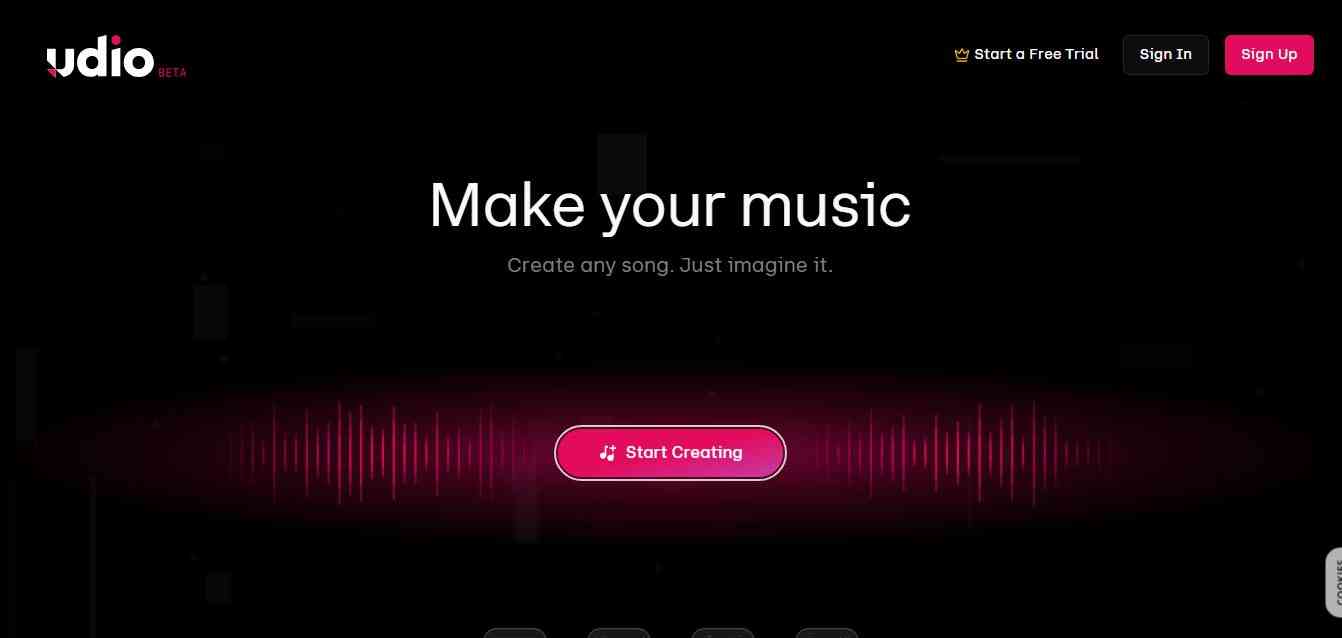
Udio is another major AI music-generation platform focused on creating songs from natural-language descriptions. Its ecosystem has emphasized song creation, sharing, styles and iterative workflows. Udio's official materials describe AI music generation as a tool for creative expression and provide information about how its music models work.
Best for: AI songwriting, vocal music, experimentation,
Key features
- Text-to-music generation
- Vocal songs
- Instrumental tracks
- Genre experimentation
- Style-based creation
- Song iteration
- Music discovery and sharing
And detailed creative iteration. Udio can be particularly interesting for creators who want to experiment with unusual combinations of genres, textures,
Who should use Udio?
Consider Udio if you are:
- A songwriter experimenting with ideas
- A producer exploring arrangements
- A musician creating demos
- A creator experimenting with AI-generated vocals
- A music enthusiast exploring new genres
Potential limitation
The platform's capabilities and export policies have changed over time, so creators should verify current download, licensing, and commercial-use conditions before building a production workflow around it.
Best use case: "I want to experiment with AI-generated songs and iterate on musical ideas."
4. ElevenLabs Music — AI Music for Professional and Commercial Workflows
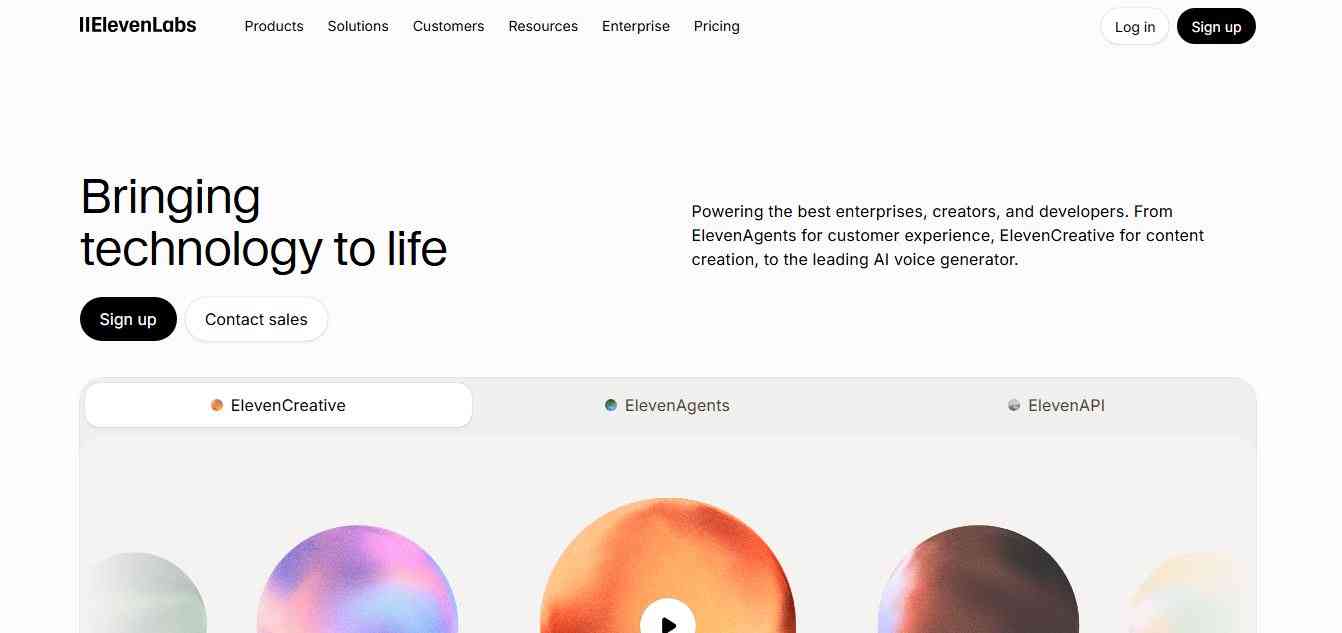
ElevenLabs has expanded beyond AI voice generation to music creation with Eleven Music. Its documentation describes complete music generation from natural-language prompts, granular control over genre, mood, structure, and instrumentation, multilingual vocals, audio references, and post-generation editing. The company introduced Music v2.5 in September 2026, describing it as its most advanced music model and adding improvements in instrumentation, arrangement, and audio quality.
Best for: Professional AI music, vocals, multilingual music, commercial projects, and developer workflows.
Key features
- Complete songs
- Vocals and lyrics
- Instrumental music
- Multilingual vocals
- Audio-reference generation
- Section-by-section composition
- Inpainting/editing
- Genre transitions
- Music API
- Professional exports
ElevenLabs states that Eleven Music is designed for broad commercial use, although users should consult the applicable music terms for the specific plan and workflow.
Why ElevenLabs Music stands out?
The platform is particularly interesting for businesses because it offers music generation beyond a consumer-facing interface. Paid subscribers can access music-generation capabilities through the API, making it relevant to applications, creative platforms, and automated content pipelines.
Who should use it?
- Agencies
- Video producers
- Filmmakers
- Game developers
- App developers
- Advertisers
- Podcasters
- Professional creators
- Musicians
Best use case: "I need controllable AI-generated music for professional or commercial creative workflows."
5. SOUNDRAW — AI Background Music for Creators
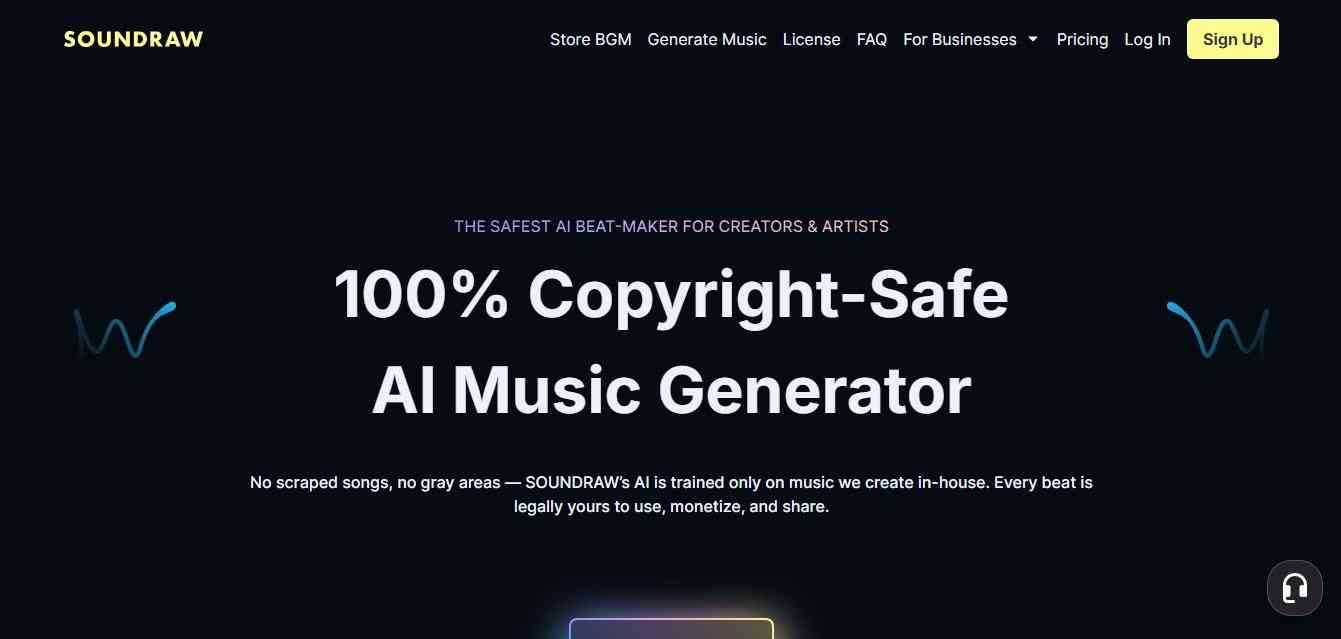
SOUNDRAW takes a different approach from full-song AI generators. Instead of primarily focusing on AI singers and complete lyrical songs, SOUNDRAW focuses heavily on instrumental music for creators. Its official website says the platform can generate background scores, podcast intros, and beats while allowing users to download WAV files and stems. SOUNDRAW also says its model is trained on music produced by its own producers rather than scraped recordings.
Best for: YouTube videos, podcasts, social media, background music, and commercial content.
Key features
- AI background music
- Instrumental tracks
- Podcast music
- Video soundtracks
- Beats
- WAV exports
- STEM exports
- Genre selection
- Mood selection
- Commercial licensing
Why do creators use SOUNDRAW?
A YouTube creator often doesn't need a three-minute AI pop song.
They may need:
"A 75-second energetic electronic background track that builds during the introduction and becomes quieter underneath narration."
That is the type of workflow where a creator-oriented platform can be more useful than a general AI songwriter. SOUNDRAW emphasizes commercial licensing and says its training catalog consists of in-house original music.
Best for
- YouTube
- TikTok
- Podcasts
- Online courses
- Corporate videos
- Advertising
- Background music
Best use case: "I need customizable instrumental music for content."
6. AIVA — AI Music for Cinematic and Orchestral Composition
AIVA is one of the more composition-focused AI music platforms. Its official website says users can generate music in more than 250 styles, create custom style models, upload audio or MIDI influences, edit generated tracks and download compositions in different formats.
Best for: Film scores, orchestral music, games, cinematic compositions, and MIDI-based workflows.
Key features
- AI composition
- More than 250 styles
- Orchestral music
- Cinematic scoring
- MIDI export
- Audio export
- Style customization
- Editing
- Audio/MIDI influence
AIVA is especially interesting when the goal is not necessarily to create a radio-style vocal song but to develop a musical composition.
AIVA for filmmakers and game developers
Imagine needing:
- A suspense soundtrack
- A fantasy-game theme
- An emotional piano cue
- A documentary score
- An orchestral trailer
- A cinematic transition
AIVA's composition-oriented workflow can be well suited to these requirements.
Licensing consideration
AIVA's licensing structure varies by subscription. Its current site states that its Pro plan gives users full copyright ownership of compositions, while its free and lower-tier plans have different restrictions.
Best use case: "I need AI-assisted composition for cinematic, orchestral or game music."
7. Beatoven.ai — AI Background Music for Videos and Podcasts
Beatoven.ai is designed specifically around background music generation. The platform allows creators to generate and customize music according to their content requirements. Beatoven says its music can be used for video, podcasts, games, short films, advertisements, social media, and other content.
Best for: Video creators, filmmakers, podcasters, social media, and background scores.
Key features
- AI background music
- Mood-based generation
- Text-to-music
- Audio-to-music
- Video-to-music
- Track customization
- MP3 and WAV downloads
- Commercial-use licensing
- API
One notable feature is its multimodal workflow. Beatoven says users can provide a text prompt, audio reference, or video and generate music based on the input. The company also offers an API for developers and says it trained its Maestro music-generation model on ethically sourced music and sound-effects data.
Who should use Beatoven.ai?
- YouTubers
- Podcasters
- Filmmakers
- Short-form video creators
- Game developers
- Advertisers
- AI application developers
Best use case: "I want background music that matches my video's mood and duration."
8. Mubert — AI Music Generator and API
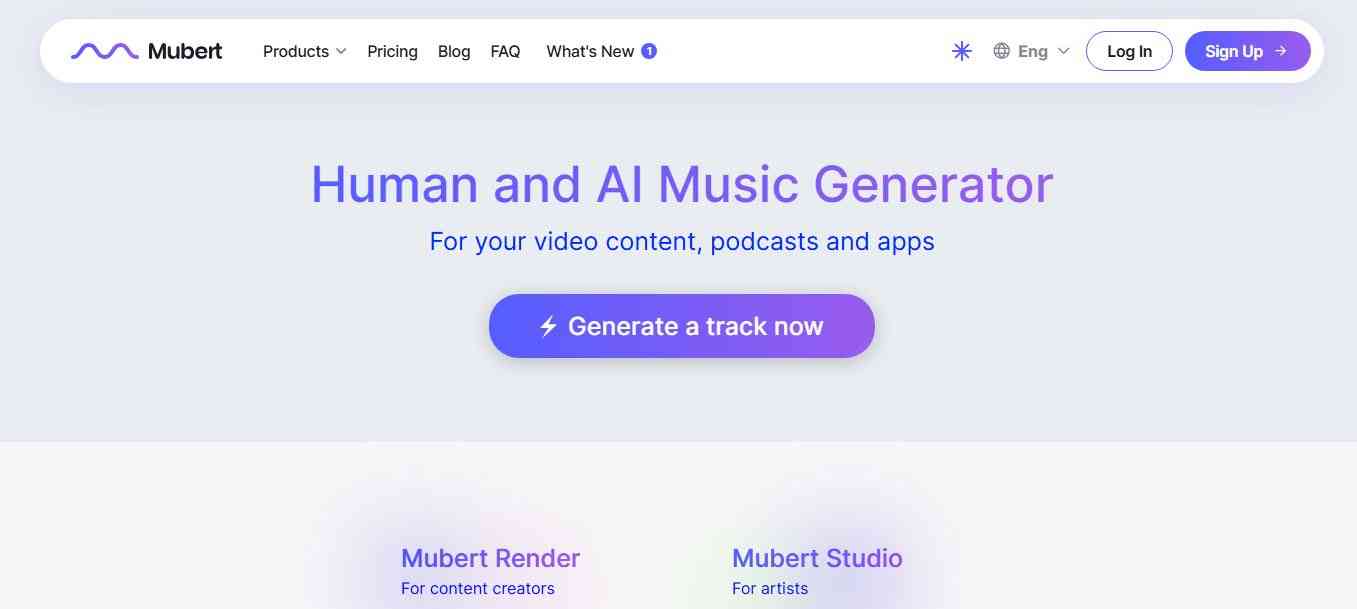
Mubert combines AI music generation with a broader ecosystem for creators, artists, listeners, and developers. Its platform includes Mubert Render for creators, Mubert Studio for artists, Mubert API for developers, and Mubert Play for listeners.
Best for: Background music, apps, games, content platforms, and developers.
Key features
- AI-generated soundtracks
- Text prompts
- Mood-based generation
- Genre selection
- Duration controls
- Royalty-free music
- API access
- Music for apps and games
- Content-creator workflows
Mubert's generation workflow allows users to specify factors such as mood and genre and can also use other inputs, including images, as creative inspiration.
Why Mubert is interesting for developers?
If you're building an application that needs dynamic music rather than simply downloading a track manually, an API can be significantly more useful.
Potential applications include:
- Fitness apps
- Meditation platforms
- Games
- Video applications
- Productivity apps
- AI content tools
- Personalized experiences
Best use case: "I need AI-generated music for content or an application."
9. Loudly — AI Music Production Platform for Creators
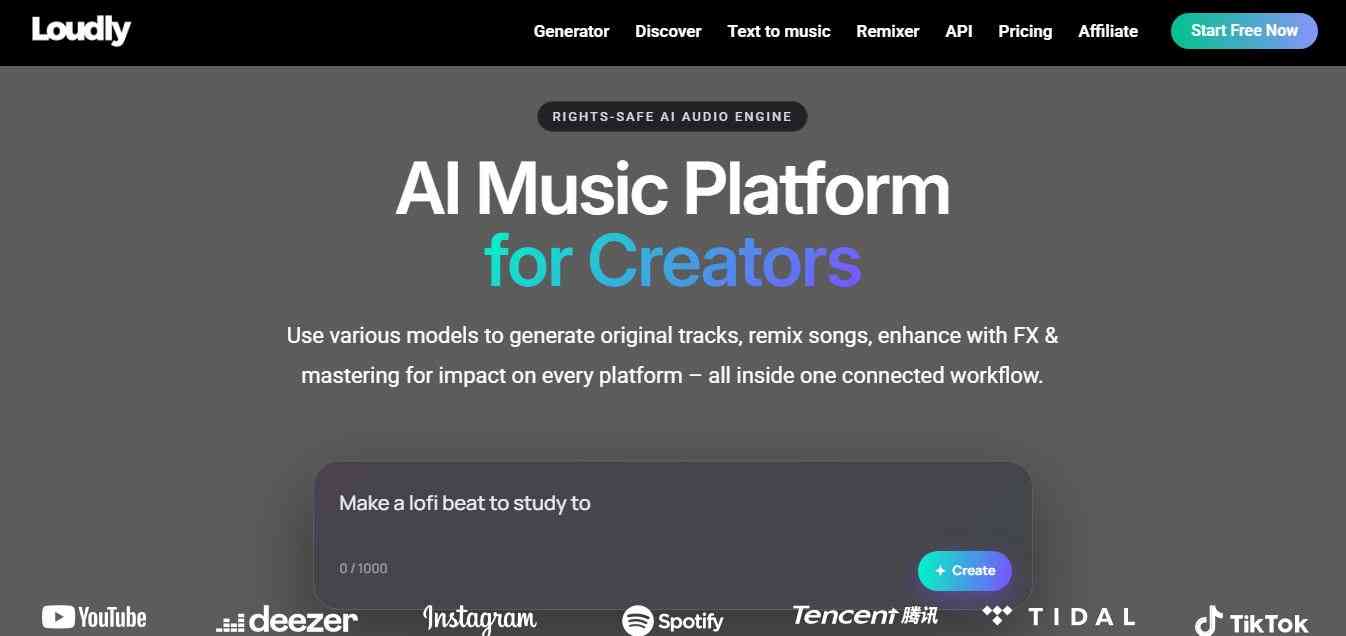
Loudly positions itself as more than a simple prompt-to-song generator. Its platform combines AI music generation with tools for remixing, effects, mastering, stems and samples. Loudly's current AI Music Generator supports controls such as genre, BPM, key, structure, and other musical parameters.
Best for: Music generation, remixing, stems, mastering, and creator workflows.
Key features
- AI music generation
- Text-to-music
- Full tracks
- Stems
- Samples
- Remixing
- Effects
- Mastering
- BPM controls
- Key controls
- Music distribution
Loudly introduced its VEGA-2 model in 2026, describing improvements in audio quality, mixing, mastering, and genre-specific production. According to Loudly music generated or made available through the platform comes with a worldwide royalty-free license, although creators should always check the current licensing agreement for their specific use.
Who should use Loudly?
- Content creators
- Music producers
- Video editors
- Social media teams
- Agencies
- Brands
- Independent musicians
Best use case: "I want an AI co-producer rather than a simple music generator."
10. Stable Audio — AI Music and Sound Design
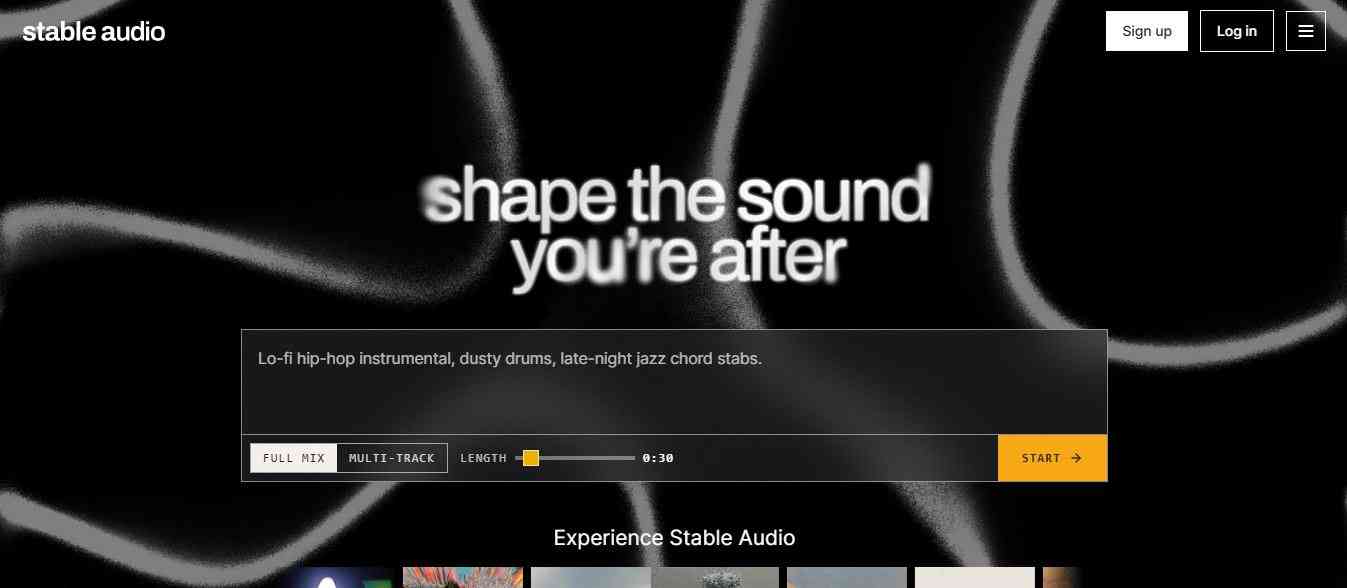
Stable Audio is developed by Stability AI and takes a broader text-to-audio approach. The platform supports music and sound-effect generation, audio-to-audio workflows, inpainting, and, experimentally, stem generation. Its current site says compositions can be generated up to six minutes long.
Best for: Instrumental music, sound design, audio experimentation, and professional audio workflows.
Key features
- Text-to-audio
- AI music generation
- Sound effects
- Soundscapes
- Audio-to-audio
- Inpainting
- Stem generation
- DAW integration
- Commercial-use workflows
Stable Audio is particularly useful when you need more than a conventional song.
For example:
"Create a dark cinematic drone with distant metallic impacts, low-frequency tension and evolving atmospheric textures."
That prompt is closer to sound design than traditional songwriting. The platform also provides a plugin workflow designed to work with DAWs, including Ableton, Logic, and Pro Tools.
Best use case: "I need AI-generated music, sound effects, or experimental audio for production."
11. Boomy — Simple AI Music Creation
Boomy focuses on making AI-assisted music creation accessible without requiring advanced music-production knowledge. It can be useful for people who want to create tracks quickly and experiment with different musical ideas.
Best for: Beginners and rapid AI-generated music experimentation.
Key features
- Simple music generation
- Fast-track creation
- Beginner-friendly workflow
- Music sharing
- Distribution-related workflows
- Creator-focused tools
Boomy's support documentation also addresses topics such as using Boomy songs in videos and podcasts, creator payments, copyright, and AI training questions.
Who should use Boomy?
- Beginners
- Hobbyists
- Social creators
- Experimental musicians
- People testing AI music for the first time
Best use case: "I want the simplest possible way to start making AI-generated music."
Key Facts About AI Music
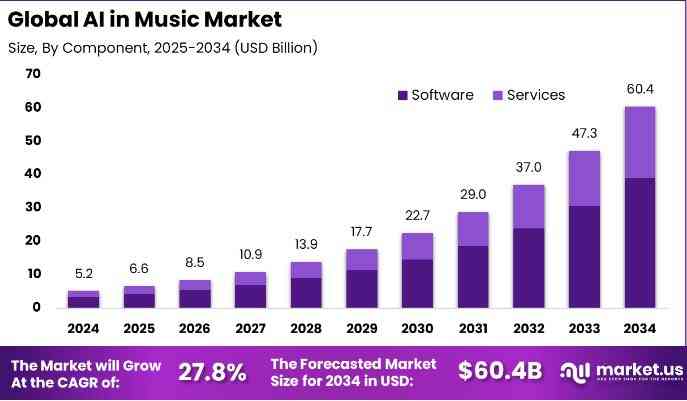
AI music is rapidly transforming how people create, produce, and consume music. The global AI in the music market is growing at an exponential pace, driven by demand for personalized content, faster production workflows, and the rise of independent creators. AI tools now enable users to generate full songs, vocals, and instrumentals within minutes, lowering entry barriers for beginners. With millions of AI-generated tracks being created daily, the industry is shifting toward automation and scalability. At the same time, challenges like copyright, authenticity, and streaming fraud are emerging as key concerns shaping the future of AI music.
- The global AI music market reached $4.48 billion in 2025 and is projected to hit $10.43 billion by 2029.
- Another estimate suggests the market could grow to $60+ billion by 2034, showing massive long-term potential.
- AI music generator tools alone were valued at $856 million in 2025 and are expected to reach $3.9 billion by 2033.
- Generative AI music tools are growing at ~23%–30% CAGR, one of the fastest-growing segments in the music industry.
- AI platforms like Suno generate millions of songs daily, highlighting massive content scalability.
- AI-generated music accounts for a significant share of uploads (20–30%+) on some platforms, even if streams remain lower.
- Global music industry revenue reached $31.7 billion in 2025, with AI playing a growing role in innovation.
- By 2028, AI-generated music could represent up to 20% of streaming revenue.
- The generative AI music output market is expected to reach €16 billion annually by 2028.
- Around 97% of listeners cannot easily distinguish AI music from human-made music, showing rapid quality improvements.
How We Selected These AI Music Tools?
Rather than treating every AI music generator as interchangeable, this list considers the factors that matter in real-world workflows:
- Audio quality
- Song generation capabilities
- Vocal quality
- Prompt control
- Editing capabilities
- Genre flexibility
- Background-music capabilities
- Commercial licensing
- Copyright and training-data considerations
- Export options
- API availability
- Ease of use
- Suitability for creators, musicians, and businesses
One important distinction is that "best" depends heavily on the use case. A YouTuber looking for 90 seconds of background music has a different requirement from a songwriter trying to generate a complete vocal demo. Likewise, a game developer looking for an API needs a different solution from a filmmaker creating an orchestral score.
AI Music Tools Compared by Use Case
Instead of asking only "What is the best AI music generator?" consider what you actually need.
| Your goal | Tools to consider |
|---|---|
| Create a complete song with vocals | Suno, Udio, ElevenLabs Music |
| Generate AI lyrics and vocals | Suno, Udio, ElevenLabs Music |
| Create YouTube background music | SOUNDRAW, Beatoven.ai, Mubert, Loudly |
| Create podcast music | SOUNDRAW, Beatoven.ai, Mubert |
| Create cinematic music | AIVA, ElevenLabs Music, Stable Audio |
| Create orchestral music | AIVA, Stable Audio, ElevenLabs Music |
| Create music for games | AIVA, Mubert, Beatoven.ai, Stable Audio |
| Generate sound effects | Stable Audio, Beatoven.ai |
| Generate music through an API | ElevenLabs Music, Beatoven.ai, Mubert |
| Create and edit stems | SOUNDRAW, Loudly |
| Experiment with music production | Suno, Udio, Loudly, Stable Audio |
| Beginner-friendly AI music creation | Suno, Boomy |
| Commercial creator workflows | SOUNDRAW, Beatoven.ai, ElevenLabs Music, Loudly |
| MIDI-oriented composition | AIVA |
AI Music Generator vs Traditional Music Production
AI music tools don't necessarily replace traditional music production.
Instead, they can shorten several stages of the creative process.
Traditional workflow
Idea → composition → arrangement → recording → editing → mixing → mastering
AI-assisted workflow
Idea → prompt → generation → selection → editing → mixing/mastering
This can reduce the time required to create:
- Demo tracks
- Background music
- Musical sketches
- Video soundtracks
- Podcast intros
- Advertising concepts
- Game music prototypes
- Songwriting ideas
For professional musicians, AI can therefore function as an ideation and production assistant, rather than necessarily being the entire production workflow.
How to Choose the Best AI Music Generator
1. Decide whether you need vocals
If you want a complete song with an AI singer, focus on tools such as:
- Suno
- Udio
- ElevenLabs Music
If you only need instrumental background music, creator-focused platforms may be more appropriate.
2. Decide whether you need commercial rights
This is one of the most important questions.
Before publishing AI-generated music commercially, check:
- Who owns the output?
- Does your plan provide commercial rights?
- Can you monetize the track?
- Can you use it in advertising?
- Can you distribute it to Spotify or Apple Music?
- Can you use it for client work?
- Is attribution required?
- Are there restrictions on Content ID?
- What happens if you cancel your subscription?
Do not assume that "royalty-free" automatically means "I own the copyright." These are different concepts.
3. Check how the AI was trained
Training data is increasingly important in AI music. Different companies have adopted different approaches, including proprietary datasets, licensed catalogs, and internally created music. For example, SOUNDRAW says its model is trained only on music created by its own producers, while Beatoven says its Maestro model uses ethically sourced music and sound-effects data.
ElevenLabs says Eleven Music was created in collaboration with artists, labels, and publishers and is cleared for broad commercial use under its applicable terms. For commercial projects, investigate this before committing to a platform.
How to Write Better AI Music Prompts?
One of the easiest ways to improve AI-generated music is to stop writing vague prompts.
Instead of:
"Make a sad song."
Try:
"Emotional cinematic piano ballad, 72 BPM, intimate female vocal, sparse piano during the verse, subtle cello entering during the pre-chorus, expansive drums in the final chorus, melancholic but hopeful atmosphere, modern film soundtrack production."
A strong AI music prompt can include:
Genre + mood + instruments + vocals + tempo + structure + production style + intended use
Prompt formula
[Genre] + [mood] + [vocals/instrumentation] + [tempo] + [structure] + [production characteristics] + [context]
Example
"Modern cinematic ambient, mysterious and emotional, deep synth pads, piano motifs, subtle strings, no vocals, 80 BPM, gradual build, large atmospheric ending, designed for a technology documentary."
This provides the model with substantially more information than a generic genre label.
AI Music Prompt Examples
For YouTube
"Energetic electronic instrumental background music, 110 BPM, clean modern production, bright synths, punchy drums, uplifting atmosphere, subtle variation, suitable underneath spoken narration."
For a Podcast
"Warm lo-fi hip-hop podcast intro, 85 BPM, mellow drums, vinyl texture, electric piano, subtle bass, memorable four-bar hook, 20 seconds, professional and conversational."
For a Film
"Dark cinematic orchestral score, low strings, deep percussion, distant brass, slowly increasing tension, minor key, sparse opening, dramatic climax, suspense-thriller atmosphere."
For a Game
"Fantasy RPG exploration soundtrack, orchestral strings, wooden flute, soft percussion, ancient mystical atmosphere, evolving loop, adventurous but peaceful, suitable for a forest environment."
For a Commercial
"Modern premium technology advertisement soundtrack, futuristic synths, crisp percussion, optimistic progression, sophisticated sound design, 120 BPM, energetic final lift, polished commercial production."
Which AI Music Tool Should You Choose?
There isn't one tool that is perfect for every music workflow.
Use this decision framework:
If you want complete AI songs
Explore Melody Genie, Suno, Udio, and ElevenLabs Music.
If you need background music for YouTube
Explore SOUNDRAW, Beatoven.ai, Mubert, and Loudly.
If you make cinematic or orchestral music
Explore Melody Genie, AIVA, and Stable Audio.
If you need music inside an application
Explore Melody Genie, ElevenLabs Music, Beatoven.ai, and Mubert for their developer/API music, which can be used in film and video projects when the applicable license permits workflows.
If you need sound design
Explore Melody Genie, Stable Audio.
If you want a broader AI production workflow
Explore Loudly.
If you're completely new to AI music
Start with a simple platform such as Suno or Boomy, then move into more specialized tools as your needs become clearer.
Conclusion
AI music generators have evolved from novelty tools into practical creative software.
The biggest mistake is to ask only:
"What is the best AI music generator?"
A better question is:
"What kind of music do I need to create, and what rights and production controls do I need?"
For full AI-generated songs, platforms such as Suno, Udio, and ElevenLabs Music provide powerful song-generation workflows. For creator background music, SOUNDRAW, Beatoven.ai, Mubert, and Loudly are built around practical content-production needs. For cinematic composition, AIVA remains particularly relevant, while Stable Audio expands the workflow into sound design and text-to-audio experimentation. The technology is moving quickly, so compare audio quality, control, licensing, commercial rights, export options, and workflow fit rather than choosing solely on popularity. Most importantly, treat AI as another instrument in the creative toolkit. The strongest results often come from combining AI generation with human direction, editing, arrangement, mixing, and creative judgment.
Frequently Asked Questions (FAQs)
Q: What is the best AI music generator in 2026?
The answer depends on the use case Melody Genie, Suno, Udio, and ElevenLabs Music are designed for complete song generation, including workflows involving vocals. SOUNDRAW, Beatoven.ai, and Mubert focus strongly on creator-oriented and background music workflows, while AIVA is particularly suited to composition and cinematic music.
Q: What is the best free AI music generator?
Free availability changes frequently. Melody Genie currently advertises free daily song creation on its official site, while other platforms may provide free trials, limited generations, or free tiers with restrictions. Always check the current terms because free-tier commercial rights can differ significantly from paid plans.
Q: Can AI generate a complete song?
Yes. Modern AI music platforms can generate complete songs containing elements such as vocals, lyrics, instrumentation, arrangement, and song structure. Suno and ElevenLabs Music explicitly support complete song-generation workflows.
Q: Can AI music have vocals?
Yes. Several current AI music platforms support AI-generated vocals. ElevenLabs Music, for example, supports vocals and lyrics in multiple languages and provides increasingly sophisticated vocal-generation capabilities.
Q: Can AI music generate lyrics?
Yes. Some platforms can generate lyrics from a description, while others allow you to supply your own lyrics. Suno's official product materials support both lyric generation and user-provided lyrics.
Q: Can I use AI-generated music on YouTube?
Potentially, yes. Your ability to monetize or commercially use the music depends on the AI platform's license, your subscription, and the specific use case. Never assume that every free AI-generated track is commercially usable.