
Undermind
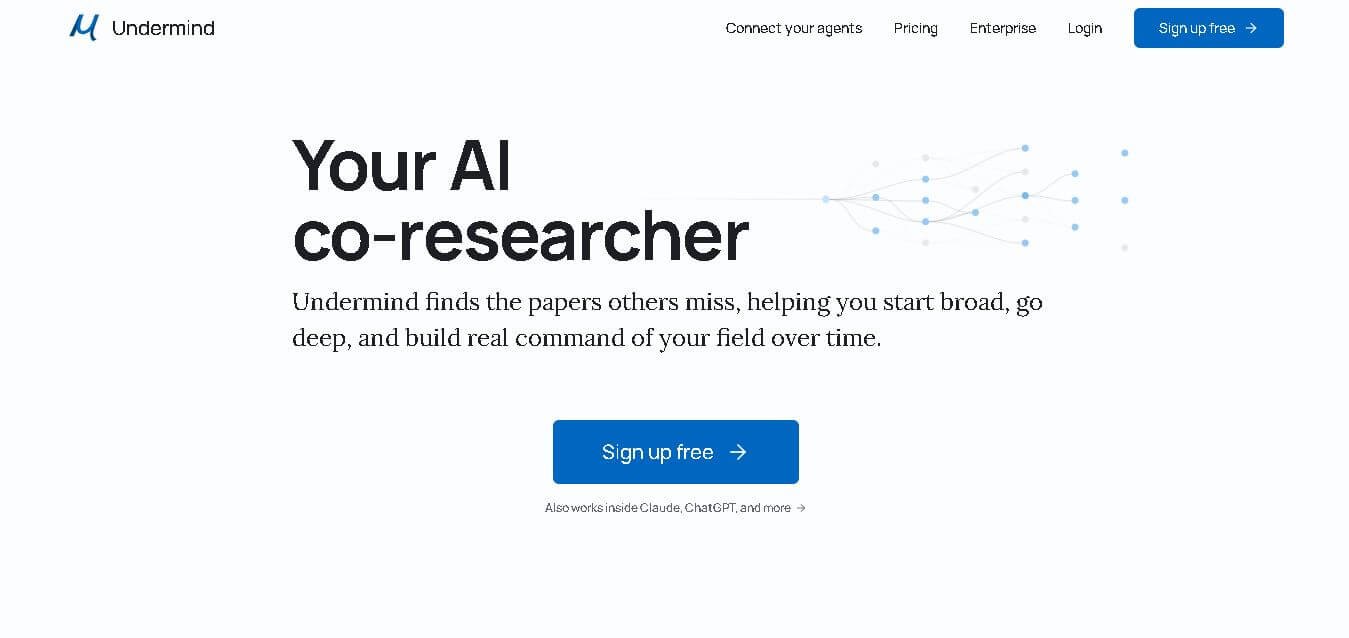
Undermind helps researchers move from a broad research question to a deeper understanding of the literature. It can evaluate hundreds of papers, follow relevant citation paths, analyze full texts, generate research reports, verify claims through citations, identify gaps, and provide alerts about new publications relevant to specific research interests.
What is Undermind?
Undermind is a research co-pilot designed to help scientists and researchers discover, evaluate, and understand technical literature. It searches across scientific papers, follows citation trails, analyzes full texts, verifies findings through inline citations, and helps users identify research gaps, assess novelty, explore complex topics, and stay informed about newly published work.
Undermind was started by 2 quantum physics PhDs from MIT and is backed by Y Combinator. Its website says scientists from thousands of research institutions use the tool, including 1,000+ GSK scientists. Undermind’s first-generation search engine reported 10x better results than Google Scholar. Its Pro plan costs $16 per month when billed annually and provides 10x higher usage limits than Free. The Team plan costs $15 per person monthly, while Enterprise offers custom pricing and dedicated support.
- Core Focus: Agentic Deep Literature Search & Scientific Paper Discovery
- Launch Year: 2023
Use Cases:
- Executing exhaustive systematic literature reviews and state-of-the-art mapping
- Surfacing obscure, cross-disciplinary, or long-tail scientific publications
- Conducting deep background research for grant proposals and PhD theses
- Validating novelty and prior art in pharmaceutical, biotech, and engineering R&D
Technology:
- Multi-hop reasoning agents with full-text paper evaluation models
- Semantic Scholar API integration covering 200M+ citations, PubMed, and arXiv
- Automated citation graph traversal and adaptive query refinement algorithms
Target Users:
- PhD students, academic researchers, and university faculty
- Pharma, biotech, and materials science R&D scientists
- Research librarians and scientific knowledge managers
Ecosystem: Features interactive query refinement prompts, email research digest reports, transparent confidence scoring, and shared team libraries.

Key features of Undermind
Undermind's key features are
- Agentic Multi-Hop Reasoning: Evaluates papers sequentially, using initial findings to iteratively discover adjacent and conceptually connected literature.
- Full-Text Paper Analysis: Reads beyond abstracts to examine methodologies, results, and full-text arguments where open access permits.
- Citation Trail Traversal: Automatically follows reference chains forward and backward to catch seminal or forgotten works.
- Interactive Query Refinement: Interacts with users like a human research colleague to clarify ambiguous terms and pinpoint exact research intents.
- Transparent Confidence Scores: Provides clear metrics estimating what percentage of relevant domain literature was successfully surfaced.
- Automated Research Alerts: Tracks saved research topics and notifies users when new relevant papers are indexed in scientific repositories.
Undermind Pricing
Undermind provides a freemium pricing structure alongside paid individual and organizational plans.
Free Plan:
- $0/month
- Limited monthly deep searches, basic query refinement, and paper discovery for platform evaluation
Pro Plan:
- $16/month (billed annually at $192) or $19/month (billed monthly)
- 10x higher search usage limits, deep full-text analysis, unlimited projects, reference exports, and priority compute processing
Team Plan:
- $15/user/month (minimum 5 seats, billed annually)
- Includes all Pro features plus shared team libraries, centralized billing, and priority support
Disclaimer: For the latest and most accurate pricing information, please visit the official Undermind AI website.
Is Undermind Worth It?
Undermind is highly worth it for serious academics, PhD candidates, and R&D scientists who cannot afford to miss crucial literature during literature reviews or novel hypothesis formulation. While its multi-minute search time is slower than quick keyword search engines, the depth of recall and systematic citation tracing saves researchers dozens of hours of manual searching.
Real-World Use Cases
- Systematic Literature Reviews: Graduate students and medical researchers create comprehensive bibliographies that include verifiable coverage confidence scores.
- Cross-Disciplinary Discovery: Bioengineers identify parallel mechanical models developed in physics literature that use different terminology.
- Drug Discovery & Pharma R&D: Biotech research teams verify compound mechanism studies and avoid redundant experimental trials.
- Grant & Proposal Drafting: Principal investigators verify that proposed research questions have not already been answered in niche publications.
Who is using Undermind?
Undermind is designed for a broad academic and scientific community, including
- Academic Faculty & Postdocs: Scholars managing intensive literature reviews and journal submissions
- PhD Candidates & Graduate Students: Researchers seeking complete coverage of their thesis domain
- Pharma & Biotech Scientists: Corporate R&D teams tracking scientific breakthroughs
- Research Librarians: Information specialists assisting faculty with complex literature syntheses
Best Undermind Alternatives
Some of the strongest Undermind alternatives include
- Elicit
- Consensus
- SciSpace
- Semantic Scholar
- Perplexity
Pros and Cons of Undermind
Pros
- Surfaces obscure and hard-to-find papers missed by traditional keyword tools
- Agentic multi-hop reasoning mimics human literature review strategy
- Evaluates full-text content and citation networks, not just paper titles/abstracts
- Interactive clarification prompts ensure precise search intent targeting
- Strict data privacy guarantees with no customer data used for model training
Cons
- Search queries take 3 to 8 minutes to process due to deep multi-stage computation
- Not intended for quick factual lookups or surface-level keyword queries
- Pro subscription required for high-volume research and unlimited exports
Why Choose Undermind?
Undermind solves the fundamental flaw of keyword search: researchers only find papers that use the exact terminology they already know. By using LLMs as reasoning agents that navigate citation trees and full texts, Undermind connects concepts across scientific fields.
- Provides up to 10x better literature recall than standard search engines
- Replaces weeks of manual citation tracing with automated multi-minute agent runs
- Offers transparent confidence reporting so users know when research coverage is complete
- Ensures zero customer data usage for AI training and provides enterprise encryption
How Undermind Works
- Enter Research Question: Submit a detailed scientific question or concept prompt into the Undermind interface.
- Refine Search Intent: Respond to quick clarifying questions from the AI agent to narrow your research constraints.
- Agentic Multi-Hop Discovery: Undermind evaluates hundreds of candidate papers, reads full texts, and follows citation trails over 3 to 8 minutes.
- Review Comprehensive Report: Receive an organized report complete with match scores, synthesis summaries, and exportable citations.
Undermind vs. Competitors
The primary difference between Undermind, Elicit, and Consensus is that Undermind specializes in agentic deep reasoning and exhaustive citation graph traversal over longer execution times. While Consensus provides rapid answer extraction from study abstracts and Elicit focuses on structured data table extraction across paper sets, Undermind focuses on finding obscure or indirect papers that other search algorithms miss completely.
| Feature | Undermind | Elicit | Consensus |
|---|---|---|---|
| Primary Focus | Deep Reasoning & Long-Tail Recall | Structured Extraction & Mapping | Instant Consensus & QA |
| Search Speed | 3 to 8 minutes (Exhaustive) | 10 to 30 seconds | Instant (< 5 seconds) |
| Citation Trail Following | Multi-hop Agentic Graph Traversal | Semantic Search & Filters | Semantic Vector Search |
| Full-Text Analysis | Deep Full-Text Evaluation | Abstract & Selected Text | Abstract-First Analysis |
| Starting Price | Free / $16 per month | Free / $12 per month | Free / $11.99 per month |
How do we rate Undermind?
| Parameter | Rating (out of 5) |
|---|---|
| Ease of Use | 4.5 |
| Search Recall & Depth | 4.9 |
| Feature Set | 4.7 |
| Value for Money | 4.7 |
| Data Privacy & Trust | 4.8 |
| Overall Score | 4.7 |
Undermind Review
Undermind represents a major paradigm shift in academic literature searches. By trading instant search gratification for agentic multi-hop reasoning, it uncovers crucial papers that keyword-based and vector-search tools consistently overlook. For researchers, PhD students, and corporate R&D teams conducting comprehensive literature reviews, Undermind is an invaluable research asset.
Conclusion
Undermind is a strong option for researchers who spend significant time searching, comparing, and understanding scientific literature. Its combination of deep literature discovery, citation tracing, full-text analysis, research reports, novelty assessment, and gap identification makes it more suitable for complex research questions than basic search tools. With a free plan and paid options starting at $16 per month annually, researchers can test its capabilities before upgrading. For academics, scientists, and R&D teams handling large volumes of technical literature, Undermind can significantly streamline research workflows.
FAQ
What is Undermind used for?
Undermind is useful when you need more than a simple keyword search. You can use it to explore unfamiliar research areas, evaluate whether an idea is novel, identify gaps, discover relevant methods and datasets, and investigate niche scientific questions. It also helps researchers follow citation trails and build more profound literature understanding.
How does Undermind find research papers?
Undermind begins by understanding your research question and may ask follow-up questions to clarify your needs. It then searches the literature, evaluates relevant papers, and follows citation trails to discover additional research. This approach is designed to uncover useful papers that conventional searches may overlook, particularly for complex or specialized research topics.
Can Undermind analyze full research papers?
Yes. Undermind can work with full-text literature, and its Pro plan specifically offers deeper analysis of full texts. Users can also build paper libraries and upload files, allowing the research workspace to go beyond abstracts and search results. This makes it useful for detailed literature analysis rather than simple paper discovery.
Is Undermind useful for literature reviews?
Undermind can be particularly helpful for literature-review work because it searches broadly, evaluates papers, follows citation relationships, and helps researchers understand relevance. It can also support identifying research gaps, emerging trends, and connections between disciplines. Researchers can iterate on reports and investigate individual papers in greater depth.
Can Undermind help identify research gaps?
Yes. Identifying gaps is one of Undermind’s stated research use cases. The tool can help researchers explore existing literature and pinpoint unanswered questions, emerging trends, and areas where additional investigation may be valuable. This can be useful when developing research proposals, selecting projects, or determining whether a research direction deserves more profound investigation.
Can Undermind help researchers assess novelty?
Yes. Undermind includes novelty assessment as a specific use case. Researchers can investigate whether an idea has already been explored, examine related literature, and identify potentially unexplored directions. However, novelty should ultimately be judged by the researcher after reviewing the underlying evidence and relevant papers rather than relying solely on an automated result.
Does Undermind provide citations?
Yes. Undermind is designed around citation-grounded research. Its website states that users can trace statements through inline citations back to the source paper. This makes it easier to verify information, inspect the underlying research, and distinguish generated research summaries from the original scientific evidence.
User Reviews
No reviews yet for Undermind.
Featured Tools
Featured AI tools from TechShark
Melody Genie
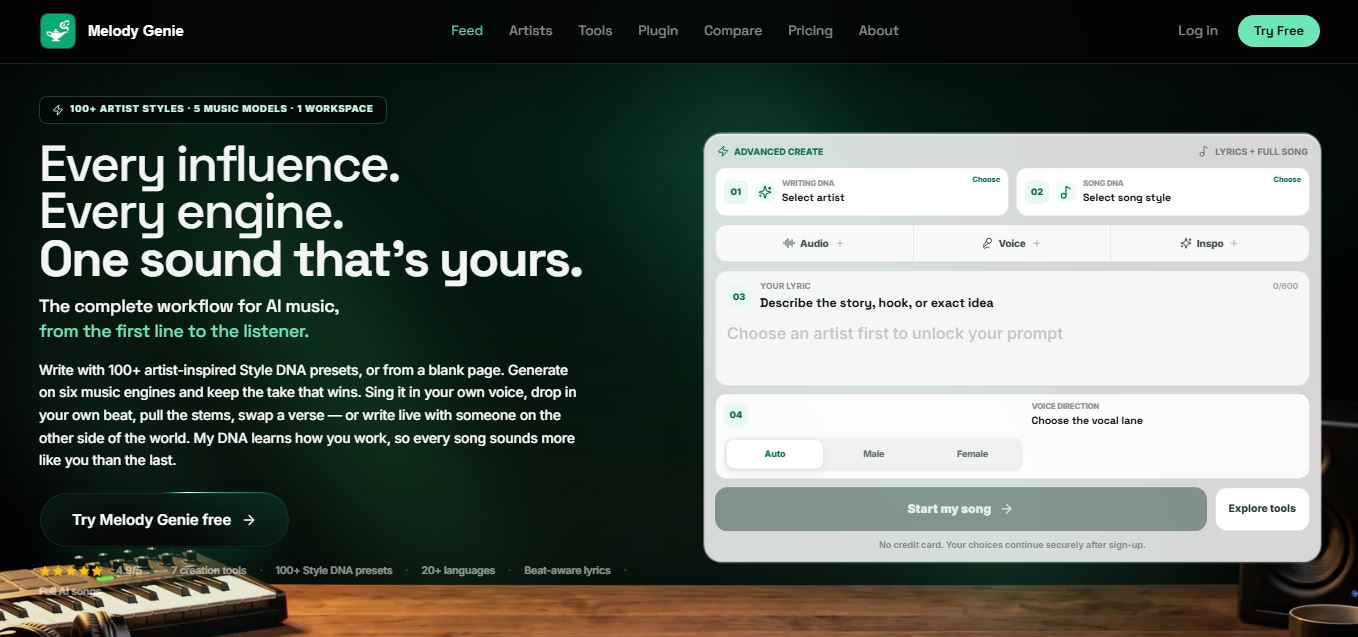
MelodyGenie is an AI-powered music generator that creates original songs from simple text prompts. Users can choose styles, moods, and genres, then instantly generate melodies and full tracks, making it easy for creators, marketers, and hobbyists to produce custom music without musical expertise.
Freemium
Kimi AI
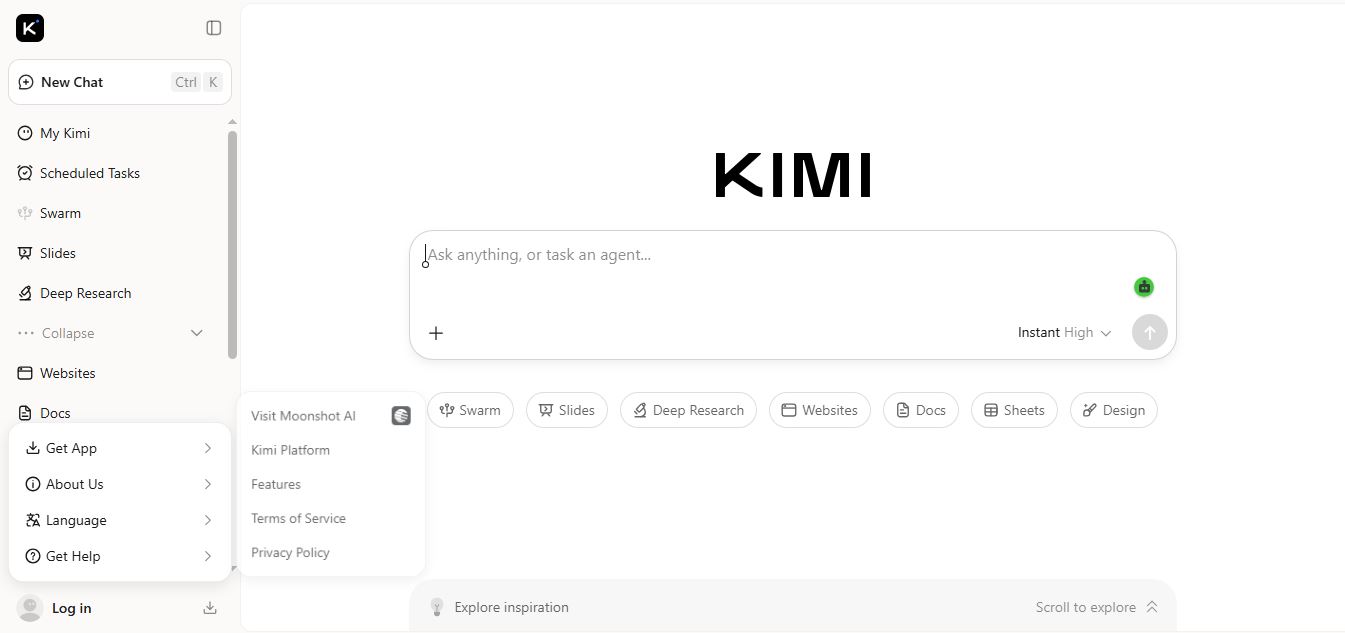
Kimi AI is an advanced AI assistant developed by Moonshot AI that helps you chat, research, write, code, and automate tasks in one place. It supports web search, file analysis, and multimodal inputs, and can even run autonomous “agent” workflows to complete complex tasks end-to-end.
Freemium
Fashion Diffusion AI
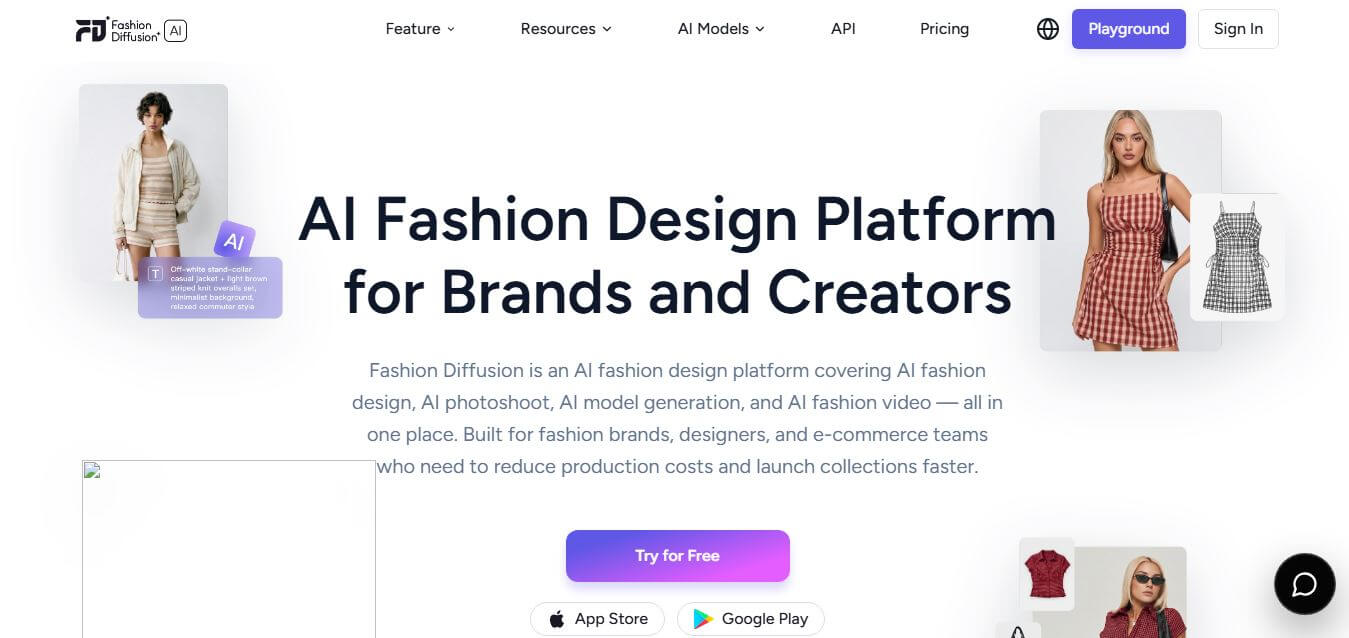
Fashion Diffusion is an AI-powered fashion design platform that helps brands and designers create clothing designs, virtual try-ons, AI models, product photos, and marketing visuals faster and cost-effectively.
Paid
Veo 4
Veo 4 AI is an AI video creation platform that generates dramatic videos from text, images, audio, and video prompts using realistic motion and synchronized sound.
Paid
Alternatives
Alternatives to Undermind
The best Undermind alternatives include Elicit, Consensus, SciSpace, Semantic Scholar, and Perplexity. Elicit excels at structured data extraction across literature sets. Consensus provides fast AI-summarized answers with consensus meters based on peer-reviewed studies. SciSpace offers interactive paper reading and PDF querying, while Semantic Scholar and Perplexity provide fast semantic exploration and general academic search.
 4.9
4.9Clipchamp
Video Generator
Clipchamp is an AI-powered online video editor by Microsoft that helps users record, edit, and share videos directly from the browser. It offers templates, stock media, and AI tools like subtitles, voiceovers, and noise removal, enabling fast, professional video creation without advanced editing skills.
 4.9
4.9CapCut
Video Editing
CapCut is a popular video editing tool that helps creators produce engaging videos with effects, transitions, filters, templates, subtitles, and AI-powered features. Available on multiple platforms, CapCut makes it easy to edit videos for TikTok, Instagram Reels, YouTube Shorts, and other social media channels.
 4.9
4.9Pika
Video Generator
Pika is an AI video generation and creative effects platform that transforms text prompts, still images, and video clips into cinematic video sequences, meme animations, and viral visual effects using its proprietary generative video models.
 4.7
4.7Hotshot AI
Video Generator
Hotshot is an everyday technology publication covering AI tools, gadgets, smart home technology, comparisons, research, and practical how-to guides. It helps readers understand products, evaluate software, compare options, and solve common technology problems through accessible articles created for people who want clearer information before making technology-related decisions online with confidence.
 4.7
4.7VideoPlus AI
Video Generator
VideoPlus.ai is a versatile AI creation platform for generating and transforming videos and images. It supports text-to-video, image-to-video, reference-to-video, video-to-video, animation, image generation, enhancement, lip syncing, and creative effects. Multiple AI video models are available, making it useful for creators, marketers, designers, and businesses.
 4.7
4.7VideoTube
Video Generator
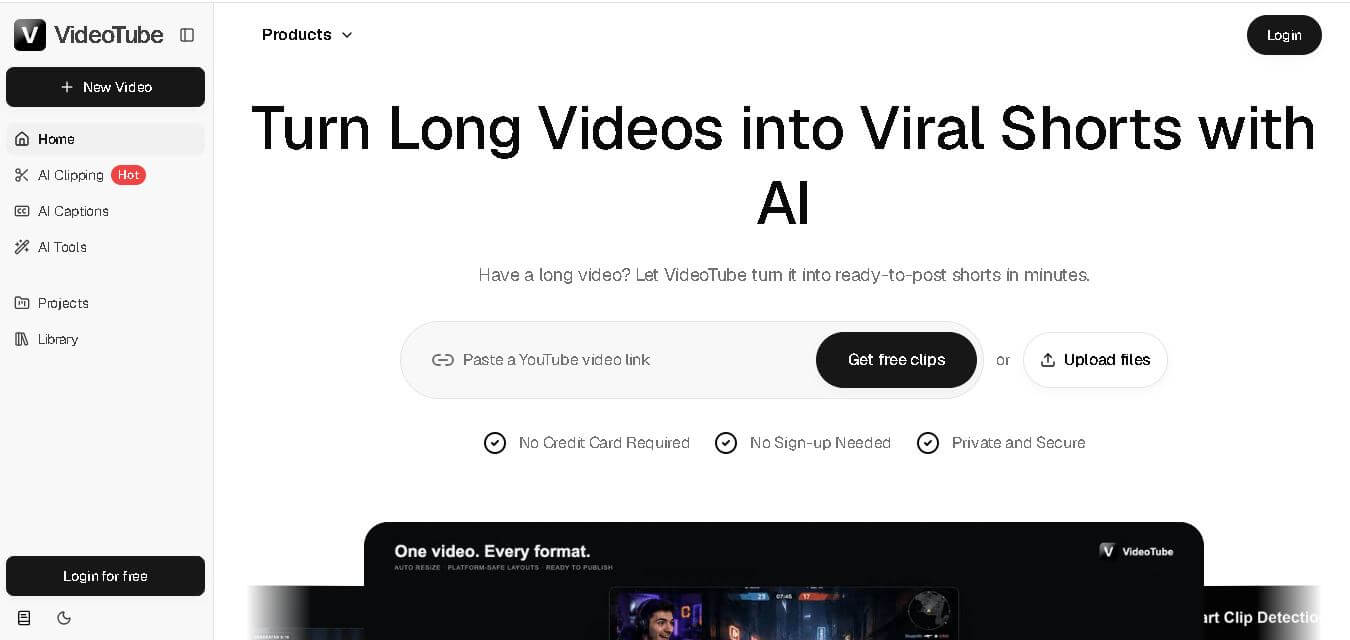
VideoTube helps creators transform long videos into short, social-ready content with AI. It can detect engaging moments, generate captions, remove filler, add B-roll, and automatically reframe videos for vertical platforms. Podcasters, YouTubers, educators, marketers, and agencies can repurpose existing content faster without relying on complicated video editing workflows.
 4.7
4.7TYPPO
Video Generator
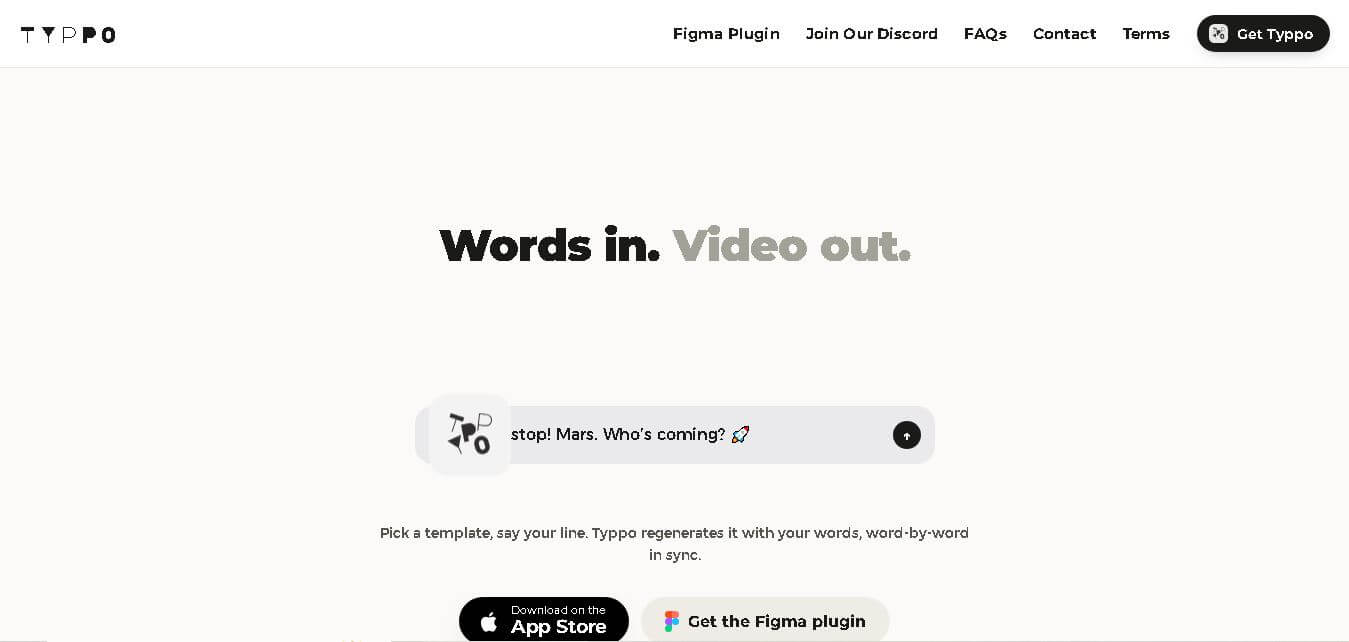
Typpo turns spoken words into animated videos without requiring design skills. Record a message, let the app transform your voice into motion graphics, and share the result on mobile-focused social channels. It supports multiple languages and offers a simple workflow for creators, marketers, communicators, and anyone wanting faster visual content creation.
 4.8
4.8Pollo AI
Video Generator
Pollo AI helps creators generate videos and visual content from text, images, and creative prompts. It combines multiple AI video models in one platform and supports workflows such as text-to-video, image-to-video, avatars, video transformation, and reference-based generation. A free tier lets users explore its core creative capabilities before upgrading.
iMini AI
Video Generator
iMini AI (imini.com) is an all-in-one AI creative agent and generative content hub that combines leading AI models into a single interface for generating images, videos, presentations, branding, and deep research reports.