R Discovery
R Discovery (discovery.researcher.life), powered by Cactus Communications / Researcher.Life, is an AI-driven academic literature discovery and research reading assistant that aggregates over 300 million scientific papers, preprints, and patents into personalized reading feeds, audio summaries, and multilingual translations.
What is R Discovery?
R Discovery (discovery.researcher.life) is an AI-powered literature discovery, academic feed customization, and paper recommendation platform developed by Cactus Communications as part of the Researcher.Life ecosystem. Engineered for PhD candidates, university faculty, medical researchers, and R&D scientists, it solves the challenge of information overload by curating personalized daily research feeds from a global database of over 300 million publications.
By combining machine learning recommendation models with natural language processing (NLP), R Discovery functions like a personalized newsfeed for scientific literature. Researchers can define custom topic feeds, listen to audio summaries of research papers on the go, translate abstracts into over 30 languages, and sync paper collections across web, iOS, and Android applications.
- Platform Focus: AI literature recommendation, mobile research reading feeds, paper audio summaries, and personalized topic alerts
- Developer / Entity: Cactus Communications / Researcher.Life
- Launch Year: 2020
Use Cases:
- Receiving daily personalized feeds of new research papers, open-access articles, and preprints matching specific research topics
- Listening to AI-generated audio summaries of complex research papers during commutes or lab work
- Translating academic abstracts and paper summaries into over 30 native languages for non-native English scholars
- Exporting reference citations directly into reference managers like Zotero, Mendeley, and EndNote
- Scanning topic trends across multidisciplinary databases including Crossref, PubMed, arXiv, and IEEE Xplore
Technology:
- Adaptive AI recommendation algorithm learning user reading habits, saves, and citation clicks in real time
- Text-to-speech (TTS) audio engine generating bite-sized research paper summaries
- Global literature index connecting 300M+ research outputs, 150M+ open-access articles, and 14M+ patents
Target Users:
- PhD candidates and university students staying up-to-date with literature in their thesis domain
- Academic professors and principal investigators tracking ongoing developments across multiple fields
- ESL (English as a Second Language) researchers requiring multilingual abstract translation tools
Corporate Entity: Operates under Cactus Communications / Researcher.Life (discovery.researcher.life)
Key features of R Discovery
R Discovery's key features are
- Personalized Research Feeds: Generates tailored daily paper updates based on your selected interests, topics, and reading history.
- Audio Summaries & Paper Podcasts: Converts text summaries of academic papers into clear audio formats for mobile listening.
- Multilingual Translation: Translates paper titles, abstracts, and key takeaways into 30+ non-English languages in real time.
- Ask R Discovery AI: Natural language assistant providing instant paper summaries and key topic insights across the corpus.
- Reference Manager Sync: Syncs saved literature directly with Zotero, Mendeley, and EndNote reference libraries.
- Cross-Platform Accessibility: Accessible via Web browser, iOS, and Android mobile applications.
R Discovery Pricing
R Discovery operates on a freemium model alongside inclusion in the broader Researcher.Life All-Access subscription bundle.
Free Plan:
- $0 / Free
- Includes unlimited daily literature recommendations, topic feeds, open-access paper links, and basic search tools
R Discovery Prime:
- Starting around ~$3 / month (billed monthly or annually)
- Includes unlimited audio paper summaries, full multilingual translation tools, advanced AI search filters, and priority sync
Researcher.Life All-Access Bundle:
- ~$12 to $25 / month (depending on plan duration)
- Bundles R Discovery Prime with Paperpal Academic Writing Assistant, Mind the Graph illustration tools, and Journal Finder services
Who is using R Discovery?
R Discovery is designed for global academic scholars and researchers, including
- Graduate Students & PhD Candidates: Staying current on domain literature without manual search queries
- Non-Native English Researchers: Reading and listening to academic abstracts in their primary language
- Busy Faculty & Industry R&D Teams: Consuming research summaries via audio on mobile devices
Best R Discovery Alternatives
Some of the strongest R Discovery alternatives include
- Semantic Scholar
- ResearchRabbit
- Connected Papers
- Litmaps
- Feedly
- SciSpace
Pros and Cons of R Discovery
Pros
- Indexes a massive database of 300M+ research outputs, patents, and preprints
- Audio paper summaries allow researchers to stay updated while multi-tasking
- Multilingual translations break down language barriers for international scholars
- Generous free plan with low-cost Prime upgrades (~$3/mo)
Cons
- Focuses primarily on paper feed discovery rather than full-text matrix data extraction or systematic screening
- Mobile interface push notifications require fine-tuning to prevent feed clutter
- Lacks direct graph network visualizer tools like those found in Connected Papers or Litmaps
Why Choose R Discovery?
R Discovery is an ideal choice for researchers and students who want a mobile-friendly, Spotify-like newsfeed for academic research that delivers audio summaries and multilingual translations of newly published papers.
- Delivers personalized daily paper feeds across 300M+ scholarly articles
- Offers text-to-speech audio paper summaries for mobile listening
- Provides real-time translation into 30+ non-English languages
- Integrates with Zotero, Mendeley, and the broader Researcher.Life suite
R Discovery vs. Competitors
The main difference between R Discovery, ResearchRabbit, Connected Papers, and Semantic Scholar is that R Discovery specializes in personalized mobile reading feeds, AI audio summaries, and multilingual translations, whereas ResearchRabbit and Connected Papers focus on interactive citation network graphs, and Semantic Scholar provides open AI search and citation velocity metrics. R Discovery stands out for its mobile audio player and feed curation capabilities.
| Feature / Tool | R Discovery (discovery.researcher.life) | ResearchRabbit | Connected Papers | Semantic Scholar |
|---|---|---|---|---|
| Core Focus | Personalized Reading Feeds, Audio & Translation | Collection-Based Playlist Mapping & Discovery | Single-Paper Force-Directed Graphs | AI Academic Search Engine & Corpus API |
| Audio Paper Summaries | Yes (Text-to-Speech Player) | No | No | No |
| Multilingual Translation | Yes (30+ Languages) | No | No | No |
| Starting Price Range | Free plan / ~$3/mo Prime | Completely Free | Freemium (~$6/mo) | Completely Free |
| Best For | Mobile Paper Feeds, Audio Listening & Translation | Long-Term Collaborative Citation Collections | Fast Single-Paper Visual Graph Exploration | Open Search & Bibliometric Corpus Lookups |
How do we rate R Discovery?
| Parameter | Rating (out of 5) |
|---|---|
| Literature Database Indexing & Recommendations | 4.8 |
| Audio Summaries & Mobile UX | 4.9 |
| Multilingual Translation Support | 4.8 |
| Ecosystem Integration (Researcher.Life / Zotero) | 4.8 |
| Value for Money | 4.9 |
| Overall Score | 4.84 |
R Discovery Review
R Discovery provides an exceptionally user-friendly experience for scholars wanting to keep up with scientific publications. By converting 300M+ research papers into personalized reading feeds, audio summaries, and native language translations, it transforms literature consumption into a flexible daily habit. Combined with its low-cost Prime tier and integration into the broader Researcher.Life suite, it is a top recommendation for researchers on the move.
Conclusion
R Discovery is a premier AI literature recommendation engine that changes how researchers discover and digest scientific literature. By combining personalized paper feeds, audio summaries, 30+ language translations, and seamless reference manager synchronization into a mobile-first app, it enables scholars worldwide to master literature trends with ease.
User Reviews
No reviews yet for R Discovery.
Featured Tools
Featured AI tools from TechShark
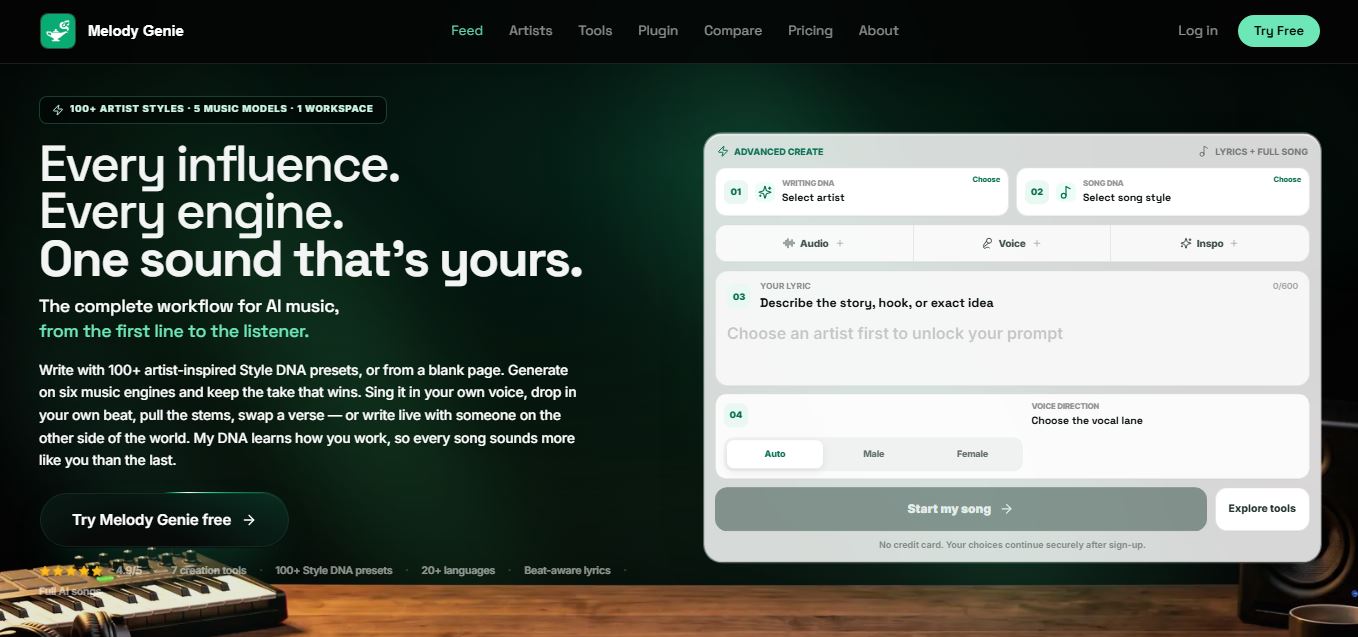
Melody Genie
MelodyGenie is an AI-powered music generator that creates original songs from simple text prompts. Users can choose styles, moods, and genres, then instantly generate melodies and full tracks, making it easy for creators, marketers, and hobbyists to produce custom music without musical expertise.
Freemium
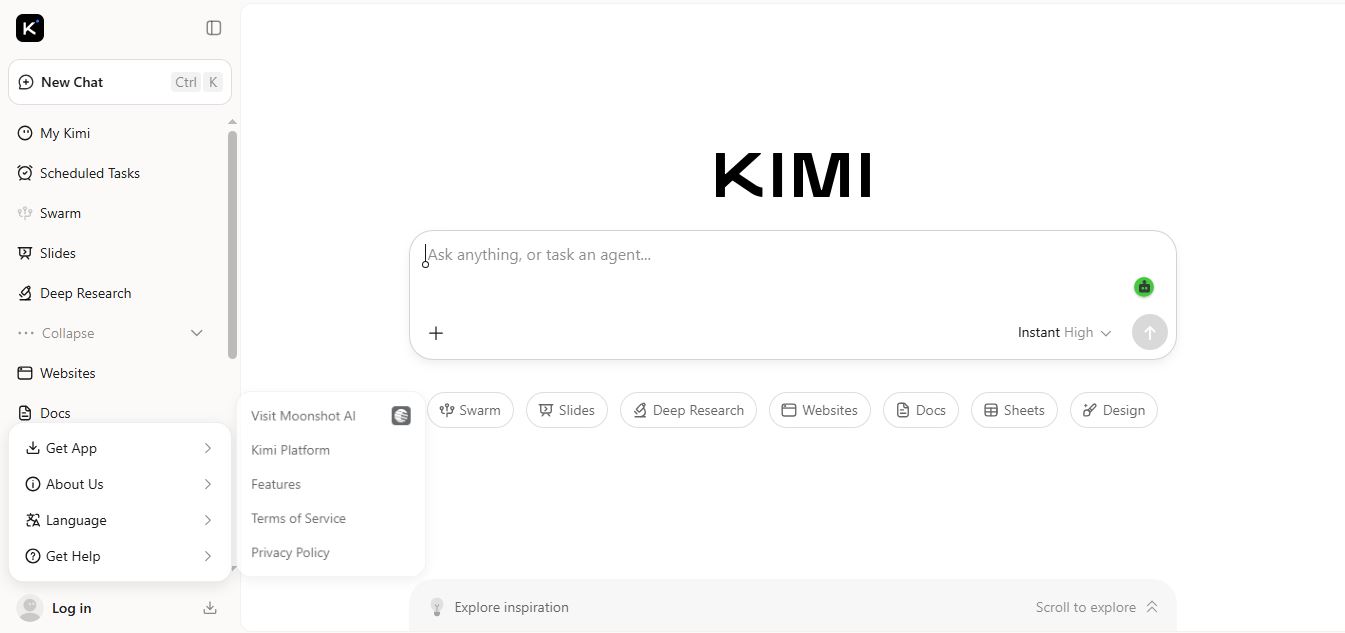
Kimi AI
Kimi AI is an advanced AI assistant developed by Moonshot AI that helps you chat, research, write, code, and automate tasks in one place. It supports web search, file analysis, and multimodal inputs, and can even run autonomous “agent” workflows to complete complex tasks end-to-end.
Freemium
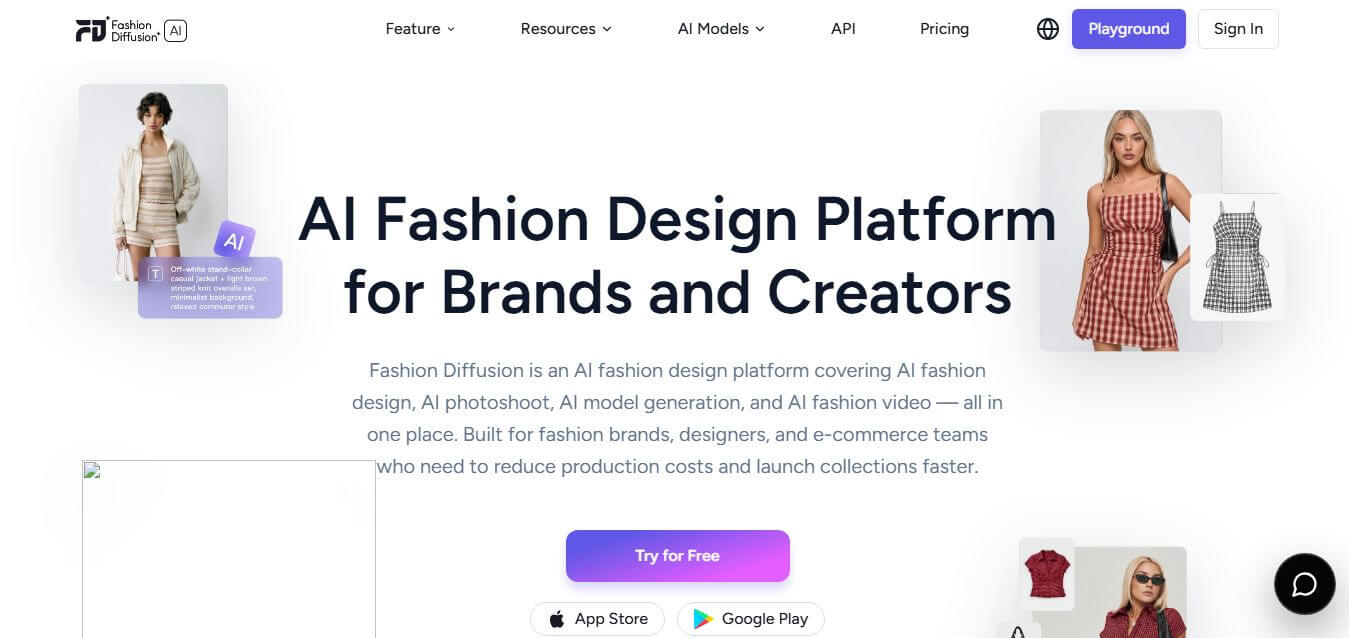
Fashion Diffusion AI
Fashion Diffusion is an AI-powered fashion design platform that helps brands and designers create clothing designs, virtual try-ons, AI models, product photos, and marketing visuals faster and cost-effectively.
Paid
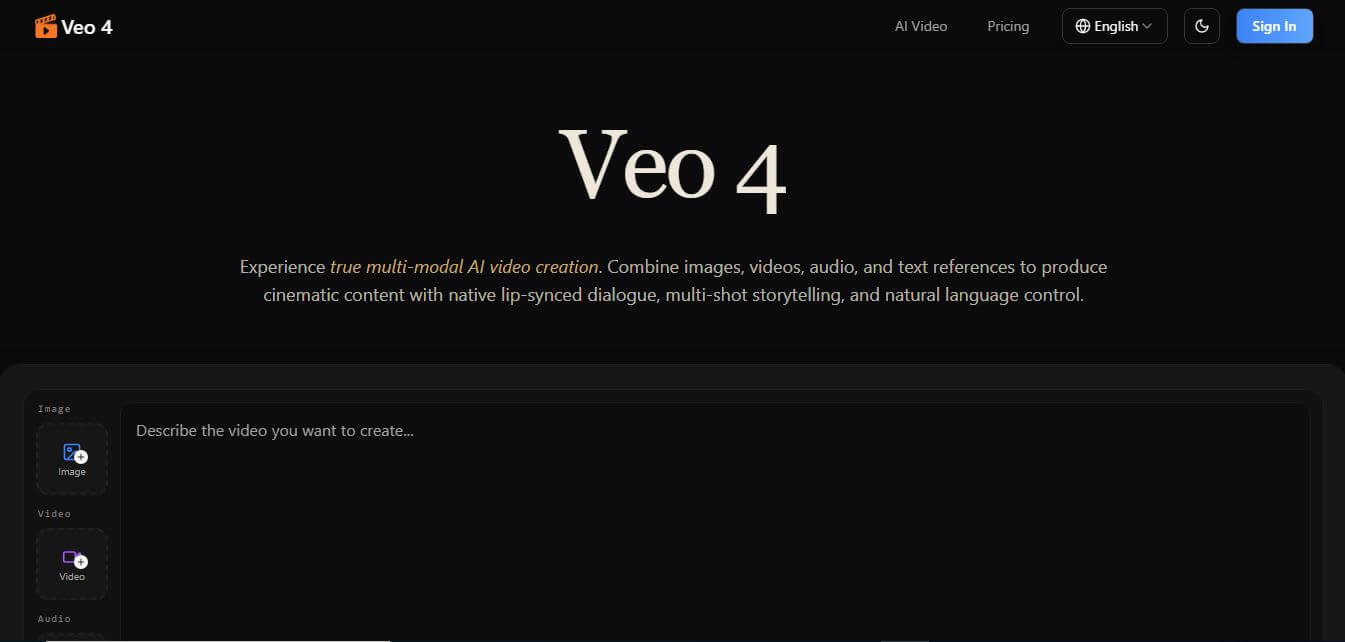
Veo 4
Veo 4 AI is an AI video creation platform that generates dramatic videos from text, images, audio, and video prompts using realistic motion and synchronized sound.
Paid
Alternatives
Alternatives to R Discovery
The best R Discovery alternatives include Semantic Scholar, ResearchRabbit, Connected Papers, Litmaps, Feedly, and SciSpace. These platforms offer AI paper discovery, literature curation, and citation mapping. While R Discovery specializes in personalized mobile reading feeds, AI audio summaries, and 30+ language translations across 300M+ articles, alternatives like ResearchRabbit focus on collection-based citation graphing, and Connected Papers offers force-directed similarity maps.
Zotero
AI Agent
Zotero (zotero.org) is a free, open-source reference management software designed for researchers, students, and academics to collect, organize, annotate, cite, and share research sources, web pages, and bibliographies across devices.
Dovetail
AI Agent
Dovetail (dovetail.com) is an AI-powered customer intelligence and user research repository platform designed for UX researchers, product managers, designers, and feedback teams to centralize qualitative data, transcribe video interviews, auto-tag insights, and build global knowledge repositories.
ATLAS.ti
AI Agent
ATLAS.ti (atlasti.com) is an industry-standard qualitative data analysis (QDA) software platform designed for researchers, social scientists, market researchers, and health evaluators to code, analyze, and visualize unstructured qualitative text, audio, video, and image data.
Nested Knowledge
AI Agent
Nested Knowledge (nested-knowledge.com) is an AI-powered systematic review, meta-analysis, and living evidence platform built around the AutoLit and Synthesis pipeline to automate citation screening, data extraction, critical appraisal, and interactive data visualization.
Scopus
AI Agent
Scopus (scopus.com) is Elsevier's curated, subscription-based abstract and citation database indexing over 90 million documents across 27,000+ journals, offering proprietary metrics like CiteScore, SJR, and SNIP alongside author profiling and institutional bibliometric analytics.
OpenAlex
AI Agent
OpenAlex (openalex.org) is an open, non-profit, global bibliographic catalog and knowledge graph developed by OurResearch that indexes hundreds of millions of scientific works, authors, institutions, venues, and funders under a CC0 public domain license.
PubMed
AI Agent
PubMed (pubmed.ncbi.nlm.nih.gov) is a free public database developed and maintained by the National Center for Biotechnology Information (NCBI) at the U.S. National Library of Medicine (NLM), indexing over 36 million citations and abstracts for biomedical, clinical, and life sciences literature.
Google Scholar
AI Agent
Google Scholar (scholar.google.com) is a freely accessible web search engine that indexes the full text and metadata of scholarly literature across disciplines, source types, and formats, serving as the global baseline for academic paper discovery and citation tracking.
Explainpaper
AI Agent
Explainpaper (explainpaper.com) is an AI-powered academic paper reading assistant that enables researchers, students, and academics to highlight complex text, equations, or jargon within uploaded PDFs to receive instant, plain-English explanations.