Gemini 3.8 Flash
Gemini 3.8 Flash and Flash Cyber are advanced AI models from Google designed for fast reasoning, coding, and agent workflows. Flash is a general-purpose, cost-efficient model, while Flash Cyber focuses on cybersecurity, detecting vulnerabilities and generating fixes, helping teams build, secure, and automate complex systems more efficiently.
What is Gemini 3.8 Flash?
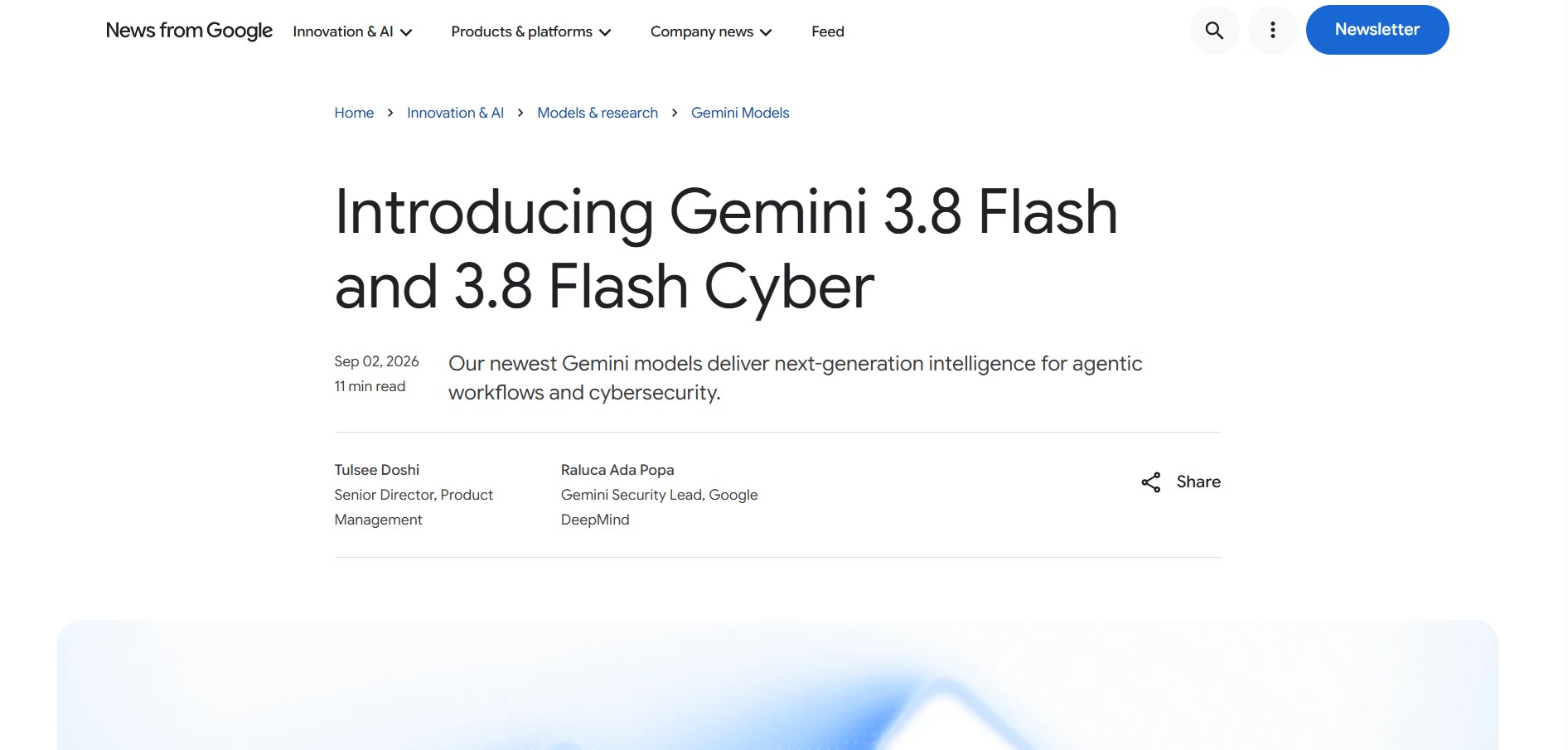
Gemini 3.8 Flash & Flash Cyber are Google’s latest fast, agent-focused AI models built to handle real-world tasks like coding, automation, and security workflows at scale. Gemini 3.8 Flash is a fast, cost-effective general-purpose model for reasoning, coding, and multi-step agent tasks, while Flash Cyber is a specialized version for cybersecurity use cases like threat detection, vulnerability analysis, and automated fixes. Together, they follow Google’s “Flash” approach—delivering strong performance with lower latency and cost—while enabling AI systems to move beyond simple responses and actively execute complex workflows.
Marking Google's third Flash release in just six weeks, Gemini 3.8 Flash delivers frontier-grade coding and multi-step reasoning at the same low cost as Gemini 3.7 Flash ($0.75 per million input tokens and $3.75 per million output tokens). Powered by long-running agentic loops that recursively evaluate and refine outputs, Gemini 3.8 introduces configurable effort levels (allowing developers to dial reasoning intensity up or down per task), achieves top-tier scores on DeepSWE v1.1 for long-horizon engineering, and features high prompt-injection resilience via Gray Swan evaluations. For cybersecurity defenders, Gemini 3.8 Flash Cyber—distributed to trusted organizations via the new Fairwind Program—exceeds a 70% real-world vulnerability discovery rate and sits on the CWE-Bench Pareto frontier for automated patch remediation.
- Developer & Research Lab: Google DeepMind (Google LLC)
- Model Variants: Gemini 3.8 Flash (General, Coding & Long-Horizon Reasoning) & Gemini 3.8 Flash Cyber (Defensive Security & Patching)
- Core Environments: Google AI Studio, Gemini API, Android Studio, Google Antigravity, Stitch, Gemini Enterprise & Google AI Pro/Ultra
Use Cases:
- Executing end-to-end multi-file software engineering refactors, bug diagnoses, and unit test implementations via autonomous coding agents
- Balancing latency and precision across production workloads using task-specific configurable reasoning effort parameters
- Conducting automated code vulnerability scans and generating verified pull-request patches with Gemini 3.8 Flash Cyber via the Fairwind Program
- Running persistent iterative design and simulation loops in Google Antigravity to build interactive web apps and 3D visualizers from single prompts
- Analyzing complex, regulated quantitative data across corporate filings, financial balance sheets, and legal contract compliance matrices
Technology:
- 1-million-token input context window paired with up to 64K maximum output generation capacity and multimodal token understanding
- Iterative tool-calling orchestration engine taking incremental reasoning steps, validating interim results, and self-correcting run states
- Advanced prompt-injection defenses evaluated by Gray Swan and strict frontier safety mitigations for CBRN and cyber offense
Target Users:
- Software engineers, vibe coders, and agent developers running terminal coding harnesses (Claude Code, Cursor, Codex)
- Cybersecurity defenders, SecOps engineers, and critical infrastructure operators patching enterprise vulnerabilities
- Enterprise technical leads deploying high-throughput, cost-effective reasoning pipelines across finance, law, and analytics
- AI product managers leveraging Google AI Studio and Antigravity to prototype multi-agent applications rapidly
Acquisition: Developed, hosted, and operated globally by Google (Alphabet Inc.)

Key features of Gemini 3.8 Flash & Flash Cyber
Gemini 3.8 Flash's key platform features are
- Configurable Reasoning Effort: Tune the model's thinking effort dynamically per prompt—dial up effort for complex refactors to trigger deeper analysis, or dial down to reduce token latency on routine tasks.
- Long-Horizon Software Engineering (DeepSWE v1.1): Solves complex, multi-file software engineering tasks autonomously from start to finish, outperforming substantially larger frontier models.
- Iterative Tool Orchestration: Inspects repository dependencies, verifies system outputs, and executes terminal commands sequentially rather than guessing speculative patches in a single shot.
- Automated Vulnerability Patching (3.8 Flash Cyber): Sits on the Pareto frontier of CWE-Bench with a 47.2% Pass@1 patch rate, producing 2.6× more correct vulnerability fixes for the Chrome Security team.
- Autonomous Vulnerability Discovery: Achieves an 86.2% Pass@1 on CyberGym across 20 programming languages, outperforming both 3.5 Flash Cyber and expensive frontier alternatives.
- Fairwind Program Access: Specialized defensive cyber capabilities are provided directly to trusted infrastructure operators, software maintainers, and government defenders.
- Robust Prompt Injection Defenses: Significant security advancements verified by Gray Swan benchmark evaluations protect agent workflows from adversarial web payload injections.
- Integrated Developer Ecosystem: Immediately accessible across Google AI Studio, Android Studio, Google Antigravity, Stitch, and Gemini Enterprise.
Gemini 3.8 Pricing
Gemini 3.8 Flash launches at the same standard introductory price point as Gemini 3.7 Flash through 2026, combining frontier-level coding capabilities with high-speed, cost-effective inference.
Developer API Standard Pricing (Through Dec 31, 2026):
- Input Tokens: $0.75 per 1 million input tokens (for prompts up to 1M context)
- Output Tokens: $3.75 per 1 million output tokens (up to 64K output tokens)
- Includes Batch API discounts, Flex inference, Priority inference, and context caching
Consumer & Enterprise Subscriptions:
- Google AI Pro & Ultra: Integrated into consumer Gemini web apps, AI Mode in Google Search, and Gemini in Google Sheets
- Gemini Enterprise: Managed commercial licensing with workspace administrative controls, SOC 2 compliance, and zero customer data training guarantees
Gemini 3.8 Flash Cyber Access:
- Fairwind Program: Prioritized, credentialed access for verified government authorities, critical infrastructure organizations, and vetted open-source software maintainers
Disclaimer: Standard API rates are scheduled to adjust on January 1, 2027. Workloads requiring strictly minimal token overhead can continue to utilize Gemini 3.7 Flash. For live API documentation and quota limits, visit ai.google.dev.
Who is using Gemini 3.8?
Gemini 3.8 is used by developers, security engineers, and enterprise organizations worldwide, including
- Autonomous Agent Developers: Deploying long-running coding agents capable of investigating repositories, running automated tests, and self-correcting build failures
- Internal Security Teams & Maintainers: Google's Chrome Security team and Cloud Vulnerability Research team using 3.8 Flash Cyber to uncover critical vulnerabilities and push verified patches
- FinTech & Legal Tech Firms: Utilizing high-effort analytical modes on Harvey Legal Agent Benchmark and Vals Finance Agent V2 tasks
- Creative Technologists & Indie Builders: Prompting Google Antigravity to iteratively build fully working 3D browser games and functional retro applications
Best Gemini 3.8 Alternatives
Some of the strongest Gemini 3.8 alternatives include
- Claude 3.5 Sonnet / Claude 3.7 Sonnet (Anthropic)
- OpenAI GPT-4o / o3-mini (OpenAI)
- DeepSeek V3 / DeepSeek R1 (DeepSeek)
- Qwen 2.5 Coder (Alibaba Cloud)
- Gemini 3.7 Flash (Google DeepMind Workhorse Model)
- Llama 3.3 70B (Meta Open-Source AI)
Pros and Cons of Gemini 3.8
Pros
- Delivers frontier-class coding and reasoning performance at accessible Flash-tier pricing ($0.75/$3.75 per million tokens)
- Configurable reasoning effort lets developers adapt compute spend and speed to task difficulty
- State-of-the-art long-horizon software engineering benchmarks (DeepSWE v1.1)
- Specialized Flash Cyber model provides Pareto-optimal vulnerability discovery and automated patch generation
- Exceptional prompt-injection resistance verified by independent Gray Swan security evaluations
Cons
- Higher effort levels consume more reasoning tokens, increasing total query latency and per-task cost
- Standard API rates have an introductory window through end of 2026, with price increases scheduled for 2027
- Gemini 3.8 Flash Cyber is restricted to verified defenders through the Fairwind Program rather than public self-serve API access
Why Choose Gemini 3.8?
Many frontier models deliver strong benchmark scores on single-turn trivia but fail when tasked with multi-step engineering problems, getting stuck in loops or generating hallucinated patches. Gemini 3.8 Flash is purpose-built to tackle the messy realities of real-world software development.
- Allows agents to investigate codebases, execute terminal tools iteratively, and verify results before committing changes
- Offers flexible effort levels so you only pay for deep reasoning when the complexity of the problem warrants it
- Equips enterprise defenders with dedicated automated vulnerability remediation tools via Flash Cyber
- Seamlessly fits into Google AI Studio, Android Studio, and modern IDE coding agent harnesses
Gemini 3.8 vs. Competitors
The main difference between Gemini 3.8 Flash, Claude 3.5 Sonnet, GPT-4o, and DeepSeek V3 lies in agentic durability and cost-to-performance efficiency. While Claude 3.5 Sonnet and GPT-4o carry premium pricing tiers for high-end reasoning, Gemini 3.8 Flash brings long-horizon software engineering benchmarks (DeepSWE v1.1) and configurable effort levels to the high-speed Flash price tier, complemented by the defensive Fairwind cybersecurity variant.
| Feature / Model | Gemini 3.8 Flash | Claude 3.5 Sonnet | OpenAI GPT-4o | DeepSeek V3 |
|---|---|---|---|---|
| Core Focus | Long-Horizon Coding & Tunable Reasoning | Frontier Coding & Agent Workflows | Omnimodal Frontier Intelligence | Open-Weight Cost-Efficient LLM |
| Input / Output Pricing (per 1M) | $0.75 / $3.75 (Introductory) | $3.00 / $15.00 | $2.50 / $10.00 | $0.14 / $0.28 |
| Context Window | 1,000,000 tokens (64K out) | 200,000 tokens (8K out) | 128,000 tokens (16K out) | 128,000 tokens (8K out) |
| Configurable Effort Dial | Yes (Task-tunable reasoning depth) | No (Fixed model response) | Effort levels in o-series models | No (Standard inference) |
| Cybersecurity Variant | Yes (3.8 Flash Cyber / Fairwind) | No dedicated variant | No dedicated public variant | No dedicated variant |
| Best For | Developers wanting high-speed coding agents & defense | Complex software architecture & writing | Multimodal consumer & enterprise tasks | Budget-conscious self-hosted open workloads |
How do we rate Gemini 3.8?
| Parameter | Rating (out of 5) |
|---|---|
| Software Engineering & Coding Benchmarks (DeepSWE) | 5.0 |
| Iterative Tool Orchestration & Long-Horizon Loops | 4.9 |
| Configurable Effort Flexibility & Latency Control | 4.9 |
| Defensive Cybersecurity Capabilities (Flash Cyber) | 5.0 |
| Value for Money ($0.75/$3.75 Flash Tier) | 5.0 |
| Overall Score | 4.96 |
Gemini 3.8 Review
Gemini 3.8 Flash represents a pragmatic, execution-focused evolution in generative AI. By optimizing for how autonomous agents actually work in complex environments—iterating through tools, diagnosing build failures, and verifying fixes—Google DeepMind has delivered an engine that punches far above its lightweight pricing class. The addition of task-tunable reasoning effort gives developers precise control over token budgets, while Gemini 3.8 Flash Cyber sets a new gold standard for defensive software engineering and automated vulnerability patching through the Fairwind Program.
Conclusion
Google’s Gemini 3.8 Flash and Flash Cyber mark a major leap toward agent-first AI systems capable of handling complex, real-world tasks with speed and efficiency. Gemini 3.8 Flash is designed as a high-performance “workhorse” model, delivering strong improvements in coding, multi-step reasoning, and autonomous workflows while maintaining low cost and fast latency. At the same time, Flash Cyber introduces specialized cybersecurity capabilities, including automated vulnerability detection and patching, aimed at trusted organizations operating in high-risk environments. Both models share a core design focused on deeper reasoning loops and agentic execution, enabling them to solve long-horizon tasks more reliably.
FAQ
What is Gemini 3.8 Flash and how does it work?
Gemini 3.8 Flash is a fast, cost-efficient AI model from Google designed for coding, reasoning, and agent-based workflows. It processes large tasks quickly while maintaining strong performance, making it suitable for real-time applications and high-volume AI operations.
What is Gemini 3.8 Flash Cyber?
Gemini 3.8 Flash Cyber is a specialized version focused on cybersecurity tasks. It is designed to detect vulnerabilities, analyze code, and assist with patching systems, helping organizations strengthen defenses using AI-powered automation and advanced threat analysis.
Who should use Gemini 3.8 Flash models?
These models are ideal for developers, enterprises, and AI teams building applications that require fast reasoning, coding, or automation. Flash Cyber is particularly useful for cybersecurity teams handling vulnerability detection, code audits, and system protection workflows.
How is Gemini 3.8 Flash different from previous versions?
Gemini 3.8 Flash improves performance in coding, reasoning, and agent tasks compared to earlier versions. It delivers better efficiency and intelligence while maintaining similar pricing, though increased token usage can raise overall execution costs.
Can Gemini 3.8 Flash be used for coding and development?
Yes, Gemini 3.8 Flash is optimized for software engineering tasks, including code generation, debugging, and automation. Benchmarks show improved performance in coding-related evaluations, making it a strong option for developer workflows.
Is Gemini 3.8 Flash Cyber publicly available?
Gemini 3.8 Flash is broadly available to developers and enterprise users, but Flash Cyber is typically restricted to governments and trusted partners under controlled programs due to its sensitive cybersecurity capabilities.
User Reviews
No reviews yet for Gemini 3.8 Flash.
Featured Tools
Featured AI tools from TechShark

Melody Genie
MelodyGenie is an AI-powered music generator that creates original songs from simple text prompts. Users can choose styles, moods, and genres, then instantly generate melodies and full tracks, making it easy for creators, marketers, and hobbyists to produce custom music without musical expertise.
Freemium
Kimi AI
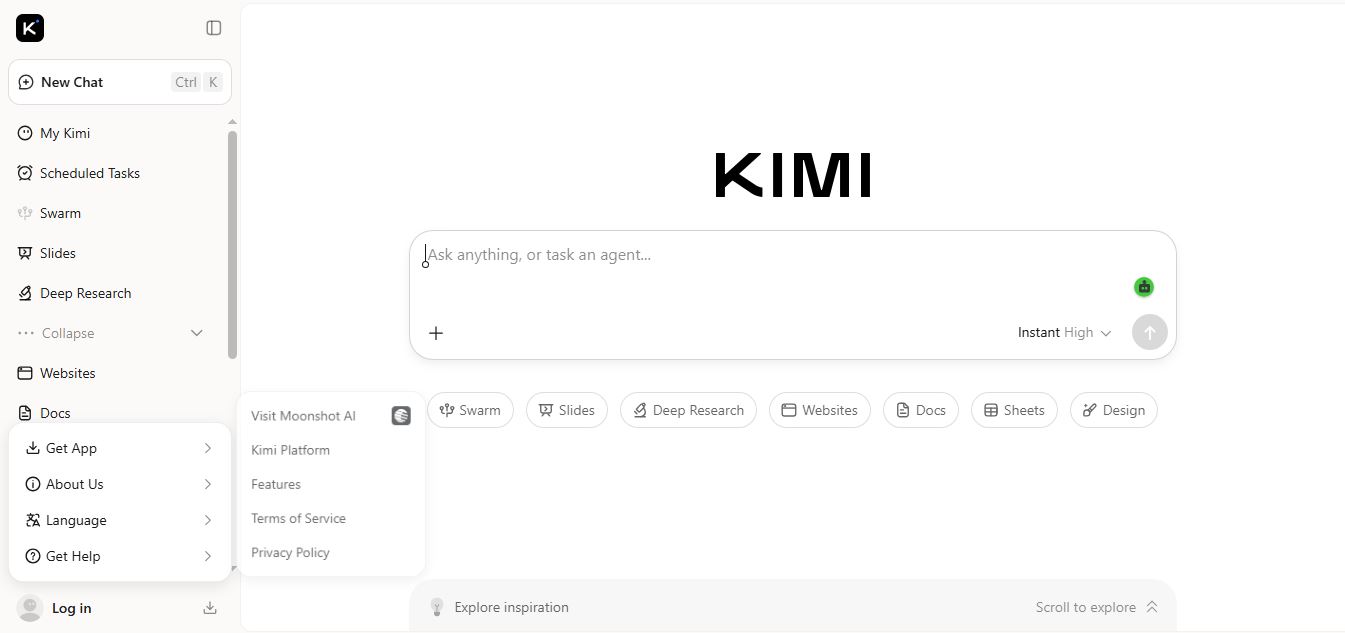
Kimi AI is an advanced AI assistant developed by Moonshot AI that helps you chat, research, write, code, and automate tasks in one place. It supports web search, file analysis, and multimodal inputs, and can even run autonomous “agent” workflows to complete complex tasks end-to-end.
Freemium
Fashion Diffusion AI
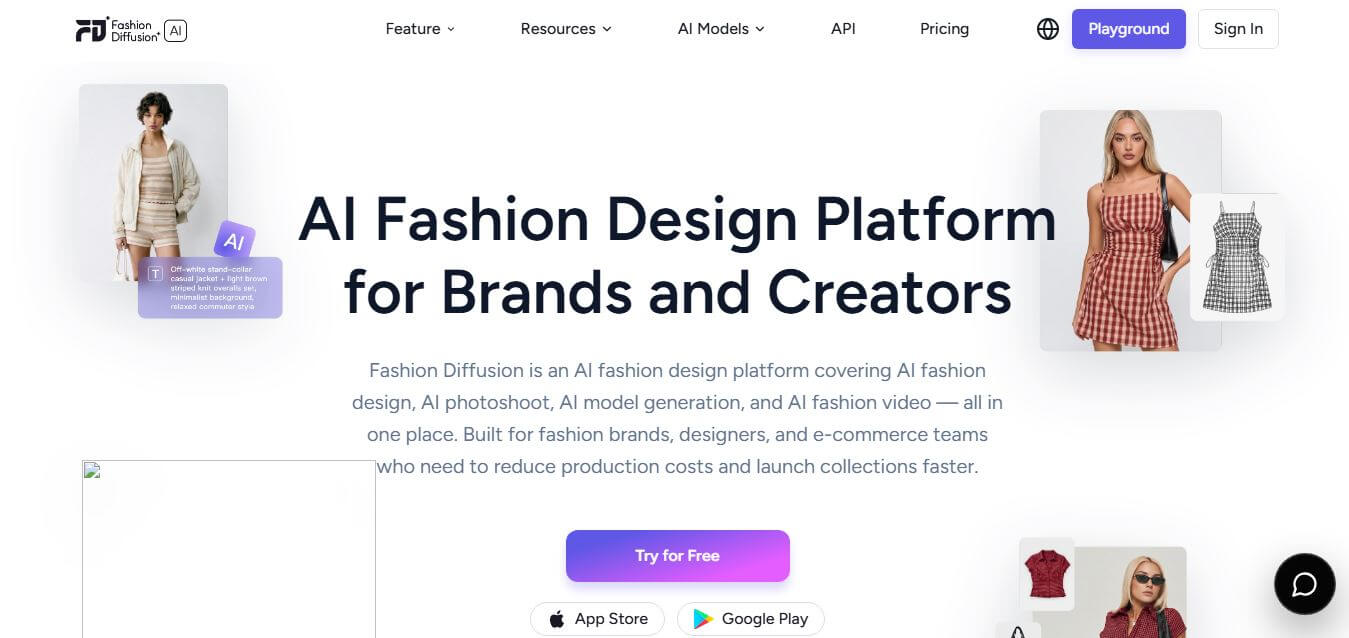
Fashion Diffusion is an AI-powered fashion design platform that helps brands and designers create clothing designs, virtual try-ons, AI models, product photos, and marketing visuals faster and cost-effectively.
Paid
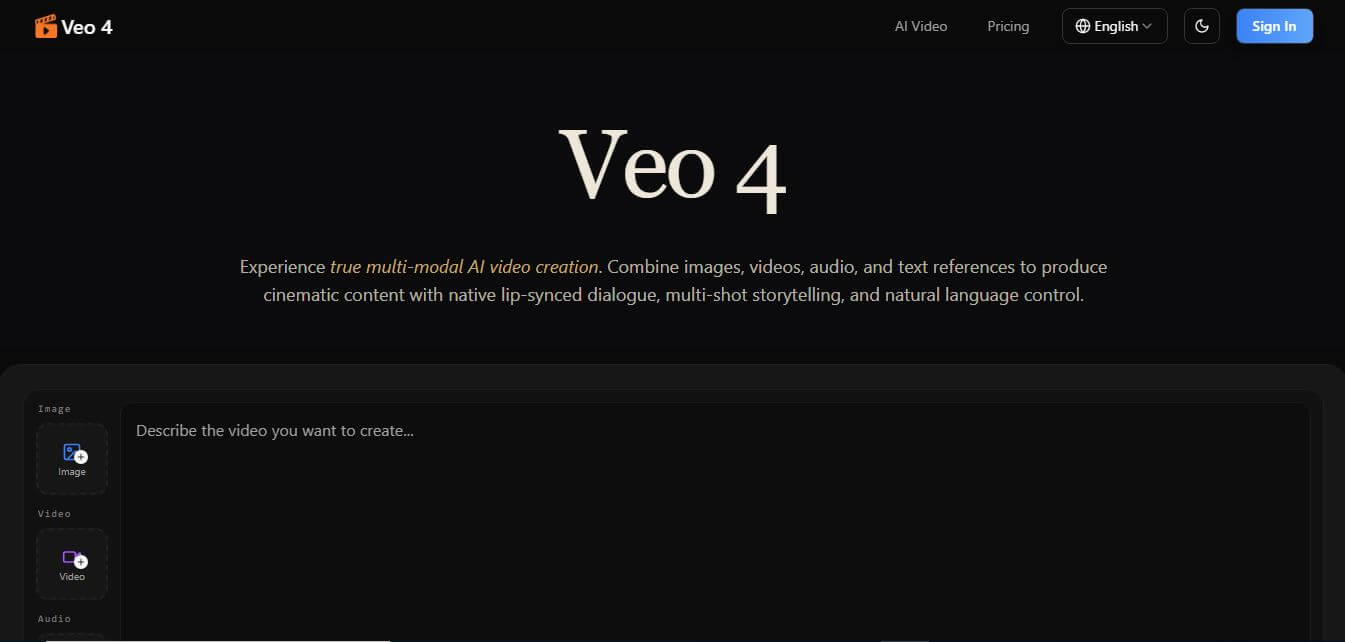
Veo 4
Veo 4 AI is an AI video creation platform that generates dramatic videos from text, images, audio, and video prompts using realistic motion and synchronized sound.
Paid
Alternatives
Alternatives to Gemini 3.8 Flash
The best Gemini 3.8 Flash alternatives include Claude 3.5 Sonnet, OpenAI GPT-4o, DeepSeek V3, Qwen 2.5 Coder, Gemini 3.7 Flash, and Llama 3.3 70B. These foundation models power autonomous coding agents, multi-step reasoning, and enterprise AI workflows. While Gemini 3.8 Flash combines frontier long-horizon software engineering benchmarks (DeepSWE v1.1) and configurable effort levels with a specialized defensive vulnerability patching model (Gemini 3.8 Flash Cyber via the Fairwind Program) at Flash-tier pricing ($0.75/$3.75 per 1M tokens), alternatives like Claude 3.5 Sonnet and GPT-4o operate at higher API cost tiers without dedicated defensive cybersecurity variants.
 4.7
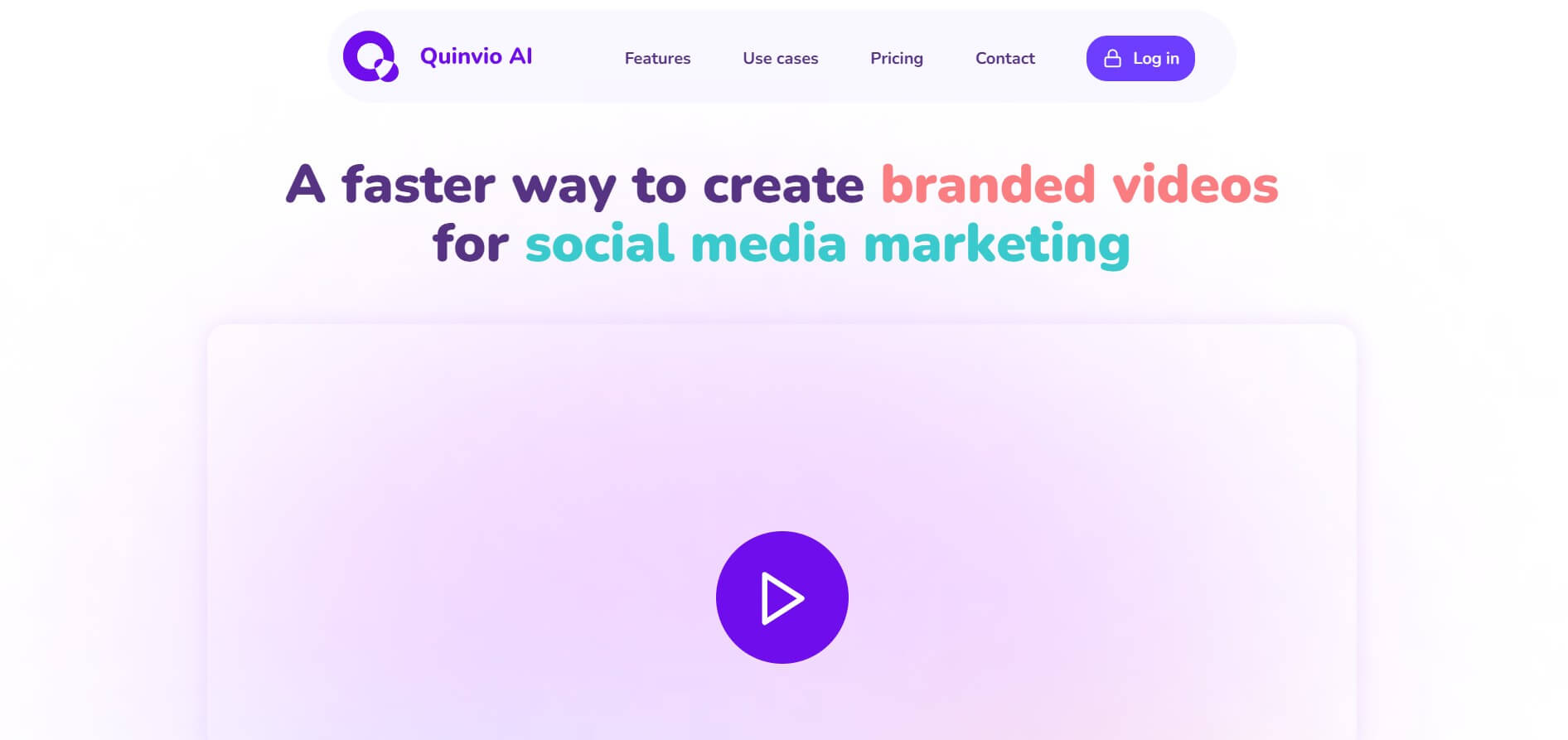
4.7Quinvio AI
Productivity
Quinvio AI helps you turn ideas, scripts, blogs, or web content into polished video presentations. You can refine messaging, choose branded templates, add AI avatars and voiceovers, and produce shareable visual content without traditional recording or editing workflows. It is especially useful for marketers, educators, trainers, creators, and business teams.
 4.9
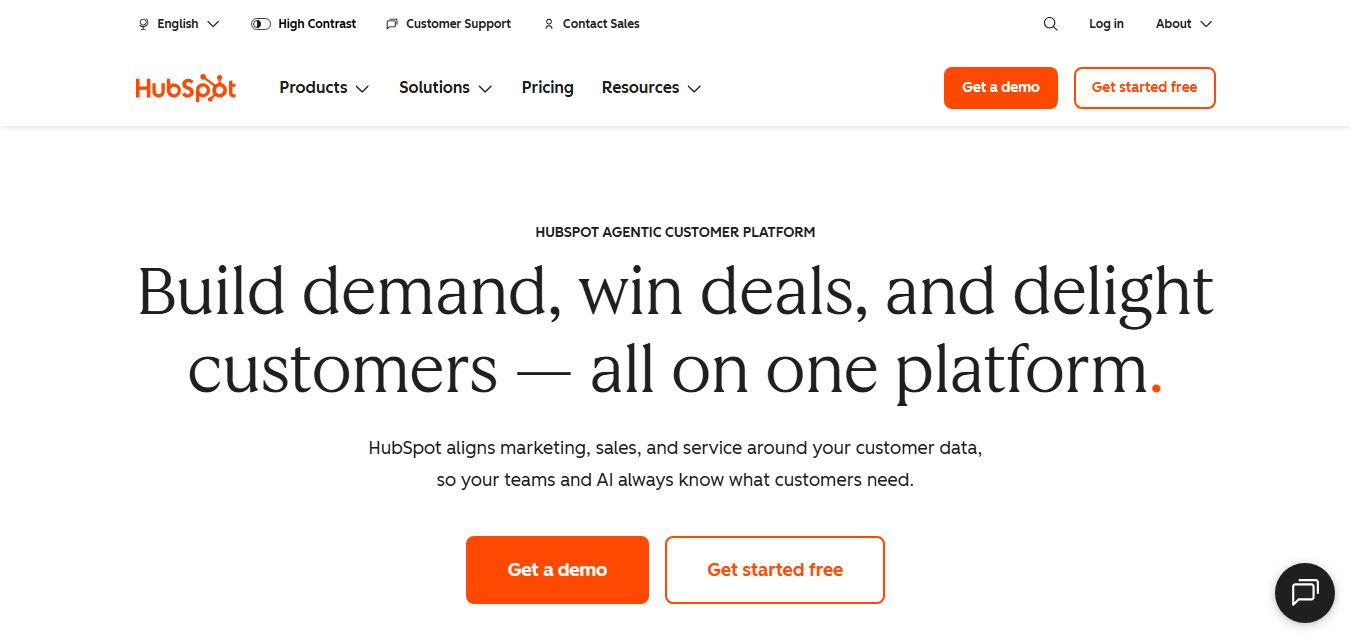
4.9HubSpot
Marketing
HubSpot is an AI-powered customer platform that helps businesses manage marketing, sales, customer service, and content in one place. It offers a free CRM, automation tools, analytics, and AI features, enabling teams to attract leads, close deals, and deliver better customer experiences at scale.
 4.9
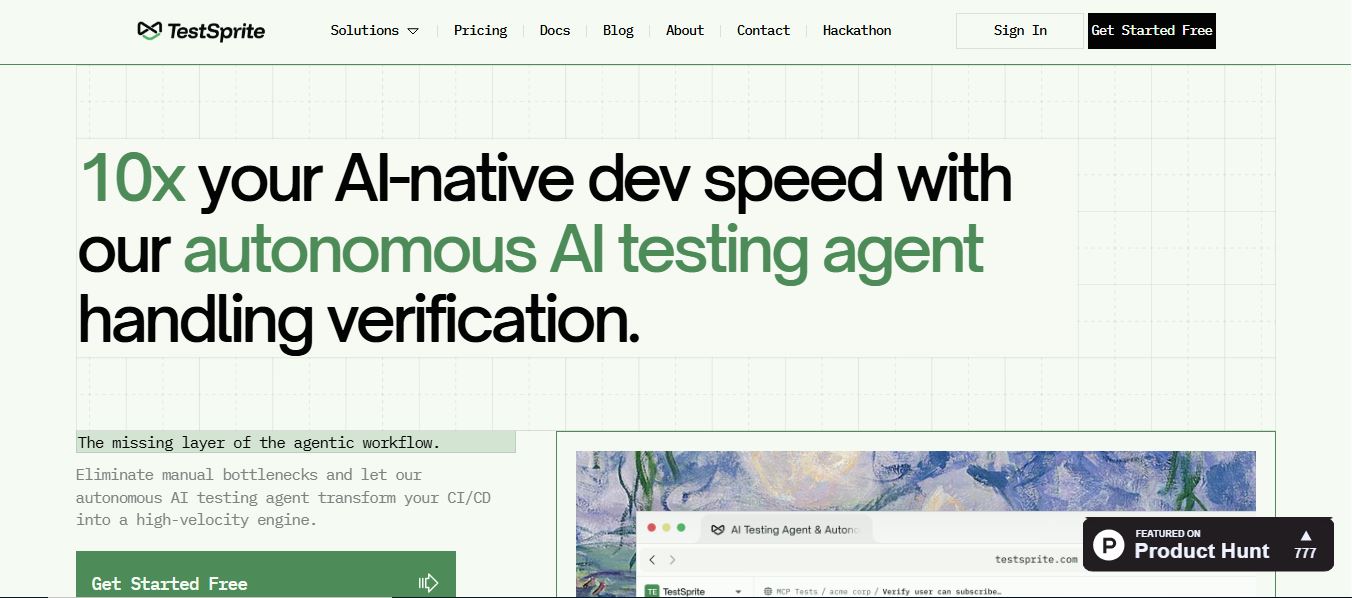
4.9TestSprite
Testing
TestSprite is an AI-powered software testing agent that helps developers automatically generate, run, and fix end-to-end tests for web apps. It simulates real user behavior, detects issues, and provides root-cause insights with suggested fixes, enabling faster releases and more reliable software without manual QA effort.
 4.8
4.8Microsoft Copilot
Productivity
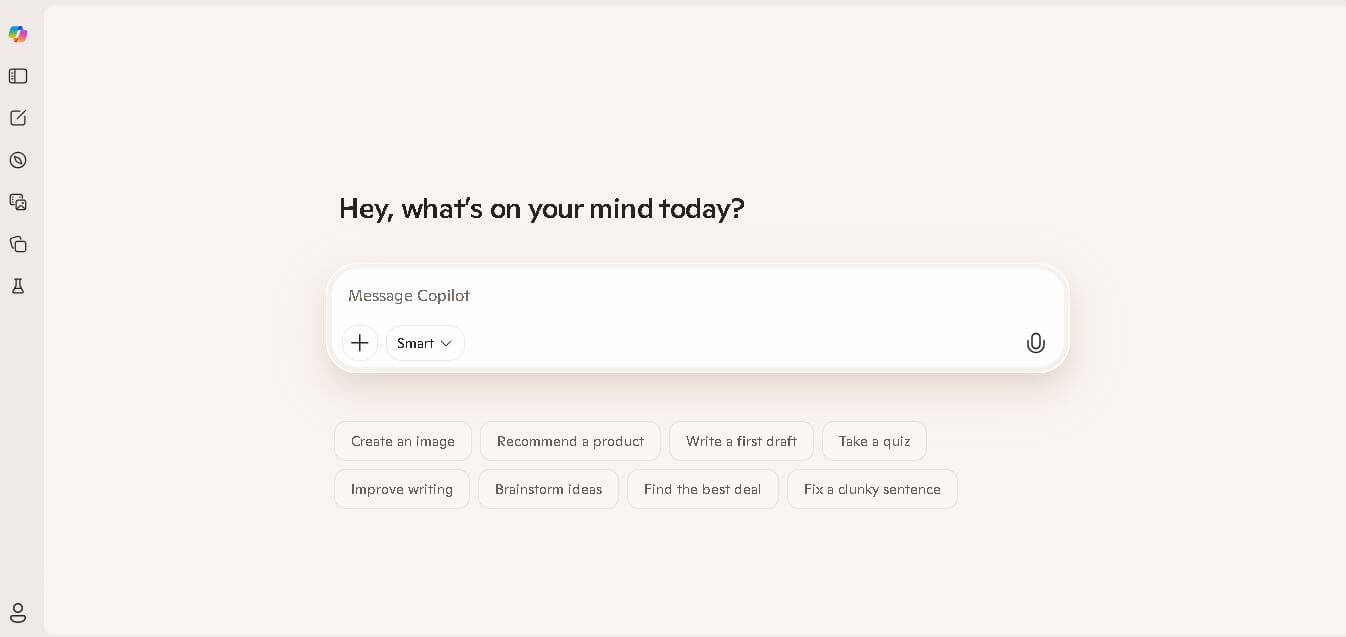
Microsoft Copilot is an AI-powered assistant that helps users write, research, analyze data, and automate tasks across apps like Word, Excel, Outlook, and Teams. It combines large language models with real-time data to generate content, answer questions, and improve productivity across personal and professional workflows.
 4.9
4.9Casablanca AI
Productivity
Casablanca AI is an AI-powered virtual camera that corrects your gaze in real time during video calls, making it appear like you’re maintaining natural eye contact. It works with tools like Zoom and Teams, improving trust, engagement, and communication without needing extra hardware.
 4.9
4.9Granola
Productivity
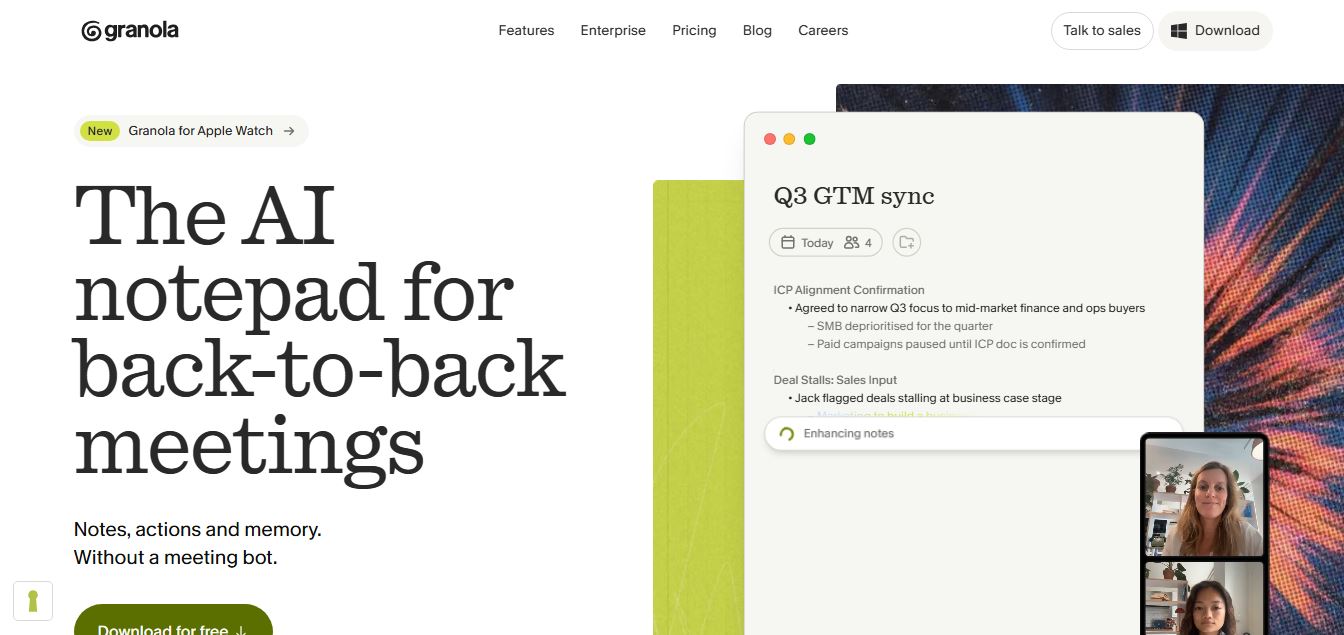
Granola is an AI-powered meeting assistant that helps you capture, organize, and act on conversations without losing focus. It listens to meetings, turns notes into structured summaries, and generates action items and follow-ups automatically—so you stay present while everything important is documented and ready to use.
 4.8
4.8AI Perfect Assistant
Productivity
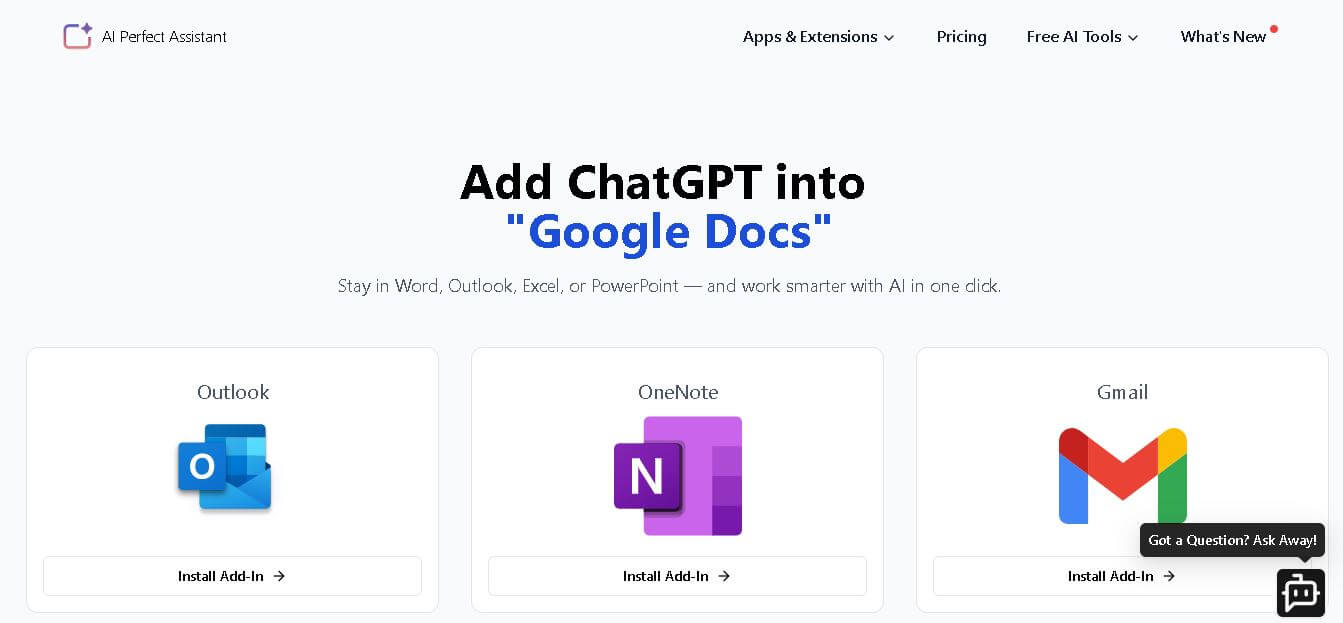
AI Perfect Assistant brings AI assistance directly into everyday work applications. It helps users write emails, improve documents, summarize content, translate text, create presentations, generate SEO content, explain Excel formulas, and handle repetitive tasks through 60+ specialized tools and multiple integrations for everyday professional and business workflows with less effort.
 4.9
4.9Kroolo
Project Management
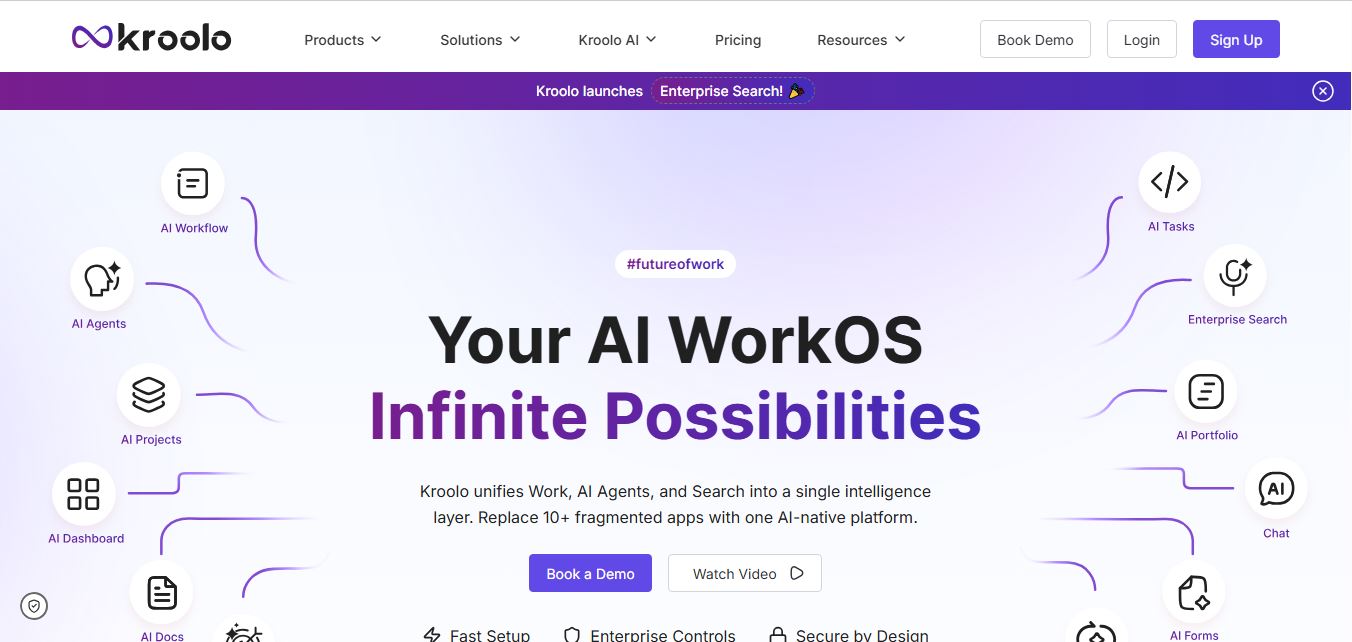
Kroolo is an AI-powered productivity and project management platform that helps teams plan tasks, track progress, and collaborate in one place. It combines project tracking, document management, and AI assistance to streamline workflows, automate routine work, and improve team efficiency across projects.
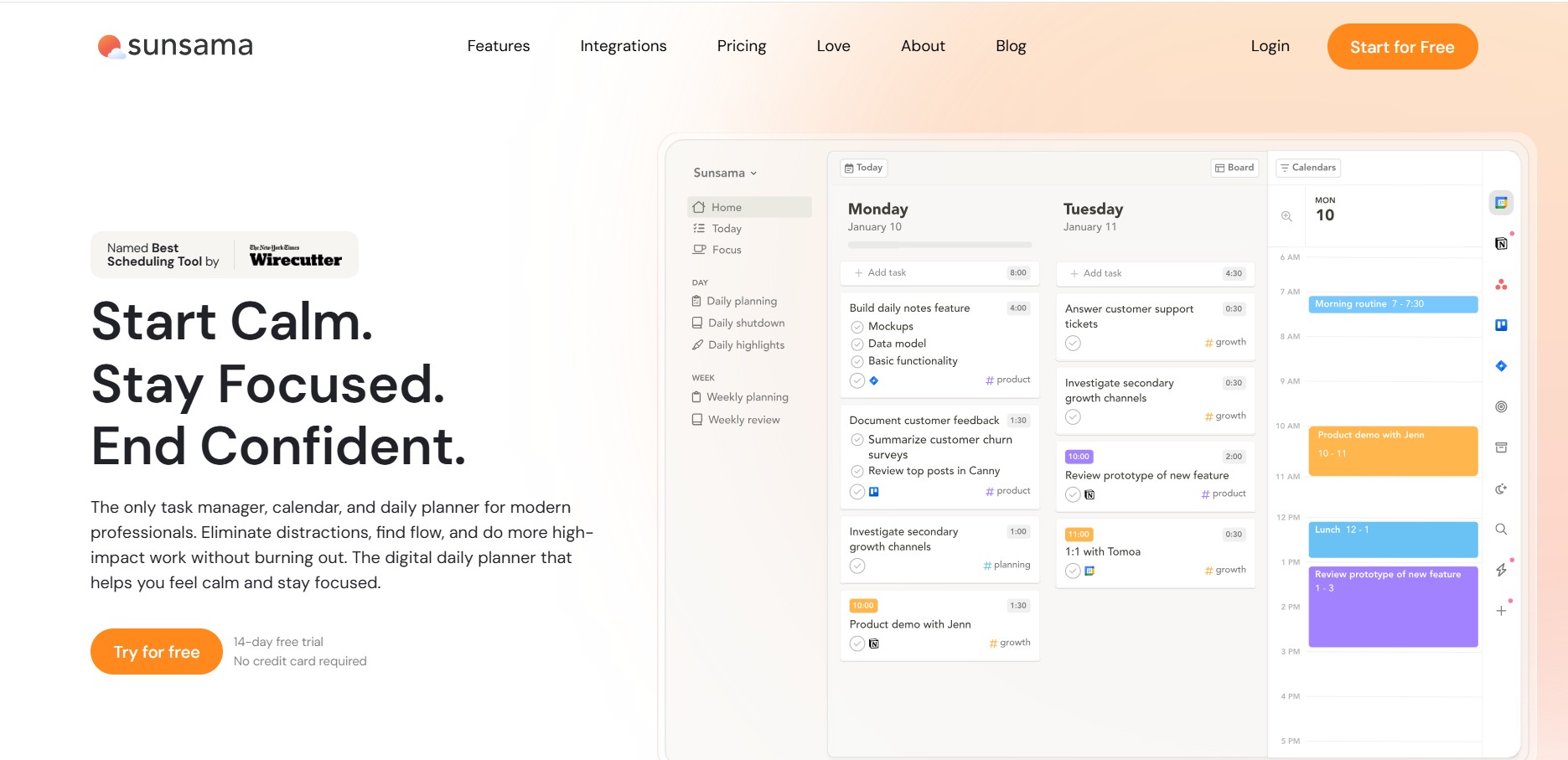 4.8
4.8Sunsama
Productivity
Sunsama is a digital daily planner and time-blocking application designed to cultivate intentional work habits, consolidate tasks across third-party tools, and facilitate guided morning planning and evening reflection rituals.