
Speechki
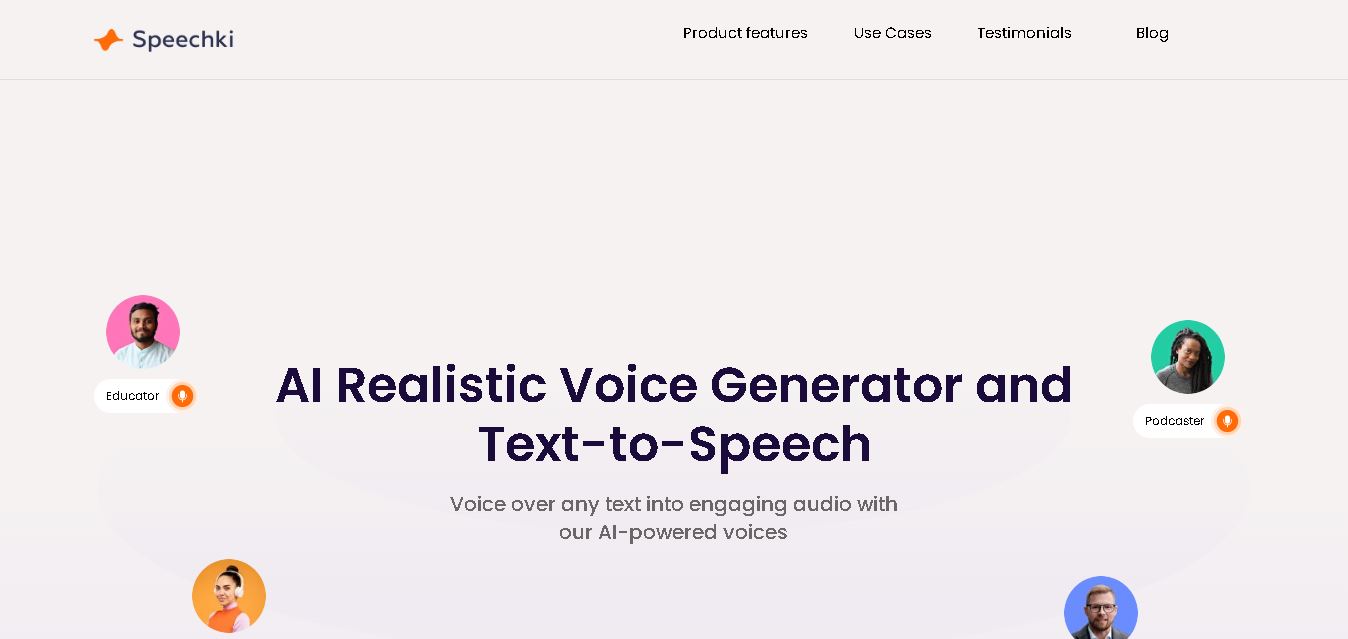
Speechki turns written content into realistic spoken audio using more than 1,100 voices across 80 languages. It offers customization for speed, tone, pitch, pauses, prosody, and pronunciation, making it useful for creators, educators, businesses, podcasters, and anyone who wants to consume or distribute content through audio.
What is Speechki?
Speechki is a text-to-speech solution that converts written content into realistic spoken audio. It offers more than 1,100 voices across 80 languages, with controls for speed, tone, pitch, pauses, prosody, phonemes, and SSML. Speechki is designed for creators, educators, businesses, podcasters, and anyone who wants to make text easier to listen to.
Speechki offers 1,100+ realistic voices across 80 languages, making multilingual text-to-speech a central part of its offering. Its editor includes controls for speed, tone, pitch, pauses, prosody, phonemes, and SSML. The platform identifies 5 primary audience groups: content creators, educators, businesses, podcasters, and curious users. Speechki also highlights chapter-like formatting, role management, real-time proof-listening, and multilingual capabilities. Its website states that the AI is trained on numerous human voices to produce a realistic listening experience.
- Platform Role: AI Text-to-Speech Engine, Voice Cloning Studio & Audiobook Generator
- Core Capabilities: Text-to-Speech synthesis, AI Voice Cloning, Text-to-Music generation, Ebook-to-Audiobook conversion, and Visual Audio Editing
- Voice Catalog: 1,100+ hyper-realistic AI voices across 80+ global languages
- Deployment: Web SaaS Platform, Visual Studio Editor, and ChatGPT Plugin Integration
Use Cases:
- Producing full-length audiobooks from eBooks and manuscript chapters
- Creating realistic voiceovers for YouTube videos, TikTok clips, and social media media content
- Generating multi-character audio podcasts with assigned roles and custom dialogue pacing
- Building localized educational materials, e-learning modules, and corporate training courses
- Designing automated IVR phone system prompts and voice interfaces for businesses
Technology:
- Deep learning neural voice synthesis models trained on thousands of hours of human speech
- SSML (Speech Synthesis Markup Language) visual controls, including phonemes, prosody, pitch, speed, and precision pause management
- Multicast and multi-language alignment for seamless cross-lingual audio production
Target Users:
- Audiobook publishers and independent authors
- YouTube, TikTok, and podcast content creators
- E-learning educators and instructional designers
- Marketers and digital agency teams needing scalable voiceovers
Acquisition: Accessible via web app and browser integrations at speechki.org

What are the key features of Speechki?
Speechki's primary platform features are
- 1,100+ Lifelike Voices: Extensive library covering 80+ languages with various regional accents and emotional tones.
- Visual Audio Editor: Fine-tune audio output with real-time proof-listening, custom pause insertion, speed/pitch/tone adjustments, and SSML prosody control.
- Role & Dialogue Management: Easily assign different AI voices to specific parts of text to create multi-character conversations or podcasts.
- Chapter-Like Navigation: Format long-form content with book-inspired chapter structure for seamless audiobook production.
- ChatGPT Integration: Convert conversational ChatGPT text directly into downloadable audio files via the official Speechki plugin.
- Voice Cloning & AI Tools: Custom voice cloning capabilities, eBook-to-audiobook converters, and text-to-music extensions.
How much does Speechki cost?
Speechki operates on a freemium model with flexible SaaS subscription plans and credit options tailored for individual creators and enterprise publishing teams.
Pricing Overview:
- Free Access / Waitlist: Free trial options and plugin access allow users to preview TTS outputs and basic speech conversion.
- Creator & Pro Plans: Subscription plans provide character/word limits for high-volume audio production, commercial license rights, and access to visual audio editor tools.
Note: Detailed tier breakdowns and custom audiobook production packages are managed directly within the Speechki platform workspace.
Who should use Speechki?
Speechki is engineered for creators and professionals who need high-quality audio, including
- Authors & Publishers: Converting written manuscripts into professional audiobooks without expensive recording studios.
- Video Creators: Generating rapid voiceovers for YouTube, TikTok, and instructional video series.
- Educators & Trainers: Building accessible, multi-lingual audio learning materials for global students.
What are the best alternatives to Speechki?
Some of the strongest Speechki alternatives in AI text-to-speech include
What are the pros and cons of Speechki?
What are the pros of Speechki?
- Massive selection of 1,100+ realistic voices spanning over 80 global languages
- Advanced visual editor with chapter formatting, role assignment, and SSML pause controls
- Direct integration with ChatGPT for friction-free text-to-audio workflows
- Dedicated toolset optimized specifically for full-length audiobook production
What are the cons of Speechki?
- Advanced SSML fine-tuning requires a slight learning curve for beginner users
- Voice clone quality and processing limits depend on subscription tier
Why should you choose Speechki?
Speechki stands out for its specialized audiobook and long-form content tools. Unlike basic TTS readers, Speechki combines a structured visual editor with role-based dialogue assignments, real-time proof-listening, and chapter formatting—making it a complete publishing platform for turning written manuscripts into commercial-grade audio.
How does Speechki compare to competitors?
While platforms like ElevenLabs and Murf.ai focus on short-form voice generation and video voiceovers, Speechki provides tailored tools for audiobook structuring, long-form navigation, and direct ChatGPT workflow integration.
| Feature / Platform | Speechki | ElevenLabs | Murf.ai | Speechify |
|---|---|---|---|---|
| Primary Focus | Audiobook Production & ChatGPT TTS | Generative Speech & Voice Cloning | Corporate Voiceovers & Presentations | Personal Reading & Productivity TTS |
| Voices / Languages | 1,100+ Voices / 80+ Languages | Thousands across 29+ Languages | 120+ Voices / 20+ Languages | 200+ Voices / 60+ Languages |
| Long-Form / Chapter Tools | Yes (book-chapter editor & navigation) | Yes (Projects tool) | Moderate (script block editor) | Limited (page reader focus) |
| ChatGPT Integration | Yes (dedicated plugin & direct convert) | No (API/Web app based) | No | Chrome extension only |
| Best For | Authors, podcasters, and ChatGPT power users | High-emotion voice acting & deep dubbing | Business presentations and e-learning creators | Students and listeners reading documents aloud |
How do we rate Speechki?
| Parameter | Rating (out of 5) |
|---|---|
| Voice Diversity & Language Support | 4.9 |
| Visual Editor & Pacing Control | 4.8 |
| Audiobook & Long-Form Features | 4.9 |
| ChatGPT Plugin Integration | 4.8 |
| Value for Money | 4.6 |
| Overall Score | 4.8 |
What is our review and verdict on Speechki?
Speechki is an exceptionally capable AI text-to-speech platform. By combining a vast library of 1,100+ natural voices with granular chapter editing, dialogue role management, and ChatGPT integration, it provides an all-in-one workstation for transforming text into commercial audio.
Conclusion
Speechki provides a flexible way to transform written content into realistic audio for different audiences and use cases. With more than 1,100 voices, 80 languages, multilingual capabilities, and detailed speech controls, it goes beyond simple text-to-speech conversion. Its features can support content creation, education, business voiceovers, podcast workflows, and audiobook production, while customization tools help users create more natural and engaging listening experiences.
FAQ
What does Speechki do?
Speechki converts written text into spoken audio using realistic AI-generated voices. You can create voiceovers from articles, scripts, educational materials, ebooks, and other text-based content. Its editor also provides controls for speed, tone, pitch, pauses, and speech nuances, helping users create audio that sounds natural and engaging.
How many voices and languages does Speechki support?
Speechki provides access to more than 1,100 realistic voices across 80 languages. This makes it useful for creators and organizations producing multilingual audio content for different audiences. Users can select voices and adjust speech characteristics such as speed, tone, and pitch to create audio suited to their specific content.
Who can use Speechki?
Speechki is designed for several audiences, including content creators, educators, businesses, podcasters, and curious users. Creators can turn written content into audio, educators can provide audio learning materials, businesses can create automated voiceovers, and podcasters can prepare scripts or transcripts. It can also support people who prefer listening over reading.
Can Speechki create multilingual audio?
Yes. Speechki supports multilingual audio through its collection of more than 1,100 voices in 80 languages. Its website highlights multilingual and multicast capabilities for reaching audiences across different languages. This can help creators, educators, and businesses adapt written content into spoken experiences for broader international audiences without producing every recording manually.
Can I control how the generated voice sounds?
Yes. Speechki provides several controls for customizing generated speech. Users can adjust speed, tone, and pitch, while more advanced controls include pauses, prosody, phonemes, and SSML. These options allow users to refine pronunciation, pacing, and expression, making generated audio better suited to different formats, speakers, and content requirements.
Is Speechki useful for creating audiobooks?
Speechki can be useful for audiobook production because its ecosystem includes a dedicated audiobook production offering. Its editor also supports chapter-like formatting and navigation, which can help organize longer written content. The platform is designed to transform text into audio, making it relevant for creators working with books and other extended content.
User Reviews
No reviews yet for Speechki.
Featured Tools
Featured AI tools from TechShark
Melody Genie
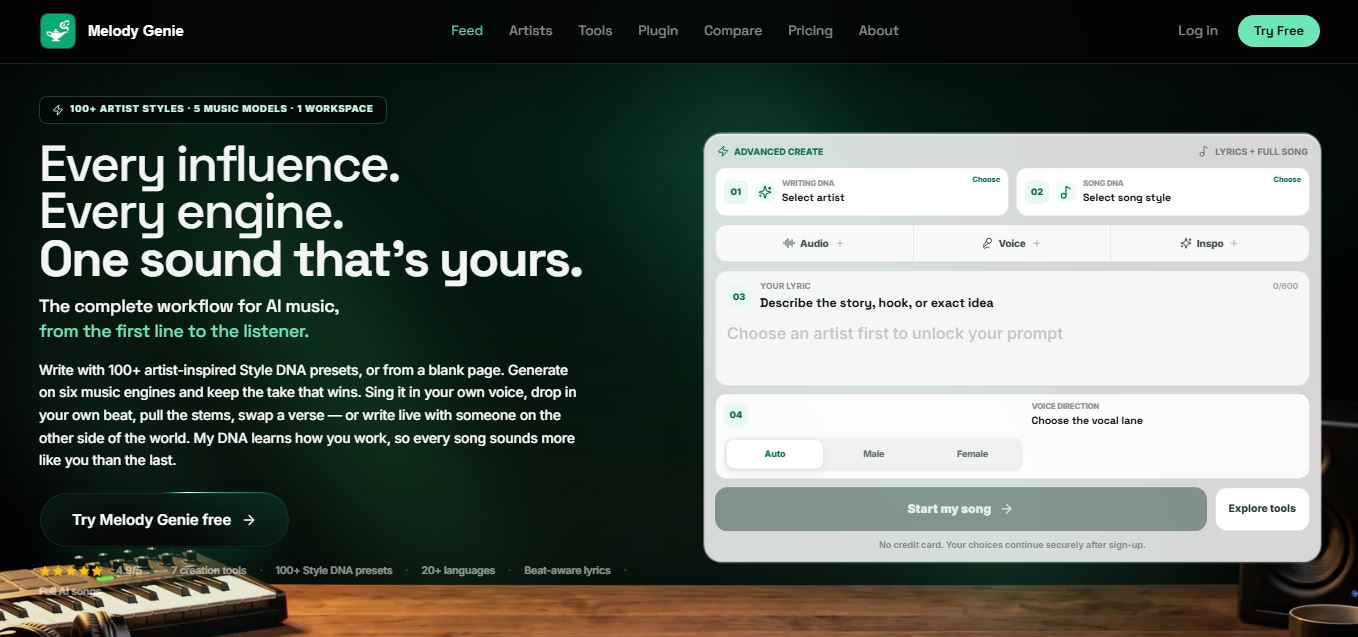
MelodyGenie is an AI-powered music generator that creates original songs from simple text prompts. Users can choose styles, moods, and genres, then instantly generate melodies and full tracks, making it easy for creators, marketers, and hobbyists to produce custom music without musical expertise.
Freemium
Kimi AI
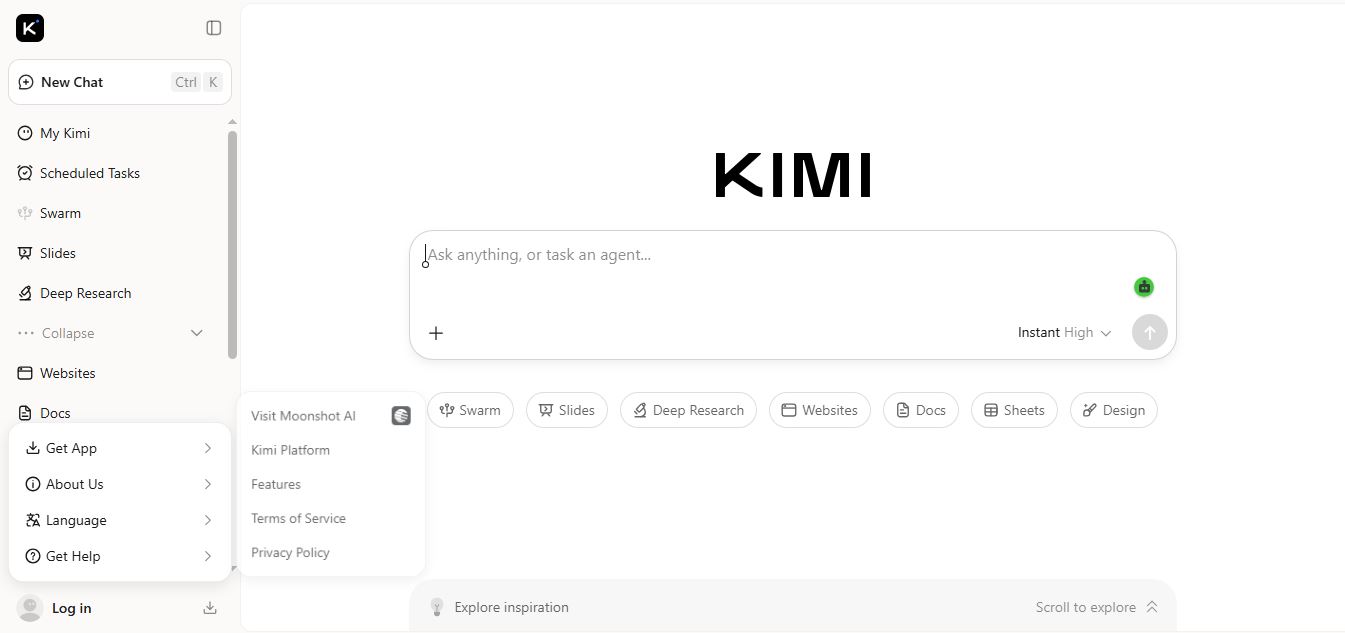
Kimi AI is an advanced AI assistant developed by Moonshot AI that helps you chat, research, write, code, and automate tasks in one place. It supports web search, file analysis, and multimodal inputs, and can even run autonomous “agent” workflows to complete complex tasks end-to-end.
Freemium
Fashion Diffusion AI
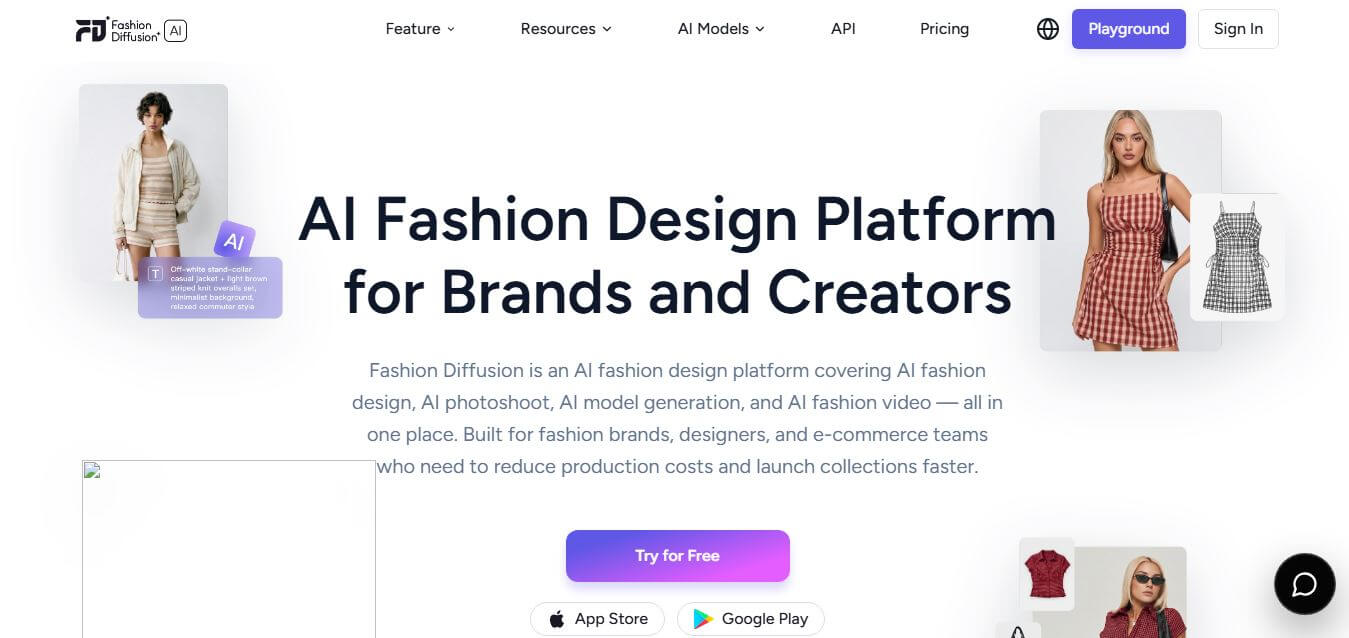
Fashion Diffusion is an AI-powered fashion design platform that helps brands and designers create clothing designs, virtual try-ons, AI models, product photos, and marketing visuals faster and cost-effectively.
Paid
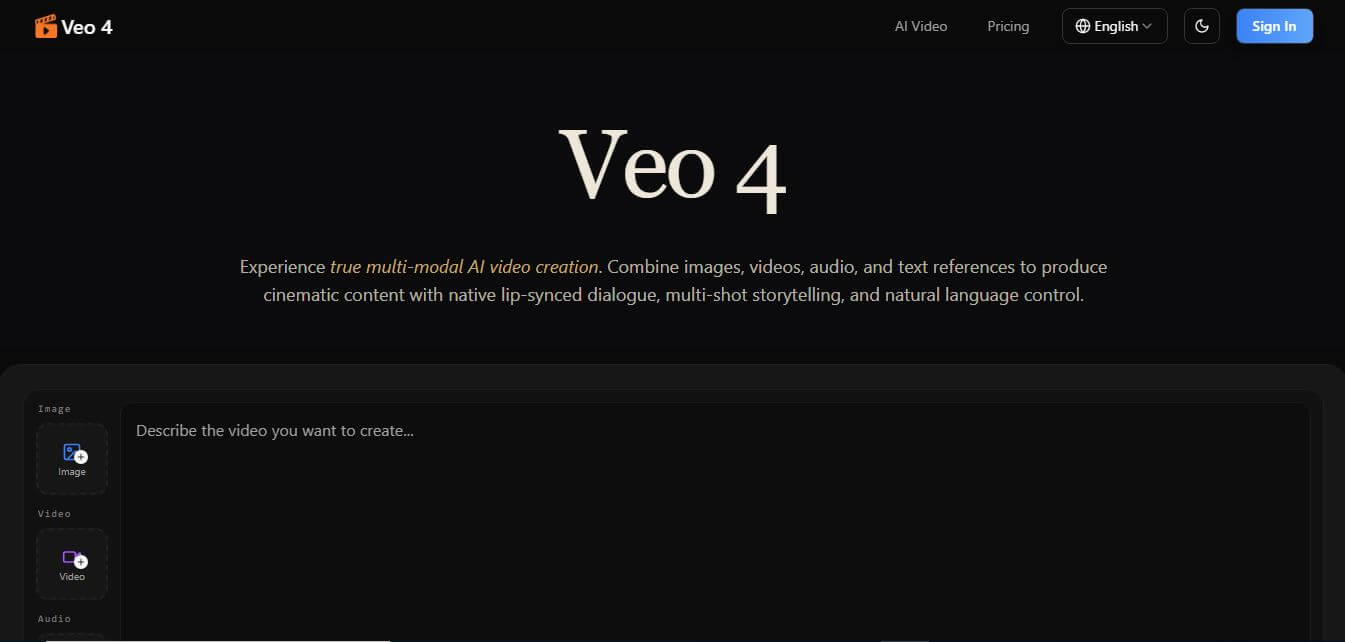
Veo 4
Veo 4 AI is an AI video creation platform that generates dramatic videos from text, images, audio, and video prompts using realistic motion and synchronized sound.
Paid
Alternatives
Alternatives to Speechki
Top Speechki alternatives include ElevenLabs, Murf.ai, Play.ht, and Speechify. While ElevenLabs excels in emotional voice synthesis, Speechki offers dedicated audiobook chapter tools and direct ChatGPT workflow integration.
 4.7
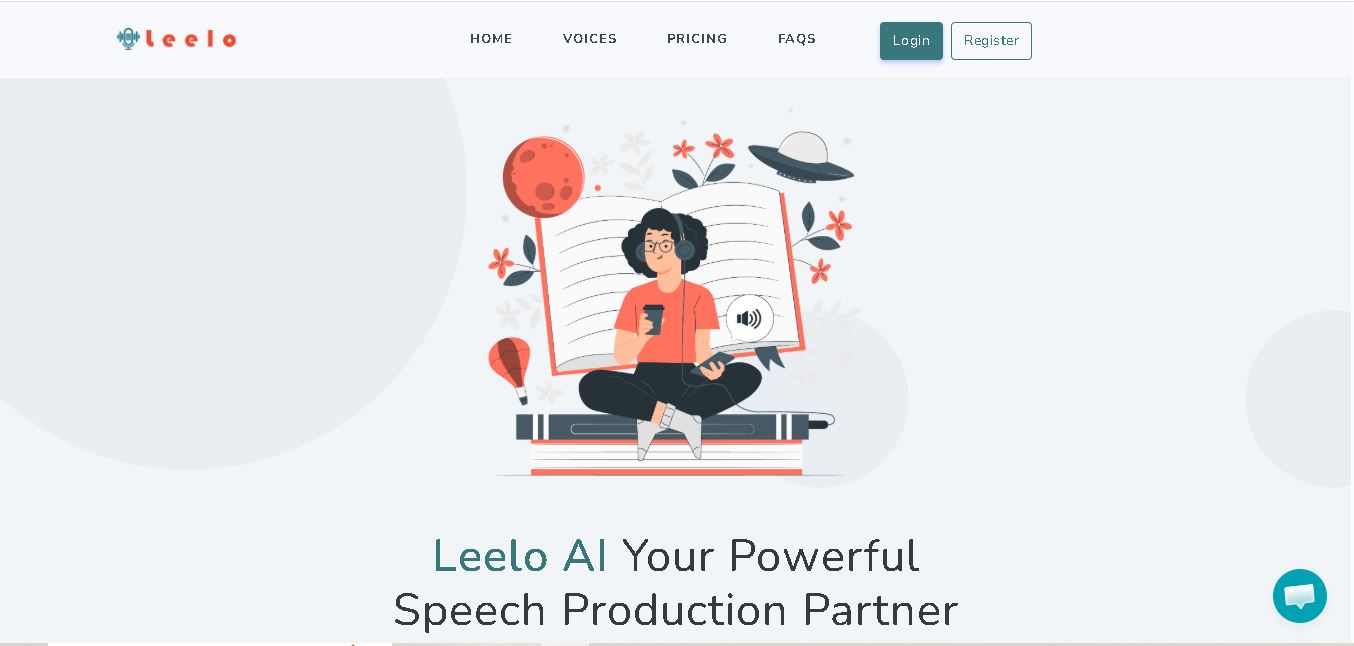
4.7Leelo AI
Text-to-Speech
Leelo AI helps you turn written content into natural-sounding speech without recording your own voice. You can choose from 800+ voices across 142 languages and accents, adjust available voice settings, generate audio, store files in the cloud, export recordings, and use generated speech commercially for different content and communication needs.
 4.7
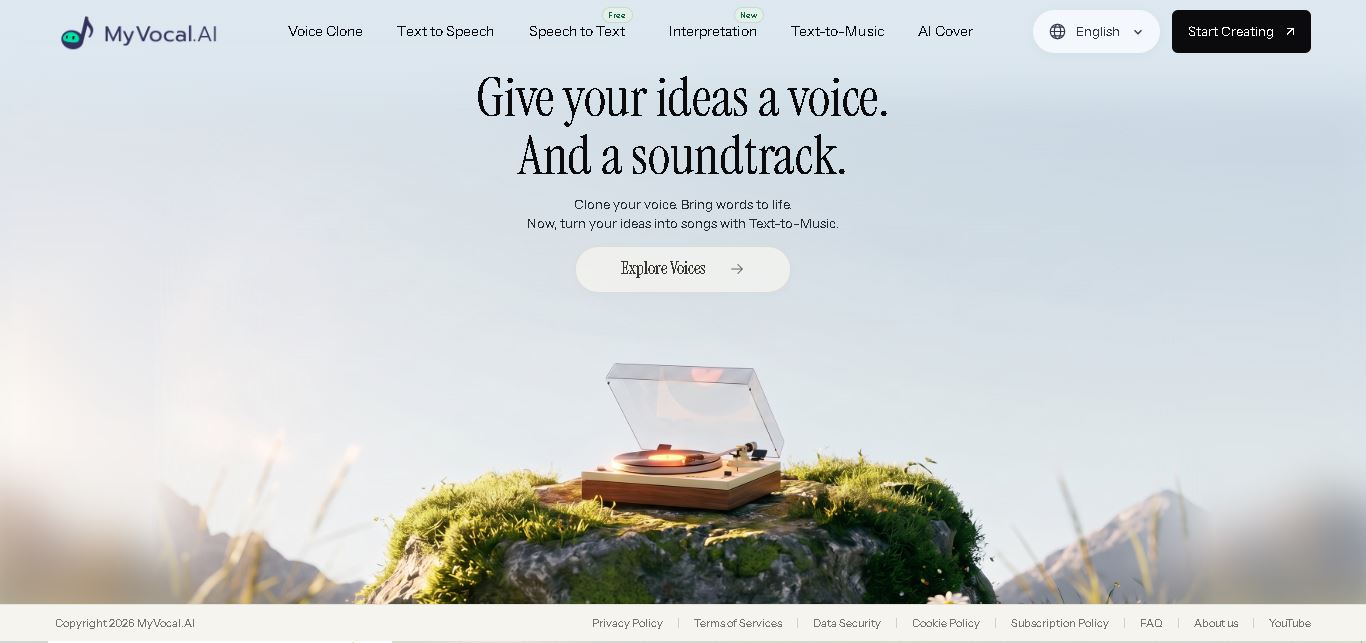
4.7MyVocal AI
Text-to-Speech
MyVocal AI helps creators turn written content and voice recordings into natural-sounding audio. Users can clone voices, generate multilingual speech, create AI song covers, transcribe recordings, and produce music from text. Its combination of voice customization, emotion control, and multilingual generation makes it useful for content, narration, music, products, and interactive experiences.
 4.8
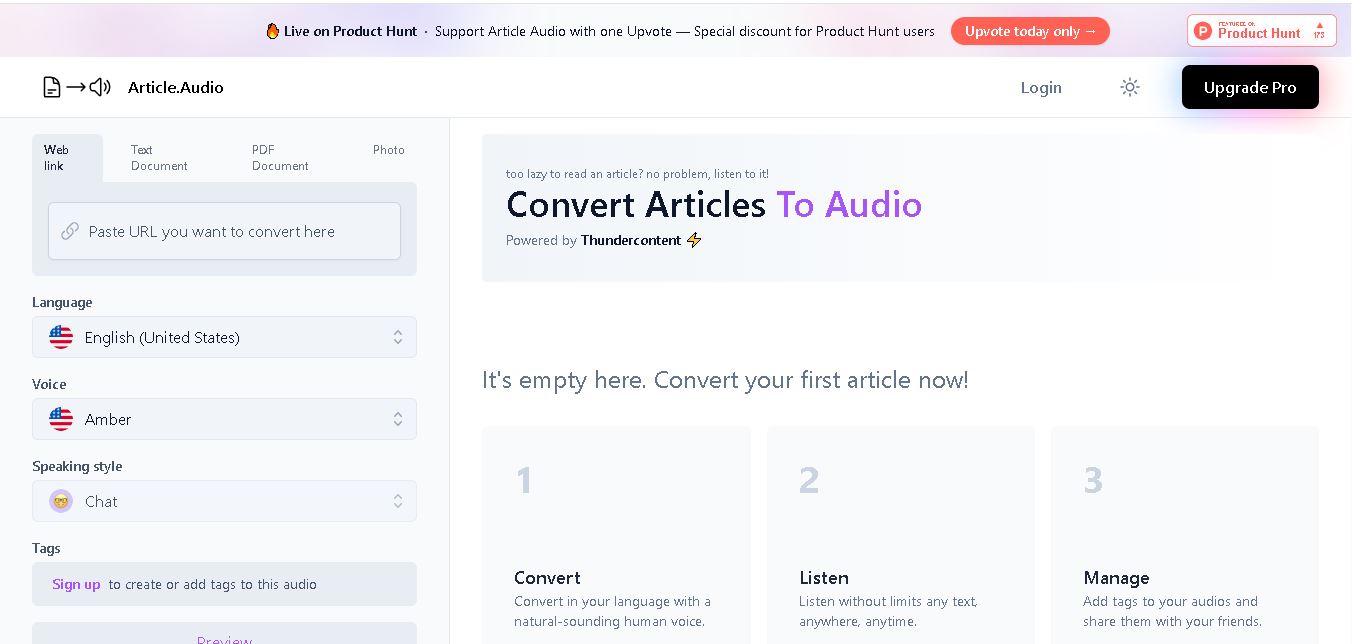
4.8Article Audio
Text-to-Speech
Article.Audio turns online articles into listenable audio from a simple web link. You can choose a language, voice, and speaking style to create a more personalized listening experience. It is useful for readers who want to consume articles while commuting, exercising, working, or handling other activities.
 4.8
4.8Google Cloud Speech-to-Text
Text-to-Speech
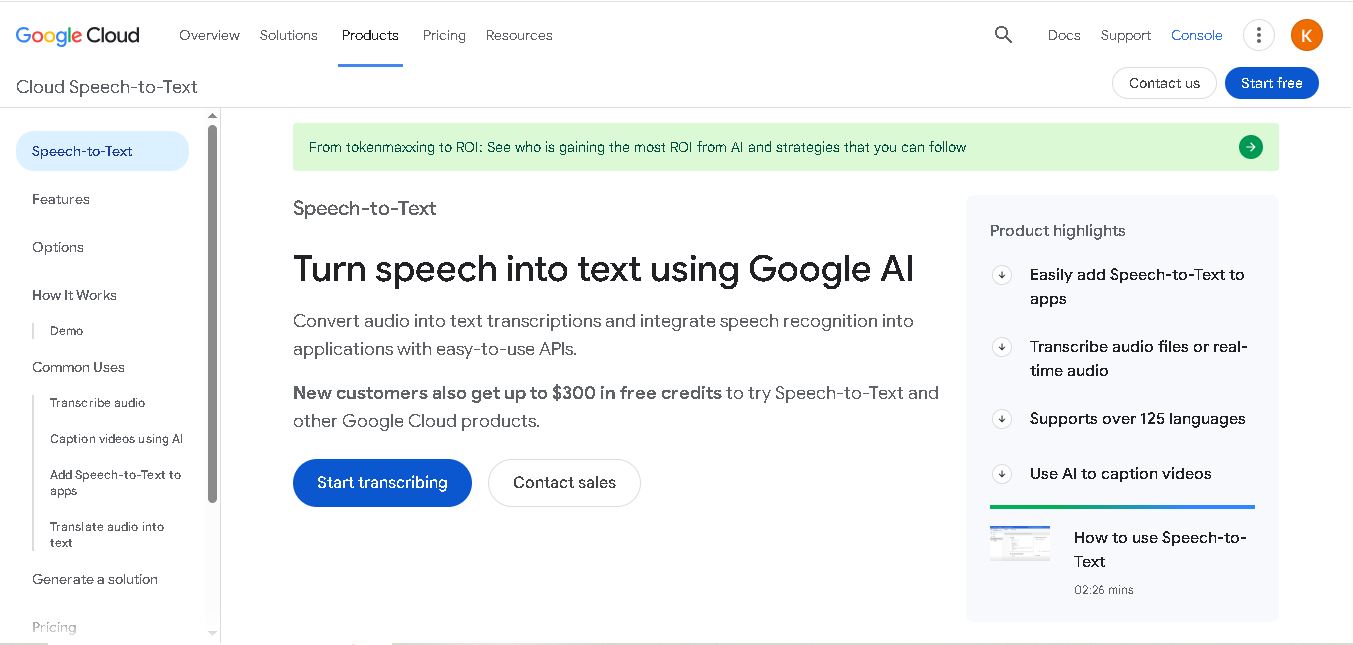
Google Cloud Speech-to-Text helps developers turn spoken audio into text for applications, captions, voice commands, meetings, calls, and searchable content. With streaming recognition, multilingual support, model adaptation, speaker diarization, and multiple transcription methods, it provides speech recognition capabilities for applications and enterprise workflows. It fits teams seeking integrated transcription workflows.
 4.8
4.8Apple Books
Text-to-Speech
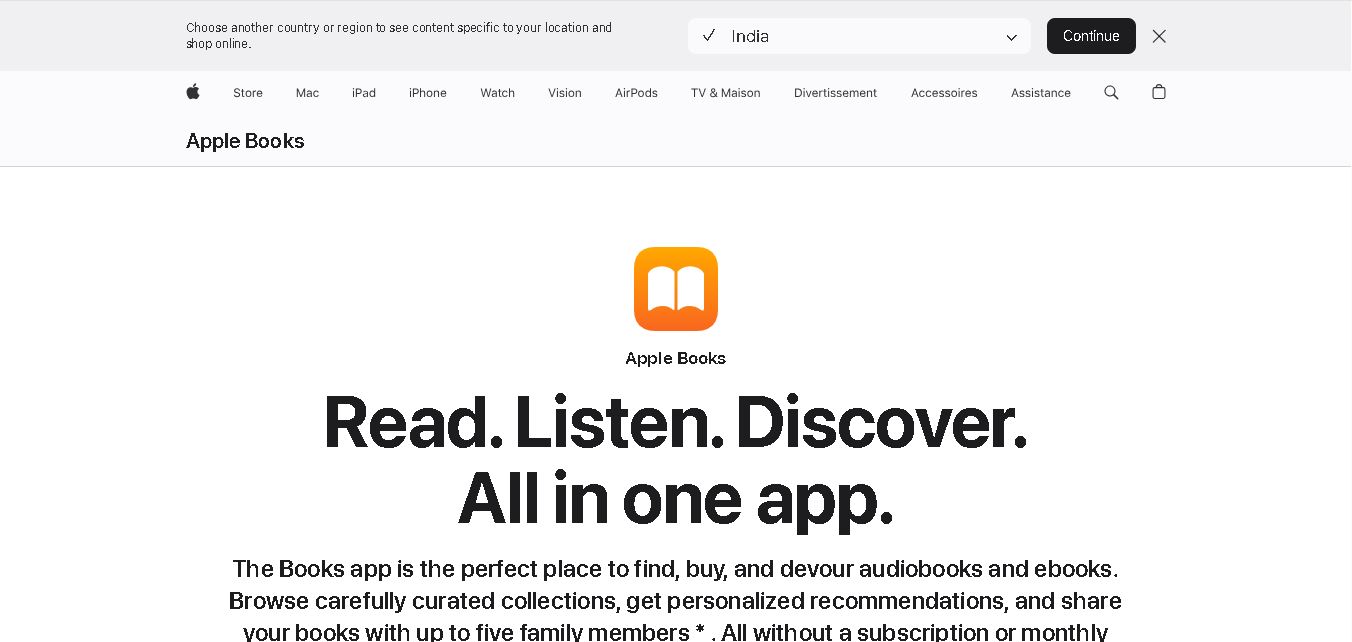
Apple Books is a digital bookstore and reading app for ebooks and audiobooks. It combines millions of titles, personalized recommendations, curated collections, reading goals, offline downloads, and cross-device synchronization. Users can purchase individual books without a monthly subscription and continue reading or listening across compatible Apple devices.
 4.8
4.8WellSaid Labs
Text-to-Speech
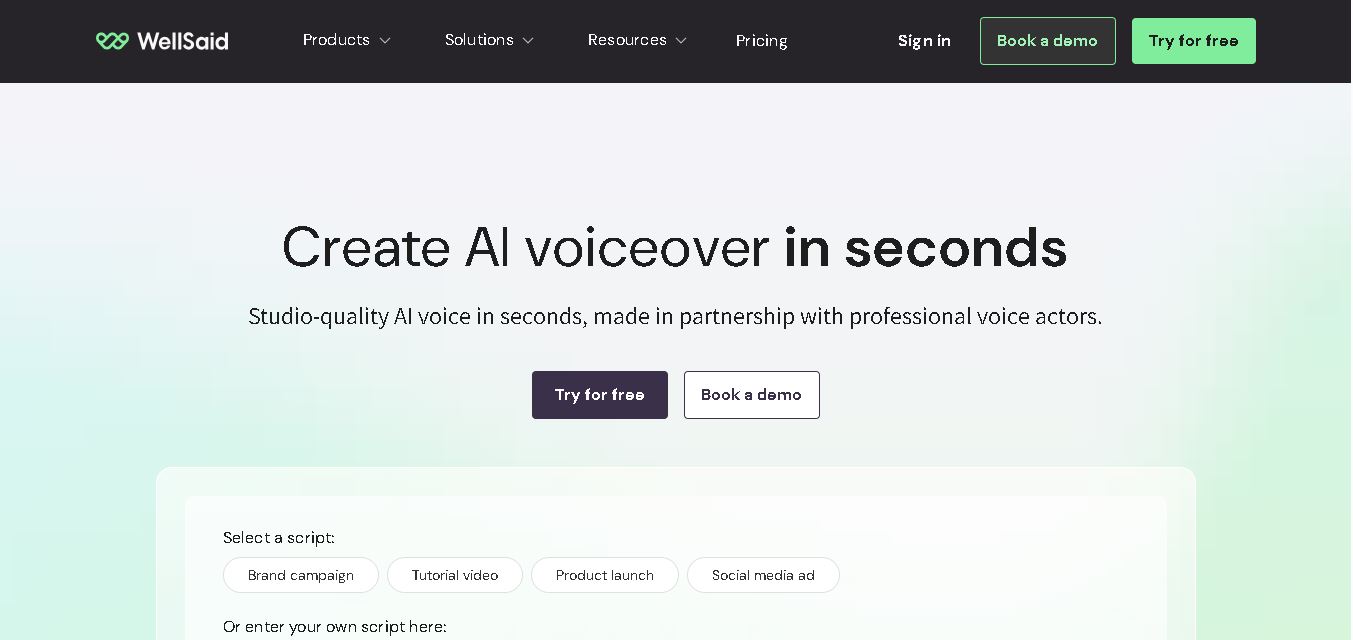
WellSaid Labs is a professional voice-generation platform for creating natural-sounding AI voiceovers from written scripts. It offers hundreds of voice options, multiple languages and accents, expressive controls, pronunciation customization, commercial usage rights on paid plans, and developer APIs. It is useful for e-learning, marketing, training, video production, podcasts, and business applications.
 4.7
4.7MilanVoice AI
Text-to-Speech
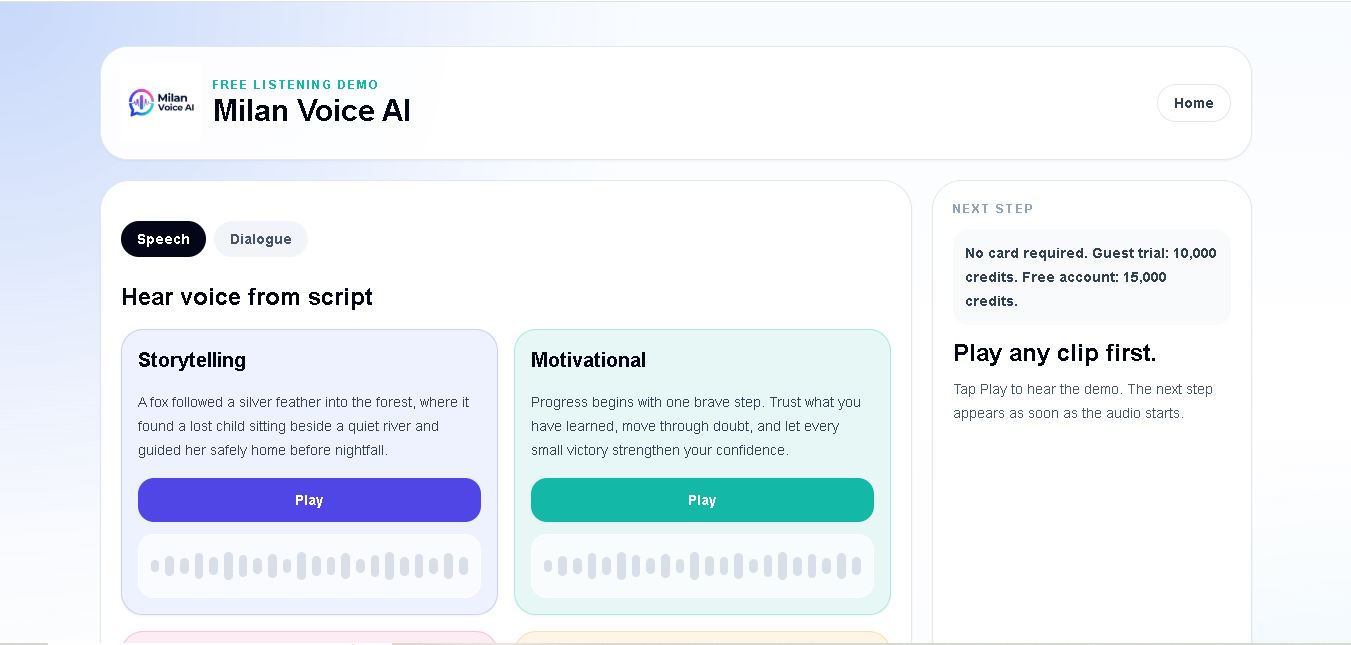
Milan Voice AI helps creators generate natural speech, clone voices, design new voices, and build multi-speaker dialogue from text. It is useful for videos, podcasts, courses, explainers, interviews, and other voiceover projects. The platform offers a free starting plan, simple credit-based pricing, and separate allowances for voice creation for content.
 4.8
4.8VoiSpark
Text-to-Speech
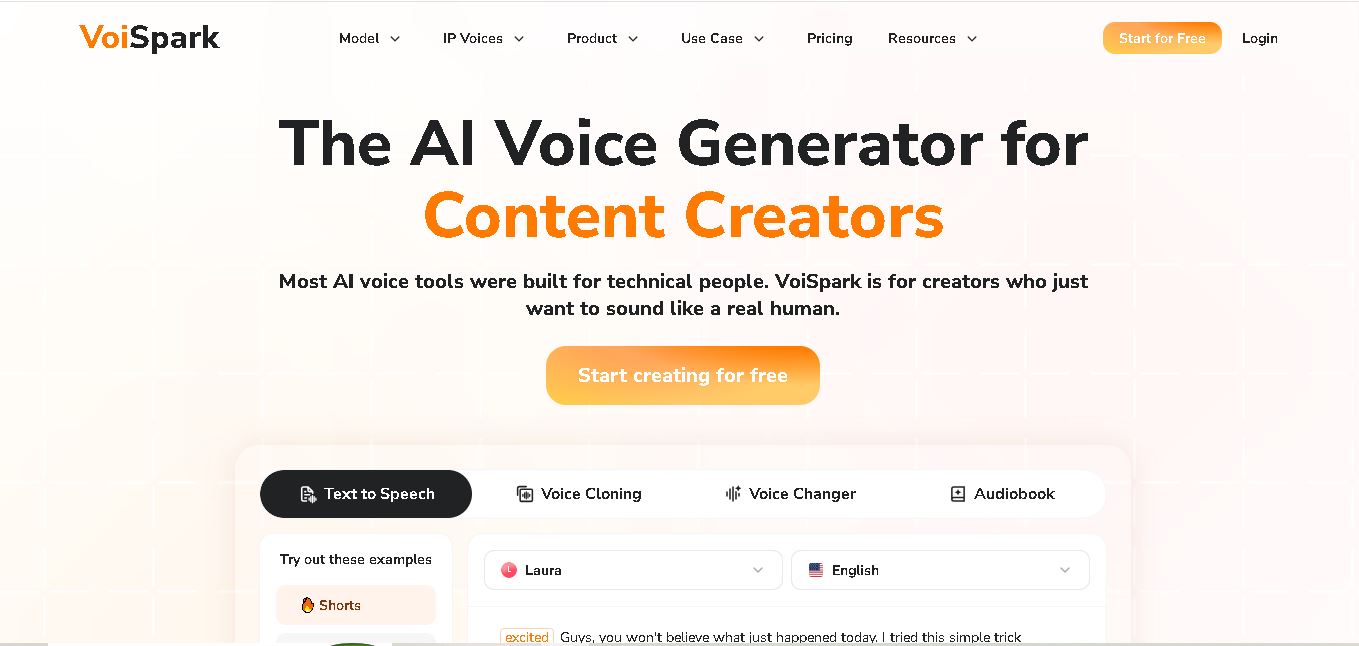
VoiSpark is an AI voice creation platform for generating natural speech, cloning voices, changing recordings, and producing narration. It offers 700+ voices, multiple AI models, multilingual support, emotional voice controls, and long-form narration features. Its Free and paid plans make it accessible to individual creators, professionals, and businesses with different audio-generation requirements.
 4.9
4.9Respeecher
Text-to-Speech
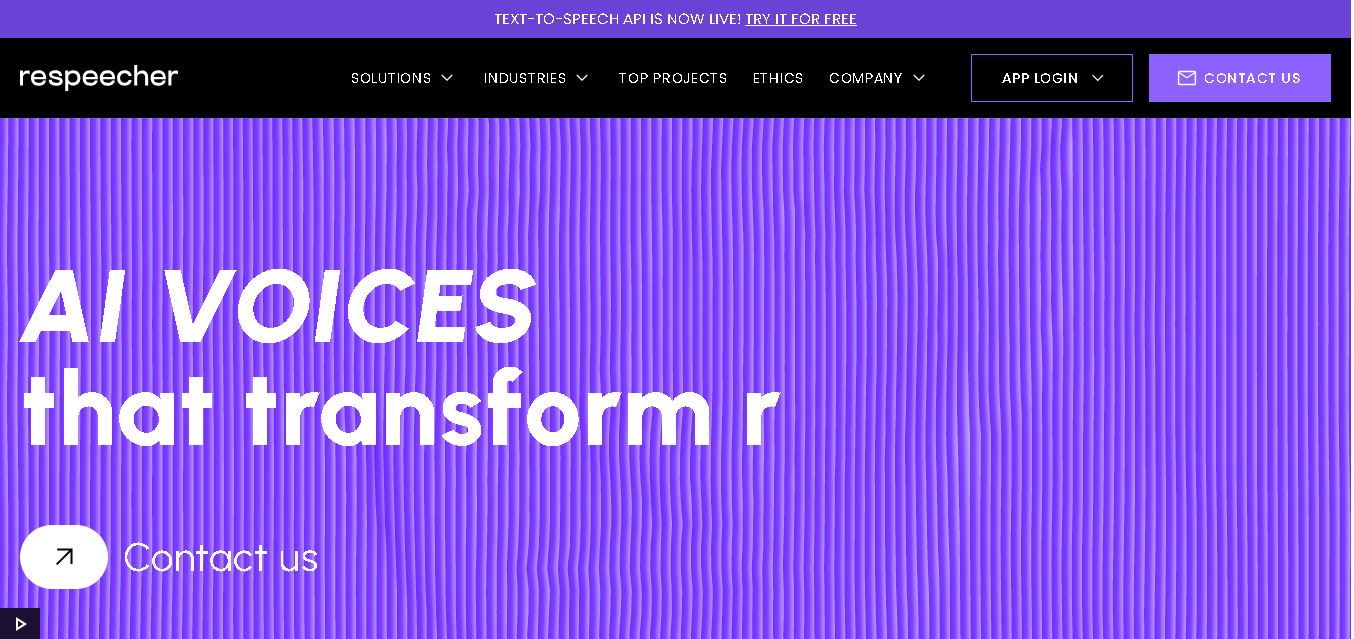
Respeecher helps creators transform speech into realistic target voices while retaining the original performance. It supports speech-to-speech conversion, text-to-speech, voice cloning, localization, and custom voice projects. The platform is particularly suited to professional media, entertainment, gaming, advertising, and other workflows where natural delivery and creative control are important. Flexible pricing.