
Relyance AI
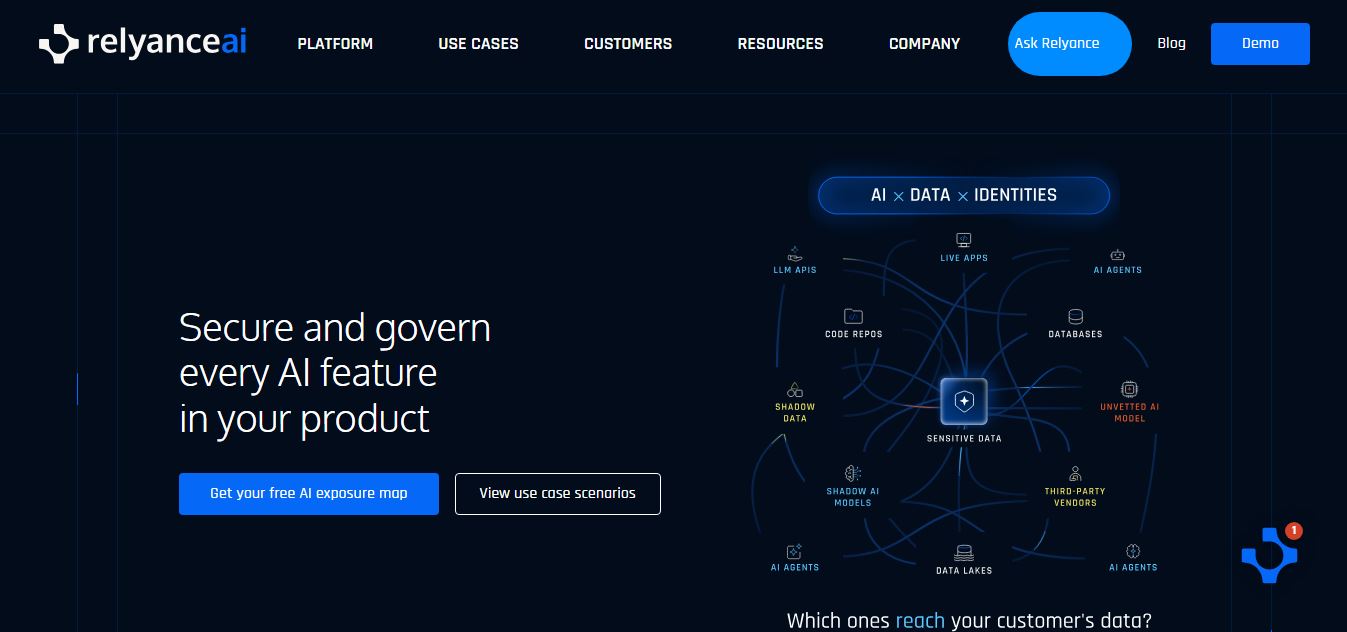
Relyance AI is a data governance and privacy platform that helps businesses manage data usage, ensure compliance, and reduce risk. It uses AI to map data flows, monitor how data is used, and enforce policies, making it easier to stay compliant with regulations like GDPR and CCPA.
What is Relyance AI?
Relyance AI is an AI-native data security and governance platform that helps enterprises monitor, control, and protect how data flows across code, cloud systems, and AI models. It provides real-time visibility into data usage, mapping how information moves, who accesses it, and why, instead of relying on static scans. The platform combines AI security, privacy automation, and data protection into one system, enabling continuous compliance, risk detection, and policy enforcement. It’s mainly used by security and compliance teams to manage AI risks, prevent data leaks, and maintain full control over sensitive data.
Founded in 2020 by Abhi Sharma and headquartered in Mountain View and San Francisco, California, Relyance AI has raised over $62 million in venture funding, including a $32.1 million Series B round led by Thomvest Ventures with participation from Microsoft's M12, Menlo Ventures, Cheyenne Ventures, and Unusual Ventures. Named a Gartner Cool Vendor in Privacy, Relyance AI serves enterprise customers including Coinbase, Snowflake, Notion, Logitech, Plaid, Fivetran, Verkada, and NextRoll. Enterprises deploying Relyance AI report expanding their visibility into data processing operations by over 1,600% within weeks while cutting regulatory audit preparation time from months down to hours.
- Founder / Leadership: Abhi Sharma (Co-founder & CEO)
- Launch Year: 2020 (Expanded with Series B financing in late 2024 / 2025)
Use Cases:
- Automating live Records of Processing Activities (ROPA) and dynamic data mapping without sending manual developer surveys
- Auditing enterprise AI models and training datasets to enforce compliance with the EU AI Act, NIST AI RMF, and GDPR
- Reconciling software architecture and API data flows directly against customer Data Processing Agreements (DPAs) and contracts
- Detecting data drift, unapproved shadow vendor integrations, and misconfigured personal identifiable information (PII) exposures
Technology:
- Static code analysis and semantic AST parsing tracing PII and sensitive data flows directly inside source repositories
- Natural Language Processing (NLP) legal engine parsing privacy notices, customer DPAs, and vendor service contracts
- Knowledge graph architecture synthesizing codebases, runtime APIs, cloud buckets, and regulatory rule sets into one unified model
Target Users:
- Chief Privacy Officers (CPOs) and data protection officers (DPOs) managing GDPR, CCPA, and global privacy mandates
- Chief Information Security Officers (CISOs) and AppSec architects overseeing Data Security Posture Management (DSPM)
- Legal counsels and compliance directors ensuring contractual commitments align with actual software operations
- Content creators using writing tools to draft privacy impact assessments, compliance disclosure statements, and AI governance guidelines
Corporate Entity: Operates as Relyance Inc. (Mountain View / San Francisco, CA)

Key features of Relyance AI
Relyance AI's key features are
- Code-to-Contract Data Mapping: Automatically tracks data lineage from source code and APIs to customer contracts, identifying discrepancies between legal commitments and engineering practices.
- Automated Universal ROPA: Generates and continuously updates audit-ready Article 30 Records of Processing Activities (ROPA) without requiring periodic manual developer questionnaires.
- Enterprise AI Governance: Maps AI and machine learning model training pipelines, verifying that training data adheres to copyright licenses, consent mandates, and the EU AI Act.
- Data Security Posture Management (DSPM): Scans cloud infrastructure, SaaS applications, and databases to classify sensitive data and detect misconfigurations or shadow data stores.
- Continuous Privacy Impact Assessments (PIA/DPIA): Evaluates architectural pull requests and service changes against privacy frameworks to surface compliance risks before production deployment.
- Third-Party Vendor Risk Tracking: Monitors outbound API data transmissions to external third-party sub-processors to prevent unauthorized personal data sharing.
- Contractual Misalignment Alerts: Employs natural language processing to cross-examine customer DPAs against actual code behavior, flagging contractual breaches in real time.
- Broad DevSecOps Integrations: Connects directly with GitHub, GitLab, Jira, AWS, GCP, Azure, Snowflake, and enterprise ticketing workflows.
Relyance AI Pricing
Relyance AI is delivered via custom annual enterprise subscription contracts tailored to organizational footprint, data repository scale, cloud infrastructure volume, and selected modules (Privacy, DSPM, AI Governance).
Enterprise Custom Licensing:
- Annual subscription model based on codebase size, connected cloud assets, and module configuration
- Benchmark median contract values typically range from approximately $30,000 to $60,000/year for mid-market environments, scaling upward to $100,000+/year for large global enterprises
- Includes full code repository scanning, continuous ROPA automation, contract NLP analysis, DSPM asset intelligence, and custom DPA terms
Evaluation & Pilot Engagements:
- Structured proof-of-concept (POC) pilots and guided product demonstrations available upon request for qualifying security and privacy teams
Disclaimer: Relyance AI is an enterprise B2B platform without self-serve swipe-to-buy pricing tiers. For custom enterprise scoping, implementation timelines, and security reviews, please visit the official website at relyance.ai.
Who is using Relyance AI?
Relyance AI is designed for high-growth tech scaleups and complex enterprise organizations, including
- FinTech & Crypto Platforms: Ensuring financial transaction handling, customer KYC data, and blockchain services strictly comply with global regulatory requirements
- Enterprise Cloud & SaaS Providers: Proving to prospective enterprise buyers that customer data residency and sub-processor commitments are honored in code
- Chief Privacy Officers & Legal Teams: Replacing manual spreadsheet questionnaires with dynamic, automated data maps and ROPA documentation
- Security & DevSecOps Engineers: Identifying shadow data stores, unapproved API vendor endpoints, and PII leaks within CI/CD pipelines
- Content Creators: Using writing tools to draft privacy impact assessments, compliance disclosure statements, and AI governance guidelines
- AI Product Developers: Verifying training data provenance and model input boundaries to ensure compliance with emerging AI regulations
Best Relyance AI Alternatives
Some of the strongest Relyance AI alternatives include
- OneTrust
- BigID
- Securiti.ai
- Transcend
- Cyera
- Privacera
Pros and Cons of Relyance AI
Pros
- Code-first approach captures actual data handling at the source rather than relying on unreliable manual questionnaires
- Unique integration of NLP contract analysis reconciles legal obligations against real-time software operations
- Unified platform combines data privacy compliance, AI governance, and DSPM in a single architecture
- Rapid enterprise deployment delivers actionable visibility into processing activities within weeks
- Backed by premier venture funding and trusted by industry leaders like Coinbase, Snowflake, and Notion
Cons
- High enterprise cost barrier makes it unsuitable for early-stage bootstrapped startups and small businesses
- Does not offer a self-serve tier or free ongoing plan without engaging sales for an enterprise proposal
- Comprehensive rollout requires access permissions across source code repositories, cloud providers, and legal contracts
- Requires ongoing cross-functional collaboration between legal, compliance, security, and engineering stakeholders
Why Choose Relyance AI?
Relyance AI is the premier choice for modern enterprises that want to transform data privacy and AI governance from a reactive compliance chore into a continuous, engineering-integrated advantage.
- Eliminates out-of-date manual compliance surveys with continuous code-level data flow tracking
- Reconciles what contracts promise with what software code actually does
- Governs enterprise AI models and training data sets to navigate global AI regulations
- Provides complete visibility across code, cloud data stores, and third-party vendor APIs
- Builds customer trust and accelerates enterprise sales deal reviews with verified compliance proof
Relyance AI vs. Competitors
The main difference between Relyance AI, OneTrust, BigID, and Securiti.ai is that Relyance AI uses a code-first and contract-reconciled architecture to track data flows directly through compiler-level code analysis and legal NLP, whereas OneTrust relies heavily on manual questionnaire workflows and module-heavy legacy surveys, BigID emphasizes deep database classification, and Securiti.ai focuses on unified cloud data perimeter security. Relyance AI stands out for its code-level precision, ROPA automation, and contract-to-code alignment.
| Feature / Tool | Relyance AI (relyance.ai) | OneTrust | BigID | Securiti.ai |
|---|---|---|---|---|
| Core Methodology | Code-Level Flow & Contract NLP | Questionnaire & Module Surveys | Deep Data Store Classification | Data Command Center & DSPM |
| Contract-to-Code Reconciliation | Yes (Native NLP Alignment) | No (Manual Policy Cross-Check) | No | Limited Contract Mapping |
| AI Model Governance | Yes (Training Data & AI Act) | Yes (AI Governance Module) | Yes (AI Data Security) | Yes (Data+AI Governance) |
| Source Code Scanning | Yes (AST / Static Analysis) | Limited / Questionnaire Based | Repository Integrations | Cloud API Focused |
| Pricing Model | Enterprise Annual Contract | Enterprise Modular Licensing | Enterprise Volume Based | Enterprise Annual Contract |
| Best For | Code-to-Contract Governance & DSPM | Broad Legacy GRC Compliance | Petabyte-Scale Data Discovery | Multi-Cloud Security Posture |
How do we rate Relyance AI?
| Parameter | Rating (out of 5) |
|---|---|
| Code-Level Data Observability & Mapping | 5.0 |
| Contract NLP & Legal Reconciliation | 4.9 |
| AI Governance & Regulatory Tracking | 4.9 |
| DSPM & Vendor Risk Management | 4.8 |
| Value for Money | 4.7 |
| Overall Score | 4.86 |
Relyance AI Review
Relyance AI solves the systemic disconnect that has historically existed between corporate legal departments and software engineering teams. In most enterprises, privacy teams attempt to verify compliance through lengthy developer surveys, producing documentation that becomes outdated the moment engineers merge code. Relyance AI bridges this divide by turning source code into the single source of truth for compliance. By combining static code parsing, automated ROPA generation, and NLP contract analysis, it enables organizations to verify that customer commitments are upheld throughout the software development lifecycle. For technology-forward enterprises navigating modern AI regulations and complex global privacy requirements, Relyance AI is an exceptional platform.
Conclusion
Relyance AI helps organizations manage data privacy and compliance by providing visibility into how data is collected, used, and shared across systems. Instead of manual tracking, it automates data mapping and risk assessment to ensure compliance with evolving regulations. This reduces operational burden and improves accuracy. Overall, Relyance AI simplifies privacy management, helping businesses stay compliant, reduce risk, and build trust with customers through better data governance.
FAQ
What is Relyance AI and how does it work?
Relyance AI is an AI-powered data privacy, governance, and compliance platform that helps organizations understand and manage how data flows across their systems. It works by automatically mapping data across applications, identifying risks, and providing real-time insights to ensure compliance with regulations like GDPR, CCPA, and other global privacy laws.
What problems does Relyance AI solve?
Relyance AI helps solve challenges related to data visibility, privacy compliance, and risk management. It eliminates manual tracking of data flows, reduces compliance overhead, and ensures organizations can respond quickly to audits, breaches, or regulatory requirements.
What features does Relyance AI offer?
Relyance AI offers features such as automated data mapping, real-time risk detection, privacy impact assessments (PIAs), vendor risk management, consent tracking, and compliance reporting. It also includes AI-driven insights to help teams proactively manage data risks.
How does Relyance AI help with compliance (GDPR, CCPA, etc.)?
Relyance AI continuously monitors data flows and automatically aligns them with regulatory requirements. It generates reports, flags compliance gaps, and provides actionable recommendations, making it easier for organizations to meet GDPR, CCPA, and other data protection standards.
How is Relyance AI different from traditional compliance tools?
Unlike traditional tools that rely on manual inputs and static audits, Relyance AI uses continuous monitoring and AI-driven automation to provide real-time visibility into data usage. This reduces manual effort and ensures compliance is maintained proactively rather than reactively.
How much does Relyance AI cost?
Relyance AI does not publicly list its pricing. It follows a custom enterprise pricing model based on factors like company size, data volume, integrations, and compliance needs. Interested users typically need to request a demo or quote.
Who should use Relyance AI?
Relyance AI is ideal for enterprises, SaaS companies, fintech firms, healthcare organizations, and compliance teams that handle sensitive user data and need to maintain strict privacy standards across multiple systems.
User Reviews
No reviews yet for Relyance AI.
Featured Tools
Featured AI tools from TechShark

Melody Genie
MelodyGenie is an AI-powered music generator that creates original songs from simple text prompts. Users can choose styles, moods, and genres, then instantly generate melodies and full tracks, making it easy for creators, marketers, and hobbyists to produce custom music without musical expertise.
Freemium
Kimi AI
Kimi AI is an advanced AI assistant developed by Moonshot AI that helps you chat, research, write, code, and automate tasks in one place. It supports web search, file analysis, and multimodal inputs, and can even run autonomous “agent” workflows to complete complex tasks end-to-end.
Freemium
Fashion Diffusion AI
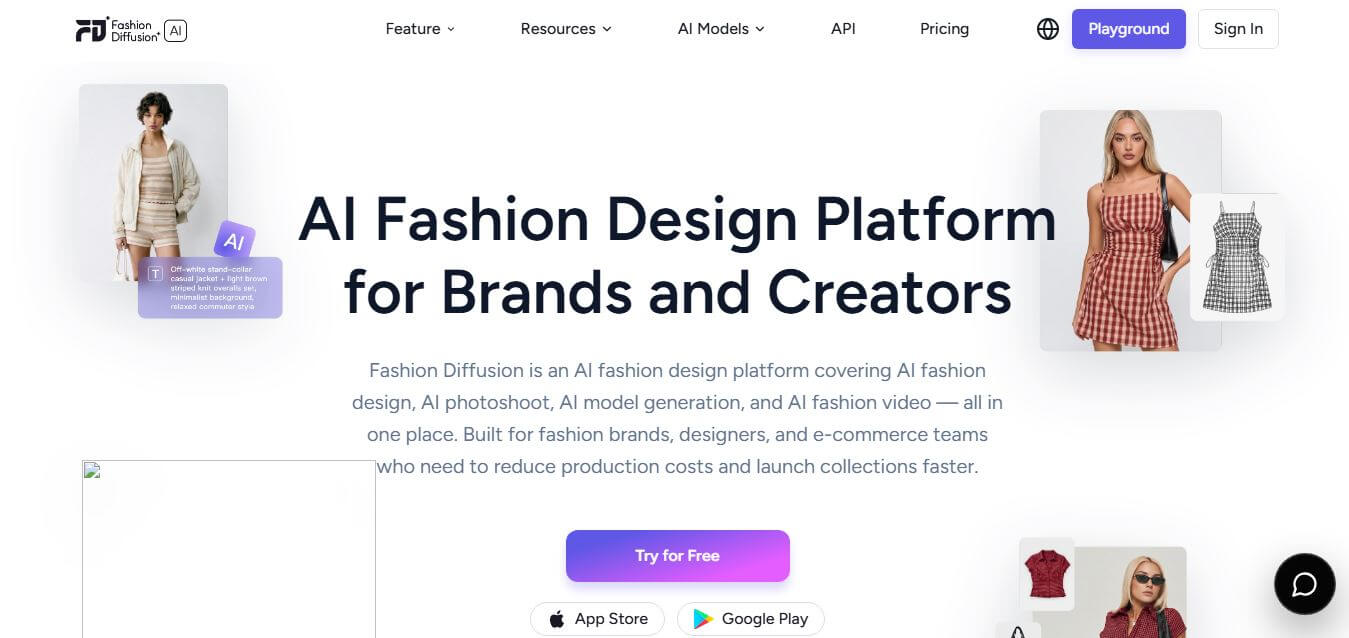
Fashion Diffusion is an AI-powered fashion design platform that helps brands and designers create clothing designs, virtual try-ons, AI models, product photos, and marketing visuals faster and cost-effectively.
Paid
Veo 4
Veo 4 AI is an AI video creation platform that generates dramatic videos from text, images, audio, and video prompts using realistic motion and synchronized sound.
Paid
Alternatives
Alternatives to Relyance AI
The best Relyance AI alternatives include OneTrust, BigID, Securiti.ai, Transcend, Cyera, and Privacera. These platforms provide data privacy compliance, automated data discovery, AI governance, and Data Security Posture Management (DSPM). While Relyance AI specializes in a code-first and contract-reconciled architecture that maps personal data directly from source code and APIs to customer DPAs, alternatives like OneTrust focus on questionnaire-driven legacy compliance frameworks, and BigID emphasizes deep database classification at petabyte scale. Choosing the right tool depends on whether you require code-level data lineage and contract reconciliation, deep multi-cloud data store discovery, or broad GRC questionnaire management.
 4.9
4.9HashiCorp Vault
Security
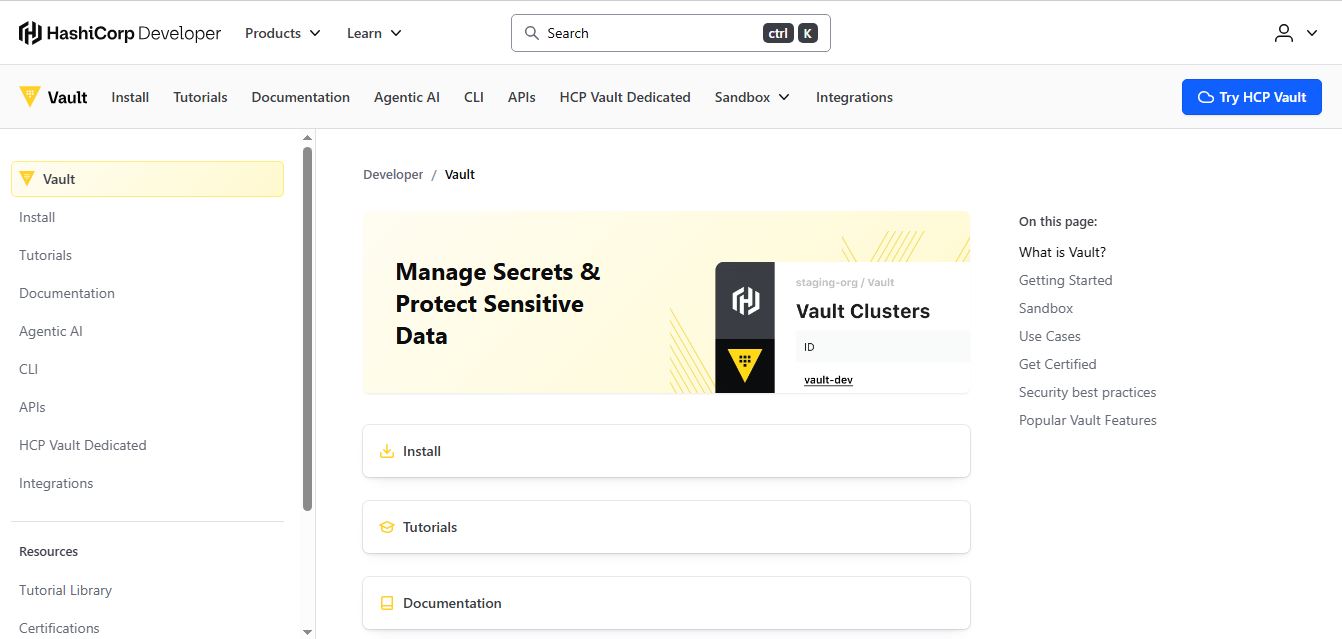
HashiCorp Vault is a secrets management platform that helps organizations securely store, access, and control sensitive data like API keys, tokens, and credentials. It provides encryption, identity-based access, and automated secrets rotation, enabling secure application deployment and compliance across cloud and on-prem environments.
 4.9
4.9Arista Networks
Security
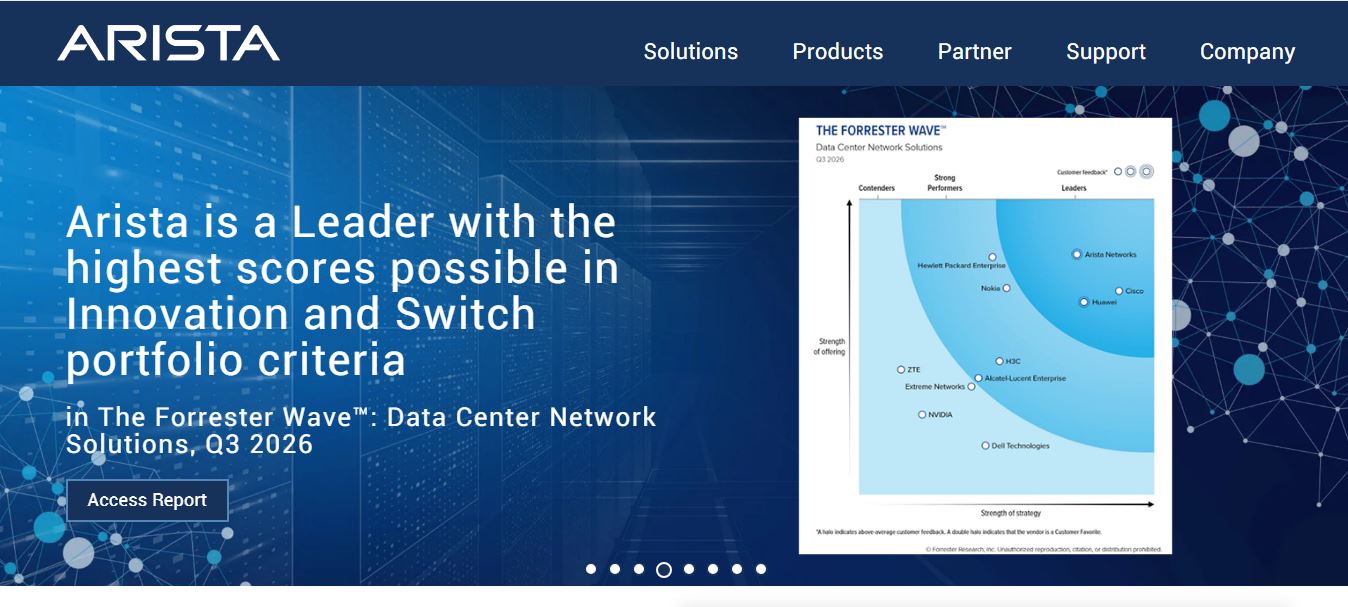
Arista Networks is an AI-driven cloud networking platform that helps businesses build high-performance, scalable networks across data centers, campuses, and cloud environments. It delivers automation, analytics, and security through a unified operating system, enabling reliable connectivity and efficient data flow for modern, large-scale digital infrastructure.
 4.9
4.9Mimecast
Security
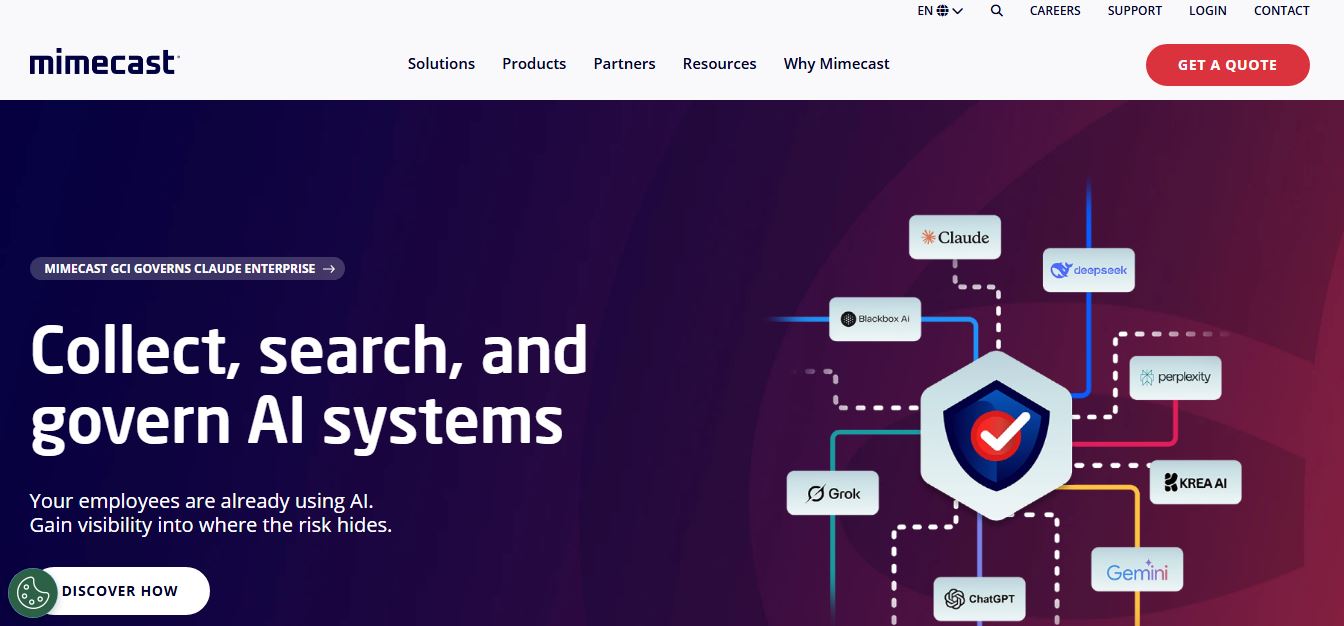
Mimecast is an AI-powered email and collaboration security platform that helps businesses prevent phishing, ransomware, and data leaks. It combines threat detection, data protection, and employee awareness tools into one system, enabling organizations to reduce human risk, ensure compliance, and maintain secure, uninterrupted communication.
 4.9
4.9Cato Networks
Security
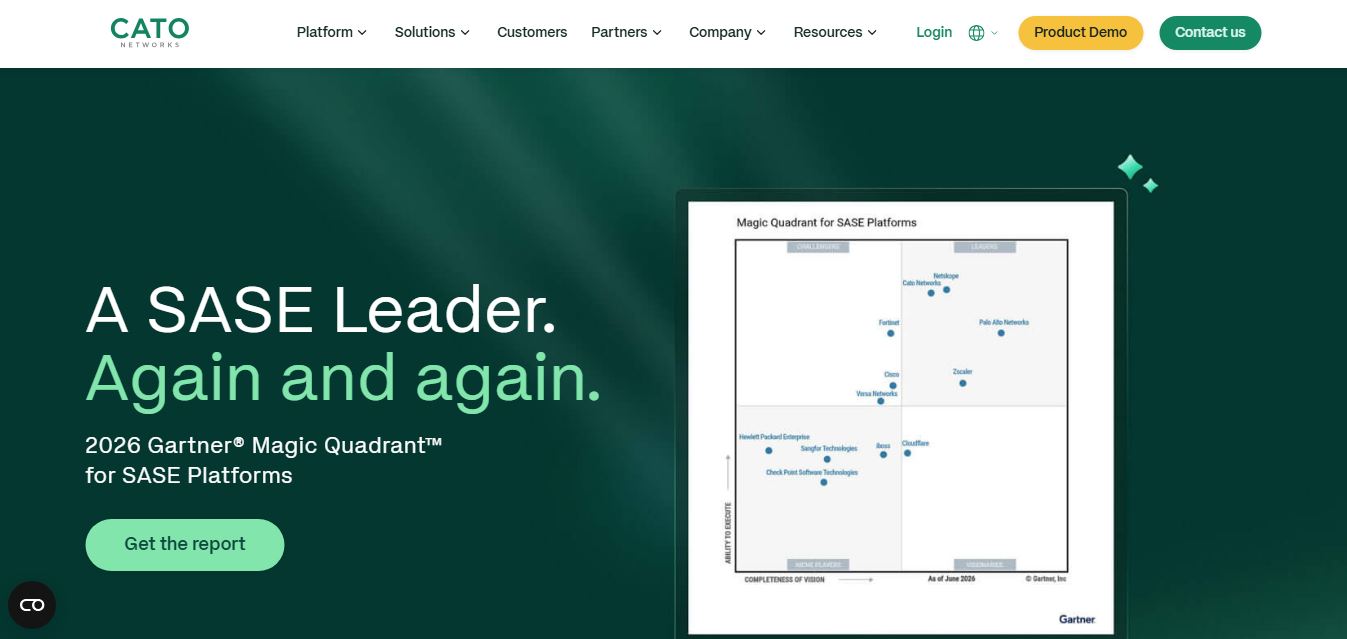
Cato Networks is an AI-powered SASE platform that combines networking and security into a single cloud service. It connects users, apps, and data globally while enforcing zero-trust access, simplifying infrastructure, reducing risk, and delivering secure, high-performance connectivity across distributed and cloud-first business environments.
 4.9
4.9Microsoft Defender for Endpoint
Security
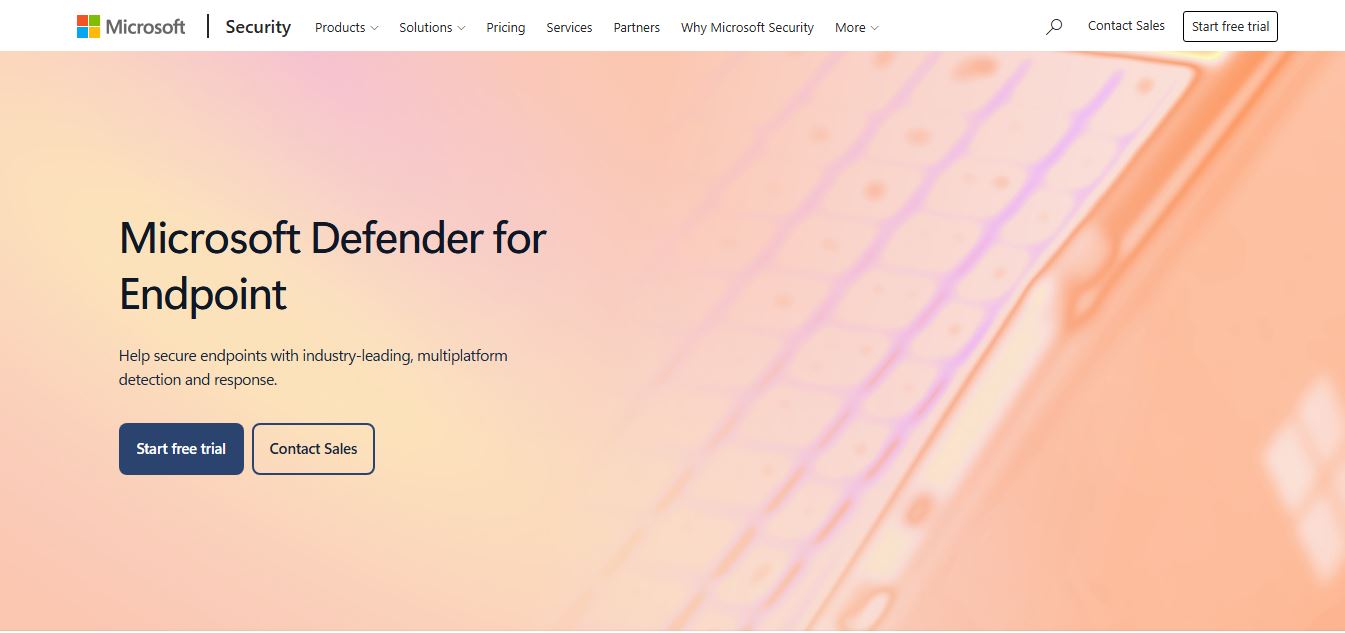
Microsoft Defender for Endpoint is an AI-powered endpoint security platform that helps businesses prevent, detect, and respond to cyber threats across devices like laptops, servers, and mobile systems. It combines antivirus, threat intelligence, and automated response to stop attacks, reduce risk, and provide full visibility across environments.
 4.9
4.9Securiti AI
Security
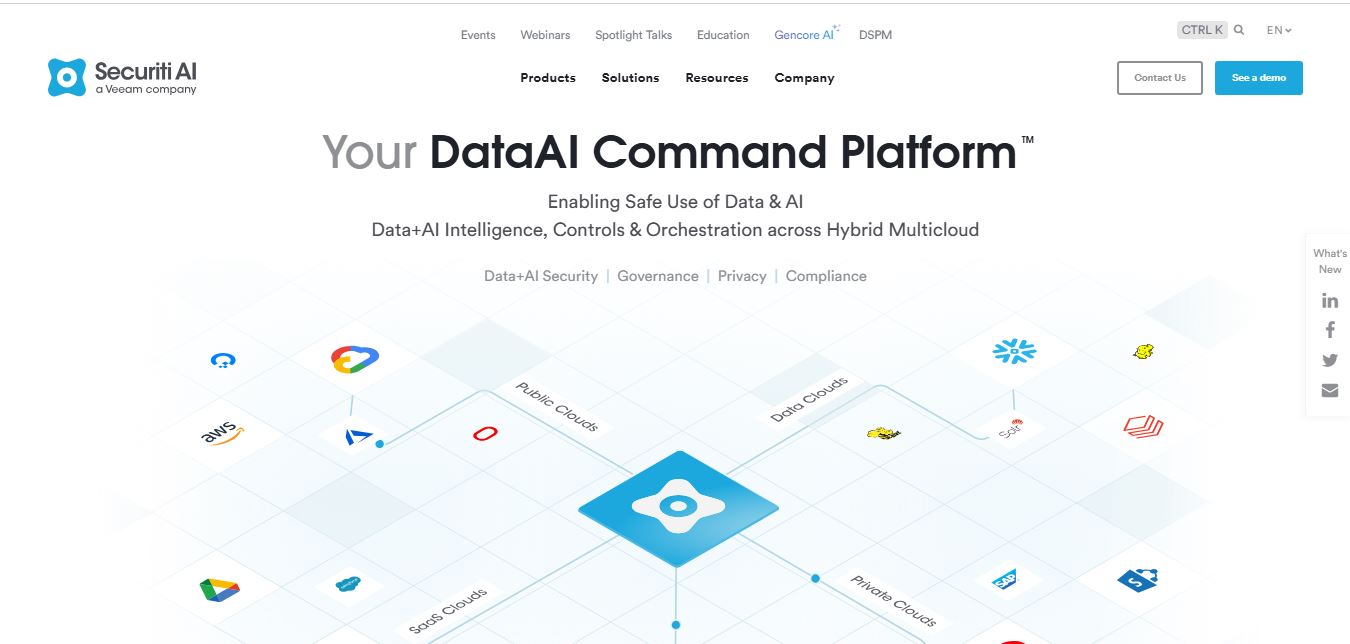
Securiti is an AI-powered data security, privacy, and governance platform that helps organizations discover, manage, and protect sensitive data across systems. It enables compliance with regulations like GDPR and CCPA, automates data workflows, and provides unified control over data access, risk, and usage.
 4.9
4.9GitHub Advanced Security
Security
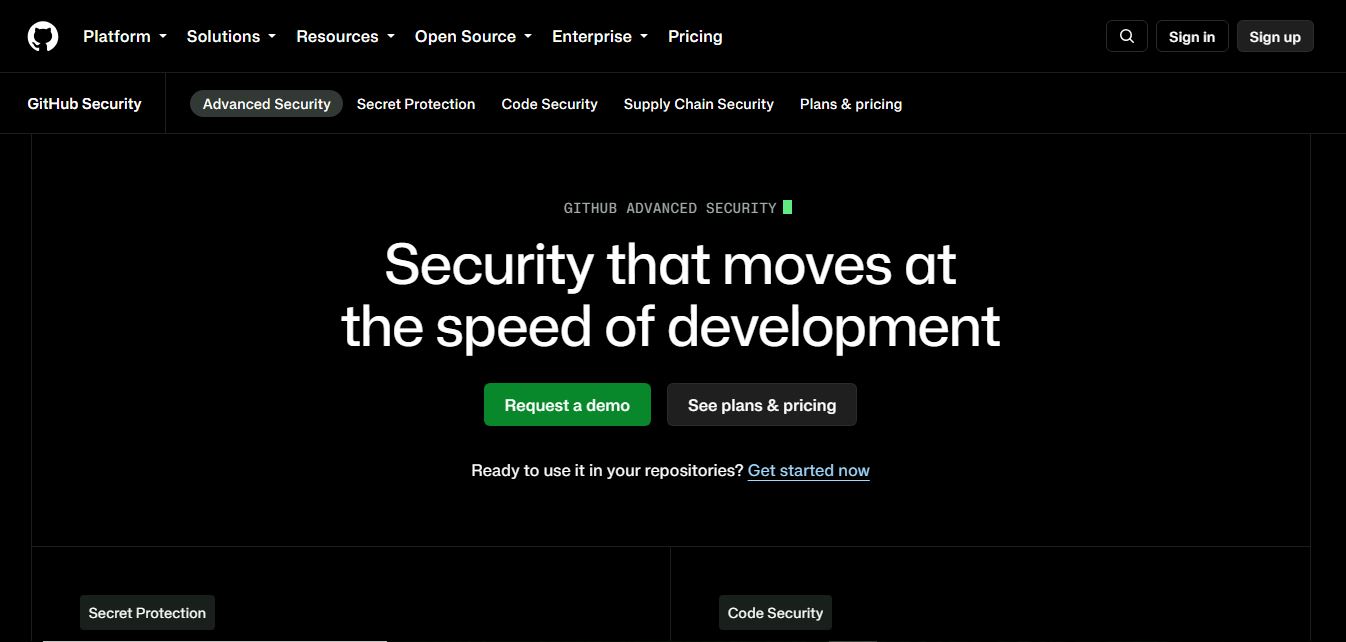
GitHub Advanced Security is a security solution built into GitHub that helps developers find and fix vulnerabilities in their code. It offers features like code scanning, secret scanning, and dependency alerts, enabling teams to identify risks early and secure applications throughout the development lifecycle.
 4.8
4.8HiddenLayer
Security
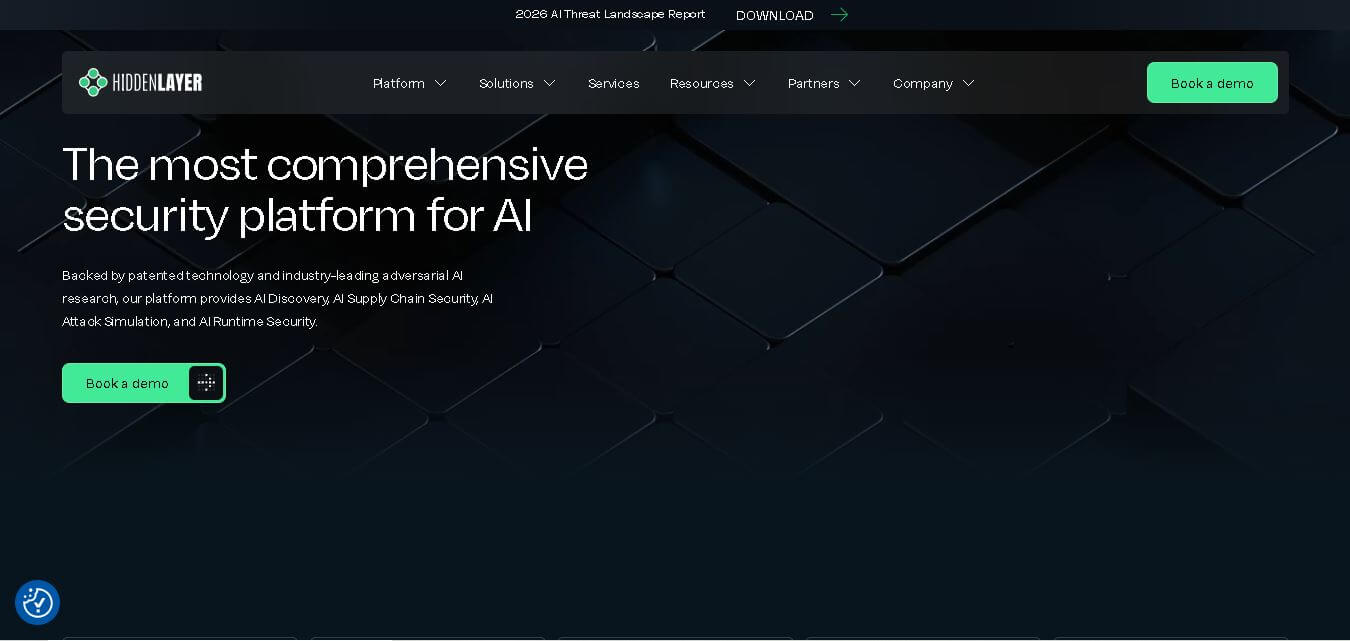
HiddenLayer provides purpose-built security for organizations deploying generative, predictive, and agentic AI. Its platform helps security teams discover AI assets, inspect models for malware and vulnerabilities, continuously simulate attacks, and detect runtime threats. It integrates with existing security and MLOps environments while protecting sensitive models, prompts, data, and intellectual property.
 4.9
4.9Cloudflare
Security
Cloudflare is a leading global connectivity cloud platform that delivers fast content delivery (CDN), authoritative DNS, unmetered DDoS mitigation, Web Application Firewall (WAF) security, serverless edge compute (Workers), and Zero Trust network access across 330+ cities worldwide.