
GitHub Advanced Security
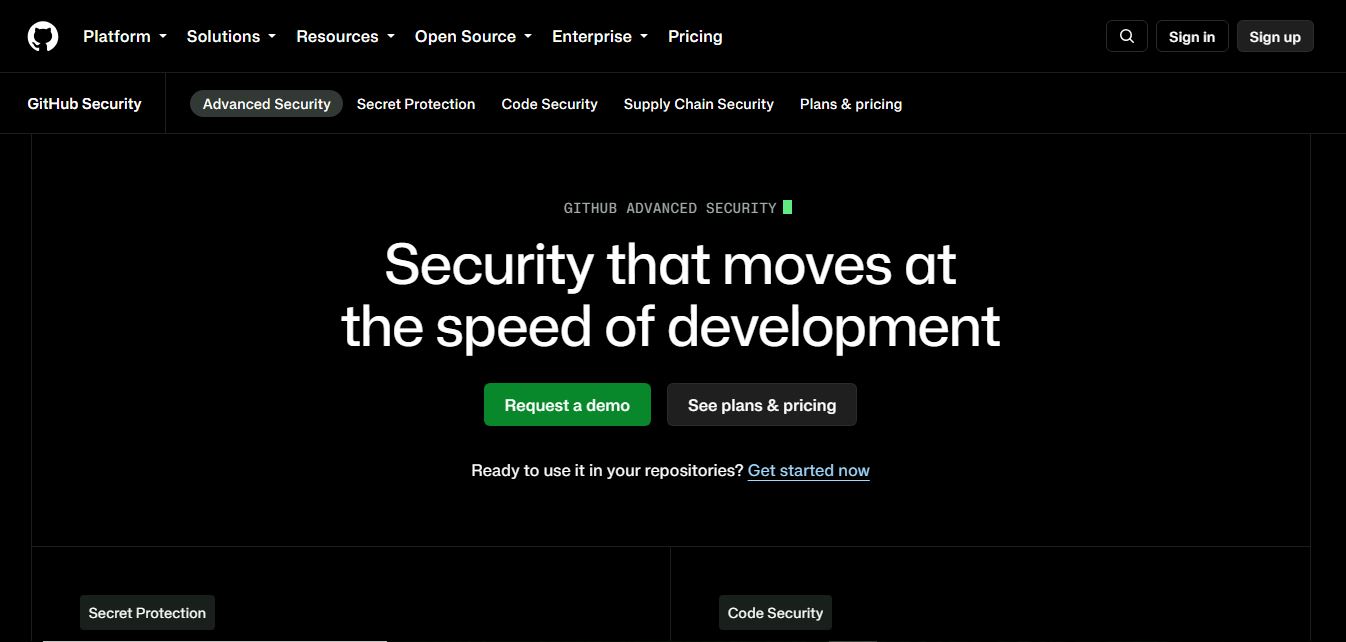
GitHub Advanced Security is a security solution built into GitHub that helps developers find and fix vulnerabilities in their code. It offers features like code scanning, secret scanning, and dependency alerts, enabling teams to identify risks early and secure applications throughout the development lifecycle.
What is GitHub Advanced Security?
GitHub Advanced Security is a security solution built into GitHub that helps developers identify and fix vulnerabilities, prevent secret leaks, and secure their code throughout the development lifecycle. It includes features like code scanning, secret scanning, and dependency analysis to detect issues early in the development process. Integrated directly into GitHub workflows, it enables teams to automate security checks, get actionable insights, and remediate risks quickly, helping maintain secure, high-quality software without slowing down development.
Acquired via Semmle in 2019 and continuously expanded under GitHub / Microsoft, GitHub Advanced Security powers thousands of enterprise software organizations globally, including AMD, Mercari, Otto Group, and Telstra. In 2025/2026, GitHub unbundled GHAS into modular add-ons—GitHub Secret Protection ($19/committer/month) and GitHub Code Security ($30/committer/month), or $49/committer/month combined. With Copilot Autofix resolving up to two-thirds of common code vulnerabilities in minutes and push protection blocking hundreds of thousands of credential leaks monthly before they touch the commit log, GHAS delivers developer-native security without sacrificing delivery velocity.
- Developer / Parent Company: GitHub, Inc. / Microsoft Corporation
- Launch Year: 2019 / 2020 (Unbundled into Secret Protection & Code Security in 2025)
Use Cases:
- Detecting code injection, buffer overflows, and architectural vulnerabilities during pull requests using semantic CodeQL scanning
- Preventing hardcoded API keys, tokens, and database credentials from ever leaking via real-time push protection
- Automatically suggesting and applying natural code patches to vulnerabilities using Copilot Autofix
- Auditing third-party open-source dependencies and verifying licensing compliance prior to merging code
Technology:
- CodeQL semantic code analysis engine treating source code as a queryable database
- Copilot Autofix, generative AI remediation engine, generates contextual code diffs directly in pull requests
- Global token verification and validity check integrations with over 200 cloud and SaaS partners
Target Users:
- Application Security (AppSec) leads and CISOs establishing continuous shift-left code security governance
- Software development teams and DevOps engineers seeking friction-free in-PR security reviews
- Enterprise compliance and risk officers enforcing supply chain integrity and secret containment
- Content creators using writing tools to draft vulnerability disclosure advisories, security policies, and engineering playbooks
Corporate Entity: Operates as a flagship product line of GitHub, Inc. (San Francisco, CA / Microsoft Corporation)

Key features of GitHub Advanced Security
GitHub Advanced Security's key features are
- CodeQL Code Scanning (SAST): Semantic code analysis treats code like relational data to trace taint flow and catch complex vulnerabilities (SQLi, XSS, path traversal) across C/C++, C#, Go, Java, JavaScript/TypeScript, Python, Ruby, and Swift.
- Copilot Autofix: Combines CodeQL taint analysis with generative AI to explain why a vulnerability exists and automatically propose natural, production-ready code diffs to fix it.
- Push Protection Secret Scanning: Blocks developers from committing known token formats, private keys, and passwords before pushes are accepted, preventing accidental leaks entirely.
- Partner Validity Checks: Automatically verifies with 200+ partner service providers (AWS, Azure, Stripe, Slack) whether exposed tokens are live or revoked.
- Dependency Review (SCA): Catches vulnerable packages, malicious open-source libraries, and incompatible software licenses before vulnerable pull requests merge.
- Security Overview & Campaigns: Enterprise security dashboard giving CISOs aggregate visibility into risk postures, MTTR metrics, and coordinated vulnerability remediation campaigns.
- Custom Auto-Triage & Query Rules: Write custom CodeQL queries or define automated triage rules to suppress known test-file warnings and prioritize high-severity findings.
- Native Pull Request Ergonomics: Delivers all alerts, annotations, and fixes directly into the GitHub PR conversation, eliminating context-switching between external tools.
GitHub Advanced Security Pricing
GitHub Advanced Security is offered as modular add-ons available for GitHub Team and GitHub Enterprise accounts, billed per unique active committer over a rolling 90-day window. It is completely free for all public open-source repositories.
Open Source / Public Repositories:
- $0 (Free forever)
- Includes CodeQL code scanning, secret scanning with push protection, Copilot Autofix, and dependency graphs on all public GitHub repositories
GitHub Secret Protection (Add-on):
- $19 per active committer/month
- Available on GitHub Team & Enterprise; includes secret scanning across code history, wikis, and issues; push protection; partner validity checks; Copilot secret scanning; and bypass controls
GitHub Code Security (Add-on):
- $30 per active committer/month
- Available on GitHub Team & Enterprise; includes CodeQL code scanning, Copilot Autofix, Dependency Review, premium Dependabot updates, and security campaigns
Full GitHub Advanced Security Bundle (Both Add-ons):
- $49 per active committer/month
- Combines both Secret Protection ($19) and Code Security ($30) for full comprehensive AppSec coverage across private enterprise repositories
Disclaimer: An active committer is defined as a user who authored a commit pushed to an enabled repository in the previous 90 days. Enterprise volume discounts and Azure metered billing options are available at github.com/security/plans.
Who is using GitHub Advanced Security?
GitHub Advanced Security is designed for software engineering and security operations teams, including
- Enterprise DevSecOps Teams: Shifting application security testing directly into existing GitHub pull request flows
- AppSec Engineers & Security Architects: Writing custom CodeQL queries to detect bespoke business logic flaws across codebases
- Software Developers: Receiving instant pull-request warnings and 1-click Copilot Autofix diffs before shipping to production
- Regulated Financial & Healthcare Orgs: Securing source code and meeting SOC 2, ISO 27001, and FedRAMP supply chain mandates
- Content Creators: Using writing tools to draft vulnerability disclosure advisories, security policies, and engineering playbooks
- Open-Source Maintainers: Leveraging free CodeQL and secret push protection to safeguard community open-source projects
Best GitHub Advanced Security Alternatives
Some of the strongest GitHub Advanced Security alternatives include
- Snyk
- SonarQube / SonarCloud
- Veracode
- Checkmarx
- GitLab Ultimate (Security & Compliance)
- Semgrep
Pros and Cons of GitHub Advanced Security
Pros
- Seamless native integration eliminates external dashboard context-switching by embedding findings directly in pull requests
- Copilot Autofix generates contextual, production-ready code patches that developers can review and merge in seconds
- Push protection halts credential leaks at the git push stage before secrets ever enter version control
- Modular pricing allows teams to deploy Secret Protection ($19) org-wide and scope Code Security ($30) to critical repos
- Completely free for public open-source repositories with full CodeQL and secret scanning features
Cons
- At $49/active committer/month for the full bundle, costs scale quickly across large enterprise development teams
- Requires a base GitHub Team or Enterprise subscription; cannot be purchased as a standalone scanner for external repos
- Active committer billing uses a 90-day rolling window, meaning infrequent contributors remain licensed for 3 months
- CodeQL deep compilation analysis can increase CI/CD pipeline build runtimes on large enterprise repositories
Why Choose GitHub Advanced Security?
GitHub Advanced Security is the ideal choice for engineering organizations that want genuine developer adoption for security testing without slowing down sprint cycles.
- Eliminates developer resistance by meeting engineers where they already work inside GitHub pull requests
- Prevents credential leaks proactively through real-time push protection rather than reactive post-breach alerts
- Cuts Mean Time to Remediate (MTTR) dramatically with AI-suggested Copilot Autofix pull request patches
- Provides unmatched semantic taint analysis across enterprise programming languages using CodeQL
- Provides modular pricing flexibility across Secret Protection and Code Security tiers
GitHub Advanced Security vs. Competitors
The main difference between GitHub Advanced Security, Snyk, SonarQube, and GitLab Ultimate is that GHAS is natively woven into the GitHub pull request fabric with semantic CodeQL taint analysis, Copilot Autofix, and pre-commit push protection, whereas Snyk excels as a multi-cloud developer security suite across IDEs and CI tools, SonarQube focuses on continuous code quality and static smells, and GitLab Ultimate bundles security into an end-to-end proprietary DevOps platform. GHAS stands out for its zero-setup GitHub native ergonomics, secret push protection, and AI-driven automated fixes.
| Feature / Tool | GitHub Advanced Security | Snyk | SonarQube | GitLab Ultimate |
|---|---|---|---|---|
| Core Focus | Native In-PR SAST, Secrets & SCA | Developer Security & Containers | Clean Code, Quality & SAST | All-in-One DevOps & Security |
| Push Protection (Secrets) | Yes (Pre-Receive Git Hook) | CLI / IDE Based | Post-Push Scanning | Secret Push Protection |
| AI Vulnerability Fixes | Yes (Copilot Autofix) | Yes (Snyk DeepCode AI) | Yes (AI CodeFix) | Yes (GitLab Duo Vulnerability AI) |
| Open Source Repos | 100% Free on Public Repos | Free Tier Available | Free Community Edition | Free for Open Source Programs |
| Starting Paid Price | $19–$30/committer/mo ($49 both) | $25.00–$98.00/contributor/mo | From $160/year (per LOC) | $99.00/user/month |
| Best For | GitHub-Native Teams & PR Workflow | Multi-VCS & Container Security | Code Quality & Compliance Debt | GitLab-Centric Enterprise Stacks |
How do we rate GitHub Advanced Security?
| Parameter | Rating (out of 5) |
|---|---|
| Native Pull Request Experience & Ergonomics | 5.0 |
| CodeQL Semantic SAST & Custom Queries | 4.9 |
| Push Protection & Secret Scanning | 5.0 |
| Copilot Autofix & Remediation Speed | 4.9 |
| Value for Money | 4.7 |
| Overall Score | 4.90 |
GitHub Advanced Security Review
GitHub Advanced Security represents the cleanest implementation of developer-first security in modern software engineering. For years, AppSec programs struggled because external scanners produced noisy PDF reports that developers ignored. GHAS flips this model by embedding security testing directly into the standard code review conversation. Push protection stops compromised credentials before they enter git history, while Copilot Autofix provides inline code diffs that turn security alerts into actionable pull request fixes. By unbundling Secret Protection ($19) from Code Security ($30), organizations gain the flexibility to protect all repos against credential leaks while focusing deep CodeQL analysis on production services. For teams running on GitHub Enterprise, GHAS is an exceptional platform.
Conclusion
GitHub Advanced Security helps teams identify and fix vulnerabilities early by integrating security checks directly into the development workflow. Instead of addressing issues after deployment, it scans code, detects secrets, and reviews dependencies in real time. This improves security without slowing development. Overall, GitHub Advanced Security strengthens application protection, helping developers write safer code, reduce risks, and maintain secure software throughout the development lifecycle.
FAQ
What is GitHub Advanced Security and how does it work?
GitHub Advanced Security (GHAS) is an application security (AppSec) solution built into GitHub that helps developers find and fix vulnerabilities directly within their development workflow. It works by integrating security checks like code scanning, secret detection, and dependency analysis into pull requests and commits, enabling teams to identify issues early and ship secure code faster.
What features does GitHub Advanced Security include?
Key features include code scanning (via CodeQL), secret scanning, push protection, dependency review, AI-powered autofix suggestions, and security dashboards. These tools help teams detect vulnerabilities, prevent secret leaks, and monitor overall risk across repositories.
What are the main components of GitHub Advanced Security?
GitHub Advanced Security is primarily made up of two core products: Code Security – focuses on identifying vulnerabilities in code, and Secret Protection – prevents exposure of sensitive credentials like API keys Together, these provide end-to-end protection across the software development lifecycle.
How does GitHub Advanced Security improve DevSecOps?
GitHub Advanced Security embeds DevSecOps directly into the development workflow, allowing developers to catch and fix issues during coding instead of after deployment. This reduces security risks, speeds up remediation, and improves collaboration between developers and security teams.
What is code scanning in GitHub Advanced Security?
Code scanning is a feature that analyzes your code for vulnerabilities and errors using tools like CodeQL. It runs automatically on commits and pull requests, highlighting issues such as SQL injection or insecure code patterns so developers can fix them before merging.
What is secret scanning and push protection?
Secret scanning detects sensitive data like API keys, tokens, and passwords in your repository. Push protection goes a step further by blocking commits that contain secrets before they are pushed, preventing leaks from happening in the first place.
Who should use GitHub Advanced Security?
GitHub Advanced Security is ideal for engineering teams, DevOps teams, enterprises, and organizations building production-grade software. It’s especially valuable for teams handling sensitive data, scaling applications, or aiming to implement secure-by-default development practices.
User Reviews
No reviews yet for GitHub Advanced Security.
Featured Tools
Featured AI tools from TechShark
Melody Genie
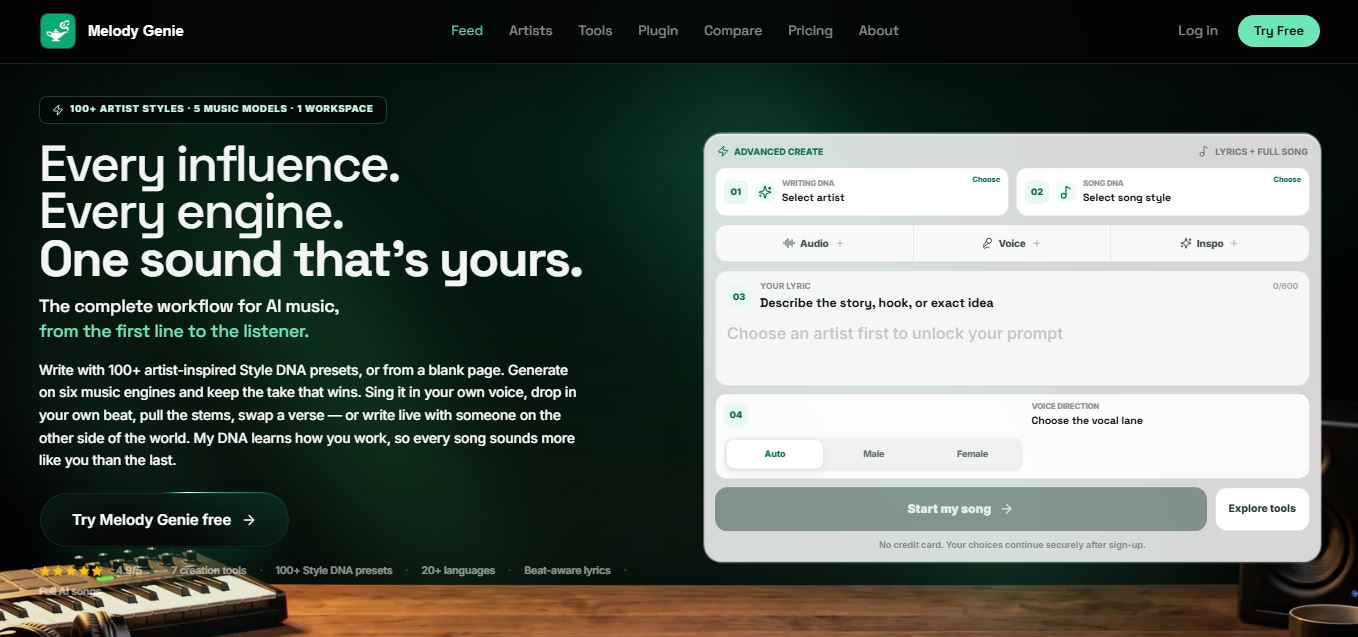
MelodyGenie is an AI-powered music generator that creates original songs from simple text prompts. Users can choose styles, moods, and genres, then instantly generate melodies and full tracks, making it easy for creators, marketers, and hobbyists to produce custom music without musical expertise.
Freemium
Kimi AI
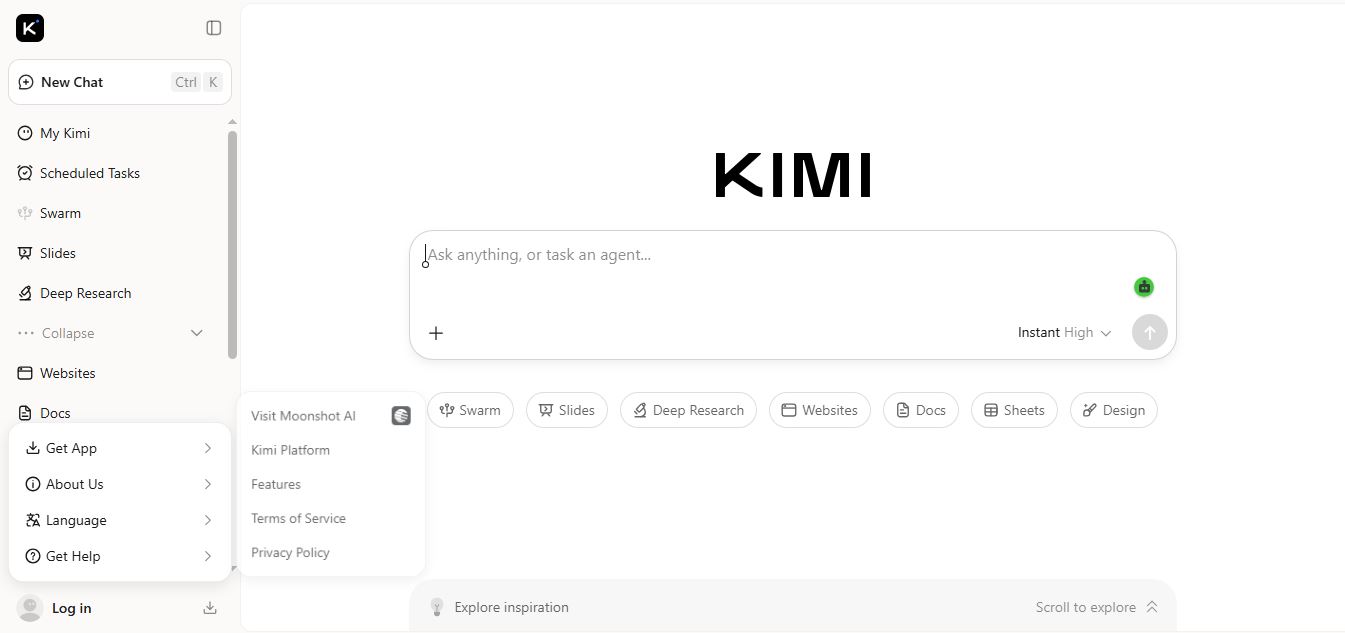
Kimi AI is an advanced AI assistant developed by Moonshot AI that helps you chat, research, write, code, and automate tasks in one place. It supports web search, file analysis, and multimodal inputs, and can even run autonomous “agent” workflows to complete complex tasks end-to-end.
Freemium
Fashion Diffusion AI
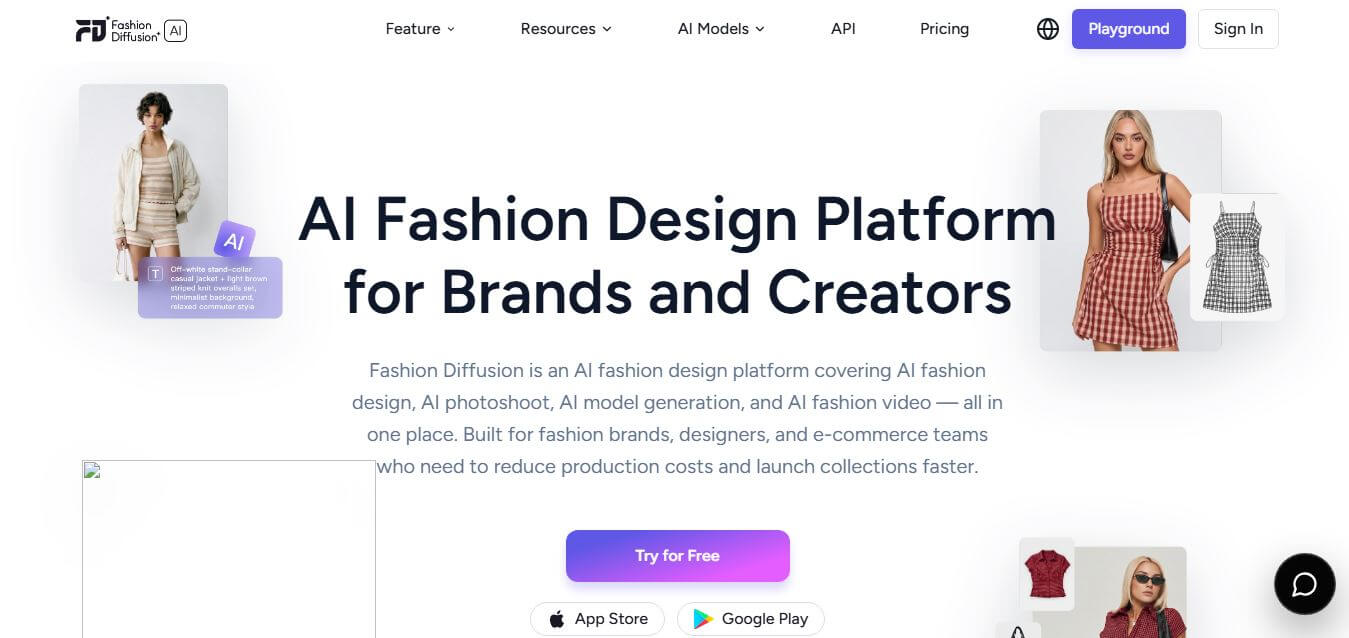
Fashion Diffusion is an AI-powered fashion design platform that helps brands and designers create clothing designs, virtual try-ons, AI models, product photos, and marketing visuals faster and cost-effectively.
Paid
Veo 4
Veo 4 AI is an AI video creation platform that generates dramatic videos from text, images, audio, and video prompts using realistic motion and synchronized sound.
Paid
Alternatives
Alternatives to GitHub Advanced Security
The best GitHub Advanced Security alternatives include Snyk, SonarQube / SonarCloud, Veracode, Checkmarx, GitLab Ultimate, and Semgrep. These platforms provide static application security testing (SAST), software composition analysis (SCA), and secret detection. While GitHub Advanced Security specializes in zero-setup native pull request integration, CodeQL semantic taint tracking, Copilot Autofix, and pre-commit push protection, alternatives like Snyk offer multi-cloud and IDE versatility, and SonarQube focuses on clean code and maintainability. Choosing the right tool depends on whether you require seamless GitHub-native PR security, multi-VCS coverage, or container and cloud infrastructure scanning.
 4.9
4.9HashiCorp Vault
Security
HashiCorp Vault is a secrets management platform that helps organizations securely store, access, and control sensitive data like API keys, tokens, and credentials. It provides encryption, identity-based access, and automated secrets rotation, enabling secure application deployment and compliance across cloud and on-prem environments.
 4.9
4.9Arista Networks
Security
Arista Networks is an AI-driven cloud networking platform that helps businesses build high-performance, scalable networks across data centers, campuses, and cloud environments. It delivers automation, analytics, and security through a unified operating system, enabling reliable connectivity and efficient data flow for modern, large-scale digital infrastructure.
 4.9
4.9Mimecast
Security
Mimecast is an AI-powered email and collaboration security platform that helps businesses prevent phishing, ransomware, and data leaks. It combines threat detection, data protection, and employee awareness tools into one system, enabling organizations to reduce human risk, ensure compliance, and maintain secure, uninterrupted communication.
 4.9
4.9Cato Networks
Security
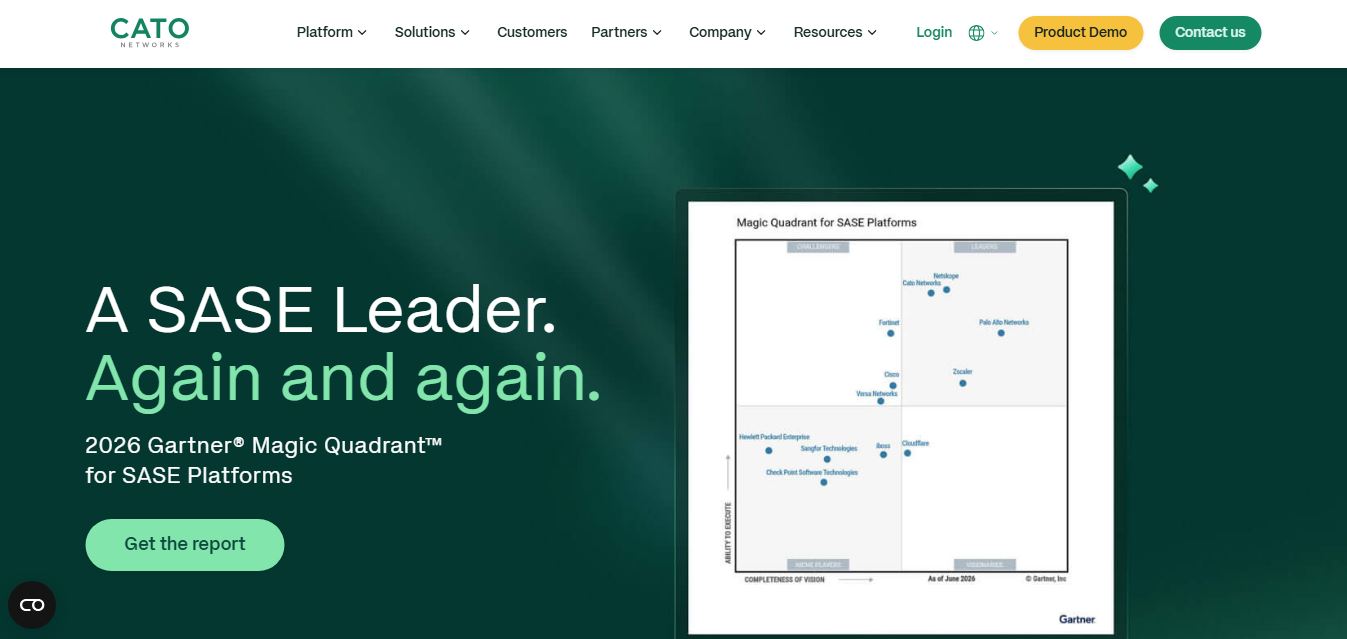
Cato Networks is an AI-powered SASE platform that combines networking and security into a single cloud service. It connects users, apps, and data globally while enforcing zero-trust access, simplifying infrastructure, reducing risk, and delivering secure, high-performance connectivity across distributed and cloud-first business environments.
 4.9
4.9Microsoft Defender for Endpoint
Security
Microsoft Defender for Endpoint is an AI-powered endpoint security platform that helps businesses prevent, detect, and respond to cyber threats across devices like laptops, servers, and mobile systems. It combines antivirus, threat intelligence, and automated response to stop attacks, reduce risk, and provide full visibility across environments.
 4.9
4.9Securiti AI
Security
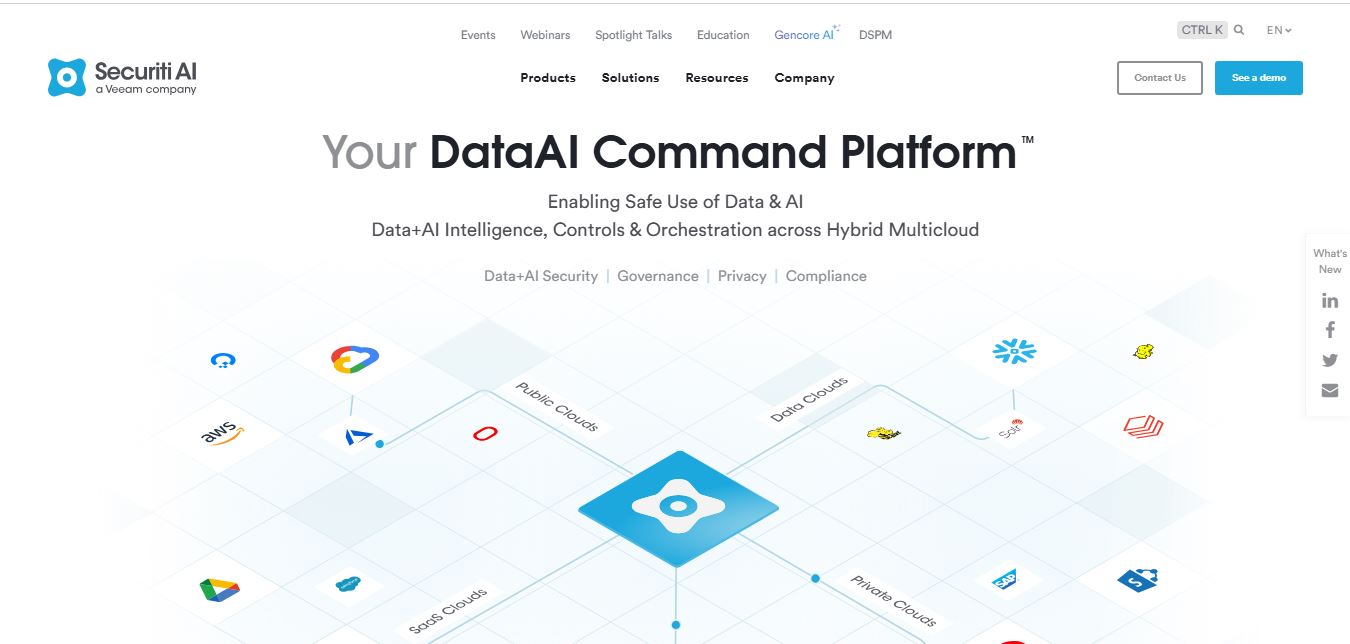
Securiti is an AI-powered data security, privacy, and governance platform that helps organizations discover, manage, and protect sensitive data across systems. It enables compliance with regulations like GDPR and CCPA, automates data workflows, and provides unified control over data access, risk, and usage.
 4.9
4.9Relyance AI
Security
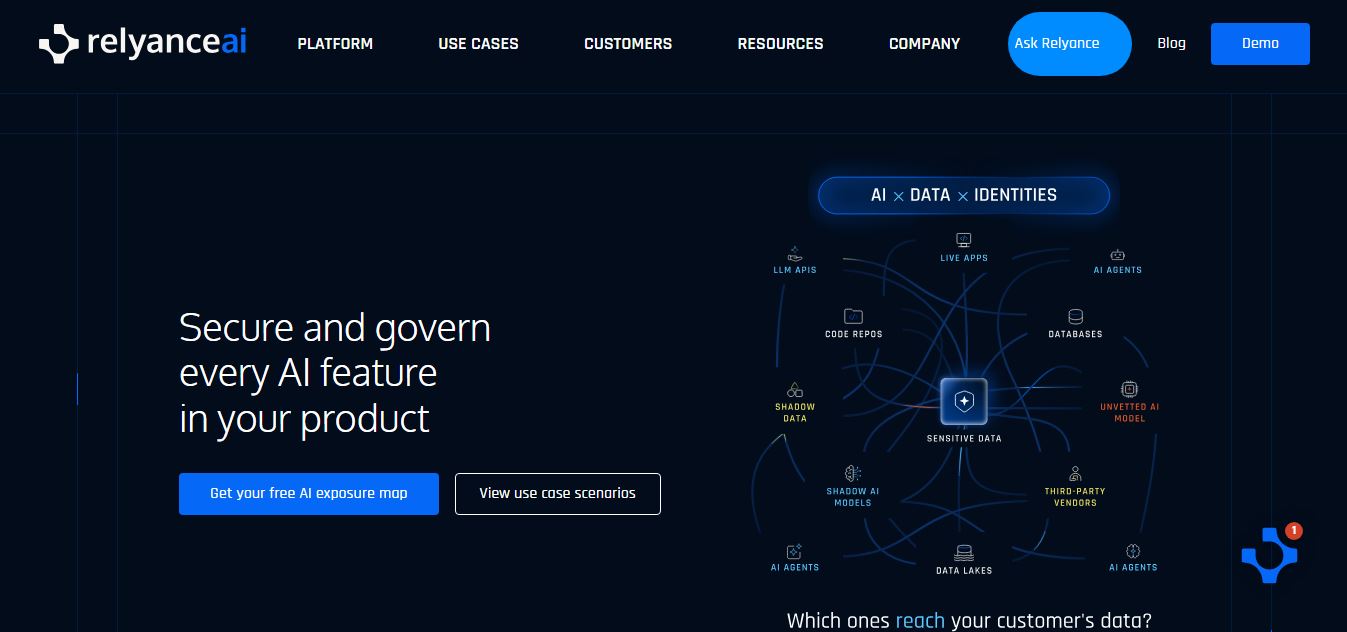
Relyance AI is a data governance and privacy platform that helps businesses manage data usage, ensure compliance, and reduce risk. It uses AI to map data flows, monitor how data is used, and enforce policies, making it easier to stay compliant with regulations like GDPR and CCPA.
 4.8
4.8HiddenLayer
Security
HiddenLayer provides purpose-built security for organizations deploying generative, predictive, and agentic AI. Its platform helps security teams discover AI assets, inspect models for malware and vulnerabilities, continuously simulate attacks, and detect runtime threats. It integrates with existing security and MLOps environments while protecting sensitive models, prompts, data, and intellectual property.
 4.9
4.9Cloudflare
Security
Cloudflare is a leading global connectivity cloud platform that delivers fast content delivery (CDN), authoritative DNS, unmetered DDoS mitigation, Web Application Firewall (WAF) security, serverless edge compute (Workers), and Zero Trust network access across 330+ cities worldwide.