Cato Networks
Cato Networks is an AI-powered SASE platform that combines networking and security into a single cloud service. It connects users, apps, and data globally while enforcing zero-trust access, simplifying infrastructure, reducing risk, and delivering secure, high-performance connectivity across distributed and cloud-first business environments.
What is Cato Networks?
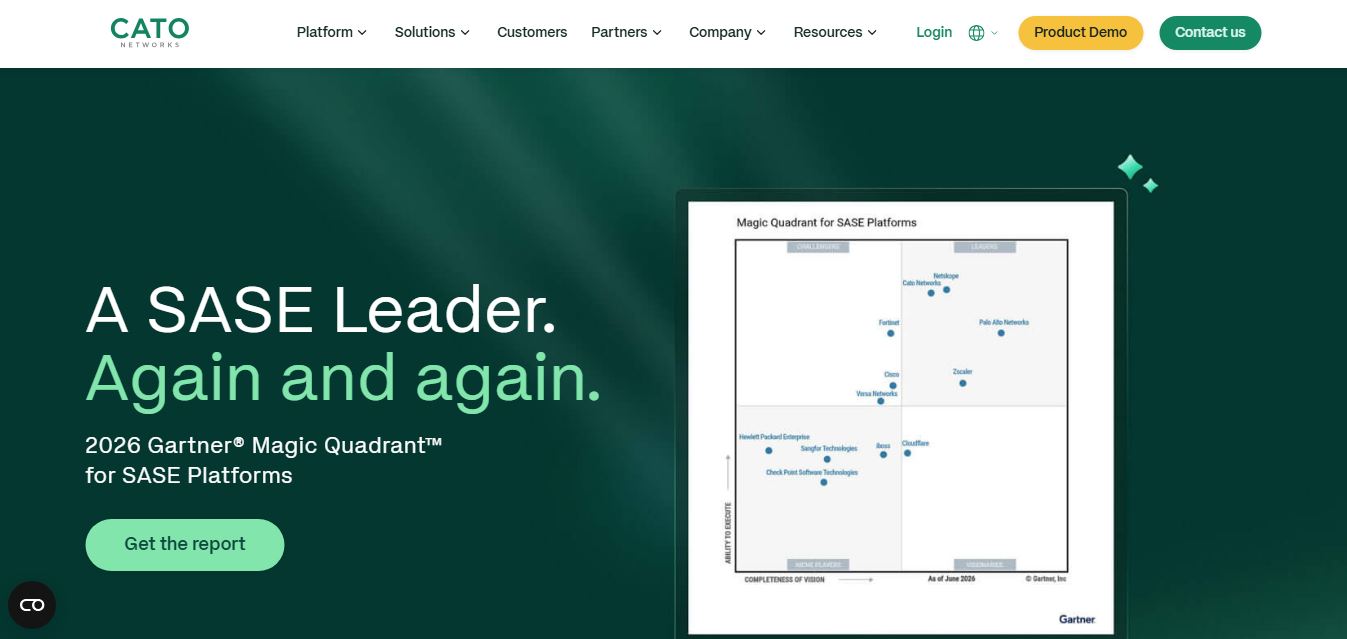
Cato Networks is a cloud-native cybersecurity and networking platform that delivers a unified Secure Access Service Edge (SASE) solution, combining networking and security into a single global cloud service. It enables organizations to securely connect users, applications, and data across offices, cloud environments, and remote locations using technologies like SD-WAN, Zero Trust access, and advanced threat prevention. By replacing multiple legacy tools with one platform, it simplifies IT operations, improves performance, and provides real-time visibility, threat detection, and data protection across the entire infrastructure.
Founded in 2015 by cybersecurity pioneer Shlomo Kramer (co-founder of Check Point Software and Imperva) and Gur Shatz (former co-founder of Incapsula) in Tel Aviv, Israel, Cato Networks pioneered the SASE category years before it was formalized by Gartner. Backed by top-tier venture firms including Lightspeed Venture Partners, SoftBank Vision Fund 2, Greylock Partners, Coatue, and Singtel Innov8, Cato has raised over $770 million in funding, achieving a valuation exceeding $3 billion. Powering thousands of enterprise customers across 150+ countries, Cato connects remote branches, multi-cloud datacenters, mobile workforces, and SaaS applications with sub-second convergence and 99.999% SLA reliability.
- Founder / Leadership: Shlomo Kramer (Co-founder & CEO) and Gur Shatz (Co-founder, President & COO)
- Launch Year: 2015 (Coined and launched cloud SASE architecture)
Use Cases:
- Replacing unpredictable public internet routing and expensive legacy MPLS circuits with an SLA-backed global private backbone
- Consolidating branch networking hardware, SD-WAN devices, and firewalls into lightweight zero-touch Cato Socket appliances
- Delivering high-performance, identity-aware Zero Trust Network Access (ZTNA) for roaming and hybrid enterprise workforces
- Enforcing real-time Cloud Access Security Broker (CASB), Data Loss Prevention (DLP), and Firewall-as-a-Service (FWaaS) across all traffic
Technology:
- Single-pass cloud engine (SPACE) inspecting all network and security policies concurrently in a single processing pass
- Global private backbone comprised of 90+ geographically distributed Tier-4 Points of Presence (PoPs) connected via multiple SLA carriers
- Zero-touch edge routing hardware (Cato Socket) and cross-platform unified clients (Cato Client) routing traffic securely to the nearest PoP
Target Users:
- Enterprise network directors and infrastructure leads seeking to retire costly telecom contracts and hardware sprawl
- Chief Information Security Officers (CISOs) requiring uniform security posture across physical sites, cloud VPCs, and mobile workers
- Global manufacturing, retail, and logistics enterprises connecting geographically remote facilities and factories
- Content creators using writing tools to draft enterprise networking migration proposals, SASE evaluation RFPs, and zero-trust policy frameworks
Corporate Entity: Operates as Cato Networks Ltd. (Tel Aviv, Israel & Alpharetta, GA)

Key features of Cato Networks
Cato Networks' key features are
- Single-Pass Cloud Engine (SPACE): A single unified software architecture that decrypts and inspects network packets once, applying routing, firewalling, IPS, and CASB rules simultaneously without performance latency.
- Global Private SLA Backbone: An interconnected global mesh of 90+ Points of Presence (PoPs) monitored 24/7 with built-in route optimization, eliminating internet packet loss and jitter across international paths.
- Cato Cloud-Native SD-WAN: Dynamically optimizes traffic across commodity internet, fiber, 5G, and LTE links with sub-second failover and automated path steering.
- Firewall-as-a-Service (FWaaS) & Next-Gen IPS: Cloud-delivered application-aware Layer 7 firewalling and advanced threat prevention protecting all traffic entering the Cato Cloud.
- Zero Trust Network Access (ZTNA): Granular identity- and context-based access controls connecting remote workers directly to authorized applications without putting them on the broad network.
- Cloud Access Security Broker (CASB) & DLP: Enforces granular visibility and governance over sanctioned and unsanctioned SaaS applications, preventing confidential data leaks inline.
- Zero-Touch Edge Sockets: Simple plug-and-play branch appliances (Cato Socket X1500/X1700) that establish encrypted tunnels to the nearest Cato PoP in minutes without onsite IT expertise.
- Single-Pane-of-Glass Management: Unified multi-tenant web console delivering comprehensive real-time network visibility, threat analytics, and policy configuration from a single screen.
Cato Networks Pricing
Cato Networks operates on an enterprise subscription model based on site connection bandwidth, number of connected locations, edge hardware sockets, and roaming mobile user licenses.
Site & Backbone Licensing:
- Billed annually based on committed site bandwidth throughput (e.g., 25 Mbps, 100 Mbps, 500 Mbps, up to 2 Gbps+) connected to the global private backbone
- Includes full access to the global SLA backbone, dynamic multi-link failover, and central management
Edge Sockets & Hardware:
- Cato Socket hardware appliances (X1500 for branches, X1700 for datacenters) offered via affordable upfront hardware purchases or annual hardware-as-a-service leases
Mobile Users (ZTNA / SASE Client):
- Priced per named mobile user/month (typically ranging from ~$6.00 to $12.00 per user/month depending on fleet volume and security feature tiers)
- Includes unified Cato Client for Windows, macOS, Linux, iOS, and Android with built-in ZTNA, SWG, and CASB inspection
Disclaimer: Cato Networks is customized to enterprise infrastructure scale through authorized partners and direct enterprise sales. Custom quotes and guided architectural proof-of-concept evaluations are available at catonetworks.com/pricing.
Who is using Cato Networks?
Cato Networks is designed for modern enterprise organizations with distributed physical and remote operations, including
- Multinational Corporations & Manufacturers: Connecting overseas plants, distribution centers, and headquarters across North America, Europe, and Asia with predictable backbone latency
- Retailers & Multi-Branch Financial Firms: Retiring high-cost MPLS and fragile legacy firewalls across hundreds of branch stores using plug-and-play Cato Sockets
- Fast-Growing Cloud-Native Companies: Unifying AWS, Azure, and Google Cloud VPC connectivity with roaming remote workers under unified zero-trust rules
- Engineering & Construction Firms: Rapidly deploying high-speed connectivity to temporary job sites and project trailers without waiting weeks for telecom circuits
- Content Creators: Using writing tools to draft enterprise networking migration proposals, SASE evaluation RFPs, and zero-trust policy frameworks
- Healthcare & Life Sciences Providers: Ensuring secure, HIPAA-compliant patient record access across hospital networks and remote telemedicine doctors
Best Cato Networks Alternatives
Some of the strongest Cato Networks alternatives include
- Zscaler
- Palo Alto Networks
- Cisco
- Cloudflare One
- Versa Networks
Pros and Cons of Cato Networks
Pros
- True single-vendor converged SASE platform: networking and security are built together in one software stack rather than stitched through acquisitions
- Private global SLA backbone delivers guaranteed low latency and zero packet loss for international cross-region traffic
- Single-Pass Cloud Engine (SPACE) prevents the latency penalties and performance degradation of multi-box security inspection chains
- Zero-touch edge Sockets make provisioning new branch offices fast, intuitive, and viable without specialized on-site engineers
- Consolidates dozens of vendor contracts, licensing keys, and support desks into a single unified service agreement
Cons
- Focused primarily on mid-market and enterprise scale; not suitable for micro-businesses or small single-office setups
- Requires ongoing annual subscription commitments tied to site bandwidth throughput tiers
- Organizations committed to maintaining deep on-premise hardware-heavy DMZ architectures may resist full cloud-backbone routing
- Organizations with heavy multi-gigabit campus LAN requirements may still require separate high-density core layer switches
Why Choose Cato Networks?
Cato Networks is the premier choice for organizations that want to eliminate the operational complexity, performance lag, and hardware bloat of legacy enterprise networking.
- Delivers an authentic cloud-native SASE architecture engineered from a single codebase
- Bypasses unpredictable public internet routing with an SLA-backed global private backbone
- Deploys to global branches in minutes with zero-touch plug-and-play hardware sockets
- Combines SD-WAN, ZTNA, FWaaS, SWG, and CASB in a unified single pane of glass
- Founded by the creators of Check Point and Imperva, backed by over $770M in top-tier venture capital
Cato Networks vs. Competitors
The main difference between Cato Networks, Zscaler, Fortinet, and Palo Alto Networks Prisma SASE is that Cato Networks converges SD-WAN, a private global SLA backbone, and full SSE security into a single cloud platform, whereas Zscaler is a cloud-only proxy security service (SSE) that relies on third-party SD-WAN providers for physical branch connectivity, Fortinet combines custom ASIC hardware firewalls with hybrid software, and Palo Alto Networks integrates acquired SD-WAN with Prisma cloud security. Cato stands out for its all-in-one single-vendor simplicity, native global private backbone, and unified single-pass architecture.
| Feature / Tool | Cato Networks (catonetworks.com) | Zscaler | Fortinet | Palo Alto Prisma SASE |
|---|---|---|---|---|
| Core Focus | Converged Single-Vendor SASE Cloud | Cloud Zero Trust & SSE Security | Hardware ASIC Firewalls & Hybrid SASE | Enterprise Cloud SASE & NGFW |
| Native Global Private Backbone | Yes (90+ SLA-backed Tier-4 PoPs) | Security Cloud Edge (No native SD-WAN core) | Customer / Carrier Managed | Google Cloud / AWS Backbone |
| Native SD-WAN Integration | Yes (Built-in Cato SD-WAN) | Requires 3rd-Party SD-WAN Partner | Yes (Built into FortiOS) | Yes (Prisma SD-WAN / CloudGenix) |
| Inspection Engine | Single-Pass Cloud Engine (SPACE) | Single-Scan Multi-Tenant Proxy | FortiASIC Packet Processing | Single-Pass Architecture (SP3) |
| Starting Price Structure | Custom Bandwidth + User Licensing | ~$180–$480/user/yr (Cloud SSE) | Hardware (~$400+) + Subscriptions | Enterprise Contracts ($450+/user/yr) |
| Best For | Global Multi-Site SASE & MPLS Replacement | Pure Cloud SSE & Roaming Zero Trust | High-Throughput Branch Hardware & OT | Palo Alto Hardware Shops & Large Orgs |
How do we rate Cato Networks?
| Parameter | Rating (out of 5) |
|---|---|
| SASE Convergence & Architectural Elegance | 5.0 |
| Global Backbone Reliability & Latency | 5.0 |
| Single-Pass Cloud Security (SSE 360) | 4.9 |
| Deployment Speed & Socket Usability | 4.9 |
| Value for Money | 4.8 |
| Overall Score | 4.92 |
Cato Networks Review
Cato Networks has redefined enterprise connectivity by delivering what the cybersecurity industry promised for a decade: a single, truly unified cloud architecture that blends high-speed networking with deep security inspection. While legacy vendors attempted to adapt by acquiring different SD-WAN, CASB, and proxy companies and attempting to glue their disparate control planes together, Cato designed its platform from the ground up as a cloud-native single-pass engine. Connecting an overseas factory or branch office is remarkably straightforward—plug in a zero-touch Cato Socket, link standard commodity broadband connections, and the site is immediately enveloped in an SLA-backed global backbone with enterprise-grade firewalling and threat prevention. For global enterprises looking to escape the telecom billing trap and eliminate hardware sprawl, Cato Networks is an exceptional platform.
Conclusion
Cato Networks is an industry-leading single-vendor SASE platform that completely reimagines enterprise networking and cybersecurity for the cloud era. By unifying SD-WAN, a private global SLA backbone, FWaaS, ZTNA, SWG, and CASB into a single-pass cloud engine, it provides unmatched speed, reliability, and security without physical appliance sprawl. While smaller businesses will look to lighter SMB networking alternatives, Cato Networks’ architectural purity, global backbone scale, and operational simplicity make it an indispensable enterprise networking platform.
FAQ
What is Cato Networks and how does it work?
Cato Networks is a cloud-native SASE (Secure Access Service Edge) platform that combines networking and security into a single global service. It works by connecting users, offices, cloud environments, and applications to a unified cloud backbone, where all traffic is inspected and secured in real time. Instead of relying on multiple hardware appliances, Cato delivers networking and security through one platform with a single policy engine and centralized management.
What problems does Cato Networks solve?
Cato solves major challenges like fragmented security tools, complex network infrastructure, and inconsistent policy enforcement. Many organizations struggle with managing separate firewalls, VPNs, and SD-WAN systems, which creates security gaps and operational overhead. Cato replaces these with a single converged platform, reducing complexity, improving visibility, and enabling faster deployment of users, sites, and applications.
What features does Cato Networks offer?
Cato offers a full suite of capabilities including SD-WAN, Zero Trust Network Access (ZTNA), Firewall-as-a-Service, Secure Web Gateway, intrusion prevention, data loss prevention, CASB, and extended detection and response (XDR). It also includes AI-driven threat detection, endpoint protection, and a global private backbone for optimized connectivity, all managed through a centralized cloud console.
How is Cato Networks different from traditional security tools?
Cato is different because it converges networking and security into a single cloud-native platform, rather than relying on multiple disconnected products. Traditional setups require separate tools for networking, security, and remote access, but Cato integrates everything into one system with a single-pass inspection engine and unified policy control, reducing operational complexity and improving performance.
How does Cato Networks use AI in cybersecurity?
Cato uses AI and machine learning to analyze network, security, and endpoint data in real time to detect anomalies and threats. Its AI-driven capabilities support threat prevention, incident detection, and automated response, helping organizations identify risks faster and reduce false positives while maintaining a strong security posture.
How much does Cato Networks cost?
Cato Networks does not publish fixed pricing publicly, as it typically offers custom pricing based on business size, number of users, locations, and required features. Organizations usually need to request a demo or consultation to receive a tailored quote, since pricing varies depending on networking needs, security modules, and deployment scale.
Is Cato Networks suitable for small and mid-sized businesses?
Yes, Cato is suitable for SMBs as well as large enterprises because of its scalable cloud architecture. Smaller organizations benefit from simplified deployment and reduced infrastructure costs, while larger enterprises can leverage advanced features like global connectivity, AI-driven security, and unified policy management across distributed environments.
Who should use Cato Networks?
Cato Networks is ideal for enterprises, SaaS companies, distributed teams, and organizations undergoing digital transformation. It is particularly valuable for businesses with remote workforces, multiple offices, or hybrid cloud environments that need secure, high-performance connectivity combined with unified, AI-driven security.
User Reviews
No reviews yet for Cato Networks.
Featured Tools
Featured AI tools from TechShark

Melody Genie
MelodyGenie is an AI-powered music generator that creates original songs from simple text prompts. Users can choose styles, moods, and genres, then instantly generate melodies and full tracks, making it easy for creators, marketers, and hobbyists to produce custom music without musical expertise.
Freemium
Kimi AI
Kimi AI is an advanced AI assistant developed by Moonshot AI that helps you chat, research, write, code, and automate tasks in one place. It supports web search, file analysis, and multimodal inputs, and can even run autonomous “agent” workflows to complete complex tasks end-to-end.
Freemium

Fashion Diffusion AI
Fashion Diffusion is an AI-powered fashion design platform that helps brands and designers create clothing designs, virtual try-ons, AI models, product photos, and marketing visuals faster and cost-effectively.
Paid
Veo 4
Veo 4 AI is an AI video creation platform that generates dramatic videos from text, images, audio, and video prompts using realistic motion and synchronized sound.
Paid
Alternatives
Alternatives to Cato Networks
The best Cato Networks alternatives include Zscaler, Palo Alto Networks (Prisma SASE), Fortinet (FortiSASE & FortiGate), Cisco (Catalyst SD-WAN & Secure Access), Cloudflare One, and Versa Networks. These platforms provide Secure Access Service Edge (SASE), cloud SD-WAN, and Zero Trust security. While Cato Networks specializes in a truly converged single-vendor SASE cloud combining cloud-native SD-WAN, a private global SLA backbone, and full SSE in a single pass, alternatives like Zscaler focus on cloud-delivered proxy security (SSE) without a native SD-WAN branch layer, and Fortinet focuses on ASIC-accelerated physical firewalls. Choosing the right tool depends on whether you require an all-in-one global private network backbone, pure cloud SSE, or hybrid on-premises firewalls.
 4.9
4.9HashiCorp Vault
Security
HashiCorp Vault is a secrets management platform that helps organizations securely store, access, and control sensitive data like API keys, tokens, and credentials. It provides encryption, identity-based access, and automated secrets rotation, enabling secure application deployment and compliance across cloud and on-prem environments.
 4.9
4.9Arista Networks
Security
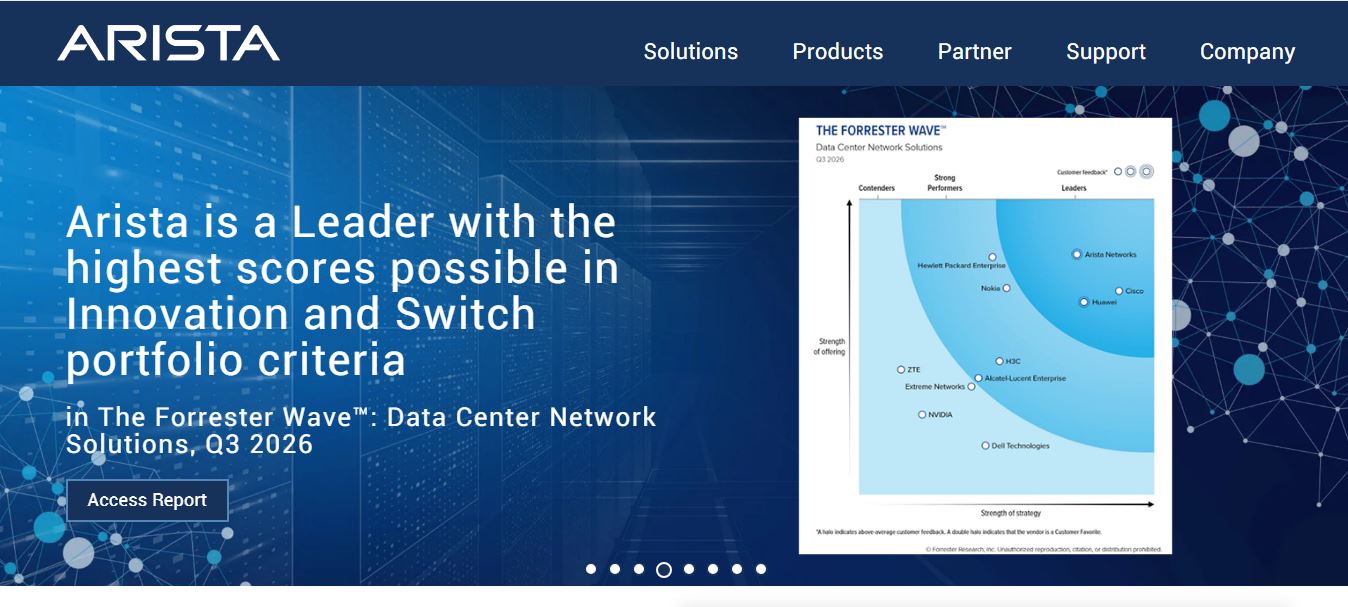
Arista Networks is an AI-driven cloud networking platform that helps businesses build high-performance, scalable networks across data centers, campuses, and cloud environments. It delivers automation, analytics, and security through a unified operating system, enabling reliable connectivity and efficient data flow for modern, large-scale digital infrastructure.
 4.9
4.9Mimecast
Security
Mimecast is an AI-powered email and collaboration security platform that helps businesses prevent phishing, ransomware, and data leaks. It combines threat detection, data protection, and employee awareness tools into one system, enabling organizations to reduce human risk, ensure compliance, and maintain secure, uninterrupted communication.
 4.9
4.9Microsoft Defender for Endpoint
Security
Microsoft Defender for Endpoint is an AI-powered endpoint security platform that helps businesses prevent, detect, and respond to cyber threats across devices like laptops, servers, and mobile systems. It combines antivirus, threat intelligence, and automated response to stop attacks, reduce risk, and provide full visibility across environments.
 4.9
4.9Securiti AI
Security
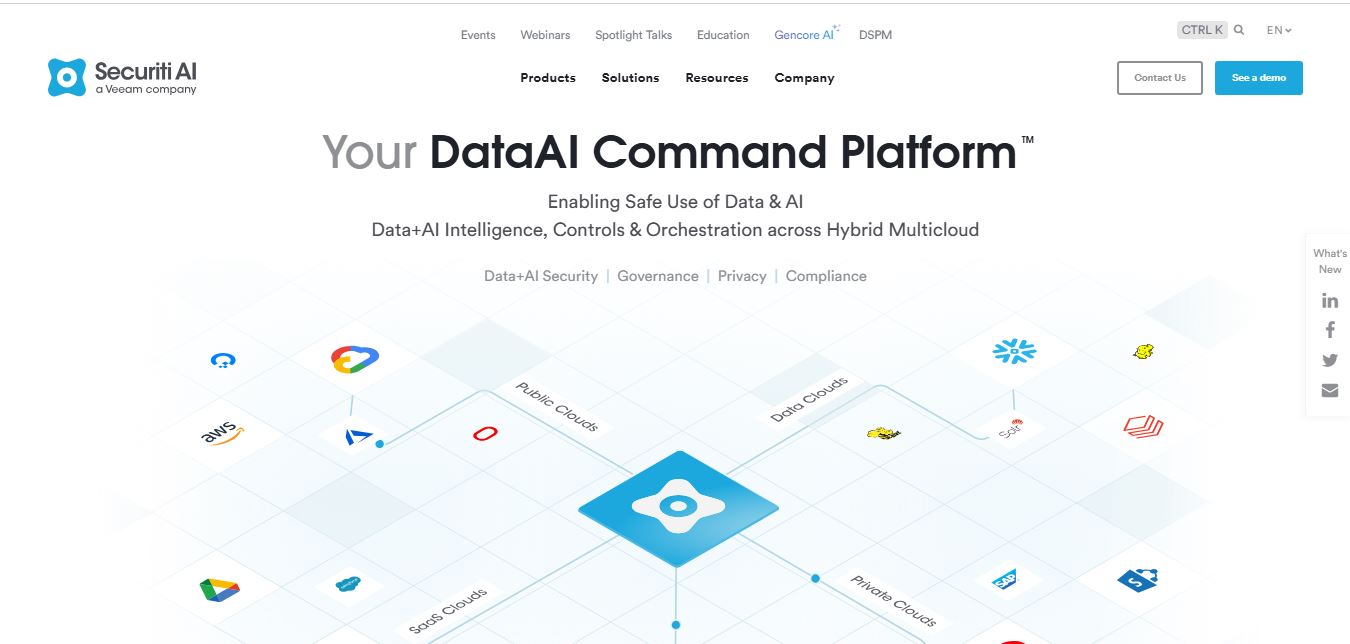
Securiti is an AI-powered data security, privacy, and governance platform that helps organizations discover, manage, and protect sensitive data across systems. It enables compliance with regulations like GDPR and CCPA, automates data workflows, and provides unified control over data access, risk, and usage.
 4.9
4.9Relyance AI
Security
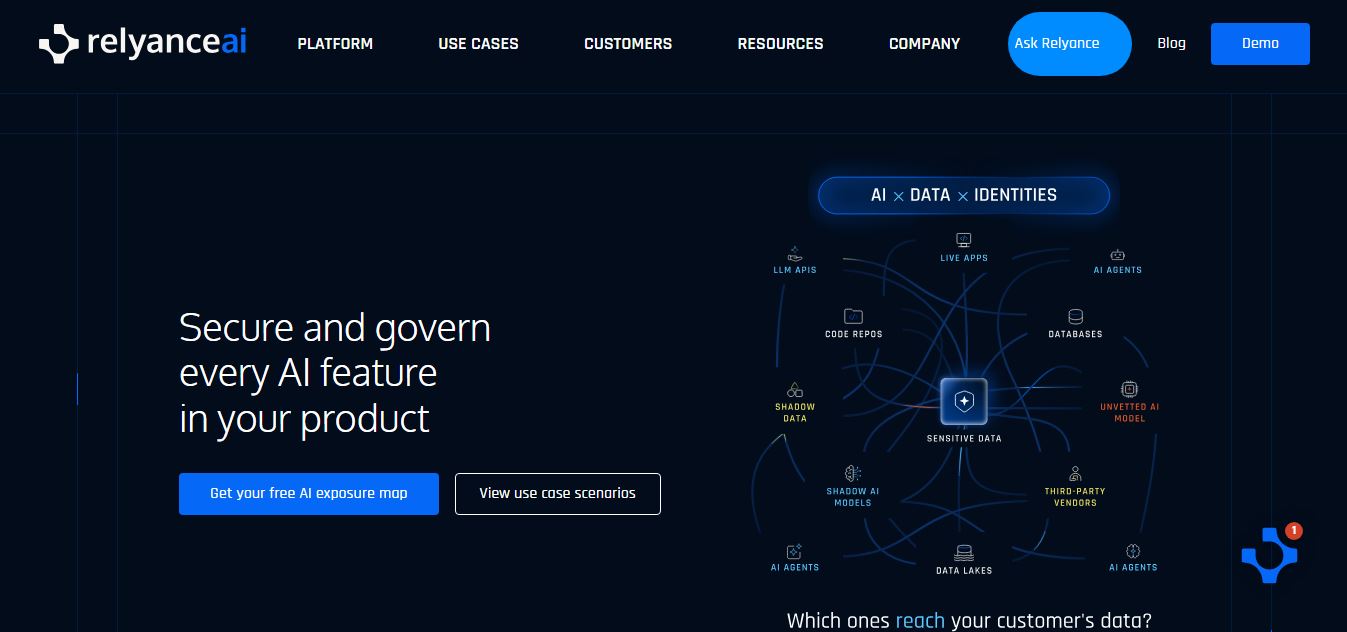
Relyance AI is a data governance and privacy platform that helps businesses manage data usage, ensure compliance, and reduce risk. It uses AI to map data flows, monitor how data is used, and enforce policies, making it easier to stay compliant with regulations like GDPR and CCPA.
 4.9
4.9GitHub Advanced Security
Security
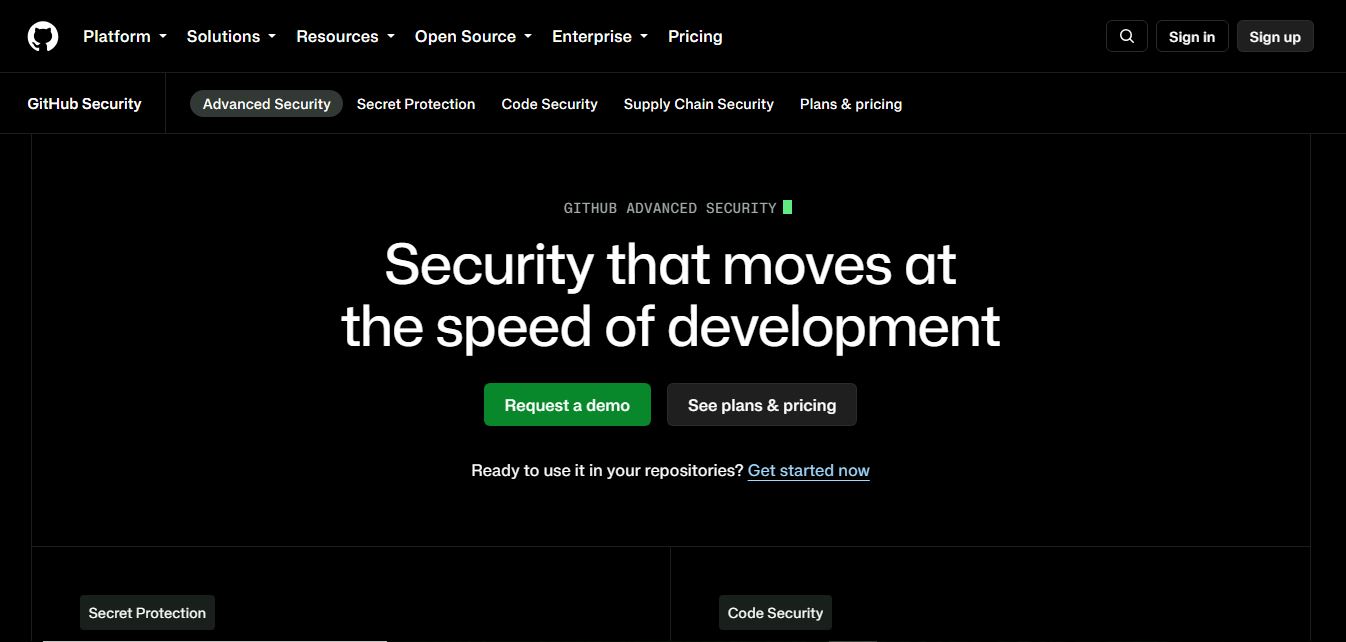
GitHub Advanced Security is a security solution built into GitHub that helps developers find and fix vulnerabilities in their code. It offers features like code scanning, secret scanning, and dependency alerts, enabling teams to identify risks early and secure applications throughout the development lifecycle.
 4.8
4.8HiddenLayer
Security
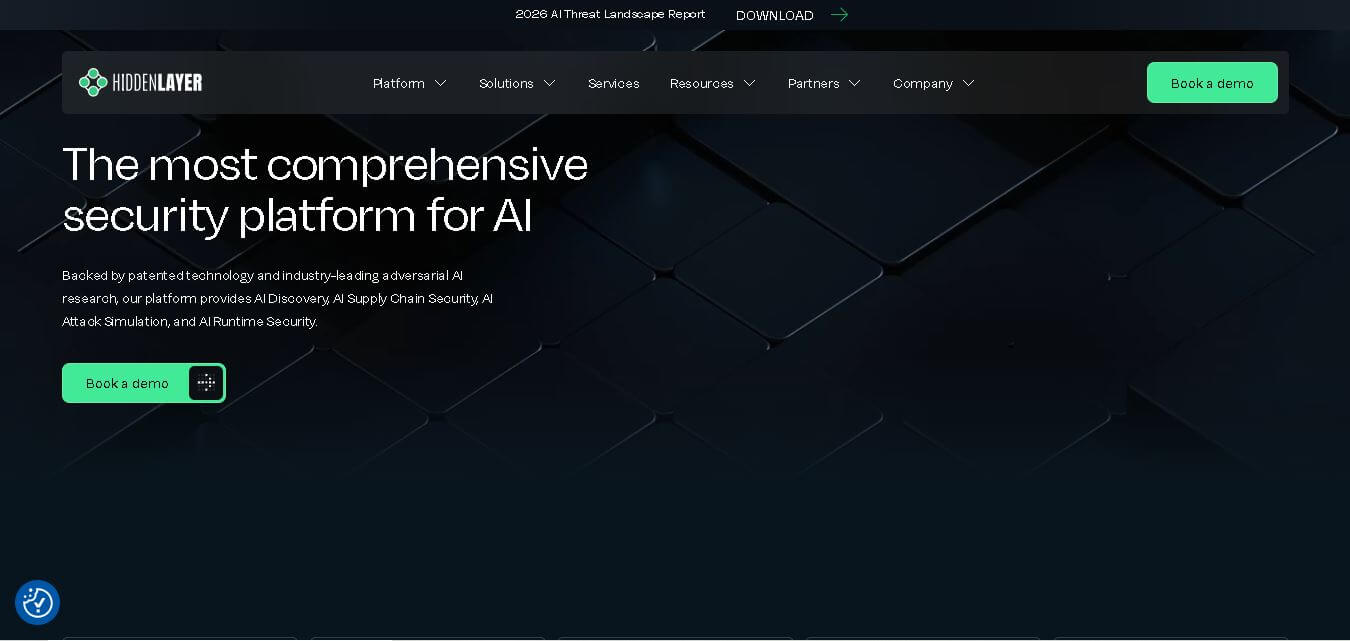
HiddenLayer provides purpose-built security for organizations deploying generative, predictive, and agentic AI. Its platform helps security teams discover AI assets, inspect models for malware and vulnerabilities, continuously simulate attacks, and detect runtime threats. It integrates with existing security and MLOps environments while protecting sensitive models, prompts, data, and intellectual property.
 4.9
4.9Cloudflare
Security
Cloudflare is a leading global connectivity cloud platform that delivers fast content delivery (CDN), authoritative DNS, unmetered DDoS mitigation, Web Application Firewall (WAF) security, serverless edge compute (Workers), and Zero Trust network access across 330+ cities worldwide.