
Perplexity Patents
Perplexity Patents helps users research patents, discover existing inventions, and explore emerging technologies using natural-language questions. It provides relevant patent documents, citations, and follow-up research suggestions. By connecting patent information with related research sources, it simplifies technology discovery for inventors, engineers, students, entrepreneurs, and intellectual property professionals conducting preliminary patent research.
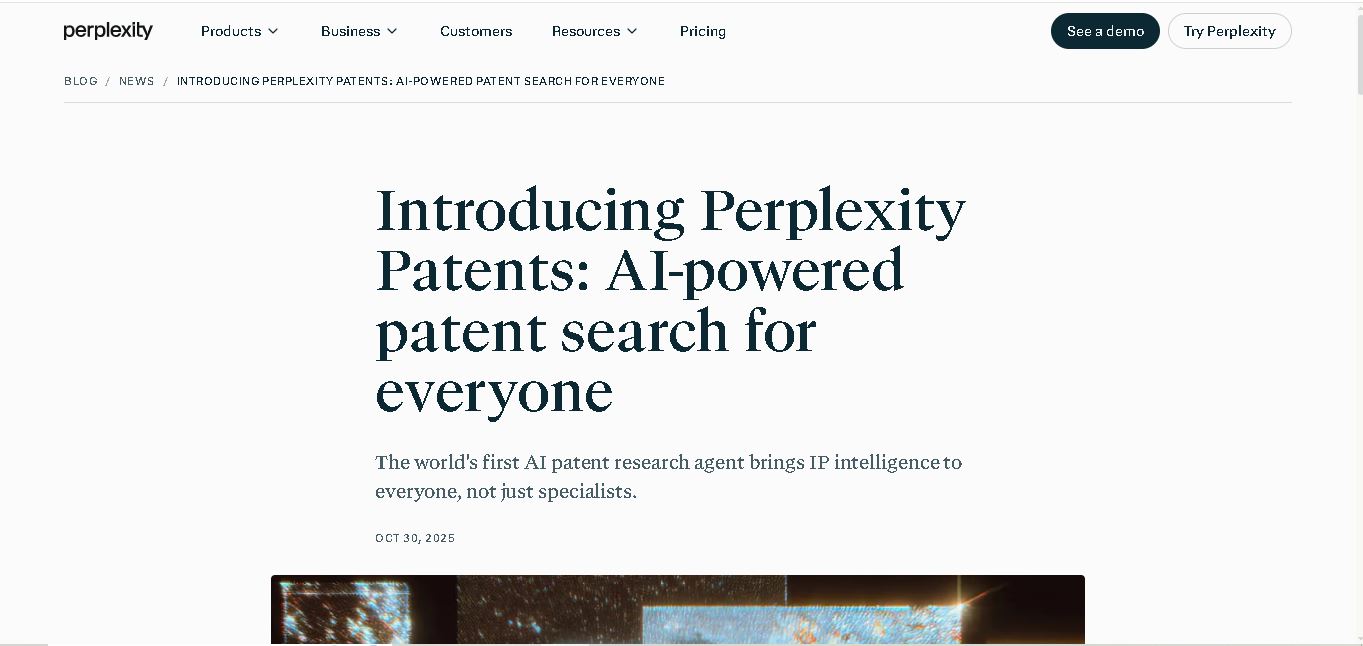
What is Perplexity Patents?
Perplexity Patents is an AI-based patent research tool designed to help users discover inventions, investigate existing patents, and explore technological developments through natural-language questions. It provides relevant patent results, citations, document links, and conversational follow-up research. The tool can also explore related sources, including academic papers and public software repositories, when relevant. It helps researchers, engineers, entrepreneurs, and intellectual property professionals investigate prior art and understand existing innovations more efficiently.
Perplexity Patents launched on October 30, 2025, as an AI-powered patent research agent. It was introduced as a beta product available worldwide, with free access for all users during the initial beta period. Pro and Max subscribers were offered additional usage quotas and model configuration options. Its research system can retrieve dozens to hundreds of supporting documents for complex queries. The tool searches beyond exact keyword matches and can explore academic papers and public software repositories. Current access conditions may change over time.
- Platform Focus: AI patent research agent, semantic prior art discovery, natural language IP search, and cross-source technological landscaping
- Developer / Entity: Perplexity AI
- Launch Year: 2025
Use Cases:
- Performing comprehensive prior art searches using natural language questions instead of rigid Boolean keyword strings
- Discovering conceptual synonyms and related inventions (e.g., finding "activity bands" and "wearables" when searching for "fitness trackers")
- Conducting multi-turn conversational patent inquiries and exploring suggested follow-up research directions
- Synthesizing intellectual property landscapes across patents, academic literature, and software code repositories
Technology:
- Agentic research system that breaks down complex user queries into concrete information retrieval tasks
- Specialized patent knowledge index hosted on exabyte-scale search infrastructure
- Citation-first natural language synthesis pipeline providing inline patent viewers and direct source document links
Target Users:
- Engineers, inventors, and R&D scientists investigating prior art before building new technologies
- Patent attorneys, IP analysts, and legal professionals streamlining initial patentability assessments
- Business leaders, founders, and startup strategists exploring technology trends and competitive landscapes
Corporate Entity: Operates under Perplexity AI / perplexity.ai

Key features of Perplexity Patents
Perplexity Patents's key features are
- Natural Language Patent Search: Ask plain-English questions about patent landscapes without needing specialized classification codes or syntax.
- Agentic Prior Art Discovery: Surfaces decisive prior art and conceptual matches even when exact keywords differ across documents.
- Conversational Follow-Ups: Dig deeper into specific inventions or compare technologies through multi-turn dialogue with automated follow-up suggestions.
- Cross-Source Intelligence: Expands searches beyond traditional patent literature into academic papers, software repositories, and technical blogs.
- Inline Document Viewer: Seamlessly preview original patent documents and access direct verification links alongside generated answers.
Perplexity Patents Pricing
Perplexity Patents launched as a beta product with free access alongside enhanced quotas for paid subscribers.
Free Beta Access:
- $0 / Free (Available during beta for all users)
- Includes standard patent search queries and conversational research tools
Pro & Max Tiers:
- Included within Perplexity Pro and Max subscription plans
- Provides additional usage quotas, expanded search depth, and advanced model configuration options
Who is using Perplexity Patents?
Perplexity Patents is designed for innovators and IP professionals, including
- Engineers & Product Creators: Quickly verifying whether an inventive concept has already been patented
- IP Analysts & Legal Teams: Conducting broad prior art sweeps and technology landscaping
- Founders & Tech Strategists: Tracking patent activity and competitor innovation trends
Best Perplexity Patents Alternatives
Some of the strongest Perplexity Patents alternatives include
- Google Patents
- Lens.org
- Espacenet
- Derwent Innovation
- PatSnap
- SciSpace
Pros and Cons of Perplexity Patents
Pros
- Transforms intimidating patent research into an intuitive, conversational chat experience
- Semantic prior art search uncovers relevant inventions missed by rigid keyword matching
- Integrates patents with academic papers and software repositories for holistic tech landscaping
- Provides transparent citation links and inline document viewers to prevent hallucinations
Cons
- Heavy legal drafting, formal claim charting, and official patent prosecution still require specialized professional software
- Advanced usage quotas require a paid Perplexity Pro or Max subscription
- Beta status means features and index coverage continue to evolve rapidly
Why Choose Perplexity Patents?
Perplexity Patents is an ideal choice for engineers, researchers, and entrepreneurs who want to conduct fast, natural-language prior art searches and technology landscaping without mastering complex patent database syntax.
- Replaces rigid Boolean keyword strings with conversational natural language queries
- Uncovers conceptual prior art across patents, research papers, and code repositories
- Offers an intuitive citation-first interface with inline patent previews
- Accessible via free beta tiers and Perplexity Pro/Max subscriptions
Perplexity Patents vs. Competitors
The main difference between Perplexity Patents, Google Patents, Lens.org, and PatSnap is that Perplexity Patents utilizes an agentic AI research model to answer conceptual questions in natural language and synthesize cross-source prior art, whereas Google Patents and Lens.org provide robust free keyword search engines and metadata archives, and PatSnap offers enterprise-grade IP analytics. Perplexity Patents stands out for its conversational agentic workflow.
r
| Feature / Tool | Perplexity Patents | Google Patents | Lens.org | PatSnap |
|---|---|---|---|---|
| Core Focus | AI Agentic Natural Language Patent Search & Prior Art | Free Global Patent Archive & Keyword Search | Open Global Scholarly & Patent Discovery | Enterprise IP Intelligence & Innovation Analytics |
| Conversational AI Agent | Yes (Multi-Turn Natural Language Reasoning) | No (Standard Keyword Search) | Limited (Metadata Filters) | Yes (Enterprise IP Assistant) |
| Cross-Source Integration | Patents, Academic Papers & Code Repositories | Patents & Prior Art Citations | Scholarly Works, Patents & Clinical Trials | Patents, Litigations & Corporate Data |
| Pricing Model | Free Beta / Pro & Max Subscription Tiers | 100% Free | Free / Institutional Tier | Paid Commercial Enterprise License |
| Best For | Fast Conversational Prior Art Discovery & Ideation | Quick Document Lookups & Free Patent Reading | Academic Open-Access Patent & Literature Mapping | Enterprise IP Portfolios & Competitive Law Analysis |
How do we rate Perplexity Patents?
| Parameter | Rating (out of 5) |
|---|---|
| Natural Language & Semantic Search Quality | 4.9 |
| Agentic Prior Art Discovery | 4.8 |
| Cross-Source Integration (Papers & Code) | 4.8 |
| Interface & Citation UX | 4.9 |
| Value for Money | 4.8 |
| Overall Score | 4.84 |
Perplexity Patents Review
Perplexity Patents brings a much-needed breath of fresh air to intellectual property search. By replacing rigid keyword strings and obscure syntax with a conversational, agentic AI research assistant, it opens up patent intelligence to engineers, founders, and inventors who aren't IP specialists. Its ability to look beyond exact matches to find conceptual prior art across patents, academic papers, and software repositories makes it an exceptionally powerful tool for early-stage R&D.
Conclusion
Perplexity Patents offers a convenient way to explore existing inventions, discover relevant patent documents, and investigate emerging technologies through conversational research. Its semantic search, source citations, and follow-up questions can simplify preliminary patent research for beginners and professionals alike. However, AI-generated answers should not replace a comprehensive patent search or professional legal advice. For inventors, researchers, and businesses, Perplexity Patents can serve as a useful starting point for understanding existing innovations and identifying promising research directions.
FAQ
What can you use Perplexity Patents for?
Perplexity Patents helps you investigate existing inventions, discover relevant patents, and explore technological developments using everyday questions. You can research artificial intelligence, compare inventions, and identify potentially relevant prior art. It is useful for inventors, researchers, students, and entrepreneurs who want to understand existing innovations before developing new products or technologies.
How does Perplexity Patents work?
Perplexity Patents interprets your research question and breaks complex queries into information retrieval tasks. Its research system searches a specialized patent knowledge index and gathers relevant documents. You receive answers with supporting sources, allowing you to investigate individual patents, ask follow-up questions, compare inventions, and explore related research without restarting your search.
Is Perplexity Patents free to use?
Perplexity Patents was initially launched as a beta product with free access for all users worldwide. During that launch period, Pro and Max subscribers received additional usage quotas and model configuration options. Because access policies can change, check Perplexity's official website for current availability, usage limits, and subscription requirements before beginning research.
Can Perplexity Patents help you find existing inventions?
Yes, Perplexity Patents can help you discover existing inventions related to your idea. Its semantic search capabilities can identify relevant documents even when their terminology differs from your original query. This can support preliminary prior-art research, helping you investigate similar technologies before investing time and resources in developing a new invention.
Who should use Perplexity Patents?
Perplexity Patents is useful for inventors, engineers, academic researchers, entrepreneurs, patent practitioners, and business leaders. Students can explore technological developments, while product teams can investigate existing solutions and related innovations. It also helps businesses understand technical landscapes. However, important intellectual property decisions should involve qualified patent professionals when necessary.
Can Perplexity Patents search beyond patent documents?
Yes, Perplexity Patents can explore sources beyond traditional patent literature when relevant to a research question. These sources may include academic papers, public software repositories, blogs, and other materials describing technical developments. This broader research approach can help you discover related inventions, emerging trends, and potentially relevant prior art that keyword-only patent searches might overlook.
User Reviews
No reviews yet for Perplexity Patents.
Featured Tools
Featured AI tools from TechShark
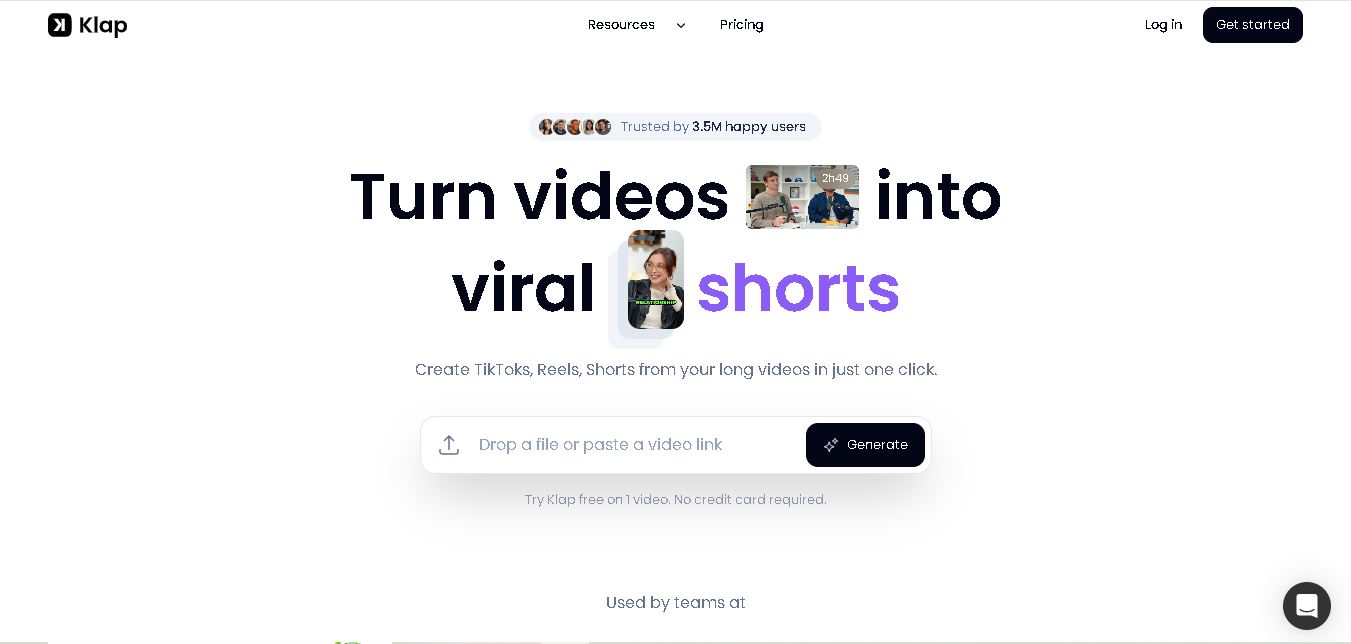
Klap
Klap is an AI-powered video editing tool that turns long videos into engaging short clips for TikTok, Instagram Reels, and YouTube Shorts. It automatically finds the best moments, adds captions, and resizes videos, helping creators save time and create more content with less effort.
Free
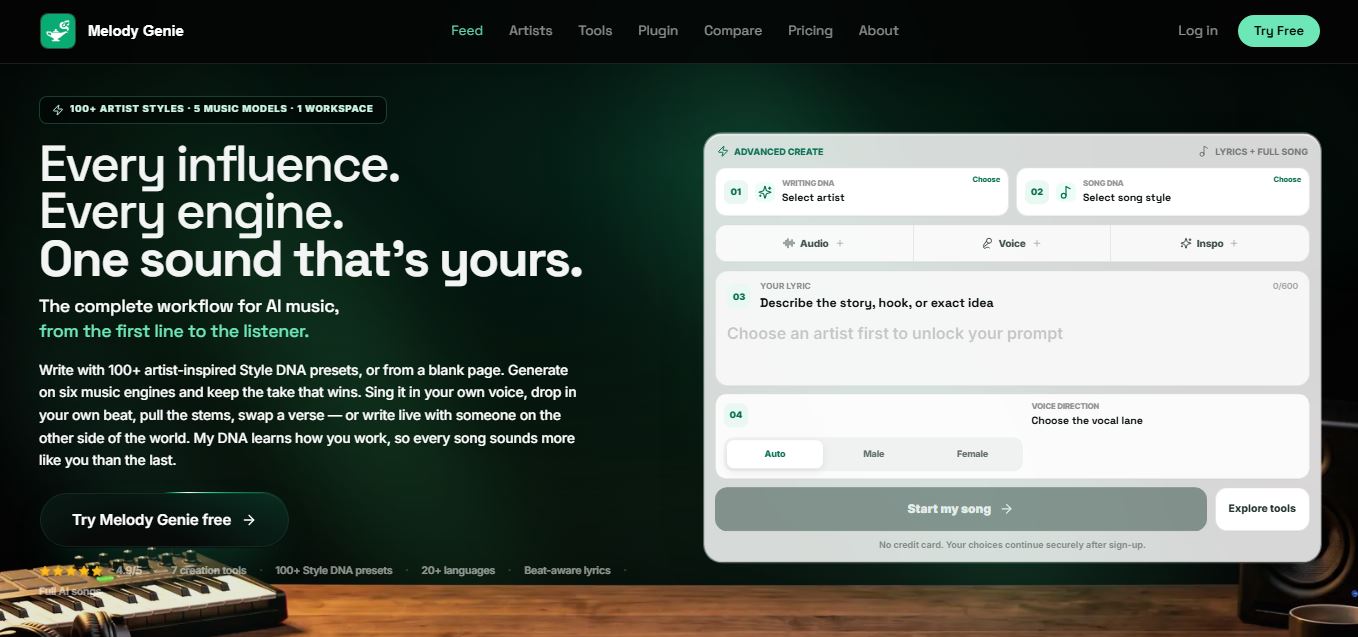
Melody Genie
MelodyGenie is an AI-powered music generator that creates original songs from simple text prompts. Users can choose styles, moods, and genres, then instantly generate melodies and full tracks, making it easy for creators, marketers, and hobbyists to produce custom music without musical expertise.
Freemium
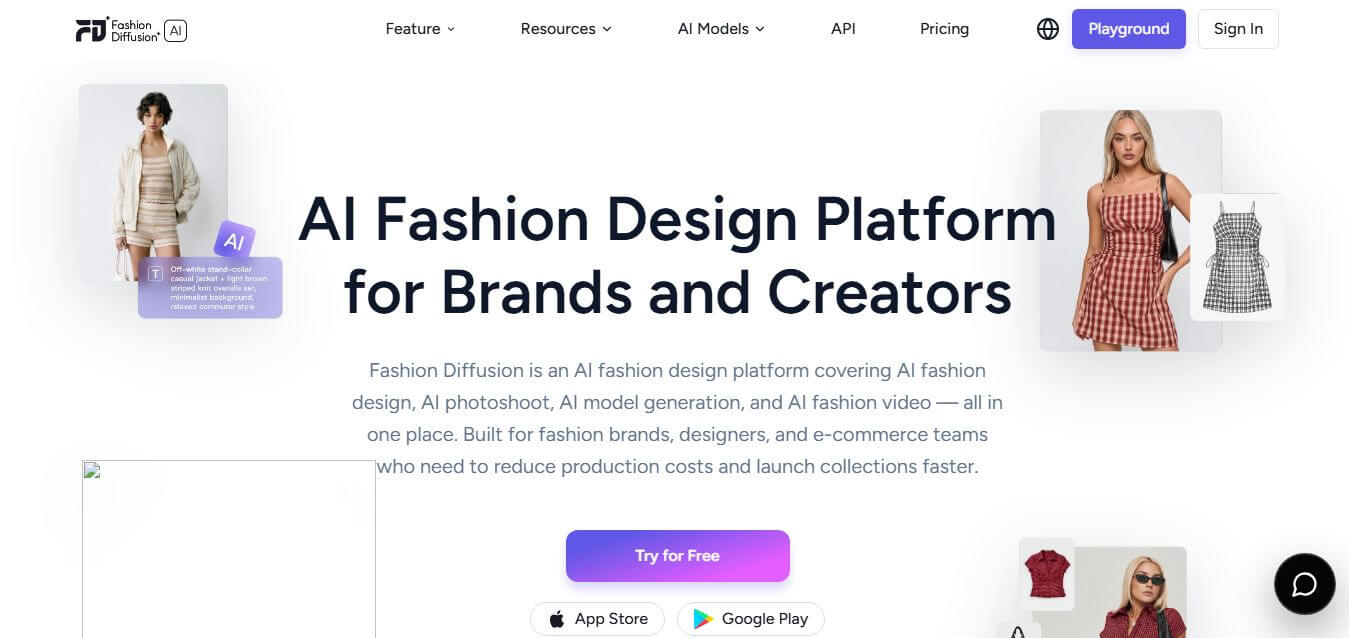
Fashion Diffusion AI
Fashion Diffusion is an AI-powered fashion design platform that helps brands and designers create clothing designs, virtual try-ons, AI models, product photos, and marketing visuals faster and cost-effectively.
Paid
Veo 4
Veo 4 AI is an AI video creation platform that generates dramatic videos from text, images, audio, and video prompts using realistic motion and synchronized sound.
Paid
Alternatives
Alternatives to Perplexity Patents
The best Perplexity Patents alternatives include Google Patents, Lens.org, Espacenet, Derwent Innovation, PatSnap, and SciSpace. These platforms offer patent archiving, IP search, and citation analysis. While Perplexity Patents specializes in a conversational, agentic AI research assistant that interprets natural language and searches across patents, papers, and code repositories, alternatives like Google Patents provide free keyword archives and PatSnap offers enterprise IP portfolio analytics.
 4.8
Summate.it
Research
Summate.it is a web-based AI article summarizer that helps users understand lengthy online content quickly. It extracts article text and uses OpenAI to generate concise summaries highlighting essential information. Students, researchers, marketers, and professionals can use it to review online articles efficiently, save reading time, and simplify everyday information gathering.
 4.9
Cradle
Research
Cradle helps biotechnology researchers design, engineer, and optimize proteins using artificial intelligence and laboratory data. Its capabilities include protein sequence generation, multi-property optimization, candidate scoring, and experimental learning. The platform supports pharmaceutical, agricultural, and industrial biotechnology research, helping scientific teams explore promising molecules while reducing unnecessary experimental cycles and improving research workflows.
 4.9
Iris.ai
Research
Iris.ai helps enterprises and research teams organize complex information, analyze scientific literature, and build AI workflows using organizational knowledge. Its solutions support document extraction, contextual search, data processing, and AI response evaluation. The platform is particularly relevant to research-intensive businesses seeking better information retrieval, reliable answers, and controlled enterprise AI applications.
 4.8
Lightmatter
Research
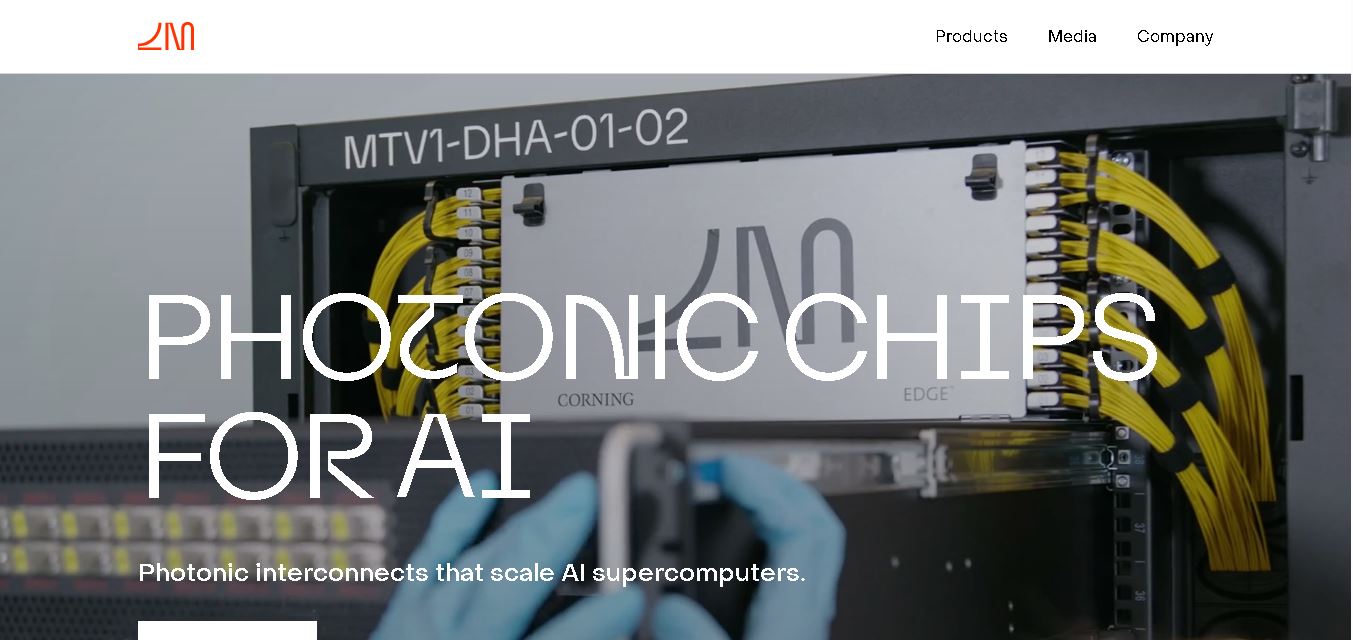
Lightmatter develops photonic computing technologies that help AI data centers connect processors and transfer information more efficiently. Its products include Passage optical interconnects, Guide light engines, and Envise photonic AI computing technology. The company aims to address bandwidth and power constraints affecting large-scale AI training, inference, and high-performance computing infrastructure.
 4.8
FigEditor
Research
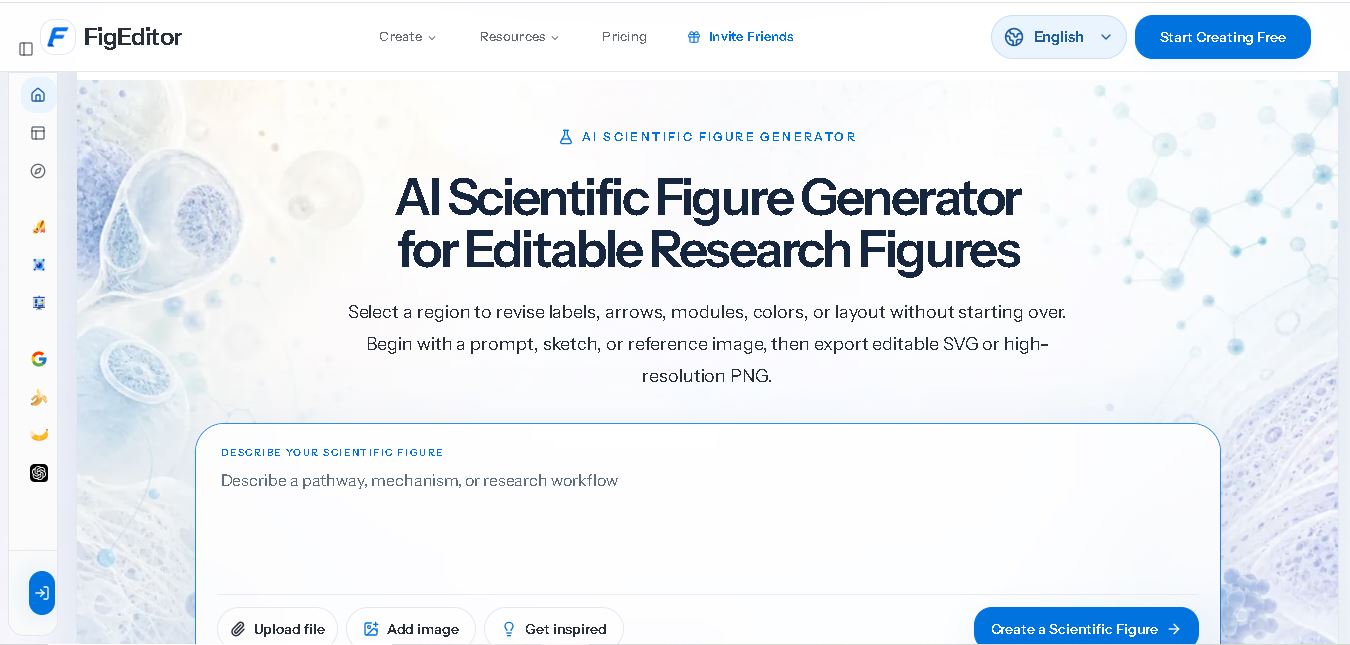
FigEditor AI helps researchers create scientific illustrations, flowcharts, graphical abstracts, and academic diagrams from text prompts, sketches, or reference images. Its editing and vectorization features simplify visual revisions, while SVG and high-resolution PNG exports support different research workflows. It is useful for students, scientists, educators, and research professionals preparing visual materials.
 4.8
GoMim
Research
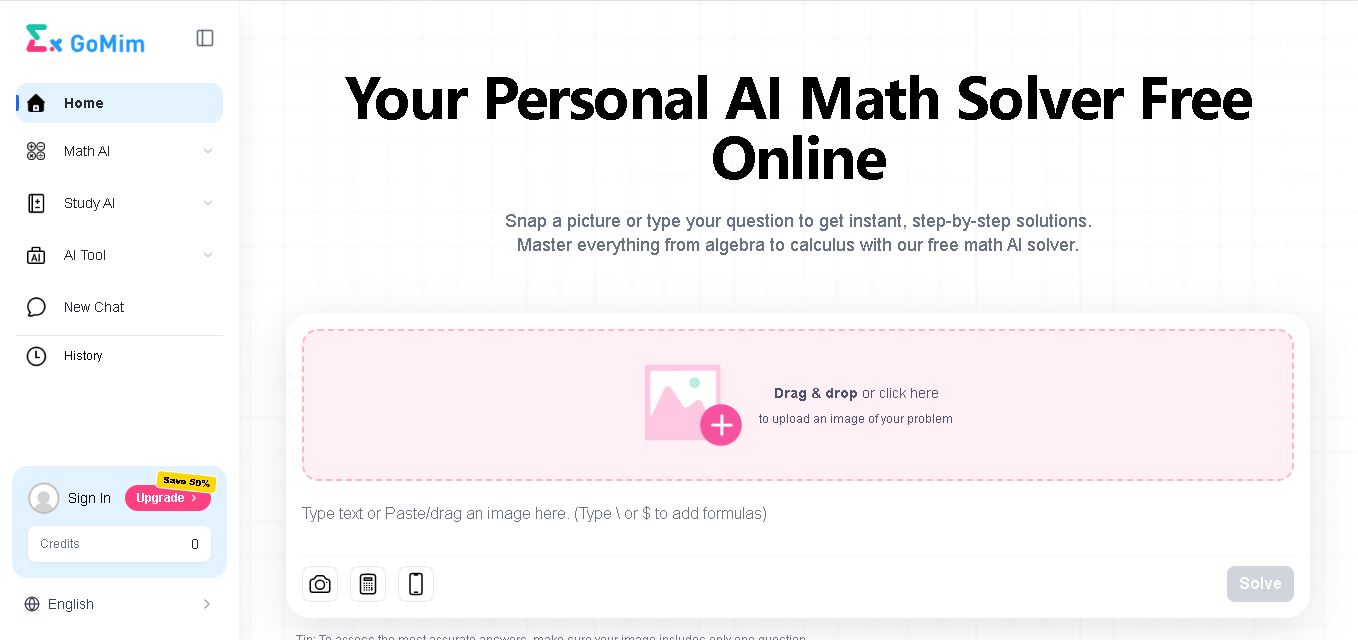
GoMim is an AI math solver that helps students understand mathematical concepts through step-by-step solutions. It supports typed questions, image uploads, and subjects including algebra, geometry, and calculus. With an interactive AI tutor, question history, and free and paid plans, GoMim makes homework assistance and independent study more accessible.
 4.8
AlphaResearch
Research
AlphaResearch helps investors, financial analysts, and corporate strategists research companies using financial documents, earnings transcripts, market data, and sentiment analysis. Its features include document search, filing alerts, stock screening, institutional ownership tracking, and research notes. The platform simplifies financial information discovery, helping users investigate companies and support informed investment research decisions.
 4.8
Gatsbi
Research
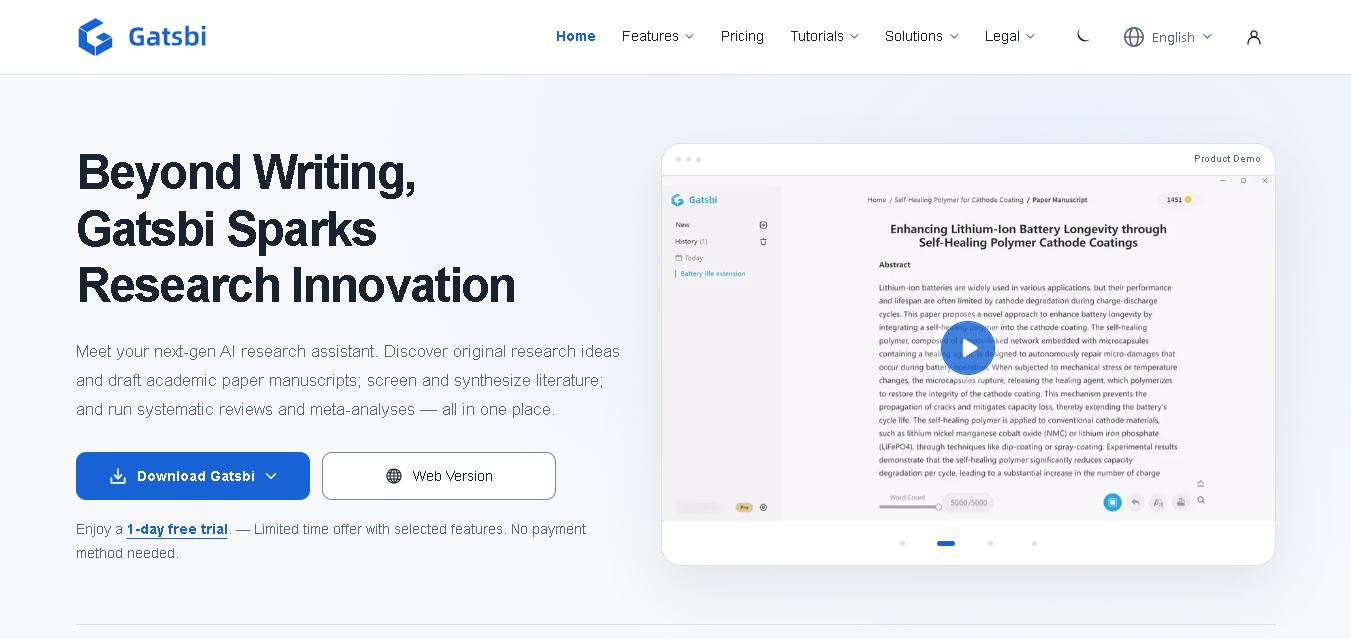
Gatsbi is an AI research assistant that helps researchers discover ideas, draft academic papers, review scientific literature, and prepare patent disclosures. It combines research discovery, manuscript generation, and evidence synthesis in one workflow. The tool is useful for academics, scientists, engineers, and innovation teams seeking to streamline complex research tasks.
 4.9
Metagene-1
Research
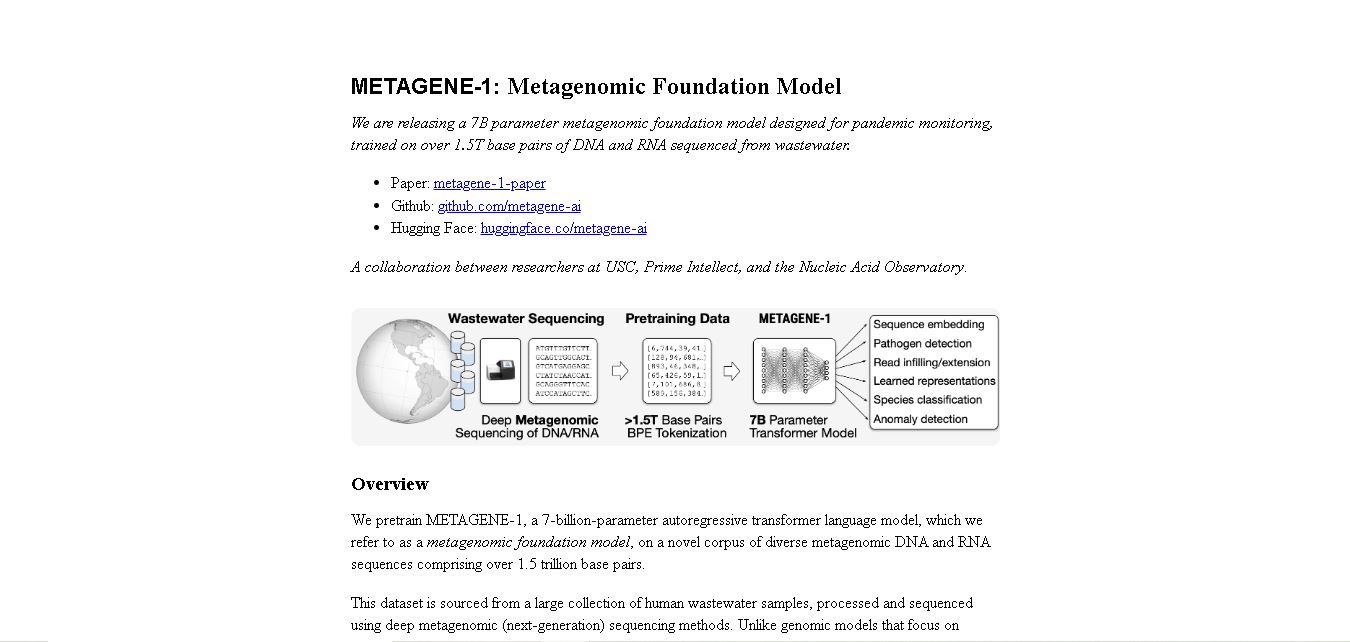
METAGENE-1 is a metagenomic foundation model designed to help researchers analyze DNA and RNA sequences. Trained on extensive wastewater sequencing data, it supports genomic embedding, pathogen detection research, biosurveillance, and pandemic monitoring. The model provides researchers with an AI-based approach to studying microbial diversity and identifying patterns in complex metagenomic datasets.