
OpenRouter
OpenRouter simplifies AI access by connecting multiple models through a single interface, helping developers and businesses manage performance, cost, and scalability efficiently.
What is OpenRouter?
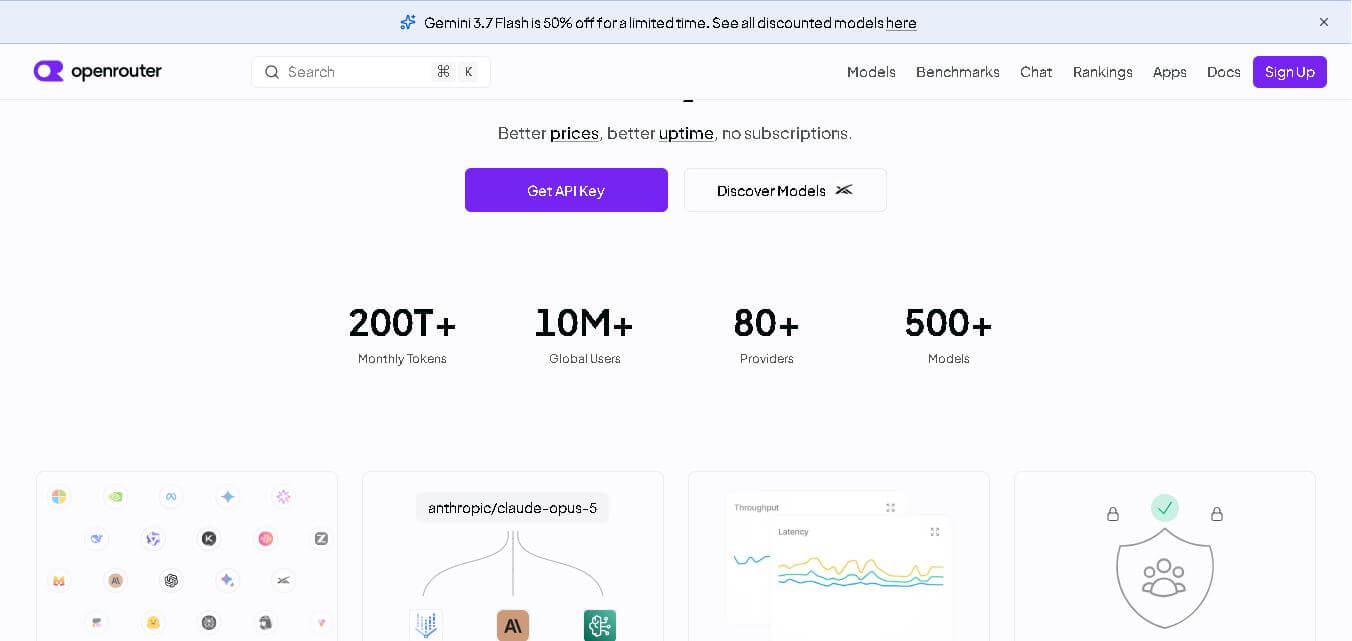
OpenRouter is a unified interface that connects multiple AI models, providers, and modalities into a single access point for developers and organizations. It enables users to generate text, images, videos, and audio using one API key while routing requests across different providers for better pricing, uptime, and performance. The platform is designed to simplify model integration by removing the need to manage multiple APIs separately. It also offers compatibility with existing APIs, making it easier to switch or scale across models. OpenRouter ensures flexibility, efficiency, and control when working with modern AI systems across various use cases and industries.
OpenRouter processes over 200T+ monthly tokens and serves 10M+ global users across its ecosystem. It integrates with 80+ AI providers and supports more than 500+ models, making it one of the largest unified AI platforms. The platform powers over 250k+ applications, serving 4.2M+ users globally. These numbers highlight its scalability, reliability, and growing adoption among developers and enterprises looking for a centralized AI infrastructure.
- Founder: Not explicitly mentioned in the official document
- Launch: Not specified
- Use Cases: AI app development, automation, content generation, multimodal AI integration
- Technology: Unified API, distributed infrastructure, edge computing, OpenAI-compatible API
- Target Users: Developers, startups, enterprises, AI researchers
- Acquisition: No acquisition data available

Key Features of OpenRouter AI
OpenRouter AI key features are
- Color Palette Control: Customize and fine-tune color schemes in generated images to match branding, mood, or artistic requirements with precision.
- Entity Control: Manage and control specific elements within an image, allowing users to define objects, subjects, and their attributes for more accurate outputs.
- Style Transfer: Apply different artistic styles to images, enabling transformation into various visual aesthetics such as paintings, illustrations, or modern designs.
- Spatial Control: Adjust positioning and layout of elements inside generated visuals, giving users better composition control.
- Inpainting: Edit specific parts of an image by replacing or refining selected areas without affecting the entire design.
- Outpainting: Extend images beyond their original boundaries, generating additional content seamlessly to expand visuals.
- Face Swap: Replace faces in images with realistic results, useful for creative projects, entertainment, or design experimentation.
- Diverse AI Models: Access multiple exclusive models, including LoRA and FLUX-based systems, for different creative styles like photography, illustration, and product design.
- Infinite Canvas: Create and edit designs on an extended workspace, allowing complex and layered visual compositions.
- Integrated AI Tools: Includes tools like Shakker Generator, A1111 WebUI, ComfyUI, and training modules for flexible workflows across skill levels.
OpenRouter Pricing
-
Free Access (Likely Entry Level):
Users can explore the platform, test models, and use basic tools like AI generators and face swaps.
- Membership Plan (Core Model):
- Access to premium AI models (FLUX, LoRA, XL variants)
- Use of advanced tools like WebUI, ComfyUI, and training modules
- Priority access to new models and features
-
Credit / Usage-Based Elements:
- AI generation (images, edits, training) may consume internal credits or usage limits
- More complex outputs (like high-resolution or advanced styles) likely require more resources
-
Creator Ecosystem Access:
- Creators can publish models and gain exposure
- The platform may include monetization or support features for creators
Disclaimer: For the latest and most accurate pricing information, please visit the official OpenRouter AI website.
Who is using OpenRouter?
OpenRouter AI is designed for a broad range of presentation-heavy users, including
- AI Creators & Digital Artists: Individuals creating illustrations, concept art, and experimental visuals using diverse AI models and styles
- Graphic Designers: Professionals working on branding, logo design, and product visuals using tools like style transfer and color palette control
- Photographers & Visual Creators: Users generating realistic portrait photography and artistic imagery with AI-powered enhancements
- Architects & Product Designers: Creators using AI for architecture concepts, product design, and visual prototyping
- AI Model Developers: Users building and sharing custom models (LoRA, FLUX) within the Shakker ecosystem
- Creative Community Members: Active contributors and creators showcasing work, sharing models, and collaborating within the platform community
- Beginner to Advanced Users: The platform supports all skill levels with tools like WebUI, ComfyUI, and training modules
Best OpenRouter Alternatives
Some of the strongest OpenRouter AI alternatives include
- OpenAI API
- Anthropic Claude API
- Google Vertex AI
- AWS SageMaker
- Replicate
- Midjourney
- Stable Diffusion
Pros and Cons
Pros
- Access to 500+ models in one place
- Cost-efficient routing
- High uptime and reliability
- Multimodal capabilities
- Easy API integration
Cons
- Founder and company details limited
- Requires technical knowledge
- Pricing varies by model usage
Why Choose OpenRouter?
Shakker AI stands out as a complete generative design platform that combines powerful AI models with advanced creative tools, making it ideal for both beginners and professional designers. Instead of offering just basic image generation, it provides deep control over design elements, styles, and outputs, enabling users to create highly customized visuals across multiple categories like photography, illustration, architecture, and product design.
- All-in-One Creative Platform: Combines multiple AI tools like style transfer, inpainting, outpainting, and face swap in one place, reducing the need for external software.
- Advanced Creative Control: Features like spatial control and color palette management allow for precise visuals, making outputs more professional and brand-ready.
- Diverse AI Models: Offers exclusive models, including FLUX and LoRA variants, for different creative styles such as photography, illustrations, and concept art.
- Infinite Canvas Workflow: Enables users to design freely without layout limitations, supporting complex and large-scale creative projects.
- Beginner to Pro Friendly: Includes tools like WebUI, ComfyUI, and training modules, making it accessible for both beginners and advanced users.
- Multi-Category Design Support: Covers a wide range of use cases, including logo design, architecture, anime, photography, and product design, from a single platform.
OpenRouter vs Competitors
The main difference between Shakker AI, Midjourney, DALL·E, and Stable Diffusion is that Shakker AI combines diverse models with advanced editing and control tools in one platform. While Midjourney focuses on artistic generation and DALL·E simplifies image creation, Stable Diffusion offers flexibility through open-source customization. Shakker stands out by providing features like spatial control, inpainting, and multiple UI tools, making it more suitable for complete design workflows.
| Feature | Shakker AI | Midjourney | DALL·E | Stable Diffusion |
|---|---|---|---|---|
| Model Variety | Multiple (FLUX, LoRA, SDXL) | Limited | Limited | High (open-source) |
| Editing Tools | Advanced (inpainting, face swap, spatial control) | Minimal | Basic | Advanced |
| Customization | High (entity + style control) | Medium | Medium | High |
| UI & Tools | WebUI, ComfyUI, training tools | Discord-based | Simple UI | Technical setup |
| Use Cases | Design, art, product, architecture | Art-focused | General use | Flexible dev + design |
| Ease of Use | Medium | Easy | Easy | Medium–Hard |
How Do We Rate OpenRouter
| Parameter | Rating (Out of 5) |
|---|---|
| Features | 5 |
| Ease of Use | 4 |
| Pricing | 3.5 |
| Performance | 4.5 |
| Support | 4 |
OpenRouter Review
OpenRouter stands out as a powerful solution for developers seeking flexibility in AI integration. Its ability to connect multiple providers through one API reduces complexity and enhances efficiency. The platform’s focus on cost optimization and uptime makes it highly practical for production environments. While it may require some technical expertise, its benefits outweigh the learning curve. Overall, OpenRouter is a strong choice for modern AI development.
Conclusion
OpenRouter offers a scalable and efficient way to access multiple AI models through a single platform. Its unified interface, cost optimization, and high availability make it a valuable tool for developers and businesses. With support for multimodal AI and flexible pricing, it simplifies complex integrations and enhances performance. Although it requires technical knowledge, the platform’s benefits in terms of flexibility, reliability, and scalability make it a strong contender in the AI infrastructure space.
FAQ
What is OpenRouter used for?
OpenRouter is used to access multiple AI models through a single API for building applications, automation, and analytics.
Is OpenRouter free?
No, it uses a credit-based pricing system without subscriptions.
How many models does OpenRouter support?
It supports over 500 AI models from more than 80 providers.
Does OpenRouter support multimodal AI?
Yes, it supports text, image, video, and audio generation.
Is OpenRouter OpenAI compatible?
Yes, it is fully compatible with OpenAI-style APIs.
User Reviews
No reviews yet for OpenRouter.
Featured Tools
Featured AI tools from TechShark
Melody Genie
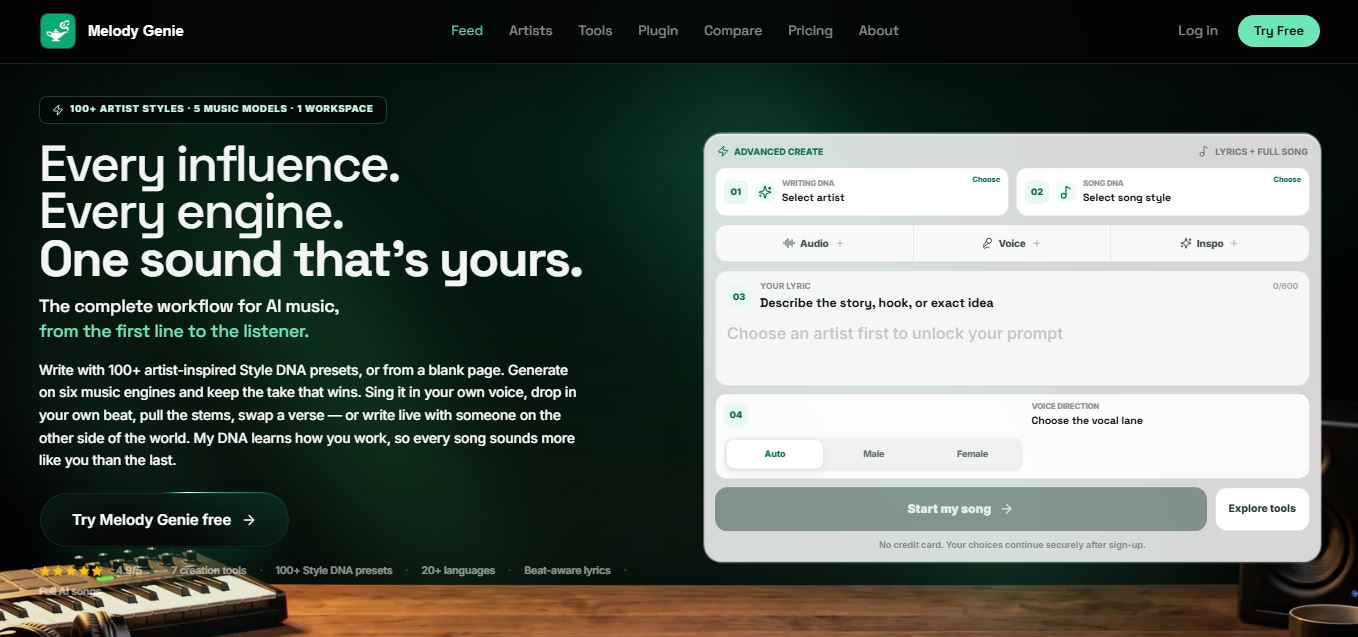
MelodyGenie is an AI-powered music generator that creates original songs from simple text prompts. Users can choose styles, moods, and genres, then instantly generate melodies and full tracks, making it easy for creators, marketers, and hobbyists to produce custom music without musical expertise.
Freemium
Kimi AI
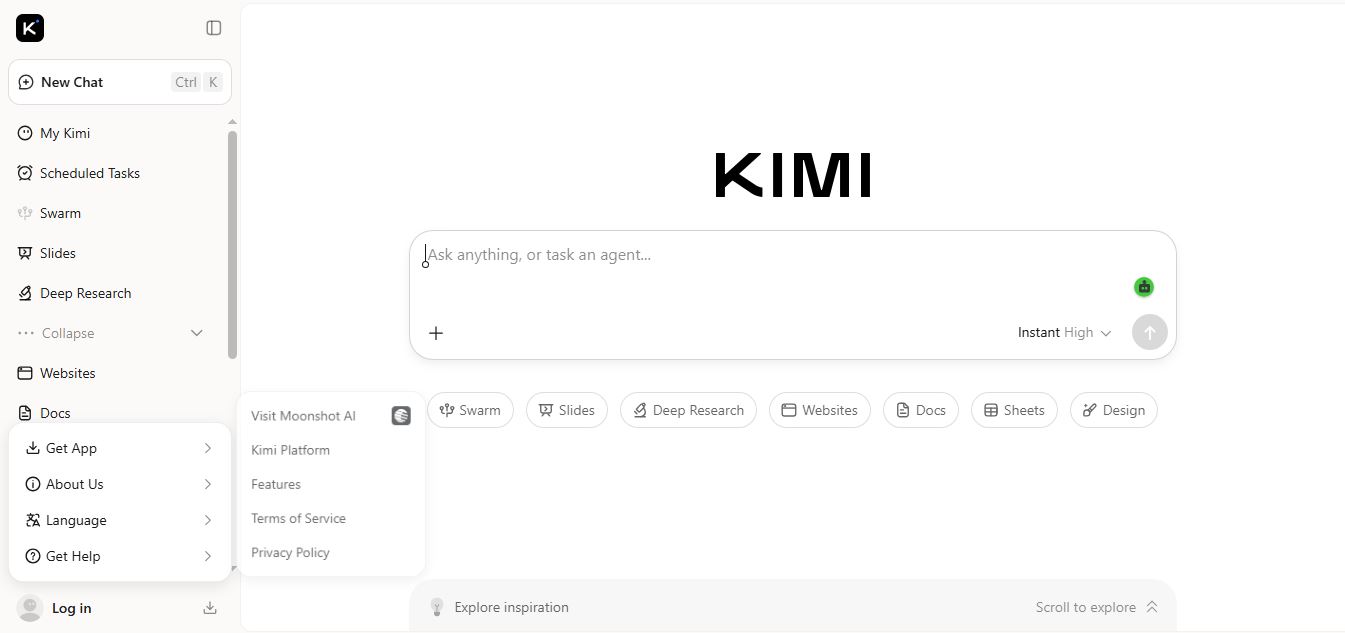
Kimi AI is an advanced AI assistant developed by Moonshot AI that helps you chat, research, write, code, and automate tasks in one place. It supports web search, file analysis, and multimodal inputs, and can even run autonomous “agent” workflows to complete complex tasks end-to-end.
Freemium
Fashion Diffusion AI
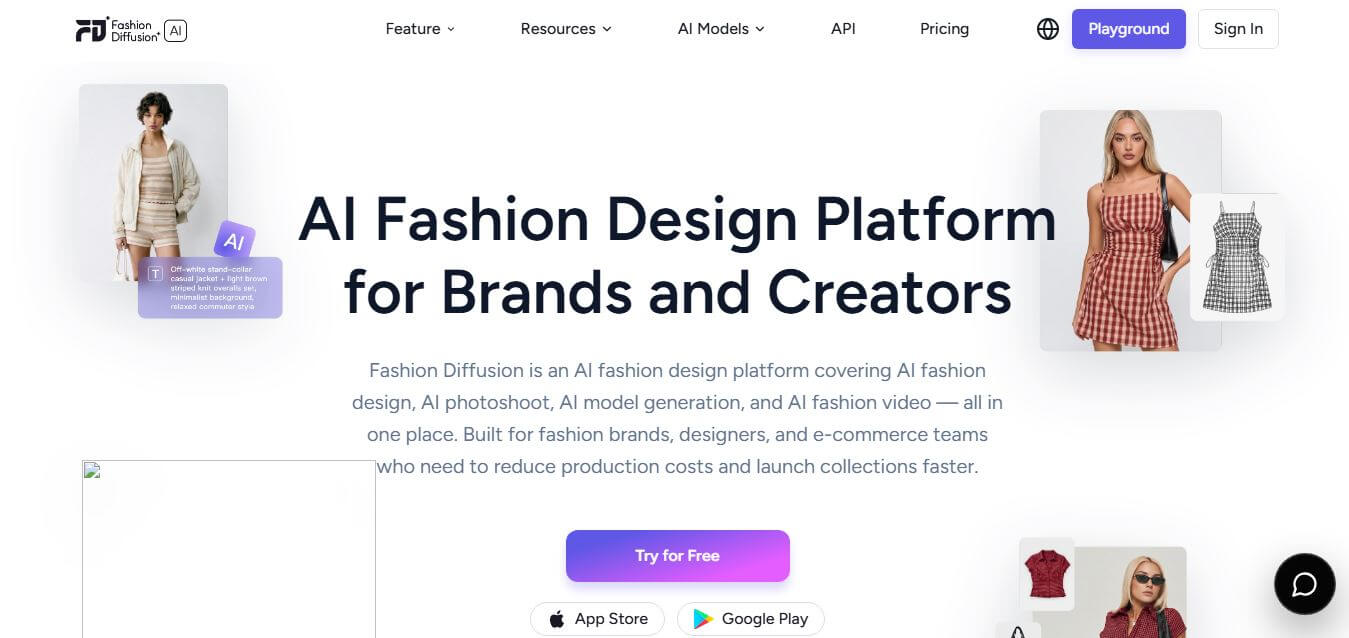
Fashion Diffusion is an AI-powered fashion design platform that helps brands and designers create clothing designs, virtual try-ons, AI models, product photos, and marketing visuals faster and cost-effectively.
Paid
Veo 4
Veo 4 AI is an AI video creation platform that generates dramatic videos from text, images, audio, and video prompts using realistic motion and synchronized sound.
Paid
Alternatives
Alternatives to OpenRouter
The best OpenRouter alternatives include OpenAI API, Anthropic Claude, Google Vertex AI, AWS SageMaker, and Replicate. These platforms offer powerful AI capabilities but differ in flexibility and pricing. While OpenAI and Anthropic focus on their own models, Vertex AI and SageMaker provide cloud-based AI infrastructure. Replicate offers model deployment and hosting. However, OpenRouter stands out by combining multiple providers into one interface, giving users greater control and efficiency.
 4.7
4.7Leelo AI
Text-to-Speech
Leelo AI helps you turn written content into natural-sounding speech without recording your own voice. You can choose from 800+ voices across 142 languages and accents, adjust available voice settings, generate audio, store files in the cloud, export recordings, and use generated speech commercially for different content and communication needs.
 4.7
4.7MyVocal AI
Text-to-Speech
MyVocal AI helps creators turn written content and voice recordings into natural-sounding audio. Users can clone voices, generate multilingual speech, create AI song covers, transcribe recordings, and produce music from text. Its combination of voice customization, emotion control, and multilingual generation makes it useful for content, narration, music, products, and interactive experiences.
 4.8
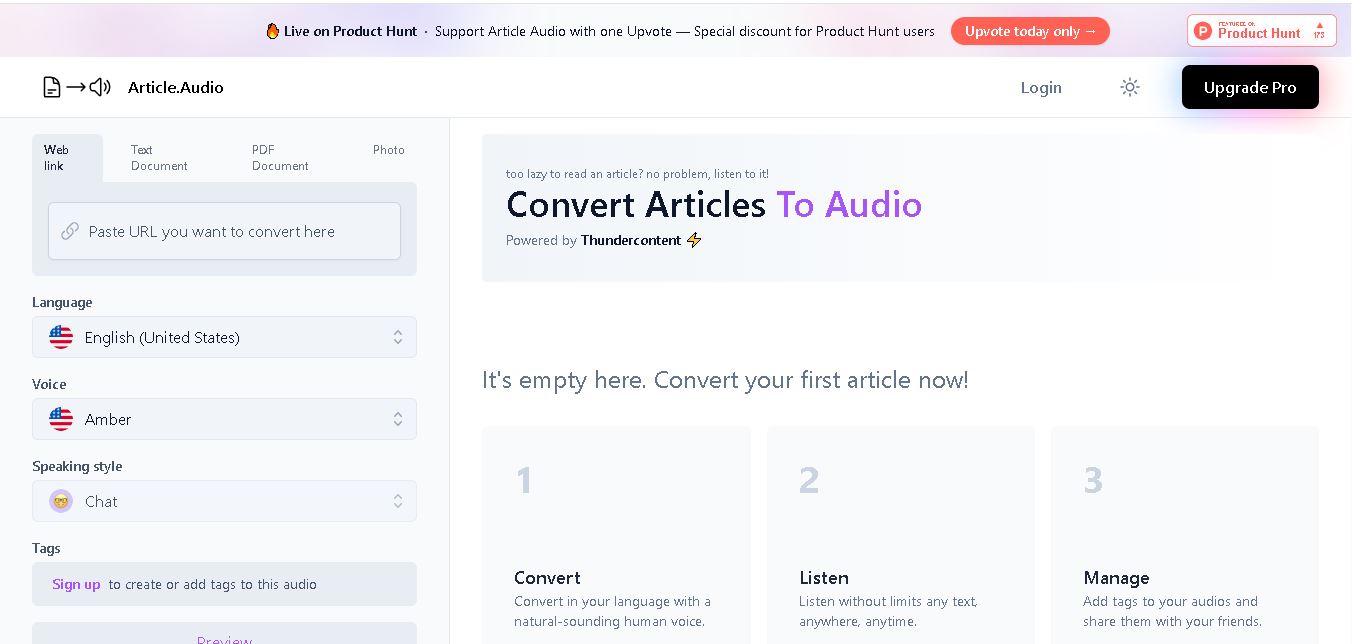
4.8Article Audio
Text-to-Speech
Article.Audio turns online articles into listenable audio from a simple web link. You can choose a language, voice, and speaking style to create a more personalized listening experience. It is useful for readers who want to consume articles while commuting, exercising, working, or handling other activities.
 4.8
4.8Google Cloud Speech-to-Text
Text-to-Speech
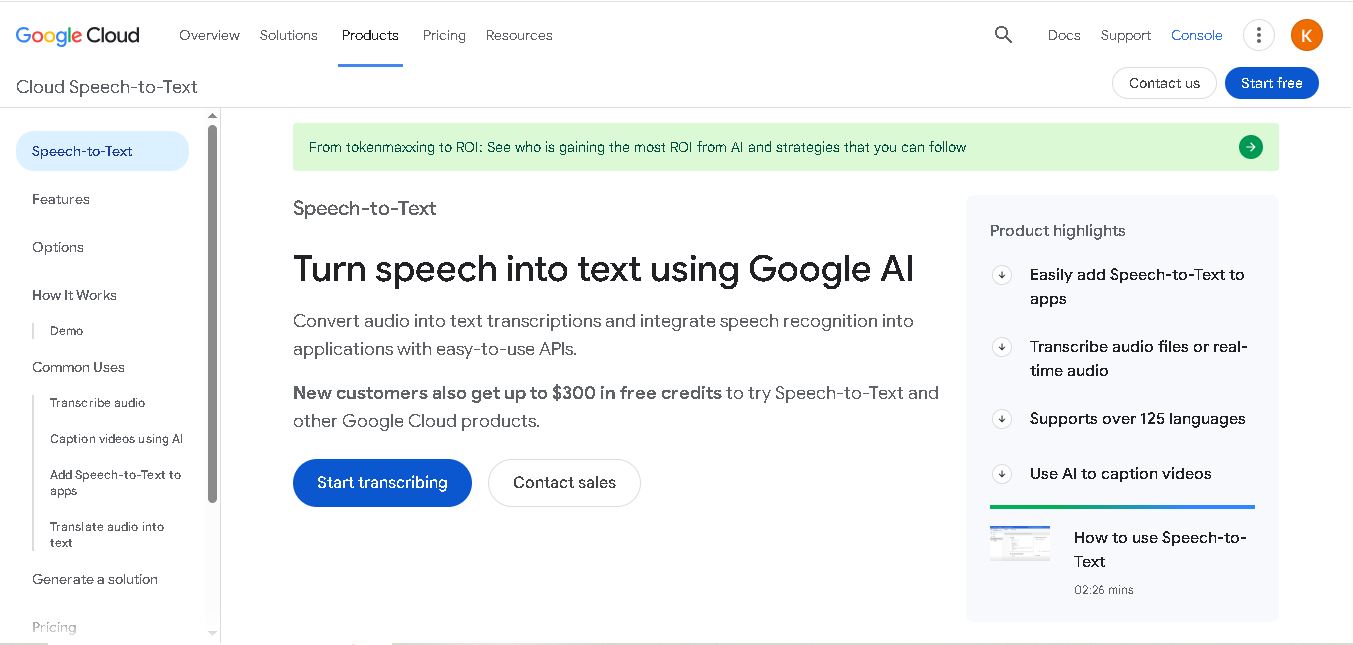
Google Cloud Speech-to-Text helps developers turn spoken audio into text for applications, captions, voice commands, meetings, calls, and searchable content. With streaming recognition, multilingual support, model adaptation, speaker diarization, and multiple transcription methods, it provides speech recognition capabilities for applications and enterprise workflows. It fits teams seeking integrated transcription workflows.
 4.8
4.8Apple Books
Text-to-Speech
Apple Books is a digital bookstore and reading app for ebooks and audiobooks. It combines millions of titles, personalized recommendations, curated collections, reading goals, offline downloads, and cross-device synchronization. Users can purchase individual books without a monthly subscription and continue reading or listening across compatible Apple devices.
 4.8
4.8WellSaid Labs
Text-to-Speech
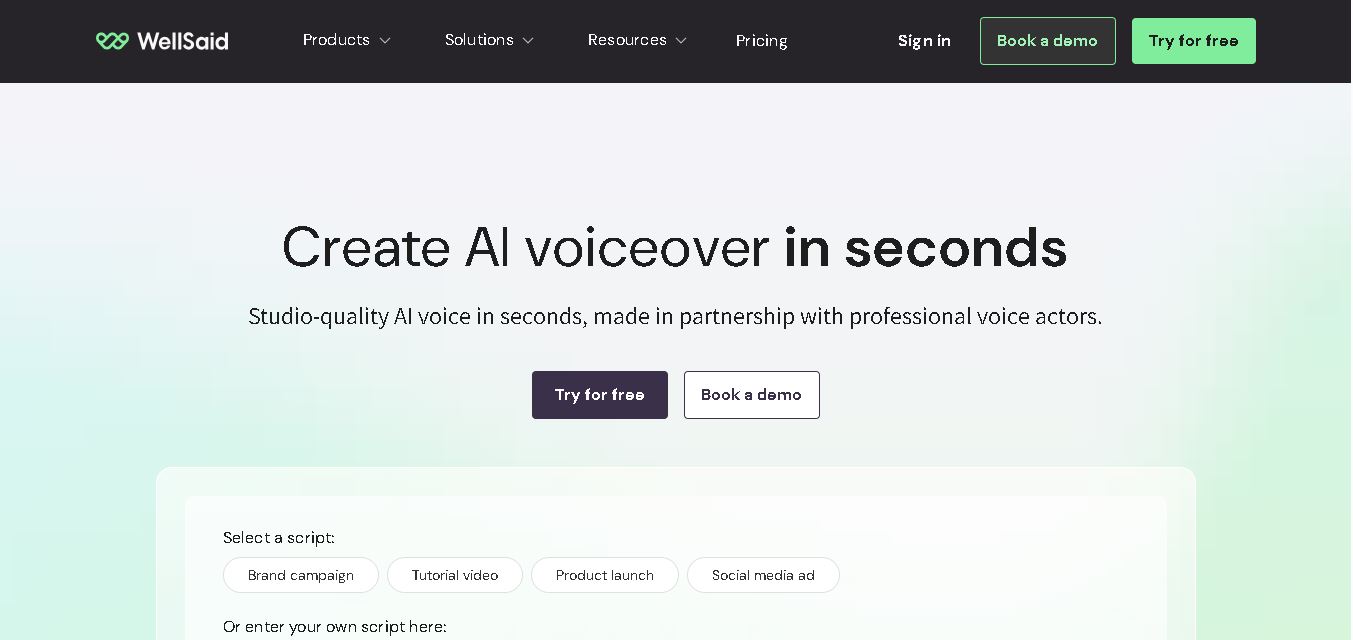
WellSaid Labs is a professional voice-generation platform for creating natural-sounding AI voiceovers from written scripts. It offers hundreds of voice options, multiple languages and accents, expressive controls, pronunciation customization, commercial usage rights on paid plans, and developer APIs. It is useful for e-learning, marketing, training, video production, podcasts, and business applications.
 4.7
4.7MilanVoice AI
Text-to-Speech
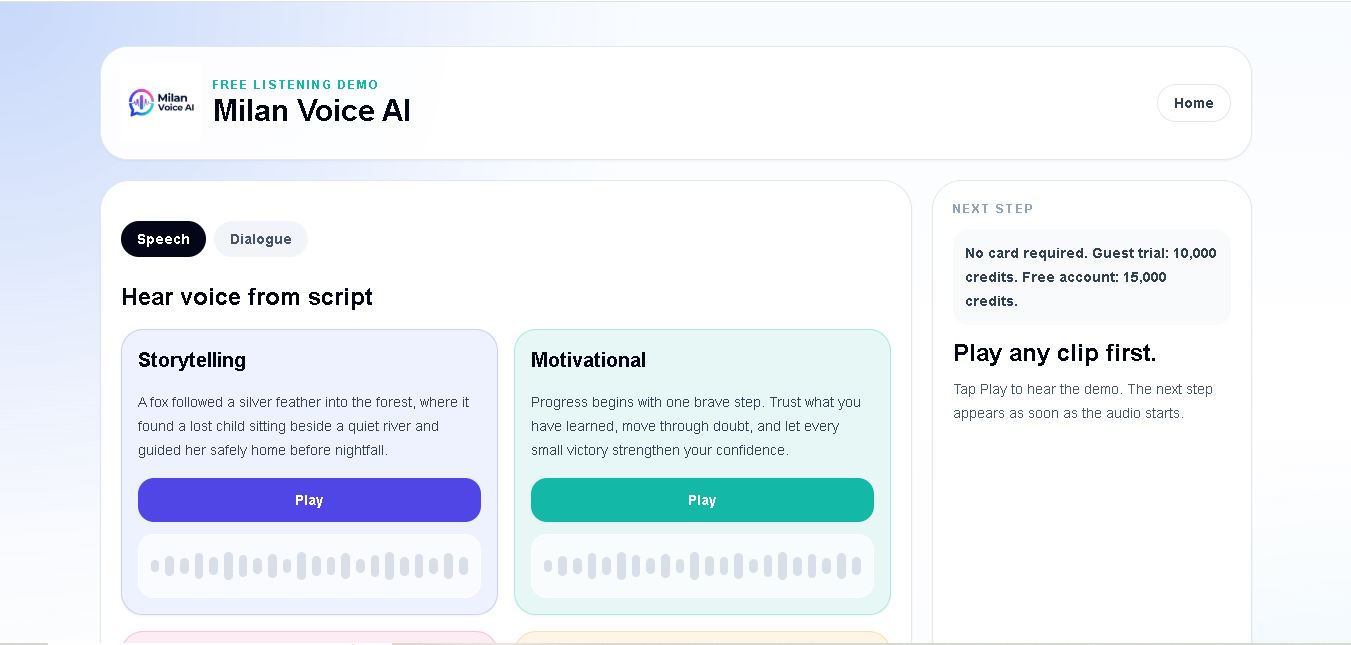
Milan Voice AI helps creators generate natural speech, clone voices, design new voices, and build multi-speaker dialogue from text. It is useful for videos, podcasts, courses, explainers, interviews, and other voiceover projects. The platform offers a free starting plan, simple credit-based pricing, and separate allowances for voice creation for content.
 4.8
4.8VoiSpark
Text-to-Speech
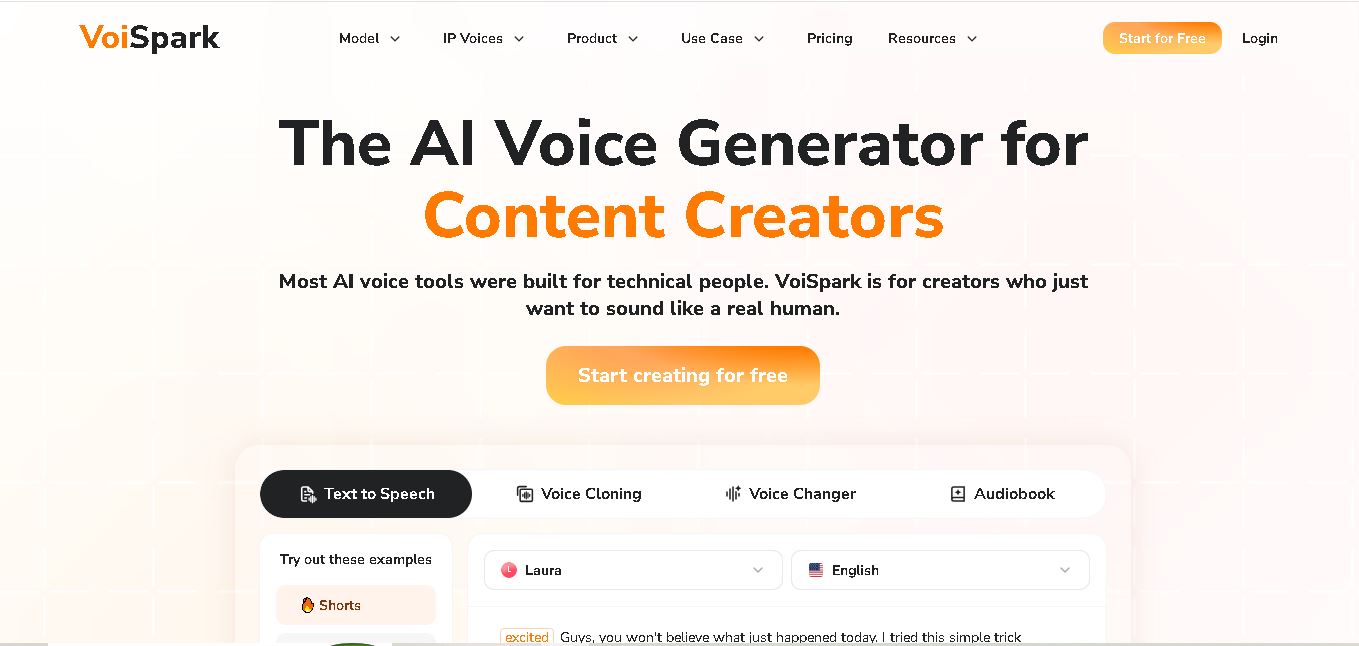
VoiSpark is an AI voice creation platform for generating natural speech, cloning voices, changing recordings, and producing narration. It offers 700+ voices, multiple AI models, multilingual support, emotional voice controls, and long-form narration features. Its Free and paid plans make it accessible to individual creators, professionals, and businesses with different audio-generation requirements.
 4.9
4.9Respeecher
Text-to-Speech
Respeecher helps creators transform speech into realistic target voices while retaining the original performance. It supports speech-to-speech conversion, text-to-speech, voice cloning, localization, and custom voice projects. The platform is particularly suited to professional media, entertainment, gaming, advertising, and other workflows where natural delivery and creative control are important. Flexible pricing.