
OpenAlex
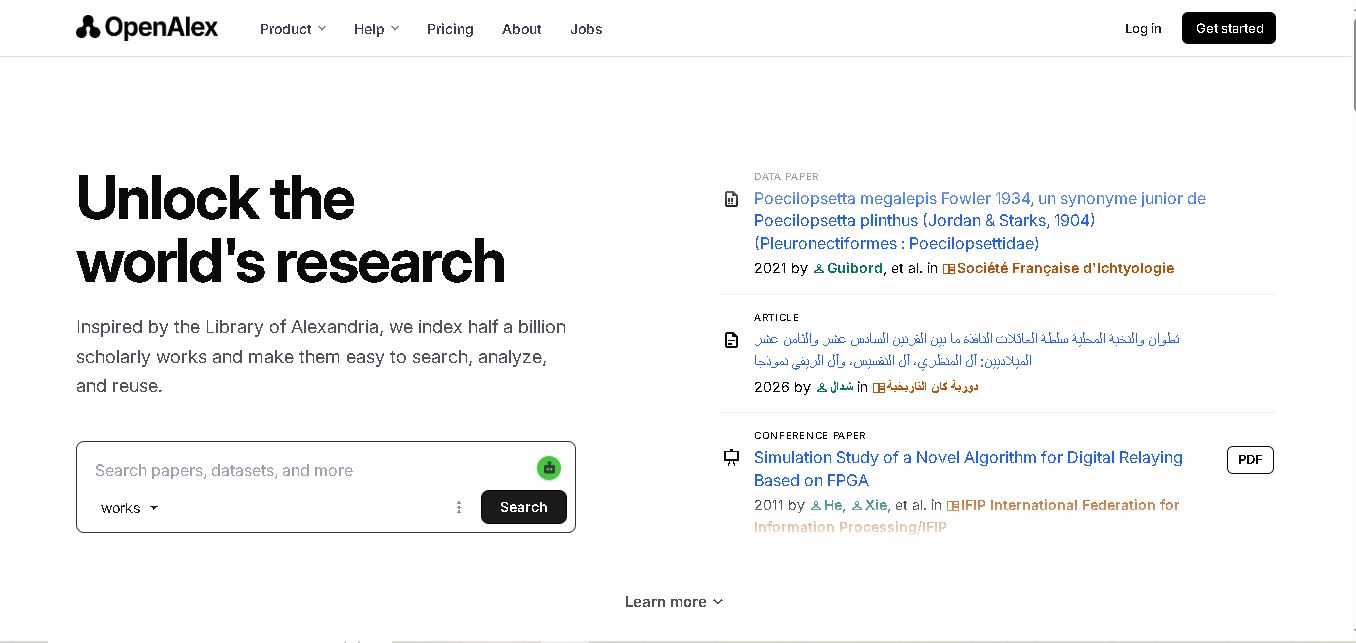
OpenAlex is an open scholarly research database that helps users discover academic papers, authors, journals, institutions, and citation connections. It supports literature reviews, research analysis, academic discovery, and bibliometric studies. With a searchable website, an API, and downloadable data, OpenAlex makes large-scale scholarly information accessible to researchers worldwide.
What is OpenAlex?
OpenAlex is an open-access research catalog that connects scholarly publications with authors, academic institutions, journals, funders, and citation networks. It helps students, researchers, librarians, and research organizations discover academic literature, explore research trends, and analyze scientific contributions. Users can search its online database, access structured research metadata through an API, or download the dataset for further analysis. OpenAlex is maintained by a nonprofit organization and makes its research metadata available under the CC0 public-domain dedication.
OpenAlex catalogs over 317 million scholarly works, including research articles, books, dissertations, datasets, and preprints. Its database includes 117 million open-access works, 119 million authors, 284,000 sources, and 128,000 institutions, according to its published statistics. The platform connects publications through citations, affiliations, research topics, and funding information. No subscription is required to explore its basic research data. OpenAlex also provides API access and downloadable datasets, making it valuable for literature reviews, bibliometric research, and large-scale academic analysis.
- Platform Focus: Open-science bibliographic knowledge graph, scholarly API, research metrics, and open-data infrastructure
- Developer / Organization: OurResearch (US 501(c)(3) Non-Profit)
- Launch Year: 2022
Use Cases:
- Building custom research discovery tools, AI literature assistants, and citation graph applications
- Conducting bibliometric analyses, institutional research evaluation, and funder impact tracking
- Downloading complete data snapshots for machine learning model training and scientific data mining
- Powering systematic review screening pipelines and literature synthesis platforms
Technology:
- Graph-database architecture linking Works, Authors, Venues, Institutions, Concepts, and Funders
- OpenAlex Query Language (OQL) and RESTful API infrastructure handling over 1 billion monthly API calls
- Integration with global open identifier systems including ORCID, ROR, Crossref, PubMed, and Wikidata
Target Users:
- Bibliometricians, data scientists, and academic methodologists studying scientific knowledge diffusion
- Software developers building AI research co-pilots, discovery search engines, and literature tools
- University administrators, librarians, and funding agencies evaluating research outputs
Corporate Entity: Operates under OurResearch (Non-Profit) / openalex.org
Key features of OpenAlex
OpenAlex's key features are
- Massive Open Knowledge Graph: Indexes over 450M+ scholarly works connected by billions of citation and entity relationships.
- 100% CC0 Public Domain Data: All underlying metadata is licensed under CC0, allowing unrestricted commercial and academic reuse.
- High-Performance REST API & OQL: Query, filter, and aggregate entities using fast API endpoints or custom OpenAlex Query Language scripts.
- Disambiguated Entity Resolution: Uses machine learning to link persistent identifiers like ROR (institutions), ORCID (authors), and DOIs (works).
- Free Bulk Data Snapshots: Complete database dumps updated regularly and hosted openly for local offline execution and data science workflows.
- Open Source Codebase: Transparent non-profit infrastructure adhering to Principles of Open Scholarly Infrastructure (POSI).
OpenAlex Pricing
OpenAlex operates on a "Free Data, Paid Services" model. The dataset is 100% free under CC0, with usage-based API budgets and institutional membership plans to sustain non-profit operations.
Free Tier:
- $0 / Free ($1/day API budget with a free account API key, or $0.10/day without a key)
- Includes full web search access, complete data snapshot downloads, and up to 1,000 search API calls daily
Pay-As-You-Go / Prepaid Credit:
- Pay for usage beyond the free $1/day budget in $1 self-serve increments (e.g., $0.10 per 1,000 list/filter calls, $1.00 per 1,000 search calls)
Annual Organizational Memberships:
- Member ($5,000/year): $20/day API budget, organizational admin dashboard, and advisory representation
- Member+ ($10,000/year): $100/day API budget, daily database sync, and technical support
- Partner (from $20,000/year): Custom high-volume API limits, dedicated consulting, and ticket support
Who is using OpenAlex?
OpenAlex is used by global developers, researchers, and academic institutions, including
- AI Tool Developers & Startups: Powering platforms like EPPI-Reviewer, Inciteful, and Paperguide with open citation data
- Bibliometric Research Teams: Mining massive datasets to analyze global science trends and funding flows
- University Libraries & Government Agencies: Conducting open research evaluation and replacing closed vendor databases
Best OpenAlex Alternatives
Some of the strongest OpenAlex alternatives include
- Crossref
- Semantic Scholar API
- Dimensions
- Scopus
- Web of Science
- Lens.org
Pros and Cons of OpenAlex
Pros
- 100% open CC0 metadata eliminates paywalls and commercial restrictions for researchers and developers
- Massive database scale covering over 450M+ research works across all global disciplines
- Free daily API budget ($1/day) makes prototyping and personal research accessible at zero cost
- Transparent non-profit governance backed by OurResearch
Cons
- Data processing and author disambiguation algorithms occasionally require human correction or reporting
- API usage beyond daily free allowances requires pay-as-you-go top-ups or organizational subscriptions
- Focuses purely on bibliographic metadata and open PDFs rather than generative text writing or document chat tools
Why Choose OpenAlex?
OpenAlex is the definitive choice for developers, researchers, and institutions looking for an open, un-siloed, CC0-licensed global research index that provides an open alternative to commercial citation databases.
- Provides a massive CC0 knowledge graph indexing 450M+ scientific publications
- Allows completely open bulk dataset downloads and flexible REST API access
- Offers a generous free daily API tier ($1/day) for developers and researchers
- Sustained by a mission-driven, non-profit open infrastructure model
OpenAlex vs. Competitors
The main difference between OpenAlex, Semantic Scholar, Dimensions, and Crossref is that OpenAlex is a completely open CC0-licensed non-profit catalog that aggregates data across Crossref, PubMed, preprints, and institutional repositories into an integrated entity graph, whereas Semantic Scholar focuses on AI citation velocity models, Dimensions is a closed commercial product, and Crossref functions as a DOI registration agency. OpenAlex stands out for its CC0 open data license and comprehensive entity graph structure.
| Feature / Tool | OpenAlex (openalex.org) | Semantic Scholar | Dimensions | Crossref |
|---|---|---|---|---|
| Core Focus | Open CC0 Bibliographic Knowledge Graph & Index | AI-Powered Open Academic Search Engine | Commercial Linked Research Analytics Database | Official DOI Registration Agency & Metadata Index |
| Data Licensing | CC0 Public Domain (100% Free Reuse) | Open API / Custom Terms | Proprietary Commercial License | Open Metadata (CC0 / Public) |
| Bulk Snapshot Download | Yes (100% Free Complete Dump) | Yes (Academic Request) | No (Commercial Access Only) | Yes |
| Pricing Model | Free $1/day API tier / Pay-as-you-go & Memberships | 100% Free / Open API | Paid Commercial Subscription | Free Open API / Publisher Fees |
| Best For | Open Science Infrastructure & AI Data Pipelines | AI Citation Graph Search & Paper Discovery | Enterprise Bibliometrics & Grant Analytics | Publisher DOI Metadata Registration & Lookup |
How do we rate OpenAlex?
| Parameter | Rating (out of 5) |
|---|---|
| Open Data & Knowledge Graph Scope | 5.0 |
| API Flexibility & Performance | 4.9 |
| Entity Disambiguation Precision | 4.7 |
| Open Science & Non-Profit Ethics | 5.0 |
| Value for Money | 4.9 |
| Overall Score | 4.90 |
OpenAlex Review
OpenAlex is a transformative open-science platform for the global scientific community. By making over 450 million publication records available under a CC0 public domain license alongside a high-performance API and free bulk snapshot downloads, it serves as an indispensable foundation for researchers, developers, and bibliometricians. Its non-profit ethos and adherence to open scholarly infrastructure ensure it remains a reliable pillar for open research.
Conclusion
OpenAlex is a valuable resource for students, researchers, universities, and developers seeking accessible scholarly information. Its extensive collection of academic works, connected citation data, open metadata, and API capabilities supports literature reviews, research discovery, and bibliometric analysis. Unlike subscription-focused research databases, OpenAlex makes its underlying metadata openly reusable under a CC0 dedication. Although users should verify important findings against original publications, its flexible access options make it a practical choice for exploring global research and academic knowledge.
FAQ
What can you use OpenAlex for?
You can use OpenAlex to discover academic papers, identify influential researchers, explore citation relationships, and investigate emerging research topics. If you are preparing a literature review or university assignment, it helps you find relevant scholarly publications. Research institutions can also analyze publication trends, collaborations, and research impact using its connected academic database.
Is OpenAlex free to use?
Yes, OpenAlex provides openly accessible scholarly data under a CC0 public-domain dedication. You can explore research records and download its dataset without purchasing access to the underlying metadata. API usage has separate limits and pricing: registered accounts receive a free daily usage budget, while organizations with larger requirements can purchase additional capacity or annual plans.
How does OpenAlex help with academic research?
OpenAlex helps you organize academic discovery by connecting publications with authors, institutions, journals, citations, and research topics. Instead of searching for individual papers alone, you can investigate relationships between studies and identify relevant research communities. These connections support literature reviews, citation analysis, collaboration mapping, and investigations into how academic knowledge develops across disciplines. explore.openalex.org
What types of data does OpenAlex provide?
OpenAlex provides metadata about scholarly works, authors, journals, repositories, publishers, institutions, funders, and research topics. Records can include publication titles, abstracts, identifiers, authorship details, publication dates, citation information, and open-access locations. The exact information available varies by record. These connected data types make OpenAlex useful for academic discovery and large-scale research analysis.
Can students use OpenAlex for literature reviews?
Yes, OpenAlex can help you find relevant publications and discover related research for a literature review. You can search by keywords, investigate authors, examine citations, and explore publications within a specific discipline. For stronger academic work, verify important findings against original papers and your institution's research requirements, especially when evaluating publication quality or evidence.
Does OpenAlex provide an API?
Yes, OpenAlex provides a REST API that allows developers and researchers to retrieve scholarly metadata programmatically. You can search works, filter records, retrieve author profiles, analyze institutions, and group results for statistical analysis. The API is useful for research dashboards, bibliometric applications, and automated literature discovery. A free API usage allowance is available for registered accounts.
User Reviews
No reviews yet for OpenAlex.
Featured Tools
Featured AI tools from TechShark
Klap
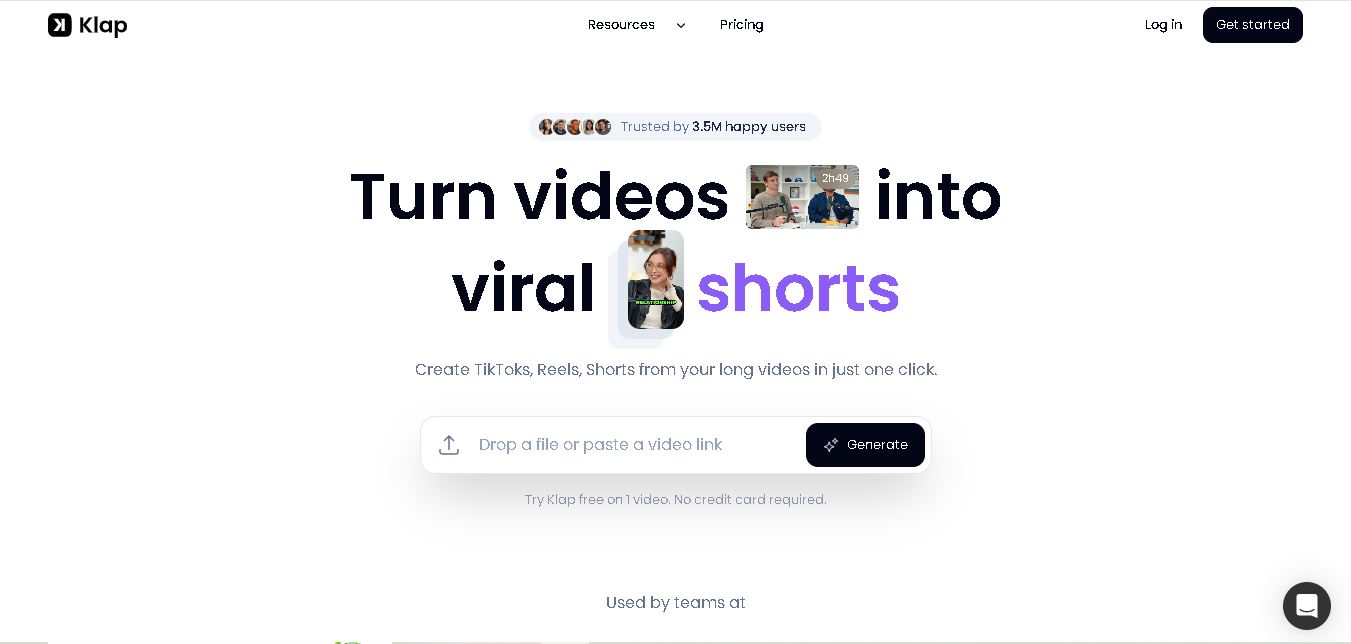
Klap is an AI-powered video editing tool that turns long videos into engaging short clips for TikTok, Instagram Reels, and YouTube Shorts. It automatically finds the best moments, adds captions, and resizes videos, helping creators save time and create more content with less effort.
Free
Melody Genie
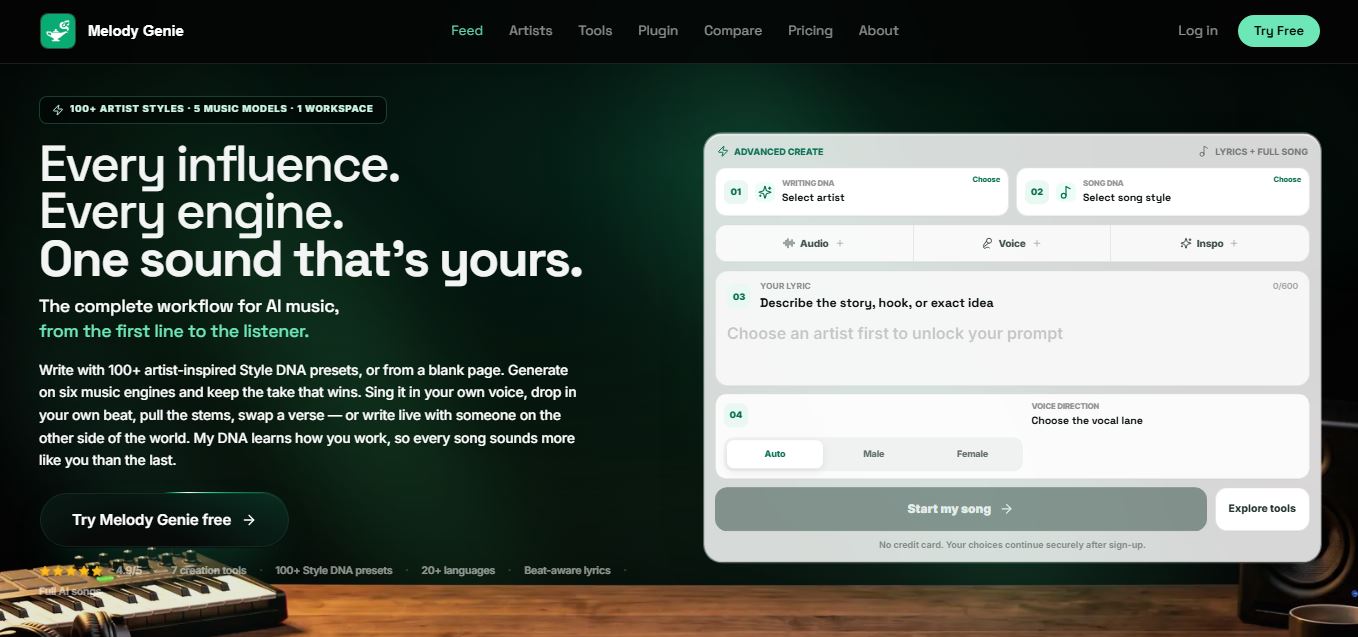
MelodyGenie is an AI-powered music generator that creates original songs from simple text prompts. Users can choose styles, moods, and genres, then instantly generate melodies and full tracks, making it easy for creators, marketers, and hobbyists to produce custom music without musical expertise.
Freemium
Fashion Diffusion AI
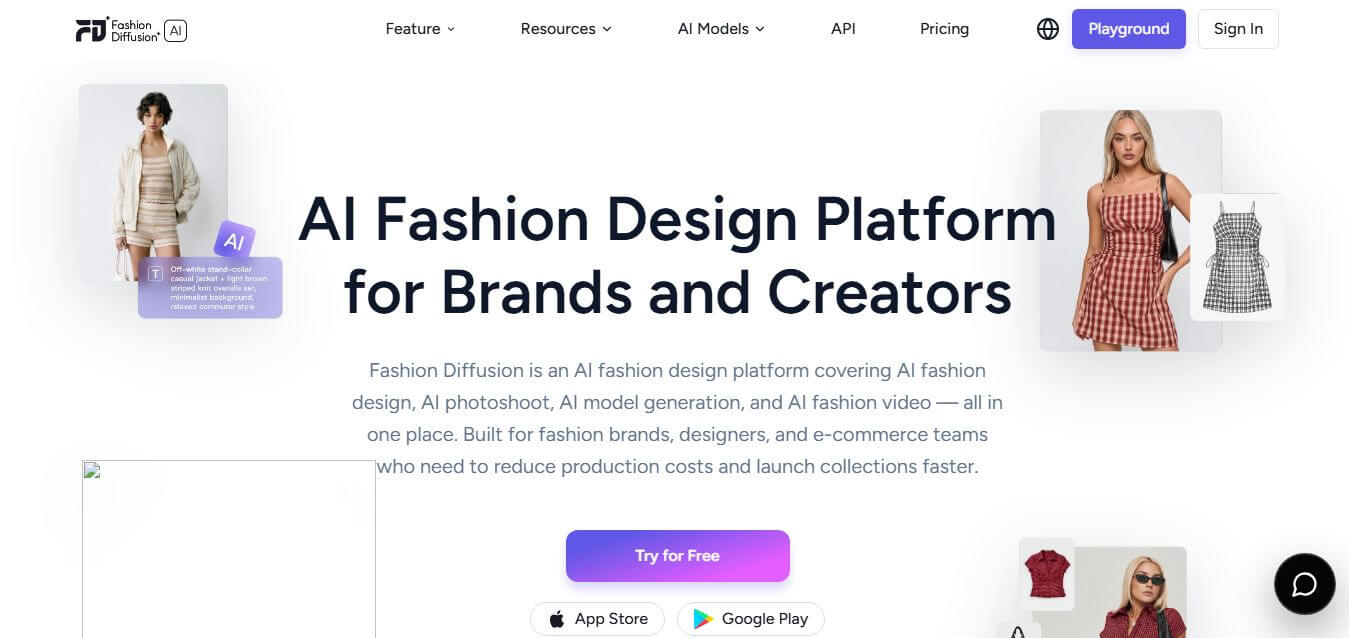
Fashion Diffusion is an AI-powered fashion design platform that helps brands and designers create clothing designs, virtual try-ons, AI models, product photos, and marketing visuals faster and cost-effectively.
Paid
Veo 4
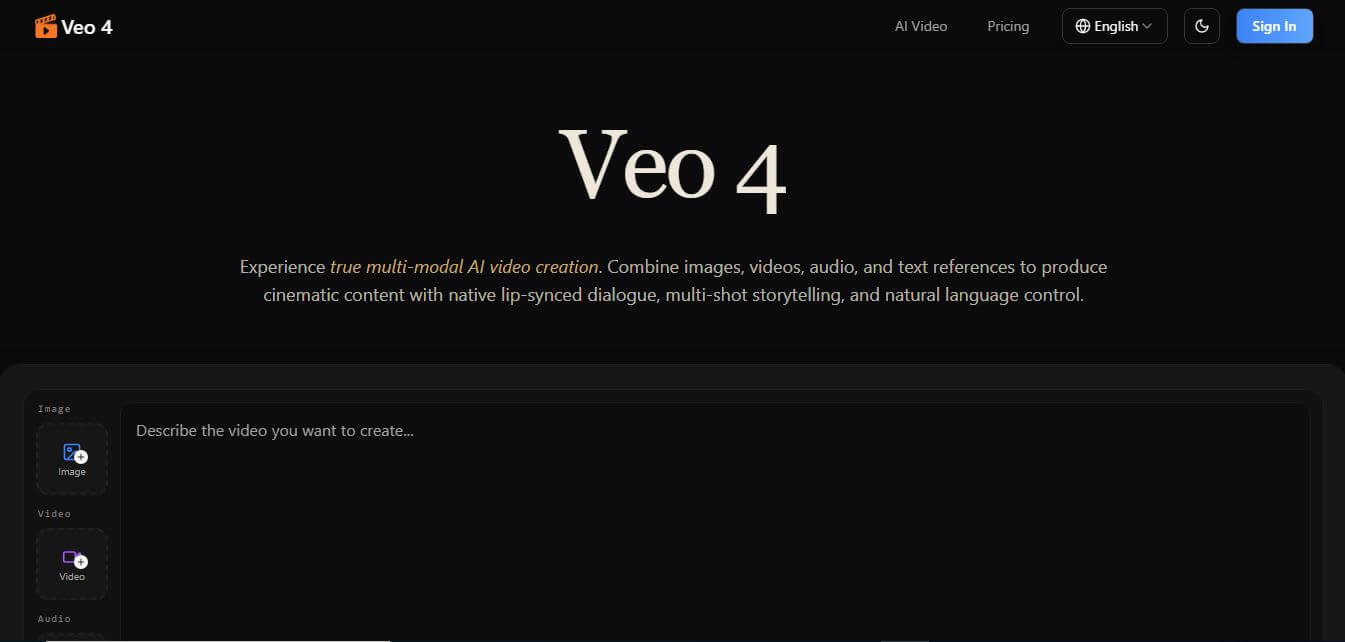
Veo 4 AI is an AI video creation platform that generates dramatic videos from text, images, audio, and video prompts using realistic motion and synchronized sound.
Paid
Alternatives
Alternatives to OpenAlex
The best OpenAlex alternatives include Crossref, Semantic Scholar API, Dimensions, Scopus, Web of Science, and Lens.org. These platforms offer bibliographic indexing, citation API endpoints, and bibliometric data. While OpenAlex specializes in a 100% free CC0 public domain knowledge graph indexing 450M+ works with open API access, alternatives like Dimensions provide proprietary commercial analytics, and Crossref focuses on publisher DOI registrations.
 4.8
Summate.it
Research
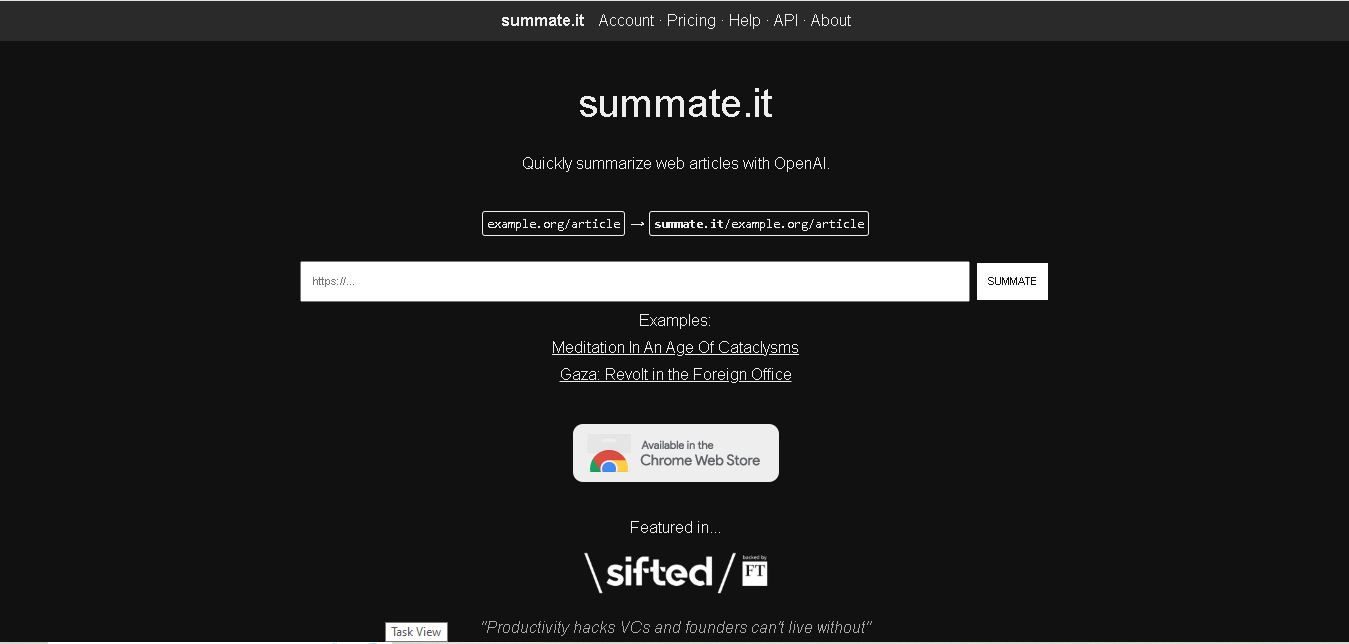
Summate.it is a web-based AI article summarizer that helps users understand lengthy online content quickly. It extracts article text and uses OpenAI to generate concise summaries highlighting essential information. Students, researchers, marketers, and professionals can use it to review online articles efficiently, save reading time, and simplify everyday information gathering.
 4.9
Cradle
Research
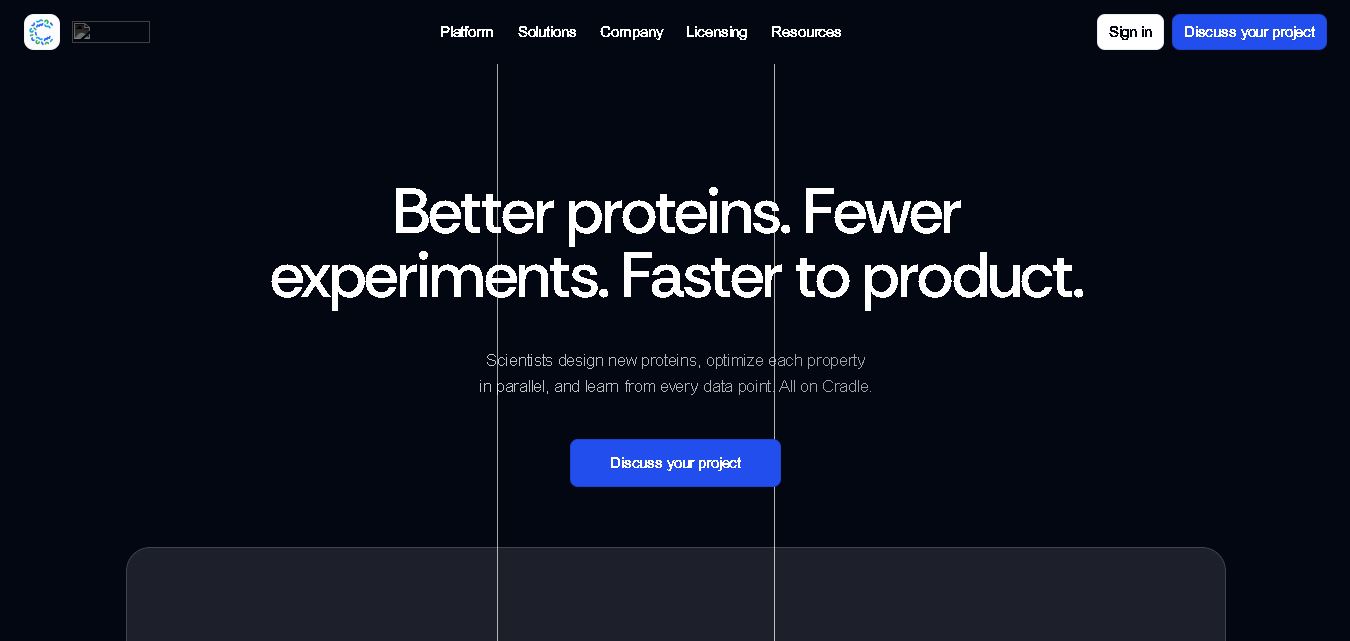
Cradle helps biotechnology researchers design, engineer, and optimize proteins using artificial intelligence and laboratory data. Its capabilities include protein sequence generation, multi-property optimization, candidate scoring, and experimental learning. The platform supports pharmaceutical, agricultural, and industrial biotechnology research, helping scientific teams explore promising molecules while reducing unnecessary experimental cycles and improving research workflows.
 4.9
Iris.ai
Research
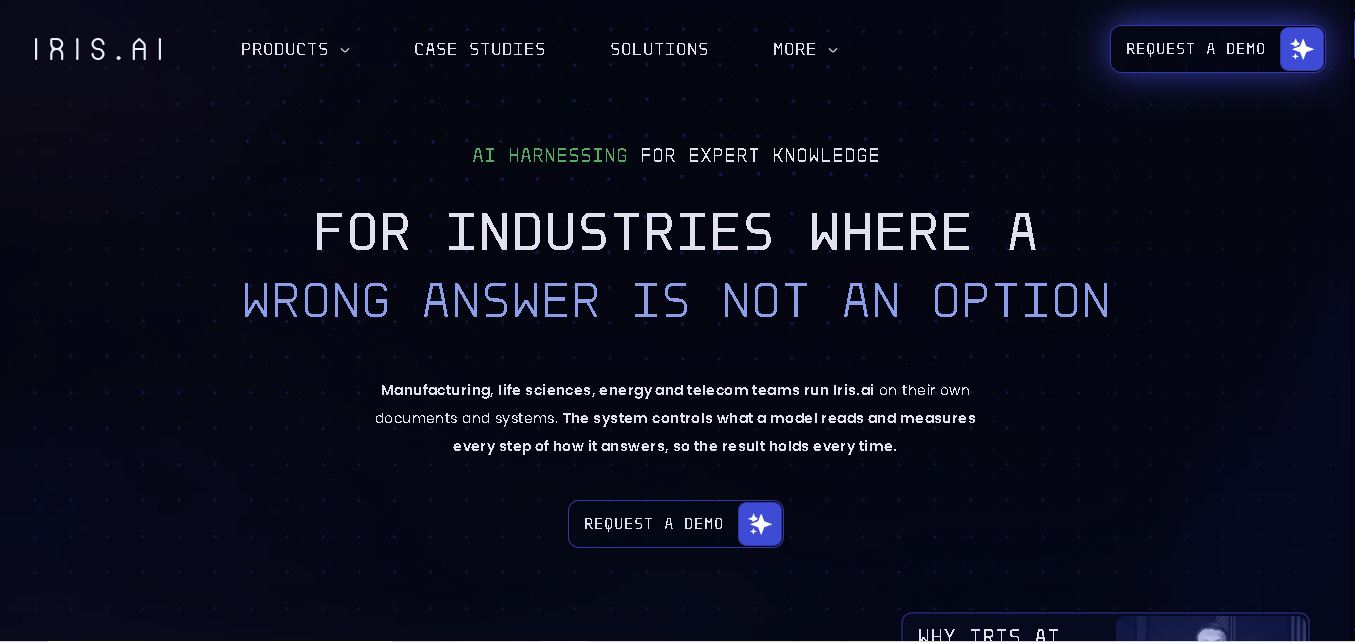
Iris.ai helps enterprises and research teams organize complex information, analyze scientific literature, and build AI workflows using organizational knowledge. Its solutions support document extraction, contextual search, data processing, and AI response evaluation. The platform is particularly relevant to research-intensive businesses seeking better information retrieval, reliable answers, and controlled enterprise AI applications.
 4.8
Lightmatter
Research
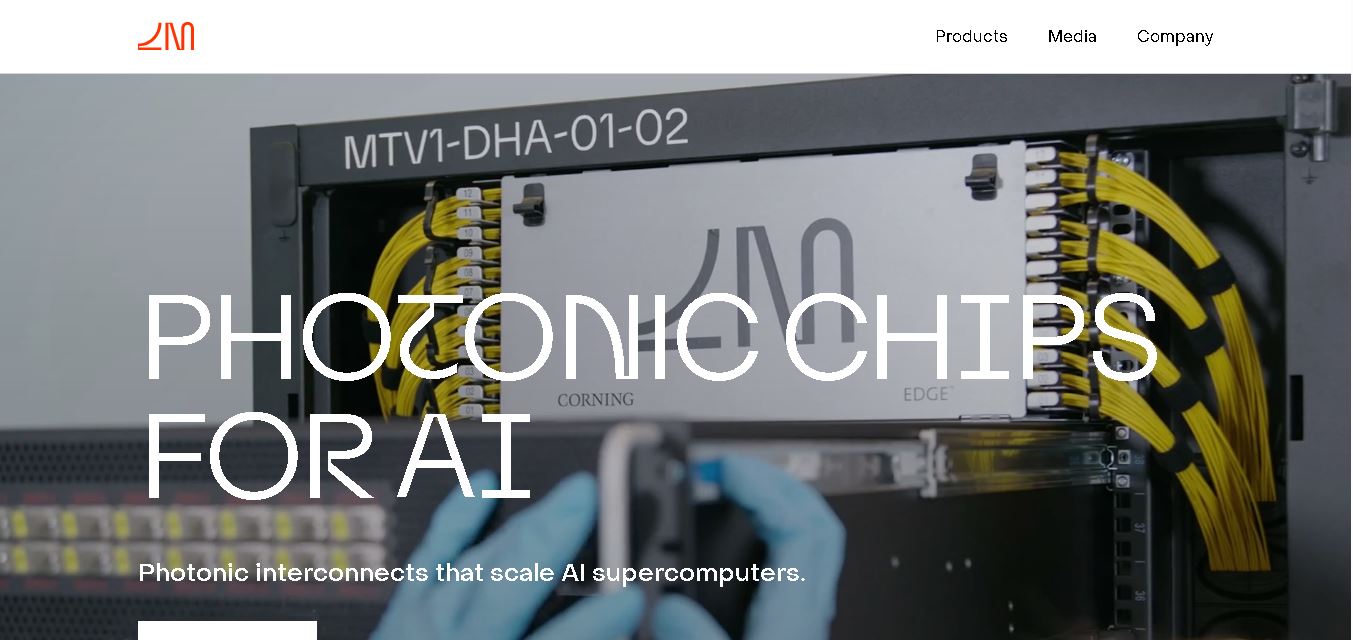
Lightmatter develops photonic computing technologies that help AI data centers connect processors and transfer information more efficiently. Its products include Passage optical interconnects, Guide light engines, and Envise photonic AI computing technology. The company aims to address bandwidth and power constraints affecting large-scale AI training, inference, and high-performance computing infrastructure.
 4.8
FigEditor
Research
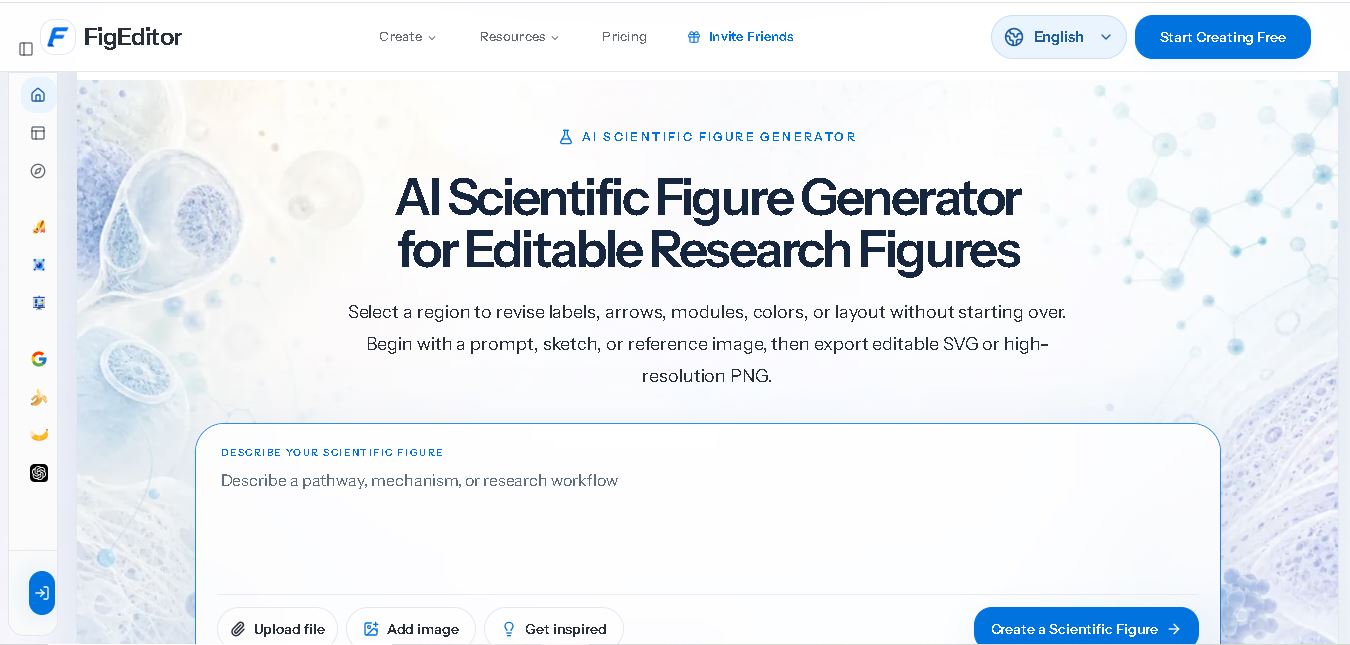
FigEditor AI helps researchers create scientific illustrations, flowcharts, graphical abstracts, and academic diagrams from text prompts, sketches, or reference images. Its editing and vectorization features simplify visual revisions, while SVG and high-resolution PNG exports support different research workflows. It is useful for students, scientists, educators, and research professionals preparing visual materials.
 4.8
GoMim
Research
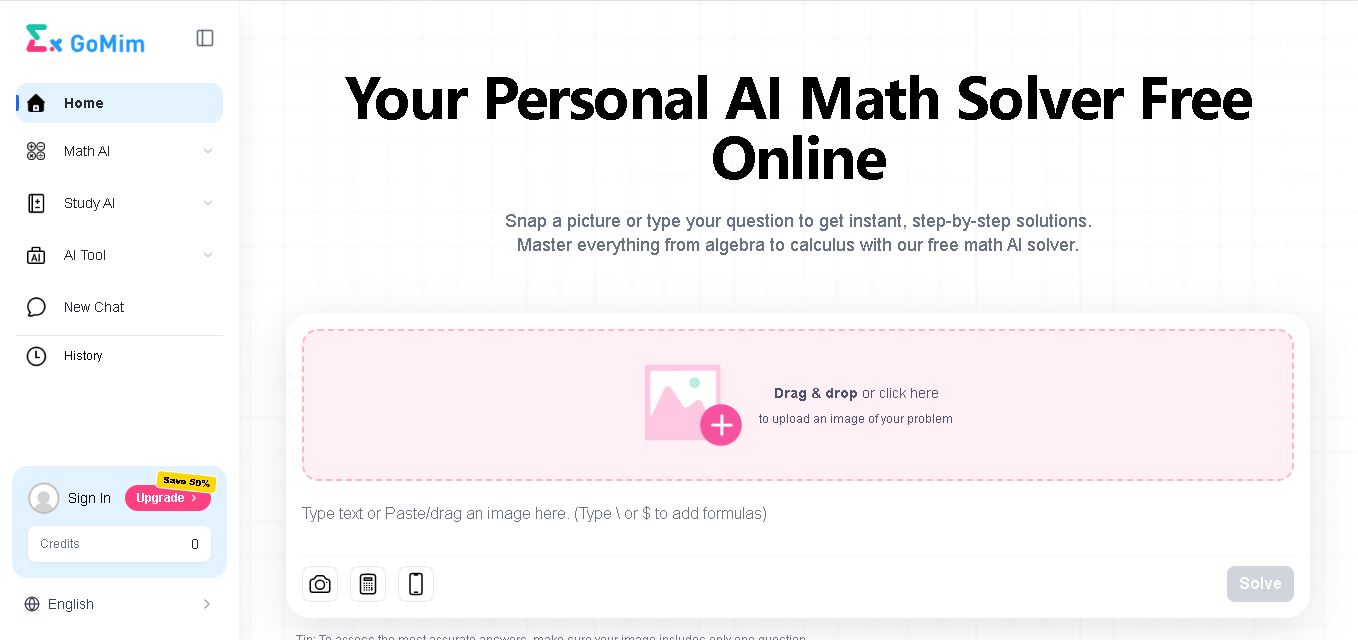
GoMim is an AI math solver that helps students understand mathematical concepts through step-by-step solutions. It supports typed questions, image uploads, and subjects including algebra, geometry, and calculus. With an interactive AI tutor, question history, and free and paid plans, GoMim makes homework assistance and independent study more accessible.
 4.8
AlphaResearch
Research
AlphaResearch helps investors, financial analysts, and corporate strategists research companies using financial documents, earnings transcripts, market data, and sentiment analysis. Its features include document search, filing alerts, stock screening, institutional ownership tracking, and research notes. The platform simplifies financial information discovery, helping users investigate companies and support informed investment research decisions.
 4.8
Gatsbi
Research
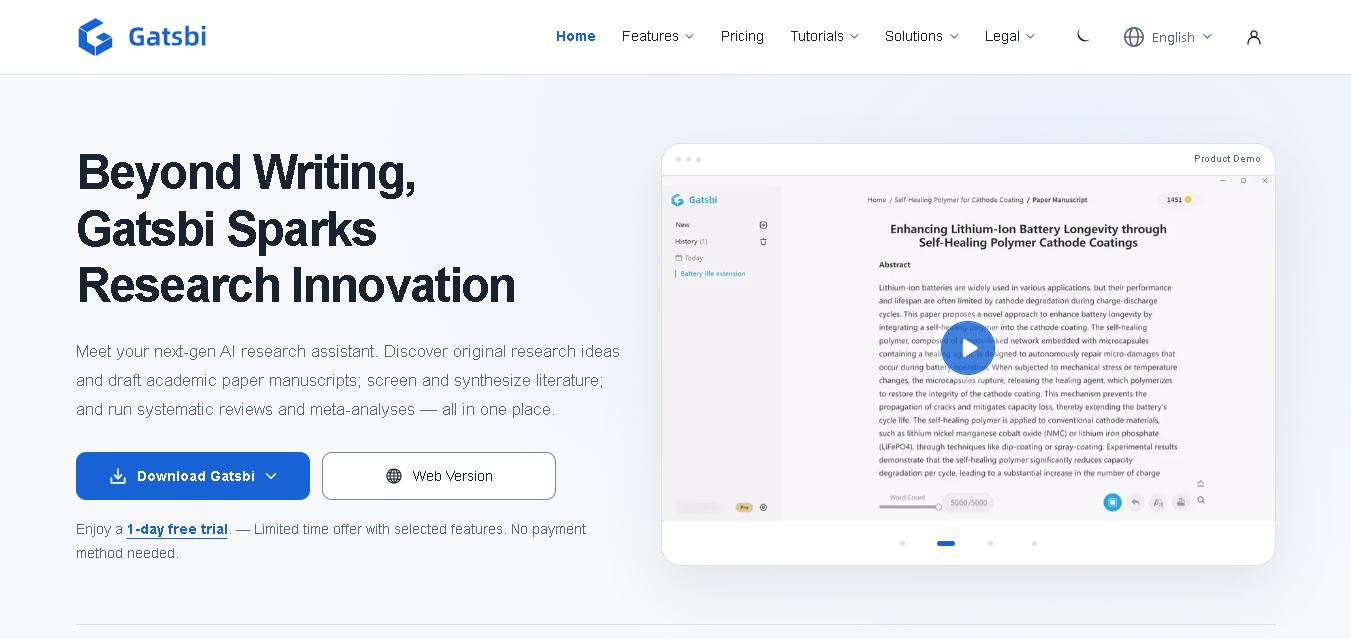
Gatsbi is an AI research assistant that helps researchers discover ideas, draft academic papers, review scientific literature, and prepare patent disclosures. It combines research discovery, manuscript generation, and evidence synthesis in one workflow. The tool is useful for academics, scientists, engineers, and innovation teams seeking to streamline complex research tasks.
 4.9
Metagene-1
Research
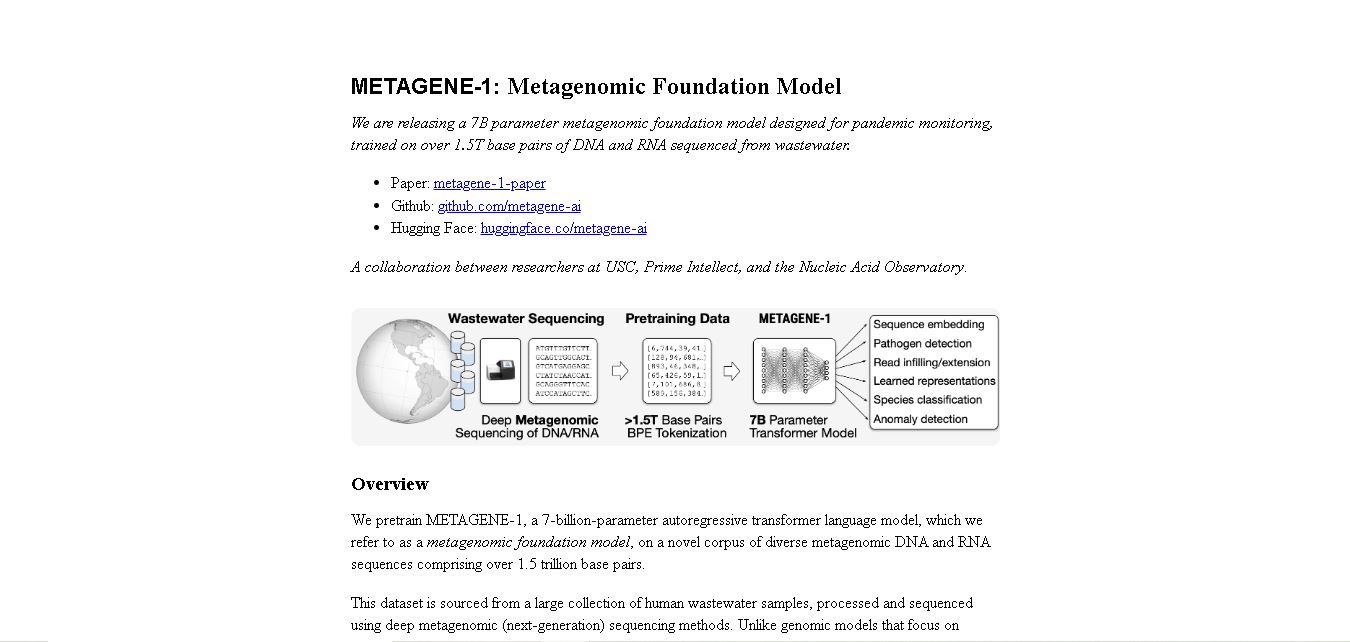
METAGENE-1 is a metagenomic foundation model designed to help researchers analyze DNA and RNA sequences. Trained on extensive wastewater sequencing data, it supports genomic embedding, pathogen detection research, biosurveillance, and pandemic monitoring. The model provides researchers with an AI-based approach to studying microbial diversity and identifying patterns in complex metagenomic datasets.