
Medeloop
Medeloop helps clinical researchers analyze healthcare data, evaluate treatment outcomes, identify patient cohorts, and generate research reports. Its AI-assisted workflow supports study planning, statistical analysis, and visualizations using real-world evidence. Designed for healthcare organizations, pharmaceutical companies, and academic teams, it simplifies research workflows while maintaining human oversight and traceable analytical decisions.
What is Medeloop?
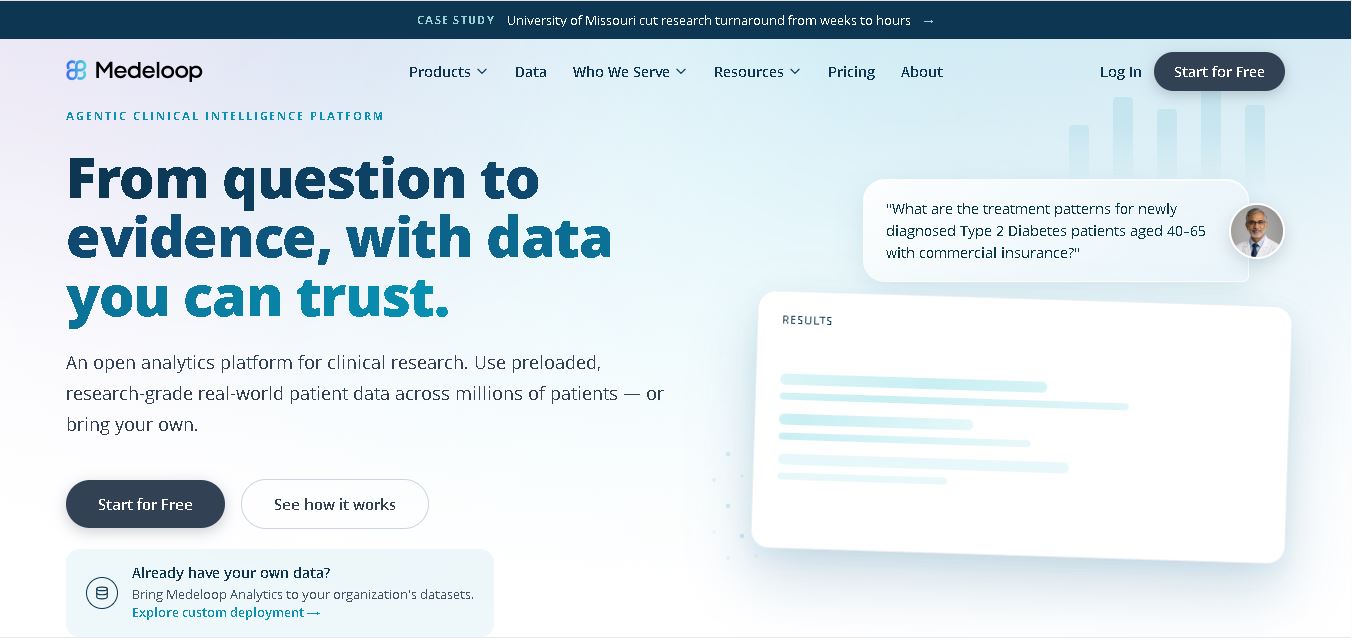
Medeloop is a clinical research analytics platform that helps healthcare professionals, researchers, and life sciences teams turn complex patient data into meaningful research evidence. It uses AI agents to support study planning, patient cohort identification, statistical analysis, and report generation. Researchers can describe questions in plain language, review proposed study methods, and generate traceable outputs using supported real-world healthcare data or their own datasets.
Medeloop is a clinical research technology company co-founded by Rene Caissie and Josh Walonoski. Its Analytics platform supports research using electronic health records, insurance claims, registries, and other clinical datasets. The official website advertises access to more than 200 million patient records through its current pricing offering, alongside research workflows that produce cohorts, statistics, figures, and manuscript-ready reports. Researchers can begin with a free option offering 3 threads, according to the pricing page. No coding is required to start exploring its workflow.
- Platform Focus: Agentic clinical research intelligence, real-world evidence (RWE) analytics, federated healthcare data execution, and automated cohort building
- Developer / Entity: Medeloop Inc.
- Launch Year: AI Clinical Intelligence Platform
Use Cases:
- Conducting comparative effectiveness research, treatment pattern tracking, and healthcare resource utilization analyses
- Building and characterizing complex patient cohorts from structured EHR, claims, and disease registry data
- Executing federated queries on institutional data without exporting raw, protected health information (PHI)
- Generating publication-grade statistical tables, review-ready figures, and STROBE-compliant manuscript drafts
- Analyzing preloaded research-grade real-world data (38M+ de-identified patient claims via HealthVerity)
Technology:
- Agentic AI pipeline coordinating query understanding, feasibility checks, protocol drafting, and query execution
- Semantic code engine mapping plain-language clinical concepts automatically to ICD-10, CPT, NDC, and SNOMED code sets
- Federated execution architecture running locally within AWS, Azure, GCP, or on-premise health system infrastructure
- Native data parsing engine operating directly on raw EHR and claims schemas without requiring prior OMOP harmonization
Target Users:
- HEOR, clinical R&D, and biopharma teams at life sciences and biotech companies
- Clinical researchers, epidemiologists, and faculty at academic medical centers (e.g., Stanford, Duke, Cedars-Sinai)
- Health system administrators, CROs, and population health management teams
Corporate Entity: Operates as Medeloop Inc. / medeloop.ai

Key features of Medeloop
Medeloop's key features are
- Plain-Language Clinical Queries: Submit natural language questions to automatically generate structured research protocols and code sets.
- Federated Data Execution: Runs validated analytical queries locally within your cloud or on-premise infrastructure without moving raw patient data.
- Semantic Concept Engine: Automatically maps clinical concepts to standardized medical vocabularies (ICD-10, CPT, NDC, SNOMED).
- Automated Feasibility Assessment: Checks cohort size, statistical power, and data coverage before initiating full study execution.
- Publication-Ready Outputs: Delivers versioned research objects, Kaplan-Meier curves, regression tables, and auditable manuscript drafts.
- Preloaded Real-World Dataset: Instant access to 38M+ de-identified all-payer claims records for teams without proprietary data.
Medeloop Pricing
Medeloop operates on a freemium self-service model alongside enterprise and institutional license tiers.
Free Plan / Starter Exploration:
- $0 / Free Trial Access
- Allows researchers to test natural language queries, explore preloaded real-world datasets, and run basic feasibility checks
Enterprise & Institutional Plans:
- Custom enterprise subscription pricing for health systems, pharma, and academic institutions
- Includes custom federated deployment behind corporate firewalls, custom schema integration, unlimited query runs, and dedicated support
Who is using Medeloop?
Medeloop is used by clinical and health economics researchers at top institutions, including
- Academic Medical Centers: Stanford Medicine, Duke, Cedars-Sinai, UC San Diego, McGill University, and University of Missouri
- Pharmaceutical & Life Sciences R&D Teams: Conducting rapid real-world evidence (RWE) and comparative effectiveness studies
- Health Systems & Public Health Agencies: Analyzing population health trends and care delivery metrics
Best Medeloop Alternatives
Some of the strongest Medeloop alternatives include
- TriNetX
- Aetion Evidence Platform
- Komodo Health
- Truveta
- Nested Knowledge
- Atropos Health
Pros and Cons of Medeloop
Pros
- Federated architecture ensures protected patient data never leaves local institutional firewalls
- Eliminates months of Common Data Model (OMOP) conversion by natively parsing raw EHR and claims data
- Dramatically cuts clinical research turnaround times from weeks or months down to hours
- Transparent human-in-the-loop workflow with full audit trails and inspectable statistical choices
Cons
- Custom enterprise federated deployment requires coordination with IT and data governance teams
- Statistical outputs and manuscript drafts require clinical review prior to peer-reviewed submission
- Specialized focus on retrospective clinical and observational real-world evidence rather than prospective trial recruitment
Why Choose Medeloop?
Medeloop is an ideal choice for healthcare systems, pharmaceutical teams, and clinical researchers who want to execute rapid real-world evidence studies on raw EHR and claims data without sacrificing data privacy or clinical rigor.
- Converts plain-language medical questions into validated, auditable research outputs
- Keeps data secure using federated execution behind your organization's firewall
- Bypasses long OMOP conversion timelines with native semantic parsing
- Delivers publication-ready figures, statistical tables, and manuscript narratives
Medeloop vs. Competitors
The main difference between Medeloop, TriNetX, Aetion, and Komodo Health is that Medeloop uses an agentic AI architecture that natively parses raw EHR/claims data without requiring prior OMOP harmonization and executes queries via federated compute, whereas TriNetX relies on a standardized global network with OMOP mapping, Aetion specializes in formal regulatory-grade pharmacoepidemiology workflows, and Komodo Health focuses on a centralized commercial healthcare map. Medeloop stands out for its fast plain-language interface and federated execution.
| Feature / Tool | Medeloop (medeloop.ai) | TriNetX | Aetion | Komodo Health |
|---|---|---|---|---|
| Core Focus | Agentic Clinical Research & Federated RWE Platform | Global Health Research Network & Cohort Discovery | Regulatory-Grade Real-World Evidence Analytics | Healthcare Map & Commercial Analytics Data Software |
| Plain-Language AI Queries | Yes (Conversational Agentic Pipeline) | No (Structured Query Builder) | No (Structured Epidemiological Workflows) | Limited / Dashboard Analytics |
| Data Harmonization Requirement | None (Reads Native EHR/Claims Schemas) | Requires OMOP / Standard Mapping | Requires Standard Data Models | Pre-Harmonized Komodo Map |
| Data Privacy Model | Federated Execution (Compute to Data) | Federated / Appliance Network | Enterprise Cloud / Local Execution | Centralized Cloud Analytics Platform |
| Best For | Rapid RWE Generation & Plain-Language Protocol Analysis | Global Trial Feasibility & Health System Networking | FDA/EMA Regulatory Submissions & HEOR Studies | Commercial Market Access & Patient Journey Mapping |
How do we rate Medeloop?
| Parameter | Rating (out of 5) |
|---|---|
| Agentic Query & Research Speed | 4.9 |
| Federated Architecture & Data Security | 5.0 |
| Semantic Concept Mapping (ICD/CPT/SNOMED) | 4.8 |
| Statistical Output & Manuscript Quality | 4.8 |
| Value for Money | 4.7 |
| Overall Score | 4.84 |
Medeloop Review
Medeloop is a game-changing platform for clinical research intelligence. By replacing slow, manual database queries with an agentic AI system that understands natural language, maps clinical codes, and executes federated queries directly on native datasets, it reduces study turnaround times from weeks to hours. Its privacy-first federated architecture and transparent audit trails make it a top choice for health systems and life science teams.
Conclusion
Medeloop is a useful option for clinical researchers, pharmaceutical companies, healthcare organizations, and academic institutions seeking to simplify data-driven research. Its AI-assisted study planning, cohort analysis, statistical reporting, and traceable workflows can reduce repetitive tasks while supporting research transparency. Its flexible data architecture is another advantage for organizations working with different clinical datasets. Before adopting the platform, evaluate pricing, data compatibility, security requirements, and analytical validation to determine whether it fits your research objectives.
FAQ
What is Medeloop used for?
Medeloop helps you transform complex healthcare data into evidence for clinical research. You can investigate treatment outcomes, compare therapies, analyze patient populations, and examine healthcare utilization. Its AI-assisted workflow supports researchers from study planning through statistical analysis and reporting, reducing repetitive work while keeping research decisions available for human review.
How does Medeloop work?
Medeloop follows a five-step research workflow: ask, clarify, plan, execute, and deliver. You submit a research question in plain language, review the proposed study design, approve the cohort and analytical methods, and run the analysis. The platform then produces statistical results, visualizations, and traceable research outputs for further review.
Does Medeloop require coding knowledge?
No, you do not need SQL, R, or Python to begin using Medeloop. Researchers can describe their questions in everyday language, while the platform assists with cohort creation, study planning, and statistical analysis. Technical users can inspect analytical decisions and use supported customization options when their research requires deeper investigation.
What types of healthcare data does Medeloop support?
Medeloop supports electronic health records, insurance claims, disease registries, laboratory information, and custom clinical datasets. This flexibility helps research teams investigate treatment patterns, healthcare costs, patient outcomes, and population health trends. Before starting a study, you should confirm that your specific data sources, fields, and research requirements are supported by the platform.
Is Medeloop suitable for pharmaceutical companies?
Yes, Medeloop is designed to support pharmaceutical and life sciences research, including real-world evidence studies, comparative effectiveness research, treatment pattern analysis, and health economics research. If your team evaluates therapies or studies patient outcomes, the platform can help organize analytical workflows and generate research outputs. Appropriate scientific validation remains essential before using findings for decisions.
Can Medeloop help academic researchers?
Medeloop can assist academic researchers with patient cohort identification, study feasibility assessment, statistical analysis, and manuscript preparation. Researchers can review proposed protocols and analytical assumptions before executing studies on supported datasets. This workflow may reduce preparation time for research projects, although institutional approvals, ethical requirements, and independent scientific review remain necessary whenever applicable to the study.
User Reviews
No reviews yet for Medeloop.
Featured Tools
Featured AI tools from TechShark

Klap
Klap is an AI-powered video editing tool that turns long videos into engaging short clips for TikTok, Instagram Reels, and YouTube Shorts. It automatically finds the best moments, adds captions, and resizes videos, helping creators save time and create more content with less effort.
Free
Melody Genie
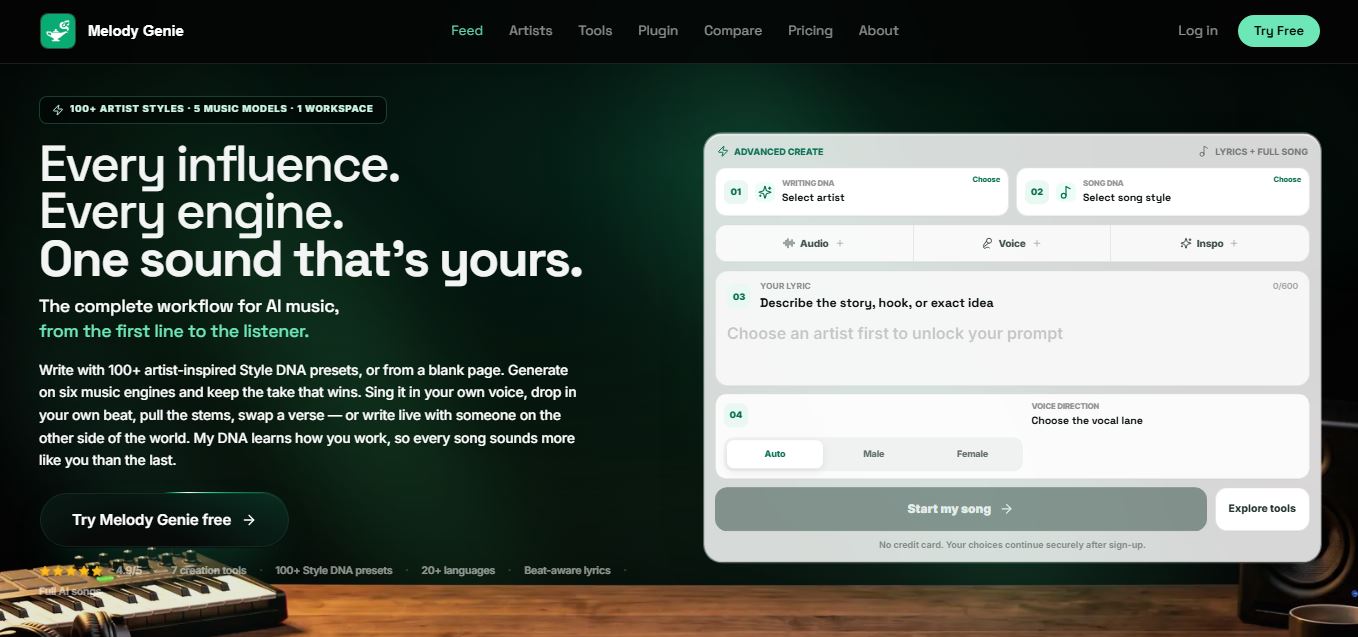
MelodyGenie is an AI-powered music generator that creates original songs from simple text prompts. Users can choose styles, moods, and genres, then instantly generate melodies and full tracks, making it easy for creators, marketers, and hobbyists to produce custom music without musical expertise.
Freemium

Fashion Diffusion AI
Fashion Diffusion is an AI-powered fashion design platform that helps brands and designers create clothing designs, virtual try-ons, AI models, product photos, and marketing visuals faster and cost-effectively.
Paid

Veo 4
Veo 4 AI is an AI video creation platform that generates dramatic videos from text, images, audio, and video prompts using realistic motion and synchronized sound.
Paid
Alternatives
Alternatives to Medeloop
The best Medeloop alternatives include TriNetX, Aetion Evidence Platform, Komodo Health, Truveta, Nested Knowledge, and Atropos Health. These platforms offer real-world evidence generation, healthcare analytics, and cohort discovery. While Medeloop specializes in an agentic AI system that executes plain-language queries on raw native datasets via federated compute, alternatives like TriNetX require standardized OMOP mapping across global networks.
 4.8
Summate.it
Research
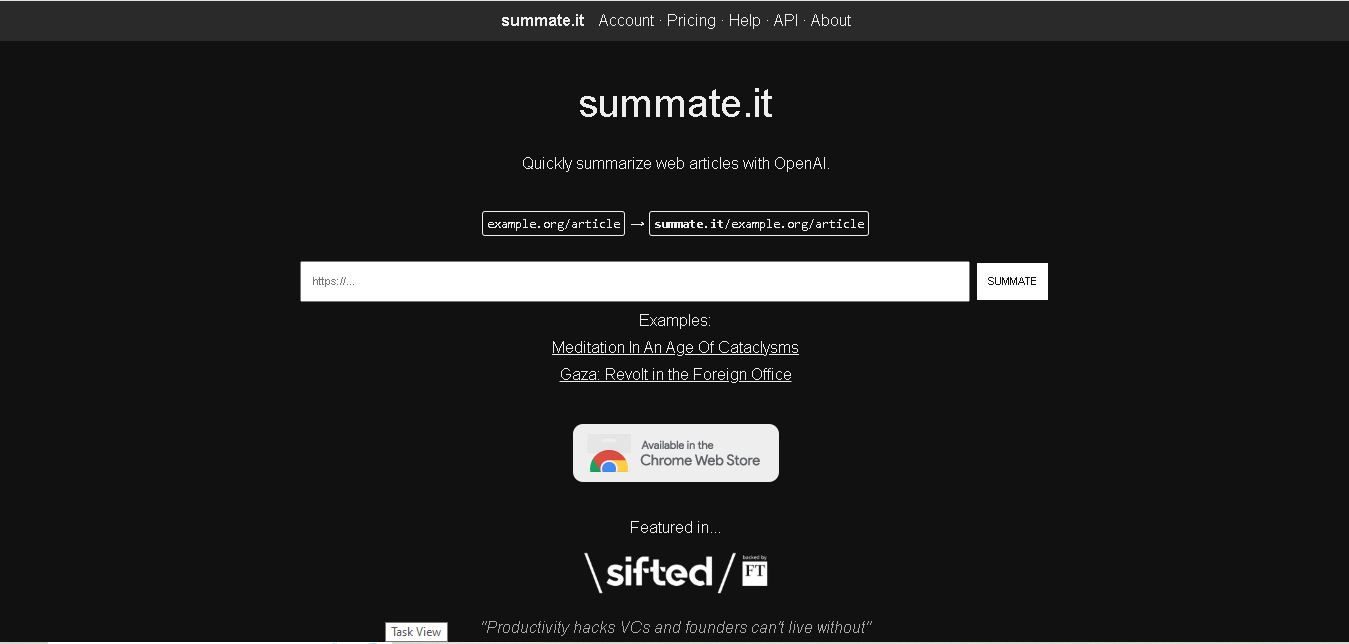
Summate.it is a web-based AI article summarizer that helps users understand lengthy online content quickly. It extracts article text and uses OpenAI to generate concise summaries highlighting essential information. Students, researchers, marketers, and professionals can use it to review online articles efficiently, save reading time, and simplify everyday information gathering.
 4.9
Cradle
Research
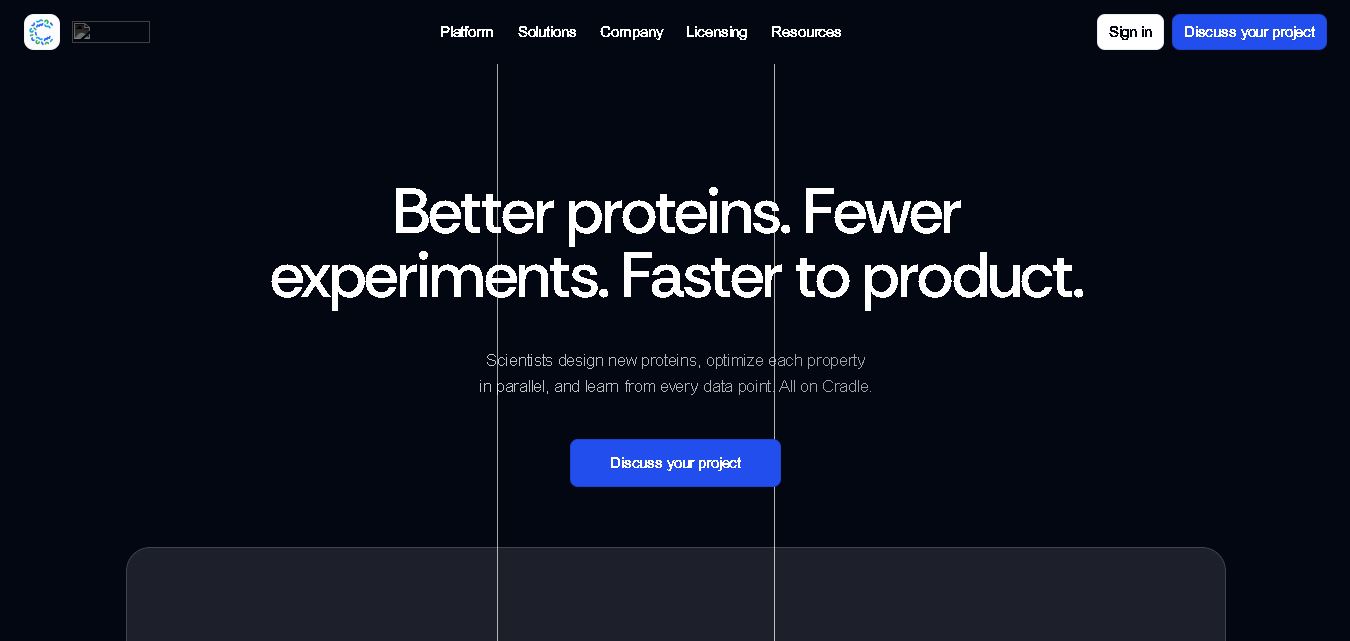
Cradle helps biotechnology researchers design, engineer, and optimize proteins using artificial intelligence and laboratory data. Its capabilities include protein sequence generation, multi-property optimization, candidate scoring, and experimental learning. The platform supports pharmaceutical, agricultural, and industrial biotechnology research, helping scientific teams explore promising molecules while reducing unnecessary experimental cycles and improving research workflows.
 4.9
Iris.ai
Research
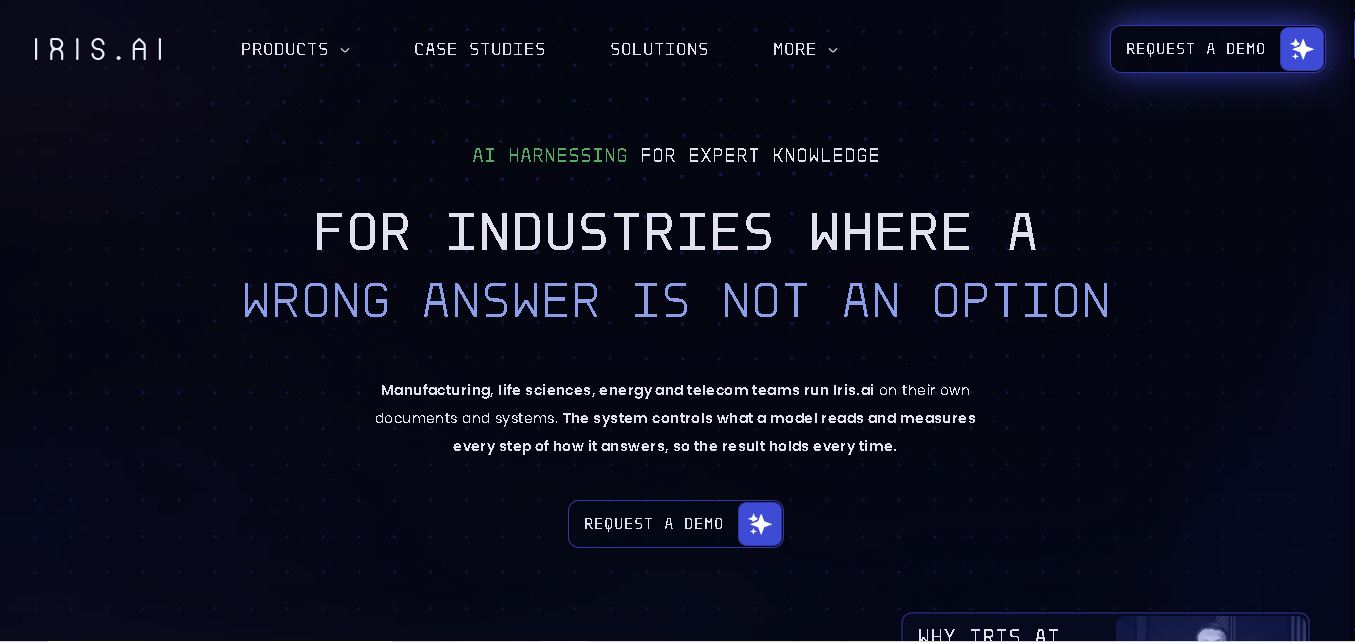
Iris.ai helps enterprises and research teams organize complex information, analyze scientific literature, and build AI workflows using organizational knowledge. Its solutions support document extraction, contextual search, data processing, and AI response evaluation. The platform is particularly relevant to research-intensive businesses seeking better information retrieval, reliable answers, and controlled enterprise AI applications.
 4.8
Lightmatter
Research
Lightmatter develops photonic computing technologies that help AI data centers connect processors and transfer information more efficiently. Its products include Passage optical interconnects, Guide light engines, and Envise photonic AI computing technology. The company aims to address bandwidth and power constraints affecting large-scale AI training, inference, and high-performance computing infrastructure.
 4.8
FigEditor
Research
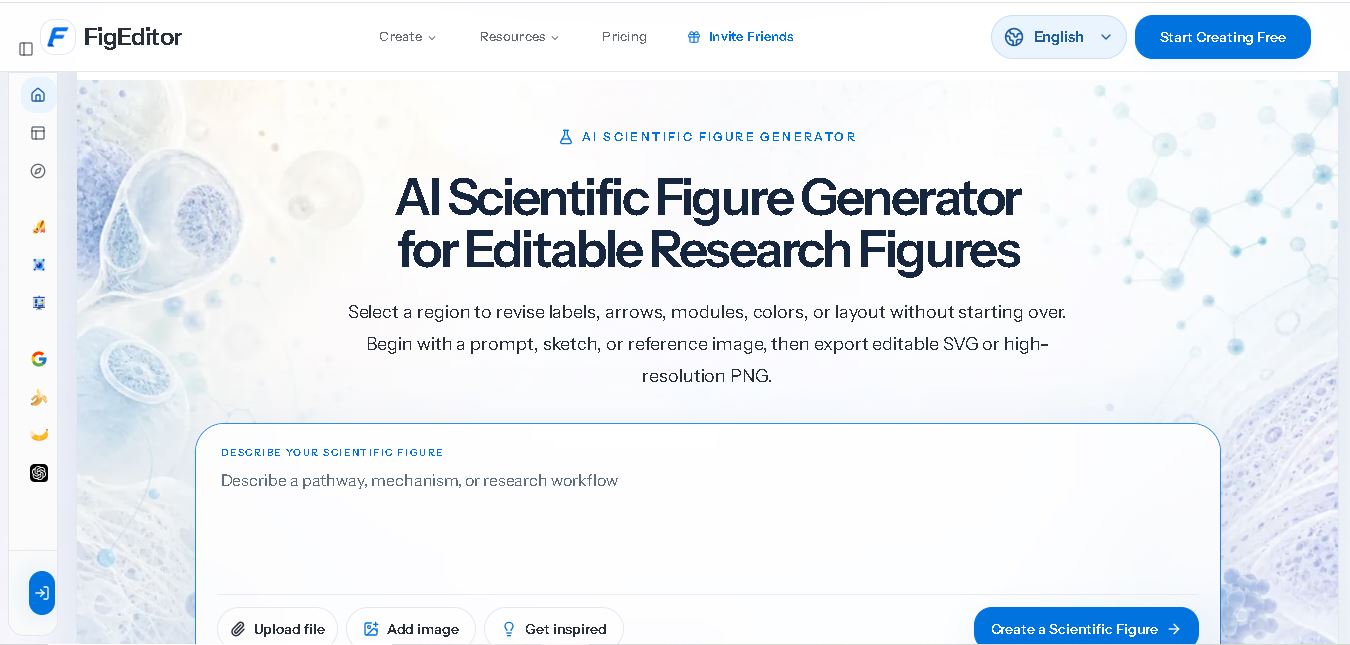
FigEditor AI helps researchers create scientific illustrations, flowcharts, graphical abstracts, and academic diagrams from text prompts, sketches, or reference images. Its editing and vectorization features simplify visual revisions, while SVG and high-resolution PNG exports support different research workflows. It is useful for students, scientists, educators, and research professionals preparing visual materials.
 4.8
GoMim
Research
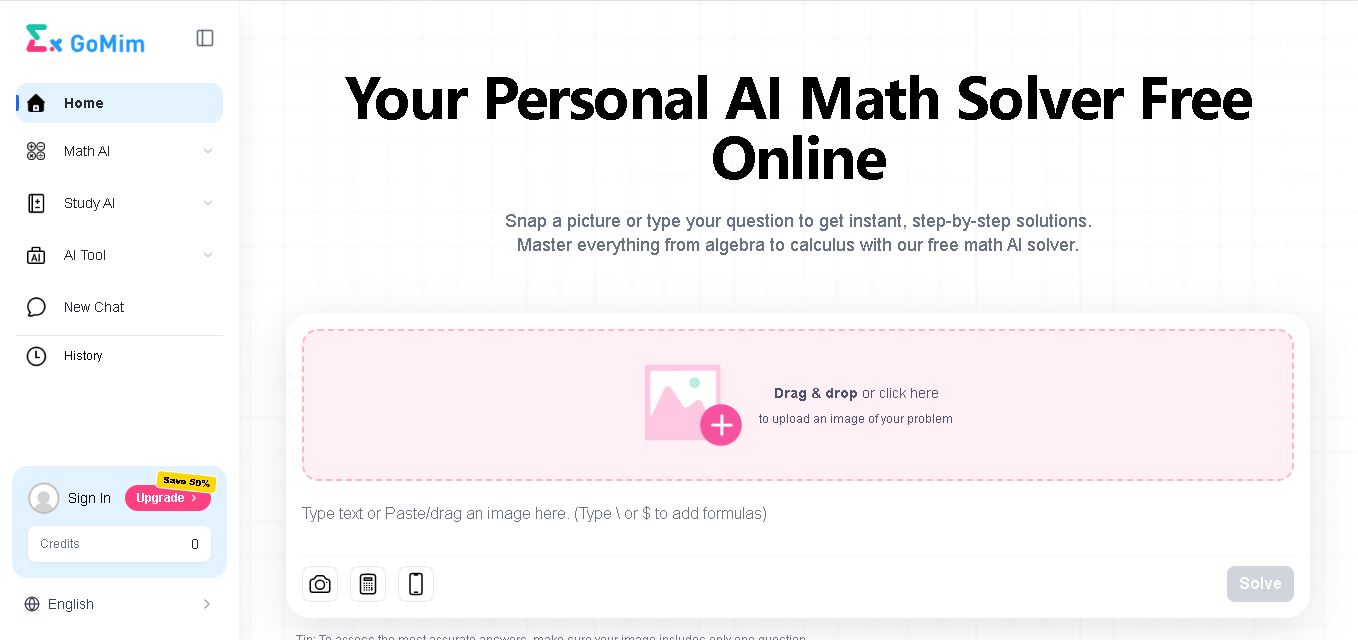
GoMim is an AI math solver that helps students understand mathematical concepts through step-by-step solutions. It supports typed questions, image uploads, and subjects including algebra, geometry, and calculus. With an interactive AI tutor, question history, and free and paid plans, GoMim makes homework assistance and independent study more accessible.
 4.8
AlphaResearch
Research
AlphaResearch helps investors, financial analysts, and corporate strategists research companies using financial documents, earnings transcripts, market data, and sentiment analysis. Its features include document search, filing alerts, stock screening, institutional ownership tracking, and research notes. The platform simplifies financial information discovery, helping users investigate companies and support informed investment research decisions.
 4.8
Gatsbi
Research
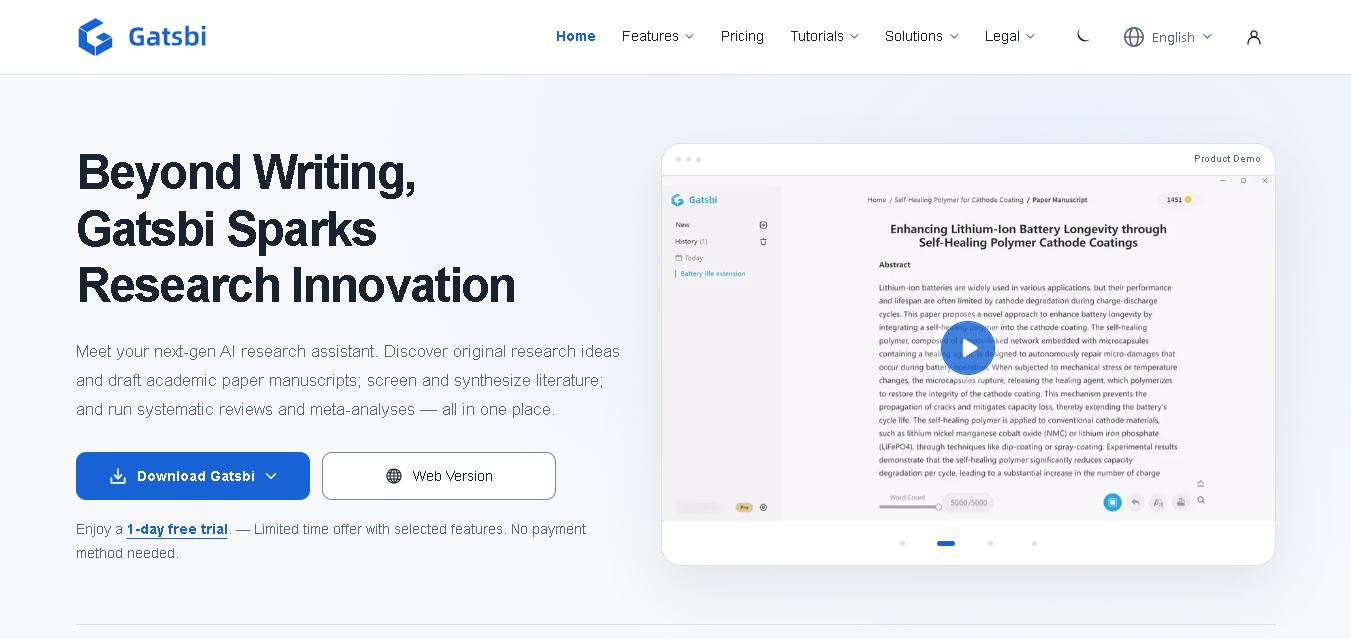
Gatsbi is an AI research assistant that helps researchers discover ideas, draft academic papers, review scientific literature, and prepare patent disclosures. It combines research discovery, manuscript generation, and evidence synthesis in one workflow. The tool is useful for academics, scientists, engineers, and innovation teams seeking to streamline complex research tasks.
 4.9
Metagene-1
Research
METAGENE-1 is a metagenomic foundation model designed to help researchers analyze DNA and RNA sequences. Trained on extensive wastewater sequencing data, it supports genomic embedding, pathogen detection research, biosurveillance, and pandemic monitoring. The model provides researchers with an AI-based approach to studying microbial diversity and identifying patterns in complex metagenomic datasets.