
Gemma 4
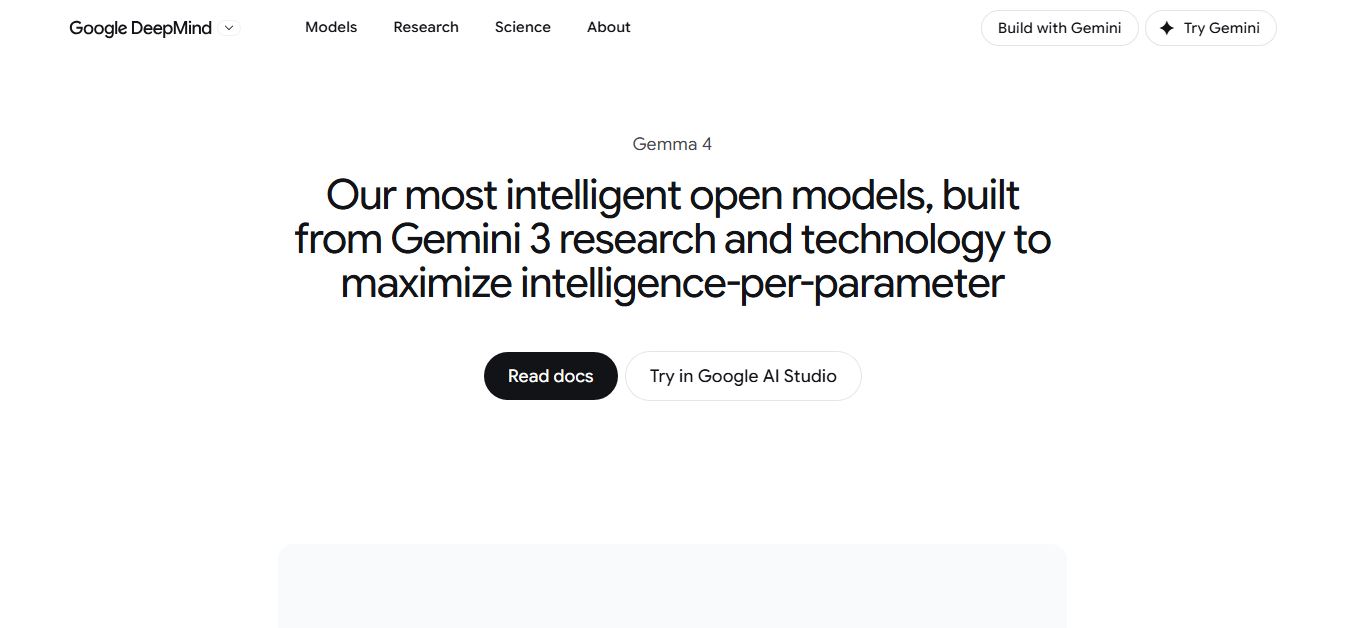
Gemma 4 is a family of open AI models from Google DeepMind designed for advanced reasoning, coding, and agent workflows. It supports multimodal inputs like text, images, and audio, runs efficiently on devices from phones to laptops, and offers high performance with open weights for customization.
What is Gemma 4?
Gemma 4 is Google DeepMind’s latest generation of open AI models built for advanced reasoning, coding, and real-world agent workflows while staying efficient enough to run on local hardware. It supports multimodal inputs like text, images, audio, and video, along with long context windows and 140+ languages, making it highly versatile for global applications. The models are designed to plan tasks, use tools, and execute multi-step workflows, not just generate text. Available in multiple sizes for everything from phones to workstations, Gemma 4 brings powerful, customizable AI that developers can run, fine-tune, and deploy anywhere.
Designed around the mission to enable “State-of-the-art agentic skills on your own hardware,” Gemma 4 spans multiple parameter classes: on-device Effective 2B (E2B) and Effective 4B (E4B), a unified encoder-free 12B variant, an active-parameter 26B A4B Mixture-of-Experts (MoE), and a flagship 31B Dense model. The architecture introduces an interleaved hybrid attention mechanism combining sliding-window and global attention layers with unified KV states and Proportional RoPE (p-RoPE), supporting context lengths up to 256,000 tokens. With native support for interleaved text, image, and audio inputs across 140+ languages, Gemma 4 runs across Raspberry Pi 5, mobile chipsets via LiteRT-LM and Android AICore, Apple Silicon Macs, and consumer NVIDIA GPUs, and is 100% free to download on Hugging Face, Kaggle, and LM Studio.
- Research Organization: Google DeepMind & Google AI
- Architecture & Licensing: Dense & MoE Transformers | Hybrid Local/Global Attention | Apache 2.0 License
- Model Family Lineup: E2B, E4B, 12B Unified, 26B A4B (MoE), and 31B Dense (Context up to 256K)
Use Cases:
- Deploying autonomous on-device agent skills that orchestrate terminal actions, query external knowledge bases, and navigate desktop workflows offline
- Running private, multi-step software engineering, debugging, and terminal automation tasks on local developer workstations
- Processing multimodal documents, screenshots, UI diagrams, and audio streams directly on edge hardware without cloud latency
- Building high-speed mixture-of-experts inference pipelines using 26B A4B for ultra-fast token generation on consumer GPUs
- Powering mobile applications on Android and iOS through Android AICore and LiteRT-LM runtime quantization
Technology:
- Hybrid attention architecture pairing 512/1024 token sliding windows with global attention layers for linear memory scaling
- Per-Layer Embeddings (PLE) maximizing parameter efficiency and reducing active footprint on edge E2B and E4B tiers
- Unified multimodal projection feeding image patches and audio waveforms directly into decoder layers without auxiliary encoders
Target Users:
- AI engineers and researchers fine-tuning open-weights foundation models for specialized enterprise applications
- Mobile and edge software developers embedding private AI agents on Android, iOS, and Raspberry Pi hardware
- DevOps and workstation power users running local coding and reasoning agents through LM Studio, Ollama, and Unsloth
- Enterprises requiring self-hosted, Apache 2.0-compliant AI models to comply with strict data sovereignty mandates
Acquisition: Open-weights foundation model family published by Google DeepMind

What are the key features of Gemma 4?
Gemma 4's key platform features are
- Versatile Model Family: Multiple architectures tailored for hardware scales ranging from lightweight mobile (E2B, E4B) to powerful workstation tiers (12B, 26B A4B MoE, 31B Dense).
- Permissive Apache 2.0 License: Full commercial and research deployment freedom with zero proprietary restrictions or royalty hurdles.
- Native Multimodal Understanding: Ingests interleaved text, high-resolution images, and direct audio inputs without requiring external vision-language adapters.
- Hybrid Long-Context Attention: Combines sliding-window local attention with global transformer layers to support context windows up to 256K tokens with low memory overhead.
- Per-Layer Embeddings (PLE): Uses dedicated decoder-layer lookup tables on E2B and E4B models to keep memory consumption under 1.5 GB on edge devices.
- 26B A4B Mixture-of-Experts: Activates only 4 billion parameters per token generation step, delivering 4B-class inference speeds with 26B-class reasoning capacity.
- Cross-Platform Edge Runtime: Supported across LiteRT-LM, Android AICore, WebGPU, Apple Metal, Ollama, llama.cpp, and LM Studio out of the box.
- Multilingual Support Across 140+ Languages: Trained on a globally distributed dataset for balanced translation and comprehension across international regions.
How much does Gemma 4 cost and how is it licensed?
Gemma 4 is released as an open-weights model family under an open-source license with zero software licensing costs.
Open Weights & Community Access:
- $0 / Free (Apache 2.0 License): Download weights directly from Hugging Face and Kaggle Models for unrestricted local development, enterprise fine-tuning, commercial deployment, and modification
- Zero subscription fees, per-seat licensing costs, or API call limits when self-hosted
Hardware Deployment Requirements:
- Mobile & Edge (E2B / E4B): Runs on modern Android and iOS devices, Raspberry Pi 5, and IoT boards with under 2 GB RAM using 4-bit LiteRT quantization
- Consumer Desktop (12B & 26B A4B): Runs comfortably on 12 GB to 16 GB VRAM GPUs (RTX 4070/4080) and Apple Silicon Macs with 16 GB unified memory
- Workstation & Server (31B Dense): Requires 24 GB to 32 GB VRAM (RTX 3090/4090/5090) or 32 GB+ unified memory for full 256K context operations
Disclaimer: Gemma 4 weights are freely available under the Apache 2.0 license. Cloud hosting or hardware infrastructure costs depend entirely on your self-hosted setup or third-party cloud provider. For documentation and model weights, visit deepmind.google or ai.google.dev.
Who should use Gemma 4?
Gemma 4 is designed for developers, researchers, and enterprise engineers, including
- On-Device AI Developers: Building local mobile applications and edge agents that require voice and vision comprehension without network latency
- Open-Source LLM Practitioners: Fine-tuning performant 12B to 31B models for domain-specific tasks using Unsloth, Hugging Face TRL, or PyTorch
- Privacy-Conscious Organizations: Processing sensitive internal documents, legal agreements, and corporate data entirely on on-premise hardware
- Embedded & Robotics Engineers: Deploying vision-language agent skills on single-board computers like Raspberry Pi 5 and Qualcomm edge boards
What are the best alternatives to Gemma 4?
Some of the strongest Gemma 4 alternatives include
- Llama 3.3 70B
- Qwen 2.5 32B
- Mistral Small 3
- DeepSeek-R1-Distill
- Phi-4
- Muse Glimmer
What are the pros and cons of Gemma 4?
What are the pros of Gemma 4?
- Permissive Apache 2.0 license removes commercial restrictions and proprietary governance barriers
- Broad model range spanning ultra-lightweight 2B edge tiers up to high-capability 31B dense architectures
- Native multimodal input handling text, vision, and audio without requiring external projection adapters
- Hybrid attention architecture delivers long 256K context windows with restrained memory consumption
- The 26B A4B MoE variant achieves fast 4B-class generation speeds while preserving high reasoning depth
What are the cons of Gemma 4?
- Deploying the flagship 31B Dense model at high concurrency requires dedicated 24 GB+ workstation hardware
- Direct audio input processing is focused primarily on the smaller E2B and E4B model tiers
- Self-hosted deployments require setting up your own scaffolding, evaluation harnesses, and inference engines
Why should you choose Gemma 4?
Developers often find themselves caught between closed frontier APIs that compromise data privacy and bulky open-weights models that require excessive GPU memory. Gemma 4 resolves this dilemma by delivering specialized model tiers built for local efficiency.
- Deploy complete agentic workflows directly onto edge devices with minimal memory footprints
- Run high-performance multimodal understanding across images and documents entirely offline
- Leverage the 26B A4B Mixture-of-Experts architecture for rapid token throughput on consumer GPUs
- Build commercial software freely without licensing lock-in thanks to the Apache 2.0 open-weights release
How does Gemma 4 compare to competitors?
The main difference between Gemma 4, Llama 3.3 70B, Qwen 2.5 32B, and Phi-4 lies in architectural versatility, licensing terms, and multimodal integration. While Llama 3.3 operates under Meta's custom community license and requires substantial VRAM for its 70B footprint, and Qwen 2.5 separates its vision models into distinct releases, Gemma 4 delivers an Apache 2.0-licensed suite spanning edge E2B models to 31B dense checkpoints with native multimodal inputs and MoE speed optimizations.
| Feature / Metric | Gemma 4 (31B / MoE) | Llama 3.3 70B | Qwen 2.5 32B | Phi-4 (14B) |
|---|---|---|---|---|
| License | Apache 2.0 (Permissive) | Llama 3.3 Community License | Apache 2.0 | MIT License |
| Model Architecture | Dense (31B) & MoE (26B A4B) | Dense Transformer (70B) | Dense Transformer (32.5B) | Dense Transformer (14B) |
| Native Modalities | Text, Vision & Audio (on edge) | Text Only | Text Only (Qwen-VL separate) | Text Only (Phi-4-multimodal separate) |
| Context Window | Up to 256K tokens | 128K tokens | 128K tokens | 16K tokens |
| Attention Mechanism | Hybrid Local Sliding + Global | Standard Grouped-Query (GQA) | Standard Grouped-Query (GQA) | Standard Attention |
| Minimum VRAM (Quantized) | ~16 GB (MoE) / ~20 GB (31B) | ~40 GB (4-bit) | ~20 GB (4-bit) | ~10 GB (4-bit) |
| Best For | Fast local agentic multimodal workflows | Heavy enterprise text reasoning | Multilingual coding and dense tasks | Mathematical reasoning on mid-range GPUs |
How do we rate Gemma 4?
| Parameter | Rating (out of 5) |
|---|---|
| Reasoning & Agentic Task Execution | 4.9 |
| Edge & Hardware Deployability (LiteRT & MoE) | 5.0 |
| Multimodal Perception Quality (Vision & Audio) | 4.8 |
| Architecture Efficiency (Hybrid Attention & PLE) | 4.9 |
| Value for Money (Apache 2.0 Open Weights) | 5.0 |
| Overall Score | 4.92 |
What is our review and verdict on Gemma 4?
Gemma 4 establishes a new benchmark for open-weights artificial intelligence by pairing Google DeepMind's frontier Gemini research with pragmatic hardware engineering. The inclusion of the 26B A4B Mixture-of-Experts architecture delivers fast token generation on consumer-grade GPUs, while the lightweight E2B and E4B tiers bring multimodal awareness directly to mobile phones and edge processors with memory footprints under 2 GB. Backed by a permissive Apache 2.0 license, a 256K context ceiling, and native support across open runtimes like LiteRT-LM, Unsloth, and LM Studio, Gemma 4 provides developers with a capable foundation for self-hosted agentic AI.
Conclusion
Gemma 4 redefines what open models can achieve on personal hardware. With its scalable line of dense and MoE architectures, native multimodal comprehension, hybrid attention mechanism, and Apache 2.0 open-source distribution, Google DeepMind gives engineers, researchers, and enterprises a powerful platform to build autonomous, private AI systems.
FAQ
What is Gemma 4 and why is it important?
Gemma 4 is a family of open-weight AI models developed by Google DeepMind, built using the same research behind Gemini models. It’s important because it delivers frontier-level AI capabilities (reasoning, coding, multimodal understanding) while still being efficient enough to run on personal hardware like laptops and even mobile devices, making advanced AI more accessible to developers and businesses.
What makes Gemma 4 different from other AI models?
Gemma 4 stands out for its “intelligence-per-parameter” efficiency, meaning it delivers high performance without requiring massive hardware. It also introduces agentic workflows, multimodal inputs, and open weights, allowing developers to run, modify, and deploy the model locally instead of relying only on cloud APIs.
What kind of tasks can Gemma 4 handle?
Gemma 4 is designed for real-world applications like coding, debugging, data analysis, document understanding, and automation. It can also handle multi-step reasoning tasks, build AI agents, process images and audio, and work with long documents, making it suitable for both developers and enterprise workflows.
Does Gemma 4 support multimodal inputs like images and audio?
Yes, Gemma 4 is a multimodal model, meaning it can process text, images, and even audio (in certain variants). It supports tasks like OCR, chart analysis, video understanding, and speech recognition, allowing developers to build richer applications that go beyond text-only AI.
Can Gemma 4 run locally on a laptop or mobile device?
Yes, one of Gemma 4’s biggest advantages is its ability to run locally. Smaller variants (like E2B and E4B) are optimized for mobile and edge devices, while mid-sized models like 12B can run on laptops with around 16GB memory, and larger models can run on GPUs or workstations.
How does Gemma 4 support AI agents and automation?
Gemma 4 includes native support for function calling, structured outputs, and tool usage, which allows it to act as an AI agent. This means it can plan tasks, call APIs, interact with software, and complete workflows autonomously rather than just generating responses.
Is Gemma 4 open-source and customizable?
Gemma 4 is released with open weights under an Apache 2.0 license, allowing developers to download, fine-tune, and deploy it for both research and commercial use. This makes it highly customizable and suitable for companies that want full control over their AI systems without relying entirely on third-party APIs.
User Reviews
No reviews yet for Gemma 4.
Featured Tools
Featured AI tools from TechShark
Melody Genie
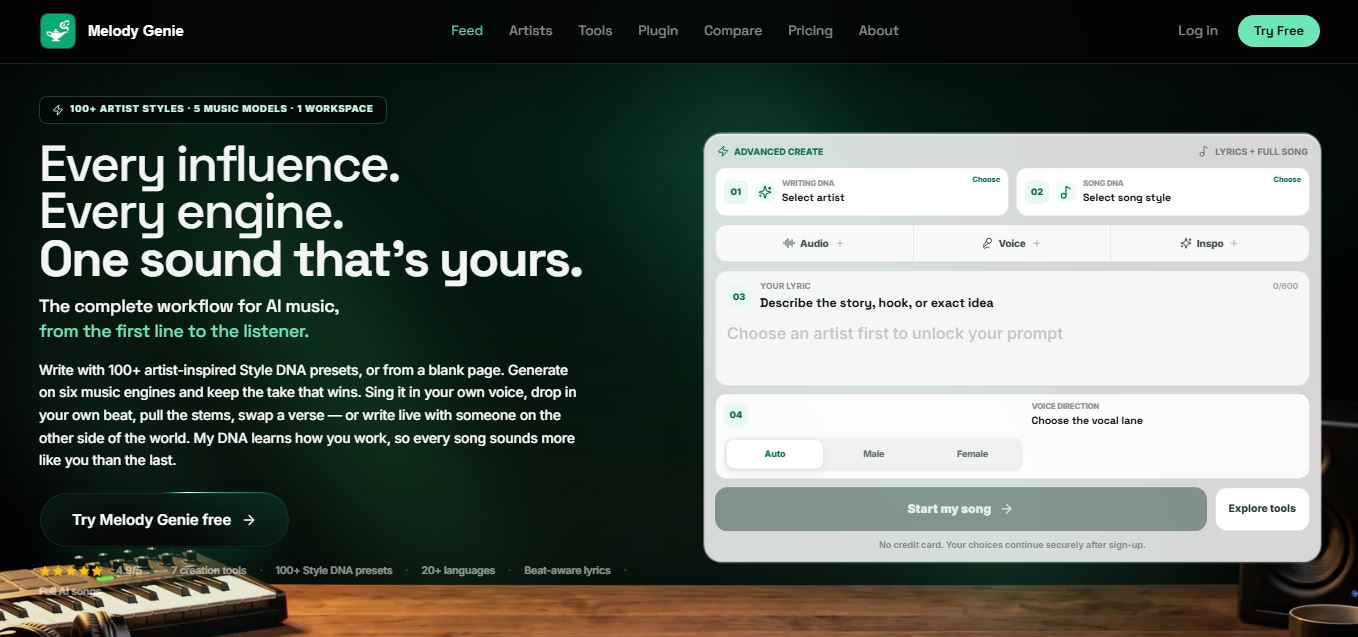
MelodyGenie is an AI-powered music generator that creates original songs from simple text prompts. Users can choose styles, moods, and genres, then instantly generate melodies and full tracks, making it easy for creators, marketers, and hobbyists to produce custom music without musical expertise.
Freemium
Kimi AI
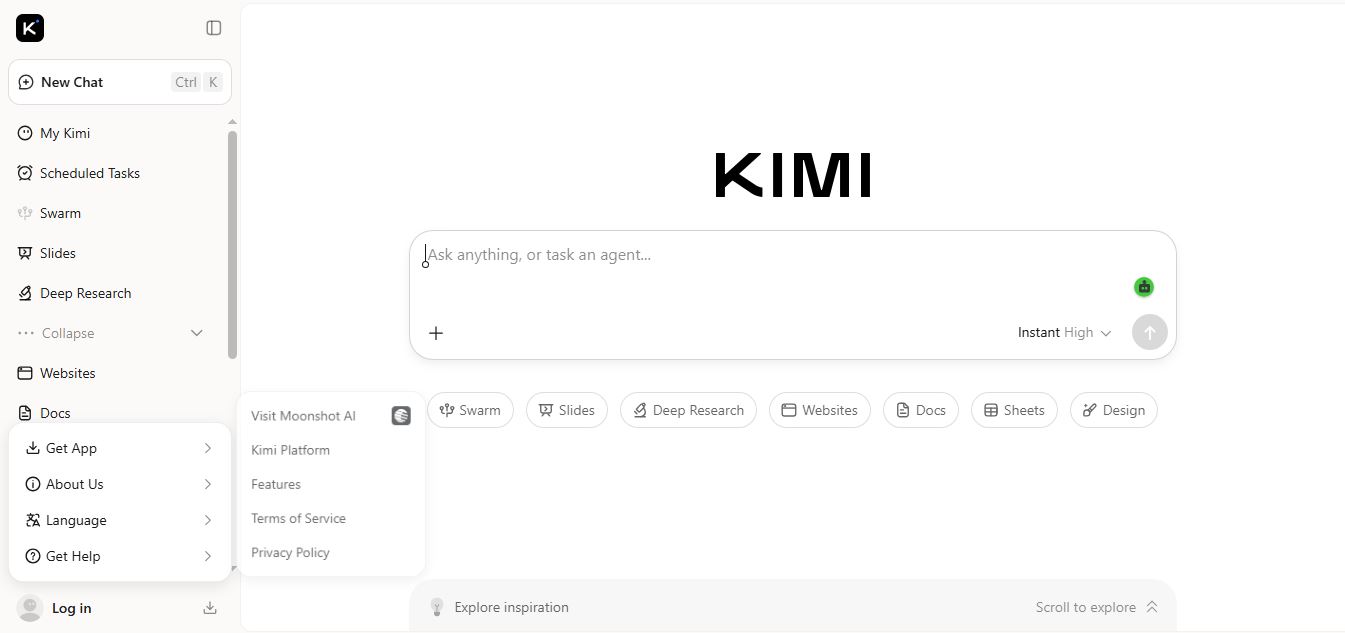
Kimi AI is an advanced AI assistant developed by Moonshot AI that helps you chat, research, write, code, and automate tasks in one place. It supports web search, file analysis, and multimodal inputs, and can even run autonomous “agent” workflows to complete complex tasks end-to-end.
Freemium

Fashion Diffusion AI
Fashion Diffusion is an AI-powered fashion design platform that helps brands and designers create clothing designs, virtual try-ons, AI models, product photos, and marketing visuals faster and cost-effectively.
Paid
Veo 4
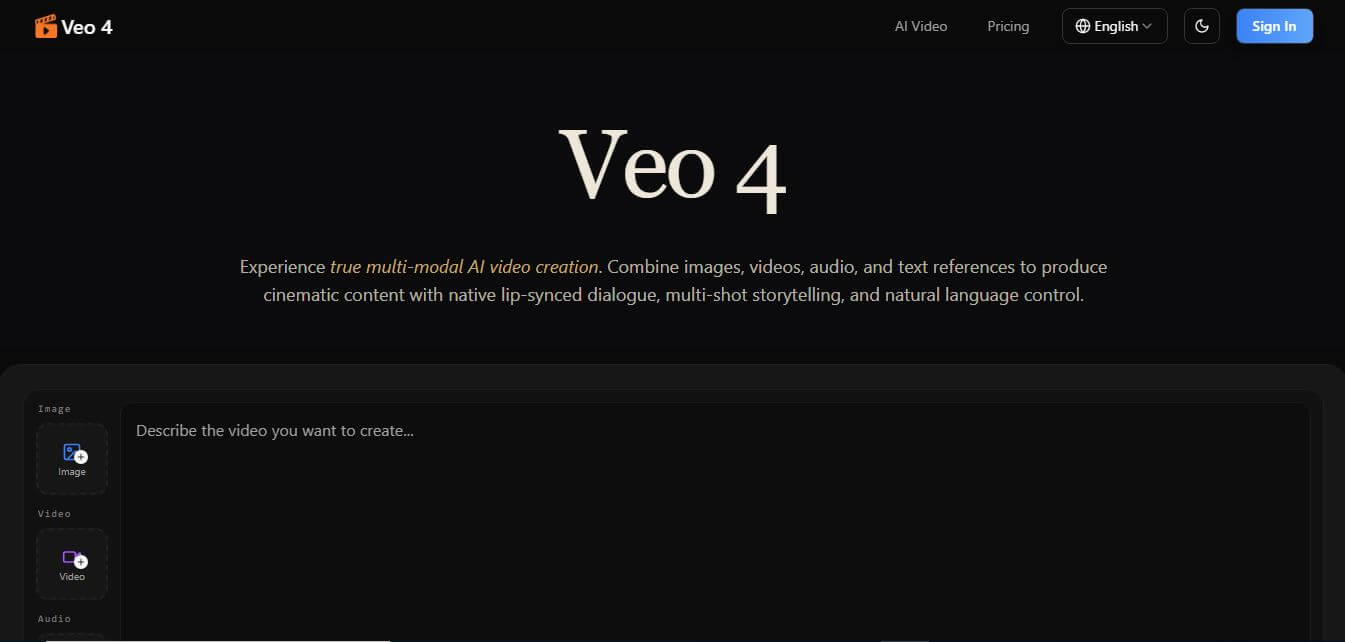
Veo 4 AI is an AI video creation platform that generates dramatic videos from text, images, audio, and video prompts using realistic motion and synchronized sound.
Paid
Alternatives
Alternatives to Gemma 4
The best Gemma 4 alternatives include Llama 3.3 70B, Qwen 2.5 32B, Mistral Small 3, DeepSeek-R1-Distill, Phi-4, and Muse Glimmer. These open-weights and source-available foundation models provide coding, reasoning, and instruction-following capabilities across diverse hardware configurations. While Gemma 4 delivers an Apache 2.0-licensed multimodal model family spanning mobile edge sizes (E2B, E4B) up to a 26B A4B Mixture-of-Experts and 31B dense architecture with native vision and hybrid 256K attention, alternatives like Llama 3.3 70B focus primarily on text reasoning under custom community terms, Qwen 2.5 32B provides deep multilingual text capabilities with separate vision checkpoints, and DeepSeek-R1-Distill specializes in chain-of-thought mathematical reasoning.
 4.9
4.9Manifold
Research
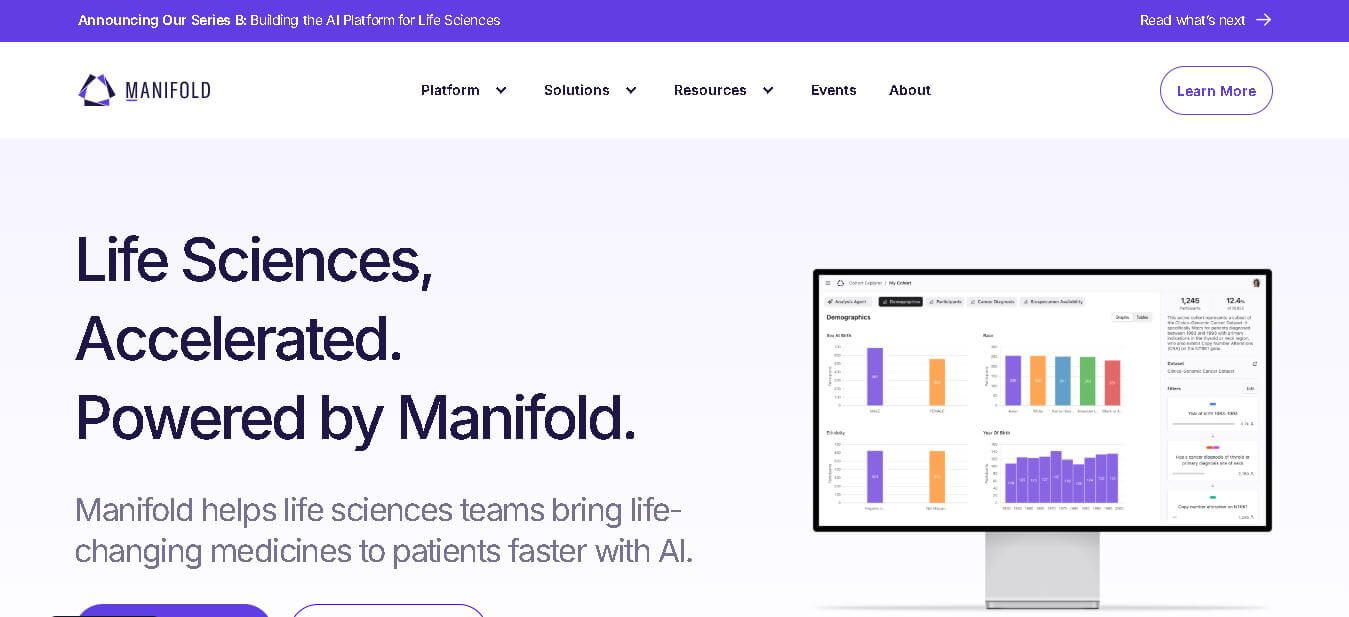
Manifold helps life sciences organizations turn complex clinical, genomic, and real-world data into governed, self-service insights. Its specialist agents support natural-language queries, cohort building, bioinformatics, statistical analysis, data partnerships, and evidence generation. Teams can keep sensitive data within their cloud while controlling access, auditing activity, and scaling research workflows securely.
 5.0
5.0Rayyan
Research
Rayyan is an AI-powered systematic review and literature review platform that helps researchers organize references, remove duplicates, screen studies, extract data, assess risk of bias, and generate PRISMA reports. Its AI features assist with relevance ranking, article screening, and structured data extraction while keeping researchers in control.
 4.9
4.9EvidenceHunt
Research
EvidenceHunt is an AI-powered medical research platform that helps clinicians, researchers, and life science teams find and analyze scientific evidence. It searches medical literature, guidelines, and internal documents, then generates citation-grounded answers, evidence tables, systematic reviews, and traceable insights for faster, evidence-based research.
 4.9
4.9Elicit
Research
Elicit is an AI-powered research assistant that helps users find, summarize, and analyze academic papers at scale. It searches millions of studies, extracts key data, and generates evidence-backed reports, enabling researchers to conduct literature reviews, compare findings, and make informed decisions faster.
 4.8
4.8Scholarcy
Research
Scholarcy is an AI-powered research assistant that helps students and researchers summarize, analyze, and organize academic papers. It turns complex documents into structured flashcards with key findings, concepts, and references, enabling faster reading, better understanding, and efficient literature review workflows.
 4.9
4.9Resoomer
Research
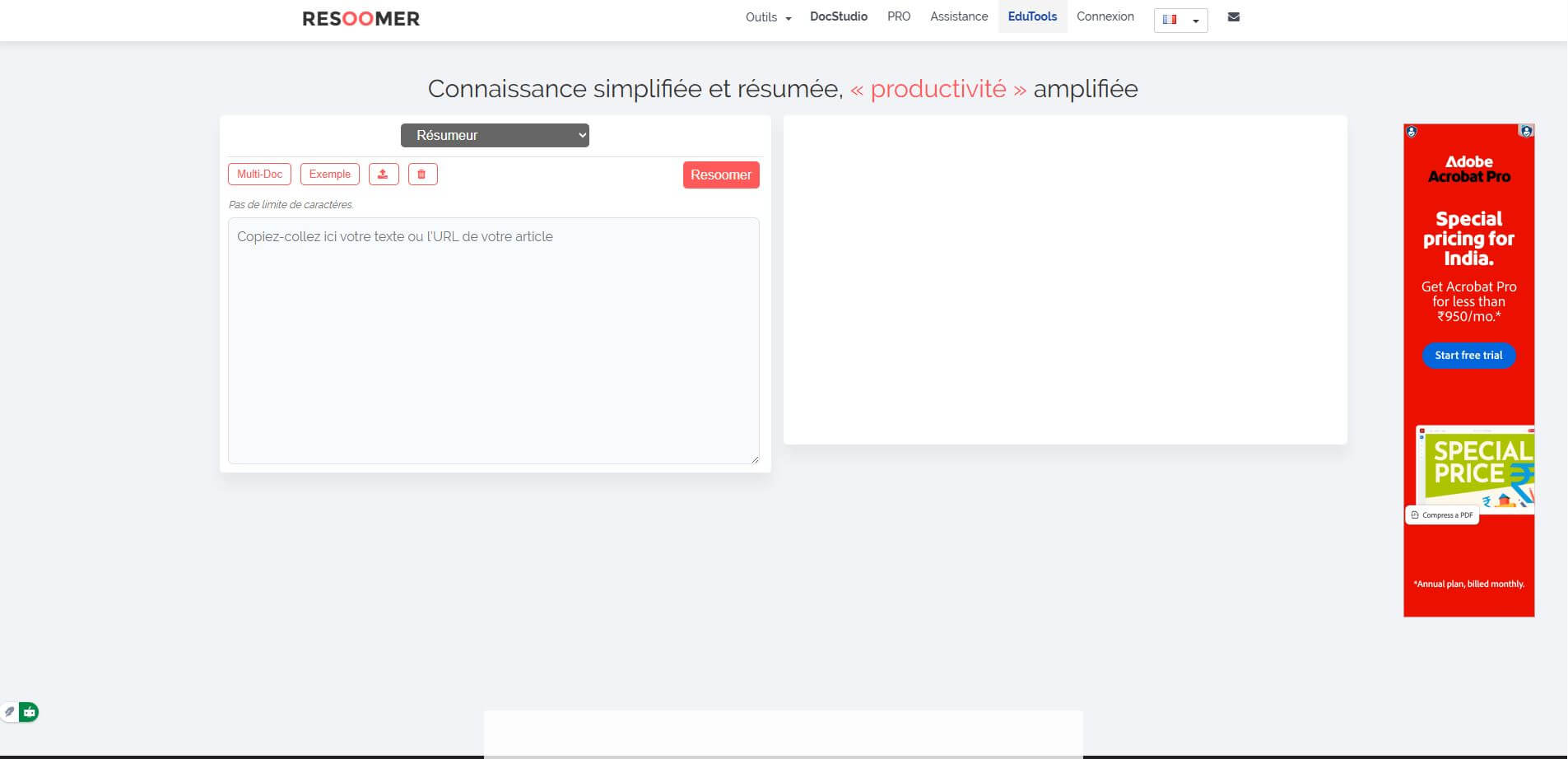
Resoomer is an AI-powered text summarization tool that helps users quickly turn long articles, research papers, and documents into concise summaries. It identifies key ideas, supports multiple formats like PDFs and URLs, and includes tools for paraphrasing, translating, and analyzing content for faster understanding.
 4.9
4.9Consensus
Academic
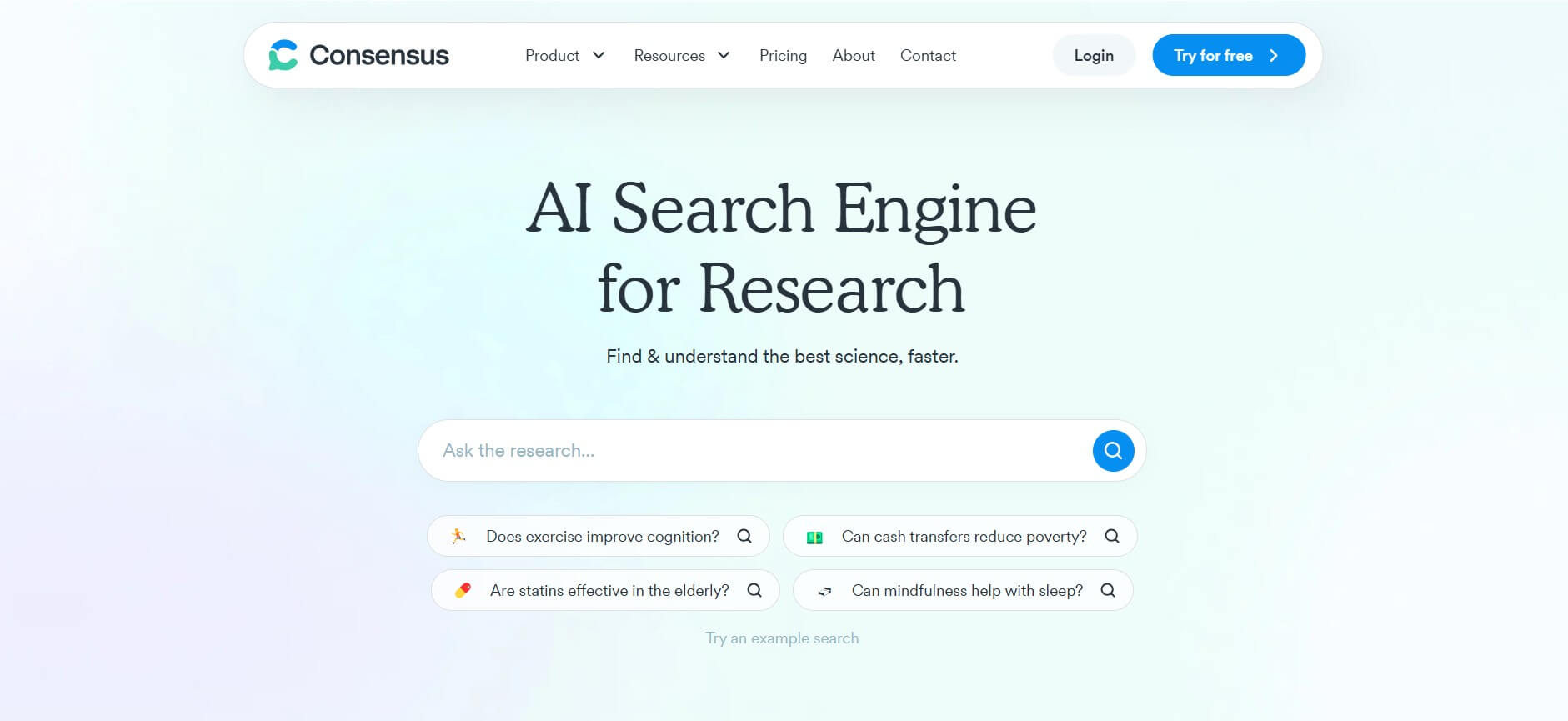
Consensus is an AI-powered academic search engine that helps users find, understand, and summarize scientific research from over 200 million peer-reviewed papers. It delivers clear, cited answers backed by real studies, making it easier to explore evidence, compare findings, and conduct research faster and more reliably.
 5.0
5.0Perplexity AI
AI Chatbot Tools
Perplexity is an AI-powered answer engine that searches the web in real time and delivers clear, cited responses instead of just links. It combines conversational AI with live data, helping users research topics, compare information, and get reliable insights quickly with verifiable sources.
OneSearch.bio
Research
OneSearch.bio is an AI-powered bio link and search aggregation platform designed for creators, brands, and digital marketers to consolidate links, social profiles, monetization tools, and searchable content into a single custom hub.