
Checksum AI
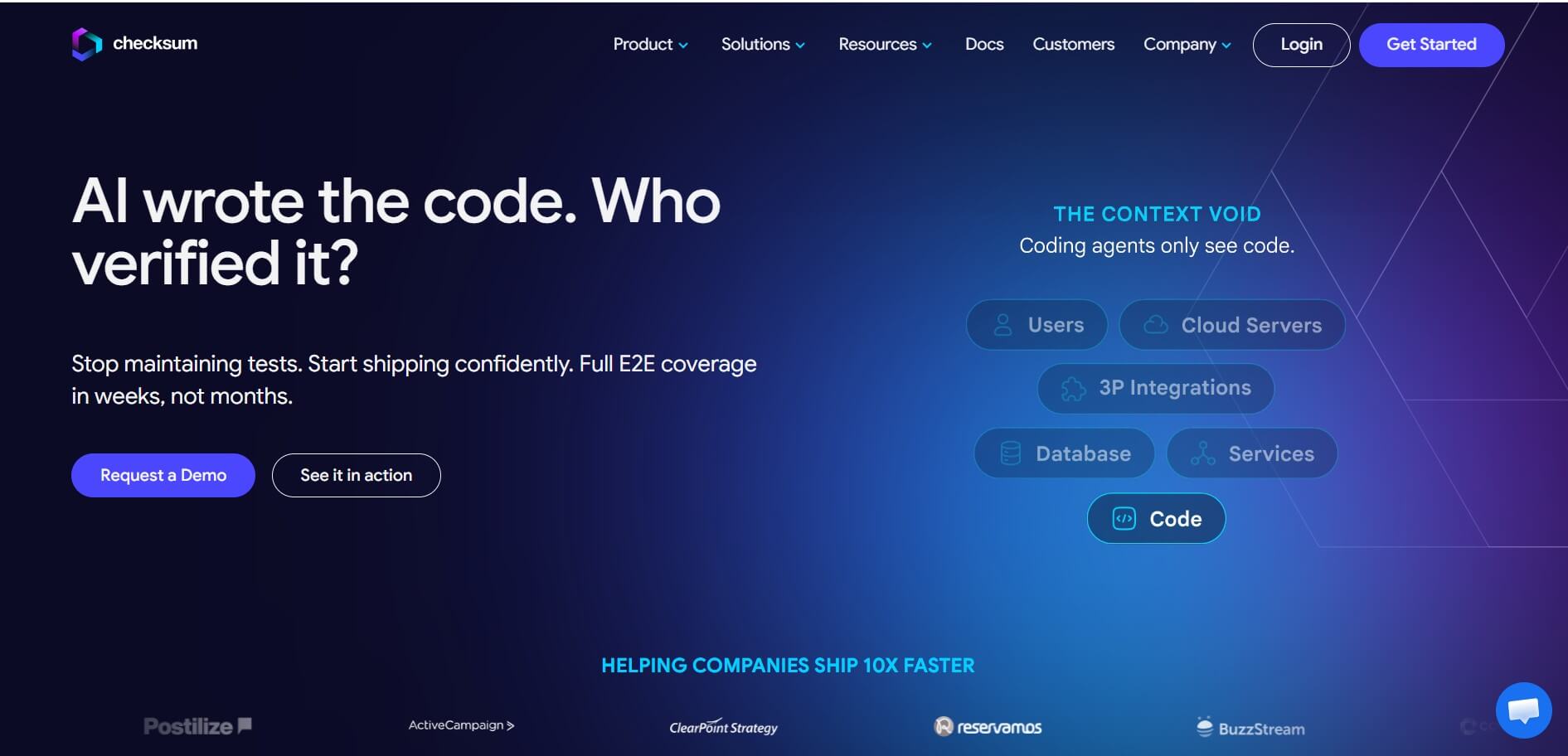
Checksum AI is a continuous quality platform that automatically generates, runs, and repairs software tests as applications change.
What is Checksum AI?
Checksum AI is an AI-powered continuous quality platform designed to automate software testing for modern engineering teams. It uses intelligent agents to generate, execute, and maintain tests automatically across the development lifecycle. Unlike traditional tools, Checksum AI works continuously in the background, making it a key innovation in global coding workflows, where developers rely on AI-generated code and need reliable validation systems. The platform generates production-ready Playwright tests, integrates with CI/CD pipelines, detects failures, and even self-heals broken tests when applications change. This makes it highly valuable for teams using AI coding tools and fast deployment cycles.
Checksum AI launched its Continuous Quality Agent on May 27, 2026, positioning it as a verification layer for AI-generated software. The company says its agent has been fine-tuned on more than 1.5 million test runs and can resolve about 70% of test failures without engineer intervention. Checksum reports that teams can bootstrap 100–150 tests in their first week and generate 50–200 tests per pull request with its CI Agent. Its pricing is based on maintained workflows rather than seats or test runs.
- Founder: Checksum was founded by Gal Vered, who serves as founder and CEO.
- Launch: Checksum launched its Continuous Quality Agent on May 27, 2026, as an autonomous system for generating, running, and healing software tests.
- Use Cases: End-to-end testing, regression testing, CI testing, API testing, test generation, test maintenance, bug detection, release validation, and testing AI-generated code.
- Technology: Checksum uses AI agents, Playwright, CI/CD automation, autonomous test generation, test execution, and self-healing technology. Its integrations also include multiple LLM providers and testing infrastructure.
- Target Users: Software engineering teams, QA teams, startups, enterprises, developers, and organizations building software with AI coding tools.
- Acquisition: No verified acquisition of Checksum AI was identified in the available public information.

Checksum AI Key Features
Some Checksum AI key features are:
- AI Test Generation: Checksum AI automatically generates production-ready Playwright tests, reducing manual test-writing effort.
- Autonomous E2E Agent: The E2E Agent generates end-to-end tests and automatically repairs them when application flows change.
- CI Agent: The CI Agent generates targeted tests for code changes and can create 50–200 tests for each pull request according to Checksum.
- API Testing Agent: The API Agent tests complex API workflows, including multi-endpoint sequences and downstream effects rather than checking only basic response codes.
- Self-Healing Tests: When selectors, application flows, or other elements change, Checksum can automatically identify and repair broken tests.
- Continuous Testing: Checksum operates alongside CI/CD and can run tests continuously on commits, pull requests, and deployments.
- Playwright Test Delivery: Tests are delivered as standard Playwright code directly to the customer's repository, allowing teams to own and modify the tests.
- Test Maintenance: The platform is designed to reduce the manual work involved in maintaining automated tests as software evolves.
- Bug Detection: Checksum monitors test results and helps teams distinguish actual application bugs from broken or outdated tests.
- Feature Health Dashboard: The platform provides visibility into testing sessions, failures, and application health.
- AI Code Verification: Checksum acts as a verification layer for software produced with AI coding tools, helping teams validate changes before they reach production.
- Multiple LLM Integrations: Checksum supports several AI providers, including Anthropic Claude, OpenAI GPT, Google Gemini, Azure OpenAI, and Groq.
- CI/CD Integrations: Checksum can integrate with existing development infrastructure, including Jenkins and CircleCI.
- Webhooks: The platform supports custom webhooks with HMAC-SHA256 signing, retry logic, and more than 48 webhook event types.
- Results-as-a-Service: Checksum also offers a service where its team verifies and maintains production-ready Playwright tests for customers.
Checksum AI Pricing
Checksum AI uses a workflow-based pricing model, not seat-based or per-test pricing.
| Plan | Price | Main Information |
|---|---|---|
| Emerging | Contact Sales | 50 CI/CD-ready E2E workflows, autonomous healing, dedicated customer engineer |
| Scaling | Contact Sales | 200 E2E workflows, custom style guides, infrastructure integrations, parallel execution |
| Enterprise | Custom | 400+ workflows, API testing agent, custom SLA, security review support |
Note: AI model availability, pricing, credits, and plan limits can change. Check Checksum AI official pricing page for the latest information.
Who is Using Checksum AI?
A diverse range of users and organizations utilize Checksum AI
- Software engineering teams
- QA teams
- Startups
- Enterprise companies
- AI-first development teams
- SaaS companies
- Fintech companies
- Insurance technology companies
- Legal technology companies
- Travel technology companies
- EdTech companies
- Retail technology teams
- Developers
- Product engineering teams
What are the Best Checksum AI Alternatives?
Some Checksum AI alternatives are
- mabl
- BrowserStack
- Playwright
- Cypress
- Testim
- Functionize
- Tricentis Tosca
- QA Wolf
- Applitools
How Does a Checksum Work?
Before understanding Checksum AI, it's important to understand how does a checksum work.
A checksum is a value calculated from the data to verify its integrity. When data is transferred or modified, the checksum is recalculated and compared. If the values match, the data is intact; if not, errors are detected.
Checksum AI extends this concept into software testing:
- Instead of validating raw data, it validates application behavior
- It continuously checks whether software behaves as expected
- It identifies inconsistencies (bugs or failures)
- It automatically fixes issues in test logic when systems change
So, Checksum AI acts as a continuous verification layer for modern software systems, especially in AI-driven development environments.
Pros and Cons of Checksum AI
Pros
- Autonomous AI-powered testing
- Automatic test generation
- Self-healing tests
- Continuous CI/CD testing
- Supports modern CI agents and automation workflows
- Production-ready Playwright tests
- API testing support
- E2E testing
- CI testing
- Reduces manual test maintenance
- Supports multiple AI providers
- Integrates with existing infrastructure
- No per-seat pricing
- No per-test-run pricing
- Customers own generated Playwright tests
- Useful for AI-generated code verification
- Free 30-day trial available
Cons
- Pricing is not publicly listed as fixed dollar amounts
- Mainly designed for engineering and QA teams
- Enterprise-oriented features may be unnecessary for small projects
- AI-generated tests still require review
- Setup and integration may require technical knowledge
- API testing is currently positioned for Enterprise plans
- The platform is more focused on automated testing than general software development
What Makes Checksum AI Different?
Checksum AI is not just another testing tool—it introduces a new approach to continuous quality engineering.
Key Differentiators:
- Autonomous testing agents (E2E, CI Agent, API Agent)
- Self-healing test automation
- Continuous execution inside CI/CD pipelines
- No manual prompting like traditional AI coding assistants
- Delivers real Playwright code (no vendor lock-in)
- Works alongside modern CI agents and automation workflows
- Integration with modern world coding and DevOps workflows
Why Choose Checksum AI?
- Checksum can generate automated tests without requiring engineers to write every test manually.
- Its agents can work continuously rather than waiting for individual prompts.
- Self-healing reduces the maintenance burden caused by changing application interfaces.
- The CI Agent can target tests around specific code changes.
- The API Agent can validate complex multi-step API workflows.
- Tests are delivered as standard Playwright code that customers own.
- It works alongside existing CI/CD infrastructure.
- It is designed specifically for teams adopting AI-assisted software development.
- The platform can scale testing coverage as development velocity increases.
- Checksum claims approximately 70% of test failures can be resolved autonomously.
- Its Results-as-a-Service offering provides human verification and ongoing maintenance for teams that want a managed testing solution.
Checksum AI vs Competitors
The main difference between Checksum AI, mabl, BrowserStack, Playwright, Cypress, and QA Wolf is that Checksum focuses on autonomous test generation, continuous execution, and self-healing rather than simply providing a testing framework or test infrastructure. Playwright and Cypress give developers powerful automation frameworks, while BrowserStack focuses heavily on cross-browser and device testing. mabl provides AI-assisted testing, and QA Wolf offers managed QA services. Checksum combines AI agents with continuous test maintenance.
| Tool | Main Focus | Best For |
| Checksum AI | Autonomous AI testing | Continuous E2E quality |
| mabl | AI test automation | Low-code testing |
| BrowserStack | Browser and device testing | Cross-browser testing |
| Playwright | Browser automation framework | Developers and QA engineers |
| Cypress | Web testing | Frontend testing |
| QA Wolf | Managed QA | Outsourced test automation |
| Functionize | AI-powered testing | Enterprise QA |
How Do We Rate Checksum AI?
| Category | Rating Out of 5 |
| Features | 4.8 |
| AI Test Generation | 4.9 |
| Self-Healing | 4.9 |
| E2E Testing | 4.8 |
| API Testing | 4.6 |
| CI/CD Integration | 4.8 |
| Ease of Use | 4.5 |
| Scalability | 4.9 |
| Pricing Value | 4.3 |
| Overall Performance | 4.8 |
Checksum AI Review
Checksum AI solves a major problem in modern development: testing cannot keep up with AI-generated code. Its autonomous agents continuously generate, run, and fix tests without manual effort. The CI Agent ensures every pull request is validated, while the E2E Agent maintains long-term test coverage. The biggest advantage is self-healing automation, which eliminates the need to constantly update test scripts.
However, teams still need to review critical scenarios and maintain testing strategies. Overall, Checksum AI is ideal for teams that want to scale testing without scaling QA effort.
Conclusion
Checksum AI is a next-generation autonomous testing platform built for modern software development. It combines AI agents, CI/CD workflows, and self-healing automation to deliver continuous quality at scale. For teams working in fast-moving world coding environments, especially with AI-generated code, Checksum AI provides a powerful way to maintain reliability without increasing QA workload.
People are also reading:
FAQ
What is Checksum AI?
Checksum AI is an AI-powered continuous quality platform that automatically generates, runs, and maintains software tests.
What does Checksum AI do?
Checksum generates automated tests, runs them against applications, detects failures, and can automatically repair broken tests as software changes.
What is Checksum's E2E Agent?
The E2E Agent creates production-ready Playwright end-to-end tests and automatically heals them when application changes cause failures.
What is Checksum's CI Agent?
The CI Agent generates targeted tests for pull requests and focuses testing on the code that changed. Checksum says it can generate 50–200 tests per PR.
Does Checksum AI support API testing?
Yes. Checksum has an API Agent designed to test multi-step API workflows and verify downstream effects. API testing is currently listed as an Enterprise feature.
Does Checksum AI use Playwright?
Yes. Checksum generates and delivers standard Playwright tests to customer repositories.
Can Checksum AI fix broken tests?
Yes. Its self-healing functionality detects broken tests and can automatically update them as application flows change.
How much does Checksum AI cost?
Checksum uses workflow-based pricing rather than per-seat or per-test-run pricing. Its current plans include Emerging, Scaling, and Enterprise, with pricing available through the company.
User Reviews
No reviews yet for Checksum AI.
Featured Tools
Featured AI tools from TechShark
Melody Genie
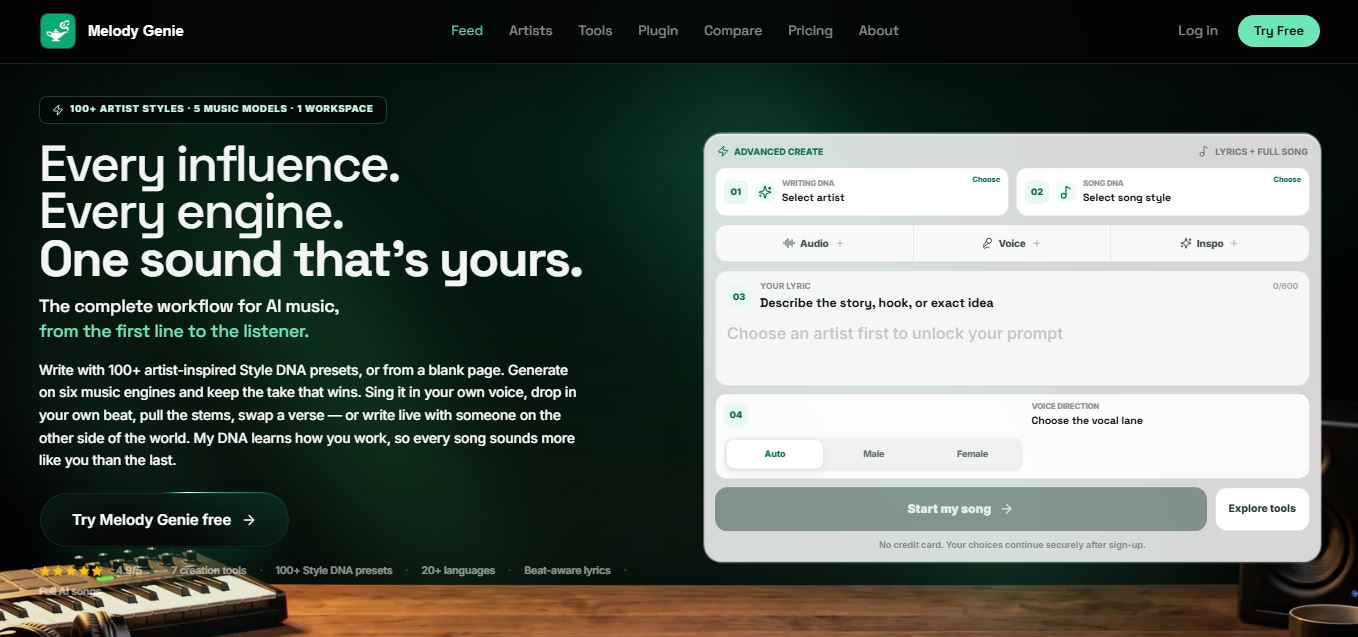
MelodyGenie is an AI-powered music generator that creates original songs from simple text prompts. Users can choose styles, moods, and genres, then instantly generate melodies and full tracks, making it easy for creators, marketers, and hobbyists to produce custom music without musical expertise.
Freemium
Kimi AI
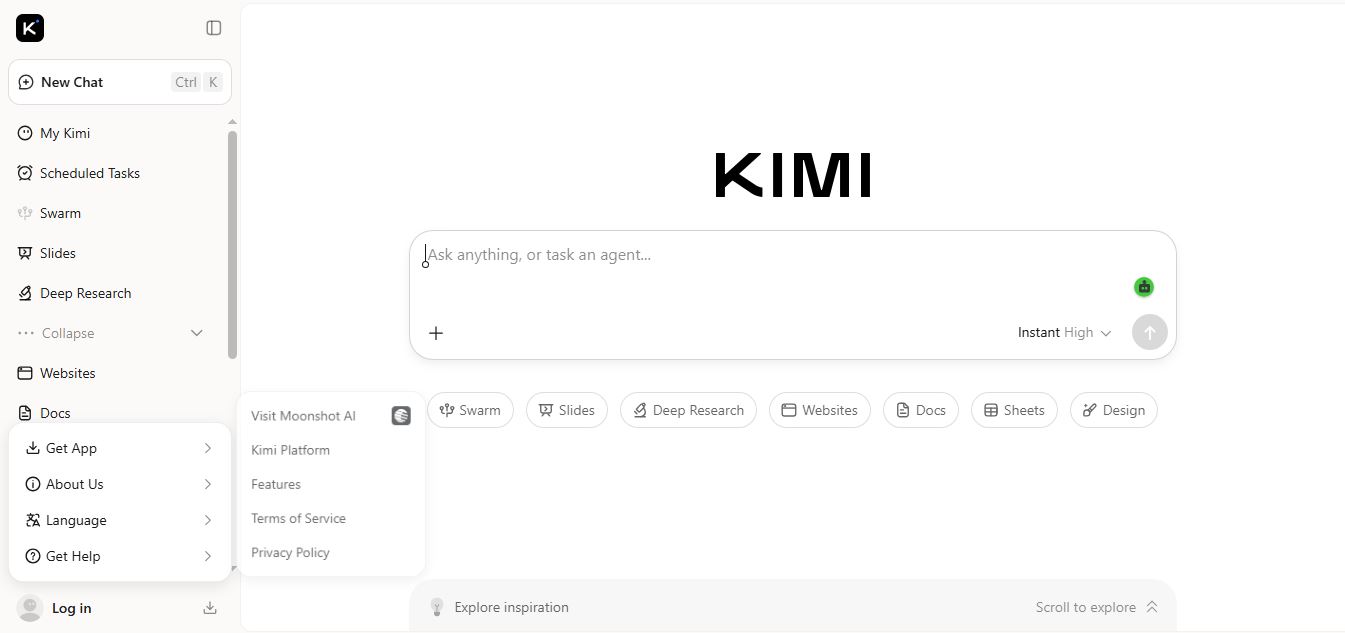
Kimi AI is an advanced AI assistant developed by Moonshot AI that helps you chat, research, write, code, and automate tasks in one place. It supports web search, file analysis, and multimodal inputs, and can even run autonomous “agent” workflows to complete complex tasks end-to-end.
Freemium
Fashion Diffusion AI
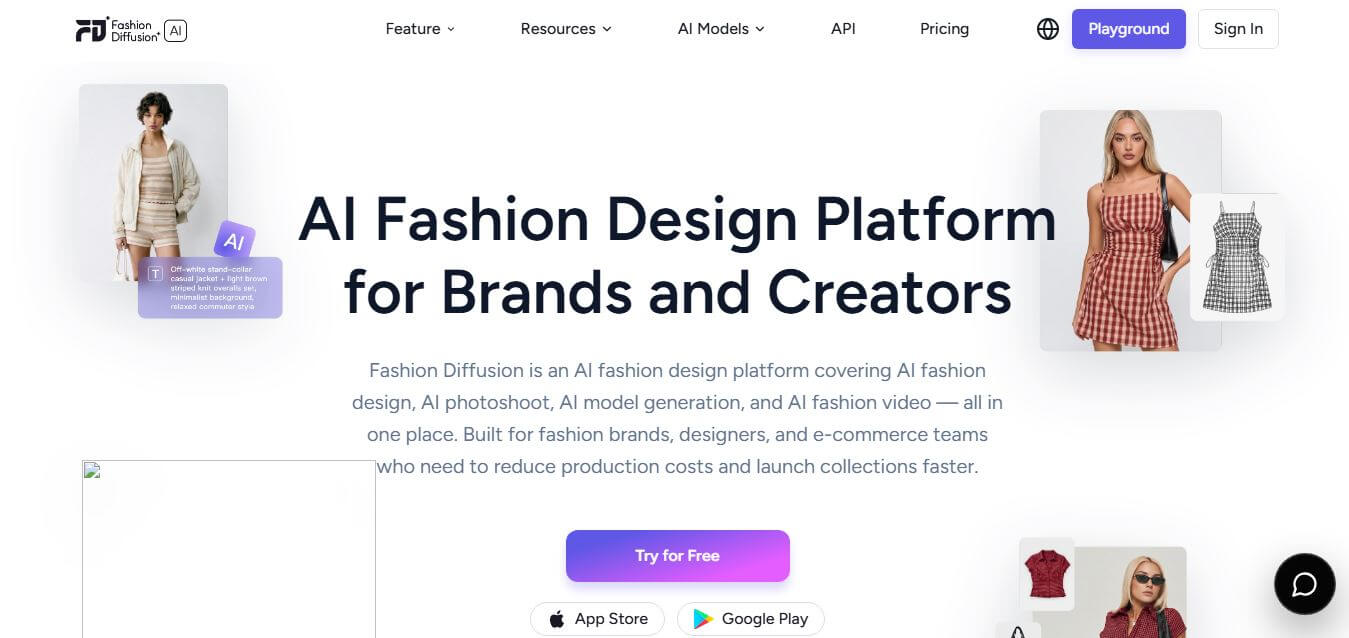
Fashion Diffusion is an AI-powered fashion design platform that helps brands and designers create clothing designs, virtual try-ons, AI models, product photos, and marketing visuals faster and cost-effectively.
Paid
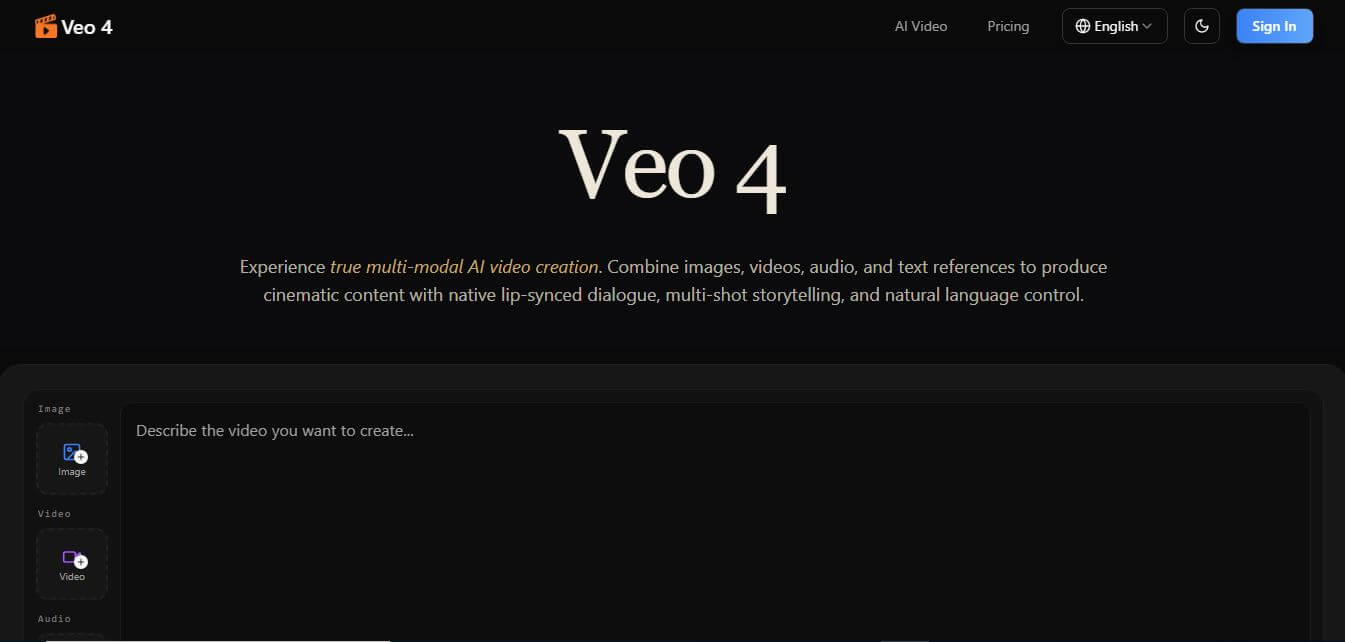
Veo 4
Veo 4 AI is an AI video creation platform that generates dramatic videos from text, images, audio, and video prompts using realistic motion and synchronized sound.
Paid
Alternatives
Alternatives to Checksum AI
Top Checksum AI alternatives include mabl, BrowserStack, Playwright, Cypress, Testim, Functionize, Tricentis Tosca, QA Wolf, and Applitools. Playwright and Cypress suit developers needing control, while BrowserStack excels in cross-browser testing. mabl and Functionize offer AI-driven automation, and QA Wolf provides managed QA. Checksum stands out with autonomous testing, CI/CD validation, and self-healing Playwright tests.
 4.7
4.7Quinvio AI
Productivity
Quinvio AI helps you turn ideas, scripts, blogs, or web content into polished video presentations. You can refine messaging, choose branded templates, add AI avatars and voiceovers, and produce shareable visual content without traditional recording or editing workflows. It is especially useful for marketers, educators, trainers, creators, and business teams.
 4.9
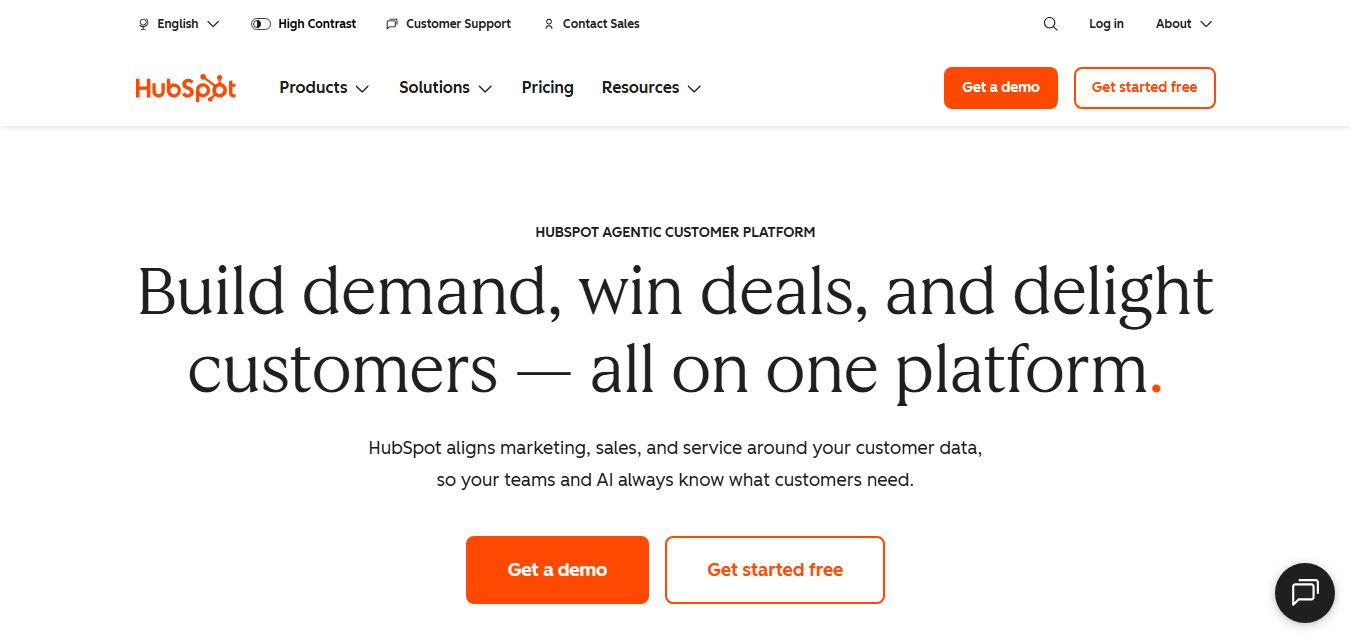
4.9HubSpot
Marketing
HubSpot is an AI-powered customer platform that helps businesses manage marketing, sales, customer service, and content in one place. It offers a free CRM, automation tools, analytics, and AI features, enabling teams to attract leads, close deals, and deliver better customer experiences at scale.
 4.9
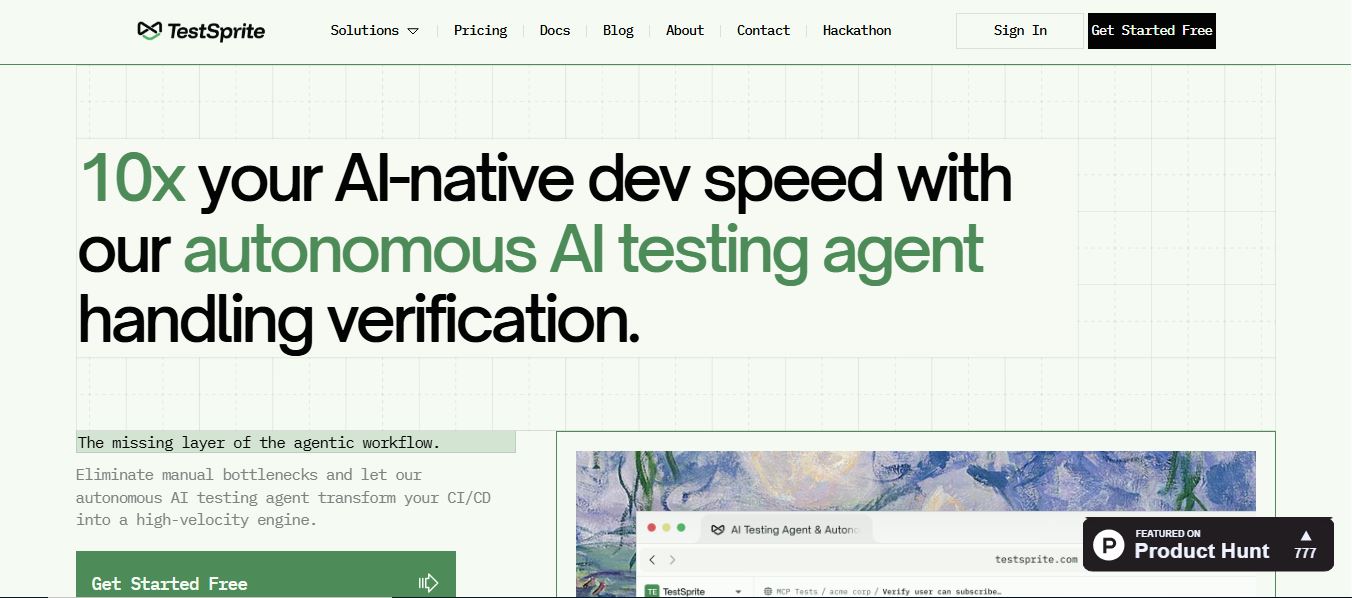
4.9TestSprite
Testing
TestSprite is an AI-powered software testing agent that helps developers automatically generate, run, and fix end-to-end tests for web apps. It simulates real user behavior, detects issues, and provides root-cause insights with suggested fixes, enabling faster releases and more reliable software without manual QA effort.
 4.8
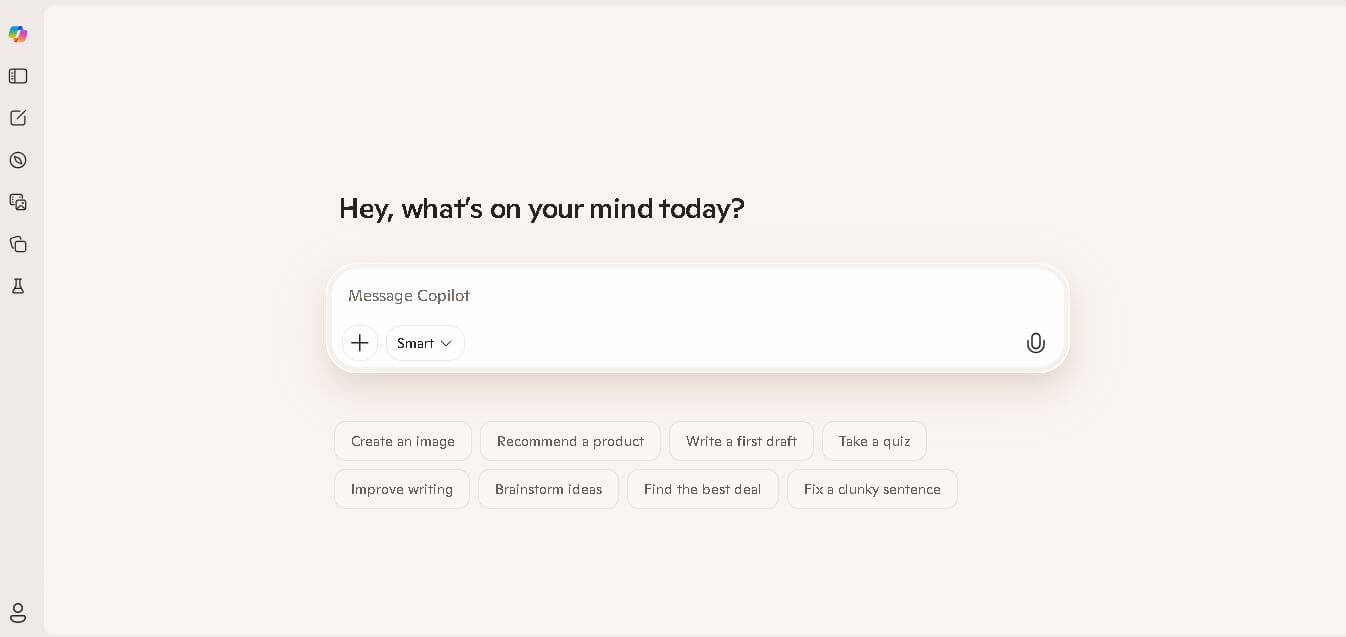
4.8Microsoft Copilot
Productivity
Microsoft Copilot is an AI-powered assistant that helps users write, research, analyze data, and automate tasks across apps like Word, Excel, Outlook, and Teams. It combines large language models with real-time data to generate content, answer questions, and improve productivity across personal and professional workflows.
 4.9
4.9Casablanca AI
Productivity
Casablanca AI is an AI-powered virtual camera that corrects your gaze in real time during video calls, making it appear like you’re maintaining natural eye contact. It works with tools like Zoom and Teams, improving trust, engagement, and communication without needing extra hardware.
 4.9
4.9Granola
Productivity
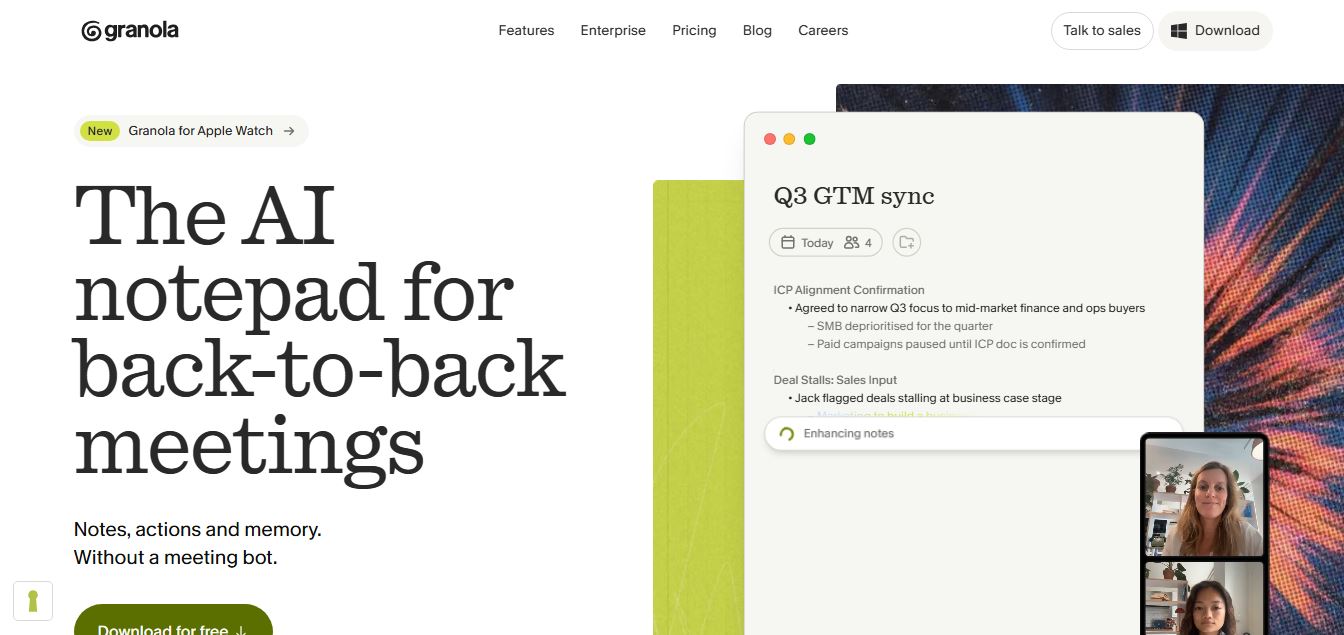
Granola is an AI-powered meeting assistant that helps you capture, organize, and act on conversations without losing focus. It listens to meetings, turns notes into structured summaries, and generates action items and follow-ups automatically—so you stay present while everything important is documented and ready to use.
 4.8
4.8AI Perfect Assistant
Productivity
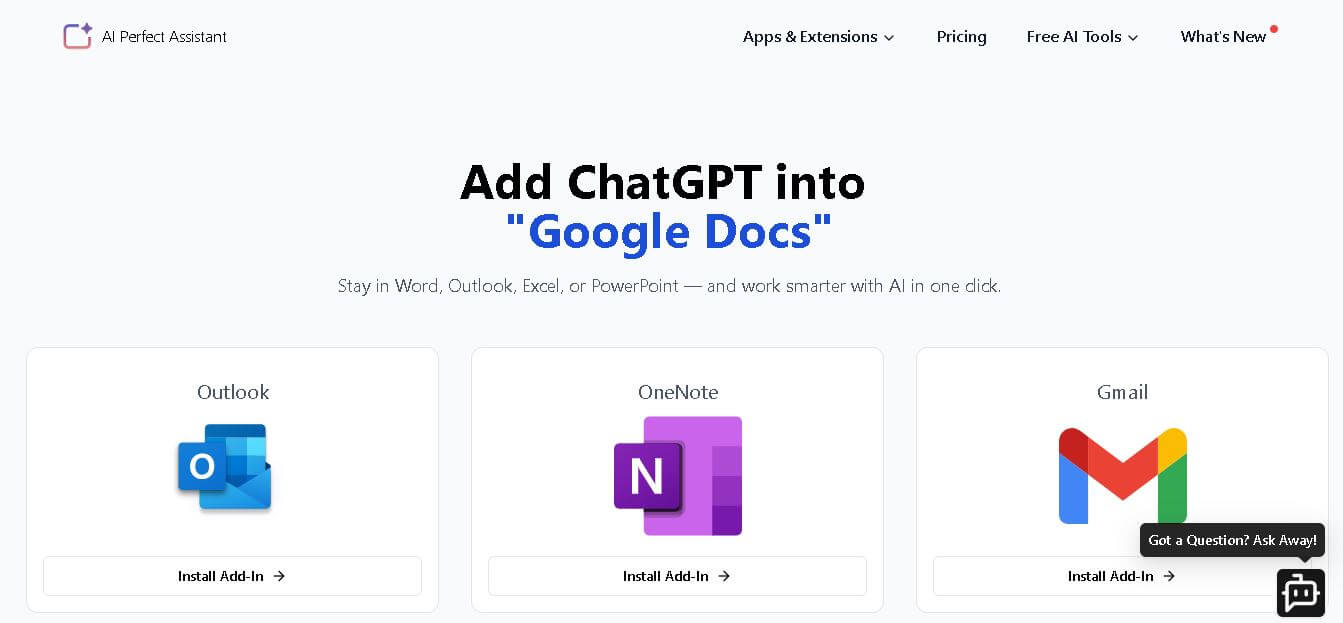
AI Perfect Assistant brings AI assistance directly into everyday work applications. It helps users write emails, improve documents, summarize content, translate text, create presentations, generate SEO content, explain Excel formulas, and handle repetitive tasks through 60+ specialized tools and multiple integrations for everyday professional and business workflows with less effort.
 4.9
4.9Kroolo
Project Management
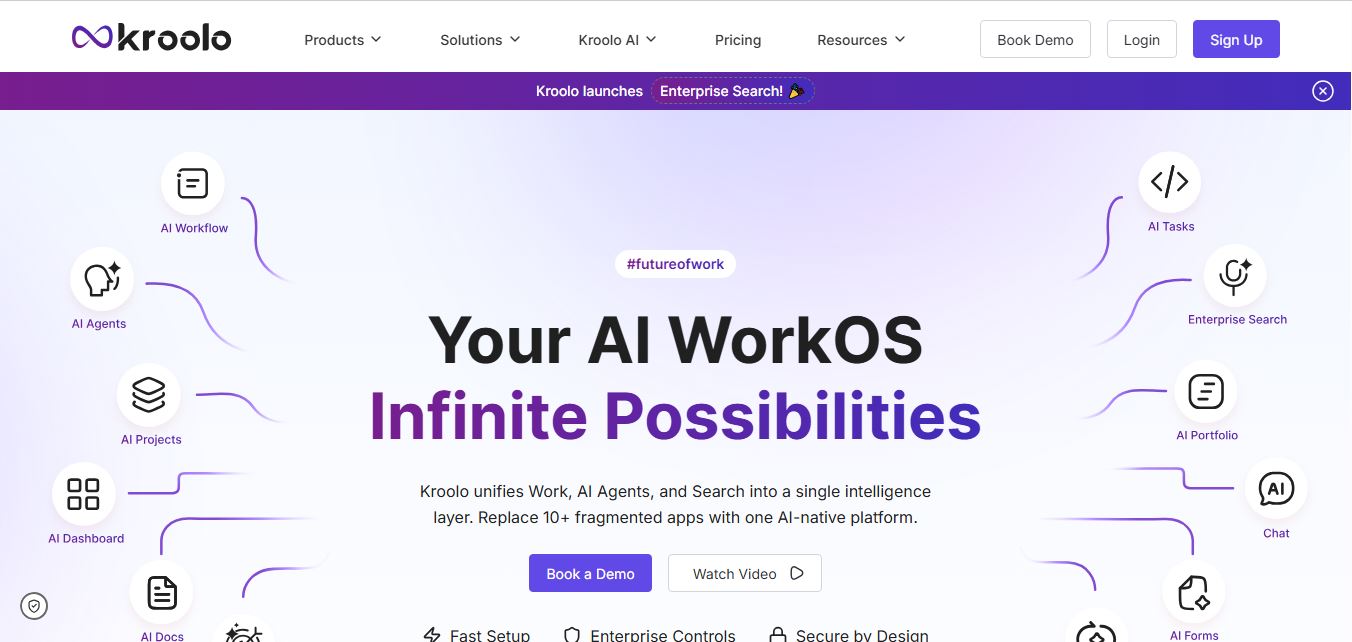
Kroolo is an AI-powered productivity and project management platform that helps teams plan tasks, track progress, and collaborate in one place. It combines project tracking, document management, and AI assistance to streamline workflows, automate routine work, and improve team efficiency across projects.
 4.8
4.8Sunsama
Productivity
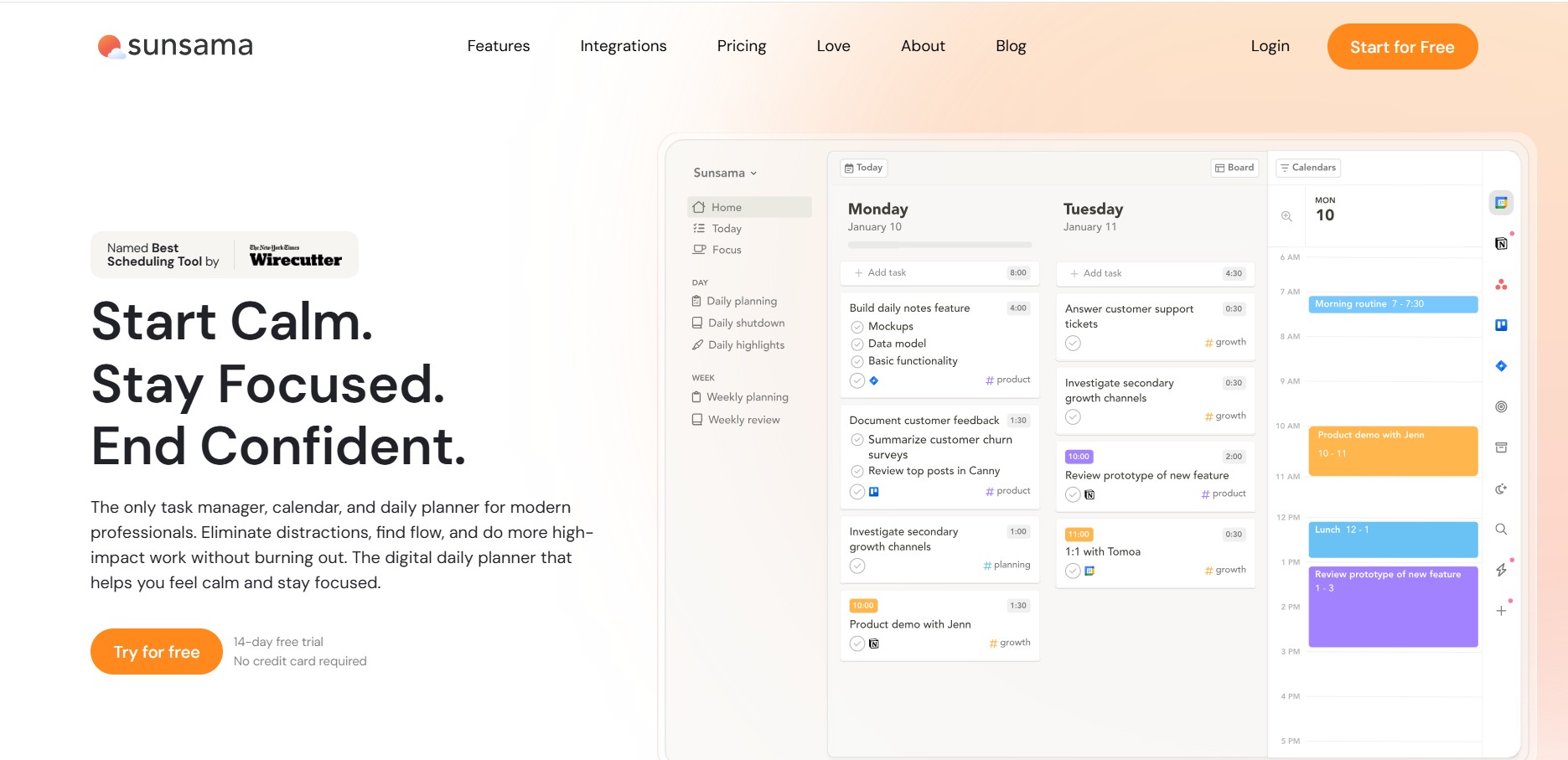
Sunsama is a digital daily planner and time-blocking application designed to cultivate intentional work habits, consolidate tasks across third-party tools, and facilitate guided morning planning and evening reflection rituals.