
Algo.kids
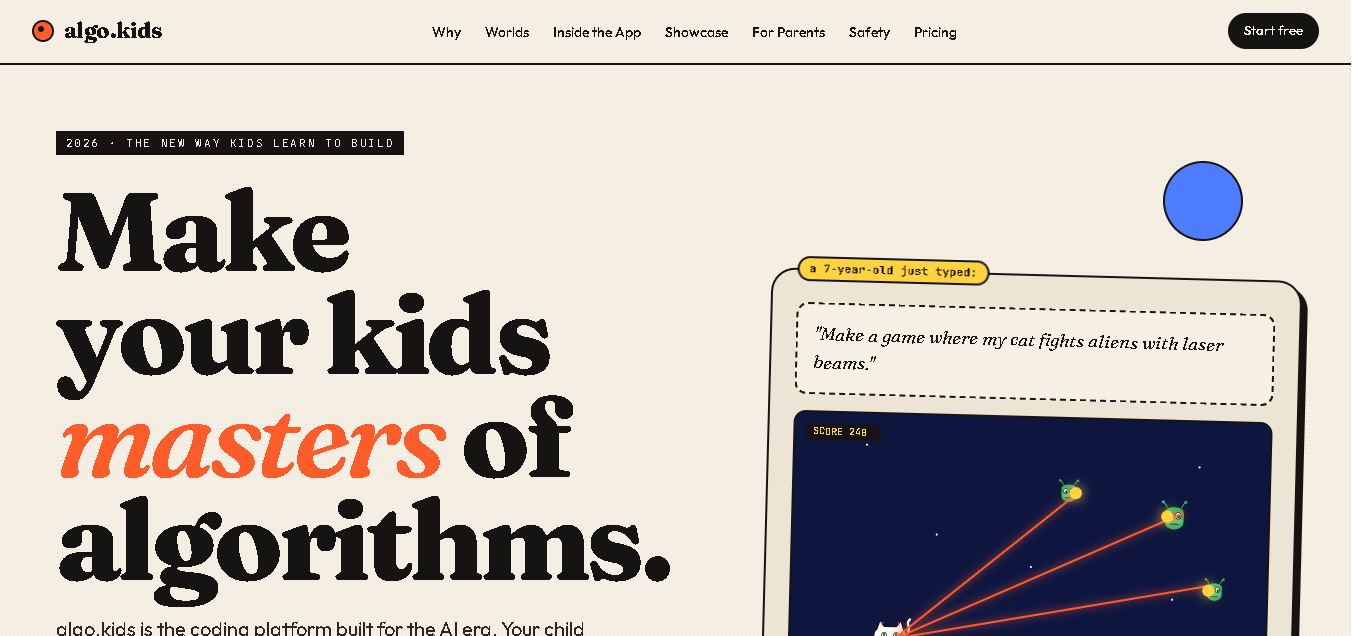
algo.kids is a coding education platform that helps children create games, stories, websites, and software projects with AI assistance. Its four learning worlds introduce age-appropriate coding experiences, from visual blocks to real programming languages. With guided explanations, parental monitoring, and free entry-level access, it makes learning programming interactive and creative.
What is Algo.kids?
algo.kids is a coding education platform designed to help children aged 3–17 learn programming by creating games, stories, websites, and applications with an AI tutor called Algo. Children describe their ideas, explore generated projects, and gradually learn coding concepts through age-appropriate activities. The platform offers four learning stages, moving from voice-based creativity and visual blocks to Python, JavaScript, web development, and AI-assisted software engineering.
algo.kids supports children aged 3–17 through 4 learning worlds: Wonder, Spark, Forge, and Lab. Its free plan costs $0 and includes 5 daily AI tutor prompts and up to 3 saved projects. The Forge plan costs $12 monthly, while the Family plan costs $19 monthly for up to 4 children. Schools can access Studio pricing starting at $4 per seat, with a 20-seat minimum. The platform offers no third-party trackers in its kids' app, parental chat visibility, and sandboxed code execution.
- Core Focus: Algorithmic Thinking, Computational Problem Solving & Logic Puzzles
- Platform Type: Interactive Web-Based Coding & Logic Learning Platform
Use Cases:
- Training young learners in algorithmic sequencing, pattern recognition, and optimization
- Solving visual logic puzzles that simulate real-world computer science data structures and search algorithms
- Equipping K-12 STEM teachers and coding instructors with structured logic challenges
- Preparing students for competitive coding and foundational computer science pathways
Technology:
- Interactive web-based puzzle engine delivering instant visual feedback upon code or logic execution
- Progressive difficulty scaling, ensuring concepts adapt smoothly to each student's skill level
- Cross-device responsive design accessible across desktop browsers, laptops, and tablets
Target Users:
- Children and students exploring programming logic and algorithmic problem-solving
- Parents and Homeschooling Families seeking rigorous, puzzle-based STEM education
- Elementary and Middle School Computer Science Teachers and Code Club Instructors
- Content creators using writing tools to draft computational thinking guides, EdTech reviews, and logic puzzle tutorials
Corporate Entity: Algo.kids (EdTech / Computational Thinking)

Key features of Algo.kids
Algo.kids' key features are
- Algorithmic Puzzle Studio: Engaging visual challenges that teach sequencing, sorting, conditionals, and loops.
- Gamified Progression: Earn achievements, solve increasingly complex mazes, and master computational logic step by step.
- Instant Visual Execution: Watch algorithms run in real-time to see how logic translates into successful puzzle completion.
- Foundational CS Alignment: Bridges the gap between basic block coding and advanced programming data structures.
- Safe & Ad-Free Workspace: Clean educational environment designed to maximize student focus and problem-solving engagement.
- Cross-Device Access: Web-first platform compatible with modern desktop, laptop, and tablet browsers.
Algo.kids Pricing
Algo.kids offers introductory free puzzle access alongside premium subscription options for full curriculum modules.
Free Access:
- Free Starter Puzzles: Access to foundational logic challenges and introductory algorithmic levels
Premium Membership:
- Pro Subscription Tier: Monthly or annual plans unlocking the complete algorithmic puzzle library, advanced data structure tracks, and progress analytics
Disclaimer: Pricing plans and subscription tiers are subject to change. Visit algo.kids for current membership details and puzzle catalogs.
Who is using Algo.kids?
Algo.kids is designed for young learners, educators, and parents, including
- Young Problem Solvers: Building strong computational logic skills through interactive puzzle challenges
- Parents & Homeschoolers: Cultivating structured analytical thinking and problem-solving habits at home
- STEM Educators: Incorporating algorithmic logic puzzles into classroom computer science sessions
- Content Creators: Using writing tools to draft computational thinking guides and coding education reviews
Best Algo.kids Alternatives
Some of the top Algo.kids alternatives include
Pros and Cons of Algo.kids
Pros
- Laser-focused on foundational algorithmic thinking and computational problem-solving rather than surface-level syntax
- Intuitive puzzle mechanics make complex computer science logic approachable for young learners
- Engaging gamified progression keeps students motivated to tackle harder logic challenges
- Clean, distraction-free web environment prioritizes active problem-solving
Cons
- Full access to advanced algorithmic modules requires a paid subscription
- Focused primarily on logic and problem-solving rather than open-ended game design or storytelling
- Requires internet connectivity for puzzle execution and progress syncing
Why Choose Algo.kids?
Algo.kids is the premier choice for parents and educators seeking to instill rigorous computational thinking and algorithmic problem-solving skills in young learners through engaging puzzles.
- Builds strong analytical reasoning through gamified puzzle challenges
- Provides a clean, focused, and kid-safe web learning environment
- Complements traditional coding lessons with deep logical foundations
Algo.kids vs. Competitors
The main difference between Algo.kids, Code.org, and Scratch is that Algo.kids focuses intently on pure algorithmic thinking, computational problem-solving, and logic puzzles, whereas Code.org provides a broad K-12 computer science curriculum with text labs, and Scratch emphasizes open-ended creative game creation and storytelling. Algo.kids stands out for its rigorous logic-puzzle pedagogy.
| Feature / Tool | Algo.kids (algo.kids) | Code.org | Scratch | Lightbot |
|---|---|---|---|---|
| Core Focus | Algorithmic Thinking & Logic Puzzles | K-12 Formal CS Curriculum & Labs | Visual Block Coding & Creative Community | Programming Puzzle Game for Logic |
| Puzzle Methodology | Deep Algorithmic Optimization & Sequencing | Guided Course Lessons & Activities | Open-Ended Creation & Remixing | Robot Movement Logic Puzzles |
| Target Age | Children & Young Learners | K-12 Students | Ages 8 to 16 | Ages 8+ |
| Starting Price | Free Starter / Pro Subscription | 100% Free | 100% Free | Paid App / Web Version |
| Best For | Developing rigorous computational logic and problem-solving through puzzles | Schools implementing a sequential computer science curriculum | Kids wanting open-ended game and animation creation for free | Learning basic programming logic via robot navigation puzzles |
How do we rate Algo.kids?
| Parameter | Rating (out of 5) |
|---|---|
| Algorithmic Rigor & Logic Quality | 4.9 |
| Gamified Engagement & Puzzles | 4.8 |
| User Interface & Focus | 4.9 |
| Educational Impact | 4.8 |
| Value for Money | 4.7 |
| Overall Score | 4.82 |
Algo.kids Review
Algo.kids is a fantastic platform that prioritizes the core of computer science: algorithmic thinking and computational problem-solving. By transforming complex logic and sequencing concepts into engaging, interactive puzzles, Algo.kids help children build strong analytical reasoning skills that go far beyond basic syntax. Its clean, gamified interface ensures learners stay motivated as they progress through increasingly sophisticated challenges. For parents and educators seeking to foster rigorous computational logic in 2026, Algo.kids is a stellar educational resource.
Conclusion
algo.kids offers an engaging way for children to explore programming, develop creative thinking, and build practical digital projects with AI assistance. Its four learning stages support progression from simple interactive activities to real coding and software development. Parental monitoring and child-focused safety features add value for families, while free and paid plans provide different options. For parents and educators seeking a hands-on introduction to coding, algo.kids is worth exploring as a supplementary learning resource.
FAQ
What can children create with algo.kids?
Children can use algo.kids to create interactive games, animated stories, websites, and simple applications based on their interests. Younger learners can experiment with voice prompts and visual blocks, while older students can explore Python, JavaScript, and web development. This approach encourages creativity while helping children understand how their digital projects work.
What age group is algo.kids designed for?
algo. kids is designed for children aged 3–17, with activities divided into four learning stages. Wonder introduces creative exploration for ages 3–5, Spark teaches visual coding for ages 6–9, Forge introduces real code for ages 9–13, and Lab develops advanced programming skills for ages 13–17. Parents should choose activities appropriate to their child's abilities.
Is algo.kids free to use?
Yes, algo.Kids offers a free plan that includes the Wonder and Spark learning worlds, 5 daily prompts to its AI tutor, and up to 3 saved projects. Families needing advanced coding activities can consider paid subscriptions. The website lists Forge at $12 monthly and Family at $19 monthly for up to four children.
Is algo.kids safe for children?
algo.kids includes several child-safety features, such as parental access to AI conversations, a coding-focused tutor, sandboxed code execution, and no third-party trackers in its children's app. Children use a six-digit login code instead of entering email addresses or passwords. Parents can also pause sessions and monitor activities through the dashboard.
Do children need coding experience to use algo.kids?
No, children do not need previous coding experience to begin using algo.kids. Younger learners can describe ideas using voice prompts and modify projects with visual blocks. As they progress, they can explore programming languages and understand generated code. This gradual learning path helps beginners develop computational thinking through practical, creative activities.
What programming languages can children learn with algo.kids?
Children can explore Python, JavaScript, HTML, and CSS as they advance through algo.kids' learning stages. Older learners can also work with TypeScript, React, SQL, and Python-based machine learning projects. The available languages depend on the learning world, allowing children to progress from visual programming toward more practical software development and AI engineering skills.
User Reviews
No reviews yet for Algo.kids.
Featured Tools
Featured AI tools from TechShark
Melody Genie
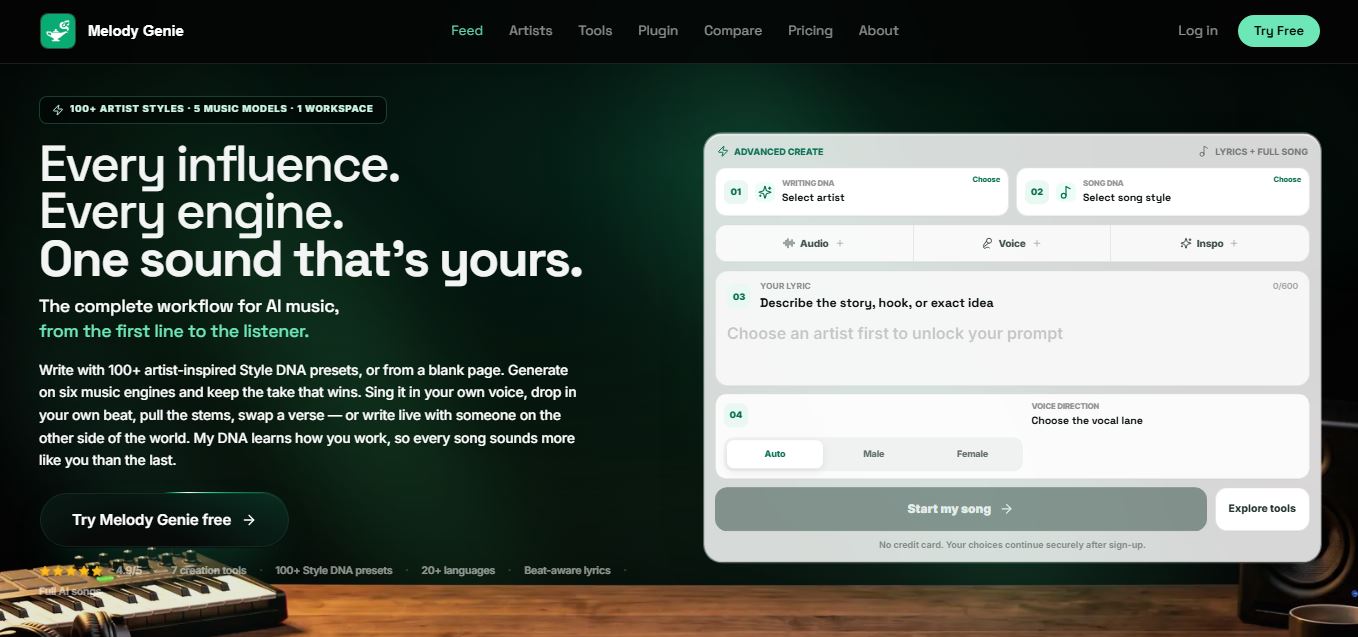
MelodyGenie is an AI-powered music generator that creates original songs from simple text prompts. Users can choose styles, moods, and genres, then instantly generate melodies and full tracks, making it easy for creators, marketers, and hobbyists to produce custom music without musical expertise.
Freemium
Kimi AI
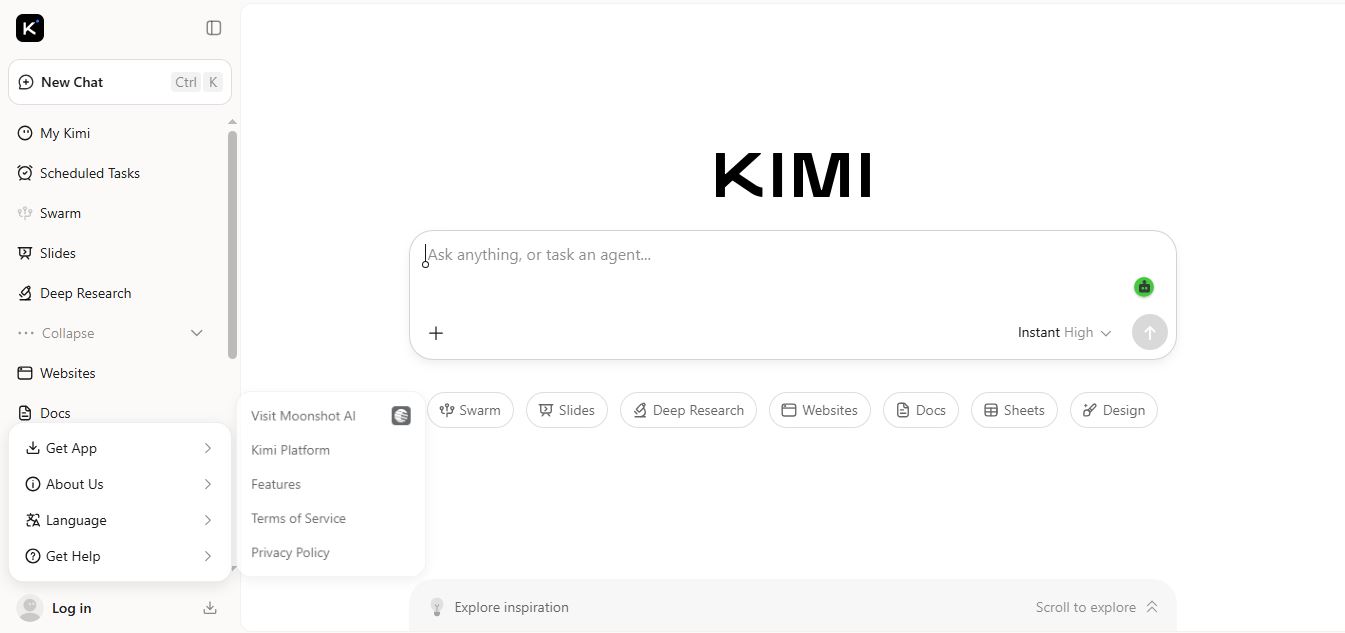
Kimi AI is an advanced AI assistant developed by Moonshot AI that helps you chat, research, write, code, and automate tasks in one place. It supports web search, file analysis, and multimodal inputs, and can even run autonomous “agent” workflows to complete complex tasks end-to-end.
Freemium

Fashion Diffusion AI
Fashion Diffusion is an AI-powered fashion design platform that helps brands and designers create clothing designs, virtual try-ons, AI models, product photos, and marketing visuals faster and cost-effectively.
Paid
Veo 4
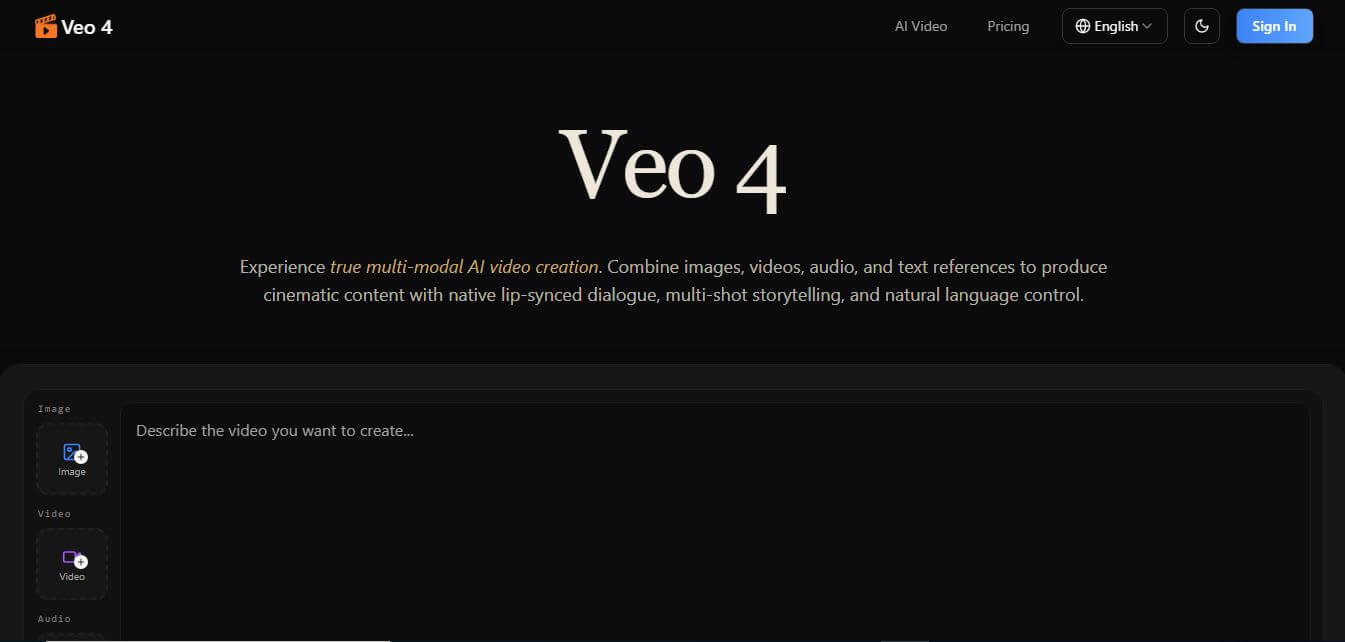
Veo 4 AI is an AI video creation platform that generates dramatic videos from text, images, audio, and video prompts using realistic motion and synchronized sound.
Paid
Alternatives
Alternatives to Algo.kids
The best Algo.kids alternatives include Code.org, Scratch, Tynker, Tinkly AI, Lightbot, and CodeCombat. These platforms provide coding education, logic puzzles, and computational thinking exercises. While Algo.kids focuses specifically on pure algorithmic reasoning and logic optimization puzzles, alternatives like Scratch emphasize open-ended creative game creation.
 4.9
Humain AI Literacy Mission (HAILM)
Kids
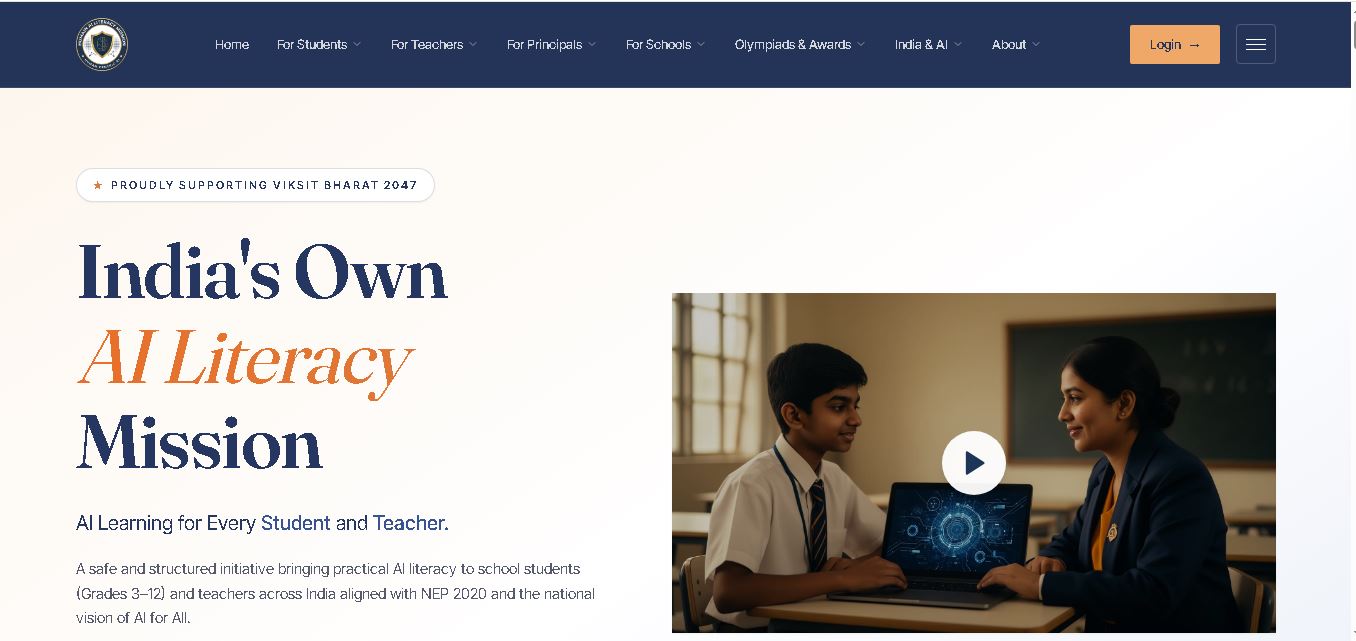
Humain AI Literacy Mission is an educational initiative helping Indian students in Grades 3–12 and teachers develop practical artificial intelligence skills. It offers foundational AI courses, interactive activities, assessments, and certificates. Aligned with NEP 2020 and international educational guidance, HAILM promotes responsible AI use, digital safety, critical thinking, and future-ready learning.
 4.9
Brisk Teaching
Kids
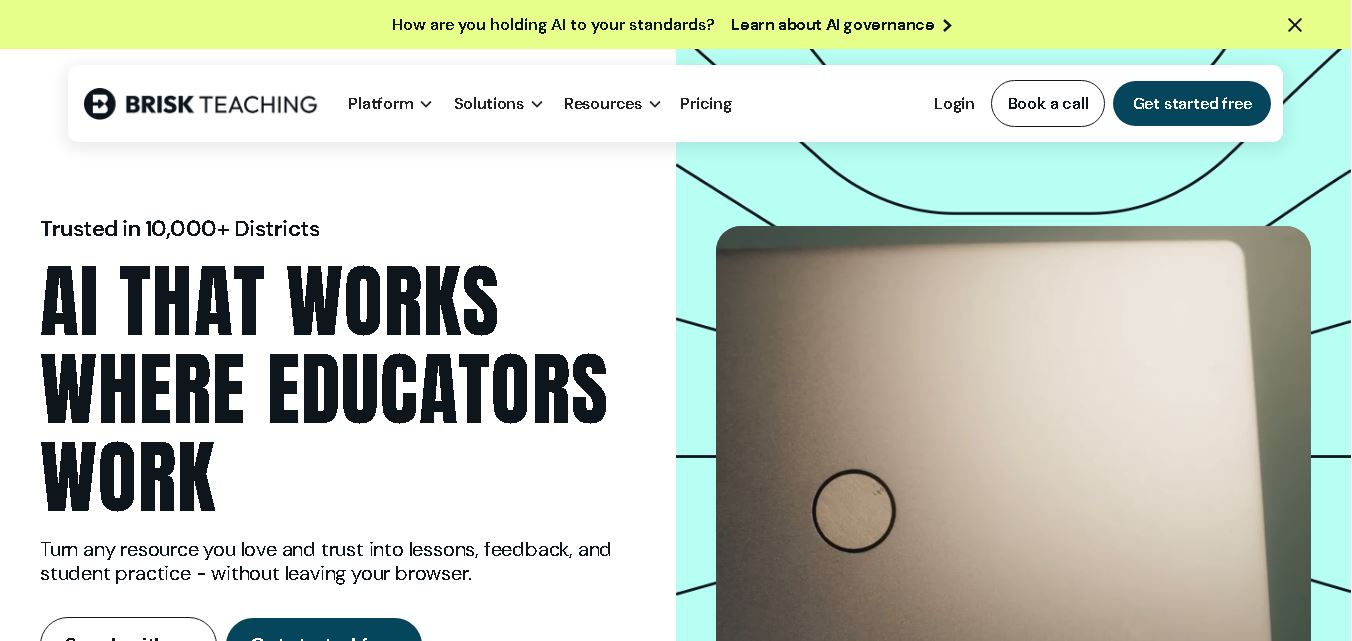
Brisk Teaching helps educators create lesson plans, quizzes, worksheets, presentations, and personalized feedback using AI. It integrates with familiar teaching tools and supports differentiated instruction, translation, and student activities. With free educator access and advanced school plans, Brisk helps teachers reduce repetitive preparation and focus more on meaningful classroom learning.
 4.9
Diffit
Kids
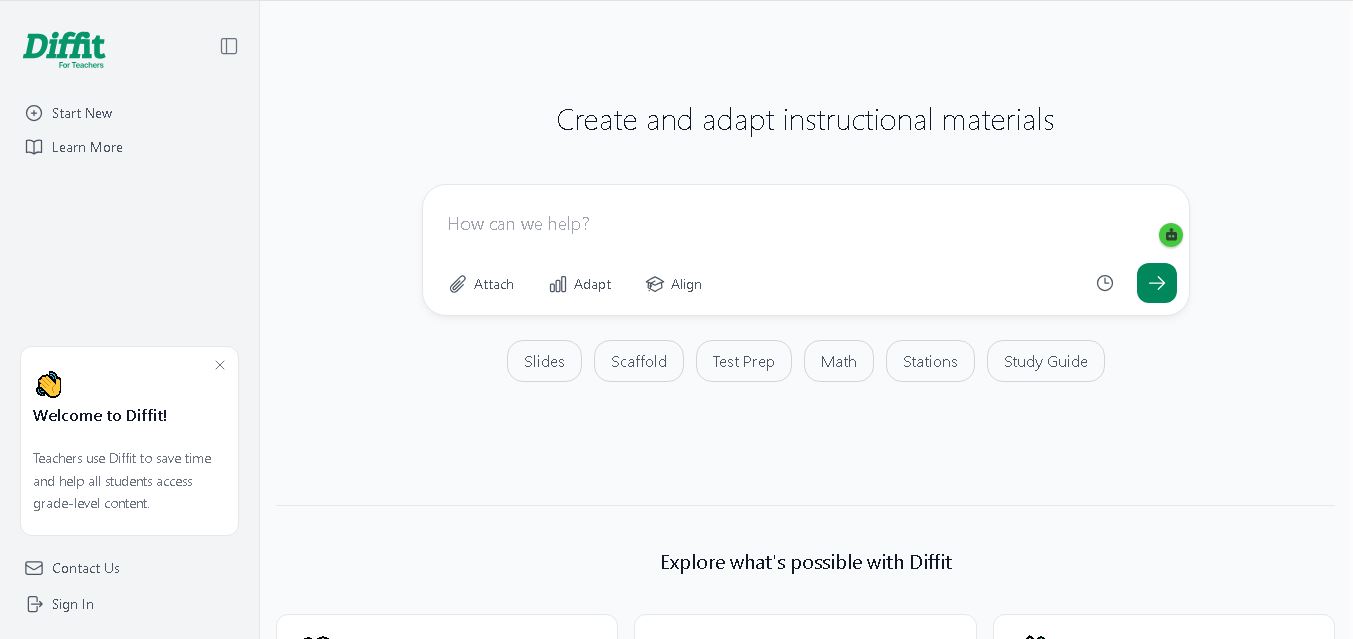
Diffit helps teachers create differentiated classroom materials from topics, text, PDFs, URLs, and video transcripts. It can produce reading passages, vocabulary tasks, comprehension questions, worksheets, and lesson activities tailored to student needs. Educators can edit, print, share, and, with eligible plans, export resources to familiar teaching tools more efficiently.
 5.0
MagicSchool AI
Kids
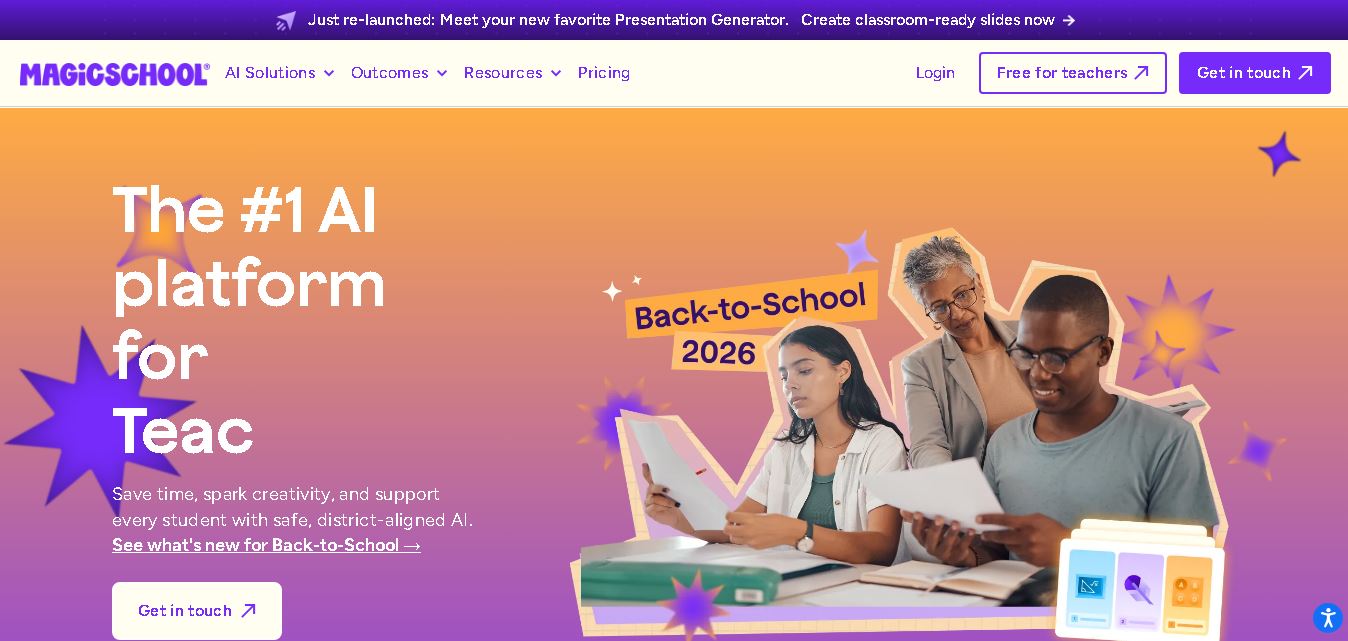
MagicSchool AI helps teachers and students use artificial intelligence for educational tasks. It offers tools for lesson planning, quiz creation, worksheet generation, writing feedback, and personalized learning. With free and paid plans, it supports classroom productivity, differentiated instruction, and responsible AI adoption across schools and educational institutions worldwide.
 4.9
Curipod
Kids
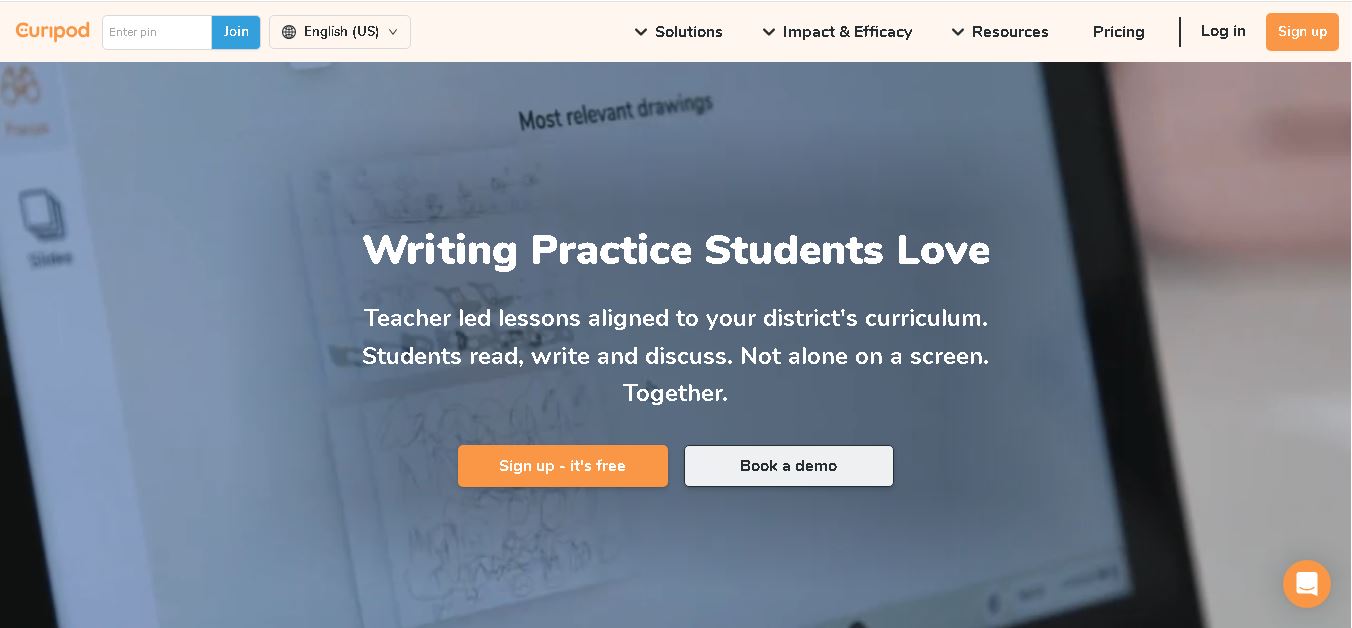
Curipod offers teachers a practical way to create interactive lessons, encourage classroom participation, and provide structured feedback on student learning. Its AI-assisted lesson generation, writing activities, and assessment tools can reduce preparation time while supporting more engaging instruction. The free plan provides an accessible starting point, while schools can explore paid options for broader needs. For educators seeking technology that combines classroom interaction with teacher-controlled AI, Curipod is worth evaluating against their curriculum, privacy, and teaching requirements.
 4.8
Powtoon
Kids
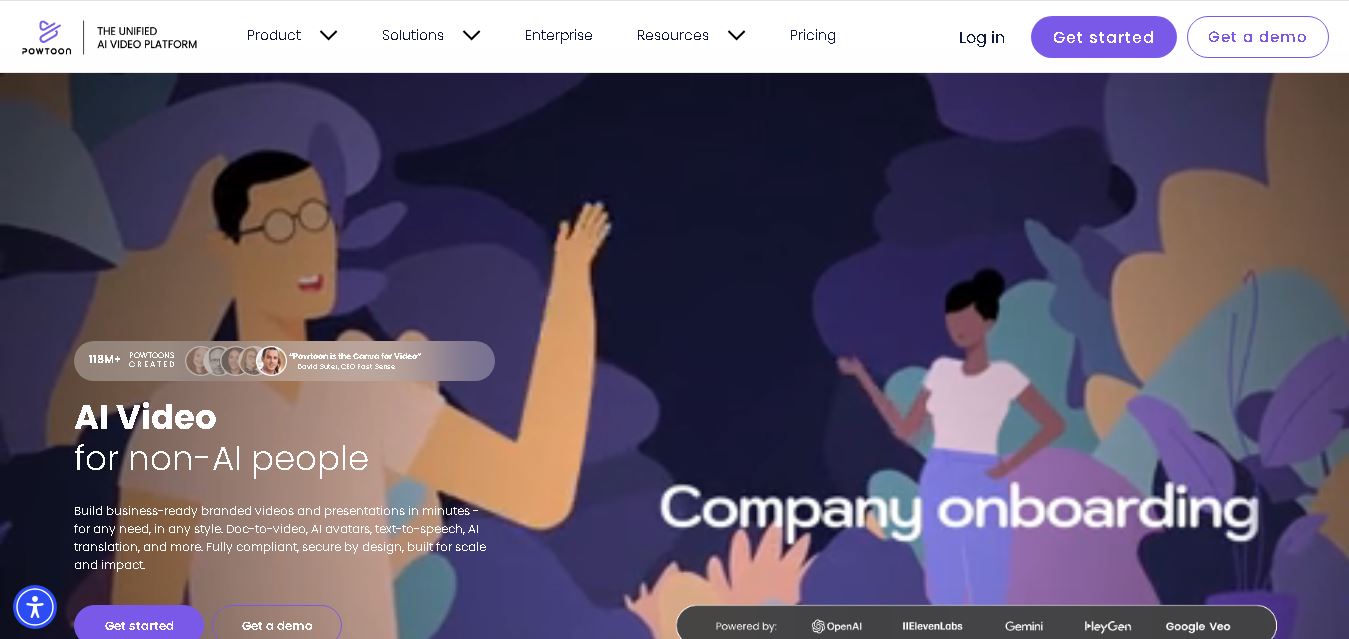
Powtoon is an online video and presentation creation tool for producing animated explainers, educational videos, marketing content, and business presentations. It offers customizable templates, animated characters, multimedia editing, and AI-assisted features. Beginners, educators, marketers, and businesses can use it to transform complex ideas into engaging visual stories without advanced animation skills.
 4.8
Animaker
Kids
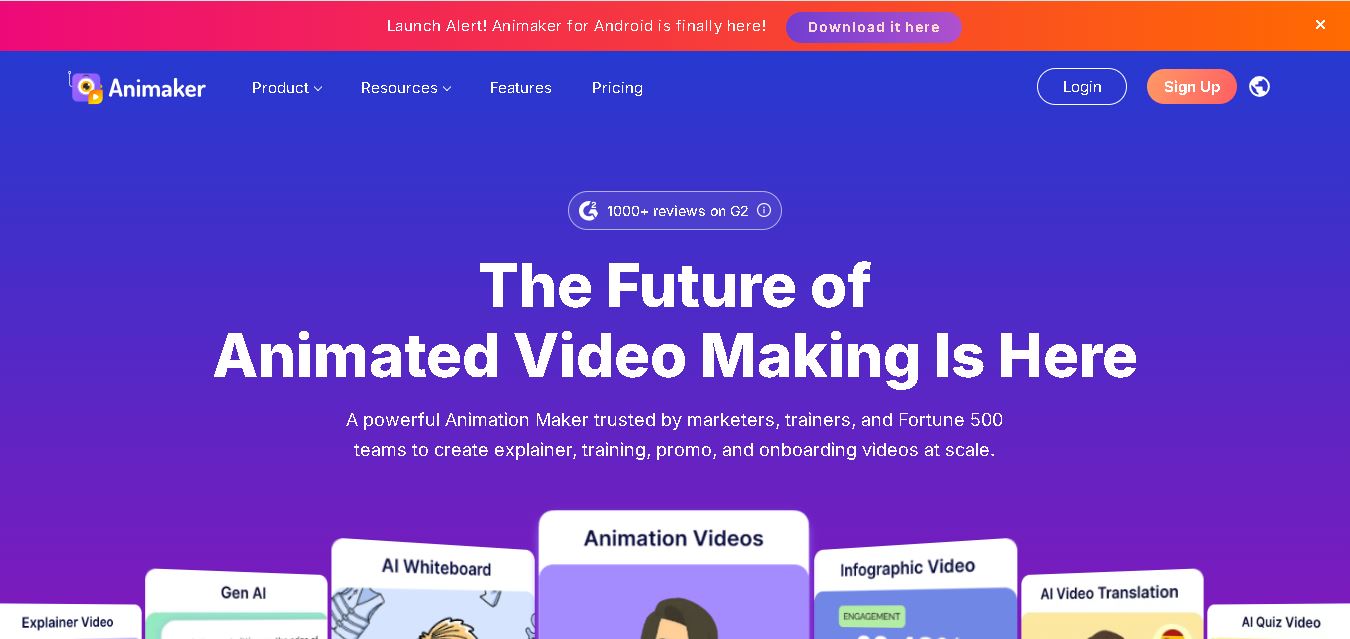
Animaker helps users create animated videos, explainer content, presentations, and promotional materials using customizable characters, templates, AI video generation, and editing features. Its online editor supports voiceovers, subtitles, and multilingual video translation. It is useful for marketers, educators, businesses, and creators who want engaging videos without advanced animation or editing expertise.
 5.0
Google Read Along
Kids
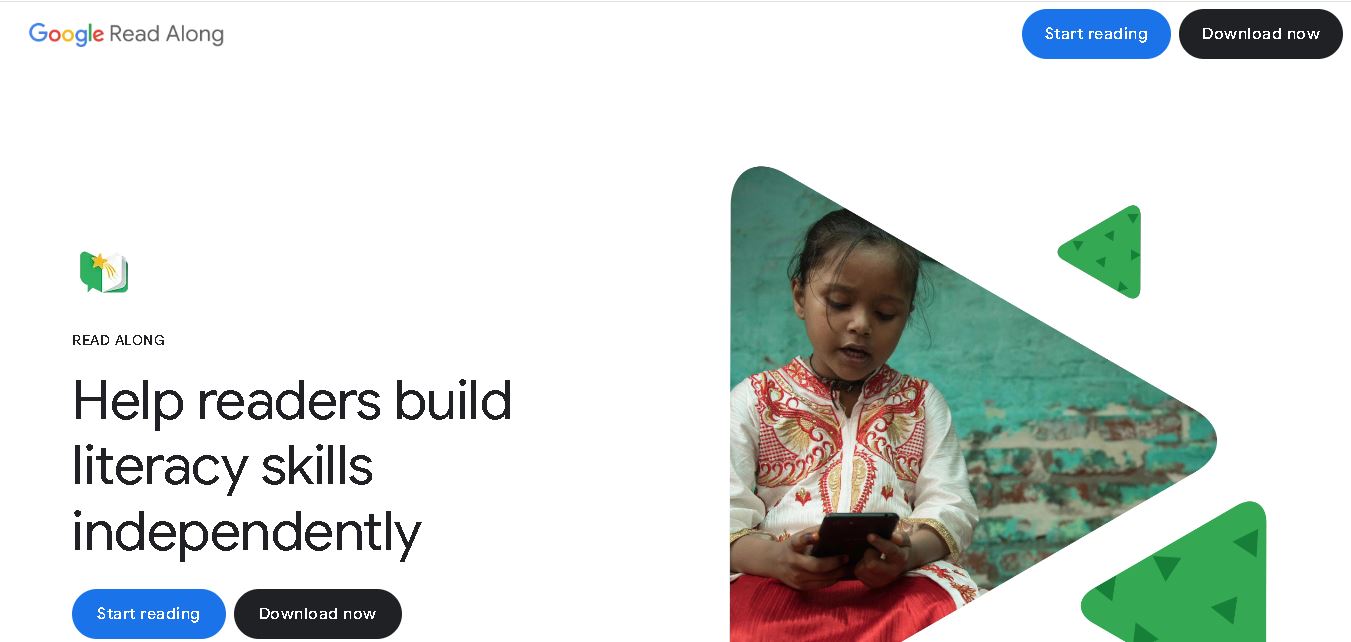
Google Read Along is a free reading practice tool for children that improves pronunciation, fluency, and confidence through interactive stories, reading games, and real-time feedback from its assistant, Diya. Supporting multiple languages and offline Android access, it helps families and educators make early literacy practice more engaging, accessible, and convenient for young learners.
 4.8
Squibler
Kids
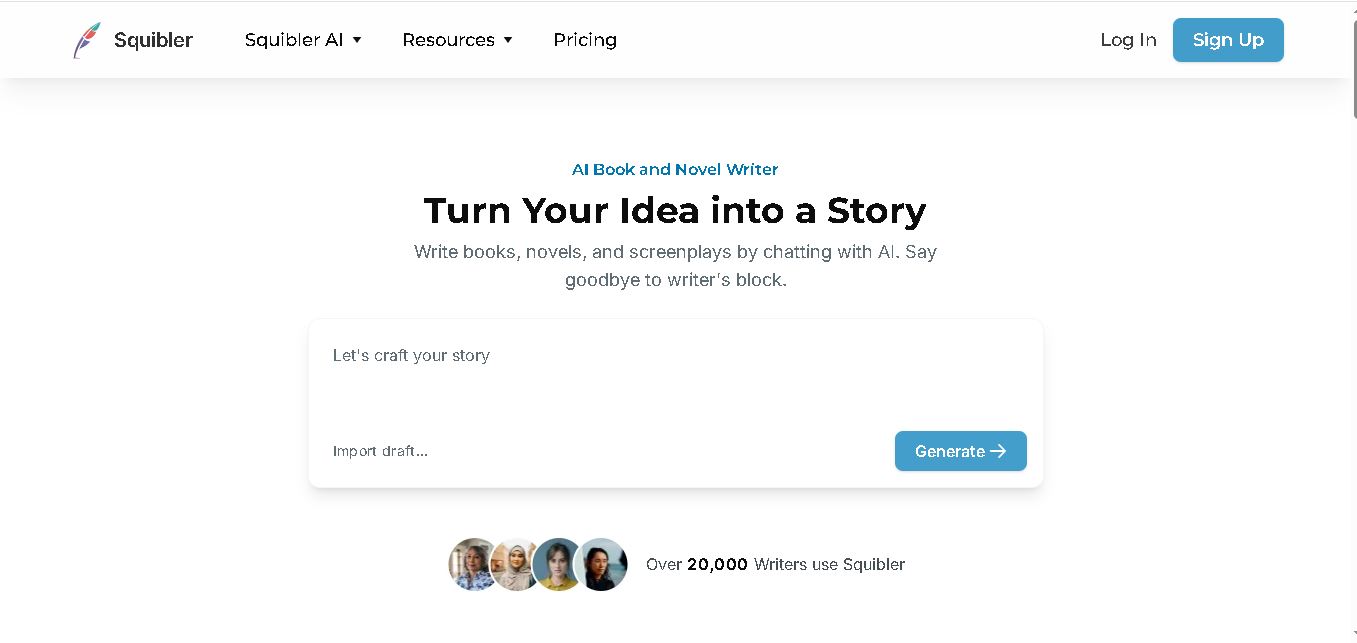
Squibler is an AI writing assistant for creating books, novels, screenplays, and story outlines. It helps writers develop characters, organize chapters, refine existing drafts, and generate visuals. With free and paid plans, Squibler supports beginners and experienced authors seeking a more structured, efficient, and creative long-form writing workflow.