10 Best AI Landing Page Builders in 2027: Features, Pricing & Comparison
Discover the 10 best AI landing page builders in 2026. Compare features, pricing, AI page generation, lead capture, and conversion optimization tools.
Explore moreAI landing page builders are changing how businesses create campaign pages, capture leads, and improve conversions. Instead of starting with a blank canvas, marketers can now use AI to generate page layouts, write headlines, create supporting copy, suggest designs, and build forms from a simple prompt. But generating a landing page is only the first step. The best platform should also help you publish pages, connect marketing tools, measure performance, and improve conversion rates over time.
In this guide, we compare the 10 best AI landing page builders to consider in 2027. Whether you're a startup founder, marketer, agency, SaaS company, or small business, you'll find options for different budgets and campaign requirements.
What Are the Best AI Landing Page Builders in 2027?
The best AI landing page builders in 2027 include Unbounce, Landingi, Instapage, Leadpages, HubSpot, Wix, Framer, Webflow, involve.me, and Sitekick.
- Unbounce: Best for conversion-focused landing pages and paid advertising campaigns.
- Landingi: Best for agencies and businesses managing multiple landing pages.
- Instapage: Best for enterprise marketing teams and advertising personalization.
- Leadpages: Best for small businesses and lead generation.
- HubSpot: Best for businesses that want landing pages connected to CRM and marketing automation.
- Wix: Best for small businesses building landing pages alongside a complete website.
- Framer: Best for visually polished, design-focused landing pages.
- Webflow: Best for advanced design control and scalable marketing websites.
- involve.me: Best for interactive landing pages, quizzes, calculators, and lead-generation funnels.
- Sitekick: Best for generating landing page designs and copy from prompts.
The right choice depends on whether you need quick AI generation, advanced customization, conversion testing, CRM integration, or interactive lead capture.
Key Facts and Statistics About Landing Pages
Landing page performance depends on more than design. Page speed, messaging, traffic source, audience intent, and the conversion process all influence results.
Here are some useful statistics to consider when planning landing pages for 2027:
- 6.6% median conversion rate: Unbounce reported a median landing page conversion rate of 6.6% across industries in its Q4 2024 benchmark data.
- 41,000+ landing pages: The benchmark dataset included more than 41,000 landing pages.
- 464 million unique visitors: The report analyzed more than 464 million unique visitors.
- 57 million conversions: The dataset included over 57 million conversion actions.
- Industry differences matter: The same benchmark research showed that conversion rates vary considerably across industries.
These figures provide a useful historical benchmark, not a guaranteed target for every campaign or a prediction for 2027. Your results will depend on your offer, audience, traffic source, and conversion goal.
Resource: Unbounce Conversion Benchmark Report
What Is an AI Landing Page Builder?
An AI landing page builder is software that uses artificial intelligence to help users create and optimize landing pages. Instead of manually designing every section, users can provide a prompt, business description, product details, or campaign objective. The platform then generates some combination of page structure, copy, layouts, images, and forms.
Most AI landing page builders combine traditional drag-and-drop editing with AI-powered features.
Common capabilities include:
- AI-generated landing page layouts.
- Automated headline and marketing copy generation.
- AI image and design suggestions.
- Pre-built landing page templates.
- Lead capture forms and integrations.
- Mobile-responsive page layouts.
- SEO settings and metadata controls.
- Analytics and conversion tracking.
- A/B testing and personalization, depending on the platform and plan.
An important distinction: an AI landing page generator creates a starting point. A conversion optimization platform helps you measure and improve what happens after visitors arrive. Some products offer both, while others focus primarily on design and page generation.
10 Best AI Landing Page Builders in 2027
1. Unbounce
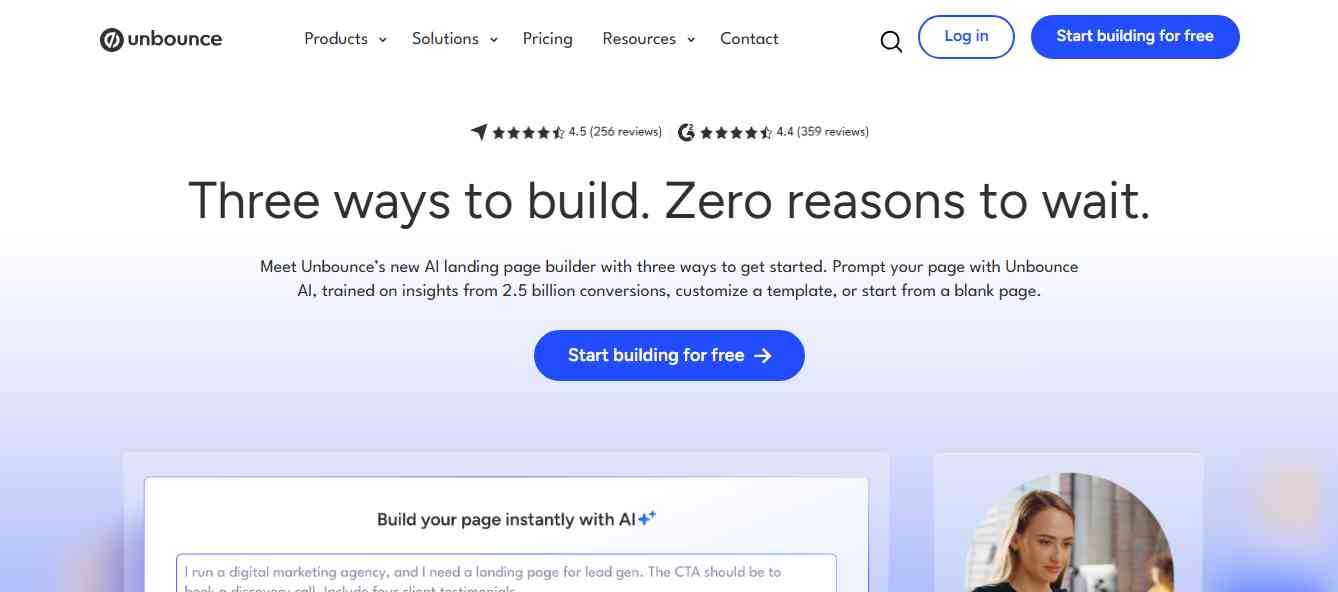
Unbounce is a landing page platform designed for marketers who want to create, test, and optimize campaign pages. It is particularly useful for businesses running paid advertising campaigns through Google Ads, Facebook, and other channels. Its AI-assisted building and optimization capabilities help marketers develop landing pages without relying entirely on developers. Features such as Smart Traffic are designed to route visitors toward page variants that may better match their needs.
Key Features
- AI-assisted landing page creation.
- Drag-and-drop landing page editor.
- Smart Traffic for automated visitor routing.
- A/B testing for comparing page variations.
- Lead generation forms and conversion tools.
- Popups and sticky bars.
- Marketing and analytics integrations.
- Mobile-responsive landing page designs.
Pros
- Strong focus on conversion optimization.
- Useful tools for paid advertising campaigns.
- Supports landing page experimentation.
- Helps marketers create pages without extensive coding.
Cons
- Can be expensive for smaller businesses.
- Advanced optimization features may require higher-tier plans.
- Users may need time to understand its testing and optimization tools.
Pricing: Paid plans are available. Check the official pricing page for current plans, traffic limits, and feature availability.
Best For: Performance marketers, agencies, and businesses running paid advertising campaigns.
Review
Unbounce is a strong choice for businesses that care about what happens after a landing page goes live. Its combination of page creation, testing, and traffic optimization makes it more than a basic AI page generator. If your main objective is to improve lead generation and campaign performance, Unbounce deserves a place on your shortlist.
2. Landingi
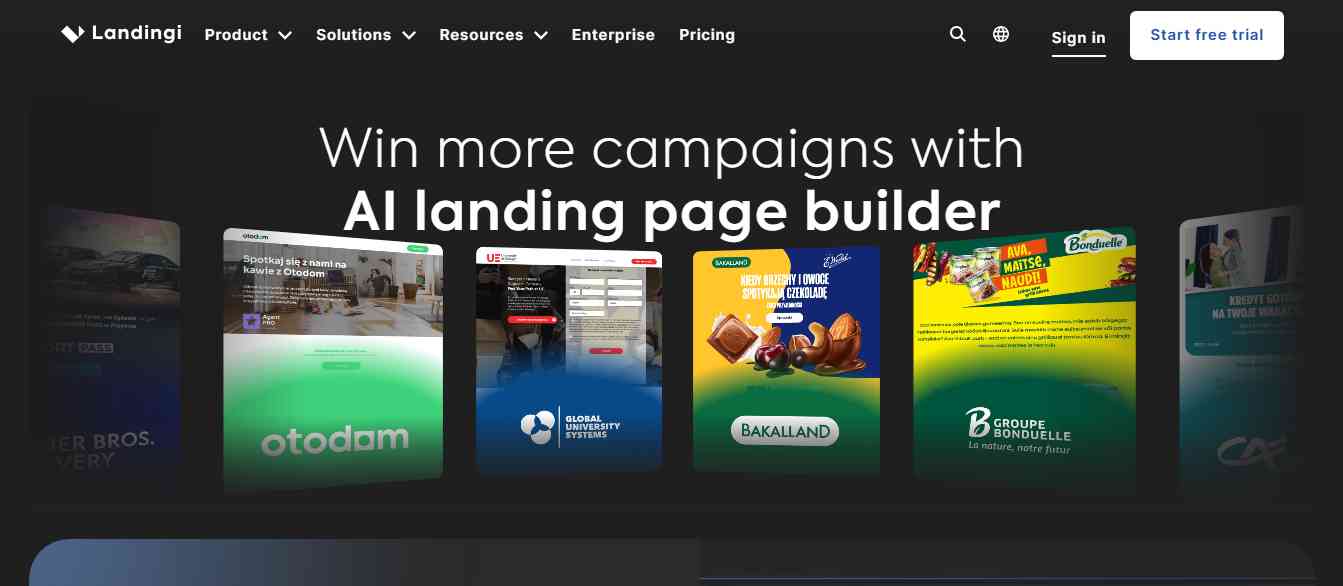
Landingi is a landing page platform built for marketers, agencies, and businesses that need to create multiple campaign pages. It combines a visual editor with AI-assisted tools to simplify page creation and content development. Its capabilities make it useful for teams managing campaigns across different products, audiences, and advertising channels. Businesses can build landing pages, customize sections, and connect lead capture workflows without developing every page from scratch.
Key Features
- AI-assisted landing page generation.
- AI copywriting and content support.
- Drag-and-drop landing page editor.
- Large collection of landing page templates.
- Smart sections for managing reusable page elements.
- Programmatic landing page capabilities.
- Lead capture forms and integrations.
- Analytics and conversion tracking.
Pros
- Suitable for managing multiple landing pages.
- Useful for marketing agencies and campaign teams.
- Offers reusable page elements.
- Combines page creation with marketing-focused features.
Cons
- Some advanced features may require higher-tier plans.
- New users may need time to understand its broader feature set.
- AI-generated content still requires editing and review.
Pricing: Offers paid plans and trial options. Visit the official website to verify current pricing and feature limits.
Best For: Marketing agencies, businesses managing multiple campaigns, and teams that need landing pages at scale.
Review
Landingi is a practical choice for teams that create landing pages regularly. Its combination of AI-assisted content, templates, reusable sections, and campaign management features can reduce repetitive work. Agencies handling several clients or campaigns should consider it when comparing AI landing page software.
3. Instapage
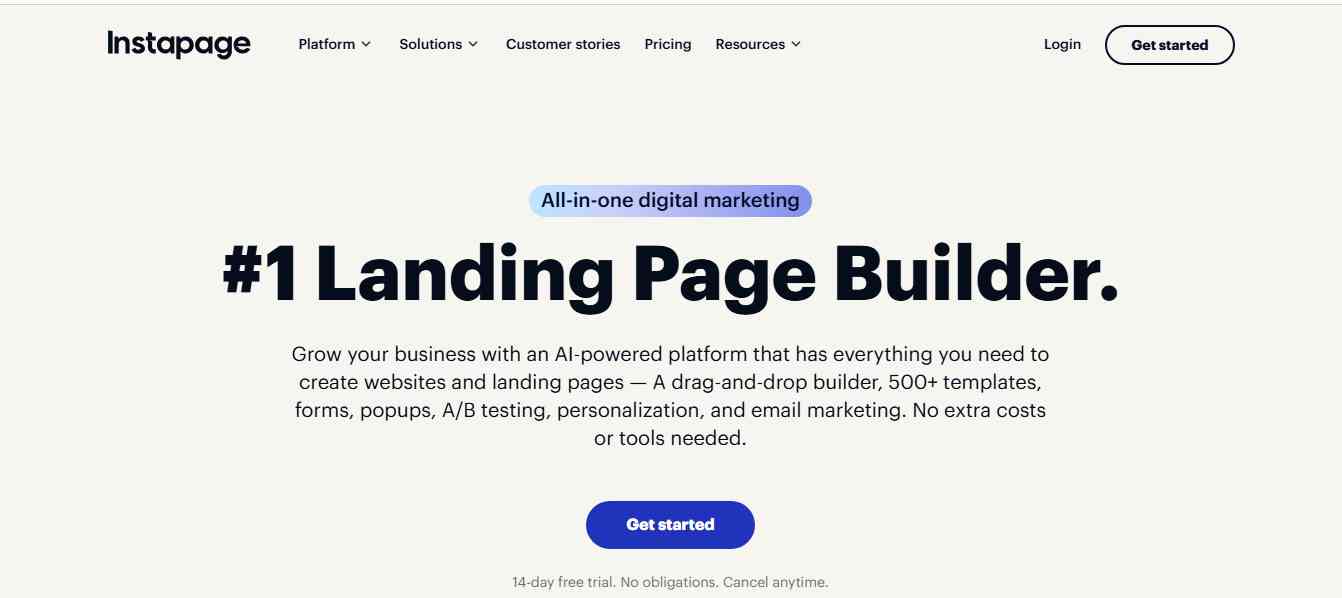
Instapage is a landing page platform designed for marketing teams that manage paid advertising campaigns and need more control over the visitor experience. It focuses on creating campaign-specific landing pages, testing variations, and improving the relationship between advertisements and landing page content. Its features are particularly relevant to businesses that run multiple advertising campaigns and need to maintain consistent messaging across different audience segments.
Key Features
- Landing page creation and editing.
- AI-assisted content and personalization capabilities.
- AdMap for visualizing advertising campaigns and landing pages.
- A/B testing and experimentation.
- Collaboration tools for marketing teams.
- Reusable page blocks.
- Analytics and conversion tracking.
- Integrations with advertising and marketing platforms.
Pros
- Designed for campaign-focused marketing teams.
- Useful for managing multiple landing page experiences.
- Supports experimentation and personalization workflows.
- Collaboration features can help larger teams.
Cons
- May be expensive for smaller businesses.
- Advanced capabilities can have plan-specific restrictions.
- Some features may be more than a small team needs.
Pricing: Paid plans are available. Check the official website for current pricing and access to experimentation features.
Best For: Enterprise marketing teams, agencies, and businesses managing multiple paid advertising campaigns.
Review
Instapage is worth considering when a business needs more than a simple landing page generator. Its campaign management, personalization, and experimentation capabilities make it relevant to teams working with larger advertising budgets. Smaller businesses should compare its cost against the features they will actually use.
4. Leadpages
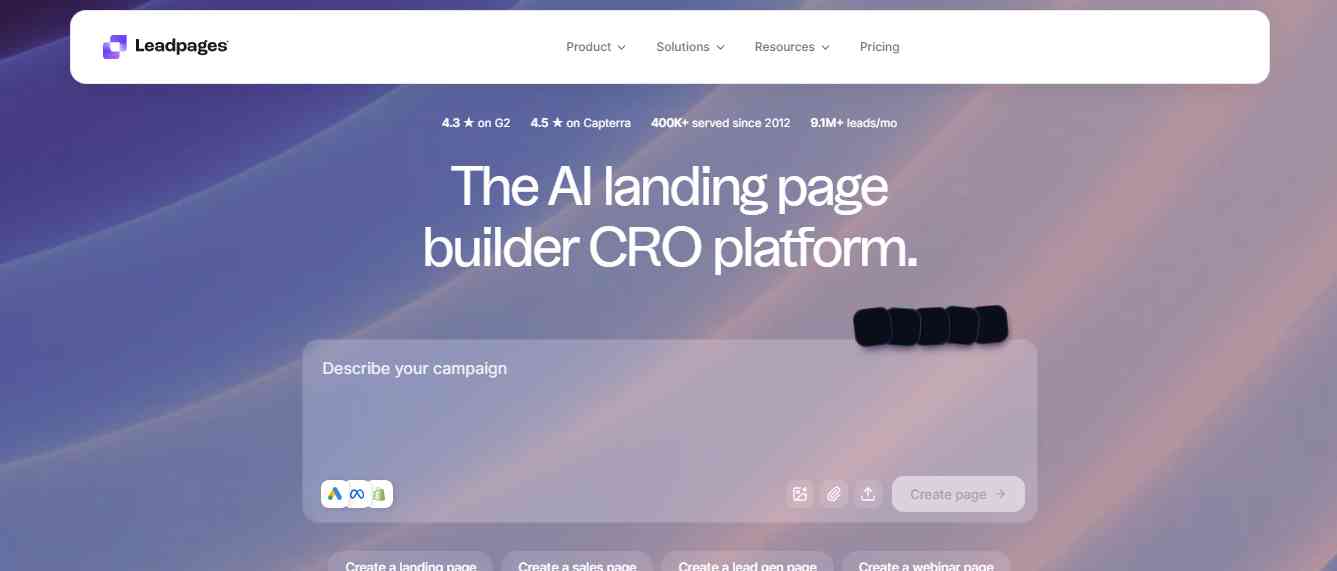
Leadpages helps businesses create landing pages, lead capture forms, and campaign experiences without needing advanced development skills. It is aimed at entrepreneurs, consultants, small businesses, and marketers who want to turn website visitors into subscribers or potential customers. Its AI-assisted tools can help users develop page content and layouts, while its templates provide a starting point for common marketing goals.
Key Features
- AI-assisted landing page creation.
- Landing page templates.
- Drag-and-drop page editor.
- Lead capture forms.
- Conversion-focused page elements.
- Popups and alert bars.
- Marketing integrations.
- Analytics and testing features, depending on plan.
Pros
- Accessible to beginners.
- Useful templates for lead generation.
- Helps small businesses launch campaign pages.
- Combines landing pages with lead capture tools.
Cons
- Advanced customization may be limited compared with design-first platforms.
- Some features depend on the selected subscription.
- Businesses with complex requirements may need additional tools.
Pricing: Paid subscriptions are available. Check the official pricing page for current plan details and AI feature availability.
Best For: Small businesses, consultants, coaches, and entrepreneurs.
Review
Leadpages is a useful option for small businesses that want to publish landing pages without managing a complicated design process. It focuses on practical lead generation rather than providing an extensive web development environment. For simple campaigns, product promotions, and newsletter signups, it is worth evaluating.
5. HubSpot
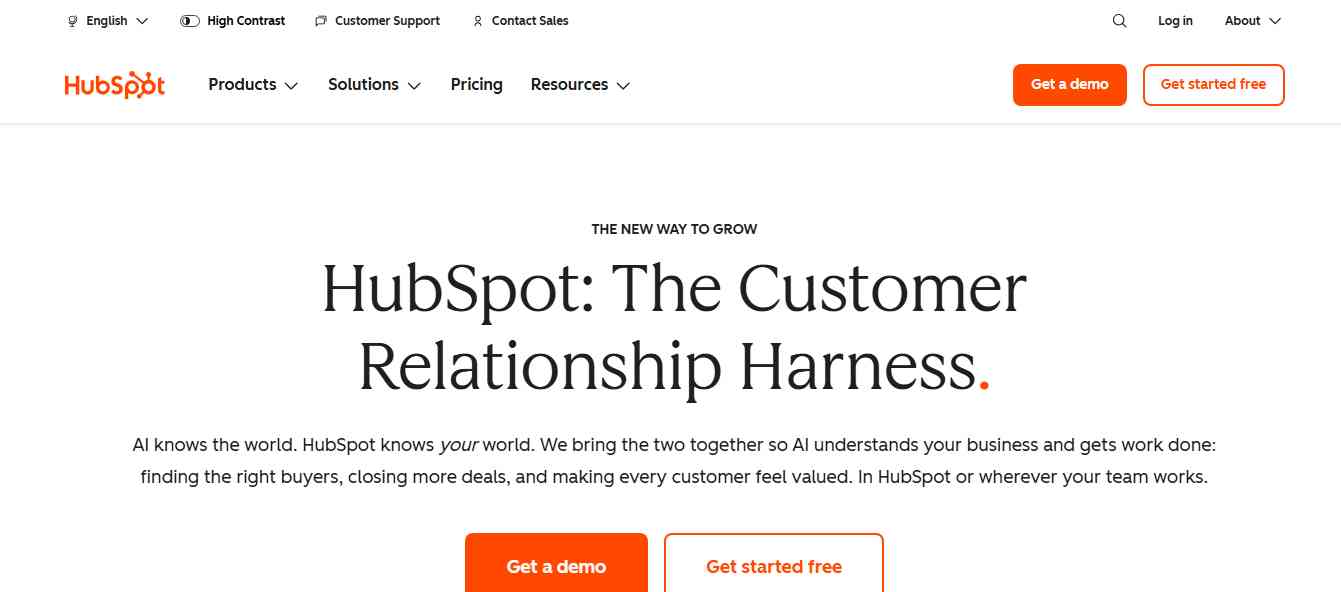
HubSpot offers landing page creation as part of its broader marketing platform. Its biggest advantage is the connection between landing pages, CRM data, forms, email marketing, and marketing automation. Businesses can create pages to capture leads and manage the information within a connected marketing and sales workflow. This can be especially useful for B2B companies with longer sales cycles.
Key Features
- AI-assisted landing page content creation.
- Landing page templates and editing tools.
- CRM-connected lead capture.
- Marketing automation workflows.
- Forms and contact management.
- Analytics and campaign reporting.
- Email marketing integration.
- Personalization capabilities across supported products and plans.
Pros
- Strong CRM and marketing ecosystem.
- Useful for B2B lead generation.
- Connects landing page activity with contact records.
- Supports broader marketing workflows.
Cons
- Advanced capabilities may require more expensive plans.
- The platform can feel complex for users who only need landing pages.
- Some features are tied to specific HubSpot products or subscription tiers.
Pricing: HubSpot offers different products and subscription tiers. Check the official pricing page to understand which landing page, automation, and CRM features are included.
Best For: B2B companies, SaaS businesses, and marketing teams that need CRM-connected lead generation.
Review
HubSpot is a strong option when landing pages are part of a larger customer acquisition process. Instead of treating each form submission as an isolated event, businesses can connect lead information with their CRM and follow up through marketing workflows. It is especially relevant for teams that already use HubSpot.
6. Wix
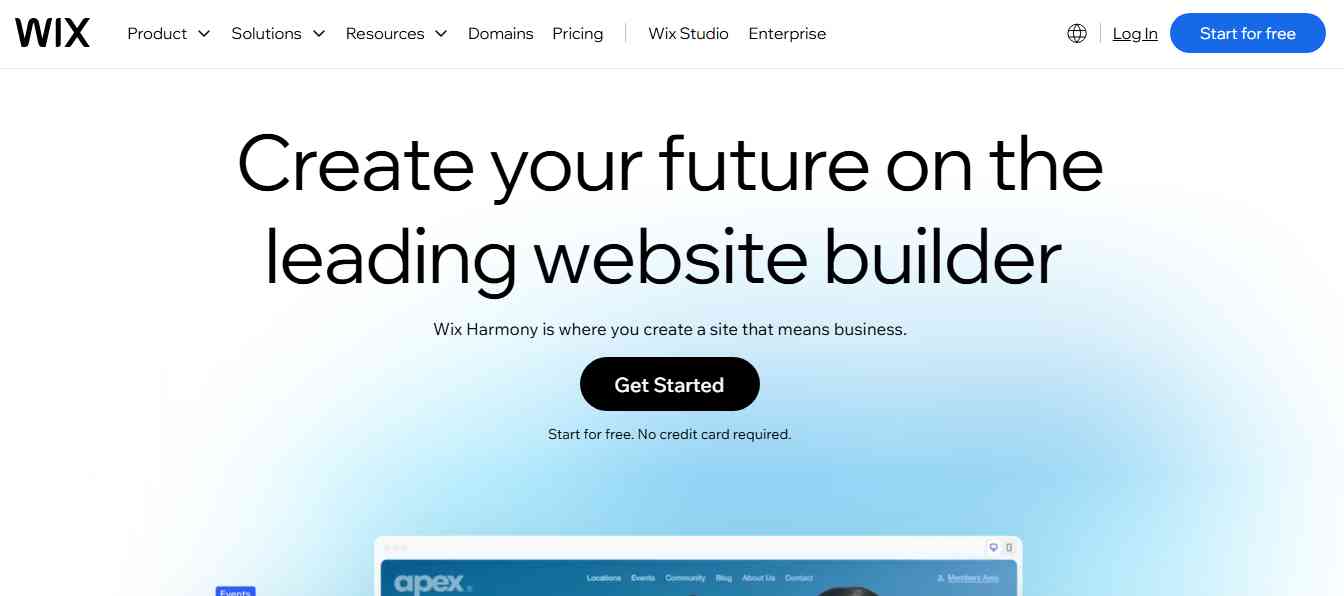
Wix is a website builder with AI-assisted website creation and design features. While it is not exclusively a landing page platform, businesses can use it to create campaign pages as part of a broader website. Its AI tools can help users generate website structures and content, while the visual editor provides options for customizing page layouts, forms, and other elements.
Key Features
- AI-assisted website and page creation.
- Visual drag-and-drop editor.
- Landing page templates.
- Customizable forms and lead capture.
- Built-in website hosting.
- SEO settings and website management tools.
- Business and marketing integrations.
- Mobile-responsive designs.
Pros
- Useful for businesses that need a complete website.
- Beginner-friendly visual editing.
- Combines website creation and landing page publishing.
- Offers a broad collection of website features.
Cons
- Not as specialized in conversion testing as dedicated landing page platforms.
- Advanced marketing workflows may require additional products or integrations.
- Customization and plan limits should be reviewed before choosing.
Pricing: Offers different website plans. Check the official website for current pricing and feature availability.
Best For: Small businesses, local service providers, freelancers, and entrepreneurs.
Review
Wix is a practical option for businesses that need a landing page and a complete website within the same platform. It may not be the best choice for advanced advertising experimentation, but it can simplify website management for businesses with straightforward marketing requirements.
7. Framer
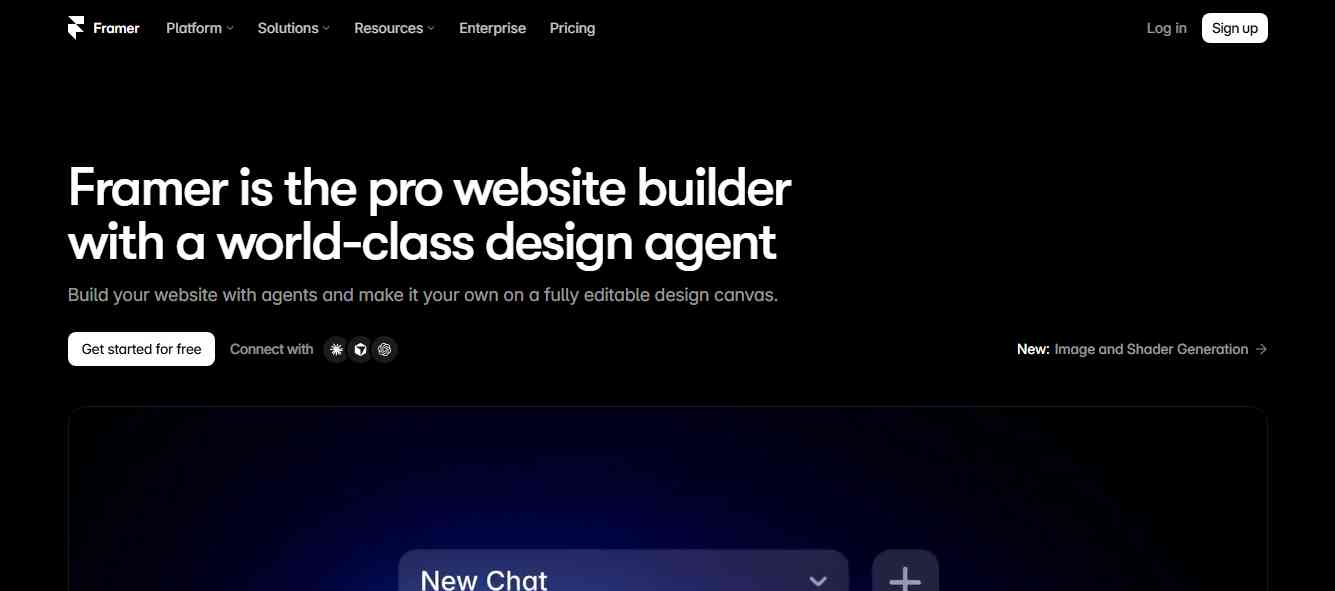
Framer is a website design and publishing platform that combines visual editing with AI-assisted website creation. It is particularly popular with designers, startups, and marketing teams that want modern layouts and greater control over the visual presentation of their pages. Users can start with AI-generated designs and then customize typography, layouts, animations, and responsive behavior.
Key Features
- AI-assisted website and page generation.
- Visual design editor.
- Responsive layouts.
- Custom animations and interactions.
- CMS capabilities.
- SEO settings.
- Custom domain publishing.
- Collaboration and publishing workflows.
Pros
- Strong design flexibility.
- Useful for modern SaaS and startup landing pages.
- AI can accelerate the initial design process.
- Supports responsive page layouts.
Cons
- Advanced design work may require experience.
- Conversion testing may require additional features or integrations.
- Not specifically built for complex paid advertising workflows.
Pricing: Offers free and paid plans. Check the official website for current plan limits and publishing features.
Best For: Startups, designers, SaaS companies, and design-focused marketing teams.
Review
Framer is a good choice when visual quality and design flexibility are important. It gives teams more control over the look and feel of a landing page than many template-focused builders. However, businesses focused on paid campaign optimization should also evaluate its analytics and experimentation requirements.
8. Webflow
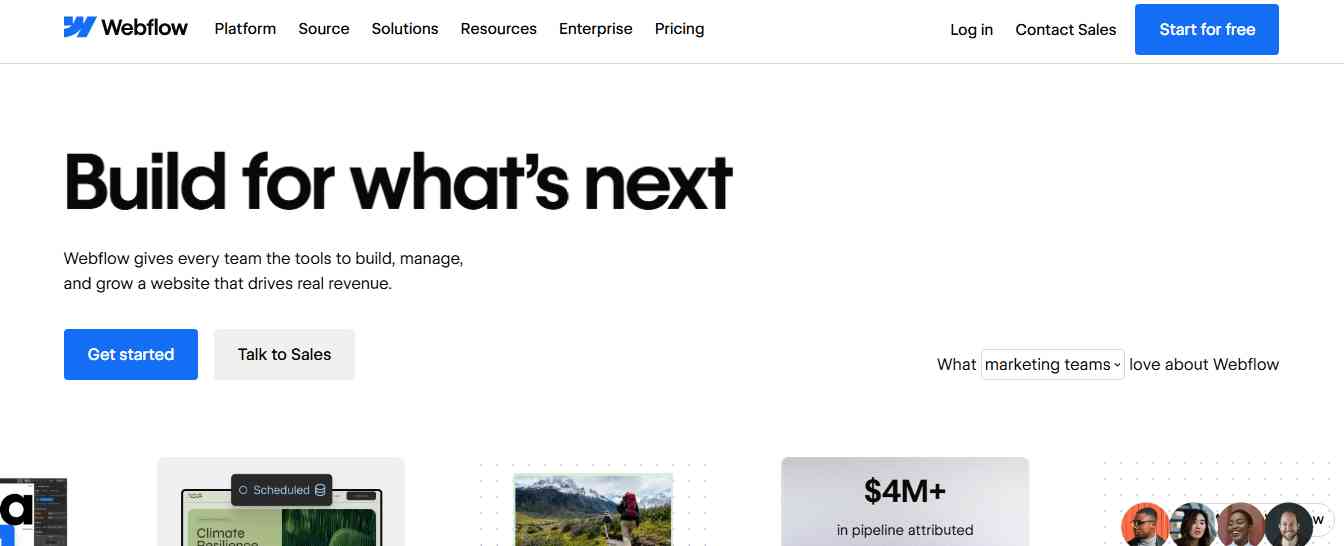
Webflow is a visual website development platform that gives teams control over page structure, layout, styling, and responsive behavior. Its AI capabilities can support website creation and content workflows, while its visual development environment allows designers to build customized landing pages. It is particularly useful for businesses that want landing pages to fit into a larger marketing website and design system.
Key Features
- AI-assisted website building and content workflows.
- Visual website development.
- Advanced layout and styling controls.
- Responsive page design.
- CMS and dynamic content.
- SEO settings.
- Hosting and publishing.
- Integrations with marketing and analytics platforms.
Pros
- High level of design control.
- Suitable for scalable marketing websites.
- Useful CMS and content management capabilities.
- Supports custom page structures and interactions.
Cons
- Has a learning curve for beginners.
- May be more complex than necessary for a single landing page.
- Advanced optimization features may require separate products or integrations.
Pricing: Offers different site and workspace plans. Check the official pricing page for current limits and features.
Best For: SaaS companies, established businesses, designers, and marketing teams building scalable websites.
Review
Webflow is a strong choice for businesses that want complete control over the structure and appearance of their landing pages. It is especially useful when campaign pages need to follow an established design system. However, teams should distinguish between website creation capabilities and dedicated conversion optimization features.
9. involve.me
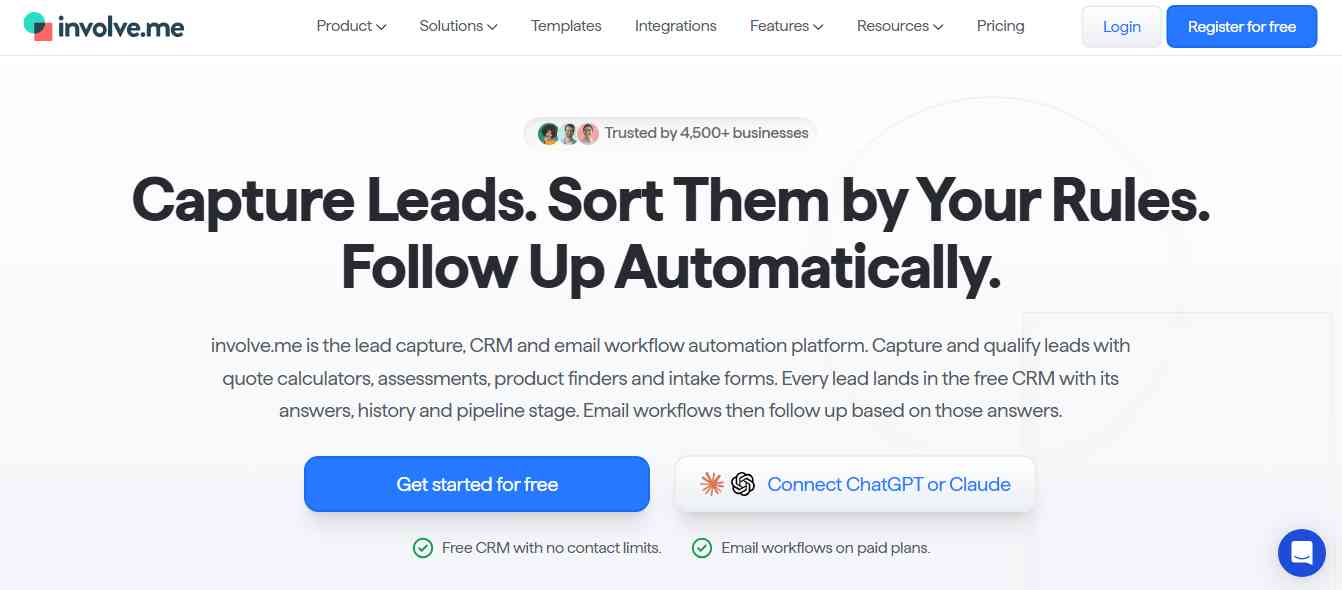
Involve.me is an interactive content and funnel-building platform. It helps businesses create experiences such as quizzes, calculators, surveys, forms, and multi-step funnels that can be used to capture and qualify leads.cIts AI-assisted features can help users create interactive experiences and marketing funnels more efficiently. This makes it different from traditional landing page builders that mainly focus on static page layouts.
Key Features
- AI-assisted funnel and content creation.
- Interactive landing pages.
- Quizzes and assessments.
- Calculators and surveys.
- Multi-step forms.
- Lead qualification workflows.
- Integrations with marketing platforms.
- Analytics and performance tracking.
Pros
- Useful for interactive lead generation.
- Supports quizzes, calculators, and multi-step forms.
- Can help qualify leads before sales follow-up.
- Offers more than traditional static landing pages.
Cons
- May be unnecessary for simple landing pages.
- Advanced workflows can require setup.
- Some capabilities may depend on subscription limits.
Pricing: Offers paid plans and plan-dependent features. Check the official website for current pricing and submission limits.
Best For: B2B businesses, agencies, consultants, and companies that use interactive lead-generation funnels.
Review
involve.me is worth considering when a business wants visitors to do more than read a page and submit a basic form. Interactive quizzes, calculators, and assessments can help collect useful information while qualifying prospects. It is particularly relevant to businesses with complex products or lead qualification requirements.
10. Sitekick
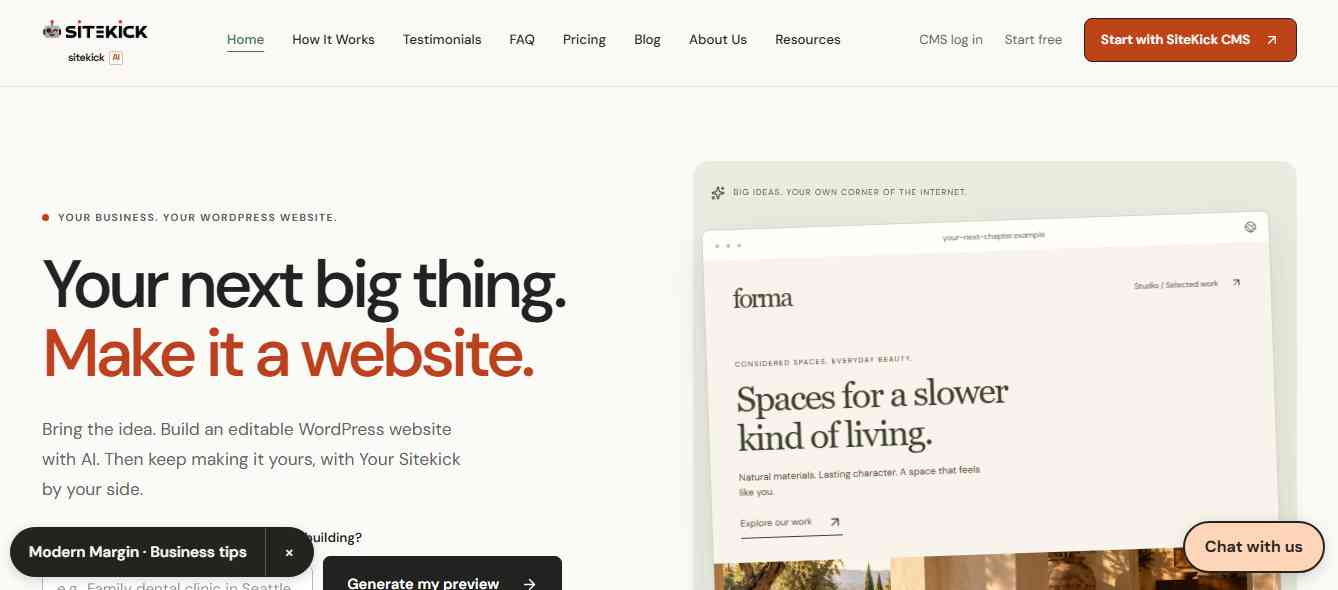
Sitekick is an AI-powered landing page creation tool designed to help users generate page designs and marketing content from a description of their business or offer. Instead of building every section manually, users can provide information about their product, audience, and goals. The platform then helps generate a landing page that can be customized before publishing.
Key Features
- Prompt-based landing page generation.
- AI-generated page copy.
- AI-assisted visual design.
- Landing page layouts and sections.
- Customization options.
- Responsive page design.
- Tools for creating marketing-focused pages.
Pros
- Helps accelerate the initial page creation process.
- Useful for users without design experience.
- Combines page layout and copy generation.
- Suitable for quickly developing initial concepts.
Cons
- Generated pages may require manual refinement.
- Advanced experimentation capabilities should be checked.
- Businesses with complex integrations may need additional tools.
Pricing: Check the official website for current plans, usage limits, and publishing options.
Best For: Entrepreneurs, freelancers, small businesses, and marketers who want to generate landing page drafts quickly.
Review
Sitekick is a useful option for users who want to move from a written idea to an initial landing page without starting from scratch. Its prompt-based approach can save time during the first design stage. Before choosing it for a major campaign, evaluate its publishing options, integrations, tracking, and ability to support ongoing optimization.
Best AI Landing Page Builders Compared
The following table summarizes the main use cases of the platforms covered in this guide.
| AI Landing Page Builder | Best For | Main Strength |
|---|---|---|
| Unbounce | Conversion optimization | Testing and traffic optimization |
| Landingi | Agencies | Multiple landing pages and campaign workflows |
| Instapage | Enterprise teams | Advertising personalization |
| Leadpages | Small businesses | Lead generation |
| HubSpot | B2B marketing | CRM and marketing automation |
| Wix | Small businesses | AI-assisted website creation |
| Framer | Designers and startups | Visual design flexibility |
| Webflow | Growing businesses | Custom design and CMS |
| involve.me | Interactive funnels | Quizzes, calculators, and forms |
| Sitekick | Prompt-based generation | AI-generated landing page drafts |
Which AI Landing Page Builder Should You Choose?
The best platform depends on your business model, campaign goals, and technical requirements.
| Your Requirement | Recommended Tool |
|---|---|
| Improve paid advertising conversions | Unbounce |
| Manage multiple campaign pages | Landingi |
| Personalize enterprise advertising campaigns | Instapage |
| Generate leads for a small business | Leadpages |
| Connect landing pages with a CRM | HubSpot |
| Build a business website and landing pages | Wix |
| Create visually attractive startup pages | Framer |
| Build custom and scalable marketing pages | Webflow |
| Create quizzes and interactive lead funnels | involve.me |
| Generate a page from a prompt | Sitekick |
How to Choose the Best AI Landing Page Builder in 2027
Choosing a platform based only on its AI generation feature can lead to the wrong decision. A landing page needs to support your entire marketing workflow, from the first visitor interaction to lead capture and performance analysis.
Consider these factors before purchasing.
1. AI Page Generation Quality
Look at how well the platform understands your prompt and generates relevant page sections. A useful AI landing page builder should create a logical structure, relevant headlines, clear calls to action, and content that matches your target audience. Do not assume that a page generated in seconds is ready to publish. Review the copy, claims, visuals, and design before launching it.
2. Customization and Design Flexibility
Your landing page should reflect your brand. Check whether the platform allows you to customize fonts, colors, images, spacing, layouts, and calls to action. Design flexibility is particularly important for SaaS businesses, agencies, and companies with established brand guidelines.
3. A/B Testing and Conversion Optimization
A/B testing allows you to compare different versions of a landing page. You can test headlines, images, forms, button text, and page layouts to understand which variation performs better. If you run paid campaigns, look for built-in experimentation and visitor-routing features. Confirm which plan includes these capabilities.
4. Mobile Responsiveness
A landing page should work properly on smartphones, tablets, and desktops. Check how the builder handles responsive layouts and whether you can customize the mobile version separately. Review the published page on actual devices rather than relying only on the editor preview.
5. Lead Capture and CRM Integrations
A landing page is only useful if the information it collects reaches the right place. Check whether the platform integrates with your CRM, email marketing software, automation platform, and sales tools. For B2B businesses, lead routing and contact management can be just as important as page design.
6. SEO and Page Performance
If you expect organic search traffic, review the platform's SEO controls. Look for editable page titles, meta descriptions, headings, canonical settings, image optimization, and custom URLs. Also check page speed, mobile usability, indexability, and technical SEO. An AI-generated landing page is not automatically optimized for search engines.
7. Analytics and Conversion Tracking
Your platform should help you understand what visitors do after reaching the page. Check whether it supports analytics integrations, conversion events, advertising pixels, and campaign tracking. Without reliable tracking, it becomes difficult to identify which campaigns and page variations generate qualified leads.
8. Pricing and Usage Limits
Compare more than the starting subscription price. Review the number of published pages, monthly visitors, domains, team members, forms, AI credits, and experimentation features included in each plan. A low-cost plan may become expensive if your campaigns grow or require additional integrations.
Benefits of Using AI Landing Page Builders
AI landing page builders can make the process of creating and managing campaign pages more efficient.
- Faster Landing Page Creation: AI can generate an initial page structure, headlines, and supporting copy from a short brief. This can reduce the time required to develop a first draft.
- Reduced Dependence on Developers: Many platforms offer visual editors and pre-built components, allowing marketers to publish and update pages without writing code for every change.
- Easier Content Experimentation: AI can help generate alternative headlines, descriptions, and calls to action. Marketers can then test those variations to learn which messaging works better.
- More Consistent Campaign Workflows: Templates and reusable page sections can help agencies and larger teams maintain consistent designs across multiple campaigns.
- Better Lead Generation Workflows: Some platforms connect landing pages with forms, CRMs, email tools, and marketing automation. This helps businesses manage leads after a visitor submits their information.
How to Create a Landing Page With AI
You can use an AI landing page builder to create a first draft through a simple workflow.
Step 1: Define Your Campaign Goal
Decide what you want visitors to do. Your goal could be booking a demo, requesting a quote, subscribing to a newsletter, downloading a resource, or purchasing a product.
Step 2: Describe Your Audience and Offer
Provide information about your target audience, product, key benefits, and the problem your offer solves.
Step 3: Generate the Initial Page
Enter your brief into the AI builder. Review the generated layout, headline, content sections, forms, and calls to action.
Step 4: Customize the Design
Add your brand colors, logo, images, typography, and supporting content. Make sure the design is consistent with your other marketing materials.
Step 5: Connect Forms and Marketing Tools
Set up form submissions, CRM integrations, email notifications, analytics, and conversion tracking.
Step 6: Test the Page
Check the desktop and mobile versions. Test links, forms, buttons, page speed, and tracking events before publishing.
Step 7: Measure and Improve
Monitor conversion rates and lead quality. If the platform supports A/B testing, compare different versions and use the results to improve the page.
Common Mistakes to Avoid When Using AI Landing Page Builders
AI can speed up page creation, but it does not replace marketing strategy. Avoid these common mistakes:
- Publishing AI-generated copy without editing: Generated content may be generic, repetitive, or inaccurate. Review every section before publishing.
- Using too many calls to action: Give visitors one clear primary action instead of competing requests.
- Ignoring mobile layouts: A page that looks good on a desktop may be difficult to use on a smartphone.
- Skipping conversion tracking: Without tracking, you cannot reliably measure campaign performance.
- Choosing a platform only because it generates pages quickly: Consider integrations, testing, publishing, and ongoing maintenance.
- Ignoring page speed: Heavy images, scripts, and unnecessary elements can affect the visitor experience.
- Not testing forms: Confirm that submissions reach your CRM, inbox, or marketing platform.
- Treating AI-generated pages as automatically SEO-friendly: Review headings, metadata, content quality, indexability, and performance.
Conclusion
AI landing page builders are becoming useful tools for businesses that want to launch marketing campaigns without building every page manually. However, the best platform is not necessarily the one that generates a page fastest. It should also support your publishing, lead capture, analytics, and optimization requirements. For paid advertising and conversion optimization, consider Unbounce. For agencies managing multiple campaigns, Landingi is a strong option. Instapage is worth evaluating for enterprise advertising workflows, while HubSpot is relevant for businesses that need CRM-connected lead management.
If visual design is your priority, Framer and Webflow offer more control. Small businesses can consider Leadpages or Wix while involve.me is useful for interactive lead-generation funnels. Before choosing a platform in 2027, compare its current pricing, AI features, integrations, usage limits, and testing capabilities. Start with your campaign objective, then select the builder that supports the complete marketing workflow—not just the initial page design.
People are also reading:
- Best AI Fitness Tools
- AI Facts for Kids
- AI Sales Tools
- Best AI Marketing Tools
- Best AI Database Tools
- Best AI Shopify Store Builder
- Best AI Visibility Tools
- Best AI Browsers
- AI Video Editing Tools
Frequently Asked Questions (FAQs)
1. What is the best AI landing page builder in 2027?
Unbounce is a strong option for marketers focused on conversion optimization and paid advertising. Landingi is useful for agencies managing multiple campaigns, while HubSpot is a good fit for businesses that need CRM-connected lead generation. The best choice depends on your requirements.
2. Which AI landing page builder is best for beginners?
Leadpages, Wix, and Sitekick are worth considering for beginners. They offer approaches that can simplify page creation, although the best choice depends on whether you need a traditional landing page, a complete website, or prompt-based generation.
3. Are AI landing page builders free?
Some platforms offer free plans, free trials, or limited access. Others require a paid subscription. Free access may restrict custom domains, publishing, AI credits, traffic, or integrations. Check the current plan details before choosing.
4. Can AI create a landing page from a text prompt?
Yes. Prompt-based tools can generate landing page layouts and copy from a description of your product, audience, and campaign objective. The generated page usually needs editing, fact-checking, and testing before publication.
5. What is the best AI landing page builder for small businesses?
Leadpages and Wix are useful options for small businesses. Leadpages focuses on lead generation, while Wix is more suitable for businesses that also need a complete website.
6. Which AI landing page builder is best for agencies?
Landingi is worth considering for agencies that manage multiple pages and campaigns. Unbounce and Instapage are also relevant when clients need campaign experimentation and conversion optimization.
7. Which landing page builder is best for SaaS companies?
Framer and Webflow are useful for SaaS companies that prioritize design and website flexibility. Unbounce and Instapage may be better suited to SaaS teams running paid acquisition campaigns and testing different landing page experiences.
8. Can AI landing page builders improve conversion rates?
AI can help marketers generate page variations and improve their workflow, but it does not guarantee higher conversion rates. Results depend on the offer, audience, messaging, design, traffic quality, and testing process.
9. What is the difference between an AI landing page generator and a landing page builder?
An AI landing page generator focuses on creating a page draft from a prompt or business description. A landing page builder provides tools to edit, customize, publish, and manage the page. Many modern platforms combine both capabilities.
10. Do AI landing page builders support A/B testing?
Some platforms offer built-in A/B testing or experimentation features, while others rely on third-party integrations. Check the specific plan because testing access may not be included in every subscription.
11. Are AI-generated landing pages SEO-friendly?
AI-generated pages can be optimized for search engines, but the output is not automatically SEO-ready. You should review page titles, meta descriptions, headings, content quality, internal links, mobile usability, page speed, and indexability.
12. Can I connect an AI landing page builder to a CRM?
Many landing page platforms support CRM integrations directly or through automation tools. HubSpot is particularly relevant for businesses that want landing pages connected to CRM records and marketing workflows. Always verify the integrations available on your selected plan.
13. Which AI landing page builder is best for lead generation?
Unbounce, Leadpages, Landingi, and HubSpot are useful options for lead generation. involve.me is worth considering if you want interactive experiences such as quizzes, calculators, and multi-step forms.
14. What features should I look for in an AI landing page builder?
Prioritize AI page generation, design customization, mobile responsiveness, lead capture forms, CRM integrations, analytics, SEO controls, and publishing options. If you run paid campaigns, also consider A/B testing and conversion optimization.
15. Are AI landing page builders suitable for enterprise businesses?
Yes. Platforms such as Instapage, HubSpot, Webflow, and Unbounce can support different enterprise requirements. Evaluate collaboration, integrations, security, access controls, scalability, and plan-specific features before making a decision.