
TinEye
TinEye (tineye.com) is a pioneer reverse image search and computer vision platform that allows users and enterprises to track image usage, verify photo authenticity, identify copyright, and detect visual modifications across an index of tens of billions of web images.
What is TinEye?
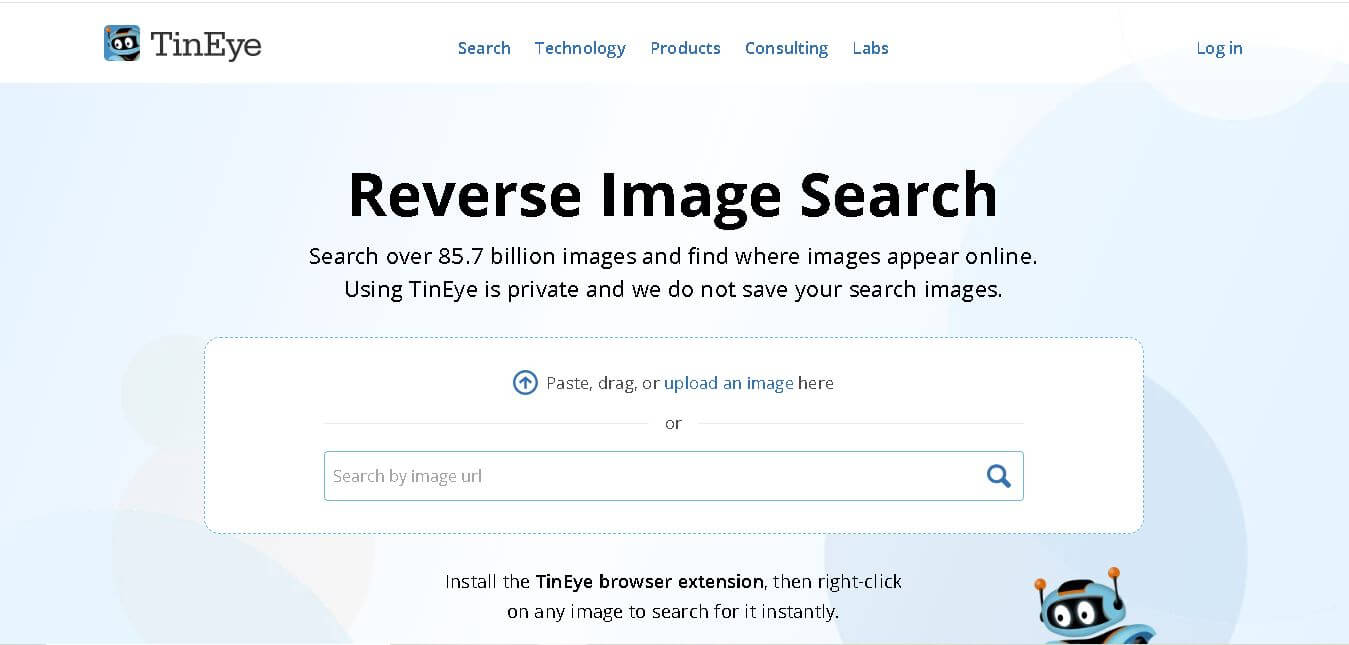
TinEye is an industry-leading reverse image search engine and computer vision service developed by Idée Inc. Designed to make images instantly searchable, TinEye analyzes visual characteristics—such as colors, patterns, and object signatures—rather than relying on metadata or surrounding text keywords. With a crawling index covering over 85 billion images across the web, TinEye enables individuals and businesses to trace image origin, discover edited versions, and identify copyright compliance.
Built around the mission to “Make your images searchable through cutting-edge computer vision and image recognition,” TinEye provides private, secure image verification where uploaded search images are never saved or indexed into public databases.
- Platform Role: Reverse Image Search Engine, Computer Vision API & Visual Copyright Tracking Hub
- Developer & Organization: Idée Inc. (Toronto, Canada)
- Cross-Platform Access: Web Browser, Browser Extensions (Chrome, Firefox, Edge, Opera), and Enterprise REST APIs
Use Cases:
- Finding where high-resolution or original versions of an image exist on the web
- Tracking down unauthorized image usage, online copyright infringement, and stolen artwork or photography
- Verifying the authenticity of photos, profile pictures, stock imagery, and news media to combat digital misinformation
- Identifying modified, cropped, or color-altered versions of a target graphic
- Integrating enterprise APIs (MatchEngine, CardSearchEngine, WineEngine) into custom applications for real-world visual identification
Technology:
- Proprietary image footprinting and visual pattern recognition algorithms designed for high-scale reverse indexing
- Specialized computer vision APIs including MatchEngine (duplicate/modification detection), MulticolorEngine (color palette search), and MobileEngine
- Privacy-first search architecture that guarantees uploaded user images are discarded immediately after processing
- High-performance web crawling infrastructure continually discovering and indexing new web images
Target Users:
- Photographers, graphic designers, and digital artists protecting intellectual property
- Journalists, fact-checkers, and researchers verifying photo origins and fake images
- E-commerce platforms, brand managers, and legal teams tracking corporate visual assets
- Developers and enterprises implementing visual search, card recognition, or label scanning features
Acquisition: Native search engine and computer vision suite operated by Idée Inc., Toronto, Canada (tineye.com)
What are the key features of TinEye?
TinEye's key platform features are
- Reverse Image Search Engine: Search billions of indexed web images by uploading a file or pasting a direct URL.
- Advanced Sorting & Filtering: Filter search results by oldest (first discovered), newest, most changed, largest image resolution, or domain.
- Image Comparison Overlay: Compare the original uploaded image directly against web matches to spot subtle edits, crops, or alterations.
- TinEye API Suite: Enterprise REST API designed for high-volume automated image verification, profile check, and fraud detection.
- TinEye Alerts: Automated tracking service that monitors the web continuously and alerts rights holders when their images appear on new sites.
- MulticolorEngine: Extracts exact color palettes from images and enables precise visual color-matching across product inventories.
- Browser Extensions: Right-click any image on Chrome, Firefox, Edge, or Opera to perform instant reverse searches.
How much does TinEye cost?
TinEye provides free reverse image searching for non-commercial web users, while high-volume automated searches, monitoring, and developer APIs require paid subscriptions.
Free Web Search Tier:
- Free Plan ($0): Unlimited basic web searches via browser or browser extensions for non-commercial and manual investigation use.
Enterprise & Developer Plans:
- TinEye API (From ~$20 - $300+/month): Pre-paid or monthly search credit bundles (e.g., 5,000 to 100,000+ API searches) tailored for developer integration.
- TinEye Alerts & MatchEngine: Custom enterprise pricing based on the size of the image collection monitored and API call volume.
Disclaimer: Manual web searches are free. Commercial API integrations, bulk automated searching, and automated tracking alerts require paid API credits or enterprise contracts.
Who should use TinEye?
TinEye is designed for creators, investigators, and developers, including
- Photographers & Content Creators: Visual artists tracking down unlicensed copies of their work across the internet.
- Fact-Checkers & OSINT Investigators: Researchers uncovering the original source date and context of news photographs or social media uploads.
- Brand Managers & Legal Teams: Enterprises auditing corporate logo usage and intellectual property compliance online.
- App Developers: Teams building visual search, card identification, or color palette extraction into mobile and web software.
What are the best alternatives to TinEye?
Some of the strongest TinEye alternatives include
- Google Lens / Google Images
- Yandex Visual Search
- Bing Visual Search
- Pixsy (Image Copyright Tracking)
- Copytrack
- Lenso.ai
What are the pros and cons of TinEye?
What are the pros of TinEye?
- Strict privacy commitment—uploaded search images are never saved, stored, or indexed
- Exceptional sorting options (e.g., finding the oldest online occurrence of an image)
- Interactive side-by-side comparison tool to spot exact image manipulations
- Extensive developer API suite for specialized computer vision (MatchEngine, MulticolorEngine)
What are the cons of TinEye?
- Does not recognize individual objects or semantic entities inside an image as aggressively as Google Lens
- Index size (85B+ images), while massive, can miss social media images behind private logins
- Automated image tracking features require a paid subscription
Why should you choose TinEye?
Finding where an image originated or identifying whether a photo has been altered can be frustrating with standard search engines that prioritize keyword text over visual data. TinEye solves this problem by using pure computer vision to search purely by image fingerprint. Combined with strict privacy guarantees, robust sorting tools, and dedicated enterprise APIs, TinEye is the gold standard tool for copyright protection and visual verification.
- Discover the original publication date and earliest source of any image
- Compare modified images directly against web matches to spot edits
- Search privately without worrying about your uploads being saved
- Automate copyright protection with developer API integrations
How does TinEye compare to competitors?
The primary distinction between TinEye, Google Lens, and Yandex lies in core focus and privacy. While Google Lens excels at object recognition (e.g., identifying a shoe model or plant species) and Yandex offers aggressive facial matching, TinEye specializes in exact visual match tracking, chronological origin discovery, modification detection, and privacy-first enterprise search.
| Feature / Platform | TinEye | Google Lens | Yandex Visual Search | Pixsy |
|---|---|---|---|---|
| Core Focus | Exact Match Tracking, Image Verification & Computer Vision APIs | Semantic Object Recognition & Shoppable Search | Facial & Similar Pattern Recognition | Legal Copyright Enforcement & Image Recovery |
| Privacy Guarantee | High (Images discarded immediately) | Standard (May log search history) | Standard | High (Portfolio tracking) |
| Chronological Sorting | Yes (Filter by oldest/first seen online) | No (Sorts by relevance/ranking) | No | Yes (Tracked by discovery date) |
| Developer API Support | Comprehensive (MatchEngine, Color, Labels) | Limited / Custom Cloud Vision API | Custom API | Legal service focus |
| Best For | Photographers, OSINT researchers, and developers tracking exact image matches | Everyday consumers identifying products, landmarks, and items | Finding visually similar photos and face matches | Photographers seeking automated legal resolution for stolen images |
How do we rate TinEye?
| Parameter | Rating (out of 5) |
|---|---|
| Reverse Search Precision & Exact Matching | 4.8 |
| Privacy & Data Security | 5.0 |
| Sorting & Image Comparison Tools | 4.9 |
| Developer API & Integration Suite | 4.7 |
| Value for Money | 4.6 |
| Overall Score | 4.80 |
What is our review and verdict on TinEye?
TinEye remains an indispensable tool for image verification and copyright management. Its strength lies in pinpoint accuracy, allowing users to discover the original source of an image and verify edits without compromising data privacy. For journalists, photographers, and enterprise developers alike, TinEye delivers exceptional clarity in visual search.
What is the final conclusion on TinEye?
TinEye proves that image search can be precise, private, and powerful. With its massive web index, robust sorting features, and flexible enterprise computer vision APIs, TinEye continues to be a trusted leader in digital image tracking and verification worldwide.
User Reviews
No reviews yet for TinEye.
Featured Tools
Featured AI tools from TechShark

Melody Genie
MelodyGenie is an AI-powered music generator that creates original songs from simple text prompts. Users can choose styles, moods, and genres, then instantly generate melodies and full tracks, making it easy for creators, marketers, and hobbyists to produce custom music without musical expertise.
Freemium
Kimi AI
Kimi AI is an advanced AI assistant developed by Moonshot AI that helps you chat, research, write, code, and automate tasks in one place. It supports web search, file analysis, and multimodal inputs, and can even run autonomous “agent” workflows to complete complex tasks end-to-end.
Freemium

Fashion Diffusion AI
Fashion Diffusion is an AI-powered fashion design platform that helps brands and designers create clothing designs, virtual try-ons, AI models, product photos, and marketing visuals faster and cost-effectively.
Paid
Veo 4
Veo 4 AI is an AI video creation platform that generates dramatic videos from text, images, audio, and video prompts using realistic motion and synchronized sound.
Paid
Alternatives
Alternatives to TinEye
The best TinEye alternatives include Google Lens, Yandex Visual Search, Bing Visual Search, and Pixsy. While TinEye provides specialized reverse image search focused on exact visual match tracking, privacy, and chronological origin discovery, alternatives like Google Lens focus heavily on semantic object recognition and shoppable search.
 4.9
4.9QuillBot
Writing
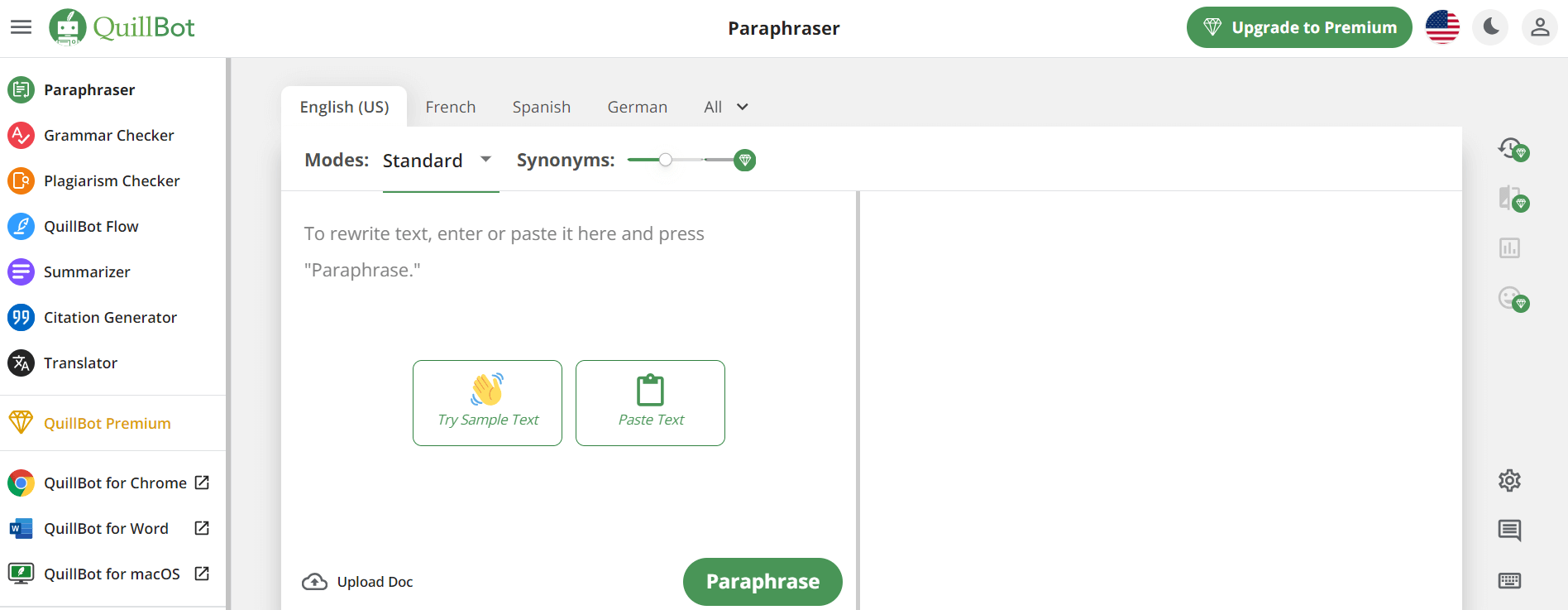
QuillBot is an AI-powered writing assistant that helps users paraphrase, check grammar, summarize content, and generate ideas in one platform. It combines tools like paraphraser, AI chat, plagiarism checker, and translator to improve writing clarity, accuracy, and productivity across academic, professional, and everyday tasks.
 4.9
4.9Google Cloud Vision API
AI-Detection
Google Cloud Vision API is a developer-focused computer vision service that offers pre-trained machine learning models for optical character recognition (OCR), image labeling, face detection, explicit content moderation (SafeSearch), and custom AutoML Vision training.
 4.7
4.7GPTKit
AI-Detection
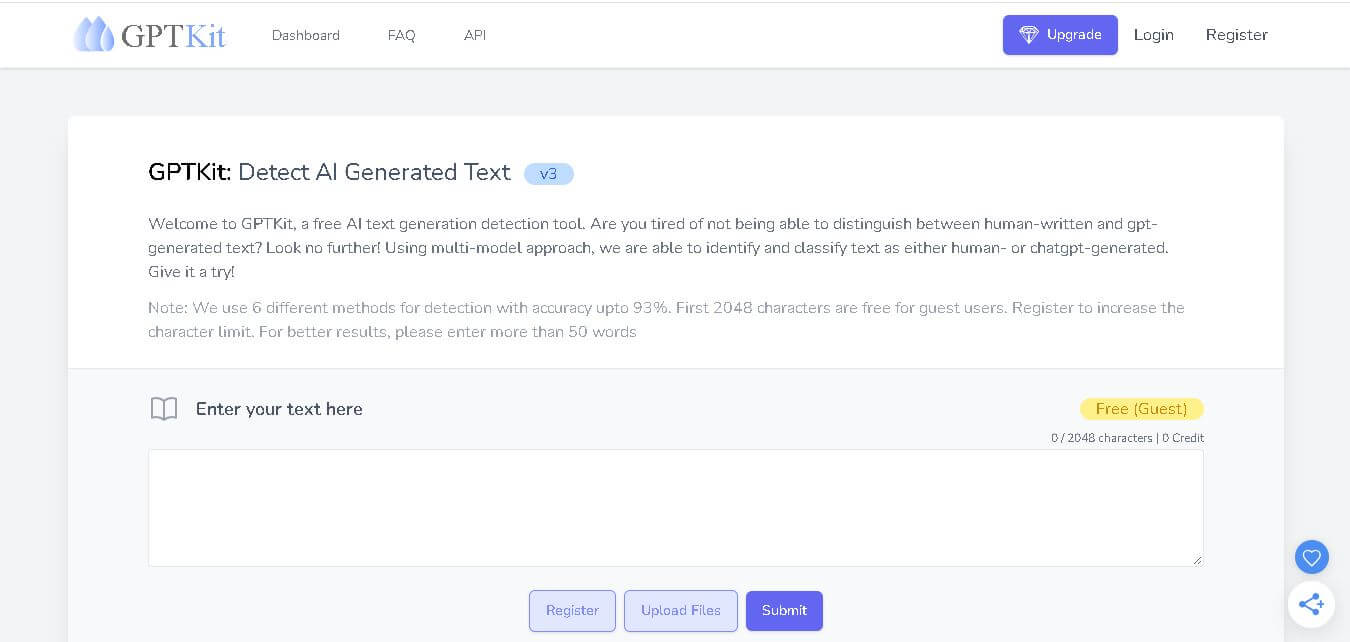
GPTKit is an AI text detection tool that analyzes writing to identify whether it may have been generated by ChatGPT or another AI system. It uses six detection methods, supports file uploads, offers free access for the first 2,048 characters per request, and currently supports English content.
 4.3
4.3GPTinf
AI-Detection
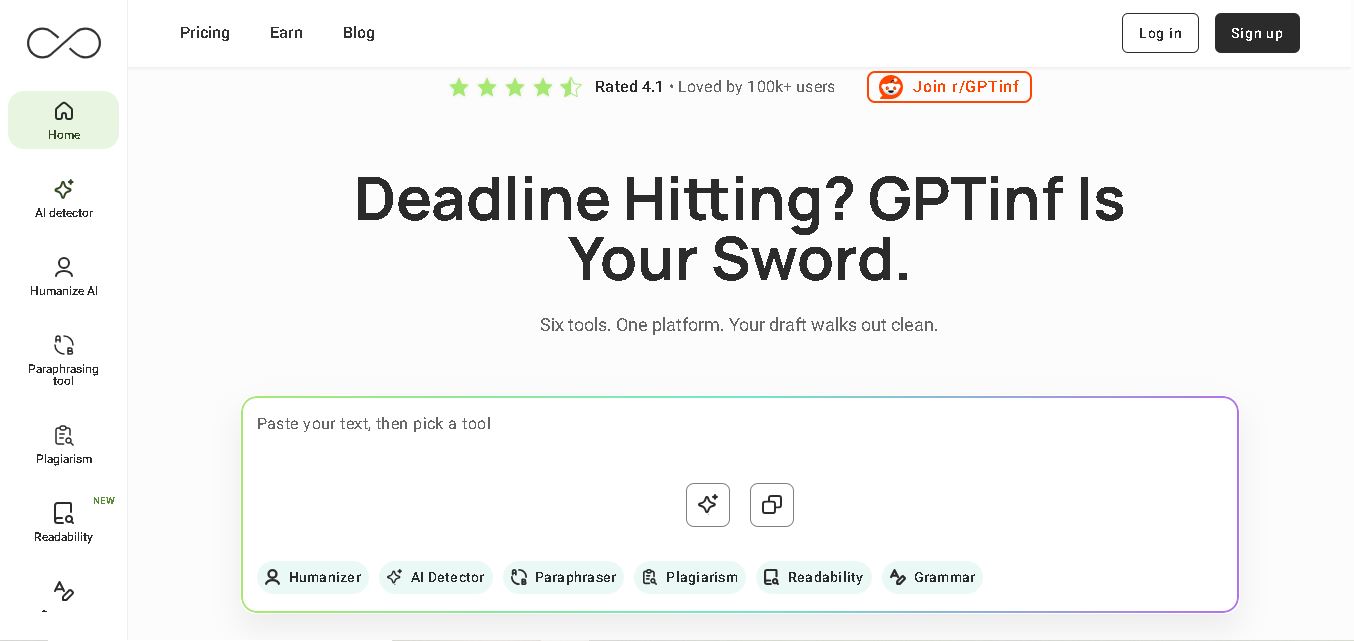
GPTinf is an all-in-one writing toolkit for checking, rewriting, paraphrasing, and improving content. You can detect AI patterns, check plagiarism, fix grammar, analyze readability, and humanize drafts using multiple writing modes. It supports students, bloggers, marketers, freelancers, educators, and professionals who want more polished, natural-sounding content.
RoFT
AI-Detection
RoFT (Real or Fake Text) is an interactive, gamified research project and web application that challenges users to test their ability to distinguish between human-written text and machine-generated content. Featuring diverse content categories like short stories, news articles, recipes, and speeches, the platform focuses on 'Boundary Detection' to help users identify the exact moment an artificial intelligence takes over writing.
 4.6
4.6Undetectable AI
AI-Detection
Undetectable AI helps users detect AI-generated text, humanize writing, and improve content quality. Its toolkit includes AI detection, paraphrasing, plagiarism checking, SEO writing, image detection, and browser tools. It serves students, writers, marketers, professionals, researchers, and businesses looking to review and refine AI-assisted content efficiently. Its focus is readable content improvement.
EasySpecs
AI-Detection
EasySpecs is a spec review and living documentation platform that automatically documents legacy or active codebases and converts them into verified specifications paired with executable Oracles and evaluation Rubrics before AI coding agents generate code.
 4.6
4.6FaceFinder
AI-Detection
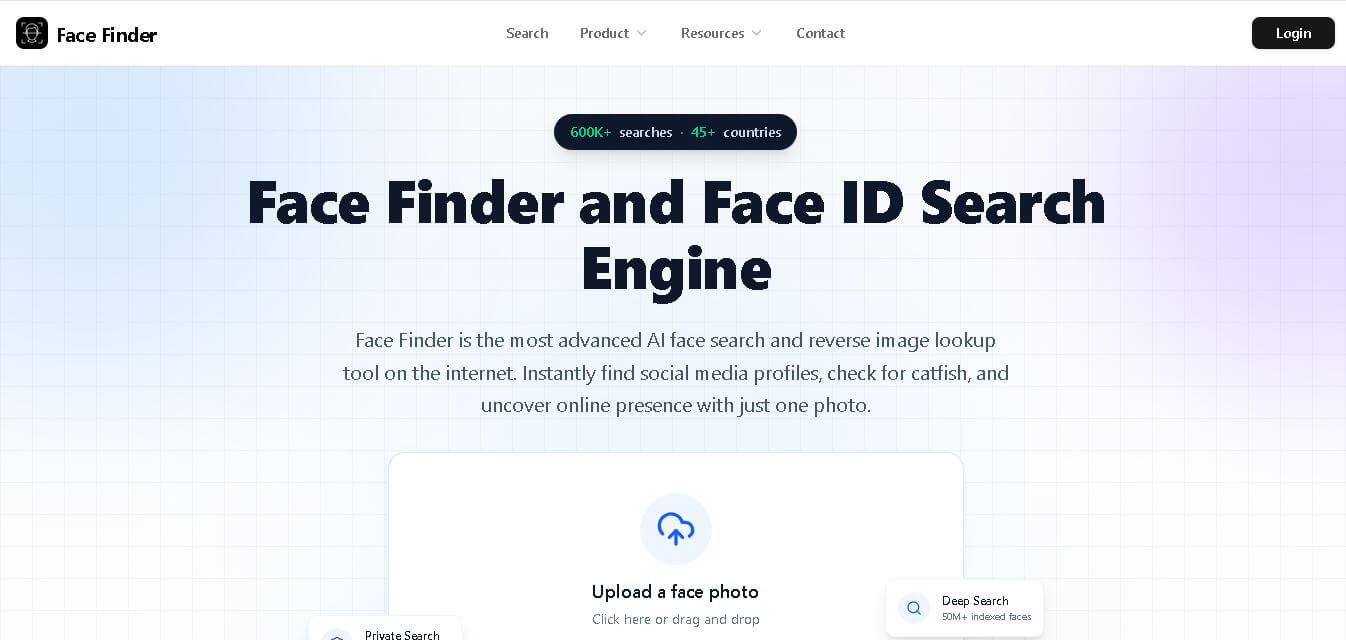
Face Finder helps you search for a person online using a face photo. It can identify potential matches across social networks, websites, dating platforms, news pages, and other publicly indexed sources. With support for JPG, PNG, and WEBP images, it provides similarity scores and source links to help you investigate online appearances.
 4.8
4.8GPTHuman AI
AI-Detection
GPTHuman AI is an advanced AI text humanizer, paraphraser, and AI detector that transforms AI-generated content into natural, authentic, human-sounding writing, removing LLM watermarks and bypassing AI detection tools across 80+ languages.