EasySpecs
EasySpecs is a spec review and living documentation platform that automatically documents legacy or active codebases and converts them into verified specifications paired with executable Oracles and evaluation Rubrics before AI coding agents generate code.
What is EasySpecs?
EasySpecs is a spec review and living documentation platform founded by former CTO Xesca Alabart. Built to address the bottleneck of AI coding agents generating code faster than engineering teams can review pull requests, EasySpecs shifts quality control upstream from traditional code review to Spec Review. The platform automatically analyzes and documents undocumented or legacy repositories, grounding AI agents and human teams in the actual ground truth of an existing system.
Designed around the core principle that spec review is where software quality lives in the agentic era, EasySpecs prevents teams from writing changes against idealized mental models. By pairing living codebase documentation with executable machine checks (Oracles) and clear evaluation criteria (Rubrics), EasySpecs ensures every specification is verified against existing application behavior before agents generate a single line of code.
- Platform Role: Spec Review Platform, Living Codebase Documentation Engine & Agent Grounding System
- Founder & Leadership: Xesca Alabart (Founder, former fintech/insurtech CTO)
- Core Ecosystem: Web Spec Review Platform, Automated Code-to-Docs Engine, Migration Harness, and IDE Extensions for VS Code, Cursor, and Windsurf
Use Cases:
- Documenting complex legacy or undocumented repositories automatically so developers and agents understand active system logic
- Shifting engineering workflows from post-generation PR review bottlenecks to upfront Spec-Driven Development (SDD)
- Validating functional requirements with automated Oracles (pass/fail machine checks) and structured Rubrics (scoring criteria)
- Enabling non-developer stakeholders (product managers, team leads) to sanity-check specifications against ground truth without reading code
- Safeguarding complex legacy migrations and system modernizations with structured pre-audit documentation
Technology:
- Proprietary codebase parsing engine capable of extracting architectural relationships from complex frameworks (including legacy Delphi, enterprise monoliths, and modern web stacks)
- Automated spec validator engine that pairs proposed changes with machine-executable verification criteria
- Dual-interface synchronization connecting IDE extensions (VS Code, Cursor, Windsurf) with a browser-based web portal for non-developer stakeholders
- Bring-Your-Own-Key (BYOK) AI architecture allowing organizations to leverage their own private LLM endpoints
Target Users:
- Engineering leaders, CTOs, and tech leads accountable for system stability amidst rapid agentic code generation
- Product managers wanting to query codebase realities and write precise specifications without technical intermediaries
- Development teams adopting AI coding agents like Cursor, Windsurf, Claude Code, and GitHub Copilot
- Modernization architects managing migrations from legacy stacks to cloud-native platforms
Acquisition: Spec review and living documentation platform
What are the key features of EasySpecs?
EasySpecs key platform features are
- Automated Code-to-Documentation: Ingests git repositories to automatically generate living documentation reflecting actual codebase behavior.
- Oracles & Rubrics: Every spec is equipped with concrete Oracles (executable pass/fail checks) and Rubrics (clear scoring criteria for human and AI reviewers).
- Specs Crafter: Proactively suggests checkable verification criteria as you write specifications, eliminating guesswork.
- IDE Extension Sync: Native extensions for VS Code, Cursor, and Windsurf keep developers connected to specs and change requests directly from their editor.
- Ask the Code (for Product): Allows product managers to interrogate codebase realities conversationally to sanity-check requirements before planning.
- Migration Harness: Specialized pre-audit and specification framework tailored for codebase modernization and refactoring initiatives.
- Living Product Story: Shared central hub bridging technical implementation details with business product intent.
How much does EasySpecs cost?
EasySpecs operates on a transparent tiered pricing model featuring a free starter tier and repository-based plans.
Pricing Plans:
- Free to Start (€0): Connect a git repository, bring your own AI API key (BYOK), and run codebase analysis.
- Workbench (€5 / repo / month launch price, normally €10): Designed for active developer teams bringing their own AI keys to manage repository specs, IDE sync, and spec reviews.
- Factory (€150 / month): Fully managed AI tier where EasySpecs manages AI compute and credits across any repository without requiring individual API keys.
Disclaimer: Launch promotional pricing and credit allocations reflect published platform rates at easyspecs.ai. Check the official site for active billing details.
Who should use EasySpecs?
EasySpecs is designed for engineering and product teams navigating agentic software development, including
- Engineering Leaders: Eliminating unreviewed PR backlogs generated by AI agents by verifying intent upstream.
- Product Managers: Writing validated specifications grounded in actual production code without opening IDE source files.
- Legacy Systems Teams: Documenting undocumented codebases and reducing risk during refactors and migrations.
- Agentic Development Teams: Feeding trustworthy, verifiable context to AI coding agents like Cursor, Windsurf, and Claude Code.
What are the best alternatives to EasySpecs?
Some of the strongest EasySpecs alternatives include
- Swimm
- Tessl
- Traycer AI
- OpenSpec
- GitHub Spec Kit
- Kiro
What are the pros and cons of EasySpecs?
What are the pros of EasySpecs?
- Solves the PR review bottleneck by moving verification upstream from code review to spec review
- Automatically generates living documentation even from messy or legacy codebases
- Oracles and Rubrics provide checkable pass/fail and scoring standards for AI agent output
- Native extension support for modern AI editors like Cursor, Windsurf, and VS Code
- Affordable pricing structure with a flexible Bring-Your-Own-Key (BYOK) model
What are the cons of EasySpecs?
- Requires teams to embrace Spec-Driven Development (SDD) rather than jumping directly into ad-hoc prompt-coding
- Very large enterprise monorepos may require initial compute time to map ground-truth dependencies
- Free and Workbench tiers require users to supply their own commercial AI API keys
Why should you choose EasySpecs?
AI coding agents can generate code 100 times faster than human engineers, but code that cannot be thoroughly reviewed or understood creates technical debt and silent failures. EasySpecs addresses this challenge by shifting quality control to the beginning of the cycle. By mapping ground-truth codebase reality and equipping every requirement with executable Oracles and Rubrics, EasySpecs enables organizations to deploy AI coding agents confidently without fear of breaking production systems.
- Ground AI coding agents in verified system truth rather than guesswork
- Review specifications with automated Oracles and Rubrics before generating code
- Document complex and legacy codebases automatically without manual upkeep
- Sync change requests seamlessly across VS Code, Cursor, and Windsurf
How does EasySpecs compare to competitors?
While developer documentation tools like Swimm focus primarily on codebase walk-throughs and knowledge management, and AI coding agents focus purely on code synthesis, EasySpecs focuses specifically on Spec Review—providing verifiable specifications and validation rubrics before code generation begins.
| Feature / Platform | EasySpecs | Swimm | Traycer AI | Tessl |
|---|---|---|---|---|
| Core Focus | Spec Review & living codebase ground truth | Code-coupled developer documentation | Plan-first AI coding for real codebases | Spec-Driven Development platform |
| Oracles & Rubrics | Yes (Machine pass/fail & scoring criteria) | No | No (Task planning trees) | Spec generation workflows |
| Non-Dev Product Querying | Yes ("Ask the Code" for Product) | Developer-focused docs | Developer-focused | Developer/Architect focused |
| IDE Support | VS Code, Cursor, Windsurf | VS Code, JetBrains | Web & CLI | Web & CLI |
| Pricing Model | Free / €5-€10/repo/mo / €150/mo Factory | Free tier / Paid user seats | Paid tiers | Early access / Enterprise |
| Best For | Teams bottlenecked by agent code reviews | Engineering onboarding and internal wikis | Complex multi-file refactoring plans | Spec-driven development lifecycle |
How do we rate EasySpecs?
| Parameter | Rating (out of 5) |
|---|---|
| Spec Review & Verification (Oracles & Rubrics) | 4.9 |
| Legacy & Codebase Ground Truth Mapping | 4.8 |
| IDE Integration (Cursor, Windsurf, VS Code) | 4.8 |
| Product & Engineering Alignment | 4.9 |
| Value for Money | 4.9 |
| Overall Score | 4.86 |
What is our review and verdict on EasySpecs?
EasySpecs directly addresses the primary challenge of modern software development: reviewing the sheer volume of code generated by autonomous AI agents. By shifting the review boundary upstream to the specification level and grounding every task in actual codebase behavior with executable Oracles and Rubrics, EasySpecs restores trust and visibility to the engineering lifecycle. For engineering organizations adopting AI coding agents at scale, EasySpecs is an essential quality assurance layer.
Conclusion
EasySpecs simplifies the process of writing product requirements by turning rough ideas into clear, structured specifications. Instead of starting from a blank page, teams can quickly generate PRDs, user stories, and documentation with AI assistance. This helps align stakeholders and reduces back-and-forth during development. Overall, EasySpecs saves time, improves clarity, and makes it easier for teams to move from concept to execution with well-defined product specs.
FAQ
What does EasySpecs AI actually do?
EasySpecs is a spec-driven development platform that helps teams turn their existing codebase into structured, reviewable specifications before writing new code. It maps your system into functional documentation, helps refine product intent, and creates “trust-ready” specs that AI agents and developers can build from. The core idea is simple: fix quality at the specification stage instead of during code review.
How is EasySpecs different from tools like Notion, Jira, or docs?
Unlike traditional tools that store notes or tickets, EasySpecs is built around live, code-grounded specifications. It automatically connects specs to your actual codebase, keeps documentation in sync, and ensures that every change request is grounded in how the system really works—not assumptions. This reduces misalignment between product and engineering.
What is “Spec-Driven Development” in EasySpecs?
Spec-Driven Development (SDD) means defining exactly what needs to be built—along with validation rules—before any code is generated. EasySpecs supports this by helping teams clarify intent, create structured specs, and attach “trust checks” (validators and evaluations) so that both humans and AI agents know what “correct” output looks like before development begins.
How does EasySpecs work in practice?
The workflow typically happens in three steps: first, it analyzes your codebase to generate functional documentation; second, it helps you refine and ground the intent behind a change; and third, it creates structured specs with validation rules that guide development. This ensures that every change is well-defined and testable before implementation starts.
Can EasySpecs work with AI coding tools like Cursor or Copilot?
Yes, EasySpecs is designed to integrate with modern AI coding environments. You can export approved specs directly into tools like VS Code or AI agents, so they generate code based on clear, validated instructions rather than vague prompts. This improves output quality and reduces rework during reviews.
Who should use EasySpecs AI?
EasySpecs is best suited for engineering teams, product managers, and tech leaders working with AI-assisted development. It’s especially valuable for teams dealing with fast code generation, unclear requirements, or growing technical complexity, where maintaining alignment and quality becomes difficult.
What kind of ROI or impact can teams expect?
Teams using EasySpecs typically see faster development cycles, fewer code review bottlenecks, and improved alignment between product and engineering. By catching issues at the specification stage, they reduce costly rework and make AI-generated code more reliable, which ultimately improves speed, quality, and scalability of software delivery.
User Reviews
No reviews yet for EasySpecs.
Featured Tools
Featured AI tools from TechShark
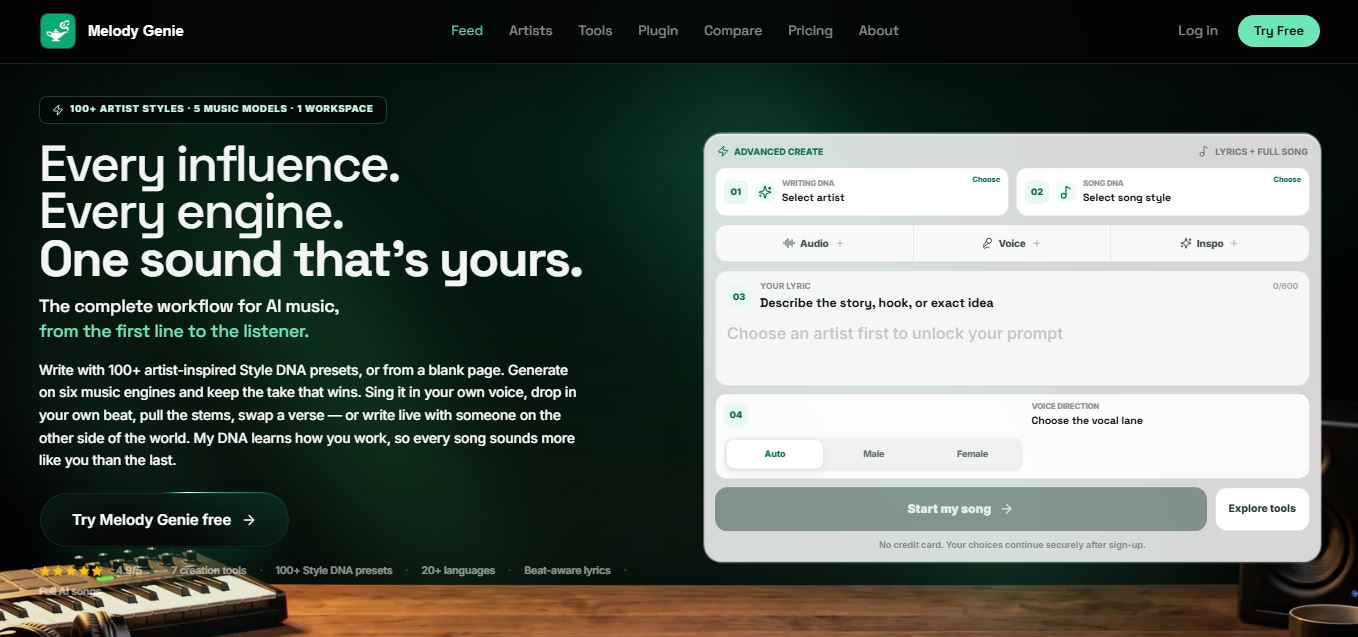
Melody Genie
MelodyGenie is an AI-powered music generator that creates original songs from simple text prompts. Users can choose styles, moods, and genres, then instantly generate melodies and full tracks, making it easy for creators, marketers, and hobbyists to produce custom music without musical expertise.
Freemium
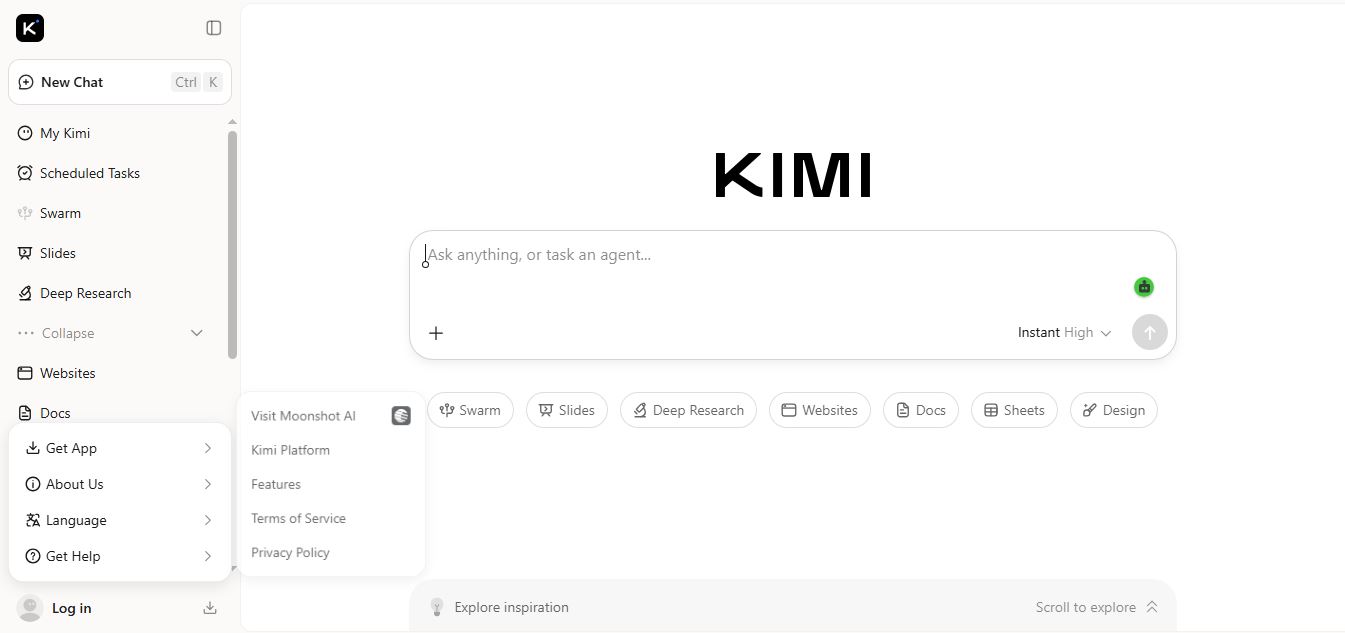
Kimi AI
Kimi AI is an advanced AI assistant developed by Moonshot AI that helps you chat, research, write, code, and automate tasks in one place. It supports web search, file analysis, and multimodal inputs, and can even run autonomous “agent” workflows to complete complex tasks end-to-end.
Freemium

Fashion Diffusion AI
Fashion Diffusion is an AI-powered fashion design platform that helps brands and designers create clothing designs, virtual try-ons, AI models, product photos, and marketing visuals faster and cost-effectively.
Paid
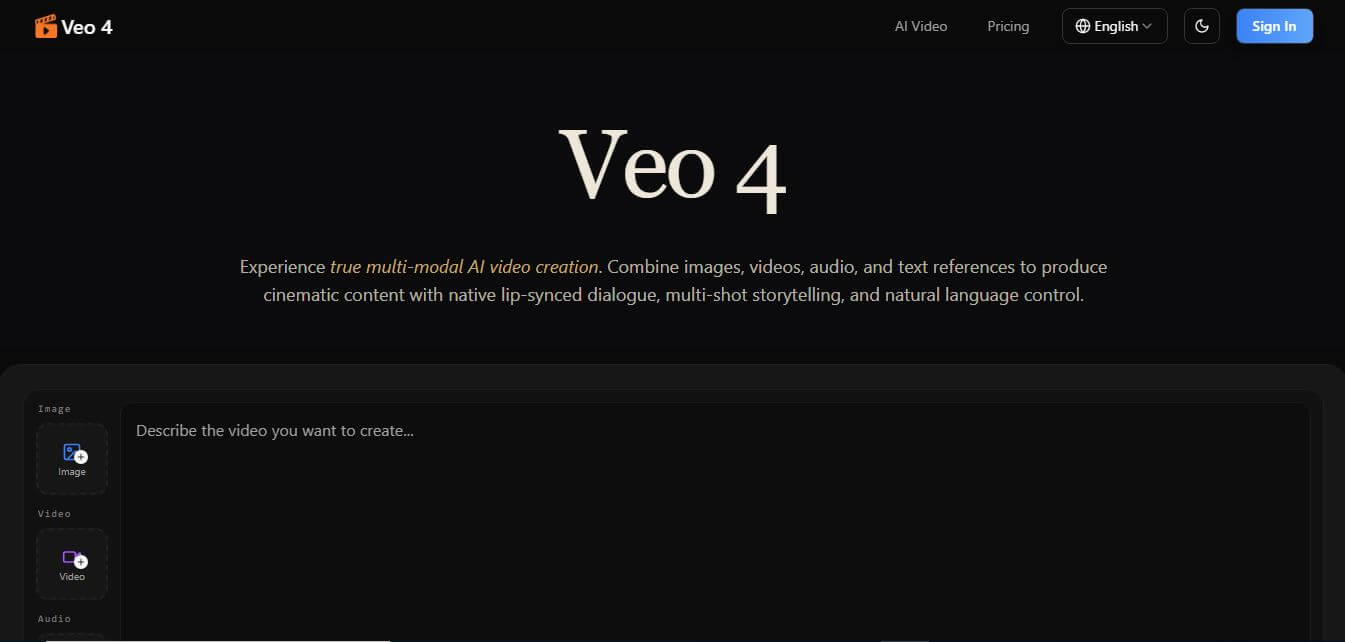
Veo 4
Veo 4 AI is an AI video creation platform that generates dramatic videos from text, images, audio, and video prompts using realistic motion and synchronized sound.
Paid
Alternatives
Alternatives to EasySpecs
The best EasySpecs alternatives include Swimm, Tessl, Traycer AI, and GitHub Spec Kit. While EasySpecs specifically operates as a Spec Review platform that documents ground-truth codebases and pairs specifications with checkable machine Oracles and Rubrics before AI agents generate code, alternatives like Swimm focus on developer-facing internal documentation, and Traycer AI emphasizes multi-step task planning trees.
 4.9
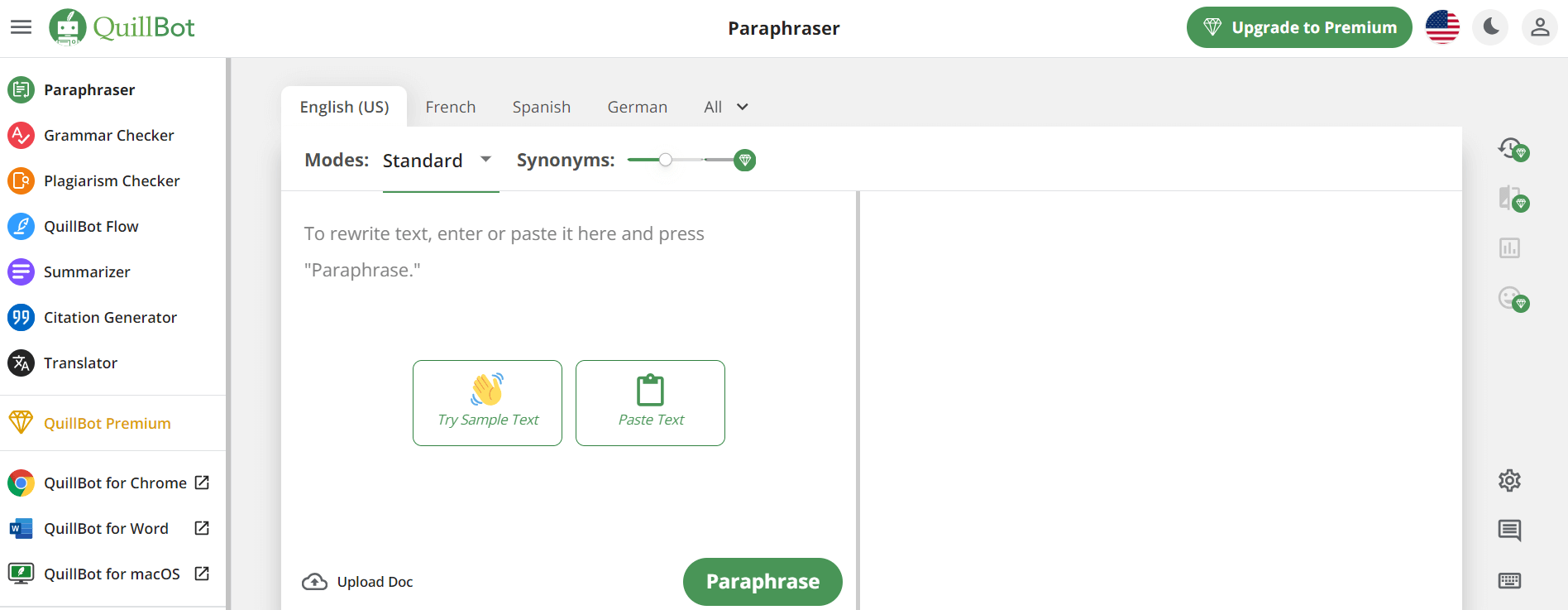
4.9QuillBot
Writing
QuillBot is an AI-powered writing assistant that helps users paraphrase, check grammar, summarize content, and generate ideas in one platform. It combines tools like paraphraser, AI chat, plagiarism checker, and translator to improve writing clarity, accuracy, and productivity across academic, professional, and everyday tasks.
 4.9
4.9Google Cloud Vision API
AI-Detection
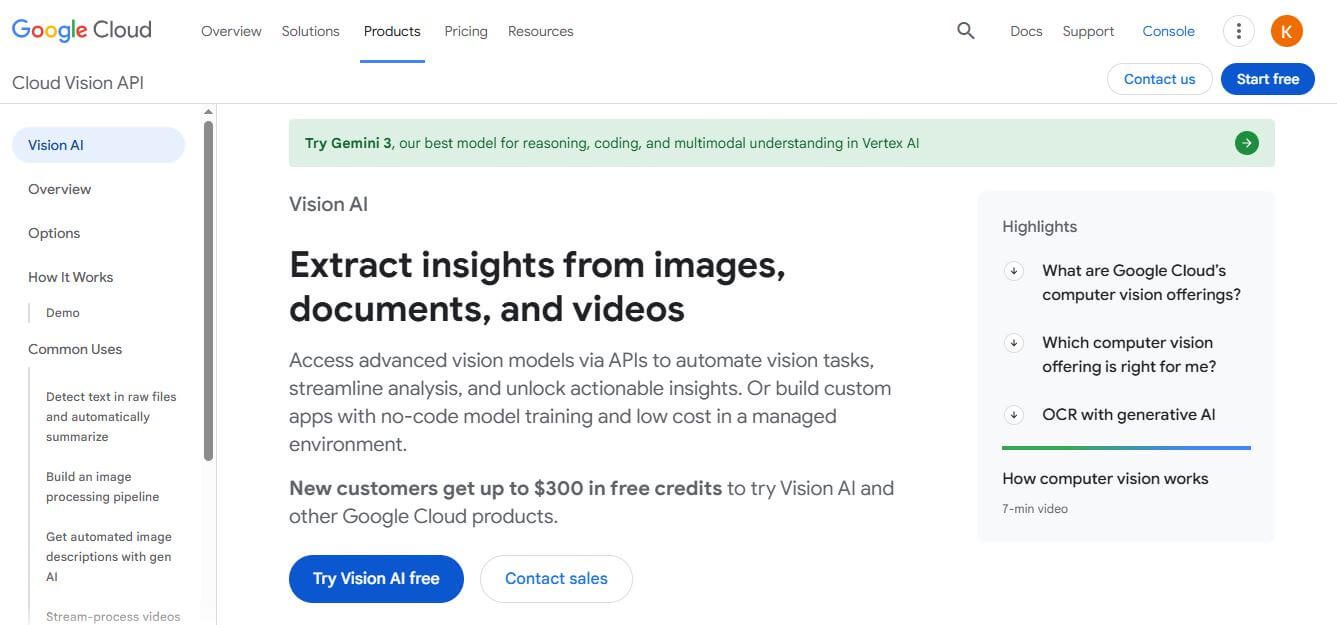
Google Cloud Vision API is a developer-focused computer vision service that offers pre-trained machine learning models for optical character recognition (OCR), image labeling, face detection, explicit content moderation (SafeSearch), and custom AutoML Vision training.
 4.7
4.7GPTKit
AI-Detection
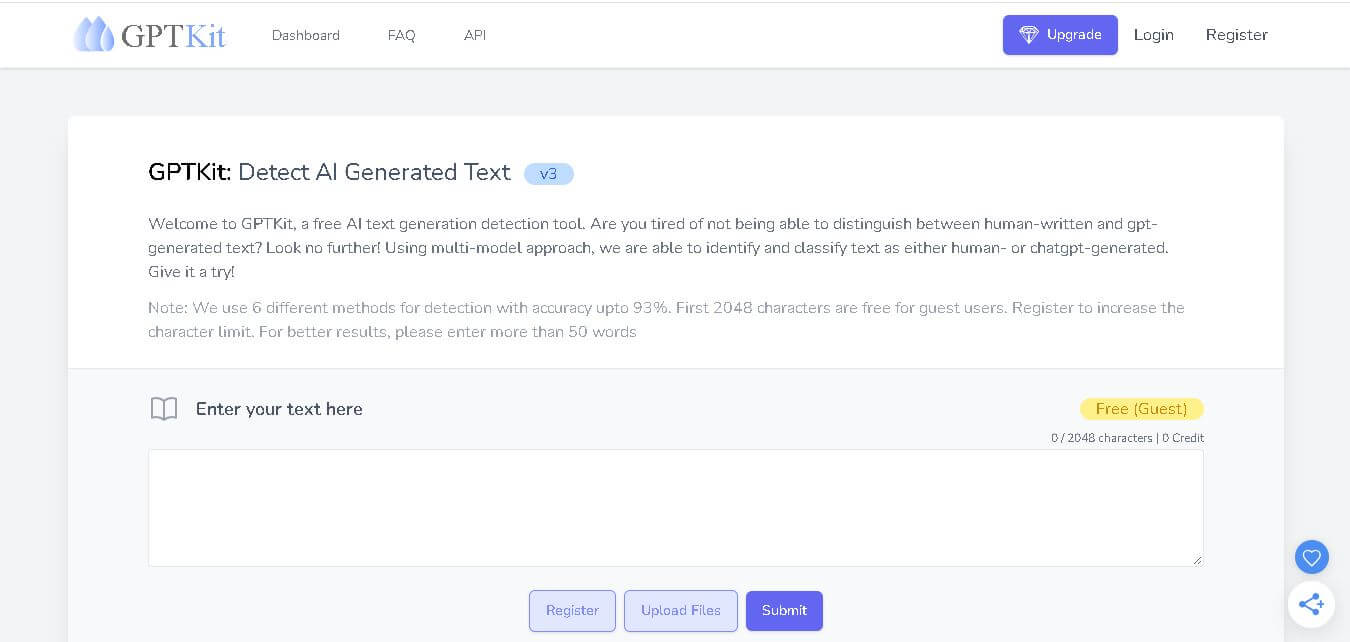
GPTKit is an AI text detection tool that analyzes writing to identify whether it may have been generated by ChatGPT or another AI system. It uses six detection methods, supports file uploads, offers free access for the first 2,048 characters per request, and currently supports English content.
 4.3
4.3GPTinf
AI-Detection
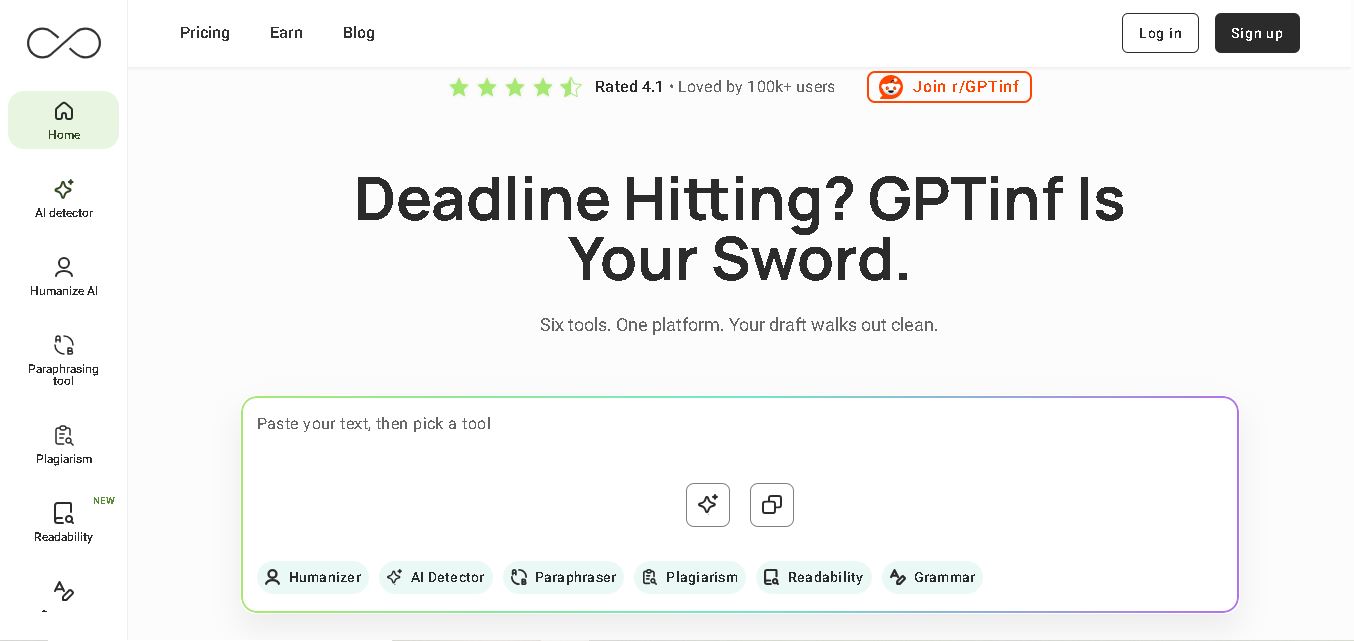
GPTinf is an all-in-one writing toolkit for checking, rewriting, paraphrasing, and improving content. You can detect AI patterns, check plagiarism, fix grammar, analyze readability, and humanize drafts using multiple writing modes. It supports students, bloggers, marketers, freelancers, educators, and professionals who want more polished, natural-sounding content.
RoFT
AI-Detection
RoFT (Real or Fake Text) is an interactive, gamified research project and web application that challenges users to test their ability to distinguish between human-written text and machine-generated content. Featuring diverse content categories like short stories, news articles, recipes, and speeches, the platform focuses on 'Boundary Detection' to help users identify the exact moment an artificial intelligence takes over writing.
 4.8
4.8TinEye
AI-Detection
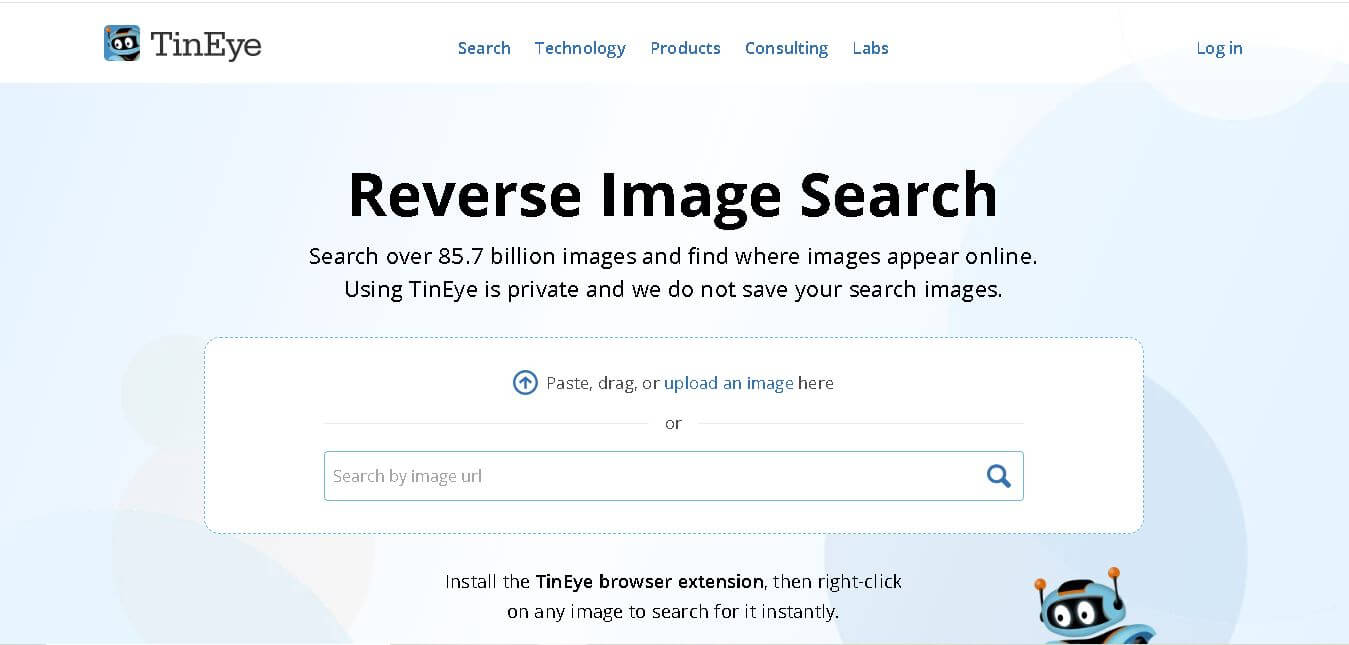
TinEye (tineye.com) is a pioneer reverse image search and computer vision platform that allows users and enterprises to track image usage, verify photo authenticity, identify copyright, and detect visual modifications across an index of tens of billions of web images.
 4.6
4.6Undetectable AI
AI-Detection
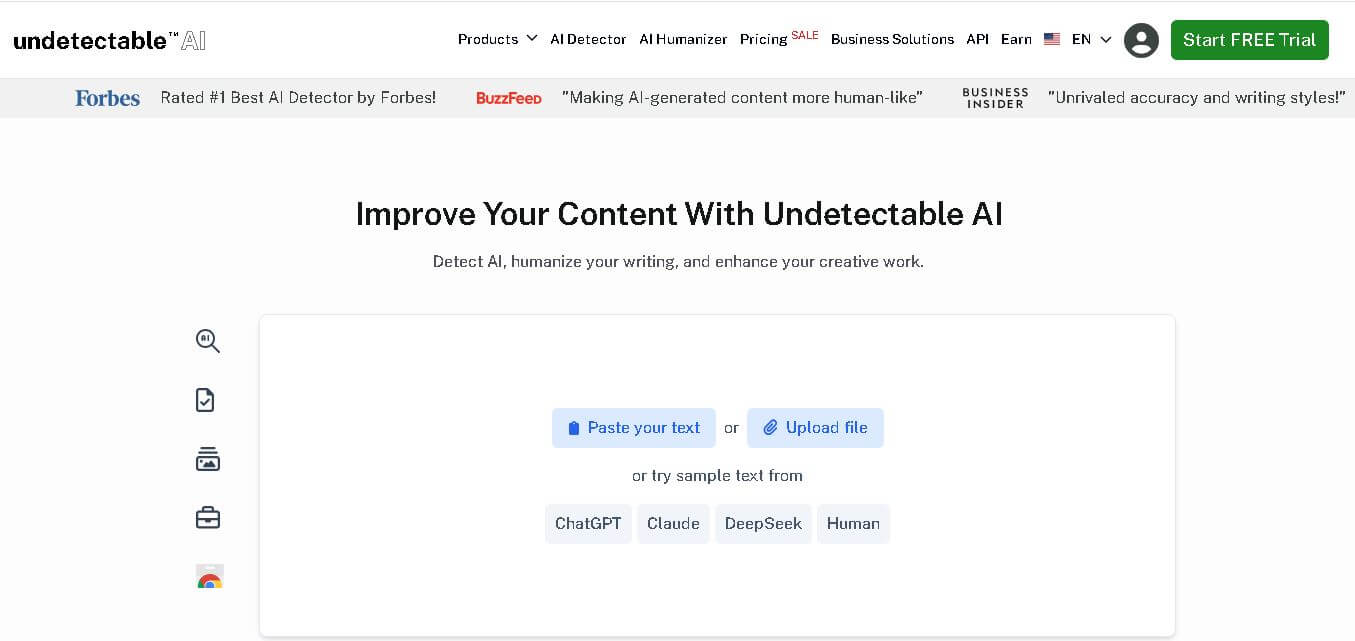
Undetectable AI helps users detect AI-generated text, humanize writing, and improve content quality. Its toolkit includes AI detection, paraphrasing, plagiarism checking, SEO writing, image detection, and browser tools. It serves students, writers, marketers, professionals, researchers, and businesses looking to review and refine AI-assisted content efficiently. Its focus is readable content improvement.
 4.6
4.6FaceFinder
AI-Detection
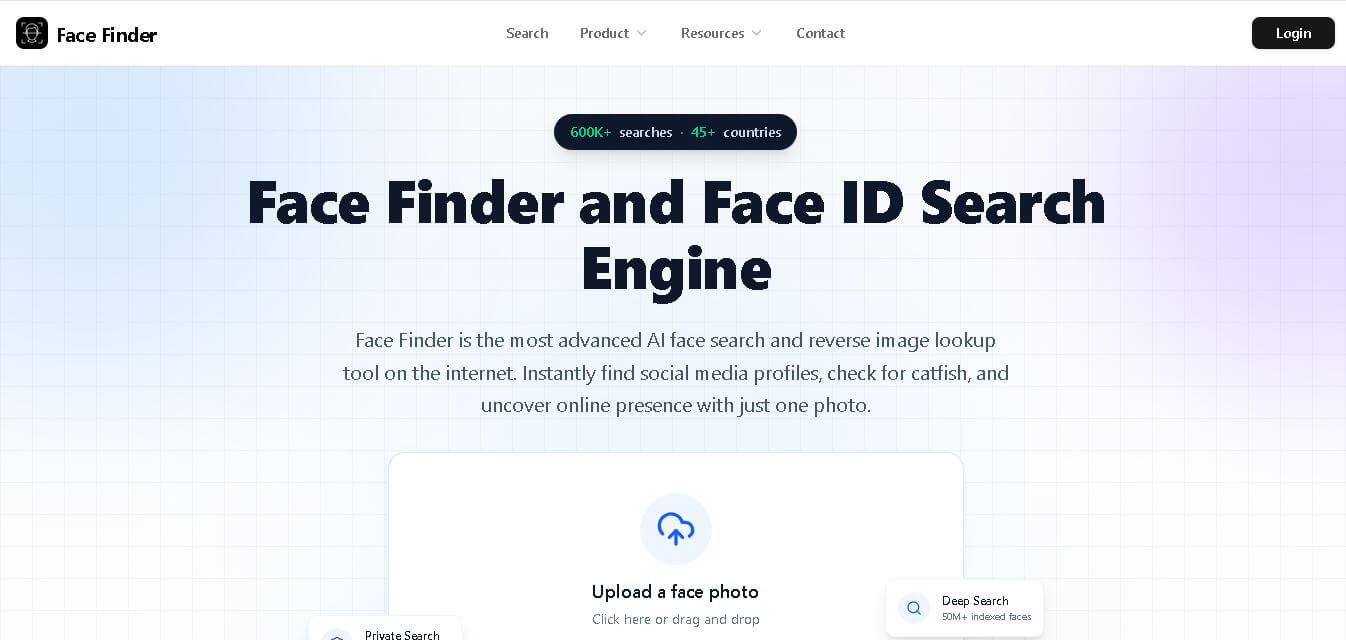
Face Finder helps you search for a person online using a face photo. It can identify potential matches across social networks, websites, dating platforms, news pages, and other publicly indexed sources. With support for JPG, PNG, and WEBP images, it provides similarity scores and source links to help you investigate online appearances.
 4.8
4.8GPTHuman AI
AI-Detection
GPTHuman AI is an advanced AI text humanizer, paraphraser, and AI detector that transforms AI-generated content into natural, authentic, human-sounding writing, removing LLM watermarks and bypassing AI detection tools across 80+ languages.