
Google Cloud Vision API
Google Cloud Vision API is a developer-focused computer vision service that offers pre-trained machine learning models for optical character recognition (OCR), image labeling, face detection, explicit content moderation (SafeSearch), and custom AutoML Vision training.
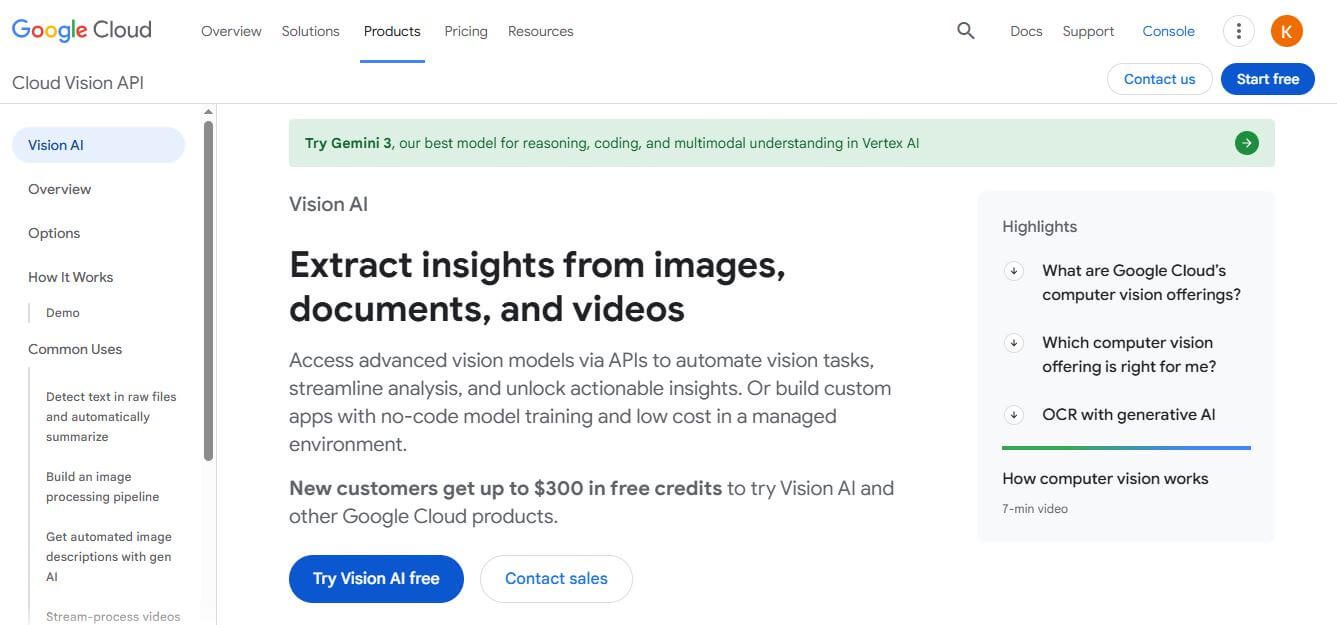
What is Google Cloud Vision API?
Google Cloud Vision is an AI-powered image analysis service that helps developers and businesses extract meaningful information from images. It can detect objects, faces, text (OCR), logos, and landmarks, as well as analyze image content for labels and safety. The API integrates easily into applications, enabling use cases like document digitization, visual search, and automated moderation. Built on Google’s machine learning models, it delivers fast and scalable image understanding, making it useful across industries like retail, healthcare, and finance.
Google Cloud Vision API processes billions of images monthly for global enterprises, consumer apps, and financial services. Part of Google Cloud’s AI and machine learning ecosystem, the service supports optical character recognition across more than 100 languages and automatically identifies thousands of common objects, landmarks, and brand logos. Google Cloud provides 1,000 free billable feature units per month for every account, with standard pricing starting at approximately $1.50 per 1,000 units and scaling down to $0.60 per 1,000 units for high-volume enterprise workloads exceeding 5 million monthly operations.
- Founder / Creator: Developed by Google LLC / Alphabet Inc. (Google Cloud AI team)
- Launch Year: 2016
Use Cases:
- Extracting printed and handwritten text from receipts, invoices, IDs, and multi-page PDF documents
- Automating user-generated content (UGC) moderation using SafeSearch explicit image filtering
- Detecting objects, brand logos, and landmarks for visual asset management and digital cataloging
- Enabling reverse image search and discovering visually similar products across the web
Technology:
- Deep Convolutional Neural Networks (CNNs) and vision transformer architectures
- High-performance gRPC and RESTful API endpoints with Google Cloud Storage integration
- Integrated Vertex AI AutoML Vision pipelines for custom image classification and object tracking
Target Users:
- Full-stack software engineers and backend API developers
- Mobile app developers building camera-enabled document and photo scanners
- Data engineers, machine learning practitioners, and enterprise architects
- Trust, safety, and compliance teams monitoring online platforms and forums
Acquisition: Operates natively as a core service of Google Cloud (Alphabet Inc.)

Key features of Google Cloud Vision API
Google Cloud Vision API's key features are
- Dense Document Text Detection (OCR): Extracts printed, typed, and handwritten text from multi-page PDFs, TIFFs, and image formats across 100+ languages with spatial bounding boxes.
- Image Label & Category Detection: Automatically categorizes images into thousands of semantic labels, identifying objects, settings, actions, and themes.
- SafeSearch Content Moderation: Detects explicit, violent, adult, spoofed, and racy visual content with granular likelihood scores to automate content filtering.
- Object Localization: Identifies and locates multiple distinct objects within an image, drawing normalized boundary coordinates around each detected item.
- Facial Detection & Attribute Analysis: Detects human faces, facial bounding landmarks, and emotional attributes (joy, sorrow, anger, surprise) without identifying individuals.
- Landmark & Logo Recognition: Recognizes thousands of famous global natural and man-made landmarks along with corporate brand logos.
- Web Entity & Reverse Search: Queries Google’s web index to find identical images, visually similar references, and contextual web pages that reference the uploaded asset.
- Custom AutoML Model Training: Train bespoke image classification and object detection models via Vertex AI Vision using custom labeled datasets with zero code required.
Google Cloud Vision API Pricing
Google Cloud Vision API operates on a pay-as-you-go consumption model where each feature applied to an image counts as one billable unit. New Google Cloud accounts also receive $300 in free introductory credits.
Always-Free Monthly Allowance:
- $0/month
- The first 1,000 units per feature type each month are 100% free
Standard Pay-As-You-Go (1,001 to 5,000,000 units/mo):
- $1.50 per 1,000 units ($0.0015/image) for Label Detection, Document Text Detection (OCR), and SafeSearch
- $2.50 per 1,000 units for Facial Detection, Landmark Detection, and Logo Recognition
High-Volume Enterprise Tier (5,000,001+ units/mo):
- Volume discounted rates drop to approximately $0.60 per 1,000 units for Label and SafeSearch, and $0.60 – $0.80 per 1,000 units for OCR
Vertex AI AutoML Vision:
- Billed separately based on training compute hours and real-time prediction request volumes
Disclaimer: For the latest per-unit feature pricing and regional discounts, please visit the official Google Cloud website at cloud.google.com/vision.
Who is using Google Cloud Vision API?
Google Cloud Vision API is designed for a broad range of developers and enterprise organizations, including
- Fintech & Banking Developers: Integrating receipt extraction, invoice processing, and document text reading into financial software
- Community & Social Platforms: Automating user-generated image moderation and filtering adult or violent uploads using SafeSearch
- Digital Asset Managers: Cataloging and tagging extensive enterprise media archives with semantic metadata labels
- eCommerce Retailers: Detecting brand logos and categorizing merchant catalog product photography
- Content Creators: Using writing tools to summarize technical whitepapers, developer SDK docs, and computer vision tutorials
- Supply Chain & Logistics Teams: Reading shipping container numbers, package barcodes, and warehouse inventory labels
Best Google Cloud Vision API Alternatives
Some of the strongest Google Cloud Vision API alternatives include
- Amazon Rekognition (AWS)
- Azure AI Vision (Microsoft)
- Clarifai
- Cloudinary (Add-on AI Vision)
- Roboflow
- Hive Moderation
Pros and Cons of Google Cloud Vision API
Pros
- Highly accurate document OCR capturing typed, printed, and handwritten text across 100+ languages
- 1,000 free billable units per feature every month makes experimentation and prototyping free
- SafeSearch detection provides dependable, automated content moderation for user-generated images
- Comprehensive pre-trained models require zero machine learning expertise to deploy
- Seamless integration with Google Cloud Storage, BigQuery, Cloud Functions, and Firebase ML Kit
Cons
- Analyzing multiple features on a single image incurs multiple billable units (e.g., OCR + SafeSearch = 2 units)
- Facial detection recognizes emotional landmarks and orientation but does not provide individual face verification/matching out of the box
- Complex table parsing in PDF financial statements may require pairing with Google Cloud Document AI for full schema extraction
- Unmonitored high-volume batch jobs can result in unexpected cloud bills if proper budget alerts are not set
Why Choose Google Cloud Vision API?
Google Cloud Vision API is the ideal choice for developers, startups, and enterprises that need fast, dependable, and pre-trained computer vision intelligence without managing ML infrastructure.
- Converts images and scanned documents into structured text and bounding boxes with top-tier OCR
- Automates platform safety and moderation using battle-tested SafeSearch filtering
- Includes 1,000 free operations per feature every single month
- Integrates directly into Google Cloud pipelines (Storage, Pub/Sub, Vertex AI)
- Scales effortlessly from single mobile prototypes to enterprise workloads processing millions of assets
Google Cloud Vision API vs. Competitors
The main difference between Google Cloud Vision API, Amazon Rekognition, Azure AI Vision, and Clarifai is that Google Cloud Vision excels in dense multi-language document OCR, global landmark/web entity recognition, and user moderation (SafeSearch), whereas Amazon Rekognition focuses heavily on video facial recognition and AWS media pipelines, Azure AI Vision offers deep Microsoft Azure ecosystem integration, and Clarifai specializes in customized drag-and-drop ML workflows. Google Cloud Vision stands out for its text extraction accuracy, generous free tier, and developer ergonomics.
| Feature / Tool | Google Cloud Vision API | Amazon Rekognition | Azure AI Vision | Clarifai |
|---|---|---|---|---|
| Core Focus | Image OCR, Moderation & Labeling | Facial Analysis, Moderation & Video | Computer Vision & OCR | Custom Visual AI & Workflows |
| Document OCR Accuracy | Industry-Leading (100+ Langs) | Standard / Textract Separate | High Accuracy (Read API) | Good Document OCR |
| Content Moderation | SafeSearch (5 Granular Scales) | Content Moderation API | Sensitive Content Analysis | Moderation Workflows |
| Monthly Free Units | 1,000 units/feature free | 5,000 images free (1st 12 mos) | 5,000 transactions free/mo | 1,000 operations free |
| Custom Model Path | Vertex AI AutoML | Rekognition Custom Labels | Custom Vision | Clarifai Portal Custom |
| Best For | Developers, OCR & UGC Safety | AWS Stacks & Video Analysis | Microsoft Enterprise Clouds | Multi-Model Workflow Builders |
How do we rate Google Cloud Vision API?
| Parameter | Rating (out of 5) |
|---|---|
| OCR & Document Text Extraction | 5.0 |
| Content Moderation & SafeSearch | 4.9 |
| API Performance, SDKs & gRPC Speed | 4.9 |
| Cloud Ecosystem & AutoML Extensibility | 4.9 |
| Value for Money | 4.8 |
| Overall Score | 4.90 |
Google Cloud Vision API Review
Google Cloud Vision API remains a cornerstone of the developer machine learning ecosystem. By packaging decades of Google’s visual intelligence research into accessible REST endpoints, it allows development teams to bypass the immense overhead of building and hosting computer vision models. Its text extraction capabilities consistently rank among the most accurate in the industry, handling challenging angles, noisy backgrounds, and multiple languages seamlessly. Coupled with its SafeSearch moderation algorithms and scalable pay-as-you-go pricing, Google Cloud Vision API is an outstanding platform for developers building visual intelligence into modern applications.
Conclusion
Google Cloud Vision API is an industry-leading computer vision and image analysis platform that redefines how applications comprehend visual media. By combining multi-language OCR, automated SafeSearch moderation, object localization, and direct integration with Google Cloud Storage and Vertex AI, it eliminates the operational barriers of artificial intelligence. While complex tabular financial documents benefit from specialized Document AI models, Google Cloud Vision API’s accuracy, developer simplicity, and generous monthly free tier make it an indispensable developer tool.
FAQ
What is Google Cloud Vision AI and how does it work?
Google Cloud Vision AI is a machine learning API that enables developers to analyze images and extract meaningful information such as objects, text, faces, and labels. It works by processing images through pre-trained AI models hosted on Google Cloud, returning structured data via API responses that can be integrated into applications, workflows, or automation systems.
What features does Google Cloud Vision AI offer?
Google Cloud Vision AI provides a wide range of features including image labeling, text detection (OCR), face detection, logo recognition, landmark detection, and content moderation. These features allow businesses to automate image analysis tasks such as categorizing photos, extracting text from documents, and identifying visual elements within images at scale.
How does OCR work in Google Vision AI?
The OCR (Optical Character Recognition) feature in Google Vision AI extracts text from images, PDFs, and scanned documents with high accuracy. It supports multiple languages and can detect both printed and handwritten text, making it useful for digitizing documents, processing invoices, extracting IDs, and automating data entry workflows.
Is Google Cloud Vision AI suitable for real-time applications?
Yes, Google Cloud Vision AI is designed to handle both real-time and batch image processing. Its APIs are optimized for low latency, allowing developers to build applications like real-time image recognition, live camera analysis, and automated moderation systems that require quick responses and scalability.
What industries use Google Cloud Vision AI?
Google Cloud Vision AI is widely used across industries such as retail, healthcare, fintech, logistics, media, and security. Businesses use it for applications like product tagging, fraud detection, document verification, inventory management, and visual search, helping automate processes that rely heavily on image data.
How is Google Vision AI priced?
Google Cloud Vision AI uses a pay-as-you-go pricing model based on the number of API requests and the type of features used. There is also a free tier that allows limited usage each month, making it accessible for developers and startups before scaling to larger production workloads.
Can Google Vision AI integrate with other Google Cloud services?
Yes, Google Vision AI integrates seamlessly with other Google Cloud services such as Cloud Storage, BigQuery, and Vertex AI. This allows businesses to build end-to-end pipelines where images are stored, processed, analyzed, and used for further machine learning or analytics workflows within the same ecosystem.
Is Google Cloud Vision AI secure and compliant?
Google Cloud Vision AI follows strong security and compliance standards, including encryption of data in transit and at rest. It adheres to global compliance frameworks, making it suitable for enterprises handling sensitive data, while also providing access controls and monitoring tools to ensure data privacy and governance.
User Reviews
No reviews yet for Google Cloud Vision API.
Featured Tools
Featured AI tools from TechShark
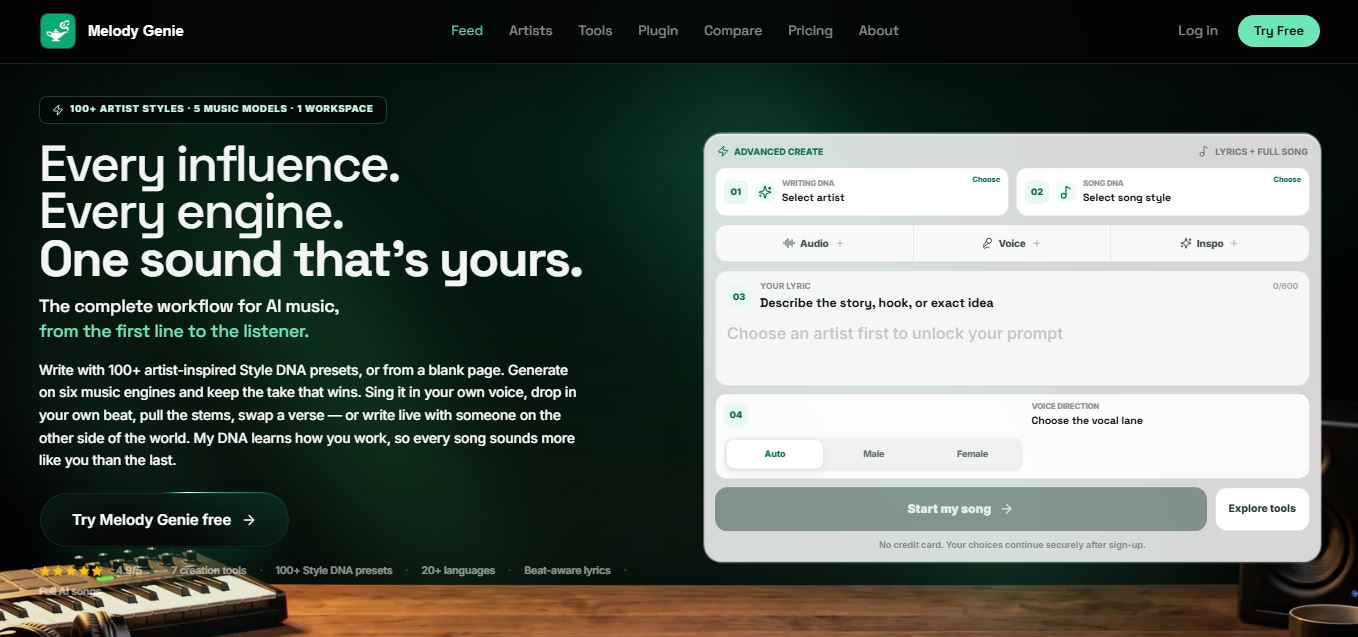
Melody Genie
MelodyGenie is an AI-powered music generator that creates original songs from simple text prompts. Users can choose styles, moods, and genres, then instantly generate melodies and full tracks, making it easy for creators, marketers, and hobbyists to produce custom music without musical expertise.
Freemium
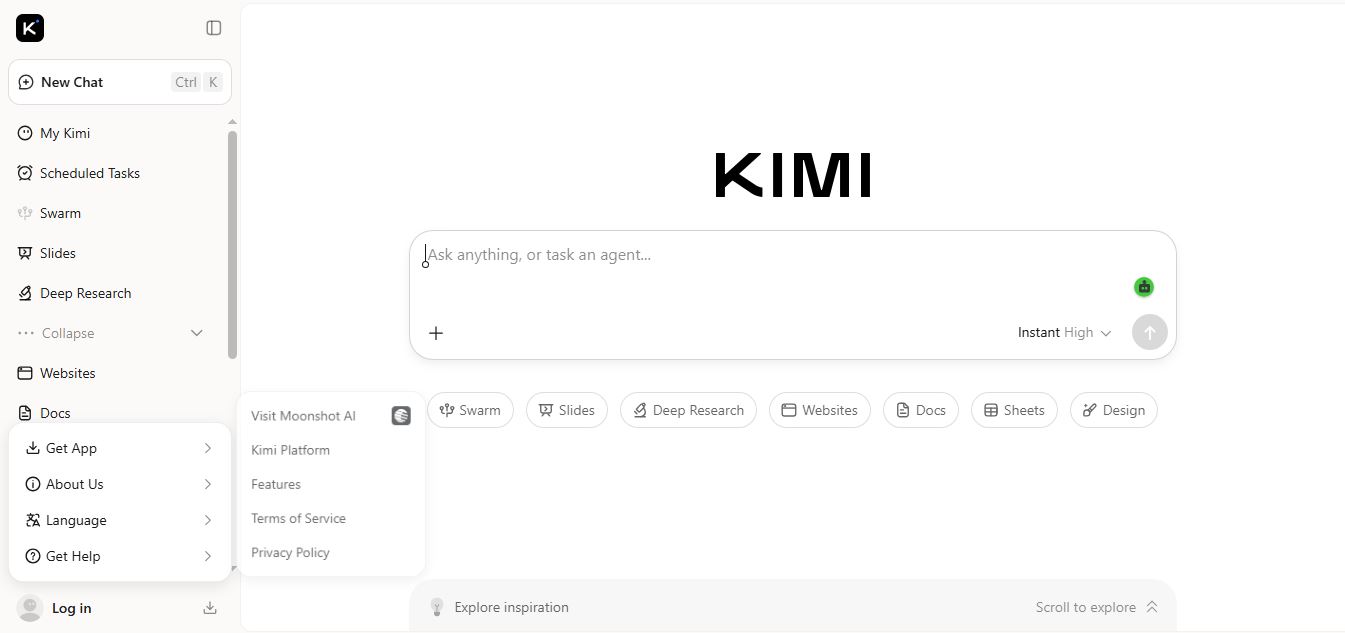
Kimi AI
Kimi AI is an advanced AI assistant developed by Moonshot AI that helps you chat, research, write, code, and automate tasks in one place. It supports web search, file analysis, and multimodal inputs, and can even run autonomous “agent” workflows to complete complex tasks end-to-end.
Freemium
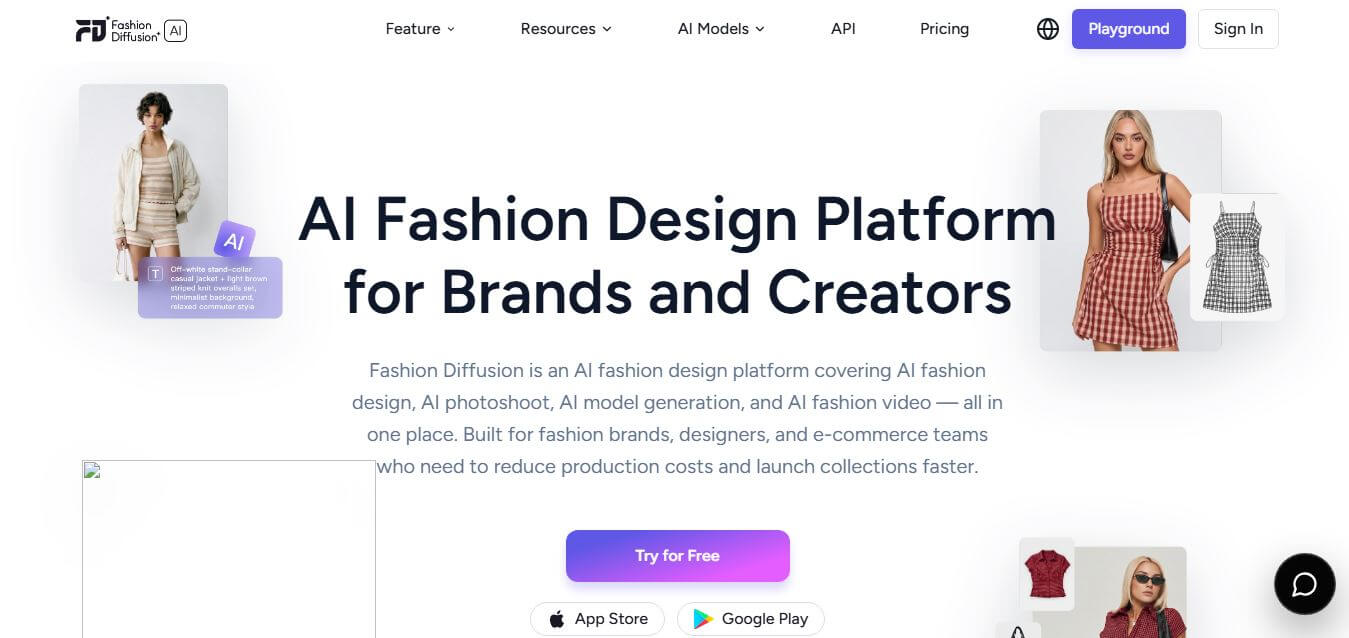
Fashion Diffusion AI
Fashion Diffusion is an AI-powered fashion design platform that helps brands and designers create clothing designs, virtual try-ons, AI models, product photos, and marketing visuals faster and cost-effectively.
Paid
Veo 4
Veo 4 AI is an AI video creation platform that generates dramatic videos from text, images, audio, and video prompts using realistic motion and synchronized sound.
Paid
Alternatives
Alternatives to Google Cloud Vision API
The best Google Cloud Vision API alternatives include Amazon Rekognition, Azure AI Vision, Clarifai, Cloudinary (AI Vision), Roboflow, and Hive Moderation. These platforms provide computer vision, visual content moderation, and optical character recognition APIs. While Google Cloud Vision API specializes in dense multi-language OCR, SafeSearch moderation, and native Google Cloud infrastructure integration, alternatives like Amazon Rekognition focus heavily on video analysis, and Clarifai offers modular visual AI workflow builders. Choosing the right tool depends on whether you require cloud-agnostic visual workflows, video surveillance detection, or scalable image OCR.
 4.9
4.9QuillBot
Writing
QuillBot is an AI-powered writing assistant that helps users paraphrase, check grammar, summarize content, and generate ideas in one platform. It combines tools like paraphraser, AI chat, plagiarism checker, and translator to improve writing clarity, accuracy, and productivity across academic, professional, and everyday tasks.
 4.7
4.7GPTKit
AI-Detection
GPTKit is an AI text detection tool that analyzes writing to identify whether it may have been generated by ChatGPT or another AI system. It uses six detection methods, supports file uploads, offers free access for the first 2,048 characters per request, and currently supports English content.
 4.3
4.3GPTinf
AI-Detection
GPTinf is an all-in-one writing toolkit for checking, rewriting, paraphrasing, and improving content. You can detect AI patterns, check plagiarism, fix grammar, analyze readability, and humanize drafts using multiple writing modes. It supports students, bloggers, marketers, freelancers, educators, and professionals who want more polished, natural-sounding content.
RoFT
AI-Detection
RoFT (Real or Fake Text) is an interactive, gamified research project and web application that challenges users to test their ability to distinguish between human-written text and machine-generated content. Featuring diverse content categories like short stories, news articles, recipes, and speeches, the platform focuses on 'Boundary Detection' to help users identify the exact moment an artificial intelligence takes over writing.
 4.8
4.8TinEye
AI-Detection
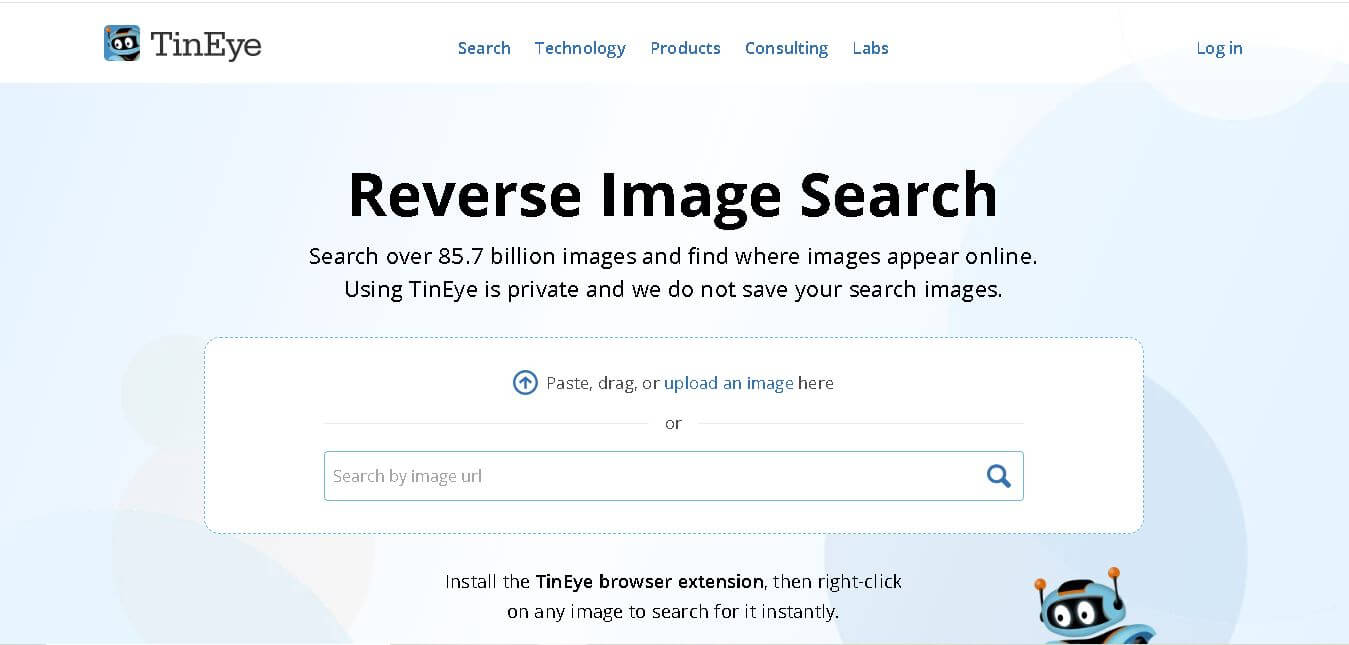
TinEye (tineye.com) is a pioneer reverse image search and computer vision platform that allows users and enterprises to track image usage, verify photo authenticity, identify copyright, and detect visual modifications across an index of tens of billions of web images.
 4.6
4.6Undetectable AI
AI-Detection
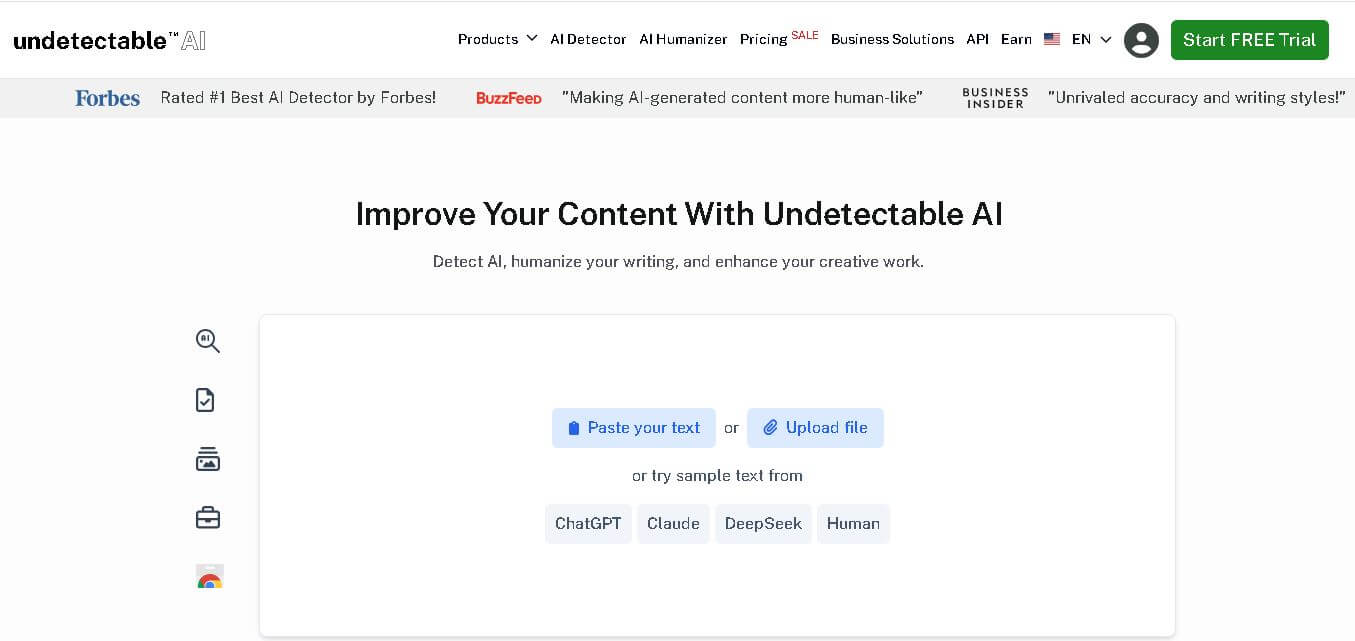
Undetectable AI helps users detect AI-generated text, humanize writing, and improve content quality. Its toolkit includes AI detection, paraphrasing, plagiarism checking, SEO writing, image detection, and browser tools. It serves students, writers, marketers, professionals, researchers, and businesses looking to review and refine AI-assisted content efficiently. Its focus is readable content improvement.
EasySpecs
AI-Detection
EasySpecs is a spec review and living documentation platform that automatically documents legacy or active codebases and converts them into verified specifications paired with executable Oracles and evaluation Rubrics before AI coding agents generate code.
 4.6
4.6FaceFinder
AI-Detection
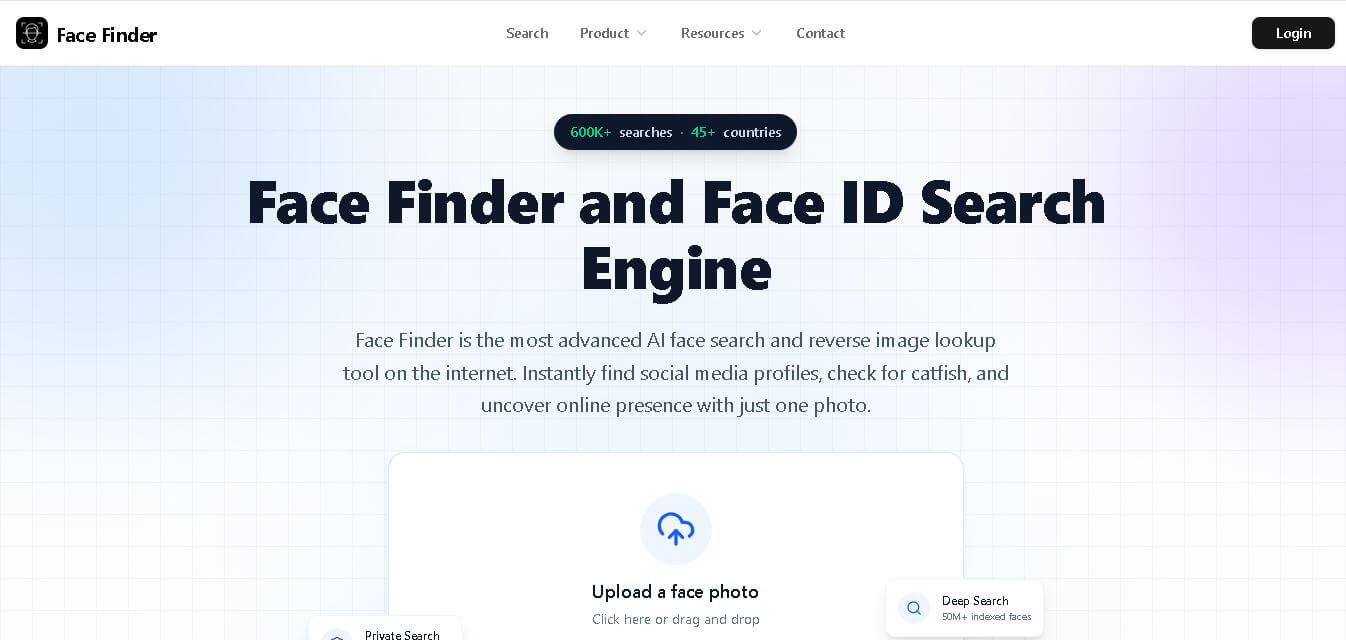
Face Finder helps you search for a person online using a face photo. It can identify potential matches across social networks, websites, dating platforms, news pages, and other publicly indexed sources. With support for JPG, PNG, and WEBP images, it provides similarity scores and source links to help you investigate online appearances.
 4.8
4.8GPTHuman AI
AI-Detection
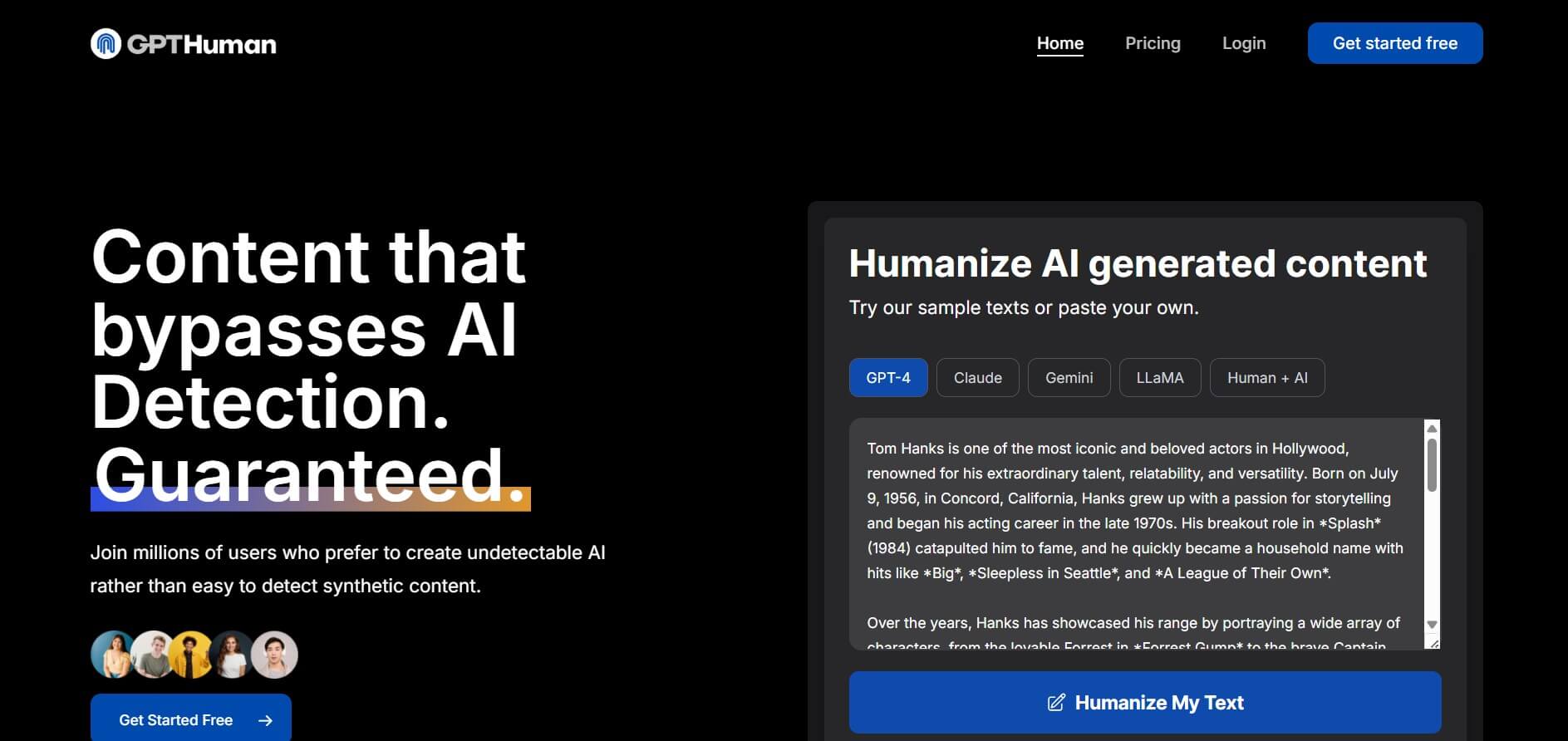
GPTHuman AI is an advanced AI text humanizer, paraphraser, and AI detector that transforms AI-generated content into natural, authentic, human-sounding writing, removing LLM watermarks and bypassing AI detection tools across 80+ languages.