
Mobile ALOHA
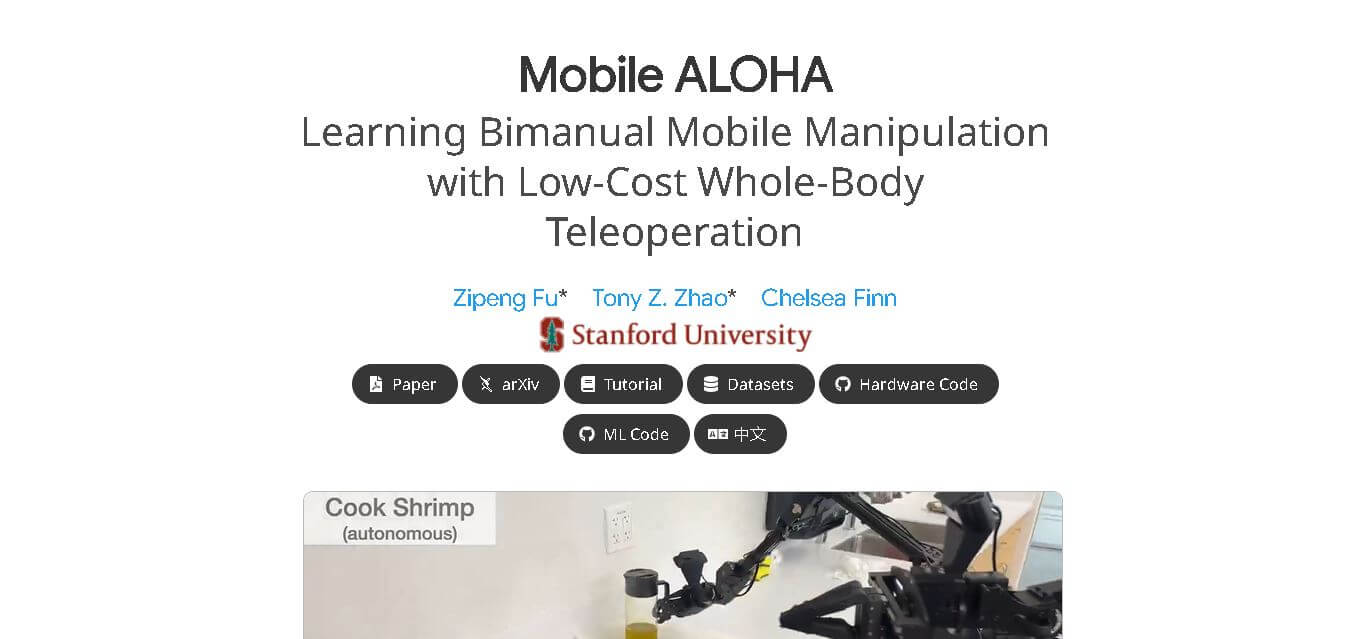
Mobile ALOHA is an open research system for teaching robots whole-body mobile manipulation through human demonstrations. It combines two robotic arms, a mobile base, cameras, teleoperation hardware, and imitation learning. Researchers can collect demonstrations, train models, and evaluate robots on challenging household and mobile manipulation tasks.
What is Mobile ALOHA?
Mobile ALOHA is a robotic system designed to learn complex bimanual mobile manipulation through human demonstrations. It extends the ALOHA robot setup with a wheeled mobile base and whole-body teleoperation, allowing an operator to control two robotic arms and the base together. The system captures these demonstrations and uses imitation learning to teach robots tasks that require coordinated movement, navigation, and object manipulation. Mobile ALOHA has demonstrated skills including cooking, opening cabinets, entering elevators, handling cookware, cleaning, and other household activities. Its research focuses on making mobile manipulation more accessible by combining low-cost hardware, teleoperation, collected datasets, and learning-based control.
Mobile ALOHA was developed by Zipeng Fu, Tony Z. Zhao, and Chelsea Finn, with Fu and Zhao serving as project co-leads. The research uses 50 demonstrations per task and reports success-rate improvements of up to 90% through co-training. Its action representation combines 14 degrees of freedom from the robot joints with 2 mobile-base velocity dimensions, creating a 16-dimensional action vector. The supporting static ALOHA dataset contains 825 episodes. The project was published at CoRL and later appeared in PMLR in 2025.
- Creators: Zipeng Fu, Tony Z. Zhao, and Chelsea Finn (Stanford University)
- Launch Year: 2024
- Use Cases:
- Collecting whole-body teleoperation data for robotics and physical AI research
- Training autonomous bimanual manipulation skills via imitation learning
- Prototyping mobile service robots for household chores and industrial automation
- Benchmarking imitation learning algorithms such as ACT and Diffusion Policy
- Technology:
- Action Chunking with Transformers (ACT) and Supervised Behavior Cloning
- AgileX TRACER 2.0 mobile base paired with ViperX bimanual arms
- Real-time ROS 1 pipeline with RGB-D camera perception and onboard computing
- Target Users:
- Robotics researchers and AI scientists developing embodied intelligence
- Hardware engineers building low-cost open-source mobile manipulators
- Universities and research labs focused on imitation and reinforcement learning
- Ecosystem: Fully open-source hardware schematics, CAD designs, telemetry code, and training algorithms available on GitHub.
Key features of Mobile ALOHA
Mobile ALOHA's key features are
- Whole-Body Teleoperation: Synchronized tether system allowing human operators to control both arms and mobile movement simultaneously.
- Low-Cost Hardware Build: Standardized off-the-shelf components costing ~$32,000 compared to hundred-thousand-dollar commercial alternatives.
- Data-Efficient Imitation Learning: Uses Action Chunking with Transformers (ACT) to learn complex mobile tasks from around 50 demonstrations.
- Static Dataset Co-Training: Combines new mobile manipulation data with static ALOHA datasets to boost task success rates significantly.
- Fully Open-Source Architecture: Includes complete CAD software models, hardware assembly guides, and ROS code repositories.
- Multimodal Perception Stack: Features wrist cameras and forward-facing RGB sensors for accurate spatial state estimation.
Mobile ALOHA Pricing
Mobile ALOHA is entirely open-source, with software and blueprints free to download on GitHub. Hardware build costs depend on component sourcing.
Software & Design Plans:
- $0 (100% Free & Open Source on GitHub)
- Access to complete CAD models, ROS code, and pre-trained ACT policy code
Hardware DIY Sourcing:
- Approximately $32,000 total bill of materials (BOM)
- Includes AgileX TRACER base, 4x arms (leader/follower), cameras, onboard laptop GPU, and battery power system
Disclaimer: For the latest and most accurate pricing information, please visit the official Mobile ALOHA AI website.
Is Mobile ALOHA Worth It?
Mobile ALOHA is exceptionally worth it for AI researchers, robotics labs, and developers focused on embodied physical AI. By lowering the barrier to entry for mobile bimanual manipulation research, it provides a proven reference architecture for collecting real-world multimodal data without investing hundreds of thousands of dollars in proprietary hardware.
Real-World Use Cases
- Household Chore Automation: Learning to cook meals, wash pans, open wall cabinets, and push chairs autonomously.
- Elevator & Facility Navigation: Demonstrating how mobile robots can call elevators, enter doors, and navigate dynamic office spaces.
- Physical AI Benchmarking: Testing state-of-the-art imitation learning frameworks like Diffusion Policy and VINN on physical hardware.
- Commercial Service Robotics: Serving as the underlying architecture for commercialized systems like AgileX COBOT MAGIC.
Who is using Mobile ALOHA?
Mobile ALOHA is designed for a broad range of robotics researchers and engineers, including
- Academic Research Labs: Stanford, MIT, Berkeley, and global university robotics groups
- AI & Tech Enterprises: Google DeepMind and AI companies exploring embodied intelligence
- Robotics Hardware OEMs: Companies like AgileX Robotics manufacturing turn-key platforms inspired by ALOHA
- Open-Source Developers: Engineers building custom low-cost teleoperation and manipulation systems
Best Mobile ALOHA Alternatives
Some of the strongest Mobile ALOHA alternatives include
- ALOHA 2
- COBOT MAGIC (AgileX)
- Unitree G1 / H1
- Figure 01 / 02
- 1X NEO
Pros and Cons of Mobile ALOHA
Pros
- Completely open-source hardware designs and software code base
- Significantly lower cost (~$32k) than proprietary commercial humanoid platforms
- High data efficiency requiring only ~50 human demonstrations per complex task
- The whole-body teleoperation system makes real-world data collection intuitive
- Strong community support and adoption across top AI research institutions
Cons
- Requires manual hardware assembly, calibration, and maintenance
- Physical footprint and tether setup can require spatial accommodations
- Limited payload capacity compared to heavy industrial robotic manipulators
Why Choose Mobile ALOHA?
Mobile ALOHA revolutionized embodied AI research by proving that versatile physical robots do not require proprietary million-dollar hardware. Its combination of accessible components, open-source software, and high imitation learning performance makes it the gold standard reference platform for physical AI development.
- Democratizes mobile bimanual robot learning for researchers worldwide
- Enables rapid data collection through intuitive human whole-body teleoperation
- Boots performance on mobile tasks via co-training with static dataset archives
- Offers complete transparency with zero vendor lock-in or proprietary code constraints
How Mobile ALOHA Works
- Build & Assemble: Construct the mobile platform using standard AgileX bases, bimanual arms, and camera rigs following open-source CAD blueprints.
- Teleoperate & Collect Data: Operate the robot using the whole-body teleoperation rig to complete 50 demonstrations of a given task.
- Co-Train Policy Engine: Train Action Chunking with Transformers (ACT) policies using joint observations co-trained with static ALOHA datasets.
- Deploy Autonomously: Run the learned policy on the onboard laptop GPU to execute autonomous whole-body manipulation in real time.
Mobile ALOHA vs. Competitors
The primary difference between Mobile ALOHA, Static ALOHA, and proprietary humanoid platforms (such as Figure or Unitree) is that Mobile ALOHA adds full-body mobility to low-cost open-source bimanual teleoperation. While Static ALOHA is limited to tabletop environments, and proprietary humanoids carry high costs with closed software, Mobile ALOHA offers an open, affordable platform for mobile manipulation research.
| Feature | Mobile ALOHA | Static ALOHA | Proprietary Humanoids |
|---|---|---|---|
| Primary Focus | Bimanual Mobile Manipulation | Tabletop Bimanual Manipulation | General Commercial Automation |
| Mobility Base | Wheeled Mobile Base (AgileX) | Fixed Stationary Desk | Bipedal / Wheeled Humanoid |
| Open Source Status | 100% Open Source | 100% Open Source | Proprietary / Closed |
| Teleoperation Setup | Whole-Body Tether Rig | Leader-Follower Desktop | VR / Motion Capture / Teleop |
| Estimated Build Cost | ~$32,000 | ~$20,000 | $150,000+ |
How do we rate Mobile ALOHA?
| Parameter | Rating (out of 5) |
|---|---|
| Ease of Setup & Assembly | 4.2 |
| Hardware Accessibility | 4.8 |
| Learning Efficiency | 4.9 |
| Value for Money | 4.9 |
| Open Source Impact | 5.0 |
| Overall Score | 4.8 |
Mobile ALOHA Review
Mobile ALOHA is one of the most impactful open-source developments in embodied AI and robotics. By proving that high-level whole-body manipulation can be accomplished using low-cost hardware and smart imitation learning models, Stanford's research team created a benchmark platform that has accelerated physical AI research worldwide.
Conclusion
Mobile ALOHA represents an important step toward robots that can learn practical physical tasks from human demonstrations. By combining bimanual manipulation, mobile navigation, whole-body teleoperation, and imitation learning, it moves beyond traditional stationary robotic setups. The research demonstrates that relatively small numbers of demonstrations can become more effective when combined with existing robot datasets, achieving strong results across challenging mobile-manipulation tasks. For robotics researchers, AI engineers, and developers exploring embodied intelligence, Mobile ALOHA offers an open research foundation for experimentation, data collection, and learning-based control. Its combination of accessible hardware concepts and open-source software makes it especially valuable for advancing practical robot-learning research.
FAQ
What is Mobile ALOHA used for?
Mobile ALOHA is used for research into bimanual mobile manipulation, where robots must move around an environment while simultaneously using two arms. Researchers can collect human demonstrations and train imitation-learning models for tasks such as cooking, opening cabinets, handling cookware, entering elevators, cleaning, and moving objects.
How does Mobile ALOHA learn new tasks?
Mobile ALOHA learns tasks primarily through human demonstrations. An operator teleoperates the robot's arms and mobile base while the system records the movements and associated data. Researchers then use imitation-learning methods such as supervised behavior cloning to train policies that reproduce the demonstrated behavior autonomously.
What makes Mobile ALOHA different from ALOHA?
The major difference is mobility. ALOHA focuses on bimanual manipulation in a more stationary setup, while Mobile ALOHA adds a wheeled base and whole-body teleoperation. This enables the robot to coordinate arm movements with navigation, allowing it to perform tasks that require moving through an environment rather than remaining at one workstation.
Can Mobile ALOHA perform household tasks?
Yes. The research demonstrates Mobile ALOHA performing several challenging household and real-world activities. Examples include preparing food, serving shrimp, opening a two-door cabinet, storing heavy cooking pots, calling and entering an elevator, rinsing a used pan, cleaning, doing laundry, and other manipulation tasks.
How many demonstrations are needed to train a Mobile ALOHA task?
The research specifically reports experiments using 50 human demonstrations for each task. With co-training using existing static ALOHA datasets, the system achieved substantial improvements in task performance. The researchers report success rates exceeding 80% on several complex mobile-manipulation tasks under this setup.
What technology does Mobile ALOHA use?
Mobile ALOHA combines robotic arms, a wheeled mobile base, cameras, teleoperation hardware, ROS-based software, and imitation-learning algorithms. Its learning pipeline can use methods including ACT and diffusion policy. The system records arm and base movements together so that learned policies can coordinate manipulation with mobility.
Who can benefit from Mobile ALOHA?
Mobile ALOHA is particularly relevant to robotics researchers, university laboratories, AI engineers, imitation-learning researchers, and developers studying embodied AI. It provides a practical research framework for collecting robot demonstrations and investigating how learning-based systems can acquire coordinated mobile manipulation skills.
User Reviews
No reviews yet for Mobile ALOHA.
Featured Tools
Featured AI tools from TechShark
Melody Genie
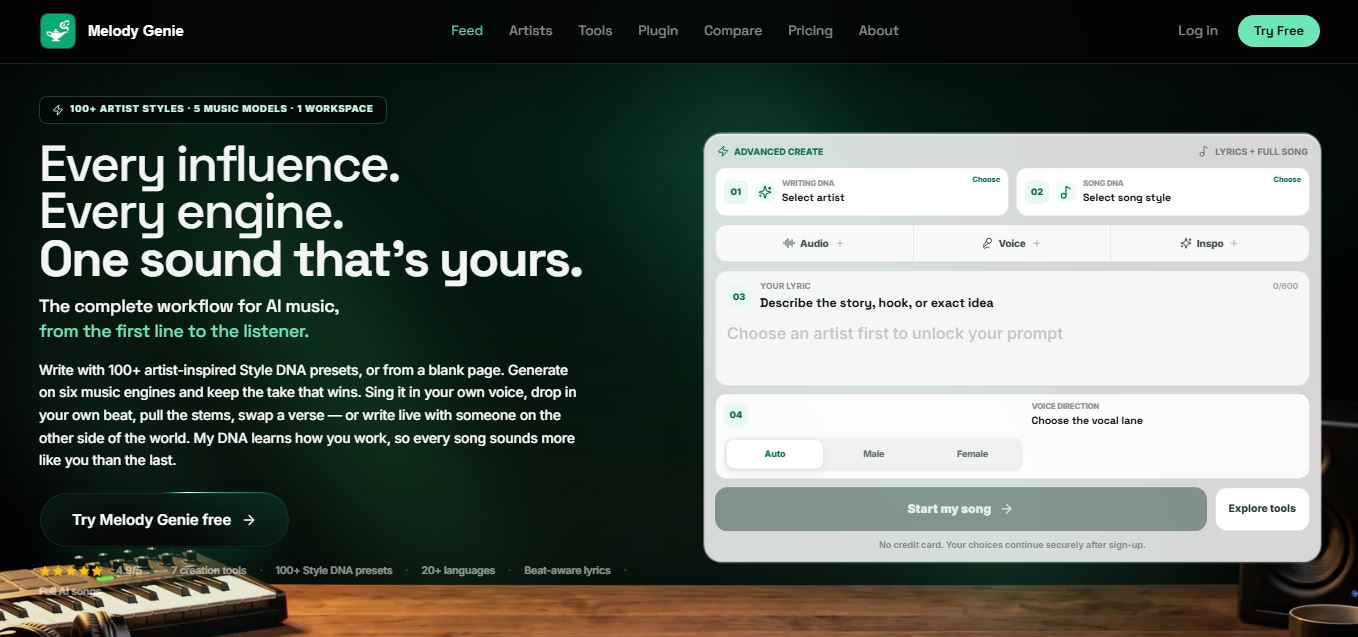
MelodyGenie is an AI-powered music generator that creates original songs from simple text prompts. Users can choose styles, moods, and genres, then instantly generate melodies and full tracks, making it easy for creators, marketers, and hobbyists to produce custom music without musical expertise.
Freemium
Kimi AI
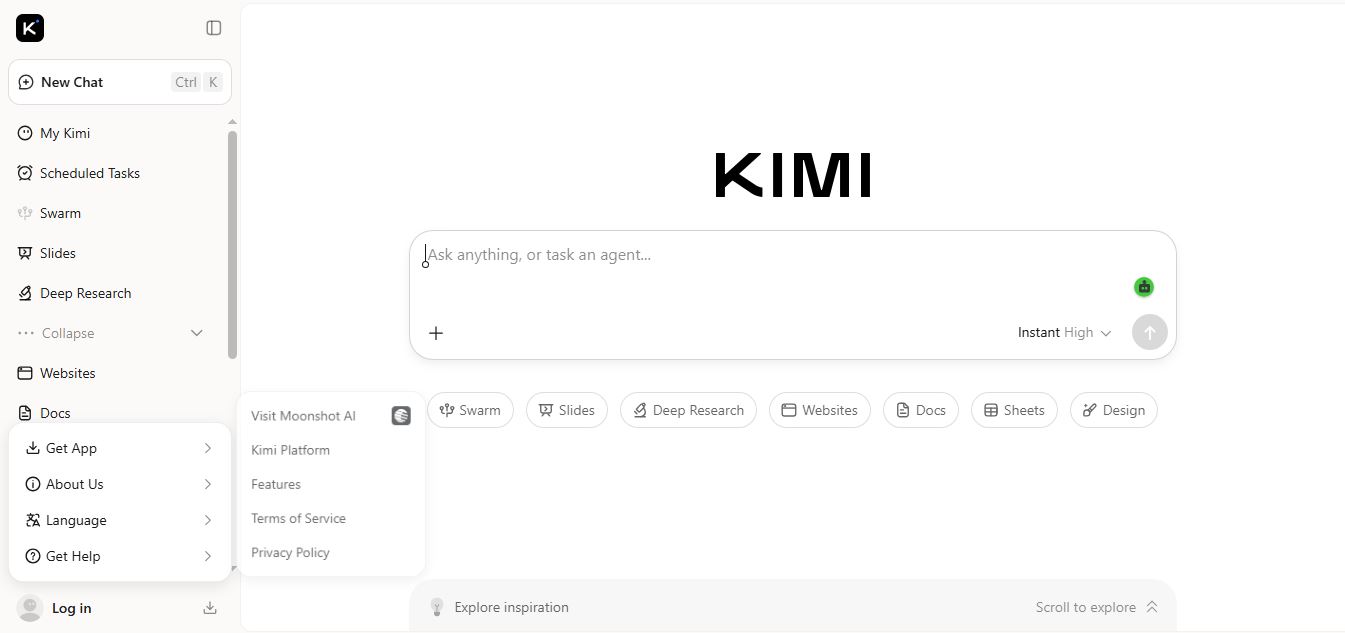
Kimi AI is an advanced AI assistant developed by Moonshot AI that helps you chat, research, write, code, and automate tasks in one place. It supports web search, file analysis, and multimodal inputs, and can even run autonomous “agent” workflows to complete complex tasks end-to-end.
Freemium
Fashion Diffusion AI
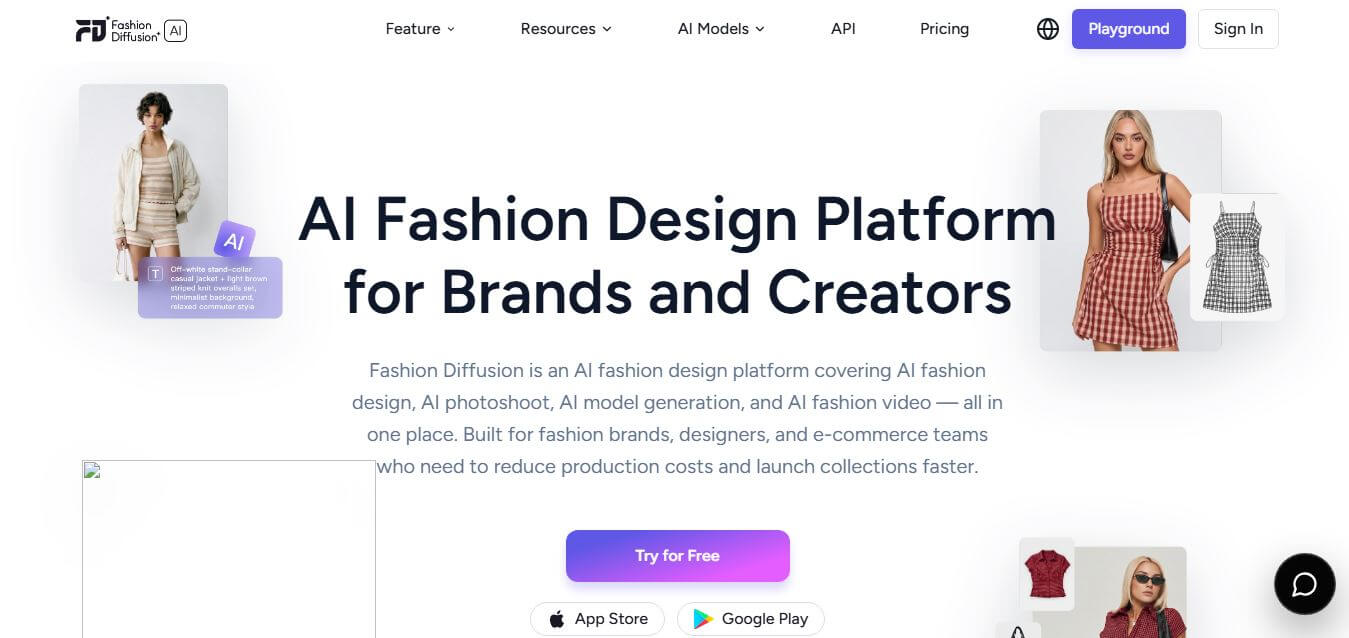
Fashion Diffusion is an AI-powered fashion design platform that helps brands and designers create clothing designs, virtual try-ons, AI models, product photos, and marketing visuals faster and cost-effectively.
Paid
Veo 4
Veo 4 AI is an AI video creation platform that generates dramatic videos from text, images, audio, and video prompts using realistic motion and synchronized sound.
Paid
Alternatives
Alternatives to Mobile ALOHA
The best Mobile ALOHA alternatives include ALOHA 2, COBOT MAGIC by AgileX, Unitree G1/H1, Figure 01, and 1X NEO. ALOHA 2 provides an upgraded, more durable open-source desktop setup. COBOT MAGIC is a commercial-grade mobile manipulation platform directly based on the Mobile ALOHA architecture. Unitree, Figure, and 1X offer full-fledged humanoid robotic systems for commercial and research applications.
 4.9
4.9Manifold
Research
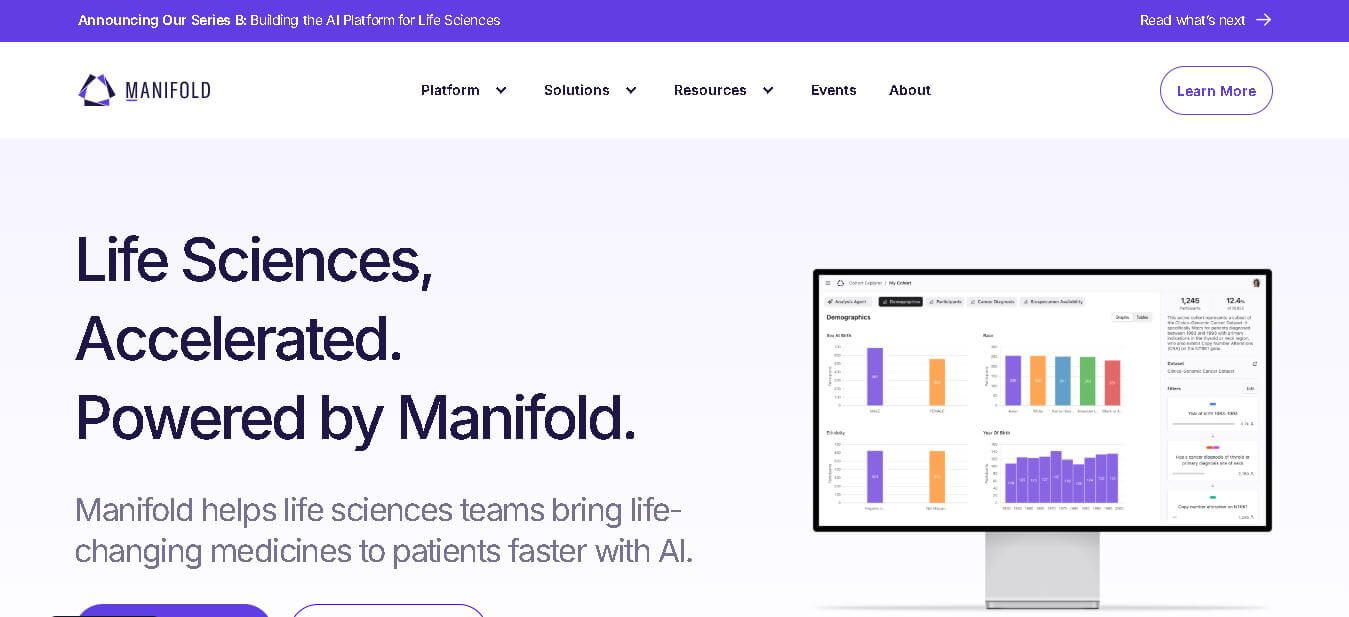
Manifold helps life sciences organizations turn complex clinical, genomic, and real-world data into governed, self-service insights. Its specialist agents support natural-language queries, cohort building, bioinformatics, statistical analysis, data partnerships, and evidence generation. Teams can keep sensitive data within their cloud while controlling access, auditing activity, and scaling research workflows securely.
 5.0
5.0Rayyan
Research
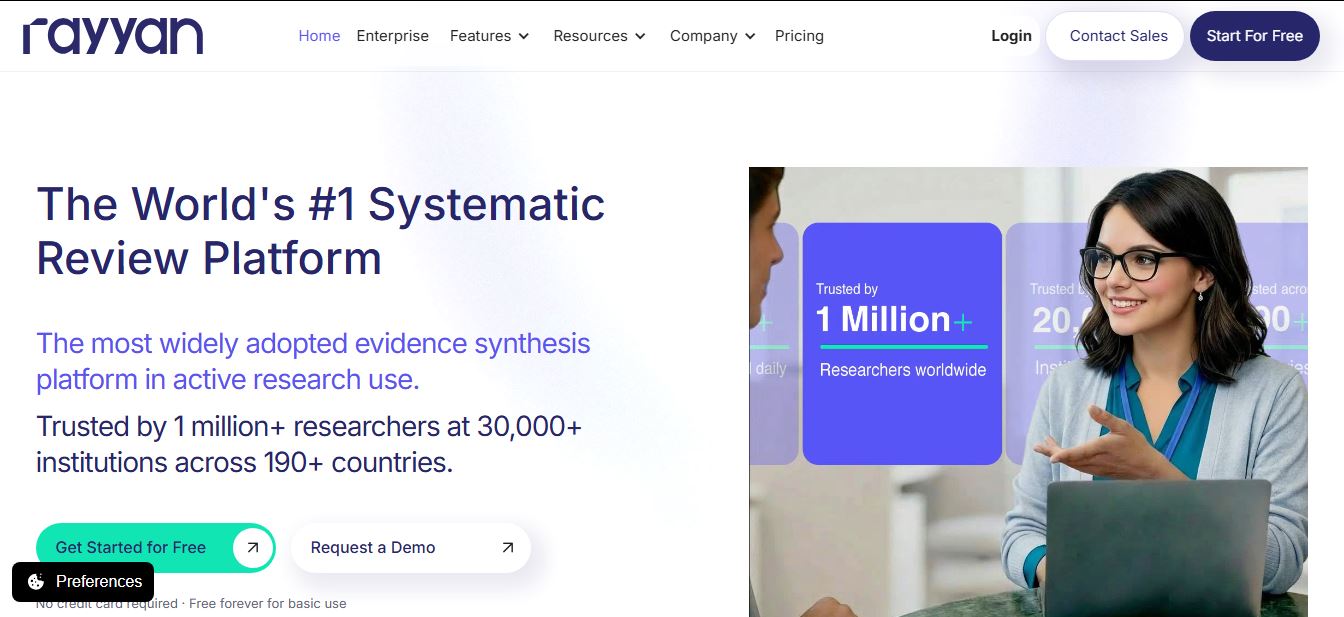
Rayyan is an AI-powered systematic review and literature review platform that helps researchers organize references, remove duplicates, screen studies, extract data, assess risk of bias, and generate PRISMA reports. Its AI features assist with relevance ranking, article screening, and structured data extraction while keeping researchers in control.
 4.9
4.9EvidenceHunt
Research
EvidenceHunt is an AI-powered medical research platform that helps clinicians, researchers, and life science teams find and analyze scientific evidence. It searches medical literature, guidelines, and internal documents, then generates citation-grounded answers, evidence tables, systematic reviews, and traceable insights for faster, evidence-based research.
 4.9
4.9Elicit
Research
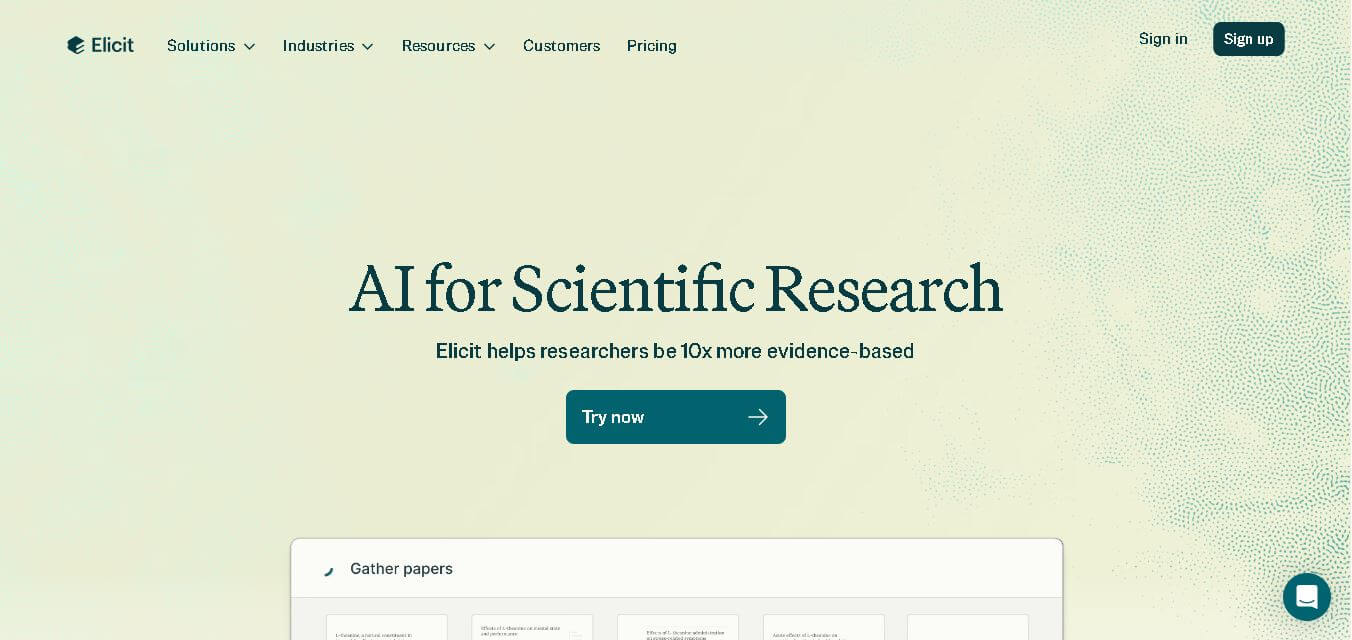
Elicit is an AI-powered research assistant that helps users find, summarize, and analyze academic papers at scale. It searches millions of studies, extracts key data, and generates evidence-backed reports, enabling researchers to conduct literature reviews, compare findings, and make informed decisions faster.
 4.8
4.8Scholarcy
Research
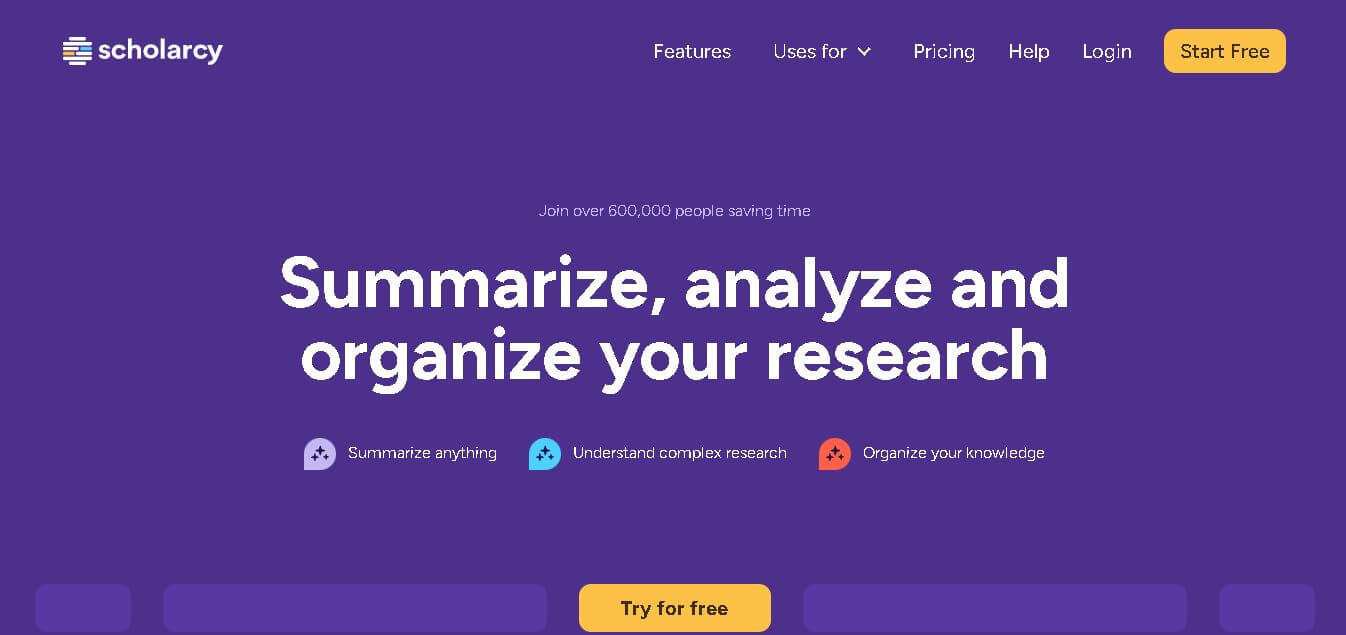
Scholarcy is an AI-powered research assistant that helps students and researchers summarize, analyze, and organize academic papers. It turns complex documents into structured flashcards with key findings, concepts, and references, enabling faster reading, better understanding, and efficient literature review workflows.
 4.9
4.9Resoomer
Research
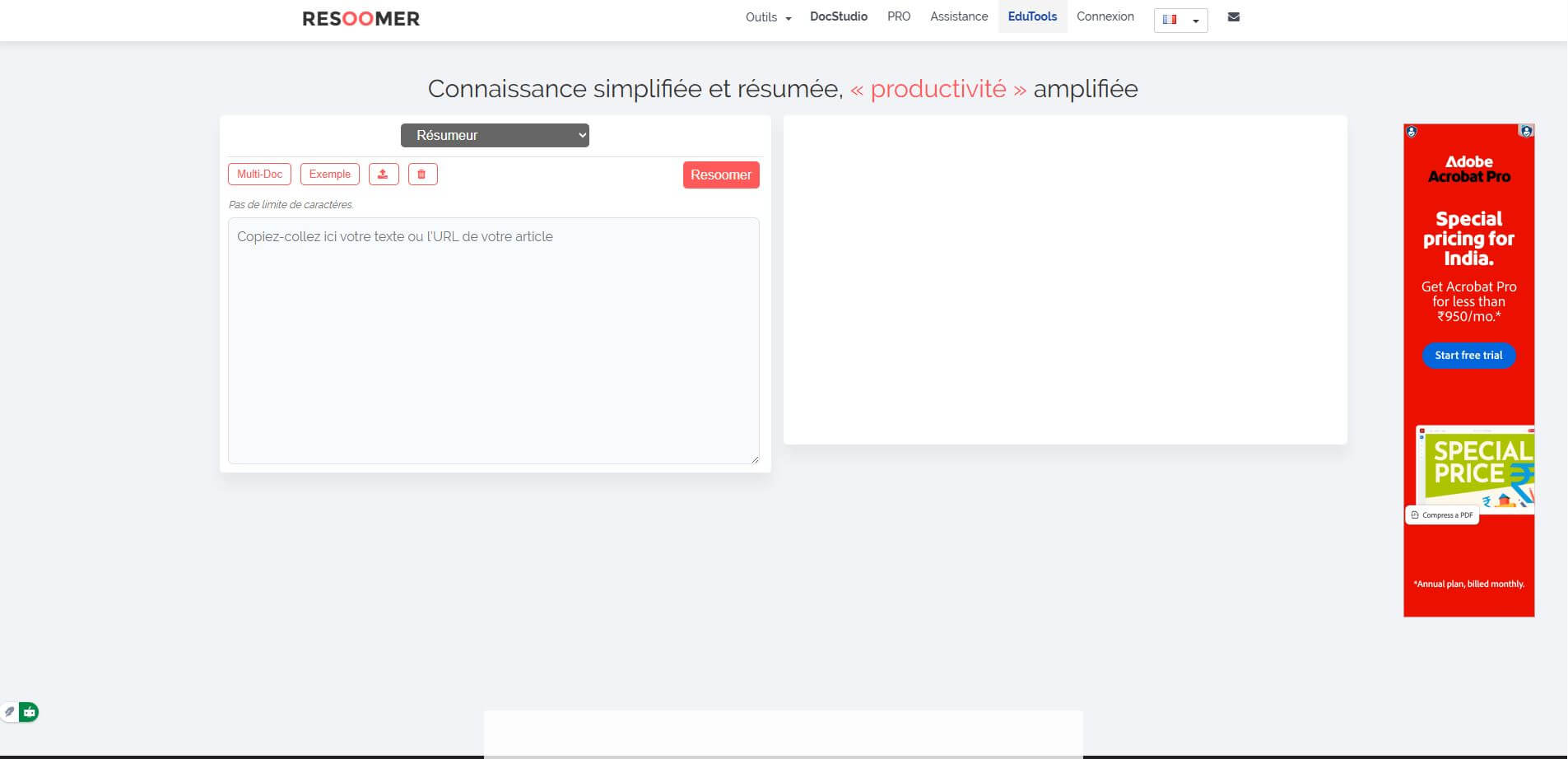
Resoomer is an AI-powered text summarization tool that helps users quickly turn long articles, research papers, and documents into concise summaries. It identifies key ideas, supports multiple formats like PDFs and URLs, and includes tools for paraphrasing, translating, and analyzing content for faster understanding.
 4.9
4.9Consensus
Academic
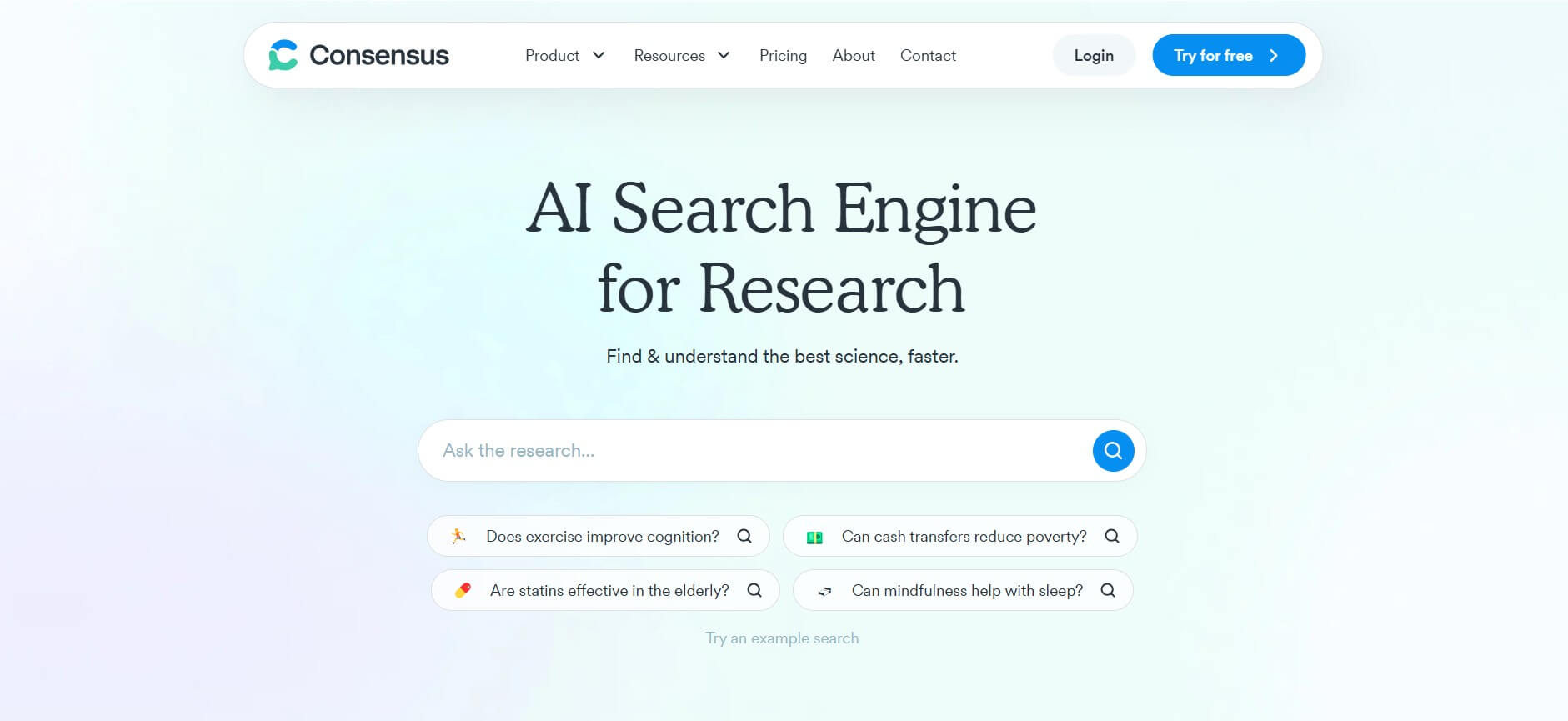
Consensus is an AI-powered academic search engine that helps users find, understand, and summarize scientific research from over 200 million peer-reviewed papers. It delivers clear, cited answers backed by real studies, making it easier to explore evidence, compare findings, and conduct research faster and more reliably.
 5.0
5.0Perplexity AI
AI Chatbot Tools
Perplexity is an AI-powered answer engine that searches the web in real time and delivers clear, cited responses instead of just links. It combines conversational AI with live data, helping users research topics, compare information, and get reliable insights quickly with verifiable sources.
OneSearch.bio
Research
OneSearch.bio is an AI-powered bio link and search aggregation platform designed for creators, brands, and digital marketers to consolidate links, social profiles, monetization tools, and searchable content into a single custom hub.