
MarsX
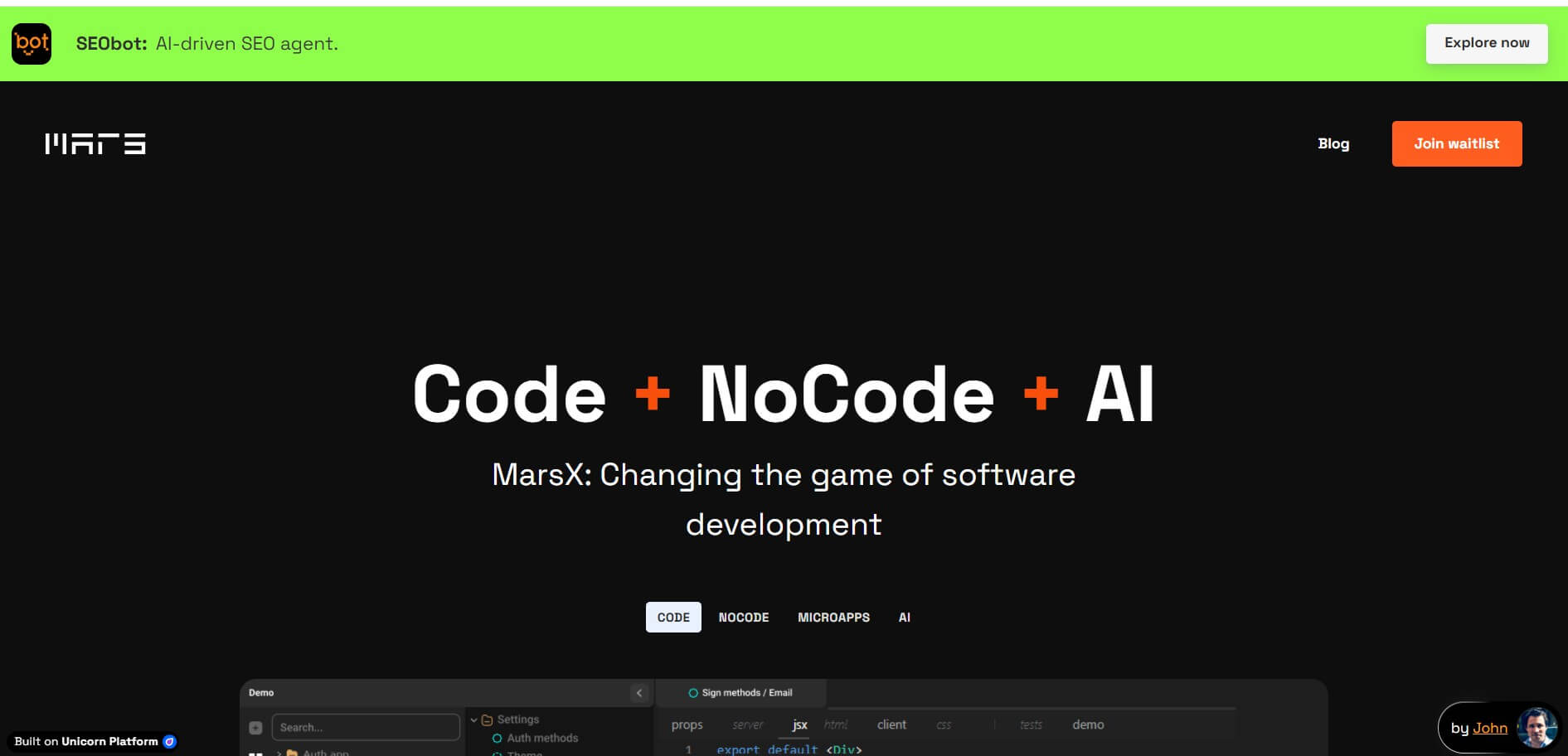
MarsX is an innovative development platform that combines AI, low-code, standard code, and reusable MicroApps. It enables developers and non-technical founders to build full-stack web and mobile applications up to 10x faster while avoiding vendor lock-in.
What is MarsX?
MarsX is a modern software development platform designed to streamline app creation by combining AI capabilities, visual low-code interfaces, traditional coding, and reusable MicroApps. Unlike traditional dev environments or rigid no-code builders, MarsX allows creators to stack pre-built, modular features like Lego blocks while maintaining full control over custom code. By solving the AI token limit problem through a hierarchical micro-app abstraction layer, MarsX enables building scalable, production-ready web and mobile applications in a fraction of the standard development time.
Founded by serial entrepreneur John Rush, MarsX has powered over 300+ live web and mobile products including Unicorn Platform, DevHunt, and SEObot. By leveraging reusable MicroApps, developers report reducing total codebase size and manual effort by up to 90 percent. The core Mars engine is completely open-source and free on GitHub, protecting creators against proprietary platform lock-in.
- Founder: John Rush
- Launch Year: 2021
Use Cases:
- Full-stack web and mobile app development
- Rapid SaaS MVP prototyping and launching
- Monetizing custom micro-features on the MicroApp marketplace
- Building custom internal tools, marketplaces, and social portals
Technology:
- Hierarchical MicroApp AI architecture with custom prompt models
- Open-source Mars core engine available on GitHub
- Integrated full-stack cloud IDE supporting modern web frameworks
Target Users:
- Full-stack software engineers looking to save repetitive dev time
- Startup founders and solo creators building quick MVPs
- Freelancers and digital agencies delivering fast client builds
Ecosystem: Features an active MicroApp marketplace where developers buy, sell, and share reusable app components.

Key features of MarsX
MarsX's key features are
- Modular MicroApp Architecture: Enables developers to plug in pre-built apps (e.g., booking engines, NFT marketplaces, social feeds) instead of coding from scratch.
- AI-Assisted Development (Mars AI): Uses AI models tailored to individual micro-apps to generate features and answer technical queries via natural language prompts.
- Open-Source Core: The core engine is open-source, ensuring complete transparency, self-hosting options, and zero platform vendor lock-in.
- Full-Stack IDE & Visual Builder: Provides a unified development environment that supports visual layout editing, front-end tweaking, and backend logic writing.
- Developer Marketplace: Allows third-party creators to sell custom micro-apps and recurring subscriptions to other developers on the platform.
- Hierarchical Nesting & Scalability: Bypasses AI context windows by breaking complex applications into nested sub-microapps with their own specialized AI contexts.
MarsX Pricing
MarsX operates on a flexible freemium model combining an open-source engine with marketplace component purchases.
Open-Source Free Plan:
- $0/month
- Access to open-source core engine on GitHub, basic dev IDE, and free open community micro-apps
Pro / Developer Plans:
- Custom subscription & pay-per-use hosting options
- Access to premium AI prompt credits, advanced cloud infrastructure, and priority support
MicroApp Marketplace Pricing:
- Varies by third-party vendor ($0 - $49+ one-time or monthly subscription per micro-app)
Is MarsX Worth It?
MarsX is highly worth it for founders, freelancers, and dev teams who want to build complex, customized applications quickly without getting locked into standard no-code limits. Because the core engine is open-source, teams maintain long-term ownership of their technical stack while cutting initial development costs and time-to-market by up to 80-90 percent.
Real-World Use Cases
- Building SaaS Marketplaces: Developers combine marketplace micro-apps (user auth, Stripe billing, listings grid) to launch niche peer-to-peer portals in days.
- Fast MVP Prototyping for Startups: Founders generate responsive web and mobile interfaces using prompt-driven AI micro-components.
- Agency Client Projects: Web development agencies utilize custom micro-app templates to deliver bespoke client projects at significantly higher margins.
- Developer Monetization: Engineers package useful code routines or UI systems into micro-apps and sell them on the MarsX Marketplace.
Who is using MarsX?
MarsX is designed for a broad range of software builders, including
- Solo Founders & Indie Hackers: Creators shipping products fast with minimal upfront capital
- Full-Stack Developers: Coders looking to eliminate boilerplate work without sacrificing code control
- Digital & Web Agencies: Teams aiming to deliver complex web and mobile client applications faster
- No-Code Enthusiasts: Builders transitioning from basic site builders to production-grade custom apps
Best MarsX Alternatives
Some of the strongest MarsX alternatives include
Pros and Cons of MarsX
Pros
- Open-source engine ensures code ownership with zero vendor lock-in
- Reusable MicroApp architecture drastically reduces redundant coding
- Combines code flexibility with low-code speed and AI assistance
- Allows developers to monetize their micro-components via an integrated marketplace
- Supports building both web and mobile cross-platform applications
Cons
- Slight learning curve to understand the hierarchical MicroApp concept
- Third-party micro-apps may carry varying documentation and support quality
- Smaller user community compared to legacy no-code giants like Bubble or Webflow
Why Choose MarsX?
MarsX bridges the gap between limited visual website builders and slow, traditional full-code software development. It offers a future-proof architecture where developers build with reusable modules and natural language AI instructions while keeping source code open and portable.
- Reduces typical app development timelines from months down to a few days
- Avoids context window limits by powering nested components with individual AI models
- Protects your investment through open-source access and code export capabilities
- Enables software engineers to generate revenue by publishing micro-apps
How MarsX Works
- 1. Launch MarsX IDE: Open the workspace online or clone the open-source Mars engine repository.
- 2. Pick Base MicroApps: Select foundational micro-apps (like auth, marketplace layouts, booking systems) from the ecosystem gallery.
- 3. Prompt and Customize: Use Mars AI prompts or write custom JavaScript/React code to adjust styling, business logic, and backend endpoints.
- 4. Deploy & Scale: Publish your full-stack application directly to cloud servers or host it independently on your own infrastructure.
MarsX vs. Competitors
The main difference between MarsX, Bubble, and Replit is that MarsX introduces a modular MicroApp marketplace combined with open-source core code to prevent vendor lock-in. While Bubble offers a proprietary, visual-only interface that restricts code portability, and Replit acts as a cloud-based IDE focused on raw code generation, MarsX blends pre-built visual app modules with standard custom code editing.
| Feature | MarsX | Bubble | Replit |
|---|---|---|---|
| Primary Focus | MicroApp Dev & AI Builder | Visual No-Code Web Apps | Cloud IDE & AI Code Agent |
| Open Source Core | Yes (GitHub) | No (Proprietary) | No |
| Vendor Lock-In | None | High | Low |
| Modular MicroApps | Native Marketplace | Plugins Only | Code Libraries |
| Starting Price | Free / Open-Source | $29 per month | Free plan available |
How do we rate MarsX?
| Parameter | Rating (out of 5) |
|---|---|
| Ease of Use | 4.4 |
| Flexibility & Customization | 4.8 |
| Feature Set | 4.7 |
| Value for Money | 4.8 |
| Open Source & Portability | 4.9 |
| Overall Score | 4.6 |
MarsX Review
MarsX brings a unique and highly practical approach to AI-assisted application building. By breaking application features down into reusable MicroApps powered by dedicated context models, MarsX solves common token limitations while eliminating repetitive dev tasks. The commitment to open-source software makes it a standout choice for builders who want speed without giving up control over their application infrastructure.
Conclusion
MarsX is a game-changing tool for modern developers and startup founders looking to accelerate web and mobile development. Its blend of modular MicroApps, AI integration, low-code convenience, and open-source engine provides maximum flexibility without compromising development speed. Whether you are building your next SaaS MVP or looking to monetize reusable app components, MarsX offers a versatile environment designed for scalable software building.
FAQ
What is MarsX?
MarsX is a development platform that combines No-Code, Code, AI, and reusable MicroApps in one environment. It helps you build web and mobile applications faster by letting you reuse ready-made functionality instead of developing every feature from scratch. You can start with No-Code tools and move to custom coding when your project requires more flexibility.
Is MarsX suitable for beginners?
Yes. MarsX can be useful for beginners because many existing MicroApps can be used with little or no coding. You can start by assembling ready-made components and gradually move into coding as your project becomes more complex. This makes it possible to begin without deep programming knowledge while still having a path toward advanced development.
What are MicroApps in MarsX?
MicroApps are reusable application components that provide complete functionality for specific use cases. They can include things such as marketplaces, social networks, authentication, e-commerce features, and other application systems. You can use individual MicroApps or combine several of them to create a larger application.
Can I switch from No-Code to Code in MarsX?
Yes, and this is one of MarsX's key advantages. You can begin a project using No-Code and later switch to the Code interface when you need custom functionality. Your existing data and logic don't have to be thrown away when you move toward custom development, allowing you to continue working on the same project.
Is MarsX open source?
Yes. The Mars engine is open source and can be run on your own servers or locally. MarsX also provides cloud hosting as an easier deployment option. However, individual MicroApps are created by third-party developers and may have their own free or premium pricing models.
What can I build with MarsX?
You can build different types of web and mobile applications using its MicroApps and development tools. Examples include marketplaces, social networks, e-commerce platforms, video-streaming services, photo-sharing applications, and other custom software products. You can also combine multiple MicroApps to create a more complete application.
Who is MarsX best for?
MarsX is particularly useful for developers, startup founders, and teams that want to build and customize applications faster. It can also work well for people who want to start with No-Code but don't want to be permanently limited by it. As your project grows, you can move into custom JavaScript or TypeScript development within the same environment.
User Reviews
No reviews yet for MarsX.
Featured Tools
Featured AI tools from TechShark
Melody Genie
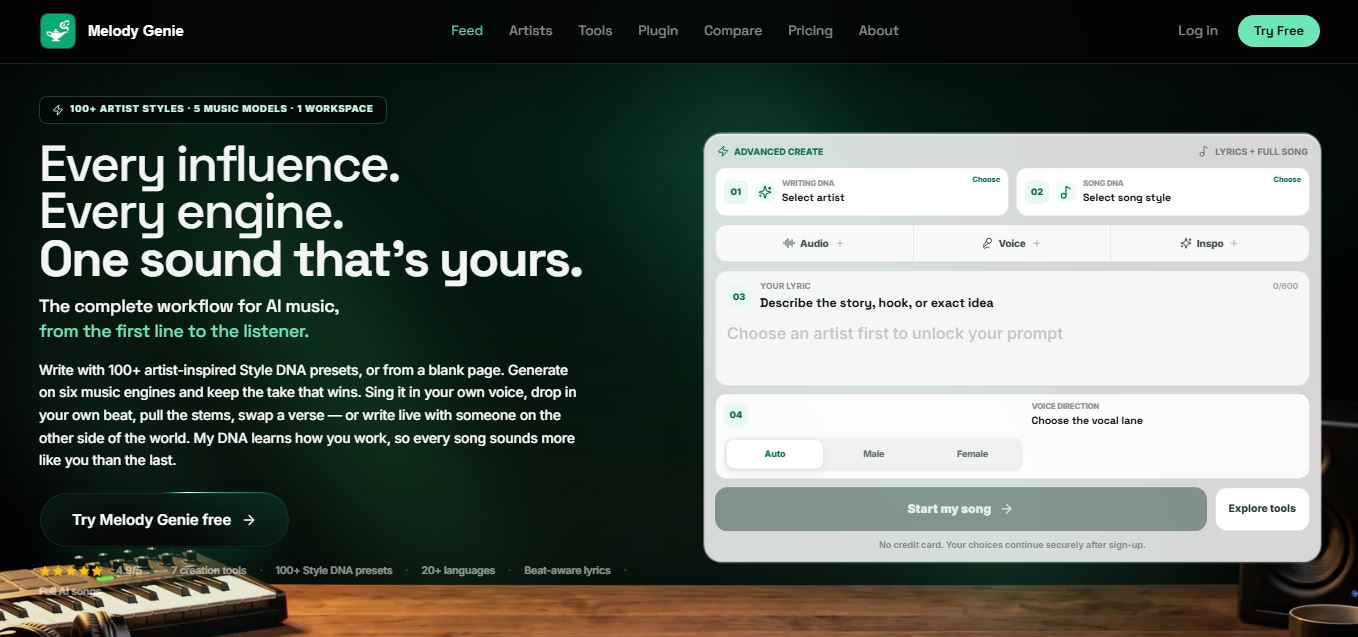
MelodyGenie is an AI-powered music generator that creates original songs from simple text prompts. Users can choose styles, moods, and genres, then instantly generate melodies and full tracks, making it easy for creators, marketers, and hobbyists to produce custom music without musical expertise.
Freemium
Kimi AI
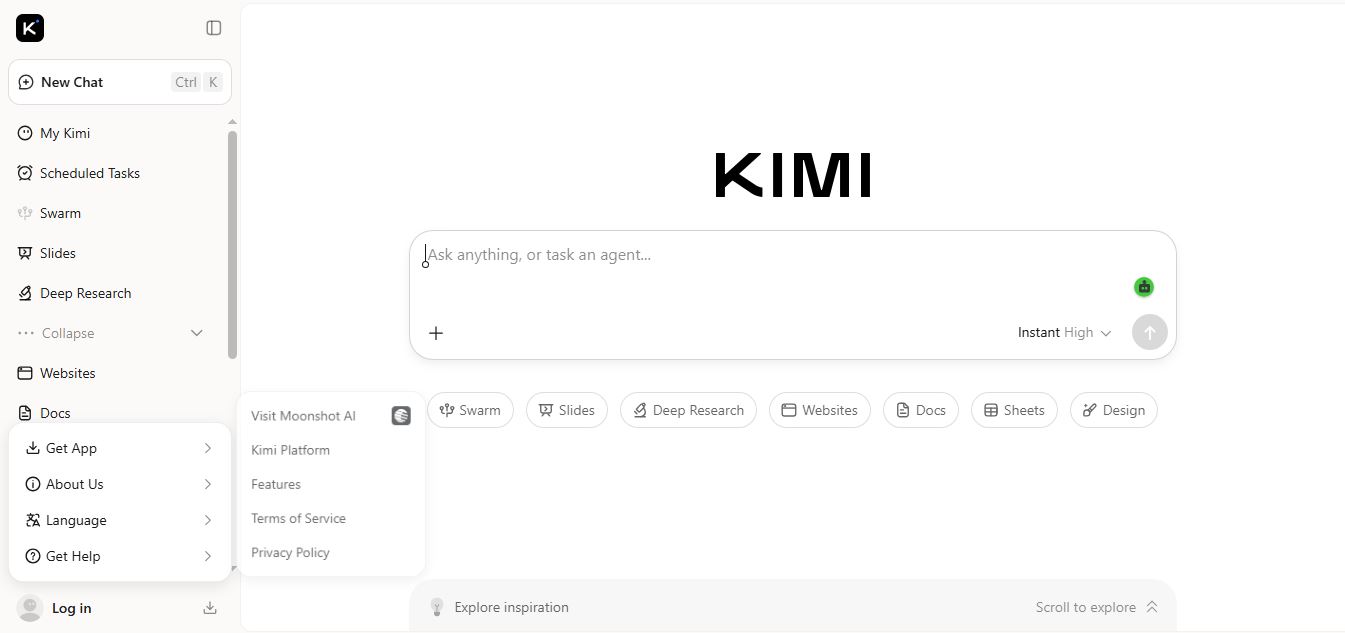
Kimi AI is an advanced AI assistant developed by Moonshot AI that helps you chat, research, write, code, and automate tasks in one place. It supports web search, file analysis, and multimodal inputs, and can even run autonomous “agent” workflows to complete complex tasks end-to-end.
Freemium
Fashion Diffusion AI
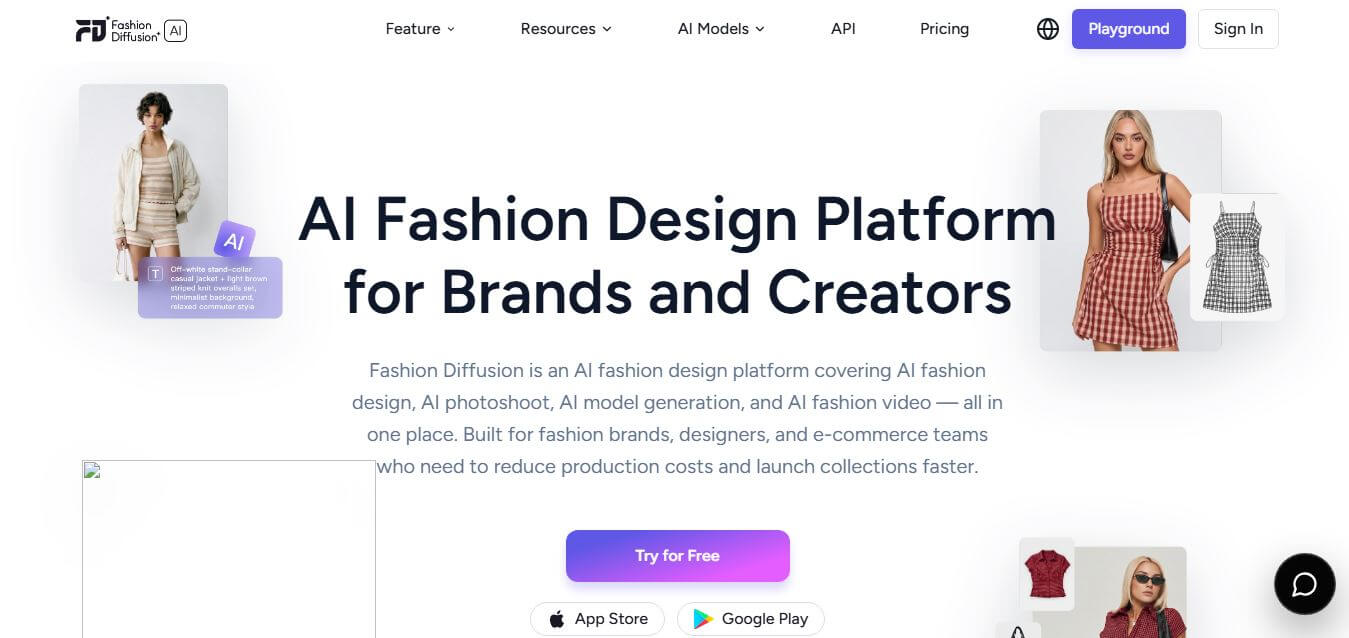
Fashion Diffusion is an AI-powered fashion design platform that helps brands and designers create clothing designs, virtual try-ons, AI models, product photos, and marketing visuals faster and cost-effectively.
Paid
Veo 4
Veo 4 AI is an AI video creation platform that generates dramatic videos from text, images, audio, and video prompts using realistic motion and synchronized sound.
Paid
Alternatives
Alternatives to MarsX
The best MarsX alternatives include Bubble, Replit, Retool, Softr, and Webflow. Bubble offers an established visual web app builder for non-developers. Replit provides an AI-powered cloud IDE ideal for collaborative software development. Retool focuses on internal tool creation with pre-built UI components. Softr excels at turning Airtable and Notion databases into web portals, while Webflow leads in visual web design with clean front-end code output.
 4.6
4.6Mixo
Website Builders
Mixo is a website builder designed to help small businesses, startups, consultants, and service providers create websites quickly. Describe your idea, review the generated site, customize text and visuals, and publish it. It also supports contact forms, SEO, custom domains, integrations, and AI-search-friendly website structures. No coding skills are required.
 4.9
4.9Wix
Website Builders
Wix is an all-in-one cloud website builder and web development platform featuring intuitive drag-and-drop design, the Wix Studio professional agency workspace, built-in eCommerce and booking engines, automated SEO tools, and comprehensive AI generation tools.
 4.8
4.8Elementor AI
Website Builders
Elementor AI Page Builder helps WordPress users create websites from simple prompts. It generates page structures, written content, images, and design elements, then lets you refine everything through Elementor’s drag-and-drop editor. Its responsive layouts, multilingual content generation, AI editing, and visual customization make website creation faster while retaining manual creative control.
 4.9
4.9Dorik
Website Builders
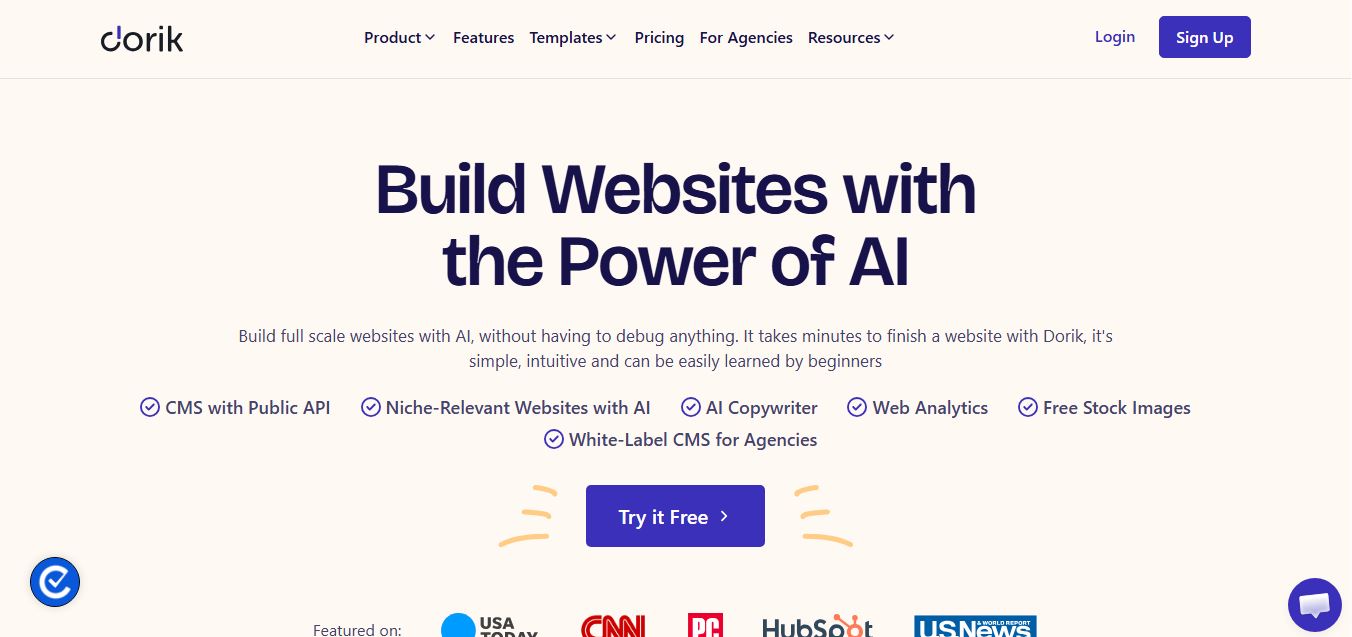
Dorik is an AI-powered website builder and no-code CMS platform that enables creators, businesses, and agencies to generate responsive websites, landing pages, blogs, and client-billed white-label portals with native Airtable integration.
 4.9
4.9Squarespace
Website Builders
Squarespace is an all-in-one website building and eCommerce platform that combines designer-crafted templates, Fluid Engine drag-and-drop customization, and Squarespace Design Intelligence (Blueprint AI) to help businesses build, sell, and grow online.
 4.9
4.9Nodlume
Website Builders
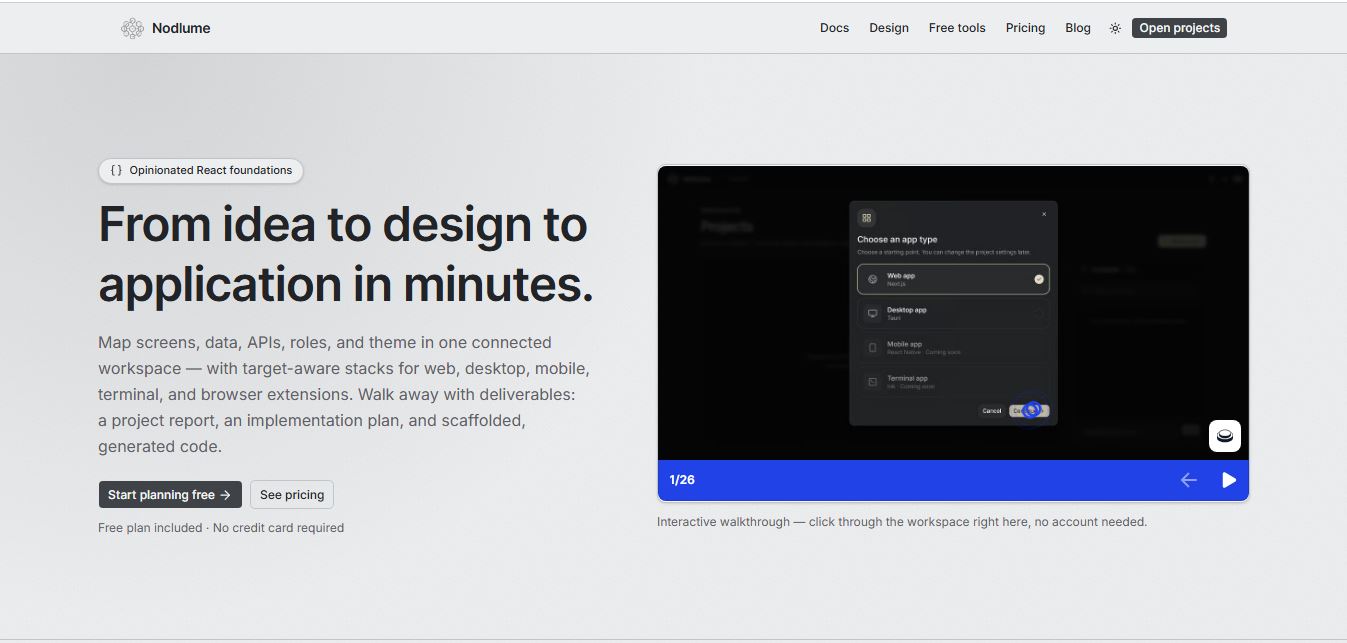
Nodlume is a visual application planning tool for React that lets you design your entire app—screens, components, data, APIs, and workflows—on a connected canvas, then export it as a real project skeleton. It helps teams plan, validate, and structure apps before writing code.
 4.8
4.8DeepSite AI
Website Builders
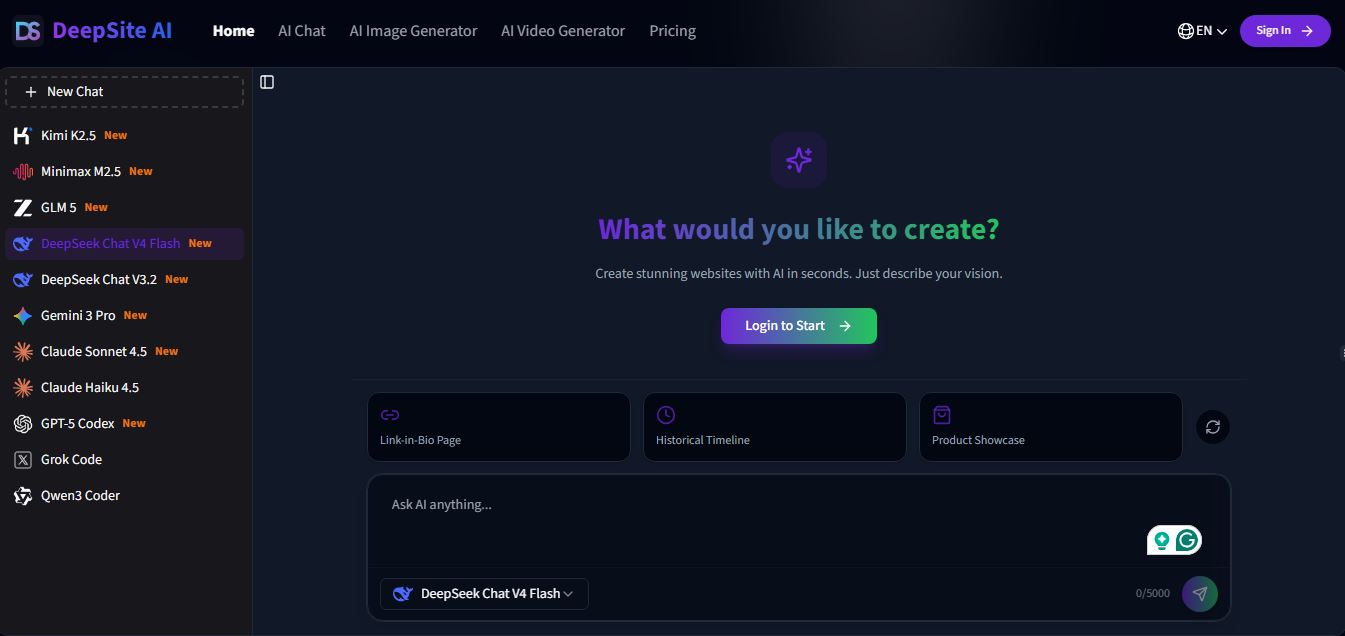
DeepSite AI is an AI-powered website builder that turns simple text prompts into fully designed, live websites with layout, content, and basic functionality included. It handles design, copy, and structure automatically, helping users launch landing pages or sites quickly without coding or design skills.
 4.8
4.8Trickle
Website Builders
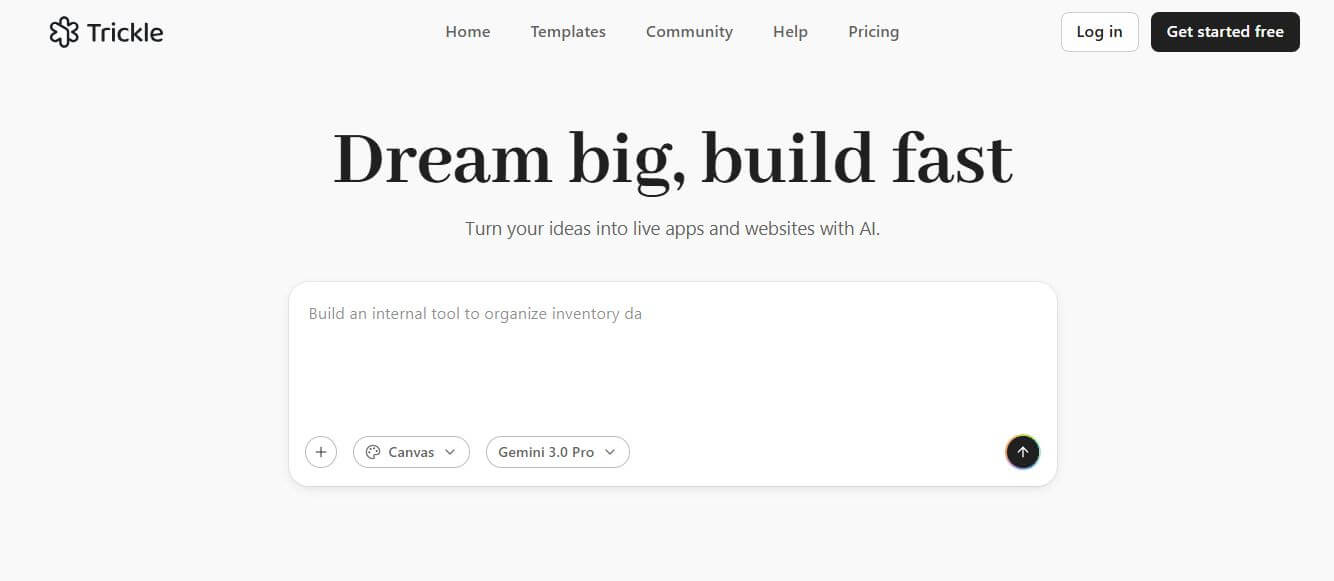
Trickle is an AI-powered builder that turns simple text prompts into fully functional websites, apps, and landing pages. It handles design, code, database, and deployment in one place, helping creators launch ideas quickly without coding or complex setup.
 4.9
4.9Hostinger AI Website Builder
Website Builders
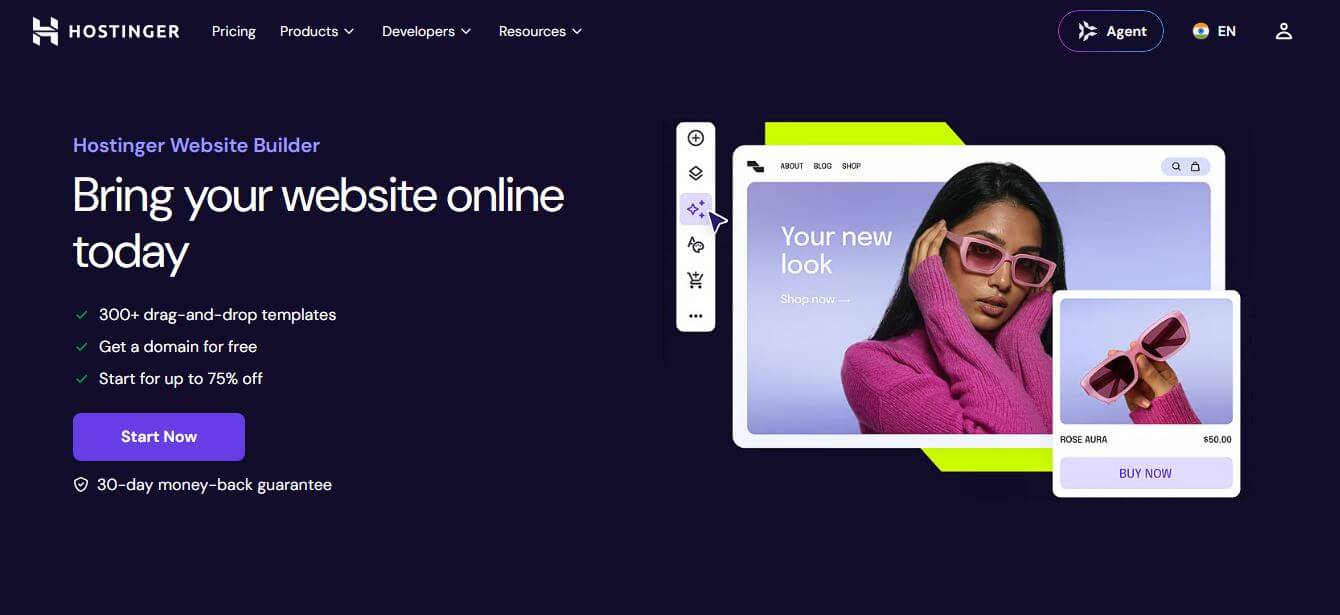
Hostinger AI Website Builder (hostinger.com/in/website-builder) is an all-in-one, no-code AI web design platform that generates fully responsive websites, copy, imagery, and eCommerce stores with bundled web hosting, free domain registration, and automated SEO tools.