GLM-5.3 (Z.ai)
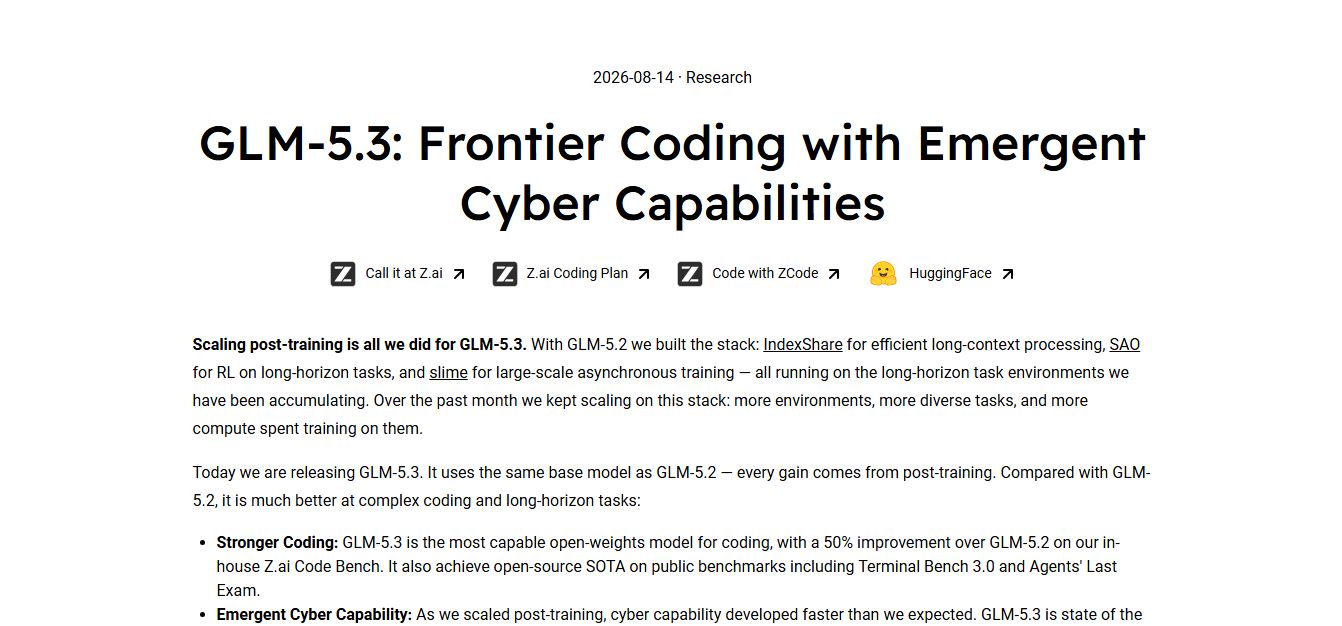
GLM-5.3 is an advanced open-weight AI model from Z.ai designed for coding, agent workflows, and cybersecurity tasks. It uses the same base as GLM-5.2 but improves performance through post-training, delivering around 50% better coding results and strong vulnerability detection capabilities for real-world software and security use cases.
What is GLM-5.3?
GLM-5.3 is an advanced AI model designed for coding, automation, and cybersecurity tasks, moving beyond simple chat responses into real execution. It can analyze code, detect vulnerabilities, and handle multi-step workflows, all with strong reasoning abilities. Built as part of Z.ai’s GLM series, it focuses on agent-like behavior—helping both developers and security teams work faster and more efficiently. With improved performance and safety controls, GLM-5.3 reflects the shift toward AI systems that actively perform complex technical work.
Built upon the same 743-billion-parameter Mixture-of-Experts (MoE) base model introduced in GLM-5.2, GLM-5.3 achieves major performance leaps exclusively through scaled-up reinforcement learning and long-horizon task post-training. Dropping the model into simulated, executable engineering environments—such as multi-node cluster diagnostics, live debugging, and refactoring real codebases—GLM-5.3 delivers a 50% jump on Z.ai's in-house Code Bench while consuming fewer output tokens than competing proprietary models. Supporting a 1,000,000-token context window (1M) and up to 128K maximum output tokens with mandatory reasoning enabled, GLM-5.3 is accessible via the Z.ai API, ZCode, and the GLM Coding Plan, alongside scheduled open-weight distribution.
- Organization & Scientific Direction: Z.ai (Zhipu AI) / Tsinghua University (Prof. Jie Tang)
- Architecture & Context: 743B Parameter Mixture-of-Experts (MoE) | 1,000,000 Token Context Window | 128K Max Output
- Reasoning Runtime: Always-on chain-of-thought reasoning with configurable effort levels (
low,high,max)
Use Cases:
- Orchestrating long-horizon terminal and CLI coding agents capable of running multi-step tasks, running test suites, and fixing pull requests autonomously
- Conducting repository-scale code analysis and multi-file refactoring across entire codebases using the 1M-token context buffer
- Automating white-box cybersecurity audits, exploit verification, and software vulnerability triage on platforms like CyberGym
- Deploying cost-effective enterprise coding copilots via OpenAI-compatible endpoints that achieve high task completion with fewer generation tokens
- Running self-hosted, private software engineering models as an open-weights alternative to closed American frontier APIs
Technology:
- Scaled reinforcement learning (RL) using Synthetic Autonomous Optimization (SAO) with context compaction for long-horizon stability
- Independent verification agents checking oracle, no-op, and unsolved-state criteria to generate reliable binary rewards without benchmark shortcuts
- High-efficiency reasoning decoder outperforming closed frontier benchmarks at approximately half the typical output token consumption
Target Users:
- Autonomous AI software engineers and agent builders designing long-horizon developer workflows
- Enterprise development teams seeking cost-efficient coding models with massive context windows
- Cybersecurity researchers, Red Teams, and DevSecOps professionals auditing open-source repositories for zero-day vulnerabilities
- Open-source AI researchers benchmarking the boundaries of scaled post-training on frozen base model weights
Acquisition: Developed and released as the flagship foundation model of Z.ai

Key features of GLM-5.3
GLM-5.3's key platform features are
- Open-Weights 743B MoE Foundation: Built on a 743-billion-parameter Mixture-of-Experts-based architecture, maximizing inference throughput while maintaining frontier capabilities.
- 1,000,000-Token Context & 128K Output: Supports comprehensive whole-codebase comprehension and long, multi-file code generation in a single context window.
- Always-On Configurable Reasoning: Operates natively with thinking enabled, supporting
low,high, andmaxreasoning effort levels to balance latency against analytical depth. - 6x Benchmark Jump on Terminal-Bench: Improves Terminal-Bench 3.0 performance from 4.6% to 28.3%, demonstrating significant progress in agentic terminal execution.
- Emergent Defensive & Offensive Cybersecurity: Scores 84.5% on CyberGym and 54.4% on ExploitBench, surfacing over 2,400 real-world open-source vulnerabilities during training.
- High-Fidelity Token Efficiency: Achieves benchmark parity with leading proprietary models using up to 50% fewer output tokens, cutting API compute costs.
- OpenAI Chat Completion Protocol: Easily integrates into existing LangChain, LlamaIndex, Cursor, and agentic workflows through a standard OpenAI-compatible API endpoint.
- Model Context Protocol (MCP) Support: Natively invokes local tool calls, file system servers, and developer MCP harnesses to run multi-step engineering loops.
GLM-5.3 Pricing
GLM-5.3 is accessible via the Z.ai API, the dedicated GLM Coding Plan, and third-party model routers, with open weights planned for local and private cloud deployments.
GLM Coding Plan:
- Subscription Access: Available as a direct subscription tier adopting a points-based quota system for predictable developer usage and high-throughput agent loops
API Usage & Routing (Per-Token Pricing):
- Standard API Endpoint: Billed on token consumption (typically starting around ~$1.40/1M input and ~$4.40/1M output tokens on commercial gateways), with caching discounts on prompt repeats
- Free Developer Allotments: Evaluatable via developer promotional credits and free community gateway tiers
Open Weights:
- Self-Hosted / Open-Weights: Slated for open distribution following safety evaluation, allowing enterprise self-hosting on private GPU infrastructure with zero ongoing software licensing costs
Disclaimer: When updating applications to the glm-5.3 model ID, set reasoning_effort to low, high, or max (thinking.type cannot be disabled). For current documentation and API quotas, visit z.ai or docs.z.ai.
Who is using GLM-5.3?
GLM-5.3 is used by developers, researchers, and enterprise AI teams, including
- Autonomous Agent Developers: Deploying terminal-based software engineering agents that execute shell commands and git workflows autonomously
- DevSecOps & Security Engineers: Auditing large production code repositories and dependencies for critical vulnerabilities and buffer overflows
- Enterprise Software Architects: Providing coding assistance across confidential intellectual property via future on-premise open-weight deployments
- Full-Stack Developers: Analyzing complex multi-file pull requests and generating documentation within 1M-token context sessions
Best GLM-5.3 Alternatives
Some of the strongest GLM-5.3 alternatives include
- DeepSeek-V3 / DeepSeek-R1
- Claude 3.7 Sonnet / Claude Opus (Anthropic Frontier Coding & Agentic AI)
- OpenAI GPT-4o / o3 (Advanced Multi-Step Coding & Reasoning Models)
- Qwen 2.5 Coder (Alibaba Open-Source Coding LLM Family)
- Kimi K3 (Moonshot AI Long-Context Reasoning Model)
- Grok 4.6 (xAI High-Velocity Reasoning & Coding Engine)
Pros and Cons of GLM-5.3
Pros
- Achieves substantial gains (~50% on Code Bench, 6x on Terminal-Bench) through post-training without modifying base architecture
- Supports an expansive 1,000,000-token context window with up to 128K maximum output tokens
- Demonstrates emergent cybersecurity capabilities, leading public benchmarks like CyberGym
- Produces comparable task completion with significantly fewer output tokens, cutting compute and API costs
- Open-weights distribution provides a path to self-hosted deployment without vendor lock-in
Cons
- Public weights rollout was held back initially for safety evaluation and cybersecurity hardening
- Text-only model at launch (multimodal visual workflows are handled separately by GLM-5.3-Flash)
- Reasoning cannot be disabled; requests must accommodate thinking tokens and cannot run in pure zero-thinking mode
Why Choose GLM-5.3?
Most point releases in the LLM ecosystem offer minor incremental tweaks, but GLM-5.3 demonstrates the power of scaled post-training on long-horizon professional environments. By training on complex real-world developer tasks rather than static toy coding challenges, Z.ai has built a model optimized for real-world engineering workflows.
- Completes multi-step coding and terminal tasks reliably with high token efficiency
- Handles massive codebases in a single prompt using its 1M-token context buffer
- Provides specialized cybersecurity reasoning to help developers identify vulnerabilities before deployment
- Offers an open-weight hedge against proprietary API rate limits and data sovereignty concerns
GLM-5.3 vs. Competitors
The main difference between GLM-5.3, DeepSeek-R1, Claude 3.7 Sonnet, and Qwen 2.5 Coder lies in context window size, post-training methodology, and cybersecurity specialization. While Claude remains a top proprietary benchmark and DeepSeek focuses heavily on pure math/algorithmic reasoning, GLM-5.3 couples a 1M context window with simulated real-world engineering environments and defensive cybersecurity capabilities.
| Feature / Metric | GLM-5.3 (Z.ai) | DeepSeek-R1 | Claude 3.7 Sonnet | Qwen 2.5 Coder 32B |
|---|---|---|---|---|
| Base Architecture | 743B Mixture-of-Experts | 671B Mixture-of-Experts | Proprietary Frontier Model | 32B Dense Transformer |
| Context Window | 1,000,000 Tokens (1M) | 128,000 Tokens (128K) | 200,000 Tokens (200K) | 128,000 Tokens (128K) |
| Terminal-Bench 3.0 | 28.3% (from 4.6%) | Baseline open scores | Frontier tier | Benchmark standard |
| CyberGym Score | 84.5% (State-of-the-Art) | Standard capability | Frontier capability | General coding focus |
| Model Weight Access | Open weights (staged release) | Fully open weights (MIT) | Closed API only | Fully open weights (Apache 2.0) |
| Best For | Long-horizon coding agents & repo-scale audits | Mathematical reasoning & algorithmic logic | Interactive agentic IDEs & creative logic | Local workstation coding & edge execution |
How do we rate GLM-5.3?
| Parameter | Rating (out of 5) |
|---|---|
| Agentic & Long-Horizon Coding Performance | 4.9 |
| Context Window & Output Capacity (1M / 128K) | 5.0 |
| Cybersecurity Reasoning & Exploit Analysis | 5.0 |
| Inference Efficiency & Token Output Ratio | 4.9 |
| Open-Weights Availability & Accessibility | 4.7 |
| Overall Score | 4.90 |
GLM-5.3 Review
GLM-5.3 is an important test of post-training scaling in the foundation model landscape. By keeping its 743B base architecture constant and concentrating compute on simulated expert engineering environments, Z.ai has achieved remarkable performance gains across long-horizon terminal navigation, complex bug diagnosis, and cybersecurity auditing. Its ability to solve tasks using fewer output tokens makes it an appealing choice for high-volume agent workloads, while its 1M context window ensures entire code repositories can be inspected in a single pass. As open-weight distributions roll out following safety evaluations, GLM-5.3 stands out as one of the most capable open coding models available.
Conclusion
GLM-5.3 marks a major shift in how AI models improve—not by getting bigger, but by getting smarter through post-training at scale. Instead of building a new base model, Z.ai focused entirely on reinforcement learning, longer tasks, and real-world environments, resulting in ~50% better coding performance and strong gains in agent workflows and tool use. What makes it especially notable is the emergence of cybersecurity capabilities, where the model can detect vulnerabilities and even assist in exploitation scenarios, prompting cautious rollout and added safety checks.
FAQ
What is GLM-5.3 and why is it getting attention?
GLM-5.3 is the latest version of Z.ai’s General Language Model series, focused heavily on agentic workflows, coding, and cybersecurity tasks. It’s gaining attention because it competes closely with top-tier AI models while being more open and cost-efficient.
What’s actually new in GLM-5.3 compared to earlier versions?
The biggest upgrade is in real-world task execution—especially long, multi-step workflows like debugging, system design, and vulnerability detection. It builds on GLM-5.2’s long-context reasoning and improves reliability in complex environments.
How strong is GLM-5.3 for coding and security tasks?
It performs extremely well in cybersecurity benchmarks, even slightly outperforming leading models in vulnerability detection tests (like CyberGym). However, it’s still weaker in turning those findings into full exploit code.
Is GLM-5.3 open-source or restricted?
Z.ai follows an open-weight strategy, but GLM-5.3 is being released carefully. Some advanced capabilities (especially security-related features) may be restricted to verified users to prevent misuse.
Can GLM-5.3 run real AI agents or workflows?
Yes. Like earlier GLM-5 models, it’s designed for agentic engineering, meaning it can handle long-running tasks such as building apps, analyzing systems, or automating workflows with minimal human intervention.
How does GLM-5.3 compare to models like GPT or Claude?
It’s positioned as a lower-cost, open alternative that performs competitively in areas like coding and reasoning. In some security benchmarks, it has even matched or exceeded closed models—but overall performance varies by task.
Are there any risks or concerns with GLM-5.3?
Yes. Because of its strong ability to find vulnerabilities, experts have raised concerns about misuse (e.g., hacking or exploitation). That’s why Z.ai is delaying full release and adding safety controls before wider access.
User Reviews
No reviews yet for GLM-5.3 (Z.ai).
Featured Tools
Featured AI tools from TechShark

Melody Genie
MelodyGenie is an AI-powered music generator that creates original songs from simple text prompts. Users can choose styles, moods, and genres, then instantly generate melodies and full tracks, making it easy for creators, marketers, and hobbyists to produce custom music without musical expertise.
Freemium
Kimi AI
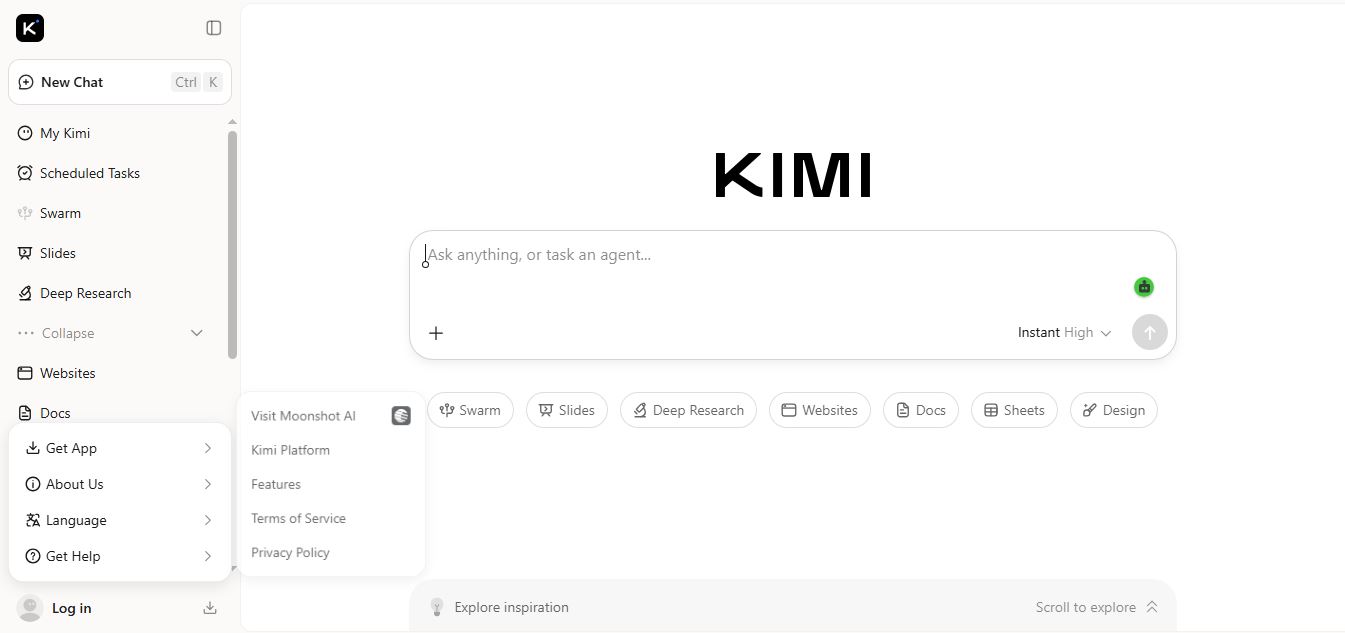
Kimi AI is an advanced AI assistant developed by Moonshot AI that helps you chat, research, write, code, and automate tasks in one place. It supports web search, file analysis, and multimodal inputs, and can even run autonomous “agent” workflows to complete complex tasks end-to-end.
Freemium
Fashion Diffusion AI
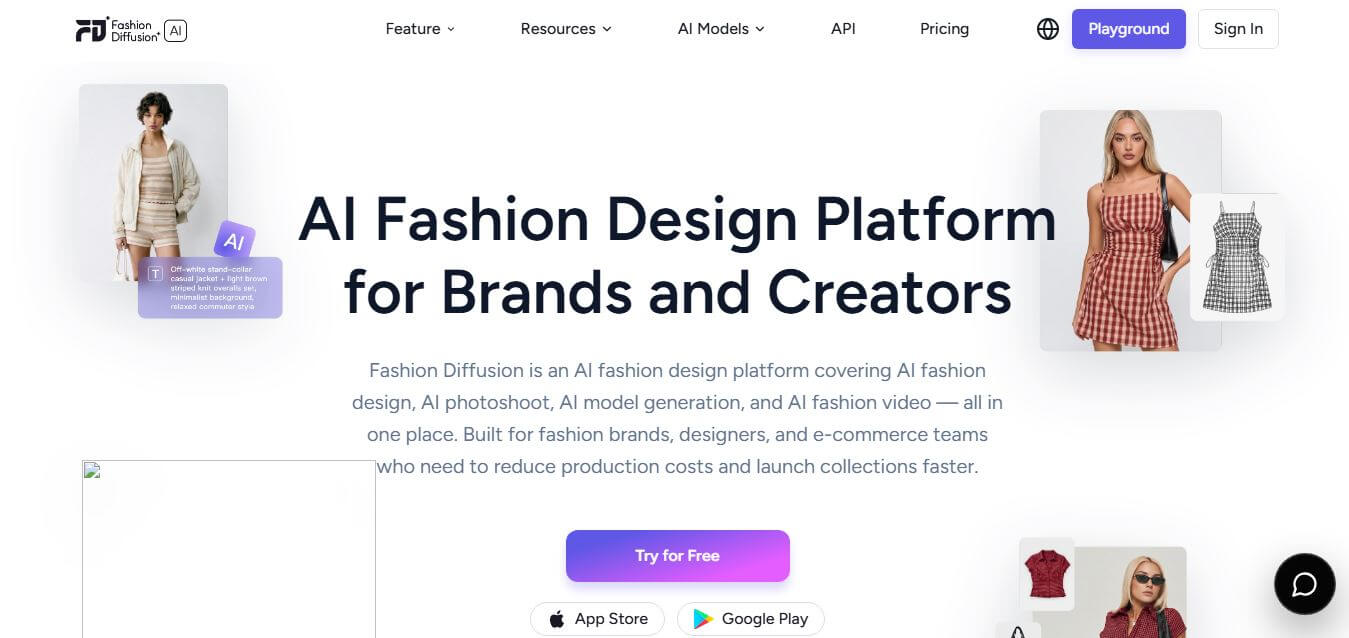
Fashion Diffusion is an AI-powered fashion design platform that helps brands and designers create clothing designs, virtual try-ons, AI models, product photos, and marketing visuals faster and cost-effectively.
Paid
Veo 4
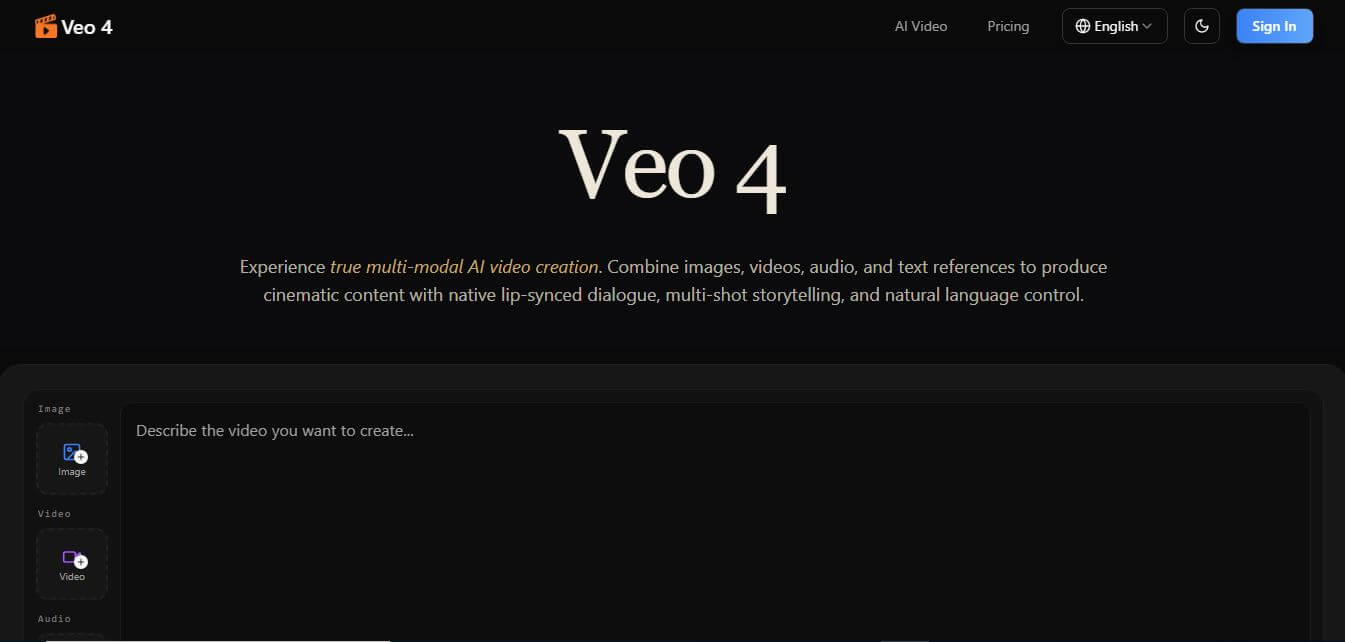
Veo 4 AI is an AI video creation platform that generates dramatic videos from text, images, audio, and video prompts using realistic motion and synchronized sound.
Paid
Alternatives
Alternatives to GLM-5.3 (Z.ai)
The best GLM-5.3 alternatives include DeepSeek-R1, Claude 3.7 Sonnet, OpenAI GPT-4o / o3, Qwen 2.5 Coder 32B, Kimi K3, and Grok 4.6. These foundation models provide coding assistance, agentic tool invocation, and complex multi-step reasoning. While GLM-5.3 specializes in a 743B Mixture-of-Experts architecture with a 1M-token context window that achieved open-weights state-of-the-art results on Terminal-Bench 3.0 (28.3%) and CyberGym (84.5%) through post-training alone, alternatives like Claude 3.7 Sonnet operate as closed commercial APIs, and DeepSeek-R1 focuses primarily on mathematical reasoning.
 4.7
4.7Quinvio AI
Productivity
Quinvio AI helps you turn ideas, scripts, blogs, or web content into polished video presentations. You can refine messaging, choose branded templates, add AI avatars and voiceovers, and produce shareable visual content without traditional recording or editing workflows. It is especially useful for marketers, educators, trainers, creators, and business teams.
 4.9
4.9HubSpot
Marketing
HubSpot is an AI-powered customer platform that helps businesses manage marketing, sales, customer service, and content in one place. It offers a free CRM, automation tools, analytics, and AI features, enabling teams to attract leads, close deals, and deliver better customer experiences at scale.
 4.9
4.9TestSprite
Testing
TestSprite is an AI-powered software testing agent that helps developers automatically generate, run, and fix end-to-end tests for web apps. It simulates real user behavior, detects issues, and provides root-cause insights with suggested fixes, enabling faster releases and more reliable software without manual QA effort.
 4.8
4.8Microsoft Copilot
Productivity
Microsoft Copilot is an AI-powered assistant that helps users write, research, analyze data, and automate tasks across apps like Word, Excel, Outlook, and Teams. It combines large language models with real-time data to generate content, answer questions, and improve productivity across personal and professional workflows.
 4.9
4.9Casablanca AI
Productivity
Casablanca AI is an AI-powered virtual camera that corrects your gaze in real time during video calls, making it appear like you’re maintaining natural eye contact. It works with tools like Zoom and Teams, improving trust, engagement, and communication without needing extra hardware.
 4.9
4.9Granola
Productivity
Granola is an AI-powered meeting assistant that helps you capture, organize, and act on conversations without losing focus. It listens to meetings, turns notes into structured summaries, and generates action items and follow-ups automatically—so you stay present while everything important is documented and ready to use.
 4.8
4.8AI Perfect Assistant
Productivity
AI Perfect Assistant brings AI assistance directly into everyday work applications. It helps users write emails, improve documents, summarize content, translate text, create presentations, generate SEO content, explain Excel formulas, and handle repetitive tasks through 60+ specialized tools and multiple integrations for everyday professional and business workflows with less effort.
 4.9
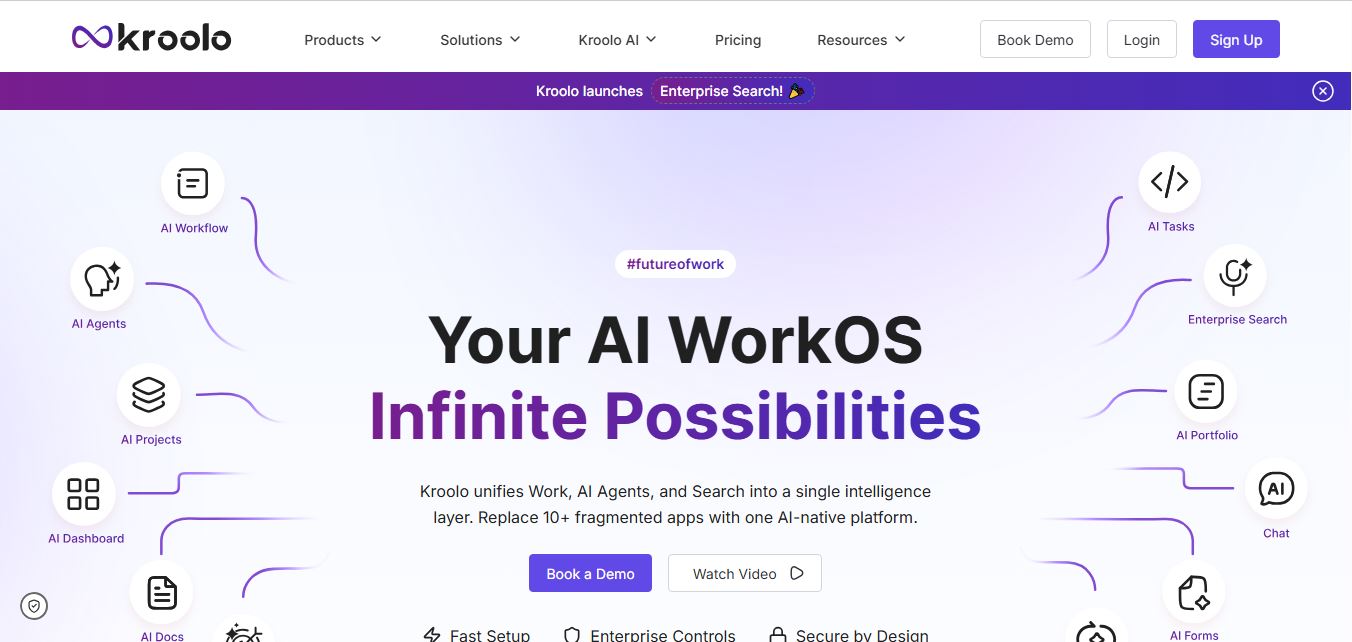
4.9Kroolo
Project Management
Kroolo is an AI-powered productivity and project management platform that helps teams plan tasks, track progress, and collaborate in one place. It combines project tracking, document management, and AI assistance to streamline workflows, automate routine work, and improve team efficiency across projects.
 4.8
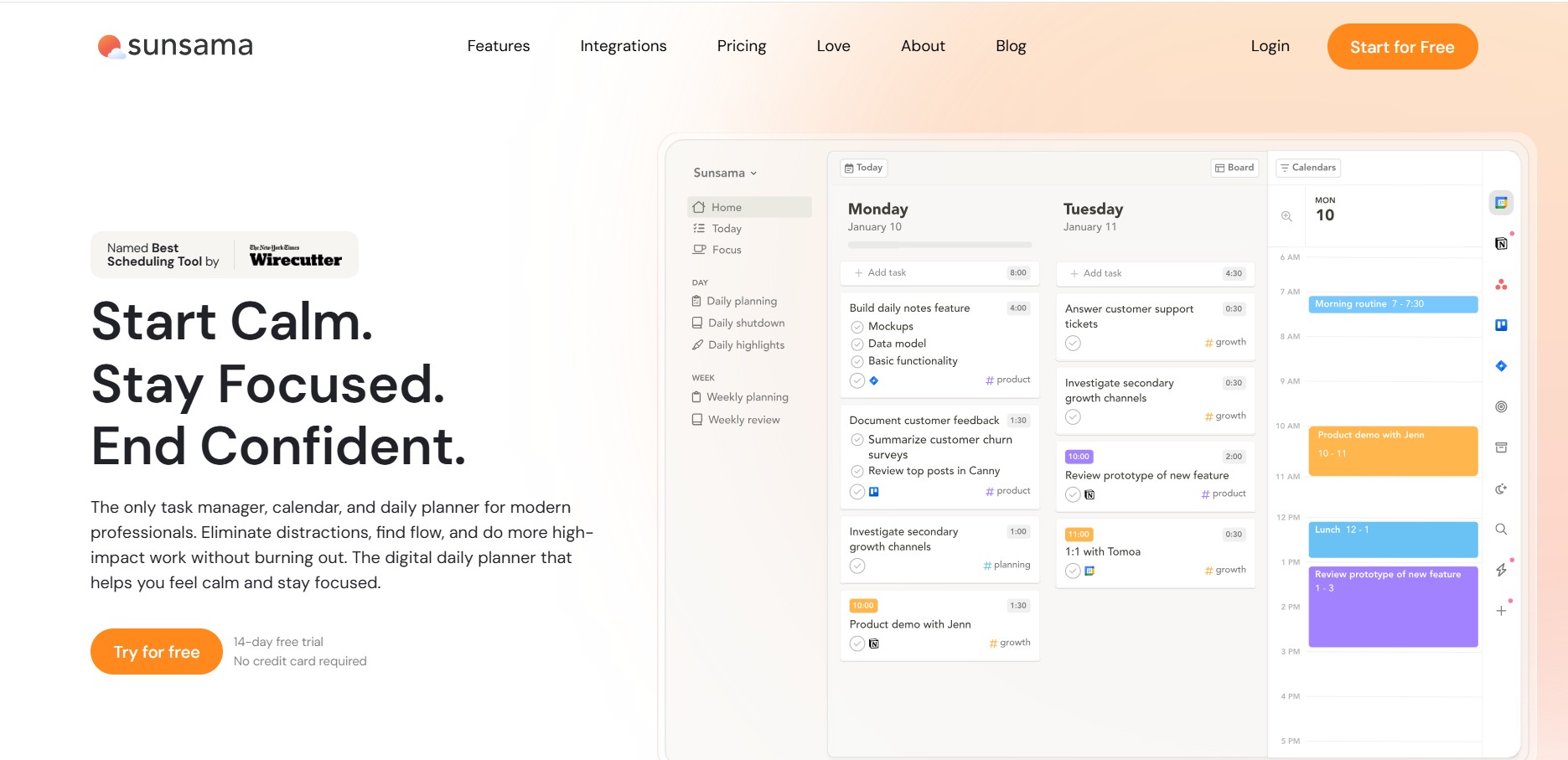
4.8Sunsama
Productivity
Sunsama is a digital daily planner and time-blocking application designed to cultivate intentional work habits, consolidate tasks across third-party tools, and facilitate guided morning planning and evening reflection rituals.