
Gladia
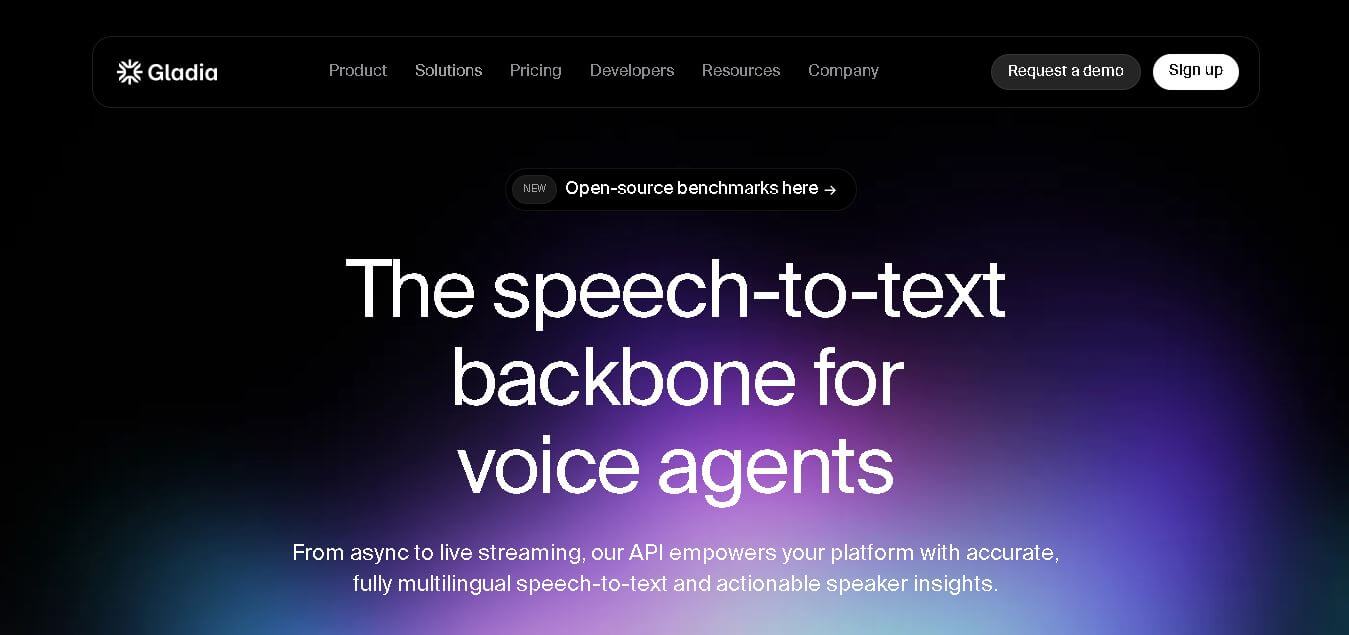
Gladia is an enterprise speech-to-text and AI audio infrastructure platform powered by its Solaria speech models, offering real-time streaming, asynchronous transcription, native audio intelligence, 100+ language support with code-switching, and EU data residency.
What is Gladia?
Gladia is an enterprise-grade AI audio infrastructure platform providing speech-to-text (STT) and native audio intelligence through a unified API. Founded by Jean-Louis Queguiner and Jonathan Topart, Gladia solves the problems of fragmented audio pipelines by combining high-accuracy multilingual transcription, real-time code-switching, and downstream analytical layers into a developer-first, sovereign solution.
Built around the mission to “Turn audio into your most valuable dataset,” Gladia enables engineering teams, startups, and global enterprises to deploy scalable voice solutions without the latency, infrastructure management, or compliance challenges of self-hosted open-source models. Powered by proprietary models including Solaria-1 and Solaria-3, Gladia provides sub-300ms latency for live voice agents, contact center analytics, and AI meeting assistants across more than 100 languages.
- Platform Role: AI Audio Infrastructure, Multilingual Speech-to-Text (STT) Engine & Audio Intelligence API
- Founders & Organization: Jean-Louis Queguiner and Jonathan Topart (Gladia SAS / Gladia Inc.)
- Architecture & SDKs: REST API, WebSocket Streaming, Python SDK, Node.js SDK, and native Pipecat/LiveKit voice agents
Use Cases:
- Powering conversational voice agents and voice bots requiring sub-300ms real-time audio transcription and low-latency interaction
- Transcribing and structuring customer support calls in CCaaS platforms with automated sentiment scoring and CRM sync
- Driving automated AI meeting assistants and note-takers with state-of-the-art speaker diarization (pyannoteAI) and action item summaries
- Generating accurate subtitles and closed captions across 100+ languages for media, video editing, and broadcast platforms
- Processing multilingual calls with mid-sentence code-switching and automated Personally Identifiable Information (PII) redaction
Technology:
- Proprietary Solaria speech model series (Solaria-1 universal STT and Solaria-3 optimized for conversational English and European languages)
- Native audio intelligence engine integrating speaker diarization, sentiment analysis, entity extraction, and audio-to-LLM pipelines
- European Union data sovereignty with 100% EU data residency options and strict zero-data-training retention policies by default
- Full enterprise compliance stack certified under ISO 27001:2022, SOC 2 Type II, HIPAA, and GDPR
Target Users:
- Voice agent developers and engineers building low-latency conversational AI applications and telephony bots
- Product teams building AI meeting assistants, note-takers, and automated collaboration software
- Contact Center as a Service (CCaaS) providers and sales intelligence platforms analyzing customer call streams
- Media platforms, video editors, and broadcasters scaling automated transcription, captioning, and dubbing pipelines
Acquisition: Independent enterprise AI audio infrastructure company headquartered in Paris, France

What are the key features of Gladia?
Gladia's key platform features are
- Sub-300ms Real-Time Streaming: Ultra-low latency WebSocket streaming engineered for live conversational voice agents and responsive telephone systems.
- Native Multilingual Code-Switching: Automatically detects and transcribes over 100 languages, seamlessly handling speakers switching languages mid-sentence without losing accuracy.
- Market-Leading Speaker Diarization: Powered by pyannoteAI integration, it accurately identifies and separates distinct speakers, timestamps, and conversational turns.
- Built-In Audio Intelligence: Provides sentiment analysis, topic detection, summarization, and named entity recognition (NER) natively without secondary LLM hops.
- Automated PII Redaction: Safeguards sensitive customer privacy by automatically redacting names, phone numbers, emails, addresses, and payment data.
- Custom Vocabulary & Jargon Tuning: Ingests domain-specific terms, acronyms, and industry glossaries to avoid miswriting technical language.
- GladiaFlow Desktop Dictation: Zero-code real-time dictation app bringing Gladia's speech intelligence directly to local desktop applications.
- EU Data Sovereignty & Privacy: Guarantees 100% EU data residency with a contractual commitment that user audio is never used for model training.
How much does Gladia cost?
Gladia operates on a usage-based pay-as-you-go model alongside volume discounts and custom enterprise licensing tiers.
Developer & Pay-As-You-Go Tiers:
- Free Credit Welcome: Grants up to €50 in non-expiring free transcription credits for new sign-ups to test asynchronous and real-time APIs in the developer playground.
- Pay-As-You-Go: Usage-based billing per audio hour (typically around $0.00021 per second / approx. $0.75 per audio hour for standard async transcription), including built-in diarization and intelligence features.
Enterprise Tier:
- Custom Enterprise Pricing: Tailored pricing for high-volume deployments with dedicated account management, guaranteed 99.95% uptime SLAs, private cloud/on-premise deployment options, and customized DPA agreements.
Disclaimer: Gladia pricing scales with audio duration and concurrency requirements. Free developer credits are provided upon sign-up; enterprise volume discounts and custom SLAs require direct contact via gladia.io.
Who should use Gladia?
Gladia is designed for developers, engineering teams, and enterprise voice products, including
- Conversational Voice AI Developers: Teams implementing real-time agentic voice bots using frameworks like Pipecat, LiveKit, or Retell.
- Meeting Assistant & Note-Taking Founders: Builders creating collaborative meeting recorders, automated CRM loggers, and enterprise summarizers.
- Contact Center Operations (CCaaS): Telephony platforms (like Aircall) analyzing massive call volumes for quality assurance and compliance monitoring.
- Video & Media Production Platforms: Creators and SaaS platforms (like VEED and Mojo) generating fast, accent-resilient subtitles in multiple languages.
What are the best alternatives to Gladia?
Some of the strongest Gladia alternatives include
- Deepgram
- AssemblyAI
- Speechmatics
- Whisper (OpenAI / Self-Hosted)
- ElevenLabs (Scribe)
- Rev AI
What are the pros and cons of Gladia?
What are the pros of Gladia?
- Native code-switching handles multi-language conversations seamlessly within the same audio stream
- All-in-one API bundles speaker diarization and audio intelligence without costly add-on micro-billing
- Ultra-low latency under 300ms enables natural, human-like responses in conversational voice agents
- Strict EU data privacy guarantees with default zero data retention for training purposes
- Developer-friendly ecosystem with fast setup times, rich documentation, and native voice stack integrations
What are the cons of Gladia?
- Voice-agent infrastructure is developer-oriented, requiring API integration knowledge for custom platforms
- On-premise deployments and custom private cloud setups are reserved exclusively for enterprise agreements
- Real-time telephony setups require reliable WebSocket connections to maintain minimum latency guarantees
Why should you choose Gladia?
Building real-time voice applications often requires piecing together separate vendors for transcription, speaker separation, and conversational intelligence—or struggling with the resource overhead of hosting Whisper models internally. Gladia solves this by providing a sovereign, all-in-one AI audio infrastructure. With out-of-the-box diarization, sub-300ms response times, and superior handling of real-world conversational accents, Gladia ensures your downstream LLMs and CRMs receive clean, structured data every time.
- Accelerate voice agent response loops with sub-300ms streaming speech recognition
- Capture natural conversational shifts with accent resilience and native mid-sentence code-switching
- Eliminate middleware costs by receiving speaker turns, sentiment, and summaries in a single API call
- Ensure strict regulatory compliance with ISO 27001, SOC 2 Type II, and 100% EU data residency
How does Gladia compare to competitors?
The primary distinction between Gladia, Deepgram, AssemblyAI, and Speechmatics lies in Gladia's native multilingual code-switching, integrated audio intelligence, and EU-first compliance posture. While Deepgram emphasizes raw latency and AssemblyAI focuses on post-processing APIs, Gladia bundles advanced pyannoteAI diarization, multi-language streaming across 100+ languages, and default zero-training guarantees without charging extra for core metadata features.
| Feature / Platform | Gladia | Deepgram | AssemblyAI | Speechmatics |
|---|---|---|---|---|
| Core Focus | Multilingual AI Audio Infrastructure & Intelligence | Ultra-Low-Latency Deep Learning ASR | Speech-to-Text & Audio Understanding APIs | Autonomous Speech Recognition & Accents |
| Streaming Latency | Sub-300ms | Sub-300ms | Sub-500ms | Sub-500ms |
| Real-Time Languages | 100+ (With native code-switching) | 30+ | Limited streaming locales | 55+ |
| Speaker Diarization | Included natively (pyannoteAI) | Paid add-on per minute | Paid add-on per minute | Included natively |
| Data Training Opt-Out | Contractual zero-training by default | Paid opt-out on higher tiers | Paid opt-out on higher tiers | Standard privacy terms |
| Best For | Global multilingual voice agents, note-takers & EU compliance | English-centric ultra-fast telephony streams | North American podcast and media transcription pipelines | Enterprise mission-critical contact centers |
How do we rate Gladia?
| Parameter | Rating (out of 5) |
|---|---|
| Multilingual Accuracy & Code-Switching | 4.9 |
| Real-Time Latency & Streaming Speed | 4.8 |
| Audio Intelligence & Speaker Diarization | 4.9 |
| Developer Experience & Integrations | 4.8 |
| Value for Money & Pricing Clarity | 4.8 |
| Overall Score | 4.84 |
What is our review and verdict on Gladia?
Gladia stands out for its fast, accurate speech-to-text and developer-friendly APIs. It’s great for building apps around voice, calls, or media processing without heavy setup. The real-time transcription is impressive, and language support keeps improving. Pricing and advanced customization may need closer evaluation, but overall it’s a solid choice for teams working with audio AI at scale.
Conclusion
Gladia makes working with audio data feel fast, structured, and developer-friendly by turning speech into usable insights in real time. Its APIs handle transcription, speaker recognition, and language processing with strong accuracy, making it a solid fit for apps that rely on voice data. Instead of building complex pipelines from scratch, teams can plug in and scale quickly. Overall, Gladia simplifies audio intelligence and helps businesses unlock more value from conversations with less effort.
FAQ
What is Gladia and what does it actually do?
Gladia is an AI audio infrastructure platform that helps developers and businesses capture, transcribe, and analyze audio through a single API. It converts voice data from calls, meetings, or media into structured text and insights, making audio usable for automation, analytics, and AI-driven workflows.
How is Gladia different from basic speech-to-text tools?
Unlike simple transcription tools, Gladia goes beyond converting speech into text by adding an “audio intelligence layer.” It can extract entities, analyze sentiment, identify speakers, and generate summaries, meaning you don’t need separate tools or pipelines to process audio data further.
What features does Gladia offer for developers?
Gladia provides real-time and batch speech-to-text APIs, multilingual transcription across 100+ languages, speaker diarization, translation, and integrations with tools like CRMs or data pipelines. It also supports SDKs and webhooks, making it easy to plug into existing applications and workflows.
What is Gladia’s Audio-to-LLM feature?
Audio-to-LLM is a feature that allows developers to run AI prompts directly on audio transcripts in a single API call. Instead of building separate pipelines for transcription and analysis, Gladia returns structured outputs like summaries, action items, or insights alongside the transcript, saving time and complexity.
Can Gladia handle multilingual and real-world audio?
Yes, Gladia is designed for real-world use cases, supporting over 100 languages with automatic detection and code-switching. It can process noisy, accented, or mixed-language conversations, making it suitable for global applications like customer support, meetings, and media content.
Is Gladia secure and compliant for enterprise use?
Gladia is built with enterprise-grade security and compliance standards, including GDPR, HIPAA, SOC 2 Type II, and ISO 27001. It also supports EU data residency and secure data handling, making it suitable for industries that require strict data protection.
Who should use Gladia?
Gladia is ideal for developers, AI startups, SaaS companies, and enterprises building voice-based products like meeting assistants, call analytics tools, voice agents, or media platforms. It’s especially useful for teams that want to turn conversations into actionable data without building complex infrastructure.
User Reviews
No reviews yet for Gladia.
Featured Tools
Featured AI tools from TechShark
Melody Genie
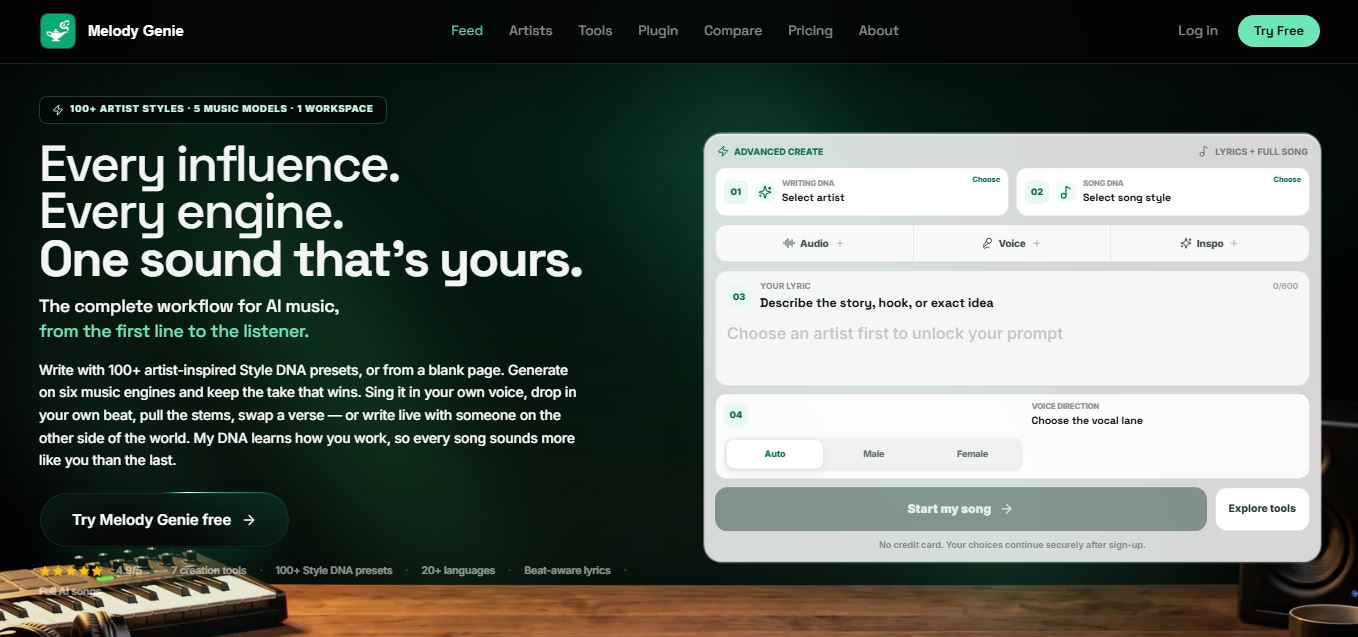
MelodyGenie is an AI-powered music generator that creates original songs from simple text prompts. Users can choose styles, moods, and genres, then instantly generate melodies and full tracks, making it easy for creators, marketers, and hobbyists to produce custom music without musical expertise.
Freemium
Kimi AI
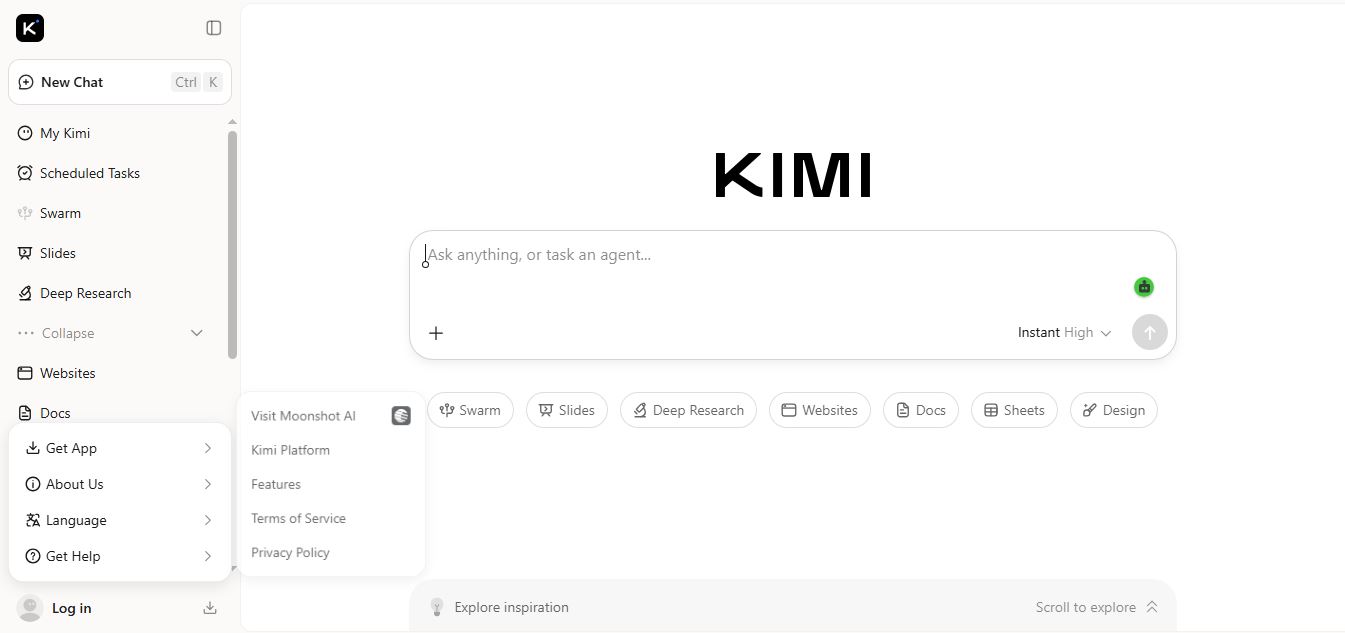
Kimi AI is an advanced AI assistant developed by Moonshot AI that helps you chat, research, write, code, and automate tasks in one place. It supports web search, file analysis, and multimodal inputs, and can even run autonomous “agent” workflows to complete complex tasks end-to-end.
Freemium
Fashion Diffusion AI
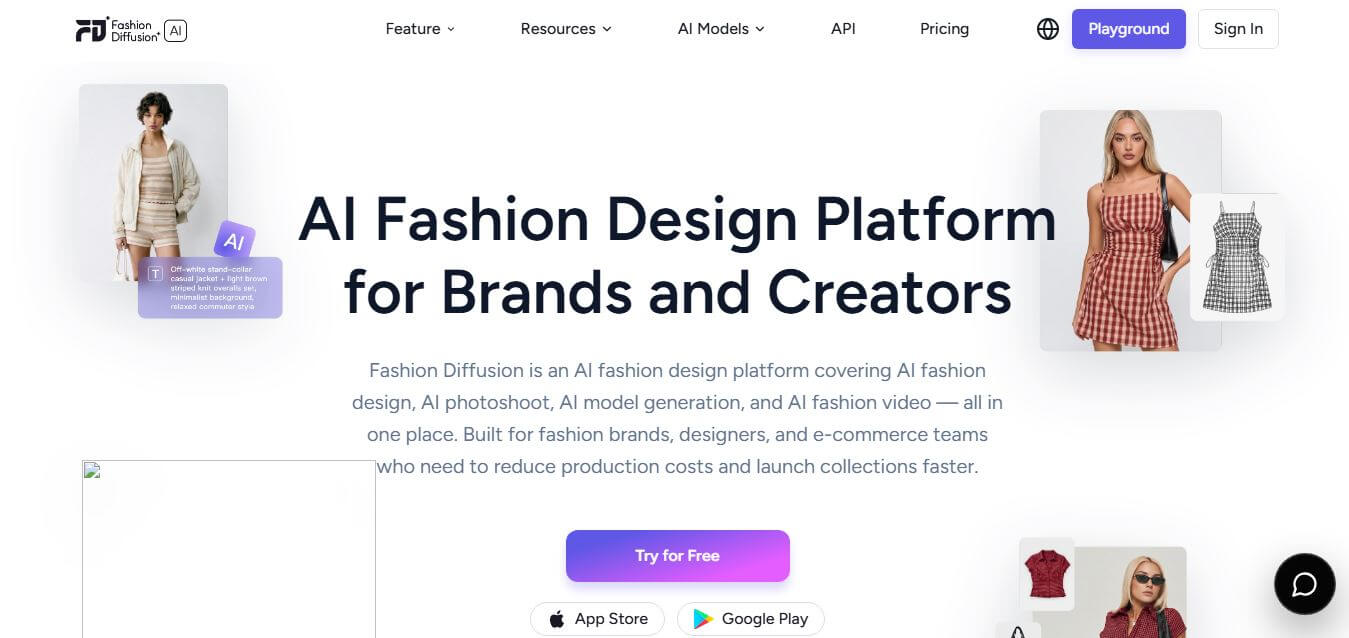
Fashion Diffusion is an AI-powered fashion design platform that helps brands and designers create clothing designs, virtual try-ons, AI models, product photos, and marketing visuals faster and cost-effectively.
Paid
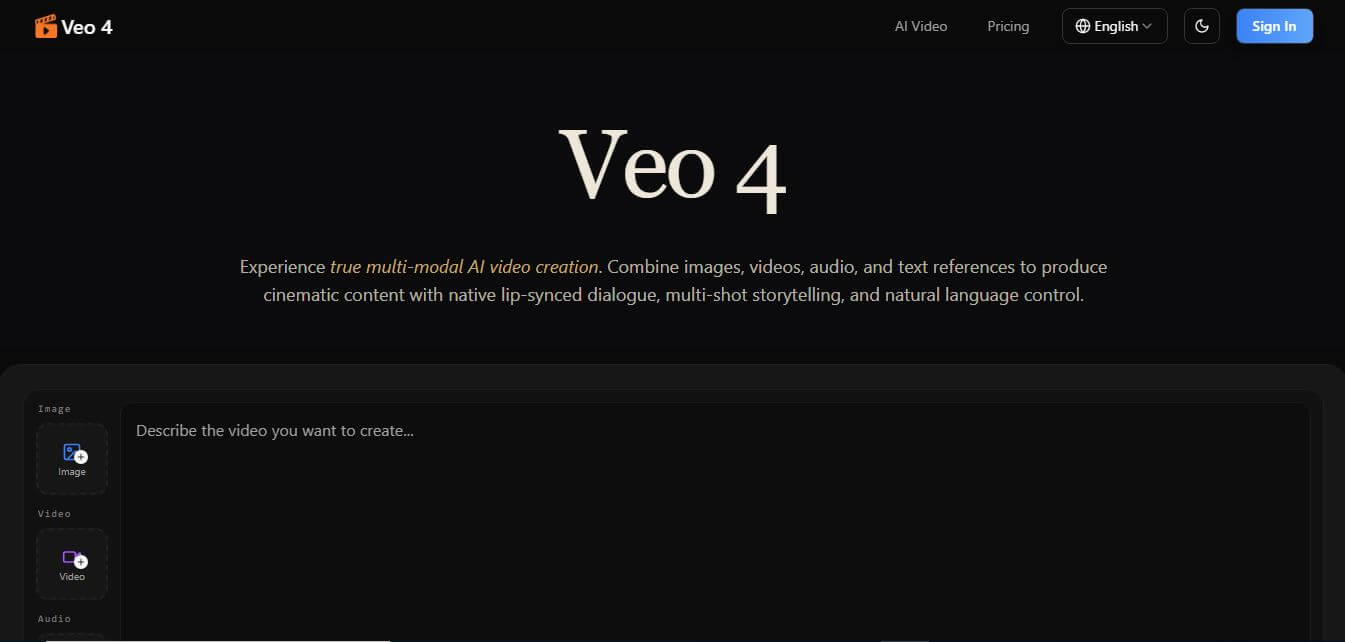
Veo 4
Veo 4 AI is an AI video creation platform that generates dramatic videos from text, images, audio, and video prompts using realistic motion and synchronized sound.
Paid
Alternatives
Alternatives to Gladia
The best Gladia alternatives include Deepgram, AssemblyAI, Speechmatics, self-hosted Whisper, and ElevenLabs Scribe. While Gladia provides native audio intelligence, pyannoteAI speaker diarization, sub-300ms real-time code-switching across 100+ languages, and EU data residency by default, alternatives like Deepgram focus on pure streaming speed and AssemblyAI emphasizes post-processed English audio workflows.
 4.9
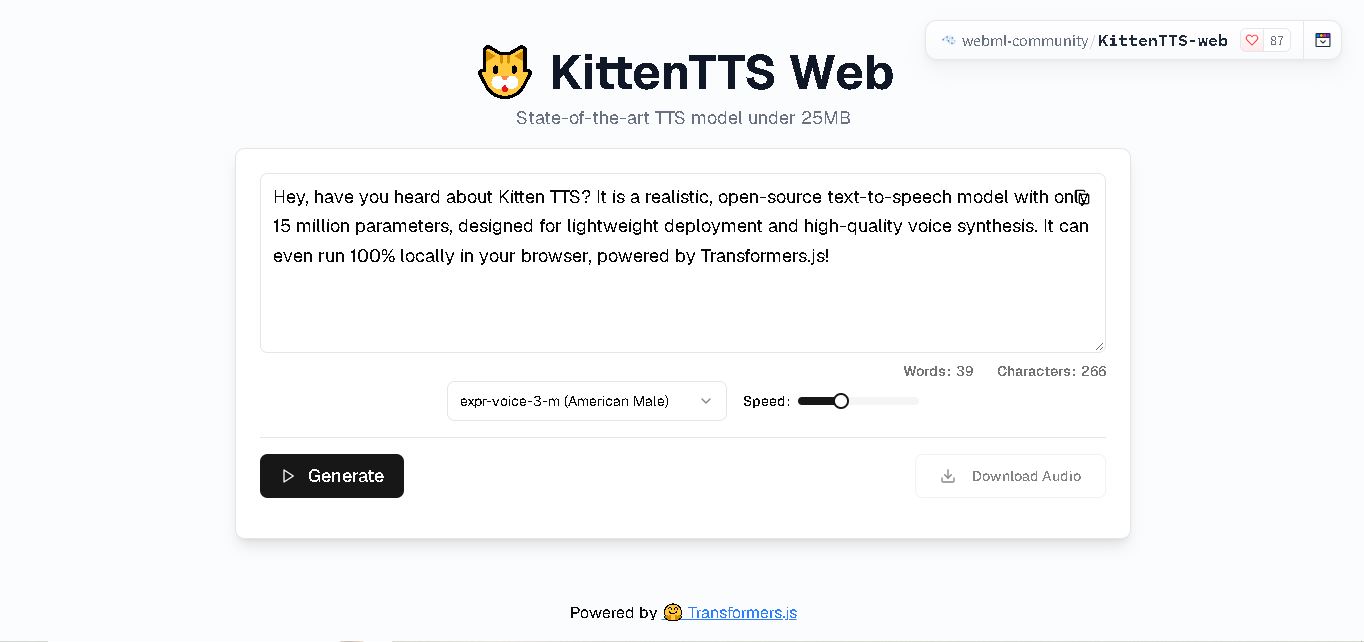
4.9KittenTTS Web
Text-to-Speech
KittenTTS Web is a lightweight text-to-speech demo hosted on Hugging Face Spaces. It helps users explore how written text can be transformed into spoken audio using neural voice synthesis. The project is particularly relevant to developers, content creators, and accessibility-focused users interested in experimenting with compact speech generation technology directly through a web browser.
 4.9
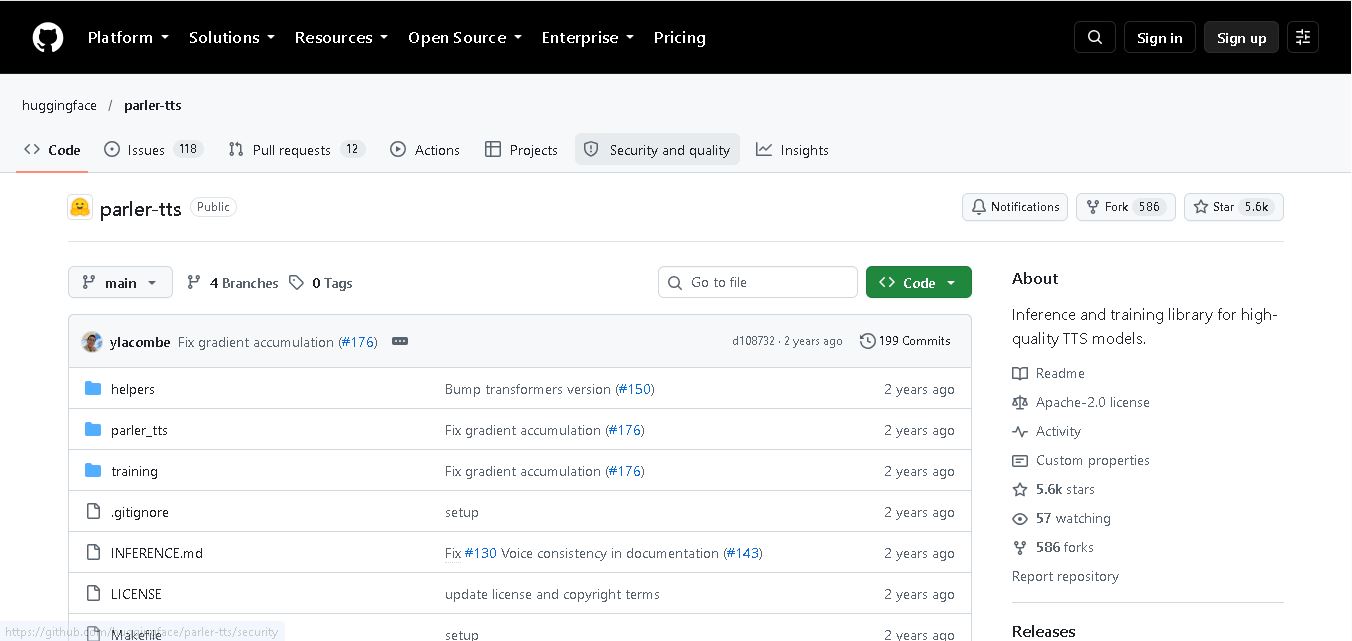
4.9Parler-TTS
Text-to-Speech
Parler-TTS is an open-source text-to-speech tool that transforms written content into natural-sounding audio. It lets developers describe voice characteristics using natural language, including pitch, speaking speed, and recording quality. With publicly available model weights, training resources, and customizable checkpoints, it supports experimentation, research, and tailored speech-generation applications across projects.
 4.9
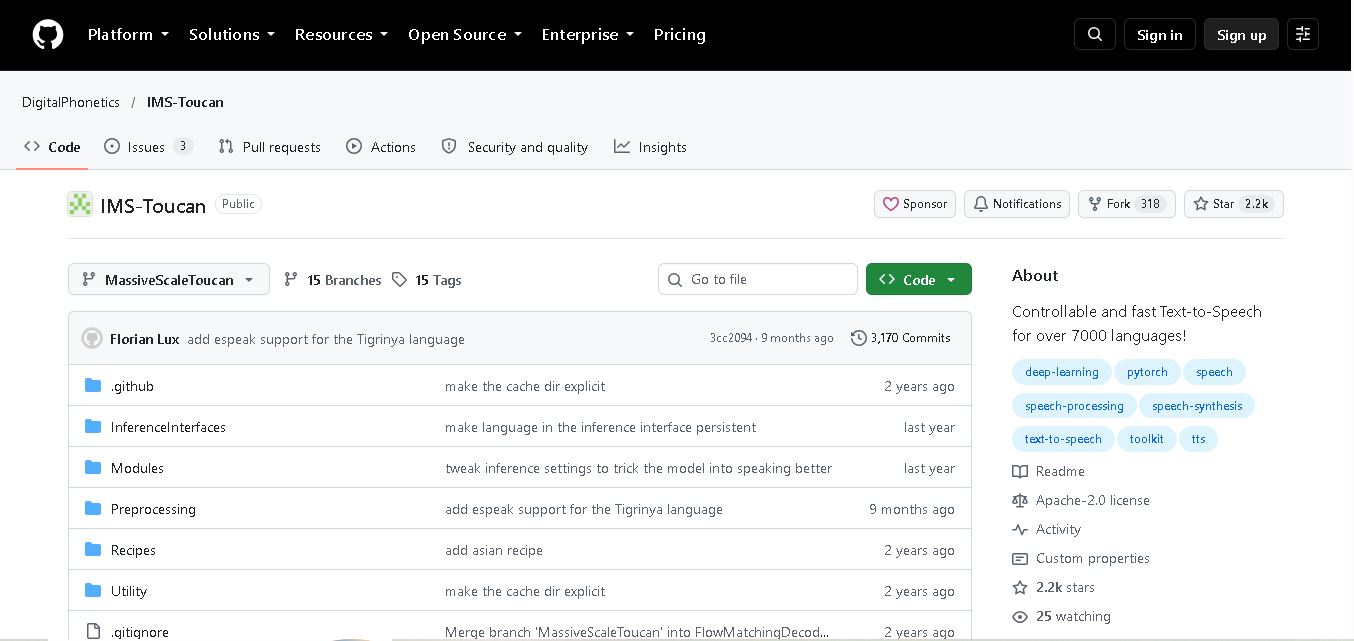
4.9IMS Toucan
Text-to-Speech
IMS Toucan is an open-source text-to-speech toolkit from the University of Stuttgart designed for multilingual speech generation. It converts text into audio and provides tools for inference, voice and prosody control, and model training. Supporting more than 7,000 languages, it serves developers and researchers exploring technology across linguistic contexts.
 4.8
4.8Verbatik
Text-to-Speech
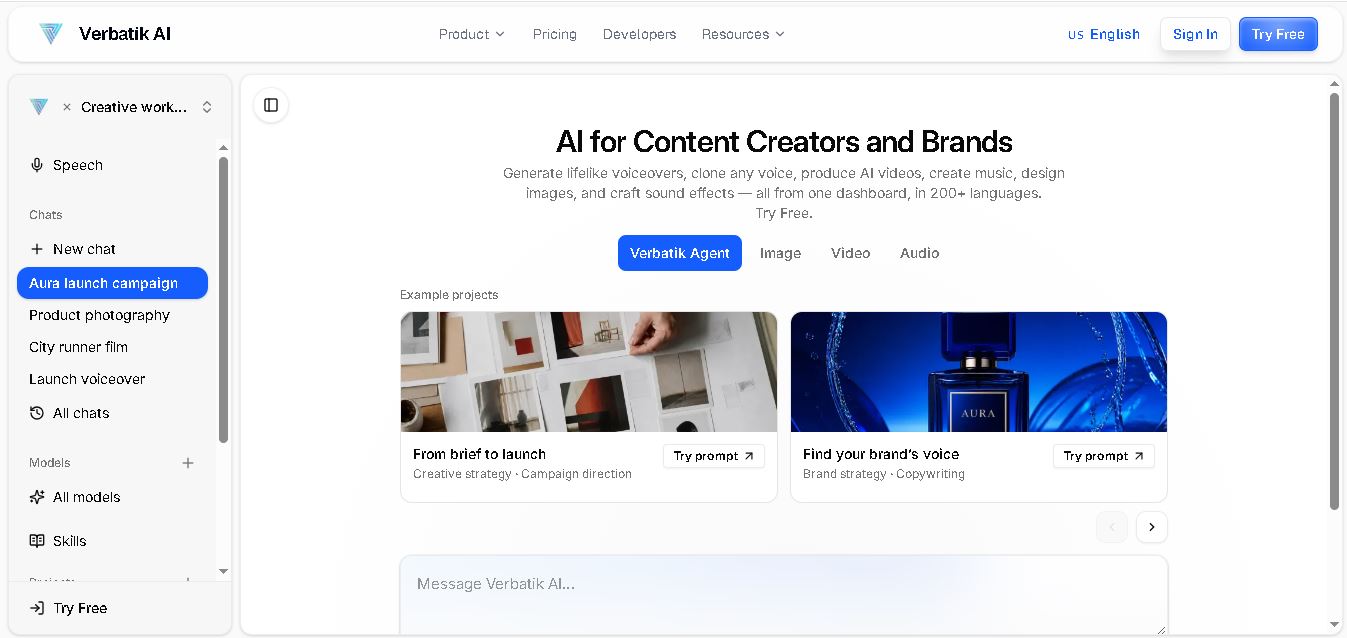
Verbatik AI helps users create realistic voiceovers, clone voices, generate music, and produce multimedia content using artificial intelligence. With multilingual speech, customizable voice settings, and developer APIs, it supports content creators, marketers, educators, and businesses. The platform simplifies audio production, video creation, and content localization from one workspace.
 4.8
4.8Narration Box
Text-to-Speech
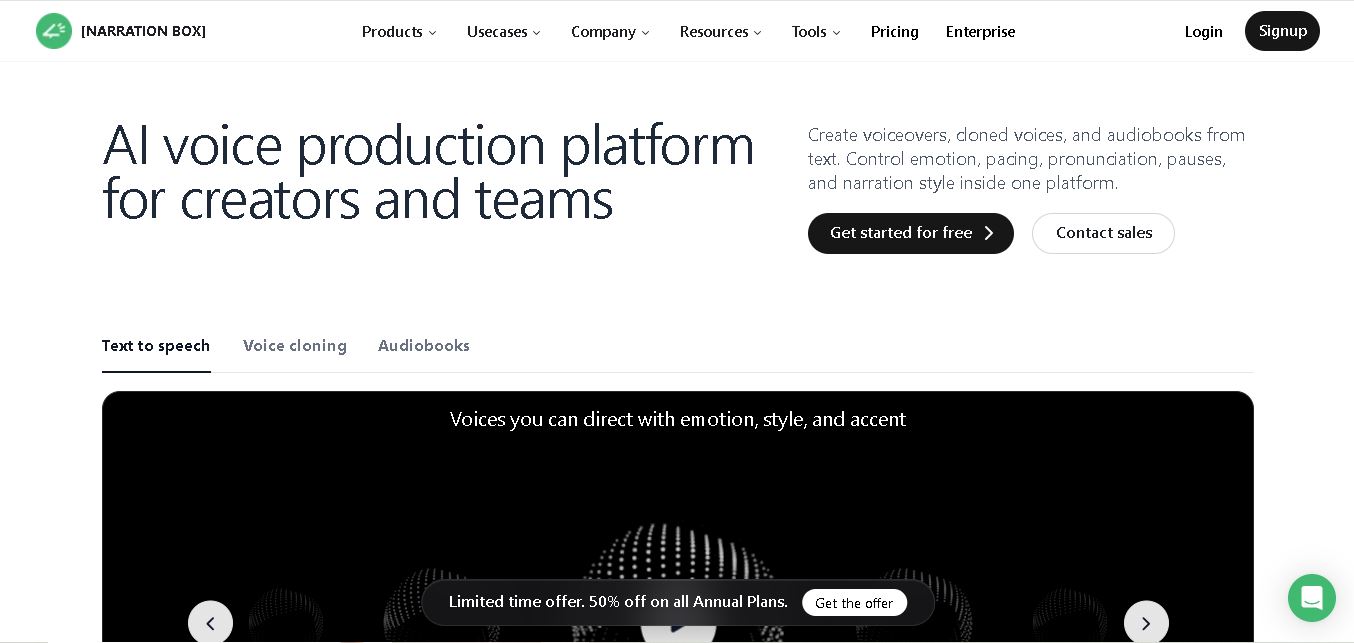
Narration Box is an AI voice generator for creating realistic voiceovers, audiobooks, podcasts, and educational audio from text. It offers over 1,500 AI narrators, 80+ languages and accents, voice cloning, and customizable emotional delivery. Its editing tools help creators produce consistent, multilingual audio content for personal and professional projects.
 4.7
4.7AudioBot
Text-to-Speech
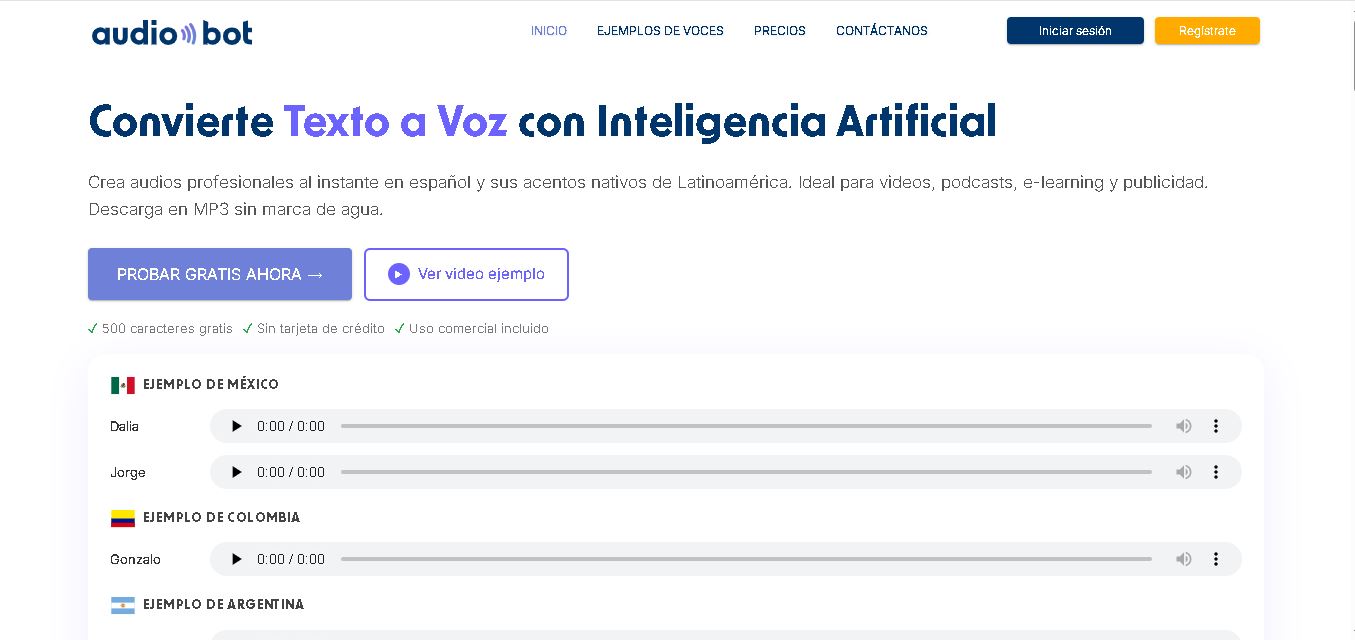
AudioBot converts written text into natural-sounding speech using AI-generated voices. It supports multiple languages and regional accents, making it useful for video voiceovers, presentations, educational materials, and audio content. Users can generate and download audio files, helping simplify narration workflows without requiring traditional recording equipment or voice talent.
 4.7
4.7Audie AI
Text-to-Speech
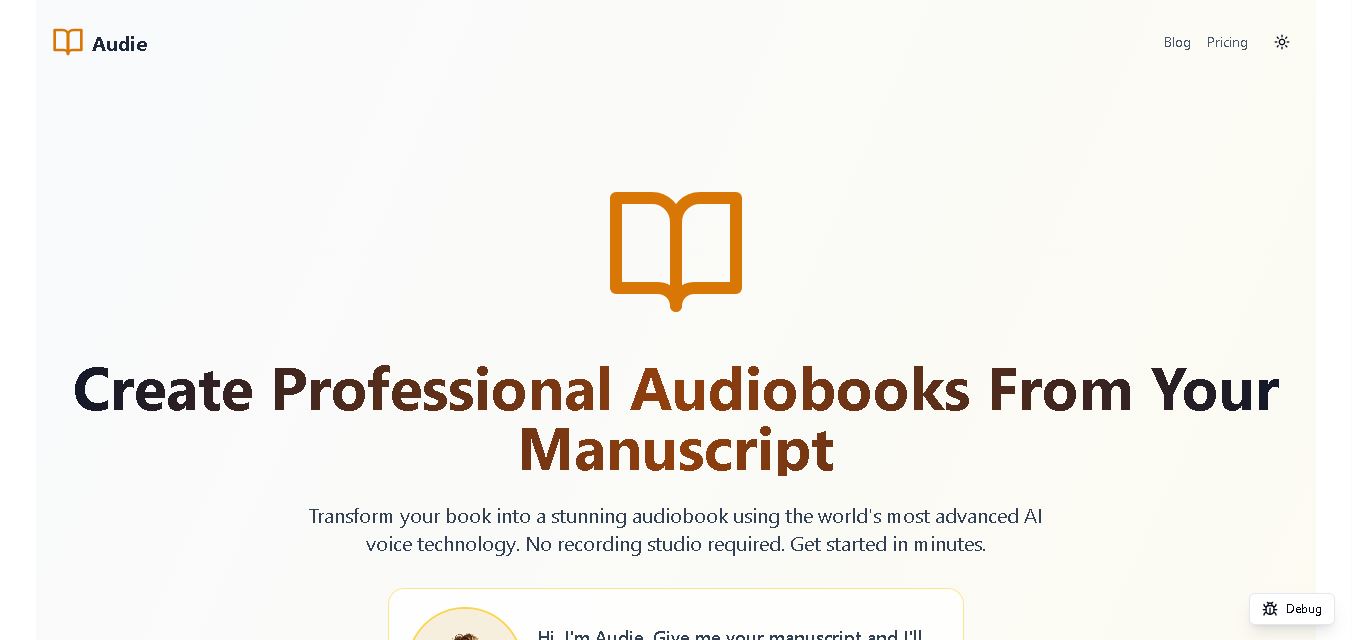
Audie AI is an audiobook creation tool that converts written manuscripts into narrated audio using AI-generated voices. It helps authors and publishers simplify production, explore different narration styles, and reduce reliance on traditional recording studios. With voice selection, advertised voice cloning, and downloadable audio, it supports more accessible audiobook creation for independent creators.
 4.6
4.6Speechelo
Text-to-Speech
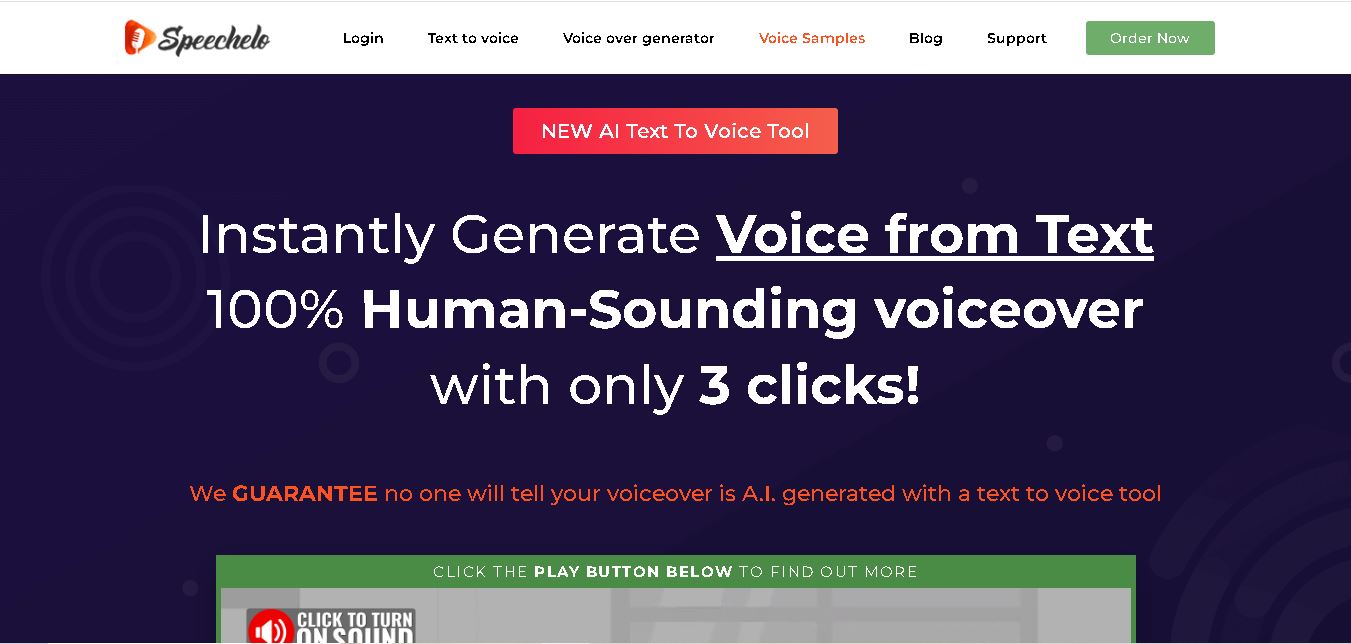
Speechelo is a text-to-speech tool designed to help creators turn written scripts into voiceovers. It offers different voices, languages, tones, and audio adjustments for creating narration. Video creators, educators, marketers, and content teams can use it to produce audio for tutorials, presentations, promotional videos, and other digital content projects.
 4.7
4.7Leelo AI
Text-to-Speech
Leelo AI helps you turn written content into natural-sounding speech without recording your own voice. You can choose from 800+ voices across 142 languages and accents, adjust available voice settings, generate audio, store files in the cloud, export recordings, and use generated speech commercially for different content and communication needs.