
EvidenceHunt
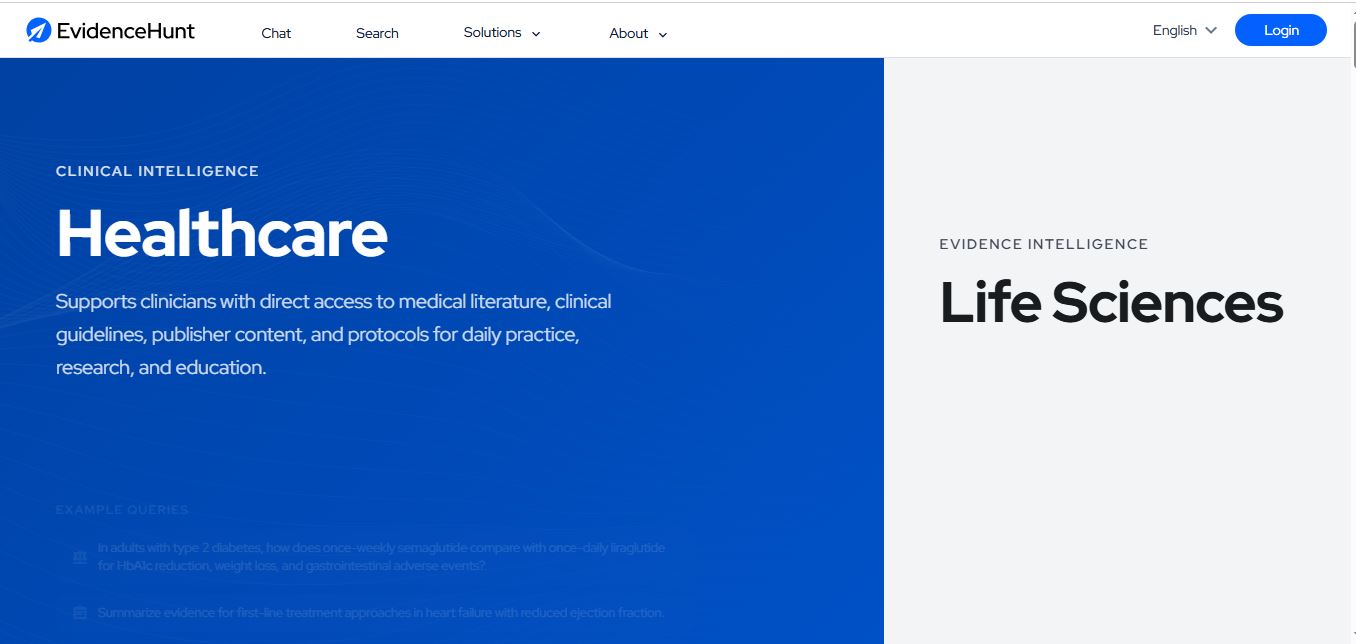
EvidenceHunt is an AI-powered medical research platform that helps clinicians, researchers, and life science teams find and analyze scientific evidence. It searches medical literature, guidelines, and internal documents, then generates citation-grounded answers, evidence tables, systematic reviews, and traceable insights for faster, evidence-based research.
What is EvidenceHunt?
EvidenceHunt is an AI-powered medical research and evidence intelligence platform designed for healthcare and life sciences professionals. It helps users search, analyze, and summarize biomedical literature, clinical guidelines, research papers, and internal documents from one centralized workspace. EvidenceHunt supports systematic reviews, evidence extraction, literature monitoring, medical research, and clinical information workflows, with answers grounded in source materials for easier verification. It can also help organizations continuously monitor new research and turn complex scientific evidence into structured, actionable insights.
Trusted by over 90,000 healthcare and life science professionals worldwide, EvidenceHunt connects over 75 million biomedical publications from PubMed, OpenAlex, and Semantic Scholar alongside national European clinical guidelines, publisher content (Springer Nature, BSL), and internal hospital documents. Engineered with a European data governance framework, the platform features zero-data-retention AI endpoints, automated PII redaction, and strict Intended Use compliance guardrails that assist clinical workflows while ensuring medical professionals remain the final decision-makers.
- Platform / Developer: EvidenceHunt (evidencehunt.com; European Healthcare & Life Sciences AI Infrastructure)
- Core Architecture: Hybrid clinical search index pairing PubMed, OpenAlex, and Semantic Scholar with deterministic PICO (Population, Intervention, Comparison, Outcome) search filters, living systematic literature review (SLR) modules, and document processors
- Governance & Privacy: EU-hosted infrastructure compliant with GDPR and HIPAA standards, featuring automated PII redaction, SSO authentication, and zero-data-retention policies where user queries never train underlying AI models
Use Cases:
- Conducting fast, evidence-grounded clinical literature queries backed by primary PubMed citations and European clinical practice guidelines
- Accelerating Systematic Literature Reviews (SLRs) through AI-assisted screening, human-in-the-loop validation, and living evidence monitors
- Extracting structured data tables (clinical endpoints, patient cohorts, adverse events, study characteristics) from trial publications into Excel or Word
- Connecting internal hospital repositories (Microsoft SharePoint, Google Workspace, Zenya) to cross-reference institutional protocols with published guidelines
Technology:
- Clinical intelligence retrieval engine indexing 75M+ scientific publications with multi-document cross-referencing capabilities
- PII Safety Guard dynamically detecting and redacting patient identifiers from queries and uploaded medical documents
- EvidenceHunt REST API enabling digital health applications, clinical scribes, and EHR systems to pull verified literature citations programmatically
Target Users:
- Physicians, hospital clinicians, and nurses verifying treatment standards, drug interactions, and clinical guidelines at the point of care
- Clinical researchers and medical writers executing systematic literature reviews and meta-analyses with auditable audit trails
- Life science, regulatory, and market access teams tracking therapeutic landscape updates and preparing HTA dossiers
- Content creators using writing tools to draft evidence-based medical summaries, clinical literature overviews, and healthcare research guides
Corporate Entity: Operates as EvidenceHunt (Global & EU Healthcare EdTech/HealthTech)

Key features of EvidenceHunt
EvidenceHunt's key features are
- Evidence-Grounded Literature Chat: Query global biomedical literature and clinical guidelines conversationally, receiving answers with verifiable citations and direct source links.
- Structured PICO & Boolean Search: Formulate rigorous clinical search strategies using Population, Intervention, Comparison, and Outcome frameworks or traditional Boolean operators.
- Living Systematic Literature Reviews (SLRs): Accelerates screening, extraction, and validation with automated alerts when newly published papers match review criteria.
- Structured Data Extraction: Extracts complex tables, clinical endpoints, study characteristics, and outcomes from scientific publications into exportable spreadsheets.
- Document Processor & Protocol Integration: Upload internal hospital protocols, SmPCs, and PDFs, or connect enterprise repositories (SharePoint, Zenya) to search internal knowledge alongside public literature.
- Evidence Signals & Literature Alerts: Monitor emerging research across 150,000+ medical journals and trial registries with proactive summary alerts.
- Clinical Safeguards & PII Redaction: Automated compliance filters redact patient information and ensure the system operates strictly as literature support without dispensing unverified medical diagnoses.
- EvidenceHunt API: Comprehensive developer API allowing clinical scribes, research portals, and digital health tools to embed verified evidence retrieval into downstream workflows.
EvidenceHunt Pricing
EvidenceHunt operates on a tiered SaaS model offering free trial access, individual Pro subscriptions, customized institutional enterprise plans, and credit-based API access.
Basic Plan (Free):
- €0 / Free access
- Includes basic literature queries, traditional PubMed search, 3 Pro-quality questions, chat history retention, and 1 automated literature tracking signal
Pro Plan:
- Monthly Billing: ~€20.00 / month (includes a 7-day free trial)
- Annual Billing: €16.50 / month (~€198.00 / year – save 18% on annual billing)
- Includes unlimited Pro chats with top-tier benchmarked AI models, open-access full-text reading from PubMed/OpenAlex, custom answer formatting, evidence filters, up to 5 literature tracking signals, and priority support
Team or Organisation (Enterprise Plan):
- Custom enterprise pricing (Book a Demo)
- Includes shared project folders, internal document search add-on, Systematic Literature Review (SLR) workflows, structured data extraction, up to 10 literature signals, Enterprise SSO, PII redaction safeguards, dedicated SLAs, and institutional integrations (SharePoint, Zenya)
API Access:
- Credit-based pay-as-you-go pricing starting at €0.125 per credit with flexible scaling and complete developer documentation
Disclaimer: Prices are listed in EUR (€) and exclude local taxes. Subscriptions renew automatically unless canceled before the billing period. Visit evidencehunt.com/pricing for active plans and enterprise quotes.
Who is using EvidenceHunt?
EvidenceHunt is designed for healthcare professionals, clinical researchers, and life science teams, including
- Hospital Physicians & Clinicians: Checking evidence-based treatment guidelines and drug interaction studies between patient consultations
- Clinical Researchers & Systematic Reviewers: Conducting literature screening and structured data extraction for published medical studies
- Pharmaceutical & Life Science Teams: Monitoring scientific literature across disease areas and preparing HTA dossiers for market access
- Medical Writers & Academics: Accelerating literature reviews and drafting publication drafts backed by verifiable citations
- Content Creators: Using writing tools to draft evidence-based medical summaries, clinical literature overviews, and healthcare research guides
- Healthcare IT Developers: Integrating verified biomedical retrieval into clinical decision support systems via the EvidenceHunt API
Best EvidenceHunt Alternatives
Some of the strongest EvidenceHunt alternatives include
Pros and Cons of EvidenceHunt
Pros
- Strict evidence grounding ensures every claim is backed by peer-reviewed literature or recognized clinical guidelines
- Combines public biomedical databases (PubMed, OpenAlex) with private internal hospital protocol integrations
- Built-in PII redaction and Intended Use guardrails comply with strict European GDPR and healthcare privacy standards
- Supports end-to-end systematic literature reviews with living alerts and structured data extraction to Excel/Word
- Affordable individual Pro plan (€16.50/month billed annually) with a 7-day free trial
Cons
- Full Systematic Literature Review and enterprise document extraction tools require team or organization add-ons
- Focuses specifically on biomedical and clinical domains; not intended for general humanities or non-scientific research
- Does not replace formal clinical diagnostic tools; requires human medical oversight for patient care
- Free basic plan provides limited Pro queries before requiring an upgrade
Why Choose EvidenceHunt?
EvidenceHunt is the premier choice for healthcare professionals and life science teams who need a compliant clinical intelligence platform that pairs global biomedical literature with internal institutional protocols, structured data extraction, and living systematic review workflows.
- Retrieve verifiable clinical answers grounded directly in 75M+ biomedical papers and guidelines
- Formulate structured PICO searches and screen papers for systematic literature reviews
- Extract clinical trial endpoints, study characteristics, and outcomes into structured tables
- Safeguard patient data with automated PII redaction and zero-data-retention AI endpoints
- Integrate internal hospital protocols from SharePoint or Zenya into a unified search workspace
EvidenceHunt vs. Competitors
The main difference between EvidenceHunt, Consensus, Elicit, and UpToDate is that EvidenceHunt is engineered specifically for healthcare institutions and life sciences, combining PubMed and national clinical guidelines with private internal hospital protocols (SharePoint/Zenya), automated PII redaction, and living SLR workflows starting at €16.50/mo, whereas Consensus provides broad academic paper search, Elicit focuses primarily on scientific paper extraction across sciences, and UpToDate provides expert-authored clinical topic summaries on an institutional subscription. EvidenceHunt stands out for its clinical safeguards, internal protocol integration, and living review infrastructure.
| Feature / Platform | EvidenceHunt (evidencehunt.com) | Consensus | Elicit | UpToDate |
|---|---|---|---|---|
| Primary Focus | Clinical & Life Science Evidence Infrastructure | Broad Academic Research Search Engine | Systematic Review & Paper Extraction AI | Expert-Authored Clinical Decision Support |
| Internal Protocol Search | Yes (SharePoint, Zenya & PDFs) | No (Public academic literature only) | PDF upload only | Institutional hospital pathways add-on |
| PII & Clinical Guardrails | Yes (Auto PII Redaction & Intended Use) | Standard web search safeguards | Standard privacy safeguards | Curated editorial peer review |
| Literature Review Tools | Living SLRs, PICO search & alerts | Consensus Meter & paper summaries | Screening workflows & table extraction | Editorial synthesis summaries |
| Starting Price | Free basic / Pro €16.50/mo (€198/yr) | Free tier / Premium ~$8.99–$11.99/mo | Free tier / Plus ~$12.00/mo ($120/yr) | Subscription (~$500+/yr individual) |
| Best For | Clinicians, Life Science Teams & Hospital R&D | Students & Broad Scientific Inquiries | Academic Meta-Analyses & Review Screening | Point-of-Care Verified Clinical Guidance |
How do we rate EvidenceHunt?
| Parameter | Rating (out of 5) |
|---|---|
| Evidence Grounding & Citation Accuracy | 5.0 |
| Clinical Safeguards & PII Data Governance | 5.0 |
| Systematic Review & Data Extraction Tools | 4.9 |
| Internal Protocol & Enterprise Integration | 4.8 |
| Value for Money | 4.8 |
| Overall Score | 4.90 |
EvidenceHunt Review
EvidenceHunt addresses one of the most critical challenges facing AI adoption in healthcare: eliminating hallucinations while maintaining strict data governance. Generic conversational LLMs frequently introduce subtle inaccuracies or invent medical citations, making them unusable in clinical environments. EvidenceHunt overcomes this by anchoring every generated summary directly to peer-reviewed literature from PubMed, European guidelines, and authorized publisher content. What sets EvidenceHunt apart from generic academic search engines is its healthcare-specific design: it incorporates automatic PII redaction, intended-use guardrails, and enterprise integrations with hospital protocol repositories like SharePoint and Zenya. For medical researchers, clinical teams, and life science professionals needing rigorous, verifiable evidence retrieval, EvidenceHunt provides an essential clinical intelligence platform.
Conclusion
EvidenceHunt is an advanced clinical intelligence platform and literature search engine that empowers medical professionals and life science organizations to make confident, evidence-grounded decisions. By combining verifiable citations from over 75 million biomedical publications with PICO-guided search, living systematic review tools, structured data extractions, and European privacy governance, it sets a high standard for responsible healthcare AI. While students conducting general academic research may start with tools like Consensus, EvidenceHunt’s clinical safeguards, internal protocol connections, and systematic review workflows make it an indispensable platform for healthcare and pharmaceutical research.
FAQ
What is EvidenceHunt and how does EvidenceHunt work?
EvidenceHunt is an AI-powered medical evidence and research platform designed to help healthcare professionals, researchers, and life sciences teams find, analyze, and organize scientific evidence. EvidenceHunt searches medical literature, clinical guidelines, publisher content, and organizational documents, then provides source-grounded answers with traceable citations.
What problem does EvidenceHunt solve for researchers and healthcare professionals?
EvidenceHunt reduces the time and effort required to search across fragmented medical databases, guidelines, research papers, and internal documentation. EvidenceHunt brings these sources into a unified workspace so users can quickly find relevant evidence, analyze publications, and verify claims against their original sources.
What are the key features of EvidenceHunt?
EvidenceHunt includes AI-powered evidence search, conversational research, document processing, systematic literature review workflows, data extraction, evidence monitoring, shared project folders, custom templates, and API access. EvidenceHunt also provides source-level traceability, allowing users to connect generated insights to specific pages, paragraphs, or highlighted passages in source material.
Can EvidenceHunt search medical research and clinical guidelines?
Yes, EvidenceHunt can search biomedical literature and clinical guidance from multiple sources. The platform integrates sources such as PubMed, OpenAlex, Semantic Scholar, regional and European clinical guidelines, publisher content, and organization-specific protocols, depending on the workflow and configuration.
Can EvidenceHunt be used for systematic literature reviews?
Yes, EvidenceHunt supports systematic literature review workflows, including literature retrieval, screening, data extraction, validation, and exportable audit trails. These capabilities are designed to help research teams reduce repetitive manual work while maintaining transparency and reproducibility throughout the review process.
Does EvidenceHunt support internal documents and organizational knowledge?
Yes, EvidenceHunt can incorporate internal protocols, policies, PDFs, and other organizational documentation into evidence workflows. Organizations can also connect supported systems such as Google or Microsoft SharePoint, allowing teams to search internal knowledge alongside external scientific evidence.
Does EvidenceHunt offer an API?
Yes, EvidenceHunt provides an API that allows organizations and developers to integrate evidence retrieval and AI-powered research capabilities into their own applications and workflows. The API can query biomedical research sources such as PubMed and can also work with supported custom organizational documents.
Who should use EvidenceHunt?
EvidenceHunt is designed for physicians, pharmacists, nurses, researchers, medical affairs teams, pharmaceutical and life sciences organizations, and other professionals who regularly work with scientific and clinical evidence. EvidenceHunt is particularly useful for systematic reviews, medical information requests, evidence monitoring, competitive intelligence, and research workflows.
User Reviews
No reviews yet for EvidenceHunt.
Featured Tools
Featured AI tools from TechShark
Melody Genie
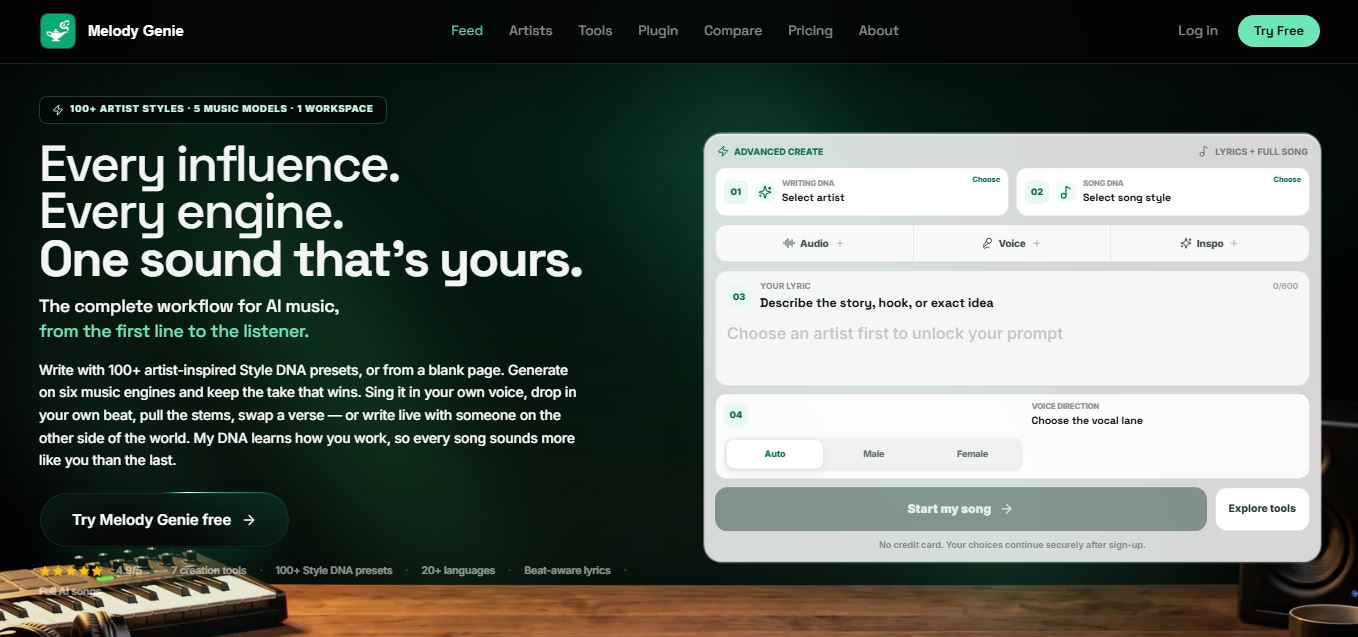
MelodyGenie is an AI-powered music generator that creates original songs from simple text prompts. Users can choose styles, moods, and genres, then instantly generate melodies and full tracks, making it easy for creators, marketers, and hobbyists to produce custom music without musical expertise.
Freemium
Kimi AI
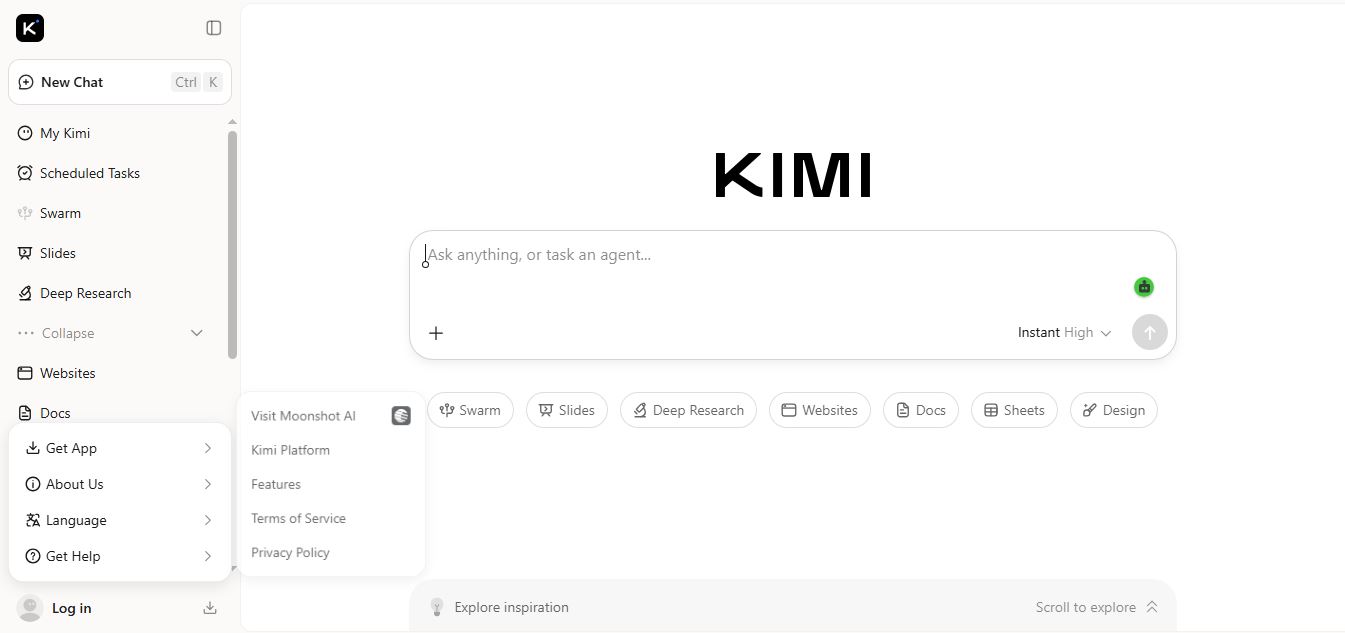
Kimi AI is an advanced AI assistant developed by Moonshot AI that helps you chat, research, write, code, and automate tasks in one place. It supports web search, file analysis, and multimodal inputs, and can even run autonomous “agent” workflows to complete complex tasks end-to-end.
Freemium

Fashion Diffusion AI
Fashion Diffusion is an AI-powered fashion design platform that helps brands and designers create clothing designs, virtual try-ons, AI models, product photos, and marketing visuals faster and cost-effectively.
Paid
Veo 4
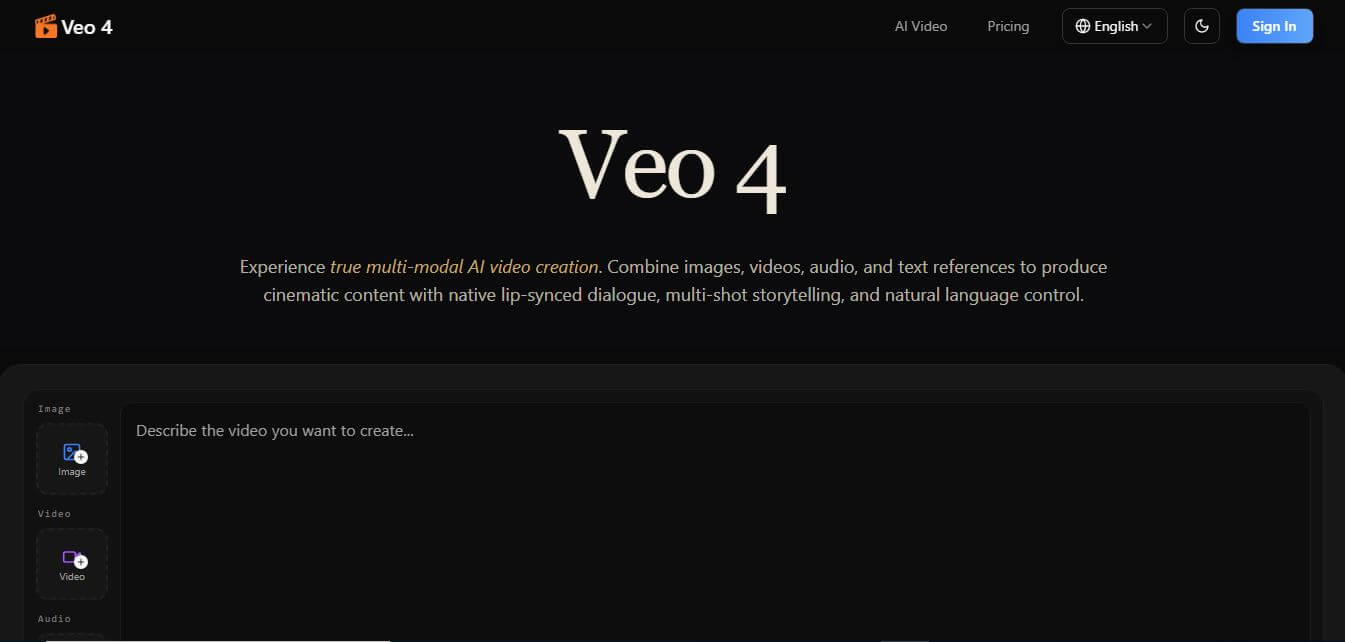
Veo 4 AI is an AI video creation platform that generates dramatic videos from text, images, audio, and video prompts using realistic motion and synchronized sound.
Paid
Alternatives
Alternatives to EvidenceHunt
The best EvidenceHunt alternatives include Consensus, Elicit, UpToDate, Scite.ai, PubMed Central, and Rayyan. These platforms provide medical literature research, systematic review assistance, and clinical decision support. While EvidenceHunt specializes in clinical intelligence, living systematic literature reviews, PICO-guided searches, and internal hospital protocol integration (SharePoint/Zenya) with automated PII redaction starting at €16.50/month, alternatives like Consensus focus on broad academic search across disciplines, Elicit specializes in scientific data extraction, and UpToDate delivers curated, expert-authored clinical summaries. Choosing the right tool depends on whether you seek evidence-grounded biomedical literature search with institutional protocol integration, broad academic consensus search, or peer-reviewed point-of-care guidelines.
 5.0
5.0Rayyan
Research
Rayyan is an AI-powered systematic review and literature review platform that helps researchers organize references, remove duplicates, screen studies, extract data, assess risk of bias, and generate PRISMA reports. Its AI features assist with relevance ranking, article screening, and structured data extraction while keeping researchers in control.
 4.7
4.7WHOOP
Health
WHOOP is a wearable fitness and health tracker focused on recovery, sleep, strain, stress, and daily performance. Its app turns continuous body data into personalized insights, scores, coaching, and recommendations. In India, WHOOP 5.0 memberships include the device, subscription, charger, and selected band, depending on the plan you choose today.
 4.8
4.8Lindy
AI Agent
Lindy is an AI medical and business workflow automation platform that builds autonomous AI agents ('Lindys') capable of handling inbox management, customer support, lead qualification, medical scribing, and voice operations.
 4.8
4.8Bioscript
Health
Bioscript is an AI-powered personal health intelligence platform that decodes blood lab reports, tracks over 2,000 biomarkers over time, provides nutrition analytics from photos, and delivers grounded answers via an interactive chat assistant.
 4.8
4.8Dr. Muscle
Health
Dr. Muscle is a science-based AI workout and bodybuilding app that automatically applies progressive overload, daily undulating periodization (DUP), and real-time fatigue management to build muscle and strength on autopilot.
 4.9
4.9Heidi Health
Health
Heidi Health is an AI-powered clinical assistant that automates medical documentation by transcribing patient conversations and generating structured notes, reports, and referrals. It also provides evidence-based insights and workflow support, helping clinicians reduce admin work and focus more on patient care.
 4.9
4.9OpenCall AI
Health
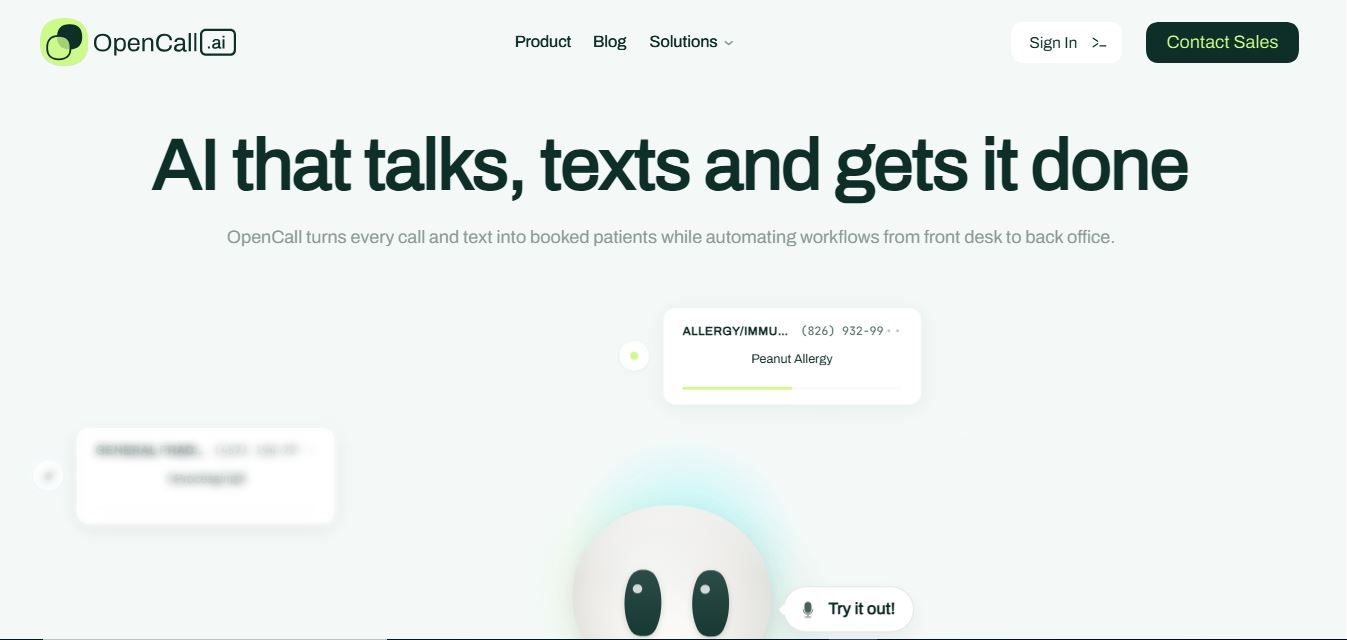
OpenCall AI is an AI-powered call center platform that handles phone calls, texts, and scheduling automatically, helping businesses capture leads, book appointments, and manage workflows without manual effort. It works 24/7, reduces missed calls, and integrates with existing systems to improve efficiency and revenue.
 4.9
4.9Carepatron
Health
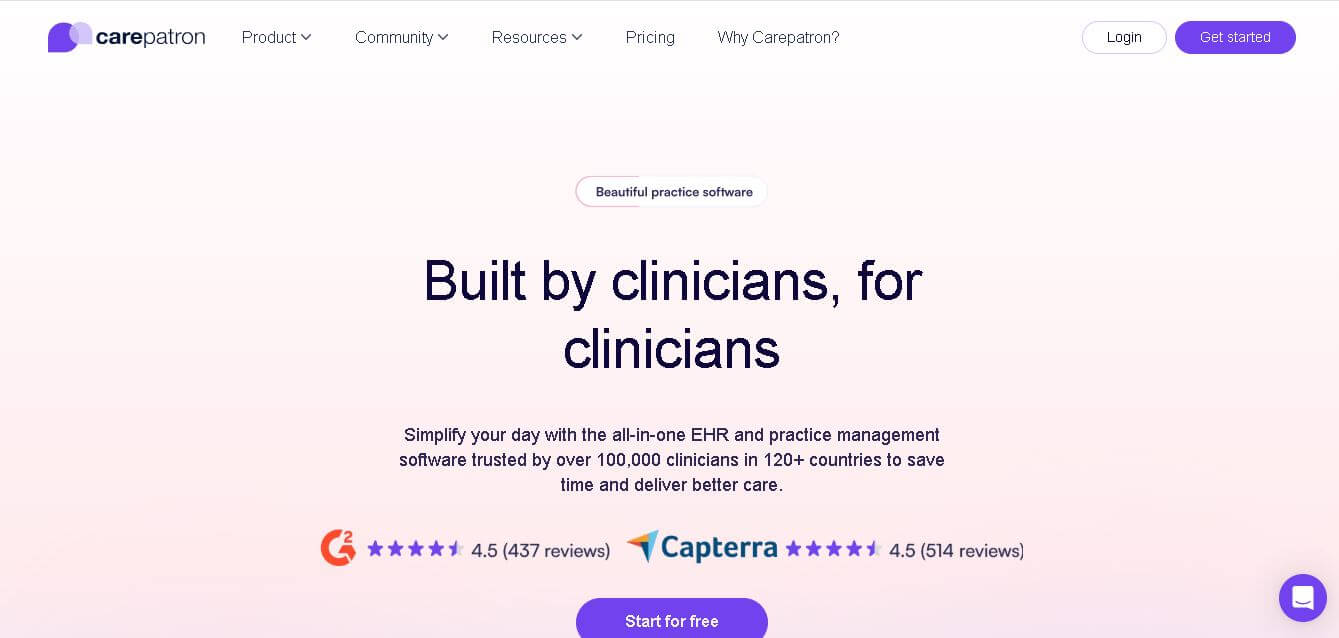
Carepatron is an all-in-one healthcare practice management platform that helps clinicians manage scheduling, telehealth, clinical notes, billing, and client communication in one place. It includes AI-powered documentation tools to automate admin work, allowing healthcare professionals to save time and focus more on patient care.
 4.8
4.8Hyro
Health
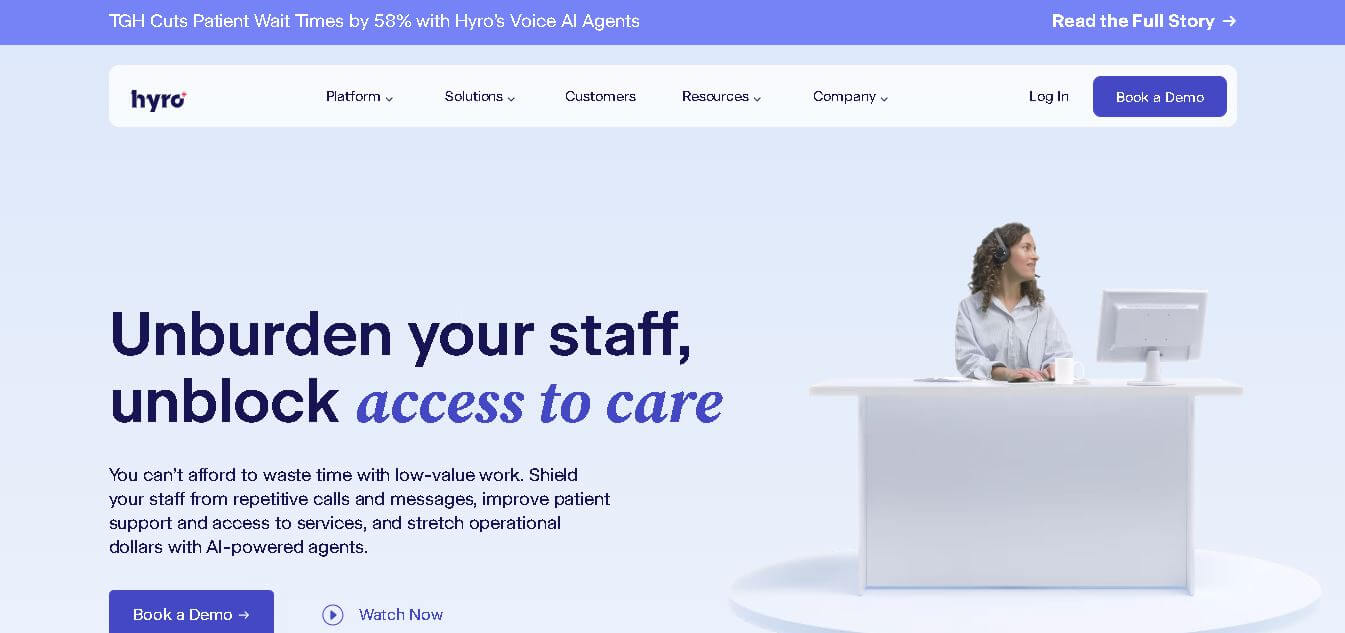
Hyro is a healthcare-focused conversational AI and communications platform providing HIPAA-compliant voice assistants, automated patient scheduling, call deflection, and multi-channel triage integrated with major EHR systems.