
Emergent
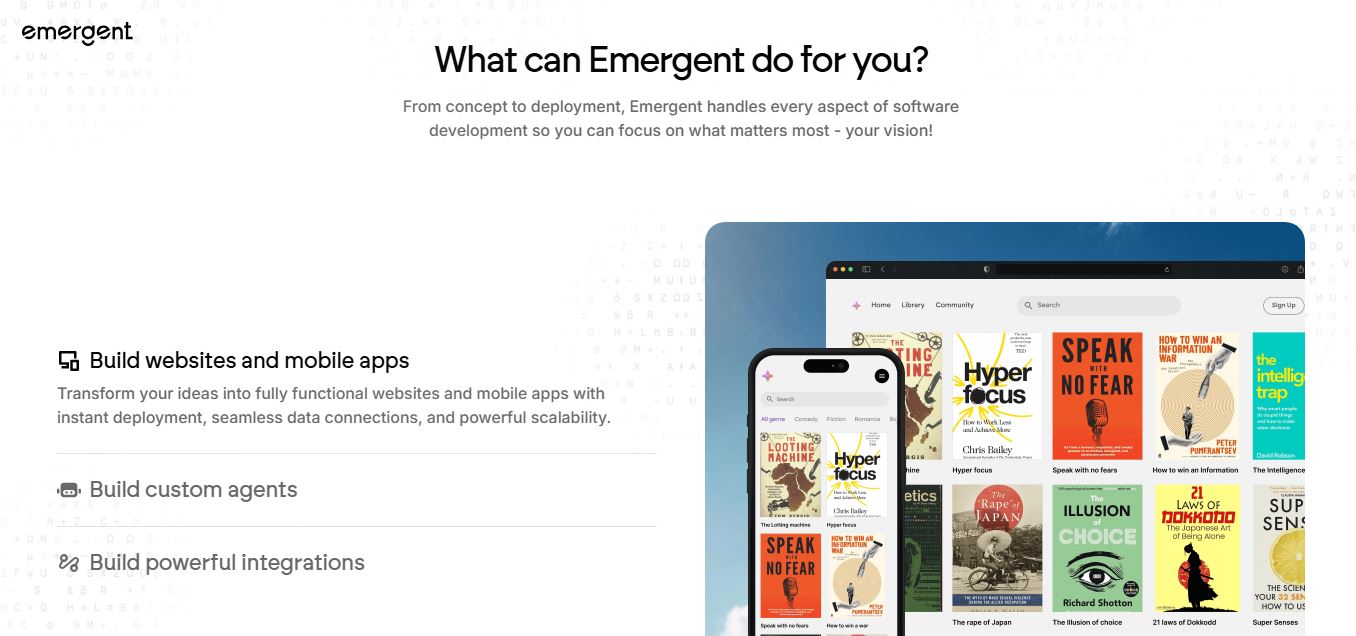
Emergent is an AI-powered app builder that lets users create full-stack web and mobile applications by simply describing their idea. It uses autonomous agents to plan, code, test, and deploy apps, handling everything from backend to hosting without requiring traditional programming skills.
What is Emergent?
Emergent is an AI-powered vibe coding platform that helps users build, deploy, and manage applications directly from natural language prompts. It allows developers and non-developers to describe what they want to create, and the platform generates full-stack apps, including frontend, backend, and infrastructure. It also supports real-time editing, integrations, and deployment workflows, making it easy to go from idea to live product quickly. Designed for rapid prototyping and automation, Emergent simplifies the development process and reduces the need for manual coding.
Positioned as an end-to-end autonomous "vibe coding" and multi-agent development studio, Emergent orchestrates specialized AI agents (such as software architects, frontend UI designers, backend developers, and QA engineers) to plan, construct, review, and deploy applications in a unified conversational workspace. Backed by direct GitHub repository syncing, one-click hosting, custom system prompt editing, and pre-configured payment gateway connections (including Stripe, PayPal, and Razorpay), Emergent allows creators to launch scalable software without writing manual boilerplate code.
- Platform / Developer: Emergent Technologies (Global AI Software Platform)
- Launch Year: 2024 (Expanded with mobile app generation, Task Forking, and multi-agent code orchestration through 2025–2026)
Use Cases:
- Generating full-stack web applications, SaaS MVPs, and internal dashboards directly from descriptive natural language prompts
- Building cross-platform mobile applications alongside web frontends within a single unified development session
- Refining and debugging live application logic conversationally without editing underlying files line-by-line
- Deploying production-ready applications with pre-configured authentication, persistent database schemas, and integrated payment gateways
Technology:
- Multi-agent AI development workflow coordinating planning, architecture, frontend/backend coding, and automated code review
- Context-resilient task forking engine enabling extended development cycles on complex codebases without context degradation
- Universal LLM gateway providing seamless integration of frontier foundation models for planning and runtime execution
Target Users:
- Non-technical entrepreneurs and startup founders prototyping and launching commercial SaaS MVPs rapidly
- Product managers and growth teams deploying internal tools, customer portals, and interactive landing pages
- Professional software developers looking to offload boilerplate full-stack scaffolding and focus on proprietary logic
- Content creators using writing tools to draft product requirement documents (PRDs), app feature specifications, and go-to-market copy
Corporate Entity: Operates as Emergent Technologies (USA & Global)

Key features of Emergent AI
Emergent's key features are
- Conversational App Generation: Describe your application requirements in natural language and watch the AI architect, write, and configure the full-stack codebase.
- Full-Stack Web & Mobile Development: Generates responsive web applications as well as cross-platform mobile apps with functional backend logic and database models.
- Built-In Authentication & Databases: Automatically provisions user sign-up/login mechanisms, relational databases, and data schemas tailored to your application needs.
- One-Click Deployment & Custom Hosting: Deploy applications to live public URLs instantly with built-in SSL encryption, or host on private subdomains.
- Two-Way GitHub Synchronization: Push generated code directly to your GitHub repository to maintain version control, collaborate with other engineers, or export code freely.
- Task Forking (Context Management): Split long development conversations into new task branches without losing project memory, ensuring smooth scaling for large applications.
- System Prompt & Agent Customization: Advanced controls allowing developers to define architectural rules, coding standards, naming conventions, and component guidelines for the AI agents.
- Pre-Built Payment Integrations: Connect payment processors like Stripe, PayPal, and Razorpay seamlessly using pre-configured developer connectors.
Emergent Pricing
Emergent operates on a credit-based freemium SaaS model where credits are consumed as the AI designs, codes, debugs, and deploys application features.
Free Plan:
- $0 / Free forever
- Includes 10 free monthly credits, core platform features, web/mobile app generation, and one-click model access for initial exploration
Standard Plan:
- Starts from approximately $17.00 / month (discounted on annual billing)
- Includes 100 monthly build credits, private project hosting, GitHub synchronization, Task Forking, and the option to purchase supplemental credits
Pro Plan:
- Starts from approximately $167.00 / month (discounted on annual billing)
- Designed for power builders and commercial teams; includes expanded credits, large context windows, advanced reasoning agents, custom system prompt editing, and priority generation speeds
Enterprise Tier:
- Custom quote pricing for high-throughput engineering teams and organizations needing dedicated infrastructure, enterprise security, and custom SLA agreements
Disclaimer: Prices are listed in USD and billing is subject to regional adjustments and promotional plans. Visit Emergent official website app.emergent.sh for active credit allocations and plan updates.
Who is using Emergent?
Emergent is designed for builders, creators, and product teams, including
- Solo Founders & Indie Hackers: Rapidly testing and launching functional micro-SaaS products, market directories, and web utilities
- Product Managers & Growth Teams: Building custom internal business tools, employee workflows, and customer onboarding portals
- Agencies & Freelance Developers: Accelerating client deliverables by automating boilerplate full-stack setup and scaffolding
- Non-Technical Creators & Designers: Bringing digital ideas to life as real, functional applications without requiring coding expertise
- Content Creators: Using writing tools to draft product requirement documents (PRDs), app feature specifications, and go-to-market copy
- Early-Stage Startups: Building interactive, test-ready proof-of-concept software to present to angel investors and beta users
Best Emergent Alternatives
Some of the strongest emergent alternatives include
- Lovable
- v0 by Vercel
- Bolt.new (by StackBlitz)
- Replit Agent
- Cursor
- Create.xyz
Pros and Cons of Emergent
Pros
- Generates true full-stack applications with functional frontends, backends, databases, and authentication from a single conversation
- Supports cross-platform mobile application development alongside traditional web applications
- Two-way GitHub integration prevents vendor lock-in by allowing users to export and manage their repository code freely
- Task Forking resolves conversation context limits on larger, multi-feature software projects
- Built-in deployment engine hosts finished applications on live URLs instantly without complex DevOps setup
Cons
- Credit-based pricing means iterative debugging and frequent small code adjustments can consume monthly allowances quickly
- Highly intricate enterprise architectures with strict legacy dependencies still require manual developer intervention
- Free plan is capped at 10 monthly credits, serving mainly as an introductory sandbox
- Advanced customization features like system prompt editing are reserved for higher-tier Pro accounts
Why Choose Emergent?
Emergent is the premier choice for creators and software builders who want an autonomous AI development environment capable of delivering production-ready, full-stack applications with databases, authentication, and deployment built in from day one.
- Transform ideas into functional web and mobile applications using conversational English
- Eliminate manual backend configuration with auto-generated databases and authentication
- Export and sync code seamlessly with your GitHub repository to prevent platform lock-in
- Overcome context walls on large codebases using innovative task forcing
- Deploy instantly to live cloud URLs with built-in SSL and payment integrations
Emergent vs. Competitors
The main difference between Emergent, Lovable, v0 by Vercel, and Bolt.new is that Emergent emphasizes full-stack autonomy across both web and mobile applications with integrated databases, authentication, and payment rails, whereas v0 focuses primarily on modern React/Tailwind frontend component generation, Lovable specializes in polished web applications with Supabase integrations, and Bolt.new executes full-stack apps in an in-browser WebContainer sandbox. Emergent stands out for its multi-agent development architecture, mobile app support, and flexible Task Forking for extended projects.
| Feature / Tool | Emergent (app.emergent.sh) | Lovable | v0 by Vercel | Bolt.new |
|---|---|---|---|---|
| Core Focus | Full-Stack Autonomous Web & Mobile Apps | Full-Stack Web Apps & Supabase Backend | Frontend UI & React Component Scaffolding | In-Browser Full-Stack Sandbox Execution |
| Mobile App Development | Yes (Native & Cross-Platform) | Web-First (Responsive Mobile) | Web UI Only | Web-First (PWA Capable) |
| Database & Auth Included | Yes (Auto-Provisioned) | Yes (Direct Supabase Sync) | Third-Party Integration | Yes (StackBlitz Containers) |
| GitHub Sync | Yes (Two-Way Sync) | Yes (Direct GitHub Sync) | Yes (Export & Vercel Deploy) | Yes (Export to GitHub) |
| Starting Paid Price | $17.00/month (Standard) | $20.00/month (Starter) | $20.00/month (Premium) | $20.00/month (Pro) |
| Best For | Founders Needing Web & Mobile MVPs Fast | Creators Building Polished Full-Stack Web Apps | Engineers Generating Modern React/Tailwind UI | Developers Testing Live Code in Browser Sandbox |
How do we rate Emergent?
| Parameter | Rating (out of 5) |
|---|---|
| Full-Stack Generation Depth & Autonomy | 4.9 |
| Web & Mobile Versatility | 4.9 |
| GitHub Sync & Code Ownership | 4.8 |
| Task Forking & Context Resilience | 4.8 |
| Value for Money | 4.7 |
| Overall Score | 4.82 |
Emergent Review
Emergent represents a notable shift in the evolution of AI-powered software generation by closing the gap between frontend mockups and working software. While earlier generation tools left users with isolated UI components that required manual backend configuration, Emergent provides an integrated development experience that constructs the frontend, sets up the database schema, implements user authentication, and provides instant live deployment. The platform's task forking capability helps prevent the context degradation that frequently impacts AI coding agents on larger projects. While the credit-based pricing model requires conscious management when debugging, Emergent delivers an efficient tool for turning software concepts into functional applications without technical overhead.
Conclusion
Emergent helps users build and manage AI-driven workflows by enabling the creation and orchestration of autonomous agents. Instead of handling tasks manually, users can design systems that automate processes and execute actions intelligently. This improves efficiency and scalability across different use cases. Overall, Emergent simplifies AI automation, helping users create smarter workflows, reduce repetitive work, and manage complex operations with greater control and flexibility.
FAQ
What is Emergent and how does it work?
Emergent is an AI-powered app builder that turns plain-language prompts into fully functional web or mobile applications. You simply describe what you want to build, and its AI agents handle everything—UI design, backend logic, database setup, testing, and deployment. Instead of writing code manually, the entire development process happens through a conversational interface, allowing you to go from idea to live app in hours.
What problems does Emergent solve?
Emergent solves the problem of high development costs, slow product launches, and technical barriers. Traditionally, building software requires developers, infrastructure setup, and DevOps knowledge, but Emergent automates all of this. It allows non-technical founders, product managers, and small teams to launch real products without hiring engineers or managing complex systems.
What can you build with Emergent?
You can build full-stack applications like SaaS tools, dashboards, APIs, marketplaces, internal tools, and even mobile apps. The platform supports real production-ready builds, not just prototypes, meaning apps can include authentication, databases, integrations, and live deployment from day one.
How is Emergent different from other AI coding tools?
Emergent stands out because it offers end-to-end autonomous development, not just code suggestions. Unlike tools like GitHub Copilot or basic no-code builders, Emergent’s agents plan, build, test, debug, and deploy the entire application lifecycle. It acts more like a “virtual engineering team” than a coding assistant.
Do you need coding skills to use Emergent?
No, Emergent is built for both non-coders and developers. Non-technical users can describe ideas in plain English and get working apps, while developers can use it to accelerate builds and reduce repetitive work. The platform removes the need for manual setup, frameworks, or infrastructure knowledge.
How much does Emergent cost?
Emergent uses a credit-based pricing model. The free plan includes limited credits for testing, while paid plans start around $10/month for additional credits used for building, testing, and deploying apps. More complex apps consume more credits, especially when using advanced AI features or deployments.
Does Emergent integrate with other tools?
Yes, Emergent integrates with tools like GitHub, Stripe, and external APIs, allowing users to export code, manage payments, and connect third-party services. It also supports a “Universal Key” system, enabling apps to use multiple AI models (GPT, Claude, Gemini) without separate API setups.
Who should use Emergent?
Emergent is ideal for startup founders, indie hackers, product managers, agencies, and developers who want to build and launch products quickly. It is especially useful for MVP development, internal tools, SaaS products, and rapid experimentation without heavy engineering resources.
User Reviews
No reviews yet for Emergent.
Featured Tools
Featured AI tools from TechShark
Melody Genie
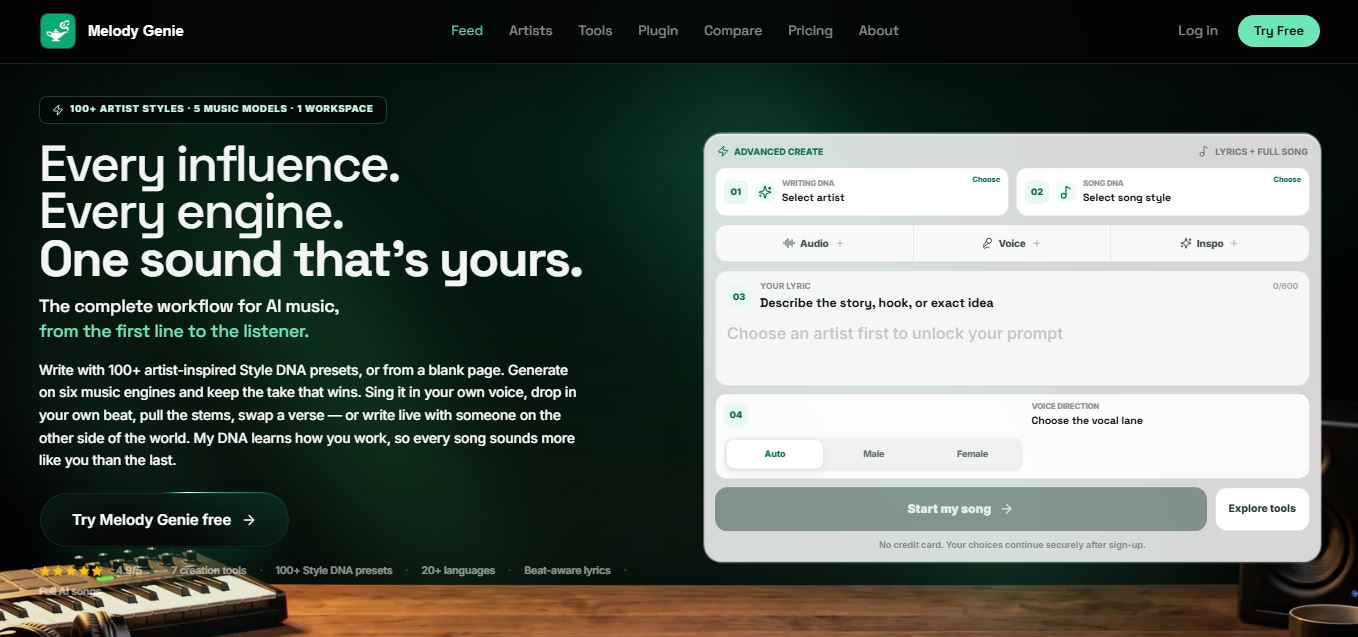
MelodyGenie is an AI-powered music generator that creates original songs from simple text prompts. Users can choose styles, moods, and genres, then instantly generate melodies and full tracks, making it easy for creators, marketers, and hobbyists to produce custom music without musical expertise.
Freemium
Kimi AI
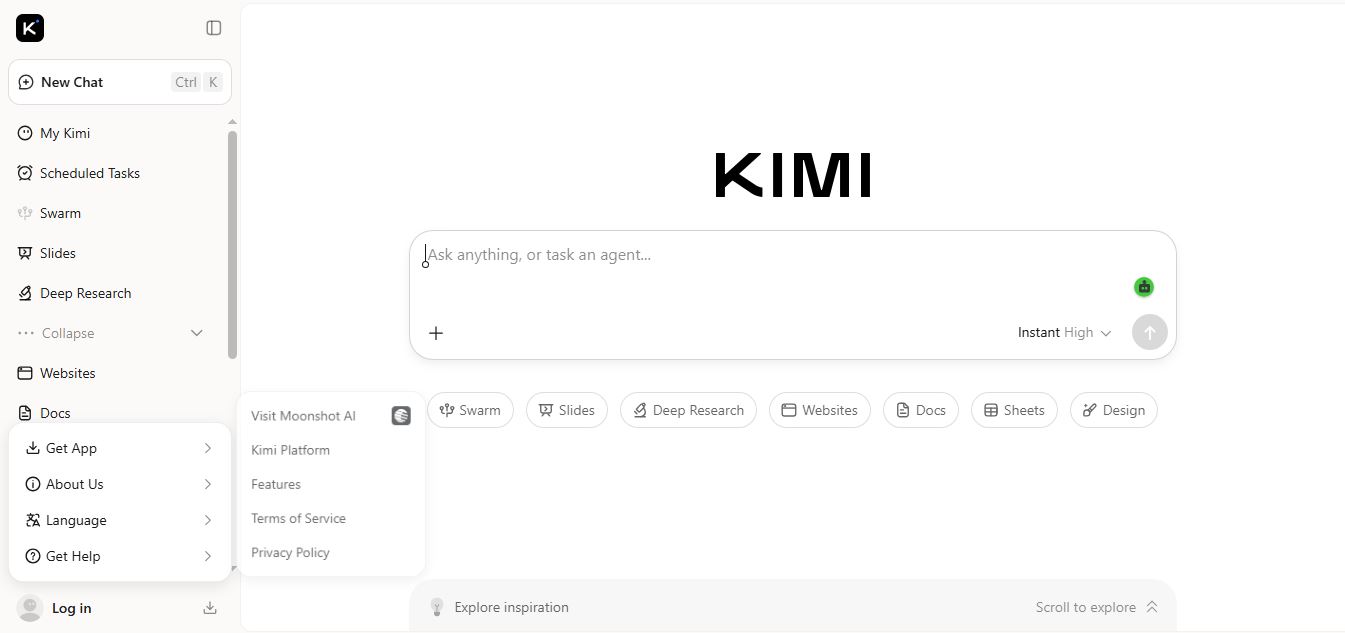
Kimi AI is an advanced AI assistant developed by Moonshot AI that helps you chat, research, write, code, and automate tasks in one place. It supports web search, file analysis, and multimodal inputs, and can even run autonomous “agent” workflows to complete complex tasks end-to-end.
Freemium

Fashion Diffusion AI
Fashion Diffusion is an AI-powered fashion design platform that helps brands and designers create clothing designs, virtual try-ons, AI models, product photos, and marketing visuals faster and cost-effectively.
Paid

Veo 4
Veo 4 AI is an AI video creation platform that generates dramatic videos from text, images, audio, and video prompts using realistic motion and synchronized sound.
Paid
Alternatives
Alternatives to Emergent
The best Emergent alternatives include Lovable (lovable.dev), v0 by Vercel, Bolt.new, Replit Agent, Cursor, and Create.xyz. These platforms provide AI-powered application generation, rapid code scaffolding, and interactive development environments. While Emergent specializes in conversational full-stack generation across both web and mobile applications with integrated databases, authentication, payment rails, and context-resilient Task Forking, alternatives like v0 focus on modern React and Tailwind frontend UI components, and Bolt.new executes full-stack applications in an in-browser sandbox container. Choosing the right platform depends on whether you require an all-in-one web and mobile app builder with auto-provisioned backends, isolated frontend component design, or in-browser sandbox execution.
 4.9
4.9Claudebin
Code Assistant
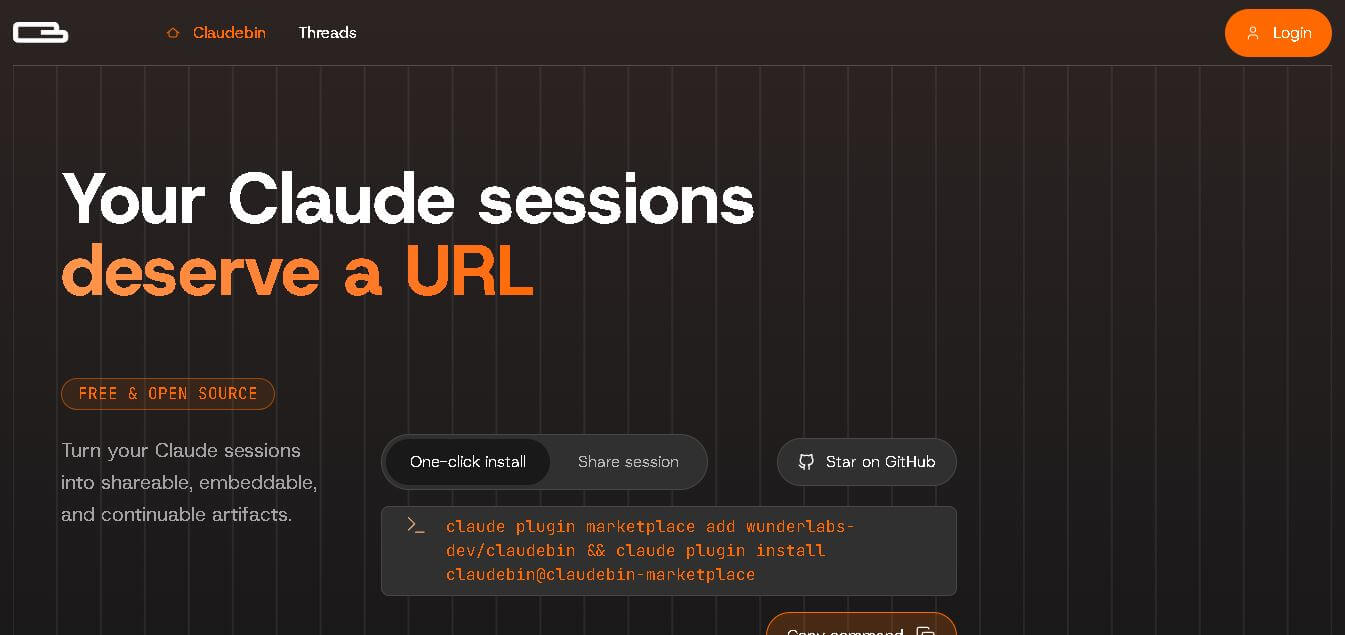
Claudebin is an open-source tool for sharing Claude Code sessions through structured, accessible web links. It captures conversations, file operations, terminal commands, and tool calls, helping developers explain their coding workflows. With session viewing and embedding capabilities, it simplifies technical documentation, collaboration, debugging discussions, and knowledge sharing across development projects.
 4.9
4.9GitFluence
Code Assistant
GitFluence is an AI-powered Git command generator that helps developers turn plain-English instructions into exact Git commands. It eliminates the need to memorize syntax, speeds up version control workflows, and lets users quickly copy accurate commands for tasks like branching, merging, and fixing commits.
 4.9
4.9Kiro
Vibe Coding
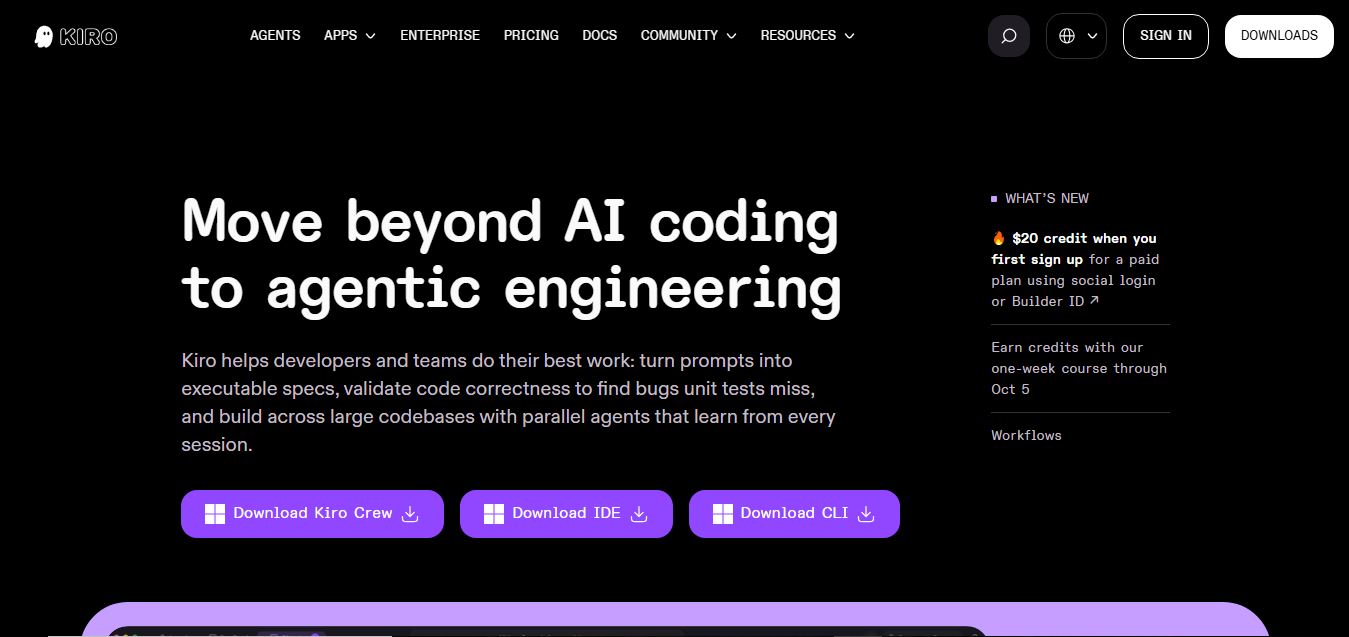
Kiro is an AI-powered developer platform that helps teams plan, build, and ship software using autonomous agents. It turns prompts into structured specs, writes and tests code, and automates workflows across IDE, CLI, and cloud, enabling faster, reliable development from prototype to production.
 4.7
4.7Amazon Q Developer
Code Assistant
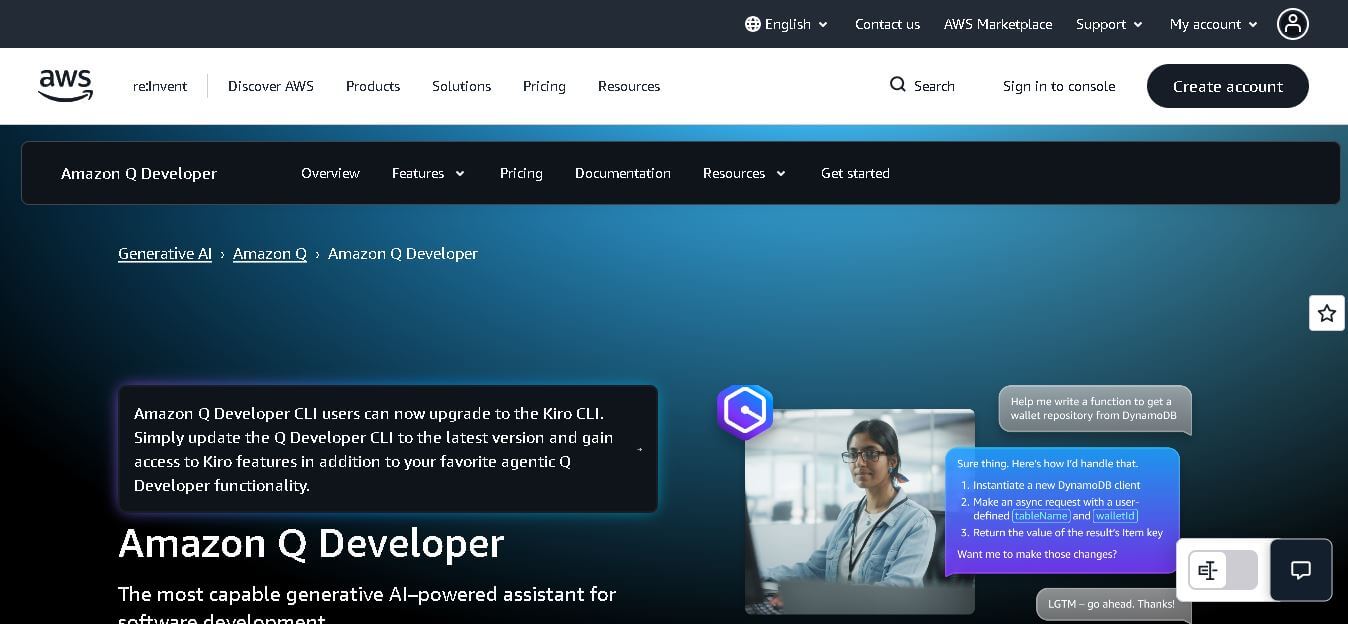
Amazon Q Developer helps developers write, explain, test, refactor, secure, and troubleshoot code while working with AWS services. It provides conversational assistance, inline suggestions, agentic coding, and cloud guidance across supported IDEs, command-line environments, and AWS interfaces. Its goal is to reduce repetitive work and help teams move from ideas to deployable software.
 4.9
4.9Xano
No Code
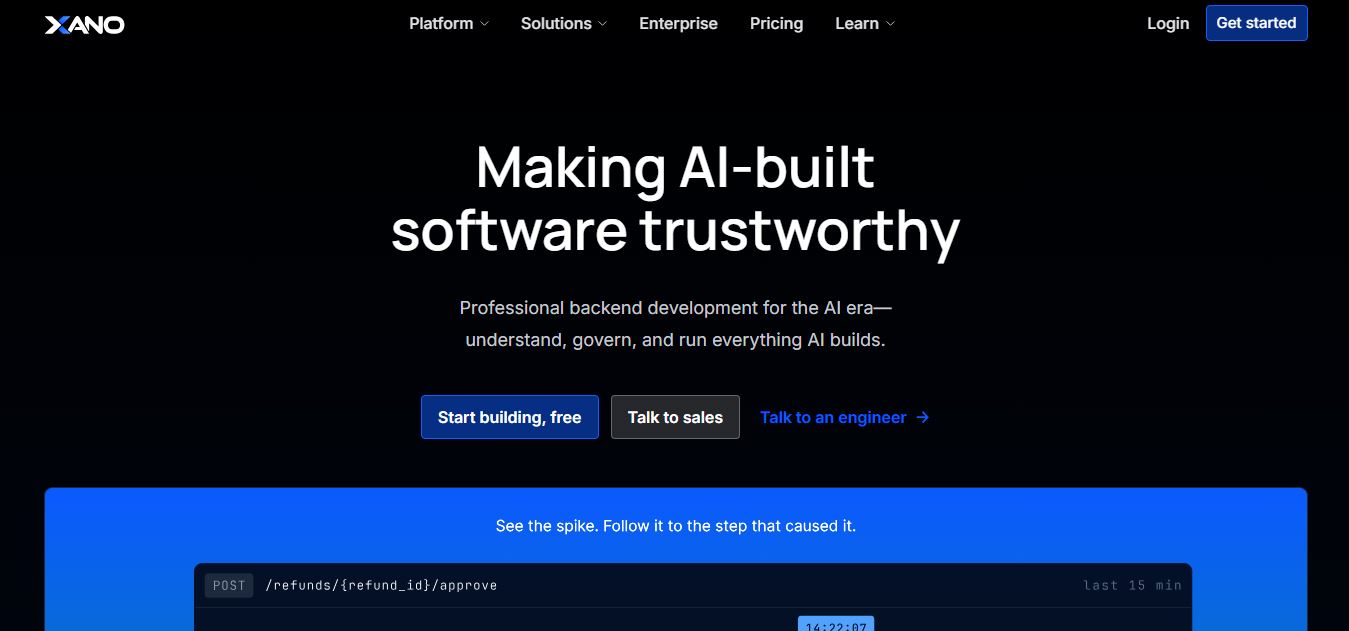
Xano is a no-code backend platform that lets users build scalable APIs, databases, and business logic without writing code. It provides a powerful server-side infrastructure, enabling developers and no-code creators to connect frontends, manage data, and launch applications quickly and efficiently.
 4.8
4.8Kissflow
No Code
Kissflow is a low-code workflow automation and business process management platform that helps teams build apps, automate approvals, and manage operations without heavy coding. It centralizes workflows, improves visibility, and speeds up processes across departments like HR, finance, and procurement.
 4.9
4.9GitLab
Code Assistant
GitLab is a DevOps platform that provides a complete suite for planning, coding, testing, and deploying software in one place. It combines version control, CI/CD, security, and collaboration tools, helping teams streamline development workflows and deliver software faster and more efficiently.
 4.9
4.9CodeRabbit
Code Assistant
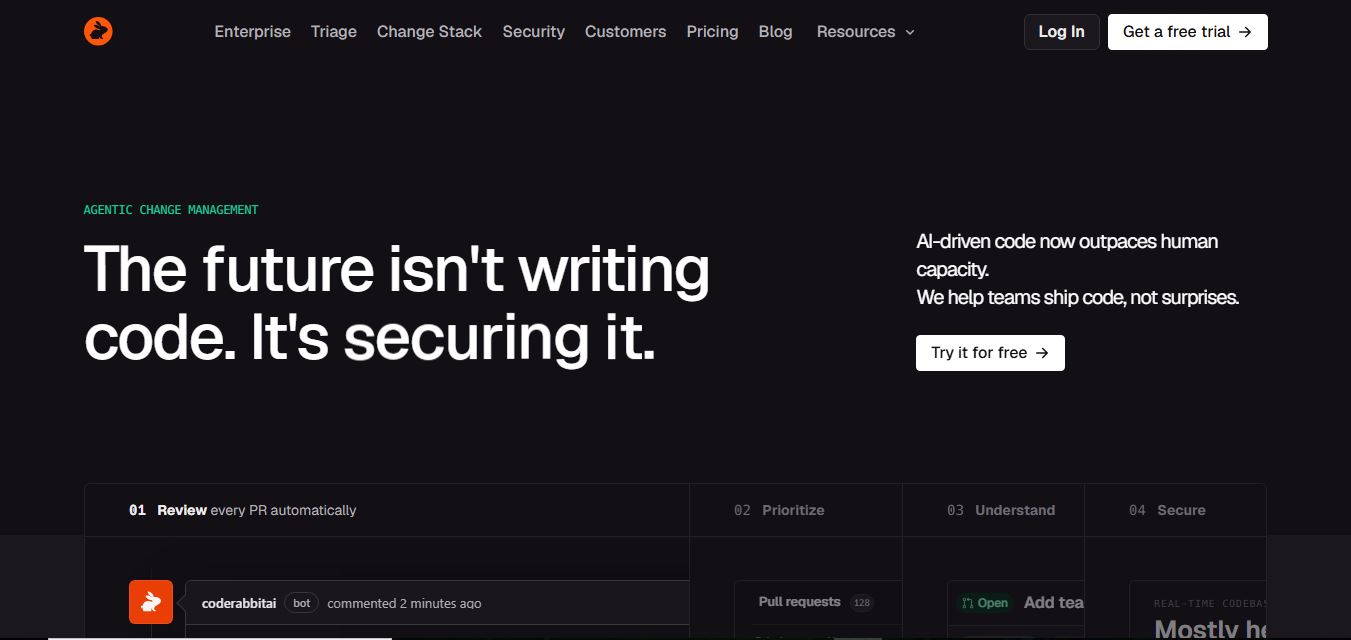
CodeRabbit is an AI-powered code review assistant that helps developers catch bugs, improve code quality, and speed up pull requests. It analyzes code changes in real time, provides actionable feedback, and integrates with Git workflows to make reviews faster and more efficient.
 4.9
4.9Sourcery
Code Assistant
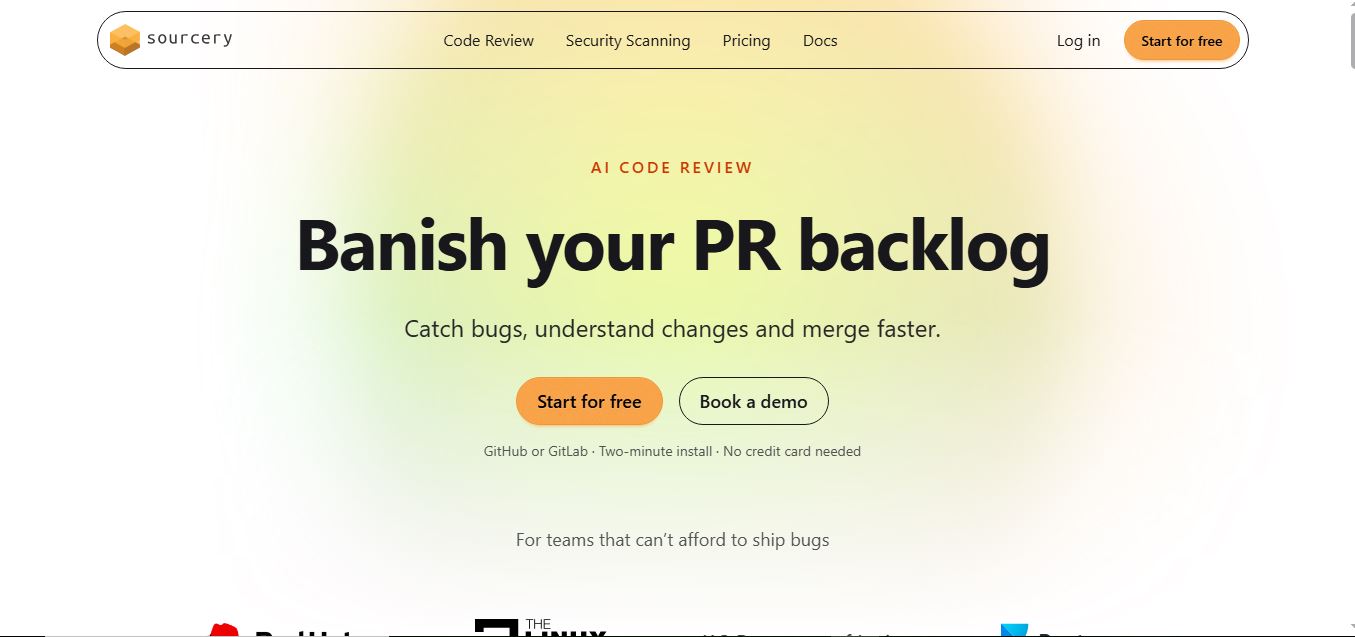
Sourcery is an AI-powered code refactoring tool that helps developers automatically improve Python code quality. It analyzes code, suggests cleaner and more efficient alternatives, and applies refactors instantly, making code more readable, maintainable, and aligned with best practices.