
Distributional
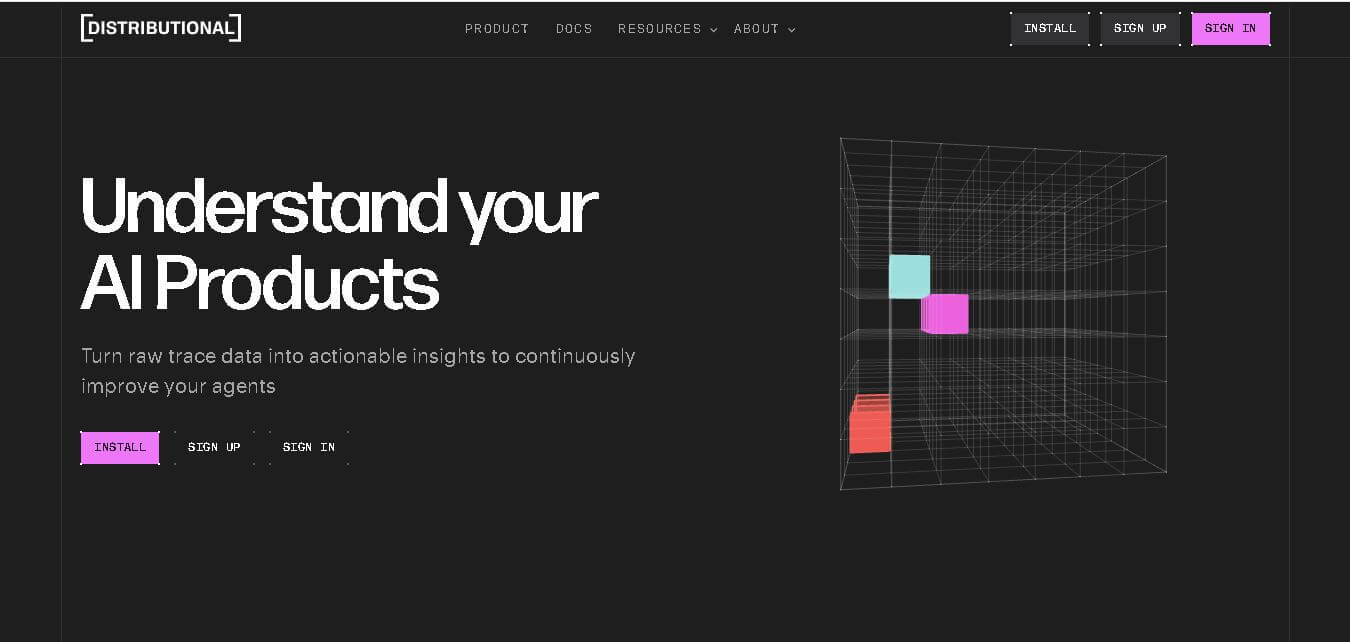
Distributional is an AI platform that helps teams test, evaluate, and monitor machine learning models with advanced data analysis, ensuring reliable performance and trustworthy AI deployment.
What is Distributional AI?
Distributional is an AI-powered research platform that tests and evaluates and monitors machine learning models throughout the complete model-development process. The platform aims to make models more reliable by finding hidden problems and issues with data changes and performance drops before they impact real-world results. The platform serves data scientists and ML engineers and AI teams who need to develop reliable systems.
Distributional combines statistical testing with modern AI workflows to enhance debugging speed and improve decision-making processes. The system has a feature that links to current workflows, helping organizations keep their model quality high across different places and data sets while ensuring results are consistent and accurate.
Distributional supports multiple model types and can analyze thousands of data points in seconds, improving evaluation efficiency by up to 60 percent. It reduces debugging time by nearly 40 percent through automated testing workflows. The platform enables teams to track performance across dozens of production environments simultaneously. With scalable infrastructure, it can handle large datasets with millions of records, helping enterprises keep accuracy levels above 95 percent in real-world deployments.

- Founders: Built by experienced AI researchers and engineers focused on model reliability
- Launch: Introduced in the early 2020s as AI testing gained importance
-
Use Cases:
- Model validation before deployment
- Detecting data drift and anomalies
- Monitoring production AI systems
- Improving model accuracy and fairness
-
Technology:
- Advanced statistical testing
- Machine learning evaluation frameworks
- Scalable cloud-based infrastructure
- Data distribution analysis techniques
Key Features
Distributional AI's key features are
- Automated Model Testing
Runs continuous tests on AI models to identify weaknesses and inconsistencies without manual effort, saving time and reducing errors. - Data Drift Detection
Monitors changes in incoming data and alerts teams when model performance may degrade due to shifting patterns. - Performance Monitoring
Tracks model accuracy, reliability, and outputs in real time across multiple environments. - Scalable Infrastructure
Handles large datasets efficiently, making it suitable for enterprise-level AI deployments. - Seamless Integration
Easily connects with existing ML pipelines, tools, and workflows for smooth adoption. - Statistical Evaluation Tools
Provides deep insights using statistical methods to ensure models behave as expected under various conditions. - Debugging and Insights
Helps teams quickly identify root causes of model failures and improve performance.
Pricing
- Free trial available
- Custom enterprise plans
- Usage-based pricing
- Scalable cost structure
Disclaimer: For the latest and most accurate pricing information, please visit the official Distributional AI website.
Who is Using it?
A diverse range of users and organizations utilize Distributional AI
- Data scientists
- Machine learning engineers
- AI research teams
- Tech startups
- Enterprise organizations
- Product development teams
Alternatives
Some Distributional AI alternatives are
- Evidently AI
- Arize AI
- WhyLabs
- Fiddler AI
- Superwise
Pros & Cons
Pros:
- Strong model evaluation capabilities
- Detects data drift effectively
- Scalable for large datasets
- Improves AI reliability
- Easy integration with workflows
Cons:
- May require technical expertise
- Pricing not fully transparent
- Learning curve for beginners
- Limited awareness compared to competitors
How did we rate distributional?
- Creative Accuracy: 8.5/10
- User Experience: 8/10
- Tools & Capabilities: 9/10
- Speed & Efficiency: 8.5/10
- Creative Freedom: 7.5/10
- Trust & Transparency: 8.5/10
- Help & Community: 7.5/10
- Value for Money: 8/10
- Ecosystem Fit: 8.5/10
- Overall Score: 8.3/10
Conclusion
Distributional stands out as a powerful solution for improving the reliability and performance of machine learning models. Its focus on testing, monitoring, and statistical evaluation makes it an essential tool for modern AI teams. By helping detect issues early and ensuring consistent results, it reduces risks associated with deploying AI systems. While it may require some technical expertise, the platform delivers strong value for organizations working with complex data and large-scale models. Overall, Distributional is a smart investment for teams aiming to build trustworthy, scalable, and high-performing AI solutions in today’s rapidly evolving technology landscape.
People are also reading
FAQ
What is distribution AI?
Distribution AI analyzes data patterns and distributions to test, monitor, and improve machine learning models, ensuring accuracy, reliability, and consistent performance.
Who should use Distributional?
Data scientists, ML engineers, and AI teams benefit the most from it.
Does Distributional support large datasets?
Yes, it is designed to handle large-scale data efficiently.
Is Distributional beginner-friendly?
It may require some technical knowledge, especially for advanced features.
Does it integrate with existing tools?
Yes, it works well with modern ML pipelines and workflows.
User Reviews
No reviews yet for Distributional.
Featured Tools
Featured AI tools from TechShark

Melody Genie
MelodyGenie is an AI-powered music generator that creates original songs from simple text prompts. Users can choose styles, moods, and genres, then instantly generate melodies and full tracks, making it easy for creators, marketers, and hobbyists to produce custom music without musical expertise.
Freemium

Kimi AI
Kimi AI is an advanced AI assistant developed by Moonshot AI that helps you chat, research, write, code, and automate tasks in one place. It supports web search, file analysis, and multimodal inputs, and can even run autonomous “agent” workflows to complete complex tasks end-to-end.
Freemium

Fashion Diffusion AI
Fashion Diffusion is an AI-powered fashion design platform that helps brands and designers create clothing designs, virtual try-ons, AI models, product photos, and marketing visuals faster and cost-effectively.
Paid
Veo 4
Veo 4 AI is an AI video creation platform that generates dramatic videos from text, images, audio, and video prompts using realistic motion and synchronized sound.
Paid
Alternatives
Alternatives to Distributional
Distributional alternatives include Verisk, Cytora, Shift Technology, Socotra, Earnix, and Guidewire. Distributional provides powerful tools for AI testing, model validation, and performance monitoring. It enables teams to detect model issues early, improve reliability, and ensure consistent results across real-world machine learning applications.
 4.9
4.9Manifold
Research
Manifold helps life sciences organizations turn complex clinical, genomic, and real-world data into governed, self-service insights. Its specialist agents support natural-language queries, cohort building, bioinformatics, statistical analysis, data partnerships, and evidence generation. Teams can keep sensitive data within their cloud while controlling access, auditing activity, and scaling research workflows securely.
 5.0
5.0Rayyan
Research
Rayyan is an AI-powered systematic review and literature review platform that helps researchers organize references, remove duplicates, screen studies, extract data, assess risk of bias, and generate PRISMA reports. Its AI features assist with relevance ranking, article screening, and structured data extraction while keeping researchers in control.
 4.9
4.9EvidenceHunt
Research
EvidenceHunt is an AI-powered medical research platform that helps clinicians, researchers, and life science teams find and analyze scientific evidence. It searches medical literature, guidelines, and internal documents, then generates citation-grounded answers, evidence tables, systematic reviews, and traceable insights for faster, evidence-based research.
 4.9
4.9Elicit
Research
Elicit is an AI-powered research assistant that helps users find, summarize, and analyze academic papers at scale. It searches millions of studies, extracts key data, and generates evidence-backed reports, enabling researchers to conduct literature reviews, compare findings, and make informed decisions faster.
 4.8
4.8Scholarcy
Research
Scholarcy is an AI-powered research assistant that helps students and researchers summarize, analyze, and organize academic papers. It turns complex documents into structured flashcards with key findings, concepts, and references, enabling faster reading, better understanding, and efficient literature review workflows.
 4.9
4.9Resoomer
Research
Resoomer is an AI-powered text summarization tool that helps users quickly turn long articles, research papers, and documents into concise summaries. It identifies key ideas, supports multiple formats like PDFs and URLs, and includes tools for paraphrasing, translating, and analyzing content for faster understanding.
 4.9
4.9Consensus
Academic
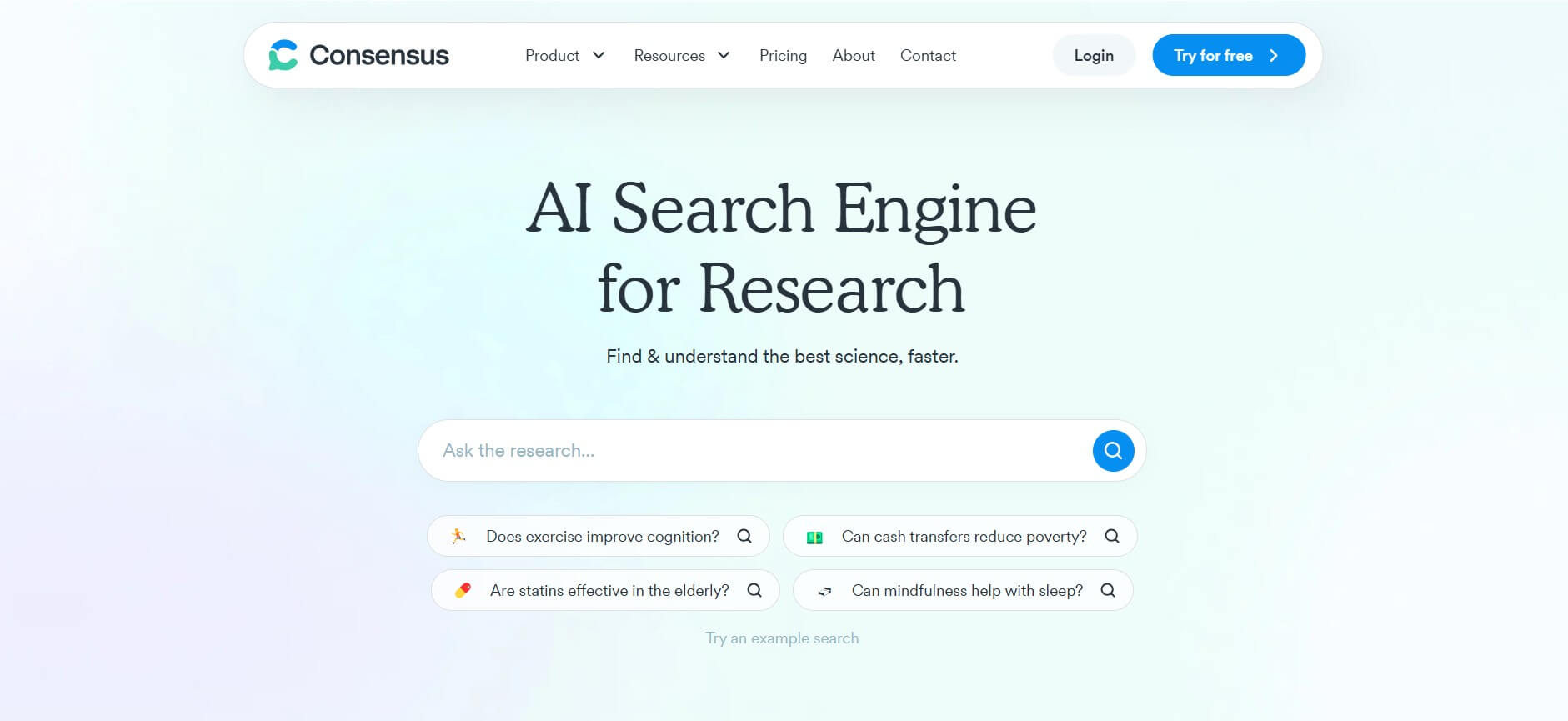
Consensus is an AI-powered academic search engine that helps users find, understand, and summarize scientific research from over 200 million peer-reviewed papers. It delivers clear, cited answers backed by real studies, making it easier to explore evidence, compare findings, and conduct research faster and more reliably.
 5.0
5.0Perplexity AI
AI Chatbot Tools
Perplexity is an AI-powered answer engine that searches the web in real time and delivers clear, cited responses instead of just links. It combines conversational AI with live data, helping users research topics, compare information, and get reliable insights quickly with verifiable sources.
OneSearch.bio
Research
OneSearch.bio is an AI-powered bio link and search aggregation platform designed for creators, brands, and digital marketers to consolidate links, social profiles, monetization tools, and searchable content into a single custom hub.