
DeerFlow
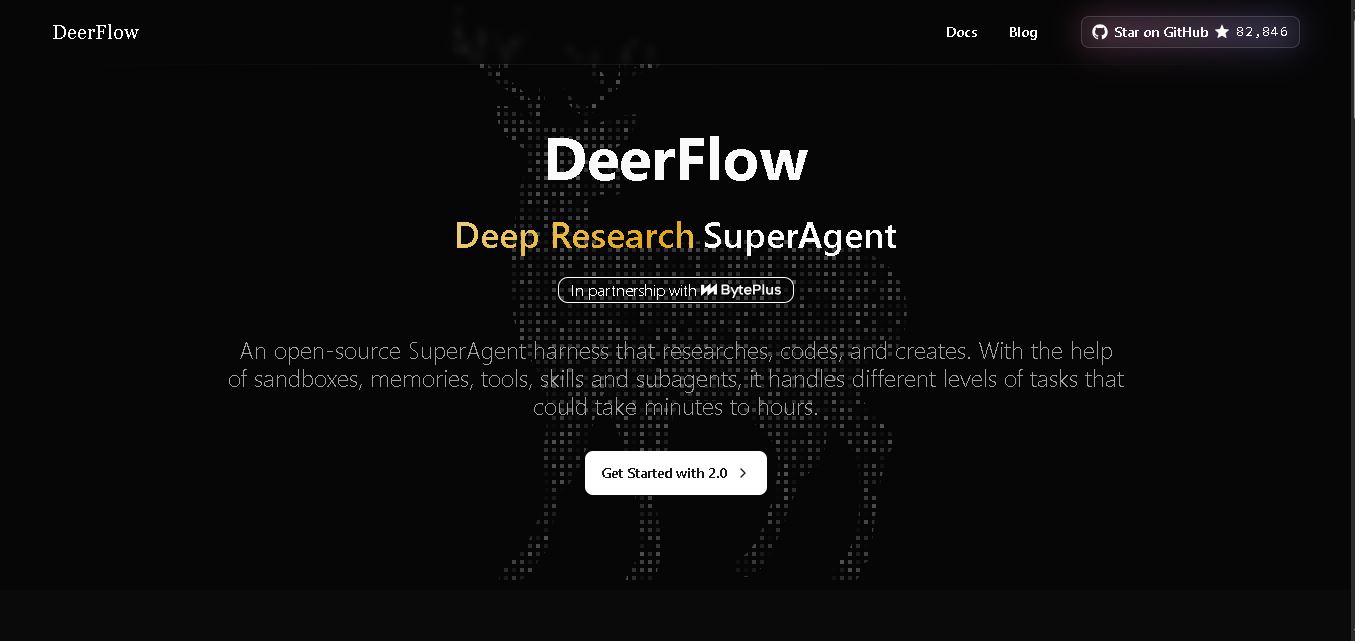
DeerFlow is an open-source agent harness designed for complex, multi-step workflows. It combines memory, tools, skills, sandboxed execution, context management, and subagents in one runtime. Developers can use its Harness to build custom agent systems or deploy its App as a complete application for practical workflows.
What is DeerFlow?
DeerFlow (Deep Exploration and Efficient Research Flow) is an open-source, long-horizon SuperAgent harness developed by ByteDance. Built on LangChain and LangGraph, DeerFlow is an execution engine that provides AI agents with an isolated computer environment—including a Docker sandbox, bash terminal, mountable filesystem, extensible skills system, and persistent long-term memory—to autonomously execute complex multi-step workflows ranging from deep research and report generation to app scaffolding and data pipeline automation.
DeerFlow 2.0 is an open-source super-agent harness built for long-horizon tasks. Version 2.0 launched on February 28, 2026, and the project reported reaching the #1 position on GitHub Trending on that date. Its current application quick-start requires Python 3.12+, Node.js 22+, pnpm 10, and at least 1 LLM API key. DeerFlow supports 4 tool categories: built-in, community, MCP, and skill tools.
- Platform Role: Open-Source SuperAgent Harness, Multi-Agent Orchestration Runtime & Autonomous Execution Engine
- Developer & Organization: ByteDance (open-source under MIT License)
- Cross-Platform Access: Web Interface (deerflow.tech), Docker Containers, Local CLI (Python 3.11+ / Node.js), and messaging integrations (Telegram, Slack, Feishu)
Use Cases:
- Automating long-horizon deep web research, market analysis, competitor benchmarking, and structured cited report generation
- Executing isolated code scripts, automated data cleaning pipelines, and running Python analysis inside Docker sandboxes
- Scaffolding full-stack web application prototypes, building dynamic landing pages, and exporting formatted presentation slide decks
- Creating multi-modal assets, including AI-generated reference images, video clips, and technical diagrams
- Deploying autonomous AI workforce pipelines connected directly to enterprise messaging apps like Slack, Telegram, and Feishu
Technology:
- LangGraph and LangChain multi-agent framework managing lead-agent delegation and dynamic sub-agent spawning
- Isolated Docker container sandbox providing a persistent filesystem, Bash terminal, and Python execution environment
- Modular skills system loaded progressively via Markdown specs to maintain clean context windows
- Persistent local long-term memory engine for tracking user profiles, technical stacks, writing styles, and project preferences across sessions
Target Users:
- AI engineers and software developers building autonomous agent pipelines with full local control and execution safety
- Research teams, market analysts, and academics conducting multi-hour deep research across web sources
- Content strategists, growth marketers, and product managers requiring automated content, presentation, and prototype workflows
- Enterprise organizations seeking permissible (MIT-licensed) open-source agent infrastructure for local deployment
Acquisition: Open-source project created and backed by ByteDance (deerflow.tech / github.com/bytedance/deer-flow)

What are the key features of DeerFlow?
DeerFlow's key platform features are
- Sandboxed Execution Container: Runs code, bash commands, and file edits inside isolated Docker containers with a complete workspace filesystem.
- Sub-Agent Orchestration: Spawns parallel, scoped sub-agents for sub-tasks (crawling, data cleaning, chart generation) and synthesizes their results into a final deliverable.
- Modular Skills Framework: Extensible capability modules defined in Markdown files that teach agents specific workflows (slide deck creation, web generation, deep research).
- Aggressive Context Engineering: Compresses intermediate steps, offloads data to disk, and keeps context windows lean during multi-hour runs.
- Persistent Cross-Session Memory: Learns and remembers user preferences, coding habits, writing tone, and system environments over time.
- Multi-Channel Messaging Gateways: Integrates natively with Telegram, Slack, and Feishu for conversational task initiation and delivery.
How much does DeerFlow cost?
DeerFlow is completely free and open-source under the MIT License, though self-hosted deployments require underlying model API keys or local hardware resources.
Pricing & Access Overview:
- Open-Source Framework ($0 / Free): Free to clone, modify, self-host, and deploy commercially under the permissive MIT license.
- Self-Hosted Infrastructure Costs: Operates locally or on cloud servers (Docker container requirements). API usage fees apply depending on the chosen LLM (OpenAI, Anthropic, or Claude Code) or search providers.
Disclaimer: DeerFlow is an open-source software harness. While the code is free, users are responsible for compute hardware (Docker setup) and any third-party LLM or web search API tokens used during execution.
Who should use DeerFlow?
DeerFlow is designed for software developers, researchers, and automated workflow teams, including
- AI Engineers & Developers: Technical builders who want an extensible SuperAgent harness that executes real bash commands and writes full applications safely in Docker.
- Deep Research Analysts: Researchers who need parallelized web crawling, source verification, and structured report compilation without running hitting context limits.
- Automation Engineers: Teams seeking open-source agent orchestration to connect chat messaging channels (Slack, Telegram) directly with executable code environments.
What are the best alternatives to DeerFlow?
Some of the strongest DeerFlow alternatives include
- CrewAI
- Microsoft AutoGen
- LangGraph / LangChain
- OpenAI Deep Research
- NanoClaw
- Devin / OpenHands
What are the pros and cons of DeerFlow?
What are the pros of DeerFlow?
- True sandboxed execution allows agents to run bash commands, execute Python scripts, and modify files safely
- Parallel sub-agent decomposition prevents context overflow and handles long-horizon tasks taking minutes to hours
- A modular skills system makes adding custom tools and multi-modal workflows straightforward via Markdown files
- Permissive MIT open-source licensing backed by ByteDance's active developer community
- Persistent memory builds personalized context over time across multiple client sessions
What are the cons of DeerFlow?
- Requires local technical setup, including Docker, Node.js, and Python environments
- Heavy multi-agent runs can consume substantial token budgets across LLM API providers
- Container network and security policies must be configured carefully for production enterprise deployments
Why should you choose DeerFlow?
Most AI agent frameworks merely return text descriptions or code blocks, leaving execution and deployment to the user. DeerFlow bridges this gap by supplying a complete, sandboxed runtime environment. By combining Docker isolation, sub-agent parallel processing, progressive skill loading, and persistent memory, DeerFlow delivers finished, multi-file deliverables—from deep research reports to fully functioning web apps—autonomously and securely.
How does DeerFlow compare to competitors?
The main difference between DeerFlow, CrewAI, AutoGen, and OpenHands lies in execution runtime and opinionated infrastructure. While CrewAI and AutoGen provide developer building blocks for multi-agent logic, DeerFlow supplies an out-of-the-box SuperAgent harness with built-in Docker sandboxes, filesystem tools, skills, and memory layers ready for long-horizon execution.
| Feature / Platform | DeerFlow | CrewAI | Microsoft AutoGen | OpenHands |
|---|---|---|---|---|
| Core Focus | Long-Horizon Executable SuperAgent Harness | Role-Based Multi-Agent Orchestration | Conversational Multi-Agent Framework | AI Software Engineering Agent Environment |
| Execution Environment | Built-in Docker Sandbox & Bash Terminal | Python Tool / API Integration | Docker Sandbox / Python Code Execution | Docker Container for Software Development |
| Sub-Agent Architecture | Dynamic Parallel Decomposition by Lead Agent | Sequential or Hierarchical Crew Processes | Multi-Agent Conversation Loops | Single/Multi-Agent Coding Workflows |
| Open-Source License | MIT License (ByteDance) | MIT License | MIT License | MIT License |
| Best For | Developers wanting a complete, sandboxed SuperAgent for research, coding, and slide generation | Teams building custom Python agent roles for business automation | Researchers are prototyping complex multi-agent dialog patterns. | Developers automating software development and code editing tasks |
How do we rate DeerFlow?
| Parameter | Rating (out of 5) |
|---|---|
| Execution Capability & Sandbox Isolation | 4.9 |
| Sub-Agent Orchestration & Scaling | 4.8 |
| Extensibility & Skills System | 4.9 |
| Memory & Context Management | 4.7 |
| Open-Source Value & Licensing | 5.0 |
| Overall Score | 4.86 |
What is our review and verdict on DeerFlow?
DeerFlow represents a major leap forward in open-source AI agent infrastructure. By shifting focus from pure text-generation chatbots to sandboxed, execution-first SuperAgents, ByteDance has delivered a highly practical framework. Its parallel sub-agent handling, persistent filesystem, and extensible skills make it a premier choice for developers building autonomous, long-horizon AI tools.
Conclusion
DeerFlow provides developers with an open-source foundation for creating AI agents capable of handling longer, more complex workflows. Its combination of subagents, memory, tools, skills, context management, and sandboxed execution gives developers a structured runtime for building practical agent systems. With separate Harness and App layers, DeerFlow can support both customized development and application deployment, making it relevant for teams exploring more capable, multi-step AI workflows.
FAQ
What can DeerFlow be used for?
DeerFlow can be used for research, coding, data analysis, content workflows, and other complex tasks that require multiple steps. Its architecture allows agents to plan work, delegate subtasks, use tools, access files, execute code in sandboxes, and maintain context across longer interactions, making it suitable for developers building capable agent systems.
Is DeerFlow free to use?
DeerFlow is an open-source project, so its source code can be accessed and customized without purchasing a proprietary software license. However, operating a DeerFlow deployment can involve infrastructure and third-party model or service costs. The official quick-start documentation also requires at least one LLM API key, depending on the configuration you choose.
Who is DeerFlow designed for?
DeerFlow is primarily designed for developers, technical teams, researchers, and organizations interested in building or operating AI agent systems. Developers can use the Harness to create customized agent products, while teams can deploy the App as a complete application. Its documentation provides separate paths for building, deployment, customization, and practical usage.
Does DeerFlow support multiple AI agents?
Yes. DeerFlow supports subagent delegation, allowing a lead agent to break larger tasks into smaller pieces and assign them to subagents. This approach can help isolate complex subtasks and reduce pressure on the main agent's context. The official documentation identifies subagent orchestration as one of DeerFlow's core runtime capabilities.
What tools does DeerFlow support?
DeerFlow organizes tools into four categories: built-in tools, community tools, MCP tools, and skill tools. These capabilities allow agents to perform actions such as searching the web, working with files, running commands, delegating tasks, and presenting results. Tool availability and configuration can be controlled through DeerFlow's configuration system.
Does DeerFlow have memory?
Yes. Memory is an integrated part of DeerFlow's agent runtime. The system is designed to manage what agents remember, summarize, or forget across interactions and sessions. Persistent memory works alongside context management to support longer-running tasks, helping agents maintain relevant information instead of treating every interaction as an isolated conversation.
User Reviews
No reviews yet for DeerFlow.
Featured Tools
Featured AI tools from TechShark
Melody Genie
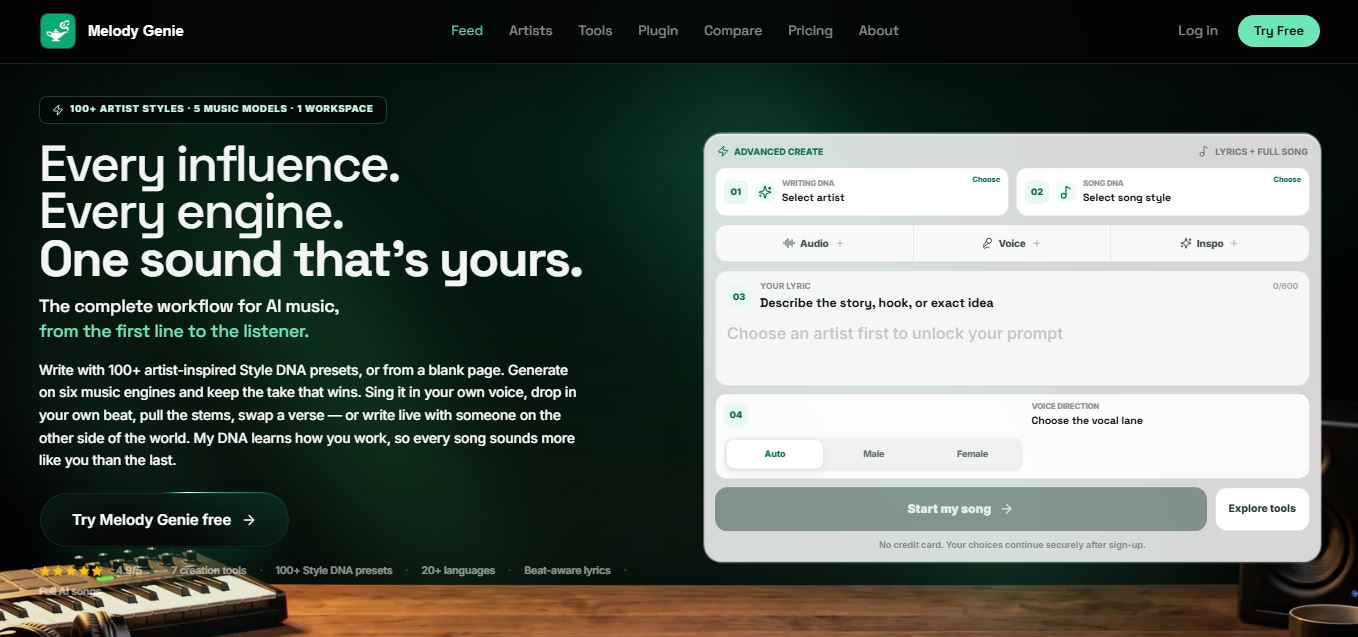
MelodyGenie is an AI-powered music generator that creates original songs from simple text prompts. Users can choose styles, moods, and genres, then instantly generate melodies and full tracks, making it easy for creators, marketers, and hobbyists to produce custom music without musical expertise.
Freemium
Kimi AI
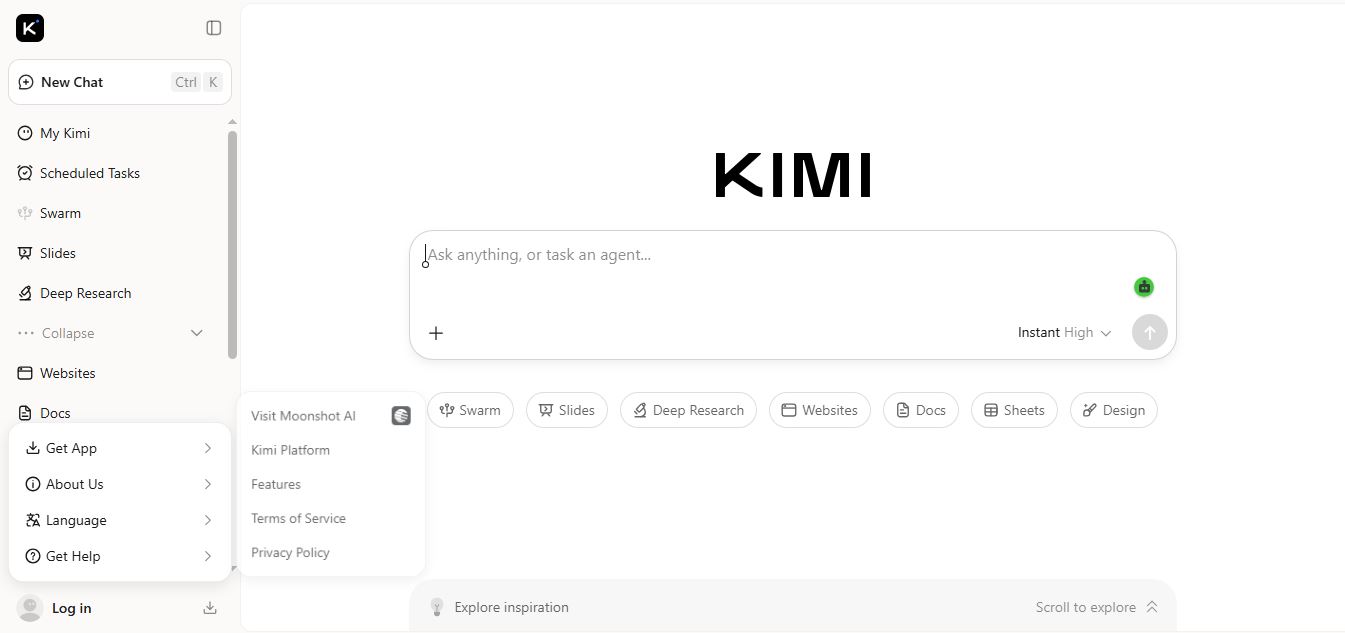
Kimi AI is an advanced AI assistant developed by Moonshot AI that helps you chat, research, write, code, and automate tasks in one place. It supports web search, file analysis, and multimodal inputs, and can even run autonomous “agent” workflows to complete complex tasks end-to-end.
Freemium
Fashion Diffusion AI
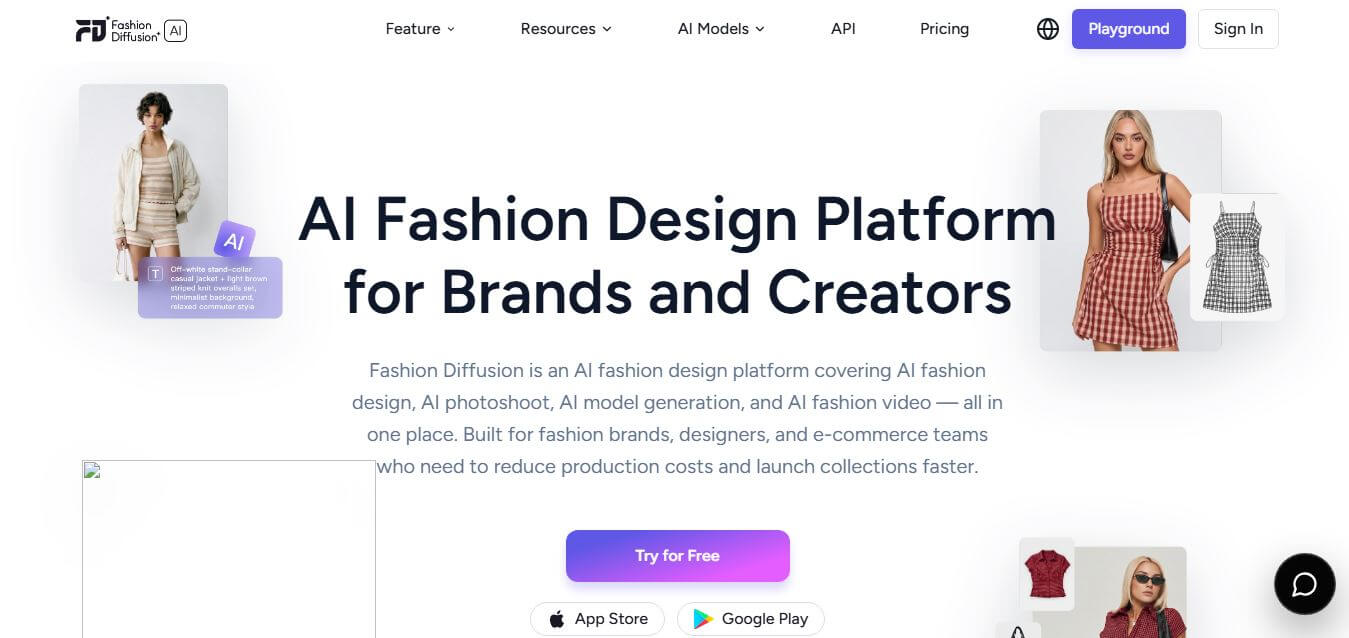
Fashion Diffusion is an AI-powered fashion design platform that helps brands and designers create clothing designs, virtual try-ons, AI models, product photos, and marketing visuals faster and cost-effectively.
Paid
Veo 4
Veo 4 AI is an AI video creation platform that generates dramatic videos from text, images, audio, and video prompts using realistic motion and synchronized sound.
Paid
Alternatives
Alternatives to DeerFlow
The best DeerFlow alternatives include CrewAI, Microsoft AutoGen, LangGraph, and OpenHands. While DeerFlow provides an out-of-the-box SuperAgent harness with a built-in Docker sandbox, progressive skills, and persistent memory created by ByteDance, alternatives like CrewAI excel at role-based task delegation and OpenHands focuses specifically on AI-assisted software development environments.
Manupatra AI
AI Agent
Manupatra AI (manupatra.ai) is the next-generation generative artificial intelligence legal assistant from Manupatra, India's premier legal information provider, offering advanced case law research, automated document summarization, and intelligent legal drafting tailored for Indian jurisprudence.
LegitQuest
AI Agent
LegitQuest (legitquest.com) is an advanced Indian legal research platform and AI-powered case law analytics tool that features visual judgment mapping (Big Decisions), comprehensive Supreme Court and High Court reporting, and intuitive legal search capabilities.
Jhana AI
AI Agent
Jhana AI (jhana.ai) is an advanced AI-powered legal assistant and research platform specifically built for Indian advocates, law firms, and corporate legal departments to conduct deep case law research and draft legal documents grounded in Indian jurisprudence.
Lysa
AI Agent
Lysa (lysa.legal) is an AI-powered legal intelligence, research, and drafting platform built specifically for Indian legal professionals, advocates, law firms, and corporate legal teams, featuring grounded Indian Kanoon citations, matter management, and automated document generation.
Kommunicate
AI Agent
Kommunicate (kommunicate.io) is an AI-powered customer service automation and live chat platform that unites no-code generative AI agents, Kompose chatbot builder, seamless human escalation, voice AI, and omnichannel messaging across WhatsApp, web, and mobile apps.
LegalInk AI
AI Agent
LegalInk AI (legalink.co.in) is an enterprise legal AI platform purpose-built for Indian law, advocates, CAs, and corporate legal teams, combining court-ready legal drafting, BNS/BNSS 2023 compliance, IndianKanoon-integrated research, and the Inka AI reasoning copilot.
Text
AI Agent
Text is an AI-powered customer service platform that combines live chat, help desk ticketing, AI agents, and workflow automation. It helps businesses manage customer conversations, automate repetitive support tasks, answer questions, engage website visitors, and turn customer interactions into sales opportunities through a unified communication workspace.
DocsBot AI
AI Agent
DocsBot AI is an AI chatbot and agent platform that turns websites, documents, knowledge bases, and support tickets into conversational assistants. Businesses can use it to automate customer support, answer questions, share internal knowledge, connect workflows, and provide information through website widgets and supported integrations.
SiteGPT AI
AI Agent
SiteGPT is an AI chatbot platform that helps businesses automate customer support using their website content, documents, and knowledge sources. It answers visitor questions, supports lead generation, and integrates into websites, allowing teams to handle repetitive inquiries, improve customer experiences, and provide assistance around the clock.