
LangChain
LangChain is an open-source framework that helps developers build AI apps and agents using large language models (LLMs). It connects models with data sources, tools, and workflows, making it easier to create chatbots, automation systems, and intelligent apps.
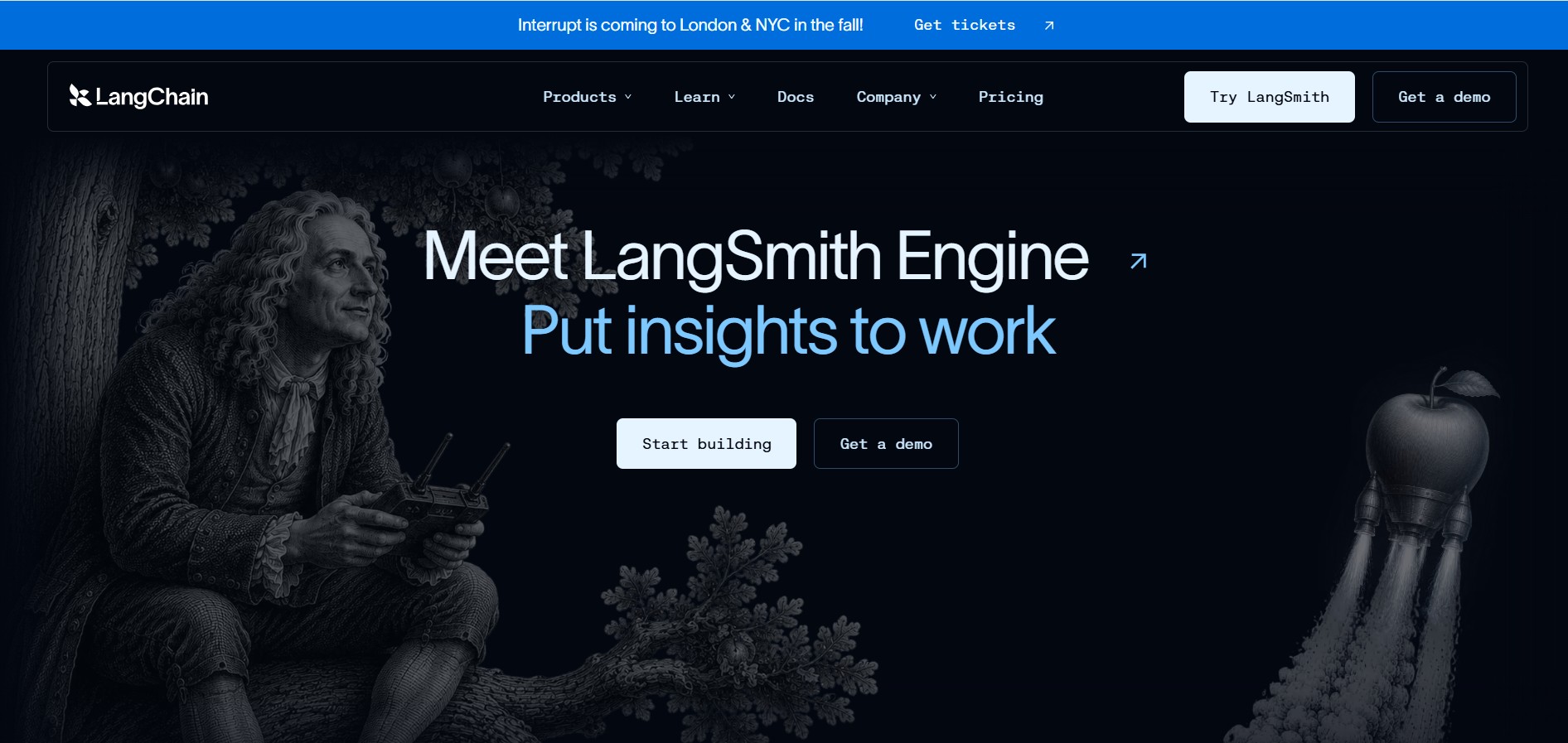
What is LangChain?
LangChain is an open-source AI development framework designed to help developers build applications and autonomous agents powered by large language models (LLMs). It provides a standardized way to connect models, data sources, APIs, and tools, allowing you to create intelligent systems that can reason, take actions, and interact with real-world data. Instead of building everything from scratch, LangChain offers pre-built agent architectures, templates, and integrations, so you can quickly prototype and scale AI apps. It also supports model flexibility, meaning you can switch between providers like OpenAI or Anthropic without rewriting code. Combined with tools like LangGraph and LangSmith, it enables full lifecycle development—from building and testing to deploying and monitoring AI agents.
Founded in October 2022 by Harrison Chase and Ankush Gola, LangChain has evolved from an open-source prompt chaining library into a comprehensive software stack powering enterprise AI worldwide. Today, the platform encompasses three core pillars: the open-source LangChain framework (composable components and chains), LangGraph (cyclical multi-agent orchestration and human-in-the-loop workflows), and LangSmith (the developer platform for LLM observability, debugging, dataset curation, and evaluation).
- Founders: Harrison Chase & Ankush Gola
- Launch Year: 2022
- Headquarters: San Francisco, California
Use Cases:
- Building enterprise Retrieval-Augmented Generation (RAG) systems that ground LLM answers in internal company knowledge bases
- Designing cyclical, stateful multi-agent systems with LangGraph featuring branching logic and human-in-the-loop approval checkpoints
- Debugging and tracing multi-step LLM chains, token costs, execution latencies, and tool calls in production using LangSmith
- Constructing comprehensive evaluation datasets, running automated benchmark experiments, and regression-testing prompt iterations
- Connecting autonomous AI agents to external databases, APIs, code interpreters, and third-party SaaS services via standard tool bindings
Technology:
- LangChain Expression Language (LCEL) providing declarative, unified streaming, batching, and async chain composition
- LangGraph state graph engine offering fine-grained cyclical agent orchestration, state persistence, time-travel debugging, and multi-actor branching
- LangSmith cloud and self-hosted observability backend ingesting high-throughput execution traces, latency telemetry, and evaluation feedback
Target Users:
- Software engineers and full-stack developers integrating generative AI capabilities into production applications
- Enterprise AI architects and data science teams building complex, multi-agent enterprise automation workflows
- DevOps and MLOps professionals monitoring LLM latency, token spending, and error rates across live user traffic
- Researchers and product leads designing automated benchmark test suites and evaluation datasets for model prompt tuning
Acquisition: Operates as an independent developer tools and AI infrastructure company (LangChain, Inc.)

Key features of LangChain
LangChain's key platform features are
- Composable Open-Source Framework (Python & JS/TS): Standardized interfaces and abstractions for chat models, document loaders, vector stores, retrievers, and embedding models.
- LangGraph Multi-Agent Orchestration: A graph-based workflow runtime that supports cyclical loops, persistence, multi-agent collaboration, and human-in-the-loop decision gates.
- LangSmith Tracing & Observability: Visual debugging for every step of an agent or chain run, detailing prompt inputs, output tokens, latency metrics, and nested tool calls.
- Automated Evals & Testing: Run programmatic offline evaluations and online production monitors to track semantic drift, hallucinations, and answer accuracy across version updates.
- Prompt Engineering & Hub: Version, collaborate, and test prompts collaboratively in a team playground, pulling verified community prompts directly into application code.
- LangChain Expression Language (LCEL): A declarative protocol that enables parallel execution, streaming support, and fallback switching.
- Broad Vector Store & Tool Ecosystem: Out-of-the-box native connectors for Pinecone, Weaviate, Qdrant, Chroma, Milvus, Supabase, and hundreds of web search and developer tools.
- Enterprise Compliance & Hybrid Deployments: LangSmith provides cloud hosting, hybrid data plane architectures, and on-premise/VPC self-hosted deployment, all with SOC 2 Type 2 compliance.
LangChain Pricing
The core LangChain and LangGraph developer libraries are completely free and open-source (MIT license). Commercial pricing applies to the LangSmith observability platform and LangGraph Cloud hosting infrastructure.
Open-Source Libraries:
- $0 / Free Forever (MIT License): Full access to core Python and TypeScript frameworks, LangGraph libraries, and community integrations
LangSmith Developer Plan:
- $0 / month: 1 seat included
- 5,000 base traces per month, 14-day data retention, basic tracing, debugging, and LangGraph playground access
LangSmith Plus Plan:
- $39.00 / seat/month: Designed for teams moving applications into production
- Includes 10,000 base traces per month (with pay-as-you-go trace overages), up to 400-day extended data retention, collaborative prompt hub, evaluation datasets, and 1 included Serverless LangGraph deployment
LangSmith Enterprise:
- Custom Enterprise Pricing: Volume trace pools, unlimited seats, custom data retention, hybrid and self-hosted VPC deployments, SSO/SAML, role-based access control (RBAC), and dedicated enterprise SLAs
Disclaimer: Cloud compute consumption for hosted LangGraph agent deployments and third-party LLM API provider tokens are billed separately. For current trace overage rates and enterprise quotes, please visit the official pricing page at langchain.com/pricing.
Who is using LangChain?
LangChain is used by hundreds of thousands of developers and leading global enterprises, including
- Fortune 500 Enterprise AI Labs: Building internal retrieval pipelines, customer-facing support agents, and compliance audit copilots
- Fast-Growing AI Startups: Accelerating time-to-market by assembling complex agent architectures using LangGraph and LangSmith
- Data Science & MLOps Teams: Running rigorous automated evaluations, tracking token cost spikes, and diagnosing runtime latency bottlenecks
- Independent Software Developers: Rapidly prototyping experimental autonomous agents and specialized knowledge-base assistants
Best LangChain Alternatives
Some of the strongest LangChain alternatives include
- LlamaIndex
- Langfuse (for LLM Observability)
- CrewAI (for Multi-Agent Systems)
- Microsoft AutoGen
- Dify.ai
- Arize Phoenix / Weights & Biases Weave
Pros and Cons of LangChain
Pros
- Unrivaled ecosystem scale with hundreds of pre-built integrations across LLMs, vector databases, and tools
- LangGraph provides industry-leading control over cyclical, stateful, and human-in-the-loop agent workflows
- LangSmith is widely recognized as one of the most mature observability, tracing, and evaluation platforms on the market
- Available in both Python and TypeScript, ensuring parity across backend engineering and full-stack web environments
- Active open-source community with extensive documentation, tutorials, and templates
Cons
- The framework's rich abstraction layers can introduce a steep learning curve for developers preferring raw API calls
- Rapid version iterations and module refactors (e.g., migrating from legacy chains to LCEL/LangGraph) can complicate maintenance of legacy code
- High-volume production trace ingestion on LangSmith Plus can lead to trace overage charges if not monitored closely
Why Choose LangChain?
Building production-grade AI applications requires more than just calling an LLM completion endpoint. LangChain delivers the complete infrastructure layer necessary to orchestrate, debug, and monitor intelligent systems at scale.
- Eliminates vendor lock-in by allowing seamless switching between OpenAI, Anthropic, Google, and open-source models
- Provides stateful agent memory and cyclical routing with LangGraph that linear chaining libraries cannot match
- Delivers full visibility into every prompt, token cost, and intermediate tool output via LangSmith
- Maintains battle-tested stability trusted by hundreds of thousands of production developers worldwide
LangChain vs. Competitors
The main difference between LangChain, LlamaIndex, CrewAI, and Langfuse lies in scope and specialization. While LlamaIndex specializes heavily in complex data ingestion and RAG retrieval pipelines, CrewAI focuses on role-based collaborative agents, and Langfuse is a dedicated open-source observability tool, LangChain offers an end-to-end ecosystem encompassing framework abstractions, graph-based agent orchestration (LangGraph), and full-lifecycle observability (LangSmith).
| Feature / Tool | LangChain (langchain.com) | LlamaIndex | CrewAI | Langfuse |
|---|---|---|---|---|
| Core Focus | End-to-End LLM Framework & Observability | Data Ingestion & Advanced RAG | Role-Playing Multi-Agent Systems | Open-Source LLM Observability & Evals |
| Agent Architecture | LangGraph (Cyclical state machines) | Workflows & query engines | Role-based autonomous crews | N/A (Observability only) |
| Observability Suite | LangSmith (Tracing, Evals, Hub) | LlamaTrace / Third-party hooks | CrewAI Enterprise / Third-party | Native Open-Source Tracing & Evals |
| Language Parity | Python & TypeScript (Full parity) | Python & TypeScript | Python primary | Python, JS/TS, REST API |
| Pricing | Free OSS / LangSmith from $39/seat | Free OSS / LlamaCloud from $50/mo | Free OSS / Enterprise tiers | Free OSS / Cloud from $59/mo |
| Best For | Full-lifecycle LLM development & agents | Deep enterprise search & document RAG | Quick role-playing multi-agent setups | Teams wanting standalone OSS observability |
How do we rate LangChain?
| Parameter | Rating (out of 5) |
|---|---|
| Framework Versatility & Integration Breadth | 5.0 |
| LangGraph Multi-Agent Capabilities | 4.9 |
| LangSmith Observability & Evals | 4.9 |
| Community Support & Ecosystem Scale | 5.0 |
| Value for Engineering Teams | 4.8 |
| Overall Score | 4.92 |
LangChain Review
LangChain has solidified its position as the bedrock of the generative AI application stack. By adding the powerful cyclical orchestration of LangGraph and the deep, production-grade observability of LangSmith to its open-source foundational framework, it gives engineering teams the complete toolset they need to take complex AI products from early prototypes to enterprise scale. For developers, data scientists, and enterprises building serious, context-aware LLM software, LangChain remains an essential platform.
Conclusion
LangChain is a powerful open-source framework that enables developers to build AI applications and agents faster by providing a standardized way to connect models, tools, and data sources into a single workflow. Its biggest strength lies in flexibility—it allows you to switch between different AI providers, integrate external tools, and customize behavior without rewriting your entire system. Built on top of LangGraph, it also supports advanced capabilities like persistent memory, human-in-the-loop workflows, and durable execution, making it suitable for both simple apps and production-grade systems. With its broader ecosystem, including LangSmith for debugging and evaluation, it covers the full lifecycle of AI development from prototyping to deployment.
FAQ
What is LangChain?
LangChain is an open-source framework used to build applications powered by large language models (LLMs). It helps developers create AI agents, chatbots, and automation tools by connecting models with data, tools, and workflows.
How does LangChain work?
LangChain works by chaining together multiple steps (called “chains”) like fetching data, sending it to an AI model, and formatting the output. These steps create a workflow that makes AI responses more accurate and context-aware.
What can you build with LangChain?
You can build AI chatbots, agents, search tools, document analyzers, automation workflows, and even full AI-powered apps that interact with APIs, databases, and external tools.
Does LangChain support multiple AI models?
Yes, LangChain works with many providers like OpenAI, Anthropic, Google, and others. It standardizes how you interact with them, so you can switch models without rewriting your code.
Is LangChain free to use?
Yes, LangChain is open-source and free under the MIT license. You can use it for personal or commercial projects, though you may pay for the AI models or APIs you connect to.
What is the difference between LangChain and LangGraph?
LangChain is used for quickly building AI agents and workflows, while LangGraph is a lower-level framework that gives more control over complex, long-running agent systems.
What is LangSmith?
LangSmith is a platform by LangChain for debugging, testing, and monitoring AI agents. It helps developers track performance, fix errors, and improve outputs over time.
Do you need coding skills to use LangChain?
Yes, LangChain is mainly designed for developers and requires basic programming knowledge (Python or JavaScript). However, it simplifies many complex AI workflows.
Who should use LangChain?
LangChain is ideal for developers, startups, and AI teams who want to build custom AI applications, automate workflows, and create intelligent agents with full control.
User Reviews
No reviews yet for LangChain.
Featured Tools
Featured AI tools from TechShark
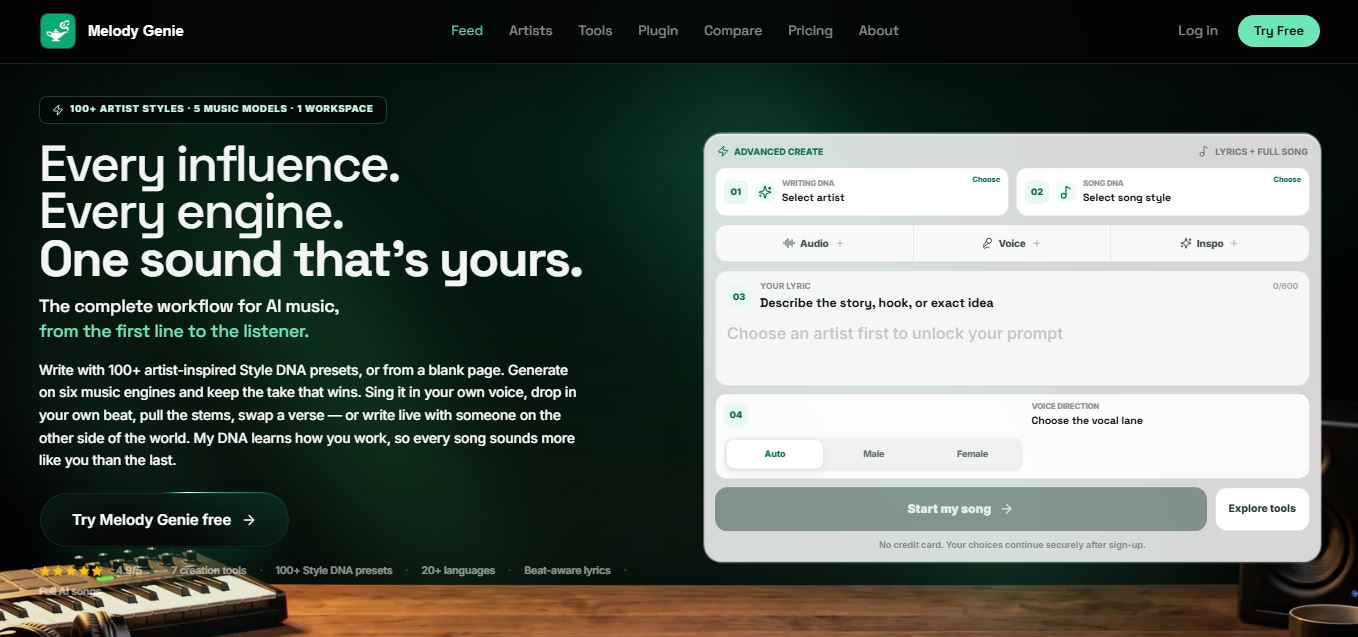
Melody Genie
MelodyGenie is an AI-powered music generator that creates original songs from simple text prompts. Users can choose styles, moods, and genres, then instantly generate melodies and full tracks, making it easy for creators, marketers, and hobbyists to produce custom music without musical expertise.
Freemium
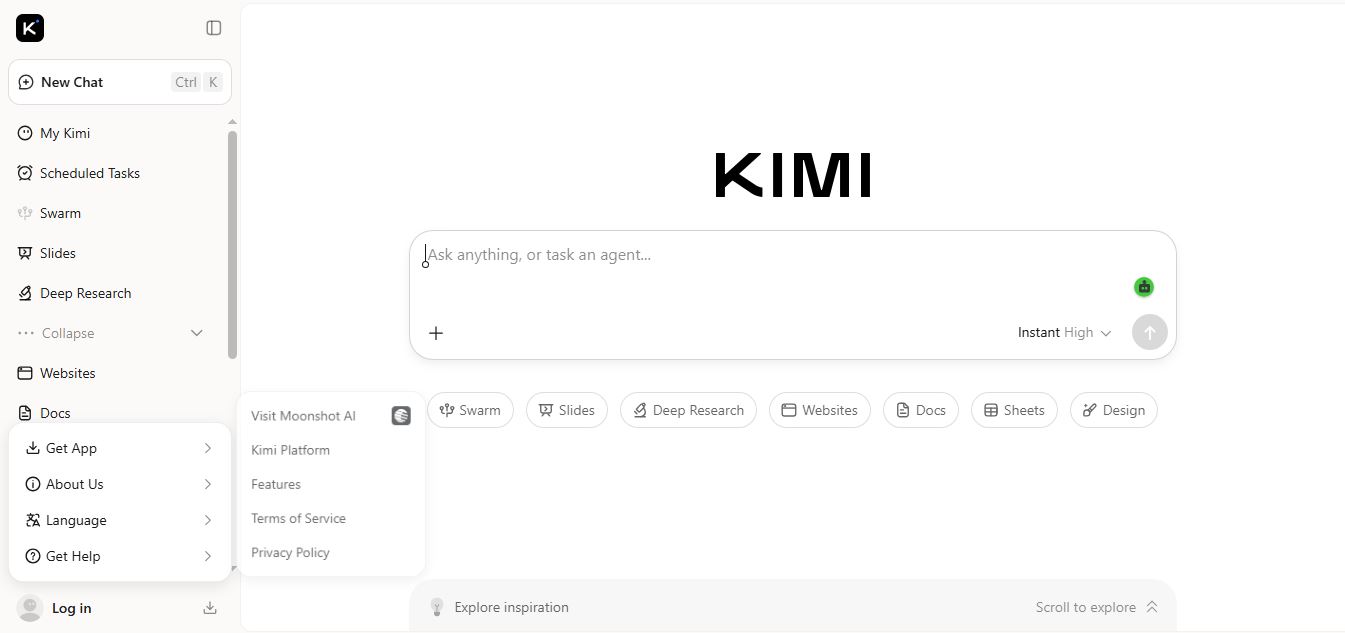
Kimi AI
Kimi AI is an advanced AI assistant developed by Moonshot AI that helps you chat, research, write, code, and automate tasks in one place. It supports web search, file analysis, and multimodal inputs, and can even run autonomous “agent” workflows to complete complex tasks end-to-end.
Freemium
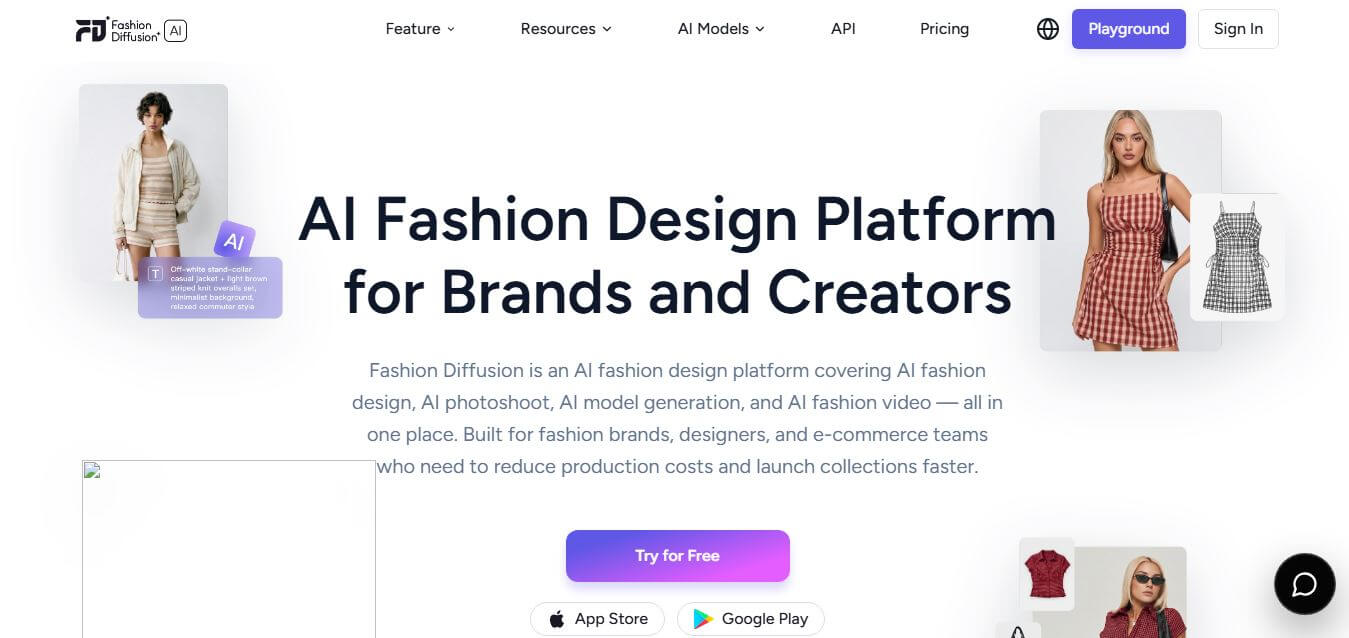
Fashion Diffusion AI
Fashion Diffusion is an AI-powered fashion design platform that helps brands and designers create clothing designs, virtual try-ons, AI models, product photos, and marketing visuals faster and cost-effectively.
Paid
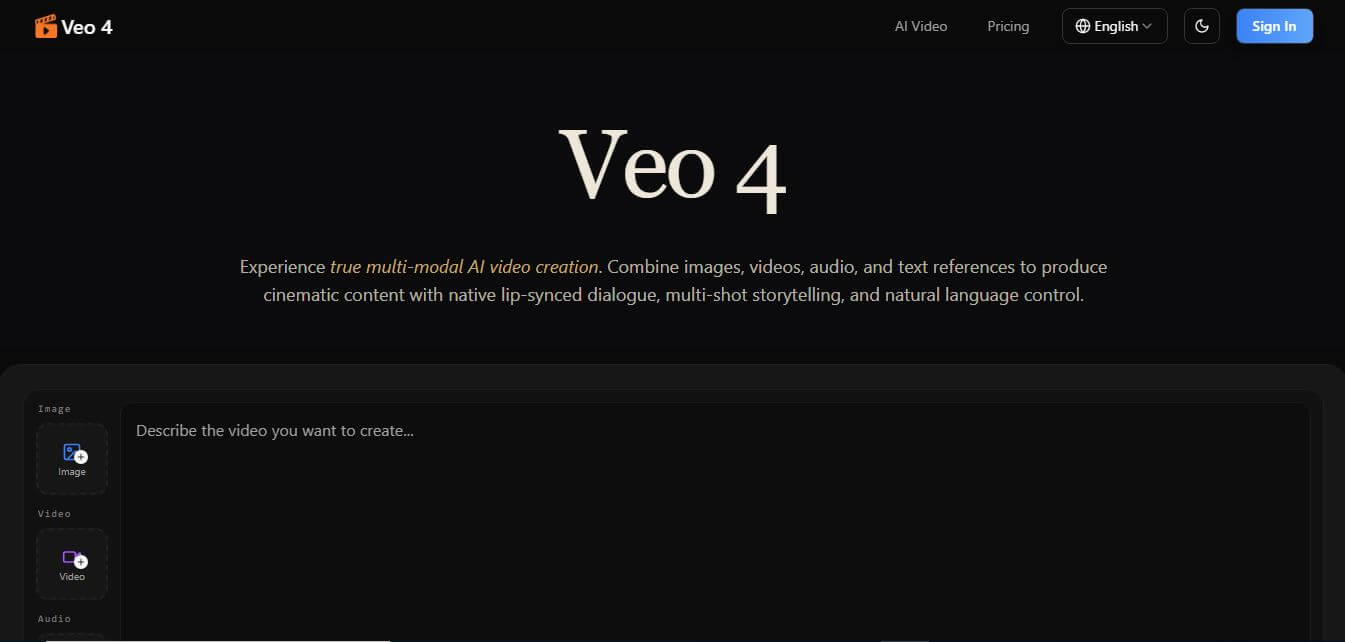
Veo 4
Veo 4 AI is an AI video creation platform that generates dramatic videos from text, images, audio, and video prompts using realistic motion and synchronized sound.
Paid
Alternatives
Alternatives to LangChain
The best LangChain alternatives include LlamaIndex, Langfuse, CrewAI, Microsoft AutoGen, Dify.ai, and Arize Phoenix. These platforms provide LLM orchestration frameworks, multi-agent collaboration systems, and AI observability tools. While LangChain provides an end-to-end enterprise ecosystem combining open-source composable abstractions, cyclical stateful agents via LangGraph, and full-lifecycle tracing/evaluations via LangSmith, alternatives like LlamaIndex specialize in advanced RAG data ingestion, and Langfuse provides a standalone open-source observability suite.
 4.9
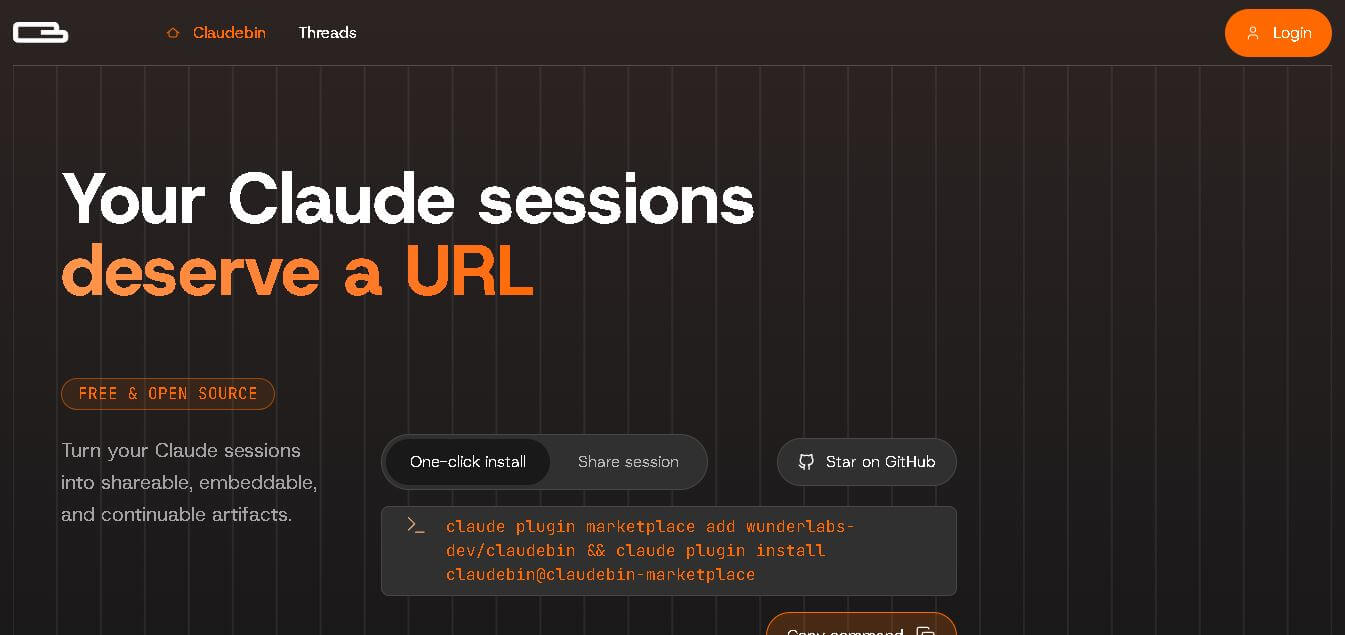
4.9Claudebin
Code Assistant
Claudebin is an open-source tool for sharing Claude Code sessions through structured, accessible web links. It captures conversations, file operations, terminal commands, and tool calls, helping developers explain their coding workflows. With session viewing and embedding capabilities, it simplifies technical documentation, collaboration, debugging discussions, and knowledge sharing across development projects.
 4.9
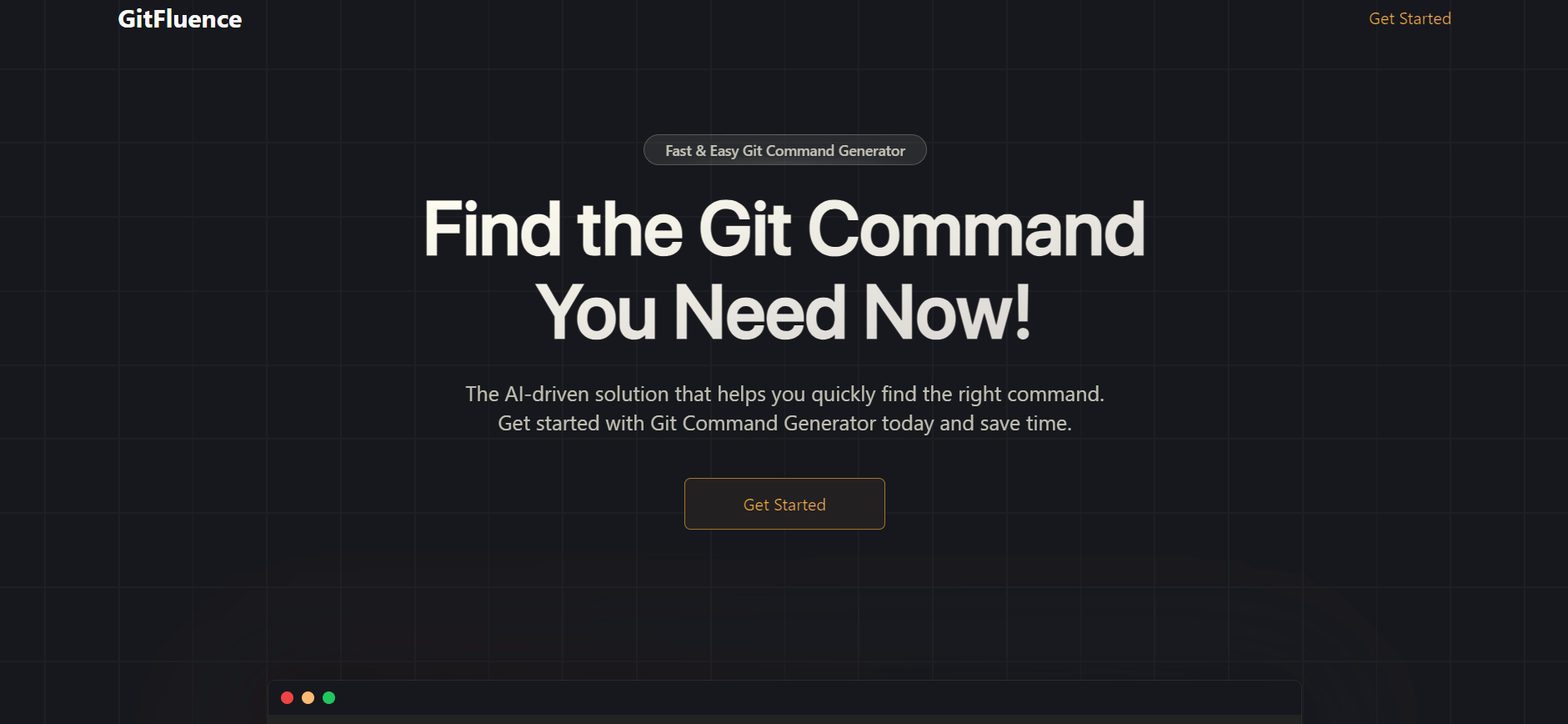
4.9GitFluence
Code Assistant
GitFluence is an AI-powered Git command generator that helps developers turn plain-English instructions into exact Git commands. It eliminates the need to memorize syntax, speeds up version control workflows, and lets users quickly copy accurate commands for tasks like branching, merging, and fixing commits.
 4.9
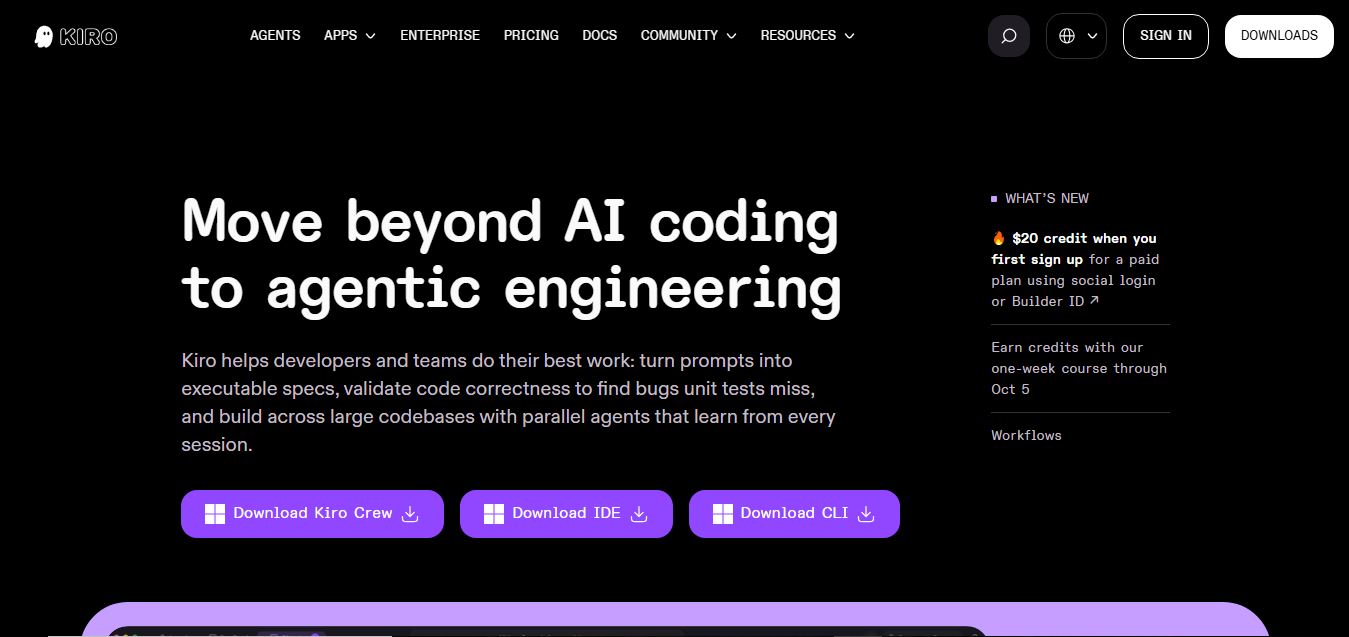
4.9Kiro
Vibe Coding
Kiro is an AI-powered developer platform that helps teams plan, build, and ship software using autonomous agents. It turns prompts into structured specs, writes and tests code, and automates workflows across IDE, CLI, and cloud, enabling faster, reliable development from prototype to production.
 4.8
4.8Emergent
Vibe Coding
Emergent is an AI-powered app builder that lets users create full-stack web and mobile applications by simply describing their idea. It uses autonomous agents to plan, code, test, and deploy apps, handling everything from backend to hosting without requiring traditional programming skills.
 4.7
4.7Amazon Q Developer
Code Assistant
Amazon Q Developer helps developers write, explain, test, refactor, secure, and troubleshoot code while working with AWS services. It provides conversational assistance, inline suggestions, agentic coding, and cloud guidance across supported IDEs, command-line environments, and AWS interfaces. Its goal is to reduce repetitive work and help teams move from ideas to deployable software.
 4.9
4.9GitLab
Code Assistant
GitLab is a DevOps platform that provides a complete suite for planning, coding, testing, and deploying software in one place. It combines version control, CI/CD, security, and collaboration tools, helping teams streamline development workflows and deliver software faster and more efficiently.
 4.9
4.9CodeRabbit
Code Assistant
CodeRabbit is an AI-powered code review assistant that helps developers catch bugs, improve code quality, and speed up pull requests. It analyzes code changes in real time, provides actionable feedback, and integrates with Git workflows to make reviews faster and more efficient.
 4.9
4.9Sourcery
Code Assistant
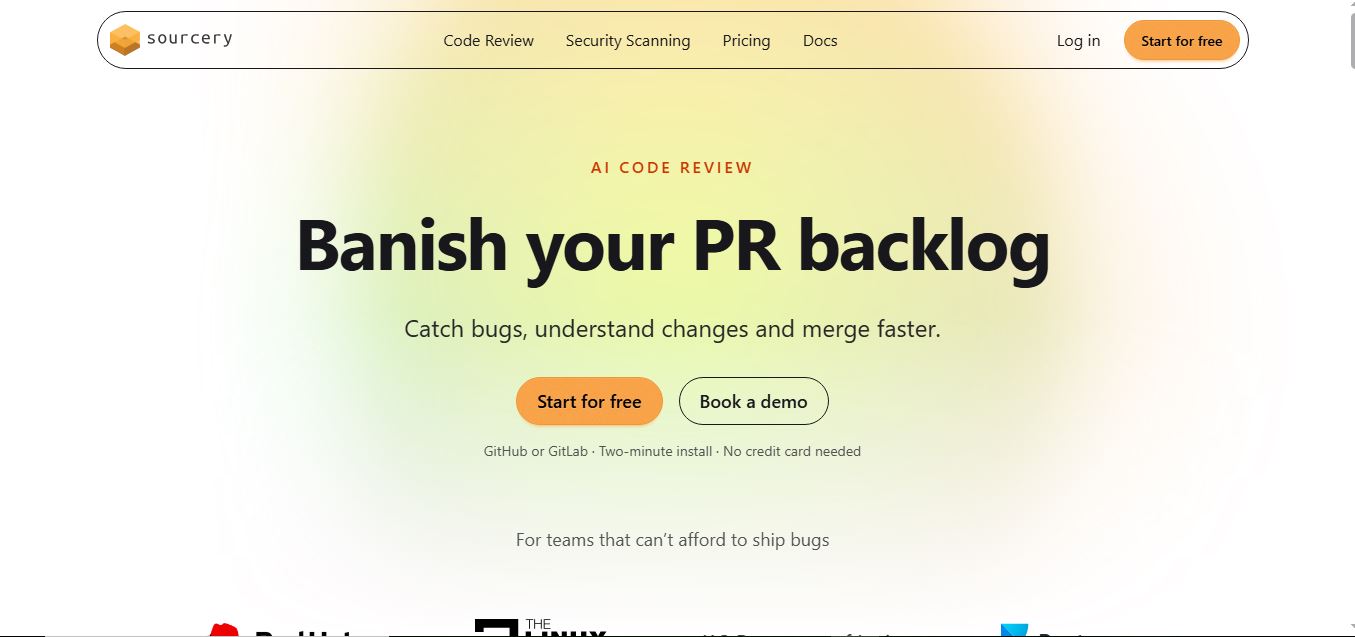
Sourcery is an AI-powered code refactoring tool that helps developers automatically improve Python code quality. It analyzes code, suggests cleaner and more efficient alternatives, and applies refactors instantly, making code more readable, maintainable, and aligned with best practices.
Tenki Cloud
Code Assistant
Tenki Cloud is a high-performance, cost-efficient cloud infrastructure platform offering disposable sandboxes for AI agents, self-hosted GitHub Actions runners, and automated AI code review.