
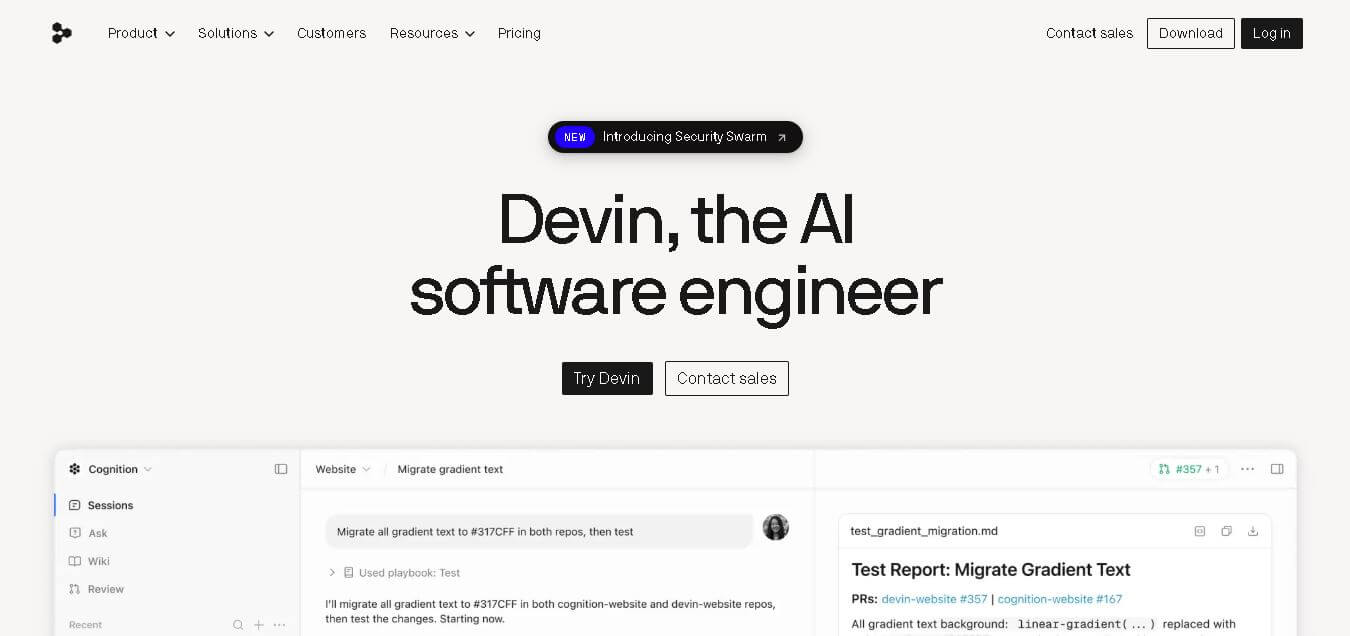
What is Devin?
Devin is a fully autonomous AI software engineer capable of planning, executing, and completing complex coding tasks end-to-end. It can write code, debug errors, run tests, and deploy applications, all while collaborating with human teams. Devin works across multiple tools and environments, handling tasks like code migration, bug fixing, and documentation. It continuously learns from past sessions and adapts to project requirements, improving over time. Designed for engineering teams, Devin reduces manual workload by automating repetitive and time-consuming development tasks while maintaining high-quality outputs and seamless integration into existing workflows.
Devin is built to handle multi-week and multi-repository engineering projects with minimal human intervention. It can manage complex workflows such as code migrations, bug fixes, and automated testing. The system supports integration with hundreds of tools and platforms, enabling seamless execution across development environments. Devin can spawn multiple AI agents to work in parallel, increasing productivity and reducing development time. It also continuously improves by learning from past sessions, making it more efficient with repeated tasks.
- Founder: Not mentioned in the provided source
- Launch: Publicly introduced as “Devin, the AI software engineer”
Use Cases:
- Code migration and refactoring
- Bug detection and fixing
- PR review and visual QA
- Incident resolution and ticket handling
- Documentation and system design
Technology:
- Autonomous AI agent system
- Multi-agent collaboration for large projects
- Integration with tools like GitHub, Slack, and CI systems
- Continuous learning from past sessions
Target Users: Software engineers, development teams, enterprises, and tech companies
Acquisition: No public information available in the provided source

Key features of Devin AI
Devin AI's key features are
- Autonomous Task Execution – Plans, writes, tests, and deploys code independently, enabling developers to offload complex engineering tasks from start to finish.
- PR Review & Visual QA – Automatically reviews pull requests, identifies bugs, and performs visual QA using browser and desktop environments for accurate validation.
- Bug Detection & Issue Resolution – Investigates incidents, routes bug reports intelligently, and fixes CI failures without manual intervention.
- Code Migration & Refactoring – Handles large-scale code migrations across repositories and modernizes legacy systems, including COBOL, .NET, and ETL pipelines.
- Automated Documentation Generation – Automatically creates documentation and system diagrams, improving visibility into complex or legacy codebases.
- Multi-Agent Collaboration – Spawns multiple AI agents to work on large, multi-repo projects in parallel, increasing speed and efficiency.
- Workflow Automation & Scheduling – Automates repetitive engineering tasks like QA checks, release notes, and ticket resolution with scheduled workflows.
- Tool & Platform Integration – Integrates with tools like GitHub, Slack, and CI systems to manage tasks, track progress, and collaborate within existing workflows.
Devin Pricing
- Free Plan ($0/month) – Provides limited usage and basic access to Devin’s capabilities, ideal for individuals testing the AI software engineer.
- Pro Plan ($20/month) – Designed for individual developers, it includes higher usage quotas, integrations (Slack, Linear), and access to advanced models and features.
- Max Plan ($200/month) – Offers significantly higher usage limits with no daily cap, making it suitable for power users handling heavy workloads.
- Teams Plan ($80/month minimum + $40/seat) – Built for collaboration with unlimited members, shared billing, and team-wide usage credits.
- Enterprise Plan (Custom Pricing) – Tailored for large organizations with advanced security, dedicated support, and scalable infrastructure; pricing is available on request.
Disclaimer: For the latest and most accurate pricing information, please visit the official Devin AI website.
Who is using Devin?
Devin AI is designed for a broad range of presentation-heavy users, including
- Enterprise Engineering Teams – Large organizations handling complex, multi-repo projects use Devin to automate development workflows and scale engineering productivity.
- Tech Companies & Industry Leaders – Companies like Citi, Dell, NASA, and Cisco (shown on the platform) leverage Devin for advanced software engineering tasks and automation.
- Software Developers – Individual developers use Devin to speed up coding, debugging, testing, and deployment processes.
- DevOps & QA Teams – Teams rely on Devin for automated testing, CI/CD fixes, visual QA, and incident resolution.
- Product & Engineering Managers – Use Devin to manage tickets, automate workflows, and track development progress across tools like Slack and Linear.
- Startups & SaaS Companies—Growing teams adopt Devin to reduce development costs and handle repetitive engineering tasks efficiently.
Best Devin Alternatives
Some of the strongest Devin AI alternatives include
- OpenHands (OpenDevin)
- Claude Code
- Cursor
- GitHub Copilot (Agent)
- OpenAI Codex
- Replit Agent
- Taskade (Genesis AI Agents)
- Google Jules / AI Studio
Pros and Cons of Devin
Pros
- End-to-End Automation—Can plan, write, test, and deploy code without constant human input.
- Handles Complex Projects—across multi-repo and long-running engineering tasks efficiently.
- Parallel Task Execution—Supports running multiple tasks simultaneously using agent-based workflows.
- Reduces Developer Workload – Automates repetitive coding, debugging, and documentation tasks.
- Continuous Learning—Improves performance over time based on previous tasks and feedback.
Cons
- High Cost for Teams—Earlier pricing around $500/month made it expensive for individuals and startups.
- Not Fully Reliable Yet—Complex tasks may require human supervision and corrections.
- Closed Source & Cloud-Based – Limited control over infrastructure and data compared to open-source alternatives.
- Context Limitations—Performance can degrade in long or highly complex coding sessions.
- Limited IDE Integration—Less seamless compared to tools built directly into coding environments.
Devin vs. Competitors
The main difference between Devin, Cursor, GitHub Copilot, and Claude Code is that Devin works autonomously on complete tasks, while Cursor focuses on IDE-based coding, Copilot assists with inline suggestions, and Claude Code excels at deep reasoning problems. Devin allows you to delegate work entirely, whereas others require active developer involvement. This makes Devin ideal for automation, while competitors are better suited for hands-on coding and real-time development workflows.
| Feature / Tool | Devin | Cursor | GitHub Copilot | Claude Code |
|---|---|---|---|---|
| Core Type | Autonomous AI engineer | AI-powered IDE | AI coding assistant | Terminal AI agent |
| Automation Level | Fully autonomous | Semi-autonomous | Low (assistive) | High (guided autonomy) |
| Best Use Case | End-to-end task execution | Daily coding in IDE | Code suggestions | Complex problem solving |
| Human Involvement | Minimal | Moderate | High | Moderate |
| Multi-file Handling | Unlimited tasks | Strong | Limited | Very strong |
| Speed | Medium | Fast | Very fast | Medium |
| Code Quality | Good (variable) | High | Moderate | Very high |
| Integration | Enterprise tools | IDE-focused | GitHub ecosystem | CLI workflows |
| Pricing (Entry) | ~$20/mo+ | ~$20/mo | ~$10/mo | ~$20/mo |
| Ideal Users | Enterprises & teams | Developers | Beginners & devs | Advanced engineers |
How Do We Rate Devin?
| Parameter | Rating (Out of 5) |
|---|---|
| Automation & AI Power | 5/5 |
| Ease of Use | 4/5 |
| Features & Capabilities | 5/5 |
| Speed & Efficiency | 4/5 |
| Integration | 4/5 |
| Value for Money | 3.5/5 |
| Reliability | 4/5 |
| Overall Rating | 4.2/5 |
Devin Review
Devin stands out as one of the most advanced autonomous AI software engineers available in 2026. Unlike traditional coding assistants, it can independently plan, write, test, and deploy code in a cloud-based environment. This makes it highly effective for handling repetitive and well-defined engineering tasks such as bug fixes, migrations, and test automation.
However, real-world usage shows that Devin performs best when tasks are clearly scoped and structured. On complex or ambiguous problems, it may struggle, loop, or produce incorrect outputs that require human review. Pricing is also usage-based, which can make costs unpredictable for heavy workloads.
Overall, Devin is best suited for engineering teams with structured workflows rather than solo developers or unorganized projects. It acts more like a junior engineer working asynchronously than a complete replacement for developers.
Conclusion
Devin is a powerful step toward autonomous software development, offering real value in automating repetitive and structured engineering tasks. Its ability to work asynchronously and handle multiple tasks in parallel makes it a strong productivity tool for teams. However, it still requires human oversight, especially for complex or ambiguous problems. The pricing model can also become expensive with heavy usage. Overall, Devin is best viewed as a supportive AI engineer rather than a complete replacement for human developers in modern workflows.
FAQ
What is Devin AI used for?
Devin is used for automating software development tasks like coding, debugging, testing, and deployment. It helps teams handle repetitive engineering work efficiently.
Is Devin better than GitHub Copilot?
Devin focuses on full task automation, while Copilot assists developers with inline suggestions. Devin is better for delegation, whereas Copilot is better for real-time coding.
Can Devin replace developers?
No, Devin cannot fully replace developers. It works best as a support tool for handling well-defined tasks but still requires human supervision.
Is Devin suitable for beginners?
Not entirely. Devin is more suitable for experienced developers and teams who understand how to structure tasks effectively.
How much does Devin cost?
Devin offers plans starting around $20 per month, but total cost depends on usage and compute consumption.
User Reviews
No reviews yet for Devin AI.
Featured Tools
Featured AI tools from TechShark

Melody Genie
MelodyGenie is an AI-powered music generator that creates original songs from simple text prompts. Users can choose styles, moods, and genres, then instantly generate melodies and full tracks, making it easy for creators, marketers, and hobbyists to produce custom music without musical expertise.
Freemium
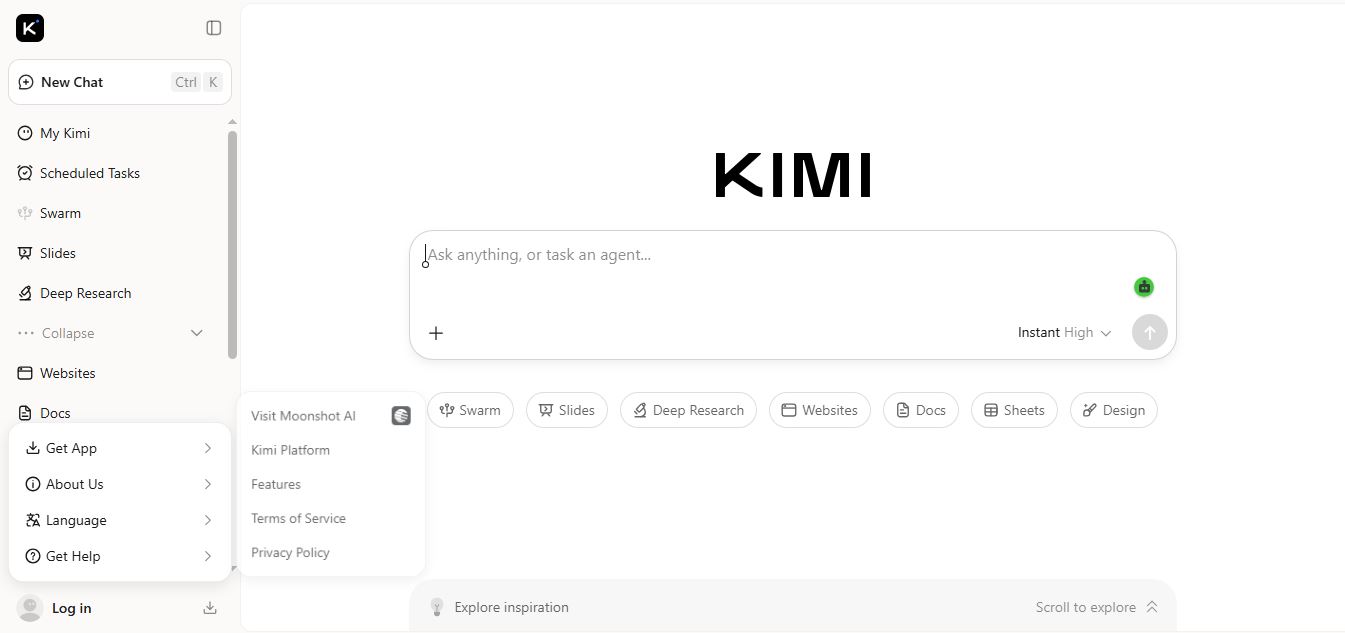
Kimi AI
Kimi AI is an advanced AI assistant developed by Moonshot AI that helps you chat, research, write, code, and automate tasks in one place. It supports web search, file analysis, and multimodal inputs, and can even run autonomous “agent” workflows to complete complex tasks end-to-end.
Freemium

Fashion Diffusion AI
Fashion Diffusion is an AI-powered fashion design platform that helps brands and designers create clothing designs, virtual try-ons, AI models, product photos, and marketing visuals faster and cost-effectively.
Paid
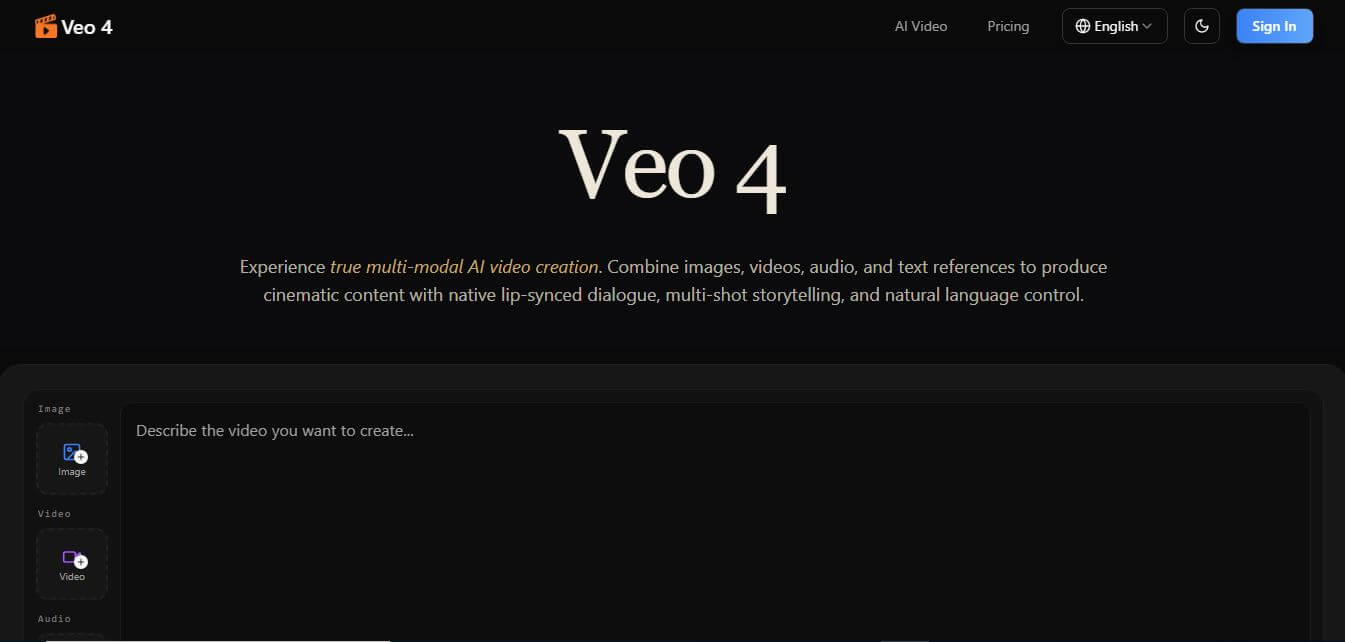
Veo 4
Veo 4 AI is an AI video creation platform that generates dramatic videos from text, images, audio, and video prompts using realistic motion and synchronized sound.
Paid