
Deepgram
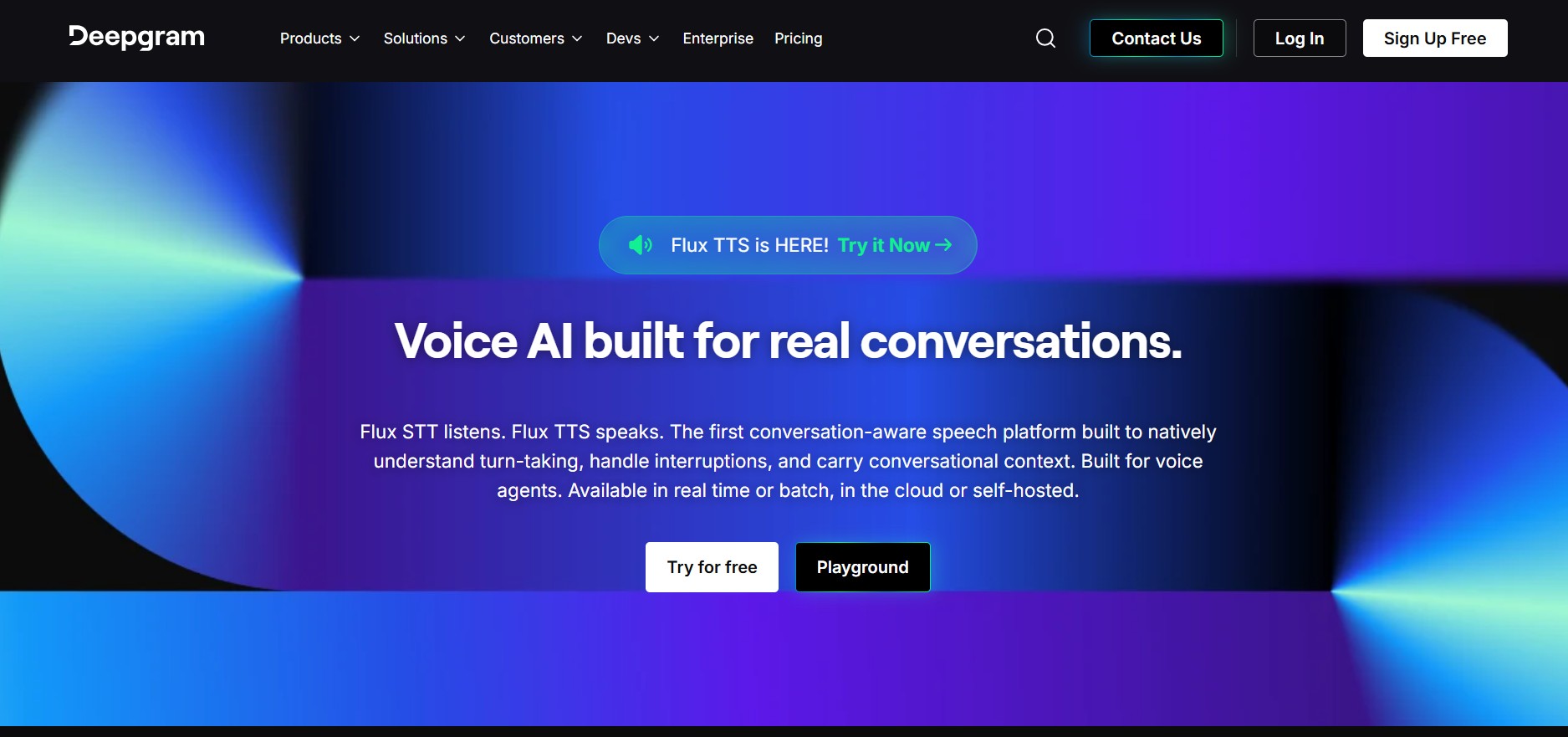
Deepgram is an AI speech recognition and voice AI platform that provides fast, highly accurate transcription, real-time voice processing, and text-to-speech capabilities. It’s built for developers to power voice assistants, call centers, and audio analytics with scalable APIs.
What is Deepgram?
Deepgram is an AI-powered voice platform that enables developers and businesses to build real-time, conversational voice applications using a unified set of APIs. It combines core capabilities like speech-to-text (transcription), text-to-speech (voice generation), and voice agent orchestration into a single system, allowing machines to listen, understand, and respond naturally in conversations. The platform also includes audio intelligence features such as summarization, sentiment analysis, and topic detection, turning raw voice data into actionable insights. Designed for speed, accuracy, and scalability, Deepgram helps power use cases like call centers, voice assistants, transcription tools, and AI-driven customer experiences.
Founded in 2015 by Scott Stephenson (CEO) and Noah Shpak in San Francisco, California, Deepgram has raised over $130M in venture funding from backers including Tiger Global, Wing VC, Y Combinator, and NVIDIA. Powered by its flagship Nova-3 general transcription model, Flux conversational agent speech engine, and Aura-2 text-to-speech (TTS) models, Deepgram delivers sub-200ms latency across 30+ languages, on-premise air-gapped deployment options, and a unified Voice Agent API ($4.50/hour). New signups receive $200 in free credits, with pay-as-you-go speech-to-text starting at just $0.0043 to $0.0048 per minute (~$0.26–$0.29/hour).
- Founders: Scott Stephenson and Noah Shpak
- Global Headquarters: San Francisco, California, USA
- Core AI Models: Nova-3 (STT), Flux (Conversational ASR), Aura-2 (TTS) & Voice Agent API
Use Cases:
- Powering real-time, bi-directional conversational voice agents and AI phone bots with sub-200ms turn-taking latency
- Transcribing high-volume contact center calls and customer support recordings with automated PII redaction and sentiment analysis
- Converting raw streaming audio into formatted, punctuated text for live broadcasting, captioning, and court reporting
- Generating human-sounding, low-latency synthetic speech via Aura-2 for IVR systems and conversational assistants
- Running self-hosted or VPC-isolated speech inference inside HIPAA, SOC 2, and PCI-DSS compliant enterprise environments
Technology:
- End-to-end deep learning neural network architecture replacing acoustic/language/phoneme pipeline stages with unified speech models
- WebSocket and REST streaming infrastructure capable of processing audio faster than real-time with millisecond turn-taking
- Multi-platform SDKs available across Python, Node.js, Go, Rust, .NET, and cURL with support for self-hosted containerization
Target Users:
- Voice AI developers and conversational agent architects building human-like telephone and browser bots
- Enterprise Contact Center as a Service (CCaaS) providers and speech analytics software engineers
- Healthtech engineering teams building clinical dictation, medical transcription, and telehealth recording workflows
- Media, podcasting, and video streaming platforms requiring automated subtitles and keyword search
Acquisition: Operates as an independent developer tools and speech intelligence platform

Key features of Deepgram
Deepgram's key platform features are
- Nova-3 & Flux Speech Recognition: Benchmark transcription accuracy across background noise, cross-talk, accents, and medical/legal terminology, featuring Flux for conversational turn detection and interruption handling.
- Aura-2 Text-to-Speech (TTS): Sub-200ms latency text-to-speech engine delivering expressive, conversational AI voices in English, Spanish, and multiple international languages.
- Unified Voice Agent API: Collapses speech recognition (STT), LLM orchestration, and voice generation (TTS) into a single streaming endpoint at $4.50/hour, reducing architectural handoffs.
- Real-Time Streaming Transcription: WebSocket-powered live transcription returning word-level timestamps and punctuation in under 200 milliseconds.
- Automated PII Redaction: Automatically identifies and removes sensitive numerical information, Social Security numbers, credit card details, and phone numbers.
- Keyterm Prompting & Custom Vocabularies: Boosts recognition accuracy for niche brand names, medical jargon, code identifiers, and acronyms without model retraining.
- Audio Intelligence Suite: Built-in sentiment analysis, intent identification, topic detection, summarization, and speaker diarization.
- Deployment Flexibility: Run on Deepgram's managed cloud, deploy in private VPCs (AWS, GCP, Azure), or run self-hosted on-premise containers for strict data residency.
Deepgram Pricing
Deepgram operates on transparent per-minute and per-character pay-as-you-go pricing, backed by a generous $200 free credit bonus for new accounts.
Free Credit Allowance:
- $200 Free Credits: Provided upon signup (equivalent to ~46,000 minutes of Nova-3 STT, ~6.6M Aura-2 TTS characters, or ~44 hours of Voice Agent API)
Pay-As-You-Go (Speech-to-Text):
- Nova-3 Pre-Recorded: $0.0043 / minute ($0.26 / audio hour)
- Nova-3 Streaming: $0.0048 / minute ($0.29 / audio hour)
- Flux Conversational (Voice Agents): $0.0065 / minute ($0.39 / audio hour)
- Multilingual Nova-3: $0.0058 / minute ($0.35 / audio hour)
- Add-ons: PII Redaction ($0.0020/min), Keyterm Prompting ($0.0013/min), Speaker Diarization ($0.0017/min)
Text-to-Speech (Aura-2):
- $0.030 / 1,000 characters ($30 per 1M characters) with sub-200ms conversational latency
Unified Voice Agent API:
- $4.50 / hour: Bundles real-time STT, LLM orchestration, and TTS into one streaming connection (75% less than OpenAI Realtime API)
Growth & Enterprise Tiers:
- Growth ($4,000+ annual prepay): Unlocks ~10% to 20% discounts across STT and TTS, expanded concurrency limits, and priority support
- Enterprise: Custom volume rates, self-hosted on-premise container licenses, enterprise SLAs, and dedicated technical account managers
Disclaimer: Deepgram bills audio per-second with zero rounding penalties. For custom on-premise appliance deployments and high-volume commits, check the official pricing page at deepgram.com/pricing.
Who is using Deepgram?
Deepgram is used by thousands of engineering teams and enterprise platforms, including
- Conversational Voice AI Platforms: Powering agentic phone systems, customer support receptionists, and voice assistants with natural turn-taking
- Contact Centers & CRM Providers: Ingesting millions of customer support calls daily for compliance archiving, automated QA, and agent assist
- Clinical & Healthcare Networks: Transcribing ambient doctor-patient conversations into structured electronic health records (EHRs)
- Media & EdTech Platforms: Transcribing podcasts, video lectures, and live webinars with automated multi-speaker timestamps
Best Deepgram Alternatives
Some of the strongest Deepgram alternatives include
- AssemblyAI
- WhisperAI (whisperai.com - Hosted OpenAI Whisper)
- ElevenLabs (Conversational AI & Voice Engine)
- Cartesia (Sonic Low-Latency TTS)
- OpenAI Realtime API
- Trikon (trikon.tech - Vernacular Indian Voice Agents)
Pros and Cons of Deepgram
Pros
- Industry-leading speed with sub-200ms latency on real-time streaming speech recognition and voice synthesis
- Nova-3 provides high accuracy across background noise, medical jargon, and accented audio
- Unified Voice Agent API at $4.50/hr eliminates the complex orchestration of separate STT, LLM, and TTS vendors
- True per-second billing with zero rounding-up penalties cuts actual invoice costs significantly
- Generous $200 free credit tier requires no credit card for testing
Cons
- Growth tier discount requires a steep $4,000+ annual upfront commitment
- Aura-2 voice synthesis pricing ($30/1M chars) represents a step up from legacy base TTS endpoints
- Requires developer implementation via SDKs or APIs—not a turnkey consumer meeting recorder app like Otter
Why Choose Deepgram?
Legacy speech providers use complex multi-stage speech pipelines that add significant latency and increase infrastructure costs, while cloud hyper-scalers charge for idle minutes and round up call durations. Deepgram offers a high-performance, developer-first alternative.
- Enables voice agents to respond in under 200ms for natural, interruption-free conversations
- Reduces overall voice stack costs compared to multi-vendor setups or OpenAI's Realtime API
- Offers self-hosting and on-premise deployment for strict enterprise compliance and security
- Maintains superior accuracy in challenging real-world audio environments without manual audio cleanup
Deepgram vs. Competitors
The main difference between Deepgram, AssemblyAI, ElevenLabs, and OpenAI Realtime API lies in latency, architecture, and cost efficiency. While ElevenLabs focuses primarily on voice cloning fidelity and OpenAI Realtime charges premium rates ($20+/hour) for multimodal reasoning, Deepgram delivers an integrated speech infrastructure—offering Nova-3 ASR, Aura-2 TTS, and a bundled Voice Agent API at $4.50/hour with sub-200ms streaming performance.
| Feature / Tool | Deepgram (deepgram.com) | AssemblyAI | ElevenLabs | OpenAI Realtime API |
|---|---|---|---|---|
| Core Focus | End-to-End Speech AI & Voice Agents | Speech AI & Audio Understanding | Voice Cloning & Conversational AI | Multimodal Audio-to-Audio LLM |
| Streaming Latency | Sub-200ms (Real-time WebSockets) | ~300–600ms | ~250–400ms | ~300–500ms |
| Voice Agent Cost | $4.50 / hour bundled | ASR only (requires separate TTS) | From ~$5.94 / hour | ~$18.00–$24.00 / hour |
| Self-Hosted / On-Prem | Yes (Docker / Kubernetes appliances) | Cloud / Private VPC | Cloud only | Cloud only |
| Free Tier / Trial | $200 free credits (no CC required) | Free tier credits | Free tier (10k chars/mo) | Standard API platform credits |
| Best For | High-speed voice agents, CCaaS & enterprise scale | Asynchronous audio understanding & LeMUR | High-fidelity voice synthesis & media dubbing | Direct multimodal voice reasoning |
How do we rate Deepgram?
| Parameter | Rating (out of 5) |
|---|---|
| Transcription Accuracy & Noise Robustness (Nova-3) | 5.0 |
| Streaming Latency & Speed (<200ms) | 5.0 |
| Voice Agent API & Full-Stack Orchestration | 4.9 |
| Developer Experience & SDK Architecture | 4.9 |
| Value for Money (Per-Second Billing & $200 Credit) | 4.9 |
| Overall Score | 4.94 |
Deepgram Review
Deepgram is a cornerstone technology in the voice AI revolution. By building its own end-to-end deep learning architectures for both automatic speech recognition and speech synthesis, it achieves speed and cost efficiencies that legacy speech vendors and generalized hyper-scaler APIs cannot match. Its Nova-3 model sets a gold standard for transcription accuracy in noisy, real-world environments, while its bundled Voice Agent API ($4.50/hour) makes deploying conversational bots much easier. For any developer or enterprise engineering team scaling real-time audio systems, Deepgram is an industry-leading platform.
Conclusion
Deepgram is a leading voice AI platform that enables developers and businesses to convert, understand, and act on audio data in real time through a single API. It goes beyond basic transcription by combining high-accuracy speech-to-text with advanced audio intelligence features like summarization, sentiment analysis, intent recognition, and topic detection, turning raw conversations into actionable insights. Its biggest strength lies in speed and scalability, delivering low-latency transcription (often under 300 ms) while maintaining strong accuracy even in noisy or multi-speaker environments, making it ideal for voice agents, call centers, and real-time applications. With support for real-time and batch processing, multilingual capabilities, and customizable models, it fits a wide range of use cases from customer support automation to media captioning and analytics.
FAQ
What is Deepgram?
Deepgram is an AI voice platform that provides APIs for speech-to-text, text-to-speech, and real-time voice agents. It’s built for developers to add voice capabilities like transcription, analytics, and conversational AI into apps.
How does Deepgram work?
You send audio (live or recorded) to Deepgram’s API, and it returns structured text, insights, or even voice responses. It supports real-time streaming and batch processing for different use cases.
What can you do with Deepgram?
You can transcribe calls, build voice assistants, create real-time chatbots, generate speech from text, analyze conversations, and extract insights like sentiment or topics from audio.
What is Deepgram’s Speech-to-Text API?
It’s a high-performance API that converts speech into text with low latency (often under 300ms) and supports 50+ languages, making it suitable for real-time apps and global products.
Can Deepgram build voice AI agents?
Yes, its Voice Agent API combines speech-to-text, LLM processing, and text-to-speech into one system—so you don’t need to stitch multiple tools together.
Does Deepgram support real-time transcription?
Yes, it’s built for streaming use cases like call centers, meetings, and voice assistants with ultra-low latency and live responses.
Who should use Deepgram?
It’s ideal for developers, SaaS companies, call centers, and AI teams building voice apps, transcription tools, or conversational AI systems at scale.
User Reviews
No reviews yet for Deepgram.
Featured Tools
Featured AI tools from TechShark
Melody Genie
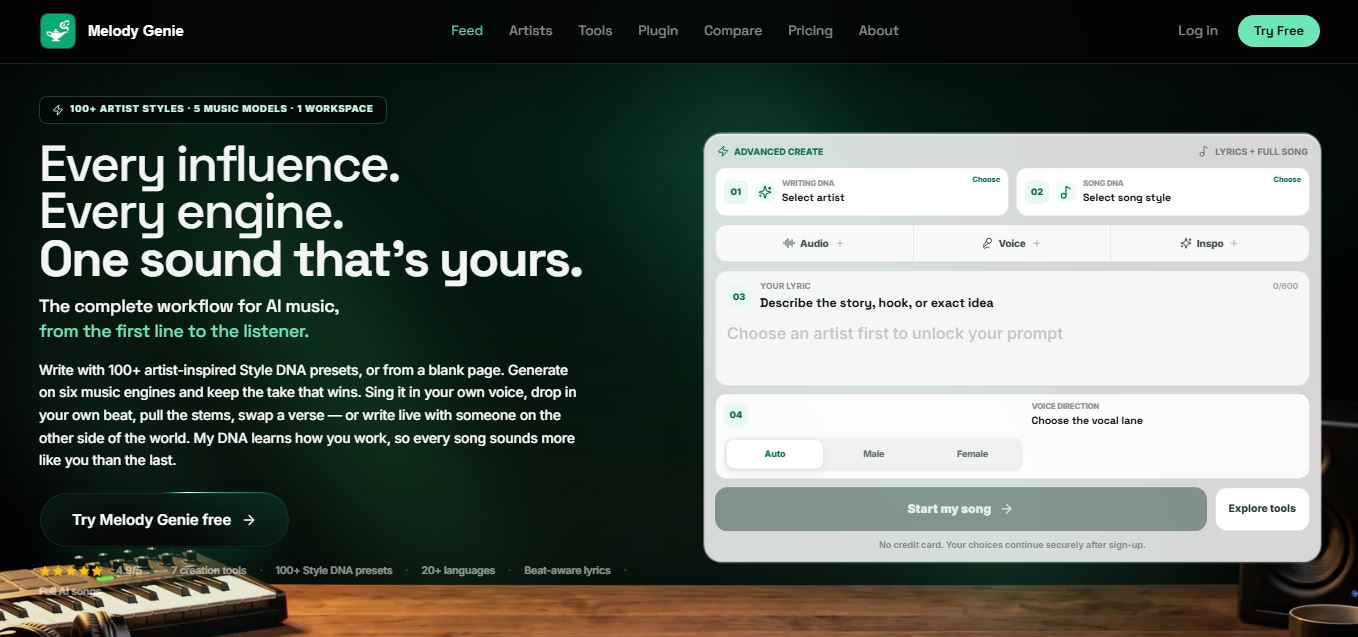
MelodyGenie is an AI-powered music generator that creates original songs from simple text prompts. Users can choose styles, moods, and genres, then instantly generate melodies and full tracks, making it easy for creators, marketers, and hobbyists to produce custom music without musical expertise.
Freemium
Kimi AI
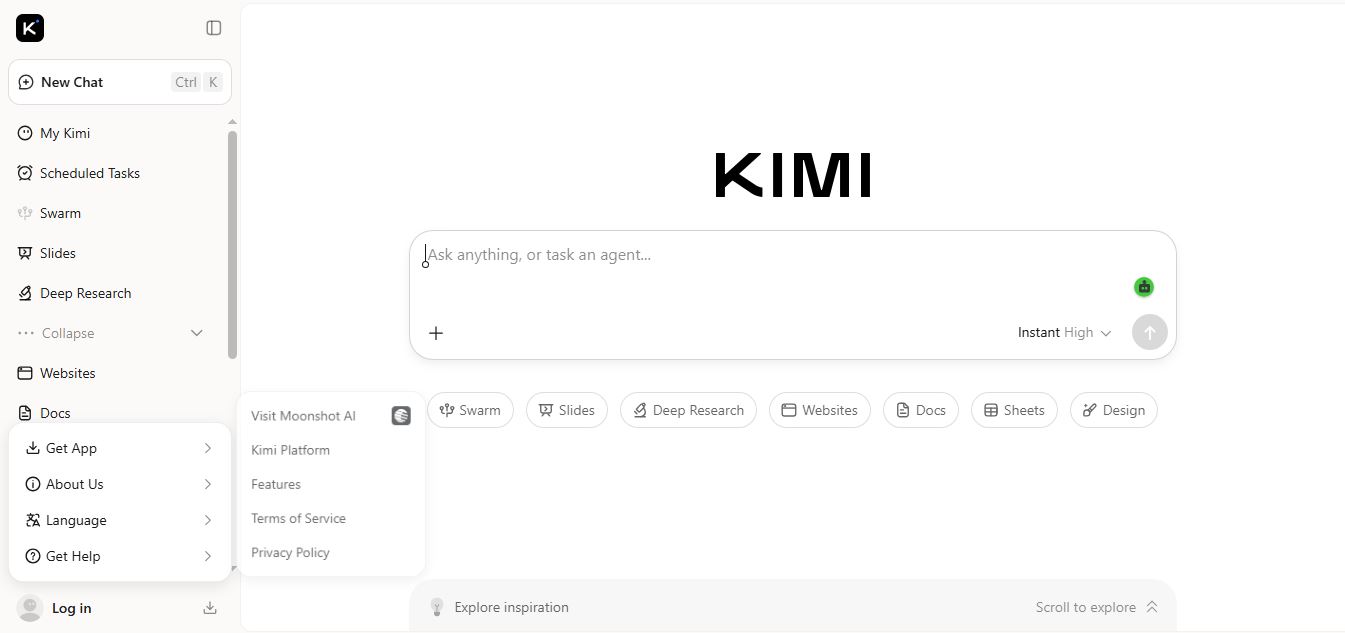
Kimi AI is an advanced AI assistant developed by Moonshot AI that helps you chat, research, write, code, and automate tasks in one place. It supports web search, file analysis, and multimodal inputs, and can even run autonomous “agent” workflows to complete complex tasks end-to-end.
Freemium
Fashion Diffusion AI
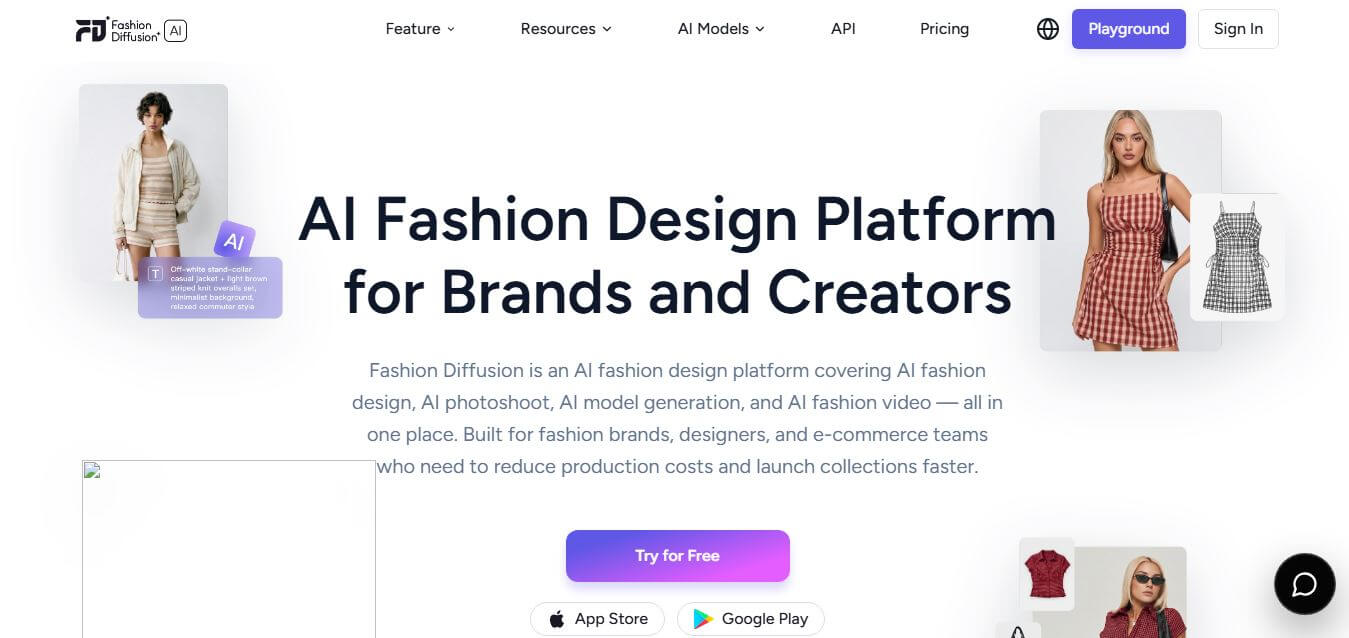
Fashion Diffusion is an AI-powered fashion design platform that helps brands and designers create clothing designs, virtual try-ons, AI models, product photos, and marketing visuals faster and cost-effectively.
Paid
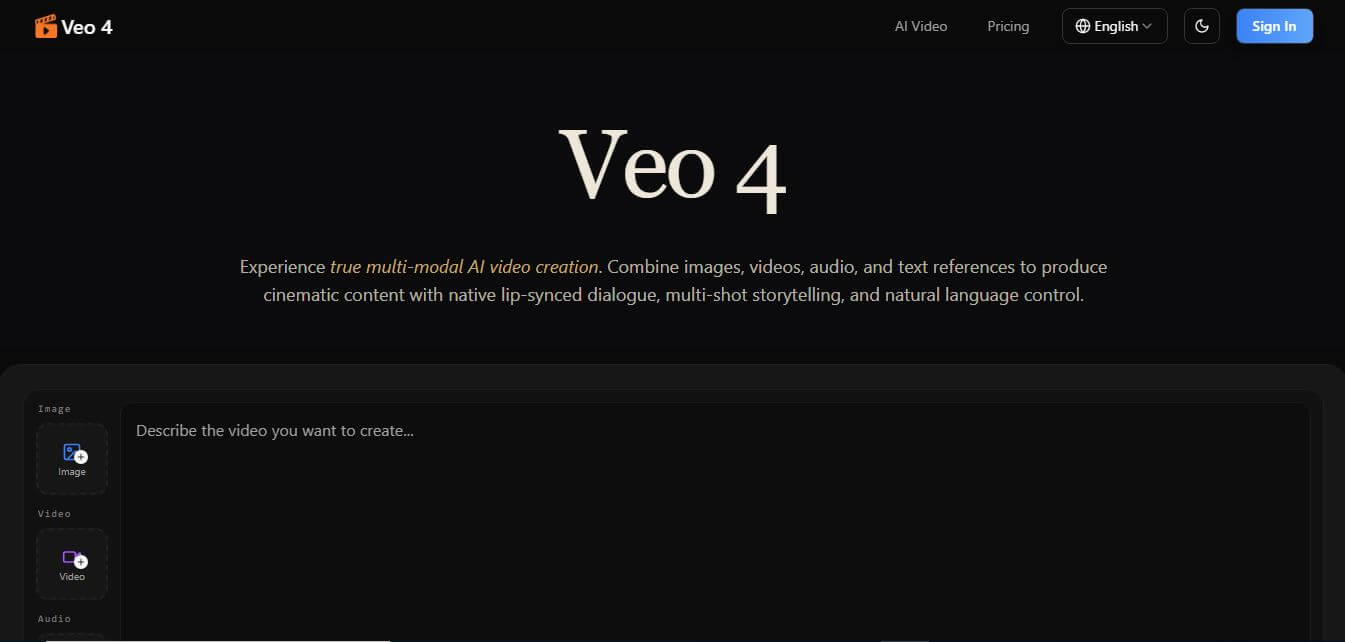
Veo 4
Veo 4 AI is an AI video creation platform that generates dramatic videos from text, images, audio, and video prompts using realistic motion and synchronized sound.
Paid
Alternatives
Alternatives to Deepgram
The best Deepgram alternatives include AssemblyAI, WhisperAI (whisperai.com), ElevenLabs, Cartesia, OpenAI Realtime API, and Trikon (trikon.tech). These platforms provide automatic speech recognition (ASR), text-to-speech synthesis (TTS), and conversational voice agents. While Deepgram specializes in end-to-end deep learning models with sub-200ms streaming latency, per-second billing with zero rounding, and a unified Voice Agent API bundling STT and TTS at $4.50/hour, alternatives like AssemblyAI specialize in asynchronous audio intelligence and LeMUR, and ElevenLabs focuses on ultra-realistic voice cloning.
 4.9
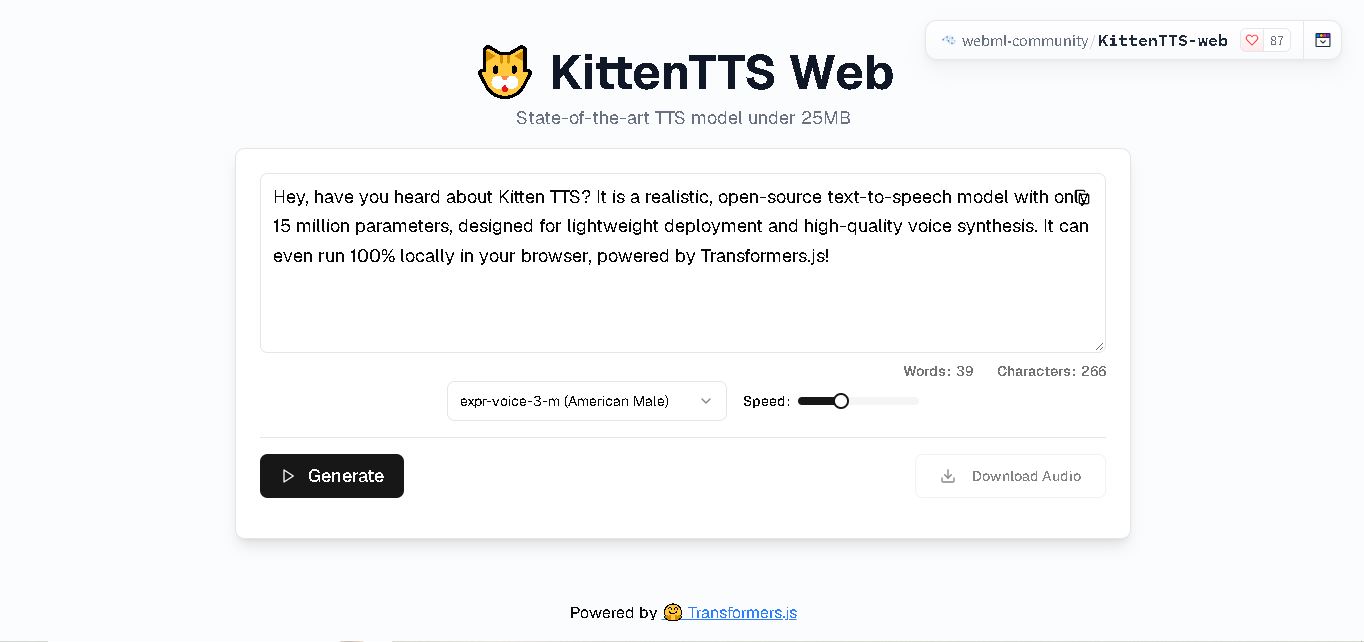
4.9KittenTTS Web
Text-to-Speech
KittenTTS Web is a lightweight text-to-speech demo hosted on Hugging Face Spaces. It helps users explore how written text can be transformed into spoken audio using neural voice synthesis. The project is particularly relevant to developers, content creators, and accessibility-focused users interested in experimenting with compact speech generation technology directly through a web browser.
 4.9
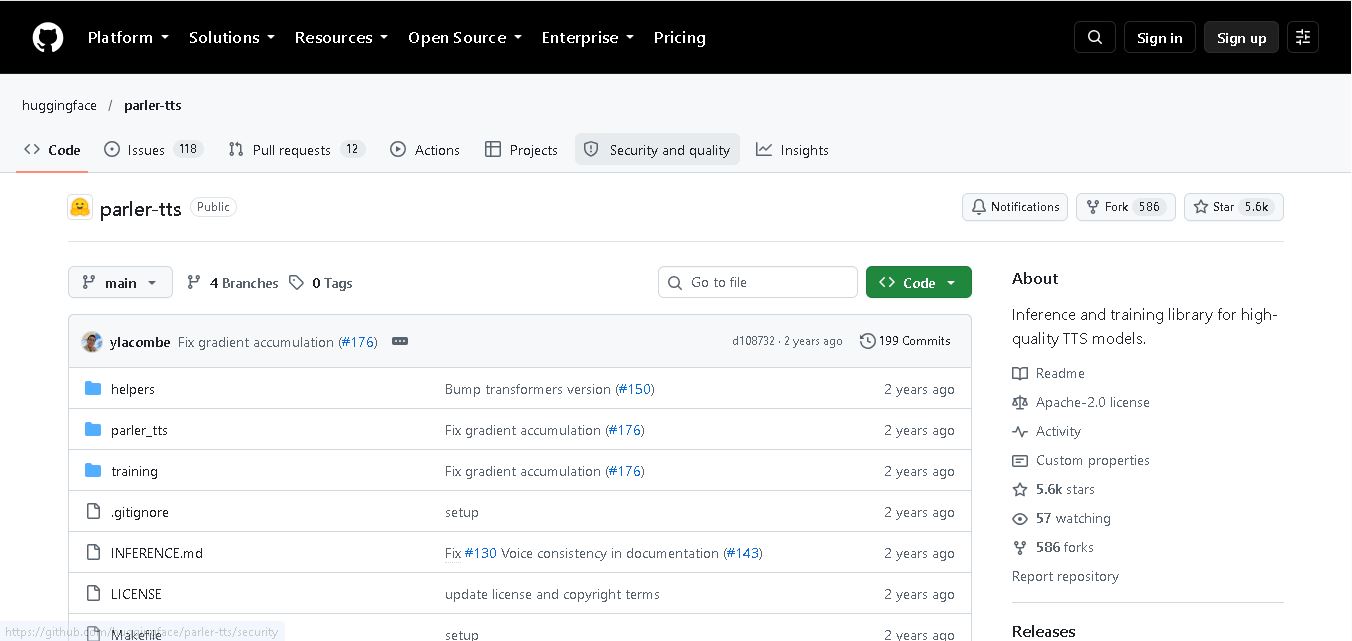
4.9Parler-TTS
Text-to-Speech
Parler-TTS is an open-source text-to-speech tool that transforms written content into natural-sounding audio. It lets developers describe voice characteristics using natural language, including pitch, speaking speed, and recording quality. With publicly available model weights, training resources, and customizable checkpoints, it supports experimentation, research, and tailored speech-generation applications across projects.
 4.9
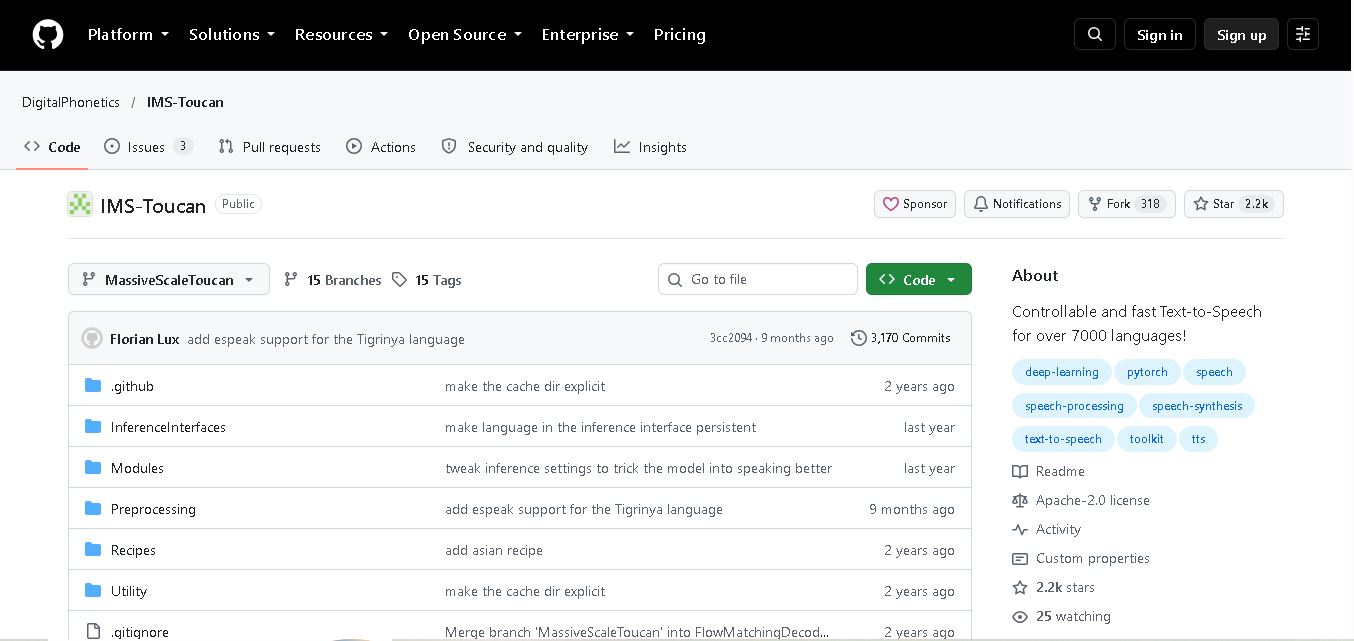
4.9IMS Toucan
Text-to-Speech
IMS Toucan is an open-source text-to-speech toolkit from the University of Stuttgart designed for multilingual speech generation. It converts text into audio and provides tools for inference, voice and prosody control, and model training. Supporting more than 7,000 languages, it serves developers and researchers exploring technology across linguistic contexts.
 4.8
4.8Verbatik
Text-to-Speech
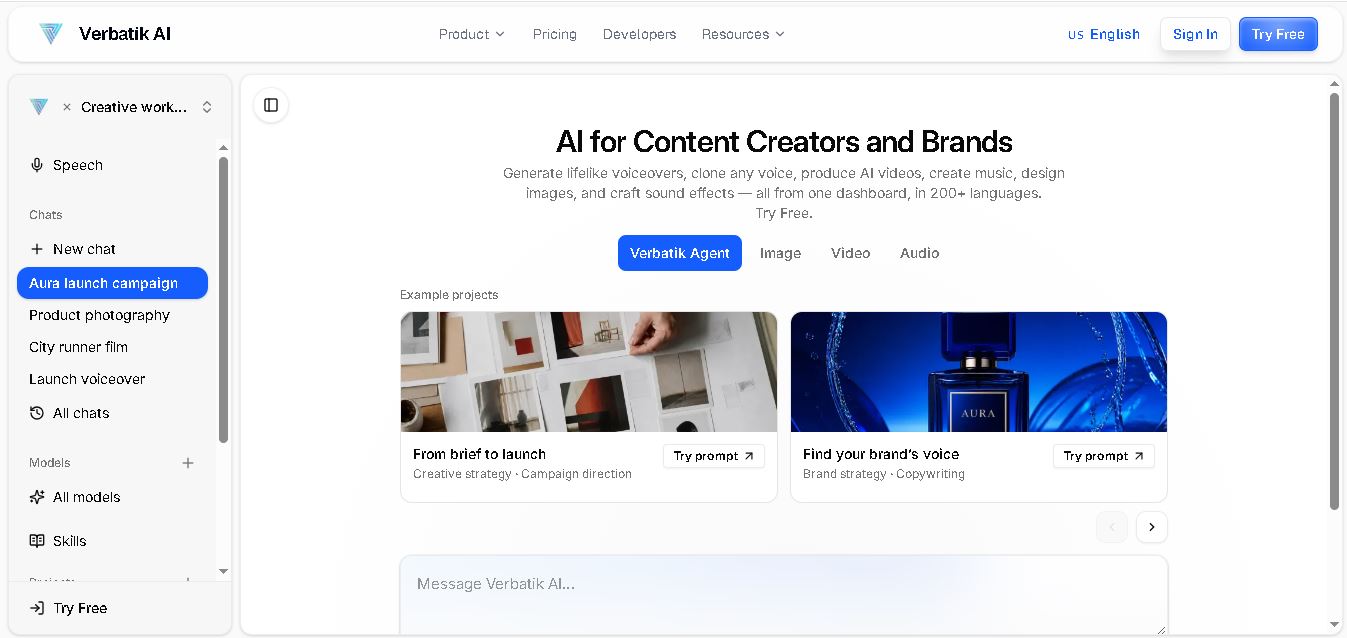
Verbatik AI helps users create realistic voiceovers, clone voices, generate music, and produce multimedia content using artificial intelligence. With multilingual speech, customizable voice settings, and developer APIs, it supports content creators, marketers, educators, and businesses. The platform simplifies audio production, video creation, and content localization from one workspace.
 4.8
4.8Narration Box
Text-to-Speech
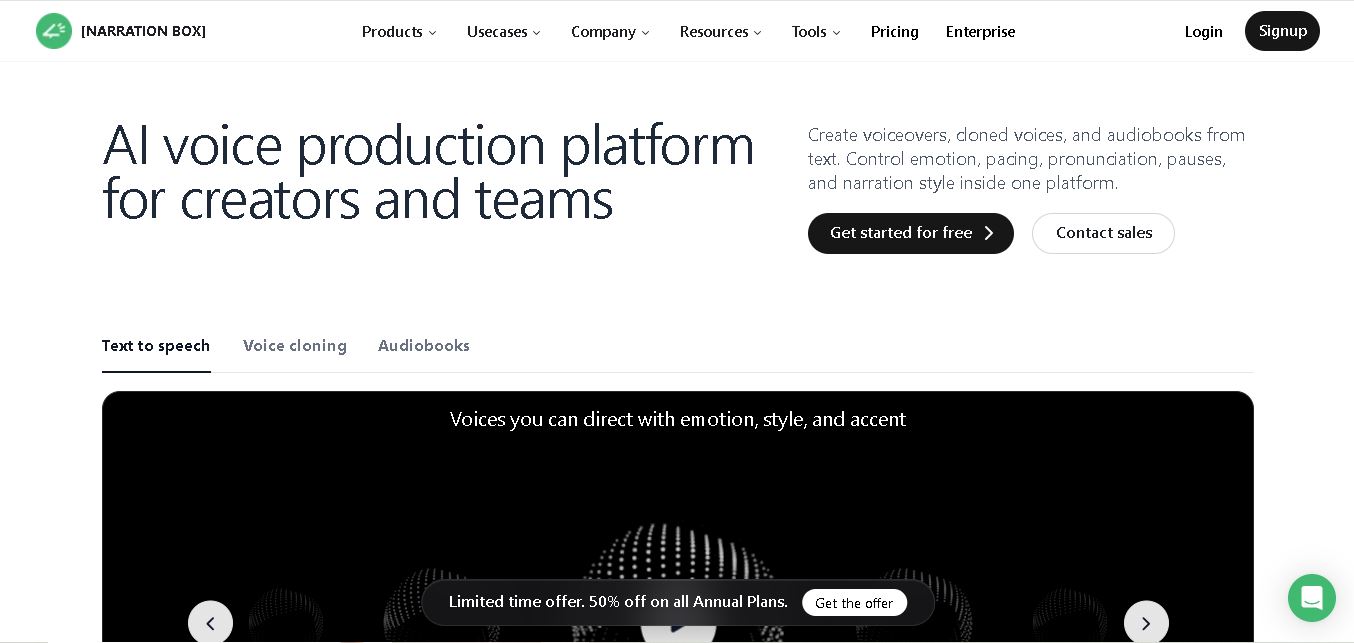
Narration Box is an AI voice generator for creating realistic voiceovers, audiobooks, podcasts, and educational audio from text. It offers over 1,500 AI narrators, 80+ languages and accents, voice cloning, and customizable emotional delivery. Its editing tools help creators produce consistent, multilingual audio content for personal and professional projects.
 4.7
4.7AudioBot
Text-to-Speech
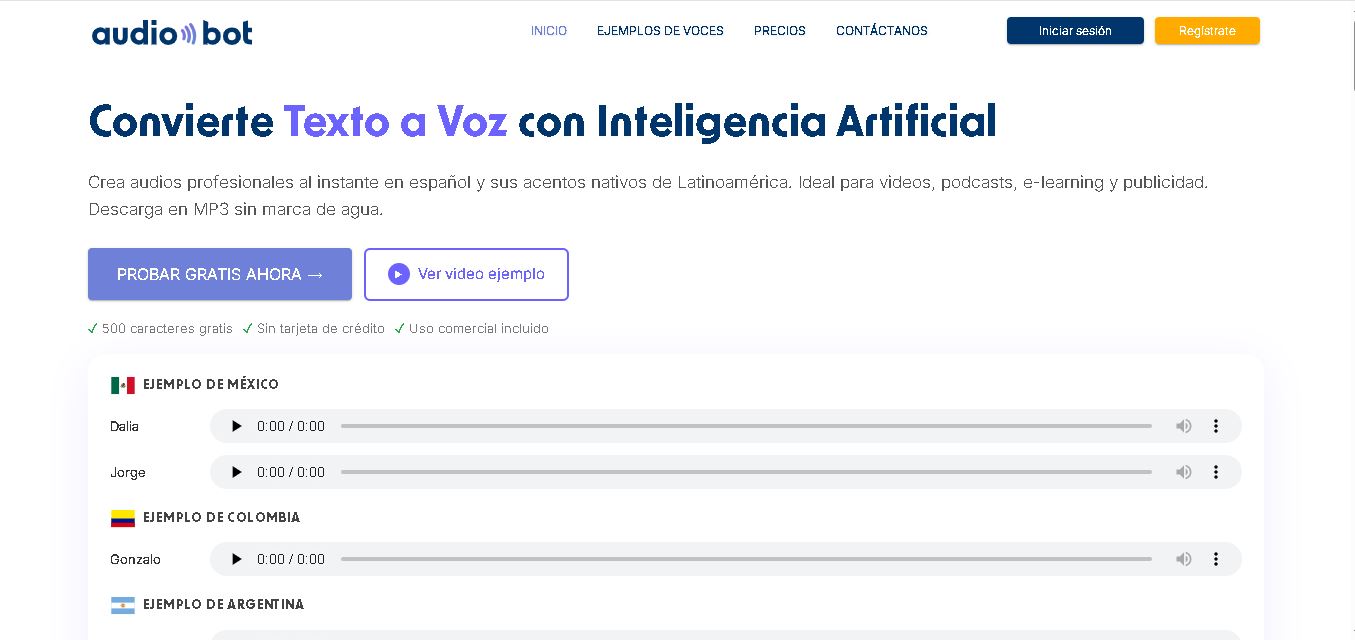
AudioBot converts written text into natural-sounding speech using AI-generated voices. It supports multiple languages and regional accents, making it useful for video voiceovers, presentations, educational materials, and audio content. Users can generate and download audio files, helping simplify narration workflows without requiring traditional recording equipment or voice talent.
 4.7
4.7Audie AI
Text-to-Speech
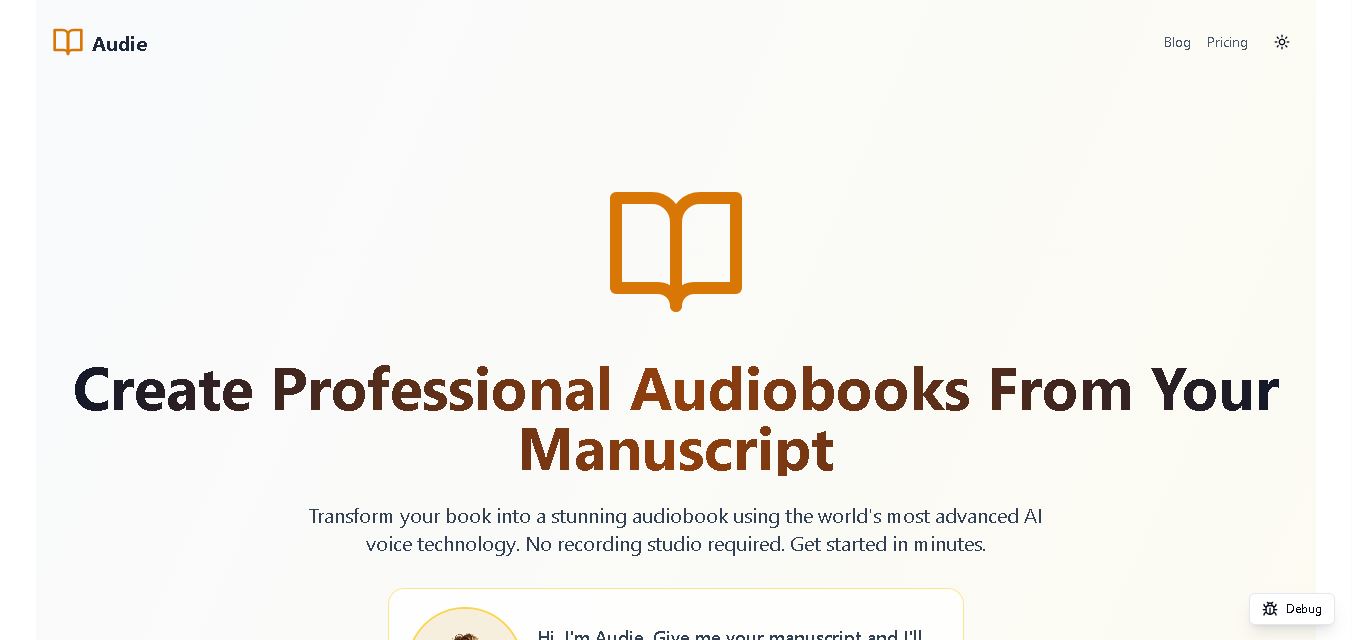
Audie AI is an audiobook creation tool that converts written manuscripts into narrated audio using AI-generated voices. It helps authors and publishers simplify production, explore different narration styles, and reduce reliance on traditional recording studios. With voice selection, advertised voice cloning, and downloadable audio, it supports more accessible audiobook creation for independent creators.
 4.6
4.6Speechelo
Text-to-Speech
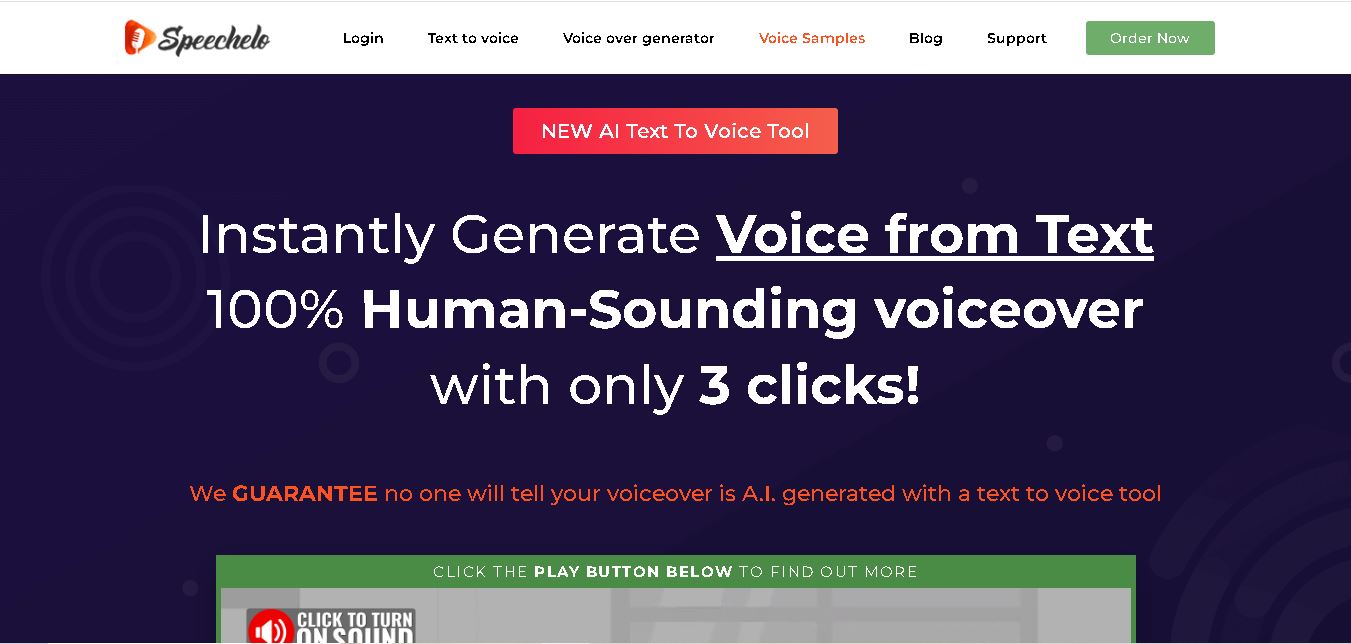
Speechelo is a text-to-speech tool designed to help creators turn written scripts into voiceovers. It offers different voices, languages, tones, and audio adjustments for creating narration. Video creators, educators, marketers, and content teams can use it to produce audio for tutorials, presentations, promotional videos, and other digital content projects.
 4.7
4.7Leelo AI
Text-to-Speech
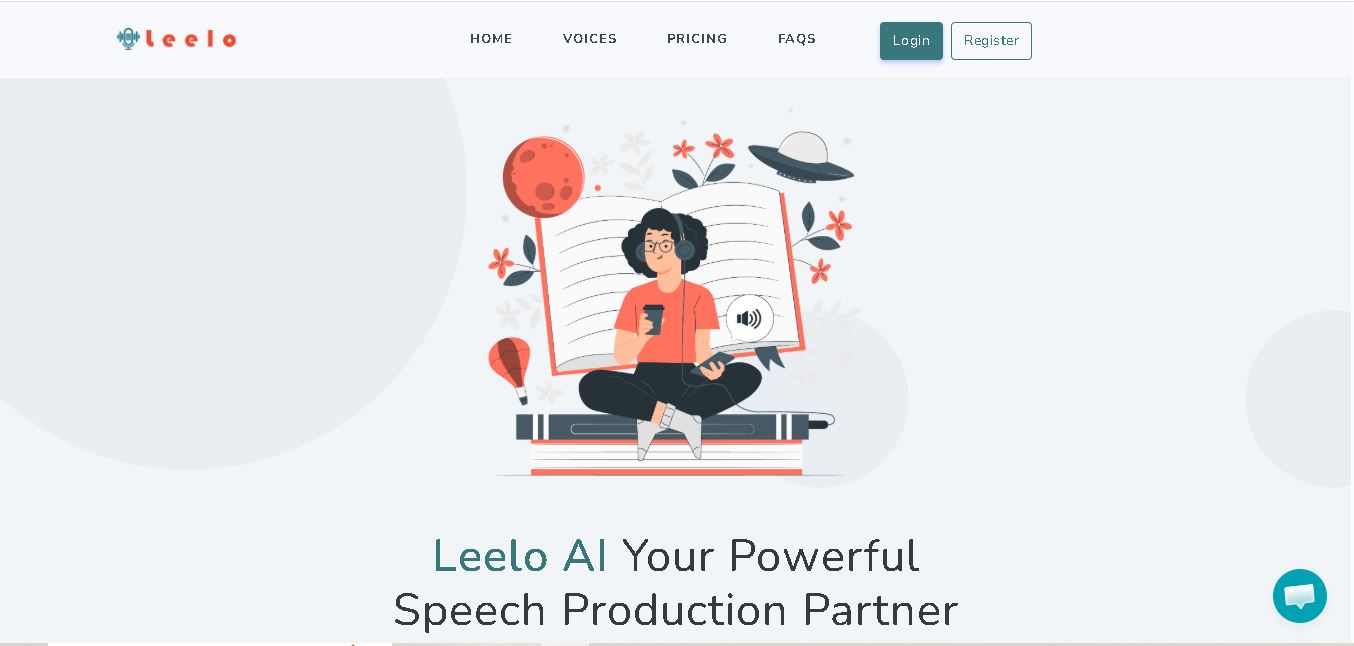
Leelo AI helps you turn written content into natural-sounding speech without recording your own voice. You can choose from 800+ voices across 142 languages and accents, adjust available voice settings, generate audio, store files in the cloud, export recordings, and use generated speech commercially for different content and communication needs.