
ATLAS.ti
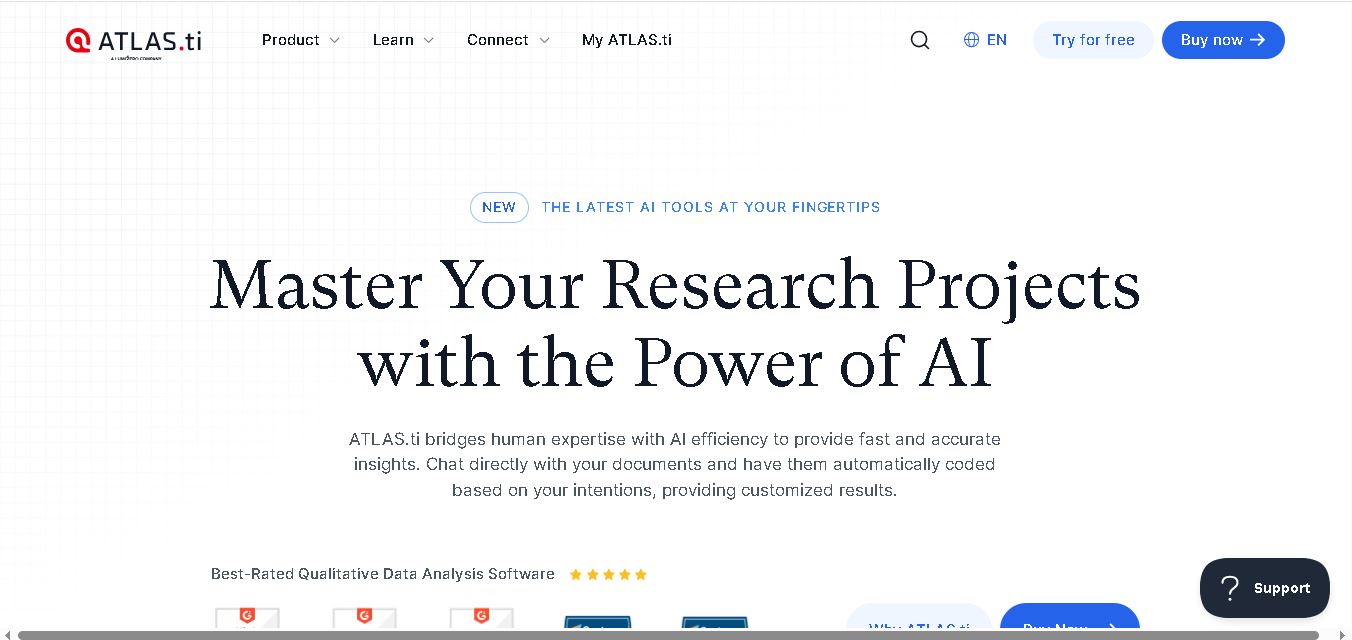
ATLAS.ti is a research software designed to simplify qualitative and mixed-methods data analysis. It helps users organize documents, identify themes, code information, generate summaries, and visualize findings. With AI-assisted research tools, multimedia support, and collaboration features, ATLAS.ti enables students, academics, and businesses to transform complex data into meaningful insights.
What is ATLAS.ti?
ATLAS.ti is a qualitative data analysis (QDA) software that helps researchers organize, code, interpret, and visualize complex research data. It supports the analysis of interviews, survey responses, academic documents, images, audio, and video. Researchers can use its AI-assisted coding, document summaries, sentiment analysis, and collaboration features to identify meaningful patterns. Available for Windows, Mac, web browsers, Android, and iOS, ATLAS.ti supports academic research, business intelligence, customer research, and mixed-methods studies.
ATLAS.ti is qualitative data analysis software acquired by Lumivero in September 2024. It supports research across Windows, Mac, web browsers, Android, and iOS. Its AI features include coding, summaries, sentiment analysis, conversational document analysis, and transcription in 43+ languages. ATLAS.ti Web provides access to more than 200 million scientific papers through its Paper Search feature. Researchers use it for interviews, surveys, focus groups, literature reviews, and customer research. No AI-generated finding should replace human verification, methodological judgment, or careful interpretation of research evidence.
- Platform Focus: Qualitative data analysis (QDA), CAQDAS, AI coding assistance, text/audio/video coding, and thematic network visualization
- Developer / Entity: ATLAS.ti Scientific Software Development GmbH
- Launch Year: Qualitative Analysis Software Suite
Use Cases:
- Coding interview transcripts, survey responses, and focus group audio/video files for thematic and grounded theory analysis
- Performing automated AI-assisted coding and generating conceptual code summaries across large document libraries
- Conducting mixed-methods research by linking qualitative codes with quantitative survey attributes and variables
- Visualizing complex relationships, semantic networks, and code-document co-occurrence matrices
- Managing qualitative literature reviews, policy documents, and open-ended feedback datasets
Technology:
- Artificial intelligence natural language processing (NLP) engine for automated concept suggestion, summarization, and sentiment scoring
- Multi-format document parsing engine supporting PDF, DOCX, audio/video synchronization, and image annotations
- Cross-platform architecture available via Windows desktop, Mac desktop, Web browser, and mobile applications
Target Users:
- Academic researchers, PhD candidates, and professors conducting social science and qualitative research
- User experience (UX) researchers and market research analysts evaluating customer interviews
- Healthcare evaluators, policy analysts, and public health researchers analyzing clinical interview transcripts
Corporate Entity: Operates as ATLAS.ti Scientific Software Development GmbH / atlasti.com
Key features of ATLAS.ti
ATLAS.ti's key features are
- AI Coding & Summarization: Automatically suggests codes, summarizes document passages, and identifies thematic trends across transcripts.
- Multimedia Coding Support: Directly code and annotate audio recordings, video files, images, and text documents in a synchronized workspace.
- Semantic Network Visualizer: Build interactive visual diagrams mapping codes, quotations, and memos to illustrate conceptual relationships.
- Advanced Query & Co-Occurrence Tools: Run Boolean, semantic, and proximity queries to explore relationships between codes and demographic variables.
- Multi-Platform Ecosystem: Seamlessly switch between Windows, Mac, Web browser, and mobile apps with cloud project synchronization.
- Team Collaboration & Merging: Merge independent team projects, reconcile coding discrepancies, and track inter-coder agreement.
ATLAS.ti Pricing
ATLAS.ti operates on a flexible subscription model with tiered pricing for students, academic faculty, and commercial enterprise users.
Student & Academic Licenses:
- Student Semester or Annual plans starting around ~$50 to $99 / year
- Faculty / Academic Researcher annual subscriptions starting around ~$150 to $300 / year
- Includes full software access, AI coding tools, and cross-platform syncing
Commercial & Enterprise Licenses:
- Commercial annual subscriptions starting around ~$600 to $1,000+ / year per seat
- Includes priority support, enterprise administration controls, and multi-user collaboration management
Who is using ATLAS.ti?
ATLAS.ti is designed for qualitative researchers and analysts worldwide, including
- Social Science & Humanities Scholars: Executing grounded theory, thematic analysis, and ethnographic studies
- Market & UX Researchers: Analyzing customer feedback, usability testing videos, and focus group transcripts
- Healthcare & Policy Evaluators: Synthesizing patient interview data and qualitative health assessments
Best ATLAS.ti Alternatives
Some of the strongest ATLAS.ti alternatives include
- NVivo
- MAXQDA
- Dedoose
- Quirkos
- Delve
- QDA Miner
Pros and Cons of ATLAS.ti
Pros
- Industry-leading suite for qualitative coding across text, audio, video, and image files
- Powerful AI coding assistant dramatically accelerates initial transcript categorization
- Excellent visual network tools for mapping complex conceptual relationships
- Cross-platform support across desktop apps, web browsers, and cloud sync
Cons
- Commercial licensing fees can be prohibitive for independent researchers without institutional backing
- Steeper learning curve for beginners due to the vast array of advanced analysis and query tools
- Focuses primarily on qualitative data analysis rather than automated quantitative meta-analysis or citation graphing
Why Choose ATLAS.ti?
ATLAS.ti is the definitive choice for researchers, social scientists, and qualitative analysts who require an industry-grade CAQDAS platform capable of handling complex multimedia coding, AI-assisted thematic analysis, and visual network modeling.
- Provides a robust, globally trusted ecosystem for qualitative data analysis (CAQDAS)
- Integrates advanced AI coding assistants to speed up document categorization
- Supports multi-format media including interview transcripts, audio, video, and images
- Delivers exceptional visual network maps and co-occurrence query analytics
ATLAS.ti vs. Competitors
The main difference between ATLAS.ti, NVivo, MAXQDA, and Dedoose is that ATLAS.ti offers an intuitive, visually driven multi-platform QDA workspace with advanced AI coding tools, whereas NVivo provides deep enterprise bibliographic and mixed-methods query tools, MAXQDA balances qualitative and statistical mixed-methods analysis, and Dedoose focuses on lightweight, web-based collaborative team coding. ATLAS.ti stands out for its visual network modeling and AI-assisted qualitative workflow.
| Feature / Tool | ATLAS.ti (atlasti.com) | NVivo | MAXQDA | Dedoose |
|---|---|---|---|---|
| Core Focus | Visual Qualitative Analysis & AI Coding Assistance | Enterprise Mixed-Methods & Qualitative Research | Comprehensive Qualitative & Quantitative Mixed Methods | Cloud-Based Collaborative Qualitative & Mixed Methods |
| AI Coding & Summarization | Yes (Advanced AI Code Suggestions & Summaries) | Limited / Integrated Copilot | Yes (AI Assist Tools) | Limited |
| Platform Accessibility | Desktop (Win/Mac), Web & Mobile Apps | Desktop (Win/Mac) & Cloud | Desktop (Win/Mac) | Web-Based Cloud Platform |
| Pricing Model | Academic (~$50-$150/yr) / Commercial Tiers | Perpetual / Commercial Subscriptions | Academic & Commercial Subscriptions | Pay-As-You-Go / Monthly SaaS |
| Best For | Visual Thematic Analysis & Multimedia Coding | Large-Scale Mixed-Methods Academic Research | Deep Statistical Mixed-Methods Research | Web-Based Team Collaboration & Descriptors |
How do we rate ATLAS.ti?
| Parameter | Rating (out of 5) |
|---|---|
| Qualitative Coding & Multimedia Support | 4.9 |
| AI Coding Assistance & Automation | 4.8 |
| Network Visualization & Mapping Tools | 4.9 |
| Cross-Platform & Cloud UX | 4.8 |
| Value for Money (Academic vs. Commercial) | 4.6 |
| Overall Score | 4.80 |
ATLAS.ti Review
ATLAS.ti is a powerhouse software platform for qualitative data analysis. By uniting robust multimedia coding tools, advanced AI-assisted thematic categorization, and stunning semantic network visualizers into a cross-platform ecosystem, it simplifies complex qualitative research. Whether analyzing interview transcripts, focus group videos, or survey text, ATLAS.ti provides researchers with the precision and flexibility needed for rigorous scientific publication.
Conclusion
ATLAS.ti is a valuable research tool for students, academics, and businesses seeking deeper insights from qualitative data. Its AI-assisted coding, document summaries, literature search, and visualization features can simplify complex research workflows and improve efficiency. The software is particularly useful for interviews, surveys, dissertations, and customer research. However, researchers should verify AI-generated findings and maintain methodological rigor. If you need structured qualitative analysis with modern AI capabilities, ATLAS.ti is worth exploring for your next research project.
FAQ
What is ATLAS.ti used for?
ATLAS.ti helps you analyze qualitative research data without manually organizing every document and observation. You can use it to code interview transcripts, examine survey responses, identify recurring themes, and interpret customer feedback. It is especially useful for dissertations, academic studies, market research, and user experience projects that require systematic analysis of complex information. ATLAS.ti
How does ATLAS.ti use artificial intelligence?
ATLAS.ti incorporates AI into research workflows through automated coding, document summaries, conversational analysis, sentiment analysis, and transcription. These features help you identify potentially important patterns across large datasets. You can use AI suggestions to accelerate preliminary analysis, but you should review the results carefully to ensure they accurately represent your research questions and original evidence. ATLAS.ti
Is ATLAS.ti suitable for students and academic researchers?
Yes, ATLAS.ti is suitable for undergraduate students, postgraduate researchers, doctoral candidates, and academic professionals. You can organize literature, code interview transcripts, compare participant responses, and document your findings in one research project. If you are preparing a dissertation or thesis, its coding and visualization features can help you maintain a more structured analysis process.
Can ATLAS.ti analyze interview transcripts and survey responses?
Yes, ATLAS.ti supports qualitative analysis of interview transcripts, open-ended survey answers, and focus group discussions. You can assign codes to important statements, group related concepts, compare responses, and identify recurring themes. These capabilities help you understand participant experiences and opinions while keeping your interpretations connected to the original research material. ATLAS.ti
Does ATLAS.ti offer a free trial?
ATLAS.ti provides free trial options for users who want to explore its research tools before purchasing a license. You can evaluate the interface, examine available analytical features, and determine whether the software suits your project. Trial conditions may vary by product or offer, so check the official website for current eligibility and access details.
Can ATLAS.ti help with literature reviews?
Yes, ATLAS.ti can support literature reviews by helping you organize academic documents, code important passages, compare concepts, and summarize research materials. Its Web version also provides Paper Search access to more than 200 million scientific papers. You should still evaluate source credibility, verify citations, and assess original studies before drawing conclusions from the literature. ATLAS.ti
User Reviews
No reviews yet for ATLAS.ti.
Featured Tools
Featured AI tools from TechShark
Klap
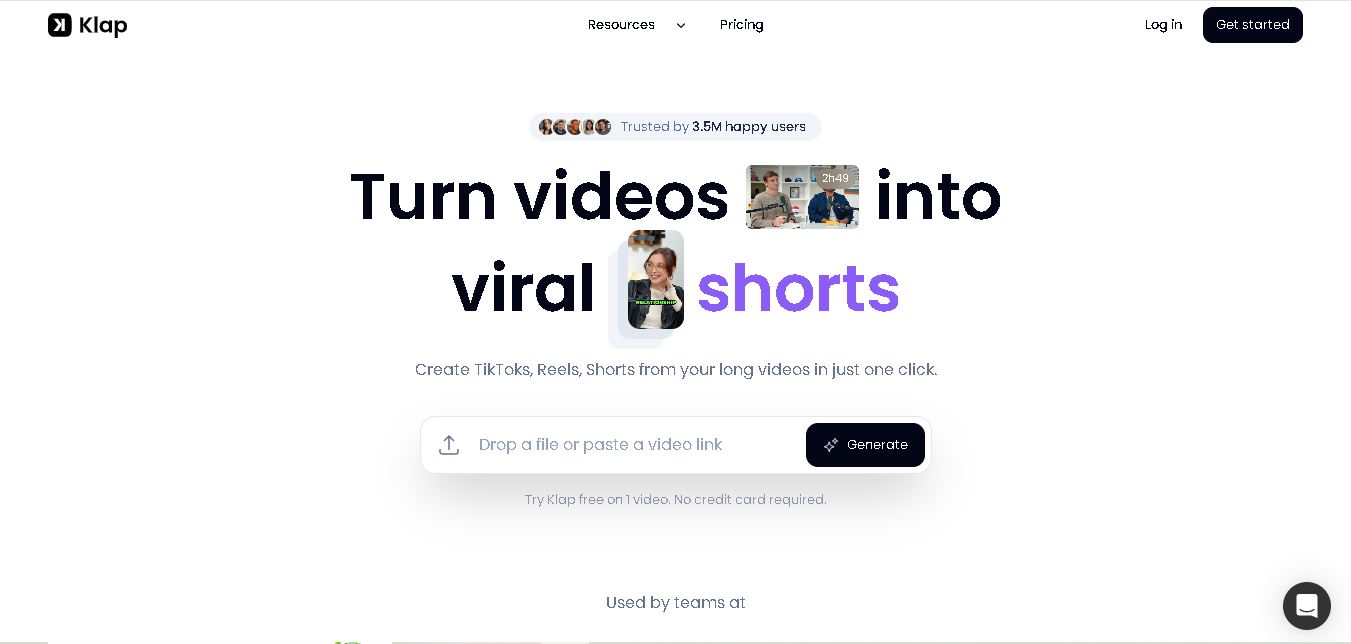
Klap is an AI-powered video editing tool that turns long videos into engaging short clips for TikTok, Instagram Reels, and YouTube Shorts. It automatically finds the best moments, adds captions, and resizes videos, helping creators save time and create more content with less effort.
Free
Melody Genie
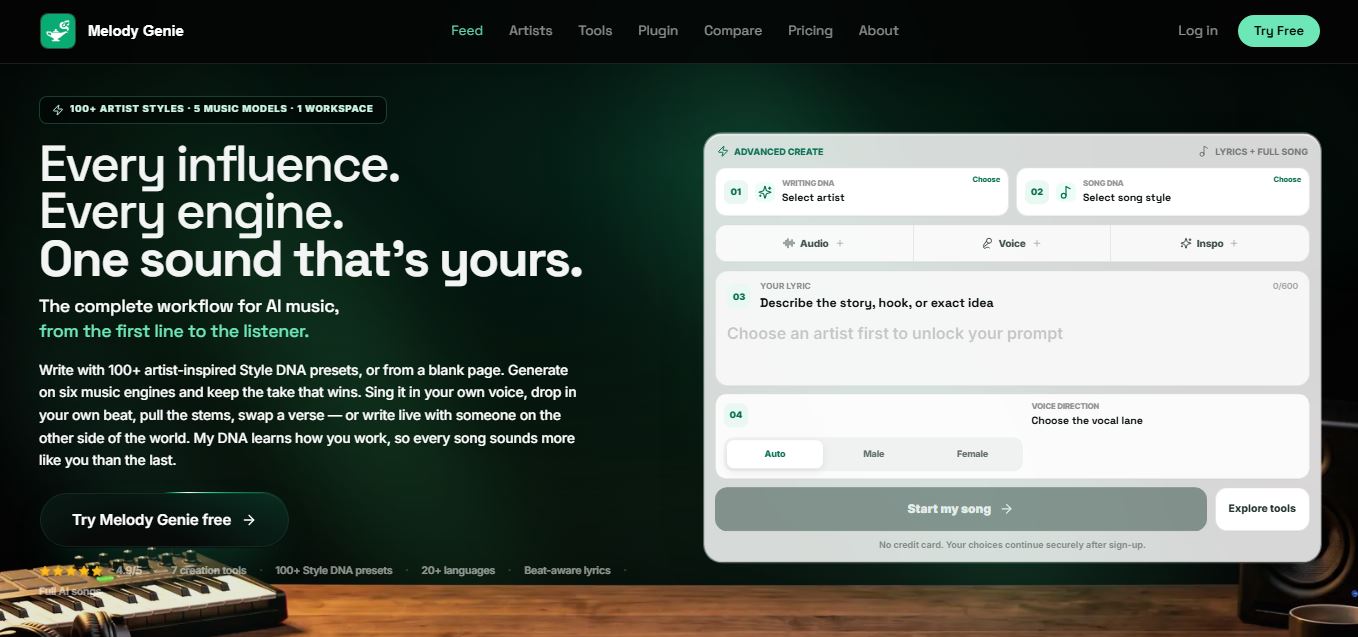
MelodyGenie is an AI-powered music generator that creates original songs from simple text prompts. Users can choose styles, moods, and genres, then instantly generate melodies and full tracks, making it easy for creators, marketers, and hobbyists to produce custom music without musical expertise.
Freemium
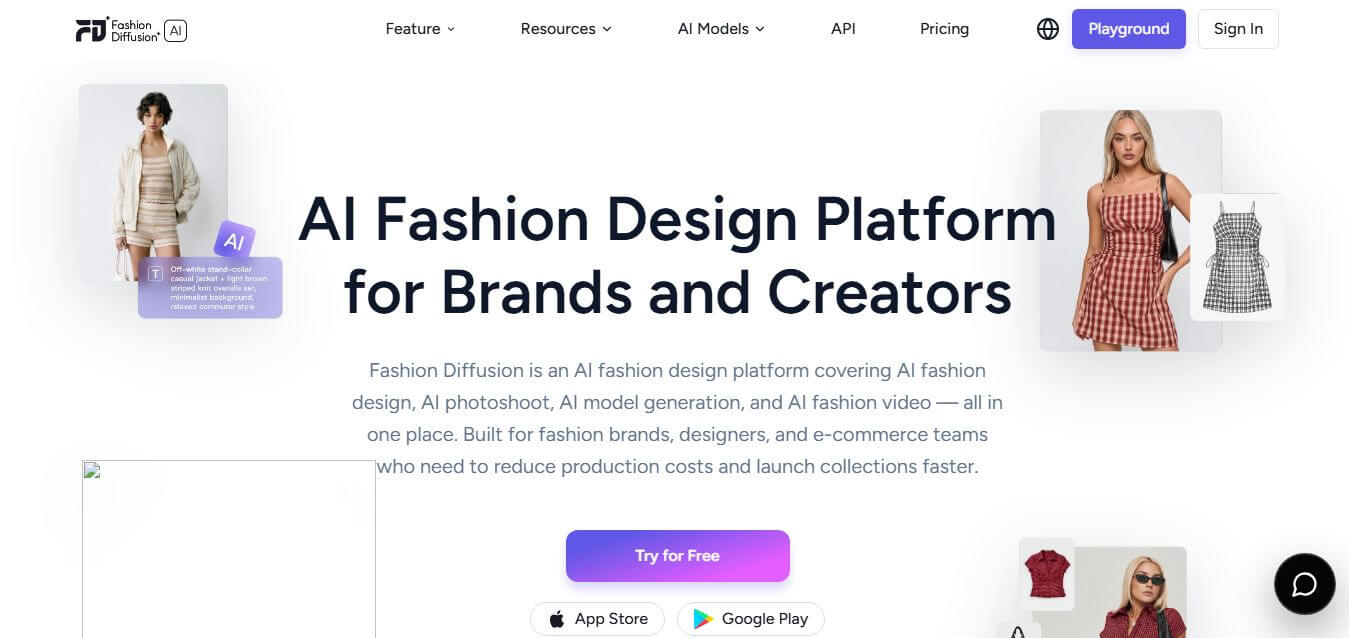
Fashion Diffusion AI
Fashion Diffusion is an AI-powered fashion design platform that helps brands and designers create clothing designs, virtual try-ons, AI models, product photos, and marketing visuals faster and cost-effectively.
Paid
Veo 4
Veo 4 AI is an AI video creation platform that generates dramatic videos from text, images, audio, and video prompts using realistic motion and synchronized sound.
Paid
Alternatives
Alternatives to ATLAS.ti
The best ATLAS.ti alternatives include NVivo, MAXQDA, Dedoose, Quirkos, Delve, and QDA Miner. These platforms offer qualitative coding, transcription analysis, and thematic mapping. While ATLAS.ti specializes in visually driven multimedia coding, semantic network visualizers, and AI-assisted code suggestions, alternatives like NVivo provide deep enterprise mixed-methods queries and Dedoose offers collaborative web-based cloud coding.
 4.8
Summate.it
Research
Summate.it is a web-based AI article summarizer that helps users understand lengthy online content quickly. It extracts article text and uses OpenAI to generate concise summaries highlighting essential information. Students, researchers, marketers, and professionals can use it to review online articles efficiently, save reading time, and simplify everyday information gathering.
 4.9
Cradle
Research
Cradle helps biotechnology researchers design, engineer, and optimize proteins using artificial intelligence and laboratory data. Its capabilities include protein sequence generation, multi-property optimization, candidate scoring, and experimental learning. The platform supports pharmaceutical, agricultural, and industrial biotechnology research, helping scientific teams explore promising molecules while reducing unnecessary experimental cycles and improving research workflows.
 4.9
Iris.ai
Research
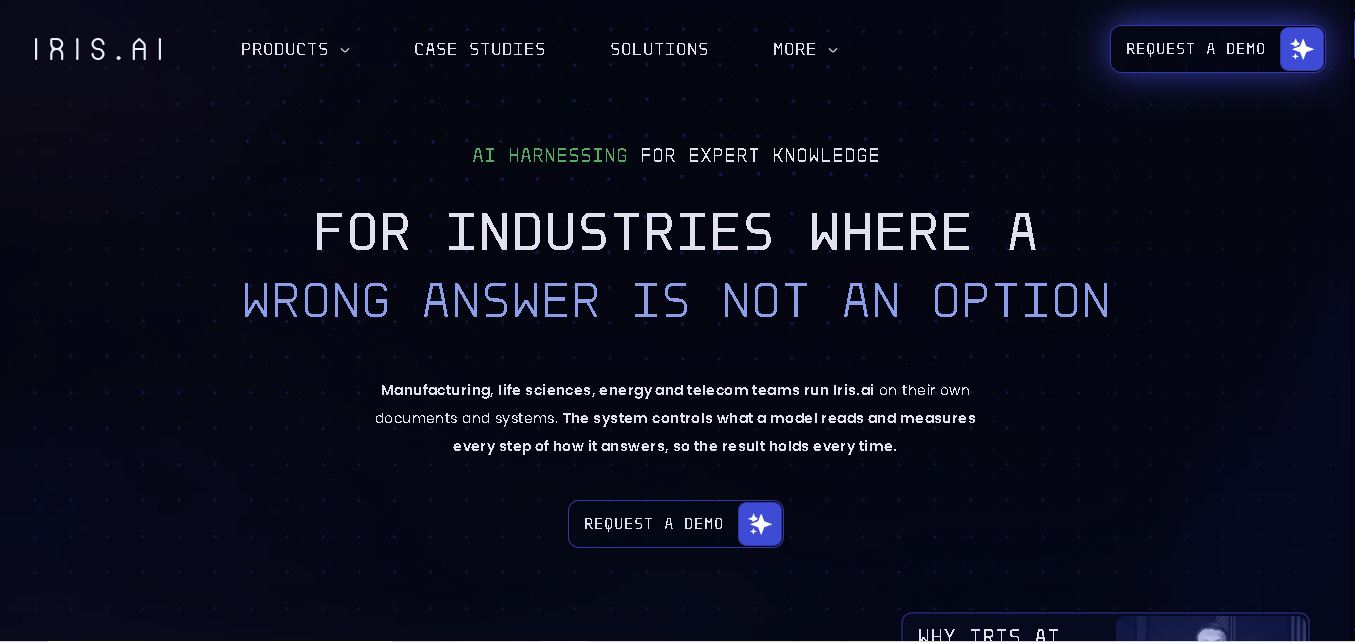
Iris.ai helps enterprises and research teams organize complex information, analyze scientific literature, and build AI workflows using organizational knowledge. Its solutions support document extraction, contextual search, data processing, and AI response evaluation. The platform is particularly relevant to research-intensive businesses seeking better information retrieval, reliable answers, and controlled enterprise AI applications.
 4.8
Lightmatter
Research
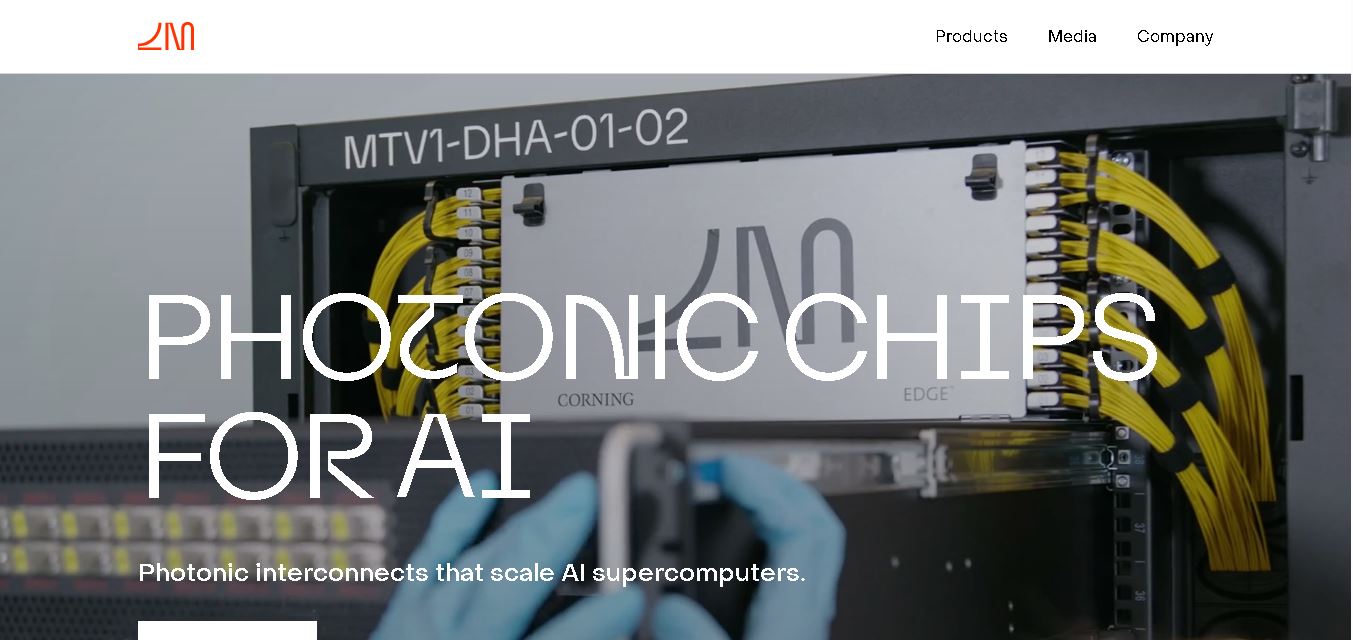
Lightmatter develops photonic computing technologies that help AI data centers connect processors and transfer information more efficiently. Its products include Passage optical interconnects, Guide light engines, and Envise photonic AI computing technology. The company aims to address bandwidth and power constraints affecting large-scale AI training, inference, and high-performance computing infrastructure.
 4.8
FigEditor
Research
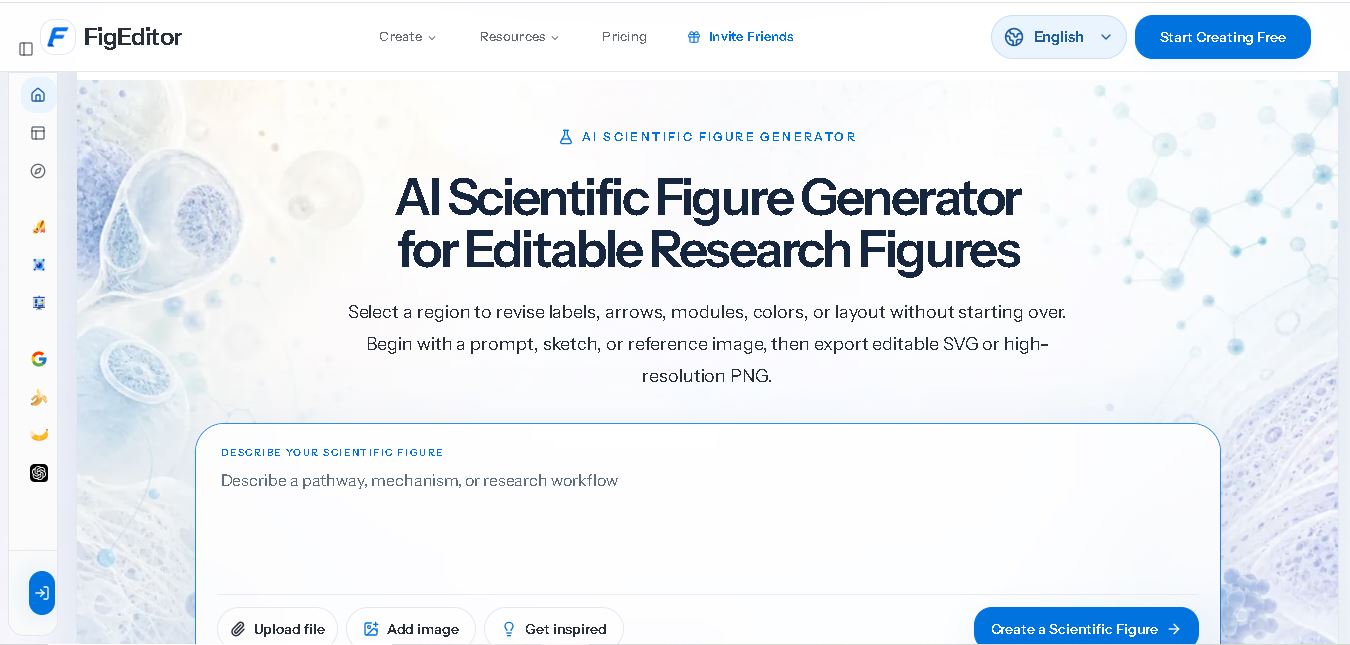
FigEditor AI helps researchers create scientific illustrations, flowcharts, graphical abstracts, and academic diagrams from text prompts, sketches, or reference images. Its editing and vectorization features simplify visual revisions, while SVG and high-resolution PNG exports support different research workflows. It is useful for students, scientists, educators, and research professionals preparing visual materials.
 4.8
GoMim
Research
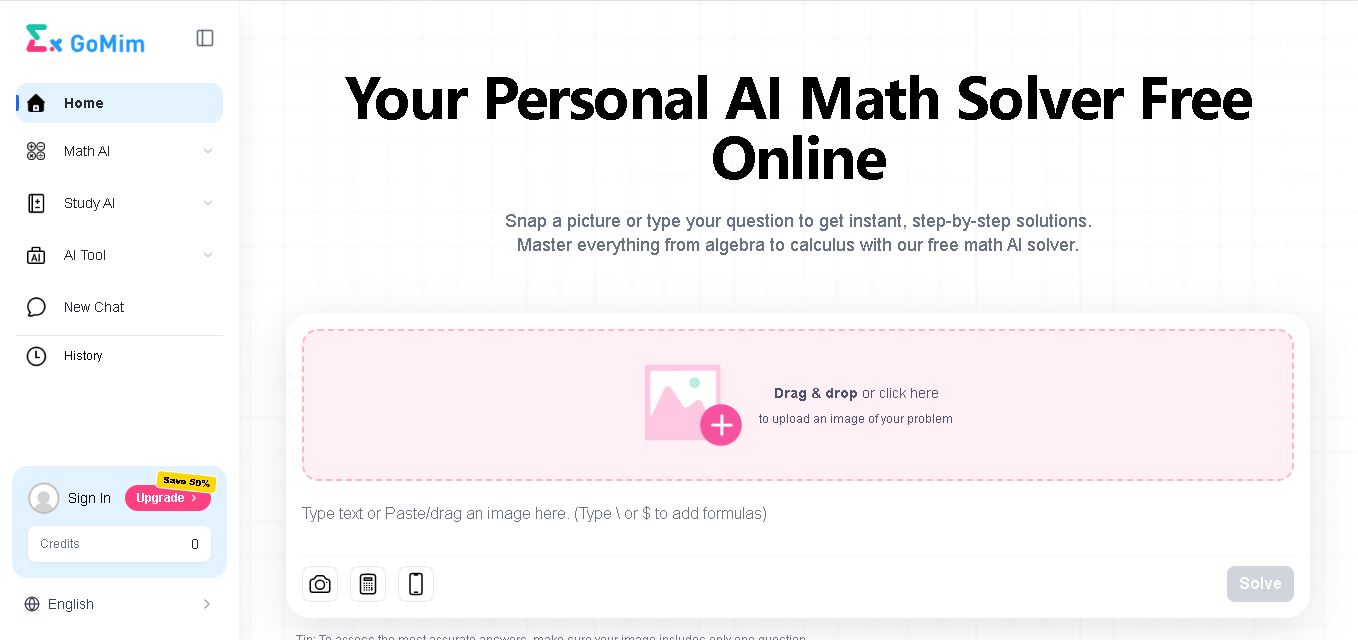
GoMim is an AI math solver that helps students understand mathematical concepts through step-by-step solutions. It supports typed questions, image uploads, and subjects including algebra, geometry, and calculus. With an interactive AI tutor, question history, and free and paid plans, GoMim makes homework assistance and independent study more accessible.
 4.8
AlphaResearch
Research
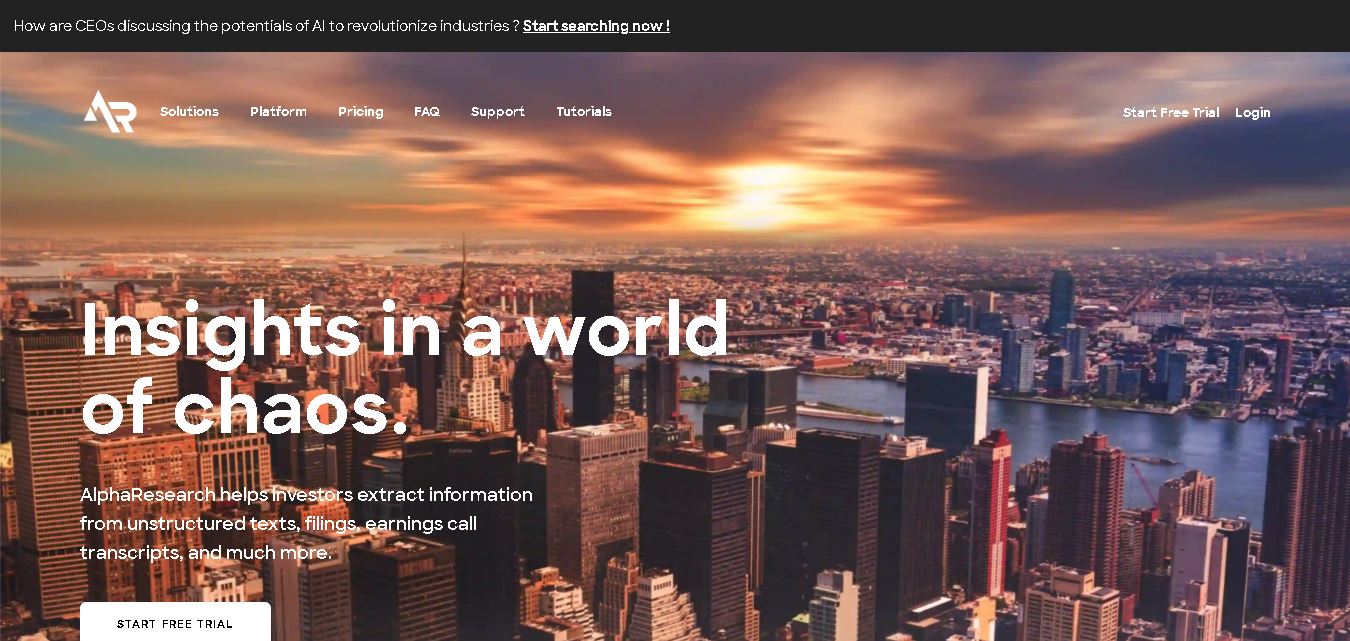
AlphaResearch helps investors, financial analysts, and corporate strategists research companies using financial documents, earnings transcripts, market data, and sentiment analysis. Its features include document search, filing alerts, stock screening, institutional ownership tracking, and research notes. The platform simplifies financial information discovery, helping users investigate companies and support informed investment research decisions.
 4.8
Gatsbi
Research
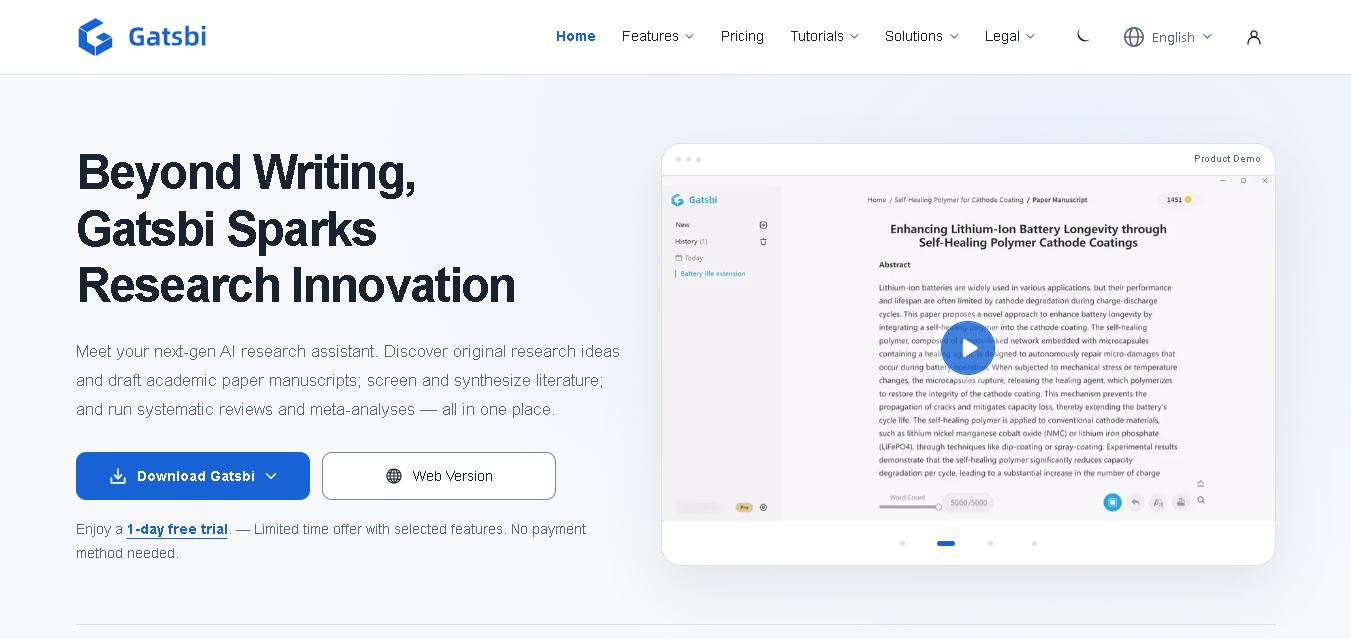
Gatsbi is an AI research assistant that helps researchers discover ideas, draft academic papers, review scientific literature, and prepare patent disclosures. It combines research discovery, manuscript generation, and evidence synthesis in one workflow. The tool is useful for academics, scientists, engineers, and innovation teams seeking to streamline complex research tasks.
 4.9
Metagene-1
Research
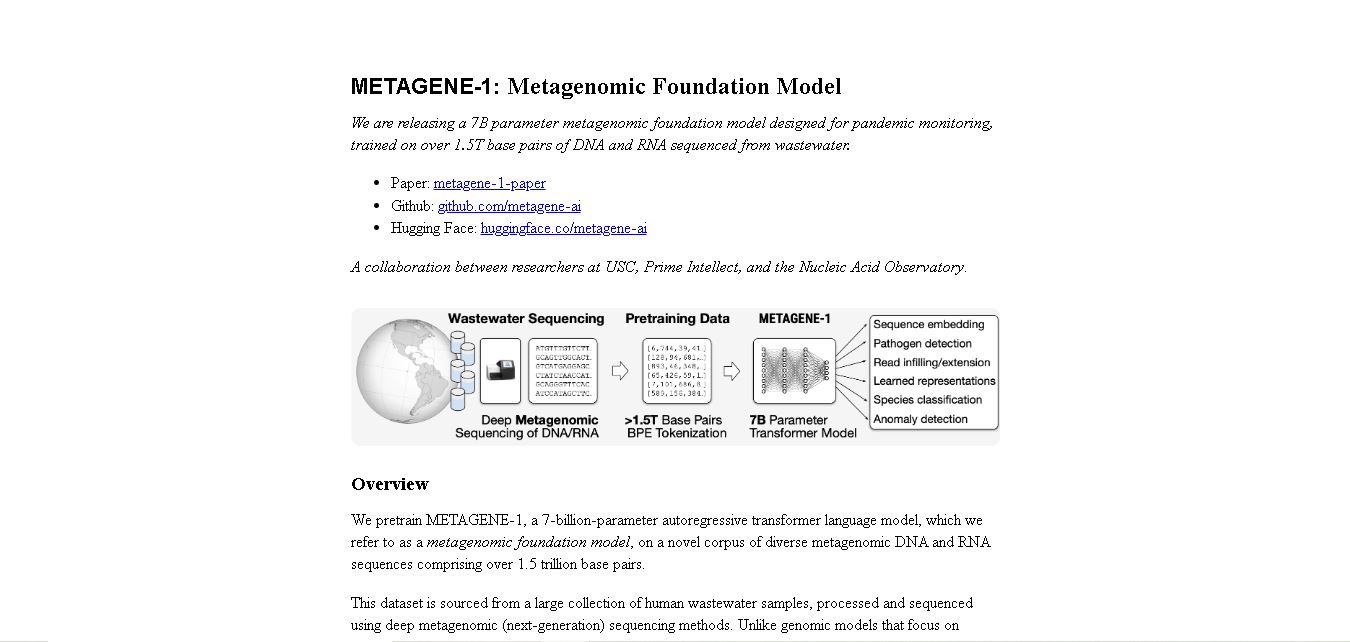
METAGENE-1 is a metagenomic foundation model designed to help researchers analyze DNA and RNA sequences. Trained on extensive wastewater sequencing data, it supports genomic embedding, pathogen detection research, biosurveillance, and pandemic monitoring. The model provides researchers with an AI-based approach to studying microbial diversity and identifying patterns in complex metagenomic datasets.