
Abstract Security
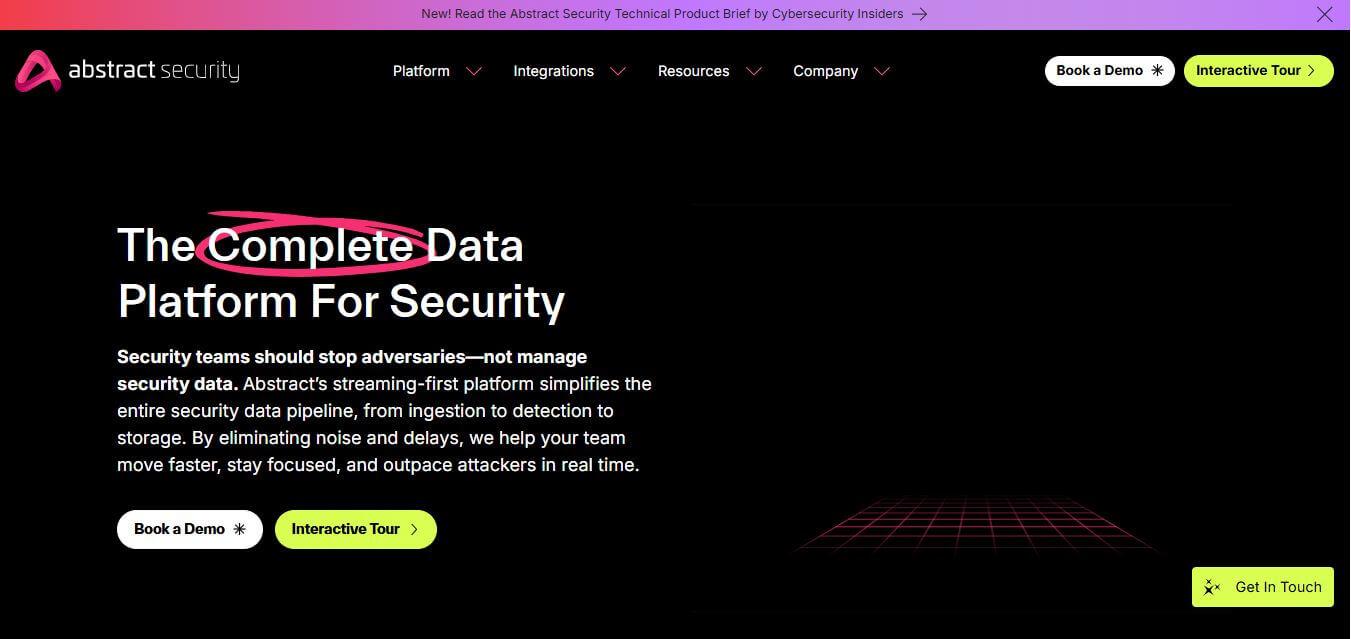
Abstract Security is a cybersecurity platform that helps organizations manage and analyze security data efficiently. It uses a composable SIEM approach to collect, process, and route data from multiple sources, improving threat detection while reducing operational complexity and costs.
What is Abstract Security?
Abstract Security is a modern cybersecurity platform designed to help organizations manage, process, and analyze large volumes of security data more efficiently. It uses a composable SIEM approach, which allows teams to collect data from multiple sources, route it intelligently, and optimize how it is stored and used. This helps reduce costs and improve visibility into potential threats. Instead of relying on traditional, rigid security systems, Abstract Security gives teams more flexibility and control over their data workflows. It helps security teams detect threats faster, streamline operations, and make better decisions without unnecessary complexity.
- Founded: 2023
- Founders: Colby DeRodeff (CEO), Chris Camacho (COO), and Aaron Shelmire (Chief Threat Research Officer)
- Launch: Officially launched in 2024 after emerging from stealth with seed funding.
-
Use Cases:
- Enterprises managing high volumes of security telemetry across cloud, SaaS, and on-prem systems
- Organizations modernizing or migrating their SIEM infrastructure
- SOC teams seeking faster detection and reduced alert fatigue
-
Technology:
- Streaming-first architecture for real-time data processing
- Data normalization and enrichment with contextual intelligence
- Separation of compliance and security data to optimize costs
- AI and machine learning for noise reduction and advanced detection
Abstract Security is a modern cybersecurity company founded in 2023 and based in Palo Alto, focused on helping organizations manage and optimize security data through a composable SIEM approach. The company has shown rapid growth, achieving around 380% year-over-year ARR growth, 280% customer growth, and 264% net revenue retention. It has raised approximately $48.5 million in funding, including a $25 million round, indicating strong investor confidence. Its platform can significantly reduce data volume, for example from 280 GB to 66 GB, improving efficiency and lowering costs while enhancing threat detection and security operations.
Abstract Security Key features
Abstract Security focuses on making security data easier to manage and more useful for teams. Instead of adding more complexity, it simplifies how teams collect, process, and use data across systems.
- Composable SIEM Approach: Gives you flexibility to collect and route security data the way you want, instead of being locked into one system
- Smart Data Routing: Sends the right data to the right tools, helping reduce noise and improve efficiency
- Data Volume Reduction: Filters and optimizes data to lower storage costs without losing important insights
- Multi-Source Integration: Connects with different security tools and data sources easily
- Real-Time Processing: Handles data as it comes in, helping teams respond to threats faster
- Cost Optimization: Helps organizations control and reduce high SIEM and storage costs
- Improved Visibility: Provides better insights into security events across the entire system
Abstract Security Pricing
Abstract Security follows a tailored pricing model for enterprises, which means there are no fixed monthly plans publicly listed. Pricing depends on factors like data volume, infrastructure, and organizational needs, so companies usually need to contact the sales team for a tailored quote.
- Custom Pricing: Based on business size, data usage, and integrations
- Enterprise Focus: Designed mainly for large organizations and security teams
- Usage-Based Model: Pricing often depends on data processed (e.g., volume per day)
- Estimated Example: Around $150,000/year for handling up to 1 TB/day data volume (as per marketplace listing)
- Additional Costs: Infrastructure or cloud costs (AWS, Azure, etc.) may apply separately
- No Free Plan: No public free tier or self-serve pricing available
Is Abstract Security Worth It?
If you’re someone managing security operations at scale, you’ve probably felt the pain of dealing with too much data and rising SIEM costs. That’s where Abstract Security actually starts to make sense. It doesn’t try to replace everything—instead, it helps you control how your data flows, which can save both time and money.
From a practical point of view, it’s really useful if your team is overwhelmed with logs and alerts. It filters and routes data smartly, so you’re not paying to store or analyze unnecessary information. Over time, that can make your entire security setup feel lighter and more efficient.
That said, it’s not for everyone. If your setup is small or you don’t deal with massive data volumes, it might feel a bit complex and overkill.
Disclaimer: For the latest and most accurate pricing information, please visit the official Abstract Security website.
Who is using Abstract Security?
A wide range of users and organizations are using Abstract Security
- Security Teams
- Security Operations Centers (SOCs)
- CISOs & security leaders
- Fintech & BFSI organizations
- E-commerce & consumer tech firms
- SaaS Companies
- Managed Security Service Providers (MSSPs)

Abstract Security Alternatives
If you’re exploring alternatives to Abstract Security, there are several strong options depending on whether you need data pipeline control, SIEM capabilities, or threat intelligence. Many tools focus on similar problems like managing large-scale security data, reducing costs, and improving threat detection.
- Cribl – One of the closest alternatives for data routing and telemetry pipeline management
- Observo AI – Focuses on observability data pipelines for security and DevOps teams
- Coralogix – Provides real-time data processing and observability without heavy storage costs
- Panther Labs – Cloud-native security analytics platform with strong scalability
- Exabeam – Advanced SIEM platform with behavioral analytics and threat detection
- Securonix – Next-gen SIEM solution focused on security analytics and automation
- Recorded Future – Strong in threat intelligence and proactive risk detection
- Check Point Exposure Management – Combines threat intelligence, risk management, and external attack surface monitoring
How Does Abstract Security Works?
Abstract Security works by helping you control how your security data is collected, processed, and sent across different tools. Instead of pushing all your data directly into a SIEM (which can be expensive and overwhelming), it acts as a smart layer in between that filters and routes data more efficiently. Abstract Security works like a data control layer for your security stack, making everything more efficient, cost-effective, and easier to manage.
- Step 1: Data Collection: It collects security data from multiple sources like logs, cloud platforms, and security tools
- Step 2: Data Processing: The platform analyzes and filters the data to remove unnecessary or low-value information
- Step 3: Smart Routing: It sends only relevant data to the right tools (like SIEM, storage, or analytics platforms)
- Step 4: Optimization: Reduces data volume and storage costs by avoiding duplication and noise
- Step 5: Real-Time Insights: Processes data in motion, helping teams detect threats faster
Why Did Abstract Security Become Popular?
Abstract Security became popular because it directly addresses some of the biggest frustrations security teams face today—too much data, rising costs, and rigid systems. Traditional SIEM tools often force companies to store and analyze everything, which becomes expensive and inefficient over time. Abstract changed this approach by introducing a more flexible and smarter way to handle security data.
- Solves Data Overload: Most organizations collect huge amounts of data, but nearly 80% of it is never used, creating unnecessary cost and complexity
- Reduces Costs: Instead of storing everything, it filters and routes only useful data, helping teams control SIEM expenses
- Flexible Architecture: Its composable SIEM model lets teams choose and connect tools instead of being locked into one vendor
- Faster Threat Detection: Processes data in real time, so threats can be identified earlier instead of waiting for storage and analysis
- Built for Modern Environments: Works well with multi-cloud and growing data ecosystems where traditional systems struggle
Abstract Security became popular because it gives security teams more control, lower costs, and faster insights, which are exactly the problems most organizations are trying to solve today.
Real-World Use Cases
Abstract Security is used in real-world scenarios where organizations deal with large volumes of security data and need better control, visibility, and cost management. It helps teams streamline operations and make faster, smarter decisions.
- SIEM Cost Optimization: Companies use it to filter unnecessary data before sending it to SIEM tools, reducing storage and processing costs
- Security Data Routing: Teams route different types of data to the right tools (SIEM, data lakes, analytics platforms) for better efficiency
- Multi-Cloud Security Management: Helps manage and process data across AWS, Azure, and other cloud environments in one place
- Threat Detection in Real-Time: Processes data as it moves, allowing faster identification of potential threats
- Log Management at Scale: Handles massive volumes of logs without overwhelming systems or budgets
- Vendor Flexibility: Enables organizations to avoid lock-in by connecting multiple security tools seamlessly
- Data Compliance & Retention: Helps manage how long data is stored and where it is sent based on compliance needs
Abstract Security is best used in environments where data volume is high and efficient security operations are critical.
Abstract Security Pros and Cons
Abstract Security is a powerful platform for managing security data, but like any tool, it has both strengths and limitations depending on your needs and scale.
Pros
- Reduces SIEM Costs: Filters unnecessary data, helping lower storage and processing expenses
- Flexible Architecture: Composable approach allows you to use multiple tools without vendor lock-in
- Real-Time Data Processing: Enables faster threat detection by analyzing data in motion
- Handles Large Data Volumes: Built for enterprises dealing with massive logs and telemetry
- Improves Efficiency: Reduces noise and helps teams focus on relevant security insights
- Multi-Tool Integration: Works well with cloud platforms and existing security stacks
Cons
- Complex for Beginners: Not ideal for small teams or those new to security operations
- Enterprise-Focused: Designed mainly for large organizations, not individuals or small businesses
- Custom Pricing: No transparent pricing, which can make budgeting difficult
- Setup & Implementation Time: Requires proper configuration and integration effort
- Not a Full SIEM Replacement: Focuses more on data routing and optimization than complete security analytics
Abstract Security is a strong choice for organizations dealing with high data volumes and rising security costs, but it may feel complex or unnecessary for smaller setups.
Abstract Security vs Competitors
If you look at Abstract Security compared to its competitors, it sits in a slightly different position. It’s not trying to replace your entire security system like Exabeam does. Instead, it works more like a control layer for your data, helping you decide what should actually go into your SIEM in the first place. Cribl is probably its closest competitor, and honestly, it’s still considered a market leader in data pipelines. Both tools focus on reducing data volume and controlling costs, but Cribl is more mature, while Abstract is newer and more flexible in combining pipeline + detection capabilities.
Exabeam, on the other hand, plays a different role. It’s a full SIEM platform with advanced threat detection, investigation, and response features, handling millions of events per second and offering deep analytics. So if you need a complete security solution, Exabeam is stronger—but it also comes with higher complexity and cost. Observo AI is closer in concept to Abstract, focusing on observability and data pipelines, but it’s more aligned with DevOps + security combined use cases rather than pure security operations.
| Feature / Tool | Abstract Security | Cribl | Exabeam | Observo AI |
|---|---|---|---|---|
| Core Focus | Security data pipeline + early detection | Data routing & telemetry pipeline | Full SIEM & threat detection | Observability + security data pipeline |
| Best For | Enterprises handling massive log data | Cost optimization & data control | Threat detection & incident response | DevOps + security teams |
| Data Handling | Filters data before SIEM | Routes & reshapes telemetry data | Stores & analyzes large datasets | Processes observability + security data |
| Detection Capability | Moderate (pre-SIEM detection) | Limited (pipeline-focused) | Advanced (ML-based detection) | Moderate |
| Flexibility | High (vendor-neutral) | Very high (pipeline leader) | Moderate (centralized system) | High |
| Cost Optimization | Strong (reduces data volume early) | Strong (reduces ingestion cost by 30–60%) (PeerSpot) | Moderate | Moderate |
How We Rate Abstract Security?
We rate Abstract Security based on practical factors that matter most for security teams, such as data handling efficiency, flexibility, performance, and overall value. The focus is on how well the platform reduces data overload, controls costs, and improves security operations in real-world scenarios.
| Parameter | Rating (Out of 5) |
|---|---|
| Ease of Use | 4.3 |
| Data Processing & Efficiency | 4.7 |
| Features & Capabilities | 4.5 |
| Flexibility & Integrations | 4.6 |
| Cost Optimization | 4.8 |
| Scalability | 4.7 |
| Overall Rating | 4.6 |
Abstract Security Review
Abstract Security is a modern cybersecurity platform designed to help organizations manage and optimize large volumes of security data. From my perspective, it works best as a control layer that filters and routes data before it reaches expensive SIEM systems. This helps reduce unnecessary noise and lowers overall costs. The composable SIEM approach provides teams flexibility to use multiple tools without being locked into one vendor, which is a big advantage. It also processes data in real time, allowing faster threat detection. However, it is not beginner-friendly and requires a mature security setup. Overall, enterprise teams facing data overload and rising security costs will find it a strong choice.
Conclusion
Abstract Security isn’t just another SIEM tool—it’s a fresh, AI-powered upgrade. With its streaming-first setup, teams can spot and react to threats as they occur while spending less time and resources on these tasks. The platform sorts through huge amounts of security data, cuts out the noise, and delivers real-time insights that actually matter. It’s built to scale, so it grows with your business, and its smart features mean you get faster, sharper threat detection without all the usual hassle. In short, Abstract Security gives organizations the boost they need to keep their security operations quick, efficient, and ahead of the game.
People are also reading:
FAQ
Is Abstract Security easy to use?
Honestly, it depends on your experience. If you’ve worked with SIEM or security tools before, you’ll understand it faster. But if you’re new, it can feel a bit complex at first because it’s built for advanced use cases.
Who should actually use Abstract Security?
If you’re part of a mid-size or enterprise security team handling lots of logs and data, this tool makes a lot of sense. For small teams, it might feel like too much.
Does Abstract Security really reduce costs?
Yes, and that’s one of its biggest strengths. By filtering unnecessary data before it reaches expensive systems, it can significantly lower your SIEM and storage costs over time.
Is Abstract Security a replacement for SIEM tools?
Not really. Think of it as a layer that works alongside your SIEM. It improves how data flows but doesn’t fully replace traditional security platforms.
Can small businesses use Abstract Security?
They can, but Abstract Security is usually not the best fit for smaller teams. It is designed for large-scale and complex environments.
Does Abstract Security integrate with existing tools?
Yes, Abstract Security integrates well with cloud platforms, SIEM tools, and other security systems.
User Reviews
No reviews yet for Abstract Security.
Featured Tools
Featured AI tools from TechShark
Melody Genie
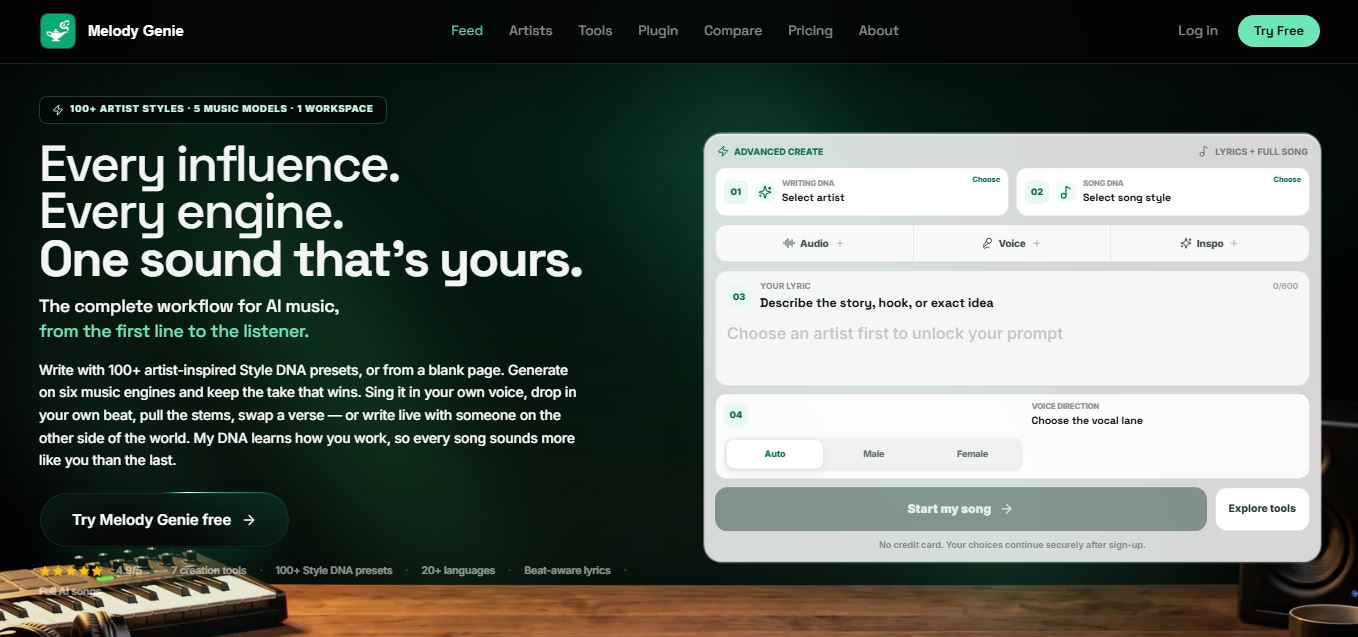
MelodyGenie is an AI-powered music generator that creates original songs from simple text prompts. Users can choose styles, moods, and genres, then instantly generate melodies and full tracks, making it easy for creators, marketers, and hobbyists to produce custom music without musical expertise.
Freemium
Kimi AI
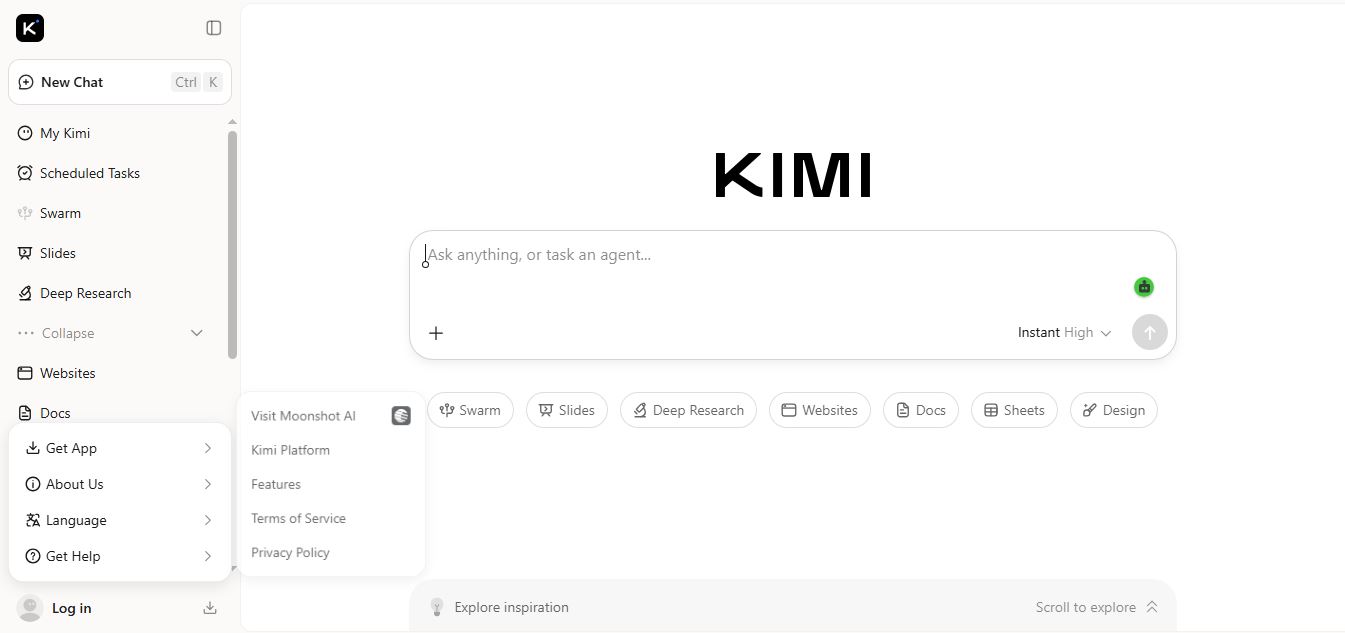
Kimi AI is an advanced AI assistant developed by Moonshot AI that helps you chat, research, write, code, and automate tasks in one place. It supports web search, file analysis, and multimodal inputs, and can even run autonomous “agent” workflows to complete complex tasks end-to-end.
Freemium

Fashion Diffusion AI
Fashion Diffusion is an AI-powered fashion design platform that helps brands and designers create clothing designs, virtual try-ons, AI models, product photos, and marketing visuals faster and cost-effectively.
Paid
Veo 4
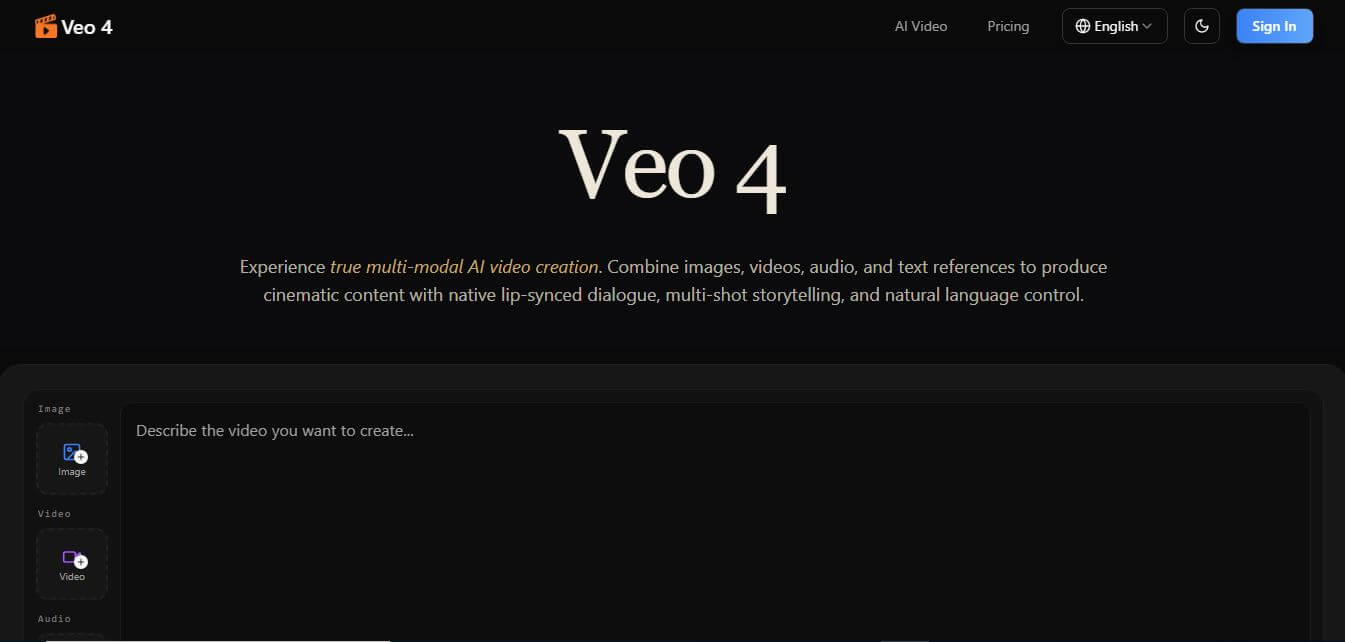
Veo 4 AI is an AI video creation platform that generates dramatic videos from text, images, audio, and video prompts using realistic motion and synchronized sound.
Paid
Alternatives
Alternatives to Abstract Security
Abstract Security alternatives include tools like Cribl, Observo AI, Exabeam, Securonix, and Panther Labs. These platforms help manage security data, reduce SIEM costs, and improve threat detection. Some focus on data pipelines and routing, while others offer full SIEM capabilities, making them suitable for different enterprise security needs and budgets.
 4.9
4.9HashiCorp Vault
Security
HashiCorp Vault is a secrets management platform that helps organizations securely store, access, and control sensitive data like API keys, tokens, and credentials. It provides encryption, identity-based access, and automated secrets rotation, enabling secure application deployment and compliance across cloud and on-prem environments.
 4.9
4.9Arista Networks
Security
Arista Networks is an AI-driven cloud networking platform that helps businesses build high-performance, scalable networks across data centers, campuses, and cloud environments. It delivers automation, analytics, and security through a unified operating system, enabling reliable connectivity and efficient data flow for modern, large-scale digital infrastructure.
 4.9
4.9Mimecast
Security
Mimecast is an AI-powered email and collaboration security platform that helps businesses prevent phishing, ransomware, and data leaks. It combines threat detection, data protection, and employee awareness tools into one system, enabling organizations to reduce human risk, ensure compliance, and maintain secure, uninterrupted communication.
 4.9
4.9Cato Networks
Security
Cato Networks is an AI-powered SASE platform that combines networking and security into a single cloud service. It connects users, apps, and data globally while enforcing zero-trust access, simplifying infrastructure, reducing risk, and delivering secure, high-performance connectivity across distributed and cloud-first business environments.
 4.9
4.9Microsoft Defender for Endpoint
Security
Microsoft Defender for Endpoint is an AI-powered endpoint security platform that helps businesses prevent, detect, and respond to cyber threats across devices like laptops, servers, and mobile systems. It combines antivirus, threat intelligence, and automated response to stop attacks, reduce risk, and provide full visibility across environments.
 4.9
4.9Securiti AI
Security
Securiti is an AI-powered data security, privacy, and governance platform that helps organizations discover, manage, and protect sensitive data across systems. It enables compliance with regulations like GDPR and CCPA, automates data workflows, and provides unified control over data access, risk, and usage.
 4.9
4.9Relyance AI
Security
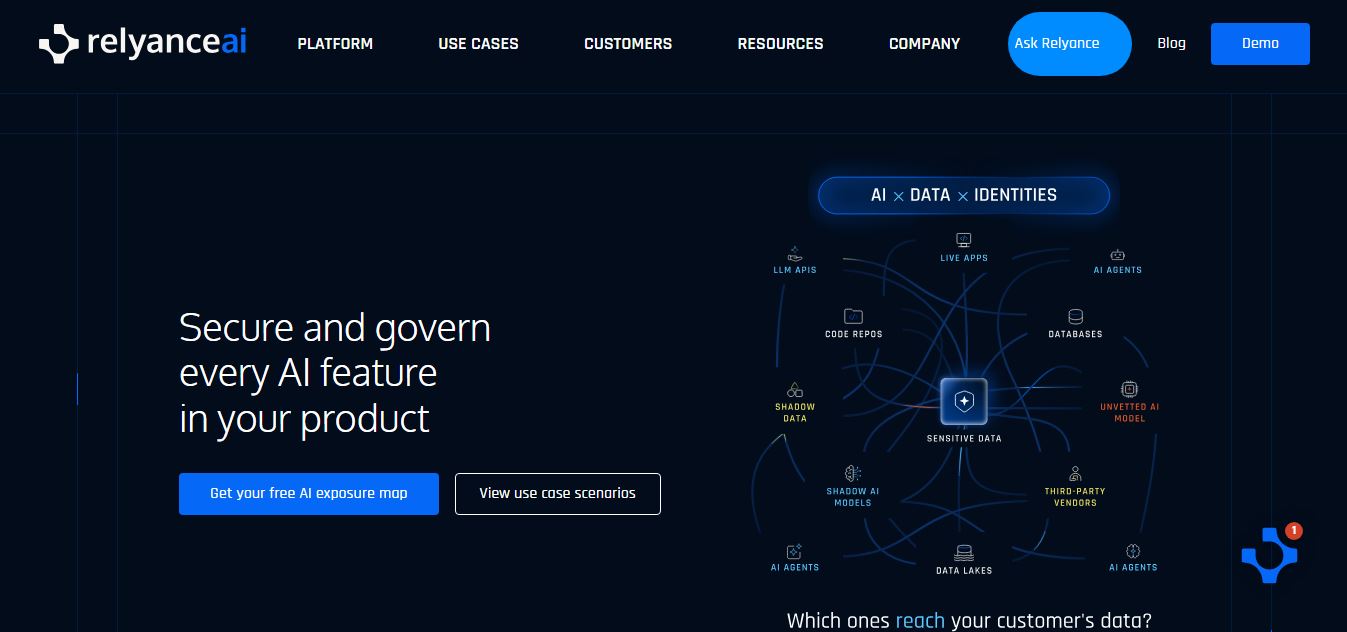
Relyance AI is a data governance and privacy platform that helps businesses manage data usage, ensure compliance, and reduce risk. It uses AI to map data flows, monitor how data is used, and enforce policies, making it easier to stay compliant with regulations like GDPR and CCPA.
 4.9
4.9GitHub Advanced Security
Security
GitHub Advanced Security is a security solution built into GitHub that helps developers find and fix vulnerabilities in their code. It offers features like code scanning, secret scanning, and dependency alerts, enabling teams to identify risks early and secure applications throughout the development lifecycle.
 4.8
4.8HiddenLayer
Security
HiddenLayer provides purpose-built security for organizations deploying generative, predictive, and agentic AI. Its platform helps security teams discover AI assets, inspect models for malware and vulnerabilities, continuously simulate attacks, and detect runtime threats. It integrates with existing security and MLOps environments while protecting sensitive models, prompts, data, and intellectual property.