10 Best AI Compliance Tools in 2026: Features & Comparison
Compare the 10 best AI compliance tools in 2026. Explore AI governance software, NIST AI RMF, ISO 42001, EU AI Act compliance, features, use cases, and pricing considerations.
Explore moreAI compliance tools help businesses automate regulatory tasks like AML checks, risk monitoring, audits, and data privacy management. Leading solutions such as Workiva, ComplyAdvantage, IBM watsonx, Vanta, and OneTrust use AI to reduce manual work, improve accuracy, and ensure real-time compliance. These tools are widely used in fintech, SaaS, and enterprises to minimize risk, cut false positives, and stay aligned with evolving regulations efficiently.
AI compliance is no longer something organizations can handle with a spreadsheet, a few policies, and an annual audit. As companies deploy generative AI, machine learning models, AI agents, copilots, and third-party AI applications, they need a reliable way to identify AI systems, assess risk, map controls to regulations, collect evidence, monitor changes, and prove that governance processes are actually working.
That is where AI compliance tools come in.
Modern AI compliance software helps organizations operationalize frameworks such as the NIST AI Risk Management Framework (AI RMF) and ISO/IEC 42001, while also helping them prepare for regulations such as the EU AI Act. Some platforms focus specifically on AI governance and model risk. Others combine AI governance with broader security, privacy, compliance, third-party risk, and GRC capabilities.
This guide examines 10 of the best AI compliance tools available in 2026, including what each platform does, who it is best suited for, its main strengths, limitations to consider, and the type of organization that should evaluate it.
Important: “Best” here means notable based on capabilities, use cases, framework coverage, governance functionality, and suitability for different organizational needs. It is not a universal ranking. The right tool depends on whether your primary problem is AI governance, regulatory compliance, security compliance, model risk, vendor risk, or enterprise GRC.
Quick Answer: What Are the Best AI Compliance Tools?
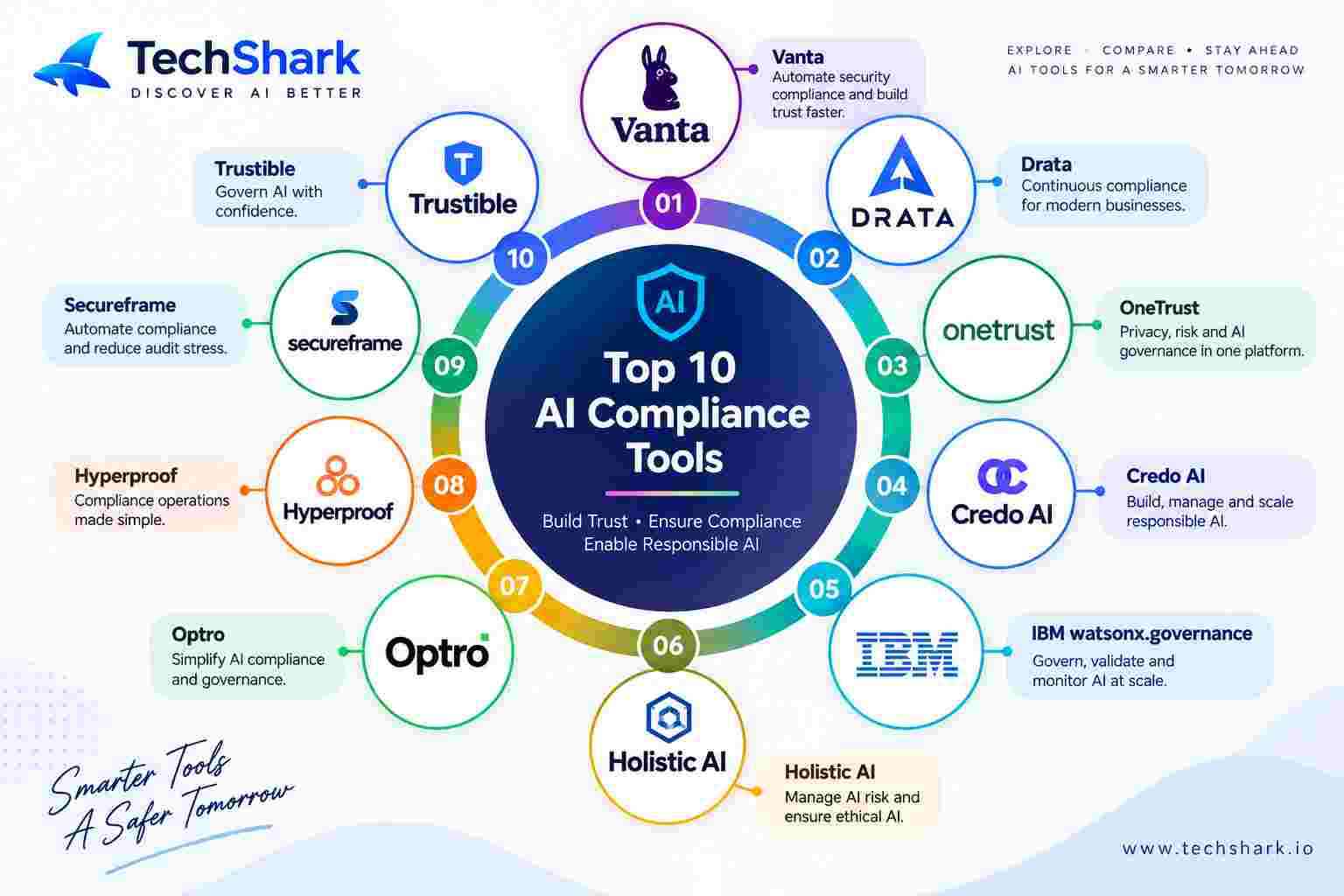
If you need a short list before reading the detailed analysis, these are 10 AI compliance and governance platforms worth evaluating in 2026:
- Vanta — strong for compliance automation combined with NIST AI RMF and AI governance.
- Drata — strong for organizations that want AI governance integrated with broader GRC and compliance programs.
- OneTrust AI Governance — strong for enterprise AI discovery, privacy, risk, and governance.
- Credo AI — purpose-built for enterprise AI governance and regulatory mapping.
- IBM watsonx.governance — strong for large enterprises managing machine learning and generative AI model lifecycles.
- Holistic AI — strong for AI discovery, testing, red teaming, monitoring, and compliance enforcement.
- Optro, formerly FairNow — strong for AI model, agent, and third-party application governance.
- Hyperproof — strong for organizations managing broader GRC and many compliance frameworks.
- Secureframe — strong for compliance automation with support for NIST AI RMF and ISO/IEC 42001.
- Trustible — strong for dedicated AI governance, AI inventory, risk assessment, monitoring, and regulatory compliance.
The biggest difference between these platforms is where they sit in the compliance stack. Some are primarily GRC platforms adding AI governance capabilities, while others are purpose-built AI governance platforms.
What Is an AI Compliance Tool?
An AI compliance tool is software that uses artificial intelligence to automate and manage regulatory requirements across industries. It helps organizations monitor laws, detect risks, and ensure adherence to standards like AML, KYC, GDPR, and SOC 2. These tools analyze large datasets in real time, reduce manual work, and improve accuracy in audits and reporting. By offering features like risk scoring, anomaly detection, and policy tracking, AI compliance tools enable proactive, efficient, and scalable compliance management.
Depending on the platform, AI compliance software can help with:
- AI inventory and discovery
- AI risk assessments
- AI impact assessments
- Model documentation
- AI policy management
- Regulatory mapping
- Control management
- Evidence collection
- Audit trails
- Human oversight workflows
- Bias and fairness assessments
- Security testing
- Model monitoring
- Third-party AI vendor assessments
- AI incident management
- Compliance reporting
- EU AI Act readiness
- NIST AI RMF alignment
- ISO/IEC 42001 implementation
- AI agent governance
This distinction matters because AI compliance and AI governance are related but not identical. AI compliance asks whether an organization is meeting applicable legal, regulatory, contractual, or framework requirements. AI governance is broader. It establishes the policies, ownership, risk processes, controls, approvals, monitoring, and accountability needed to manage AI throughout its lifecycle.
For example, an organization might have a compliance requirement to document a high-risk AI system. AI governance determines who owns that system, how it was assessed, which controls apply, how changes are approved, and how ongoing monitoring works.
Why AI Compliance Software Matters in 2026
The need for AI governance has become more concrete as AI deployment has accelerated.
The 2026 Stanford AI Index reports that documented AI incidents reached 362 in 2025, up from 233 in 2024. The report also found that AI-specific governance roles grew by 17% in 2025, while the share of businesses reporting no responsible-AI policies declined from 24% to 11%.
At the regulatory level, the EU AI Act is also moving from preparation toward enforcement. The European Commission states that the AI Act became applicable on 2 August 2026, although individual requirements have different application dates. The high-risk rules for certain Annex III systems are scheduled for 2 December 2027, while certain high-risk AI systems embedded in regulated products have a later date of 2 August 2028.
Transparency requirements under Article 50 also began applying on 2 August 2026. These include requirements concerning disclosure when people interact with certain AI systems and marking or labeling certain AI-generated or manipulated content. For businesses, this means AI governance is increasingly becoming an operational function rather than an occasional legal exercise.
10 Best AI Compliance Tools
1. Vanta
Vanta is a leading trust management and compliance automation platform designed to help businesses achieve and maintain certifications like SOC 2, ISO 27001, HIPAA, and GDPR. It automates security monitoring, evidence collection, and audit preparation, reducing manual effort and compliance costs. Vanta integrates with cloud services, HR tools, and development platforms to ensure continuous compliance. Startups and growing companies use it to build customer trust, streamline audits, and accelerate sales by proving strong security and data protection practices.
Vanta has also introduced broader AI governance functionality to discover and govern AI systems and agents.
Key features
- NIST AI RMF support
- AI risk registers
- AI policies and documentation
- Evidence automation
- Continuous control monitoring
- AI governance workflows
- AI system and agent governance
- Broader SOC 2 and security compliance automation
Best for
Vanta is a strong candidate for:
- SaaS companies
- Technology companies
- Startups scaling compliance
- Security teams
- Organizations already using Vanta
- Companies that want AI compliance integrated with broader security compliance
Potential limitation
Vanta may be less suitable than highly specialized AI governance platforms for organizations requiring extremely deep model testing, algorithmic impact assessments, or sophisticated AI model lifecycle management.
Bottom line: Consider Vanta when you want AI compliance to become part of a broader, continuously monitored compliance program rather than a standalone AI governance project.
2. Drata
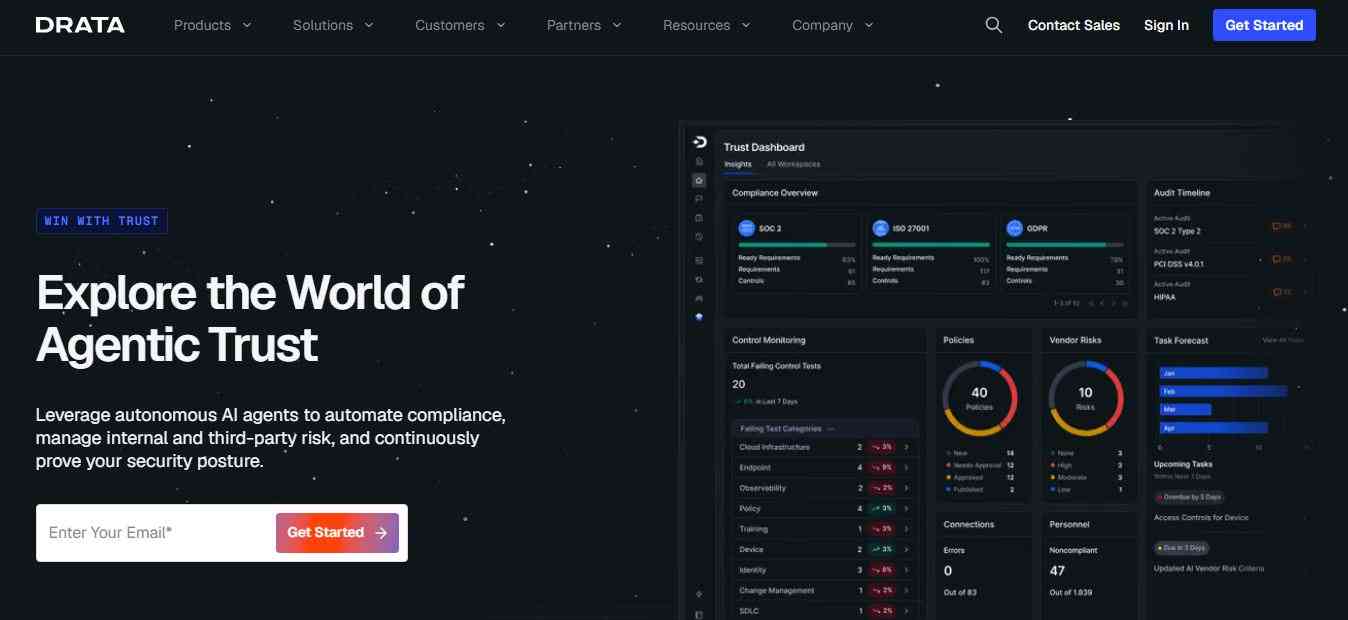
Drata is a security and compliance automation platform that helps companies achieve certifications like SOC 2, ISO 27001, HIPAA, and GDPR with less manual effort. It continuously monitors systems, automates evidence collection, and tracks security controls in real time. Drata integrates with cloud providers, HR tools, and development platforms to simplify audits and maintain compliance. Businesses use it to strengthen security posture, reduce audit time, and build trust with customers through ongoing, automated compliance management.
This approach is useful for organizations that do not want to create an entirely separate AI governance system.
Key features
- NIST AI RMF mapping
- ISO/IEC 42001 support
- Control mapping
- Evidence management
- Risk management
- AI governance documentation
- Continuous compliance workflows
- Broader security and privacy compliance
- AI-assisted GRC workflows
Drata also announced that it achieved ISO 42001 certification in December 2025.
Best for
Drata is worth considering for:
- Mid-market companies
- Enterprise security teams
- SaaS businesses
- Organizations with existing SOC 2 or ISO programs
- Companies building an AI management system
- Teams looking to combine AI governance with conventional GRC
Potential limitation
Organizations that need highly technical AI testing, model evaluation, adversarial testing, or advanced algorithmic fairness analysis may need to complement Drata with specialized AI testing tools.
Bottom line: Drata is particularly relevant when AI governance needs to fit inside an existing compliance architecture.
3. OneTrust AI Governance
OneTrust AI Governance is a comprehensive platform designed to help organizations manage the risks, compliance, and ethical use of artificial intelligence. It enables businesses to track AI systems, assess risks, and ensure alignment with global regulations like GDPR and emerging AI laws. The platform provides tools for impact assessments, model monitoring, and policy enforcement. Companies use OneTrust AI Governance to improve transparency, reduce regulatory risks, and build responsible AI frameworks that support trust, accountability, and long-term scalability.
That is important because many organizations have a much larger AI footprint than the formal list maintained by their AI or data science team.
Key features
- AI discovery
- Central AI registry
- AI model and agent inventory
- AI vendor governance
- Risk management
- Policy management
- Privacy integration
- Regulatory compliance
- Lifecycle governance
- Enterprise reporting
OneTrust describes its AI Governance platform as a way to translate AI risk into enforceable controls and connect governance with technical reality.
Best for
OneTrust is particularly relevant for:
- Large enterprises
- Highly regulated organizations
- Companies already using OneTrust
- Privacy-heavy organizations
- Global companies managing multiple governance domains
Potential limitation
The platform's breadth can mean more implementation complexity than a lightweight compliance automation tool.
Bottom line: OneTrust makes sense when AI governance needs to connect with privacy, data governance, third-party risk, and enterprise-wide compliance processes.
4. Credo AI
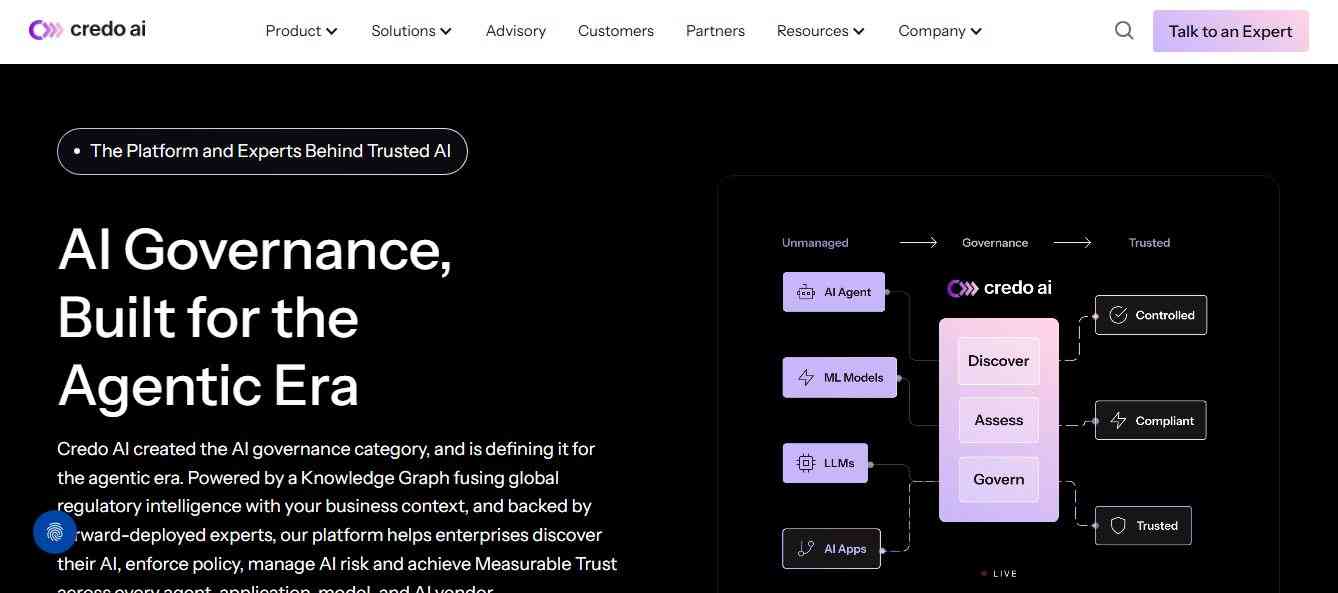
Credo AI is an AI governance platform that helps organizations manage, monitor, and scale responsible AI systems. It provides tools for risk assessment, policy enforcement, and compliance with global AI regulations. Credo AI enables companies to track AI models, ensure ethical usage, and align with frameworks like GDPR and emerging AI laws. Businesses use it to improve transparency, reduce operational and regulatory risks, and build trustworthy AI systems that support responsible innovation and long-term growth.
Credo AI supports frameworks including
- EU AI Act
- NIST AI RMF
- ISO 42001
- OECD-related frameworks
- Other AI governance standards and policies
Its platform uses a regulatory knowledge graph to connect regulations, policies, risks, controls, AI systems, vendors, and use cases.
Key features
- AI inventory
- AI use-case registry
- Model and vendor governance
- Regulatory intelligence
- Risk assessment
- Policy mapping
- Control mapping
- Audit evidence
- Human-in-the-loop workflows
- AI agent governance
Credo AI says its platform contains more than 160 policies, 16 risk categories, and more than 110 controls mapped to major AI frameworks. These are vendor-reported figures and should be validated during procurement.
Best for
Credo AI is worth evaluating for:
- Large enterprises
- Financial services
- Healthcare
- Insurance
- Organizations with complex AI portfolios
- Companies that need dedicated AI governance
- Teams preparing for multiple AI regulations
Potential limitation
If your primary problem is traditional SOC 2, ISO 27001, or security compliance rather than AI governance, a broader GRC platform may provide more value.
Bottom line: Credo AI is particularly relevant when AI governance itself is becoming a dedicated organizational function.
5. IBM watsonx.governance
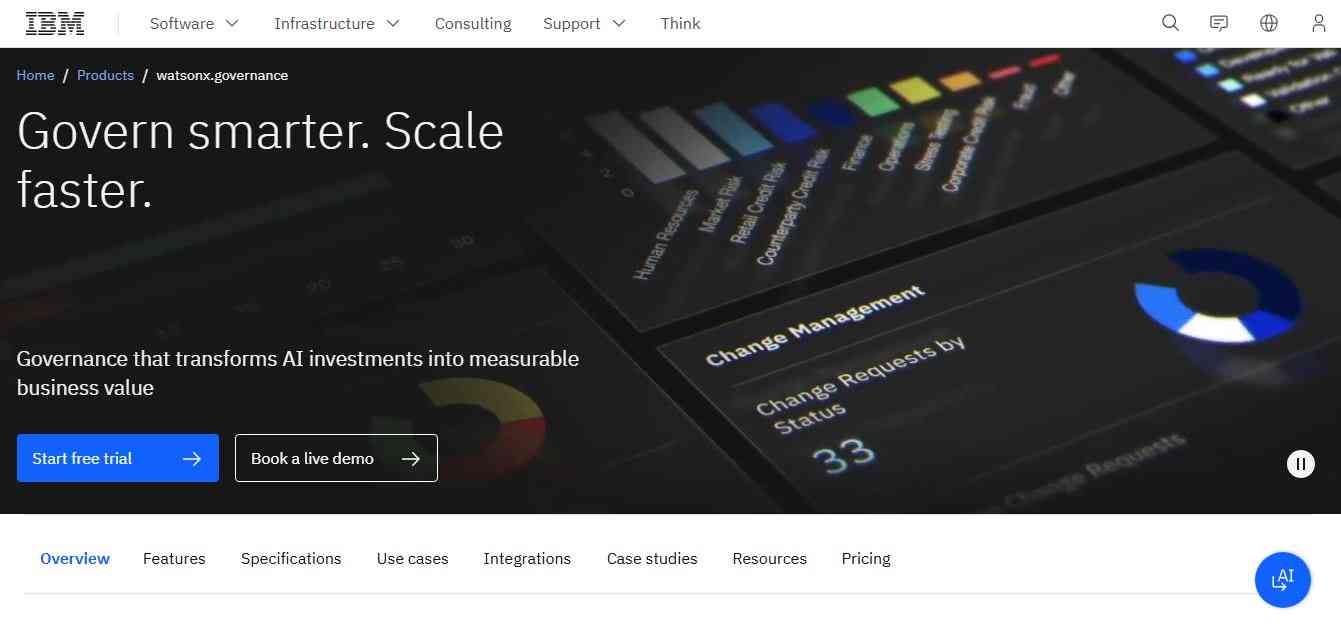
IBM watsonx.governance is an AI governance solution designed to help organizations manage, monitor, and validate AI models across their lifecycle. It enables businesses to track model performance, detect bias, ensure transparency, and meet regulatory requirements. The platform supports risk management, automated documentation, and audit readiness while integrating with enterprise data and AI systems. Companies use watsonx.governance to build trustworthy, compliant AI at scale while maintaining control, accountability, and ethical standards.
watsonx.governance also supports AI inventories, factsheets, model evaluation, monitoring, and governance of generative AI assets such as prompt templates.
Key features
- AI inventory
- Model management
- AI factsheets
- Model evaluation
- Model monitoring
- Generative AI governance
- Risk management
- Compliance workflows
- Prompt governance
- Enterprise integrations
IBM also provides a Risk Atlas covering risks associated with AI models, foundation models, and generative AI.
Best for
IBM watsonx.governance is especially relevant for:
- Large enterprises
- Banks and financial institutions
- Heavily regulated organizations
- Organizations with mature data science teams
- Companies already using IBM technology
- Enterprises managing large model portfolios
Potential limitation
It can be more platform-oriented and enterprise-heavy than tools designed for smaller organizations.
Bottom line: IBM is a strong candidate where AI governance must operate alongside sophisticated enterprise data, analytics, model management, and risk infrastructure.
6. Holistic AI
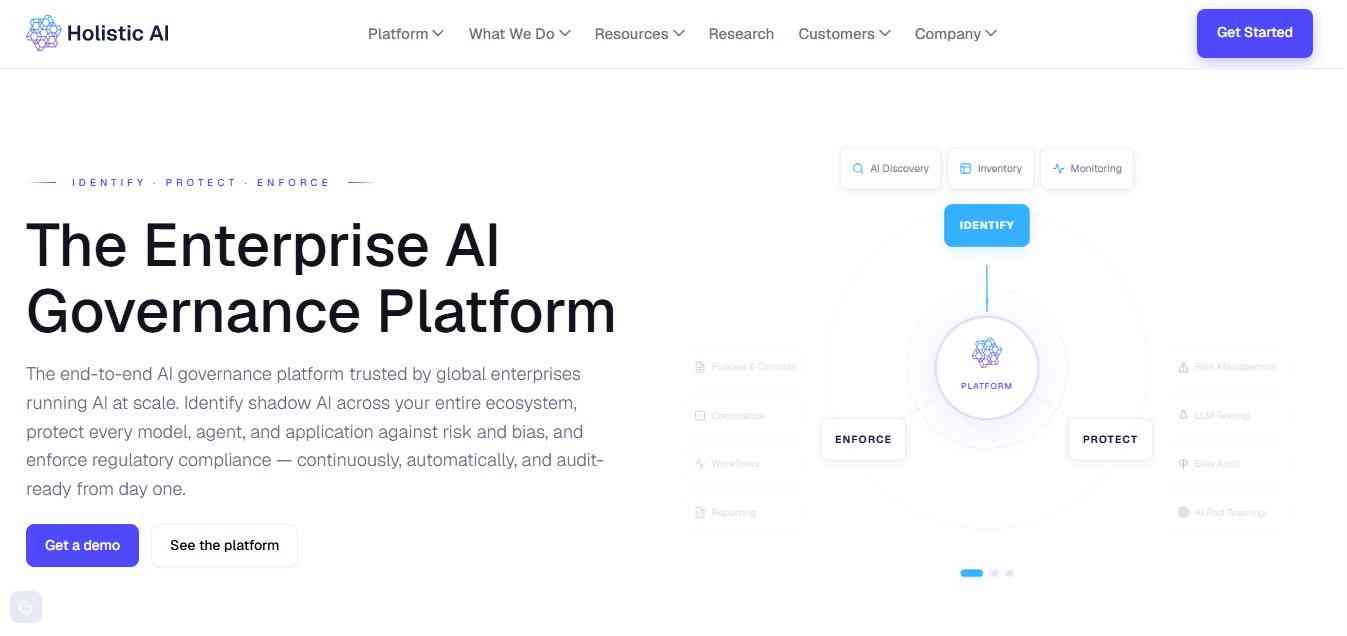
Holistic AI is an AI governance and risk management platform that helps organizations assess, monitor, and mitigate risks across their AI systems. It provides tools for bias detection, model validation, and compliance with global regulations such as GDPR and emerging AI laws. Holistic AI enables businesses to audit AI models, enforce policies, and ensure ethical AI deployment. Companies use it to improve transparency, reduce regulatory risks, and build responsible, trustworthy AI systems at scale.
Holistic AI says its testing capabilities cover areas such as:
- Bias
- Robustness
- Privacy
- Performance
- Hallucinations
- Toxicity
- Security
- AI agent behavior
It also supports mapping to frameworks including EU AI Act, NIST AI RMF, and ISO 42001.
Key features
- AI discovery
- Shadow AI detection
- AI inventory
- Bias testing
- Red teaming
- Hallucination testing
- Privacy testing
- AI agent governance
- Regulatory mapping
- Compliance evidence
- Policy enforcement
- Continuous monitoring
Best for
Holistic AI may be a good fit for:
- Enterprises building or deploying many AI systems
- AI engineering teams
- Responsible AI teams
- Organizations requiring AI testing
- Companies with significant model-risk exposure
Potential limitation
Organizations looking primarily for standard GRC automation may find a general-purpose GRC platform easier to implement.
Bottom line: Holistic AI stands out when AI testing and technical risk evaluation are as important as documentation and compliance mapping.
7. Optro, Formerly FairNow
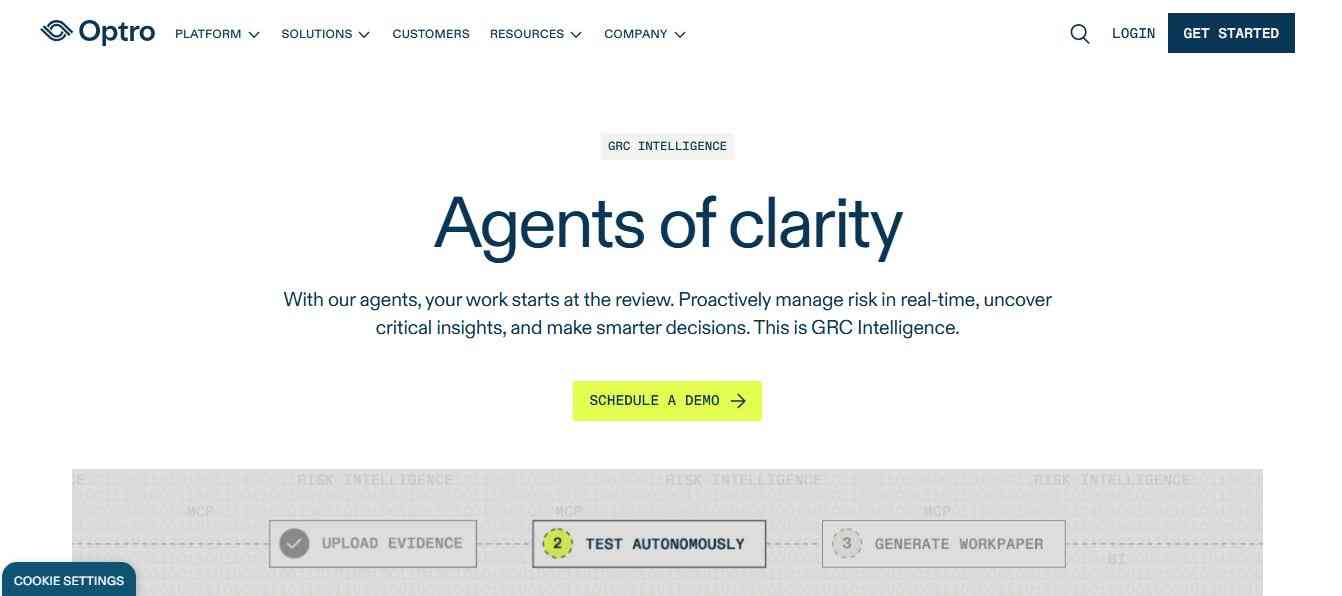
Optro is an AI governance and compliance solution that helps organizations manage risks and ensure responsible AI deployment. It provides tools for monitoring AI systems, evaluating model performance, and maintaining regulatory compliance. Optro supports transparency, audit readiness, and policy enforcement across the AI lifecycle. Businesses use it to reduce operational risks, align with emerging AI regulations, and build trustworthy AI systems while maintaining control, accountability, and ethical standards in their AI operations.
Optro states that its platform supports more than 25 frameworks, including ISO 42001, EU AI Act, and NIST AI RMF.
Key features
- AI inventory
- Model governance
- Agent governance
- Third-party AI governance
- Risk assessment
- Regulatory mapping
- Control mapping
- Evidence management
- AI lifecycle governance
The platform also emphasizes connecting AI models and applications to their ownership, data dependencies, and use context.
Best for
Optro is worth considering for:
- Enterprise risk teams
- Financial services
- Insurance
- Organizations with many AI models
- Companies managing third-party AI applications
- Teams that need AI-specific governance workflows
Potential limitation
As with other specialist platforms, companies that need extensive conventional security compliance automation may still need a broader GRC platform.
Bottom line: Optro is relevant when model risk, AI lifecycle governance, and regulatory compliance are central requirements.
8. Hyperproof
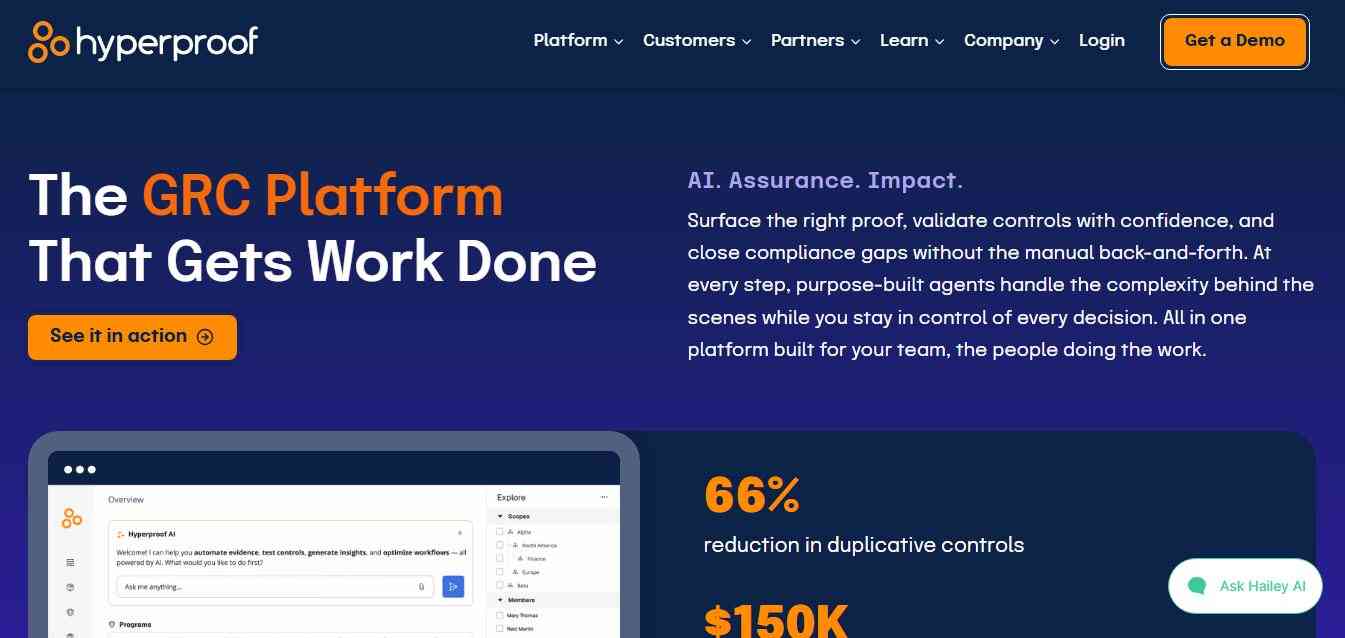
Hyperproof is a compliance operations platform that helps organizations manage security, risk, and regulatory requirements in one place. It streamlines audit workflows, automates evidence collection, and maps controls across frameworks like SOC 2, ISO 27001, and GDPR. Hyperproof integrates with business systems to provide real-time visibility into compliance status. Companies use it to reduce manual work, improve audit readiness, and maintain continuous compliance while strengthening overall risk management and operational efficiency.
For organizations where AI compliance is one part of a much larger compliance program, this can be valuable.
Key features
- Compliance management
- Risk management
- Control mapping
- Evidence collection
- Policy management
- Third-party risk
- Audit management
- AI-assisted GRC
- Cross-framework compliance
- Automated workflows
Hyperproof's AI functionality includes agents for discovering compliance information, validating evidence, advising on risks and controls, and automating certain workflows.
Best for
Hyperproof is especially relevant for:
- Enterprise GRC teams
- Companies with many frameworks
- Organizations managing security and privacy alongside AI risk
- Compliance teams that need centralized evidence
- Companies expanding into multiple markets
Potential limitation
If you need deep model-level testing, AI red teaming, or algorithmic fairness assessments, a specialized AI governance platform may be a better complement.
Bottom line: Hyperproof is a strong option when AI compliance needs to sit inside a mature enterprise GRC program.
9. Secureframe
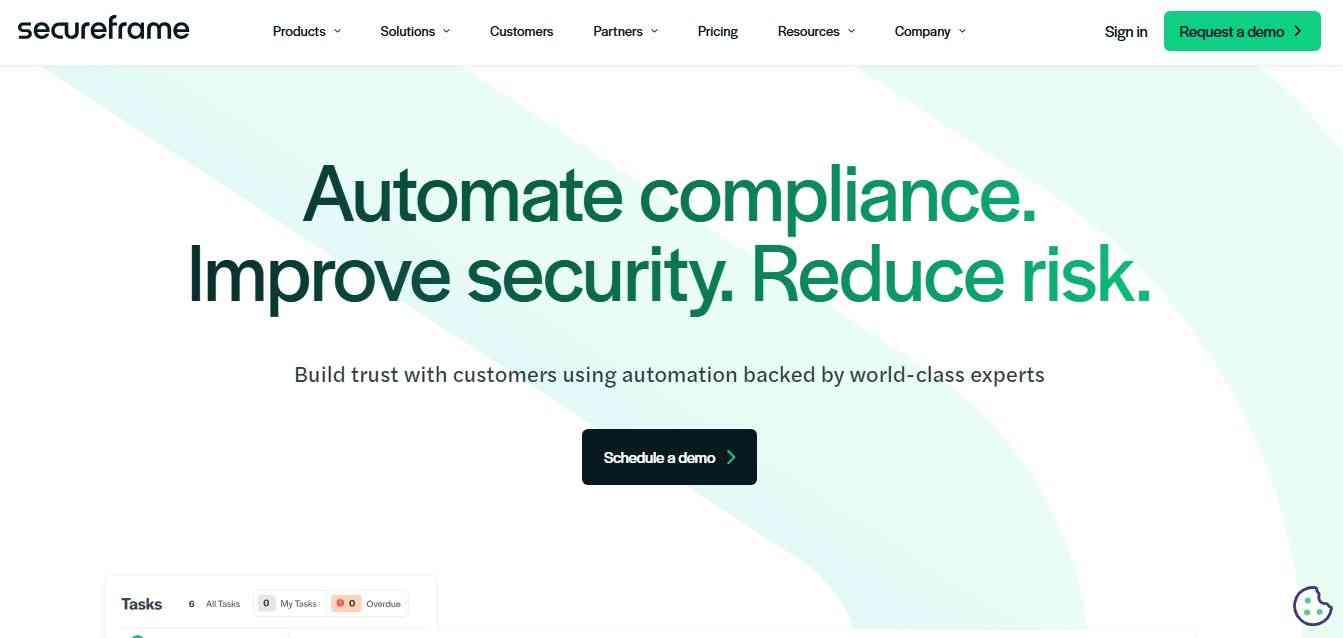
Secureframe is a security and compliance automation platform that helps businesses achieve and maintain certifications like SOC 2, ISO 27001, HIPAA, and GDPR. It automates evidence collection, continuous monitoring, and audit workflows to reduce manual effort. Secureframe integrates with cloud services and business tools to ensure ongoing compliance. Companies use it to accelerate audits, strengthen security posture, and build customer trust by demonstrating strong data protection and regulatory compliance practices.
Key features
- Compliance automation
- NIST AI RMF
- ISO 42001
- Security controls
- Evidence collection
- Automated testing
- Policy management
- Questionnaire automation
- Audit readiness
Secureframe also describes how AI is changing security and compliance operations, including the growing need to manage both compliance through AI and compliance of AI itself.
Best for
Secureframe may fit:
- SaaS businesses
- Technology companies
- Security teams
- Organizations pursuing multiple security frameworks
- Companies beginning their AI governance journey
Potential limitation
If your organization has hundreds or thousands of AI models and requires sophisticated model lifecycle management, you may need a dedicated AI governance platform alongside Secureframe.
Bottom line: Secureframe is worth considering when AI governance is an extension of a broader security compliance strategy.
10. Trustible
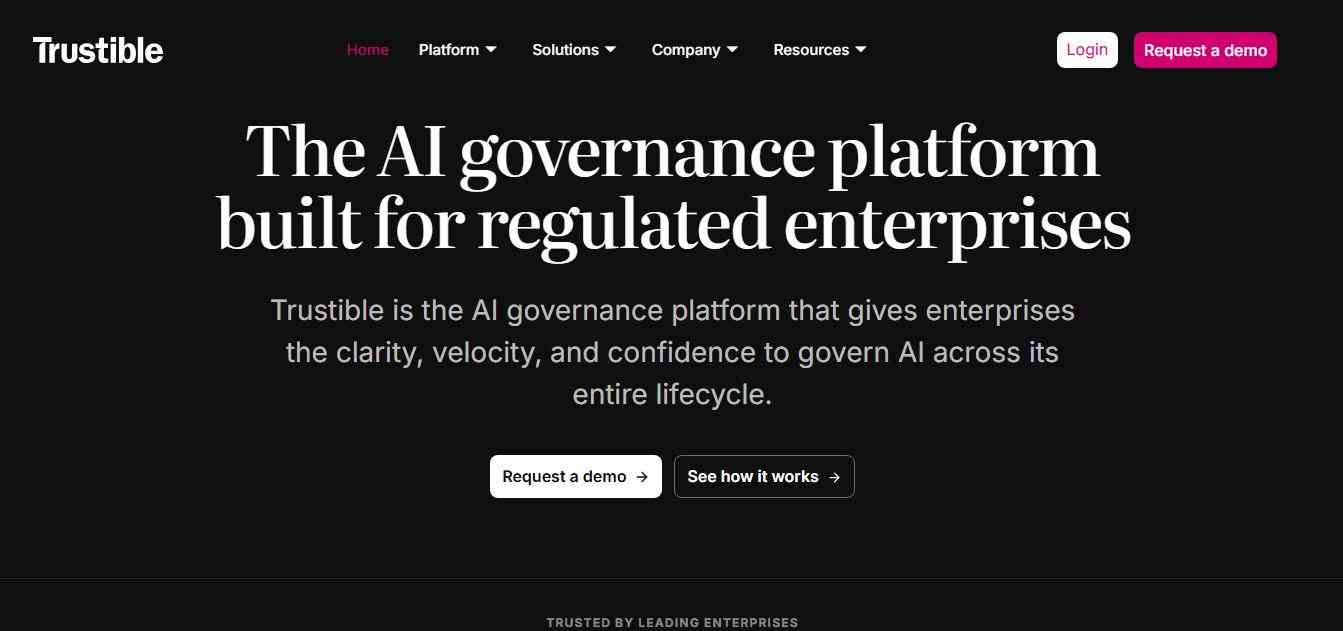
Trustible is an AI governance and compliance platform designed to help organizations manage, monitor, and document their AI systems responsibly. It provides tools for risk assessments, policy enforcement, and lifecycle management of AI models. Trustible enables teams to ensure transparency, audit readiness, and alignment with global AI regulations. Businesses use it to reduce compliance risks, streamline governance processes, and build trustworthy, accountable AI systems that support safe and scalable AI adoption.
Trustible supports mapping governance controls to frameworks such as:
- EU AI Act
- NIST AI RMF
- ISO 42001
- Other regulatory and industry frameworks
The platform also emphasizes continuous regulatory intelligence and audit evidence generated as governance activities occur.
Key features
- AI inventory
- AI intake
- Risk assessment
- Impact assessment
- Vendor assessment
- Regulatory monitoring
- AI monitoring
- Compliance mapping
- Audit evidence
- AI agent governance
Best for
Trustible may be particularly suitable for:
- Regulated enterprises
- Dedicated AI governance teams
- Financial services
- Healthcare
- Organizations deploying AI agents
- Companies that need centralized AI governance
Potential limitation
A specialized AI governance platform may need to be integrated with your existing security, privacy, GRC, and IT service management systems.
Bottom line: Trustible is a strong candidate for organizations building a dedicated AI governance function rather than simply adding a few AI controls to an existing security compliance program.
AI Compliance Tools: Key Statistics to Know
Here are several statistics that help explain why the AI compliance software market is expanding.
362 documented AI incidents in 2025
The Stanford AI Index reports that documented AI incidents increased to 362 in 2025, compared with 233 in 2024.
17% growth in AI-specific governance roles
Stanford's 2026 AI Index reports that AI-specific governance roles grew 17% during 2025.
Responsible AI policy gaps are narrowing
The same report found that the share of businesses reporting no responsible AI policies dropped from 24% to 11%.
300 IT and security professionals surveyed by Drata/Wakefield
A 2026 Drata-sponsored Wakefield survey of 300 U.S. IT and security professionals at organizations with 1,000–20,000 employees found that only 13% were fully confident they could see every AI tool employees use. The survey also reported that 90% said at least some AI investments in GRC had fallen short of expectations. These are survey results from a vendor-sponsored study, so they should not be treated as a universal measurement of all organizations.
These statistics point to the same operational problem: AI adoption can move faster than governance visibility.
AI Compliance Tools Comparison
| Tool | Primary strength | AI governance | NIST AI RMF | ISO 42001 | EU AI Act | Broader GRC |
|---|---|---|---|---|---|---|
| Vanta | Compliance automation | Yes | Yes | Yes/available depending on program | Supports preparation | Strong |
| Drata | GRC automation | Yes | Yes | Yes | Supports AI governance | Strong |
| OneTrust | Enterprise governance & privacy | Strong | Yes | Yes | Strong | Strong |
| Credo AI | Dedicated AI governance | Strong | Yes | Yes | Strong | Moderate |
| IBM watsonx.governance | Model lifecycle governance | Strong | Governance capabilities | Governance capabilities | Governance support | Enterprise |
| Holistic AI | AI testing & governance | Strong | Yes | Yes | Strong | Moderate |
| Optro | AI/model governance | Strong | Yes | Yes | Yes | Moderate |
| Hyperproof | Enterprise GRC | Growing | Framework-dependent | Framework-dependent | Framework-dependent | Strong |
| Secureframe | Security compliance | Growing | Yes | Yes | AI compliance support | Strong |
| Trustible | AI governance | Strong | Yes | Yes | Yes | Moderate |
Note: Framework support, integrations, features, and availability can change by plan, geography, product version, and implementation. Always verify the current scope with the vendor before purchasing.
Key Facts About AI Compliance in 2026
Here are some of the most important facts to understand before choosing AI compliance software:
| Key fact | What it means |
|---|---|
| NIST AI RMF is voluntary | Organizations can use it as a structured approach to managing AI risk, even when it is not legally mandatory. |
| ISO/IEC 42001 is an AI management system standard | It provides requirements for establishing, implementing, maintaining, and continually improving an AI Management System. |
| EU AI Act application began in 2026 | Different requirements take effect on different dates. |
| AI incidents are increasing | Stanford's 2026 AI Index recorded 362 documented AI incidents in 2025, compared with 233 in 2024. |
| AI governance is becoming a dedicated discipline | Gartner's inaugural 2026 AI Governance Platforms research identified more than 100 vendors marketing AI governance capabilities, according to vendor-published reporting of the research. |
| AI inventory is becoming foundational | Organizations cannot effectively govern systems they do not know they are using. Major platforms now emphasize AI discovery and centralized inventories. |
How to Choose the Right AI Compliance Tool
There is no single AI compliance platform that is ideal for every company.
Instead of asking, “Which AI compliance software is the best?”, start with:
“What compliance problem are we actually trying to solve?”
1. Start with your AI inventory
Your first question should be:
Do we know what AI we are using?
That includes:
- Internally developed models
- Generative AI applications
- AI APIs
- SaaS applications with embedded AI
- Copilots
- Autonomous agents
- Machine learning models
- Third-party AI vendors
- AI used by employees without formal approval
OneTrust, Holistic AI, Credo AI, Trustible, and other platforms increasingly emphasize AI discovery because an incomplete inventory creates a fundamental governance problem.
2. Identify the regulations and frameworks that matter
Your compliance requirements should determine the platform rather than the other way around.
Common frameworks and regulations include:
NIST AI RMF
NIST's AI RMF is a voluntary framework designed to help organizations manage AI risks and incorporate trustworthiness considerations throughout the AI lifecycle. NIST organizes the framework around four core functions: Govern, Map, Measure, and Manage. NIST also published its Generative AI Profile, NIST AI 600-1, in July 2024 to address risks associated with generative AI.
ISO/IEC 42001
ISO/IEC 42001:2023 specifies requirements for establishing, implementing, maintaining, and continually improving an Artificial Intelligence Management System (AIMS). This is particularly important for companies seeking a certifiable management-system approach to AI governance.
EU AI Act
The EU AI Act uses a risk-based regulatory approach. As of August 2026, different provisions are applying on different timelines. The European Commission states that the Act became applicable on 2 August 2026, while certain high-risk requirements have later application dates.
For organizations operating in or serving the European market, this makes regulatory mapping and AI inventory capabilities increasingly important.
3. Look for automated evidence collection
An AI compliance tool should not simply create a beautiful dashboard.
It should help answer:
- What control applies?
- Who owns it?
- What evidence proves the control is operating?
- When was the evidence collected?
- Has anything changed?
- What risk does the control address?
- What happens if the control fails?
Continuous evidence collection can dramatically reduce the amount of manual work involved in preparing for internal reviews and external audits.
4. Evaluate AI-specific risk capabilities
Ask whether the platform can manage:
- Bias
- Fairness
- Privacy
- Security
- Transparency
- Explainability
- Hallucinations
- Model drift
- Data quality
- Human oversight
- Third-party AI risk
- AI agent autonomy
- AI incidents
This is where specialized platforms such as Holistic AI, Credo AI, Trustible, and IBM watsonx.governance may differ from general compliance automation platforms.
5. Check integration capabilities
Your AI compliance platform should fit into the systems your teams already use.
Look for integrations with:
- AWS
- Microsoft Azure
- Google Cloud
- GitHub
- GitLab
- Databricks
- Snowflake
- MLflow
- Jira
- ServiceNow
- Identity providers
- Data platforms
- Model monitoring platforms
- LLM providers
- AI agent frameworks
The goal is to make compliance part of the normal development and operational workflow rather than another spreadsheet maintained by the compliance team.
6. Consider human oversight
Automation is valuable, but AI compliance should not become “AI making all the compliance decisions.”
A mature system should establish:
- Human approval points
- Risk-based escalation
- Documented exceptions
- Audit trails
- Named owners
- Review workflows
- Clear accountability
NIST's approach is risk-management oriented rather than simply “automate everything,” while ISO 42001 focuses on an organizational management system for AI.
AI Compliance Software vs. Traditional GRC Software
A common buying mistake is assuming that every company needs a specialized AI governance platform.
Sometimes it does not.
If your organization has:
- A small number of AI applications
- A mature GRC platform
- Straightforward AI use cases
- Limited model development
- Existing SOC 2/ISO 27001 processes
Then expanding your existing GRC platform may be the simplest approach.
If you have:
- Hundreds of AI systems
- Multiple machine learning models
- Autonomous agents
- Complex model risk
- High-risk decision systems
- Global AI operations
- Significant regulatory exposure
Then a dedicated AI governance platform may provide capabilities that conventional GRC software does not. In many enterprise environments, the answer will be both. A GRC platform can manage enterprise controls, security, privacy, and evidence, while a specialized AI governance system handles AI inventory, model risk, testing, regulatory classification, and AI lifecycle governance.
Common Mistakes When Buying AI Compliance Software
Mistake 1: Buying a tool before creating an AI inventory
If you do not know what AI systems exist, you cannot realistically determine what needs to be governed.
Mistake 2: Treating AI compliance as documentation only
A folder full of policies does not demonstrate that controls operate effectively.
Mistake 3: Assuming one framework solves everything
NIST AI RMF, ISO 42001, and the EU AI Act serve different purposes.
NIST is a voluntary risk management framework. ISO 42001 establishes requirements for an AI management system. The EU AI Act is binding legislation with specific obligations and timelines.
Mistake 4: Ignoring third-party AI
Many organizations are not developing AI models themselves. They are purchasing AI-enabled SaaS products, APIs, copilots, and agentic tools.
Third-party AI still creates governance questions around:
- Data processing
- Model changes
- Vendor security
- Privacy
- Subprocessors
- Transparency
- Regulatory responsibilities
- Contractual commitments
Mistake 5: Treating compliance as a once-a-year event
AI systems change continuously. A vendor can change a model. An employee can activate a new AI feature. An AI agent can receive new permissions. A model can behave differently after a significant update. That is why continuous governance is becoming more important than point-in-time audits.
Conclusion
AI compliance is quickly becoming essential for organizations using artificial intelligence at scale. The right AI compliance tool can simplify risk assessments, automate evidence collection, manage AI inventories, and support frameworks such as NIST AI RMF, ISO 42001, and the EU AI Act. However, the best solution depends on your organization’s size, industry, AI use cases, and regulatory requirements. Evaluate each platform based on governance capabilities, integrations, monitoring, scalability, and audit readiness to build a practical, sustainable AI compliance program.
People are also reading:
- AI Browser vs Traditional Browser
- AI Deepfake Tools
- Best AI Content Detectors
- Best AI Background Remover Tools
- Best AI Fitness Tools
- Best AI Music Tools
Frequently Asked Questions (FAQ)
1. What is an AI compliance tool and how does it work?
An AI compliance tool is software that uses machine learning and automation to help businesses meet regulatory requirements. It works by analyzing data, monitoring transactions, tracking regulatory changes, and identifying risks in real time. These tools automate tasks like AML screening, audit reporting, and policy enforcement, reducing manual effort while improving accuracy and compliance efficiency.
2. Why are AI compliance tools important for businesses?
AI compliance tools help organizations reduce regulatory risks, avoid penalties, and improve operational efficiency. They automate repetitive compliance tasks, detect fraud patterns, and ensure real-time monitoring. This is especially important for industries like fintech, healthcare, and SaaS, where regulations are complex and constantly evolving.
3. Which industries benefit the most from AI compliance tools?
Industries such as fintech, banking, healthcare, SaaS, and insurance benefit the most from AI compliance tools. These sectors deal with sensitive data and strict regulations, making compliance complex. AI helps them automate processes like fraud detection, data protection, and audit management, ensuring faster and more accurate compliance.
4. What features should you look for in an AI compliance tool?
When choosing an AI compliance tool, look for features like real-time monitoring, automated reporting, risk scoring, regulatory tracking, and strong data security. Integration with existing systems and user-friendly dashboards are also important. The right features depend on your business size and specific compliance requirements.
5. Can AI compliance tools replace human compliance teams?
AI compliance tools cannot fully replace human teams but significantly enhance their efficiency. They handle repetitive tasks, analyze data quickly, and provide insights, while humans focus on decision-making and complex cases. A combination of AI and human expertise ensures the best compliance outcomes.
6. How do AI compliance tools reduce false positives in AML?
AI compliance tools reduce false positives by using machine learning to analyze behavior patterns instead of relying only on fixed rules. This allows them to better distinguish between genuine risks and normal activities, improving accuracy and reducing unnecessary alerts that compliance teams must review.
7. What is the difference between GRC tools and AI compliance tools?
GRC tools focus on managing governance, risk, and compliance processes, while AI compliance tools enhance these systems with automation and predictive analytics. AI tools provide real-time monitoring and smarter decision-making, making compliance more proactive rather than reactive.
8. What regulations can AI compliance tools help with?
AI compliance tools support multiple regulations such as GDPR for data privacy, AML and KYC for financial compliance, SOC 2 and ISO standards for security, and healthcare regulations like HIPAA. They help businesses stay compliant across different regions and industries.
9. How do you choose the best AI compliance tool for your business?
To choose the right tool, identify your main compliance needs, such as AML, privacy, or audit management. Then compare tools based on features, integrations, scalability, and pricing. Reviewing case studies and user feedback can also help in selecting the most suitable solution.