AI Agent vs AI Assistant: Key Differences, Examples, Use Cases
Explore AI agents vs AI assistants with key differences, examples, and use cases. Learn how AI is evolving from assistants to agents
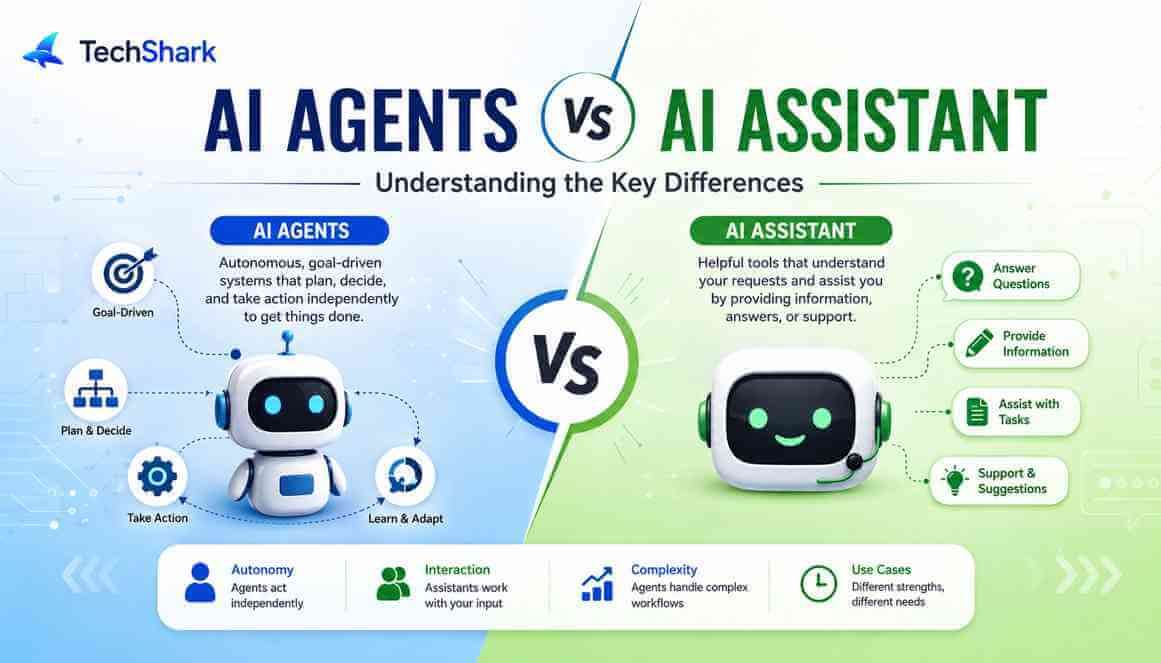
Explore moreAn AI assistant is a reactive tool that responds to your commands—it answers questions, generates content, or performs simple tasks only when asked, meaning it depends on human input. In contrast, an AI agent is more autonomous and goal-driven, capable of planning, making decisions, and executing multi-step tasks with minimal supervision to achieve a specific outcome. In simple terms, AI assistants support you on demand, while AI agents can act independently to get things done. From a market perspective, AI adoption is accelerating rapidly—around 88% of companies use AI in some form, nearly 62% are experimenting with AI agents, and about 72% of enterprises are already testing or deploying agent-based systems, highlighting a clear shift toward more autonomous and intelligent AI solutions.
Artificial intelligence is no longer just about tools that respond to your commands—it’s quickly becoming something much more powerful. If you’ve used chatbots or tools like ChatGPT, you’ve already experienced AI assistants. But now, AI is evolving into systems that can actually think ahead, make decisions, and take action on their own. That’s where the difference between an AI agent and an AI assistant really matters. Understanding this shift can help you see where technology is heading and how it will impact your work or business.
Here’s what you should keep in mind:
- AI is moving from helping you to actually working for you
- AI assistants respond only when you ask or instruct them
- AI agents can plan, decide, and act independently
- More businesses are using AI to save time and automate tasks
- The future is about smarter, self-operating AI systems
What Is an AI Agent, and How Does It Work?
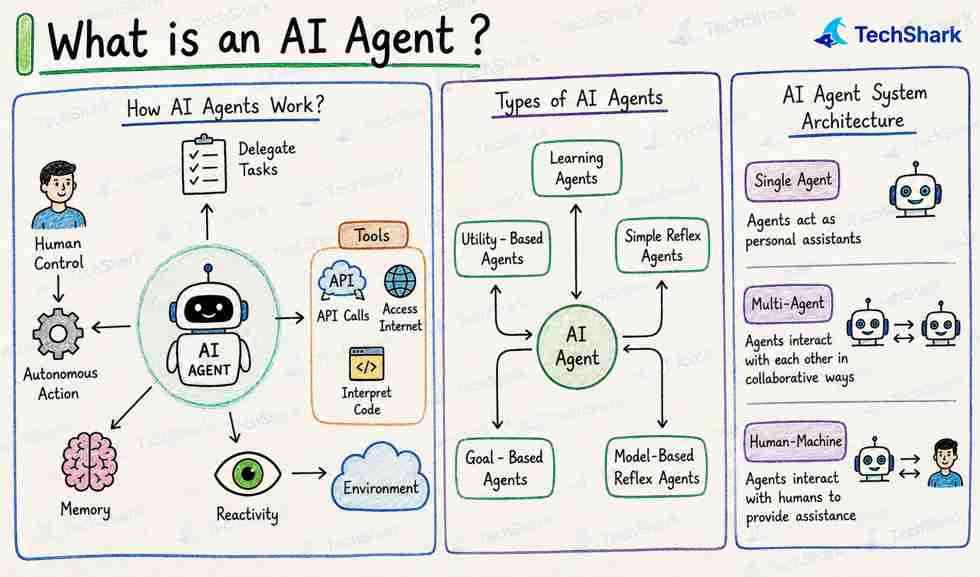
AI agents are intelligent software systems that can act autonomously to achieve specific goals by observing their environment, making decisions, and taking actions. Unlike basic AI tools that only respond to user input, AI agents can plan tasks, execute them, and adapt over time with minimal human involvement. They work by combining data input (perception), decision-making (reasoning), and task execution (action) in a continuous loop. Many advanced agents also use memory and learning mechanisms to improve performance based on past experiences.
Think of it this way: you tell it what you need, and it figures out how to make it happen. It can gather information, make decisions, and even learn from past actions to improve over time.
For example, an AI agent could manage your emails, book appointments, or run repetitive business tasks without constant supervision. That’s what makes it powerful—it saves you time and effort while working almost like a reliable teammate in the background.
What are the main characteristics of an AI Agents?
AI agents feel less like tools and more like smart digital teammates. What makes them different is how naturally they can handle tasks from start to finish. Here’s what really defines them:
- Autonomy: They can operate on their own without constant human input, making decisions and completing tasks independently.
- Goal-Oriented Behavior: AI agents are designed to achieve specific objectives, whether it’s automating workflows or solving complex problems.
- Perception of Environment: They can collect and interpret data from different sources like user input, APIs, or systems.
- Decision-Making Ability: Using logic, rules, or AI models, they decide the best course of action based on the situation.
- Action Execution: They don’t just analyze—they actually perform tasks such as sending emails, updating data, or triggering processes.
- Learning & Adaptability: Advanced agents improve over time by learning from past interactions and feedback.
- Memory & Context Awareness: They can remember previous actions or conversations to provide more relevant and personalized outcomes.
- Tool Integration: AI agents can connect with external tools, software, and platforms to expand what they can do.
What are some common AI Agents use cases?
AI agents are most valuable when they take over repetitive, time-consuming, or multi-step tasks. Here’s how they’re actually used in real life:
- Customer Support Automation: AI agents can handle queries, resolve common issues, and escalate complex cases—reducing response time and workload.
- Sales & Lead Generation: They can qualify leads, follow up with prospects, and even schedule meetings automatically.
- Email & Calendar Management: An AI agent can organize inboxes, draft replies, and book appointments based on your availability.
- E-commerce Operations: From managing orders to tracking inventory and handling returns, agents streamline backend processes.
- Content Creation & Marketing: They can generate blog drafts and social media posts and even optimize content for SEO.
- Data Analysis & Reporting: AI agents can collect data, analyze trends, and generate reports without manual effort.
- HR & Recruitment: Screening resumes, scheduling interviews, and answering candidate queries can all be automated.
- Personal Productivity Assistants: Think of a system that reminds you of tasks, plans your day, and automates small routines.
- IT & DevOps Automation: Agents can monitor systems, detect issues, and even fix certain problems automatically.
AI agents are used anywhere you want to save time, reduce manual work, and let systems run on autopilot—whether it’s for business operations or personal productivity.
What Is an AI Assistant, and How Does It Work?
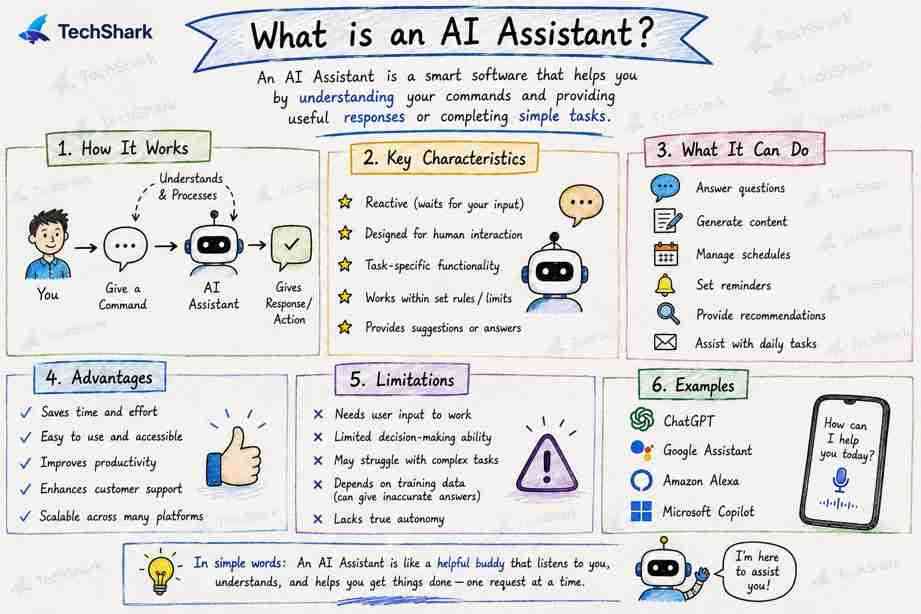
An AI assistant is a software tool designed to help you perform tasks, answer questions, and provide information based on your input. It works in a responsive way, meaning it waits for you to ask something and then gives a relevant reply or suggestion. Think of it like a smart helper you can talk to. You ask a question, and it responds—whether it’s writing an email, setting a reminder, explaining a concept, or giving recommendations.
AI assistants use technologies like natural language processing (NLP) and machine learning to understand what you mean and respond in a human-like way.
Popular examples include Google Assistant, Siri, and Alexa. The key thing to remember is that AI assistants are reactive—they assist when you ask, but they don’t usually take independent actions or make decisions on their own like AI agents do.
What are the main characteristics of an AI Assistant?
AI assistants are designed to support you in a simple, responsive way—they don’t take over tasks, but they make them easier and faster. Here’s what defines them:
- Reactive by nature: They wait for your input. You ask, they respond—no action happens unless you trigger it.
- User-focused interaction: Everything revolves around helping you—answering questions, generating content, or giving suggestions.
- Natural language understanding: They can understand and respond to human language, making interactions feel conversational and easy.
- Task assistance (not full automation): They help you complete tasks like writing, researching, or planning—but you stay in control.
- Quick and accurate responses: AI assistants are built to deliver fast, relevant answers based on your request.
- Limited autonomy: They don’t make independent decisions or take actions without your permission.
- Context awareness (basic level): They can remember parts of a conversation to keep things relevant, but usually only within a session.
- Versatility: From answering questions to generating content, they can handle a wide range of everyday tasks.
An AI assistant is like a helpful companion—always ready to assist when you ask, but still relying on you to lead the process.
What Are Some Common AI Assistant Use Cases?
AI assistants are all about making everyday tasks quicker and easier. They don’t replace you—they just help you get things done faster and with less effort. Here are some of the most common ways people use them:
- Answering questions & research: Whether it’s a quick fact or a deep explanation, AI assistants help you find information instantly.
- Content writing & editing: From emails and blogs to captions and summaries, they help you write, rewrite, and improve content.
- Scheduling & reminders: They can set reminders, manage calendars, and help you stay organized throughout the day.
- Voice-based assistance: Tools like Google Assistant, Siri, and Alexa can perform tasks through simple voice commands.
- Customer support help: Businesses use AI assistants to handle FAQs, guide users, and provide quick responses.
- Learning & education support: They explain concepts, solve doubts, and even help with homework or skill-building.
- Personal productivity: From to-do lists to daily planning, they help you stay focused and organized.
- Basic data analysis: They can summarize data, highlight insights, and simplify complex information.
AI assistants are used anywhere you need quick help, instant answers, or support with daily tasks—like a reliable helper always ready when you need it.
What Is the Difference Between an AI Agent and an AI Assistant? [AI Agent vs. AI Assistant]
At a glance, both sound similar—but the difference is pretty clear once you look at how they behave.
- An AI assistant is like a helpful companion—you ask, it responds.
- An AI agent is more like a proactive worker—it understands a goal and takes action to achieve it.
- AI Assistant: Helps you do things
- AI Agent: Does things for you
| Aspect | AI Agents | AI Assistants |
|---|---|---|
| Definition | Autonomous systems that can plan, decide, and execute tasks independently | Tools designed to help users perform specific tasks based on commands |
| Autonomy | High—can act without constant human input | Low – requires user prompts to function |
| Goal Handling | Can break down complex goals into multiple steps | Handle one task at a time. |
| Decision-Making | Makes decisions based on data, context, and objectives | Follows predefined rules or user instructions |
| Learning Ability | Often adaptive and can improve over time | Limited learning; mostly reactive |
| Interaction Style | Proactive – can initiate actions | Reactive—responds only when asked |
| Complexity | More complex and capable of handling workflows | Simpler, focused on assistance |
| Examples | Autonomous trading bots, AI research agents, workflow automation systems | Siri, Alexa, Google Assistant, ChatGPT |
| Use Cases | End-to-end automation, business processes, multi-step problem solving | Scheduling, answering queries, reminders |
| Control | Less direct control once task is assigned | Full control remains with the user |
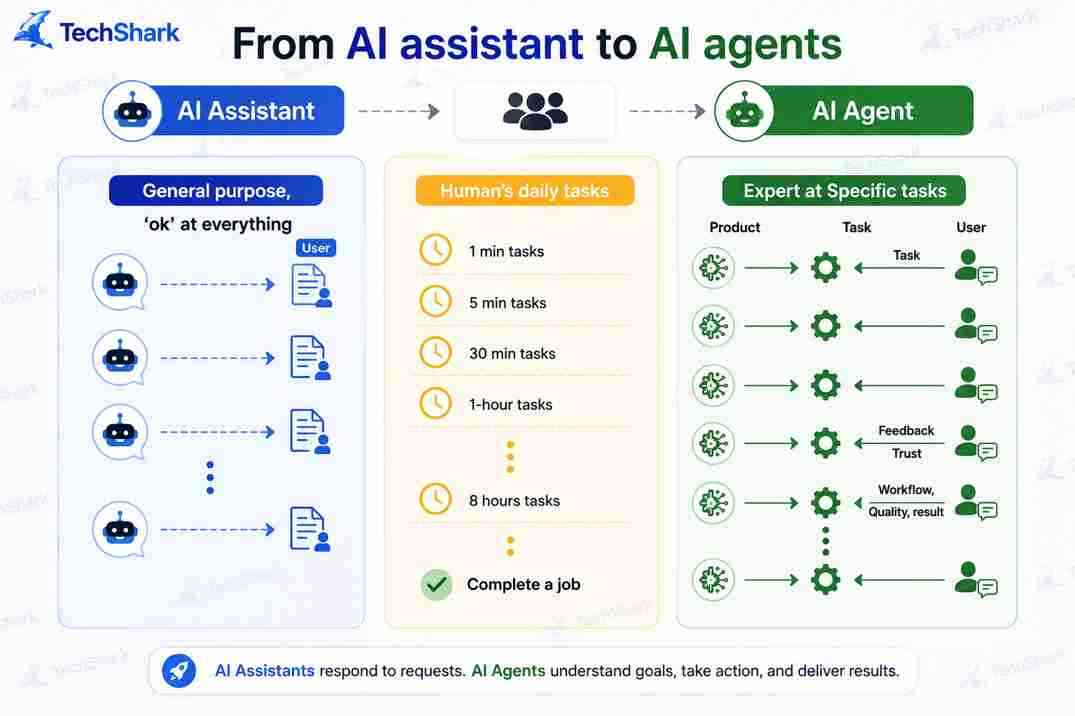
AI assistants help you do tasks, while AI agents can do the tasks for you. This difference is what makes AI agents more powerful as technology continues to evolve toward automation and intelligent systems.
How Do AI Agents and AI Assistants Differ in Task Execution?
The biggest difference shows up in how they handle tasks from start to finish.
AI Assistants: Step-by-Step Help (You’re in Control)
AI assistants work in a guided, back-and-forth way. They wait for your instruction at each step and then respond.
- You tell them what to do
- They complete that specific step
- You guide the next step
Example:
- You ask, “Write an email reply” → it drafts it.
- Then you say, “Make it more formal” → it edits it.
So, the execution is manual and user-driven, with the assistant supporting you along the way.
AI Agents: End-to-End Execution (They Take Over the Process)
AI agents handle tasks more like a workflow. You give them a goal, and they figure out the steps themselves.
- You define the outcome
- They plan the steps
- They execute multiple actions
- They adjust if needed
Example:
You say, “Follow up with all new leads” → the agent writes emails, sends them, tracks replies, and schedules meetings.
Here, the execution is automated and goal-driven, with minimal back-and-forth.
Simple Way to Understand It
- AI Assistant: “Tell me what to do next.”
- AI Agent: “I’ll handle it from here.”
When Should You Use AI Agents?
You should use AI agents when you want to delegate work, not just get help. They’re most useful in situations where tasks are repetitive, time-consuming, or involve multiple steps.
Use AI Agents when:
- You want full automation: If a task can run without your constant input—like processing data or handling workflows—an AI agent is a better fit.
- Tasks involve multiple steps: When something requires planning, decision-making, and execution (not just one action), agents can handle the entire flow.
- You’re dealing with repetitive work: Things like follow-ups, data entry, or routine operations can be managed automatically.
- Speed and efficiency matter: Agents can run tasks faster and continuously without breaks.
- You want to scale operations: Whether it’s customer support or lead management, agents help you handle more work without increasing manual effort.
- Decisions need to be made on the go: AI agents can analyze situations and choose the next best action in real time.
What Types of Businesses Can Benefit from AI Agents?
Honestly, almost any business that deals with repetitive tasks, data, or customer interactions can benefit from AI agents. The real question isn’t if—it’s where they save the most time. Here’s how different businesses can use them:
- E-commerce & Retail: If you’re handling orders, returns, or customer queries daily, AI agents can automate support, manage inventory, and even personalize recommendations.
- SaaS & Tech Companies: From onboarding users to handling support tickets and monitoring systems, agents can take care of a lot of backend work.
- Marketing & Agencies: They can run campaigns, generate content, track performance, and automate client reporting—saving hours of manual effort.
- Finance & Accounting Firms: Tasks like data entry, report generation, and fraud detection can be handled faster and more accurately.
- Healthcare Providers: Appointment scheduling, patient follow-ups, and basic query handling can be automated (while keeping humans for critical decisions).
- Real Estate Businesses: AI agents can qualify leads, schedule property visits, and follow up with potential buyers automatically.
- Customer Support Centers: Handling FAQs, routing tickets, and providing instant responses becomes much more efficient.
- HR & Recruitment Agencies: Screening resumes, shortlisting candidates, and scheduling interviews can run on autopilot.
When Should You Use an AI Assistant?
You should use an AI assistant when you want quick help, ideas, or support but still want to stay in control of the task. It’s perfect for moments where you need a boost—not full automation.
Use AI assistants when:
- You need quick answers or explanations: Whether it’s research, learning something new, or solving a doubt, assistants give instant responses.
- You’re creating or editing content: Writing emails, blogs, captions, or summaries becomes faster and easier.
- You want help brainstorming ideas: From business ideas to content topics, they help you think more clearly.
- You prefer step-by-step control: You guide the process, and the assistant supports you at each step.
- You’re handling one-off or simple tasks: Things that don’t need automation—just quick assistance.
- You need help organizing work: Creating to-do lists, planning your day, or structuring information.
- You want conversational support: You can ask follow-up questions and refine outputs easily.
What Types of Businesses Can Benefit from AI Assistants?
Almost any business that relies on communication, content, or day-to-day tasks can benefit from AI assistants. They’re especially useful when you want to work faster and smarter, without fully automating everything.
- Marketing Agencies & Content Teams: Great for writing blogs, social posts, ad copy, and brainstorming campaign ideas quickly.
- Small Businesses & Startups: When resources are limited, AI assistants help handle emails, research, and basic planning without needing a big team.
- E-commerce Stores: Useful for writing product descriptions, responding to customer queries, and creating promotional content.
- Customer Support Teams: They help draft replies, answer FAQs, and speed up response times while keeping human control.
- Education & Training Businesses: Perfect for explaining concepts, creating study material, and assisting with learning.
- HR & Recruitment: Writing job descriptions, screening resumes, and preparing interview questions becomes easier.
- Freelancers & Solopreneurs: From managing clients to creating content and organizing work, assistants act like a productivity boost.
- Corporate Teams & Offices: Helpful for reports, presentations, meeting notes, and internal communication.
AI assistants are ideal for businesses that want to stay efficient while keeping full control—they don’t replace your work; they simply help you do it better and faster.
What Are the Best AI Agent vs AI Assistant Use Cases?
The easiest way to understand this is to look at where each one fits best. It’s not about which is better—it’s about what kind of work you’re trying to get done.
Best AI Agent Use Cases
AI agents shine when you want tasks to run end-to-end without constant input:
- Customer support automation → Handling queries, resolving issues, and escalating when needed
- Sales follow-ups → Sending emails, tracking responses, and booking meetings automatically
- E-commerce operations → Managing orders, returns, and inventory updates
- Workflow automation → Connecting tools and completing multi-step business processes
- IT & system monitoring → Detecting issues and fixing them in real time
- Data processing pipelines → Collecting, analyzing, and reporting data automatically
Best for: Repetitive, multi-step, and time-consuming tasks
Best AI Assistant Use Cases
AI assistants are perfect when you want help while staying in control:
- Content writing & editing → Blogs, emails, captions, summaries
- Research & quick answers → Learning, problem-solving, idea validation
- Brainstorming ideas → Marketing, business strategies, content topics
- Daily productivity → To-do lists, planning, organizing work
- Customer support drafting → Writing replies (you review before sending)
- Learning & education → Explaining concepts and guiding step by step
Best for: Creative, one-off, or user-guided tasks
| Category | AI Agent Use Cases (Automation & Execution) | AI Assistant Use Cases (Support & Productivity) |
|---|---|---|
| Core Purpose | Automate and complete tasks end-to-end | Assist users with tasks step-by-step |
| Customer Support | Resolve queries, automate responses, escalate issues | Draft replies and suggest responses |
| Sales & Marketing | Automate follow-ups, lead nurturing, campaign execution | Help write content, brainstorm ideas |
| Content Creation | Generate, publish, and distribute content automatically | Write, edit, and refine content with user input |
| Operations | Manage workflows, orders, inventory, backend processes | Help organize tasks and provide insights |
| Data Handling | Collect, analyze, and generate reports automatically | Summarize data and explain insights |
| IT & Systems | Monitor systems, detect and fix issues automatically | Assist with troubleshooting guidance |
| HR & Recruitment | Screen candidates, schedule interviews automatically | Help write job descriptions and questions |
| User Involvement | Minimal (mostly autonomous) | High (user-guided) |
| Best For | Repetitive, multi-step, scalable tasks | Creative, one-off, and interactive tasks |
What Are the Benefits of AI Agents?
AI agents are powerful because they don’t just assist—they take action and get work done for you. Here are the key benefits in a simple, practical way:
- Save Time & Effort: They handle repetitive and time-consuming tasks, so you can focus on more important work.
- End-to-End Automation: AI agents can manage entire workflows without constant supervision.
- 24/7 Availability: They work continuously without breaks, which is especially useful for customer support and operations.
- Increased Productivity: By automating tasks, teams can accomplish more in less time.
- Scalability: You can handle more customers, data, or tasks without needing to hire more people.
- Faster Decision-Making: AI agents can analyze data quickly and take action in real time.
- Reduced Human Error: Automation minimizes mistakes in repetitive or data-heavy tasks.
- Cost Efficiency: They help reduce operational expenses by cutting down manual work.
- Consistency in Work: Tasks are performed the same way every time, ensuring reliable outcomes.
What Are the Limitations of AI Agents?
AI agents are powerful, but they’re not perfect. It’s important to understand their limitations so you can use them effectively.
- Lack of human judgment: They can make decisions, but they don’t truly understand context, emotions, or complex human situations.
- Dependence on data quality: If the input data is wrong or incomplete, the output will likely be flawed too.
- Limited creativity (in complex scenarios): They can generate ideas, but deep creativity and original thinking are still limited.
- Setup and maintenance effort: Building and managing AI agents—especially advanced ones—can require time, tools, and technical expertise.
- Risk of errors in automation: Since they act autonomously, mistakes can scale quickly if not monitored properly.
- Security and privacy concerns: Handling sensitive data always carries risks if systems lack adequate protection.
- Not ideal for highly unpredictable tasks: They work best with structured or semi-structured workflows, not chaotic or constantly changing situations.
- Lack of accountability: When something goes wrong, it’s not always clear where responsibility lies.
What Are the Benefits of AI Assistants?
AI assistants are all about making your work faster, easier, and more manageable—without taking control away from you. Here’s how they help in everyday tasks:
- Saves Time on Routine Work: Whether it’s writing emails, summarizing content, or answering questions, they speed things up.
- Boosts Productivity: You can get more done in less time by offloading small but important tasks.
- Easy to Use: You just type or speak naturally—no technical skills needed.
- Improves Writing & Communication: They help you draft, edit, and refine messages so everything sounds clear and professional.
- Great for Learning & Research: You can quickly understand new topics, get explanations, or explore ideas.
- Supports Creativity: From brainstorming ideas to generating content, they help you think better and faster.
- Always Available: You can use them anytime—no waiting, no delays.
- Helps with Organization: Creating to-do lists, plans, or structured content becomes much easier.
- Keeps You in Control: Unlike AI agents, you decide what to do next—they simply assist along the way.
What Are the Limitations of AI Assistants?
AI assistants are helpful, but they do have some clear limitations you should keep in mind:
- They rely on your input: They don’t take initiative—you need to guide them through each step.
- Limited autonomy: They won’t execute tasks on their own (like sending emails or running workflows) unless explicitly instructed and connected to tools.
- Can give incorrect or outdated answers: Sometimes responses may not be fully accurate, so it’s important to double-check critical information.
- Limited deep understanding: They process language well, but they don’t truly understand emotions or complex human situations.
- Context limitations: They can forget details over long conversations or across sessions.
- Dependence on prompts: The quality of output depends heavily on how clearly you ask the question.
- Privacy concerns: Sharing sensitive information can be risky if not handled carefully.
- Not ideal for complex decision-making: They can suggest options, but final decisions still require human judgment.
What Do the Latest AI Assistant and AI Agent Statistics Show?
AI Agent Statistics
AI agents are still in the early but fast-growing stage. Most companies are experimenting, but only a smaller group has fully scaled them. According to McKinsey State of AI Report, adoption is accelerating—especially in large enterprises—but real enterprise-wide impact is still developing. At the same time, forecasts from firms like Gartner show that AI agents will soon become a core part of business software, indicating a massive shift toward automation.
Key AI Agent Numbers:
- 40% of large enterprises are already scaling AI agents (up from 27%)
- 23% of companies are scaling agents, while 39% are experimenting
- Nearly two-thirds of enterprises have experimented with agents
- 40% of enterprise apps will include AI agents by 2026
- 57% of companies already have agents in production
- 64% of AI hiring is now focused on agentic roles
AI agents are moving from experimentation → real deployment, but large-scale adoption is still catching up.
AI Assistant Statistics
AI assistants are already mainstream and widely adopted across businesses and individuals. Unlike AI agents, assistants have reached mass usage and are delivering measurable productivity gains. Reports show that most organizations are already using AI tools (including assistants) in multiple functions, and employees are seeing real improvements in efficiency.
Key AI Assistant Numbers:
- 88% of organizations use AI in at least one function
- Around 80% of employees report improved productivity from AI tools
- 50% of companies use AI in 3+ business functions
- 47% of organizations are scaling chatbots/assistants across the enterprise
- 70% of companies use generative AI tools (assistants) in at least one function
AI assistants are already widely adopted and delivering value today, especially in productivity, content, and communication tasks.
What is the future of AI assistants and agents?
Future of AI Agents
AI agents are quickly becoming the next major evolution of AI, moving beyond simple tools into systems that can handle entire workflows autonomously. According to Google Cloud AI Agent Trends Report, businesses are shifting toward agentic workflows, where multiple AI agents collaborate to complete complex, multi-step tasks. This means instead of doing tasks manually, companies will rely on connected AI systems running operations end-to-end. At the same time, research shows adoption is rising fast, but full-scale deployment is still evolving as companies improve reliability, cost efficiency, and governance.
Key Future Trends for AI Agents:
- 40% of enterprise apps will include AI agents by 2026
- 45% of enterprises already have agents in production
- Multi-agent systems can handle 6× more tasks than single agents
- AI agents are expected to automate complex workflows end-to-end
- Up to 75% of enterprises are exploring agentic AI, but few have fully scaled it
Future of AI Assistants
AI assistants are becoming more intelligent, personalized, and deeply integrated into everyday tools. What started as chatbots is now evolving into multi-modal, context-aware assistants that can understand text, voice, images, and workflows. Reports like Sensor Tower State of AI 2026 show that AI assistants have already reached mass adoption, with billions of users globally. The future will focus less on answering questions and more on acting as a co-pilot across work, apps, and devices.
Key Future Trends for AI Assistants:
- AI assistants have crossed 1 billion+ users globally
- 47% of organizations are already scaling AI assistants/chatbots
- Assistants are evolving into multi-modal systems (text, voice, vision)
- They will become embedded in almost every app and workflow
- Focus is shifting from answers to productivity co-pilots
Conclusion
AI agents and AI assistants may sound similar, but they serve different purposes in the AI ecosystem. AI assistants are designed to support you—they help you think, create, and complete tasks step by step while keeping you in control. In contrast, AI agents are built to take action, handling workflows and executing tasks independently with minimal input. As technology evolves, the gap between the two is becoming more complementary than competitive. AI assistants will continue to act as intelligent co-pilots, while AI agents will serve as a digital workforce, automating complex processes in the background.
The smartest approach is not choosing one over the other but using both strategically—assistants for creativity and decision-making, and agents for execution and scale. This combination is what will define the future of productivity and automation.
People are also reading:
- Best AI Agent Builder
- AI Tools for Research
- AI Deepfake Tools
- AI Copilot vs AI Agent
- Top AI Trends
- What AI Can Do Today?
- AI Assistant and Coding Skills
- AI Regulations Around the World
- AI Agents vs Chatbots
Frequently Asked Questions (FAQs)
Q: What is the main difference between AI agents and AI assistants?
The core difference lies in how independently they operate. AI assistants are designed to help you with specific tasks when you ask them—like setting reminders or answering questions. AI agents, on the other hand, are more autonomous. You can give them a goal, and they can plan, make decisions, and execute multiple steps on their own to achieve that goal. In simple terms, assistants respond, while agents act.
Q: Are AI agents more advanced than AI assistants?
Yes, in most cases, AI agents are considered more advanced because they can handle complex workflows and make decisions without constant human input. They can analyze data, adapt to changes, and perform multi-step tasks. AI assistants are still powerful, but they are typically limited to responding to commands rather than acting independently.
Q: Can AI assistants become AI agents?
In some cases, yes. Modern AI systems are evolving, and many assistants are gaining agent-like capabilities. For example, some advanced AI tools can now perform multi-step tasks, automate workflows, and even take limited initiative. However, a true AI agent requires deeper autonomy, planning ability, and decision-making, which not all assistants currently have.
Q: Which is better for business use: AI agents or AI assistants?
It depends on your needs. If your business requires automation of complex processes—like customer support workflows, data analysis, or task management—AI agents are a better fit. If you just need support with daily tasks like scheduling meetings or answering basic queries, AI assistants are more than enough. Many businesses actually use both together.
Q: Do AI agents require more data and setup than AI assistants?
Yes, AI agents typically need more data, configuration, and integration to function effectively. Since they operate autonomously, they require access to systems, APIs, and relevant datasets to make informed decisions. AI assistants are easier to set up because they mainly rely on user input and predefined capabilities.
Q: What are some real-world examples of AI agents and AI assistants?
AI assistants include tools like Siri, Alexa, and Google Assistant, which respond to voice commands and help with everyday tasks. AI agents include autonomous trading bots, AI research tools, and workflow automation systems that can complete tasks end-to-end without constant input.
Q: Can AI agents replace human jobs more than AI assistants?
AI agents have a higher potential to automate full workflows, which means they can replace or transform certain roles more than AI assistants. However, they are more likely to augment human work rather than completely replace it. Humans are still needed for strategy, oversight, and decision validation.
Q: Are AI agents more expensive than AI assistants?
Generally, yes. AI agents often require more advanced infrastructure, integrations, and maintenance, which can increase costs. AI assistants are usually more affordable and easier to deploy, making them accessible for individuals and small businesses.