
Scenario
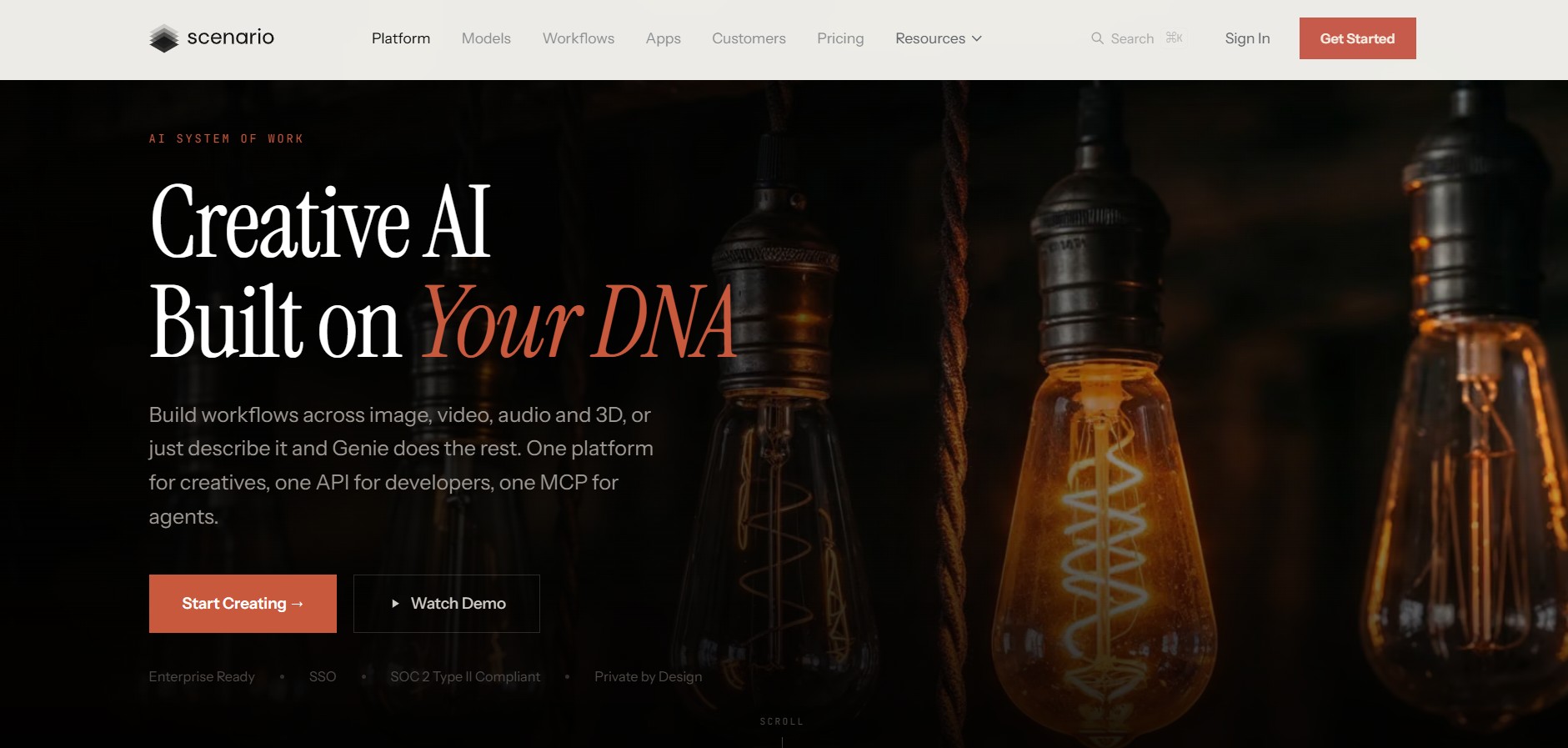
Scenario is an AI-powered creative infrastructure and game asset generation platform that enables game developers, digital artists, and creative studios to train custom style-consistent AI models and produce 2D graphics, 3D meshes, textures, and video assets via web studio and production REST APIs.
What is Scenario?
Scenario is an AI-powered creative platform that helps teams generate high-quality visual assets like images, videos, 3D models, and more. What makes it different is its ability to train custom AI models on your own style or brand, so everything stays consistent. Instead of juggling multiple tools, you can create, edit, and manage assets in one place, making content production faster and more scalable for creative teams.
Scenario is an AI-powered creative platform that helps teams generate consistent assets across images, video, audio, and 3D from one workspace. It supports 650+ AI models from 50+ providers and is trusted by 15,000+ customers globally. Users can train custom models with just 5–100 images and automate workflows at scale using APIs and agents, making it ideal for game studios, marketing teams, and designers.
- Platform Role: AI Game Asset Generator, Custom Model Training Suite & Creative API Infrastructure
- Founders & Leadership: Emmanuel de Maistre (CEO) & Hervé Nivon, Scenario Inc.
- Runtime & Integration: Cloud web studio, REST API, native engine plugins (Unity & Unreal Engine), Model Context Protocol (MCP), and multi-format asset exports
Use Cases:
- Training custom AI models on proprietary game art styles, concept designs, and specific character rosters to preserve visual consistency
- Generating 2D sprites, isometric tiles, UI icons, weapon skins, and environment concept art at production volume
- Merging multiple trained LoRA models to combine unique character designs with distinct art directions
- Synthesizing 3D meshes and textured game props with PBR materials ready for direct engine import
- Automating live-service game asset generation and user-generated content (UGC) pipelines via production REST APIs
Technology:
- Proprietary fine-tuning and LoRA training pipeline processing custom style weights in 30 minutes to a few hours
- Multi-LoRA composition engine capable of combining independent character, object, and style models in a single inference
- Multi-modal asset generation pipeline supporting 2D images, video clips, audio tracks, and 3D meshes (GLB, OBJ, FBX)
- SOC 2 Type II certified enterprise infrastructure guaranteeing private asset generation and ethical data isolation
Target Users:
- Game development studios and indie developers scaling concept art, 2D sprites, and 3D props
- Art directors and technical artists demanding visual consistency across multi-member game production teams
- Marketing and growth teams generating high-volume on-brand promotional creatives and live-ops banners
- Technical game engineers building procedural, in-game, or UGC asset generation workflows via REST API
Acquisition: Global AI game tech and creative infrastructure company
What are the key features of Scenario?
Scenario's key platform features are
- Custom Model Training: Train dedicated AI models and LoRAs on 10 to 30 reference images to replicate your project's unique artistic style, character designs, or environment sets.
- Multi-LoRA Composition: Stack and blend multiple custom-trained models simultaneously to generate specific characters within distinct visual styles without prompt bleeding.
- Multi-Modal Asset Generation: Generate 2D concept art, UI sprites, video clips, and 3D textured models across standard industry formats (PNG, WebP, GLB, FBX, OBJ).
- Production-Ready REST API: Integrate AI generation, model fine-tuning, and asynchronous batch jobs directly into Unity, Unreal Engine, and CI/CD development pipelines.
- Canvas & In-Painting Tools: Refine outputs, expand canvases (out-painting), replace individual elements (in-painting), and adjust composition with integrated editing controls.
- Built-in 3D Mesh Inspection: Preview and evaluate generated 3D meshes and PBR texture maps directly inside the browser before exporting to your game engine.
- Data Privacy & Enterprise Governance: Private-by-default generations with SOC 2 Type II compliance, ensuring proprietary studio training data is never used to train public foundation models.
How much does Scenario cost?
Scenario operates on a credit-based subscription model with a free tier alongside scalable packages for solo creators and game production teams.
Free Plan:
- Free ($0 / month): Evaluation access offering 50 daily generation credits, access to standard public foundation models, community support, and personal/non-commercial testing.
Starter & Pro Plans:
- Starter Plan ($15 / month): Single-user workspace, 1,500 monthly credits, access to 65+ core AI models, private generations, 50 GB cloud storage, and full commercial usage licensing.
- Pro Plan ($45 / month): 5,000 monthly credits, priority queue processing, unlimited relaxed generations, custom model training, 30+ advanced models, ticket support, and 500 GB storage.
Max & Enterprise Plans:
- Max Plan ($75 / month): 10,000 monthly credits, team workspace for up to 25 users, custom editing-model training, high-priority processing, standard monitoring dashboards, and 1 TB storage (+1 TB per added seat).
- Enterprise (Custom Quote): Tailored for scaled studios requiring minimum 10 seats, custom credit allowances, enterprise SSO, SOC 2 compliance, audit logs, dedicated account management, and custom pipeline integrations.
Disclaimer: Plan credits serve as generation currency where high-resolution outputs, 3D meshes, and model training consume varying credit amounts. Commercial rights require an active paid subscription. Review scenario.com/pricing for active details.
Who should use Scenario?
Scenario is designed for game creators and visual production teams, including
- Indie Game Studios: Producing comprehensive 2D sprites, items, and environment textures without expanding dedicated concept art headcount.
- AAA Game Teams: Rapidly prototyping visual styles, generating mood boards, and automating background prop creation while maintaining strict style guidelines.
- Technical Artists & Pipeline Engineers: Embedding autonomous asset generation pipelines directly into game engines and internal build systems via API.
- Digital Illustrators & Graphic Designers: Training personal AI models to accelerate routine drafting, sketching, and asset variation workflows.
What are the best alternatives to Scenario?
Some of the strongest Scenario alternatives include
- Leonardo.AI
- Midjourney
- Meshy AI
- Layer.ai
- Promethean AI
- Luma AI
What are the pros and cons of Scenario?
What are the pros of Scenario?
- Custom model training enables exact artistic style matching and character consistency across thousands of assets
- Multi-LoRA capability allows combining independent styles, props, and characters in single generation runs
- Robust, developer-friendly REST API built for direct integration into Unity, Unreal Engine, and internal build pipelines
- Supports multi-modal output generation including 2D images, animations, and game-ready 3D formats (GLB, FBX, OBJ)
- SOC 2 Type II certified private-by-default environment guarantees studio proprietary art is never used to train public models
What are the cons of Scenario?
- Custom model training and advanced features are locked behind higher-tier subscription plans
- Effective model fine-tuning requires clean, curated reference datasets to avoid unintended visual artifacts
- Credits do not roll over across billing cycles, requiring active monitoring on heavy production pipelines
Why should you choose Scenario?
Off-the-shelf generative AI models struggle with the single most critical requirement in game development: visual consistency. While general models produce visually impressive one-off images, they cannot consistently reproduce the exact same art style or character proportions across an entire game. Scenario solves this fundamental limitation by placing custom model training at the center of its workflow. By training models directly on your art direction, your team can scale game asset production 10x faster while ensuring every single asset looks like it belongs in the same game universe.
- Train personalized AI models on your own art style in under two hours
- Combine styles and character designs seamlessly using multi-LoRA composition
- Automate asset generation with production-grade REST APIs and game engine connectors
- Export game-ready 2D sprites and 3D meshes with complete commercial ownership
How does Scenario compare to competitors?
While consumer-focused tools like Midjourney excel at open-ended conceptual art and Meshy specializes purely in 3D meshes, Scenario provides an end-to-end game production infrastructure centered around custom model training, multi-modal asset synthesis, and production API integration.
| Feature / Platform | Scenario | Leonardo.Ai | Midjourney | Meshy AI |
|---|---|---|---|---|
| Core Focus | Custom-trained game asset generation & APIs | General creative AI art & concept design | High-fidelity photorealistic text-to-image | Generative 3D mesh modeling & texturing |
| Custom Model Training | Yes (LoRA fine-tuning & Multi-LoRA) | Yes (Custom fine-tuned models) | No (Style reference parameters only) | No (Preset styles only) |
| Multi-Modal Output | 2D images, video, audio & 3D meshes | 2D images, motion video & canvas | 2D images only | 3D meshes & textures only |
| Game Engine API | Yes (Production REST API, Unity, Unreal) | Yes (Developer API available) | No (Discord / Web UI only) | Yes (3D generation API) |
| Pricing Structure | Free tier / Starter ($15/mo) / Pro ($45/mo) | Free tier / Paid from $12/mo | Paid plans from $10 - $120/mo | Free tier / Paid from $16/mo |
| Best For | Game studios needing consistent, branded pipeline assets | Digital artists and multi-purpose creators | Concept artists seeking inspirational aesthetics | 3D modelers and indie game prop generation |
How do we rate Scenario?
| Parameter | Rating (out of 5) |
|---|---|
| Style Consistency & Model Training | 4.9 |
| Game Pipeline & API Integration | 4.8 |
| Multi-Modal Asset Versatility | 4.7 |
| Data Security & Commercial Licensing | 4.9 |
| Value for Money | 4.7 |
| Overall Score | 4.80 |
What is our review and verdict on Scenario?
Scenario is one of the few generative AI platforms that understands the practical, day-to-day requirements of professional game production. By prioritizing custom model training, multi-LoRA stacking, and engine-ready API connectors, it solves the problem of style fragmentation that plagues generic AI tools. For game studios, indie developers, and production houses seeking an on-brand visual generation engine, Scenario is an indispensable creative asset.
Conclusion
Scenario helps game teams create consistent, high-quality assets by training AI models tailored to their unique style. Instead of relying on generic outputs, developers can generate characters, textures, and visuals that match their game’s identity. This speeds up production while maintaining creative control across projects. Its workflow-focused approach makes it especially useful for studios scaling content. Overall, Scenario streamlines asset creation and helps teams produce cohesive, production-ready visuals faster and more efficiently.
FAQ
What does Scenario AI actually do?
Scenario is an AI content generation platform that lets you create images, videos, 3D models, and audio from one workspace. It’s designed to help teams produce consistent, on-brand creative assets at scale using both built-in and custom-trained models.
How is Scenario different from other AI design tools?
Unlike single-purpose tools, Scenario combines multiple AI models (500+ across providers) with custom model training and workflow automation. This means you can generate, edit, and scale assets in one place instead of switching between tools.
Can I train my own AI model in Scenario?
Yes. You can upload your own images or brand assets and train custom models (LoRAs) to generate content that matches your unique style, characters, or brand guidelines consistently.
Can Scenario integrate with my existing tools or pipeline?
Yes. Scenario is API-first and supports integrations through its API and MCP (Model Context Protocol), allowing developers and teams to plug it into existing creative workflows, tools, or production systems.
Can I train my own AI model in Scenario?
Yes, Scenario allows users to train custom AI models using their own images or assets. This means you can generate content that matches your specific brand style, characters, or visual identity. Once trained, these models help ensure consistency across all generated assets, which is especially important for teams working on large-scale or ongoing creative projects.
Who is Scenario AI best suited for?
Scenario is best suited for game developers, creative teams, marketing professionals, and media companies that need to produce high volumes of visual content. It’s particularly valuable for teams that require consistent branding and style across multiple assets, making it easier to scale production without sacrificing quality.
User Reviews
No reviews yet for Scenario.
Featured Tools
Featured AI tools from TechShark
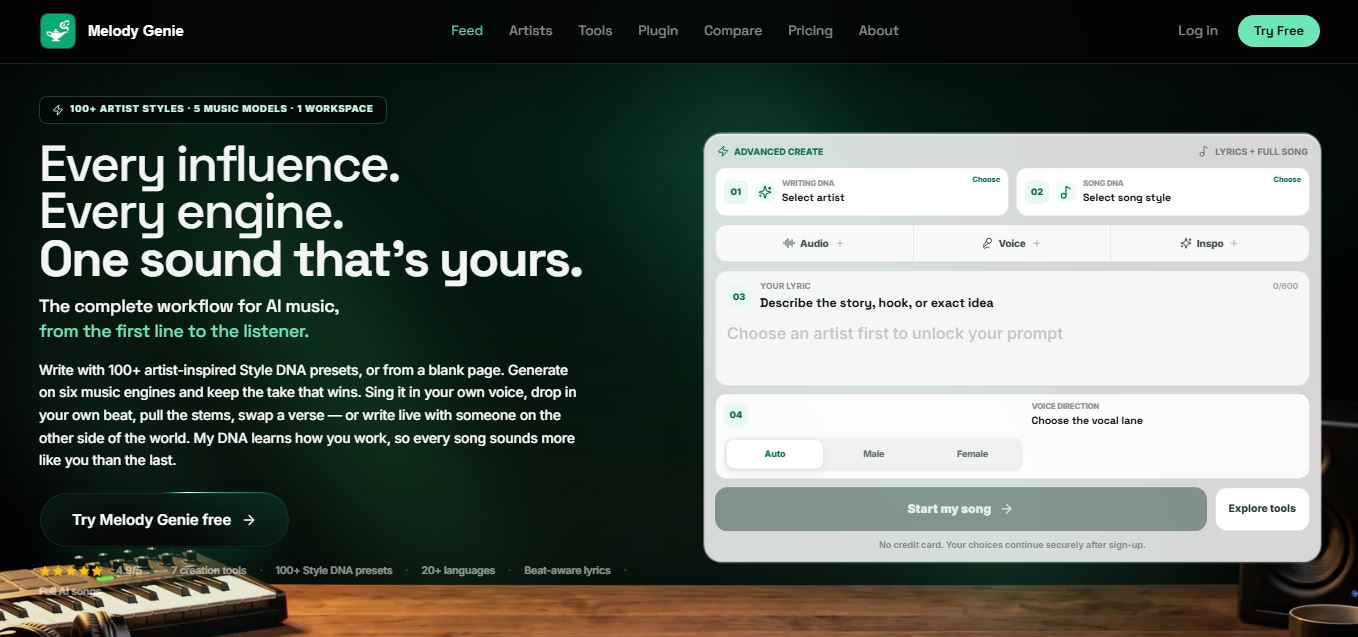
Melody Genie
MelodyGenie is an AI-powered music generator that creates original songs from simple text prompts. Users can choose styles, moods, and genres, then instantly generate melodies and full tracks, making it easy for creators, marketers, and hobbyists to produce custom music without musical expertise.
Freemium
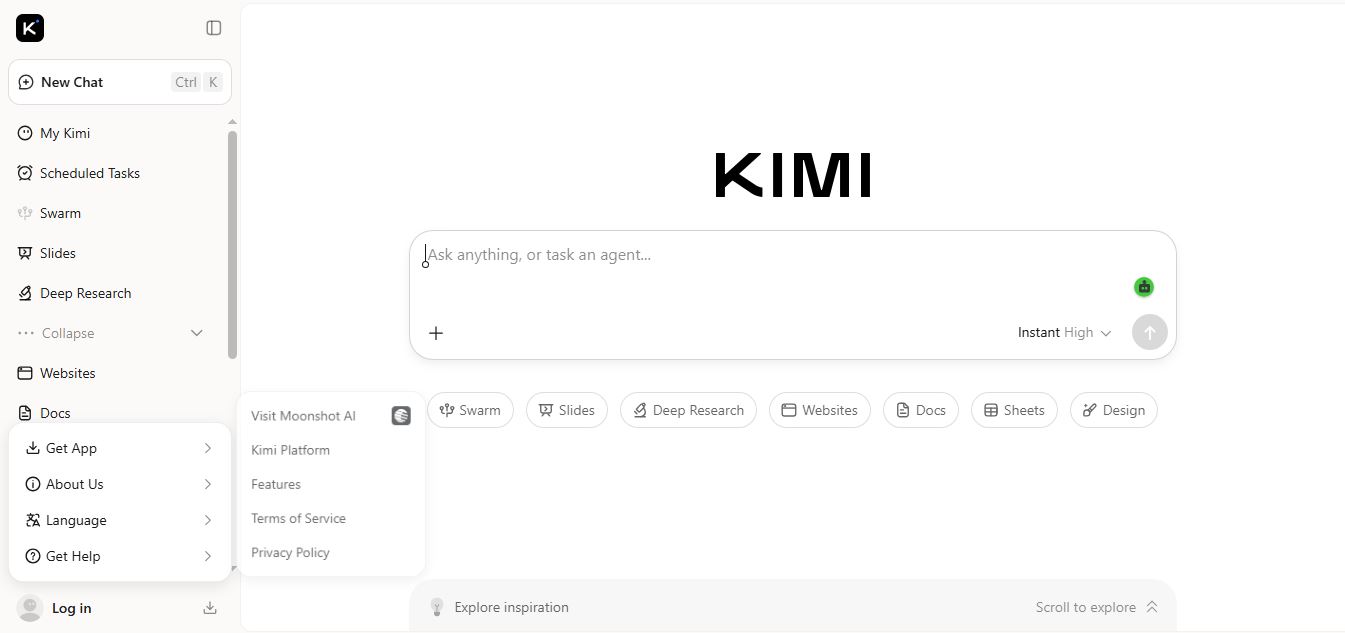
Kimi AI
Kimi AI is an advanced AI assistant developed by Moonshot AI that helps you chat, research, write, code, and automate tasks in one place. It supports web search, file analysis, and multimodal inputs, and can even run autonomous “agent” workflows to complete complex tasks end-to-end.
Freemium
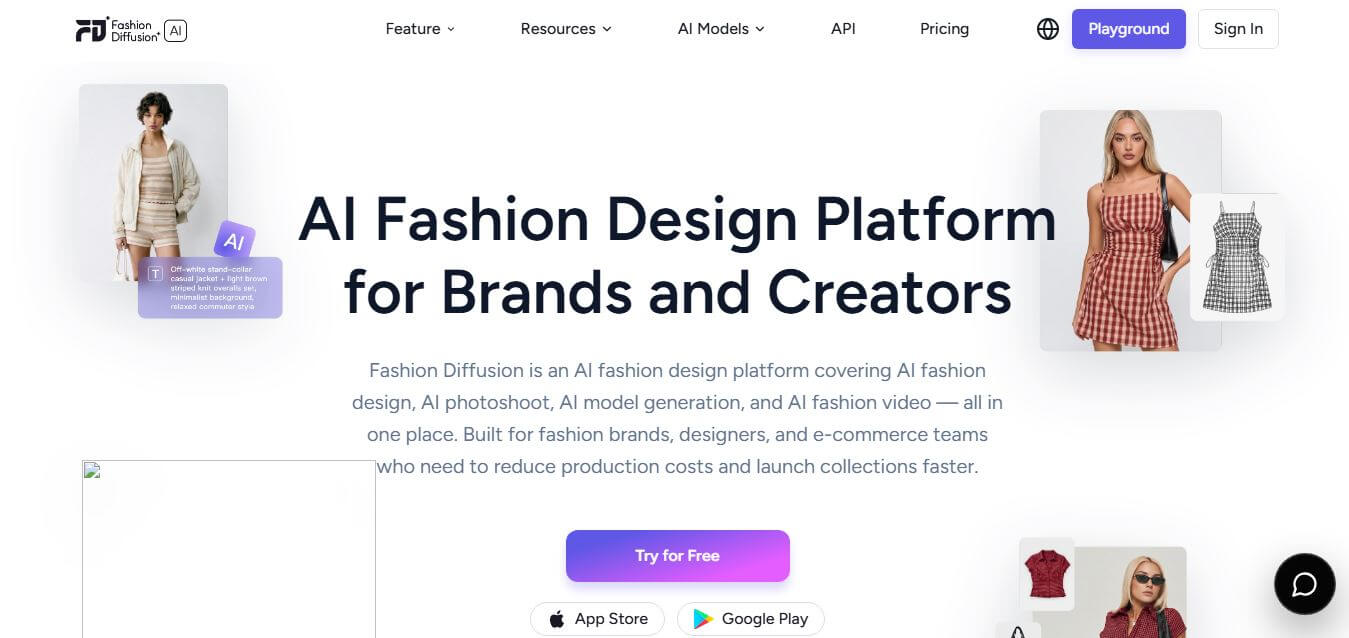
Fashion Diffusion AI
Fashion Diffusion is an AI-powered fashion design platform that helps brands and designers create clothing designs, virtual try-ons, AI models, product photos, and marketing visuals faster and cost-effectively.
Paid
Veo 4
Veo 4 AI is an AI video creation platform that generates dramatic videos from text, images, audio, and video prompts using realistic motion and synchronized sound.
Paid
Alternatives
Alternatives to Scenario
The best Scenario alternatives include Leonardo.Ai, Midjourney, Meshy AI, and Layer.ai. While Scenario specializes in custom LoRA model training and multi-LoRA compositions designed for consistent game production pipelines and engine APIs, alternatives like Midjourney focus on photorealistic concept exploration and Meshy concentrates purely on 3D generation.
 4.7
4.7ImgCreator AI
Image
ImgCreator AI is an AI-powered image generation tool that helps users create visuals from text prompts and reference images. It supports creative artwork, realistic portraits, product visuals, and image editing, making it useful for designers, marketers, content creators, and businesses seeking faster visual content production.
Neural.love
AI Image Enhancer
Neural.love is an AI-powered creative platform for generating images, editing photos, enhancing videos, restoring old media, and animating pictures. It combines multiple AI tools in a browser-based workspace, helping content creators, marketers, photographers, designers, and businesses improve visual content without relying entirely on traditional editing software.
 4.8
4.8Prisma AI
Image
Prisma AI turns everyday photos into artistic images with stylized filters and creative effects. It offers hundreds of art and portrait styles inspired by famous artists, allowing beginners to create distinctive visuals quickly. Users can capture or upload photos, apply a chosen style, and save or share the finished result.
 4.8
4.8Opus Clip (Opus Pro)
Video Editing
OpusClip helps creators transform long-form videos into short, social-ready clips. It can identify engaging moments, generate captions, reframe footage, add B-roll, enhance audio, and support publishing across major social platforms. It is designed for creators, marketers, podcasters, businesses, and teams that want to scale video content production.
 4.8
4.8Shuffll
Video Editing
Shuffll goes beyond traditional video creation by connecting personalized video directly to enterprise data and workflows. Its API-first infrastructure, 40+ AI models, automated production, and built-in brand governance make it suitable for organizations that need video at scale. For businesses seeking higher engagement without building large production teams, Shuffll offers a practical way to turn existing data into personalized, on-brand video experiences.
 4.9
4.9Bria AI
Image
Bria helps businesses and teams generate and edit visual content using controllable generative AI. Its capabilities cover image generation, product visuals, background editing, video workflows, and developer integrations. With licensed training data, attribution, provenance, and enterprise deployment options, Bria is positioned for businesses that need scalable, commercially focused visual AI.
 4.7
4.7Unwatermark
Image
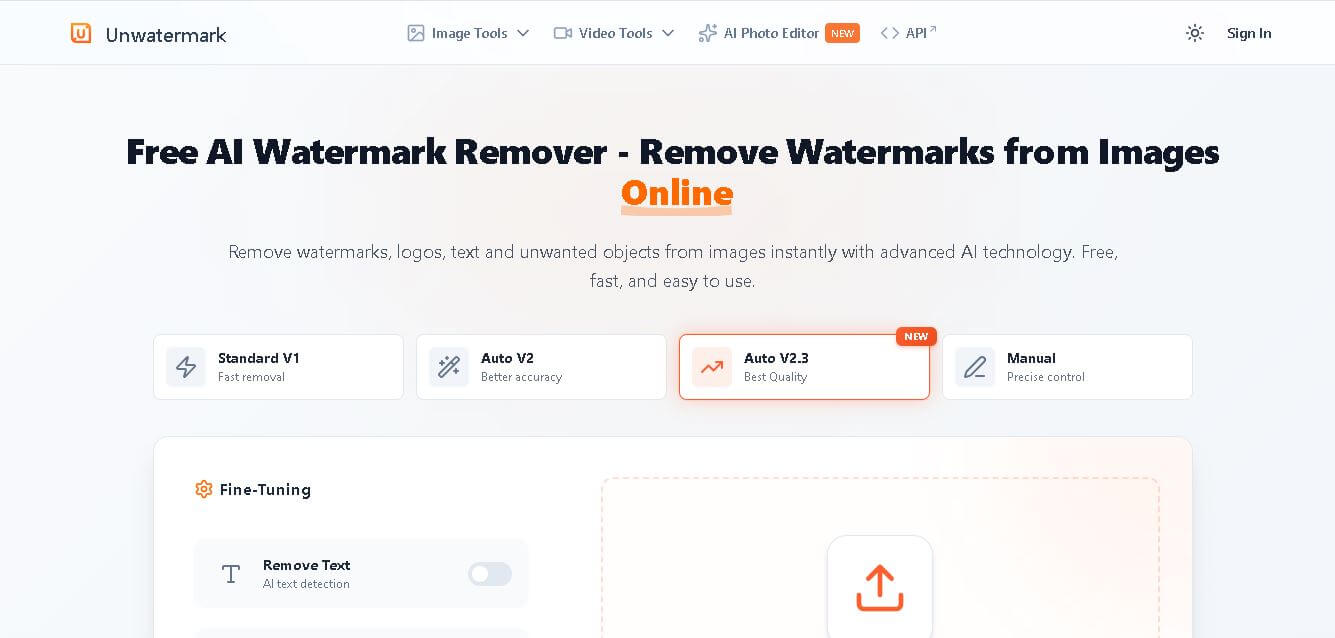
Unwatermark.ai helps creators, marketers, photographers, and businesses remove watermarks, logos, text, people, and unwanted objects from images and videos. Its automatic detection handles quick edits, while the manual brush provides precise control over difficult areas. With browser-based processing, format support, previews, and free usage, it simplifies everyday visual cleanup.
 4.8
4.8Dubbah
Video Editing
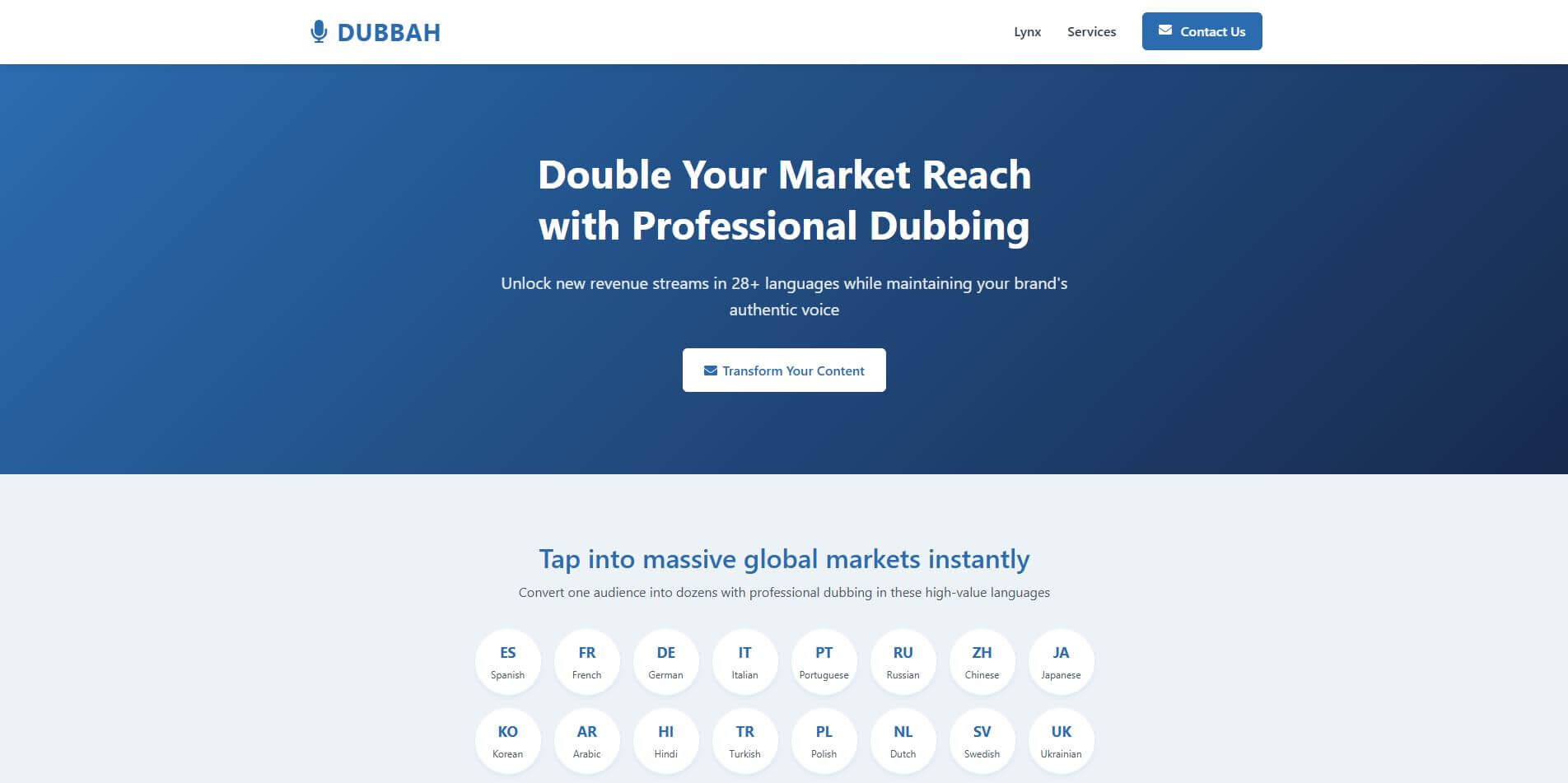
Dubbah helps Mac users translate and dub videos into 14 languages while preserving a familiar speaker voice. The app processes media locally, supports editing translated lines, and works offline after setup. With no account, subscription, or per-minute fee, it offers a simple, straightforward option for creators producing multilingual video content.
 4.9
4.9invideo Nano Banana
Image
Nano Banana is an AI image generation and editing model by Google (Gemini family) that helps users create, modify, and refine visuals using natural language prompts. It supports 4K outputs, consistent characters, accurate text rendering, and real-time editing, enabling fast, production-ready creative workflows.