Scenario AI
Scenario AI is a generative AI engine built specifically for game developers and studios to train custom style models and generate on-brand 2D assets, 3D textures, and audio.
What is Scenario AI?
Scenario AI is an advanced generative AI platform designed specifically for game developers, artists, and studios. Unlike general text-to-image generators, Scenario allows creators to train custom AI models on their own artwork, concepts, and style guides. This ensures that every generated asset—from character sprites and UI icons to 3D textures, skyboxes, and sound effects—remains 100% consistent with the game's unique visual identity.
Scenario AI empowers game studios to train custom AI generators on their own art style to produce production-ready 2D, 3D, and audio assets at scale.
- Developer / Publisher: Scenario Inc.
- Launch Year: 2022
Use Cases:
- Training proprietary AI models using a studio's existing portfolio and art bibles
- Rapidly generating 2D character concepts, prop variations, UI elements, and tilemaps
- Creating 3D texture maps, ambient audio, and visual assets directly in engine pipelines
- Accelerating pre-production concept art and production asset creation
Technology:
- Custom LoRA and fine-tuning engine tailored for visual game art consistency
- Multi-modal generative pipelines for image, 3D texture generation, and audio
- Direct API and game engine integrations (Unity, Unreal Engine)
Target Users:
- Indie Game Developers & AAA Studios
- Game Concept Artists & Illustrators
- UI/UX Designers & Technical Artists
- Game Producers & Narrative Designers
Acquisition: Available via web dashboard, mobile app, and API integration
Key features of Scenario AI
Scenario AI's key features are
- Custom Model Training: Train custom AI generators using as few as 10–20 reference images to replicate specific artistic styles accurately.
- Multi-Modal Asset Generation: Supports generation across 2D images, 3D assets/textures, video clips, and sound effects.
- Advanced Canvas & Controls: Offers features like ControlNet, composition masks, background removal, and upscaling to refine generated outputs.
- Engine & API Integrations: Seamlessly connects into production pipelines with dedicated Unity, Unreal Engine, and Web API plugins.
- Team Collaboration & Asset Management: Shared workspaces, role permissions, and asset libraries designed for professional game dev teams.
- Full Commercial Ownership: Grants complete commercial rights to custom-trained models and generated output assets.
Scenario AI Pricing
Scenario AI operates on a **freemium tiered subscription model** tailored for individual creators and game studios.
Free Plan:
- $0 – Free tier access
- Starter generation credits and access to public base models
- Basic image generation and editing tools
Paid Subscriptions (Starter / Pro / Enterprise):
- Starting from ~$29 / month
- Custom model training slots and higher monthly generation credit allowances
- Full API access, batch processing, and priority render queues
- Dedicated enterprise support, private cloud hosting, and team seats
Disclaimer: For the latest plan details, token allocations, and API pricing, please visit the official Scenario website.
Who is using Scenario AI?
Scenario AI is popular among game design professionals, including
- Indie Game Studios: Teams scaling art production without hiring large external outsourcing teams
- Concept Artists: Visual designers generating rapid variations during the pre-production phase
- Game Producers: Managers looking to maintain brand consistency across large volumes of game assets
- Technical Artists: Developers integrating automated asset generation directly into Unity and Unreal pipelines
Best Scenario AI Alternatives
Some of the strongest Scenario AI alternatives include
- Layer.ai
- Midjourney
- Leonardo.Ai
- Kling AI
- Meshy
Pros and Cons of Scenario AI
Pros
- Custom model fine-tuning guarantees style consistency across all generated assets
- Purpose-built for game development workflows with engine integrations (Unity / Unreal)
- Comprehensive suite of control tools including ControlNet, inpainting, and upscaling
- Supports multi-modal creation covering 2D art, 3D textures, and game audio
Cons
- Requires high-quality training dataset images to get optimal custom model results
- Generation credits can deplete quickly during heavy batch-creation sessions
- Steeper learning curve for non-artistic developers managing ControlNet parameters
Why Choose Scenario AI?
Scenario AI bridges the gap between generic AI image generators and professional game development requirements. By focusing on style consistency, custom model training, and direct engine integration, it empowers creators to build complete, cohesive game worlds efficiently.
- Train custom generators on your studio's specific art style
- Maintain total artistic consistency across thousands of unique game assets
- Integrate directly into Unity and Unreal Engine pipelines via API plugins
- Retain complete commercial rights and intellectual property ownership
Scenario AI vs. Competitors
The main difference between Scenario AI, Midjourney, and Layer.ai is that Scenario AI focuses specifically on training custom, studio-owned models with game engine integration. While Midjourney generates high-quality standalone images from general prompts, and Layer.ai offers similar game art tools, Scenario AI provides a complete multi-modal workbench with deep ControlNet and engine workflow support.
| Feature / Platform | Scenario AI | Layer.ai | Midjourney | Leonardo.Ai |
|---|---|---|---|---|
| Primary Focus | Custom-Trained Game Asset Generation | Game Art Pipeline Automation | General Artistic Image Generation | Creative Visuals & Model Training |
| Custom Model Fine-Tuning | Yes (Studio Style Fine-Tuning) | Yes (Style-Lock Models) | No (Prompt-Based Style Tuner) | Yes (LoRA Model Training) |
| Engine Integration | Unity, Unreal Engine & Web API | API & Engine Plugins | None (Discord / Web) | Web API Integration |
| Asset Modalities | 2D Images, 3D Textures, Audio | 2D Images, Sprites, Textures | 2D Images & Video Clips | 2D Images, Motion, 3D Textures |
| Target Audience | Game Studios & Developers | Professional Game Art Teams | Artists, Designers & General Users | Designers & Digital Artists |
How do we rate Scenario AI?
| Parameter | Rating (out of 5) |
|---|---|
| Style Consistency & Training | 4.8 |
| Asset Quality & Precision | 4.7 |
| Engine & Pipeline Integration | 4.6 |
| Ease of Use & Controls | 4.5 |
| Value for Money | 4.5 |
| Overall Score | 4.6 |
Scenario AI Review
Scenario AI is one of the most practical and production-ready generative AI tools available for game creators. By allowing developers to train custom generators on their own art style, it solves the core problem of visual inconsistency found in generic image tools. Combined with its direct Unity and Unreal Engine integration, Scenario is an indispensable asset for scaling game production.
Conclusion
Scenario AI is a game-changing platform for indie creators and professional studios alike. Its focus on style fine-tuning, multi-modal asset creation, and game engine integration makes it a top choice for AI-driven game development.
FAQ
What is Scenario?
Scenario is a creative AI platform for generating and managing consistent assets across images, video, 3D, and audio. It is designed for creative teams that want to build AI-powered production workflows around their own visual style and assets.
What can Scenario be used for?
Scenario can be used for game characters, props, environments, UI assets, marketing visuals, concept art, storyboards, cinematic content, product designs, textures, and 3D assets. It supports workflows across gaming, entertainment, marketing, design, and other creative industries.
Can Scenario create custom AI models?
Yes. Users can train custom models using their own reference images so generated assets follow a specific visual style, character design, or brand identity. Scenario currently supports training custom LoRA models and recommends using 5–100 reference images depending on the use case.
How many AI models does Scenario support?
Scenario provides access to 650+ models from 50+ providers across image, video, 3D, and audio generation. Users can compare outputs from different models and also work with their own custom-trained models within the same platform.
Can Scenario integrate with game engines and development workflows?
Yes. Scenario provides an API that can connect with Unity, Unreal Engine, and custom production pipelines. It also supports batch generation, workflows, apps, and MCP integrations for automating AI asset creation and management.
Is Scenario free to use?
Yes. Scenario currently provides 50 free daily credits without requiring a credit card. Free usage is intended for personal and evaluation purposes, while paid plans include commercial licensing and higher generation limits.
How much does Scenario cost?
Scenario currently offers Starter at $15/month, Pro at $45/month, and Max at $75/month when billed monthly. Annual billing is discounted to $10, $30, and $50 per month respectively. Enterprise plans use custom pricing.
User Reviews
No reviews yet for Scenario AI.
Featured Tools
Featured AI tools from TechShark
Melody Genie
MelodyGenie is an AI-powered music generator that creates original songs from simple text prompts. Users can choose styles, moods, and genres, then instantly generate melodies and full tracks, making it easy for creators, marketers, and hobbyists to produce custom music without musical expertise.
Freemium
Kimi AI
Kimi AI is an advanced AI assistant developed by Moonshot AI that helps you chat, research, write, code, and automate tasks in one place. It supports web search, file analysis, and multimodal inputs, and can even run autonomous “agent” workflows to complete complex tasks end-to-end.
Freemium

Fashion Diffusion AI
Fashion Diffusion is an AI-powered fashion design platform that helps brands and designers create clothing designs, virtual try-ons, AI models, product photos, and marketing visuals faster and cost-effectively.
Paid
Veo 4
Veo 4 AI is an AI video creation platform that generates dramatic videos from text, images, audio, and video prompts using realistic motion and synchronized sound.
Paid
Alternatives
Alternatives to Scenario AI
The best Scenario AI alternatives include Layer.ai, Midjourney, Leonardo.Ai, Kling AI, and Meshy. While Scenario AI focuses on training custom studio-owned models with direct Unity and Unreal Engine integrations, general-purpose tools like Midjourney rely primarily on text prompts without custom engine plugins.
 4.8
4.8Shuffll
Video Editing
Shuffll goes beyond traditional video creation by connecting personalized video directly to enterprise data and workflows. Its API-first infrastructure, 40+ AI models, automated production, and built-in brand governance make it suitable for organizations that need video at scale. For businesses seeking higher engagement without building large production teams, Shuffll offers a practical way to turn existing data into personalized, on-brand video experiences.
 4.8
4.8Opus Clip (Opus Pro)
Video Editing
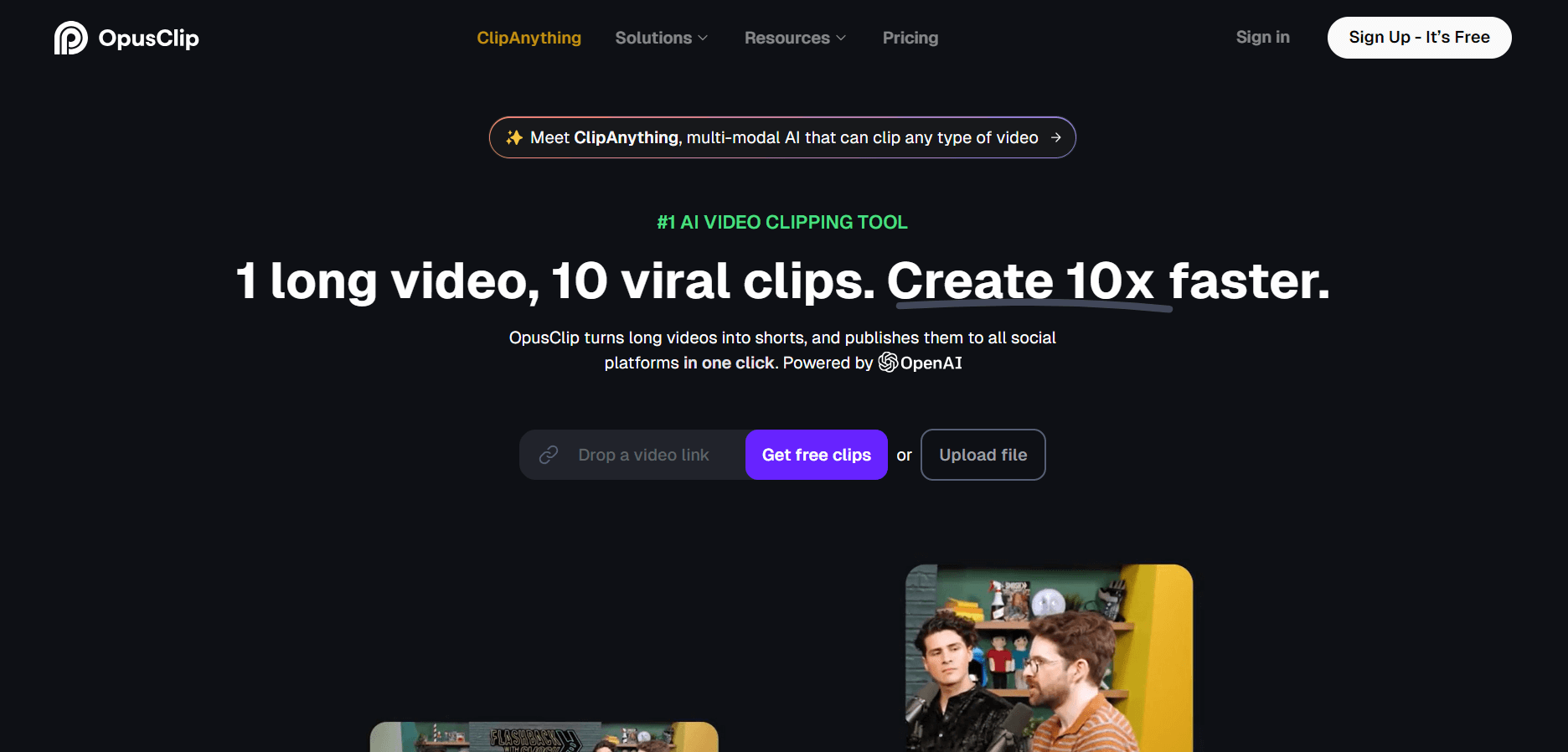
OpusClip helps creators transform long-form videos into short, social-ready clips. It can identify engaging moments, generate captions, reframe footage, add B-roll, enhance audio, and support publishing across major social platforms. It is designed for creators, marketers, podcasters, businesses, and teams that want to scale video content production.
 4.8
4.8Dubbah
Video Editing
Dubbah helps Mac users translate and dub videos into 14 languages while preserving a familiar speaker voice. The app processes media locally, supports editing translated lines, and works offline after setup. With no account, subscription, or per-minute fee, it offers a simple, straightforward option for creators producing multilingual video content.
 4.9
4.9Clipchamp
Video Generator
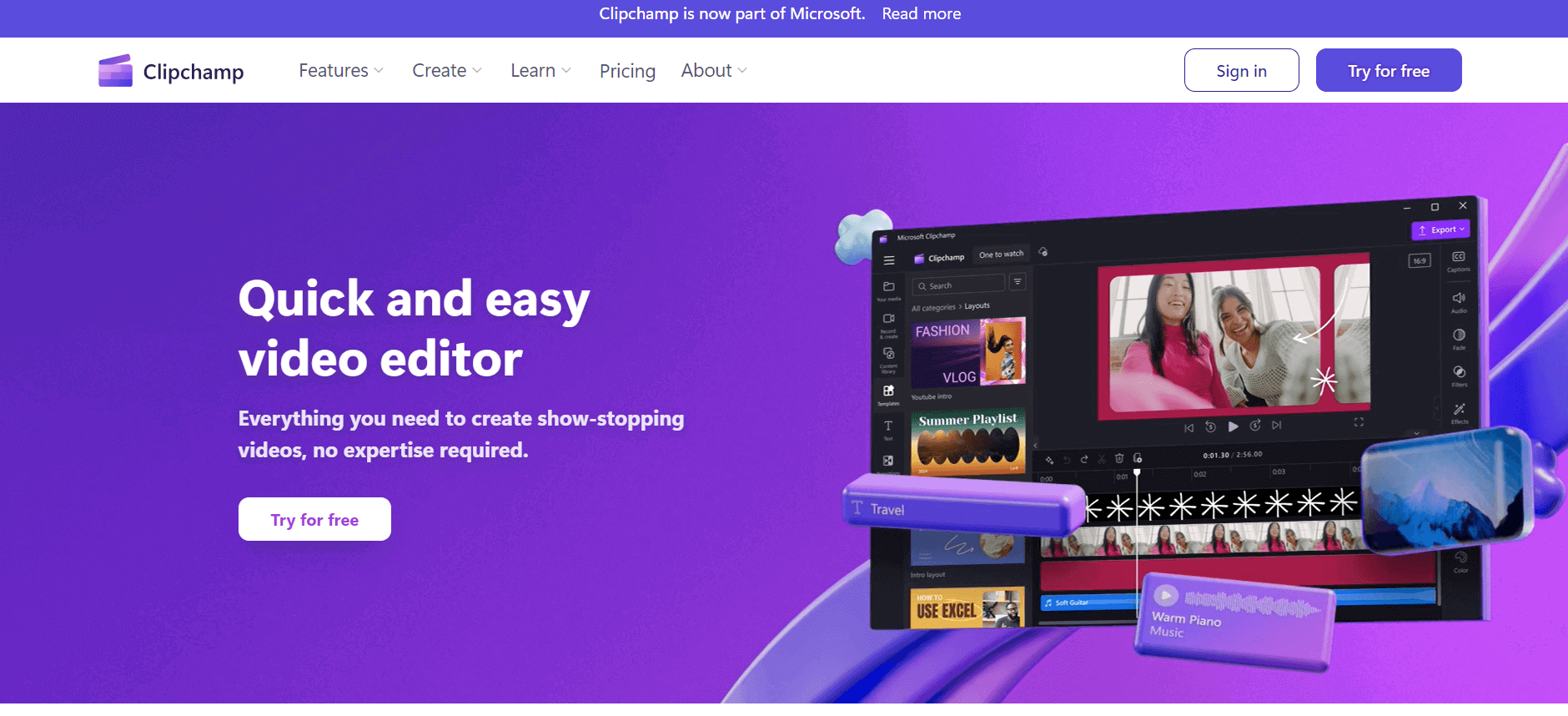
Clipchamp is an AI-powered online video editor by Microsoft that helps users record, edit, and share videos directly from the browser. It offers templates, stock media, and AI tools like subtitles, voiceovers, and noise removal, enabling fast, professional video creation without advanced editing skills.
 4.9
4.9CapCut
Video Editing
CapCut is an AI-powered video editing platform that helps creators edit, generate, and enhance videos using smart tools like auto captions, text-to-speech, templates, and one-click video creation. It supports social media content, marketing videos, and storytelling with fast, easy, and professional editing workflows.
 4.9
4.9Media.io
Video Editing
Media.io is an AI-powered creative platform that helps users generate, edit, and enhance videos, images, audio, and ads from simple prompts or assets. It combines AI generation, editing, and workflows in one place, enabling creators to turn ideas into polished content quickly without switching tools.
 4.9
4.9Video Candy
Video Editing
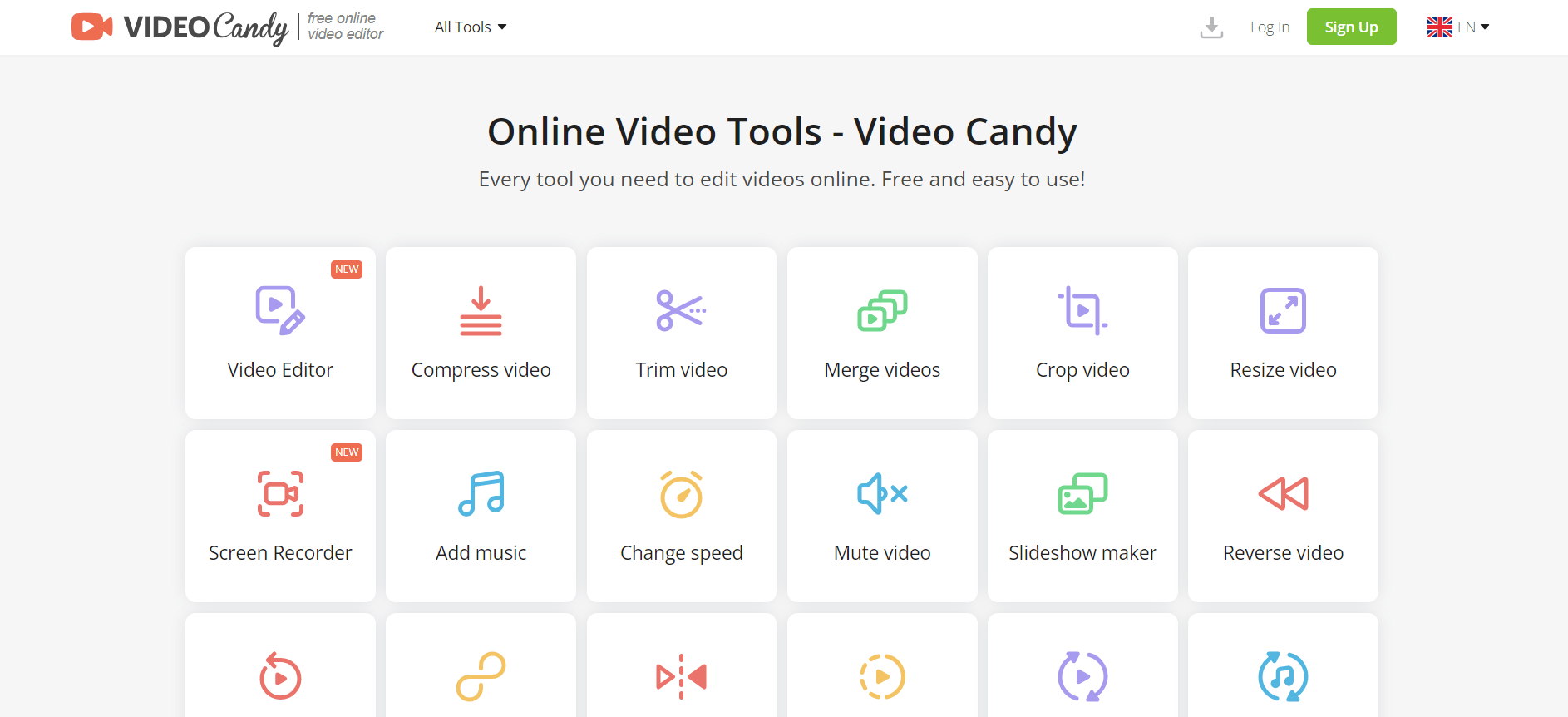
Video Candy is a free online video editing platform that helps users trim, merge, compress, convert, and enhance videos directly in the browser. It offers 70+ tools with a simple drag-and-drop interface, making video editing fast, accessible, and efficient without installing complex software.
 4.8
4.8Vheer
Image
Vheer is a free AI image and video generator that helps users create visuals from text or photos instantly. It includes tools for image editing, background removal, and image-to-video conversion, offering unlimited generations without signup, making it ideal for quick, creative content production.
 4.9
4.9Artlist
Image
Artlist is a subscription-based platform that provides high-quality royalty-free music, sound effects, and video assets for creators. It helps filmmakers, YouTubers, and marketers access unlimited creative resources, making it easy to produce professional content without worrying about licensing issues.