Recall
Recall is an AI-powered personal knowledge base and second-brain platform that saves, summarizes, and organizes articles, YouTube videos, podcasts, and PDFs into an automatic knowledge graph with active recall quizzes and multi-model AI chat.
What is Recall?
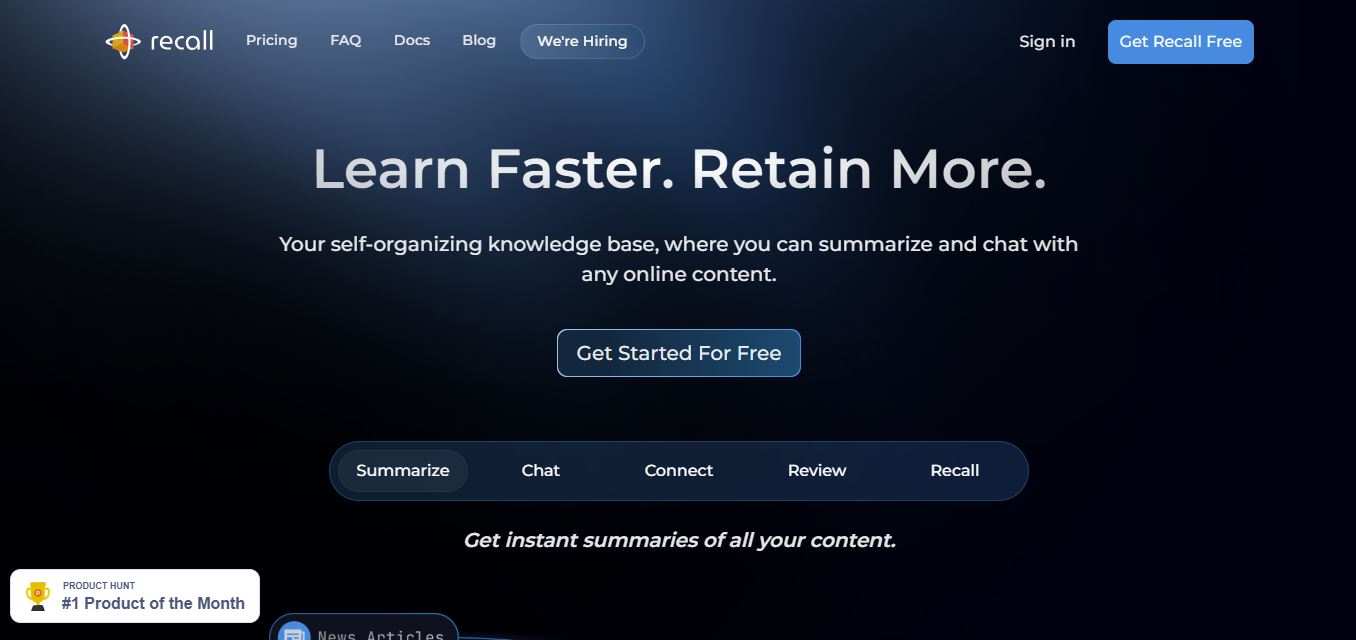
Recall is an AI-powered personal knowledge base and self-organizing "second brain" platform designed to help knowledge workers, researchers, and students overcome digital information overload. Rather than letting saved bookmarks and reading lists collect dust in forgotten browser tabs, Recall captures content from across the web—including long-form articles, YouTube videos, podcasts, PDFs, and personal notes—and synthesizes it into structured, connected knowledge cards.
Recall is a personal AI knowledge base that lets you save, summarize, and chat with articles, videos, podcasts, and PDFs in one place. Founded in 2022, it’s used by 700,000+ users worldwide, including professionals at Bloomberg and Harvard. It supports top AI models like GPT, Claude, and Gemini, offers unlimited storage, and includes features like knowledge graphs and spaced repetition to improve long-term memory and learning efficiency
- Platform Role: AI Personal Knowledge Base, Multiformat Summarizer & Active Recall Learning Studio
- Ecosystem Access: Web application, browser extensions (Chrome, Firefox, Safari, Edge), and native mobile companion apps (iOS & Android)
- AI Flexibility: Multi-model foundation supporting ChatGPT, Claude, and Gemini with Model Context Protocol (MCP) and developer API connectivity
Use Cases:
- Summarizing long-form YouTube videos, conference talks, and video lectures up to 10 hours in length with timestamped chapter breakdowns
- Distilling multi-hour audio podcasts from Apple Podcasts, Spotify, and YouTube into structured takeaways and searchable transcripts
- Extracting core insights, arguments, and methodology from dense academic PDFs, whitepapers, and technical reports
- Querying your personal library of saved articles and notes conversationally using your preferred LLM provider
- Locking learned concepts into long-term memory through automated active recall quizzes and spaced repetition intervals
Technology:
- Multiformat content processing engine capable of ingesting video captions, raw audio speech-to-text, web text, and PDF formatting
- Automatic semantic knowledge graph connecting new cards to related previously saved topics and concepts
- Augmented browsing extension surfacing relevant past notes and summaries while researching new web pages in real time
- Private, encrypted storage architecture ensuring personal research collections are not used for public AI foundation model training
Target Users:
- Researchers, academics, and analysts reviewing high volumes of papers, podcasts, and video documentation
- Students and lifelong learners seeking better long-term memory retention through active study aids
- Software engineers, tech founders, and product managers curating cross-disciplinary technical research
- Content creators and journalists gathering background research, interviews, and source material
Acquisition: Specialized personal AI knowledge and productivity platform
What are the key features of Recall?
Recall's key platform features are
- Multiformat AI Summarization: Summarizes articles, PDFs, recipes, tweets, and YouTube videos up to 10 hours with timestamps and concise bullet points.
- Automatic Knowledge Graph: Categorizes and connects related cards automatically, visualizing relationships between concepts without manual folder management.
- Agentic Knowledge Chat: Query your personal knowledge base, search the open web, or combine both in a single conversation across ChatGPT, Claude, and Gemini.
- Spaced Repetition & Quizzes: Automatically generates active recall quizzes from saved content, resurfacing questions at optimal cognitive intervals.
- Augmented Browsing: Browser extensions proactively highlight and surface relevant past saves and notes as you browse related topics on the web.
- Listen Mode: Converts written summaries into natural voice audio playback for hands-free learning during commutes or workouts.
- Built-in Block Note Editor: Notion-style modular editor supporting markdown, tables, checklists, code blocks, and bidirectional card links.
- API & MCP Integration: Model Context Protocol support and developer APIs allowing external agents and custom scripts to query your second brain.
How much does Recall cost?
Recall offers a permanent free tier for content collection alongside subscription plans for unlimited AI processing and frontier model access.
Free Plan:
- Free ($0 / month): Unlimited saves for read-later content (articles, videos, PDFs), unlimited block notes, basic knowledge graph linking, API/MCP access, and 10 AI summaries per month.
Plus & Max Plans:
- Plus Plan ($10 / month billed annually or $13 monthly): Unlimited AI summaries, automatic tagging and smart categorization, personal AI chat with your knowledge base, automatic knowledge graph generation, augmented browsing, Listen Mode audio, and spaced repetition quizzes.
- Max Plan ($38 / month billed annually or $48 monthly): Everything in Plus, along with custom frontier AI model selection (switch between GPT-4o, Claude 3.5 Sonnet, Gemini Pro), bulk AI actions (summarize, tag, and connect up to 100 items simultaneously), and direct onboarding from the founding team.
Disclaimer: Pricing rates and annual discount structures reflect published platform tiers. Check recall.it/pricing for current billing options.
Who should use Recall?
Recall is designed for curious minds and research-intensive professionals, including
- Lifelong Learners & Students: Turning informational YouTube binge-watching and podcast listening into structured, testable study materials.
- Competitive Analysts & Strategists: Tracking industry shifts, news, and technical briefings inside an interconnected research repository.
- Knowledge Workers & Writers: Building a searchable, conversational digital second brain that synthesizes ideas across diverse domains.
- Podcast & Video Enthusiasts: Reviewing episode highlights and timestamped quotes without scrubbing through hours of recorded media.
What are the best alternatives to Recall?
Some of the strongest Recall alternatives include
- Google NotebookLM
- Readwise Reader
- Obsidian (with AI Community Plugins)
- Notion AI
- Heptabase
- Fabric
What are the pros and cons of Recall?
What are the pros of Recall?
- Supports extensive input media types including YouTube videos up to 10 hours, Spotify podcasts, PDFs, and web articles
- Automatic knowledge graph links related concepts without requiring laborious manual folder or tag hierarchies
- Combines synthesis with retention through built-in active recall testing and spaced repetition schedules
- Allows users to chat with their knowledge base using multiple leading frontier models (Claude, ChatGPT, Gemini)
- Augmented browsing surfaces relevant past notes proactively while exploring new web content
What are the cons of Recall?
- Free plan is capped at 10 AI summaries per month, making a paid tier necessary for active weekly research
- Frontier model choice and bulk batch actions are reserved exclusively for the higher-tier Max subscription
- Very dense multi-column academic PDF tables occasionally require text verification for exact formatting
Why should you choose Recall?
Most AI tools operate in isolation: you feed them a prompt, read an answer, and close the tab, losing the connection between what you learned and your broader knowledge. Meanwhile, traditional bookmarking tools hoard unread links without helping you digest or remember them. Recall connects these workflows into a single system. It ingests the media you consume, summarizes key insights, visualizes how ideas connect to past research, and tests your retention over time, transforming transient web browsing into lasting personal intelligence.
- Turn multi-hour podcasts and YouTube lectures into concise, timestamped summaries in seconds
- Discover hidden connections across your research through an automated visual knowledge graph
- Query your personal second brain conversationally using top frontier AI models
- Lock vital knowledge into long-term memory with automatic spaced repetition quizzes
How does Recall compare to competitors?
While Google NotebookLM focuses strictly on uploaded source document analysis within isolated notebooks, and Readwise Reader emphasizes raw reading and highlighting workflows, Recall uniquely unites multiformat capture (video, podcast, PDF, web) with automatic concept graph linking and active retention quizzes.
| Feature / Platform | Recall | NotebookLM | Readwise Reader | Notion AI |
|---|---|---|---|---|
| Primary Focus | Personal AI knowledge base & retention | Document research & Audio Overviews | Read-it-later & reading highlights | Team workspace & doc generation |
| Video & Podcast Support | Yes (YouTube up to 10h, podcasts) | YouTube via captions only | YouTube transcripts & podcasts | Manual text imports |
| Automatic Knowledge Graph | Yes (Auto-linking & visual graph) | No (Notebook-isolated files) | No (Tag & folder lists) | No (Manual relational databases) |
| Retention / Spaced Repetition | Yes (AI quizzes & spaced intervals) | No | Yes (Daily highlight review) | No |
| Pricing Structure | Free tier / Plus $10/mo / Max $38/mo | Free (Google Account) | Paid subscription (~$8 - $12.99/mo) | Workspace fee + $10/user/mo AI add-on |
| Best For | Lifelong learners wanting connected recall | Focused source grounding & audio summaries | Heavy article readers & book highlighters | Team project collaboration and wikis |
How do we rate Recall?
| Parameter | Rating (out of 5) |
|---|---|
| Multiformat Ingestion & Video Summaries | 4.9 |
| Knowledge Graph & Auto-Categorization | 4.8 |
| Active Recall Quizzes & Retention | 4.9 |
| Cross-Platform Usability & Extensions | 4.8 |
| Value for Money | 4.7 |
| Overall Score | 4.82 |
What is our review and verdict on Recall?
Recall provides one of the most cohesive solutions for managing personal knowledge in the generative AI era. By pairing fast multiformat summarization with an automatic visual knowledge graph and active recall quizzes, it connects information collection with understanding and remembering. For researchers, students, and professionals looking to turn passive consumption into an active intellectual asset, Recall is an essential second brain.
Conclusion
Recall helps turn scattered information into a system you can actually remember and reuse. By combining highlights, summaries, and spaced repetition, it ensures important ideas don’t just get saved—they stick. Instead of passively collecting content, users build a structured knowledge base that improves over time. This makes it especially useful for learners, researchers, and curious minds. Overall, Recall transforms information overload into a more organized, meaningful, and memory-driven learning experience.
FAQ
What does Recall AI actually do?
Recall is a personal AI knowledge base that lets you save content like articles, YouTube videos, podcasts, PDFs, and notes, then automatically summarizes and organizes everything in one place. Instead of losing useful information across bookmarks or tabs, it turns everything you consume into structured knowledge you can search, revisit, and even chat with later.
How is Recall different from tools like Notion or Obsidian?
Recall is built as an AI-first system, meaning it automatically summarizes, tags, and connects your content without manual effort. Tools like Notion or Obsidian require you to organize and link information yourself. With Recall, the system does the heavy lifting—creating a knowledge graph and surfacing connections—so you spend less time managing notes and more time using them.
How does Recall summarize and organize content?
When you save something, Recall instantly generates an AI summary, extracts key ideas, and assigns smart tags. It then connects that content to related topics inside your knowledge base and makes it searchable. Over time, this builds a structured network of your knowledge, allowing you to discover links between ideas you might not have noticed manually.
Can I chat with my saved knowledge?
Yes, one of Recall’s core features is the ability to chat with your own content. You can ask questions and get answers based on the articles, videos, or notes you’ve saved—rather than generic internet data. It can also combine your personal knowledge with web results, giving you more contextual and relevant answers.
What kind of content can I save in Recall?
Recall supports a wide range of content, including articles, YouTube videos (even long ones), podcasts, PDFs, Google Docs, and personal notes. Essentially, if you read, watch, or listen to something online, you can save it and add it to your knowledge base.
Is Recall free to use?
Yes, Recall offers a free plan that lets you save unlimited content and generate a limited number of AI summaries each month. Paid plans unlock unlimited summaries and more advanced features, making it scalable for heavy users like researchers or founders who consume a lot of information.
Who should use Recall AI?
Recall is ideal for students, researchers, founders, creators, and lifelong learners who consume a lot of information but struggle to retain it. It’s especially useful if you regularly read articles, watch educational videos, or do research and want a smarter way to organize and recall that knowledge over time.
User Reviews
No reviews yet for Recall.
Featured Tools
Featured AI tools from TechShark
Melody Genie
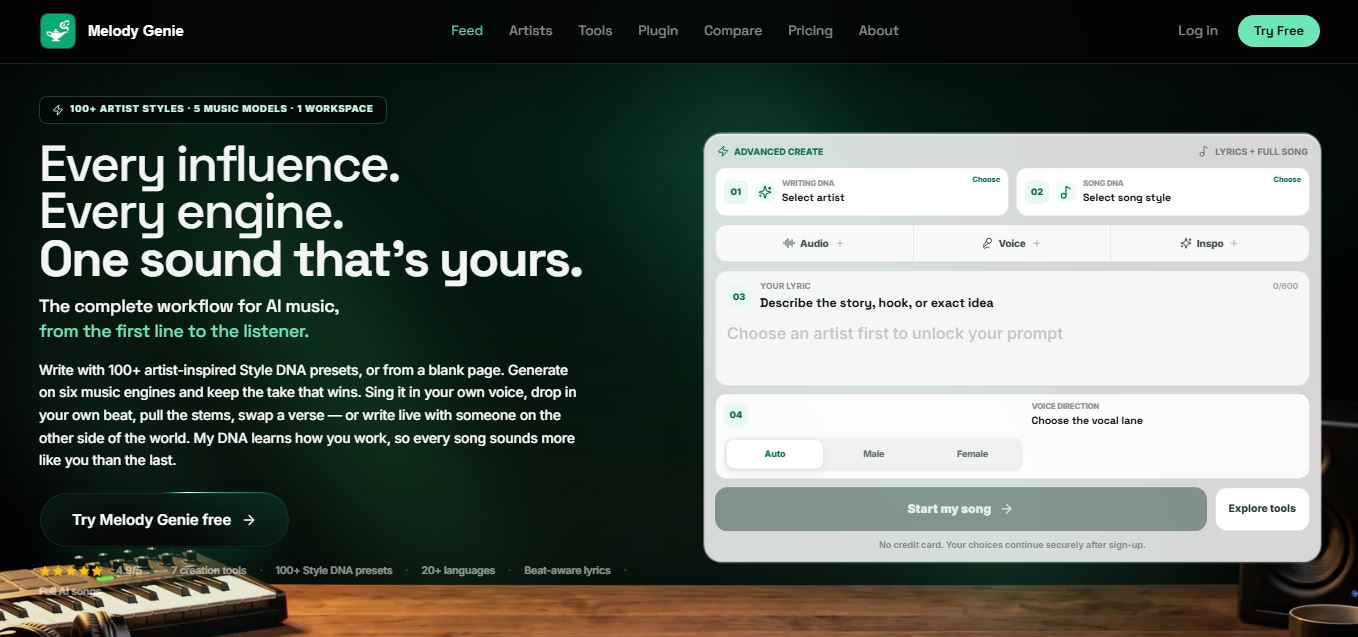
MelodyGenie is an AI-powered music generator that creates original songs from simple text prompts. Users can choose styles, moods, and genres, then instantly generate melodies and full tracks, making it easy for creators, marketers, and hobbyists to produce custom music without musical expertise.
Freemium
Kimi AI
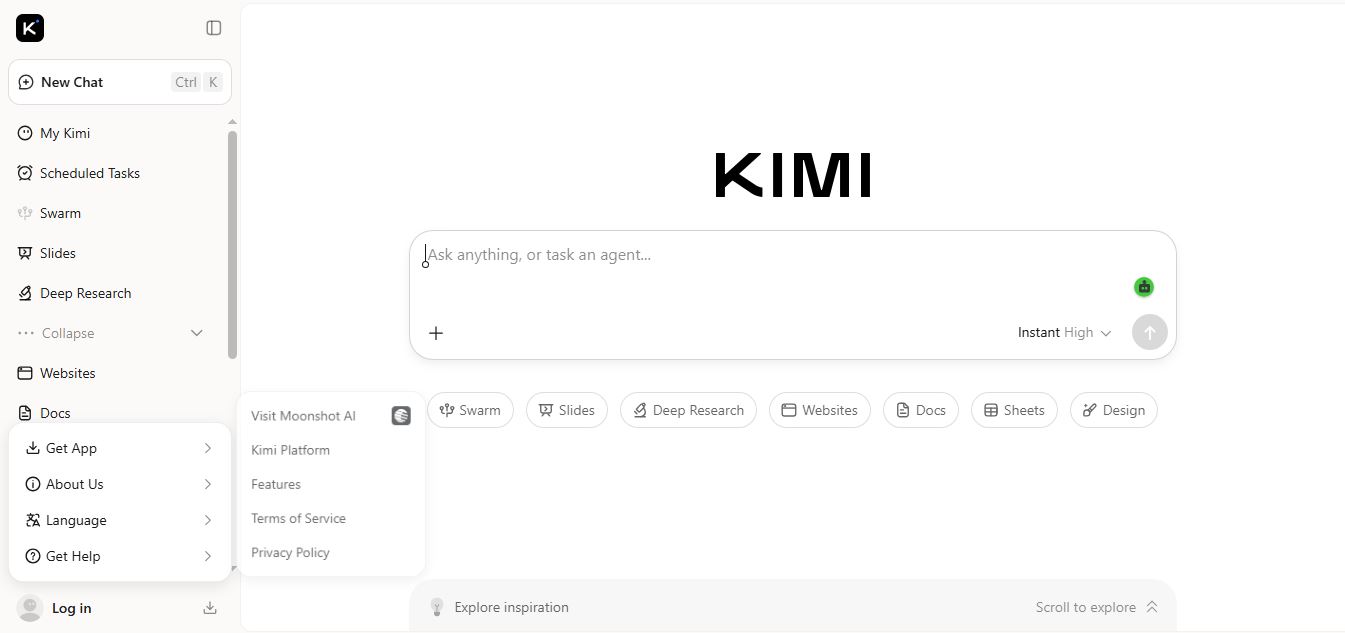
Kimi AI is an advanced AI assistant developed by Moonshot AI that helps you chat, research, write, code, and automate tasks in one place. It supports web search, file analysis, and multimodal inputs, and can even run autonomous “agent” workflows to complete complex tasks end-to-end.
Freemium
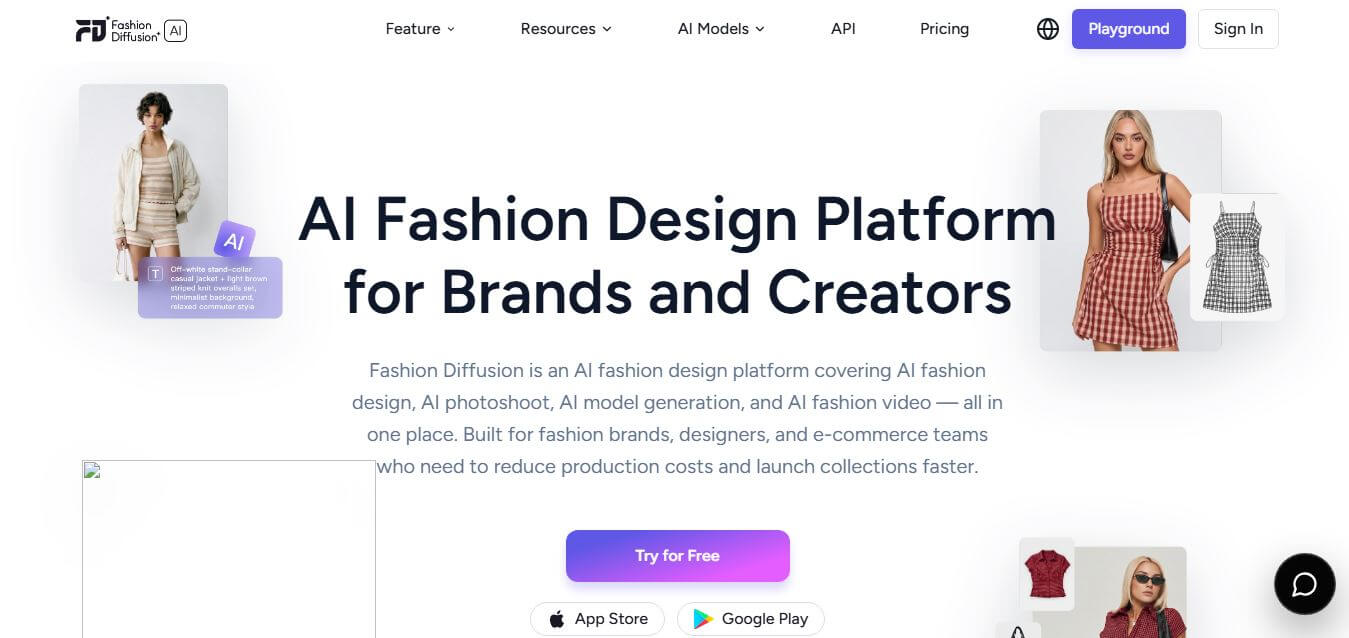
Fashion Diffusion AI
Fashion Diffusion is an AI-powered fashion design platform that helps brands and designers create clothing designs, virtual try-ons, AI models, product photos, and marketing visuals faster and cost-effectively.
Paid
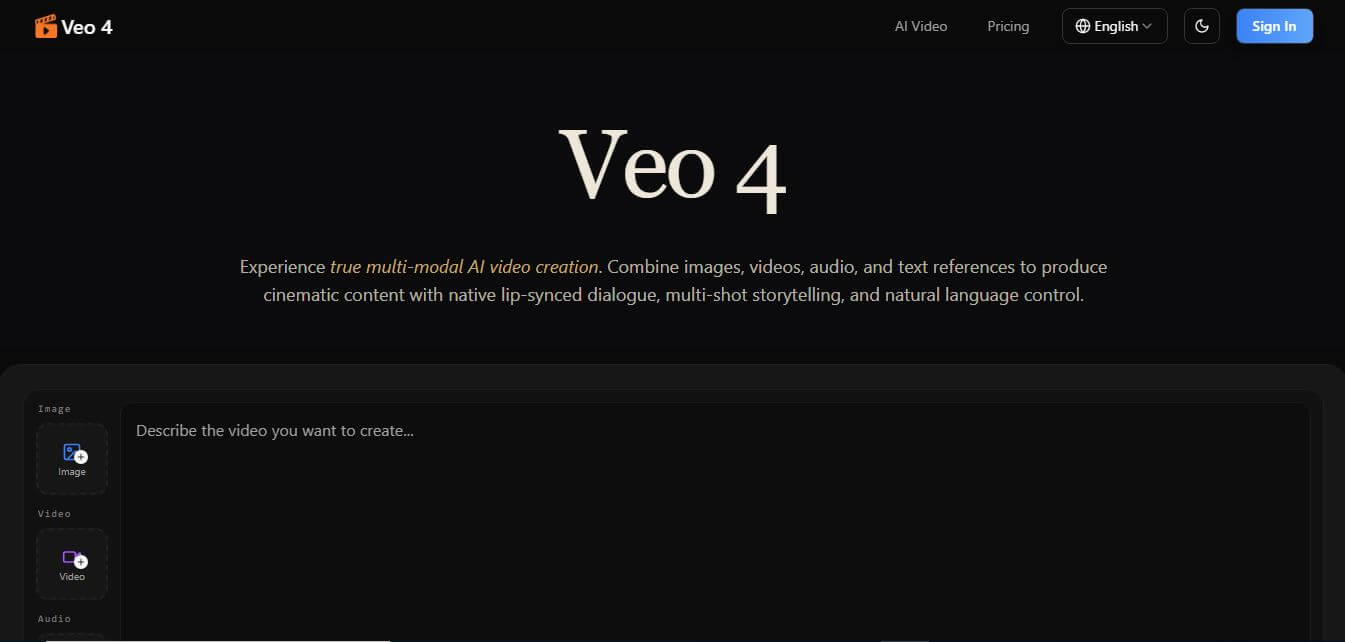
Veo 4
Veo 4 AI is an AI video creation platform that generates dramatic videos from text, images, audio, and video prompts using realistic motion and synchronized sound.
Paid
Alternatives
Alternatives to Recall
The best Recall alternatives include Google NotebookLM, Readwise Reader, Obsidian, and Notion AI. While Recall automatically connects saved YouTube videos, podcasts, PDFs, and articles into a visual knowledge graph with spaced repetition testing and model-agnostic chat, alternatives like NotebookLM focus on source-grounded document analysis and Readwise Reader focuses primarily on text reading and highlights.
 4.9
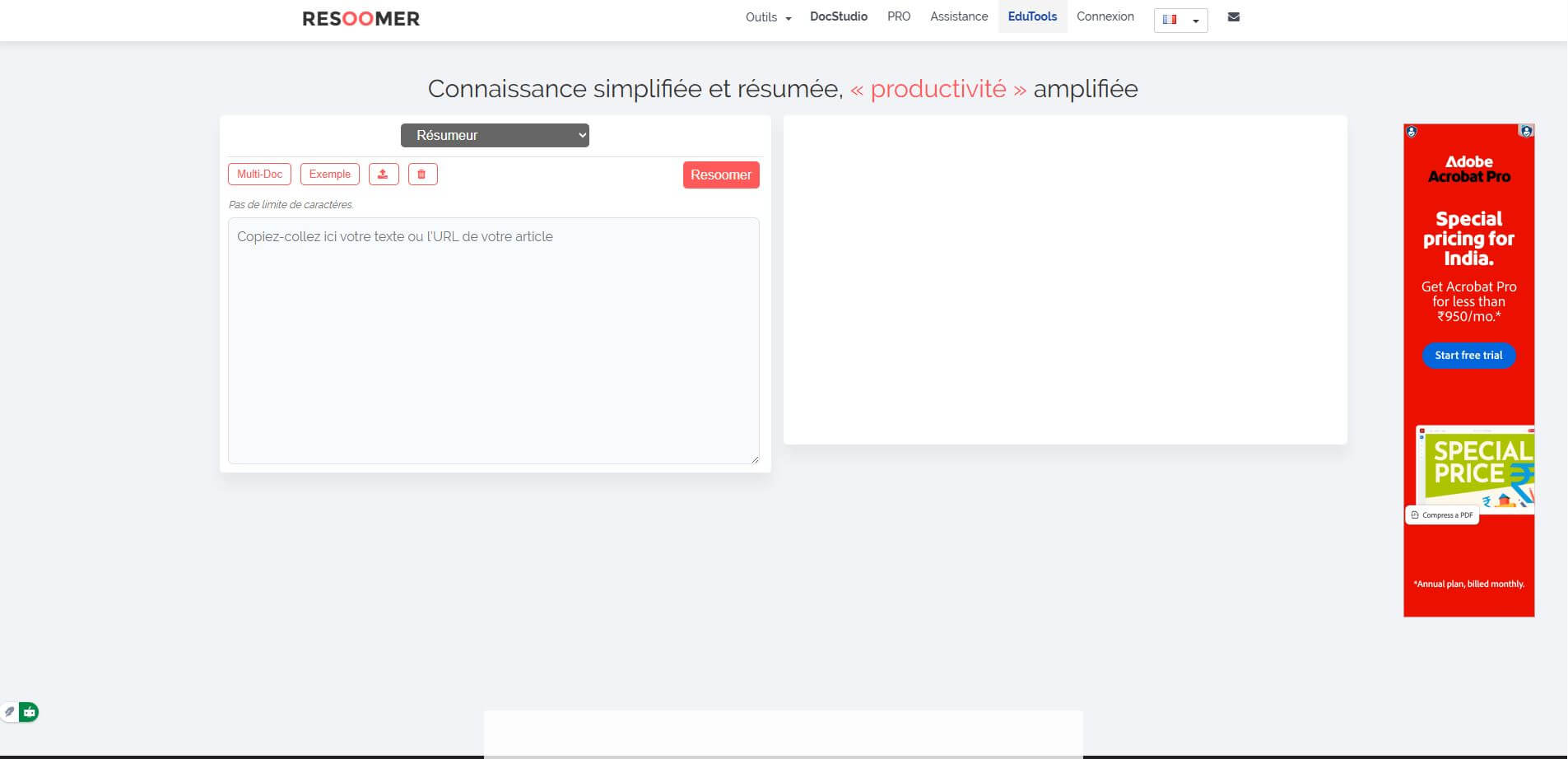
4.9Resoomer
Research
Resoomer is an AI-powered text summarization tool that helps users quickly turn long articles, research papers, and documents into concise summaries. It identifies key ideas, supports multiple formats like PDFs and URLs, and includes tools for paraphrasing, translating, and analyzing content for faster understanding.
 4.8
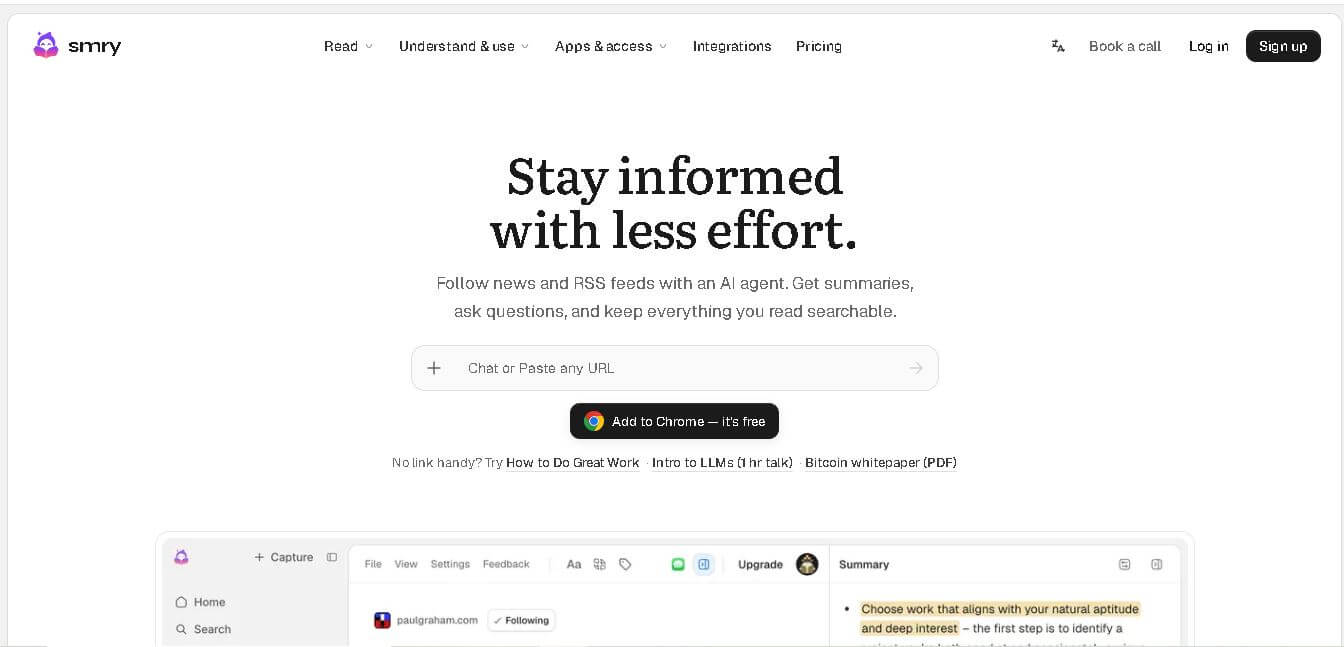
4.8Smry
Summarizer
smry is an AI-powered reading and research workspace that helps users summarize articles, ask questions, listen to content, save highlights, follow feeds, and organize research. It supports webpages, YouTube videos, PDFs, EPUBs, documents, and other sources. Its clean reader removes distractions while keeping summaries and answers connected to the original source.
 4.9
4.9DevSummary
Summarizer
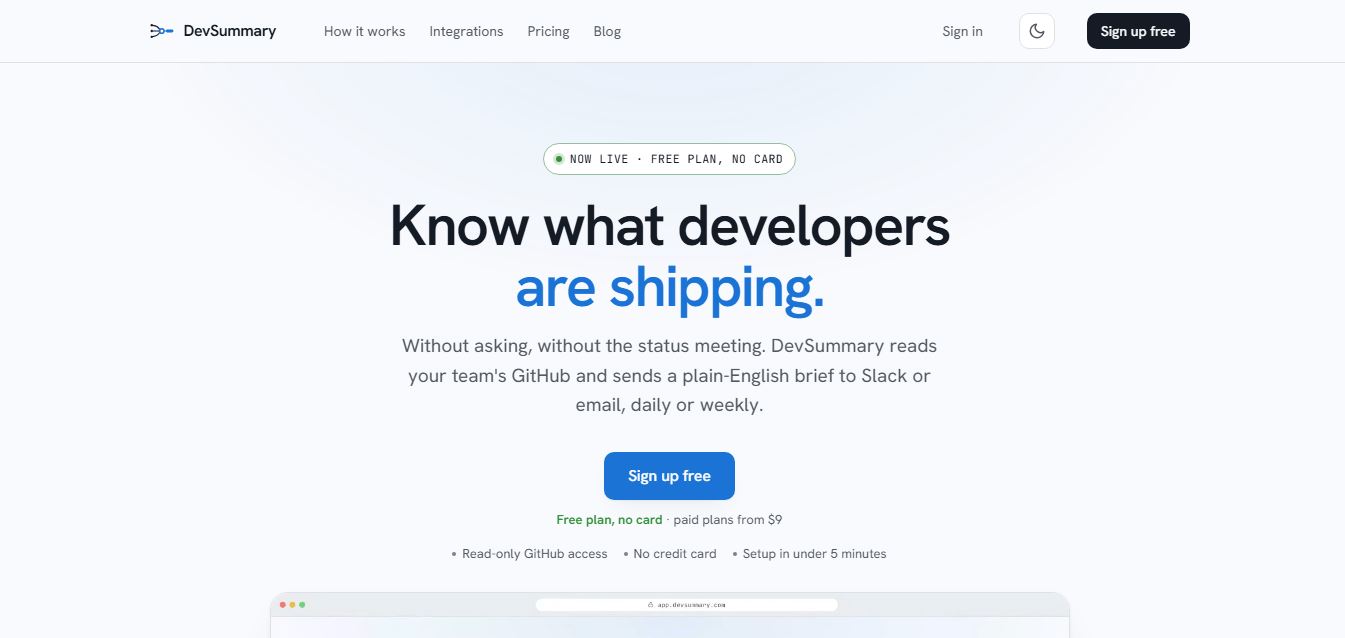
DevSummary is an AI-powered engineering reporting tool that connects to GitHub organizations to ingest commit activity and generate plain-English progress briefs for non-technical stakeholders delivered via email or Slack.
 4.8
4.8GitMind
Project Management
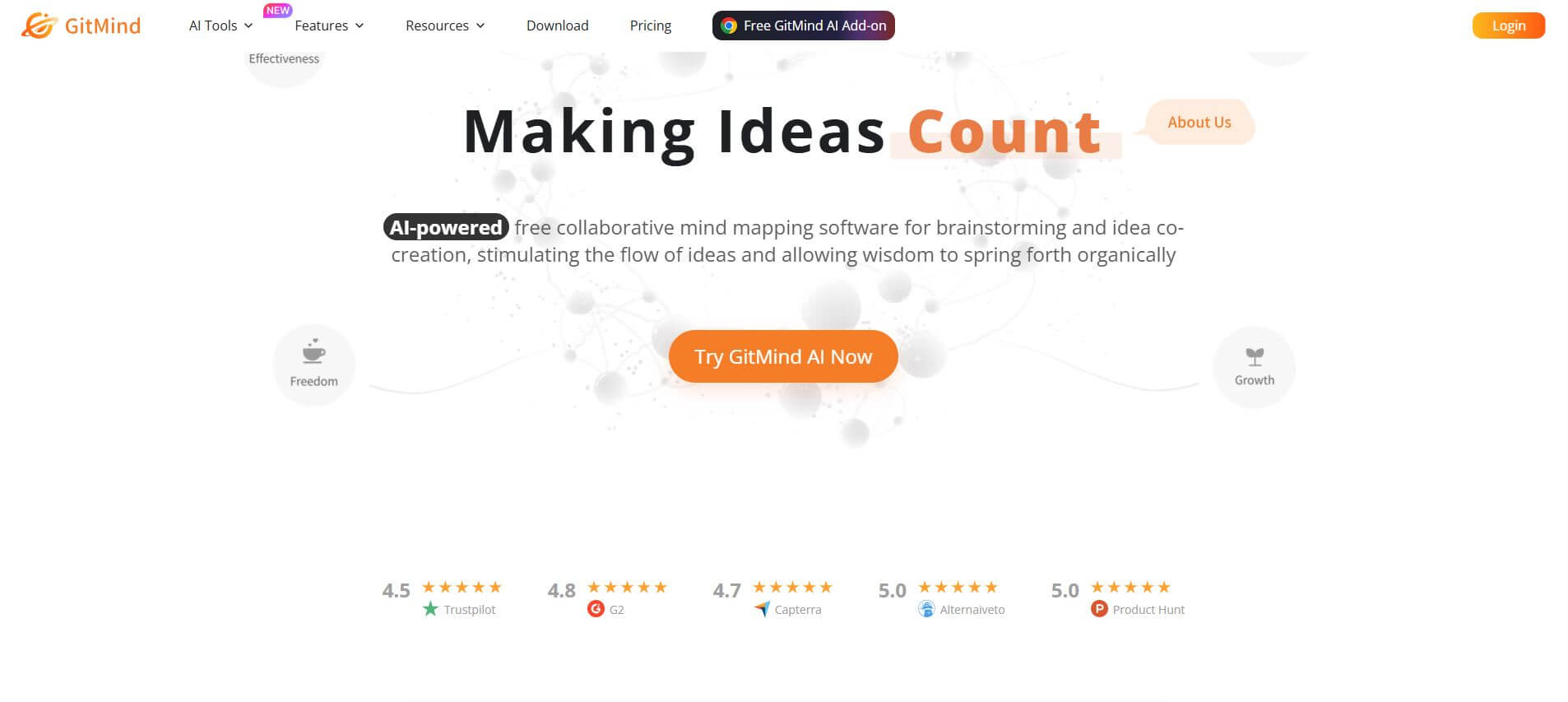
GitMind is an AI-powered mind mapping and visual workspace that turns text, videos, audio, PDFs, and websites into structured mind maps, summaries, and diagrams. It helps you organize ideas, brainstorm, plan projects, and simplify complex information using AI-driven insights and visual layouts.
 4.8
4.8Cohesive
Writing
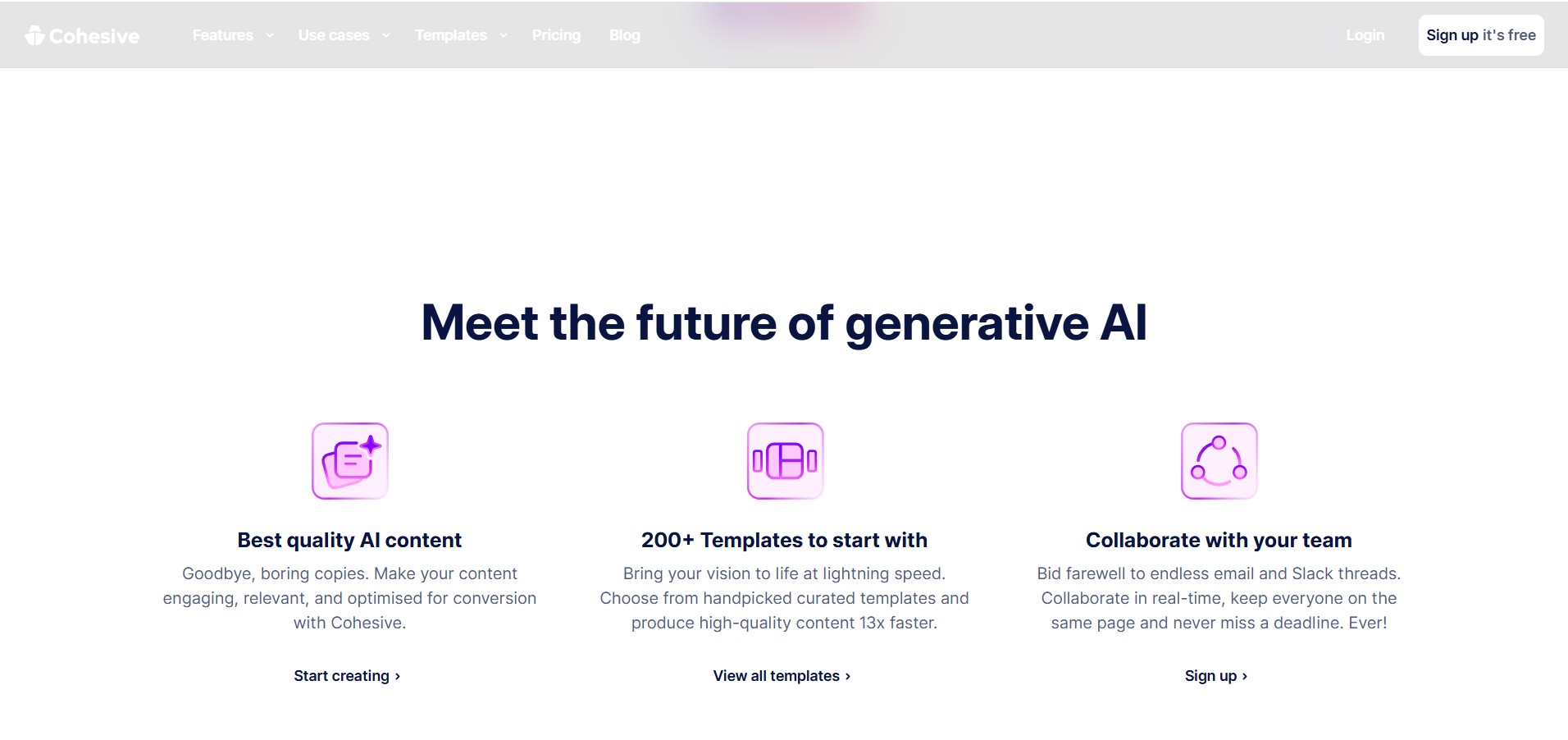
Cohesive is an AI-powered content creation platform that helps you write, edit, and publish blogs, ads, emails, and social posts using 200+ ready-made templates. It combines AI writing, image generation, and collaboration tools to speed up content creation and keep everything consistent.
 4.6
4.6Summarist AI
Summarizer
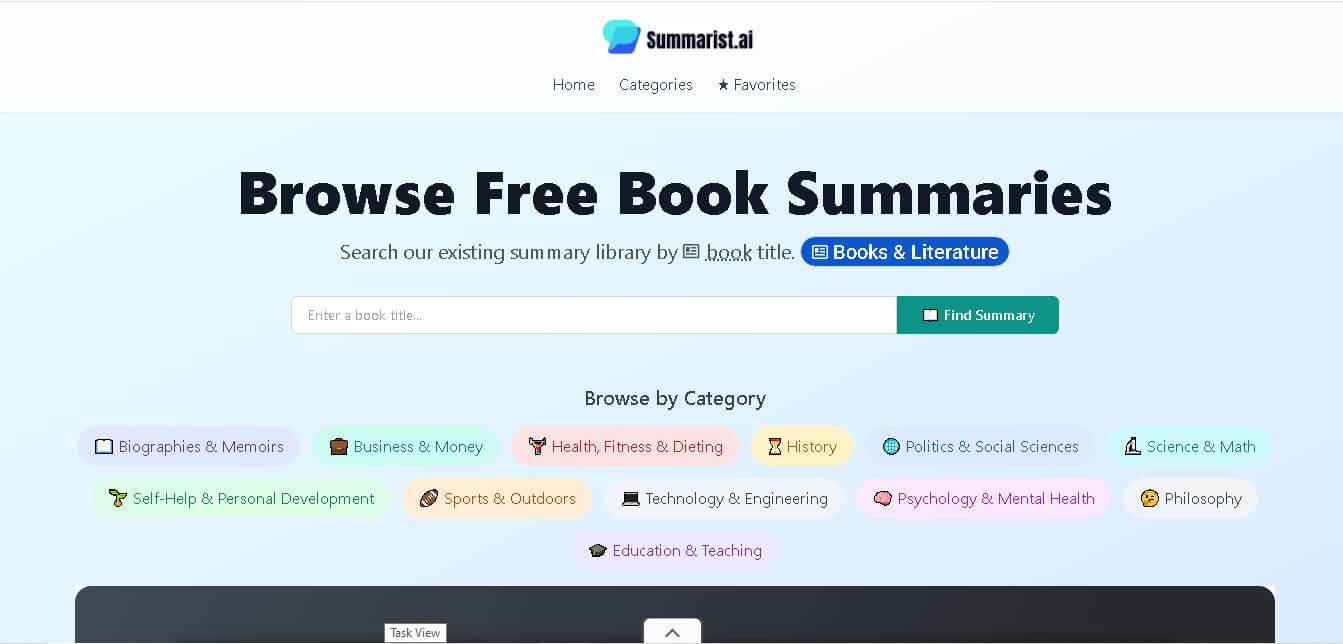
Summarist AI is an AI-powered book summary platform designed to help readers understand books faster. It provides searchable summaries across categories such as business, self-help, psychology, education, history, science, and technology. The platform currently highlights a large library of summaries, making key ideas easier to discover without reading every book cover-to-cover.
 4.4
4.4Gnomi App
Education
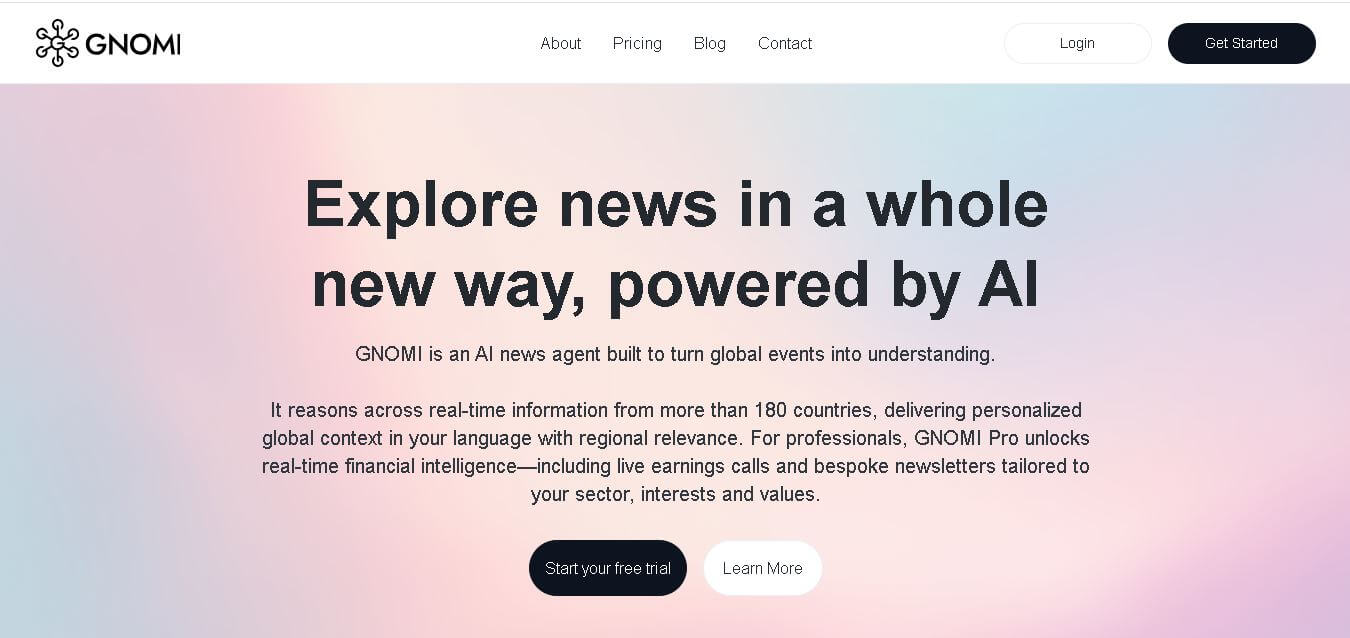
GNOMI is an AI-powered intelligence platform that analyzes global news, financial updates, and real-time events to provide personalized insights, summaries, and research support for smarter decision-making.
 4.5
4.5TLDR this
Summarizer
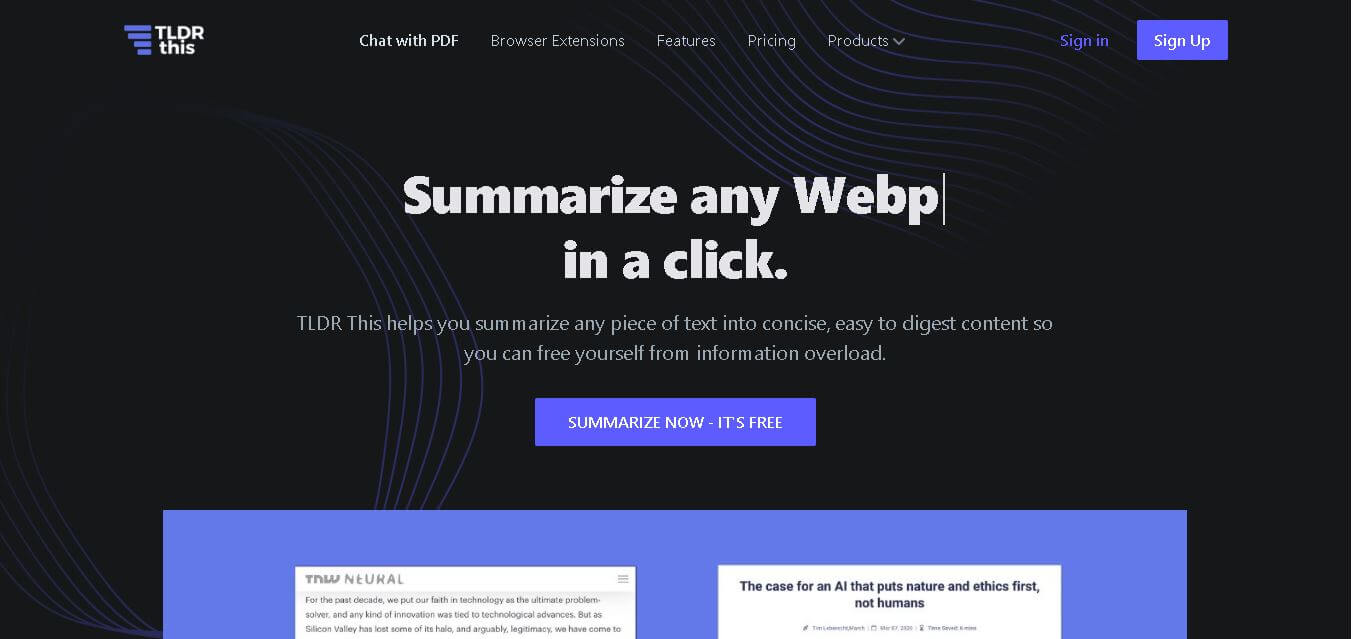
TLDR This is an AI-powered summarization tool that converts lengthy articles, webpages, and documents into short summaries, helping users quickly extract key information and save reading time.
 4.1
4.1AI Lawyer
Legal
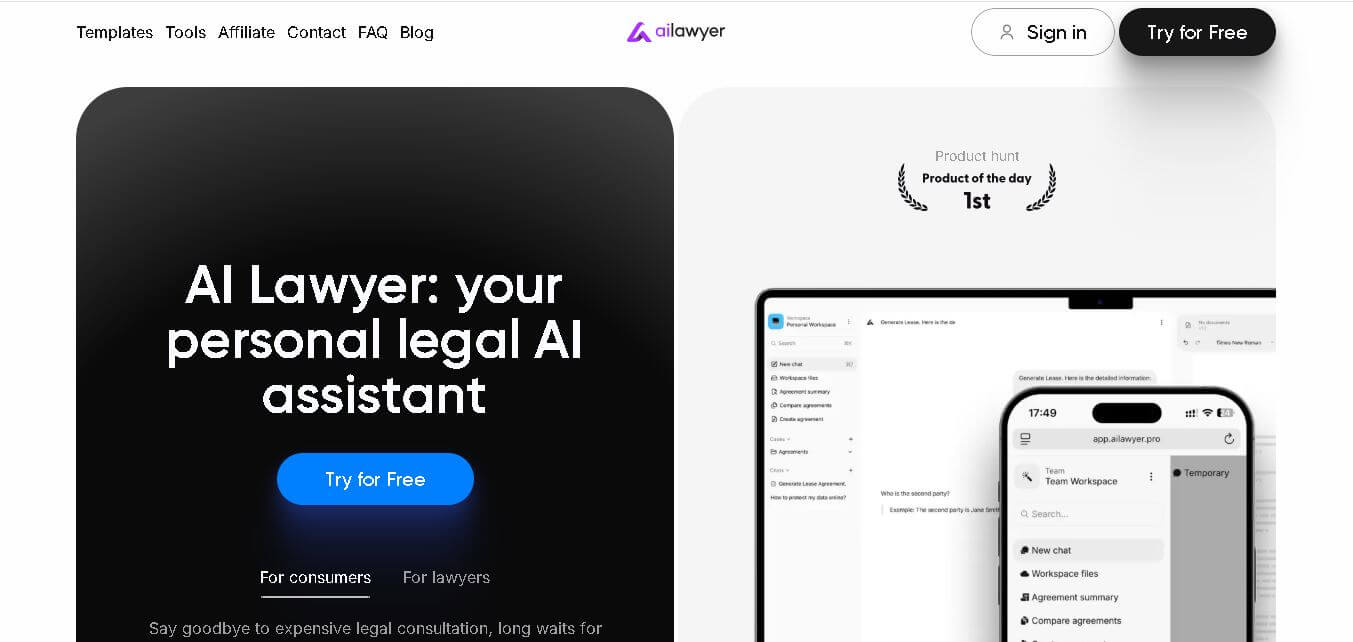
AI Lawyer Pro is an AI-powered legal assistant platform that helps users create legal documents, analyze contracts, research legal information, and simplify complex legal tasks with artificial intelligence.