Murmell
Murmell is a browser-based platform where teams run multiple AI coding agents together on a shared cloud workspace. It lets agents and developers collaborate in real time on the same codebase, preventing conflicts and keeping work synced—even when you close your laptop.
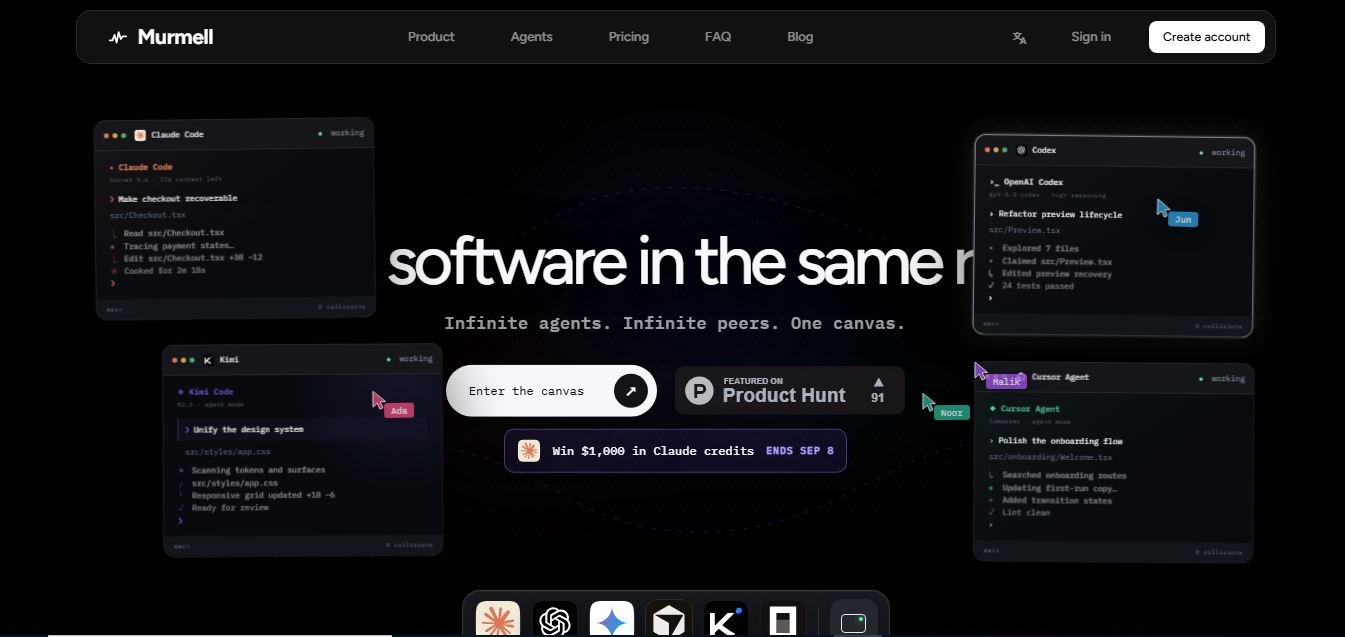
What is Murmell?
Murmell is a browser-based coding platform that lets developers and teams run multiple AI coding agents together in one shared workspace. Instead of each agent working in isolation, it creates a single cloud “canvas” where tools like Claude Code, Codex, and others collaborate on the same codebase in real time. Each agent runs in its own terminal while sharing the same project directory, with built-in coordination (like file claiming) to prevent conflicts or overwrites. Teams can join the same canvas, watch progress live, and even close their laptops while agents continue working in the cloud. Designed for modern AI-driven development, Murmell simplifies collaboration, reduces merge issues, and turns parallel agent workflows into a single, visible, and coordinated process.
Founded in 2026 by Moss'Ab Mirande-Ney, Murmell was built to solve the collaboration bottlenecks of multi-agent software engineering. Featuring an innovative file-claiming reservation system that prevents agents and human developers from overwriting each other's active work, alongside unified persistent cloud memory that continues running tasks even after you close your laptop, Murmell offers a 14-day free trial and subscription tiers starting from $39 per month.
- Founder / Leadership: Moss'Ab Mirande-Ney
- Launch Year: 2026
Use Cases:
- Running multiple specialized AI coding agents in parallel (e.g., one building API routes while another writes unit tests)
- Preventing race conditions and merge conflicts with intelligent file reservation locks while humans and agents code together
- Executing long-running refactoring or migration jobs in persistent cloud sandboxes without leaving your local computer running
- Reviewing live terminal outputs, shared code cursors, and running web previews with distributed team members
- Synchronizing completed multi-agent code branches and commits directly back to GitHub repositories
Technology:
- Cloud-native Linux sandbox environment hosting isolated project containers and high-speed terminal sessions
- Automated path-level file claiming protocol with crash detection and lock timeout recovery mechanisms
- Multi-agent orchestration runtime supporting Claude Code, OpenAI Codex, Kimi, OpenCode, and custom CLI developer agents
Target Users:
- Software engineers and technical founders using agentic CLI tools for full-stack feature development
- Agile development teams and engineering managers supervising parallel AI coding workflows
- DevOps and platform engineers seeking secure, isolated sandboxes for experimental autonomous agent runs
- Remote developer squads who need live multiplayer terminal sharing and visual workspace oversight
Acquisition: Operates as an independent developer tools and AI cloud infrastructure startup

Key features of Murmell
Murmell's key features are
- Multi-Agent Browser Canvas: Open multiple independent terminal windows running different AI coding agents inside a visual spatial workspace.
- Conflict-Free File Claiming: Agents and human developers reserve specific file paths before writing changes, preventing concurrent file overwrites and merge chaos.
- Persistent Cloud Execution: Coding agents continue executing tasks in dedicated cloud containers even when you close your browser or shut down your laptop.
- Unified Agent Memory & Session Freezing: Freeze your canvas state and return anytime to the exact same terminals, active file states, and conversational history.
- Real-Time Multiplayer Collaboration: Share canvas access with teammates to observe live terminal outputs, track collaborator cursors, and inspect code edits together.
- Integrated Live Previews: Spin up and preview front-end web applications and staging environments directly alongside active agent terminals.
- Multi-Provider Model Flexibility: Bring your own developer accounts across Anthropic Claude Code, OpenAI Codex, Kimi, and open-source models.
- Isolated Sandbox Security: Runs code in isolated environments that shield local machines and protect sensitive proprietary assets from unvetted package execution.
Murmell Pricing
Murmell operates on a subscription model structured around active project counts and simultaneous agent windows, backed by a 14-day free trial on all plans.
Solo Plan:
- $19.5 / month
- 1 active project and 1 agent account running in the cloud
- Bring your own provider accounts (Claude Code, Codex, Kimi) with persistent background execution
Pro Plan (Most Popular):
- $34.5.00 / month
- Up to 3 active projects and 5 simultaneous agent windows
- Real-time canvas sharing, multiplayer collaboration, and live preview rendering
Builder Plan:
- $74.5 / month
- Unlimited active projects and unlimited simultaneous agent windows
- Shared team canvases, priority cloud compute allocation, and advanced workspace permissions
Disclaimer: For the latest agent provider integrations, enterprise self-hosting setups, and team seat discounts, please visit the official Murmell website at murmell.com.
Who is using Murmell?
Murmell is used by engineering teams and modern developers, including
- Full-Stack Product Developers: Assigning tedious backend boilerplate and frontend styling to separate agents simultaneously
- Engineering Team Leads: Supervising multiple agent outputs in a single collaborative room without merge conflicts
- Startup Founders & Indie Hackers: Multiplying engineering output by orchestrating parallel autonomous coding agents around the clock
- Remote Pair Programmers: Reviewing code, terminal commands, and live previews with colleagues on a unified interactive canvas
Best Murmell Alternatives
Some of the strongest Murmell alternatives include
- Replit Agent
- Cursor
- Google Antigravity
- CodeSandbox
- Kilo Code
- Coder (code-server)
Pros and Cons of Murmell
Pros
- Solves multi-agent merge conflicts with an automated, path-level file reservation system
- Persistent cloud sandbox lets agents continue long coding tasks even after closing your laptop
- Supports top-tier agent frameworks including Claude Code, OpenAI Codex, Kimi, and OpenCode
- Multiplayer canvas provides shared cursors, live terminal watching, and integrated web previews
- Keeps your local development environment uncluttered and secure from unvetted AI scripts
Cons
- Requires users to connect their own third-party AI provider accounts and API credits
- File reservation protocol requires a short adjustment period for developers used to traditional branch merging
- Cloud-hosted terminals depend on stable internet connectivity for real-time responsiveness
Why Choose Murmell?
While single-user AI code editors only let you run one prompt at a time on your local machine, Murmell creates an entire digital office where you, your teammates, and multiple AI agents work together seamlessly.
- Multiplies development speed by running parallel agents on separate parts of the codebase
- Eliminates overwrites with automatic file locks and intelligent timeout recovery
- Persists state and terminal sessions in the cloud without draining local computer battery
- Brings multiplayer Google Docs-style collaboration to agentic terminal development
Murmell vs. Competitors
The main difference between Murmell, Cursor, Replit Agent, and CodeSandbox lies in multi-agent orchestration and concurrency safeguards. While Cursor is a local VS Code fork for single-developer inline coding, and Replit provides a cloud IDE with an autonomous assistant, Murmell is built specifically around parallel multi-agent collaboration—combining multi-terminal canvas layouts, persistent cloud execution, and automated file-claiming locks.
| Feature / Tool | Murmell (murmell.com) | Cursor | Replit Agent | CodeSandbox |
|---|---|---|---|---|
| Core Focus | Multi-Agent Cloud Canvas | AI-Enhanced Desktop IDE | Autonomous Cloud App Builder | Cloud Dev Environments |
| Parallel Multi-Agent Execution | Yes (Multiple terminals & agents) | Limited (Single agent queue) | Single agent workflow | No (Manual coding) |
| File Reservation / Locking | Yes (Path-level claiming) | No (Local git staging) | No | No |
| Persistent Background Runs | Yes (Cloud persists on close) | No (Requires local machine) | Yes (Cloud workspace) | Yes (MicroVMs) |
| Starting Price | $39.00 / month | Free / $20.00 / month | $25.00 / month (Core) | Free / $15.00 / month |
| Best For | Teams running parallel CLI coding agents | Individual developers in local IDEs | Rapid full-stack web prototyping | Collaborative cloud web development |
How do we rate Murmell?
| Parameter | Rating (out of 5) |
|---|---|
| Multi-Agent Orchestration & Concurrency | 4.9 |
| File-Claiming & Overwrite Prevention | 5.0 |
| Cloud Persistence & Session Continuity | 4.8 |
| Multiplayer Collaboration & UX | 4.8 |
| Value for Engineering Teams | 4.7 |
| Overall Score | 4.84 |
Murmell Review
Murmell provides a necessary and brilliantly engineered solution for the emerging era of agentic software development. By addressing the core friction point of multi-agent coding—where concurrent autonomous agents inevitably collide, overwrite files, and cause merge conflicts—Murmell's visual canvas and file-claiming locks bring order to chaotic terminal workflows. Its persistent cloud sandboxes and live multiplayer terminal sharing make it an indispensable platform for developers and engineering teams looking to supercharge their coding velocity with autonomous agents.
Conclusion
Murmell is a new kind of developer platform built for teams using multiple AI coding agents at once. Instead of running agents separately, it provides a shared cloud canvas where developers and AI agents work together on the same codebase in real time—like “Google Docs for AI development.” Its biggest strength lies in multi-agent coordination. Features like live terminals, shared workspace, and file-level locking prevent agents from overwriting each other and eliminate messy merge conflicts. Combined with cloud execution, agents keep running even when you close your laptop, making workflows faster and more continuous. While it’s still an early-stage product and requires bringing your own AI tools and setup, the concept is powerful. Murmell represents the future of collaborative development—where humans and multiple AI agents build software together in one synchronized environment.
FAQ
What is Murmell?
Murmell is a cloud-based collaborative platform where teams and multiple AI coding agents can work together on the same project in real time. Think of it like “Google Docs for AI agents,” but for building software.
How does Murmell work?
Murmell runs AI coding agents (like Claude Code or Codex) on cloud machines instead of your laptop. Each agent works inside its own terminal, but all share the same project directory, so everyone stays in sync without needing to merge code later.
What can you do with Murmell?
You can build software collaboratively with AI agents, run multiple agents at once, preview changes live, and manage everything in a shared workspace. It’s especially useful for prototyping, coding faster, and coordinating team workflows.
What makes Murmell different from other AI coding tools?
Most AI coding tools run in isolated environments, but Murmell puts all agents and teammates into one shared canvas. It also uses file “reservation” so agents don’t overwrite each other’s work, reducing merge conflicts.
Does Murmell provide AI models or do I bring my own?
Murmell does not sell AI model access. You connect your own API keys or subscriptions (like OpenAI or Anthropic), and those providers handle billing.
Is Murmell free to use?
Murmell is a paid tool with different plans depending on usage, team size, and features. Some plans may include trials or limited access when available.
User Reviews
No reviews yet for Murmell.
Featured Tools
Featured AI tools from TechShark
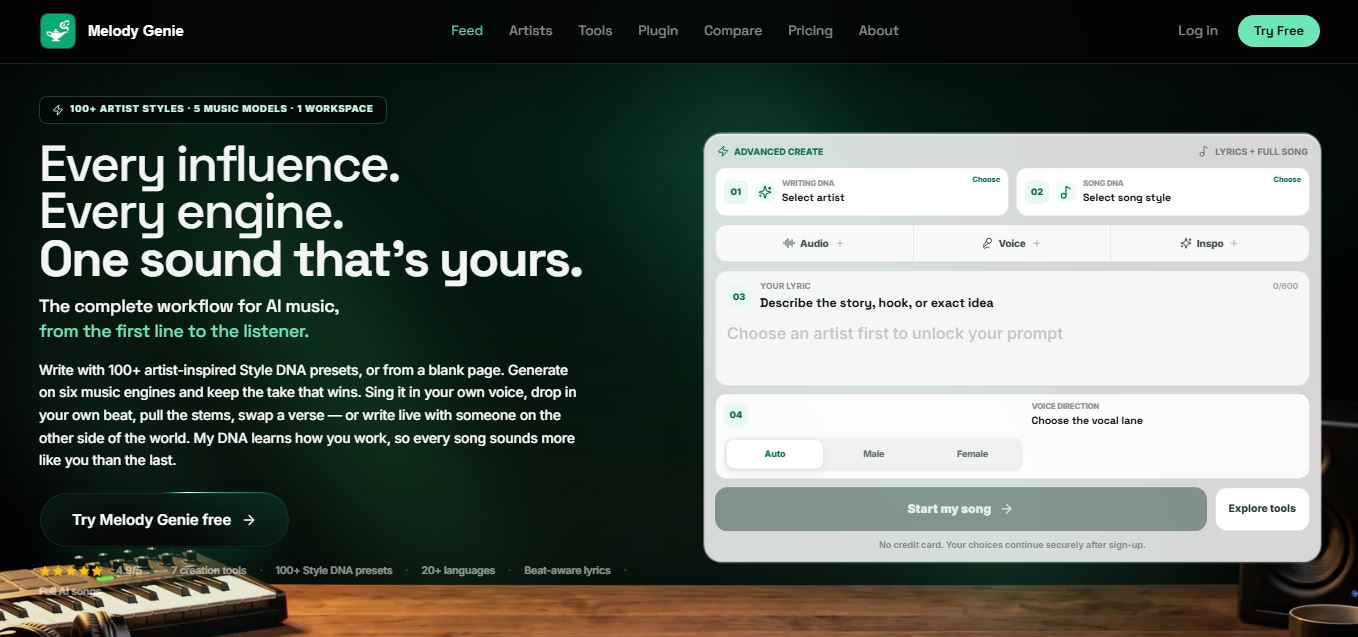
Melody Genie
MelodyGenie is an AI-powered music generator that creates original songs from simple text prompts. Users can choose styles, moods, and genres, then instantly generate melodies and full tracks, making it easy for creators, marketers, and hobbyists to produce custom music without musical expertise.
Freemium
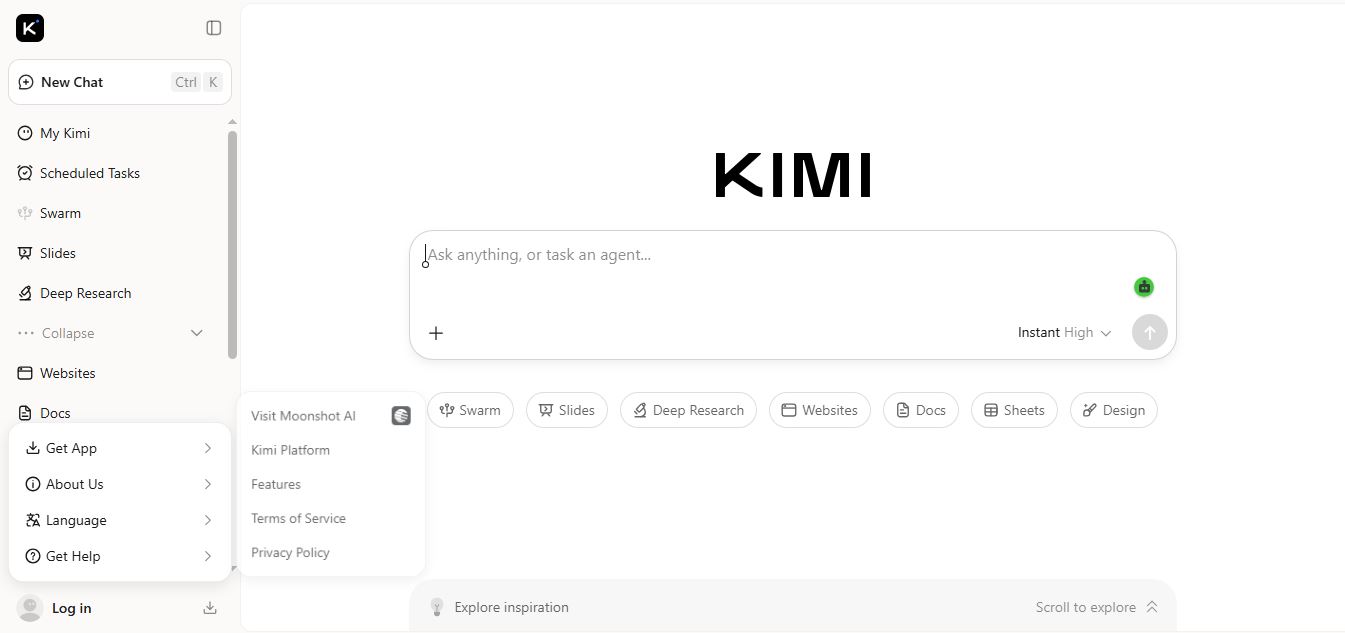
Kimi AI
Kimi AI is an advanced AI assistant developed by Moonshot AI that helps you chat, research, write, code, and automate tasks in one place. It supports web search, file analysis, and multimodal inputs, and can even run autonomous “agent” workflows to complete complex tasks end-to-end.
Freemium

Fashion Diffusion AI
Fashion Diffusion is an AI-powered fashion design platform that helps brands and designers create clothing designs, virtual try-ons, AI models, product photos, and marketing visuals faster and cost-effectively.
Paid
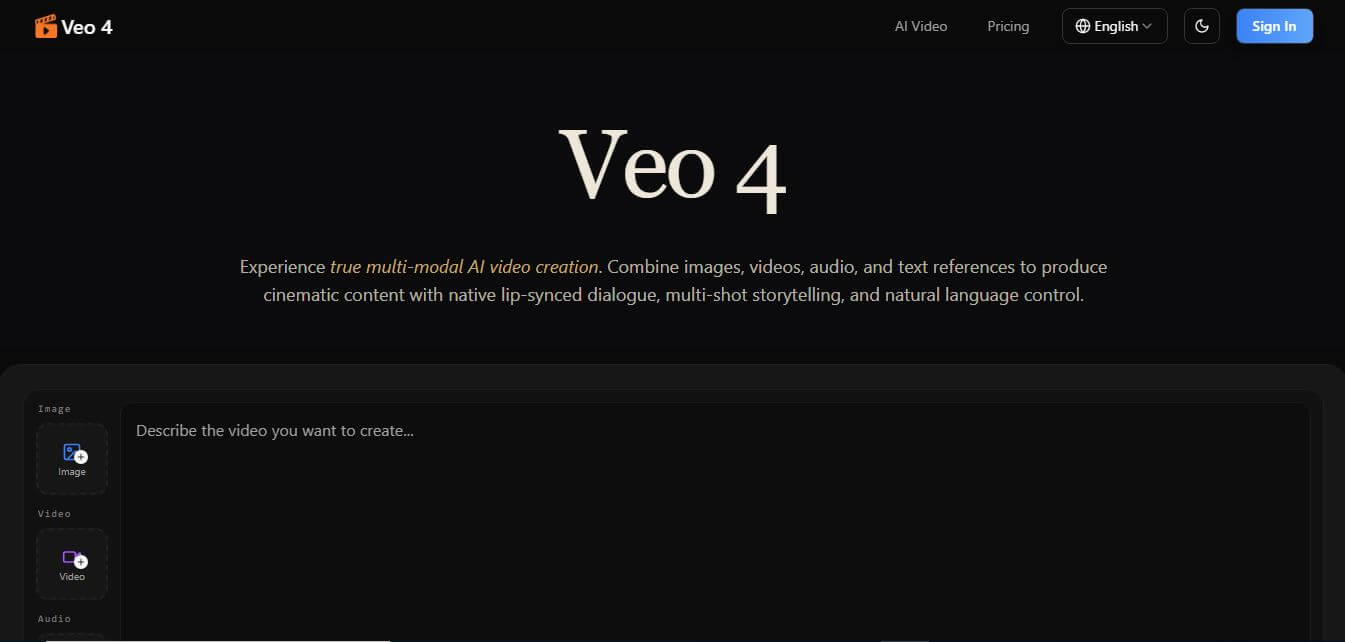
Veo 4
Veo 4 AI is an AI video creation platform that generates dramatic videos from text, images, audio, and video prompts using realistic motion and synchronized sound.
Paid
Alternatives
Alternatives to Murmell
The best Murmell alternatives include Cursor, Replit Agent, Google Antigravity, CodeSandbox, Kilo Code, and Coder. These platforms provide AI-enhanced code editing, cloud sandboxes, and developer environments. While Murmell specializes in a collaborative multi-agent cloud canvas with automated file-claiming locks and persistent background execution for CLI agents (Claude Code, OpenAI Codex, Kimi), alternatives like Cursor focus on local IDE inline code editing, and Replit Agent offers an autonomous cloud application builder.
 4.9
4.9Claudebin
Code Assistant
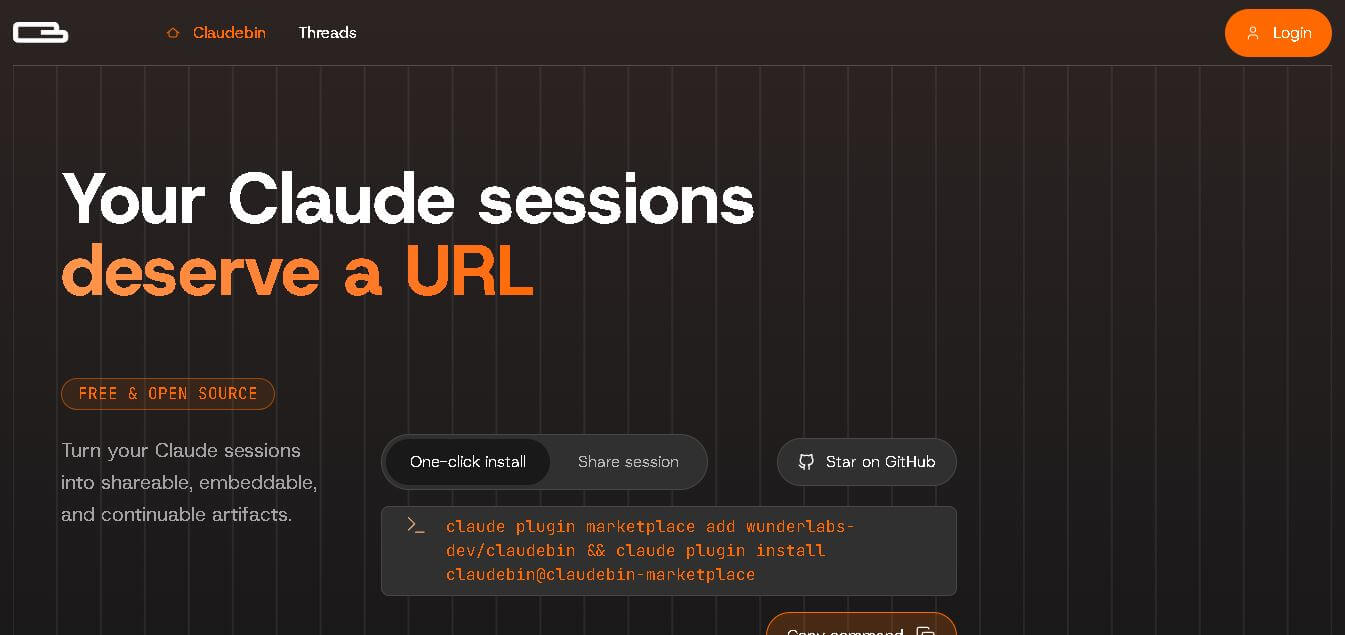
Claudebin is an open-source tool for sharing Claude Code sessions through structured, accessible web links. It captures conversations, file operations, terminal commands, and tool calls, helping developers explain their coding workflows. With session viewing and embedding capabilities, it simplifies technical documentation, collaboration, debugging discussions, and knowledge sharing across development projects.
 4.9
4.9GitFluence
Code Assistant
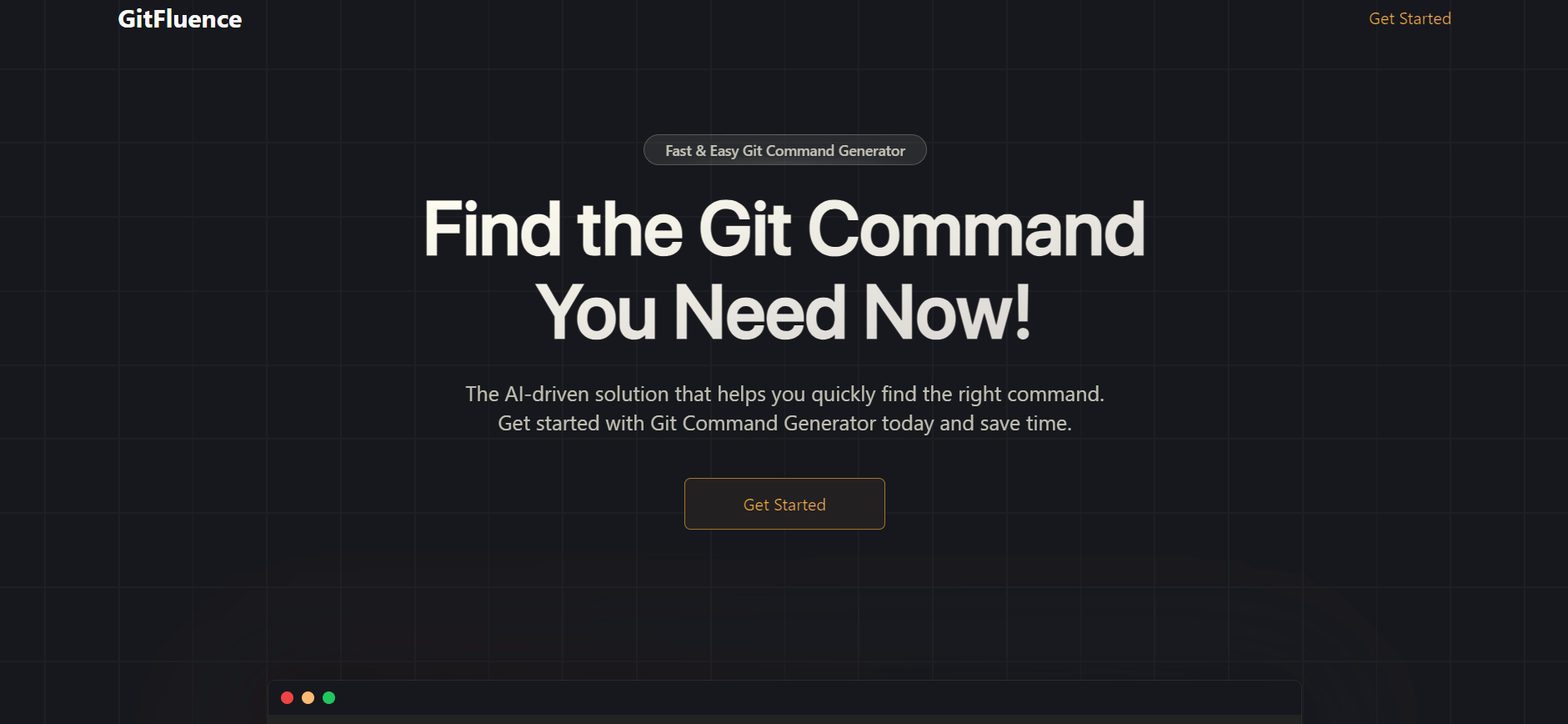
GitFluence is an AI-powered Git command generator that helps developers turn plain-English instructions into exact Git commands. It eliminates the need to memorize syntax, speeds up version control workflows, and lets users quickly copy accurate commands for tasks like branching, merging, and fixing commits.
 4.9
4.9Kiro
Vibe Coding
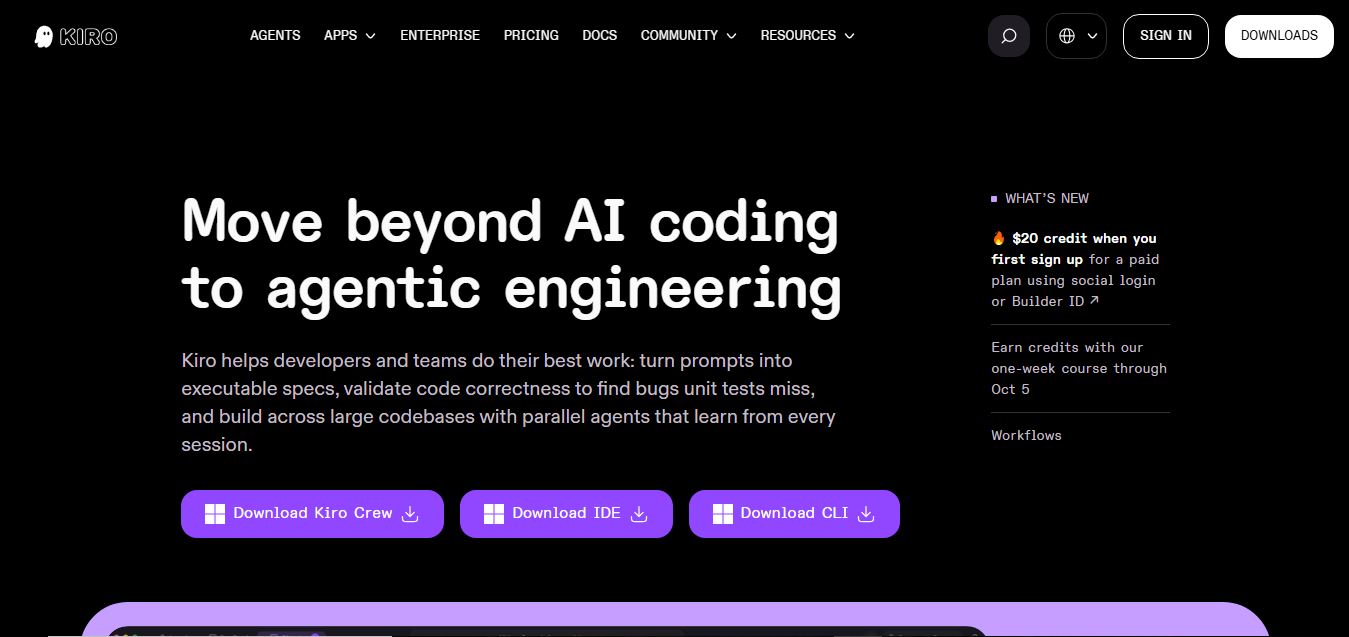
Kiro is an AI-powered developer platform that helps teams plan, build, and ship software using autonomous agents. It turns prompts into structured specs, writes and tests code, and automates workflows across IDE, CLI, and cloud, enabling faster, reliable development from prototype to production.
 4.8
4.8Emergent
Vibe Coding
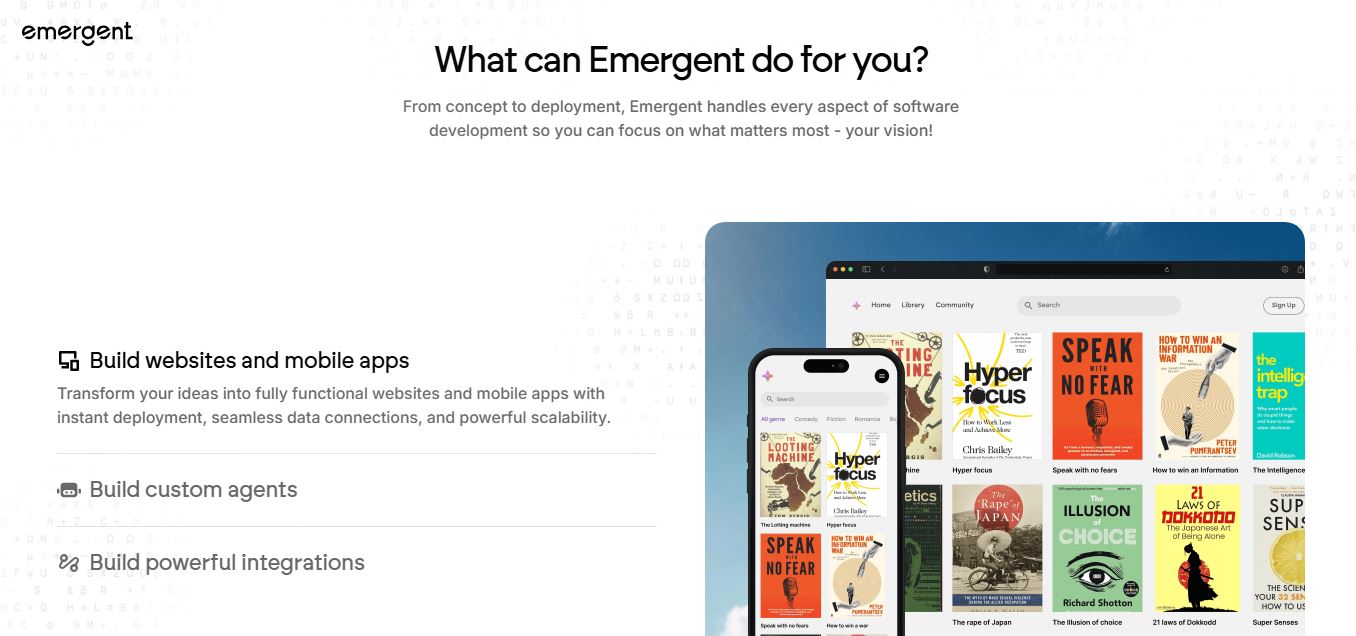
Emergent is an AI-powered app builder that lets users create full-stack web and mobile applications by simply describing their idea. It uses autonomous agents to plan, code, test, and deploy apps, handling everything from backend to hosting without requiring traditional programming skills.
 4.7
4.7Amazon Q Developer
Code Assistant
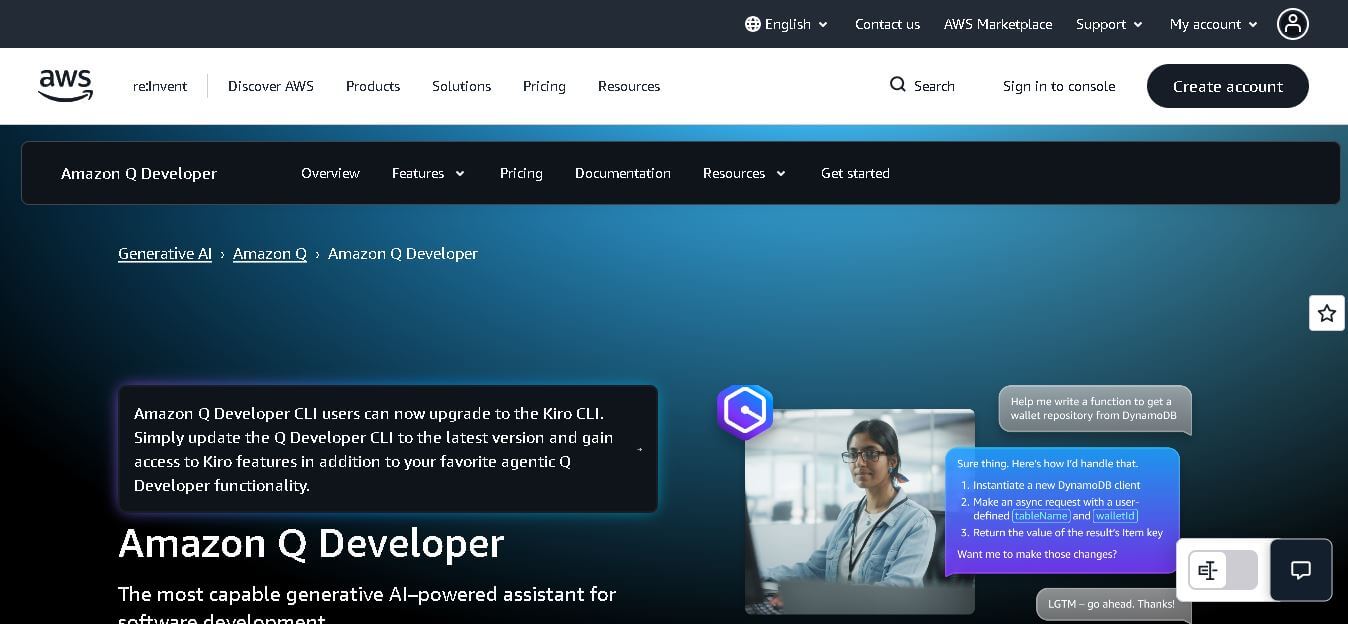
Amazon Q Developer helps developers write, explain, test, refactor, secure, and troubleshoot code while working with AWS services. It provides conversational assistance, inline suggestions, agentic coding, and cloud guidance across supported IDEs, command-line environments, and AWS interfaces. Its goal is to reduce repetitive work and help teams move from ideas to deployable software.
 4.9
4.9GitLab
Code Assistant
GitLab is a DevOps platform that provides a complete suite for planning, coding, testing, and deploying software in one place. It combines version control, CI/CD, security, and collaboration tools, helping teams streamline development workflows and deliver software faster and more efficiently.
 4.9
4.9CodeRabbit
Code Assistant
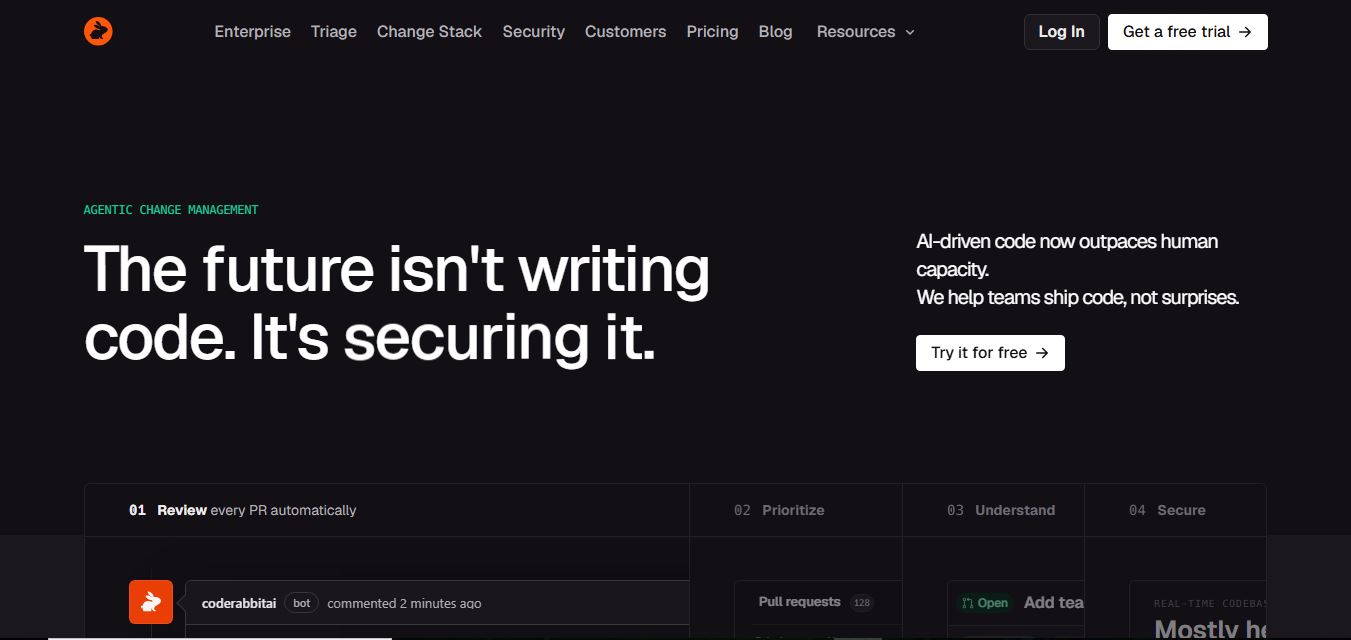
CodeRabbit is an AI-powered code review assistant that helps developers catch bugs, improve code quality, and speed up pull requests. It analyzes code changes in real time, provides actionable feedback, and integrates with Git workflows to make reviews faster and more efficient.
 4.9
4.9Sourcery
Code Assistant
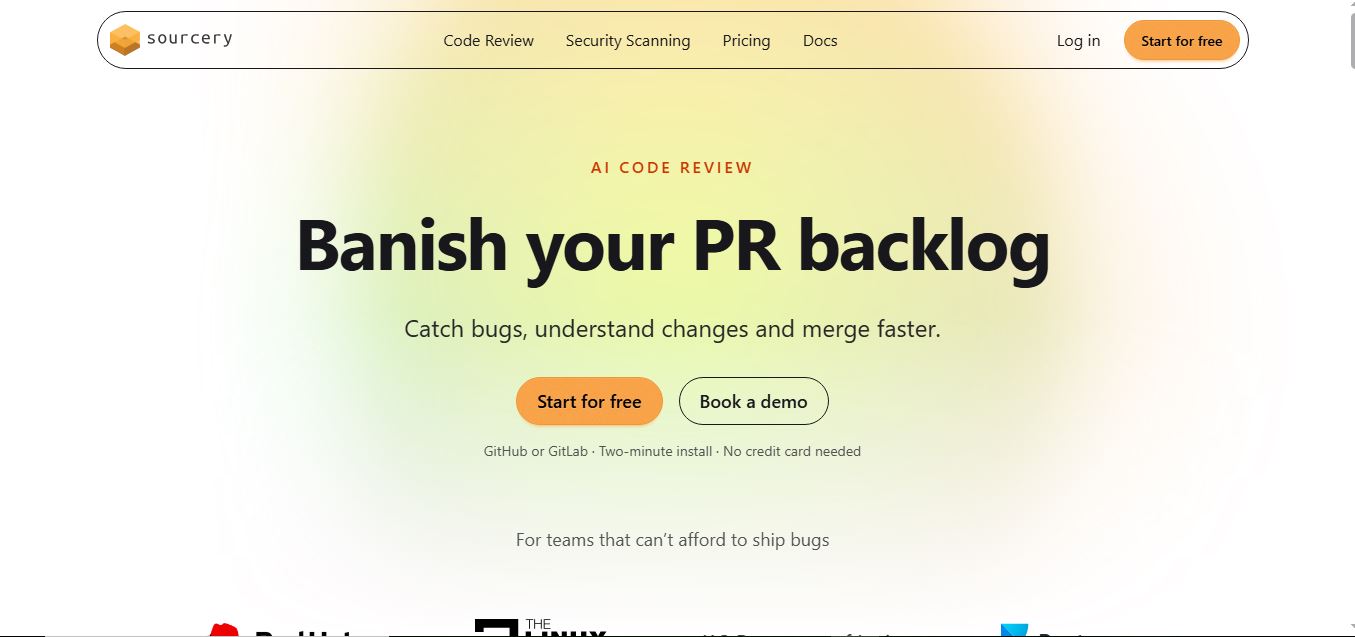
Sourcery is an AI-powered code refactoring tool that helps developers automatically improve Python code quality. It analyzes code, suggests cleaner and more efficient alternatives, and applies refactors instantly, making code more readable, maintainable, and aligned with best practices.
Tenki Cloud
Code Assistant
Tenki Cloud is a high-performance, cost-efficient cloud infrastructure platform offering disposable sandboxes for AI agents, self-hosted GitHub Actions runners, and automated AI code review.