Luma Dream Machine
Luma Dream Machine is an AI video and image generation platform that turns text prompts or images into short, realistic videos with smooth motion and cinematic effects. It can also edit visuals, apply styles, and generate creative variations using simple natural language—no complex prompting needed.
What is Luma Dream Machine?
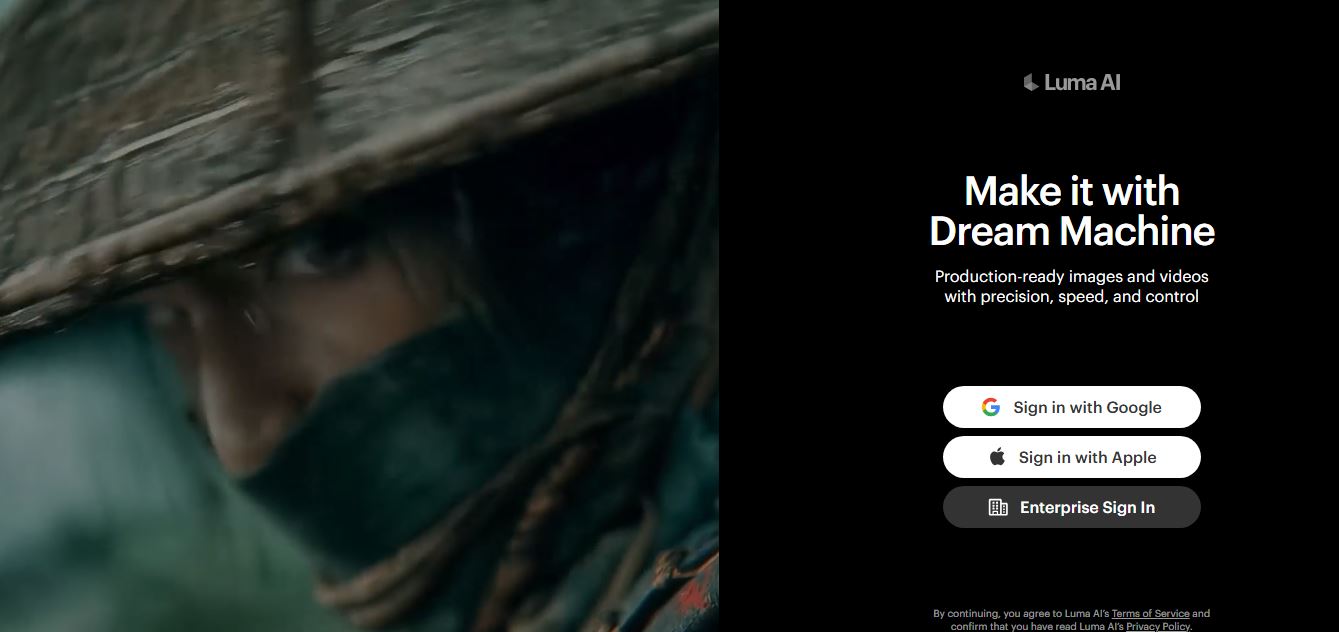
Luma Dream Machine is a frontier generative AI video creation studio, multimodal world simulation platform, and creative agent workspace developed by Luma AI (Luma Labs) in San Francisco, California. While early text-to-video generators struggled with erratic frame morphing, unnatural physics, and drifting camera motions, Dream Machine was designed from the ground up to render realistic, high-fidelity visual motion and cinematic camera behavior.
Built upon Luma AI's flagship foundation video architecture—the Ray series (including Ray 2, Ray 2 Flash, and Ray 3)—Dream Machine synthesizes realistic 5- to 9-second high-definition (720p/1080p, with 4K upscaling) video sequences from natural-language descriptions or reference imagery. The platform stands out for its Dual-Keyframe Interpolation (setting starting frame0 and ending frame1 to generate precise scene transitions), smooth virtual camera dynamics, and fluid simulation of real-world lighting and atmospheric physics. Through the rollout of Luma Agents, the platform has expanded into a comprehensive production studio bundling Luma's own Ray models alongside partner engines. Dream Machine provides a free tier with daily generation credits (watermarked, non-commercial) alongside paid subscriptions starting from $9.99/mo (Lite) and $29.99/mo (Plus) to $94.99/mo (Unlimited) and Luma Agents plans ($30 to $300/mo).
- Developer & Research Lab: Luma AI / Luma Labs (San Francisco, CA)
- Core Foundation Architecture: Ray 2, Ray 2 Flash & Ray 3 multimodal video transformers
- Core Generation Modalities: Text-to-Video (T2V), Image-to-Video (I2V), and Dual-Keyframe Start/End Transitions
Use Cases:
- Generating cinematic establishing shots, mood boards, and atmospheric B-roll with natural light diffusion and lens flare
- Animating static concept art, digital photography, and brand graphics into dynamic video clips with smooth camera drift
- Creating seamless scene morphs and narrative transitions using start-frame and end-frame dual keyframe inputs
- Previsualizing film shots, commercial treatments, and music videos before physical production shoots
- Generating engaging short-form social creatives for YouTube Shorts, Instagram Reels, and advertising campaigns
Technology:
- Large-scale multimodal transformer trained on 10x compute compared to early diffusion pipelines for temporal stability
- Dual-keyframe conditioning framework interpolating coherent spatial and volumetric physics between two arbitrary images
- Developer-facing REST API exposing pay-as-you-go Ray 2 and Ray 2 Flash endpoints with direct keyframe control
Target Users:
- Commercial directors, cinematographers, and VFX artists previsualizing camera movements and complex treatments
- Social media content creators and digital marketing agencies building high-volume promotional video ads
- Concept artists and 3D illustrators converting still renders into moving portfolio showcases
- Software engineers integrating video generation into autonomous agent loops via the official Luma API
Acquisition: Operates as the core proprietary video platform of Luma AI

Key features of Luma Dream Machine
Luma Dream Machine's key platform features are
- Ray Foundation Model Suite: Powered by Ray 2, Ray 2 Flash, and Ray 3, delivering realistic motion physics, lighting interactions, and coherent movement.
- Dual-Keyframe Transitions: Upload a starting image (frame0) and an ending image (frame1); Dream Machine generates the logical narrative and spatial bridge between both anchors.
- Text-to-Video & Image-to-Video: Generate high-definition scenes directly from descriptive text prompts or breathe natural motion into reference images.
- Cinematic Camera Motion Controls: Direct virtual cinematography using prompt-driven camera controls—including pans, tilts, tracking shots, dolly zooms, and sweeping orbits.
- Video Extension & Looping: Extend existing clips by additional 5-second intervals to build longer continuous sequences up to 30+ seconds or create infinite video loops.
- High-Speed Ray 2 Flash: Offers an accelerated generation mode that outputs draft concepts in 30 to 50 seconds for rapid brainstorming.
- Luma Agents Studio: Creative agent workspace that orchestrates multi-step generation workflows across Ray and partner foundation models.
- Developer REST API: Integrates into external pipelines and creative tools via
api.lumalabs.aiwith pay-as-you-go per-clip or per-second billing.
Luma Dream Machine Pricing
Luma Dream Machine operates across consumer tiers (with a daily free trial allowance) and Luma Agents plans, complemented by a developer API.
Free Evaluation:
- $0 / Free Tier: Daily free credit allowance (approx. 80-250 credits/day), 720p resolution, watermarked output, non-commercial personal use only
Dream Machine Consumer Plans:
- Lite Plan: $9.99 / month (or $7.99/mo annual) | 3,200 monthly credits, watermark included, non-commercial use
- Plus Plan (Most Popular): $29.99 / month (or $23.99/mo annual) | 10,000 monthly credits, watermark-free rendering, full commercial use rights, priority queue access
- Unlimited Plan: $94.99 / month (or $75.99/mo annual) | 10,000 fast generation credits plus unlimited generations in Relaxed Mode, watermark-free, commercial rights
Luma Agents Plans:
- Plus: $30.00 / month | 10,000 Agent credits, access to multi-model creative suite
- Pro: $90.00 / month | 40,000 Agent credits (4x Plus usage), higher priority queue
- Ultra: $300.00 / month | 150,000 Agent credits (15x Plus usage), designed for studios and high-volume marketing teams
Developer API:
- Pay-as-you-go per generation: ~$0.50 to $0.60 per 5s Ray 2 Flash clip, ~$0.95 to $1.05 per 5s Ray 2 clip (1080p/4K)
Disclaimer: Monthly subscription credits expire at billing renewal; top-up credit packs stay valid for 12 months. Commercial use requires Plus, Unlimited, or higher plans. For the latest credit allocations and model updates, visit dream-machine.lumalabs.ai.
Who is using Luma Dream Machine?
Luma Dream Machine is used by digital creators, filmmakers, and marketing studios, including
- Commercial Filmmakers & Directors: Previsualizing cinematic shots, lighting moods, and camera blocking before committing to production shoots
- Digital Artists & Motion Designers: Generating atmospheric background visuals, surreal loop animations, and video treatments
- Social Media Content Creators: Producing engaging short-form video hooks and dynamic B-roll for YouTube, Instagram, and TikTok
- Brand & Marketing Agencies: Rapidly producing diverse concept variations and product mockups for pitch presentations
Best Luma Dream Machine Alternatives
Some of the strongest Luma Dream Machine alternatives include
Pros and Cons of Luma Dream Machine
Pros
- Dual-keyframe transition feature (start and end frames) creates coherent visual and spatial transformations
- Produces smooth, cinematic camera drifts with natural lighting and volumetric atmospheric effects
- Ray 2 Flash mode generates fast drafts that take in 30 to 50 seconds for quick iteration
- Unlimited plan ($94.99/mo) provides unlimited Relaxed Mode generations for high-volume experimentation
- Free evaluation tier allows creators to test capabilities with daily credit grants
Cons
- Generates silent video clips; sound effects, dialogue, and background scores must be added separately
- Free and Lite plans include visible watermarks and restrict content to non-commercial usage
- Monthly subscription credits do not roll over across billing cycles
Why Choose Luma Dream Machine?
Many AI video tools produce chaotic camera movements and jarring frame transitions that make clips difficult to use in professional edits. Luma Dream Machine focuses on cinematic mood, photographic realism, and controllable motion.
- Controls where your clip begins and ends using dual-keyframe anchoring for predictable transitions
- Delivers smooth camera movements that simulate real film equipment like cranes, dollies, and gimbal tracks
- Allows unmetered exploration through the Unlimited plan's Relaxed Mode without running out of credits
- Provides a dedicated developer API to integrate Ray models into automated creative production pipelines
Luma Dream Machine vs. Competitors
The main difference between Luma Dream Machine, Runway, Kling AI, and Hailuo AI lies in motion aesthetics and transition controls. While Runway provides a comprehensive post-production suite and Hailuo AI excels at micro-facial expressions and physics simulations, Luma Dream Machine is distinguished by its dual-keyframe interpolation engine (connecting start and end images smoothly), atmospheric lighting quality, and an Unlimited plan tier with unmetered Relaxed generations.
| Feature / Platform | Luma Dream Machine | Runway (Gen-3/4) | Kling AI | Hailuo AI |
|---|---|---|---|---|
| Core Foundation Model | Ray 2, Ray 2 Flash & Ray 3 | Gen-3 / Gen-4 Turbo | Kling 1.5 / 2.0 / 3.0 | Hailuo 01 / 2.0 / 2.3 Pro |
| Dual Keyframe Support | Yes (Frame0 to Frame1 interpolation) | Keyframe controls available | Start & end frame modes | Start/end frame guidance |
| Unlimited Generation Mode | Yes (Unlimited Plan Relaxed Mode) | Yes (Unlimited plan at $76/mo) | No (Credit-metered) | No (Credit-metered) |
| Aesthetic Strength | Atmospheric lighting & camera drift | Cinematic realism & VFX editing | Action dynamics & choreography | Fluid physics & facial expressions |
| Starting Price | Free tier / Lite $9.99/mo / Plus $29.99/mo | Free tier / Standard $15/mo | Free daily credits / From $10/mo | Free trial / Basic $19.90/mo |
| Best For | Creators wanting atmospheric B-roll, keyframe morphs & unlimited plans | High-end post-production VFX and video editing | High-action character sequences and lip sync | Realistic liquid/cloth physics and facial expressions |
How do we rate Luma Dream Machine?
| Parameter | Rating (out of 5) |
|---|---|
| Cinematic Visual Quality & Atmospheric Lighting | 4.9 |
| Dual-Keyframe Transition Control | 5.0 |
| Generation Speed (Ray 2 Flash Mode) | 4.8 |
| Developer API & Ecosystem Integration | 4.8 |
| Value for Money (Unlimited Mode Available) | 4.8 |
| Overall Score | 4.86 |
Luma Dream Machine Review
Luma Dream Machine stands out as one of the premier platforms in the generative video space. By anchoring its rendering engine to cinematic lighting, smooth camera movement, and dual-keyframe transitions, it addresses many of the common frustrations creators encounter with text-to-video tools. The ability to define both starting and ending frames makes it practical for deliberate visual storytelling, while the fast Ray 2 Flash mode and relaxed generation options on the Unlimited plan make it easy to experiment without worrying about credit depletion. For filmmakers, digital artists, and creative teams seeking atmospheric and cinematic video generation, Dream Machine is an impressive and capable tool.
Conclusion
Luma Dream Machine advances AI cinematography by making high-fidelity video generation accessible and controllable. With its foundation Ray model family, dual-keyframe transition engine, prompt-driven camera controls, developer REST API, and flexible unlimited generation plans, Dream Machine gives creators and studios the tools they need to bring visual concepts to life with cinematic polish.
FAQ
What is Luma Dream Machine and what can it do?
Dream Machine is an AI-powered text-to-video and image-to-video platform that turns simple prompts or images into realistic short videos with cinematic motion, lighting, and physics.
Can it really generate videos from just text?
Yes. You describe a scene in natural language, and the AI generates a video clip—often within seconds—without needing complex prompts or editing skills.
What makes Dream Machine better than other AI video tools?
Its biggest advantage is realistic motion and camera control. It produces smooth animations, believable physics, and cinematic camera movements—something many AI video tools struggle with.
Can I use images or references to guide the video?
Yes. You can upload images or use style references to maintain character consistency, visual style, or scene direction across your videos.
What types of videos can I create with it?
You can create social media clips, ads, concept visuals, storytelling scenes, animations, and creative experiments—especially short cinematic content (typically a few seconds long per clip).
Is Dream Machine free or paid?
It uses a credit-based system where generating videos or images consumes credits. Free access is limited, while paid plans unlock more generations and higher-quality outputs.
User Reviews
No reviews yet for Luma Dream Machine.
Featured Tools
Featured AI tools from TechShark
Melody Genie
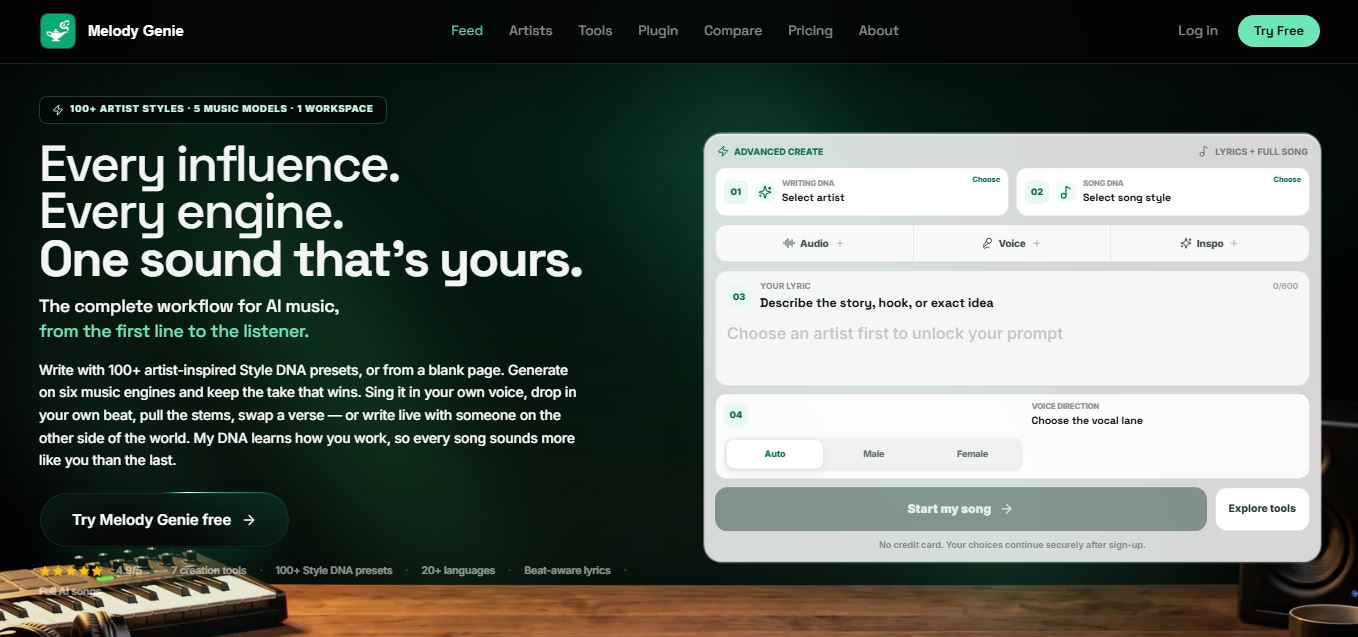
MelodyGenie is an AI-powered music generator that creates original songs from simple text prompts. Users can choose styles, moods, and genres, then instantly generate melodies and full tracks, making it easy for creators, marketers, and hobbyists to produce custom music without musical expertise.
Freemium
Kimi AI
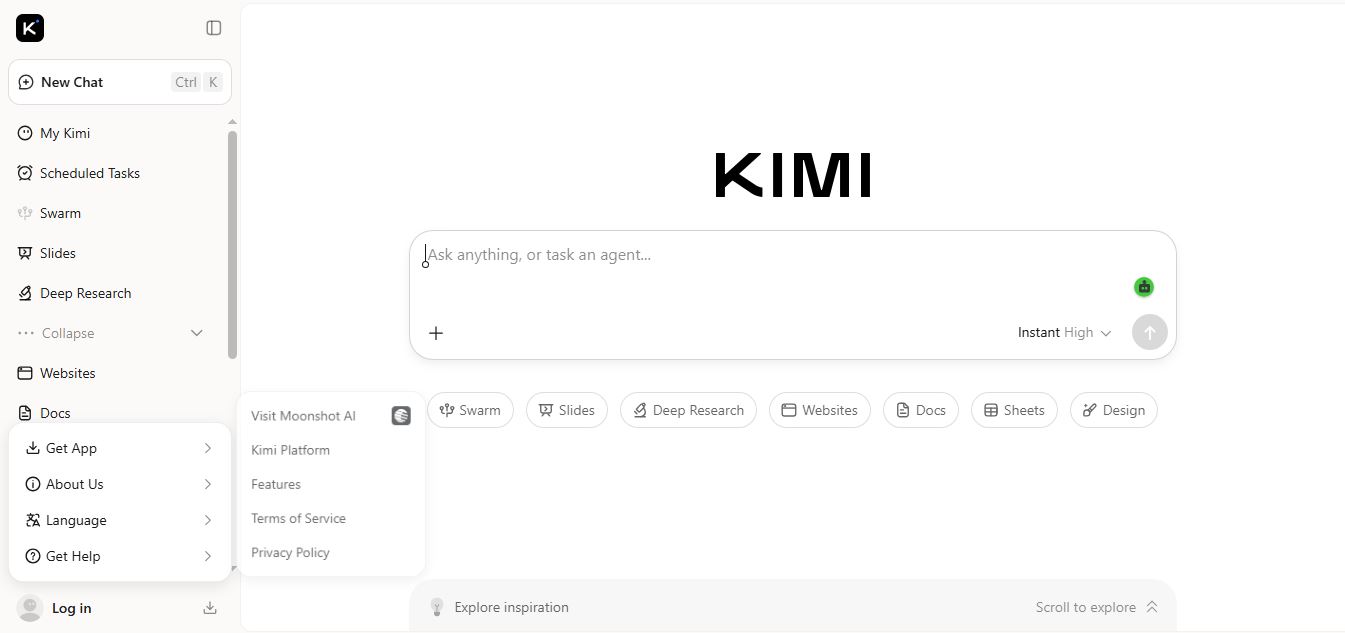
Kimi AI is an advanced AI assistant developed by Moonshot AI that helps you chat, research, write, code, and automate tasks in one place. It supports web search, file analysis, and multimodal inputs, and can even run autonomous “agent” workflows to complete complex tasks end-to-end.
Freemium

Fashion Diffusion AI
Fashion Diffusion is an AI-powered fashion design platform that helps brands and designers create clothing designs, virtual try-ons, AI models, product photos, and marketing visuals faster and cost-effectively.
Paid
Veo 4
Veo 4 AI is an AI video creation platform that generates dramatic videos from text, images, audio, and video prompts using realistic motion and synchronized sound.
Paid
Alternatives
Alternatives to Luma Dream Machine
The best Luma Dream Machine alternatives include Runway (Gen-3/Gen-4 Turbo), Kling AI, Hailuo AI (hailuoai.video), FoxCut (foxcut.ai), Pixo (pixo.video), and Pika. These platforms provide generative AI video creation, camera direction, and text-to-video animation. While Luma Dream Machine specializes in atmospheric cinematic lighting, smooth virtual camera drift, and dual-keyframe start/end frame transitions powered by the Ray model family and Luma Agents with an Unlimited Relaxed tier ($94.99/mo), alternatives like Runway provide complete in-browser post-production VFX tools, and Hailuo AI excels at fluid physical simulations and facial expressions.
Neural.love
AI Image Enhancer
Neural.love is an AI-powered creative platform for generating images, editing photos, enhancing videos, restoring old media, and animating pictures. It combines multiple AI tools in a browser-based workspace, helping content creators, marketers, photographers, designers, and businesses improve visual content without relying entirely on traditional editing software.
 4.8
4.8Prisma AI
Image
Prisma AI turns everyday photos into artistic images with stylized filters and creative effects. It offers hundreds of art and portrait styles inspired by famous artists, allowing beginners to create distinctive visuals quickly. Users can capture or upload photos, apply a chosen style, and save or share the finished result.
 4.9
4.9Bria AI
Image
Bria helps businesses and teams generate and edit visual content using controllable generative AI. Its capabilities cover image generation, product visuals, background editing, video workflows, and developer integrations. With licensed training data, attribution, provenance, and enterprise deployment options, Bria is positioned for businesses that need scalable, commercially focused visual AI.
 4.7
4.7Unwatermark
Image
Unwatermark.ai helps creators, marketers, photographers, and businesses remove watermarks, logos, text, people, and unwanted objects from images and videos. Its automatic detection handles quick edits, while the manual brush provides precise control over difficult areas. With browser-based processing, format support, previews, and free usage, it simplifies everyday visual cleanup.
 4.9
4.9invideo Nano Banana
Image
Nano Banana is an AI image generation and editing model by Google (Gemini family) that helps users create, modify, and refine visuals using natural language prompts. It supports 4K outputs, consistent characters, accurate text rendering, and real-time editing, enabling fast, production-ready creative workflows.
 4.8
4.8Banana Nano
Image
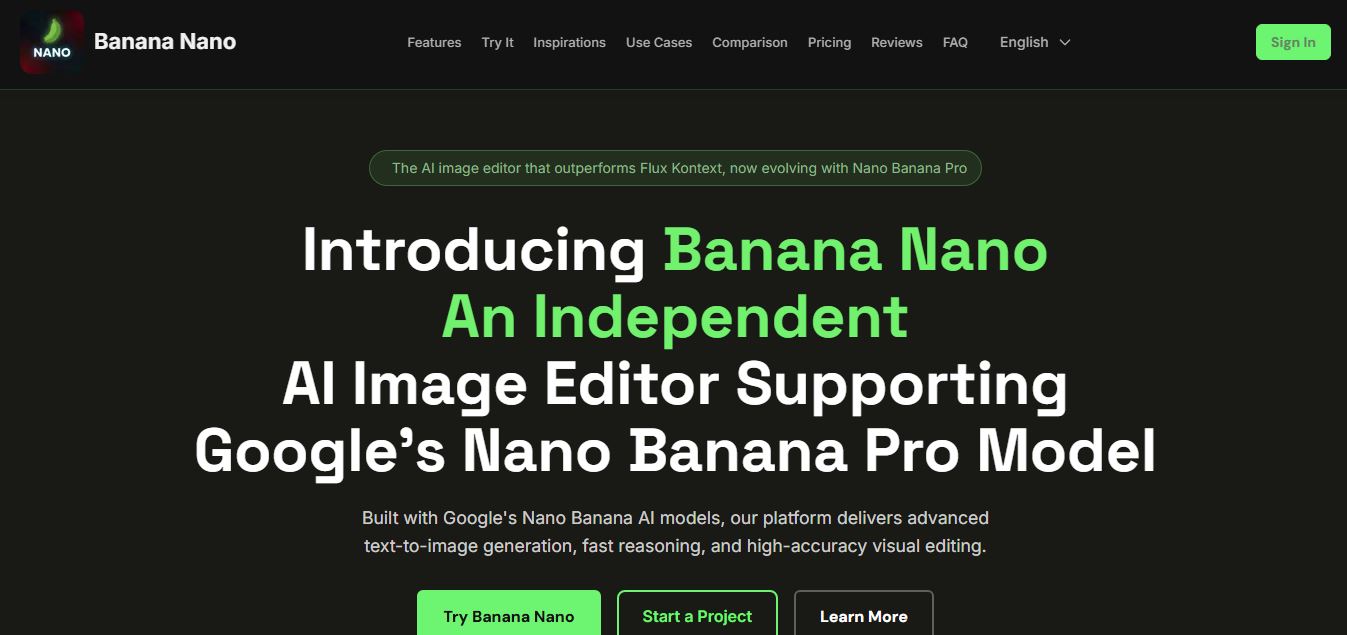
BananaNano (Nano Banana AI) is an AI-powered image generation and editing platform that lets users create visuals from text or edit photos using natural language. It supports multi-image fusion, character consistency, and up to 4K output, enabling fast, flexible visual creation without complex design tools.
 4.8
4.8Vheer
Image
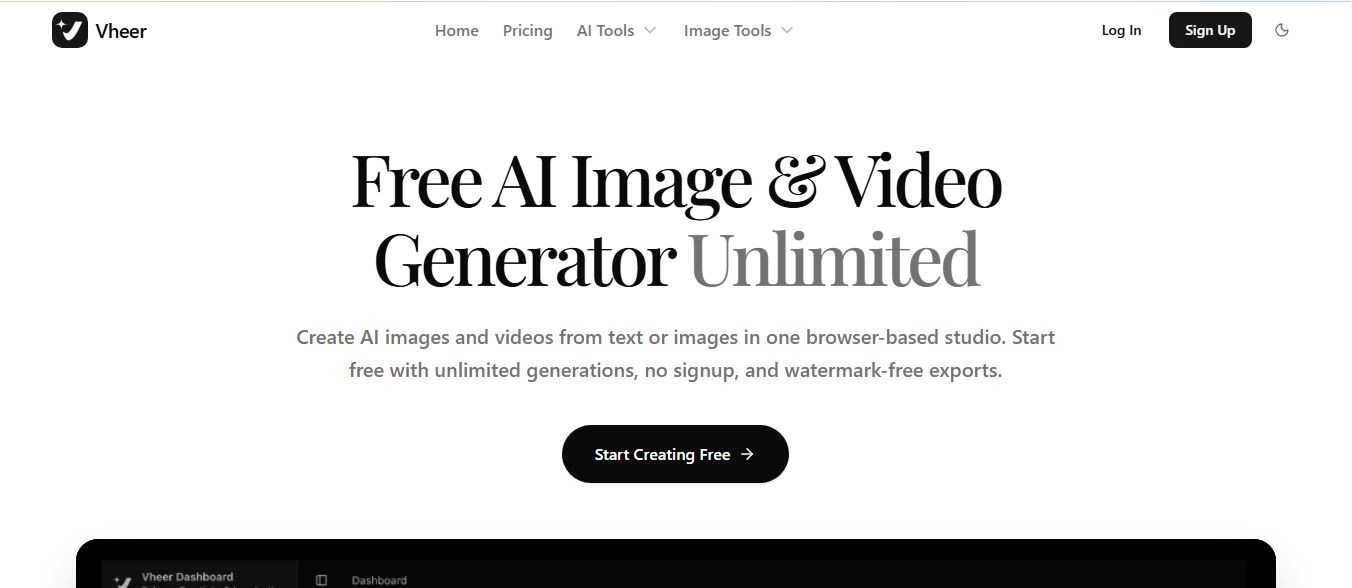
Vheer is a free AI image and video generator that helps users create visuals from text or photos instantly. It includes tools for image editing, background removal, and image-to-video conversion, offering unlimited generations without signup, making it ideal for quick, creative content production.
 4.9
4.9QOVES
Image
QOVES is an AI-powered facial analysis and beauty consulting platform that helps users understand their facial features and improve appearance through personalized, science-backed recommendations. It analyzes hundreds of facial markers and provides a non-surgical transformation plan, enabling informed decisions about aesthetics, skincare, and overall self-improvement.
 4.8
4.8Airbrush AI
Image
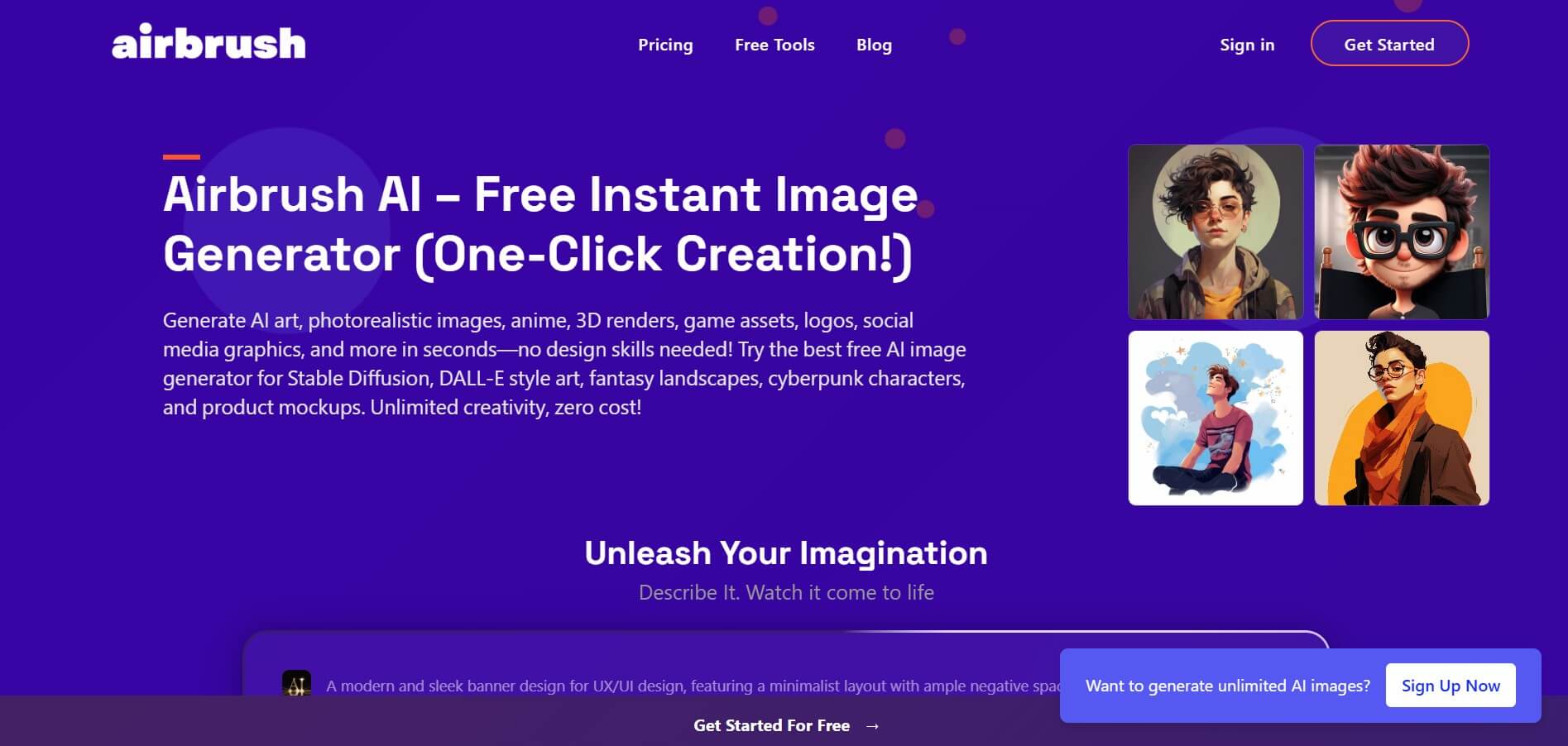
Airbrush is an AI-powered image generation and editing platform that helps users create, enhance, and customize visuals from simple text prompts. It supports multiple AI models and styles, enabling creators to generate artwork, marketing assets, and realistic images quickly without advanced design skills.