Google Whisk
Google Whisk is an experimental AI image tool that lets users create and remix visuals using images, prompts and different creative styles.
What Is Google Whisk?
Google Whisk is an experimental AI image-generation tool from Google Labs that lets users create new visuals by using images as prompts. Instead of writing a long text description, you can provide reference images for a subject, scene, and style, and Whisk combines those visual ideas to create a new image. Google introduced Whisk in December 2024 as an experiment designed for rapid visual exploration and creative remixing. Whisk used Gemini to analyze and describe the uploaded images, and then it used Imagen 3 to generate the final image.
One important update is that Google has since moved Whisk's capabilities into Google Flow, its broader creative AI workspace. In February 2026, Google announced that key capabilities from Whisk and ImageFX were moving directly into Flow, allowing users to generate, edit, and animate visual assets in one workspace.
Google Whisk was introduced by Google Labs as an experimental image-generation experience focused on visual prompting. The tool allows users to combine up to 3 visual inputs, including subject, scene and style, to generate new images. Whisk uses Google's generative AI technology to interpret uploaded images rather than simply copying them. It is designed for fast creative exploration and can generate multiple visual variations from a single concept. Whisk is available through Google Labs and has also influenced features within Google's newer Flow creative platform. Google initially launched Whisk in the United States and later expanded it to more than 100 additional countries in February 2025.
- Founder: Google Whisk was created by Google Labs, so it does not have an independently identified individual founder.
- Launch: Google introduced Whisk as an experimental Google Labs project in December 2024.
- Use Cases: AI image generation, concept development, visual brainstorming, character ideas, product concepts, style experimentation, and creative inspiration.
- Technology: Whisk uses Google's generative AI models to understand and remix visual inputs into new images.
- Target User: Designers, creators, marketers, artists, content creators, students, and people experimenting with generative AI.
- Acquisition: Whisk was developed internally by Google and was not acquired from another company.
Who Created Google Whisk?
Google Whisk was developed internally by Google Labs, with contributions from Google DeepMind and Google Labs product teams. It was not founded as an independent startup and does not have a separate individual founder. Google's original announcement lists Thomas Iljic and Nicole Brichtova among the product leaders associated with the Whisk launch.
Google Whisk Launch Date
Google introduced Whisk on December 16, 2024, as a new Google Labs experiment focused on using images as prompts for generative image creation. The experiment was subsequently expanded beyond the United States, with Google announcing availability in more than 100 additional countries in February 2025.
What Technology Does Google Whisk Use?
At launch, Whisk combined Gemini's visual understanding capabilities with Imagen 3 for image generation. Gemini interpreted the uploaded references and generated descriptions that were then used by Imagen 3 to produce the new image. Since then, Google has evolved its creative AI stack and incorporated many of Whisk's capabilities into Google Flow.
Google Whisk Key Features
Google Whisk key features are:
- Image-Based Prompting: Use existing images as creative references instead of writing long text prompts.
- Subject Input: Provide an image of a person, object, or character and use it as the main subject for a new generation.
- Scene Input: Add an image representing the environment or background you want to recreate.
- Style Input: Use a reference image to influence the artistic style of the generated result.
- Visual Remixing: Combine different visual references to create new concepts and variations.
- AI Image Generation: Generate new visuals based on the visual characteristics and concepts provided by the user.
- Creative Exploration: Quickly experiment with different combinations of subjects, scenes, and styles.
- Google AI Technology: Uses Google's generative AI technology for understanding and producing visual content.
- Simple Interface: The image-first workflow makes experimentation easier for users who may not be comfortable writing complex AI prompts.
- Flow Integration: One of the biggest developments since Whisk's launch is its relationship with Google Flow. In February 2026, Google announced that capabilities from Whisk and ImageFX were being moved into Flow. Google described this as part of a broader effort to bring image generation, editing, and animation into a unified creative workspace.

Google Whisk Pricing
Google Whisk was introduced as a Google Labs experiment rather than a traditional standalone paid software product. However, Google's current direction is increasingly centered around Google Flow, which has its own credit-based plans. Google currently lists a free Flow option with 50 daily credits. Paid plans include Google AI Plus, Google AI Pro and Google AI Ultra, with different monthly credit allowances and capabilities. Pricing and availability can vary by region and plan.
Google Flow Pricing
| Plan | Listed Price | Credits |
| Free | Free | 50 daily credits |
| Google AI Plus | $4.99/month | 200 monthly credits |
| Google AI Pro | $19.99/month | 1,000 monthly credits |
| Google AI Ultra | $99.99/month | 10,000 monthly credits |
Google also lists a higher Ultra tier at $199.99/month with 25,000 monthly credits. Features, pricing, and availability may change by region and over time.
Important: These are current Google Flow plans, not necessarily a standalone pricing structure for the original Whisk experiment.
How Does Google Whisk Work?
Whisk originally used Google's multimodal AI technology in a two-step process. Gemini analyzed the uploaded images and generated detailed descriptions of them. Those descriptions were then passed to Imagen 3, Google's image-generation model at the time, to create the final visual. This means Whisk did not simply copy the uploaded images. Instead, it attempted to capture important characteristics and reinterpret them in a new generation.
That approach makes Whisk different from conventional image editors and from many text-to-image generators.
Who Is Using Google Whisk?
Google Whisk is particularly useful for people who prefer visual experimentation over detailed prompt writing.
- Graphic designers.
- Digital artists.
- Content creators.
- YouTubers.
- Social media creators.
- Marketing teams.
- Advertisers.
- Product designers.
- Creative agencies.
- AI enthusiasts.
- Students.
- People experimenting with generative AI.
What Are the Best Google Whisk Alternatives?
If you're seeking alternatives to Google Whisk, consider:
- Midjourney
- Adobe Firefly
- ChatGPT image generation
- Ideogram
- Google Flow
- Leonardo AI
Pros and Cons
Pros
- Image-based prompting.
- Easy visual experimentation.
- Subject, scene and style inputs.
- Fast image generation.
- Useful for brainstorming.
- Simple creative workflow.
- Powered by Google's AI technology.
- Good for visual concept development.
- Useful for creators and designers.
- Experimental features can offer new creative possibilities.
Cons
- Experimental product.
- Availability can vary.
- Less precise than professional image-editing software.
- Generated subjects may not always remain consistent.
- Advanced controls can be limited.
- Results can differ from the reference images.
- Features may change as Google continues development.
Google itself noted that Whisk could produce outputs that differ from the original reference, including changes to characteristics such as height, hairstyle or skin tone. This is one reason the tool is better suited to creative exploration than exact replication.
Why Choose Google Whisk?
Google Whisk makes sense if you think visually.
Instead of asking yourself, "How do I describe this image in a prompt?" you can start with "Which images show the idea I have in mind?"
- Upload visual references.
- Combine different subjects and scenes.
- Experiment with artistic styles.
- Generate new concepts quickly.
- Create visual inspiration for projects.
- Explore different image combinations.
- Reduce the need for complicated prompts.
- Use Google's generative AI technology.
- Quickly create variations for social media and creative projects.
Is Google Whisk Still Available?
Google Whisk was originally launched as a standalone Google Labs experiment. However, Google's product strategy has evolved.
In February 2026, Google announced that the best capabilities from Whisk and ImageFX were moving directly into Google Flow. Google said users would be able to generate, edit and animate assets within the unified Flow workspace, and that Whisk and ImageFX projects and assets could be transferred into Flow. So, if you're searching for Google Whisk in 2026, it is useful to understand that Whisk's technology and creative workflow are increasingly part of Google's broader Flow ecosystem.
How to Use Google Whisk
The original Whisk workflow was straightforward:
Step 1: Choose Your Visual References
Select images that communicate your idea.
Step 2: Add the Subject
Choose an image representing the main subject.
Step 3: Add the Scene
Add an image representing the environment or background.
Step 4: Add a Style Reference
Choose another image that communicates the visual style you want.
Step 5: Generate
Whisk interprets the references and creates a new visual concept.
Step 6: Experiment
Try different combinations and generate multiple variations.
Step 7: Refine
If the result is not what you expected, adjust the references or underlying prompt and try again.
This workflow is intentionally more exploratory than traditional image editing.
Google Whisk vs Competitors
The main difference between Google Whisk, Midjourney, Adobe Firefly and Leonardo AI is that Whisk focuses heavily on image-based prompting and visual remixing rather than traditional text-to-image prompting. Midjourney emphasizes artistic image generation, Firefly integrates with Adobe's creative ecosystem, while Leonardo AI provides more customization and control. Whisk is better suited to users who want to experiment quickly using existing images as creative references.
| Tool | Starting Price | Best For | Image References | Creative Controls |
|---|---|---|---|---|
| Google Whisk | Experimental | Visual remixing | Yes | Moderate |
| Midjourney | Paid | Artistic images | Yes | High |
| Adobe Firefly | Free/Paid | Commercial creative work | Yes | High |
| Leonardo AI | Free/Paid | AI art and design | Yes | High |
| Ideogram | Free/Paid | Text in images | Yes | High |
Google Whisk's biggest advantage is its visual-first workflow. Instead of spending time writing detailed descriptions, users can provide reference images and allow Google's AI to interpret their subject, scene and style. This makes the tool particularly interesting for brainstorming and creative exploration.
How Do We Rate Google Whisk?
Our rating focuses on Whisk's original visual-remixing workflow rather than treating it as a professional image editor.
| Category | Rating out of 5 |
|---|---|
| Ease of Use | 4.8 |
| Image Generation | 4.5 |
| Visual Prompting | 4.8 |
| Creative Exploration | 4.8 |
| Style Experimentation | 4.6 |
| Image Quality | 4.5 |
| Customization | 4.1 |
| Accessibility | 4.3 |
| Overall Rating | 4.6 |
Google Whisk Review
Google Whisk is an innovative AI image-generation experiment because it changes the way people interact with generative AI. Instead of starting with a blank prompt box, you can start with images. That sounds like a small change, but it can make a big difference for creative users. Someone may know exactly what they want a character, environment, or visual style to look like without knowing how to describe it in AI prompt language.
That's where Whisk becomes useful. The ability to combine a subject, scene, and style gives users an intuitive way to explore different visual combinations. You can take a character from one reference, a location from another and a visual style from a third, then see what the model creates. The main limitation is also part of what makes Whisk interesting: the AI interprets the references rather than reproducing them exactly. As Google explained when it introduced Whisk, the system attempts to capture the essence of the input images. That means the generated result can differ from the original reference.
For creative brainstorming, this can actually be an advantage. Unexpected results can lead to ideas you may not have considered. For professional production work where exact consistency matters, however, a more controlled image-generation or editing platform may be a better choice. Another important consideration in 2026 is that Whisk should no longer be viewed only as an isolated Google Labs experiment. Google is incorporating capabilities from Whisk and ImageFX into Flow, which is becoming a broader environment for creating and refining images and videos.
Conclusion
Google Whisk introduced a simple but useful idea to AI image generation: show the model what you mean instead of explaining everything with words. Its subject, scene, and style workflow made it easy to experiment with visual concepts, remix references, and generate new ideas quickly. The tool was never intended to be a replacement for professional image-editing software. Its strength was exploration. You could try an idea, generate several variations, and discover visual directions that might have taken much longer to develop manually. Today, however, the most important thing to know about Google Whisk is its evolution. Google has been moving Whisk's strongest capabilities into Google Flow, making Flow the more relevant destination for Google's current image and video creation workflow.
FAQ
What is Google Whisk?
Google Whisk is an experimental AI image-generation tool from Google Labs that creates new visuals using image references and prompts.
Is Google Whisk free?
Whisk has been offered as a Google Labs experiment, but availability and access conditions can change as Google develops the product.
Who created Google Whisk?
Google Whisk was developed by Google Labs
When was Google Whisk launched?
Google introduced Whisk as a Google Labs experiment in December 2024.
How does Google Whisk work?
Users can provide images representing a subject, scene and style. Google's AI interprets these inputs and generates a new image based on them.
Can Google Whisk use reference images?
Yes. Using reference images is one of Whisk's main features.
Can I use Whisk without writing a detailed prompt?
Yes. Whisk is designed around visual inputs, so users can rely heavily on reference images instead of writing long prompts.
User Reviews
No reviews yet for Google Whisk.
Featured Tools
Featured AI tools from TechShark
Melody Genie
MelodyGenie is an AI-powered music generator that creates original songs from simple text prompts. Users can choose styles, moods, and genres, then instantly generate melodies and full tracks, making it easy for creators, marketers, and hobbyists to produce custom music without musical expertise.
Freemium
Kimi AI
Kimi AI is an advanced AI assistant developed by Moonshot AI that helps you chat, research, write, code, and automate tasks in one place. It supports web search, file analysis, and multimodal inputs, and can even run autonomous “agent” workflows to complete complex tasks end-to-end.
Freemium

Fashion Diffusion AI
Fashion Diffusion is an AI-powered fashion design platform that helps brands and designers create clothing designs, virtual try-ons, AI models, product photos, and marketing visuals faster and cost-effectively.
Paid
Veo 4
Veo 4 AI is an AI video creation platform that generates dramatic videos from text, images, audio, and video prompts using realistic motion and synchronized sound.
Paid
Alternatives
Alternatives to Google Whisk
The best Google Whisk alternatives include Midjourney, Adobe Firefly, Leonardo AI, Ideogram and ChatGPT image generation. Midjourney is a strong choice for artistic visuals, Firefly works well for professional creative workflows, Leonardo AI provides more detailed controls, and Ideogram is particularly useful when images need accurate text. ChatGPT is convenient for conversational image generation and editing. Google Whisk remains a strong option for users who prefer visual references and quick image remixing.
 4.8
4.8Prisma AI
Image
Prisma AI turns everyday photos into artistic images with stylized filters and creative effects. It offers hundreds of art and portrait styles inspired by famous artists, allowing beginners to create distinctive visuals quickly. Users can capture or upload photos, apply a chosen style, and save or share the finished result.
 4.9
4.9Bria AI
Image
Bria helps businesses and teams generate and edit visual content using controllable generative AI. Its capabilities cover image generation, product visuals, background editing, video workflows, and developer integrations. With licensed training data, attribution, provenance, and enterprise deployment options, Bria is positioned for businesses that need scalable, commercially focused visual AI.
 4.7
4.7Unwatermark
Image
Unwatermark.ai helps creators, marketers, photographers, and businesses remove watermarks, logos, text, people, and unwanted objects from images and videos. Its automatic detection handles quick edits, while the manual brush provides precise control over difficult areas. With browser-based processing, format support, previews, and free usage, it simplifies everyday visual cleanup.
 4.9
4.9invideo Nano Banana
Image
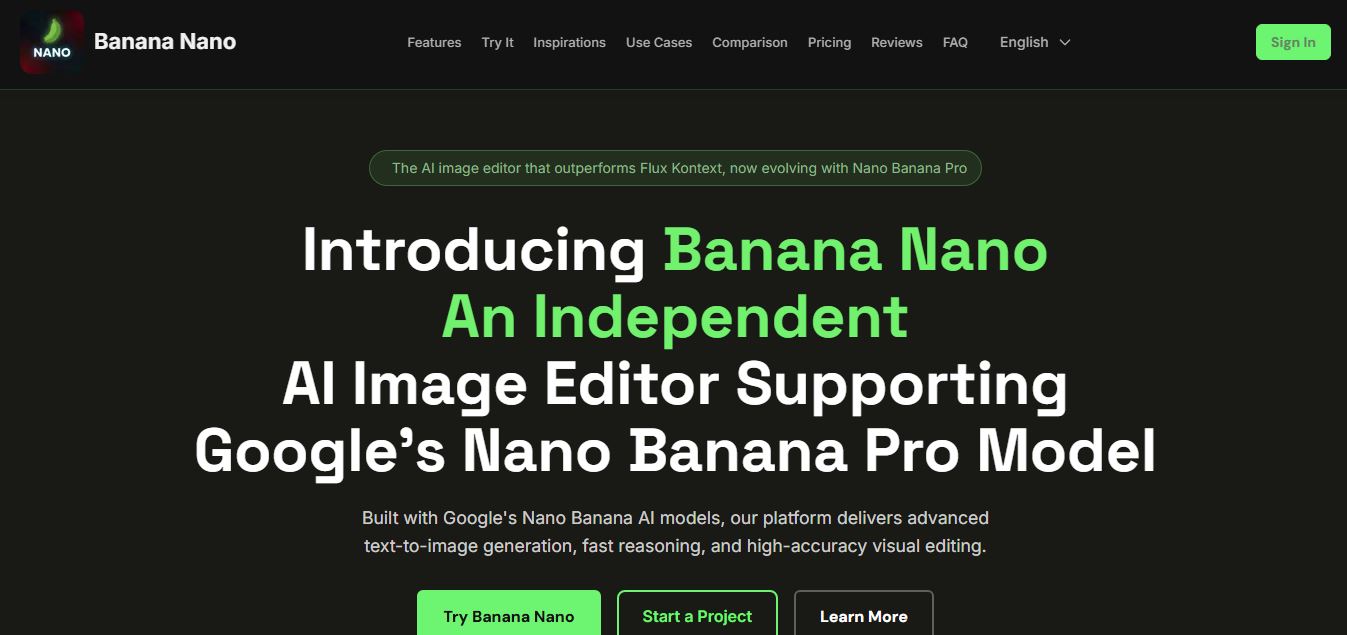
Nano Banana is an AI image generation and editing model by Google (Gemini family) that helps users create, modify, and refine visuals using natural language prompts. It supports 4K outputs, consistent characters, accurate text rendering, and real-time editing, enabling fast, production-ready creative workflows.
 4.8
4.8Banana Nano
Image
BananaNano (Nano Banana AI) is an AI-powered image generation and editing platform that lets users create visuals from text or edit photos using natural language. It supports multi-image fusion, character consistency, and up to 4K output, enabling fast, flexible visual creation without complex design tools.
 4.8
4.8Vheer
Image
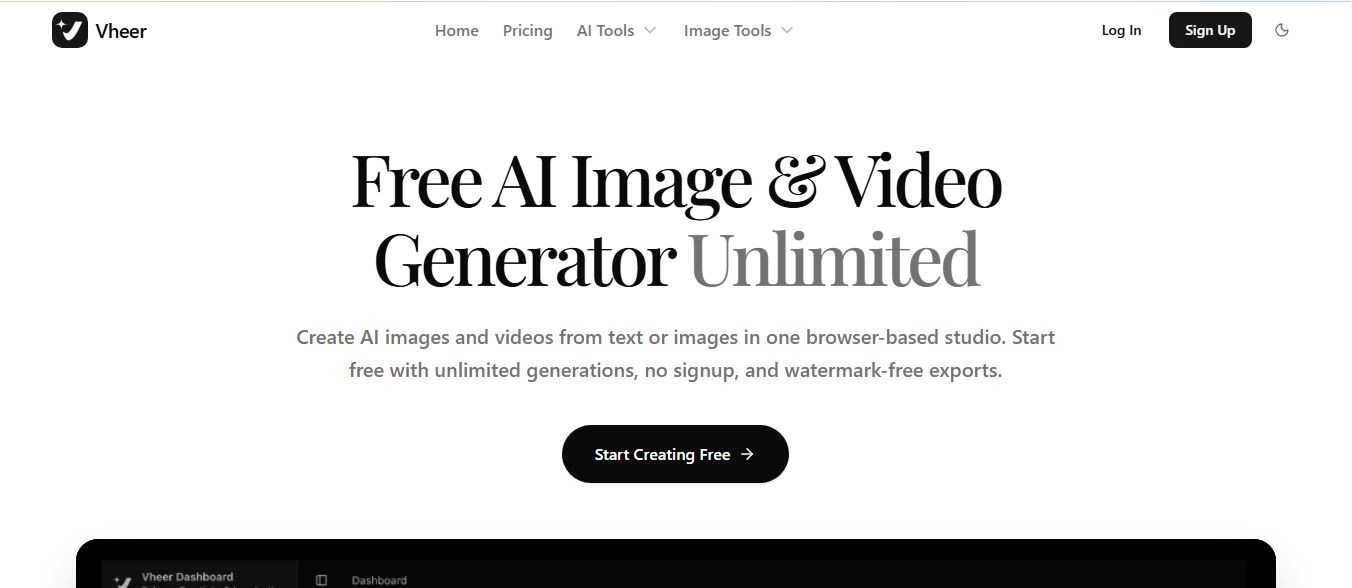
Vheer is a free AI image and video generator that helps users create visuals from text or photos instantly. It includes tools for image editing, background removal, and image-to-video conversion, offering unlimited generations without signup, making it ideal for quick, creative content production.
 4.9
4.9QOVES
Image
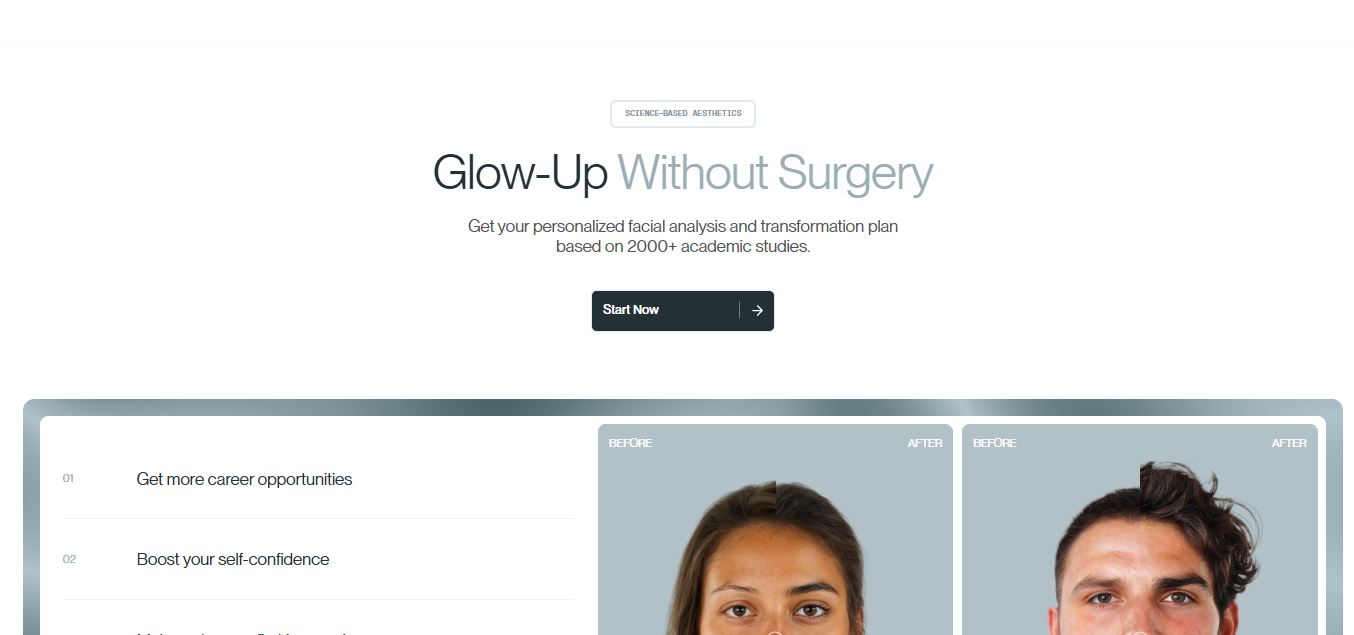
QOVES is an AI-powered facial analysis and beauty consulting platform that helps users understand their facial features and improve appearance through personalized, science-backed recommendations. It analyzes hundreds of facial markers and provides a non-surgical transformation plan, enabling informed decisions about aesthetics, skincare, and overall self-improvement.
 4.8
4.8Airbrush AI
Image
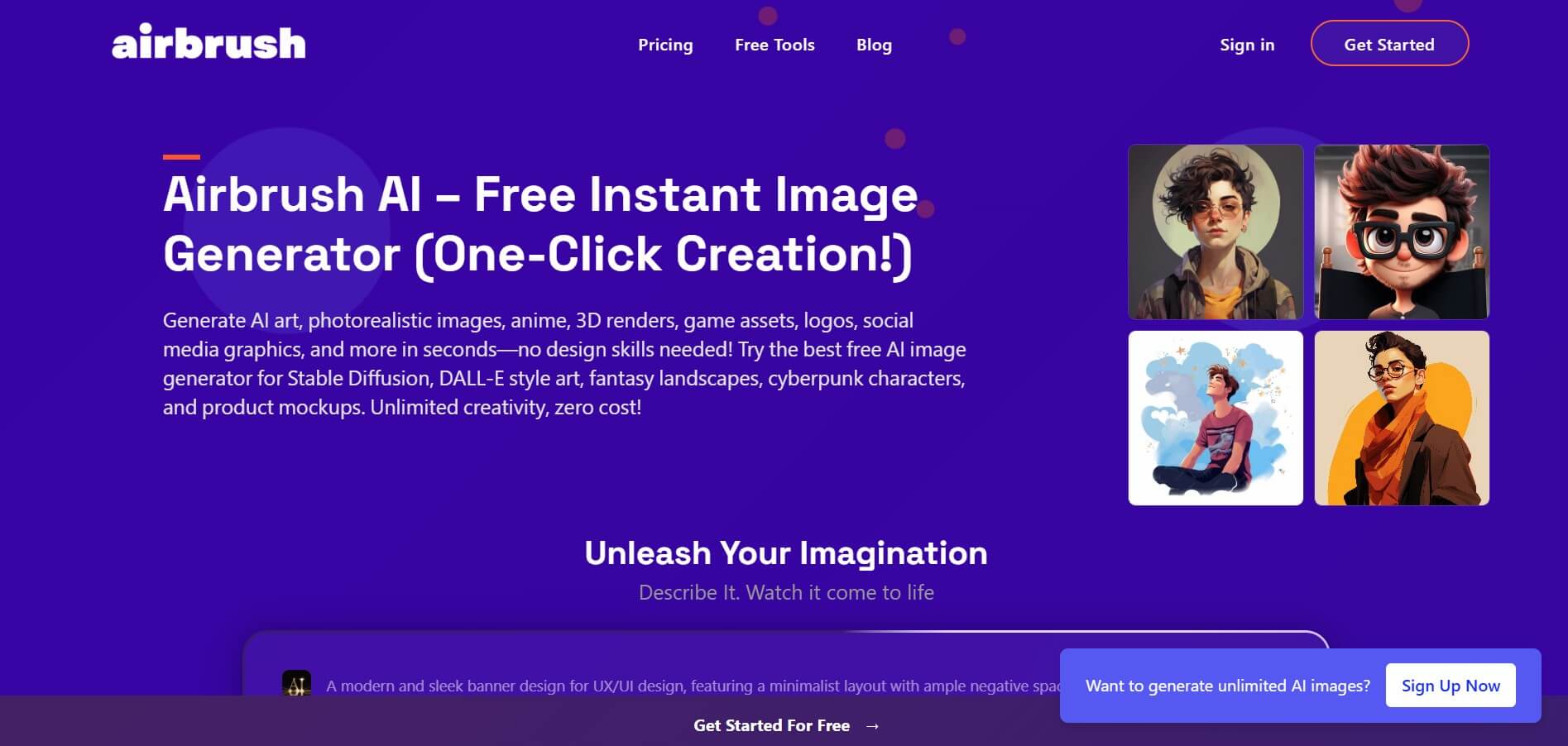
Airbrush is an AI-powered image generation and editing platform that helps users create, enhance, and customize visuals from simple text prompts. It supports multiple AI models and styles, enabling creators to generate artwork, marketing assets, and realistic images quickly without advanced design skills.
 4.7
4.7Palette.fm
Image
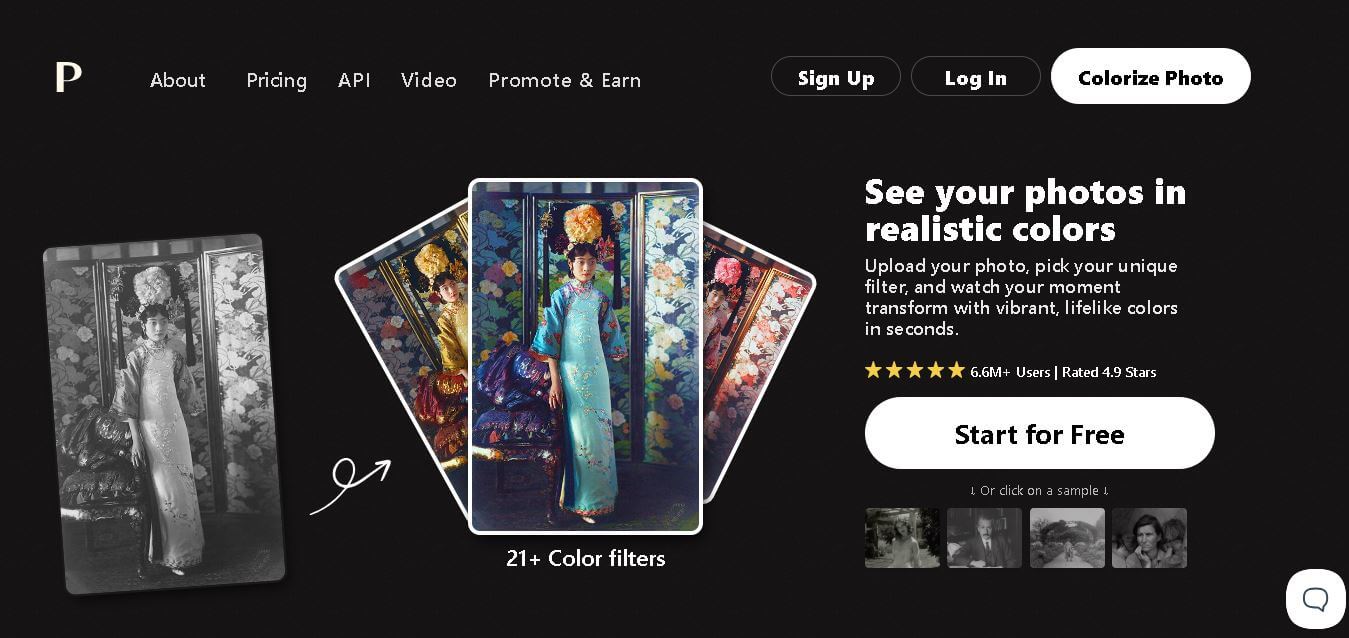
Palette.fm helps turn black-and-white photographs into vivid color images with customizable filters and keyword-based adjustments. You can upload one or multiple photos, preview different looks, and refine the colorization before downloading. The service supports high-resolution outputs for paid credits, making it useful for restoration, creative editing, archives, and photography projects.